Results by title
805 books match the query '18th Century' and 209 start with t
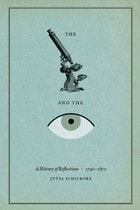
The Microscope and the Eye
A History of Reflections, 1740-1870Jutta Schickore
University of Chicago Press, 2007
Concentrating on Great Britain and the German lands—home to the period’s most significant developments in microscopy—The Microscope and the Eye examines debates about such subjects as the legitimacy of human trespassing on the microcosm and the nature of light. Schickore also explores the microscope’s role in investigations of the finer structure of the eye and the workings of nerve fibers and the microscopists’ reflections on vision, illusion, artifacts, and the merits of instruments. Fully considering the epistemological, metaphysical, and methodological implications of this centuries-old relationship, The Microscope and the Eye will be an important contribution to the history of the life sciences, vision studies, and scientific methodology.
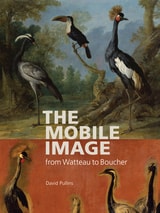
The Mobile Image from Watteau to Boucher
David Pullins
J. Paul Getty Trust, The, 2024
This book provides a new way of thinking about eighteenth-century French art and visual culture by prioritizing production over reception. Abandoning the ideologically driven discourse that distinguished fine from decorative art between the 1690s and 1770s, The Mobile Image reveals how the two have been inextricably bound from the earliest stages of artistic instruction through the daily life of painters’ workshops. In this study, author David Pullins defines artisanal and artistic means of learning, seeing, and making through a system of “mobile images”: motifs that were effectively engineered for mobility and designed never to be definitive, always awaiting replication and circulation. He examines the careers of Antoine Watteau, Jean-Baptiste Oudry, and François Boucher, situating them against a much broader cast of actors—such as printmakers, publishers, anonymous studio assistants, and architects, among others—to place eighteenth-century painting within a wider context of media and making.
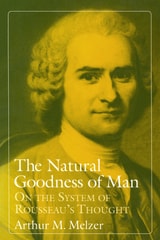
The Natural Goodness of Man
On the System of Rousseau's ThoughtArthur M. Melzer
University of Chicago Press, 1990
Arthur M. Melzer adopts this approach in The Natural Goodness of Man. The first two parts of the book restore the original, revolutionary significance of this now time-worn principle and examine the arguments Rousseau offers in proof of it. The final section unfolds and explains Rousseau’s programmatic thought, especially the Social Contract, as a precise solution to the human problem as redefined by the principle of natural goodness.
The result is a systematic reconstruction of Rousseau’s philosophy that discloses with unparalleled clarity both the complex weave of his argument and the majestic unity of his vision. Melzer persuasively resolves one after another of the famous Rousseauian paradoxes–enlarging, in the process, our understanding of modern philosophy and politics. Engagingly and lucidly written, The Natural Goodness of Man will be of interest to general as well as scholarly readers.

The New Jersey Churchscape
Encountering Eighteenth- and Nineteenth-Century ChurchesFrank L. Greenagel
Rutgers University Press, 2001
Although best known as the Garden State, New Jersey could also be called the Church State. The state boasts thousands of houses of worship, with more than one thousand still standing that were built in the eighteenth and nineteenth centuries. Frank L. Greenagel has photographed more than six hundred. He has selected two hundred of these historic landmarks for an examination of why they are sited where they are and why they look the way they do.
Greenagel has sought out and included images of not only mainstream Christian churches, but also Jewish synagogues as well as the places of worship of religious groups such as the Moravians, the Church of the Brethren, and the Seventh Day Baptists. The photographs are arranged chronologically within sections on three major early settlement regions of the state ¾ the Hudson River, the Delaware River, and the Raritan Valley. For each building, Greenagel details the date of construction, the cultural, historic, and religious influences that shaped it, the architectural details that distinguish it, and what purpose it currently serves.
The New Kingdom of Granada
The Making and Unmaking of Spain's Atlantic EmpireSantiago Muñoz-Arbeláez
Duke University Press, 2025
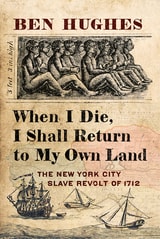
The New York City Slave Revolt of 1712
The First Enslaved Insurrection in British North AmericaBen Huges
Westholme Publishing, 2024
At 2 a.m. on April 7, 1712, a fire broke out in New York City’s North Ward. Unbeknown to the residents who roused themselves to combat the flames, the blaze had been started with murderous intent. A group of at least twenty-four enslaved West African men and women, mostly Akan from modern-day Ghana, had long plotted this moment. Armed with guns, daggers, swords, axes, and clubs, they fell upon their enslavers. In the next few frantic moments, eight Europeans were killed and seven were wounded. The perpetrators were rounded up, jailed, and put on public trial. Twenty enslaved men and one woman were executed or transported for carrying out the plot. As the first event of its kind to take place in the North American colonies, this revolt was the progenitor of those that followed—it inspired, the Stono Rebellion of 1739, the New York Conspiracy of 1741, and Nat Turner’s 1831 insurrection.
When I Die, I Shall Return to My Own Land: The 1712 New York City Slave Revolt is the first comprehensive investigation into this major event in the history of slavery in North America. Consulting court records, correspondence, and the minutes of the various colonial councils, as well as a wide range of sources related to eighteenth-century slavery, historian Ben Hughes vividly recreates early colonial New York, the lives of its enslaved inhabitants, the factionalism among the city’s Dutch and English elites, and their precarious hold on Manhattan Island in the face of French and Native American threats. Hughes traces the origins of the New York rebels, details how they came to be enslaved, and recreates the shadowy dealings that took place between African polities, European and American slavers, and New York merchants. The forerunners of a movement which continues to this day, the deeds of these original African American rebels have now been all but forgotten. Here, Hughes attempts to redress this imbalance by recovering their story.
The Newton Wars and the Beginning of the French Enlightenment
J. B. Shank
University of Chicago Press, 2008
A comprehensive study of public culture, The Newton Wars and the Beginning of the French Enlightenment digsbelow the surface of the commonplace narratives that link Newton with Enlightenment thought to examine the actual historical changes that brought them together in eighteenth-century time and space. Drawing on the full range of early modern scientific sources, from studied scientific treatises and academic papers to book reviews, commentaries, and private correspondence, J. B. Shank challenges the widely accepted claim that Isaac Newton’s solitary genius is the reason for his iconic status as the father of modern physics and the philosophemovement.
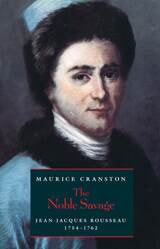
The Noble Savage
Jean-Jacques Rousseau, 1754-1762Maurice Cranston
University of Chicago Press, 1991
"Luckily for us, Maurice Cranston's The Noble Savage: Jean-Jacques Rousseau, 1754-1762 has managed to craft a highly detailed account of eight key years of Rousseau's life in such a way that we can both understand and even, on occasion, sympathize."—Olivier Bernier, Wall Street Journal
Maurice Cranston (1920-1993), a distinguished scholar and recipient of the James Tait Black Memorial Prize for his biography of John Locke, was professor of political science at the London School of Economics. His numerous books include The Romantic Movement and Philosophers and Pamphleteers, and translations of Rousseau's The Social Contract and Discourse on the Origins of Inequality.
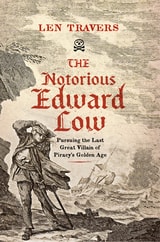
The Notorious Edward Low
Pursuing the Last Great Villain of Piracy's Golden AgeLen Travers
Westholme Publishing, 2025
In The Notorious Edward Low: Pursuing the Last Great Villain of Piracy’s Golden Age, historian Len Travers reexamines this critical period through the career of Low, a complicated pirate leader, and his nemesis, Peter Solgard, captain of the Royal Navy warship HMS Greyhound. By the time Solgard, aboard Greyhound, was tracking Low in 1723, the era’s other notable pirates were gone—dead, captured, or disappeared. Drawing on previously unpublished Admiralty records and consulting both contemporary and modern chroniclers, Travers directs readers to much powerful testimony minimized in or excluded from histories of piracy’s “Golden Age,” leveling a critical eye at familiar sources too long accepted at face value. Travers demonstrates that, feared as they certainly were, pirates were largely ordinary seamen trapped in desperate circumstances who, in the end, had little to show for their efforts. Contrary to popular portrayals, for pirates the second decade of the eighteenth century was a time of radically diminishing returns, scant treasure, buried or otherwise, and increasingly successful suppression by state authorities. One by one, safe havens shut out the sea-rovers, who with their depredations in America quickly squandered the sympathy and support they had once enjoyed among common folk. The Notorious Edward Low puts individual actors, from colonial governors to captains to common seamen, at center stage, and reveals how British authorities used new anti-piracy laws to reclaim a measure of authority over their fractious North American colonies—a compelling and meaningful story with its own brand of true-life swashbuckling on the high seas.
The Novel Stage
Narrative Form from the Restoration to Jane AustenMarcie Frank
Bucknell University Press, 2020
2020 Choice Outstanding Academic Title
Marcie Frank’s study traces the migration of tragicomedy, the comedy of manners, and melodrama from the stage to the novel, offering a dramatic new approach to the history of the English novel that examines how the collaboration of genres contributed to the novel’s narrative form and to the modern organization of literature. Drawing on media theory and focusing on the less-examined narrative contributions of such authors as Aphra Behn, Frances Burney, and Elizabeth Inchbald, alongside those of Samuel Richardson, Henry Fielding, and Jane Austen, The Novel Stage tells the story of the novel as it was shaped by the stage.
Published by Bucknell University Press. Distributed worldwide by Rutgers University Press.

The Organs of J.S. Bach
A HandbookChristoph Wolff and Markus Zepf
University of Illinois Press, 2012

The Origins of Scottish Nationhood
Neil Davidson
Pluto Press, 2000
The Origins of the Welfare State
Women, Work, and the French RevolutionLisa DiCaprio
University of Illinois Press, 2005
Women workers and the revolutionary origins of the modern welfare state
In May 1790, the French National Assembly created spinning workshops (ateliers de filature) for thousands of unemployed women in Paris. These ateliers disclose new aspects of the process which transformed Old Regime charity into revolutionary welfare initiatives characterized by secularization, centralization, and entitlements based on citizenship. This study is the first to examine women and the welfare state in its formative period at a time when modern concepts of human rights were elaborated.
In The Origins of the Welfare State, Lisa DiCaprio reveals how the women working in the ateliers, municipal welfare officials, and the national government vied to define the meaning of revolutionary welfare throughout the Revolution. Presenting demands for improved wages and working conditions to a wide array of revolutionary officials, the women workers exercised their rights as "passive citizens" capaciously and shaped the meanings of work, welfare, and citizenship. Looking backward to the Old Regime and forward to the nineteenth century, this study explores the interventionist spirit that characterized liberalism in the eighteenth century and serves as a bridge to the history of entitlements in the nineteenth and twentieth centuries.
The Other Jonathan Edwards
Selected Writings on Society, Love, and JusticeGerald McDermott
University of Massachusetts Press, 2015
Widely regarded as perhaps America's greatest theologian, Jonathan Edwards still suffers the stereotype of hellfire preacher obsessed with God's wrath. In this anthology, Gerald McDermott and Ronald Story seek to correct that common view by showing that Edwards was also a compassionate, socially conscious minister of the first order.
Through a selection of sermons and primary writings, McDermott and Story reveal an Edwards who preached love toward all humanity regardless of belief or appearance; who demanded private and public charity to the poor; who criticized hard-hearted business dealings as impious and socially destructive; and who condemned envy and status-seeking as anti-Christian and anti-community. This “other” Jonathan Edwards preached about grace and the love of God but also about responsive constitutional government, the iniquities of hypocrisy and corruption, and the nature of wise leadership. He acknowledged the need for national defense but left room for popular revolt from tyranny. He anticipated a millennial age of peace and prosperity and believed that people should live in the world as they would live through grace in heaven.
Jonathan Edwards was, in sum, a worldly as well as spiritual reformer who resisted the materialistic, acquisitive, and individualistic currents of American culture. For these reasons, McDermott and Story think he may have lessons to teach us today.
The Ovary of Eve
Egg and Sperm and PreformationClara Pinto-Correia
University of Chicago Press, 1997
"The most wonderfully eye-opening, or imagination-opening book, as amusing as it is instructive."—Mary Warnock, London Observer
"[A] fascinating and often humorous study of a reproductive theory that flourished from the mid-17th century to the mid-18th century."—Nina C. Ayoub, Chronicle of Higher Education
"More than just a good story, The Ovary of Eve is an object lesson about the history of science: Don't trust it. . . . Pinto-Correia says she wants to tell the story of history's losers. In doing so, she makes defeat sound more appealing than victory."—Emily Eakin, Nation.
"A sparkling history of preformation as it once affected every facet of European culture."—Robert Taylor, Boston Globe

The Papist Represented
Literature and the English Catholic Community, 1688-1791Geremy Carnes
University of Delaware Press, 2017
The Papist Represented reincorporates the history of the English Catholic community into the field of eighteenth-century literary studies. It examines the intersections of literary, religious, and cultural history as they pertain to the slow acceptance by both Protestants and Catholics of the latter group’s permanent minority status. By focusing on the Catholic community’s perspectives and activities, it deepens and complicates our understanding of the cultural processes that contributed to the significant progress of the Catholic emancipation movement over the course of the century. At the same time, it reveals that this community’s anxieties and desires (and the anxieties and desires it provoked in Protestants) fuel some of the most popular and experimental literary works of the century, in forms and modes including closet drama, elegy, the novel, and the Gothic. By returning the Catholic community to eighteenth-century literary history, The Papist Represented challenges the assumption that eighteenth-century literature was a fundamentally Protestant enterprise.
Published by University of Delaware Press. Distributed worldwide by Rutgers University Press.
The Part and the Whole in Early American Literature, Print Culture, and Art
Matthew Pethers
Bucknell University Press, 2024
The essays in this pathbreaking collection consider the significance of varied early American fragmentary genres and practices—from diaries and poetry, to almanacs and commonplace books, to sermons and lists, to Indigenous ruins and other material shards and fragments—often overlooked by critics in a scholarly privileging of the “whole.” Contributors from literary studies, book history, and visual culture discuss a host of canonical and non-canonical figures, from Edward Taylor and Washington Irving to Mary Rowlandson and Sarah Kemble Knight, offering insight into the many intellectual, ideological, and material variations of “form” that populated the early American cultural landscape. As these essays reveal, the casting of the fragmentary as aesthetically eccentric or incomplete was a way of reckoning with concerns about the related fragmentation of nation, society, and self. For a contemporary audience, they offer new ways to think about the inevitable gaps and absences in our cultural and historical archive.
The Pastoral Role of the Roman Catholic Church in Pre-Famine Ireland, 1750–1850
Emmet Larkin
Catholic University of America Press, 2006
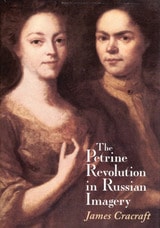
The Petrine Revolution in Russian Imagery
James Cracraft
University of Chicago Press, 1997
In this second volume of the series, Cracraft considers the impact of Peter's intensive program of Europeanization on the visual arts, and shows how modern forms of imagery came into being in Russia along with allied techniques of image-making.
Drawing on a wealth of primary sources as well as numerous secondary works in Russian and other languages, Cracraft discusses the advent in Russia of painting in the Renaissance tradition, bronze and stone sculpture, and the modern graphic arts. He also discusses the decline of manuscript illumination, the rise of modern coinage, the production of new-style flags and altar cloths, and the arrival in Russia of the new cartography and the new heraldry. Cracraft draws special attention to the early history of the St. Petersburg Academy of Fine Arts, and to the impact of Peter's program on popular imagery and on the cult art of the Russian Orthodox Church. He argues in sum that the imagery of the Russian Empire can tell us as much or more about its dominant ethos and ideology as can the written texts normally studied by historians.
Like its predecessor, The Petrine Revolution in Russian Architecture, this second volume presents a highly original argument supported by numerous illustrations, many of them not previously published. It will appeal to art historians as well as to those more generally interested in European or modern history.
The Plight of Feeling
Sympathy and Dissent in the Early American NovelJulia A. Stern
University of Chicago Press, 1997
Stern argues that these novels gave voice to a collective mourning over the violence of the Revolution and the foreclosure of liberty for the nation's noncitizens—women, the poor, Native and African Americans. Properly placed in the context of late eighteenth-century thought, the republican novel emerges as essentially political, offering its audience gothic and feminized counternarratives to read against the dominant male-authored accounts of national legitimation.
Drawing upon insights from cultural history and gender studies as well as psychoanalytic, narrative, and genre theory, Stern convincingly exposes the foundation of the republic as an unquiet crypt housing those invisible Americans who contributed to its construction.

The Plow, the Hammer, and the Knout
An Economic History of Eighteenth-Century RussiaArcadius Kahan
University of Chicago Press, 1985
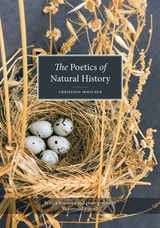
The Poetics of Natural History
Christoph Irmscher
Rutgers University Press, 2019
Early American naturalists assembled dazzling collections of native flora and fauna, from John Bartram’s botanical garden in Philadelphia and the artful display of animals in Charles Willson Peale’s museum to P. T. Barnum’s American Museum, infamously characterized by Henry James as “halls of humbug.” Yet physical collections were only one of the myriad ways that these naturalists captured, catalogued, and commemorated America’s rich biodiversity. They also turned to writing and art, from John Edward Holbrook’s forays into the fascinating world of herpetology to John James Audubon’s masterful portraits of American birds.
In this groundbreaking, now classic book, Christoph Irmscher argues that early American natural historians developed a distinctly poetic sensibility that allowed them to imagine themselves as part of, and not apart from, their environment. He also demonstrates what happens to such inclusiveness in the hands of Harvard scientist-turned Amazonian explorer Louis Agassiz, whose racist pseudoscience appalled his student William James.
This expanded, full-color edition of The Poetics of Natural History features a preface and art from award-winning artist Rosamond Purcell and invites the reader to be fully immersed in an era when the boundaries between literature, art, and science became fluid.
The Poetics of Natural History
From John Bartram to William JamesIrmscher, Christoph
Rutgers University Press, 1999
The Poetics of Natural History is about the “daydreams” of early American naturalists (from 1730 to 1868) and the collections they created around these dreams. Christoph Irmscher explores how, through the acts of organizing physical artifacts and reflecting upon their collections through writings and images, naturalists from John Bartram to Louis Agassiz were making sense of themselves and their world. These collections allowed them, in a way, to collect themselves.
In the first part of his book, Irmscher offers us a guided tour of the actual collections, beginning in Bartram’s disorderly botanical garden in Philadelphia and taking us through the artful display of animals in Charles Wilson Peale’s collections and, finally, to the “halls of humbug” of P. T. Barnum’s American Museum. The second part of the book moves away from the collections, and explores natural history words and images. Irmscher unforgettably describes American collectors’ fascination and horror with the American rattlesnake, and invokes the violent and beautiful world of American birds as described in John James Audubon’s paintings and writings. His book ends with a description of Louis Agassiz’s 1865 expedition to Brazil as seen through the eyes of the young William James, who reluctantly gathered Brazilian fish while his mentor assembled “proof” that some human beings were less human than others.
The Poetics of Unremembered Acts
Reading, Lyric, PedagogyBrian McGrath
Northwestern University Press, 2012
The Politics of Utopia
A New History of John Law's System, 1695–1795Arnaud Orain
University of Chicago Press, 2024
The Scottish economist John Law has been described as the architect of modern central banking. His “System,” established in Regency France between 1716 and 1720, saw the founding of a bank issuing paper money and the establishment of state commercial and colonial enterprises aimed at consolidating public debt. What at first seemed like financial wizardry, however, resulted in rampant speculation and, ultimately, economic collapse. In The Politics of Utopia, historian Arnaud Orain offers a provocative rereading of this well-known episode.
Starting his story in the seventeenth century, Orain reconstructs the figures and ideas, long predating Law, that anticipated and laid the groundwork for the System, which, he argues, is best understood as a failed social utopia aimed at the total transformation of society. Overturning familiar narratives of this seismic event, this book rewrites a stunning chapter in economic history by dealing with the cultural, colonial, religious, and political dimensions of the (in)famous System up to the French Revolution, revealing new lessons for today’s fraught financial landscape.
The Portrait and the Book
Illustration and Literary Culture in Early AmericaMegan Walsh
University of Iowa Press, 2017
Illustrations played a key role in American literary culture despite the fact there was little demand for books by American writers. Indeed, most of the illustrated books bought, sold, and shared by Americans were either imported British works or reprinted versions of those imported editions. As a result, in addition to embellishing books, illustrations provided readers with crucial information about the country’s status as a former colony.
Through an examination of readers’ portrait-collecting habits, writers’ employment of ekphrasis, printers’ efforts to secure American-made illustrations for periodicals, and engravers’ reproductions of British book illustrations, Walsh uncovers in late eighteenth-century America a dynamic but forgotten visual culture that was inextricably tied to the printing industry and to the early US literary imagination.
The Primitive, the Aesthetic, and the Savage
An Enlightenment ProblematicTony C. Brown
University of Minnesota Press, 2012
Tony C. Brown examines “the inescapable yet infinitely troubling figure of the not-quite-nothing” in Enlightenment attempts to think about the aesthetic and the savage. The various texts Brown considers—including the writings of Addison, Rousseau, Kant, and Defoe—turn to exotic figures in order to delimit the aesthetic, and to aesthetics in order to comprehend the savage.
In his intriguing exploration Brown discovers that the primitive introduces into the aesthetic and the savage an element that proves necessary yet difficult to conceive. At its most profound, Brown explains, this element engenders a loss of confidence in one’s ability to understand the human’s relation to itself and to the world. That loss of confidence—what Brown refers to as a breach in anthropological security—traces to an inability to maintain a sense of self in the face of the New World. Demonstrating the impact of the primitive on the aesthetic and the savage, he shows how the eighteenth-century writers he focuses on struggle to define the human’s place in the world. As Brown explains, these authors go back again and again to “exotic” examples from the New World—such as Indian burial mounds and Maori tattooing practice—making them so ubiquitous that they come to underwrite, even produce, philosophy and aesthetics.
The Printed Reader
Gender, Quixotism, and Textual Bodies in Eighteenth-Century BritainAmelia Dale
Bucknell University Press, 2019
The Printed Reader explores the transformative power of reading in the eighteenth century, and how this was expressed in the fascination with Don Quixote and in a proliferation of narratives about quixotic readers, readers who attempt to reproduce and embody their readings. Through intersecting readings of quixotic narratives, including work by Charlotte Lennox, Laurence Sterne, George Colman, Richard Graves, and Elizabeth Hamilton, Amelia Dale argues that literature was envisaged as imprinting—most crucially, in gendered terms—the reader’s mind, character, and body. The Printed Reader brings together key debates concerning quixotic narratives, print culture, sensibility, empiricism, book history, and the material text, connecting developments in print technology to gendered conceptualizations of quixotism. Tracing the meanings of quixotic readers’ bodies, The Printed Reader claims the social and political text that is the quixotic reader is structured by the experiential, affective, and sexual resonances of imprinting and impressions.
Published by Bucknell University Press. Distributed worldwide by Rutgers University Press.
The Progress of Romance
Literary Historiography and the Gothic NovelDavid H. Richter
The Ohio State University Press, 1900
The Proper Lady and the Woman Writer
Ideology as Style in the Works of Mary Wollstonecraft, Mary Shelley, and Jane AustenMary Poovey
University of Chicago Press, 1984
"The proper lady was a handy concept for a developing bourgeois patriarchy, since it deprived women of worldly power, relegating them to a sanctified domestic sphere that, in complex ways, nourished and sustained the harsh 'real' world of men. With care and subtle intelligence, Poovey examines this 'guardian and nemesis of the female self' through the ways it is implicated in the style and strategies of three very different writers."—Rachel M. Brownstein, The Nation
"The Proper Lady and the Woman Writer is a model of . . . creative discovery, providing a well-researched, illuminating history of women writers at the turn of the nineteenth century. [Poovey] creates sociologically and psychologically persuasive accounts of the writers: Wollstonecraft, who could never fully transcend the ideology of propriety she attacked; Shelley, who gradually assumed a mask of feminine propriety in her social and literary styles; and Austen, who was neither as critical of propriety as Wollstonecraft nor as accepting as Shelley ultimately became."—Deborah Kaplan, Novel
The Prose of Things
Transformations of Description in the Eighteenth CenturyCynthia Sundberg Wall
University of Chicago Press, 2006
In The Prose of Things, Wall analyzes literary works in the contexts of natural science, consumer culture, and philosophical change to show how and why the perception and representation of space in the eighteenth-century novel and other prose narratives became so textually visible. Wall examines maps, scientific publications, country house guides, and auction catalogs to highlight the thickening descriptions of domestic interiors. Considering the prose works of John Bunyan, Samuel Pepys, Aphra Behn, Daniel Defoe, Samuel Richardson, David Hume, Ann Radcliffe, and Sir Walter Scott, The Prose of Things is the first full account of the historic shift in the art of describing.
The Province of Affliction
Illness and the Making of Early New EnglandBen Mutschler
University of Chicago Press, 2020
The Punishment of Pirates
Interpretation and Institutional Order in the Early Modern British EmpireMatthew Norton
University of Chicago Press, 2023
Early in the seventeenth-century boom of seafaring, piracy allowed many enterprising and lawless men to make fortunes on the high seas, due in no small part to the lack of policing by the British crown. But as the British empire grew from being a collection of far-flung territories into a consolidated economic and political enterprise dependent on long-distance trade, pirates increasingly became a destabilizing threat. This development is traced by sociologist Matthew Norton in The Punishment of Pirates, taking the reader on an exciting journey through the shifting legal status of pirates in the seventeenth and eighteenth centuries.
Norton shows us that eliminating this threat required an institutional shift: first identifying and defining piracy, and then brutally policing it. The Punishment of Pirates develops a new framework for understanding the cultural mechanisms involved in dividing, classifying, and constructing institutional order by tracing the transformation of piracy from a situation of cultivated ambiguity to a criminal category with violently patrolled boundaries—ending with its eradication as a systemic threat to trade in the English Empire. Replete with gun battles, executions, jailbreaks, and courtroom dramas, Norton’s book offers insights for social theorists, political scientists, and historians alike.
The Quotable Voltaire
Garry Apgar
Bucknell University Press, 2021
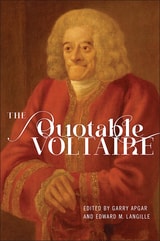
Drawing from a wide range of his publications, private letters, and remarks recorded by his contemporaries, The Quotable Voltaire includes material never before gathered in a single volume. English translations appear alongside the original French, and each quote is thoroughly indexed and referenced, with page numbers for both the first known publication edition of each entry and the most recent edition of Voltaire’s works. The book also features over 400 quotes about Voltaire, including commentary by eighteenth-century luminaries like Samuel Johnson, Catherine the Great, Casanova, and John Adams, as well as an eclectic assortment of modern-day personages ranging from Winston Churchill and Jorge Luis Borges to Mae West and Mike Tyson.
Lavishly illustrated with nearly three dozen images of Voltaire-related art, this collection opens with a scholarly essay that recounts the great man’s life and reflects on his outsized influence on Western culture. Whether you are a Voltaire scholar or a neophyte, The Quotable Voltaire is the perfect introduction to a brilliant mind.

The Right of Instruction and Representation in American Legislatures, 1778 to 1900
Peverill Squire
University of Michigan Press, 2021
The Rise and Fall of Early American Magazine Culture
Jared Gardner
University of Illinois Press, 2014
The Romantic Conception of Life
Science and Philosophy in the Age of GoetheRobert J. Richards
University of Chicago Press, 2002
Integrating Romantic literature, science, and philosophy with an intimate knowledge of the individuals involved—from Goethe and the brothers Schlegel to Humboldt and Friedrich and Caroline Schelling—Richards demonstrates how their tempestuous lives shaped their ideas as profoundly as their intellectual and cultural heritage. He focuses especially on how Romantic concepts of the self, as well as aesthetic and moral considerations—all tempered by personal relationships—altered scientific representations of nature. Although historians have long considered Romanticism at best a minor tributary to scientific thought, Richards moves it to the center of the main currents of nineteenth-century biology, culminating in the conception of nature that underlies Darwin's evolutionary theory.
Uniting the personal and poetic aspects of philosophy and science in a way that the German Romantics themselves would have honored, The Romantic Conception of Life alters how we look at Romanticism and nineteenth-century biology.

The Saving Remnant
RELIGION AND THE SETTLING OF NEW ENGLANDCedric B. Cowing
University of Illinois Press, 1995
Cedric Cowing demonstrates that there were two Englands, one evangelistic and one rationalistic. In the northwest of the British Isles was a society that was pastoral, westering, otherworldly, and revivalist--in the southeast was another, more established and mercantile. These two strains set the stage and powered the action for the biggest religious event of the eighteenth century--the Great Awakening.
The leaders of the New Light in the Great Awakening were the Saving Remnant, mostly ministers with liberal education who retained their evangelical and seeker religiosity. The clearly identifiable regional religious parallels between old England and New are still discernable today and give a new slant to heretofore unresolved historiographical issues. Cowing shows how regionalism influenced the nature of New England Puritanism and how the presence of a strong and persistent link between regional origins and religious behavior led to the inevitability of the Salem witch trials.
The Science of Character
Human Objecthood and the Ends of Victorian RealismS. Pearl Brilmyer
University of Chicago Press, 2022
In 1843, the Victorian philosopher John Stuart Mill called for the establishment of a new science, “the science of the formation of character.” Although Mill’s proposal failed as scientific practice, S. Pearl Brilmyer maintains that it found its true home in realist fiction of the period, which employed the literary figure of character to investigate the nature of embodied experience. Bringing to life Mill’s unrealized dream of a science of character, novelists such as George Eliot, Thomas Hardy, and Olive Schreiner turned to narrative to explore how traits and behaviors in organisms emerge and develop, and how aesthetic features—shapes, colors, and gestures—come to take on cultural meaning through certain categories, such as race and sex. Engaged with materialist science and philosophy, these authors transformed character from the liberal notion of the inner truth of an individual into a materially determined figuration produced through shifts in the boundaries between the body’s inside and outside. In their hands, Brilmyer argues, literature became a science, not in the sense that its claims were falsifiable or even systematically articulated, but in its commitment to uncovering, through a fictional staging of realistic events, the laws governing physical and affective life. The Science of Character redraws late Victorian literary history to show how women and feminist novelists pushed realism to its aesthetic and philosophical limits in the crucial span between 1870 and 1920.

The Sciences in Enlightened Europe
Edited by William Clark, Jan Golinski, and Simon Schaffer
University of Chicago Press, 1999
The contributors examine the production of new disciplines through work with instruments and techniques; consider how institutions of public taste and conversation helped provide a common frame for the study of human and nonhuman natures; and explore the regional operations of scientific culture at the geographical fringes of Europe.
Implicated in the rise of both fascism and liberal secularism, the moral and political values that shaped the Enlightenment remain controversial today. Through careful scrutiny of how these values influenced and were influenced by the concrete practices of its sciences, this book gives us an entirely new sense of the Enlightenment.

The Sciences of the Soul
The Early Modern Origins of PsychologyFernando Vidal
University of Chicago Press, 2011
Fernando Vidal’s trailblazing text on the origins of psychology traces the development of the discipline from its appearance in the late sixteenth century to its redefinition at the end of the seventeenth and its emergence as an institutionalized field in the eighteenth. Originally published in 2011, The Sciences of the Soul continues to be of wide importance in the history and philosophy of psychology, the history of the human sciences more generally, and in the social and intellectual history of eighteenth-century Europe.
The Scientific Literature
A Guided TourEdited by Joseph E. Harmon and Alan G. Gross
University of Chicago Press, 2007
The scientific article has been a hallmark of the career of every important western scientist since the seventeenth century. Yet its role in the history of science has not been fully explored. Joseph E. Harmon and Alan G. Gross remedy this oversight with The Scientific Literature, a collection of writings—excerpts from scientific articles, letters, memoirs, proceedings, transactions, and magazines—that illustrates the origin of the scientific article in 1665 and its evolution over the next three and a half centuries.
Featuring articles—as well as sixty tables and illustrations, tools vital to scientific communication—that represent the broad sweep of modern science, The Scientific Literature is a historical tour through both the rhetorical strategies that scientists employ to share their discoveries and the methods that scientists use to argue claims of new knowledge. Commentaries that explain each excerpt’s scientific and historical context and analyze its communication strategy accompany each entry.
A unique anthology, The Scientific Literature will allow both the scholar and the general reader to experience first hand the development of modern science.

The Scots Irish of Early Pennsylvania
A Varied PeopleJudith A. Ridner
Temple University Press, 2018
The Scots Irish were one of early Pennsylvania’s largest non-English immigrant groups. They were stereotyped as frontier ruffians and Indian haters. In The Scots Irish of Early Pennsylvania, historian Judith Ridner insists that this immigrant group was socio-economically diverse. Servants and free people, individuals and families, and political exiles and refugees from Ulster, they not only pioneered new frontier settlements, but also populated the state’s cities—Philadelphia and Pittsburgh—and its towns, such as Lancaster, Easton, and Carlisle.
Ridner provides a much-overdue synthesis and reassessment of this immigrant group, tracing a century of Scotch-Irish migration from 1720 to 1820. These men and women brought their version of Ulster to the colonies in their fierce commitments to family, community, entrepreneurship, Presbyterianism, republican politics, and higher education. The settlements they founded across the state, including many farms, businesses, meetinghouses, and colleges, ensured that Pennsylvania would be their cradle in America, and these settlements stand as powerful testaments to their legacy to the state’s history and development.

The Secret Life of Things
Animals, Objects, and It-Narratives in Eighteenth-Century EnglandMark Blackwell
Bucknell University Press, 2023
Published by Bucknell University Press.
Distributed worldwide by Rutgers University Press.
The Selected Writings of John Witherspoon
Edited by Thomas P. Miller
Southern Illinois University Press, 1990
The Silence of the Miskito Prince
How Cultural Dialogue Was ColonizedMatt Cohen
University of Minnesota Press, 2022
Confronting the rifts created by our common conceptual vocabulary for North American colonial studies
How can we tell colonial histories in ways that invite intercultural conversation within humanistic fields that are themselves products of colonial domination? Beginning with a famous episode of failed communication from the narrative of the freed slave Olaudah Equiano, The Silence of the Miskito Prince explores this question by looking critically at five concepts frequently used to imagine solutions to the challenges of cross-cultural communication: understanding, cosmopolitanism, piety, reciprocity, and patience.
Focusing on the first two centuries of North American colonization, Matt Cohen traces how these five concepts of cross-cultural relations emerged from, and continue to evolve within, colonial dynamics. Through a series of revealing archival explorations, he argues the need for a new vocabulary for the analysis of past interactions drawn from the intellectual and spiritual domains of the colonized, and for a historiographical practice oriented less toward the illusion of complete understanding and scholarly authority and more toward the beliefs and experiences of descendant communities.
The Silence of the Miskito Prince argues for new ways of framing scholarly conversations that use past interactions as a site for thinking about intercultural relations today. By investigating the colonial histories of these terms that were assumed to promote inclusion, Cohen offers both a reflection on how we got here and a model of scholarly humility that holds us to our better or worse pasts.
The Social Life of Criticism
Gender, Critical Writing, and the Politics of BelongingKimberly J. Stern
University of Michigan Press, 2016
This engaging study begins by looking at the eighteenth century, when critical writing started to assume the institutional and generic structures we associate with it today, and examines a series of case studies that illuminate how women writers engaged with the forms of intellectual sociability that defined nineteenth-century criticism—including critical dialogue, the club, the salon, and the publishing firm. In doing so, it clarifies the fascinating rhetorical and political debates surrounding the figure of the female critic and charts how women writers worked both within and against professional communities. Ultimately, Stern contends that gender was a formative influence on critical practice from the very beginning, presenting the history of criticism as a history of gender politics.
While firmly grounded in literary studies, The Social Life of Criticism combines an attention to historical context with a deep investment in feminist scholarship, social theory, and print culture. The book promises to be of interest not only to professional academics and graduate students in nineteenth-century literature but also to scholars in a wide range of disciplines, including literature, intellectual history, cultural studies, gender theory, and sociology.
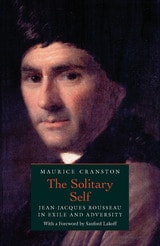
The Solitary Self
Jean-Jacques Rousseau in Exile and AdversityMaurice Cranston
University of Chicago Press, 1997
"The Solitary Self is a fitting coda to a magisterial work. Cranston . . . is a compelling stylist who narrates Rousseau's tribulations with a mixture of compassion and dry humor."—Thomas Pavel, Wall Street Journal
"Cranston not only recreates for his readers a rounded view of Rousseau himself, he sets it firmly in the social and political context of Europe's ancien regime. . . . An engrossing work of history."—John Gray, New Statesman
"Cranston's painstaking archival research and lucid style yield the most detailed and thoroughly documented biography of Rousseau written in English. His epilogue masterfully sums up Rousseau's importance as political philosopher and initiator of romantic sensibilities."—Choice
"Anyone curious about the paradoxes of a most paradoxical man will not go wrong by starting with this invaluable biography."—James Miller, Washington Post Book World
"As absorbing as a picaresque novel."—Naomi Bliven, New Yorker
"A monument of scholarship. . . . This amazing biography, like Boswell's account of Johnson, recreates the daily life of Rousseau: what he did, who he saw, what he said, what he wrote. . . . We may be quite confident that we hold in our hands the authoritative account of this life. The definitive Rousseau."—Isaac Kramnick, New Republic
Maurice Cranston (1920-1993), a distinguished scholar and recipient of the James Tait Black Memorial Prize for his biography of John Locke, was professor of political science at the London School of Economics. His numerous books include The Romantic Movement and Philosophers and Pamphleteers, and translations of Rousseau's The Social Contract and Discourse on the Origins of Inequality.

The Sons of Gunshooter
A Navajo Resistance StoryDorothy Denetclaw and Matt Fitzsimons
University of Arizona Press, 2026
In 1919, the brother of one of the West’s most famous Indian traders was shot to death in a remote corner of the Navajo Nation.
Part history, part true crime, The Sons of Gunshooter reexamines the killing and subsequent murder trial, while simultaneously embedding the story in a much larger saga of colonization and resistance. The result is a book that’s sweeping in its scope and surgical in its approach. Rewinding the clock to 1868, the authors follow the intertwining paths of two families to offer a riveting, deeply personal account that has been hailed as “a new way of doing historiography.”
One of the authors is a descendant of participants in the case; the other is an investigative journalist. By merging Diné oral traditions with archival evidence, they succeed in upending one false narrative after another.

The Southern Frontier 1670-1732
Verner Crane, with a new introduction by Steven C. Hahn
University of Alabama Press, 2004
A classic resource on the struggle for dominance in southern North America during the colonial period
This volume recounts the clashes and intrigues that played out over the landscape of the Old Southwest and across six decades as the Spanish, French, British, and ultimately Americans vied for control. Rivalry began soon after initial discovery, mapping, and exploration as the world powers, particularly England and France, competed for control of the lucrative fur trade in the Mississippi valley. The French attempted to establish trade networks stretching from the Atlantic Ocean inland to the Mississippi River and northward from ports on the Gulf of Mexico to the Ohio River. But they found the British already entrenched there.
Verner Crane guides us through this multinational struggle and navigates the border wars and diplomatic intrigues that played crucial roles in the settlement of the South by Euro-Americans. In his new introduction, Steven Hahn places the work in the context of its time, sketches its publication history, and provides biographical information on Crane.