Results by title
653 books match the query 'Animals' and 140 start with t
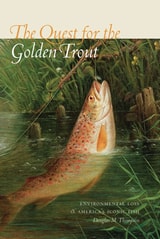
The Quest for the Golden Trout
Environmental Loss and America’s Iconic FishDouglas M. Thompson
University Press of New England, 2013
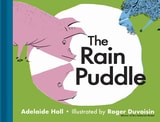
The Rain Puddle
Adelaide Holl
Bodleian Library Publishing, 2017
This wonderfully silly children’s book, originally published in 1965, is ideal for reading aloud, a tale that perfectly captures the wonder of discovering the outside world.
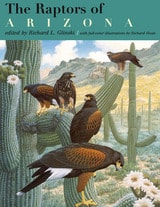
The Raptors of Arizona
Edited by Richard L. Glinski, with full-color illustrations by Richard Sloan
University of Arizona Press, 1998
Arizona's raptors are found in an unrivaled diversity of habitats, from saguaro cactus forests where tiny Elf Owls nest to the Vermilion Cliffs, where the gigantic California Condor was introduced in 1996. Yet many species live in habitats that are now jeopardized by degradation or development, making an understanding and appreciation of raptors crucial to their survival.
The Raptors of Arizona brings together the knowledge and insights of 29 raptor and wildlife authorities who provide original information and syntheses on Arizona's 42 raptor species, with an emphasis on aspects of their natural history in Arizona. A chapter on each bird includes its description, a range map, and information on its distribution, habitat, life history, and status. Additional chapters cover conservation, habitats, where and when to watch raptors, and the sport of falconry. The book is enhanced by 42 full-color illustrations by Richard Sloan, one of the premier wildlife artists in North America, whose paintings were commissioned by the Arizona Wildlife Foundation specifically for this project. Co-published with the Arizona Game and Fish Department.
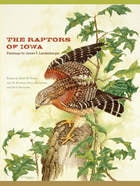
The Raptors of Iowa
James F. Landenberger, Dean M. Roosa, Jon W. Stravers, Bruce Ehresman, Rich Patterson
University of Iowa Press, 2013
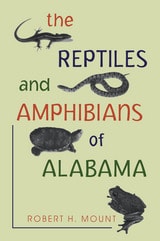
The Reptiles and Amphibians of Alabama
Robert H. Mount
University of Alabama Press, 1980
Generously illustrated, it contains photographs and range maps for each species, showing the specific locality from which each specimen on record was collected. The text includes keys, detailed descriptions, accounts of habitats and life histories, remarks about variations and ecological disturbances, as well as general information on such topics as collecting and care in captivity. The volume is an essential guide for herpetologists of all ages.
The Safe House
A NovelChristophe Boltanski
University of Chicago Press, 2017
When the Nazis came, Étienne Boltanski divorced his wife and walked out the front door, never to be seen again during the war. So far as the outside world knew, the Jewish doctor had fled. The truth was that he had sneaked back to hide in a secret crawl space at the heart of the house. There he lived for the duration of the war. With the Liberation, Étienne finally emerged, but he and his family were changed forever—anxious, reclusive, yet proudly eccentric. Their lives were spent, amid Bohemian disarray and lingering wartime fears, in the mansion’s recesses or packed comically into the protective cocoon of a Fiat.
That house (and its vehicular appendage) is at the heart of Christophe Boltanski’s ingeniously structured, lightly fictionalized account of his grandparents and their extended family. The novel unfolds room by room—each chapter opening with a floorplan—introducing us to the characters who occupy each room, including the narrator’s grandmother—a woman of “savage appetites”—and his uncle Christian, whose haunted artworks would one day make him famous. “The house was a palace,” Boltanski writes, “and they lived like hobos.” Rejecting convention as they’d rejected the outside world, the family never celebrated birthdays or even marked the passage of time, living instead in permanent stasis, ever more closely bonded to the house itself.
The Safe House was a literary sensation when published in France in 2015 and won the Prix de Prix, France’s most prestigious book prize. A French-language film adaptation, La cache, was released in 2025 from director Lionel Baier. With hints of Oulipian playfulness and an atmosphere of dark humor, The Safe House is an unforgettable portrait of a self-imprisoned family.
The Scientific Nomenclature of Birds in the Upper Midwest
James Sandrock and Jean C. Prior
University of Iowa Press, 2014
The authors examine the roots, stems, and construction of scientific names from their classical Latin and Greek or other linguistic origins. The translations of these words and insights into their sources yield quirky, tantalizing facts about the people, geography, habitat, and mythology behind bird names. Each entry also includes the bird’s common name as well as local or regional names. Beginning birders confused by scientific names as well as more experienced birders curious about such names will find that the book opens unexpected connections into linguistic, historical, biological, artistic, biographical, and even aesthetic realms.
Highlighting the obvious and not-so-obvious links between birds and language, this practical guide continues a long scholarly tradition of such books by and for those afoot in the field. Whether you are hiking with binoculars or watching a backyard bird feeder or reading at home, The Scientific Nomenclature of Birds in the Upper Midwest will greatly enhance your appreciation of birds.
The Secret Life of Things
Animals, Objects, and It-Narratives in Eighteenth-Century EnglandMark Blackwell
Bucknell University Press, 2023
Published by Bucknell University Press.
Distributed worldwide by Rutgers University Press.
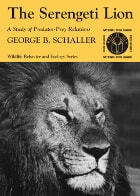
The Serengeti Lion
A Study of Predator-Prey RelationsGeorge B. Schaller
University of Chicago Press, 1976
Based on three years of study in the Serengeti National Park, George B. Schaller’s The Serengeti Lion describes the vast impact of the lion and other predators on the vast herds of wildebeest, zebra, and gazelle for which the area is famous. The most comprehensive book available on the lion, this classic work includes the author’s findings on all aspects of lion behavior, including its social system, population dynamics, hunting behavior, and predation patterns.
“If you have only enough time to read one book about field biology, this is the one I recommend.”—Edward O. Wilson, Science
“This book conveys not only the fascination of its particular study of lion behavior but the drama and wonder and beauty of the intimate interdependence of all living things.”—Saturday Review
“This is an important book, not just for its valuable information on lions, but for its broad, open, and intelligent approach to problems that cut across the fields of behavior, populations, ecology, wildlife management, evolution, anthropology, and comparative biology.”—Richard G. Van Gelder, Bioscience
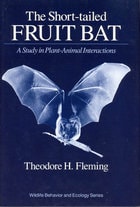
The Short-Tailed Fruit Bat
A Study in Plant-Animal InteractionsTheodore H. Fleming
University of Chicago Press, 1988
In The Short-tailed Fruit Bat, Theodore Fleming examines Carollia's role in the ecology of tropical forests. Based on more than ten years' research, this study provides the most detailed ecological and evolutionary account to date of the life history of a Neotropical mammal and includes striking photographs of the bats in flight.
The Sound of Feathers
Attentive Living in a World Beyond OurselvesKathryn Gillespie
Duke University Press, 2026
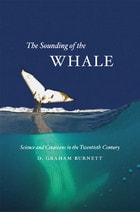
The Sounding of the Whale
Science and Cetaceans in the Twentieth CenturyD. Graham Burnett
University of Chicago Press, 2011
From the Bible’s “Canst thou raise leviathan with a hook?” to Captain Ahab’s “From Hell’s heart I stab at thee!,” from the trials of Job to the legends of Sinbad, whales have breached in the human imagination as looming figures of terror, power, confusion, and mystery.
In the twentieth century, however, our understanding of and relationship to these superlatives of creation underwent some astonishing changes, and with The Sounding of the Whale, D. Graham Burnett tells the fascinating story of the transformation of cetaceans from grotesque monsters, useful only as wallowing kegs of fat and fertilizer, to playful friends of humanity, bellwethers of environmental devastation, and, finally, totems of the counterculture in the Age of Aquarius. When Burnett opens his story, ignorance reigns: even Nature was misclassifying whales at the turn of the century, and the only biological study of the species was happening in gruesome Arctic slaughterhouses. But in the aftermath of World War I, an international effort to bring rational regulations to the whaling industry led to an explosion of global research—and regulations that, while well-meaning, were quashed, or widely flouted, by whaling nations, the first shot in a battle that continues to this day. The book closes with a look at the remarkable shift in public attitudes toward whales that began in the 1960s, as environmental concerns and new discoveries about whale behavior combined to make whales an object of sentimental concern and public adulation.
A sweeping history, grounded in nearly a decade of research, The Sounding of the Whale tells a remarkable story of how science, politics, and simple human wonder intertwined to transform the way we see these behemoths from below.

The Status and Distribution of New Jersey's Birds
Leck, Charles F
Rutgers University Press, 1984
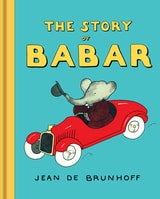
The Story of Babar
Jean de Brunhoff was a French artist and illustrator who wrote seven books in the Babar the Elephant series. His work had a major influence on the development of the picture book.
Bodleian Library Publishing, 2016

The Story of the First Pawpsicle
Ariel Ojibway
Fifth Avenue Press, 2025
Did you ever wonder who made the first popsicles? Or if your ancestors made snow cones with maple syrup?
Me too!
I guess we'll never know who made the first frozen treat because the evidence was eaten long ago, but it's always fun to imagine new stories...
Wabooz has a brand new idea for a delicious treat, but will everything turn out as he hoped? Travel with him through the lands where the pawpaws grow in search of the perfect fruit!
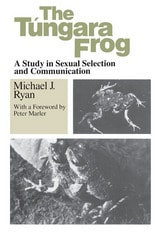
The Tungara Frog
A Study in Sexual Selection and CommunicationMichael J. Ryan
University of Chicago Press, 1985
In TheTúngara Frog, the most detailed and informative single study available of frogs and their reproductive behavior, Michael J. Ryan demonstrates the interplay of sexual and natural selection. Using techniques from ethology, behavioral ecology, sensory physiology, physiological ecology, and theoretical population genetics in his research, Ryan shows that large males with low-frequency calls mate most successfully. He examines in detail a number of explanations for the females' preferences, and he considers possible evolutionary forces leading to the males' success.
Though certain vocalizations allow males to obtain mates and thus should be favored by sexual selection, this study highlights two important costs of such sexual displays: the frogs expand considerable energy in their mating calls, and they advertise their whereabouts to predators. Ryan considers in detail how predators, especially the frige-lipped bat (Trachops cirrhosus), affect the evolution of the túngara frog's calls.
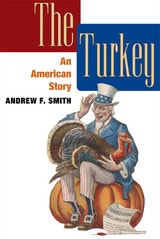
The Turkey
AN AMERICAN STORYAndrew F. Smith
University of Illinois Press, 2006
“Talking turkey” about the bird you thought you knew
Fondly remembered as the centerpiece of family Thanksgiving reunions, the turkey is a cultural symbol as well as a multi-billion dollar industry. As a bird, dinner, commodity, and as a national icon, the turkey has become as American as the bald eagle (with which it actually competed for supremacy on national insignias).
Food historian Andrew F. Smith’s sweeping and multifaceted history of Meleagris gallopavo separates fact from fiction, serving as both a solid historical reference and a fascinating general read. With his characteristic wit and insatiable curiosity, Smith presents the turkey in ten courses, beginning with the bird itself (actually several different species of turkey) flying through the wild. The Turkey subsequently includes discussions of practically every aspect of the iconic bird, including the wild turkey in early America, how it came to be called “turkey,” domestication, turkey mating habits, expansion into Europe, stuffing, conditions in modern industrial turkey factories, its surprising commercial history of boom and bust, and its eventual ascension to holiday mainstay.
As one of the easiest of foods to cook, the turkey’s culinary possibilities have been widely explored if little noted. The second half of the book collects an amazing array of over one hundred historical and modern turkey recipes from across America and Europe. From sandwiches to salmagundi, you’ll find detailed instructions on nearly every variation on the turkey. Historians will enjoy a look back at the varied appetites of their ancestors and seasoned cooks will have an opportunity to reintroduce a familiar food in forgotten ways.
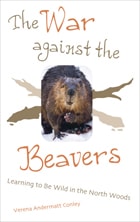
The War Against The Beavers
Learning to Be Wild in the North WoodsVerena Andermatt Conley
University of Minnesota Press, 2005
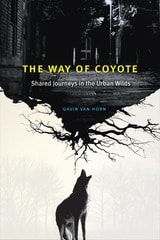
The Way of Coyote
Shared Journeys in the Urban WildsGavin Van Horn
University of Chicago Press, 2018
A hiking trail through majestic mountains. A raw, unpeopled wilderness stretching as far as the eye can see. These are the settings we associate with our most famous books about nature. But Gavin Van Horn isn’t most nature writers. He lives and works not in some perfectly remote cabin in the woods but in a city—a big city. And that city has offered him something even more valuable than solitude: a window onto the surprising attractiveness of cities to animals. What was once in his mind essentially a nature-free blank slate turns out to actually be a bustling place where millions of wild things roam. He came to realize that our own paths are crisscrossed by the tracks and flyways of endangered black-crowned night herons, Cooper’s hawks, brown bats, coyotes, opossums, white-tailed deer, and many others who thread their lives ably through our own.
With The Way of Coyote, Gavin Van Horn reveals the stupendous diversity of species that can flourish in urban landscapes like Chicago. That isn’t to say city living is without its challenges. Chicago has been altered dramatically over a relatively short timespan—its soils covered by concrete, its wetlands drained and refilled, its river diverted and made to flow in the opposite direction. The stories in The Way of Coyote occasionally lament lost abundance, but they also point toward incredible adaptability and resilience, such as that displayed by beavers plying the waters of human-constructed canals or peregrine falcons raising their young atop towering skyscrapers. Van Horn populates his stories with a remarkable range of urban wildlife and probes the philosophical and religious dimensions of what it means to coexist, drawing frequently from the wisdom of three unconventional guides—wildlife ecologist Aldo Leopold, Taoist philosopher Lao Tzu, and the North American trickster figure Coyote. Ultimately, Van Horn sees vast potential for a more vibrant collective of ecological citizens as we take our cues from landscapes past and present.
Part urban nature travelogue, part philosophical reflection on the role wildlife can play in waking us to a shared sense of place and fate, The Way of Coyote is a deeply personal journey that questions how we might best reconcile our own needs with the needs of other creatures in our shared urban habitats.
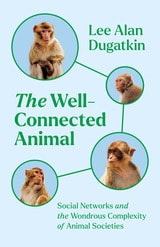
The Well-Connected Animal
Social Networks and the Wondrous Complexity of Animal SocietiesLee Alan Dugatkin
University of Chicago Press, 2024
An engaging exploration of the wondrous social webs that permeate life in animal societies around the world.
It’s all about who you know. Whether vampire bats sharing blood meals for survival, field crickets remembering champion fighters, macaque monkeys forming grooming pacts after a deadly hurricane, or great tit birds learning the best way to steal milk—it pays to be well connected.
In this tour of the animal kingdom, evolutionary biologist Lee Alan Dugatkin reveals a new field of study, uncovering social networks that existed long before the dawn of human social media. He accessibly describes the latest findings from animal behavior, evolution, computer science, psychology, anthropology, genetics, and neurobiology, and incorporates interviews and insights from researchers he finds swimming with manta rays, avoiding pigeon poop, and stopping monkeys from stealing iPads. With Dugatkin as our guide, we investigate social networks in giraffes, elephants, kangaroos, Tasmanian devils, whales, bats, and more. From animal networks in Australia and Asia to Africa, Europe, and the Americas, The Well-Connected Animal is an eye-opening exposé of wild friends, enemies, and everything in between.
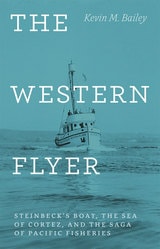
The Western Flyer
Steinbeck's Boat, the Sea of Cortez, and the Saga of Pacific FisheriesKevin M. Bailey
University of Chicago Press, 2015
In this book, Kevin M. Bailey resurrects this forgotten witness to the changing tides of Pacific fisheries. He draws on the Steinbeck archives, interviews with family members of crew, and more than three decades of working in Pacific Northwest fisheries to trace the depletion of marine life through the voyages of a single ship. After Steinbeck and his friend Ed Ricketts—a pioneer in the study of the West Coast’s diverse sea life and the inspiration behind “Doc” in Cannery Row—chartered the boat for their now-famous 1940 expedition, the Western Flyer returned to its life as a sardine seiner in California. But when the sardine fishery in Monterey collapsed, the boat moved on: fishing for Pacific ocean perch off Washington, king crab in the Bering Sea off Alaska, and finally wild Pacific salmon—all industries that would also face collapse.
As the Western Flyer herself faces an uncertain future—a businessman has bought her, intending to bring the boat to Salinas, California, and turn it into a restaurant feature just blocks from Steinbeck’s grave—debates about the status of the California sardine, and of West Coast fisheries generally, have resurfaced. A compelling and timely tale of a boat and the people it carried, of fisheries exploited, and of fortunes won and lost, The Western Flyer is environmental history at its best: a journey through time and across the sea, charting the ebb and flow of the cobalt waters of the Pacific coast.
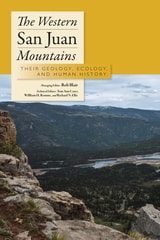
The Western San Juan Mountains
Their Geology, Ecology, and Human HistoryRob Blair
University Press of Colorado, 1996
The most complete work published on the natural history of southwest Colorado's majestic mountain system, The Western San Juan Mountains: Their Geology, Ecology, and Human History is designed to be used while exploring the scenic 235-mile paved San Juan Skyway, which passes through Durango, Silverton, Ouray, Telluride, Dolores, and Cortez.
The Western San Juan Mountains covers the physical environment, the biological communities, the human history, and points of interest represented on milepost signs along the highway. Some of the many topics covered include: how the San Juan Mountains were formed; why the landscape is so rugged and picturesque; why the vegetation changes from the lowlands to the alpine heights; energy and mineral resources of the area; why these mountains intrigued early explorers; factors that influence the unpredictable weather; and the first-known inhabitants.
The contributions to this guide include Fort Lewis College geologists, biologists, archaeologists, historians, and other specialists. Together they have amassed more than one hundred years of study based not only on previous work but on their own research.
This generously illustrated guidebook is aimed at all those who wish to understand this intricate mountain system in much greater detail than provided by most picture books.
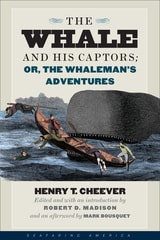
The Whale and His Captors; or, The Whaleman's Adventures
Henry T. Cheever
University Press of New England, 2018
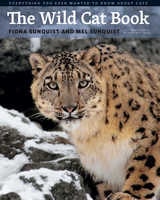
The Wild Cat Book
Everything You Ever Wanted to Know about CatsFiona Sunquist and Mel Sunquist
University of Chicago Press, 2014
Illustrated throughout with Terry Whittaker’s spectacular color photographs as well as unique photos from biologists in the field—some the highest quality images ever captured of exceptionally rare species—The Wild Cat Book not only tantalizes with the beauty of cats, but also serves as a valuable and accessible reference on cat behavior and conservation. Comprehensive entries for each of the thirty-seven cat species include color distribution maps and up-to-date information related to the species’ IUCN conservation and management statuses, while informative sidebars reveal why male lions have manes (and why dark manes are sexiest), how cats see with their whiskers, the truth behind our obsession with white lions and tigers, and why cats can’t be vegetarians. The Wild Cat Book also highlights the grave threats faced by the world’s wild cats—from habitat destruction to human persecution.
From the extraordinary acrobatics of the arboreal margay—able to cling to a tree branch by a single paw thanks to its unusually flexible ankles—to modern declines in African lion populations, The Wild Cat Book is an instructive and revealing ode to felines of every size and color. Combining science, behavioral observations, and stunning photography, this book will captivate cat fanciers the world over.
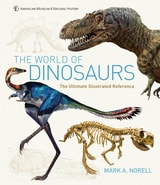
The World of Dinosaurs
An Illustrated TourMark A. Norell
University of Chicago Press, 2019
“Perhaps the easiest way to glimpse . . . all this new knowledge is to leaf through Norell’s The World of Dinosaurs. . . . One of the principal paleontologists of our time."—New York Review of Books
“A delight.”—Open Letters Review
“Possibly the best general audience dinosaur book of 2019.”—Paleoaerie
Dinosaurs have held sway over our imaginations since the discovery of their bones first shocked the world in the nineteenth century. From the monstrous beasts stalking Jurassic Park to the curiosities of the natural history museum, dinosaurs are creatures that unite young and old in awestruck wonder. Digging ever deeper into dinosaurs’ ancient past, science continues to unearth new knowledge about them and the world they inhabited, a fantastic time when the footprints of these behemoths marked the Earth that we humans now walk.
Who better to guide us through this ancient world than paleontologist Mark A. Norell? A world-renowned expert in paleontology, with a knowledge of dinosaurs as deep as the buried fossils they left behind, Norell is in charge of what is perhaps America’s most popular collection of dinosaur bones and fossils, the beloved displays at the American Museum of Natural History in New York. In The World of Dinosaurs, he leads readers through a richly illustrated collection detailing the evolution of these ancient creatures. From the horns of the Protoceratops to the wings of the Archaeopteryx, readers are invited to explore profiles of dinosaurs along with hundreds of color photographs, sketches, maps, and other materials—all rooted in the latest scientific discoveries—sure to both capture the imagination and satisfy a prehistoric curiosity. The World of Dinosaurs presents an astonishing collection of knowledge in an immersive visual journey that will fascinate any fan of Earth’s ancient inhabitants.
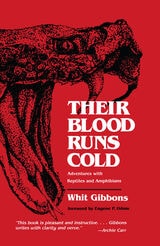
Their Blood Runs Cold
Adventures with Reptiles and AmphibiansWhit Gibbons
University of Alabama Press, 1983
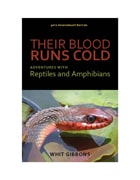
Their Blood Runs Cold
Adventures with Reptiles and AmphibiansWhit Gibbons
University of Alabama Press, 2013
Enter the fascinating world of reptiles and amphibians through the eyes of a pioneering field scientist.
Their Blood Runs Cold is entertaining, informative reading that not only enhances our understanding of a unique group of animals, but also provides genuine insight into the mind and character of a research scientist.
Whit Gibbons possesses the rare talent of conveying the challenge and excitement of scientific inquiry. A research ecologist who specializes in the study of reptiles and amphibians, he gives accounts of work in the field that are as readable as good short stories.
From the dangers of being chased by an angry rattlesnake to the exhilaration of discovering a previously undescribed species, Gibbons brings to life the everyday experiences of the herpetologist as he chases down lizards, turtles, snakes, alligators, salamanders, and frogs in their natural habitats. With essays like “Turtles May Be Slow but They’re 200 Million Years Ahead of Us” and “How to Catch an Alligator in One Uneasy Lesson,” Their Blood Runs Cold both entertains and informs.
The thirtieth anniversary edition of Their Blood Runs Cold features a new prologue and epilogue, additions that address changes in the taxonomy and study of reptiles and amphibians that have occurred since the publication of the original edition and offer suggestions for further reading that highlight the explosion of interest in the topic.
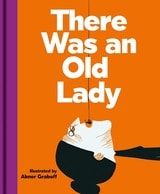
There was an Old Lady
Abner Graboff
Bodleian Library Publishing, 2018
For more than a century, this deceptively simple rhyme has delighted children and parents alike. Its galloping rhythm is perfect for reading out loud, becoming a memory game as the list of animals grows—from fly and spider to bird, cat, dog, and goat. Abner Graboff’s bright and startling illustrations combine beautifully with the original verse to bring this subversive, irreverent tale to life.
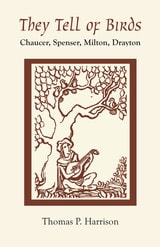
They Tell of Birds
Chaucer, Spenser, Milton, DraytonBy Thomas P. Harrison
University of Texas Press, 1956
Thomas P. Harrison here combines a lifelong interest in birds with a professional study of literature. This book, a study of birds as they are presented by four great English poets, inquires into the extent and sources of their knowledge of birds and analyzes the methods by which they adapted that knowledge for poetic purposes. The interrelationships of their poetry are also discussed, providing a new basis for comparison of four poets whose work is closely linked on other grounds remote from natural history.
The first chapter reviews representative figures and works of the centuries preceding the Renaissance and illustrates the medieval poetic conventions about birds that influenced the four poets. The remaining chapters treat each poet and his works in detail, comparing their use of this area of the natural world. The book concludes with an index of bird allusions in the works of the four poets, with occasional quotations illustrating the manner in which the traditional or observed habits of particular birds were put to poetic use. The book is illustrated with medieval and Renaissance illustrations of birds.
In this careful treatment of an important element of the poets’ works, Harrison has indicated the larger picture of their attitudes toward and use of the natural world about them. Accordingly, it might be said to constitute a chapter on the relationship of poetry and science at a crucial period in the history of thought.
For much of his material, Harrison journeyed to England, where, among other research activities, he visited museums of natural history and bird sanctuaries throughout the country.
Primarily intended for students of literature, They Tell of Birds will also be of interest to ornithologists in its presentation of the beliefs of antiquity and the Middle Ages about particular birds. For, as the distinguished ornithologist E. M. Nicholson has said: “We owe to poets a wealth of records of living wild birds long before scientific ornithology had started.”
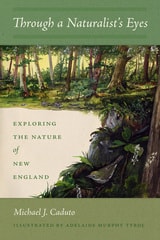
Through a Naturalist's Eyes
Exploring the Nature of New EnglandMichael J. Caduto
University Press of New England, 2016
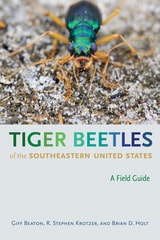
Tiger Beetles of the Southeastern United States
A Field GuideGiff Beaton, R. Stephen Krotzer, and Brian D. Holt
University of Alabama Press, 2021
Combines current data and taxonomic classifications for tiger beetles in the Southeast with stunning close-up photographs, flight season charts, and distribution maps
Tiger beetles are brightly colored and metallic beetles, often with ivory or cream-colored markings. They are most abundant and diverse in habitats near bodies of water with sandy or clay soils and can be found along rivers, on sea and lake shores, on sand dunes, around dry lakebeds, on clay banks, or on woodland paths. Conservatively estimated, the group comprises more than 2,600 species worldwide.
Tiger Beetles of the Southeastern United States identifies and describes 52 taxa (42 species and 10 additional subspecies) of tiger beetles that occur in Alabama, Florida, Georgia, Mississippi, North Carolina, South Carolina, and Tennessee. Stunning close-up photographs accompany current taxonomic and biological information in a volume designed for a growing audience of enthusiastic amateurs and professionals alike.
The authors provide an in-depth description of the anatomy, life cycle, and behavior of tiger beetles; an overview of the various southeastern habitats in which they occur; instructions for finding, identifying, and photographing them in the wild; and the conservation status of various species. The individual species accounts include stunning, detailed images, flight season charts, county-level regional distribution maps, and discussion of identifying features, habitat, similar species, and subspecies when applicable. The appendix includes two species previously found in Florida but no longer known to exist there.
The result is the most complete field guide to date on tiger beetles in the region. With more than 230 images of beetles and their habitats, as well as life history and distribution data, this book is essential for tiger beetle enthusiasts, naturalists of all kinds, photographers, biologists, and teachers throughout the region.
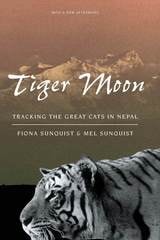
Tiger Moon
Tracking the Great Cats in NepalFiona Sunquist and Mel Sunquist
University of Chicago Press, 2003
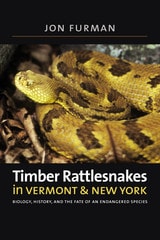
Timber Rattlesnakes in Vermont & New York
Biology, History, and the Fate of an Endangered SpeciesJon Furman
University Press of New England, 2007
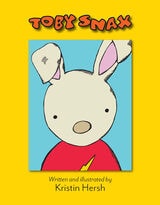
Toby Snax
Written and illustrated by Kristin Hersh
University of Texas Press, 2016
Toby Snax is a little bunny who’s reluctant to experience things away from home. When Mama asks him to join her on a trip, he needs a bit of encouragement. So Mama tells Toby about the wondrous things that await him out in the wide world, helping him to look forward to new adventures.
This charming, gentle book will resonate with any child who’s nervous about trying new things. The acclaimed musician Kristin Hersh created Toby Snax to encourage her son, Bodhi, to embrace the experiences of touring the world together while she performed both solo and with her bands 50 Foot Wave and Throwing Muses. The first edition of the book sold out immediately and has become highly collectible. This new edition makes Toby Snax available again for all fans of Hersh’s evocative storytelling, as well as children—or even adults—who need a little reassurance that the world is full of wonders.
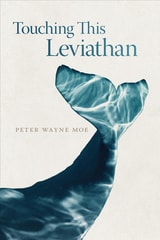
Touching This Leviathan
Peter Wayne Moe
Oregon State University Press, 2021
Touching This Leviathan asks how we might come to know the unknowable—in this case, whales, animals so large yet so elusive, revealing just a sliver of back, a glimpse of a fluke, or a split-second breach before diving away.
Whale books often sit within disciplinary silos. Touching This Leviathan starts a conversation among them. Drawing on biology, theology, natural history, literature, and writing studies, Peter Wayne Moe offers a deep dive into the alluring and impalpable mysteries of Earth’s largest mammal.
Entertaining, thought-provoking, and swimming with intelligence and wit, Touching is Leviathan is creative nonfiction that gestures toward science and literary criticism as it invites readers into the belly of the whale.
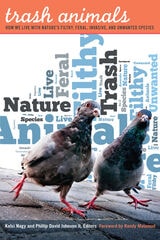
Trash Animals
How We Live with Nature’s Filthy, Feral, Invasive, and Unwanted SpeciesKelsi Nagy
University of Minnesota Press, 2013
Why are some species admired or beloved while others are despised? An eagle or hawk circling overhead inspires awe while urban pigeons shuffling underfoot are kicked away in revulsion. Fly fishermen consider carp an unwelcome trash fish, even though the trout they hope to catch are often equally non-native. Wolves and coyotes are feared and hunted in numbers wildly disproportionate to the dangers they pose to humans and livestock.
In Trash Animals, a diverse group of environmental writers explores the natural history of wildlife species deemed filthy, unwanted, invasive, or worthless, highlighting the vexed relationship humans have with such creatures. Each essay focuses on a so-called trash species—gulls, coyotes, carp, cockroaches, magpies, prairie dogs, and lubber grasshoppers, among others—examining the biology and behavior of each in contrast to the assumptions widely held about them. Identifying such animals as trash tells us nothing about problematic wildlife but rather reveals more about human expectations of, and frustrations with, the natural world.
By establishing the unique place that maligned species occupy in the contemporary landscape and in our imagination, the contributors challenge us to look closely at these animals, to reimagine our ethics of engagement with such wildlife, and to question the violence with which we treat them. Perhaps our attitudes reveal more about humans than they do about the animals.
Contributors: Bruce Barcott; Charles Bergman, Pacific Lutheran U; James E. Bishop, Young Harris College; Andrew D. Blechman; Michael P. Branch, U of Nevada, Reno; Lisa Couturier; Carolyn Kraus, U of Michigan–Dearborn; Jeffrey A. Lockwood, U of Wyoming; Kyhl Lyndgaard, Marlboro College; Charles Mitchell, Elmira College; Kathleen D. Moore, Oregon State U; Catherine Puckett; Bernard Quetchenbach, Montana State U, Billings; Christina Robertson, U of Nevada, Reno; Gavan P. L. Watson, U of Guelph, Ontario, Canada.
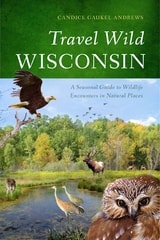
Travel Wild Wisconsin
A Seasonal Guide to Wildlife Encounters in Natural PlacesCandice Gaukel Andrews
University of Wisconsin Press, 2013
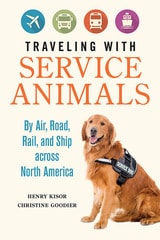
Traveling with Service Animals
By Air, Road, Rail, and Ship across North AmericaHenry Kisor and Christine Goodier
University of Illinois Press, 2019
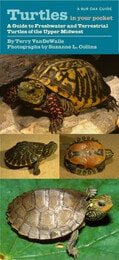
Turtles in Your Pocket
A Guide to Freshwater and Terrestrial Turtles of the Upper MidwestTerry VanDeWalle
University of Iowa Press, 2011
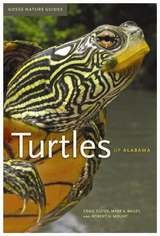
Turtles of Alabama
Craig Guyer, Mark A. Bailey, and Robert H. Mount
University of Alabama Press, 2015
From Riverbeds to Coastlines: The Ultimate Guide to Alabama’s Turtles.
For nearly 200 million years, Earth has been occupied by reptiles—a lineage of terrestrial vertebrates that includes some, like birds, that have invaded the aerial environment, and others, like turtles, that have invaded aquatic environments. With thirty-nine known species, Alabama harbors more turtle species than any other state in the nation, and its Mobile River basin is the center of the world's greatest biodiversity in turtles, surpassing all other river systems around the globe, including the Amazon and the Nile. Turtles of Alabama documents that extraordinary wealth and presents each species in full, describing its physical appearance, habitat and range, behavior, conservation and management, and taxonomy.
In addition to providing sixty-five full-color photographs of juveniles and adults along with forty-two colorfully detailed distribution maps, this volume features an introductory section explaining the physiography, climate, and habitats of the state, and offers illustrated taxonomic keys for all the species considered, including the oceanic behemoths that lay their eggs on Alabama's gulf beaches and the lumbering gopher tortoise that provides safe haven for countless other animals and arthropods in its underground burrows of the Coastal Plain. With fine line drawings to highlight various distinguishing attributes of the animals, this volume is the definitive guide to the state’s fascinating and diverse turtle populations—freshwater, marine, and terrestrial.
Although they are notoriously slow-moving, turtles still survive on Earth because of their remarkable adaptations—an exterior shell for body protection, long lives, high reproductive output, stamina, and a capacity for doing without. Turtles are cold-blooded reptiles that were here long before mammals, and they're still around, continuing to adapt to many different habitats and ecological niches, still interbreeding, evolving, and speciating. Turtles of Alabama is a fitting celebration of that phenomenal variety and strength.