Results by title
5550 books match the query 'Biography & Autobiography' and 1006 start with t
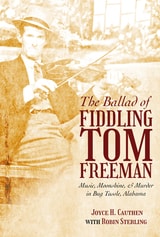
The Ballad of Fiddling Tom Freeman
Music, Moonshine, and Murder in Bug Tussle, AlabamaJoyce H. Cauthen with Robin Sterling
University of Alabama Press, 2026
A raw, firsthand account of feuds, fiddling, moonshining, and survival in a small Alabama town, told by its most colorful chronicler and shaped through careful historical insight.
The Ballad of Fiddling Tom Freeman is a riveting portrait of a forgotten America, drawn from the handwritten memoirs of a bootlegger, fiddler, and chronicler of life in Bug Tussle, Alabama, in the first half of the twentieth century. Today, rural voices are often drowned out by polished narratives, but this book resurrects the unfiltered perspective of a man who lived through—and candidly documented—the chaos and violence in his home place as he shared stories of the large close-knit families who lived there.
Freeman’s storytelling is as wild and tangled as the lives he describes, and author Joyce H. Cauthen, with the assistance of historical researcher Robin Sterling, brings clarity and context to his tales without sanding down their rough edges. The result is a vivid, bottom-up history of a place where lawlessness and loyalty often walked hand in hand.
The Ballad of Fiddling Tom Freeman stands out as a testament to the power of personal narrative. Not just a story about one man, it’s a window into a community shaped by hardship, music, and survival, told in a voice that refuses to be forgotten. This book is essential reading for historians, folklorists, musicians, and anyone drawn to the untamed stories of America’s backroads and backwoods.
The Barthes Effect
The Essay as Reflective TextRéda BensmaïaTranslated by Pat FedkiewForeword by Michèle H. Richman
University of Minnesota Press, 1987
The Barthes Effect was first published in 1987. Minnesota Archive Editions uses digital technology to make long-unavailable books once again accessible, and are published unaltered from the original University of Minnesota Press editions.
The author acknowledges the essay as an eccentric phenomenon in literary history, one that has long resisted entry into the taxonomy of genres, as it concentrates on four works by Roland Barthes: The Pleasure of the Text, A Lover's Discourse, Roland Barthes by Roland Barthes, and Camera Lucida. Maintains that with Barthes the essay achieves a status of its own, as reflective text.
". . . a study rigorously conscious of the critical maneuvers it executes and, more importantly, questions as critical practice . . . " Bensmaïa's strategy produces a successful investigation of the interstices and slippages of meaning which Barthes addressed in his work." SubStance
Reda Bensmaia is associate professor in the departments of French and comparative literature at the University of Minnesota, and translator Pat Fedkiew, a graduate student in French at Minnesota. Michele Richman is associate professor of French at the University of Pennsylvania and author of Reading Georges Bataille: Beyond the Gift.
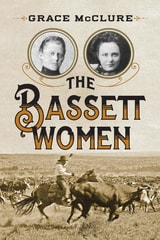
The Bassett Women
Grace McClure
Ohio University Press, 1985
In the late nineteenth century, Brown’s Park, a secluded valley astride the Utah-Colorado border, was a troubled land of deadly conflict among cattle barons, outlaws, rustlers, and small ranchers. Homesteader Elizabeth Bassett gained a tough reputation of her own, and her daughters followed suit, going on to become members of Butch Cassidy and the Wild Bunch’s inner circle. Ann—who counted Cassidy among her lovers—became known as “queen of the cattle rustlers.” Both sisters proved themselves shrewd businesswomen as they fended off hostile takeovers of the family ranch. Through the following decades, the sisters became the stuff of legend, women who embodied the West’s fearsome reputation, yet whose lived experiences were far more nuanced. Ann became a writer. Josie, whose cabin still stands at present-day Dinosaur National Monument, applied her pioneer ethics to a mechanized world and became renowned for her resourcefulness, steadfastness, and audacity.
For The Bassett Women, Grace McClure tracked down and untangled the legends of Brown’s Park, one of the way stations of the fabled “Outlaw Trail,” while creating an evenhanded and indelible portrait of the Bassetts. Based on interviews, written records, newspapers, and archives, The Bassett Women is one of the few credible accounts of early settlers on Colorado’s western slope, one of the last strongholds of the Old West.
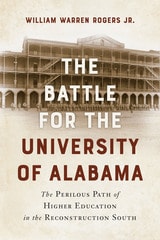
The Battle for the University of Alabama
The Perilous Path of Higher Education in the Reconstruction SouthWilliam Warren Rogers, Jr.
University of Alabama Press, 2025
Traces the little-known story of the bitter contest for the fate of the University of Alabama after the Civil War.
In The Battle for the University of Alabama, William Warren Rogers Jr. gives a fascinating account of the fierce struggle over the nature of the University of Alabama after the Civil War. Union forces reduced the campus to ruins as the war ended, and the university did not reopen until 1869. In the interregnum, powerful forces shifted the trajectory of the school. Alabama Republicans authored an egalitarian state constitution that delivered oversight of the university to the Republican Party. That set the stage for turmoil and confrontation. This book tells the story of that conflict.
In the next few years, Democrats charged Republicans with turning the university into a “radical” institution. They alleged that a handful of unqualified individuals had gained faculty positions because of their political allegiance, which resulted in the university’s academic desecration. Professors were bitterly denounced in the state newspaper press and quite personally in Tuscaloosa. Administration of the university became part of the fratricidal political debate in the state. Political violence and questions concerning race, specifically the possible integration of the university, illuminated the controversies of the Reconstruction years. Many of these questions resonate even today.
This authoritative account sets events at the University of Alabama against the backdrop of what occurred at other state universities in the Reconstruction South. The University of North Carolina experienced controversy similar to Alabama’s. At the University of Georgia, however, calm prevailed. This story of the incendiary events at Alabama’s flagship university charts new ground and provides a revelatory look into the extraordinary partisanship that characterized the South after the Civil War.
The Battle to Stay in America
Immigration's Hidden Front LineMichael Kagan
University of Nevada Press, 2025
The Battle to Stay in America is the story of a community coming to grips with the federal government’s crackdown on immigrants, and learning how to defend itself. Informative and personal, this is a story about mothers and fathers, lawyers and activists, local police and federal agencies, and a struggle for the identity of a nation. This is the quintessential story of the war on immigrants, as fought and felt on the front lines in the heart of America.
The Beat Of My Drum
An AutobiographyMichael Babatunde Olatunji
Temple University Press, 2005
The Beats in Mexico
David Stephen Calonne
Rutgers University Press, 2022
The first book-length study of why the Beats were so fascinated by Mexico and how they represented its culture in their work, this volume examines such canonical figures as Kerouac, Burroughs, Ginsberg, Lamantia, McClure, and Ferlinghetti. It also devotes individual chapters to women such as Margaret Randall, Bonnie Bremser, and Joanne Kyger, who each made Mexico a central setting of their work and interrogated the misogyny they encountered in both American and Mexican culture.
The Beats in Mexico not only considers individual Beat writers, but also places them within a larger history of countercultural figures, from D.H. Lawrence to Antonin Artaud to Jim Morrison, who mythologized Mexico as the land of the Aztecs and Maya, where shamanism and psychotropic drugs could take you on a trip far beyond the limits of the American imagination.

The Beautiful Agonies
Adrie Kusserow
Duke University Press, 2027
The Beggar and the Professor
A Sixteenth-Century Family SagaEmmanuel Le Roy Ladurie
University of Chicago Press, 1997
"Le Roy Ladurie paints a remarkably contemporary picture of life in the sixteenth century. . . . It's a good story, told with a deft narrative touch."—Michael S. Kimmel, The Nation
"Le Roy Ladurie is a master of the representative detail and uses the Platters' lives as a means to see a whole century 'through a glass, darkly'."—The Independent
"Le Roy Ladurie has not only thoroughly sketched out the Platters' particular brand of gusto, he has also made it seem a defining characteristic of the sixteenth century."—The New Republic
"All [of] the drama and pathos of a Disney film."—Emily Eakin, Lingua Franca
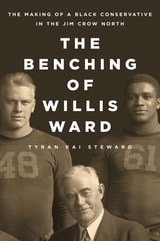
The Benching of Willis Ward
The Making of a Black Conservative in the Jim Crow NorthTyran Kai Steward
University of Illinois Press, 2027
Michigan’s policy of dubious inclusion showed how white institutions admitted Black individuals and then forced them to face discrimination and isolation. Steward connects Ward’s college experience to his subsequent career, where his work as a personnel executive at Ford Motor Company and the Public Services Commission reflected his ambivalence to civil rights and conservative views on race reform. As time passed, Ward advocated for Black Americans to pursue personal success over collective action, a belief that—along with his staunch Republican Party politics—made Ward an example of the Black conservative approach to racial progress.
In-depth and sobering, The Benching of Willis Ward uses one man’s career to shine a light on the workings and legacy of the North’s systems of discrimination.
The Besht
Magician, Mystic, and LeaderImmanuel Etkes
Brandeis University Press, 2012
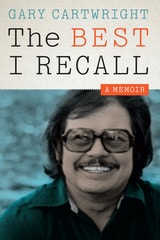
The Best I Recall
A MemoirBy Gary Cartwright
University of Texas Press, 2015
Gary Cartwright is one of Texas’s legendary writers. In a career spanning nearly six decades, he has been a newspaper reporter, Senior Editor of Texas Monthly, and author of several acclaimed books, including Blood Will Tell, Confessions of a Washed-up Sportswriter, and Dirty Dealing. Cartwright was a finalist for a National Magazine Award for reporting excellence, and he has won several awards from the Texas Institute of Letters, including its most prestigious—the Lon Tinkle Award for lifetime achievement. His personal life has been as colorful and occasionally outrageous as any story he reported, and in this vivid, often hilarious, and sometimes deeply moving memoir, Cartwright tells the story of his writing career, tangled like a runaway vine with great friendships, love affairs, four marriages, four or five great dogs . . . looking always to explain, at least to himself, how the pattern probably makes a kind of perverted sense.
Cartwright’s career began at the Fort Worth Star-Telegram and Fort Worth Press, among kindred spirits and fellow pranksters Edwin “Bud” Shrake and Dan Jenkins. He describes how the three rookie writers followed their mentor Blackie Sherrod to the Dallas Times Herald and the Dallas Morning News, becoming the “best staff of sportswriters anywhere, ever” and creating a new kind of sportswriting that “swept the country and became standard.” Cartwright recalls his twenty-five years at Texas Monthly, where he covered everything from true crime to notable Texans to Texas’s cultural oddities. Along the way, he tells lively stories about “rebelling against sobriety” in many forms, with friends and co-conspirators that included Willie Nelson, Ann Richards, Dennis Hopper, Willie Morris, Don Meredith, Jack Ruby, and countless others. A remarkable portrait of the writing life and Austin’s counterculture, The Best I Recall may skirt the line between fact and fiction, but it always tells the truth.
The Best Lawyer in a One-Lawyer Town
A MemoirDale Bumpers
University of Arkansas Press, 2004
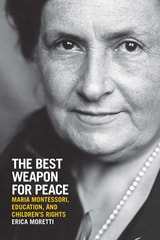
The Best Weapon for Peace
Maria Montessori, Education, and Children's RightsErica Moretti
University of Wisconsin Press, 2022
Using newly discovered primary sources, Moretti examines Montessori’s lifelong pacifist work, including her ultimately unsuccessful push for the creation of the White Cross, a humanitarian organization for war-affected children. Moretti shows that Montessori’s educational theories and practices would come to define chilren’s rights once adopted by influential international organizations, including the United Nations. She uncovers the significance of Montessori’s evolving philosophy of peace and early childhood education within broader conversations about internationalism and humanitarianism.
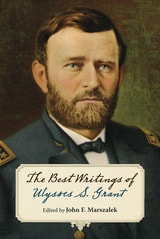
The Best Writings of Ulysses S. Grant
Edited by John F. Marszalek
Southern Illinois University Press, 2015
Famous for his military acumen and for his part in saving the Union during the American Civil War, Ulysses S. Grant also remains known for his two-volume memoirs, considered among the greatest military memoirs ever written. Grant’s other writings, however, have not received the same acclaim, even though they show the same literary skill. Originally published in the thirty-two volumes of The Papers of Ulysses S. Grant, the letters and speeches are the major source of information about Grant’s life and era and have played a key role in elevating his reputation to that of the leading general of the Civil War and the first of the modern presidents. In this collection, editor John F. Marszalek presents excerpts from Grant’s most insightful and skillfully composed writings and provides perspective through introductory comments tying each piece to the next. The result is a fascinating overview of Grant’s life and career.
In sixteen chronological chapters, selections from Grant’s letters and other writings reveal his personal thoughts on the major events of his momentous life, including the start of the Civil War, the capture of Vicksburg, Lincoln’s reelection, Lee’s surrender, his terms as president, the Panic of 1873, and his bouts of mouth and throat cancer. Throughout, Grant’s prose reveals clearly the power of his words and his ability to present them well. Although some historians have maligned his presidency as one of the most corrupt periods in American history, these writings reinforce Grant’s greatness as a general, demonstrate the importance of his presidency, and show him to be one of the driving forces of the nineteenth century.
With this compendium, Marszalek not only celebrates the literary talent of one of America’s greatest military figures but also vindicates an individual who, for so long, has been unfairly denigrated. A concise reference for students of American history and Civil War enthusiasts as well as a valuable introduction for those who are new to Grant’s writings, this volume provides intriguing insight into one of the nineteenth century’s most important Americans.
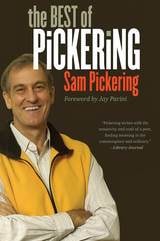
The Best of Pickering
Sam Pickering
University of Michigan Press, 2004
"Pickering has all of Thurber's humor, and he writes as well as E. B. White. He writes with passion, wit, and a strange personal note of self-mockery; he is humanely educated, wise, and capable of a wide range of stylistic effects."
----Jay Parini
". . . he writes in the tradition of Montaigne hammering together a ramshackle affair of surprising nooks, crannies and additions-all under the same roof."
---The Oxford American
"Pickering has the natural essayist's intimate yet distanced take on the world that combines a devotion to particulars . . . with a near-indifference to the status- and achievement-mongering that marks modern life."
---Publishers Weekly
"Pickering writes with the sensitivity and craft of a poet, finding meaning in the commonplace and ordinary."
---Library Journal
"Pickering's genre is unique, but I'm not sure anyone else can write this stuff. I can live with that, as long as Pickering himself continues to wend through the forests, classrooms, airports, billiards championships, hometown parades, and his inner world of Tennessee gags and characters."
---Hartford Courant
His writing is as unique and recognizable as the music of Mozart, the painting of Picasso, or the poetry of Dickinson. Yet most Americans likely know Sam Pickering, the University of Connecticut English professor, from the movie Dead Poets Society. In the film, Robin Williams plays an idiosyncratic instructor---based on Pickering---who employs some over-the-top teaching methods to keep his subjects fresh and his students learning.
Fewer probably know that Pickering is the author of more than 16 books and nearly 200 articles, or that he's inspired thousands of university students to think in new ways. And, while Williams may have captured Pickering's madcap classroom antics, he didn't uncover the other side of the author-Sam Pickering as one of our great American men of letters.
The Best of Pickering amply demonstrates Pickering's amazing powers of perception, and gives us insight into the mind of a writer nearly obsessed with turning his back on the conventional trappings of American success-a writer who seems to prefer lying squirrel's-eye-level next to a bed of daffodils in the spring or trespassing on someone else's property to pursue a jaunt through joe-pye weed and goldenrod. Indeed, Pickering's philosophy, at least on paper, may very well be "Now is the only time."
If you haven't met Sam Pickering before, prepare to be surprised and delighted by these wry and sometimes self-deprecating essays that are witty and elegant and concrete yet wander widely, and include Pickering's well-trod fictional Southern town of Carthage, Tennessee, full of strange goings-on. This definitive collection of the best of Pickering is a must for Pickering fans and a fine introduction for the uninitiated to one of our greatest men of letters.
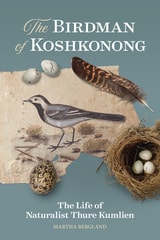
The Birdman of Koshkonong
The Life of Naturalist Thure KumlienMartha Bergland
Wisconsin Historical Society Press, 2021
For all of his achievements, Kumlien never gained the widespread notoriety of Wisconsin naturalists John Muir, Increase Lapham, or Aldo Leopold. Kumlien did his work behind the scenes, content to spend his days in the marshes and swamps rather than in the public eye. He once wrote that he was not “cut out for pretensions and show in the world.” Yet, his detailed observations of Wisconsin’s natural world—including the impact of early agriculture on the environment—were hugely important to the fields of ornithology and botany. As this carefully researched and lovingly rendered biography proves, Thure Kumlien deserves to be remembered as one of Wisconsin’s most influential naturalists.
The Black Body
Anna Maria Gehnyei (Karima 2G)
Rutgers University Press, 2025
Best Translation of a Literary Work Published in 2025 from the American Association of Italian Studies
In her memoir, Anna Maria Gehnyei, better known as singer, rapper, and producer Karima 2G, reveals the challenges she faced as the child of Liberian immigrants, born and raised in Rome but perpetually viewed by her fellow Italians as a foreigner.
The daughter of the first Kpelle man to ever leave his native village and emigrate to Europe, Anna is proud of her heritage but only knows Liberia as a mystical, faraway land that appears in her parents’ stories. Though Italy is the only homeland she knows, she is merely classed as a resident, not a permanent citizen. At school and in the streets of Rome, she is treated to a mixture of patronizing condescension and xenophobic hostility. But Anna refuses to be bullied into mute submission, finding her voice as a performer and activist who demands recognition for Italy’s growing immigrant population.
The Black Heavens
Abraham Lincoln and DeathBrian R. Dirck
Southern Illinois University Press, 2019
From multiple personal tragedies to the terrible carnage of the Civil War, death might be alongside emancipation of the slaves and restoration of the Union as one of the great central truths of Abraham Lincoln’s life. Yet what little has been written specifically about Lincoln and death is insufficient, sentimentalized, or devoid of the rich historical literature about death and mourning during the nineteenth century. The Black Heavens: Abraham Lincoln and Death is the first in-depth account of how the sixteenth president responded to the riddles of mortality, undertook personal mourning, and coped with the extraordinary burden of sending hundreds of thousands of soldiers to be killed on battlefields.
Going beyond the characterization of Lincoln as a melancholy, tragic figure, Brian R. Dirck investigates Lincoln’s frequent encounters with bereavement and sets his response to death and mourning within the social, cultural, and political context of his times. At a young age Lincoln saw the grim reality of lives cut short when he lost his mother and sister. Later, he was deeply affected by the deaths of two of his sons, three-year-old Eddy in 1850 and eleven-year-old Willie in 1862, as well as the combat deaths of close friends early in the war. Despite his own losses, Lincoln learned how to approach death in an emotionally detached manner, a survival skill he needed to cope with the reality of his presidency.
Dirck shows how Lincoln gradually turned to his particular understanding of God’s will in his attempts to articulate the meaning of the atrocities of war to the American public, as showcased in his allusions to religious ideas in the Gettysburg Address and the Second Inaugural. Lincoln formed a unique approach to death: both intellectual and emotional, typical and yet atypical of his times. In showing how Lincoln understood and responded to death, both privately and publicly, Dirck paints a compelling portrait of a commander in chief who buried two sons and gave the orders that sent an unprecedented number of Americans to their deaths.
The Black Penguin
Andrew Evans
University of Wisconsin Press, 2018
Ejected from church and shunned by his family as a young man, Evans embarks on an ambitious overland journey halfway across the world. Riding public transportation, he crosses swamps, deserts, mountains, and jungles, slowly approaching his lifelong dream and ultimate goal: Antarctica. With each new mile comes laughter, pain, unexpected friendship, true weirdness, unsettling realities, and some hair-raising moments that eventually lead to a singular discovery on a remote beach at the bottom of the world.
Evans's 12,000-mile voyage becomes a soulful quest to balance faith, family, and self, reminding us that, in the end, our lives are defined by the roads we take, the places we touch, and those we hold nearest.

The Black Public Sphere
Edited by The Black Public Sphere Collective
University of Chicago Press, 1995
To think about the black public sphere we have to be willing to rethink the relationship between markets and freedom, commodity and identity, property and pleasure. This book provides more sophisticated approaches to matters historically consigned to inadequate rubrics—"the Negro problem," "subcultures," "minorities," "inner city," and "multicultural." While these rubrics constrict and stereotype, the analytic potential of the black public sphere is that it facilitates new ways to discuss democratic values and citizenship.
The Black Seasons
Glowinski
Northwestern University Press, 2005
When six-year-old Michal Glowinski first heard the adults around him speak of the ghetto, he understood only that the word was connected with moving-and conjured up a fantastical image of a many-storied carriage pulled through the streets by some umpteen horses. He was soon to learn that the ghetto was something else entirely. A half-century later, Glowinski, now an eminent Polish literary scholar, leads us haltingly into Nazi-occupied Poland. Scrupulously attentive to the distance between a child's experience and an adult's reflection, Glowinski revisits the images and episodes of his childhood: the emaciated violinist playing a Mendelssohn concerto on the ghetto streets; his game of chess with a Polish blackmailer threatening to deliver him to the Gestapo; and his eventual rescue by Catholic nuns in an impoverished, distant convent. In language at once spare and eloquent, Glowinski explores the horror of those years, the fragility of existence, and the fragmented nature of memory itself.
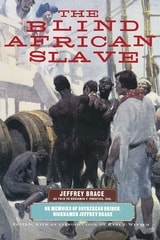
The Blind African Slave
Memoirs of Boyrereau Brinch, Nicknamed Jeffrey BraceJeffrey Brace, as told to Benjamin F. Prentiss, Esq.
University of Wisconsin Press, 2005
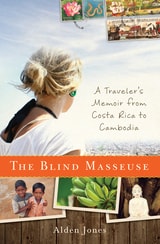
The Blind Masseuse
A Traveler's Memoir from Costa Rica to CambodiaAlden Jones
University of Wisconsin Press, 2013
Gold Winner for Travel Essays, Foreword Books of the Year
Gold Medal for Travel Essays, Independent Publisher Book Awards
Winner, Bisexual Book Awards, Bisexual Biography/Memoir Category
Finalist, Housatonic Book Awards
Longlist of eight, PEN/Diamonstein Spielvogel Award for the Art of the Essay
Finalist, Travel Book or Guide Award, North American Travel Journalists Association
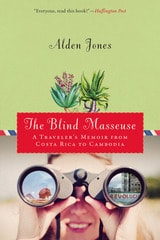
The Blind Masseuse
A Traveler's Memoir from Costa Rica to CambodiaAlden Jones
University of Wisconsin Press, 2017
By way of explorations to Costa Rica, Bolivia, Nicaragua, Cuba, Burma, Cambodia, Egypt, and around the world on a ship, Jones chronicles her experience as a young American traveler while pondering her role as an outsider in the cultures she temporarily inhabits. Her wanderlust fuels a strong, high-adventure story and, much in the vein of classic travel literature, Jones's picaresque tale of personal evolution informs her own transitions, rites of passage, and understandings of her place as a citizen of the world. With sharp insight and stylish prose, Jones asks: Is there a right or wrong way to travel? The Blind Masseuse concludes that there is, but that it's not always black and white.
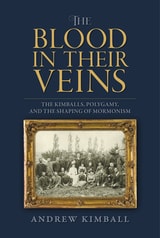
The Blood in Their Veins
The Kimballs, Polygamy, and the Shaping of MormonismKimball, Andrew
Signature Books, 2025
This meticulously documented, deeply engaging book represents a unique approach to Utah and Latter-day Saint history, drawing on previously untapped private letters and diaries of members of the large and widely known polygamist family of the prominent Latter-day Saint leader, Heber C. Kimball.
The story includes compelling accounts of Helen Kimball Whitney, who married Joseph Smith polygamously at fourteen and became, according to Emmeline B. Wells, “one of the best known and most estimable women of the Church,” and of her son Orson F. Whitney, who forswore his embrace of reincarnation only six years before his call as an apostle of the Church of Jesus Christ of Latter-day Saints. Another daughter, Alice Kimball Smith, married a man who was tracked to a brothel and arrested for armed robbery and assault in 1883, after which Alice turned to family friend and apostle Joseph F. Smith and became his fifth wife. Heber’s son, J. Golden Kimball, one of the most beloved and colorful personalities in Mormon and Utah history, is brought to life in another sketch. The Kimballs had to navigate the ticklish business of explaining or obfuscating polygamy to disapproving family in the East, including the extended claim by Heber’s wife Christeen to her New Jersey family that she had married a Mr. Chase monogamously. Two of Heber’s sons, both stake presidents, contemplated plural marriage in the first decade of the twentieth century, well after the church publicly disavowed the practice.
Additional light is shone on the now-defunct Latter-day Saint practices of adult adoptions and speaking in tongues, Mormon-settler relations with the Utes and Pahvants, the 1856 handcart rescue, the John Hyrum Koyle “Dream Mine,” the Jackson County, Missouri, Temple Lot suit of 1892, and federal pursuit of polygamists.
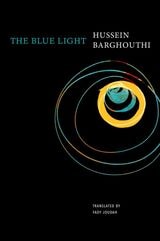
The Blue Light
Hussein Barghouthi
Seagull Books, 2023
Hussein Bargouthi tells his story with Bari, a Turkish American Sufi, during Bargouthi’s years as a graduate student at the University of Washington in the late 1980s. The Blue Light has several beginnings and many returns—from Beirut’s traumatic sea to musings on color and identity, from Buddhist paths to Rajneesh disciples, from military rule to colonial insanity, from drug addiction to sacred rock. Written and lived between Arabic and English, this is a unique book whose depth is as clear as its surface. It will tempt you to dismiss it as it compels you to devour it for illumination. Merging memoir with fiction, and the hallowed with the profane, The Blue Light is a meditation on and liberation from madness—a brilliant, inimitable literary achievement.
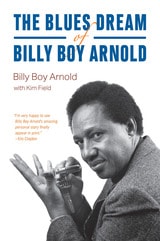
The Blues Dream of Billy Boy Arnold
Billy Boy Arnold with Kim Field
University of Chicago Press, 2021
Simply put, Billy Boy Arnold is one of the last men standing from the Chicago blues scene’s raucous heyday. What’s more, unlike most artists in this electrifying melting pot, who were Southern transplants, Arnold—a harmonica master who shared stages with Bo Diddley, Muddy Waters, and Howlin’ Wolf, plus a singer and hitmaker in his own right who first recorded the standards “I Wish You Would” and “I Ain’t Got You”—was born right here and has lived nowhere else. This makes his perspective on Chicago blues, its players, and its locales all the rarer and all the more valuable. Arnold has witnessed musical generations come and go, from the decline of prewar country blues to the birth of the electric blues and the worldwide spread of rock and roll. Working here in collaboration with writer and fellow musician Kim Field, he gets it all down. The Blues Dream of Billy Boy Arnold is a remarkably clear-eyed testament to more than eighty years of musical love and creation, from Arnold’s adolescent quest to locate the legendary Sonny Boy Williamson, the story of how he named Bo Diddley Bo Diddley, and the ups and downs of his seven-decade recording career. Arnold’s tale—candidly told with humor, insight, and grit—is one that no fan of modern American music can afford to miss.
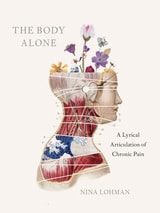
The Body Alone
A Lyrical Articulation of Chronic PainNina Lohman
University of Iowa Press, 2024
In both form and content, The Body Alone represents boundary-pressing work that subverts the traditional narrative by putting pressure on the medical, cultural, and political systems that impact women’s access to fair and equal healthcare. This is more than an illness narrative, it is a battle cry demanding change.
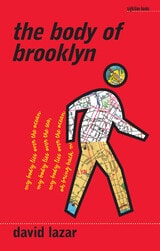
The Body of Brooklyn
David Lazar
University of Iowa Press, 2003
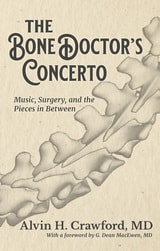
The Bone Doctor's Concerto
Music, Surgery, and the Pieces in BetweenAlvin H. Crawford, MD
Ohio University Press, 2023
Published by the University of Cincinnati Press
Born in Memphis, Tennessee in 1939, Dr. Alvin Crawford grew up and attended medical school in a segregated world. Beginning with his early life in Orange Mound—a self-contained community for freed slaves established in the 1890s—Crawford’s autobiography describes his flirtation with a music degree and time spent playing in jazz bands through the segregated South. In 1960, Crawford began his ground-breaking medical career with his entrance into the University of Tennessee College of Medicine, becoming the school’s first African American student. After completing his medical training and traveling the world as a surgeon for the Navy, Crawford found himself in Cincinnati, where he established the Comprehensive Pediatric Orthopedic Clinic at Cincinnati Children’s Hospital, the first in the region.
Underlying this story are the systemic and very personal incidents of racism Crawford experienced throughout his career. His autobiography is a personal account of segregation, integration, ambition, hard work, and taking risks.
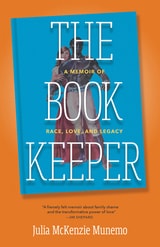
The Book Keeper
A Memoir of Race, Love, and LegacyJulia McKenzie Munemo
Ohio University Press, 2020
“A fiercely felt memoir about family shame and the transformative power of love even as it’s also an ongoing meditation on privilege and race in twenty-first-century America. This is a debut striking in its empathetic imagination, observational acuity, and emotional intelligence.” — Jim Shepard, author of Like You’d Understand, Anyway.
In a memoir that’s equal parts love story, investigation, and racial reckoning, Munemo unravels and interrogates her whiteness, a shocking secret, and her family’s history.
When interracial romance novels written by her long-dead father landed on Julia McKenzie Munemo’s kitchen table, she—a white woman—had been married to a black man for six years and their first son was a toddler. Out of shame about her father’s secret career as a writer of “slavery porn,” she hid the books from herself, and from her growing mixed-race family, for more than a decade. But then, with police shootings of African American men more and more in the public eye, she realized that understanding her own legacy was the only way to begin to understand her country.
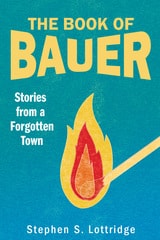
The Book of Bauer
Stories from a Forgotten TownStephen S. Lottridge
University of Utah Press, 2023
Graffiti-covered industrial concrete ruins are all that remain today to remind us of the lives, adventures, and human relationships that once animated Bauer, Utah. Located just south of Tooele, across the Oquirrh Mountains west of the Salt Lake Valley, Bauer was abandoned in 1979 and declared a toxic waste site. The Book of Bauer: Stories from a Forgotten Town brings it back to life, evoking mid-twentieth century family and community in that company town as seen through the eyes of an observant adolescent boy.
Presenting a dramatic snapshot of life in Bauer in narrative autobiographical form, the book recalls the fate of hundreds of derelict mining towns throughout the mountain and sagebrush West. With vivid prose and intimate observation, The Book of Bauer offers an unparalleled memoir of small-town life in Utah and the Great Basin.
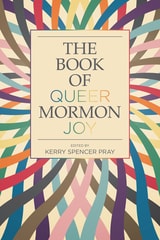
The Book of Queer Mormon Joy
Pray, Kerry Spencer
Signature Books, 2024
The story of queer Mormons is one that some might not expect to be joyful. The Church of Jesus Christ of Latter-day Saints has traditionally asserted that queerness is counter to God’s plan and that gender as determined at birth is eternal. Any marriage other than a monogamous pairing of male and female is “counterfeit.” So called “wickedness,” we are told, “never was happiness.”
But queer Mormons tell different stories—stories filled with joy. This collection includes essays by queer Mormons across the LGBTQ spectrum who, when they looked inside themselves, found divinity rather than sin. Stories by people who are made exactly as they are meant to be, and live accordingly.
Queer Mormons who feel forced out of the institutional church don’t typically find despair on the outside or abandonment by the divine. Instead, their lives are rich and beautiful—made all the more so by the struggle. The Book of Mormon tells us, “Men are that they might have joy.” The Book of Queer Mormon Joy affirms that trans, nonbinary, intersex, asexual, bisexual, polyamorous, and gay people have joy. Joy is for everyone.
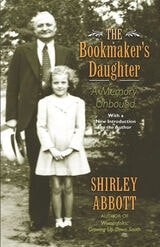
The Bookmaker's Daughter
A Memory UnboundShirley Abbott
University of Arkansas Press, 2006
This deeply felt memoir is a journey through family history, feminist insight, and southern mythology. In it a daughter reflects on the complicated and volatile love she and her father shared. Shirley Jean Abbott grew up in Hot Springs, Arkansas, in the 1940s and 50s and was the beloved daughter of Alfred Bemont Abbott, affectionately known as “Hat.” Hat wasn’t a bookmaker in the literary sense, even though he allowed Shirley’s mother to believe as much while they were dating. Rather, his craft was gambling, and his business was horse racing.
Despite the corruption, which put food on the table and rabbit coats in the closet, Abbott remembers the kind and attentive father who spent nights reading to her. He alone is responsible for opening the door to a world of language and literature for her. And she ran with it. Against her father’s wishes, after graduation she headed for New York City. In the end, the girl he had nurtured into an independent and intelligent young woman had outgrown the small town where she grew up. The Bookmaker’s Daughter was originally published by Ticknor and Fields in 1992 and was a Book of the Month Club selection.

The Botanical Odyssey of Richard S. Felger
Edited by Benjamin T. Wilder, Bill Broyles, and Thomas Bowen
University of Arizona Press, 2026
This work is a vibrant tribute to Richard Stephen Felger, who was one of the most influential scientists of the American Southwest and northwestern Mexico. Known as a desert botanist, Felger’s work transcended regional boundaries, blending rigorous fieldwork with global ecological vision. This work offers an intimate and multifaceted portrait of a man whose tireless advocacy for biodiversity and biocultural conservation shaped generations of desert scientists..
Edited by Benjamin T. Wilder, Bill Broyles, and Thomas Bowen, this book is both a celebration and a resource. The work is separated into four parts. With humor, insight, and deep empathy, Felger’s own voice leads the journey in part 1, recounting his most memorable field experiences with masterful prose and sly wit. Part 2 brings together heartfelt reflections from colleagues who worked alongside Felger in the field, revealing the eccentric brilliance and relentless curiosity that defined his career. Part 3 explores his family history and the unconventional path that shaped his life’s work, while part 4 presents a comprehensive bibliography of his most important publications. The book contains four maps that help take you around the world on Felger’s journeys, and fifty images selected from the thousands of slides from his archive that further transport and anchor you in the adventure.
Felger’s own voice, paired with reflections from twenty colleagues, creates a rich, multifaceted narrative, offering readers a rare glimpse into the life of a scientific icon whose legacy continues to inspire desert researchers and conservationists across the globe.
Contributors
James Aronson
Thomas Bowen
Bill Broyles
Alberto Búrquez
Susan Davis Carnahan
Mark Alan Dimmitt
Exequiel Ezcurra
Gil Gillenwater
Russ Kleinman
Angelina Martínez-Yrízar
Gregory McNamee
Cathy Moser Marlett
Gary Paul Nabhan
Wallace J. Nichols
William R. Norris
Humberto Romero Morales
Sue Rutman
Silke Schneider
Jeffrey Seminoff
Jane Spinti
Benjamin T. Wilder
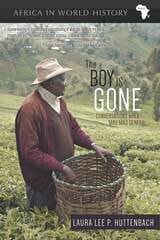
The Boy Is Gone
Conversations with a Mau Mau GeneralLaura Lee P. Huttenbach
Ohio University Press, 2015
A story with the power to change how people view the last years of colonialism in East Africa, The Boy Is Gone portrays the struggle for Kenyan independence in the words of a freedom fighter whose life spanned the twentieth century’s most dramatic transformations. Born into an impoverished farm family in the Meru Highlands, Japhlet Thambu grew up wearing goatskins and lived to stand before his community dressed for business in a pressed suit, crisp tie, and freshly polished shoes. For most of the last four decades, however, he dressed for work in the primary school classroom and on his lush tea farm.
The General, as he came to be called from his leadership of the Mau Mau uprising sixty years ago, narrates his life story in conversation with Laura Lee Huttenbach, a young American who met him while backpacking in Kenya in 2006. A gifted storyteller with a keen appreciation for language and a sense of responsibility as a repository of his people’s history, the General talks of his childhood in the voice of a young boy, his fight against the British in the voice of a soldier, and his long life in the voice of shrewd elder. While his life experiences are his alone, his story adds immeasurably to the long history of decolonization as it played out across Africa, Asia, and the Americas.
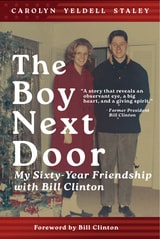
The Boy Next Door
My Sixty Year Friendship with Bill ClintonCarolyn Yedell Staley
Parkhurst Brothers, Inc., 2025
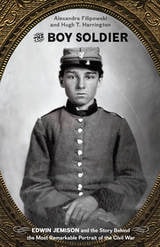
The Boy Soldier
Edwin Jemison and the Story Behind the Most Remarkable Portrait of the Civil WarAlexandra Filipowski and Hugh T. Harrington
Westholme Publishing, 2016
Since its first publication over fifty years ago, the haunting image of Private Edwin F. Jemison has attracted widespread attention from those interested in the Civil War and other wars. His likeness has been compared to that of the Mona Lisa, and it rivals Abraham Lincoln as being one of the Civil War’s most recognized photographs. And yet, his name is not widely known. Some believe that there is something about the mouth that is special, or his hands. Others, perhaps the majority, find his eyes to be powerful and thought provoking. Some wonder if they are looking into the future: Eddie’s own future or the future of all soldiers. Is there a sense of fear or a resignation to fate? He is, foremost, strikingly boyish.
Despite the great interest in the photograph almost nothing has been known of the young man himself, and misinformation about him has circulated since he was properly identified twenty years ago. The authors have spent decades researching the story behind the photograph seeking primary sources for accurate details of Jemison’s life. The result is The Boy Soldier: Edwin Jemison and the Story Behind the Most Remarkable Portrait of the Civil War, the only biography of this young Confederate soldier. We first encounter Eddie as he travels from Louisiana in 1857 to stay with relatives and attend school in Georgia. In the spring of 1861, after Louisiana had seceded from the Union, Eddie enlists in the Confederate army. A little over a week after enlistment, and with minimal training, he is sent to Virginia to fight in the greatest struggle this nation has ever endured. Over 150 years later the intrigue around his photograph is matched by the very peculiar accounts of his death, as well as the controversy of his burial location. The authors examine both issues to complete the story of the young soldier’s life and death.
The Boy from Altheimer
From the Depression to the BoardroomWilliam H. Bowen
University of Arkansas Press, 2006
The Boy of Battle Ford and the Man
W. S. Blackman
Southern Illinois University Press, 2012
A classic story of a young man’s journey to adulthood, The Boy of Battle Ford covers Blackman’s years growing up in early post-settlement Illinois, where he gave in to temptations such as drinking, gambling, and the lure of prostitutes before joining the army, finding God and becoming a preacher. Blackman, who notes that he is determined to “write facts” in this book, peppers his story with the sordid details of the sinful times of his life as well as with discussions of faith and of struggling to understand his God and his beliefs.
The Boys of Winter
Life and Death in the U.S. Ski Troops During the Second World WarCharles J. Sanders
University Press of Colorado, 2005
The Boys of Winter tells the true story of three young American ski champions and their brutal, heroic, and fateful transformation from athletes to infantrymen with the 10th Mountain Division. Charles J. Sanders's fast-paced narrative draws on dozens of interviews and extensive research to trace these boys' lives from childhood to championships and from training at Mount Rainier and in the Colorado Rockies to battling against the Nazis.
The Breakaway
The Inside Story of the Wirtz Family Business and the Chicago BlackhawksBryan Smith
Northwestern University Press, 2018
When Rocky Wirtz took over the Wirtz Corporation in 2007, including management of the Chicago Blackhawks, the fiercely beloved hockey team had fallen to a humiliating nadir. As chronic losers playing to a deserted stadium, they were worse than bad—they were irrelevant. ESPN named the franchise the worst in all of sports. Rocky's resurrection of the team's fortunes was—publicly, at least—a feel-good tale of shrewd acumen. Behind the scenes, however, it would trigger a father, son, and brother-against-brother drama of Shakespearean proportions. The Breakaway reveals that untold story.
Arthur Wirtz founded the family's business empire during the Depression. From roots in real estate, "King Arthur" soon expanded into liquor and banking, running his operations with an iron hand and a devotion to profit that earned him the nickname Baron of the Bottom Line. His son Bill further expanded the conglomerate, taking the helm of the Blackhawks in 1966. "Dollar Bill" Wirtz demanded unflinching adherence to Arthur's traditions and was notorious for an equally fierce temperament.
Yet when Rocky took the reins of the business after Bill's death, it was an organization out of step with the times and financially adrift. The Hawks weren't only failing on the ice—the parlous state of the team's finances imperiled every facet of the Wirtz empire. To save the team and the company, Rocky launched a radical turnaround campaign. Yet his modest proposal to televise the Hawks' home games provoked fierce opposition from Wirtz family insiders, who considered any deviation from Arthur and Bill's doctrines to be heresy.
Rocky's break with the edicts of his grandfather and father led to a reversal for the ages—three Stanley Cup championships in six years, a feat Fortune magazine called "the greatest turnaround in sports business history." But this resurrection came at a price, a fracturing of Rocky's relationships with his brother and other siblings. In riveting prose that recounts a story spanning three generations, The Breakaway reveals an insider's view of a brilliant but difficult Chicago business and sports dynasty and the inspiring story of perseverance and courage in the face of intense family pressures.
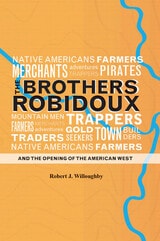
The Brothers Robidoux and the Opening of the American West
Robert J. Willoughby
University of Missouri Press, 2012
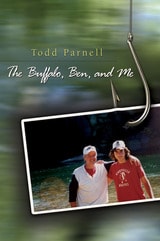
The Buffalo, Ben, and Me
Todd Parnell & Foreword by Jim Baker
University of Missouri Press, 2007
The Buffalo River in northwest Arkansas is one of the longest free-flowing, undammed rivers west of the Mississippi—and one of the most beautiful waterways on earth. Almost lost to development, it proved to be the perfect testing ground for a young boy almost lost to mediocrity.
Middle-schooler Ben is struggling with learning challenges that have left him resentful and underachieving. His father, middle-ager Todd, wants to help his son gain self-confidence but is searching for his own identity. For twelve adventure-filled days on the river—all 125 miles of her navigable course, from Ponca to the White River—father and son discover the formative, curative, and redemptive powers of nature.
Leaving video games and cell phones behind isn’t easy for kids these days, but in the great outdoors parents and youngsters can connect in unimaginable ways. The Buffalo, Ben, and Me shares such a connection in an adventure story set on a wild river. It is a captivating tale featuring a host of colorful characters and enlivened by photos that reflect the essence of the wilderness.
But deeper than that, it is the story of crossing a threshold from dream to possibility—of one man’s search for meaning in his life and his efforts to motivate his son, blending love of family with love of nature in a tale of transformation. It tells how a rebellious teen and a bored banker conspired to buck a system keyed to predictability, and how a wild river inspired both to a better use of their lives. “This trip hit me as hard as it did Ben,” writes Parnell, “as a wake-up call to life, to what is important, to what is not.”
The trip down the Buffalo was one that even Ben admits changed his life in more ways than one, as he later went on to earn a master of science degree specializing in stream ecology. For any reader who loves the outdoors—and especially those seeking to connect with their children—The Buffalo, Ben, and Me is essential reading that reminds us of possibilities to be had in facing life head-on as it raises awareness of the need to protect the Ozarks’ water resources and heritage.
The Bullet Meant for Me
By Jan Reid
University of Texas Press, 2005
Jan Reid's powerful, moving account of what being shot during a robbery in Mexico City and the painful road to recovery taught him about manhood, friendship, and marriage.
On April 20, 1998, Jan Reid was shot during a robbery in Mexico City, where he had gone to watch his friend, the boxer Jesus Chavez, fight. In The Bullet Meant for Me, Reid powerfully recounts his ordeal, the long chain of life events that brought him to that fateful attack, and his struggle to regain the ability to walk and to be a full partner in a deeply satisfying marriage. Re-examining the whole trajectory of his life, Reid questions how much the Texan ideal of manhood shaped his identity, including his love for boxing and participation in the sport. He meditates on male friendship as he tells the story of his close relationship with Chavez, whose career and personal travails Reid details with empathy and insight. And he describes his long months in physical therapy, during which he drew on the unwavering love of his wife and daughter, as well as the courage and strength he had learned from boxing, to heal his body and spirit. A moving, intimate portrait of a man, a friendship, and a marriage, The Bullet Meant for Me is Jan Reid's most personal book.
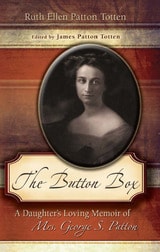
The Button Box
A Daughter's Loving Memoir of Mrs. George S. PattonRuth Ellen Patton Totten, Edited by James Patton Totten, Foreward by Carlo W. D'Este
University of Missouri Press, 2005
"There was never a moment in our lives that we were not reminded that our father was the finest, bravest, most gallant, and best-looking man who ever lived and that he was destined for unimaginable glory. This we took for granted. Being our father’s children was a special influence in all our lives, but the greatest, most pervasive, and most interesting influence in my life was Ma."
The Button Box is the loving memoir of Beatrice Ayer Patton (1886–1953), the wife of one of the greatest military figures in history, General George S. Patton, Jr. Written by the Pattons’ daughter, Ruth Ellen, the book covers Beatrice’s life from her youth in a wealthy New England family until her death, with an emphasis on her years of marriage to George Patton. A supportive and loving wife, Beatrice was accomplished in her own right as an equestrian, musician, lecturer, sailor, and internationally published author. Courageous and adventurous, Beatrice played a significant role in her husband’s life. Without her, General Patton might never have reached his own level of success.
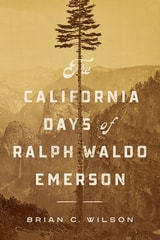
The California Days of Ralph Waldo Emerson
Brian C. Wilson
University of Massachusetts Press, 2022
In the spring of 1871, Ralph Waldo Emerson boarded a train in Concord, Massachusetts, bound for a month-and-a-half-long tour of California—an interlude that became one of the highlights of his life. On their journey across the American West, he and his companions would take in breathtaking vistas in the Rockies and along the Pacific Coast, speak with a young John Muir in the Yosemite Valley, stop off in Salt Lake City for a meeting with Brigham Young, and encounter a diversity of communities and cultures that would challenge their Yankee prejudices.
Based on original research employing newly discovered documents, The California Days of Ralph Waldo Emerson maps the public story of this group’s travels onto the private story of Emerson’s final years, as aphasia set in and increasingly robbed him of his words. Engaging and compelling, this travelogue makes it clear that Emerson was still capable of wonder, surprise, and friendship, debunking the presumed darkness of his last decade.
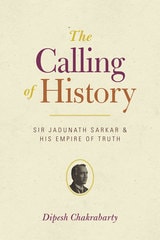
The Calling of History
Sir Jadunath Sarkar and His Empire of TruthDipesh Chakrabarty
University of Chicago Press, 2015
Through close readings of more than twelve hundred letters to and from Sarkar along with other archival documents, Dipesh Chakrabarty demonstrates that historians in colonial India formulated the basic concepts and practices of the field via vigorous—and at times bitter and hurtful—debates in the public sphere. He furthermore shows that because of its non-technical nature, the discipline as a whole remains susceptible to pressure from both the public and the academy even today. Methodological debates and the changing reputations of scholars like Sarkar, he argues, must therefore be understood within the specific contexts in which particular histories are written.
Insightful and with far-reaching implications for all historians, The Calling of History offers a valuable look at the double life of history and how tensions between its public and private sides played out in a major scholar’s career.
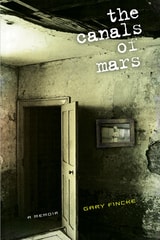
The Canals of Mars
A MemoirGary Fincke
Michigan State University Press, 2010
The Canals of Mars is a memoir that explores and ponders "weakness," which in Gary Fincke's family was the catch-all term for every possible human flaw-physical, psychological, or spiritual. Fincke grew up near Pittsburgh during the 1950s and 1960s, raised by blue-collar parents for whom the problems that beset people-from alcoholism to nearsightedness to asthma to fear of heights-were nothing but weaknesses.
In a highly engaging style, Fincke meditates on the disappointments he suffered-in his body, his mind, his work-because he was convinced that he had to be "perfect." Anything less than perfection was weakness and no one, he understood from an early age, wants to be weak.
Six of the chapters in the book have been cited in Best American Essays. The chapter that provides the book's title, The Canals of Mars, won a Pushcart Prize and was included in The Pushcart Book of Essays: The Best Essays from a Quarter Century of the Pushcart Prize.