Results by title
4531 books match the query 'Cultural & Ethnic Studies' and 804 start with t
The Audacity of Hoop
Basketball and the Age of ObamaAlexander Wolff
Temple University Press, 2015
While basketball didn’t take up residence in the White House in January 2009, the game nonetheless played an outsized role in forming the man who did. In The Audacity of Hoop, celebrated sportswriter Alexander Wolff examines Barack Obama, the person and president, by the light of basketball. This game helped Obama explore his identity, keep a cool head, impress his future wife, and define himself as a candidate.
Wolff chronicles Obama’s love of the game from age 10, on the campaign trail—where it eventually took on talismanic meaning—and throughout his two terms in office. More than 125 photographs illustrate Obama dribbling, shooting free throws, playing pickup games, cooling off with George Clooney, challenging his special assistant Reggie Love for a rebound, and taking basketball to political meetings. There is also an assessment of Obama’s influence on the NBA, including a dawning political consciousness in the league’s locker rooms.
Sidebars reveal the evolution of the president’s playing style, “Baracketology”—a not-entirely-scientific art of filling out the commander in chief’s NCAA tournament bracket—and a timeline charts Obama’s personal and professional highlights.
Equal parts biographical sketch, political narrative, and cultural history, The Audacity of Hoop shows how the game became a touchstone in Obama’s exercise of the power of the presidency.
The Aztec Image in Western Thought
Keen, Benjamin
Rutgers University Press, 1990
In The Aztec Image, Benjamin Keen explores the shifting attitudes and focus of the scores of historians, philosophers, scientists, and men of letters and the arts who dealt with the Aztec theme in the four and a half centuries after the conquest of Mexico. From that time to the present, the world of the ancient Aztecs has been a subject of compelling interest and controversy in the West. Keen explains how each new view continuously corrected and developed, the Western conception of Aztec civilization. He relates prevailing ideas about the Aztecs to the broad socioeconomic, political, and ideological patterns of the age, as well as to the contemporary state of knowledge about ancient Mexico. A comprehensive work of historiography, Keen's book is the first to encompass the sweep of Western thought on the Aztecs from Cortes to the present.
The Bajío Revolution
Remaking Capitalism, Community, and Patriarchy in Mexico, North America, and the WorldJohn Tutino
Duke University Press, 2025

The Bamboo Grove
An Introduction to SijoRichard Rutt
University of Michigan Press, 1998
The popularity of the sijo in Korea--writers range from royalty to common citizens--is always a challenge for the translator, who must often inhabit widely differing backgrounds to completely understand a poem's subtle nuances. Richard Rutt's translations, considered to be some of the best available in English, remain true to the unique structure of the original Korean lyric.
The Bamboo Grove will interest not only poets and students of poetry, but scholars of Korean culture curious to view history through this important and significant form of verse.
The white snow has left the valleys where the clouds are lowering,
Is it true that somewhere the plum trees have happily blossomed?
I stand here alone in the dusk and do not know where to go.
YI SAEK (1328-1396)
Richard Rutt is also the editor and translator of the book Virtuous Women: Three Classic Korean Novels and, most recently, The Zhou Yi: A New Translation with Commentary of the Book of Changes. David R. McCann is Korea Foundation Professor of Korean Literature and Professor of East Asian Languages and Civilizations, Harvard University.
The Banality of Good
The UN's Global Fight against Human TraffickingLieba Faier
Duke University Press, 2024
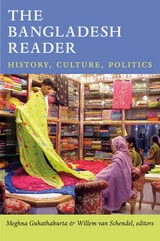
The Bangladesh Reader
History, Culture, PoliticsMeghna Guhathakurta and Willem van Schendel, eds.
Duke University Press, 2013
Intended for travelers, students, and scholars, the Reader encompasses first-person accounts, short stories, historical documents, speeches, treaties, essays, poems, songs, photographs, cartoons, paintings, posters, advertisements, maps, and a recipe. Classic selections familiar to many Bangladeshis—and essential reading for those who want to know the country—are juxtaposed with less-known pieces. The selections are translated from a dozen languages; many have not been available in English until now. Featuring eighty-three images, including seventeen in color, The Bangladesh Reader is an unprecedented, comprehensive introduction to the South Asian country's turbulent past and dynamic present.
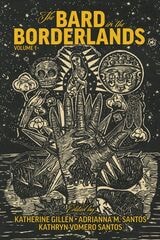
The Bard in the Borderlands
An Anthology of Shakespeare Appropriations en La Frontera, Volume 1Edited by Katherine Gillen, Adrianna M. Santos, and Kathryn Vomero Santos
Arizona Center for Medieval and Renaissance Studies, 2023
For several decades, Chicanx and Indigenous theatermakers have been repurposing Shakespeare’s plays to reflect the histories and lived realities of the US–Mexico Borderlands and to create space to tell stories of and for La Frontera. Celebrating this rich tradition, The Bard in the Borderlands: An Anthology of Shakespeare Appropriations en La Frontera brings a wide range of Borderlands Shakespeare plays together for the first time in a multi-volume open-access scholarly edition.
This anthology celebrates the dynamic, multilingual reworking of canon and place that defines Borderlands Shakespeare, and it situates these geographically and temporally diverse plays within the robust study of Shakespeare’s global afterlives. The editors offer a critical framework for understanding the artistic and political traditions that shape these plays and the place of Shakespeare within the multilayered colonial histories of the region. Borderlands Shakespeare plays, they contend, do not simply reproduce Shakespeare in new contexts but rather use his work in innovative ways to negotiate colonial power and to envision socially just futures.
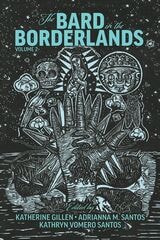
The Bard in the Borderlands
An Anthology of Shakespeare Appropriations en La Frontera, Volume 2Edited by Katherine Gillen, Adrianna M. Santos, and Kathryn Vomero Santos
Arizona Center for Medieval and Renaissance Studies, 2024
For decades, Chicanx and Indigenous theater-makers have worked to repurpose the plays of William Shakespeare to reflect the histories and lived realities of the United States–Mexico Borderlands, or La Frontera. Celebrating this rich tradition, The Bard in the Borderlands brings a wide range of Borderlands Shakespeare plays together for the first time in a multi-volume, open-access scholarly edition, creating space to tell stories of and for this complex and important region.
This second volume continues to celebrate the dynamic, multilingual reworking of canon and place that defines Borderlands Shakespeare, situating geographically and temporally diverse plays within the robust study of Shakespeare’s global afterlives.
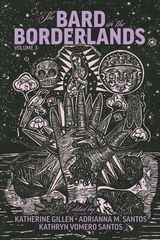
The Bard in the Borderlands
An Anthology of Shakespeare Appropriations en La Frontera, Volume 3Edited by Katherine Gillen, Adrianna M. Santos, and Kathryn Vomero Santos
Arizona Center for Medieval and Renaissance Studies, 2026
The third volume in the anthology, featuring a wide range of plays that reimagine Shakespeare works from Borderlands perspectives.
For several decades, Chicanx and Indigenous theatermakers have been repurposing Shakespeare’s plays to reflect the histories and lived realities of the US–Mexico Borderlands and to create space to tell stories of and for La Frontera. Celebrating this rich tradition, The Bard in the Borderlands: An Anthology of Shakespeare Appropriations en La Frontera brings a wide range of Borderlands Shakespeare plays together for the first time in a multi-volume open-access scholarly edition. This anthology celebrates the dynamic, multilingual reworking of canon and place that defines Borderlands Shakespeare, and it situates these geographically and temporally diverse plays within the robust study of Shakespeare’s global afterlives.
The plays featured in this volume diverge drastically from Shakespeare, bringing elements of Hamlet, Henry IV, Part 1, Macbeth, and The Tempest into a range of subcultures that challenge dominant structures of power. In so doing, they remix and revise intersecting histories and traditions to heal colonial wounds and to call forth new worlds for fronterizos.
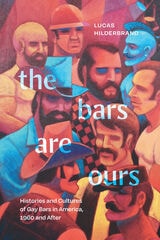
The Bars Are Ours
Histories and Cultures of Gay Bars in America,1960 and AfterLucas Hilderbrand
Duke University Press, 2024

The Basque Hotel
Robert Laxalt
University of Nevada Press, 1993
The Basque Poetic Tradition
Gorka Aulestia
University of Nevada Press, 2000
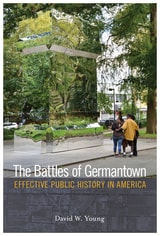
The Battles of Germantown
Effective Public History in AmericaDavid W. Young
Temple University Press, 2019
2020 Philip S. Klein Book Prize Winner, Pennsylvania Historical Association
Known as America’s most historic neighborhood, the Germantown section of Philadelphia (established in 1683) has distinguished itself by using public history initiatives to forge community. Progressive programs about ethnic history, postwar urban planning, and civil rights have helped make historic preservation and public history meaningful. The Battles of Germantown considers what these efforts can tell us about public history’s practice and purpose in the United States.
Author David Young, a neighborhood resident who worked at Germantown historic sites for decades, uses his practitioner’s perspective to give examples of what he calls “effective public history.” The Battles of Germantown shows how the region celebrated “Negro Achievement Week” in 1928 and, for example, how social history research proved that the neighborhood’s Johnson House was a station on the Underground Railroad. These encounters have useful implications for addressing questions of race, history, and memory, as well as issues of urban planning and economic revitalization.
Germantown’s historic sites use public history and provide leadership to motivate residents in an area challenged by job loss, population change, and institutional inertia. The Battles of Germantown illustrates how understanding and engaging with the past can benefit communities today.
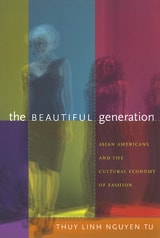
The Beautiful Generation
Asian Americans and the Cultural Economy of FashionThuy Linh Nguyen Tu
Duke University Press, 2011

The Best Place
Addiction, Intervention, and Living and Dying Young in VancouverDanya Fast
Rutgers University Press, 2024
Winner of the CASCA Labrecque-Lee Book Prize
In both local and international imaginations, Vancouver, Canada, is often celebrated as one of the world’s most beautiful, cosmopolitan, and livable cities. Simultaneously, the city continues to be ground zero for successive waves of public health emergency and intervention, including a recent and unprecedented drug overdose crisis driven by the proliferation of illicitly manufactured fentanyl and related analogs in the local drug supply. In The Best Place: Addiction, Intervention, and Living and Dying Young in Vancouver, Danya Fast explores these politics of place from the perspectives of young people who use drugs. Those who are the subject of this book were in many ways relegated to the social, spatial, and economic margins of the city. Yet, they were also often at the very center of city life and state projects, including the project of protecting life in the context of the current overdose crisis.

The Bible in Asian America
Tat-siong Benny Liew
SBL Press, 2002

The Black Body in Ecstasy
Reading Race, Reading PornographyJennifer C. Nash
Duke University Press, 2014
The Black Boom
Riley, Jason L.
Templeton Press, 2021
Economic inequality continues to be one of America’s most hotly debated topics. Still, there has been relatively little discussion of the fact that black-white gaps in joblessness, income, poverty and other measures were shrinking before the pandemic. Why was it happening, and why did this phenomenon go unacknowledged by so much media?
In The Black Boom, Jason L. Riley—acclaimed Wall Street Journal columnist and senior fellow at the Manhattan Institute—digs into the data and concludes that the economic lives of black people improved significantly under policies put into place during the Trump administration. To acknowledge as much is not to endorse the 45th president but to champion policies that achieve a clear moral objective shared by most Americans.
Riley argues that before the Covid-19 pandemic of 2020, the economic fortunes of blacks improved under Trump to an extent unseen under Obama and unseen going back several generations. Black unemployment and poverty reached historic lows, and black wages increased faster than white wages.
Less inequality is something that everyone wants, but disapproval of Trump’s personality and methods too often skewed the media’s appraisal of effective policies advocated by his administration. If we're going to make real progress in improving the lives of low-income minorities, says Riley, we must look beyond our partisan differences at what works and keep doing it. Unfortunately, many press outlets were unable or unwilling to do that.
Riley notes that political reporters were not unaware of this data. Instead, they chose to ignore or downplay it because it was inconvenient. In their view, Trump, because he was a Republican and because he was Trump, had it in for blacks, and thus his policy preferences would be harmful to minorities. To highlight that significant racial disparities were narrowing on his watch—that the administration’s tax and regulatory reforms were mainly boosting the working and middle classes rather than ‘the rich’—would have undermined a narrative that the media preferred to advance, regardless of its veracity.”
As with previous books in our New Threats to Freedom series, The Black Boom includes two essays from prominent experts who take issue with the author’s perspective. Juan Williams, a veteran journalist, and Wilfred Reilly, a political scientist, contribute thoughtful responses to Riley and show that it is possible to share a deep concern for disadvantaged groups while disagreeing on how best to help them.
The Black Chicago Renaissance
Edited by Darlene Clark Hine and John McCluskey Jr.
University of Illinois Press, 2012
The Black Child-Savers
Racial Democracy and Juvenile JusticeGeoff K. Ward
University of Chicago Press, 2012
At once an inspiring story about the shifting boundaries of race, citizenship, and democracy in America and a crucial look at the nature of racial inequality, The Black Child Savers is a stirring account of the stakes and meaning of social justice.
The Black Church in the African American Experience
C. Eric Lincoln and Lawrence H. Mamiya
Duke University Press, 1990
Drawing on interviews with more than 1,800 black clergy in both urban and rural settings, combined with a comprehensive historical overview of seven mainline black denominations, C. Eric Lincoln and Lawrence H. Mamiya present an analysis of the Black Church as it relates to the history of African Americans and to contemporary black culture. In examining both the internal structure of the Church and the reactions of the Church to external, societal changes, the authors provide important insights into the Church’s relationship to politics, economics, women, youth, and music.
Among other topics, Lincoln and Mamiya discuss the attitude of the clergy toward women pastors, the reaction of the Church to the civil rights movement, the attempts of the Church to involve young people, the impact of the black consciousness movement and Black Liberation Theology and clergy, and trends that will define the Black Church well into the next century.
This study is complete with a comprehensive bibliography of literature on the black experience in religion. Funding for the ten-year survey was made possible by the Lilly Endowment and the Ford Foundation.
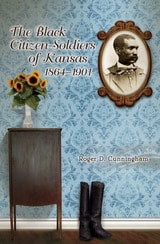
The Black Citizen-Soldiers of Kansas, 1864-1901
Roger D. Cunningham
University of Missouri Press, 2008
Roger Cunningham examines a lost history to show that, in addition to black regulars, hundreds of other black militiamen and volunteers from the Sunflower State provided military service from the Civil War until the dawn of the twentieth century. He tells how African Americans initially filled segregated companies hurriedly organized to defend the state from the threat of Confederate invasion, with some units ordered into battle around Kansas City. Then after the state constitution was amended to admit blacks into the Kansas National Guard, but its generals still refused to integrate, blacks served in reserve militia and independent companies and in all-black regiments that were raised for the Spanish-American and Philippine wars.
Cunningham has researched service records, African American newspapers, and official correspondence to give voice to these citizen-soldiers. He shares stories of real people like William D. Matthews, a captain in the First Kansas Colored Infantry who was refused a commission when his regiment was mustered into the Union army; Charles Grinsted, who commanded the first black militia company after the Civil War; and other unsung heroes.
More than a military history, Cunningham’s account records the quest of black men, many of them former slaves, for inclusion in American society. Many came from the bottom of the socioeconomic order and found that as militiamen they could gain respect within their communities. And by marching in public ceremonies and organizing fund-raising activities to compensate for lack of financial support from the state, they also strengthened the ties that bound African American communities together.
The Black Experience in America
Selected EssaysEdited by James C. Curtis and Lewis L. Gould
University of Texas Press, 1970
In the fall of 1968, the University of Texas at Austin sponsored a series of public lectures delivered by outstanding students of the black past in an effort to clarify the role of the African American in America’s history. This volume of essays by eight of the ten participants makes the lectures available to a broader public.
The essays demonstrate that the black experience in America has been integral throughout the nation’s history. Although each contributor deals with a different aspect of this experience, they all share a common commitment to sound historical scholarship. The essays also reflect the intensive research in the field of black history during a time of high racial tension.
Henry Allen Bullock, in an exploration of education in the slave experience, shows that, despite organized attempts to dehumanize the Negro, the black man’s position in the American social order was not static. By training and educating the Negro, the slaveowner was weakening the peculiar institution and preparing the slave for freedom. In the field of cultural anthropology, which had largely ignored blacks in the United States, William S. Willis, Jr., examines the interaction of whites, blacks, and Indians on the Southern colonial frontier. Arthur Zilversmit traces the development of abolitionist attitudes from patience to militance and points out that both those reformers who abandoned action and those who demanded radical violent change were forced into their positions by society’s failure to listen to the arguments of moderate reformers.
William S. McFeely takes a fresh look at the Reconstruction era, one of the only times in American history when white Americans have even come close to wanting for black Americans what black Americans wanted for themselves. In a discussion of protest against segregated streetcars in the South, August Meier and Elliott Rudwick show that the boycotts of the late 1950s had their counterparts in more than twenty-five Southern cities between 1900 and 1906. Thomas R. Cripps attacks the myth of the Southern box office and shows how Hollywood’s own timidity fostered racial stereotyping in American movies. Robert L. Zangrando outlines the role of the NAACP, founded in 1909, in the evolution of civil rights protests during the mid-twentieth century. He argues that the organization’s precarious position in American society prevented it from exercising strong leadership within the black community. Louis R. Harlan concludes the volume by assessing the past and looking toward the future of black history in America.
The Black Geographic
Praxis, Resistance, FuturityCamilla Hawthorne and Jovan Scott Lewis, editors
Duke University Press, 2023
Contributors. Anna Livia Brand, C.N.E. Corbin, Lindsey Dillon, Chiyuma Elliott, Ampson Hagan, Camilla Hawthorne, Matthew Jordan-Miller Kenyatta, Jovan Scott Lewis, Judith Madera, Jordanna Matlon, Solange Muñoz, Diana Negrín, Danielle Purifoy, Sharita Towne
The Black Image in the White Mind
Media and Race in AmericaRobert M. Entman and Andrew Rojecki
University of Chicago Press, 2001
Using the media, and especially television, as barometers of race relations, Robert Entman and Andrew Rojecki explore but then go beyond the treatment of African Americans on network and local news to incisively uncover the messages sent about race by the entertainment industry-from prime-time dramas and sitcoms to commercials and Hollywood movies. While the authors find very little in the media that intentionally promotes racism, they find even less that advances racial harmony. They reveal instead a subtle pattern of images that, while making room for Blacks, implies a racial hierarchy with Whites on top and promotes a sense of difference and conflict. Commercials, for example, feature plenty of Black characters. But unlike Whites, they rarely speak to or touch one another. In prime time, the few Blacks who escape sitcom buffoonery rarely enjoy informal, friendly contact with White colleagues—perhaps reinforcing social distance in real life.
Entman and Rojecki interweave such astute observations with candid interviews of White Americans that make clear how these images of racial difference insinuate themselves into Whites' thinking.
Despite its disturbing readings of television and film, the book's cogent analyses and proposed policy guidelines offer hope that America's powerful mediated racial separation can be successfully bridged.
"Entman and Rojecki look at how television news focuses on black poverty and crime out of proportion to the material reality of black lives, how black 'experts' are only interviewed for 'black-themed' issues and how 'black politics' are distorted in the news, and conclude that, while there are more images of African-Americans on television now than there were years ago, these images often don't reflect a commitment to 'racial comity' or community-building between the races. Thoroughly researched and convincingly argued."—Publishers Weekly
"Drawing on their own research and that of a wide array of other scholars, Entman and Rojecki present a great deal of provocative data showing a general tendency to devalue blacks or force them into stock categories."—Ben Yagoda, New Leader
Winner of the Frank Luther Mott Award for best book in Mass Communication and the Robert E. Lane Award for best book in political psychology.
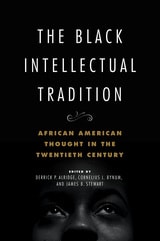
The Black Intellectual Tradition
African American Thought in the Twentieth CenturyEdited by Derrick P. Alridge, Cornelius L. Bynum, and James B. Stewart
University of Illinois Press, 2021
From 1900 to the present, people of African descent living in the United States have drawn on homegrown and diasporic minds to create a Black intellectual tradition engaged with ideas on race, racial oppression, and the world. This volume presents essays on the diverse thought behind the fight for racial justice as developed by African American artists and intellectuals; performers and protest activists; institutions and organizations; and educators and religious leaders. By including both women’s and men’s perspectives from the U.S. and the Diaspora, the essays explore the full landscape of the Black intellectual tradition. Throughout, contributors engage with important ideas ranging from the consideration of gender within the tradition, to intellectual products generated outside the intelligentsia, to the ongoing relationship between thought and concrete effort in the quest for liberation.
Expansive in scope and interdisciplinary in practice, The Black Intellectual Tradition delves into the ideas that animated a people’s striving for full participation in American life.
Contributors: Derrick P. Alridge, Keisha N. Blain, Cornelius L. Bynum, Jeffrey Lamar Coleman, Pero Gaglo Dagbovie, Stephanie Y. Evans, Aaron David Gresson III, Claudrena N. Harold, Leonard Harris, Maurice J. Hobson, La TaSha B. Levy, Layli Maparyan, Zebulon V. Miletsky, R. Baxter Miller, Edward Onaci, Venetria K. Patton, James B. Stewart, and Nikki M. Taylor

The Black Mecca Blueprint
Race, Class, and Place in Atlanta, GeorgiaJonathan P. Grant
Temple University Press, 2027
Black people have been on a continual search for freedom. Since their arrival in the West as exploited sources of labor, through the great migrations out of and back to the U.S. South, to repatriation efforts to Africa and throughout the Diaspora, they have been longing for place and to find or create a Mecca.
The Black Mecca Blueprint examines the current Black Mecca, Atlanta, Georgia. Jonathan Grant explores the dynamism of Black life in a “Black city,” homing in on race, class, and place and all their inherent complexities. He analyzes the ways place and city spaces are negotiated through power and class struggles and how various spaces, such as the Atlanta University Center and its reputation as a beacon, are recreated.
Drawing on in-depth interviews, hip hop music, cultural podcasts, stand-up comedy, archival research, media, autoethnographic data, and historiography, The Black Mecca Blueprint captures the beauty and burden of Atlanta while creating a blueprint that can be used to help devise more democratic cities across the U.S. and around the world.
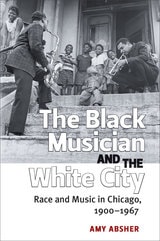
The Black Musician and the White City
Race and Music in Chicago, 1900-1967Amy Absher
University of Michigan Press, 2014
Absher’s work diverges from existing studies in three ways: First, she takes the history beyond the study of jazz and blues by examining the significant role that classically trained black musicians played in building the Chicago South Side community. By acknowledging the presence and importance of classical musicians, Absher argues that black migrants in Chicago had diverse education and economic backgrounds but found common cause in the city’s music community. Second, Absher brings numerous maps to the history, illustrating the relationship between Chicago’s physical lines of segregation and the geography of black music in the city over the years. Third, Absher’s use of archival sources is both extensive and original, drawing on manuscript and oral history collections at the Center for Black Music Research in Chicago, Columbia University, Rutgers’s Institute of Jazz Studies, and Tulane’s Hogan Jazz Archive. By approaching the Chicago black musical community from these previously untapped angles, Absher offers a history that goes beyond the retelling of the achievements of the famous musicians by discussing musicians as a group. In The Black Musician and the White City, black musicians are the leading actors, thinkers, organizers, and critics of their own story.
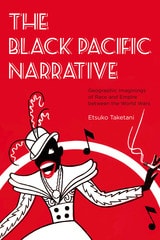
The Black Pacific Narrative
Geographic Imaginings of Race and Empire between the World WarsEtsuko Taketani
Dartmouth College Press, 2014
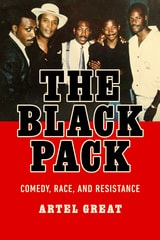
The Black Pack
Comedy, Race, and ResistanceArtel Great
Rutgers University Press, 2025
Working together as writers, directors, producers, actors, and consultants, the Black Pack created some of the most provocative and enduring Black films and television shows of the twentieth century, including classic productions like In Living Color, Coming to America, Hollywood Shuffle, and The Arsenio Hall Show. The Black Pack collective was armed with a signature comedic style which combined politically-Black satire with edgy social humor that entertained millions, shattered box-office records, and slyly critiqued America’s racial condition. Amid escalating social tensions in the 1980s, the Black Pack’s comedic output transformed anger into art, wielding the cloak of humor as a rebellious tool to confront unjust business practices in Hollywood and challenge racial narratives embedded in American culture. Their work empowered unapologetically Black voices and expanded creative possibilities for Black artists in the entertainment industry.
In The Black Pack, Artel Great delivers the most comprehensive analysis of this groundbreaking comedy collective, uncovering how the group’s socially and politically-charged humor defied systemic barriers to achieve unprecedented commercial success and establish a cultural legacy that continues to inspire media creators today and across new generations.
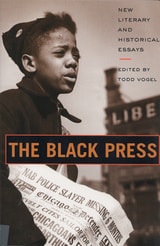
The Black Press
New Literary and Historical EssaysEdited by Todd Vogel
Rutgers University Press, 2001
In a segregated society in which black scholars, writers, and artists could find few ways to reach an audience, journalism was a means of dispersing information to communities throughout the United States. The black press has offered incisive critiques of such issues as racism, identify, class, and economic injustice, but that contribution to public discourse has remained largely unrecognized until now. The original essays in this volume broaden our understanding of the “public sphere” and show how marginalized voices attempted to be heard in the circles of debate and dissent that existed in their day.
The Black Press progresses chronologically from slavery to the impact and implications of the Internet to reveal how the press’s content and its very form changed with evolving historical and cultural conditions in America. The first papers fought for rights for free blacks in the North. The early twentieth-century black press sought to define itself and its community amidst American modernism. Writers in the 1960s took on the task of defining revolution in that decade’s ferment. It was not been until the mid-twentieth century that African American cultural study began to achieve intellectual respectability.
The Black Press addresses the production, distribution, regulation, and reception of black journalism in order to illustrate a more textured public discourse, one that exchanges ideas not just within the black community, but also within the nation at large. The essays demonstrate that the black press redefined class, restaged race and nationhood, and reset the terms of public conversation, providing a fuller understanding of not just African American culture, but also the varied cultural battles fought throughout our country’s history.

The Black Public Sphere
Edited by The Black Public Sphere Collective
University of Chicago Press, 1995
To think about the black public sphere we have to be willing to rethink the relationship between markets and freedom, commodity and identity, property and pleasure. This book provides more sophisticated approaches to matters historically consigned to inadequate rubrics—"the Negro problem," "subcultures," "minorities," "inner city," and "multicultural." While these rubrics constrict and stereotype, the analytic potential of the black public sphere is that it facilitates new ways to discuss democratic values and citizenship.
The Black Shoals
Offshore Formations of Black and Native StudiesTiffany Lethabo King
Duke University Press, 2019
The Black Struggle for Public Schooling in Nineteenth-Century Illinois
Robert L. McCaul
Southern Illinois University Press, 1987
In the pre-Civil War and Civil War periods the Illinois black code deprived blacks of suffrage and court rights, and the Illinois Free Schools Act kept most black children out of public schooling. But, as McCaul documents, they did not sit idly by. They applied the concepts of “bargaining power” (rewarding, punishing, and dialectical) and the American ideal of “community” to participate in winning two major victories during this era.
By the use of dialectical power, exerted mainly via John Jones’ tract, The Black Laws of Illinois, they helped secure the repeal of the state’s black code; by means of punishing power, mainly through boycotts and ‘‘invasions,’’ they exerted pressures that brought a cancellation of the Chicago public school policy of racial segregation.
McCaul makes clear that the blacks’ struggle for school rights is but one of a number of such struggles waged by disadvantaged groups (women, senior citizens, ethnics, and immigrants). He postulates a “stage’’ pattern for the history of the black struggle—a pattern of efforts by federal and state courts to change laws and constitutions, followed by efforts to entice, force, or persuade local authorities to comply with the laws and constitutional articles and with the decrees of the courts.
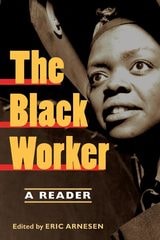
The Black Worker
Race, Labor, and Civil Rights Since EmancipationEdited by Eric Arnesen
University of Illinois Press, 2006
Uniting the latest scholarship on race, labor, and civil rights, The Black Worker aims to establish the richness of the African American working-class experience, and the indisputable role of black workers in shaping the politics and history of labor and race in the United States.
To capture the complexity of African Americans’ experiences in the workplace, this reader examines workers engaged in a wide array of jobs, including sharecropping, coal mining, domestic service, longshoring, automobile manufacturing, tobacco processing, railroading, prostitution, lumbering, and municipal employment. The essays’ subjects include black migration, strikebreaking, black conservatism, gender, and the multiple forms of employment discrimination in the South and North. Other contributions deal explicitly with state policy and black workers during the transition from slavery to freedom, World Wars I and II, and the 1960s.
The variety of challenges made by these workers, both quiet and overt, served as clear reminders to the supporters of white supremacy that, despite their best efforts through violence, fraud, and the law, as long as they insisted on racial inequality, the “race question” would never be fully resolved.
Contributors: Eric Arnesen, Beth Tompkins Bates, Cynthia M. Blair, Tera W. Hunter, William Powell Jones, Brian Kelly, Robert Korstad, Nelson Lichtenstein, Joseph A. McCartin, Steven A. Reich, Leslie A. Schwalm, Nan Elizabeth Woodruff
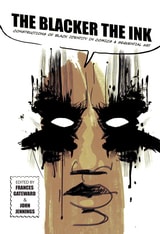
The Blacker the Ink
Constructions of Black Identity in Comics and Sequential ArtGateward, Frances
Rutgers University Press, 2015
Winner of the 2016 Ray and Pat Browne Award for Best Edited Collection in Popular Culture and American Culture by the Popular Culture Association/American Culture Association
Winner of the 2016 PEN Oakland-Josephine Miles Award for Excellence in Literature
When many think of comic books the first thing that comes to mind are caped crusaders and spandex-wearing super-heroes. Perhaps, inevitably, these images are of white men (and more rarely, women). It was not until the 1970s that African American superheroes such as Luke Cage, Blade, and others emerged. But as this exciting new collection reveals, these superhero comics are only one small component in a wealth of representations of black characters within comic strips, comic books, and graphic novels over the past century.
The Blacker the Ink is the first book to explore not only the diverse range of black characters in comics, but also the multitude of ways that black artists, writers, and publishers have made a mark on the industry. Organized thematically into “panels” in tribute to sequential art published in the funny pages of newspapers, the fifteen original essays take us on a journey that reaches from the African American newspaper comics of the 1930s to the Francophone graphic novels of the 2000s. Even as it demonstrates the wide spectrum of images of African Americans in comics and sequential art, the collection also identifies common character types and themes running through everything from the strip The Boondocks to the graphic novel Nat Turner.
Though it does not shy away from examining the legacy of racial stereotypes in comics and racial biases in the industry, The Blacker the Ink also offers inspiring stories of trailblazing African American artists and writers. Whether you are a diehard comic book fan or a casual reader of the funny pages, these essays will give you a new appreciation for how black characters and creators have brought a vibrant splash of color to the world of comics.
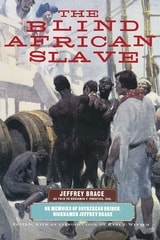
The Blind African Slave
Memoirs of Boyrereau Brinch, Nicknamed Jeffrey BraceJeffrey Brace, as told to Benjamin F. Prentiss, Esq.
University of Wisconsin Press, 2005

The Body of War
Media, Ethnicity, and Gender in the Break-up of YugoslaviaDubravka Zarkov
Duke University Press, 2007
Tracing the links between the war and press representations of ethnicity, gender, and sexuality, Žarkov examines the media’s coverage of two major protests by women who explicitly identified themselves as mothers, of sexual violence against women and men during the war, and of women as militants. She draws on contemporary feminist analyses of violence to scrutinize international and local feminist writings on the war in former Yugoslavia. Demonstrating that some of the same essentialist ideas of gender and sexuality used to produce and reinforce the significance of ethnic differences during the war often have been invoked by feminists, she points out the political and theoretical drawbacks to grounding feminist strategies against violence in ideas of female victimhood.
The Bonnet
Katari´na Kucbelova´
Seagull Books, 2024
The Bonnet, the first work of prose by Slovak poet Katarína Kucbelová, defies easy pigeonholing: both political and personal, it is a work of literary reportage, a quest for one’s roots, a critical exploration of folk art and, not least, social commentary on the coexistence of the Slovak majority and the Roma minority, offering a nuanced and sympathetic look at the lives of Roma people in Slovakia, and raising important questions about the nature of prejudice and discrimination. Over two years, the author made regular visits to the remote village of Šumiac in Slovakia to learn the dying craft of bonnet making from one of its last practitioners, Il’ka, an elderly local woman who in the process became her mentor in more ways than one. Through the parallel stories of Il’ka and the narrator’s grandmother, The Bonnet also offers a subtly feminist reading of the position of women in rural Europe from the early twentieth century to the present day.
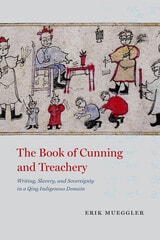
The Book of Cunning and Treachery
Writing, Slavery, and Sovereignty in a Qing Indigenous DomainErik Mueggler
University of Chicago Press, 2027
An ethnographic history of one of the dozens of indigenous domains that occupied China’s border regions during the Qing dynasty and before.
Erik Mueggler’s The Book of Cunning and Treachery is an ethnographic history of a chiefly household that ruled one of the many indigenous domains scattered through upland southwest China during the late Ming and Qing dynasties. The imperial colonization of this region proceeded by way of defeating indigenous polities and absorbing them into a system of indirect governance. In this system, indigenous chieftains inherited power over multiethnic domains, subject to ratification by the imperial court. Mueggler tracks the history of two crucial yet unexamined archives pertaining to this household—a trove of Chinese-language legal, military, and administrative documents, and hundreds of ritual manuals, histories, and morality books written in the indigenous Né script—to show how the chiefly house reproduced itself through these languages, each with its own forms of ritual, recitation, and inscription.
As Mueggler demonstrates, through different forms of access to writing in Chinese and Né, male and female chieftains, domestic slaves, enslaved bondsmen, bonded tenants, chiefly concubines, and more existed in a complex ecology of relations. House and domain were governed through a dynamic process in which residents continuously worked out the status hierarchies that animated their relations with one another as well as the relations between the chiefly house and the local administrative system. This groundbreaking book provides a compelling account of the intertwined problems of writing, slavery, and sovereignty, as well as a vivid portrait of the unique form that indigenous jurisdiction took in this era.
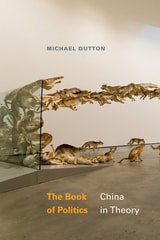
The Book of Politics
China in TheoryMichael Dutton
Duke University Press, 2024
The Booker T. Washington Papers Collection
Volumes 1-14Booker T Washington
University of Illinois Press, 2015
The Booker T. Washington Papers, Vol. 14
Cumulative Index. Edited by Louis R. HARLAN and Raymond W. SMOCKBooker T. Washington
University of Illinois Press, 1989
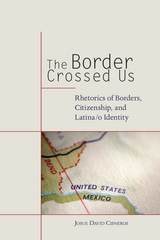
The Border Crossed Us
Rhetorics of Borders, Citizenship, and Latina/o IdentityJosue David Cisneros
University of Alabama Press, 2013
Explores efforts to restrict and expand notions of US citizenship as they relate specifically to the US-Mexico border and Latina/o identity.
Borders and citizenship go hand in hand. Borders define a nation as a territorial entity and create the parameters for national belonging. But the relationship between borders and citizenship breeds perpetual anxiety over the purported sanctity of the border, the security of a nation, and the integrity of civic identity.
In The Border Crossed Us, Josue David Cisneros addresses these themes as they relate to the US-Mexico border, arguing that issues ranging from the Mexican-American War of 1846–1848 to contemporary debates about Latina/o immigration and border security are negotiated rhetorically through public discourse. He explores these rhetorical battles through case studies of specific Latina/o struggles for civil rights and citizenship, including debates about Mexican American citizenship in the 1849 California Constitutional Convention, 1960s Chicana/o civil rights movements, and modern-day immigrant activism.
Cisneros posits that borders—both geographic and civic—have crossed and recrossed Latina/o communities throughout history (the book’s title derives from the popular activist chant, “We didn’t cross the border; the border crossed us!”) and that Latina/os in the United States have long contributed to, struggled with, and sought to cross or challenge the borders of belonging, including race, culture, language, and gender.
The Border Crossed Us illuminates the enduring significance and evolution of US borders and citizenship, and provides programmatic and theoretical suggestions for the continued study of these critical issues.

The Border Reader
Gilberto Rosas and Mireya Loza, editors
Duke University Press, 2023
Contributors. Leisy J. Abrego, Gloria E. Anzaldúa, Martha Balaguera, Lionel Cantú, Leo R. Chavez, Raúl Fernández, Rosa-Linda Fregoso, Roberto G. Gonzales, Gilbert G. González, Ramón Gutiérrez, Kelly Lytle Hernández, José E. Limón, Mireya Loza, Alejandro Lugo, Eithne Luibhéid, Martha Menchaca, Cecilia Menjívar, Natalia Molina, Fiamma Montezemolo, Américo Paredes, Néstor Rodríguez, Renato Rosaldo, Gilberto Rosas, María Josefina Saldaña-Portillo, Sonia Saldívar-Hull, Alicia Schmidt Camacho, Sayak Valencia Triana, Carlos G. Vélez-Ibáñez, Patricia Zavella
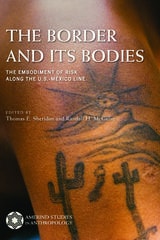
The Border and Its Bodies
The Embodiment of Risk Along the U.S.-México LineEdited by Thomas E. Sheridan and Randall H. McGuire
University of Arizona Press, 2019
The increasingly militarized U.S.-México border is an intensely physical place, affecting the bodies of all who encounter it. The essays in this volume explore how crossing becomes embodied in individuals, how that embodiment transcends the crossing of the line, and how it varies depending on subject positions and identity categories, especially race, class, and citizenship.
Timely and wide-ranging, this book brings into focus the traumatic and real impact the border can have on those who attempt to cross it, and it offers new perspectives on the effects for rural communities and ranchers. An intimate and profoundly human look at migration, The Border and Its Bodies reminds us of the elemental fact that the border touches us all.
Contributors
Bruce E. Anderson
Jared Beatrice
Rebecca Crocker
Jason De León
Linda Green
Randall H. McGuire
Shaylih Muehlmann
Robin Reineke
Olivia T. Ruiz Marrujo
David Seibert
Thomas E. Sheridan
Angela Soler
Ruth M. Van Dyke
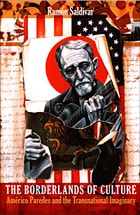
The Borderlands of Culture
Americo Paredes and the Transnational ImaginaryRamón Saldívar
Duke University Press, 2006
Saldívar demonstrates how Paredes’s poetry, prose, and journalism prefigured his later work as a folklorist and ethnographer. In song, story, and poetry, Paredes first developed the themes and issues that would be central to his celebrated later work on the “border studies” or “anthropology of the borderlands.” Saldívar describes how Paredes’s experiences as an American soldier, journalist, and humanitarian aid worker in Asia shaped his understanding of the relations between Anglos and Mexicans in the borderlands of south Texas and of national and ethnic identities more broadly. Saldívar was a friend of Paredes, and part of The Borderlands of Culture is told in Paredes’s own words. By explaining how Paredes’s work engaged with issues central to contemporary scholarship, Saldívar extends Paredes’s intellectual project and shows how it contributes to the remapping of the field of American studies from a transnational perspective.
The Borderlands of Race
Mexican Segregation in a South Texas TownBy Jennifer R. Nájera
University of Texas Press, 2015
Throughout much of the twentieth century, Mexican Americans experienced segregation in many areas of public life, but the structure of Mexican segregation differed from the strict racial divides of the Jim Crow South. Factors such as higher socioeconomic status, lighter skin color, and Anglo cultural fluency allowed some Mexican Americans to gain limited access to the Anglo power structure. Paradoxically, however, this partial assimilation made full desegregation more difficult for the rest of the Mexican American community, which continued to experience informal segregation long after federal and state laws officially ended the practice.
In this historical ethnography, Jennifer R. Nájera offers a layered rendering and analysis of Mexican segregation in a South Texas community in the first half of the twentieth century. Using oral histories and local archives, she brings to life Mexican origin peoples’ experiences with segregation. Through their stories and supporting documentary evidence, Nájera shows how the ambiguous racial status of Mexican origin people allowed some of them to be exceptions to the rule of Anglo racial dominance. She demonstrates that while such exceptionality might suggest the permeability of the color line, in fact the selective and limited incorporation of Mexicans into Anglo society actually reinforced segregation by creating an illusion that the community had been integrated and no further changes were needed. Nájera also reveals how the actions of everyday people ultimately challenged racial/racist ideologies and created meaningful spaces for Mexicans in spheres historically dominated by Anglos.
The Borders of America
Migration, Control, and Resistance Across Latin America and the CaribbeanSoledad Álvarez Velasco, Nicholas De Genova, Gustavo Dias, and Eduardo Domenech, editors
Duke University Press, 2026
Contributors. Soledad Álvarez Velasco, Tanya Basok, Janneth Clavijo, Nicholas De Genova, Gustavo Dias, Eduardo Domenech, Roberto Dufraix-Tapia, Jonathan Echeverri Zuluaga, Valentina Glockner Fagetti, Luin Goldring, Patricia Landolt, Carolina Moulin, Margarita Luz Núñez Chaim, Juan Ordóñez, Daniel Quinteros, Romina Ramos, Martha Rojas-Wiesner, Fabio Santos, Amarela Varela-Huerta, and Laura Velasco Ortiz
The Borders of Dominicanidad
Race, Nation, and Archives of ContradictionLorgia García Peña
Duke University Press, 2016