Results by title
628 books match the query 'Democracy' and 138 start with t
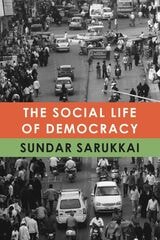
The Social Life of Democracy
Sundar Sarukkai
Seagull Books, 2022
TheSocial Life of Democracy is a response to the polarization of our times and the crisis in democracy being experienced across the world today. Drawing from B. R. Ambedkar’s view that democracy is not a form of government but more a form of society and mental disposition, this book argues that democracy needs to be seen as a form of social life that must be part of our everyday practice. Noting that the obstacles to realizing Ambedkar’s vision of democracy are both material and conceptual, philosopher Sundar Sarukkai critically examines the meaning of democratic action and the function of democracy in different domains ranging from homes to governments. He also examines its relation to labor, science, and religion, and analyzes the ethical processes that are central to democracy. Finally, clarifying the concepts of truth in politics and the ideas of freedom and choice, he persuasively argues in favor of bringing democracy into our everyday lives rather than leaving it exclusively in the domain of electoral politics.
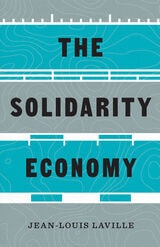
The Solidarity Economy
Jean-Louis Laville
University of Minnesota Press, 2023
Questioning the boundaries between politics and economics
Jean-Louis Laville’s large body of work has focused on an intellectual history of the concept of solidarity since the Industrial Revolution. In The Solidarity Economy, his most famous distillation of this work, Laville establishes how the formations of economic solidarities (unions, activism, and other forms of associationalism) reveal that the boundaries between politics and economics are porous and structured such that politics, ideally a pure expression of ethics and values, is instead integrated with economic concerns.
Exploring the possibilities and long histories of association, The Solidarity Economy identifies the power of contemporary social and solidarity movements and examines the history of postcapitalist practices in which democratic demands invade the heart of the economy. The Solidarity Economy ranges in focus from workers associations in France dating back to the nineteenth century, to associations of African Americans and feminists in the United States in the late nineteenth and early twentieth centuries, to a Brazilian landless-worker coalition in the twentieth century.
Studying solidarity associations over time allows us to examine how we can recombine the economic and political spheres to address dependencies and inequalities. Ultimately, The Solidarity Economy has global scope and inspiring examples of associations that deepen democracy.

The Spectacle of Democracy
Spanish Television, Nationalism, and Political TransitionRichard Maxwell
University of Minnesota Press, 1994
The Spectacle of Democracy was first published in 1994. Minnesota Archive Editions uses digital technology to make long-unavailable books once again accessible, and are published unaltered from the original University of Minnesota Press editions.
In this age of increased global communication the media seem like juggernauts paving the way from dictatorship to democracy. Richard Maxwell's study of television in Spain overturns this myth of technological power. He shows us how transitions themselves have a profound impact on the media, as controllers of national television clash with commercial media promoters and with regionalists who want television to extend their nationalist politics and collective identity.
Maxwell's sophisticated analysis of the many variables shaping communication policy within the nation-state draws on a decade of research into Spanish culture, mass media, and political economy. Although focused on Spain, his work provides general insight into the nature of communication policy debates in today's globalized economy. A study of the transformation of television in Spain following the end of Franco's dictatorship, Maxwell's book examines the politics of the privatization of television, the rise of regional television, and the transnational realignment of national media space.Richard Maxwell is assistant professor in the department of radio, television, and film in the School of Speech at Northwestern University.
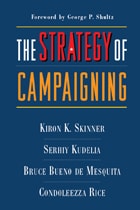
The Strategy of Campaigning
Lessons from Ronald Reagan and Boris YeltsinKiron K. Skinner, Serhiy Kudelia, Bruce Bueno de Mesquita, and Condoleezza Rice
University of Michigan Press, 2010
The Strategy of Campaigning explores the political careers of Ronald Reagan and Boris Yeltsin, two of the most galvanizing and often controversial political figures of our time. Both men overcame defeat early in their political careers and rose to the highest elected offices in their respective countries.
The authors demonstrate how and why Reagan and Yeltsin succeeded in their political aspirations, despite—or perhaps because of—their apparent “policy extremism”: that is, their advocacy of policy positions far from the mainstream. The book analyzes the viability of policy extremism as a political strategy that enables candidates to forge new coalitions and outflank conventional political allegiances.
Bruce Bueno de Mesquita is Julius Silver Professor and Director of the Alexander Hamilton Center for Political Economy at New York University and a Senior Fellow at the Hoover Institution.
Condoleezza Rice is on a leave of absence from Stanford University, where she was a Professor of Political Science and a Senior Fellow at the Hoover Institution. She is currently serving as U.S. Secretary of State.
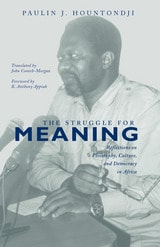
The Struggle For Meaning
Reflections on Philosophy, Culture, and Democracy in AfricaPaulin J. Hountondji
Ohio University Press, 2002
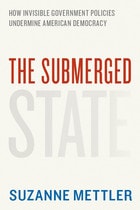
The Submerged State
How Invisible Government Policies Undermine American DemocracySuzanne Mettler
University of Chicago Press, 2011
“Keep your government hands off my Medicare!” Such comments spotlight a central question animating Suzanne Mettler’s provocative and timely book: why are many Americans unaware of government social benefits and so hostile to them in principle, even though they receive them? The Obama administration has been roundly criticized for its inability to convey how much it has accomplished for ordinary citizens. Mettler argues that this difficulty is not merely a failure of communication; rather it is endemic to the formidable presence of the “submerged state.”
In recent decades, federal policymakers have increasingly shunned the outright disbursing of benefits to individuals and families and favored instead less visible and more indirect incentives and subsidies, from tax breaks to payments for services to private companies. These submerged policies, Mettler shows, obscure the role of government and exaggerate that of the market. As a result, citizens are unaware not only of the benefits they receive, but of the massive advantages given to powerful interests, such as insurance companies and the financial industry. Neither do they realize that the policies of the submerged state shower their largest benefits on the most affluent Americans, exacerbating inequality. Mettler analyzes three Obama reforms—student aid, tax relief, and health care—to reveal the submerged state and its consequences, demonstrating how structurally difficult it is to enact policy reforms and even to obtain public recognition for achieving them. She concludes with recommendations for reform to help make hidden policies more visible and governance more comprehensible to all Americans.
The sad truth is that many American citizens do not know how major social programs work—or even whether they benefit from them. Suzanne Mettler’s important new book will bring government policies back to the surface and encourage citizens to reclaim their voice in the political process.
The Three Ages of Government
From the Person, to the Group, to the WorldJos C.N. Raadschelders
University of Michigan Press, 2020
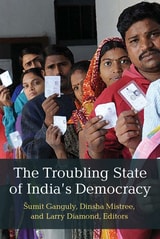
The Troubling State of India's Democracy
Šumit Ganguly, Dinsha Mistree, and Larry Diamond, Editors
University of Michigan Press, 2024
Despite this rich tradition, India’s democracy faces an unprecedented threat with the rise of Narendra Modi and his Hindu nationalist party, the Bharatiya Janata Party. After decisively winning general elections in 2014, Modi and the BJP have pursued a range of anti-democratic policies in which the state and society are used to undermine the opposition, to stifle free speech, and to harass religious minorities. The Troubling State of India’s Democracy brings together leading scholars from around the world to assess the conditions of India’s democracy across three important dimensions: politics, specifically the state of political parties and the party system; the state, including the condition of federalism and the health of various institutions; and society, including NGOs, ethnic and religious tensions, and control of the media. Even though elements of India’s democracy seem to function—like its commitment to elections—the contributors document a disturbing trajectory, one that not only threatens to undermine India’s own stability, but could also affect the global order.
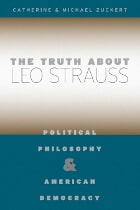
The Truth about Leo Strauss
Political Philosophy and American DemocracyCatherine H. Zuckert and Michael P. Zuckert
University of Chicago Press, 2006
Is Leo Strauss truly an intellectual forebear of neoconservatism and a powerful force in shaping Bush administration foreign policy? The Truth about Leo Strauss puts this question to rest, revealing for the first time how the popular media came to perpetuate such an oversimplified view of such a complex and wide-ranging philosopher. More important, it corrects our perception of Strauss, providing the best general introduction available to the political thought of this misunderstood figure.
Catherine and Michael Zuckert—both former students of Strauss—guide readers here to a nuanced understanding of how Strauss’s political thought fits into his broader philosophy. Challenging the ideas that Strauss was an inflexible conservative who followed in the footsteps of Nietzsche, Heidegger, and Carl Schmitt, the Zuckerts contend that Strauss’s signature idea was the need for a return to the ancients. This idea, they show, stemmed from Strauss’s belief that modern thought, with its relativism and nihilism, undermines healthy politics and even the possibility of real philosophy. Identifying this view as one of Strauss’s three core propositions—America is modern, modernity is bad, and America is good—they conclude that Strauss was a sober defender of liberal democracy, aware of both its strengths and its weaknesses.
The Zuckerts finish, appropriately, by examining the varied work of Strauss’s numerous students and followers, revealing the origins—rooted in the tensions within his own thought—oftheir split into opposing camps. Balanced and accessible, The Truth about Leo Strauss is a must-read for anyone who wants to more fully comprehend this enigmatic philosopher and his much-disputed legacy.
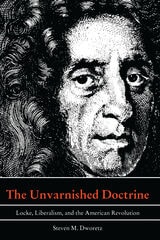
The Unvarnished Doctrine
Locke, Liberalism, and the American RevolutionSteven M. Dworetz
Duke University Press, 1990

The Vanguard of the Atlantic World
Creating Modernity, Nation, and Democracy in Nineteenth-Century Latin AmericaJames E. Sanders
Duke University Press, 2014
The Vitality of Democracy
Gisela Stuart
Haus Publishing, 2022
In The Vitality of Democracy, British-German politician Gisela Stuart argues for the urgency of expanded participation in the democratic process and considers the risks democracy currently faces. Although democracy is rife with difficult choices, she shows that if the people do not appreciate what makes this system work, they risk losing it. While no individual holds the answers, democracy allows for power to change hands, giving opportunities for different sides to have a chance at improving government for all.
Stuart reflects on challenges to British democracy since the mid-2010s. With the United Kingdom exiting the European Union and facing an overwhelming pandemic, restrictions to civil liberties were imposed that may have been unimaginable in the past. It is time to pause and reflect on the serious challenges currently posed to democracy and to the ability of the people to take part.

The Washington Connection and Third World Fascism
The Political Economy of Human Rights: Volume INoam Chomsky
Pluto Press, 2015
The Will of the Many
How the Alterglobalisation Movement is Changing the Face of DemocracyMarianne Maeckelbergh
Pluto Press, 2009
Never before has the idea of democracy enjoyed the global dominance it holds today, but neoliberalism has left the practice of democracy in deep crisis.
Marianne Maeckelbergh argues that the most promising model for global democracy is not coming from traditional political parties or international institutions, but from the global networks of resistance to neoliberal economics, known collectively as the Alter-globalisation movement. Through extensive ethnography of decision-making practices within these movements, Maeckelbergh describes an alternative form of global democracy in the making.
Perfect for activists and students of political anthropology, this powerful and enlightening book offers radical changes.

Theater and Democracy in an Era of Immersion
James R. Ball III
University of Michigan Press, 2027
From theater to virtual reality, we find ourselves making sense of imagined worlds that surround us. Our experience of democracy in the twenty-first century is similar: we are spectators to politics, immersed in 24-hour news, joining candidates on the campaign trail, reflecting on civic life and national memory in spaces of culture. Theater and Democracy in an Era of Immersion draws on extensive interviews with artists to develop a theory of immersive spectatorship as political action, arguing that through our experience of art, we can cultivate practices to navigate the disorientations and disenchantments of our democracy. This theory complements and complicates debates over the democratic promise of participatory performance by theorizing a mode of spectatorship that cuts across media, disciplines, genres, and everyday experiences.
James R. Ball III investigates phenomena that compose our experience of democracy, including campaign trail debates and rallies; electoral microtargeting; misinformation, disinformation, and conspiracy theory; sonic weapons and psychic spying; political assassination; racist state violence; public commemoration; AI in government; and the democratic work of mourning. Theater and Democracy in an Era of Immersion provides a unique performance studies intervention into political theory, indicating new avenues for research into political spectatorship and the theatricality of deliberative and ocular democracy.

Theatre for Youth Third Space
Performance, Democracy, and Community Cultural DevelopmentStephani Etheridge Woodson
Intellect Books, 2015
Thinker, Faker, Spinner, Spy
Corporate PR and the Assault on DemocracyEdited by David Miller and William Dinan
Pluto Press, 2007
Written by leading activists and writers, this book reveals the secrets of the PR trade including deception, the use of fake 'institutes', spying and dirty tricks. The impact can be devastating -- when the public is denied access to the truth, the results are rising inequality and environmental catastrophe.
Exposing the misdeeds of famous companies including Coca Cola, British Aerospace, Exxon and Monsanto, and revealing information about the covert funding of various apparently independent thinks tanks and institutes, the authors offer a guide to campaigns that can help us roll back corporate power and resist deceptive PR.
This Machine Breeds Fascists / Mašina Koja Hrani Fašiste
Thompson—the Rock Star, the Collapse of Political Will, and the Resistance to Radicalization in Croatia / Thompson, Poraz Politike i Otpor Radikalizaciji HrvatskeBarbara Matejcic and Hrvoje Šimicevic, with an introduction by Matea Gnjec and Brian Willems
Disobedience Press, 2027
In this pair of essays, award-winning journalists Hrvoje Šimičević and Barbara Matejčić expose the turn in Croatia’s political trends, showing how “moderate” pro-European governments have opened the floodgates for far-right radicalism and fascism to transition from the societal fringes into the mainstream. Šimičević weaves these histories around a chilling turning point: a Thompson concert in which hundreds of thousands chanted the Ustaše salute. Matejčić then reveals the civic response and defiant resistance to the politics of fear and escalating attacks against Serbians and other minorities. At the heart of these texts is a struggle over the meaning of Croatia itself: will it belong to the loudest voices or to all who live there?
U ova dva eseja, nagrađivani novinari Hrvoje Šimičević i Barbara Matejčić opisuju političke promjene u Hrvatskoj, pokazujući kako su samozvane umjerene proeuropske vlade imale ključnu ulogu u pomicanju fašizma i krajnje desnog radikalizma s društvenih rubova u političku srednju struju. Šimičević plete povijest te pojave oko jezive prekretnice: Thompsonovog koncerta na kojem su stotine tisuća posjetitelja izvikivale ustaški pozdrav. Matejčić zatim prikazuje odgovor građana i prkosan otpor politici straha i eskalaciji napada na Srbe i druge manjine. U srži ovih tekstova leži borba za značenje Hrvatske: hoće li zemlja pripadati onima koji najglasnije viču ili svima koji u njoj žive?

Threatened Scholarship, Dynamics of Repression and Forms of Resistance
Towards Academic Freedom as a Transnational Human RightKerry Bystrom
Central European University Press, 2027
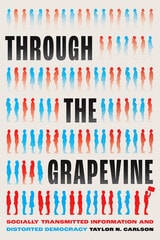
Through the Grapevine
Socially Transmitted Information and Distorted DemocracyTaylor N. Carlson
University of Chicago Press, 2024
An enlightening examination of what it means when Americans rely on family and friends to stay on top of politics.
Accurate information is at the heart of democratic functioning. For decades, researchers interested in how information is disseminated have focused on mass media, but the reality is that many Americans today do not learn about politics from direct engagement with the news. Rather, about one-third of Americans learn chiefly from information shared by their peers in conversation or on social media. How does this socially transmitted information differ from that communicated by traditional media? What are the consequences for political attitudes and behavior?
Drawing on evidence from experiments, surveys, and social media, Taylor N. Carlson finds that, as information flows first from the media then person to person, it becomes sparse, more biased, less accurate, and more mobilizing. The result is what Carlson calls distorted democracy. Although socially transmitted information does not necessarily render democracy dysfunctional, Through the Grapevine shows how it contributes to a public that is at once underinformed, polarized, and engaged.
To Give Their Gifts
Health, Community, and DemocracyRichard A. Couto
Vanderbilt University Press, 2002
To Turn the World Around
Democracy and the Politics of RepairAli Aslam
University of Minnesota Press, 2027
A stirring exploration of abolitionist thought and Black feminism to articulate a transformative theory of repair
Amid the relentless news of ICE raids, Supreme Court rulings that dismantle our civil rights, and egregious violations of democratic norms, people in the United States are struggling to visualize an actionable path forward. In To Turn the World Around, Ali Aslam proposes a transformative approach that pairs inner healing work with collective external engagement challenging oppressive forces. To actualize W. E. B. DuBois’s concept of abolition democracy, drawing from Black sociality grounded in the refusal of white institutions, Aslam advocates for not working within a broken system nor fleeing it, or merely enduring injustice, and instead offers combined personal healing and embodied action.
Aslam’s vision of transformative selfhood centers healing justice, self and mutual aid, and a somatic approach informed by Black women’s history of navigating bodily dispossession and violations of autonomy and personhood. Simultaneously a tool of personal survival, political refusal, and collective care, inner work incubates new forms of resistance and prepares participants to engage with the outer work of abolition. The movements that rise from the foundation of this inner work are collaborative and experimental, a collective “figuring out” that creates holistic approaches to abolition that transcend conventional politics.
Reimagining inner work as resistance that is ongoing, expansive, and relational, To Turn the World Around offers a stirring framework for the creation of transformational movements. Aslam’s unique theory of repair carefully bridges constituencies, acknowledging the politics of refusal while embracing the hopefulness of sociality.
Retail e-book files for this title are screen-reader friendly.

Tocqueville and Democracy in the Internet Age
C. Jon Delogu
Michigan Publishing Services, 2014
Toleration
Nicholas G. Fotion
University of Alabama Press, 1992
A compelling exploration of the idea that enables diverse people to live together with respect, dignity, and understanding.
Most regard toleration as an unattractive fallback position of compromise and so tend to overlook it in favor of such active concepts as freedom, equality, and justice. Fotion and Elfstrom argue that toleration offers us the useful possibility of responding to a difficult situation with a degree of flexibility not possible with the dichotomous concepts of good-bad, right-wrong, ethical-unethical, Right-Left.
Tolerating saturates ordinary human life and infuses public discussions of religion, morality, and politics. It forms a major strand in the history of Western European thought. Yet the word “toleration” and similar terms are rarely used. Unnoticed and unremarked, they are like the air that surrounds us, vitally important yet invisible.The authors seek to address this oversight in several ways. They begin with a thorough conceptual analysis of toleration and its kindred concepts. They are convinced that an appreciation of the importance of the family of toleration concepts must be founded on an understanding of the various ways in which they function in our language and our lives. In addition, they examine the historical development of the concept of toleration and canvass the major arguments people have employed either to urge toleration or to disparage it. They examine the role of toleration in liberal political philosophy and respond to the major critics of liberal toleration.
The authors also discuss a number of factors that cause toleration to be overlooked in political debate and personal reflection and offer evidence to support the view that this omission is unfortunate. In particular, they argue that toleration has the crucial role of helping people live with one another with respect and dignity in the fractious and contentious world we inhabit. With the rise of racism and other forms of religious, political, and social intolerance, people on all sides of the present debates concerning multi-culturalism and diversity will benefit from this timely and lucidly argued philosophical discussion of the concepts of toleration and its possible application in a less-than-perfect world.
Town Hall Meetings and the Death of Deliberation
Jonathan Beecher Field
University of Minnesota Press, 2019
Tracing the erosion of democratic norms in the US and the conditions that make it possible
Jonathan Beecher Field tracks the permutations of the town hall meeting from its original context as a form of democratic community governance in New England into a format for presidential debates and a staple of corporate governance. In its contemporary iteration, the town hall meeting models the aesthetic of the former but replaces actual democratic deliberation with a spectacle that involves no immediate electoral stakes or functions as a glorified press conference. Urgently, Field notes that though this evolution might be apparent, evidence suggests many US citizens don’t care to differentiate.
Forerunners: Ideas First
Short books of thought-in-process scholarship, where intense analysis, questioning, and speculation take the lead
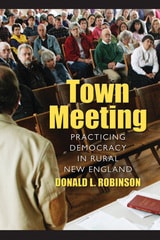
Town Meeting
Practicing Democracy in Rural New EnglandDonald L. Robinson
University of Massachusetts Press, 2011
At Gettysburg, Abraham Lincoln described government by the people as “the great task remaining before us.” Many citizens of modern America, frustrated and disheartened, are tempted to despair of realizing that ideal. Yet, it is a project still alive in parts of New England.
This book traces the origins of town-meeting democracy in Ashfield, a community of just under 2,000 people in the foothills of the Berkshires in western Massachusetts. Donald Robinson begins by recounting several crises at the town's founding in the eighteenth century that helped to shape its character. He shows how the town has changed since then and examines how democratic self-government functions in the modern context.
The picture is not pretty. Self-government carries no guarantees, and Ashfield is no utopia. Human failings are abundantly on display. Leaders mislead. Citizens don't pay attention and they forget hard-earned lessons.
But in this candid account of the operation of democracy in one New England town, Robinson demonstrates that for better and for worse, Ashfield governs itself democratically. Citizens control the actions of their government. Not everyone participates, but all may, and everyone who lives in the town must accept and obey what town meeting decides.
Transformation and Trouble
Crime, Justice and Participation in Democratic South AfricaDiana Gordon
University of Michigan Press, 2006
Crime is one of the major challenges to any new democracy. Violence often increases after the lifting of authoritarian control, or in the aftermath of regime change. But how can a fledgling democracy fight crime without violating the fragile rights of its citizens? In Transformation and Trouble, accomplished theorist and criminal justice scholar Diana Gordon critically examines South Africa's efforts to strike the perilous balance between democratic participation and social control.
South Africa has made great progress in pursuing the Western ideals of participatory justice and due process. Yet Gordon finds that popular concerns about crime have fostered the growth of a punitive criminal justice system that undermines the country's rights-oriented political culture. Transformation and Trouble calls for South Africa to reaffirm its commitment to public empowerment by reforming its criminal justice system-an approach, she argues, that would strengthen the country's new democracy.
"An eloquent, critical, but ultimately optimistic, analysis of the democratization of crime and justice in post-apartheid South Africa."
--Bill Dixon, School of Criminology, Education, Sociology and Social Work, Keele University
"A must read for understanding contemporary South Africa's agonizing dilemmas as it struggles to reconcile crime control with democratic values."
--Jerome H. Skolnick, New York University School of Law
"Gordon's vast experience with criminal justice illuminates her cautionary tale of the search for a new way in south Africa."
--Paul Chevigny, New York University
Diana Gordon is Professor Emerita of Political Science and Senior Research Scholar, City University of New York.
Transformative Civic Education in Democratic Societies
Tetyana Hoggan-Kloubert
Michigan State University Press, 2023
Transformative Justice
Israeli Identity on TrialLeora Bilsky
University of Michigan Press, 2004
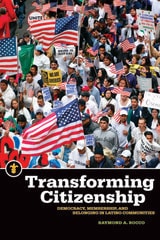
Transforming Citizenship
Democracy, Membership, and Belonging in Latino CommunitiesRaymond A. Rocco
Michigan State University Press, 2014
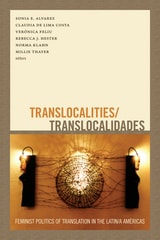
Translocalities/Translocalidades
Feminist Politics of Translation in the Latin/a AméricasSonia E. Alvarez, Claudia de Lima Costa, Verónica Feliu, Rebecca J. Hester, Norma Klahn, and Millie Thayer, eds.
Duke University Press, 2014
Contributors. Sonia E. Alvarez, Kiran Asher, Victoria (Vicky) M. Bañales, Marisa Belausteguigoitia Rius, Maylei Blackwell, Cruz C. Bueno, Pascha Bueno-Hansen, Mirangela Buggs, Teresa Carrillo, Claudia de Lima Costa, Isabel Espinal, Verónica Feliu, Macarena Gómez-Barris, Rebecca J. Hester, Norma Klahn, Agustín Lao-Montes, Suzana Maia, Márgara Millán, Adriana Piscitelli, Ana Rebeca Prada, Ester R. Shapiro, Simone Pereira Schmidt, Millie Thayer

Triumph of the Fatherland
German Unification and the Marginalization of WomenBrigitte Young
University of Michigan Press, 1999
Trust and Governance
Valerie Braithwaite
Russell Sage Foundation, 1998
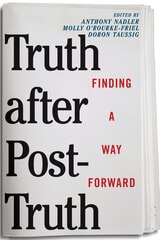
Truth After Post-Truth
Finding a Way ForwardEdited by Anthony Nadler, Molly O’Rourke-Friel, and Doron Taussig
University of Massachusetts Press, 2027
Examining truth, expertise, and authority in the contemporary United States
In an era defined by accusations of “fake news,” declining institutional trust, and deepening political polarization, Truth After Post-Truth reframes the debate about knowledge and democracy in the United States. Rather than treating the so-called post-truth crisis as a failure of public reasoning or the product of bad-faith actors and digital misinformation, this interdisciplinary volume argues that the problem runs deeper and that solutions require renewed democratic deliberation about how public knowledge itself should be produced, evaluated, and shared.
Contributors move beyond familiar diagnoses that blame either misinformed citizens or manipulative media systems. Instead, they interrogate the intellectual and political norms that underwrite claims about truth, expertise, and authority. This book challenges the assumption that restoring democracy depends on returning the public to a fixed set of knowledge practices and calls instead for open debate about which norms and institutions best serve a pluralistic society. Organized around three urgent questions—what relationship a healthy democracy should have to experts, whether a shared and cross-partisan news sphere is necessary or achievable, and whether media reform or media literacy is the more pressing priority—the essays are rigorous, provocative, and often in productive tension with one another. Together, they model the kind of critical engagement needed to rebuild a more resilient democratic information environment.
Timely and forward-looking, Truth After Post-Truth will be essential reading for readers concerned with the future of democratic public life, as well as for scholars and students of media, politics, and communication.
Contributors include the volume editors as well as Mark Andrejevic, Matt Carlson, Vivek Chibber, Belinha de Abreu, John Nerone, Whitney Phillips, Sue Robinson, Michael Schudson, Nik Usher, Andrea Wenzel, and Alex Worsnip.
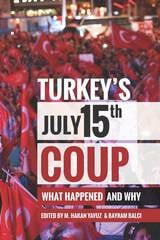
Turkey's July 15th Coup
What Happened and WhyEdited by M. Hakan Yavuz and Bayram Balci
University of Utah Press, 2018
Utah Series in Middle East Studies
On July 15, 2016, a faction of the Turkish military attempted to overthrow the government of President Recep Tayyip Erdoğan. The Turkish government blamed the unsuccessful coup attempt on Gülenists, adherents of an Islamist movement led by Fethullah Gülen. They had helped elect Erdoğan and his AK Party, with the goal of bringing an ostensibly “soft” version of Islam into the secular Turkish government. In alliance with the AK Party, Gülenists steadfastly increased their representation in various government institutions, including the military, the police, and the judiciary. This volume focuses on the historical and sociopolitical contexts of the Gülen Movement’s origins and political ascendancy along with its possible role in the failed coup.
Editors Yavuz and Balcı are among the first international scholars to have studied the movement from its nascent stages in Turkey. The volume's contributors include scholars who have researched the movement in Turkey, Central Asia, and the Balkans. The result is a comprehensive, timely assessment of numerous dimensions of Gülenist activities, including its social and political networks and the institutions that supported the movement as it became a major economic and educational force in Turkey and elsewhere. This volume reflects exchanges among scholars who having studied the Gülenists, assembled to discuss how and why the movement became belligerent opponents of Erdoğan’s government, and it addresses questions such as how this major, still continuing disruption in Turkey’s politics will affect not only the future of the movement but also that of Turkey's embattled democracy as well.
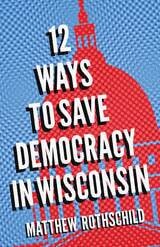
Twelve Ways to Save Democracy in Wisconsin
Matthew Rothschild
University of Wisconsin Press, 2021
From tightening campaign finance laws and banning gerrymandering to rooting out structural racism and moving toward economic equality, each chapter focuses on one of the dozen reforms that are required to heal democracy within the state. Rothschild provides an in-depth rationale for each, dismantling the counterarguments against them and exploring the complexities involved in implementing them. He offers concrete proposals and action items for grassroots organizers and concerned community advocates to restore constituent control of state politics. This pocket-sized handbook is essential for politically aware citizens as well as journalists and watchdogs who see Wisconsin as a crucial battleground state and political bellwether for the nation.
Two Kinds of Rationality
Kibbutz Democracy and Generational ConflictT.M.S. Evens
University of Minnesota Press, 1995
Two Kinds of Rationality was first published in 1995. Minnesota Archive Editions uses digital technology to make long-unavailable books once again accessible, and are published unaltered from the original University of Minnesota Press editions.
Beginning with a discussion of mind-body dualism in social anthropology, Evens presents a profound theory of human conduct that deploys notions of hierarchy and practice. He uses the case study of an Israeli kibbutz to address the central anthropological problem of rationality.
Of particular interest is Evens's interpretation of the Genesis myth, as well as his reading of Rousseau's revision of this myth, as paradigms of generational conflict and the kibbutz's logic of moral order. These interpretations are tied to Evens's detailed discussion of a controversial attempt to introduce secret balloting into a particular kibbutz's directly democratic process.
Two Kinds of Rationality distinguishes between instrumental and mythic rationality, picturing the latter as a value rationality. Projecting reality as basically ambiguous, Evens offers a critique of theoretical approaches to social action and a rethinking of contemporary notions of human agency. This revolutionary theoretical work will appeal to social and political theorists, anthropologists, and students of cultural studies, social movements, and Jewish studies.
T. M. S. Evens is professor of anthropology at the University of North Carolina, Chapel Hill. He is the author of numerous articles and coeditor of Transcendence in Society: Case Studies (1990), a comparative study of social movements.
Tyranny of the Moment
Fast and Slow Time in the Information AgeThomas Hylland Eriksen
Pluto Press, 2001