Results by title
679 books match the query 'Historiography' and 151 start with t
The Real, the True, and the Told
Postmodern Historical Narrative and the Ethics of RepresentationEric L. Berlatsky
The Ohio State University Press, 2011
The Reflective Age
Nostalgia at the End of HistoryZachary Griffith
Rutgers University Press, 2026
The Renaissance Restored
Paintings Conservation and the Birth of Modern Art History in Nineteenth-Century EuropeMatthew Hayes
J. Paul Getty Trust, The, 2021
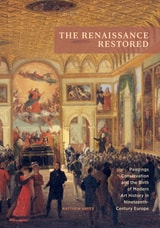
Repairing works of art and writing about them—the practices that became art conservation and art history—share a common ancestry. By the nineteenth century the two fields had become inseparably linked. While the art historical scholarship of this period has been widely studied, its restoration practices have received less scrutiny—until now.
This book charts the intersections between art history and conservation in the treatment of Italian Renaissance paintings in nineteenth-century Europe. Initial chapters discuss the restoration of works by Giotto and Titian, framed by the contemporary scholarship of art historians such as Jacob Burckhardt, G. B. Cavalcaselle, and Joseph Crowe that was redefining the earlier age. Subsequent chapters recount how paintings conservation was integrated into museum settings. The narrative uses period texts, unpublished archival materials, and historical photographs in probing how paintings looked at a time when scholars were writing the foundational texts of art history, and how contemporary restorers were negotiating the appearances of these works. The book proposes a model for a new conservation history, object focused yet enriched by consideration of a wider cultural horizon.
The Rise of Comparative History
Balázs Trencsényi
Central European University Press, 2021
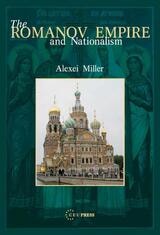
The Romanov Empire and Nationalism
Essays in the Methodology of Historical ResearchAlexei Miller
Central European University Press, 2008
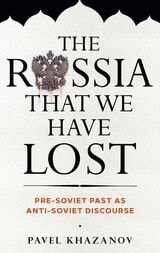
The Russia That We Have Lost
Pavel Khazanov
University of Wisconsin Press, 2023
Khazanov’s careful untangling of this discourse in the late Soviet period reveals a process that involved figures of all political stripes, from staunch conservatives to avowed intelligentsia liberals. Further, Khazanov shows that this process occurred not outside of or in opposition to Soviet guidance and censorship, but in mainstream Soviet culture that commanded wide audiences, especially among the Soviet middle class. Excavating the cultural logic of this newly foundational, mythic memory of a “lost Russia,” Khazanov reveals why, despite the apparently liberal achievement of the collapse of the Soviet Union in 1991, Boris Yeltsin (and later, Vladamir Putin) successfully steered Russia into oligarchy and increasing autocracy. The anti-Soviet memory of the pre-Soviet past, ironically constructed during the late socialist period, became and remains a politically salient narrative, a point of consensus that surprisingly attracts both contemporary regime loyalists and their would-be liberal opposition.
The SBL Handbook of Style
SBL Press, 2014
The definitive source for how to write and publish in the field of biblical studies
The long-awaited second edition of the essential style manual for writing and publishing in biblical studies and related fields includes key style changes, updated and expanded abbreviation and spelling-sample lists, a list of archaeological site names, material on qur’anic sources, detailed information on citing electronic sources, and expanded guidelines for the transliteration and transcription of seventeen ancient languages.
Features:
- Expanded lists of abbreviations for use in ancient Near Eastern, biblical, and early Christian studies
- Information for transliterating seventeen ancient languages
- Exhaustive examples for citing print and electronic sources
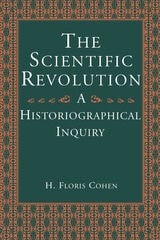
The Scientific Revolution
A Historiographical InquiryH. Floris Cohen
University of Chicago Press, 1994
Cohen's discussions range from scholarly interpretations of Galileo, Kepler, and Newton, to the question of why the Scientific Revolution took place in seventeenth-century Western Europe, rather than in ancient Greece, China, or the Islamic world. Cohen contends that the emergence of early modern science was essential to the rise of the modern world, in the way it fostered advances in technology.
A valuable entrée to the literature on the Scientific Revolution, this book assesses both a controversial body of scholarship, and contributes to understanding how modern science came into the world.
The Scope of History
Studies in the Historiography of Alfonso el SabioCharles F. Fraker
University of Michigan Press, 1996
In his introduction the author addresses the place of Alfonso's work in its own time, giving the reader a notion of what other works in the genre were like and how they differ. The connecting thread running through these chapters is a continuing focus on the art of the compiler. Medieval historical compilations are by definition scissors-and-paste jobs, stringing older texts together to tell new, different stories. But the Alfonsine editors bend the rules: in the short run they make their work yield the themes they think important, and in the long run they build a literary monument of impressive architecture.
Charles F. Fraker is Professor Emeritus in Romance Languages, University of Michigan.
The Sea
Thalassography and HistoriographyPeter N. Miller, Editor
University of Michigan Press, 2013
The Selected Letters of Juanita Brooks
Edited by Craig S. Smith
University of Utah Press, 2019
The letters in this volume, written from 1941 to 1978, trace Brooks’s development from fledgling historian to recognized authority. Serving almost as an autobiography of her interactions with her contemporaries, this selection provides a new perspective on Brooks’s personality and growth as a scholar. Richly detailed, chatty, and covering a wide array of subjects, the letters afford an important glimpse into Brooks’s struggles, concerns, and interests.
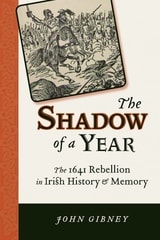
The Shadow of a Year
The 1641 Rebellion in Irish History and MemoryJohn Gibney
University of Wisconsin Press, 2013
Was the 1641 rebellion a justified response to dispossession and repression? Or was it an unprovoked attempt at sectarian genocide? John Gibney comprehensively examines three centuries of this debate. The struggle to establish and interpret the facts of the past was also a struggle over the present: if Protestants had been slaughtered by vicious Catholics, this provided an ideal justification for maintaining Protestant privilege. If, on the other hand, Protestant propaganda had inflated a few deaths into a vast and brutal “massacre,” this justification was groundless.
Gibney shows how politicians, historians, and polemicists have represented (and misrepresented) 1641 over the centuries, making a sectarian understanding of Irish history the dominant paradigm in the consciousness of the Irish Protestant and Catholic communities alike.
The Shape of Inca History
Narrative and Architecture in an Andean EmpireSusan A. Niles
University of Iowa Press, 1999
The Silence of the Miskito Prince
How Cultural Dialogue Was ColonizedMatt Cohen
University of Minnesota Press, 2022
Confronting the rifts created by our common conceptual vocabulary for North American colonial studies
How can we tell colonial histories in ways that invite intercultural conversation within humanistic fields that are themselves products of colonial domination? Beginning with a famous episode of failed communication from the narrative of the freed slave Olaudah Equiano, The Silence of the Miskito Prince explores this question by looking critically at five concepts frequently used to imagine solutions to the challenges of cross-cultural communication: understanding, cosmopolitanism, piety, reciprocity, and patience.
Focusing on the first two centuries of North American colonization, Matt Cohen traces how these five concepts of cross-cultural relations emerged from, and continue to evolve within, colonial dynamics. Through a series of revealing archival explorations, he argues the need for a new vocabulary for the analysis of past interactions drawn from the intellectual and spiritual domains of the colonized, and for a historiographical practice oriented less toward the illusion of complete understanding and scholarly authority and more toward the beliefs and experiences of descendant communities.
The Silence of the Miskito Prince argues for new ways of framing scholarly conversations that use past interactions as a site for thinking about intercultural relations today. By investigating the colonial histories of these terms that were assumed to promote inclusion, Cohen offers both a reflection on how we got here and a model of scholarly humility that holds us to our better or worse pasts.
The Silk Road Idea
Ancient Contact in the Modern Human SciencesTamara T. Chin
University of Chicago Press, 2026
Traces the rise and fall of a set of modern disciplinary fields devoted to premodern historical contact that drew on intellectual currents across and beyond China and Europe.
The Silk Road Idea examines how the transnational past became a modern object of inquiry. Tamara T. Chin argues that between 1870 and 1970—a century spanning imperialism, decolonization, and the Cold War—interest in deep global connections unexpectedly emerged across opposing camps: the colonialist and the anticolonial, the capitalist and the communist, the antiquarian and the activist. To study world history through cross-cultural contact rather than isolated civilizational origins, scholars around the globe turned to ancient Afro-Eurasian ties with China. This entangled modern intellectual debates in East Asia and Europe with those in South Asia and East Africa. During the ascent of academic specialization and national studies, disciplines developed distinct frameworks and units for analyzing contact: maps in geography, narratives in history, words in philology, and sounds in linguistics. The Silk Road Idea models a multiregional and multidisciplinary history of knowledge that reveals how the connecting up of the modern world both enabled and was enabled by a radical reimagination of antiquity.
The Soul of Brutes
Carlo Ginzburg
Seagull Books, 2022
Carlo Ginzburg has been at the forefront of the discipline of microhistory ever since his earliest works were published to great acclaim in the 1970s. The Soul of Brutes brings together four of Ginzburg’s recent scintillating essays and lectures that testify to the diversity of his thoughts on history and philosophy.
“Civilization and Barbarism” resurrects a sixteenth-century debate between two thinkers in Spain about the humanness, or lack thereof, of Native Americans, and highlights the influence of classical thinkers, from Herodotus to Aristotle, and the iterations and interpretations through which their writings have traversed down to the Cinquecento. In “The Soul of Brutes” Ginzburg traces the genealogy of the debate on the rationality of animals and the limits of their imagination, from Plutarch and Aristotle to sixteenth-century thinkers like Pietro Pomponazzi and Girolamo Rorario. Following Montaigne, he provokes, are we to beasts as they seem to us? In “Calvino, Manzoni and the Grey Zone,” Carlo Ginzburg pithily writes about the mental dialogue between Holocaust survivor Primo Levi and two Italians who profoundly influenced Levi’s search for these “unexplored pockets of exception”—his contemporary Italo Calvino and the nineteenth-century novelist and philosopher Alessandro Manzoni. And finally, in “Schema and Bias”, he probes whether the historian can clearly see into the past, peering through the layers of bias, which include their own prejudices, or if relativism is the only path.
With several beautifully reproduced color illustrations, The Soul of Brutes will interest not only scholars of history, philosophy, and art, but also general intellectual readers.
The Specter of the Archive
Political Practice and the Information State in Early Modern BritainNicholas Popper
University of Chicago Press, 2024
We are used to thinking of ourselves as living in a time when more information is more available than ever before. In The Specter of the Archive, Nicholas Popper shows that earlier eras had to grapple with the same problem—how to deal with too much information at their fingertips.
He reveals that early modern Britain was a society newly drowning in paper, a light and durable technology whose spread allowed statesmen to record drafts, memoranda, and other ephemera that might otherwise have been lost, and also made it possible for ordinary people to collect political texts. As original paperwork and copies alike flooded the government, information management became the core of politics. Focusing on two of the primary political archives of early modern England, the Tower of London Record Office and the State Paper Office, Popper traces the circulation of their materials through the government and the broader public sphere. In this early media-saturated society, we find the origins of many issues we face today: Who shapes the archive? Can we trust the pictures of the past and the present that it shows us? And, in a more politically urgent vein: Does a huge volume of widely available information (not all of it accurate) risk contributing to polarization and extremism?
The Spirit of Colonial Williamsburg
Ghosts and Interpreting the Recreated PastAlena Pirok
University of Massachusetts Press, 2022
On any given night, hundreds of guests walk the darkened streets of Colonial Williamsburg looking for ghosts. Since the early 2000s, both the museum and private companies have facilitated these hunts, offering year-round ghost tours. Critics have called these excursions a cash grab, but in truth, ghosts and hauntings have long been at the center of the Colonial Williamsburg project.
The Spirit of Colonial Williamsburg examines how the long-dead past comes alive at this living-history museum. In the early twentieth century, local stories about the ghosts of former residents—among them Revolutionary War soldiers and nurses, tavern owners and prominent attorneys, and enslaved African Americans—helped to turn Williamsburg into a desirable site for historical restoration. But, for much of the twentieth century, the museum tried diligently to avoid any discussion of ghosts, considering them frivolous and lowbrow. Alena Pirok explores why historic sites have begun to embrace their spectral residents in recent decades, arguing that through them, patrons experience an emotional connection to place and a palpable understanding of the past through its people.
The Subject in Art
Portraiture and the Birth of the ModernCatherine M. Soussloff
Duke University Press, 2006
Soussloff combines a historically grounded examination of art and art historical thinking in Vienna with subsequent theories of portraiture and a careful historiography of philosophical and psychoanalytic approaches to human consciousness from Hegel to Sartre and from Freud to Lacan. She chronicles the emergence of a social theory of art among the art historians of the Vienna School, demonstrates how the Expressionist painter Oskar Kokoschka depicted the Jewish subject, and explores the development of pictorialist photography. Reflecting on the implications of the visualized, modern subject for textual and linguistic analyses of subjectivity, Soussloff concludes that the Viennese art historians, photographers, and painters will henceforth have to be recognized as precursors to such better-known theorists of the subject as Sartre, Foucault, and Lacan.
The Subject of Elizabeth
Authority, Gender, and RepresentationLouis Montrose
University of Chicago Press, 2006
Montrose offers a masterful account of the texts, pictures, and performances in which the Queen was represented to her people, to her court, to foreign powers, and to Elizabeth herself. Retrieving this “Elizabethan imaginary” in all its richness and fascination, Montrose presents a sweeping new account of Elizabethan political culture. Along the way, he explores the representation of Elizabeth within the traditions of Tudor dynastic portraiture; explains the symbolic manipulation of Elizabeth’s body by both supporters and enemies of her regime; and considers how Elizabeth’s advancing age provided new occasions for misogynistic subversions of her royal charisma.
This book, the remarkable product of two decades of study by one of our most respected Renaissance scholars, will be welcomed by all historians, literary scholars, and art historians of the period.

The Theory of German Word Order from the Renaissance to the Present
Aldo Scaglione
University of Minnesota Press, 1981
The Theory of German Word Order from the Renaissance to the Present was first published in 1981. Minnesota Archive Editions uses digital technology to make long unavailable books once again accessible, and are published unaltered from the original University of Minnesota Press editions.
The uniquely systematic character of German word order and sentence structure has long been recognized as an important feature of the language and of its literary uses. This book is the first comprehensive survey of the way theorists and stylists have interpreted these features through the centuries. Aldo Scaglione contends that the story of this theoretical awareness is part of the emerging cultural and literary consciousness of the German nation, as well as a testing ground for contemporary linguistic typology.
German speculation on the nature of a national language is, to Scaglione, best understood as a dialogue with the prevailing models of Latin, Italian, French, and English. His account of the debates over German word order is thus grounded in the complex historical circumstances from which they emerge: Renaissance grammarians took stock of German divergencies from the Latin cultural model, and those in the seventeenth century faced the challenges of French rationalism, nineteenth-century Romanticism and the many linguistic movements of the twentieth century have all cast new light upon the peculiarities of German sentence structure. Readers interested in historical syntax, rhetorical traditions, and the history of the German language will value both Scaglione's wide-ranging knowledge and his lively style.
The Three Axial Ages
Moral, Material, MentalTorpey, John
Rutgers University Press, 2017
Torpey’s argument advances the idea that there are in fact three “Axial Ages,” instead of one original Axial Age and several subsequent, smaller developments. Each of the three ages contributed decisively to how humanity lives, and the difficulties it faces. The earliest, or original, Axial Age was a moral one; the second was material, and revolved around the creation and use of physical objects; and the third is chiefly mental, and focused on the technological. While there are profound risks and challenges, Torpey shows how a worldview that combines the strengths of all three ages has the potential to usher in a period of exceptional human freedom and possibility.

The Tutor'd Mind
Indian Missionary-Writers in Antebellum AmericaBernd C. Peyer
University of Massachusetts Press, 1997
In the view of the English colonists and their descendants, Indian converts to Christianity were expected to repudiate native traditions and affirm the superiority of European civilization, to serve as role models, and to spread the gospel far into the wilderness. Yet as Bernd C. Peyer shows, Indian missionaries did not always fulfill the expectations of those who trained them. Once the Indians recognized that conversion alone did not guarantee protection from discrimination, they devised a variety of strategies, theological as well as practical, to resist assimilation into the dominant white culture. Making effective use of their literacy and education, they called attention to the discrepancy between the Protestant ideals they had been taught and the Anglo-American practices to which native people were subjected.
By uncovering this subtext of dissent and resistance, Peyer at once alters and enriches our understanding of the evolution of the American Indian literary tradition.
The Uses of Failure in Mexican Literature and Identity
By John A. Ochoa
University of Texas Press, 2005
While the concept of defeat in the Mexican literary canon is frequently acknowledged, it has rarely been explored in the fullness of the psychological and religious contexts that define this aspect of "mexicanidad." Going beyond the simple narrative of self-defeat, The Uses of Failure in Mexican Literature and Identity presents a model of failure as a source of knowledge and renewed self-awareness.
Studying the relationship between national identity and failure, John Ochoa revisits the foundational texts of Mexican intellectual and literary history, the "national monuments," and offers a new vision of the pivotal events that echo throughout Mexican aesthetics and politics. The Uses of Failure in Mexican Literature and Identity encompasses five centuries of thought, including the works of the Conquistador Bernal Díaz del Castillo, whose sixteenth-century True History of the Conquest of New Spain formed Spanish-speaking Mexico's early self-perceptions; José Vasconcelos, the essayist and politician who helped rebuild the nation after the Revolution of 1910; and the contemporary novelist Carlos Fuentes.
A fascinating study of a nation's volatile journey towards a sense of self, The Uses of Failure elegantly weaves ethical issues, the philosophical implications of language, and a sociocritical examination of Latin American writing for a sparkling addition to the dialogue on global literature.
The Vaccine Narrative
Jacob Heller
Vanderbilt University Press, 2008
The author examines four cases that span the twentieth century--diphtheria, rubella, pertussis, and HIV/AIDS. Each case challenges the reader to examine how the values we attribute to vaccines influence their use. Diphtheria vaccination brought laboratory science into an existing narrative based on earlier vaccines. With rubella vaccine, researchers efficiently responded to an epidemic of birth defects while subtly changing the relationship between vaccination recipients and beneficiaries. Opposition to pertussis vaccine from average Americans created a narrative crisis, in which faith in vaccination as a whole seemed to be at risk. With more recent vaccines, including a hoped-for HIV/AIDS vaccine, the persistent cultural narrative continues to encourage vaccine development and use.
The Victorian World Picture
Newsome, David
Rutgers University Press, 1997
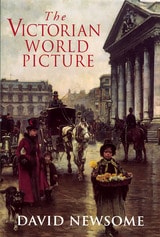
When did the Victorians come to regard themselves as "Victorians" and to use that term to describe the period in which they were living? David Newsome's monumental history takes a good, long look at the Victorian age and what distinguishes it so prominently in the history of both England and the world. The Victorian World Picture presents a vivid canvas of the Victorians as they saw themselves and as the rest of the world saw them.
The Victorian era was a time of unprecedented population growth and massive industrialization. Darwinian theory shook people's religious beliefs and foreign competition threatened industry and agriculture. The transformation of this nineteenth-century world was overhwelming, pervading the social, cultural, intellectual, economic, and political spheres. By the time of the Great Exhibition in 1851, the British were calling themselves Victorians and Prince Albert was able to proclaim, "We are living at a period of most wonderful transition." David Newsome weaves all these strands of Victorian life into a compelling evocation of the spirit of a fascinating time that laid the foundation for the modern age.
The Victorians in the Rearview Mirror
Simon Joyce
Ohio University Press, 2007
When Margaret Thatcher called in 1979 for a return to Victorian values such as hard work, self-reliance, thrift, and national pride, Labour Party leader Neil Kinnock responded that “Victorian values” also included “cruelty, misery, drudgery, squalor, and ignorance.”
The Victorians in the Rearview Mirror is an in-depth look at the ways that the twentieth century reacted to and reimagined its predecessor. It considers how the Victorian inheritance has been represented in literature, politics, film, and visual culture; the ways in which modernists and progressives have sought to differentiate themselves from an image of the Victorian; and how conservatives (and some liberals) have sought to revive elements of nineteenth-century life. Nostalgic and critical impulses combine to fix an understanding of the Victorians in the popular imagination.
Simon Joyce examines heritage culture, contemporary politics, and the “neo-Dickensian” novel to offer a more affirmative assessment of the Victorian legacy, one that lets us imagine a model of social interconnection and interdependence that has come under threat in today’s politics and culture.
Although more than one hundred years have passed since the death of Queen Victoria, the impact of her time is still fresh. The Victorians in the Rearview Mirror speaks to diverse audiences in literary and cultural studies, in addition to those interested in visual culture and contemporary politics, and situates detailed close readings of literary and cinematic texts in the context of a larger argument about the legacies of an era not as distant as we might like to think.
The Waxing of the Middle Ages
Revisiting Late Medieval FranceCharles-Louis Morand-Métivier
University of Delaware Press, 2023
The Waxing of the Middle Ages sets out to provide a rich, complex, and diverse study of these developments and to reassert that late medieval France is crucial in its own right. The collection argues for an approach that views the late medieval period not as an afterthought, or a blind spot, but as a period that is key in understanding the fluidity of time, traditions, culture, and history. Each essay explores some “cultural form,” to borrow Huizinga’s expression, to expose the false divide that has dominated modern scholarship.
Theater Historiography
Critical InterventionsHenry Bial and Scott Magelssen, editors
University of Michigan Press, 2010
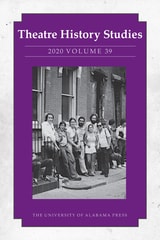
Theatre History Studies 2020, Vol. 39
Edited by Lisa Jackson-Schebetta
University of Alabama Press, 2020
Theatre History Studies (THS) is a peer-reviewed journal of theatre history and scholarship published annually since 1981 by the Mid-America Theatre Conference
Reframing the past to illuminate the future of performance.
Theatre History Studies is a peer-reviewed journal devoted to excellence in theatre historiography. Volume 38, edited by Lisa Jackson-Schebetta, features three distinct sections: foundational studies in theatre history, a special section on hemispheric historiographies, and award-winning essays from the Mid-America Theatre Conference. Contributors examine topics ranging from Shakespeare and racial antagonism to systemic dramaturgy, labor unions in regional theatre, and digital diasporic activism. The volume also includes visual histories and decolonial methodologies that challenge Eurocentric narratives and foreground Latinx, feminist, and socialist performance traditions. With 272 pages and 18 black-and-white figures, this edition is a rich resource for scholars seeking to expand the scope and methods of theatre history.
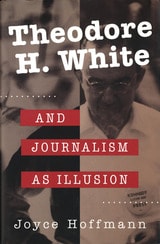
Theodore H. White and Journalism As Illusion
Joyce Hoffmann
University of Missouri Press, 1995
In this groundbreaking study, Joyce Hoffmann examines a critical twenty-five-year period in the work of one of the most influential journalists of the twentieth century. Theodore H. White was already a celebrated reporter when Jacqueline Kennedy summoned him for an exclusive interview in the aftermath of her husband's assassination. With her help, White would preserve what the First Lady claimed had been John F. Kennedy's vision of the New Frontier as an incarnation of that wistful, romantic kingdom--Camelot. Over the years, friends and advisers to Kennedy declared that they had never heard the president speak of Camelot. But White's article, which ran in Life magazine, created a myth that still endures in the popular consciousness.
That story was just one of many by Theodore White that had a lasting impact on the nation. As a correspondent for several of the country's most popular magazines, he covered the crucial events of the 1940s, '50s, and '60s. His best-selling book The Making of the President 1960 changed political reporting forever.
A gifted and likable man with a remarkable skill for ingratiating himself with others, White earned the confidence of key political, military, and diplomatic leaders. First in the Far East, later in Europe, and finally in Washington, D.C., he became a confidant and adviser rather than an adversary to the figures he covered for the news, following a pattern set by elite journalists. Even as he played the impartial reporter, White kept secrets in order to maintain access to his important sources, and he occasionally allowed his subjects, including John F. Kennedy and Nelson Rockefeller, to make changes in his work before publication.
Clinging to the illusion of objectivity, White--like other leading journalists in the postwar years--wrote about the world not as it was but as he believed it ought to be. Hoffmann relates the little-known episode in White's career when he intentionally obscured the truth about Chiang Kai-shek's corrupt and inept Nationalist government because he believed that undermining China's cause would be "a disservice to democracy."
No other book so thoroughly documents how a first-rank journalist can become a political insider and distort the news without losing the gloss of impartiality that is supposed to accompany the profession. Impressively researched, skillfully written, Theodore H. White and Journalism as Illusion is an unflinching look at a key figure in the history of American journalism and at the profession itself.

These Valiant Dead
Past Shakespeare'S HistoriesRobert C. Jones
University of Iowa Press, 1991
Thinking About History
Sarah Maza
University of Chicago Press, 2017
Designed for the classroom, Thinking About History is organized around big questions: Whose history do we write, and how does that affect what stories get told and how they are told? How did we come to view the nation as the inevitable context for history, and what happens when we move outside those boundaries? What is the relation among popular, academic, and public history, and how should we evaluate sources? What is the difference between description and interpretation, and how do we balance them? Maza provides choice examples in place of definitive answers, and the result is a book that will spark classroom discussion and offer students a view of history as a vibrant, ever-changing field of inquiry that is thoroughly relevant to our daily lives.
Thinking in the Past Tense
Eight ConversationsAlexander Bevilacqua and Frederic Clark
University of Chicago Press, 2019
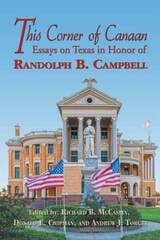
This Corner of Canaan
Essays on Texas in Honor of Randolph B. CampbellRichard B. McCaslin
University of North Texas Press, 2013
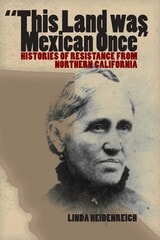
This Land Was Mexican Once
Histories of Resistance from Northern CaliforniaBy Linda Heidenreich
University of Texas Press, 2007
The territory of Napa County, California, contains more than grapevines. The deepest roots belong to Wappo-speaking peoples, a group whose history has since been buried by the stories of Spanish colonizers, Californios (today's Latinos), African Americans, Chinese immigrants, and Euro Americans. Napa's history clearly is one of co-existence; yet, its schoolbooks tell a linear story that climaxes with the arrival of Euro Americans. In "This Land was Mexican Once," Linda Heidenreich excavates Napa's subaltern voices and histories to tell a complex, textured local history with important implications for the larger American West, as well.
Heidenreich is part of a new generation of scholars who are challenging not only the old, Euro-American depiction of California, but also the linear method of historical storytelling—a method that inevitably favors the last man writing. She first maps the overlapping histories that comprise Napa's past, then examines how the current version came to dominate—or even erase—earlier events. So while history, in Heidenreich's words, may be "the stuff of nation-building," it can also be "the stuff of resistance." Chapters are interspersed with "source breaks"—raw primary sources that speak for themselves and interrupt the linear, Euro-American telling of Napa's history. Such an inclusive approach inherently acknowledges the connections Napa's peoples have to the rest of the region, for the linear history that marginalizes minorities is not unique to Napa. Latinos, for instance, have populated the American West for centuries, and are still shaping its future. In the end, "This Land was Mexican Once" is more than the story of Napa, it is a multidimensional model for reflecting a multicultural past.
This Vast Book of Nature
Writing the Landscape of New Hampshire’s White Mountains, 1784–1911Pavel Cenkl
University of Iowa Press, 2006
Starting with an exploration of Jeremy Belknap’s 1784 expedition to Mount Washington, which Cenkl links to the origins of tourism in the White Mountains, to the transformation of touristic and residential relationships to landscape, This Vast Book of Nature explores the ways competing visions of the landscape have transformed the White Mountains culturally and physically, through settlement, development, and—most recently—preservation, a process that continues today.
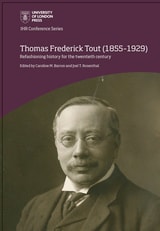
Thomas Frederick Tout (1855–1929)
refashioning history for the twentieth centuryEdited by Joel T. Rosenthal and Caroline M. Barron
University of London Press, 2019
Through a Glass Darkly
Contested Notions of Baptist IdentityKeith Harper
University of Alabama Press, 2012
Rethinking what it means to be Baptist through four centuries of debate, belief, and identity.Normal0falsefalsefalseMicrosoftInternetExplorer4
Through a Glass Darkly is a collection of essays by scholars who argue that Baptists are frequently misrepresented, by outsiders as well as insiders, as members of an unchanging monolithic sect. In contemporary discussions of religious denominations, it is often fashionable and easy to make bold claims regarding the history, beliefs, and practices of certain groups. Select versions of Baptist history have been used to vindicate incomplete or inaccurate assertions, attitudes, and features of Baptist life and thought. Historical figures quickly become saints, and overarching value systems can minimize the unsavory realities that would contribute to a truer interpretation of Baptist life.
The essays in this volume use the term Baptist in the broadest sense to refer to those Christians who identify themselves as Baptists and who baptize by immersion as a non-sacramental church rite. Over the past four hundred years, Baptists have grown from a persecuted minority to a significant portion of America’s religious population. They have produced their fair share of controversies and colorful characters that have, in turn, contributed to a multifaceted history.
But what does it mean to be a “real Baptist”? Some look to historical figures as heroic exemplars of Baptist core values. Others consider cultural, social, or political issues to be guideposts for Baptist identity. Through a Glass Darkly dives deeper into history for answers, revealing a more complete version of the expansive and nuanced history of one of America’s most influential religious groups.
Normal0falsefalsefalseMicrosoftInternetExplorer4
Contributors:
James P. Byrd / John G. Crowley / Edward R. Crowther / Christopher H. Evans / Elizabeth H. Flowers / Curtis W. Freeman / Barry G. Hankins / Paul Harvey / Bill J. Leonard / James A. Patterson / Jewel L. Spangler / Alan Scot Willis
Time Slips
Queer Temporalities, Contemporary Performance, and the Hole of HistoryJaclyn I. Pryor
Northwestern University Press, 2017
Masterfully synthesizing a wealth of research and experiences, Time Slips will interest scholars and readers in the fields of theater and performance studies, queer studies, and American studies.
Time's Reasons
Philosophies of History Old and NewLeonard Krieger
University of Chicago Press, 1989
The heart of Krieger's narrative is an insightful analysis of theories of history from the classical period to the present, with a principal focus on the modern period. Krieger's exposition covers such figures as Ranke, Hegel, Comte, Marx, Acton, Troeltsch, Spengler, Braudel, and Foucault, among others, and his discussion involves him in subtle distinctions among terms such as historism, historicism, and historicity. He points to the impact on history of academic political radicalism and its results: the new social history. Krieger argues for the autonomy of historical principles and methods while tracing the importation in the modern period of external principles for historical coherence.
Time's Reasons is a profound attempt to rejuvenate and restore integrity to the discipline of history by one of the leading masters of nineteenth- and twentieth-century historiography. As such, it will be required reading for all historiographers and intellectual historians of the modern period.
Times of History
Universal Topics in Islamic HistoriographyAziz Al-Azmeh
Central European University Press, 2007
Times of Upheaval
Four Medievalists in Twentieth-Century Central Europe. Conversations with Jerzy Kloczowski, János M. Bak, František Šmahel, and Herwig WolframPavlína Rychterová
Central European University Press, 2019
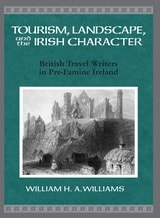
Tourism, Landscape, and the Irish Character
British Travel Writers in Pre-Famine IrelandWilliam H. A. Williams
University of Wisconsin Press, 2007
Picturesque but poor, abject yet sublime in its Gothic melancholy, the Ireland perceived by British visitors during the eighteenth and nineteenth centuries did not fit their ideas of progress, propriety, and Protestantism. The rituals of Irish Catholicism, the lamentations of funeral wakes, the Irish language they could not comprehend, even the landscapes were all strange to tourists from England, Wales, and Scotland. Overlooking the acute despair in England’s own industrial cities, these travelers opined in their writings that the poverty, bog lands, and ill-thatched houses of rural Ireland indicated moral failures of the Irish character.
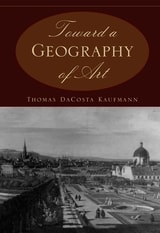
Toward a Geography of Art
Thomas DaCosta Kaufmann
University of Chicago Press, 2004
Toward a Geography of Art presents a historical overview of these complexities, debates contemporary concerns, and completes its exploration with a diverse collection of case studies. Employing the author's expertise in a variety of fields, the book delves into critical issues such as transculturation of indigenous traditions, mestizaje, the artistic metropolis, artistic diffusion, transfer, circulation, subversion, and center and periphery. What results is a foundational study that establishes the geography of art as a subject and forces us to reconsider assumptions about the place of art that underlie the longstanding narratives of art history.

Tracking the Texas Ranger Historians
Bruce Glasrud
University of North Texas Press, 2024
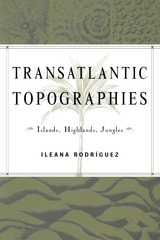
Transatlantic Topographies
Islands, Highlands, JunglesIleana Rodriguez
University of Minnesota Press, 2004
Explores the construction of the Americas by and through European eyes
Transatlantic Topographies was first published in 2004. Minnesota Archive Editions uses digital technology to make long-unavailable books once again accessible, and are published unaltered from the original University of Minnesota Press editions.
Transatlantic Topographies studies the representation of American space during the initial confrontation between Europeans and Amerindians and during the eighteenth, nineteenth, and twentieth centuries. Starting from topographical descriptions of land, islands, highlands, and jungles, Ileana Rodríguez shows how existing systems of knowledge broke down with the discovery of the Americas and had to be reinvented through the interpretation of signs, the accumulation of evidence, material exchange, and, finally, through the learning, teaching, and “kidnapping” of language. Proceeding from the period of exploration to the modern creation of a “twentieth-century frontier,” Rodríguez charts the path that led from island paradise to jungle chaos, from representations of natural beauty to the racialization of the islands. Drawing attention to cross-cultural miscommunication and the riddles of meaning and message it produces, Transatlantic Topographies develops a highly nuanced understanding of the evolving forces of imperialism as they gave way to postcolonialism and then to transnationalism—and newly re-inscribed notions of imperial economic practices.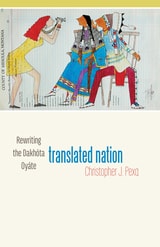
Translated Nation
Rewriting the Dakhóta OyáteChristopher J. Pexa
University of Minnesota Press, 2019
How authors rendered Dakhóta philosophy by literary means to encode ethical and political connectedness and sovereign life within a settler surveillance state
Translated Nation examines literary works and oral histories by Dakhóta intellectuals from the aftermath of the 1862 U.S.–Dakota War to the present day, highlighting creative Dakhóta responses to violences of the settler colonial state. Christopher Pexa argues that the assimilation era of federal U.S. law and policy was far from an idle one for the Dakhóta people, but rather involved remaking the Oyáte (the Očéti Šakówiŋ Oyáte or People of the Seven Council Fires) through the encrypting of Dakhóta political and relational norms in plain view of settler audiences.
From Nicholas Black Elk to Charles Alexander Eastman to Ella Cara Deloria, Pexa analyzes well-known writers from a tribally centered perspective that highlights their contributions to Dakhóta/Lakhóta philosophy and politics. He explores how these authors, as well as oral histories from the Spirit Lake Dakhóta Nation, invoke thióšpaye (extended family or kinship) ethics to critique U.S. legal translations of Dakhóta relations and politics into liberal molds of heteronormativity, individualism, property, and citizenship. He examines how Dakhóta intellectuals remained part of their social frameworks even while negotiating the possibilities and violence of settler colonial framings, ideologies, and social forms.
Bringing together oral and written as well as past and present literatures, Translated Nation expands our sense of literary archives and political agency and demonstrates how Dakhóta peoplehood not only emerges over time but in everyday places, activities, and stories. It provides a distinctive view of the hidden vibrancy of a historical period that is often tied only to Indigenous survival.
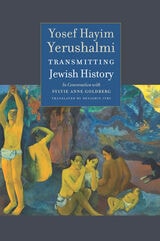
Transmitting Jewish History
Yosef Hayim Yerushalmi in Conversation with Sylvie Anne GoldbergYosef Hayim Yerushalmi and Sylvie Anne Goldberg
Brandeis University Press, 2021
Scholar Yosef Hayim Yerushalmi (1932–2009) possessed a stunning range of erudition in all eras of Jewish history, as well as in world history, classical literature, and European culture. What Yerushalmi also brought to his craft was a brilliant literary style, honed by his own voracious reading from early youth and his formative undergraduate studies. This series of interviews paints a revealing portrait of this giant of history, bringing together exceptional material on Yerushalmi’s personal and intellectual journeys that not only attests to the astonishing breakthrough of the issues of Jewish history into “general history,” but also offers profound insight into being Jewish in today's world.
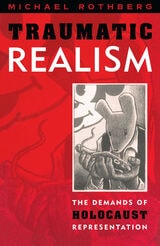
Traumatic Realism
The Demands of Holocaust RepresentationMichael Rothberg
University of Minnesota Press, 2000