Results by title
751 books match the query 'International Relations' and 174 start with t
The Politics of Military Force
Antimilitarism, Ideational Change, and Post-Cold War German Security DiscourseFrank A. Stengel
University of Michigan Press, 2020
The Politics of Possibility
Risk and Security Beyond ProbabilityLouise Amoore
Duke University Press, 2013

The Politics of Religion in an Age of Revival
Studies in Nineteenth-century Europe and Latin AmericaEdited by Austen Ivereigh
University of London Press, 2010
The Politics of Subjectivity in American Foreign Policy Discourses
Ty Solomon
University of Michigan Press, 2015
The Politics of Toleration in Modern Life
Susan Mendus, ed.
Duke University Press, 1999
How can toleration be fostered in a contentious and tightly populated world? What situations and fears have historically fed attitudes of intolerance? When and how should states intervene? The authors of these essays seek answers to such questions and examine topics such as why certain national groups are especially vulnerable to intolerance and narcissistic fantasies and how the colonial view of intolerant exploitation as an acceptable norm of behavior has been replaced by a drive toward international solidarity. The essays address religious tolerance, the role of toleration in legal contexts, the philosophical justification of tolerance, and the concept of solidarity. Ethnic identity, nationalism, the “goods of conflict,” and the treatment of refugees seeking asylum are discussed as well. While one contributor argues that a moment of genuine tolerance is achieved only when there is a cost involved in the act of tolerating another person’s way of living, another stresses that rational, communal dialogue can only take place if the state is excluded from the discussion, if conflict is recognized as valuable, and if local communities come to consensus about what behavior and discourse is intolerable.
Offering an accessible and engaging commentary on the concept of tolerance, The Politics of Toleration in Modern Life will interest a wide range of readers of philosophy, political science, religion, sociology, and history.
Contributors. George Carey, Christopher Hill, Michael Ignatieff, Helena Kennedy, Alasdair MacIntyre, Susan Mendus, Julia Neuberger, Bernard Williams
The Post-Conflict Environment
Investigation and CritiqueDaniel Bertrand Monk and Jacob Mundy, editors
University of Michigan Press, 2014
The Postcolonial State in Africa
Fifty Years of Independence, 1960–2010Crawford Young
University of Wisconsin Press, 2012
Young identifies three cycles of hope and disappointment common to many of the African states (including those in North Africa) over the last half-century: initial euphoria at independence in the 1960s followed by disillusionment with a lapse into single-party autocracies and military rule; a period of renewed confidence, radicalization, and ambitious state expansion in the 1970s preceding state crisis and even failure in the disastrous 1980s; and a phase of reborn optimism during the continental wave of democratization beginning around 1990. He explores in depth the many African civil wars—especially those since 1990—and three key tracks of identity: Africanism, territorial nationalism, and ethnicity.
Only more recently, Young argues, have the paths of the fifty-three African states begun to diverge more dramatically, with some leading to liberalization and others to political, social, and economic collapse—outcomes impossible to predict at the outset of independence.
“This book is the best volume to date on the politics of the last 50 years of African independence.”—International Affairs
“The book shares Young’s encyclopedic knowledge of African politics, providing in a single volume a comprehensive rendering of the first 50 years of independence. The book is sprinkled with anecdotes from his vast experience in Africa and that of his many students, and quotations from all of the relevant literature published over the past five decades. Students and scholars of African politics alike will benefit immensely from and enjoy reading The Postcolonial State in Africa.”—Political Science Quarterly
“The study of African politics will continue to be enriched if practitioners pay homage to the erudition and the nobility of spirit that has anchored the engagement of this most esteemed doyen of Africanists with the continent.”—African History Review
“The book’s strongest attribute is the careful way that comparative political theory is woven into historical storytelling throughout the text. . . . Written with great clarity even for all its detail, and its interwoven use of theory makes it a great choice for new students of African studies.”—Australasian Review of African Studies

The Potential of a Middle Power
Romania's Foreign Policy in Central Asia within the Context of EU MembershipAna-Maria Anghelescu
Central European University Press, 0
The large member states of the European Union have clear priorities when it comes to EU-level decisions, while the small member states hold veto power when decisions need to be taken unanimously. This book focuses on the potential of middle powers in EU decision-making using the example of Romania's relations with Central Asia. The author examines how Romania's diplomatic activities as a medium-sized member state - and as a newer member - can affect EU foreign policy. Ana-Maria-Andreea Anghelescu conducted a quantitative study of three hard power indices, as well as the soft presence dimension of the Elcano Index of Global Presence. The latter includes tourism, sport, culture, science, education, information, and migration. The statistical results were complemented by qualitative field research in Kyrgyzstan involving all five Central Asian countries.
The volume’s analysis concludes that Romania underperforms in using its robust hard faculties to benefit the country's soft capabilities. Central Asia is a region where the EU must work hard to maintain its influence. By strengthening their presence in the region beyond bilateral partnerships, the EU's middle powers can play a key role in asserting Europe's pragmatic and normative interests.T
The Power-Conflict Story
A Dynamic Model of Interstate RivalryKelly M. Kadera
University of Michigan Press, 2001
The Powers of War and Peace
The Constitution and Foreign Affairs after 9/11John Yoo
University of Chicago Press, 2005
John Yoo, formerly a lawyer in the Department of Justice, here makes the case for a completely new approach to understanding what the Constitution says about foreign affairs, particularly the powers of war and peace. Looking to American history, Yoo points out that from Truman and Korea to Clinton's intervention in Kosovo, American presidents have had to act decisively on the world stage without a declaration of war. They are able to do so, Yoo argues, because the Constitution grants the president, Congress, and the courts very different powers, requiring them to negotiate the country's foreign policy. Yoo roots his controversial analysis in a brilliant reconstruction of the original understanding of the foreign affairs power and supplements it with arguments based on constitutional text, structure, and history.
Accessibly blending historical arguments with current policy debates, The Powers of War and Peace will no doubt be hotly debated. And while the questions it addresses are as old and fundamental as the Constitution itself, America's response to the September 11 attacks has renewed them with even greater force and urgency.
“Yoo’s theory promotes frank discussion of the national interest and makes it harder for politicians to parade policy conflicts as constitutional crises. Most important, Yoo’s approach offers a way to renew our political system’s democratic vigor.”—David B. Rivkin Jr. and Carlos Ramos-Mrosovsky, National Review
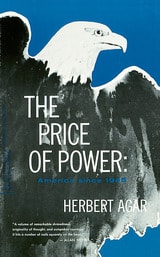
The Price of Power
America Since 1945Herbert Agar
University of Chicago Press, 1957
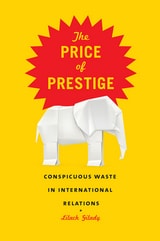
The Price of Prestige
Conspicuous Consumption in International RelationsLilach Gilady
University of Chicago Press, 2018
In The Price of Prestige, Gilady shows how many seemingly wasteful government expenditures that appear to contradict the laws of demand actually follow the pattern for what are known as Veblen goods, or positional goods for which demand increases alongside price, even when cheaper substitutes are readily available. From flashy space programs to costly weapons systems a country does not need and cannot maintain to foreign aid programs that offer little benefit to recipients, these conspicuous and strategically timed expenditures are intended to instill awe in the observer through their wasteful might. And underestimating the important social role of excess has serious policy implications. Increasing the cost of war, for example, may not always be an effective tool for preventing it, Gilady argues, nor does decreasing the cost of weapons and other technologies of war necessarily increase the potential for conflict, as shown by the case of a cheap fighter plane whose price tag drove consumers away. In today’s changing world, where there are high levels of uncertainty about the distribution of power, Gilady also offers a valuable way to predict which countries are most likely to be concerned about their position and therefore adopt costly, excessive policies.

The Privatisation of Israeli Security
Shir Hever
Pluto Press, 2017
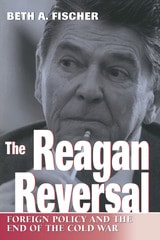
The Reagan Reversal
Foreign Policy and the End of the Cold WarBeth A. Fischer
University of Missouri Press, 2000
It is often assumed that Ronald Reagan's administration was reactive in bringing about the end of the cold war, that it was Mikhail Gorbachev's "new thinking" and congenial personality that led the administration to abandon its hard- line approach toward Moscow. In The Reagan Reversal, now available in paperback, Beth A. Fischer convincingly demonstrates that President Reagan actually began seeking a rapprochement with the Kremlin fifteen months before Gorbachev took office. She shows that Reagan, known for his long-standing antipathy toward communism, suddenly began calling for "dialogue, cooperation, and understanding" between the superpowers. This well-written and concise study challenges the conventional wisdom about the president himself and reveals that Reagan was, at times, the driving force behind United States-Soviet policy.
The Rise and Decline of the Zairian State
Crawford Young and Thomas Edwin Turner
University of Wisconsin Press, 1985
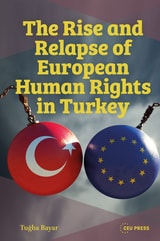
The Rise and Relapse of European Human Rights in Turkey
The AKP Era of 2002–2024Tugba Bayar
Central European University Press, 2026
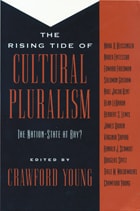
The Rising Tide of Cultural Pluralism
The Nation-State at Bay?Edited by Crawford Young
University of Wisconsin Press, 1993
Crawford Young opens with an overview of the dramatic rise in the political significance of cultural pluralism and of scholars’ changing understanding of what drives and shapes ethnic identification. Mark Beissinger brilliantly explains the demise of the last great empire-state, the USSR, while Edward Friedman notes growing challenges to the apparent cultural homogeneity of China. Nader Entessar suggests intriguing contrasts in Azeri identity politics in Iran and the ex-USSR. Ronald Schmidt and Noel Kent explore the language and racial dimensions of the rising multicultural currents in the United States. Douglas Spitz shows the extent of the decline of the old secular vision of India of the independence generation; Alan LeBaron traces the recent emergence of an assertive Mayan identity among a submerged populace in Guatemala, long thought to be destined for Ladinoization. A case study of the diversity and uncertain future of Ethiopia dramatically emerges from four contrasting contributions: Tekle Woldemikael looks at the potential cultural tensions in Eritrea, Solomon Gashaw offers a central Ethiopian nationalist perspective, Herbert Lewis reflects the perspectives of a restless and disaffected periphery, and James Quirin provides an arresting explanation of the construction of identity amongst the Beta Israel (Ethiopian Jews). Virginia Sapiro steps back from specific regions, offering an original analysis of the interaction between cultural pluralism and gender.
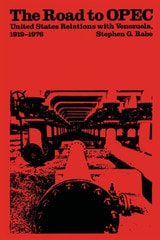
The Road to OPEC
United States Relations with Venezuela, 1919-1976By Stephen G. Rabe
University of Texas Press, 1982
On September 10, 1960, Venezuela spearheaded the formation of the Organization of Petroleum Exporting Countries (other original members included Saudi Arabia, Iran, Iraq, and Kuwait). However, in a world abundantly supplied with oil, the United States could and did ignore Venezuelan suggestions that OPEC and the consuming nations work together to control production and to increase prices. Then, in late 1973, OPEC sent shudders throughout the world economy, and an energy crisis struck with full force. Emboldened by the power of their oil cartel, Venezuelan leaders denounced the old economic relationship with the United States, nationalized U.S. oil and steel holdings, and fashioned a foreign economic policy that differed sharply from Washington's.
The Road to OPEC is the story of the fiery debates among U.S. oil companies, the Department of State, and the Venezuelan government over oil policies—clashes that led Venezuela to establish OPEC and to nationalize U.S.-owned properties. In addition, this is the first study of twentieth-century Venezuelan-U.S. relations. Its focus on oil diplomacy is placed within the context of key U.S. policies toward Latin America and such programs as the Open Door, the Good Neighbor, and the Alliance for Progress. The author also provides insight into both the politics of the contemporary energy crisis and the growing split between raw-material producers and their industrial customers.
The Road to OPEC is based on extensive archival research, as well as the author's successful use of the Freedom of Information Act to declassify files of such agencies as the National Security Council and the CIA.
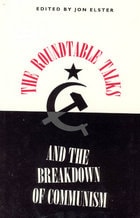
The Roundtable Talks and the Breakdown of Communism
Edited by Jon Elster
University of Chicago Press, 1996
These essays capture the historical circumstances of these countries—their traditions, customs, and the balance of influence between competing factions—that often took precedence over constitutional ideals. In five country-specific reports, senior scholars provide detailed accounts of the talks in Bulgaria, Poland, Hungary, Czechoslovakia, and the German Democratic Republic. Also included is an essay on the political factors underlying the failure of negotiations between reform groups and the Chinese regime, providing an illuminating counterpoint to the path taken in Eastern Europe.
This book is an invaluable resource for scholars of constitutional design and democratization and for specialists in Eastern Europe.
The Scramble for African Oil
Oppression, Corruption and War for Control of Africa's Natural ResourcesDouglas A. Yates
Pluto Press, 2012
Africa is often seen as a place to be pitied or feared as an area of instability. This book challenges these complacent assumptions, showing how our demand for oil contributes to the chronic problems plaguing the continent.
Douglas A. Yates shows how the 'scramble' by the great powers for African oil has fed corruption and undermined democracy. Yates documents how Africans have refused to remain passive in the face of such developments, forming movements to challenge this new attempt at domination.
This book is an urgent challenge to our understanding of Africa, raising questions about the consequences of our reliance on foreign resources. It will be vital reading for all those studying development and global political economy.
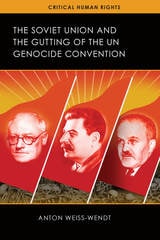
The Soviet Union and the Gutting of the UN Genocide Convention
Anton Weiss-Wendt
University of Wisconsin Press, 2017
Based on extensive archival research, Anton Weiss-Wendt reveals in detail how the political aims of the superpowers rendered the convention a weak instrument for addressing abuses against human rights. The Kremlin viewed the genocide treaty as a political document and feared repercussions. What the Soviets wanted most was to keep the subjugation of Eastern Europe and the vast system of forced labor camps out of the genocide discourse. The American Bar Association and Senate Committee on Foreign Relations, in turn, worried that the Convention contained vague formulations that could be used against the United States, especially in relation to the plight of African Americans. Sidelined in the heated discussions, Weiss-Wendt shows, were humanitarian concerns for preventing future genocides.
The State of Europe
Transformation of Statehood from a European PerspectiveEdited by Sonja Puntscher Riekmann, Monika Mokre, and Michael Latzer
Campus Verlag, 2004
The Strategy of Sanctions
From Antiquity to the 21st CenturyEdited by S.C.M. Paine and Anand Toprani
University of Michigan Press, 2026
In recent decades, sanctions have become the preferred tool for the nonviolent coercion of other nations. The US government employs sanctions and embargoes to pressure not only enemies but sometimes even its friends. Despite their ubiquity, the debate over their efficacy continues. Measuring their success is controversial since many sanctions are economic, while the desired outcomes are political. Under what circumstances can sanctions or embargoes deliver their intended policy objectives at an acceptable cost? How can they best be integrated with other available instruments of national power?
The Strategy of Sanctions uses case studies from antiquity to the present to evaluate the strategic utility of sanctions and embargoes. The authors utilize a blended approach combining earlier definitions of sanctions, concepts from teaching of strategy, as well as terms of their own creation. They apply a common framework for teaching strategy, which disaggregates operational-level from strategic-level goals, and goals from strategies. By examining sanctions in different eras and contexts, the book highlights the circumstances that are most conducive to their efficacy.
The Strength of Our Commitments
National Human Rights Institutions in Europe and BeyondCorina Lacatus
University of Chicago Press, 2024
A deep dive into the mechanics of national human rights institutions and the forces that make or break their success.
In the years since World War II, the endeavor to promote human rights has gained momentum and become increasingly important within international relations. Yet these efforts often run into serious problems of enforcement.
Many countries formed national human rights institutions (NHRIs) with independent mandates to support and monitor government compliance with international human rights law. Be they commissions, ombudsmen, or tribunals, these institutions vary in their power and impact. For this book, Corina Lacatus surveyed NHRIs in Europe and around the world to determine their effectiveness and explain why some succeed while others fail.
The Strength of Our Commitments explores the relationship between the domestic and international support an institution receives and its ability to secure resources, credibility, and tangibly improve human rights conditions. Lacatus shows that NHRIs can be models of resilience, even in the face of opposition from political elites. Although their impact on human rights is difficult to measure, The Strength of Our Commitments shows how NHRIs’ strength comes from clearly defined formal powers, strong institutional leadership, and independence from political interference.
The Subject of Coexistence
Otherness in International RelationsLouiza Odysseos
University of Minnesota Press, 2007
In this pioneering book, Louiza Odysseos argues that debates about ethnic conflict, human rights, and the viability of multicultural communities all revolve around the question of coexistence. Yet, issues of coexistence have not been adequately addressed by international relations. Instead of being regarded as a question, “coexistence” is a term whose meaning is considered self-evident.
The Subject of Coexistence traces the institutional neglect of coexistence to the ontological commitments of international relations as a modern social science predicated on conceptions of modern subjectivity. This reliance leads to the assumption that coexistence means little more than the social and political copresence of individuals, a premise that occludes the roles of otherness in the constitution of the self. Countering this reliance necessitates the examination of how existence itself is coexistential from the start.
Odysseos opens up the possibility of a coexistential ontology, drawing on Martin Heidegger and his interlocutors, in which selfhood can be rethought beyond subjectivism, reinstating coexistence as a question for global politics—away from the restrictive discursive parameters of the modern subject.
Louiza Odysseos is senior lecturer in international relations at the University of Sussex.
The U.S. Army Stability Operations Field Manual
U.S. Army Field Manual No. 3-07The United States Army
University of Michigan Press, 2009
Field Manual 3-07, Stability Operations, represents a milestone in Army doctrine.
With a focus on transforming conflict, managing violence when it does occur and maintaining stable peace, The U.S. Army Stability Operations Field Manual (otherwise known as FM 3-07) signals a stark departure from traditional military doctrine. The Army officially acknowledges the complex continuum from conflict to peace, outlines the military's responsibility to provide stability and security, and recognizes the necessity of collaboration, coordination, and cooperation among military, state, commercial, and non-government organizations in nation-building efforts.
The manual reflects a truly unique collaboration between the Army and a wide array of experts from hundreds of groups across the United States Government, the intergovernmental and non-governmental communities, America's allies around the world, and the private sector. All branches of the armed forces, U.S. agencies ranging from the State Department to Homeland Security to Health and Human Services, international agencies from the United Nations to the Red Cross to the World Bank, countries from the United Kingdom to India to South Africa, private think tanks from RAND to the United States Institute of Peace to the Center for New American Security, all took part in the shaping of this document.
The U.S. Army Stability Operations FieldManual, marks just the second time in modern history that the U.S. Army has worked with a private publisher to produce a military doctrinal document.
Lieutenant General William B. Caldwell, IV is Commander of the Combined Arms Center at Fort Leavenworth, Kansas.
Michèle Flournoy, Under Secretary of Defense for Policy
Shawn Brimley, Fellow, Center for a New American Security
Janine Davidson, Deputy Assistant Secretary of Defense for Plans
"It is a roadmap from conflict to peace, a practical guidebook for adaptive, creative leadership at a critical time in our history. It institutionalizes the hard-won lessons of the past while charting a path for tomorrow. This manual postures our military forces for the challenges of an uncertain future, an era of persistent conflict where the unflagging bravery of our Soldiers will continue to carry the banner of freedom, hope, and opportunity to the people of the world."
—From the foreword by Lieutenant General William B. Caldwell, IV, Commander of the Combined Arms Center at Fort Leavenworth, Kansas
The U.S.–China Trade War
Global News Framing and Public Opinion in the Digital AgeLouisa Ha
Michigan State University Press, 2022
The USSR and Iraq
The Soviet Quest for InfluenceOles M. Smolansky, with Bettie M. Smolansky
Duke University Press, 1991
Drawing on ten years of research in Western, Arab, and Soviet sources, Smolansky analyzes the complex issues at the center of Soviet-Iraqi relations from 1968 through 1988, including the nationalization of the oil industry, the Kurdish question, the Iraqi Communist Party, the affairs of the Persian/Arabian Gulf, and, ultimately, the war between Iraq and Iran.
Smolansky concludes that Iraq has never been under the dominant influence of Moscow, nor has it even been a loyal Soviet ally. In fact, Iraq has managed to reap major benefits from the relationship without losing its autonomy or sacrificing its major interests. The author discusses the Soviet Union and Iraq within the larger framework of the nature of influence relationships between great and small powers.

The United States Response to Turkish Nationalism and Reform, 1914-1939
Roger R. Trask
University of Minnesota Press, 1971
The United States Response to Turkish Nationalism and Reform, 1914-1939 was first published in 1971. Minnesota Archive Editions uses digital technology to make long unavailable books once again accessible, and are published unaltered from the original University of Minnesota Press editions.
The history of Turkish-American relations in the early years of the twentieth century, before World War II, forms a significant part of the background necessary to an understanding of the present political importance to America of the Middle East. This book, after a brief introduction covering the period before 1914, analyzes in detail the course of relations between Turkey and the United States from the beginning of World War I to the start of World War II.
The period which Professor Trask covers in this study was a critical time in both nations' histories. The relations between the two countries varied from cool neutrality (1914) to a rupture of formal ties (1917) to rapprochement (by 1939). Conditions affective Turkish-American contacts included two world wars, a major world depression, and, especially, a Turkish nationalist revolution under the leadership of Kemal Ataturk. Professor Trask analyzes the process of American accommodation to this revolution, with emphasis on diplomatic, political, economic, social, and cultural ties, and points out the implications for the balance of power during World War II and the cold war.

The United States and China
Arnold Xiangze Jiang
University of Chicago Press, 1988
The United States and China is the first comprehensive study in English of the tumultuous history of Sino-American relations from a Chinese perspective. Jiang critically examines U.S. foreign policy toward China from the eighteenth century to the Reagan-Deng years, illustrating how America's presence, influence, and pressure have shaped the history and politics of China. At the same time, Jiang's account is an illuminating and insightful synthesis of Chinese historiography since 1949—history as it has been taught in the People's Republic of China.
The United States and International Law
Paradoxes of Support across Contemporary IssuesLucrecia García Iommi and Richard W. Maass
University of Michigan Press, 2022
The United States spearheaded the creation of many international organizations and treaties after World War II and maintains a strong record of compliance across several issue areas, yet it also refuses to ratify major international conventions like the UN Convention on the Law of the Sea and the Convention on the Elimination of All Forms of Discrimination Against Women. Why does the United States often seem to support international law in one way while neglecting or even violating it in another?
The United States and International Law: Paradoxes of Support across Contemporary Issues analyzes the seemingly inconsistent U.S. relationship with international law by identifying five types of state support for international law: leadership, consent, internalization, compliance, and enforcement. Each follows different logics and entails unique costs and incentives. Accordingly, the fact that a state engages in one form of support does not presuppose that it will do so across the board. The contributors to this volume examine how and why the United States has engaged in each form of support across twelve issue areas that are central to twentieth- and twenty-first-century U.S. foreign policy: conquest, world courts, war, nuclear proliferation, trade, human rights, war crimes, torture, targeted killing, maritime law, the environment, and cybersecurity. In addition to offering rich substantive discussions of U.S. foreign policy in each of these areas, their findings reveal patterns across the U.S. relationship with international law that shed light on behavior that often seems paradoxical at best, hypocritical at worst. The results help us understand why the United States engages with international law as it does, the legacies of the Trump administration, and what we should expect from the United States under the Biden administration and beyond.
The United States and Mexico
Josefina Zoraida Vazquez and Lorenzo Meyer
University of Chicago Press, 1987

The United States and the Global Struggle for Minerals
By Alfred E. Eckes, Jr.
University of Texas Press, 1979
In 1973–1974 soaring commodity prices and an oil embargo alerted Americans to the twin dangers of resource exhaustion and dependence on unreliable foreign materials suppliers. This period seemed to mark a watershed in history as the United States shifted from the era of relative resource abundance to relative materials scarcity.
Alfred E. Eckes’s comprehensive study shows that resource depletion and supply dislocations are not concerns unique to the 1970s. Since 1914, the quest for secure and stable supplies of industrial materials has been an important underlying theme of international relations and American diplomacy.
Although the United States has been blessed with a diversified materials base, it has pursued a minerals strategy designed to exploit low-cost, high-quality ores abroad. Eckes demonstrates how this policy has led to official protection for overseas private investments, involving a role for the Central Intelligence Agency.
Some modern historians have neglected the importance of resources in shaping diplomacy and history. This book, based on a vast variety of unutilized archival collections and recently declassified government documents, helps to correct that imbalance. In the process it illuminates an important and still timely aspect of America’s global interests.

The United States in Central America, 1860–1911
Episodes of Social Imperialism and Imperial Rivalry in the World SystemThomas D. Schoonover
Duke University Press, 0
Schoonover’s archival research in Central America, Europe, and the United States encompasses public, business, organizational, and individual records. In analyzing this material, Schoonover applies a world systems theory approach with that of social imperialism and dependency theory to underscore the broad, multistate dimension of international affairs. In exploring the international history of Central America, Schoonover describes the role of personalities such as John C. Frémont, Otto von Bismarck, Theodore Roosevelt, Manuel Estrada Cabrera, and José Santos Zelaya; the impact of railroad building and canal projects; and the role of pan-Americanism, nationalism, racism, and anti-Americanism.
The Unpredictability of the Past
Memories of the Asia-Pacific War in U.S.-East Asian RelationsMarc Gallicchio, ed.
Duke University Press, 2007
The contributors interpret mass media sources, museum displays, monuments, film, and literature, as well as the archival sources traditionally used by historians. They explore how American ideas about Japanese history shaped U.S. occupation policy following Japan’s surrender in 1945, and how memories of the Asia-Pacific War influenced Washington and Tokyo policymakers’ reactions to the postwar rise of Soviet power. They investigate topics from the resurgence of Pearl Harbor images in the U.S. media in the decade before September 11, 2001, to the role of Chinese war museums both within China and in Chinese-Japanese relations, and from the controversy over the Smithsonian Institution’s Enola Gay exhibit to Japanese tourists’ reactions to the USS Arizona memorial at Pearl Harbor. One contributor traces how a narrative commemorating African Americans’ military service during World War II eclipsed the history of their significant early-twentieth-century appreciation of Japan as an ally in the fight against white supremacy. Another looks at the growing recognition and acknowledgment in both the United States and Japan of the Chinese dimension of World War II. By focusing on how memories of the Asia-Pacific War have been contested, imposed, resisted, distorted, and revised, The Unpredictability of the Past demonstrates the crucial role that interpretations of the past play in the present.
Contributors. Marc Gallicchio, Waldo Heinrichs, Haruo Iguchi, Xiaohua Ma, Frank Ninkovich, Emily S. Rosenberg, Takuya Sasaki, Yujin Yaguchi, Daqing Yang
The View from Prague
The Expectations of World Leaders at the Dawn of the 21st CenturyJirí Musil
Central European University Press, 2007
The WTO as an International Organization
Edited by Anne O. Krueger
University of Chicago Press, 1997
"[T]his book is a tour de force, with consistently fine papers by leading experts, and it is worthy of any bookshelf." —Joel P. Trachtman, American Journal of International Law
"This latest conference volume from the National Bureau of Economic Research is likely to be the definitive reference work on the WTO for years to come. . . . Specialists and non-specialists alike will gain a great deal from a careful reading of this impressive volume." —John Ravenhill, Australian Journal of Political Science
"For anyone who is interested in the further development of the rule system for the world economy, this book is a must." —Horst Siebert, Review of World Economics
The War Ledger
A. F. K. Organski and Jacek Kugler
University of Chicago Press, 1980
The authors find such well-known theories as the balance of power and collective security systems inadequate to explain how conflict erupts in the international system. Their rigorous empirical analysis proves that the power-transition theory, hinging on economic, social, and political growth, is more accurate; it is the differential rate of growth of the two most powerful nations in the system—the dominant nation and the challenger—that destabilizes all members and precipitates world wars.
Predictions of who will win or lose a war, the authors find, depend not only on the power potential of a nation but on the capability of its political systems to mobilize its resources—the "political capacity indicator." After examining the aftermath of major conflicts, the authors identify national growth as the determining factor in a nation's recovery. With victory, national capabilities may increase or decrease; with defeat, losses can be enormous. Unexpectedly, however, in less than two decades, losers make up for their losses and all combatants find themselves where they would have been had no war occurred.
Finally, the authors address the question of nuclear arsenals. They find that these arsenals do not make the difference that is usually assumed. Nuclear weapons have not changed the structure of power on which international politics rests. Nor does the behavior of participants in nuclear confrontation meet the expectations set out in deterrence theory.
The Wartime President
Executive Influence and the Nationalizing Politics of ThreatWilliam G. Howell, Saul P. Jackman, and Jon C. Rogowski
University of Chicago Press, 2013
For the first time, William G. Howell, Saul P. Jackman, and Jon C. Rogowski systematically analyze the question. Congress, they show, is more likely to defer to the president’s policy preferences when political debates center on national rather than local considerations. Thus, World War II and the post-9/11 wars in Afghanistan and Iraq significantly augmented presidential power, allowing the president to enact foreign and domestic policies that would have been unattainable in times of peace. But, contrary to popular belief, there are also times when war has little effect on a president’s influence in Congress. The Vietnam and Gulf Wars, for instance, did not nationalize our politics nearly so much, and presidential influence expanded only moderately.
Built on groundbreaking research, The Wartime President offers one of the most significant works ever written on the wartime powers presidents wield at home.
The Washington Dissensus
A Privileged Observer's Perspective on US-Brazil RelationsRubens Barbosa
Vanderbilt University Press, 2014
In this memoir, translated from the Portuguese, Barbosa recounts the most significant regional and global issues that arose, alongside the domestic political conflicts within a divided North American society. Barbosa provides sophisticated analysis of economic relations during these changing times, and also explores the many US misconceptions about Brazil and the Latin American region.
From the privileged post of observation that an ambassadorship in the American capital represents, Barbosa had the exceptional opportunity over a considerable length of time to closely follow relations between Brazil and the United States. He witnessed relations evolve under two governments as they developed distinct foreign policies, which at times led to a breakdown in understanding between the two countries.
The Western Hemisphere
Its Influence on United States Policies to the End of World War IIBy Wilfrid Hardy Callcott
University of Texas Press, 1968
The Monroe Doctrine, "dollar diplomacy," the policy of the Good Neighbor—these well-known terms indicate the spectrum of the United States's relationships with its neighbors of the Western Hemisphere. Hemisphere thinking in the "Yankee" nation, founded on economic, political, and strategic needs, has come to encompass an appreciation of social and intellectual aspects as a vital part of a unified international unit.
In The Western Hemisphere: Its Influence on United States Policies to the End of World War II, Wilfrid Hardy Callcott traces the rise of this awareness of the essential unity of the Western Hemisphere in international affairs. Although Callcott concentrates on the United States, he discusses all hemisphere countries, and his inclusion of Canada adds an additional dimension to previous studies on the subject.
From the early days of the Republic to the end of World War I, the relations of the United Stales with its neighbors gradually developed from mere curiosity and from on-the-spot decision-making into policy. During the eighteenth century the persons entrusted with United States foreign policy pressed forward with their own country's westward expansion, while they expressed only an academic interest in the affairs of other Western Hemisphere nations from Canada to Brazil.
By the end of the nineteenth century the United States had enthusiastically joined the imperialist nations. Although it soon replaced the use of force with economic controls, its military and economic manipulations naturally generated more fear and antagonism in the neighboring nations than cooperation and sympathy.
After World War I, attention to the hemisphere was fostered by the need for strategic raw materials that were to be found from Canada to South America, and by Old World rivalries and needs that endangered New World interests. Canadian and Latin American views of Europe and the League of Nations became much like those of the United States. The new conditions that arose called forth the Good Neighbor policy to combine economic and strategic values in a complex program that included intellectual, social, and cultural elements. World War II accentuated the new consciousness and compelled recognition of the significance of hemisphere relationships in all of the New World nations.
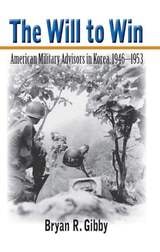
The Will to Win
American Military Advisors in Korea, 1946–1953Bryan R. Gibby
University of Alabama Press, 2012
One of America’s early attempts at nation building - US military advisors' shaping of the Republic of Korea Army (ROKA) from 1946 until 1953.
Gibby describes ROKA’s structure, mission, challenges, and successes, thereby linking the South Korean army and their US advisors to the traditional narrative of this “forgotten war.” The work also demonstrates the difficulties inherent in national reconstruction, focusing on barriers in culture and society, and the effects of rapid decolonization combined with intense nationalism and the appeal of communism to East Asia following the destruction of the Japanese empire. Key conclusions include the importance of individual advisors, the significance of the prewar advisory effort, and the depth of the impact these men had on individual Korean units and in a few cases on the entire South Korean army.
The success or failure of South Korean government in the decade following the end of World War II hinged on the loyalty, strength, and fighting capability of its army, which in turn relied on its American advisors. Gibby argues that without a proficient ROKA, the 1953 armistice, still in effect today, would not have been possible. He reexamines the Korean conflict from its beginning in 1945—particularly Korean politics, military operations, and armed forces—and demonstrates the crucial role the American military advisory program and personnel played to develop a more competent and reliable Korean army.
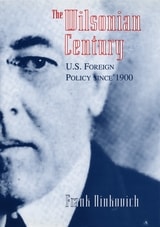
The Wilsonian Century
U.S. Foreign Policy since 1900Frank Ninkovich
University of Chicago Press, 1999
In the process of describing Wilson's legacy, Ninkovich reinterprets most of the twentieth century's main foreign policy developments. He views the 1920s, for example, not as an isolationist period but as a reversion to Taft's Dollar Diplomacy. The Cold War, with its faraway military interventions, illustrates Wilsonian America's preoccupation with achieving a cohesive world opinion and its abandonment of traditional, regional conceptions of national interest.
The Wilsonian Century offers a striking alternative to traditional interest-based interpretations of U.S. foreign policy. In revising the usual view of Wilson's contribution, Ninkovich shows the extraordinary degree to which Wilsonian ideas guided American policy through a century of conflict and tension.
The World Is Our Stage
The Global Rhetorical Presidency and the Cold WarAllison M. Prasch
University of Chicago Press, 2023
Crowds swarm when US presidents travel abroad, though many never hear their voices. The presidential body, moving from one secured location to another, communicates as much or more to these audiences than the texts of their speeches. In The World is Our Stage, Allison M. Prasch considers how presidential appearances overseas broadcast American superiority during the Cold War. Drawing on extensive archival research, Prasch examines five foundational moments in the development of what she calls the “global rhetorical presidency:” Truman at Potsdam, Eisenhower’s “Goodwill Tours,” Kennedy in West Berlin, Nixon in the People’s Republic of China, and Reagan in Normandy. In each case, Prasch reveals how the president’s physical presence defined the boundaries of the “Free World” and elevated the United States as the central actor in Cold War geopolitics.
The World after Iraq
A Special Issue, Volume 14Nikolaos A. Stavrou, ed.
Duke University Press, 0
Contributors from the Mediterranean Basin and the U.S.—both supporters and critics of U.S. foreign policy in pre- and postwar Iraq—investigate the U.S.’s “war on terrorism” and its associated concept of “preemptive war” as viable political strategies. Other essays weigh the ramifications of recent U.S. foreign policy in the Middle East for the institutions that have governed international relations since World War II and consider the political, social, and economic costs of this policy both for the U.S. itself and for the countries it targets.
Contributors. Stephen C. Calleya, Vincent M. Cannistraro, Ted Galen Carpenter, Mohamed A. El-Khawas, Ivan Eland, William H. Lewis, Raymond Muhula, Bernard Reich, Burton M. Sapin, Joseph J. Sisco, Nikolaos A. Stavrou, Stansfield Turner
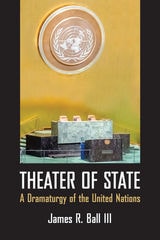
Theater of State
A Dramaturgy of the United NationsJames R. Ball III
Northwestern University Press, 2020
This study of the lived experience of spectacular politics on the world stage draws on theories of theater, performance, and politics to offer new ways of approaching issues of war, cosmopolitanism, international justice, governance, and activism. Situated at the nexus of two disciplines, performance studies and political science, this volume encourages conversations between the two so that each might offer lessons to the other.

Theories of Dependent Foreign Policy and the Case of Ecuador in the 1980s
Jeanne A. K. Hey
Ohio University Press, 1995
How do economic weakness and dependence influence foreign policy decisions and behavior in third world countries? Theories in Dependent Foreign Policy examines six foreign policy theories: compliance, consensus, counterdependence, realism, leader preferences and domestic politics, and each is applied to a series of case studies of Ecuador’s foreign policy during the 1980s under two regimes: Osvaldo Hurtado (1981-1984) and his successor León Febres Cordero (1984-1988).
Hey shows that Ecuador during this period represented the third world in many ways. It was a new democracy, having just emerged from years of military rule, extremely indebted to the West, and dependent on primary product export economy that relied heavily on importers, especially the United States.
Jeanne Hey finds that some of the most popular and enduring theories in western research, such as realism and compliance, poorly account for Ecuadorian foreign policy. She explains that poor countries like Ecuador have substantial foreign policy latitude in the diplomatic area. Drawing on archival research and interviews with policy makers including Presidents Hurtado and Febres Cordero, Dr. Hey convincingly argues that many of the traditional foreign policy theories do not “fit” dependent states, and inadequately account for the complexity of foreign policy in the third world.
Theorizing Global Order
The International, Culture and GovernanceEdited by Gunther Hellmann
Campus Verlag, 2018
These Islands
A Letter to BritainAli M. Ansari
Haus Publishing, 2018
With These Islands, Ali M. Ansari considers the idea of Britain as a political entity. This idea of Britain considers some nationalists as suppressed minorities in need of attention, and others as bigoted throwbacks to a more divisive age. Arguing the case for Great Britain from the perspective of the political mythology of the British state—with an emphasis on culture, ideas and narrative constructions—Ansari makes the claim that Britain’s strength lies in its ability to shape the popular imagination, both at home and abroad. He concludes that an “excess of enthusiasm” may yet do untold damage to the fabric of a state and society that has been carefully constructed over the centuries and may not be easily repaired.
Three-Way Street
Strategic Reciprocity in World PoliticsJoshua S. Goldstein and John R. Freeman
University of Chicago Press, 1990
The authors demonstrate that three major schools of international relations theory—all game-theoretic, psychological, and quantitative-empirical approaches—have all advocated a strategy that employs cooperative initiatives and reciprocal responses in order to elicit cooperation from other countries. Critics have questioned whether such approaches can model how countries actually behave, but Goldstein and Freeman provide a wealth of detailed empirical evidence showing the existence and effectiveness of strategic reciprocity among the three countries between 1948 and 1989. Specifically, they establish that relations among the three countries have improved in recent decades through a "two steps forward, one step back" pattern. Their innovative and remarkably accessible synthesis of leading theoretical perspectives brilliantly illuminates the nature and workings of international cooperation.