Results by title
4030 books match the query 'Language Arts & Disciplines' and 760 start with t

The Alchemy of English
The Spread, Functions, and Models of Non-native EnglishesBraj Kachru
University of Illinois Press, 1990
of an entire field, rather than merely the fruitful exploration of a topic.
. . . [Kachru] is to be congratulated for having taken us as far as he
already has and for doing so in so stimulating and so productive a fashion."
-- World Englishes
"A potent addition to theoretical, sociolinguistic, attitudinal
and methodological explorations vis-à-vis the spread and functions
of, and innovations in, English from the viewpoint of a non-Western scholar."
-- The Language Teacher
Winner of the Joint First Prize, Duke of Edinburgh English Language
Book Competition of the English-Speaking Union of the Commonwealth, 1987
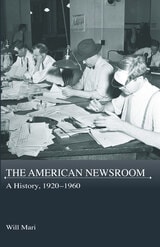
The American Newsroom
A History, 1920-1960Will Mari
University of Missouri Press, 2023
The American Secretary
The Colonial Policy of Lord George Germain, 1775-1778Gerald Saxon Brown
University of Michigan Press, 1963
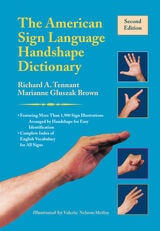
The American Sign Language Handshape Dictionary
Richard A. Tennant
Gallaudet University Press, 2020
Featuring
•More than 1,900 Sign Illustrations Including 327 New Signs•Plus DVD Showing How to Form Signs
•Arranged by Handshape for Easy Identification
•Complete Index of English Vocabulary for All Signs
•An Introduction to Deaf Culture and ASL Structure
The first reference source that allows users to access ASL signs without previous knowledge of their English equivalents (far superior to those in most other English-ASL glossaries). Likely to become indispensable on many educators’ and students’ bookshelves.—CHOICE
Now, the bestselling resource The American Sign Language Handshape Dictionary has been completely revised with more than 320 new signs and a new DVD. This unique reference can help users locate a sign whose meaning they have forgotten, or help them find the meaning of a new sign they have just seen for the first time. It organizes more than 1,900 ASL signs by 40 basic handshapes and includes detailed descriptions on how to form these signs to represent the different English words that they might mean. ASL students can begin to track down a sign by determining whether it is formed with one hand or two. Further distinctions of handshape, palm orientation, location, movement, and other nonmanual body signals help them pinpoint their search while also refining their grasp of ASL syntax and grammar. A complete English word index provides the option of referring to an alphabetical listing of English terms to locate an equivalent sign or choice of signs.
The new DVD shows how each sign is formed from beginning to end. Users can watch a sign at various speeds to learn precisely how to master it themselves. Together, the new edition of The American Sign Language Handshape Dictionary and its accompanying DVD presents students, sign language teachers, and deaf and hearing people alike with the perfect combination for enhancing communication skills in both ASL and English.
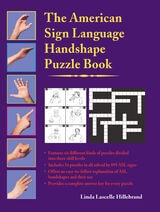
The American Sign Language Handshape Puzzle Book
Linda Lascelle Hillebrand
Gallaudet University Press, 2005
The American Sign Language Handshape Puzzle Book features 54 different puzzles to help students learn, review, and strengthen their signing vocabulary. Inspired by the bestselling dictionary, this unique workbook offers a variety of puzzles at three different levels — easy, medium, and difficult. Author Linda Lascelle Hillebrand provides a concise explanation of the basic handshapes used in American Sign Language (ASL), then invites readers to have fun while solving all sorts of sign puzzles.
Users can practice sign identification with Crossword and Word Search puzzles that have signs as clues rather than words. Easy puzzles show as few as six signs while advanced puzzles contain as many as 30 signs each. Some of the crossword puzzles provide spaces both across and down for the multiple meanings that many signs can represent.
Handshape Order puzzles require users to identify the handshape of the sign in an illustration, then list the sign’s meaning in English. Match puzzles also challenge readers to find corresponding signs for English glosses. Solutions to It Doesn’t Belong and Sign Description puzzles depend upon knowing the parameters of ASL signs—handshape, orientation, location, and movement—to deduce which word in a list doesn’t belong, and to write the English word for the described signs. The American Sign Language Handshape Puzzle Book is a new, different, and entertaining way to practice ASL that students of all ages are sure to enjoy.
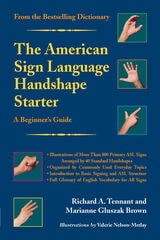
The American Sign Language Handshape Starter
A Beginner's GuideRichard A. Tennant
Gallaudet University Press, 2002
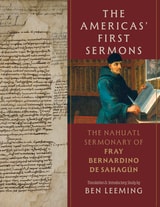
The Americas' First Sermons
The Nahuatl Sermonary of Fray Bernardino de SahagúnTranslation and Introduction study by Ben Leeming
University of Utah Press, 2025
The Americas’ First Sermons presents the first English translation and critical study of the complete set of sermons composed by Franciscan friar Bernardino de Sahagún and his Nahua students at the Imperial College of Santa Cruz in Tlatelolco, Mexico in 1540. The volume represents a crucial moment in the cultural exchange between European and Indigenous civilizations in sixteenth-century colonial Mexico.
With the collaboration of Mario Alberto Sánchez Aguilera, this edition offers unprecedented access to the collaboration between European friars and Nahua scholars in translating Christian concepts into Native languages. It captures Sahagún’s evolving methods across three phases (1530s–1560s) through his extensive annotations, bridging the divide between his ethnographic and doctrinal works. Unique in its analysis of both text and manuscript features—such as rare maguey paper—it highlights Indigenous intellectual contributions at the Colegio de Santa Cruz. This translation provides essential insights into early colonial religious negotiations and makes previously inaccessible material available to scholars across multiple disciplines.
The Arapaho Language
Andrew Cowell
University Press of Colorado, 2015
Cowell and Moss detail strategies used by speakers of this highly polysynthetic language to form complex words and illustrate how word formation interacts with information structure. They discuss word order and discourse-level features, treat the special features of formal discourse style and traditional narratives, and list gender-specific particles, which are widely used in conversation. Appendices include full sets of inflections for a variety of verbs.
Arapaho is spoken primarily in Wyoming, with a few speakers in Oklahoma. The corpus used in The Arapaho Language spans more than a century of documentation, including multiple speakers from Wyoming and Oklahoma, with emphasis on recent recordings from Wyoming. The book cites approximately 2,000 language examples drawn largely from natural discourse - either recorded spoken language or texts written by native speakers.
With The Arapaho Language, Cowell and Moss have produced a comprehensive document of a language that, in its departures from its nearest linguistic neighbors, sheds light on the evolution of grammar.
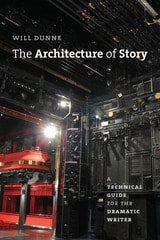
The Architecture of Story
A Technical Guide for the Dramatic WriterWill Dunne
University of Chicago Press, 2016
Through his workshops and book The Dramatic Writer’s Companion, Will Dunne has helped thousands of writers develop successful scripts. Now, in The Architecture of Story, he helps writers master the building blocks of dramatic storytelling by analyzing a trio of award-winning contemporary American plays: Doubt: A Parable by John Patrick Shanley, Topdog/Underdog by Suzan-Lori Parks, and The Clean House by Sarah Ruhl. Dismantling the stories and examining key components from a technical perspective enables writers to approach their own work with an informed understanding of dramatic architecture.
Each self-contained chapter focuses on one storytelling component, ranging from “Title” and “Main Event” to “Emotional Environment” and “Crisis Decision.” Dunne explores each component in detail, demonstrating how it has been successfully handled in each play and comparing and contrasting techniques. The chapters conclude with questions to help writers evaluate and improve their own scripts. The result is a nonlinear reference guide that lets writers work at their own pace and choose the topics that interest them as they develop new scripts. This flexible, interactive structure is designed to meet the needs of writers at all stages of writing and at all levels of experience.
The Archival Turn in Feminism
Outrage in OrderKate Eichhorn
Temple University Press, 2014
A volume in the American Literatures Initiative
The Argumentative Turn in Policy Analysis and Planning
Frank Fischer and John Forester, eds.
Duke University Press, 1993
The contributors, scholars of international renown who range across the theoretical spectrum, emphasize the political nature of the policy planner's work and stress the role of persuasive arguments in practical decision making. Recognizing the rhetorical, communicative character of policy and planning deliberations, they show that policy arguments are necessarily selective, both shaping and being shaped by relations of power. These essays reveal the practices of policy analysts and planners in powerful new ways--as matters of practical argumentation in complex, highly political environments. They also make an important contribution to contemporary debates over postempiricism in the social and policy sciences.
Contributors. John S. Dryzek, William N. Dunn, Frank Fischer, John Forester, Maarten Hajer, Patsy Healey, Robert Hoppe, Bruce Jennings, Thomas J. Kaplan, Duncan MacRae, Jr., Martin Rein, Donald Schon, J. A. Throgmorton
The Art of Creative Research
A Field Guide for WritersPhilip Gerard
University of Chicago Press, 2017
The Art of Creative Research helps writers take this natural inclination to explore and observe and turn it into a workable—and enjoyable—research plan. It shows that research shouldn’t be seen as a dry, plodding aspect of writing. Instead, it’s an art that all writers can master, one that unearths surprises and fuels imagination. This lends authenticity to fiction and poetry as well as nonfiction.
Philip Gerard distills the process into fundamental questions: How do you conduct research? And what can you do with the information you gather? He covers both in-person research and work in archives and illustrates how the different types of research can be incorporated into stories, poems, and essays using examples from a wide range of writers in addition to those from his own projects. Throughout, Gerard brings knowledge from his seasoned background into play, drawing on his experiences as a reporter and a writer of both fiction and nonfiction. His enthusiasm for adventure is infectious and will inspire writers to step away from the keyboard and into the world.
“Research can take you to that golden intersection where the personal meets the public, the private crosses the universal, where the best literature lives,” Gerard writes. With his masterly guidance, anyone can become an expert in artful investigation.
The Art of Growing Older
Writers on Living and AgingEdited by Wayne C. Booth
University of Chicago Press, 1996
"Funny . . . profound. . . . It is hard to resist the closing chapters, which celebrate the freedom from constraint and ambition, the permission to be crotchety, the joy of memory and perspective that come with age."—William March, Tampa Tribune
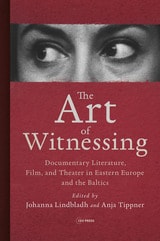
The Art of Witnessing
Documentary Literature, Film and Theater in Eastern Europe and the BalticsJohanna Lindbladh
Central European University Press, 2026
The Art, Science, and Magic of the Data Curation Network
A Retrospective on Cross-Institutional CollaborationJake Carlson
Michigan Publishing Services, 2023
The Art, Science, and Magic of the Data Curation Network: A Retrospective on Cross Institutional Collaboration captures the results of a project retrospective meeting and describes the necessary components of the DCN’s sustained collaboration in the hopes that the insights will be of use to other collaborative efforts. In particular, the authors describe the successes of the community and challenges of launching a cross-institutional network. Additionally, this publication details the administrative, tool-based, and trust-based structures necessary for establishing this community, the “radical collaboration” that is the cornerstone of the DCN, and potential future collaborations to address shared challenges in libraries and research data management. This in-depth case study provides an overview of the critical work of launching a collaborative network and transitioning to sustainability. This publication will be of special interest to research librarians, data curators, and anyone interested in academic community building.
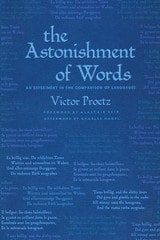
The Astonishment of Words
An Experiment in the Comparison of LanguagesBy Victor Proetz
University of Texas Press, 1971
One, two! one, two! And through and through
The vorpal blade went snicker-snack!
He left it dead, and with its head
He went galumphing back.
Un deux, un deux, par le milieu,
Le glaive vorpal fait pat-à-pan!
La bête défaite, avec sa tête,
Il rentre gallomphant.
Eins, Zwei! Eins, Zwei! Und durch und durch
Seins vorpals Schwert zerschniferschnück.
Da blieb es todt! Er, Kopf in Hand,
Geläumfig zog zurück!
The late Victor Proetz was by vocation a visual artist who created many distinguished architectural and decorative designs. His favorite avocation, however, was to explore the possibilities (and impossibilities) of words, especially words in translation, and to share his discoveries. As Alastair Reid says in his foreword, "He turned words over in his head, he listened to them, he unraveled them, he looked them up, he played with them, he passed them on like presents, all with an unjadeable astonishment."
What, Proetz wondered, do some of the familiar and not-so-familiar works of English and American literature sound like in French? In German? "How," he asked, "do you say 'Yankee Doodle' in French—if you can?" And "How do they say 'Hounyhnhnm' and 'Cheshire Cat' and things like that in German?" And, in either language, "How, in God's name, can you possibly say 'There she blows!'?"
This book, unfortunately left incomplete on his death in 1966, contains many of his answers. They are given not only in the assembled texts and translations but also in his wry, curious, sometimes hilarious commentaries. None of it is scholarly in any formal, academic sense—"and yet," Reid reminds us, "his is precisely the kind of enthusiastic curiosity that gives scholarship its pointers."

The Author and His Publisher
Lectures Delivered in Mainz and AustinSiegfried Unseld
University of Chicago Press, 1980
Through close examination of four writers, Unseld shows how the author's personality can affect the publisher's dilemma. Hermann Hesse, by virtue of his loyalty and his desire for financial independence, enjoyed an exemplary relationship with his publishers. With Bertolt Brecht it was all confusion; with Rainer Maria Rilke, a one-author-one-publisher lifetime alliance; with Swiss poet Robert Walser, a mire of difficulties ("Each book printed," he once said, was "a grave for its author").
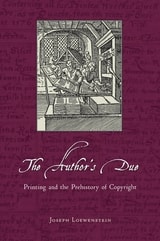
The Author's Due
Printing and the Prehistory of CopyrightJoseph Loewenstein
University of Chicago Press, 2002
As Loewenstein shows, copyright is a form of monopoly that developed alongside a range of related protections such as commercial trusts, manufacturing patents, and censorship, and cannot be understood apart from them. The regulation of the press pitted competing interests and rival monopolistic structures against one another—guildmembers and nonprofessionals, printers and booksellers, authors and publishers. These struggles, in turn, crucially shaped the literary and intellectual practices of early modern authors, as well as early capitalist economic organization.
With its probing look at the origins of modern copyright, The Author's Due will prove to be a watershed for historians, literary critics, and legal scholars alike.

The Bankruptcy
A NovelJúlia Lopes de Almeida
University College London, 2023
Set in the early years of Brazil’s Old Republic after the abolition of slavery, Júlia Lopes de Almeida's The Bankruptcy depicts the rise and fall of a wealthy coffee exporter against a kaleidoscopic background of glamour, poverty, seduction, and financial speculation. The novel introduces readers to a turbulent period in Brazilian history seething with new ideas about democracy, women’s emancipation, and the role of religion in society. Originally published in 1901, its prescient critiques of financial capitalism and the patriarchal family remain relevant today.
In her lifetime, Júlia Lopes de Almeida was compared to Machado de Assis, the most important Brazilian writer of the nineteenth century. She was also considered for the inaugural list of members of the Brazilian Academy of Letters but was excluded because of her gender. In the decades after her death, her work was largely forgotten. This publication, a winner of the English PEN award, includes an introduction to the novel and a translators' preface and accompanies a general rediscovery of her extraordinary body of work in Brazil.
The Bed Bug Guide for Public Libraries
Sarah Kittrell
American Library Association, 2016
The Benevolent Gaslight
A Technology of Race-MakingLouis M. Maraj
Utah State University Press, 2026
At the intersection of rhetorical studies and critical race/ethnic studies, The Benevolent Gaslight analyzes cultural and political discourses that recharacterize acts of racial violence as teaching moments and learning opportunities. Naming this phenomenon “benevolent gaslighting,” Louis M. Maraj and Pritha Prasad explore its application across academic disciplines/epistemologies, educational history, and university race management, while also diving into how popular culture and political figures use benevolent gaslighting to reinscribe normative operations of race, gender, and sexuality.
Although this rhetoric usually presents as progressive, when used for the purposes of advancing “antiracism,” the benevolent gaslight re-centers the very whiteness it supposedly critiques. It prompts peoples of color to question their histories, memories, and realities by suggesting their pain has been necessary for positive social change and by situating racial trauma as opportunities for public learning. Specific examples include antiracist teaching initiatives and the sudden proliferation of apologies for past acts of racism by public figures. Both trends saw an uptick from 2020 onward as a result of publicity crises and public “reckonings” necessitated by Black Lives Matter protests in response to widely reported, hypervisible anti-Black violences like the murders of George Floyd, Breonna Taylor, and Ahmaud Arbery.
These discourses deflect blame for past or present racial violence by narrating it as an opportunity for “antiracist” growth and intervention. Utilizing conventional academic and creative/narrative methods to examine examples of the benevolent gaslight across US histories of education during the First Reconstruction, the post–Civil Rights management of student activists in the university, and the progressivist discourses of humanities disciplines and popular culture, this book reveals the insidious ways in which peoples of color are routinely (re)traumatized through mechanisms of “pedagogy.”
The Best Science Stories and How They Work
A Collection with CommentaryEdited by Siri Carpenter
University of Chicago Press, 2026
An invitation to engage with some of today’s most respected science journalists as they take readers beneath the surface to reveal the making of eleven of the best science stories.
With eleven deeply reported, artfully crafted stories and annotations by some of the most thoughtful and respected science journalists working today, The Best Science Stories and How They Work is more than the sum of its impressive parts. Experience the pleasure of reading a “Best of” anthology, attending a science writing masterclass, and meeting journalists who become more than their familiar bylines. Each piece benefits from an introduction, annotations, and a conversation between the piece’s author and annotator.
Siri Carpenter—editor of this book and cofounder of The Open Notebook, a leading source of training and educational materials for journalists who cover science—has long considered what’s behind the best writing. The pieces in this guide are drawn from a range of publications such as Scientific American, Nature, The Atlantic, and The New York Times Magazine and offer a unique perspective on how great science journalism happens: the careful structuring of a narrative, the delicate balance of skepticism and wonder, the ethical challenges of working with sources, the artistry of prose that sings. Readers will not only encounter outstanding examples of stellar storytelling, but they will also understand how these successful stories were reported and written, revealing the choices fundamental to good science journalism. Following each annotation, a Q&A with the original author provides an intimate look at the decisions and challenges that shaped their work.
Taken together, these pieces and annotations reveal the detailed, technical narrative work required to tell science stories. The book will delight, inspire, and equip readers with new tools to appreciate the stories that matter most.
Contributors: Jordana Cepelewicz, Shraddha Chakradhar, Nadia Drake, Ben Goldfarb, Sabrina Imbler, Ferris Jabr, Emily Laber-Warren, Stephanie M. Lee, Dana Mackenzie, Amy Maxmen, Emiliano Rodríguez Mega, Kendra Pierre-Louis, Debbie Ponchner, Sandeep Ravindran, Mary Roach, Paola Rosa-Aquino, Ashley Smart, Jessica Seigel, Ramin Skibba, Kamala Thiagarajan, Bijal Trivedi, and Ed Yong
The Best of Technology Writing 2006
Brendan I. Koerner, Editor
University of Michigan Press, 2006
—James Fallows, National Correspondent for Atlantic Monthly
“The human experience is being shaped by our symbiotic relationship to technology. What makes this collection wonderful is that it’s not about the technology, per se, but it’s about this changing human experience. I will look forward to it every year.”
—Po Bronson, author of What Should I Do With My Life?
The Best of Technology Writing 2006 brings together some of the most important, timely, and just plain readable writing in the fast-paced, high-stakes field of technology. The first annual collection to target this vibrant and versatile area, The Best of Technology Writing 2006 features innovative work from an unusually diverse array of writers: best-selling authors, noted academics, and indie journalists and bloggers. The culmination of an open, on-line nominating process, this collection covers topics ranging from jetpacks, to the ethics of genetically cloned pets, to the meaning of life in the information age. By turns epic and intimate, serious and playful, The Best of Technology Writing 2006 captures the vitality, importance, and complexity of technology today. Koerner
Featuring contributions from:
digitalculturebooks is an imprint of the University of Michigan Press and the Scholarly Publishing Office of the University of Michigan Library dedicated to publishing innovative and accessible work exploring new media and their impact on society, culture, and scholarly communication. Visit the website at www.digitalculture.org.
The Best of Technology Writing 2007
Steven Levy, Editor
University of Michigan Press, 2007
The year’s best writing on tech: a collection as imaginative and compelling as its dynamic subject
“This book is not just an illuminating and instructive guide to our high-tech frontier. It’s also a great testimony to the power of that most ancient of technologies, the written word.”
—Steven Johnson, author of Everything Bad is Good for You
Together the essays in The Best of Technology Writing 2007 capture the versatility and verve of technology writing today. Solicited through an open online nominating process, these pieces explore a wide range of intriguing topics—from “crowdsourcing” to the online habits of urban moms to the digital future of movie production. The Best of Technology Writing 2007 will appeal to anyone who enjoys stellar writing.
Steven Levy is a Senior Editor at Newsweek, where he writes the biweekly column “The Technologist.” One of the most acclaimed and versatile technology writers in the country, Levy has written six books, including The Perfect Thing (about Apple’s iPod) and Hackers, which PC Magazine’s readers voted the best sci-tech book written in the last twenty years. He has written for many publications, including the New Yorker, the New York Times Magazine, Rolling Stone, and Wired.
Featuring contributions from
Kevin Berger
Paul Boutin
Kiera Butler
Joshua Davis
Julian Dibbell
Matt Gaffney
Lori Gottlieb
John Gruber
Jeff Howe
Kevin Kelly
Jaron Lanier
Preston Lerner
Farhad Manjoo
Justin McElroy
Ben McGrath
Katharine Mieszkowski
Emily Nussbaum
Jeffrey M. O’Brien
Larry O’Brien
The Onion
Adam L. Penenberg
John Seabrook
Philip Smith
Aaron Swartz
Clive Thompson
Jeffrey R. Young
digitalculturebooks is an imprint of the University of Michigan Press and the Scholarly Publishing Office of the University of Michigan Library dedicated to publishing innovative and accessible work exploring new media and their impact on society, culture, and scholarly communication. Visit the website at www.digitalculture.org.
The Biblical Web
Ruth apRoberts
University of Michigan Press, 1994
The Big Sourcebook of Free and Low-Cost Library Programming
300+ Resources, Ideas, and ToolsEllyssa Kroski
American Library Association, 2024
There’s no need to spend hours trying to come up with creative programming ideas—bestselling library activity guru Kroski has already done all the hard work for you! Largely drawn from contributions by library workers across the country, this e-book is a cornucopia of ready-to-go activities, easily accessible resources, and adaptable tools for inspiring countless fun and engaging programs at your library. Best of all, these exciting low cost/no-cost library programs can be implemented using only free resources. Offering a broad selection of ideas for adults, tweens, and younger children that can be tailored to a variety of contexts, inside this sourcebook you’ll discover
- seniors and older adult programming resources on such topics as genealogy, financial literacy, lifelong learning, gardening, and health and wellness;
- career, ESL/literacy, and "just for fun" programs and book clubs perfect for adults;
- young adult programming resources such as the Book to Action toolkit, YALSA’s Teen Programming Guidelines, literacy and educational resources, computers and coding activities, live action roleplaying games (LARPS), and many more;
- free resources to teach financial responsibility to toddlers, lesson plans from NASA, resources to host an Earth Day event incorporating a “free trees for kids” program, StoryWalks and more ideas for children;
- makerspace, STEM, and art programming resources;
- Pinterest boards, idea lists, writing prompts, coloring pages, free books, and passive programming downloadables and printables;
- information about more than two dozen grant opportunities for funding programs; and
- planning templates, marketing tips, assessment resources, and tools for brainstorming and productivity.
The Bilingual Courtroom
Court Interpreters in the Judicial ProcessSusan Berk-Seligson
University of Chicago Press, 2003
Drawing on more than one hundred hours of taped recordings of Spanish/English court proceedings in federal, state, and municipal courts—along with extensive psycholinguistic research using translated testimony and mock jurors—Susan Berk-Seligson's seminal book presents a systematic study of court interpreters, and raises some alarming, vitally important concerns: contrary to the assumption that interpreters do not affect the contents of court proceedings, they could potentially make the difference between a defendant being found guilty or innocent of a crime.

The Black Belt Librarian
Real-World Safety & SecurityWarren Graham
American Library Association, 2011
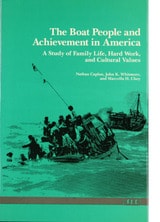
The Boat People and Achievement in America
A Study of Family Life, Hard Work, and Cultural ValuesNathan Caplan, John K. Whitmore, and Marcella H. Choy
University of Michigan Press, 1989
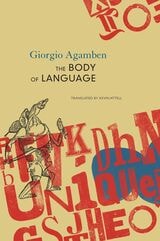
The Body of Language
esperruquancluzelubelouzerireluGiorgio Agamben
Seagull Books, 2025
An erudite exploration of transgressive language from the Renaissance by one of Europe’s greatest living philosophers.
This book explores how early modern authors broke linguistic boundaries, creating new words and languages that challenged traditional grammar and lexicon, providing historical insight into today’s debates on the politics of language. Through a scholarly analysis by Giorgio Agamben, the text delves into the boundary-shifting language of the Renaissance, exemplified by giants like Pantagruel and Gargantua, whose outsized bodies mirror the vastness of their speech. The macaronic language invented by Teofilo Folengo, blending Latin and vernacular, embodies a linguistic rebellion that transforms language into a tangible, unruly force. Featuring illustrations from the Songes drolatiques de Pantagruel and Folengo’s Baldo, this volume offers a vivid portrayal of language as a physical, dynamic entity that defies grammatical norms.
The Book Lovers' Miscellany
Claire Cock-Starkey
Bodleian Library Publishing, 2017
The Book Lovers’ Miscellany is a cornucopia for bibliophiles. With customary wisdom and wit, Claire Cock-Starkey presents a brief illustrated history of paper, binding, printing, and dust jackets, with a wealth of arcane facts that even the most avid book lovers may be hard-pressed to answer: Which natural pigments were used to decorate medieval bibles? Which animal is needed for the making of vellum? Curious facts are drawn from throughout the history of books and publishing, including many more recent examples, such as a short history of the comic and the story behind the massively successful Harlequin romance imprint Mills and Boon. Readers can explore the output of the most prolific writers and marvel at the youth of the youngest published authors—or lament the decisions of the publishers who rejected books that later became colossal bestsellers. The book also includes a collection of lists, including unfinished novels, books that have faced bans, books printed with mistakes, the most influential academic books of all time, and the longest established literary families.
The perfect gift for every bibliophile, The Book Lovers’ Miscellany is equally well suited to reading straight through or dipping into here and there.
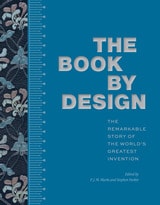
The Book by Design
The Remarkable Story of the World's Greatest InventionEdited by P.J.M. Marks and Stephen Parkin
University of Chicago Press, 2023
For centuries across the world, books have been created as objects of beauty, with bookmakers lavishing great care on their paper, binding materials, illustrations, and lettering.
The Book by Design, featuring an array of books from the British Library's collection, focuses on the sensory experience of holding and reading these objects. Each selection represents a specific moment in the development of what we know today as the book—from scrolls and bound illuminated manuscripts to paperbacks and formatted digital information. These range from the seventh century to the present and include examples from China, Japan, Southeast Asia, the Middle East, Europe, and North America, in addition to a look at book traditions in Africa and Oceania. John James Audubon’s Birds of America, the works of Chaucer, Russian Futurist books, limited editions, historic copies of the Qur’an and the Bible, mass-market paperbacks, and more come together to tell the visual, tactile, artistic, and cultural history of books.
Expert curators and specialists explore these books from the perspective of design and manufacturing, original art photographs offer vivid representations of their textures and materials, and graphics detail the size and specifications of each book. Offering a wide-ranging look at the creation and use of books, illustrated with hundreds of color images, this volume is itself an object of beauty.
The Book of Yeats's Vision
Romantic Modernism and Antithetical TraditionHazard Adams
University of Michigan Press, 1995
The Brazil Chronicles
Stephen G. Bloom
University of Missouri Press, 2024
As a young journalist at the Brazil Herald from 1979-81, Stephen G. Bloom spent his early professional years working in Rio’s seedy Lapa district, surrounded by fugitives, drug runners, pornographers, and stealth CIA agents. Bloom shares the wild story of this English-language newspaper in The Brazil Chronicles. The expat newspaper was a breeding ground for a different kind of storyteller — audacious risk-takers who told madcap tales of Amazon plantations, Confederate emigres, and lost Indian tribes. Several renown journalists cut their teeth at the Brazil Herald, including acclaimed New York Times correspondent Tad Szulc, Huffington Post CEO Eric Hippeau, and an untamed Gonzo reporter by the name of Hunter S. Thompson.
Drawing from extensive archival research and more than 150 interviews with his former colleagues, Bloom’s eye-opening narrative dive is both entertaining and academically rigorous. With a backdrop of coups, nonstop political instability, censorship, hyper-inflation, and weekends at sultry Ipanema Beach, The Brazil Chronicles doubles as a coming-of-age memoir, following young Bloom as he embarks on his quest to become a foreign correspondent, relocating to a foreign country to pursue under-the-radar stories and tall tales. His firsthand experience provides an insider, eye-witness account of the newspaper’s colorful history, transporting the reader to its sweltering newsroom and delving into the multifarious lives of its eclectic, trailblazing, polyglot staff.
Even as Bloom weaves between personal narrative, history, and accounts from journalism luminaries, it’s clear who the book’s main character is: the one-of-a-kind newspaper itself.
The Business of Being a Writer
Jane Friedman
University of Chicago Press, 2018
The Business of Being a Writer offers the business education writers need but so rarely receive. It is meant for early-career writers looking to develop a realistic set of expectations about making money from their work or for working writers who want a better understanding of the industry. Writers will gain a comprehensive picture of how the publishing world works—from queries and agents to blogging and advertising—and will learn how they can best position themselves for success over the long term.
Jane Friedman has more than twenty years of experience in the publishing industry, with an emphasis on digital media strategy for authors and publishers. She is encouraging without sugarcoating, blending years of research with practical advice that will help writers market themselves and maximize their writing-related income. It will leave them empowered, confident, and ready to turn their craft into a career.
The Business of Being a Writer, Second Edition
Jane Friedman
University of Chicago Press, 2025
Writers talk about their work in many ways: as an art, as a calling, as a lifestyle. Too often missing from these conversations is the fact that writing is also a business, and those who want to make a living from their writing must understand the basic business principles underlying the industry. The Business of Being a Writer offers the business education writers need but so rarely receive.
Jane Friedman is one of today’s leading experts on the publishing industry. Through her website, social media presence, online courses, email newsletters, and other media, she helps writers understand how to navigate the industry with confidence and intentionality. This book advises writers on how to build a platform in a way that aligns with their values, how to spot critical mindset issues that might sabotage their efforts before they even begin, how to publish strategically, and what it means to diversify income streams beyond book sales. For this second edition, Friedman has updated every topic to reflect how the industry has evolved over the past half decade. New features include a section on business and legal issues commonly faced by writers, exercises at the end of each chapter, and a wealth of sample materials posted on a companion website.
Reaching beyond the mechanical aspects of publishing, The Business of Being a Writer will help both new and experienced writers approach their careers with the same creative spirit as their writing. Friedman is encouraging without sugarcoating reality, blending years of research with practical advice that will help writers market themselves and maximize their writing-related income. Her book will leave them empowered, confident, and ready to turn their craft into a sustainable career.

The Busy Librarians Guide To Information Literacy In
Jeanne Davidson
Assoc of College & Research Libraries, 2012
The Busy Librarian’s Guide to Information Literacy in Science and Engineering
Katherine O'Clair
Assoc of College & Research Libraries, 2012
The CSE Manual, Ninth Edition
Scientific Style and Format for Authors, Editors, and PublishersCouncil of Science Editors
University of Chicago Press, 2024
The CSE Manual: Scientific Style and Format for Authors, Editors, and Publishers delivers complete coverage of rules and best practices in scientific publishing. Since 1960, the esteemed Council of Science Editors has offered authoritative guidance on presenting scientific writing more clearly and effectively. In the ninth edition of The CSE Manual, this leading international association offers its most comprehensive recommendations yet, continuing to guide writers and editors through the ever-evolving world of scientific publishing. Available in print and by subscription online.
The Cabinet of Linguistic Curiosities
A Yearbook of Forgotten WordsPaul Anthony Jones
University of Chicago Press, 2019
On the day on which flirting was banned in New York City, for instance, you’ll discover why to “sheep’s-eye” someone once meant to look at them amorously. On the day on which a disillusioned San Franciscan declared himself Emperor of the United States, you’ll find the word “mamamouchi,” a term for people who consider themselves more important than they truly are. And on the day on which George Frideric Handel completed his 259-page Messiah after twenty-four days of frenzied work, you’ll see why a French loanword, literally meaning “a small wooden barrow,” is used to refer to an intense period of work undertaken to meet a deadline.
The English language is vast enough to supply us with a word for every occasion—and this linguistic “wunderkammer” is here to prove precisely that. So whatever date this book has found its way into your hands, there’s an entire year’s worth of linguistic curiosities waiting to be found.
The Call
Eloquence in the Service of TruthCraig R. Smith
Michigan State University Press, 2022
The Calusa
Linguistic and Cultural Origins and RelationshipsJulian Granberry
University of Alabama Press, 2012
Presents a full phonological and morphological analysis of the total corpus of surviving Calusa language data left by a literate Spanish captive held by the Calusa from his early youth to adulthood
The linguistic origins of Native American cultures and the connections between these cultures as traced through language in prehistory remain vexing questions for scholars across multiple disciplines and interests. Native American linguist Julian Granberry defines the Calusa language, formerly spoken in southwestern coastal Florida, and traces its connections to the Tunica language of northeast Louisiana.
Archaeologists, ethnologists, and linguists have long assumed that the Calusa language of southwest Florida was unrelated to any other Native American language. Linguistic data can offer a unique window into a culture’s organization over space and time; however, scholars believed the existing lexical data was insufficient and have not previously attempted to analyze or define Calusa from a linguistic perspective.
In The Calusa: Linguistic and Cultural Origins and Relationships, Granberry presents a full phonological and morphological analysis of the total corpus of surviving Calusa language data left by a literate Spanish captive held by the Calusa from his early youth to adulthood. In addition to further defining the Calusa language, this book presents the hypothesis of language-based cultural connections between the Calusa people and other southeastern Native American cultures, specifically the Tunica. Evidence of such intercultural connections at the linguistic level has important implications for the ongoing study of life among prehistoric people in North America. Consequently, this thoroughly original and meticulously researched volume breaks new ground and will add new perspectives to the broader scholarly knowledge of ancient North American cultures and to debates about their relationships with one another.
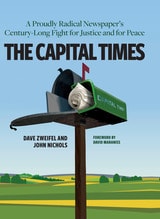
The Capital Times
A Proudly Radical Newspaper’s Century Long Fight for Justice and for PeaceJohn Nichols
Wisconsin Historical Society Press, 2017
As Madison’s Capital Times marks its 100th anniversary in 2017, editors Dave Zweifel and John Nichols recall the remarkable history of a newspaper that served as the tribune of Robert M. La Follette and the progressive movement, earned the praise of Franklin Delano Roosevelt for its stalwart opposition to fascism, battled Joe McCarthy during the "Red Scare," championed civil rights, women’s rights, and LGBTQ rights, opposed the Vietnam War and the invasion of Iraq, and stood with Russ Feingold when he cast the only US Senate vote against the Patriot Act. The Capital Times did not do this from New York or Washington but from the middle of America, with a readership of farmers, factory workers, teachers, and shopkeepers who stood by The Cap Times when the newspaper was boycotted, investigated, and attacked for its determination.
At a point when journalism is under assault, when newspapers struggle to survive, and "old media" struggles to find its way in a digital age, The Capital Times remains unbowed—still living up to the description Lord Francis Williams, the British newspaper editor, wrote 50 years ago: "The vast majority of American papers are as dull as weed-covered ditch-water; vast Saharas of cheap advertising with occasional oases of editorial matter written to bring happiness to the Chamber of Commerce and pain and irritation to none; the bland leading the bland.… Just here and there are a few relics of the old fighting muckraking tradition of American journalism, like The Capital Times of Madison."
The Case for Single Motherhood
Contemporary Maternal Identities and Family FormationsKatherine E. Mack
University of Alabama Press, 2024
Scholars of rhetoric have largely overlooked the inherent rhetoricity of family. In The Case for Single Motherhood, Katherine Mack posits family as a central concern of rhetorical studies by reflecting on how language is used by single mothers who seek to reenvision the personal, social, and political meanings of family.
Drawing on intersectional and rhetorical theories, Mack demonstrates how the category of elective single motherhood emerged in response to the historically differential treatment of “unwed mothers” along racial and class lines. Through her readings of a range of self-sponsored ESM texts—guidebooks, memoirs, and interactive digital media written by and primarily for other ESMs—and from her perspective as an elective single mother herself, Mack evaluates the rhetorical power, as well as the exclusions and hierarchies, that the ESM label effects. She analyzes how ESMs envision motherhood, visions that entail their musings about who can and should mother. Ultimately, Mack offers women who are considering nonnormative paths to motherhood a way to affirm their maternal identities and paths without disparaging others’.
Scholars in the fields of rhetoric and feminist rhetorical studies will find in this volume an illuminating perspective on the rhetorical power of self-sponsored texts in particular. Crafting a methodology to identify and evaluate the goals and effects of legitimacy work and selecting sources that bring academic attention to varied genres of self-sponsored writings, Mack paves the way for future rhetorical studies of motherhood and family.
The Chain Gang
One Newspaper versus the Gannett EmpireRichard McCord
University of Missouri Press, 2001
"They're closing in on me, Dick, and I'm afraid they're going to get me," said Frank Wood, publisher of the Green Bay News-Chronicle, in a phone call to his friend and colleague, Richard McCord. Drained of cash and spirit, Wood could not hold out much longer against a devouring giant, the Gannett Company. As editor and publisher of the nationally distinguished weekly Santa Fe Reporter, McCord had successfully fended off Gannett's "Operation Demolition" when it moved into town. Now Wood was seeking the help of a survivor.
Startling case histories of the dubious tactics practiced by Gannett, unsparing insights into the newspaper industry, and harsh conclusions all come together in the dramatic story of these two men's efforts to save the small Green Bay daily from being obliterated at the hands of the nation's largest newspaper chain. Their success is a metaphor for one of the oldest triumphs of the world: that of David over Goliath.
"McCord has done something marvelous with this. He's taken a deeply disturbing nationwide trend and put it on a small midwestern stage with real characters. The Chain Gang's message needs to be heard by as many Americans as read newspapers. Already Gannett's monopoly tactics have impoverished communities across the country. McCord is one man fighting back, coolly, rationally, creatively, and stubbornly. Let's join him."—Michael Shnayerson, Contributing Editor, Vanity Fair
"More graphically than almost any other available record of the era, the Gannett piracy is what has happened to this country, tolled where the price is truly paid, in the lives of communities and people."—Roger Morris, winner of the Investigative Reporters and Editors' National Award for Distinguished Investigative Journalism
"Richard McCord's The Chain Gang takes the losing battle for the soul of American newspapers from the euphoric accounts on financial pages to show what corporate news chains can mean in human terms to the people and the vitality of the victimized cities and towns. His is a unique account of the power and depredations of the Gannett Chain under its glib empire builder, Allen Neuharth. It goes behind the facade of slick public relations and financial killings for investors to show what happens when a ruthless and ambitious wheeler-dealer gets control of our news."—Ben H. Bagdikian, media critic and Pulitzer Prize winner
The Challenge of Library Management
Leading with Emotional EngagementPixey Anne Mosley
American Library Association, 2011
The Changing Academic Library
Operations, Culture, EnvironmentsJohn Budd
Assoc of College & Research Libraries, 2018
The Chattering Mind
A Conceptual History of Everyday TalkSamuel McCormick
University of Chicago Press, 2020
From Plato’s contempt for “the madness of the multitude” to Kant’s lament for “the great unthinking mass,” the history of Western thought is riddled with disdain for ordinary collective life. But it was not until Kierkegaard developed the term chatter that this disdain began to focus on the ordinary communicative practices that sustain this form of human togetherness.
The Chattering Mind explores the intellectual tradition inaugurated by Kierkegaard’s work, tracing the conceptual history of everyday talk from his formative account of chatter to Heidegger’s recuperative discussion of “idle talk” to Lacan’s culminating treatment of “empty speech”—and ultimately into our digital present, where small talk on various social media platforms now yields big data for tech-savvy entrepreneurs.
In this sense, The Chattering Mind is less a history of ideas than a book in search of a usable past. It is a study of how the modern world became anxious about everyday talk, figured in terms of the intellectual elites who piqued this anxiety, and written with an eye toward recent dilemmas of digital communication and culture. By explaining how a quintessentially unproblematic form of human communication became a communication problem in itself, McCormick shows how its conceptual history is essential to our understanding of media and communication today.
The Chemistry of Fire
EssaysLaurence Gonzales
University of Arkansas Press, 2020
—Publishers Weekly starred review, July 2020
In 1989, Laurence Gonzales was a young writer with his first book of essays, The Still Point, just published by the University of Arkansas Press. Imagine his surprise, one winter day, to receive a letter from none other than Kurt Vonnegut. “The excellence of your writing and the depth of your reporting saddened me, in a way,” Vonnegut wrote, “reminding me yet again what a tiny voice facts and reason have in this era of wrap-around, mega-decibel rock-and-roll.”
Several books, many articles, and a growing list of awards later, Gonzales -- known for taking us to enthralling extremes – is still writing with excellence and depth. In this latest collection, we go from the top of Mount Washington and ”the worst weather in the world,” to 12,000 feet beneath the ocean, where a Naval Intelligence Officer discovers the Titanic using the government’s own spy equipment. We experience night assaults with the 82nd Airborne Division, the dynamiting of the 100-foot snowpack on Going-to-the-Sun Road in Glacier National Park, a trip to the International Space Station, the crash of an airliner to the bottom of the Everglades, and more.
The University of Arkansas Press is proud to bring these stories to a new era, stories that, as with all of Gonzales’s work, “fairly sing with a voice all their own.” (Chicago Sun-Times)
The Chicago Guide for Freelance Editors
How to Take Care of Your Business, Your Clients, and Yourself from Start-Up to SustainabilityErin Brenner
University of Chicago Press, 2024
You’ve been thinking about shifting into the world of freelance editing, but you don’t know where to start. In a time when editors are seeking greater flexibility in their work arrangements and schedules, freelancing is an increasingly common career option. But deciding to go it alone means balancing the risks with the rewards. From the publisher of The Chicago Manual of Style comes The Chicago Guide for Freelance Editors, the definitive guide to running your business and finding greater control and freedom in your work life.
In this book, Erin Brenner—an industry leader and expert on the business of editorial freelancing—gathers everything you need to know into a single resource. Brenner has run her own successful editing business for over two decades and has helped hundreds of editors launch or improve their businesses through her teaching, blog writing, and coaching.
The Chicago Guide for Freelance Editors will walk you through the entire process of conceiving, launching, and working in a freelance editing business, from deciding on services and rates to choosing the best business structure to thinking through branding and marketing strategies and beyond. This book is ideal for beginning freelancers looking to get set up and land their first clients, but it’s equally valuable to those who have already been freelancing, with detailed coverage of such issues as handling difficult clients and continuing professional development. You’ll find a collection of advice from other successful freelance editors in this guide, as well as an extensive list of resources and tools. In the final and perhaps most important chapter, Brenner teaches you how to care for the key component of the business: yourself.