Results by title
534 books match the query 'Making' and 112 start with t
The making of exile cultures
Iranian television in Los AngelesHamid. Naficy
University of Minnesota Press, 1993
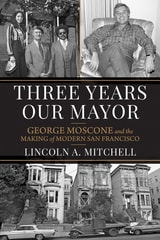
Three Years Our Mayor
George Moscone and the Making of Modern San FranciscoLincoln A. Mitchell
University of Nevada Press, 2025
Moscone was also a very colorful character who, in addition to being a successful politician, was a charming and charismatic bon vivant who was deeply embedded in the fabric and culture of San Francisco. He grew up the only son of a single mother in Cow Hollow when it was a working class, largely Italian American neighborhood, and he became the kind of politician who knew bartenders, playground attendants, small business owners, and neighborhood activists in every corner of the city. Moscone’s life and the history of San Francisco during the middle half of the twentieth century are deeply intertwined.
Through illustrating the life of Moscone, author Lincoln A. Mitchell explores how today’s San Francisco came into being. Moscone—through his work in the State Senate, victory in the very divisive 1975 mayor’s race, and brief tenure as mayor—was a key figure in the city’s evolution. The politics surrounding Moscone’s election as mayor, governance of the city, and tragic death are still relevant issues. Moscone was a groundbreaking politician whose life was cut short, but his influence on San Francisco can still be felt today.
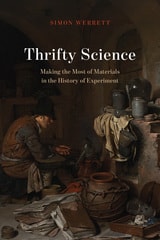
Thrifty Science
Making the Most of Materials in the History of ExperimentSimon Werrett
University of Chicago Press, 2018
Thrifty Science explores this distinctive culture of experiment and demonstrates how the values of the household helped to shape an array of experimental inquiries, ranging from esoteric investigations of glowworms and sour beer to famous experiments such as Benjamin Franklin’s use of a kite to show lightning was electrical and Isaac Newton’s investigations of color using prisms. Tracing the diverse ways that men and women put their material possessions into the service of experiment, Werrett offers a history of practices of recycling and repurposing that are often assumed to be more recent in origin. This thriving domestic culture of inquiry was eclipsed by new forms of experimental culture in the nineteenth century, however, culminating in the resource-hungry science of the twentieth. Could thrifty science be making a comeback today, as scientists grapple with the need to make their research more environmentally sustainable?

Tito Puente and the Making of Latin Music
Steven Loza
University of Illinois Press, 1999
He was known as "El Rey"—the king—and he came to epitomize the Latin experience in music, not just to Latinos throughout the United States and Latin America but to a worldwide audience.
Tito Puente and the Making of Latin Music is the first in-depth historical, musical, and cultural look at the career and the influence of a giant of Latin music. Steven Loza brings the man and his music vividly to life through exclusive interviews with Puente and a number of his close associates, including Hilton Ruiz, Ray Santos, Jerry González, Poncho Sanchez, and Joe Conzo, as well as music journalist Max Salazar and former DJ/producer Chico Sesma.
Loza shows how Puente's music evolved in tandem with the crystallization of Latin music into its current compelling mix of Afro-Cuban music, salsa, and Latin jazz. Tracing Puente's innovations as a drummer and a bandleader, Loza defines his influence over the course of half a century on Latin music as well as on other musicians and musical genres. Loza also delineates the social and cultural history of Latin music, exploring questions of nationalism and ethnic expression, the play between musical creation and commercial competition, and the politics of so-called multiculturalism as they bear on Latin music and musicians. The book includes detailed musical analyses and a discography of more than a hundred recordings.
Celebrating a dynamic performer and a genre that is deeply rooted in America's rich ethnic diversity, Tito Puente and the Making of Latin Music reveals all the vibrancy and color of a consummate artist's life, work, and world.
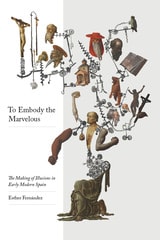
To Embody the Marvelous
The Making of Illusions in Early Modern SpainEsther Fernández
Vanderbilt University Press, 2021
Winner of the Nancy Staub Award, UNIMA-USA (Union Internationale de la Marionnette), 2023
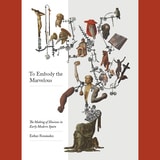
In its exploration of puppetry and animation as the performative media of choice for mastering the art of illusion, To Embody the Marvelous engages with early modern notions of wonder in religious, artistic, and social contexts.
From jointed, wood-carved figures of Christ, saintly marionettes that performed hagiographical dramas, experimental puppets and automata in Cervantes' Don Quixote, and the mechanical sets around which playwright Calderón de la Barca devised secular magic shows to deconstruct superstitions, these historical and fictional artifacts reenvisioned religious, artistic, and social notions that led early modern society to critically wrestle with enchantment and disenchantment.
The use of animated performance objects in Spanish theatrical contexts during the sixteenth and seventeenth centuries became one of the most effective pedagogical means to engage with civil society. Regardless of social strata, readers and spectators alike were caught up in a paradigm shift wherein belief systems were increasingly governed by reason—even though the discursive primacy of supernatural doxa and Christian wonder remained firmly entrenched. Thanks to their potential for motion, religious and profane puppets, automata, and mechanical stage props deployed a rationalized sense of wonder that illustrates the relationship between faith and reason, reevaluates the boundaries of fiction in art and entertainment cultures, acknowledges the rise of science and technology, and questions normative authority.
To Embody the Marvelous
The Making of Illusions in Early Modern SpainEsther Fernández
Vanderbilt University Press, 2022
Winner of the Nancy Staub Award, UNIMA-USA (Union Internationale de la Marionnette), 2023
In its exploration of puppetry and animation as the performative media of choice for mastering the art of illusion, To Embody the Marvelous engages with early modern notions of wonder in religious, artistic, and social contexts.
From jointed, wood-carved figures of Christ, saintly marionettes that performed hagiographical dramas, experimental puppets and automata in Cervantes' Don Quixote, and the mechanical sets around which playwright Calderón de la Barca devised secular magic shows to deconstruct superstitions, these historical and fictional artifacts reenvisioned religious, artistic, and social notions that led early modern society to critically wrestle with enchantment and disenchantment.
The use of animated performance objects in Spanish theatrical contexts during the sixteenth and seventeenth centuries became one of the most effective pedagogical means to engage with civil society. Regardless of social strata, readers and spectators alike were caught up in a paradigm shift wherein belief systems were increasingly governed by reason—even though the discursive primacy of supernatural doxa and Christian wonder remained firmly entrenched. Thanks to their potential for motion, religious and profane puppets, automata, and mechanical stage props deployed a rationalized sense of wonder that illustrates the relationship between faith and reason, reevaluates the boundaries of fiction in art and entertainment cultures, acknowledges the rise of science and technology, and questions normative authority.
To Raise Up a Nation
John Brown, Frederick Douglass, and the Making of a Free CountryWilliam S. King
Westholme Publishing, 2013
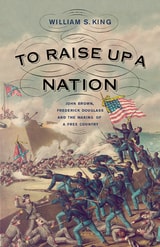
Drawing on decades of research, and demonstrating remarkable command of a great range of primary sources, William S. King has written an important history of African Americans’ own contributions and points of crossracial cooperation to end slavery in America. Beginning with the civil war along the border of Kansas and Missouri, the author traces the life of John Brown and the personal support for his ideas from elite New England businessmen, intellectuals such as Emerson and Thoreau, and African Americans, including his confidant, Frederick Douglass, and Harriet Tubman. Throughout, King links events that contributed to the growing antipathy in the North toward slavery and the South’s concerns for its future, including Nat Turner’s insurrection, the Amistad affair, the Fugitive Slave law, the Kansas-Nebraska Act, and the Dred Scott decision. The author also effectively describes the debate within the African American community as to whether the U.S. Constitution was colorblind or if emigration was the right course for the future of blacks in America.
Following Brown’s execution after the failed raid on Harper’s Ferry in 1859, King shows how Brown’s vision that only a clash of arms would eradicate slavery was set into motion after the election of Abraham Lincoln. Once the Civil War erupted on the heels of Brown’s raid, the author relates how black leaders, white legislators, and military officers vigorously discussed the use of black manpower for the Union effort as well as plans for the liberation of the “veritable Africa” within the southern United States. Following the Emancipation Proclamation of January 1863, recruitment of black soldiers increased and by war’s end they made up nearly ten percent of the Union army, and contributed to many important victories.
To Raise Up a Nation: John Brown, Frederick Douglass, and the Making of a Free Country is a sweeping history that explains how the destruction of American slavery was not directed primarily from the counsels of local and national government and military men, but rather through the grassroots efforts of extraordinary men and women. As King notes, the Lincoln administration ultimately armed black Americans, as John Brown had attempted to do, and their role was a vital part in the defeat of slavery.
Trafficking Rhetoric
Race, Migration, and the Making of Modern-Day SlaveryAnnie Hill
The Ohio State University Press, 2024
Honorable Mention, 2025 NCA Public Address Division’s Marie Hochmuth Nichols Award
Human trafficking has generated intense global concern, with stories of sex slavery and images of women forced into prostitution so persuasive that states have raced to respond ahead of empirical data and clear definitions of the crime. In Trafficking Rhetoric, Annie Hill analyzes the entanglement of state veneration and state violence by tracking how the United Kingdom points to the alleged crimes of others in order to celebrate itself and conceal its own aggression. Hill compares the UK’s acclaimed rescue approach to human trafficking with its hostile approach to migration, arguing that they are two sides of the same coin—one that relies on rhetorical constructions of “trafficked women” and “illegal migrants” to materialize the UK as an Anglo-white space.
Drawing from official estimates, policy papers, NGO reports, news stories, and awareness campaigns and situating them in the broader EU context, Hill accounts for why the UK’s antitrafficking agenda emerged with such rhetorical force in the early twenty-first century. Trafficking Rhetoric reframes controversies over labor, citizenship, and migration while challenging the continued traction of race-baiting and gender bias in determining who has the right to live, work, and belong in the nation.
Transformative Political Leadership
Making a Difference in the Developing WorldRobert I. Rotberg
University of Chicago Press, 2012
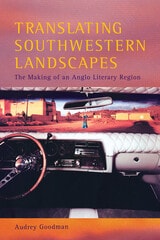
Translating Southwestern Landscapes
The Making of an Anglo Literary RegionAudrey Goodman
University of Arizona Press, 2002
Whether as tourist's paradise, countercultural destination, or site of native resistance, the American Southwest has functioned as an Anglo cultural fantasy for more than a century. In Translating Southwestern Landscapes, Audrey Goodman excavates this fantasy to show how the Southwest emerged as a symbolic space from 1880 through the early decades of the twentieth century.
Drawing on sources as diverse as regional magazines and modernist novels, Pueblo portraits and New York exhibits, Goodman has crafted a wide-ranging history that explores the invention, translation, and representation of the Southwest. Its principal players include amateur ethnographer Charles Lummis, who conflated the critical work of cultural translation; pulp novelist Zane Grey, whose bestselling novels defined the social meanings of the modern West; fashionable translator Mary Austin, whose "re-expressions" of Indian song are contrasted with recent examples of ethnopoetics; and modernist author Willa Cather, who demonstrated an immaterial feeling for landscape from the Nebraska Plains to Acoma Pueblo.
Goodman shows how these writers—as well as photographers such as Paul Strand, Ansel Adams, and Alex Harris—exhibit different phases of the struggle between an Anglo calling to document Native and Hispanic difference and America's larger drive toward imperial mastery. In critiquing photographic representations of the Southwest, she argues that commercial interests and eastern prejudices boiled down the experimental images of the late nineteenth century to a few visual myths: the persistence of wilderness, the innocence of early portraiture, and the purity of empty space.
An ambitious synthesis of criticism and anthropology, art history and geopolitical theory, Translating Southwestern Landscapes names the defining contradictions of America's most recently invented cultural space. It shows us that the Southwest of these early visitors is the only Southwest most of us have ever known.
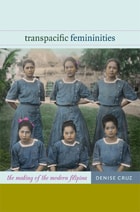
Transpacific Femininities
The Making of the Modern FilipinaDenise Cruz
Duke University Press, 2012
Through a careful study of multiple texts produced by Filipina and Filipino writers in the Philippines and the United States—including novels and short stories, newspaper and magazine articles, conduct manuals, and editorial cartoons—Cruz provides a new archive and fresh perspectives for understanding Philippine literature and culture. She demonstrates that the modern Filipina did not emerge as a simple byproduct of American and Spanish colonial regimes, but rather was the result of political, economic, and cultural interactions among the Philippines, Spain, the United States, and Japan. Cruz shows how the complex interplay of feminism, nationalism, empire, and modernity helped to shape, and were shaped by, conceptions of the transpacific Filipina.
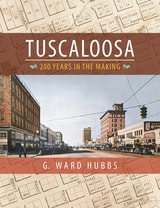
Tuscaloosa
200 Years in the MakingG. Ward Hubbs
University of Alabama Press, 2019
A lavishly illustrated history of this distinctive city’s origins as a settlement on the banks of the Black Warrior River to its development into a thriving nexus of higher education, sports, and culture
In both its subject and its approach, Tuscaloosa: 200 Years in the Making is an account unlike any other of a city unlike any other—storied, inimitable, and thriving. G. Ward Hubbs has written a lively and enlightening bicentennial history of Tuscaloosa that is by turns enthralling, dramatic, disturbing, and uplifting. Far from a traditional chronicle listing one event after another, the narrative focuses instead on six key turning points that dramatically altered the fabric of the city over the past two centuries.
The selection of this frontier village as the state capital gave rise to a building boom, some extraordinary architecture, and the founding of The University of Alabama. The state’s secession in 1861 brought on a devastating war and the burning of the university by Union cavalry; decades of social adjustments followed, ultimately leading to legalized racial segregation. Meanwhile, town boosters set out to lure various industries, but with varying success.
The decision to adopt new inventions, ranging from electricity to telephones to automobiles, revolutionized the daily lives of Tuscaloosans in only a few short decades. Beginning with radio, and followed by the Second World War and television, the formerly isolated townspeople discovered an entirely different world that would culminate in Mercedes-Benz building its first overseas production plant nearby. At the same time, the world would watch as Tuscaloosa became the center of some pivotal moments in the civil rights movement—and great moments in college football as well.
An impressive amount of research is collected in this accessibly written history of the city and its evolution. Tuscaloosa is a versatile history that will be of interest to a general readership, for scholars to use as a starting point for further research, and for city and county school students to better understand their home locale.