Results by title
557 books match the query 'Poems' and 128 start with t
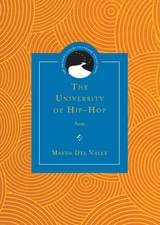
The University of Hip-Hop
PoemsMayda Del Valle, foreword by Chris Abani
Northwestern University Press, 2017
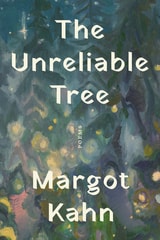
The Unreliable Tree
PoemsMargot Kahn
Northwestern University Press, 2025
Born from a state of fragmented time, the poems in The Unreliable Tree call out the intimate feelings mothers so often fear to share. With a precise and tender eye, Margot Kahn tracks her early years of parenthood alongside the seasons of her family’s orchard. As she chronicles the changes in her marriage, her friendships, and her own shifting identity, Kahn questions the risks we take for devotion and the labors we devote to love. These poems shine a light on the patience and perseverance required to care—for homes, for people, for heritage—and ultimately question the choices we make: to hold on to others around us, and to hold on to ourselves. Compassionate, unflinching, lyric, and raw, The Unreliable Tree portrays the world of early motherhood with humility and complicated beauty.

The VITAL SYSTEM
PoemsCM Burroughs
Tupelo Press, 2012
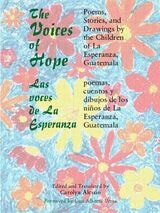
The Voices of Hope
Poems, Stories, and Drawings by the Children of La Esperanza, GuatemalaEdited and Translated by Carolyn Alessio. Foreword by Luis Alberto Urrea
Southern Illinois University Press, 2003
Collected and translated by Carolyn Alessio, this bilingual anthology of poems, stories, memories, and philosophies was written and illustrated by the children of La Esperanza, Guatemala. Drawing upon the fortitude of their mothers, who began hand-sewing crafts to sell in the United States in order to survive the hardships of this war-torn impoverished country, Alessio’s students, aged four to sixteen, reveal amazing survival skills, fertile imaginations, and dreams of attaining better lives. The resulting work is a collection of poems and drawings that are terse, funny, sometimes sad, but always humanly, gloriously alive.
As Alessio explains, “At first, I thought I might be imagining the echoes of magical realism, but as I continued to read the students’ writing and study their drawings, I found similar themes. Witches killed children who didn’t respect the spirits; women abused by their husbands sought refuge in trees with magical doors. People who didn’t have money or jobs lived on the road and in forests, where they alternately fought and partied with the animals.”
The volume features a foreword from Luis Alberto Urrea,author of Across the Wire: Life and Hard Times on the Mexican Border and By the Lake of Sleeping Children: The Secret Life of the Mexican Border.
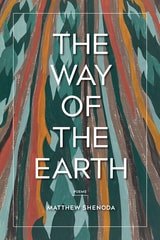
The Way of the Earth
PoemsMatthew Shenoda
Northwestern University Press, 2022
The Way of the Earth is the fourth collection from award-winning poet Matthew Shenoda. In this, his most personal collection to date, he explores the temporal and fleeting nature of human life and the earth we inhabit. Through ruminations on the intersections of culture and ecology, the death of loved ones, and the growing inequities in our midst, Shenoda explores what it means to be a person both grounded to the earth and with a yearning beyond it. Memories of landscapes and histories echo throughout the sensations of the present: the sight of egrets wading in the marshes, the smell of the ocean, a child’s hand nestled in a warm palm. “Time never goes back,” Shenoda writes, “but the imagination must.”

The White Orchard
Selected Interviews, Essays, and PoemsArthur Sze
Museum of New Mexico Press, 2025
A son of Chinese immigrants who was born and raised in New York City and on Long Island, Sze first studied science at MIT. His call to write poetry pulled him away from that academic pursuit, but the sciences would continue to influence his writing. In 2024, Sze received the National Book Foundation Science + Literature Award for The Glass Constellation: New and Collected Poems (Copper Canyon Press). Sze spent over two decades as an educator, teaching creative writing and poetry to Indigenous students from across America at Santa Fe’s Institute of American Indian Arts (IAIA). In this compilation, Sze is interviewed by his former IAIA student, award-winning Diné poet, editor, and visual artist Esther Belin.
Sze’s fluency in his parents’ native tongue, along with study at the University of California at Berkeley, allowed him to delve into Chinese poetry, both as a student and translator of classical and contemporary works. The White Orchard shows his wider connection to Asian American poetry across the United States and how he has drawn inspiration from translating Chinese poetry into English. Arthur Sze is one of our finest poets, and this collection demonstrates how literature can enrich us all.
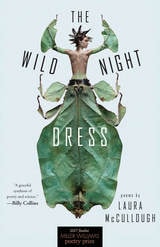
The Wild Night Dress
PoemsLaura McCullough
University of Arkansas Press, 2017
Finalist, 2017 Miller Williams Poetry Prize, edited by Billy Collins
“A graceful synthesis of poetry and science.”
—Billy Collins
Laura McCullough finds passage through the darkest times as she loses, in short order, her mother and her marriage. Through her near unbearable grief, she creates poems that slip between science and nature as she grasps at coordinates in a world spun out of its orbit. From the God Particle to toroidal vortexes, from the slippery linguistics of translation to the translation of the body, McCullough brings readers to the mystery of surrender, and the paradox that what we bear can make us more beautiful, that there is a gift in grief.

The Women Carry River Water
PoemsNguyen Quang Thieu
University of Massachusetts Press, 1997
This landmark collection represents the first English translation of poetry by Nguyen Quang Thieu, a significant Vietnamese writer of the post-1975 generation. Translated collaboratively by acclaimed poet Martha Collins and the author himself, this bilingual volume presents verses rooted deeply in Vietnamese cultural traditions that honor the dignity of daily labor, the resilience of ordinary people, and the spiritual dimensions of human experience in contemporary Vietnam.
Thieu's work draws upon a rich Vietnamese poetic tradition while addressing themes of displacement, reconstruction, memory, and the search for meaning in the aftermath of conflict. The poems capture the essence of Vietnamese life—its rhythms, relationships, and philosophical underpinnings—through images drawn from nature, labor, family, and community. The bilingual format stands as a bridge between Vietnamese and American literary traditions, and honors the linguistic and cultural dimensions of Thieu groundbreaking collection.
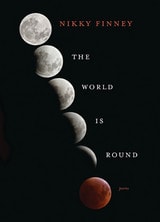
The World Is Round
PoemsNikky Finney
Northwestern University Press, 2013
The World Is Round, Nikky Finney’s third volume of poetry, collects the wisps of memory we carry with us throughout our earthly lives and weaves them into deft and nuanced poems that emphasize understanding the cycles of life. The settings offer a view into the kaleidoscope of human experience: the sweetness and shock of family life, the omnipresent wash of memory, and the ebullience of warm Southern air. The World Is Round carries with it an implicit challenge—to the author as a poet, and to the reader as a fellow human—to see the characters and details and events of our lives with clarity, fearlessness, and love. The result is poems that range the gamut of human reach and resilience, fury and frailty. The poet’s vision of community requires understanding and tolerance from every breathing soul. Finney illuminates the cruelties of the sometimes gawking, narrow-minded world and makes a plea for compassion inspired by our common humanity.
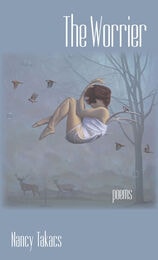
The Worrier
poemsNancy Takacs
University of Massachusetts Press, 2017
What do you know?
How I hide my flaws.
What do you know?
How butterflies
sweeten themselves
opening and closing their wings together
in a little hill
on the beach.
—"The Worrier bed"
The Worrier poems, like a string of worry beads, are dialogues between two interior voices exploring topics as varied as fur coats, marriage, scars, vanishing bees, a silent film star, toads, and volunteers. Strongly imagistic, and often placed in wild landscapes of Utah and Wisconsin, these poems strangely soothe with their surprising offbeat answers to Takacs's worries about intimacy, loss, and turmoil in midlife and beyond; about disappearing wilderness, and compassion, in the world at large. Despite worrying, the poems seem fearless in what they tackle, and in their language and form, creating lightness, promise.
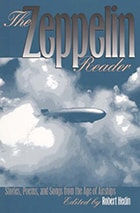
The Zeppelin Reader
Stories, Poems, and Songs from the Age Of AirshipsRobert Hedin
University of Iowa Press, 1998
Size is usually the first thing that comes to mind when we ponder the great airships. In war and peace, to most people they seem bigger than life itself, bright, wondrous, sometimes dangerous apparitions that engender a religious awe. They remain the largest crafts that have ever been launched into the sky. Tracing the history of the airship from its beginning in the nineteenth century to its fiery conclusion in 1937, Robert Hedin has gathered the finest stories, descriptions, poems, music, and illustrations about what the era was like in fact and in spirit.
Included are vivid accounts by such legendary figures as Count Ferdinand von Zeppelin, Hugo Eckener, and Alberto Santos-Dumont as well as memoirs, logs, journals, and diaries by Zeppelin commanders, crew, explorers, journalists, and survivors of ill-fated flights. The great airships inspired poets and writers old and new; here are works by such diverse writers as Robinson Jeffers, Kay Boyle, Bernard Shaw, D. H. Lawrence, Rita Dove, Richard Brautigan, and many others. There is a rich sampling of airship musical scores and lyrics; the music constitutes a kind of recovered history and helps recapture the emotional range of the era. Rounding out the gathering, The Zeppelin Reader is illustrated with stunning photographs, advertisements, drawings, and cartoons from the glorious age of airships.
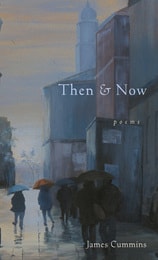
Then and Now
PoemsJames Cummins
Ohio University Press, 2004
James Cummins’s first book of poems, The Whole Truth, became known throughout much of the poetry world as the “Perry Mason sestinas.” His second book, Portrait in a Spoon, was chosen by Richard Howard for the James Dickey Prize Contemporary Poetry Series.
His latest and most accomplished work is collected in Then and Now, which reflects the same inventiveness and wit evident in his earlier books, with a deepening of tone and spirit. The result is a collection of poems filled with feeling and with Cummins’s signature anguished humor.
If the language of poetry is a way into a hall of mirrors of the self, it can be a way out, too. The voice that emerges in Then and Now is sane, imaginative, bemused, and sly, not only taking responsibility for the character of the writer put fully on display, but ironically and affectionately exploring how this process occurs.
Doing Lunch
You have lunch with a friend.
You put on a false face for him,
because he is your friend.
You want to spare him your
maunderings,
your lies and malfeasance.
But this is just what your friend desires,
because he is your friend.
He wants your face to fall open
in front of him and twitch
like a rabbit hit on the fly.
He says he wants the latest word
from the border region between
narcissism and an inner life.
And laughs.
Shamelessly, you tell him everything,
because he is your friend.
Things in Poems
From the Shield of Achilles to HyperobjectsEdited by Josef Hrdlicka and Mariana Machová
Karolinum Press, 2022
In this volume, fifteen scholars and poets, from Austria, Britain, Czechia, France, Germany, Ireland, Lithuania, and Russia, explore the topic of things and objects in poetry written in a number of different languages and in different eras. The book begins with ancient poetry, then moves on to demonstrate the significance of objects in the Chinese poetic tradition. From there, the focus shifts to things and objects in the poetry of the twentieth and the twenty-first century, examining the work of Czech, Polish, and Russian poets alongside other key figures such as Rilke, Francis Ponge, William Carlos Williams, and Paul Muldoon. Along the way, the reader gets an introduction to key terms and phrases that have been associated with things in the course of poetic history, such as ekphrasis, objective lyricism. and hyperobjects.
Third Voice
PoemsRuth Ellen Kocher
Tupelo Press, 2016
This Close to the Earth
PoemsSHOMER ENID
University of Arkansas Press, 1992
This Is My Body
PoemsJonathan Fletcher
Northwestern University Press, 2025
Winner of the 2023 Drinking Gourd Chapbook Poetry Prize
This Is My Body readily and unapologetically examines issues of race and ethnicity, ancestry and community, mental illness and recovery, queer sexuality and identity, and the body and disability. Traditionally religious language and hopeful imagery abound; so, too, do their spiritual antagonists: doubt, loss, isolation, and despair. But even in the darkest moments of a troubled inner life, insight and triumph intervene and sometimes even linger. An intimate exploration of the human experience, this debut collection proves itself more than the sum of its interior encounters—however revelatory or transformative any one given experience might be. It is a timely and necessary exercise in faith.
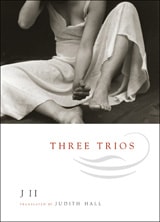
Three Trios
PoemsJ II
Northwestern University Press, 2007
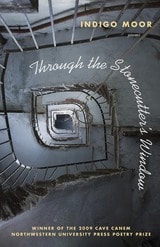
Through the Stonecutter's Window
PoemsIndigo Moor
Northwestern University Press, 2010

To Think of a Match
PoemsHalee Kirkwood
Northwestern University Press, 2027
A gripping oscillation between the manufactured and the natural, between capitalism and truth
To Think of a Match is a collection of daydreams from behind the eyes of retail clerks, corporate mascots, ghosts of 49ers, and sundry others. Situated in Minnesota’s Twin Cities, home of the Mall of America and the glistening Bde Maka Ska, these poems explore the intimate collisions of class and labor, spiraling out from the recent history of the Gold Rush and into the near future of asteroid mineral mining and beyond. Halee Kirkwood searches for possibilities of a postcapitalist future in our most squirmy, slimy, and wriggly forms of earthly life. What can invertebrates teach us about the ways humanity organizes labor, creativity, and community? What does it mean to have a body caught between economies and ecologies? Contending with subjects ranging from Sappho to Petco and envisioning a new pastoral that is honest about the human and nonhuman domains we are building today, To Think of a Match yearns for a poetics that thrives between shifts.
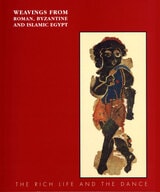
To Us, All Flowers Are Roses
POEMSLorna Goodison
University of Illinois Press, 1995
David Mason has characterized Lorna Goodison's work as a "revelation
to me, much of it beautiful for its simple negotiation of the line between
life and art."
One of the most distinguished
contemporary poets of the Caribbean, Goodison draws on both African and
European inheritances in her finely crafted poems, which often carry a
sense of language's healing power in the face of the pain of the past.
She deals thematically with the struggle of Caribbean women and writes
in a fashion that has developed from conversational to more ritualistic.
From reviews of Goodison's
earlier works:
"The evocative power
of Lorna Goodison's poetry derives its urgency and appeal from the heart-and-mind
concerns she has for language, history, racial identity, and gender."
Andrew Salkey -- World Literature Today
"A marvelous poet, one
to savor and to chant aloud."
-- Pat Monaghan, Booklist
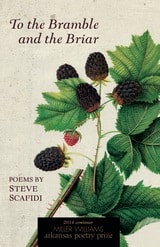
To the Bramble and the Briar
PoemsSteve Scafidi
University of Arkansas Press, 2014
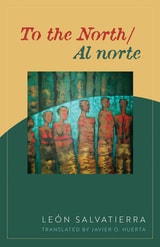
To the North/Al norte
PoemsLeon Salvatierra
University of Nevada Press, 2022
Salvatierra mixes lyrical and prose poems to explore the experience of exile in a new country. His powerful metaphors and fresh images inhabit spaces fraught with the violence, anxiety, and vulnerability that undocumented Central American migrants commonly face in their transnational journeys. His vivid memories of Nicaragua tie the personal experiences of his poetic subjects to the geopolitical history between the Central American region and the United States.
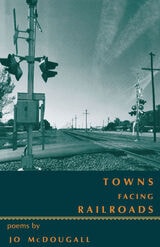
Towns Facing Railroads
PoemsJo McDougall
University of Arkansas Press, 1991
In her second book of poetry, Jo McDougall takes her readers to the dusty prairie towns of the central states, places where the flat terrain belies a complex human landscape. In short, dceptively simple lines, McDougall can so keenly trace the lineaments of place and era that her subject stands before us, its essence displayed and made timeless.
Quietly, with an almost aphoristic bit, McDougall writes about ordinary lives and small towns in a way that her readers may never forget.
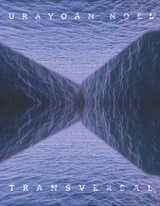
Transversal
PoemsUrayoán Noel
University of Arizona Press, 2021
Featuring Noel’s bilingual playfulness, intellect, and irreverent political imagination, Transversal contains personal reflections on love, desire, and loss filtered through a queer approach to form, expanding upon Noel’s experiments with self-translation in his celebrated collection Buzzing Hemisphere/Rumor Hemisférico. This collection explores walking poems improvised on a smartphone, as well as remixed classical and experimental forms. Poems are presented in interlocking bilingual versions that complicate the relationship between translation and original, and between English and Spanish as languages of empire and popular struggle. The book creatively examines translation and its simultaneous urgency and impossibility in a time of global crisis.
Transversal seeks to disrupt standard English and Spanish, and it celebrates the nonequivalence between languages. Inspired by Caribbean poet and philosopher Édouard Glissant, the collection celebrates Caribbean practices of creolization as maximalist, people-centered, affect-loaded responses to the top-down violence of austerity politics. This groundbreaking, modular approach to poetic translation opens up alternative ways of reading in any language.
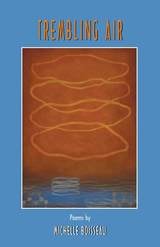
Trembling Air
PoemsMichelle Boisseau
University of Arkansas Press, 2003
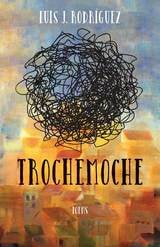
Trochemoche
PoemsLuis J. Rodriguez
Northwestern University Press, 1998
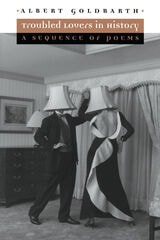
Troubled Lovers in History
A Sequence of PoemsAlbert Goldbarth
The Ohio State University Press, 1999
Troubled Lovers in History demonstrates an exhilarating range: from the briefest of lyrics to rich and multipartite narrative adventures in exotic realms; from a comic monologue spoken in immigrant “Yinglish” to a soulful elegy set in San Antonio’s Pearl Beer brewery plant; from Martian invaders, through polar explorers, to all of us busy inflicting “words with edges” on those we love.
Goldbarth sets his unflinching study of individual hope and grief against the backdrop of history: the travels of Marco Polo; Bertha and Wilhelm Rontgen’s discovery of X-rays; an 1800 battle “twixt Dragon Sam, the great Exhaler of Gouts of Amazing Flame . . . and Liquid Dan, the Living Geyser.”
From the night stars to the little starring parts we all play every day, Troubled Lovers in History takes us into the text of our dreams and despairs, as witnessed by the writer whom Joyce Carol Oates called “a poet of remarkable gifts—a dazzling virtuoso who can break your heart.”

Turn Thanks
POEMSLorna Goodison
University of Illinois Press, 1999