Results by title
1017 books match the query 'Reference' and 221 start with t
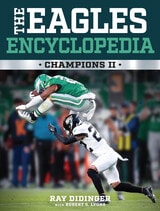
The Eagles Encyclopedia
Champions IIRay Didinger with Robert S. Lyons
Temple University Press, 2025
Quarterback Jalen Hurts described the city’s love for the Eagles as “a Philly thing,” and no one understands that better than Didinger, who has followed the team since the 1950s. In Champions II, he brings that history up to date by writing about the Tush Push, Saquon Barkley’s reverse hurdle, and other milestones of the 2024 season.
This new edition includes:
- More than 60 new photographs plus a 16-page color insert.
- Dozens of new player, coach and front-office profiles.
- Tributes to the team's newest Hall of Fame inductees: Eric Allen, Dick Vermeil and Harold Carmichael.
- An expanded chapter on the Eagles–Cowboys rivalry.
- An updated statistics and records section.
The Eagles Encyclopedia: Champions II is a must have for any E-A-G-L-E-S fan who wants to relive the Big Game and all the drama that led up to it.

The Elefánthy
The Hungarian Nobleman and His KindredErik Fügedi
Central European University Press, 1998
In an exploration of the life and customs of the Hungarian nobility, this book compares historical reality and legal literature on the example of one noble family--the Elefánthy kindred from northern Hungary (present-day Slovakia). The author begins by outlining the customary law regarding noble status, inheritance and marriage, as summarized in the famous code of Stephen Werbőczy (1514). He then compares these norms with the documentary evidence and establishes the fact that the legal literature differs in regard to social mobility and kindred solidarity.
With this frame of reference in mind, the fate of the Elefánthy family is traced through several generations, enabling the author to make some general statistical statements on inheritance, the rise and fall of various branches, marriage strategies, and the "survival skills" of the kindred. In his summary, the author outlines some of the major avenues for further research, including the peculiar Hungarian form of retainership (familiaritas), and the relationships between noble families and between the nobility and local communities.
The Eloquent Shakespeare
A Pronouncing Dictionary for the Complete Dramatic Works with Notes to Untie the Modern TongueGary Logan
University of Chicago Press, 2008
The Encyclopedia of Caribbean Religions
Volume 1: A - L; Volume 2: M - ZPatrick Taylor
University of Illinois Press, 2012
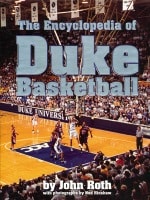
The Encyclopedia of Duke Basketball
John Roth
Duke University Press, 2006
The Encyclopedia of Duke Basketball is the ultimate reference source for true-blue fans, with profiles of great games, classic finishes (both wins and losses), and compelling personalities, including players, coaches, and opponents. While it is filled with a wealth of statistical information, the Encyclopedia goes well beyond the numerical record to deliver insights on people and performances and anecdotes that will surprise even the most seasoned Duke supporter.
The Encyclopedia features:
— A timeline of key events in men’s and women’s basketball history.
— Capsules of the most important men’s and women’s games in the program’s history, including the men’s buzzer-beating overtime win against Kentucky in 1992 and the women’s stunning victory over Tennessee to reach the Final Four in 1999.
— An alphabetical encyclopedia with entries on players from Alaa Abdelnaby to Bill Zimmer and on coaches, customs, opponents, venues, and records.
— Exclusive interviews in which standout players, including Danny Ferry, Mike Gminski, Grant Hill, Christian Laettner, and Jason Williams, recount moments they’ll never forget.
— A statistical record book covering every season through 2005–06.
—130 photographs of Duke basketball history.
A source of entertainment as well as information, this volume will be a great resource for fans hoping to settle arguments, relive favorite games, or simply enjoy hours of pleasurable reading.
The Encyclopedia of Native Music
More Than a Century of Recordings from Wax Cylinder to the InternetBrian Wright-McLeod
University of Arizona Press, 2005
In addition to the widely heard sounds of Carlos Nakai’s flute, Native music embraces a wide range of forms: country and folk, jazz and swing, reggae and rap. Brian Wright-McLeod, producer/host of Canada’s longest-running Native radio program, has gathered the musicians and their music into this comprehensive reference, an authoritative source for biographies and discographies of hundreds of Native artists.
The Encyclopedia of Native Music recognizes the multifaceted contributions made by Native recording artists by tracing the history of their commercially released music. It provides an overview of the surprising abundance of recorded Native music while underlining its historical value.
With almost 1,800 entries spanning more than 100 years, this book leads readers from early performers of traditional songs like William Horncloud to artists of the new millennium such as Zotigh. Along the way, it includes entries for jazz and blues artists never widely acknowledged for their Native roots—Oscar Pettiford, Mildred Bailey, and Keely Smith—and traces the recording histories of contemporary performers like Rita Coolidge and Jimmy Carl Black, “the Indian of the group” in the original Mothers of Invention. It also includes film soundtracks and compilation albums that have been instrumental in bringing many artists to popular attention. In addition to music, it lists spoken-word recordings, including audio books, comedy, interviews, poetry, and more.
With this unprecedented breadth of coverage and extensively cross-referenced, The Encyclopedia of Native Music is an essential guide for enthusiasts and collectors. More than that, it is a gateway to the authentic music of North America—music of the people who have known this land from time immemorial and continue to celebrate it in sound.
The Essential Guide to Aging in the Twenty-First Century
Mind, Body, and BehaviorDonald H. Kausler, Barry C. Kausler & Jill A. Krupsaw
University of Missouri Press, 2007
For more than a decade, The Graying of America has helped thousands of middle-aged and senior citizens find their way through the thickets and thorns of growing old. Now greatly revised and expanded to include information gleaned from studies of the past five years, this third edition has been retitled to stress its ongoing purpose: conveying a wealth of commonsense information for general readers in nontechnical language.
The book is a storehouse of concise, useful information on the effects of aging on health, the mind, and behavior. Its 588 entries (including 172 new and 150 substantially revised) cover a broad spectrum of topics—from adjusting to retirement to grandparenting, sleep disorders to Alzheimer’s disease. All are directed to the average reader; all stress successful aging and how to accomplish it.
New entries cover such topics as the incidence and causes of frailty, the cognitive benefits of diversified activity, and findings of the Women’s Health Initiative. There is new information on matters like the effects of untreated hearing impairment on spouses and the impact of insufficient exposure to sunlight on sleep, plus new insight into what to look for in searching for a quality nursing home for a loved one.
Also included are results of recent studies on interventions that help to reduce age-related declines in mental and physical health, among them revelations that reports on age-related declines in memory have been skewed by testing errors. And with memory a concern for seniors fearful of declining mental agility, the book tells how to bypass memory problems—such as how to remember where you parked your car—and how physical exercise and challenging mental games can help reduce the risk of dementia. Other “how to avoid” entries offer ways to protect against eye fatigue in computer use, hip fractures when falling, and back injuries while lifting heavy objects.
No other book is so specifically geared to the challenges of how to reduce or even eliminate many of the problems associated with growing old. Aging in the Twenty-First Century can help seniors come to grips with their own aging process—and help younger adults understand what is happening to older family members.
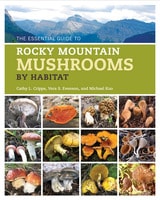
The Essential Guide to Rocky Mountain Mushrooms by Habitat
Cathy Cripps, Vera Evenson, and Michael Kuo
University of Illinois Press, 2016
The Ever-Present Origin
Part One: Foundations Of The Aperspectival WorldJean Gebser
Ohio University Press, 1986
This English translation of Gebser’s major work, Ursprung und Gegenwart (Stuttgart, Deutsche Verlag, 1966), offers certain fundamental insights which should be beneficial to any sensitive scientist and makes it available to the English-speaking world for the recognition it deserves.
“The path which led Gebser to his new and universal perception of the world is, briefly, as follows. In the wake of materialism and social change, man had been described in the early years of our century as the “dead end” of nature. Freud had redefined culture as illness—a result of drive sublimation; Klages had called the spirit (and he was surely speaking of the hypertrophied intellect) the “adversary of the soul,” propounding a return to a life like that of the Pelasgi, the aboriginal inhabitants of Greece; and Spengler had declared the “Demise of the West” during the years following World War I. The consequences of such pessimism continued to proliferate long after its foundations had been superseded.
It was with these foundations—the natural sciences—that Gebser began. As early as Planck it was known that matter was not at all what materialists had believed it to be, and since 1943 Gebser has repeatedly emphasized that the so-called crisis of Western culture was in fact an essential restructuration.…
Gebser has noted two results that are of particular significance: first, the abandonment of materialistic determinism, of a one-sided mechanistic-causal mode of thought; and second, a manifest “urgency of attempts to discover a universal way of observing things, and to overcome the inner division of contemporary man who, as a result of his one-sided rational orientation, thinks only in dualisms.”
Against this background of recent discoveries and conclusions in the natural sciences Gebser discerned the outlines of a potential human universality. He also sensed the necessity to go beyond the confines of this first treatise so as to include the humanities (such as political economics and sociology) as well as the arts in a discussion along similar lines. This was the point of departure of The Ever-Present Origin.
From In memoriam Jean Gebser by Jean Keckeis
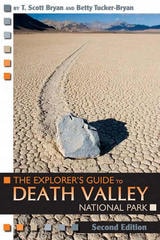
The Explorer's Guide to Death Valley National Park, Second Edition
T. Scott Bryan
University Press of Colorado, 2009

The First English Dictionary 1604
Robert Cawdrey's A Table AlphabeticallRobert Cawdrey
Bodleian Library Publishing, 2007
English is one of the most complicated languages to learn, and its constantly evolving vocabulary certainly doesn’t help matters. For centuries, men and women have striven to chronicle and categorize the expressions of the English language, and Samuel Johnson is usually thought to be their original predecessor. But that lineage is wrong: Robert Cawdrey published his Table Alphabeticall in 1604, 149 years before Johnson’s tome, and it is now republished here for the first time in over 350 years.
This edition, prepared from the sole surviving copy of the first printing, documents Cawdrey’s fascinating selection of 2,543 words and their first-ever definitions. Cawdrey subtitled his dictionary “for the benefit of Ladies, Gentlewomen, and other unskilled folk,” for his aim was not to create a comprehensive catalog, but rather an in-depth guide for the lesser educated who might not know the “hard usual English wordes, borrowed from the Hebrew, Greeke, Latine, or French.” Each entry reveals an intriguing facet of early modern life and the cultural mores of the time. There are familiar terms—“geometrie” was defined as “the art of measuring the earth,” and a “concubine” was described as a “harlot, or light huswife”—and amusingly idiomatic definitions: "prodigall" is "too riotous in spending," while "hecticke" is "inflaming the hart, and soundest parts of the bodie.”

The First English Dictionary of Slang, 1699
B. E. Gent
Bodleian Library Publishing, 2010
It’s a shame that so many very apt words fall out of common use over time, like “blobber-lippd,” which means having lips that are very thick, hanging down, or turning over; and “chounter”, which is to talk pertly, and sometimes angrily. Both words can be found in The First English Dictionary of Slang, originally published in 1699 as A New Dictionary of Terms, Ancient and Modern, of the Canting Crew by B. E. Gentleman. Though a number of early texts, beginning in the sixteenth century, codified forms of cant—the slang language of the criminal underworld—in word lists which appeared as appendices or parts of larger volumes, the dictionary of 1699 was the first work dedicated to slang words and their meanings. It aimed to educate the more polite classes in the language and, consequently, the methods of thieves and vagabonds, protecting the innocent from cant speakers and their activities.
This dictionary is also the first that attempts to show the overlap and integration between canting words and common slang words. Refusing to distinguish between criminal vocabulary and the more ordinary everyday English of the period, it sets canting words side by side with terms used in domestic culture and those used by sailors and laborers. With such a democratic attitude toward words, this text is genuinely a modern dictionary, as well as the first attempt by dictionary makers to catalog the ever-changing world of English slang.
Reproduced here with an introduction by John Simpson, chief editor of the Oxford English Dictionary, describing the history and culture of canting in the seventeenth and eighteenth centuries, as well as the evolution of English slang, this is a fascinating volume for all who marvel at words and may wish to reclaim a few—say, to dabble in the parlance of a seventeenth-century sailor one day and that of a vagabond the next.
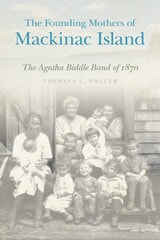
The Founding Mothers of Mackinac Island
The Agatha Biddle Band of 1870Theresa L. Weller
Michigan State University Press, 2021
The Future of Memory
A History of Lossless Format Standards in the Moving Image ArchiveJimi Jones and Marek Jancovic
University of Illinois Press, 2025
Drawing on interviews with archivists and developers, Jones and Jancovic reveal the archive as a dynamic space where deeply entrenched social practices produce disagreements but also resourceful collaborations. They contrast the unprecedented rise of archivist-driven standardization and controversies around non-standard technology with the historical dominance of the film and broadcast industries. Throughout, the authors clarify the role of tech companies, software developers, film pirates, hackers, and other players with poorly understood roles in the process.
A timely look at the state of audiovisual preservation, The Future of Memory provides a history of recent innovations alongside a snapshot of a field in the midst of profound technological change.
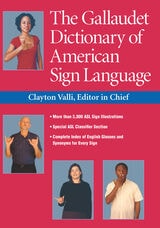
The Gallaudet Dictionary of American Sign Language
Clayton Valli
Gallaudet University Press, 2021
Created by an unparalleled board of experts led by renowned ASL linguist and poet Clayton Valli, The Gallaudet Dictionary of American Sign Language contains over 3,000 illustrations. Each sign illustration, including depictions of fingerspelling when appropriate, incorporates a complete list of English synonyms. A full, alphabetized English index enables users to cross-reference words and signs throughout the entire volume.
The comprehensive introduction lays the groundwork for learning ASL by explaining in plain language the workings of ASL syntax and structure. It also offers examples of idioms and describes the antecedents of ASL, its place in the Deaf community, and its meaning in Deaf culture. This extraordinary reference also provides a special section on ASL classifiers and their use. Readers will find complete descriptions of the various classifiers and examples of how to use these integral facets of ASL. The Gallaudet Dictionary of American Sign Language is an outstanding ASL reference for all instructors, students, and users of ASL.
*Please note that this paperback edition does not include the DVD found in the hardcover edition.

The Gardener's Guide to Prairie Plants
Neil Diboll and Hilary Cox
University of Chicago Press, 2023
The Gardener’s Guide to Prairie Plants is the one-stop compendium for all gardeners aspiring to use native prairie plants in their gardens. Neil Diboll and Hilary Cox—two renowned prairie gardeners—compile more than four decades’ worth of research to offer a wide-ranging and definitive reference for starting and maintaining prairie and meadow gardens and restorations. Alongside detailed synopses of plant life cycles, meticulous range maps, and sweeping overviews of natural history, Diboll and Cox also include photographs of 148 prairie plants in every stage of development, from seedling to seedhead. North America’s grasslands once stretched from the Blue Ridge to the Rocky Mountains, and from Texas to Manitoba, blanketing the mid-continent with ecologically important, garden-worthy, native species. This book provides all the inspiration and information necessary for eager native planters from across the country to welcome these plants back to their landscapes. The Gardener’s Guide to Prairie Plants is a must-have reference for gardeners, restorationists, and every flora fan with a passion for native plants, prairies and meadows.

The German-Jewish Cookbook
Recipes and History of a CuisineGabrielle Rossmer Gropman and Sonya Gropman
Brandeis University Press, 2017

The Global Guide to Animal Protection
Edited by Andrew Linzey
University of Illinois Press, 2013
The Graduate Advisor Handbook
A Student-Centered ApproachBruce M. Shore
University of Chicago Press, 2014
One of the first books to approach advising from the advisor’s point of view, the handbook highlights the importance of a partnership in which both parties need to be invested. Shore emphasizes the interpersonal relationships at the heart of advising and reveals how advisors can draw on their own strengths to create a rewarding rapport.
The Graduate Advisor Handbook moves chronologically through the advising process, from the first knock on the door to the last reference letter. Along the way it covers transparent communication, effective motivation, and cooperative troubleshooting. Its clear-eyed approach also tackles touchy subjects, including what to do when personal boundaries are crossed and how to deliver difficult news. Sample scripts help advisors find the right words for even the toughest situations.
With resources dwindling and student and advising loads increasing, graduate advisors need all the resources they can find to give their students the help they need. The Graduate Advisor Handbook has the cool-headed advice and comprehensive coverage that advisors need to make the advising relationship not just effective but also enjoyable.

The Graying of America
An Encyclopedia of Aging, Health, Mind, and Behavior (2d ed.)Donald H. Kausler and Barry C. Kausler
University of Illinois Press, 2001
Featuring nontechnical language, user-friendly indexes, and more than 150 new entries, the second edition covers new topics such as acupuncture, wheelchairs, adjusting to bifocals, preparing for traveling, improving communication with physicians, and avoiding eye strain in computer use. Among other updates are more detailed coverage of health problems including arthritis, diabetes, osteoporosis, and various kinds of cancer, as well as advice on reducing the stress of caring for a family member with Alzheimer's disease. In addition to discussing hundreds of common ailments and conditions, Kausler and Kausler provide constructive guidance on regular physical activity, mental stimulation, and other behaviors that promote "successful aging."
The Great Encyclopedia of Nineteenth-Century Major League Baseball
David Nemec
University of Alabama Press, 2006
The Guide to Classic Recorded Jazz
Samuel F., Jr. Piazza
University of Iowa Press, 1995

The Herbalist in the Kitchen
Gary Allen
University of Illinois Press, 2006
The History and Power of Writing
Henri-Jean Martin
University of Chicago Press, 1994
Traversing four millennia, Martin offers a chronicle of writing as a cultural system, a means of communication, and a history of technologies. He shows how the written word originated, how it spread, and how it figured in the evolution of civilization. Using as his center the role of printing in making the written way of thinking dominant, Martin examines the interactions of individuals and cultures to produce new forms of "writing" in the many senses of authorship, language rendition, and script.
Martin looks at how much the development of writing owed to practical necessity, and how much to religious and social systems of symbols. He describes the precursors to writing and reveals their place in early civilization as mnemonic devices in service of the spoken word. The tenacity of the oral tradition plays a surprisingly important part in this story, Martin notes, and even as late as the eighteenth century educated individuals were trained in classical rhetoric and preferred to rely on the arts of memory. Finally, Martin discusses the changes to writing wrought by the electronic revolution, offering invaluable insights into the influence these new technologies have had on children born into the computer age.
The History of Cartography, Volume 3 (Replacement Volume)
Cartography in the European Renaissance, Part 1Edited by David Woodward
University of Chicago Press, 2007
Cartography in the European Renaissance treats the period from 1450 to 1650, long considered the most important in the history of European mapping. This period witnessed a flowering in the production of maps comparable to that in the fields of literature and fine arts. Scientific advances, appropriations of classical mapping techniques, burgeoning trade routes—all such massive changes drove an explosion in the making and using of maps. While this volume presents detailed histories of mapping in such well-documented regions as Italy and Spain, it also breaks significant new ground by treating Renaissance Europe in its most expansive geographical sense, giving careful attention to often-neglected regions like Scandinavia, East-Central Europe, and Russia, and by providing innovative interpretive essays on the technological, scientific, cultural, and social aspects of cartography.
Lavishly illustrated with more than a thousand maps, many in color, the two volumes of Cartography in the European Renaissance will be the unsurpassable standard in its field, both defining it and propelling it forward.
The History of Cartography, Volume 3 (Replacement Volume)
Cartography in the European Renaissance, Part 2Edited by David Woodward
University of Chicago Press, 2007
Cartography in the European Renaissance treats the period from 1450 to 1650, long considered the most important in the history of European mapping. This period witnessed a flowering in the production of maps comparable to that in the fields of literature and fine arts. Scientific advances, appropriations of classical mapping techniques, burgeoning trade routes—all such massive changes drove an explosion in the making and using of maps. While this volume presents detailed histories of mapping in such well-documented regions as Italy and Spain, it also breaks significant new ground by treating Renaissance Europe in its most expansive geographical sense, giving careful attention to often-neglected regions like Scandinavia, East-Central Europe, and Russia, and by providing innovative interpretive essays on the technological, scientific, cultural, and social aspects of cartography.
Lavishly illustrated with more than a thousand maps, many in color, the two volumes of Cartography in the European Renaissance will be the unsurpassable standard in its field, both defining it and propelling it forward.
The History of Cartography, Volume Four
Cartography in the European EnlightenmentEdited by Matthew H. Edney and Mary Sponberg Pedley
University of Chicago Press, 2020
The social and intellectual changes that swept Enlightenment Europe also transformed many of its mapmaking practices. A new emphasis on geometric principles gave rise to improved tools for measuring and mapping the world, even as large-scale cartographic projects became possible under the aegis of powerful states. Yet older mapping practices persisted: Enlightenment cartography encompassed a wide variety of processes for making, circulating, and using maps of different types. The volume’s more than four hundred encyclopedic articles explore the era’s mapping, covering topics both detailed—such as geodetic surveying, thematic mapping, and map collecting—and broad, such as women and cartography, cartography and the economy, and the art and design of maps. Copious bibliographical references and nearly one thousand full-color illustrations complement the detailed entries.
The History of Cartography, Volume One
Cartography in Prehistoric, Ancient, and Medieval Europe and the MediterraneanEdited by J. B. Harley and David Woodward
University of Chicago Press, 1987
Volume One addresses the prehistorical and historical mapping traditions of premodern Europe and the Mediterranean world. A substantial introductory essay surveys the historiography and theoretical development of the history of cartography and situates the work of the multi-volume series within this scholarly tradition. Cartographic themes include an emphasis on the spatial-cognitive abilities of Europe's prehistoric peoples and their transmission of cartographic concepts through media such as rock art; the emphasis on mensuration, land surveys, and architectural plans in the cartography of Ancient Egypt and the Near East; the emergence of both theoretical and practical cartographic knowledge in the Greco-Roman world; and the parallel existence of diverse mapping traditions (mappaemundi, portolan charts, local and regional cartography) in the Medieval period.
Throughout the volume, a commitment to include cosmographical and celestial maps underscores the inclusive definition of "map" and sets the tone for the breadth of scholarship found in later volumes of the series.
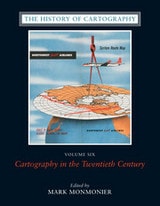
The History of Cartography, Volume Six
Cartography in the Twentieth CenturyEdited by Mark Monmonier
University of Chicago Press, 2015
The twentieth century is a pivotal period in map history. The transition from paper to digital formats led to previously unimaginable dynamic and interactive maps. Geographic information systems radically altered cartographic institutions and reduced the skill required to create maps. Satellite positioning and mobile communications revolutionized wayfinding. Mapping evolved as an important tool for coping with complexity, organizing knowledge, and influencing public opinion in all parts of the globe and at all levels of society. Volume 6 covers these changes comprehensively, while thoroughly demonstrating the far-reaching effects of maps on science, technology, and society—and vice versa.
The lavishly produced volume includes more than five hundred articles accompanied by more than a thousand images. Hundreds of expert contributors provide both original research, often based on their own participation in the developments they describe, and interpretations of larger trends in cartography. Designed for use by both scholars and the general public, this definitive volume is a reference work of first resort for all who study and love maps.
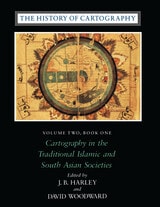
The History of Cartography, Volume Two, Book One
Cartography in the Traditional Islamic and South Asian SocietiesEdited by J. B. Harley and David Woodward
University of Chicago Press, 1992
"[The six-volume set] is certain to be the standard reference for all subsequent scholarship. The editors . . . have assembled and analyzed a vast collection of knowledge. . . . If the first volume is an indication, the complete set will be comprehensive and judicious." —John Noble Wilford, New York Times Book Review
"As well as enlarging the mind and lifting the spirits through the sheer magnitude of its endeavor, the collection delights the senses. The illustrations are exquisite: browsing fingers will instinctively alight on the sheaf of maps reproduced on stock slightly thicker than that of the text. The maps are so beguiling in the tantalizing glimpses they offer of other, seemingly incomprehensible, worlds, that the sight of them will stir the connoisseur in even the most-guarded scholar." —Ronald Rees, Geographical Review
"The corpus it brings to light, along with the extensive references, bibliography, and exhaustive appendices containing valuable comments about many of the pieces discussed, together make this book an important resource for the scholar."—Robert Provin, Professional Geographer
"This volume is a landmark of new research and will certainly contribute to further discoveries, translations, interpretations, inventories, more precise dating and the construction of stemmata." —Christian Jacob, Cartographica
"In seeking to characterize the cartography of premodern Islamic and south Asian societies, the editors offer the image of an archipelago of cartographically conscious islands in a silent sea. The research potential which they have revealed is clearly vast and underappreciated, with many islands still to be discovered or enlarged. This important book, does more, therefore, than plug a huge gap in cartographic historiography. It provides the foundation for crosscultural cartographic research in two major world regions."-Jeffrey Stone, Ecumene
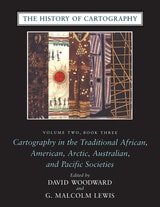
The History of Cartography, Volume Two, Book Three
Cartography in the Traditional African, American, Arctic, Australian, and Pacific SocietiesEdited by David Woodward and G. Malcolm Lewis
University of Chicago Press, 1998
"The maps in this book provide an evocative picture of how indigenous peoples view and represent their worlds. They illuminate not only questions of material culture but also the cognitive systems and social motivations that underpin them" (from the introduction).
Although they are often rendered in forms unfamiliar to Western eyes, maps have existed in most cultures. In this latest book of the acclaimed History of Cartography, contributors from a broad variety of disciplines collaborate to describe and address the significance of traditional cartographies. Whether painted on rock walls in South Africa, chanted in a Melanesian ritual, or fashioned from palm fronds and shells in the Marshall Islands, all indigenous maps share a crucial role in representing and codifying the spatial knowledge of their various cultures. Some also serve as repositories of a group's sacred or historical traditions, while others are exquisite art objects.
The indigenous maps discussed in this book offer a rich resource for disciplines such as anthropology, archaeology, art history, ethnology, geography, history, psychology, and sociology. Copious illustrations and carefully researched bibliographies enhance the scholarly value of this definitive reference.
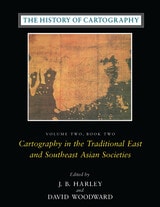
The History of Cartography, Volume Two, Book Two
Cartography in the Traditional East and Southeast Asian SocietiesEdited by J. B. Harley and David Woodward
University of Chicago Press, 1994
Volume 2, book 2, considers the cartographic traditions of China, Korea, Japan, Vietnam, Tibet, Burma, Thailand, Laos, Malaysia, Indonesia, Brunei, and the Philippines, presenting significant new research and interpretation of archaeological, literary, and graphic sources. Richly illustrated with forty color plates and over five hundred black and white illustrations, the book includes a number of rare and elaborate maps, many previously unpublished.

The History of Continental Philosophy
Edited by Alan D. Schrift
University of Chicago Press, 2010
From Kant to Kierkegaard, from Hegel to Heidegger, continental philosophers have indelibly shaped the trajectory of Western thought since the eighteenth century. Although much has been written about these monumental thinkers, students and scholars lack a definitive guide to the entire scope of the continental tradition. The most comprehensive reference work to date, this eight-volume History of Continental Philosophy will both encapsulate the subject and reorient our understanding of it. Beginning with an overview of Kant’s philosophy and its initial reception, the History traces the evolution of continental philosophy through major figures as well as movements such as existentialism, phenomenology, hermeneutics, and poststructuralism. The final volume outlines the current state of the field, bringing the work of both historical and modern thinkers to bear on such contemporary topics as feminism, globalization, and the environment. Throughout, the volumes examine important philosophical figures and developments in their historical, political, and cultural contexts.
The first reference of its kind, A History of Continental Philosophy has been written and edited by internationally recognized experts with a commitment to explaining complex thinkers, texts, and movements in rigorous yet jargon-free essays suitable for both undergraduates and seasoned specialists. These volumes also elucidate ongoing debates about the nature of continental and analytic philosophy, surveying the distinctive, sometimes overlapping characteristics and approaches of each tradition. Featuring helpful overviews of major topics and plotting road maps to their underlying contexts, A History of Continental Philosophy is destined to be the resource of first and last resort for students and scholars alike.
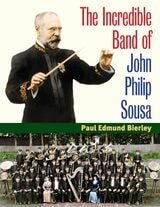
The Incredible Band of John Philip Sousa
Paul E. Bierley
University of Illinois Press, 2010
John Philip Sousa (1854-1932) is an American icon. Most famous for his military marches, the composer-bandmaster led a disciplined group of devoted musicians on numerous American tours and around the world, shaping a new cultural landscape. Paul E. Bierley documents every aspect of the "March King's" band: its history, its star performers, its appearances on recordings and radio, and the problems they faced on their 1911 trip around the world. Enhanced by more than 120 images and photographs, The Incredible Band of John Philip Sousa also contains six statistical appendixes detailing where the band played, a complete list of musicians, instrumentation of the band, program listings, and a discography

The Intellect Handbook of Adult Film and Media
Edited by Peter Alilunas, Patrick Keilty, and Darshana Sreedhar Mini
Intellect Books, 2026
The Intellect Handbook of Adult Film and Media brings together thirty-six chapters organized into six sections, ranging from historical and methodological approaches to issues of representation, production, and spectatorship, to transnational perspectives, and questions of law, health, and policy, offering a comprehensive survey of this growing field. Written by leading scholars, the volume examines sexually explicit media in its full context: its production, circulation, consumption, and reception. Engaging with an extensive body of scholarship, the essays provide overviews of key literature, major historical developments, and central theoretical debates, supporting the continued growth of adult film and media studies as a legitimate area of academic inquiry. Designed as both a reference work and a teaching resource, the handbook will be invaluable to emerging scholars and educators working in film, media, gender, sexuality, and porn studies.
The Intellect Handbook of Dance Education Research
Edited by Lynnette Young Overby, Billie Lepczyk, and Jill Green
Intellect Books, 2025
The Intellect Handbook of Dance Education Research is a necessary resource for students, educators, and advocates, offering a broad survey of research methodologies alongside real-world applications from across the globe. This volume brings together voices from both seasoned and emerging scholars, highlighting the diversity of dance research in countries including Korea, South Africa, Jamaica, India, Brazil, Slovenia, and beyond.
Divided into four parts, the book first examines foundational research methodologies, spanning mixed-method approaches as well as innovative techniques like portraiture and a/r/tography. The second section presents dance education research in practice, exploring history, choreography, and community-based initiatives. The third part showcases international perspectives, offering snapshots of research traditions from contrasting cultural contexts. Finally, the fourth section elaborates on the role of dance in social justice, illustrating how movement-based research can drive cultural and societal change.
A vital tool for researchers, policymakers, and educators alike, this handbook underscores the significance of dance as a transformative force in education, fostering collaboration and meaningful impact in diverse communities.
The International Transmission of Inflation
Michael R. Darby, James R. Lothian, Arthur E. Gandolfi, Anna J. Schwartz, and Al
University of Chicago Press, 1984
The authors construct a consistent data base of information for eight countries and design a theoretically sound model to test and evaluate competing hypotheses incorporating the most recent theoretical developments. Additional chapters address an impressive variety of issues that complement and corroborate the core of the study. They answer such questions as these: Can countries conduct an independent monetary policy under fixed exchange rates? How closely tied are product prices across countries? How are disturbances transmitted across countries?
The International Transmission of Inflation is an important contribution to international monetary economics in furnishing an invaluable empirical foundation for future investigation and discussion.
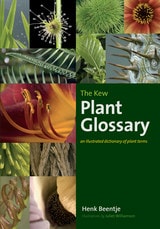
The Kew Plant Glossary
An Illustrated Dictionary of Plant TermsHenk Beentje
Royal Botanic Gardens, Kew, 2010
This accessible, comprehensive glossary covers all the descriptive terms for plants that one is likely to encounter in botanical writing, including everything from magazine articles to plant field guides, scientific papers, and monographs. An essential companion, it presents 3,600 botanical terms, accompanied by full definitions and detailed illustrations to aid in identification, all laid out in a clear, easy-to-use fashion. It will be indispensable for plant scientists, conservationists, horticulturists, gardeners, writers, and anyone working with plant descriptions, plant identification keys, floras, or field guides.
The Key to Natural Philosophy
Barbara Honorius Augustodunensis
Catholic University of America Press, 2026

The Ladies' Etiquette Handbook
The Importance of Being Refined in the 1880sDavid E. Schoonover
University of Iowa Press, 2001
The Lincoln Assassination
The EvidenceEdited by William C. Edwards and Edward Steers
University of Illinois Press, 2008
On April 22, 1865, Brevet Colonel H. L. Burnett was assigned to head the investigation into the murder of President Abraham Lincoln and the attempted murder of Secretary of State William H. Seward. Burnett orchestrated the collection of thousands of documents for the Military Commission’s trial of the conspirators. This deep archive of documentary evidence--consisting of letters, depositions, eyewitness accounts, investigative reports, and other documents--provides invaluable insight into the historical, cultural, and judicial context of the investigation. Only a fraction of the information presented in these documents ever made its way into the trial, and most of it has never been readily accessible. By presenting an annotated and indexed transcription of these documents, this volume offers significant new access to information on the events surrounding the assassination and a vast new store of social and political history of the Civil War era.
“With tears in my eyes I think it your duty to hang every rebel caught. I feel as bad as if was my own mother or father & will be one to volunteer to try & shoot every Southern man. May God have mercy on the man’s soul that done such a deed.
With much Respect for our Country,
I remain
Weeping”
--Anonymous letter, New York, April 15, 1865
“I know Booth. He was in the habit of coming to my place to shoot. . . . He shot well, and practiced to shoot with accuracy in every possible position. . . . He was a quick shot; always silent, reticent.”
--Deposition of Benjamin Barker, Pistol Gallery proprietor
The Little Magazine in Contemporary America
Edited by Ian Morris and Joanne Diaz
University of Chicago Press, 2015
In this collection, Ian Morris and Joanne Diaz gather the reflections of twenty-three prominent editors whose little magazines have flourished over the past thirty-five years. Highlighting the creativity and innovation driving this diverse and still vital medium, contributors offer insights into how their publications sometimes succeeded, sometimes reluctantly folded, but mostly how they evolved and persevered. Other topics discussed include the role of little magazines in promoting the work and concerns of minority and women writers, the place of universities in supporting and shaping little magazines, and the online and offline future of these publications.
Selected contributors
Betsy Sussler, BOMB; Lee Gutkind, Creative Nonfiction; Bruce Andrews, L=A=N=G=U=A=G=E; Dave Eggers, McSweeney’s; Keith Gessen, n+1; Don Share, Poetry; Jane Friedman, VQR; Amy Hoffman, Women’s Review of Books; and more.

The London Stage, 1660-1800 Part 5, 1776-1800
A Calendar of Plays, Entertainment & Afterpieces Together with Casts, Box-Reciepts and ContemporaryEdited by Charles Beecher Hogan, William Van Lennep, Emmett L. Avery, Arthur H.Scouten, George Winchester Stone
Southern Illinois University Press, 1970
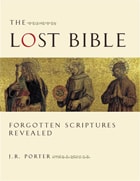
The Lost Bible
Forgotten Scriptures RevealedJ. R. Porter
University of Chicago Press, 2001
J. R. Porter introduces the reader to a wide selection of these extraordinary and beautiful "lost" works-from words considered to be those of prophets, kings, and patriarchs (even Adam himself) to legends and stories that supply "missing" parts of the Gospels. For each work, commentary is followed by a translated extract in clear and up-to-date language. The commentary places writings in their religious, social, and political context; explains the crucial importance of these works to the development of Jewish and Christian thought; and highlights the many legends and artistic traditions that sprang from them. It also examines the reasons-both religious and political-why these writings did not become part of the Jewish and Christian Bibles.
Lavishly illustrated with beautiful artwork, and amplified by maps, timelines, and data boxes, this text is a rich resource for anyone interested in exploring the origins of Judaism and Christianity.
Part I: Works related to the Old Testament
*Apocalypses
*Testaments
*Comments on Scripture
*Wisdom and Philosophy
*Hymns and Prayers
*Sibylline Oracles
*Apocrypha and Deuterocanonical works
*Recent Discoveries, including the Dead Sea Scrolls
Part II: Works related to the New Testament
*Apocryphal Gospels
*Apocryphal Acts
*Apocryphal Letters
*Apocryphal Apocalypses
*Recent Discoveries, including the Gnostic Library
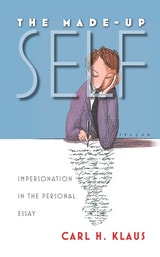
The Made-Up Self
Impersonation in the Personal EssayCarl H. Klaus
University of Iowa Press, 2010
The human presence that animates the personal essay is surely one of the most beguiling of literary phenomena, for it comes across in so familiar a voice that it’s easy to believe we are listening to the author rather than a textual stand-in. But the “person” in a personal essay is always a written construct, a fabricated character, its confessions and reminiscences as rehearsed as those of any novelist. In this first book-length study of the personal essay, Carl Klaus unpacks this made-up self and the manifold ways in which a wide range of essayists and essays have brought it to life.
By reconceiving the most fundamental aspect of the personal essay—the I of the essayist—Klaus demonstrates that this seemingly uncontrived form of writing is inherently problematic, not willfully devious but bordering upon the world of fiction. He develops this key idea by explaining how structure, style, and voice determine the nature of a persona and our perception of it in the works of such essayists as Michel de Montaigne, Charles Lamb, E. B. White, and Virginia Woolf. Realizing that this persona is shaped by the force of culture and the impress of personal experience, he explores the effects of both upon the point of view, content, and voice of such essayists as George Orwell, Nancy Mairs, Richard Rodriguez, and Alice Walker. Throughout, in full command of the history of the essay, he calls up numerous passages in which essayists themselves acknowledge the element of impersonation in their work, drawing upon the perspectives of Joan Didion, Edward Hoagland, Joyce Carol Oates, Leslie Marmon Silko, Scott Russell Sanders, Annie Dillard, Vivian Gornick, Loren Eiseley, James Baldwin, and a host of other literary guides.
Finally, adding yet another layer to the made-up self, Klaus succumbs to his addiction to the personal essay by placing some of the different selves that various essayists have called forth in him within the essays that he has crafted so carefully for this book. Making his way from one essay to the next with a persona variously learned, whimsical, and poignant, he enacts the palimpsest of ways in which the made-up self comes to life in the work of a single essayist. Thus over the course of this highly original, beautifully structured study, the personal essay is revealed to be more complex than many readers have supposed. With its lively analyses and illuminating examples, The Made-Up Self will speak to anyone who wishes to understand—or to write—personal essays.
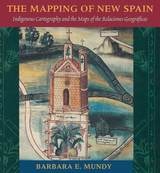
The Mapping of New Spain
Indigenous Cartography and the Maps of the Relaciones GeograficasBarbara E. Mundy
University of Chicago Press, 1996
"Its contribution to its specific field is both significant and original. . . . It is a pure pleasure to read." —Sabine MacCormack, Isis
"Mundy has done a fine job of balancing the artistic interpretation of the maps with the larger historical context within which they were drawn. . . . This is an important work." —John F. Schwaller, Sixteenth Century Journal
"This beautiful book opens a Pandora's box in the most positive sense, for it provokes the reconsideration of several long-held opinions about Spanish colonialism and its effects on Native American culture." —Susan Schroeder, American Historical Review
The Martin Gardner Bibliography
Edited by Dana Richards
CSLI, 2023
Martin Gardner (1914–2010) was a polymath whose international reputation extended from mathematics to literature, philosophy to science, and magic to fiction. This comprehensive bibliography covers every aspect of Gardner’s lengthy publishing career, from 1930 to 2010, and features detailed descriptions and indices of his writings on mathematics and many other topics. Editor Dana Richards worked directly with Gardner on this project from 1978 until Gardner’s death; it draws on the two hundred boxes of Gardner’s mathematical papers held in the Stanford archives

The Mindful Medical Student
A Psychiatrist’s Guide to Staying Who You Are While Becoming Who You Want to BeJeremy Spiegel
Dartmouth College Press, 2009
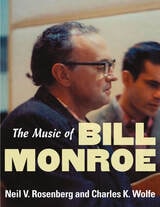
The Music of Bill Monroe
Neil V. Rosenberg and Charles K. Wolfe
University of Illinois Press, 2006
The second part of each chapter presents the discography. Information here includes the session’s place, date, time, and producer; master/matrix numbers, song/tune titles, composer credits, personnel, instruments, and vocals; and catalog/release numbers and reissue data.
The only complete bio-discography of this American musical icon, The Music of Bill Monroe is the starting point for any study of Monroe’s contributions as a composer, interpreter, and performer.
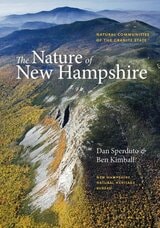
The Nature of New Hampshire
Natural Communities of the Granite StateDan Sperduto
University of New Hampshire Press, 2011
With gorgeous photographs, informative text, and recommended places to visit, The Nature of New Hampshire provides an important common language for conservation planning and informed land stewardship. Whether used as a field guide or an at-home resource, this book will help readers reconnect with their surroundings, and understand the places they value.