Results by title
4127 books match the query 'Science' and 980 start with t
The American Naturalist, volume 207 number 4 (April 2026)
The University of Chicago Press
University of Chicago Press Journals, 2026
The American Naturalist, volume 207 number 5 (May 2026)
The University of Chicago Press
University of Chicago Press Journals, 2026
The American Naturalist, volume 207 number 6 (June 2026)
The University of Chicago Press
University of Chicago Press Journals, 2026
The American Naturalist, volume 208 number 1 (July 2026)
The University of Chicago Press
University of Chicago Press Journals, 2026
The American Naturalist, volume 208 number 2 (August 2026)
The University of Chicago Press
University of Chicago Press Journals, 2026
The American Naturalist, volume 208 number 3 (September 2026)
The University of Chicago Press
University of Chicago Press Journals, 2026
The American Naturalist, volume 208 number 4 (October 2026)
The University of Chicago Press
University of Chicago Press Journals, 2026
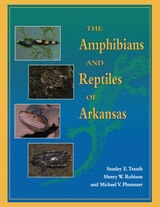
The Amphibians and Reptiles of Arkansas
Stanley E. Trauth
University of Arkansas Press, 2004
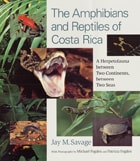
The Amphibians and Reptiles of Costa Rica
A Herpetofauna between Two Continents, between Two SeasJay M. Savage
University of Chicago Press, 2006
Costa Rica has played, and continues to play, a pivotal role in the study of tropical biology as well as the development of ecotourism and ecoprospecting, in part because more than half of the amphibians and reptiles in Costa Rica are also found elsewhere in Central America. The Amphibians and Reptiles of Costa Rica will be an essential book for a wide audience of nature lovers, naturalists, ecotourists, field biologists, conservationists, government planners, and those interested in Central America more generally.
"Written for the enthusiast as well as for the field researcher, this work is an excellent reference source for each of the 396 species of amphibians and reptiles that can be found in Costa Rica. Includes complete full-color photographs of all known species in the region, as well as maps showing their distribution patterns. . . . A must-have book for any library with interests in this subject area."—J. Elliott, Southeastern Naturalist

The Anatomy of Judgment
Philip J. Regal
University of Minnesota Press, 1990
The Anatomy of Judgment was first published in 1990. Minnesota Archive Editions uses digital technology to make long-unavailable books once again accessible, and are published unaltered from the original University of Minnesota Press editions.
"The Anatomy of Judgment is a unique and valuable contribution to the literature of the social and humanistic contexts for science . . . The book will illuminate dark corners for any reader, and dozens of interesting points come to light." –Neil Greenberg, University of Tennessee
Tracing the emergence of science and the social institutions that govern it, The Anatomy of Judgment is an odyssey into what human thinking or judgment means. Philip Regal moves deftly from the history of Western philosophy to concepts of rationality in non-Western cultures, from the conceptual issues of the Salem witch trials to the basic structure of the human brain. The Anatomy of Judgment offers new perspectives on the workings of individual judgment and the social responsibility it entails.
Philip Regal is a professor of ecology and behavioral biology at the University of Minnesota. He served, during his pre- and postdoctoral work, as Coordinator's Appointee to the Mental Health Training Program at UCLA's Brain Research Institute.
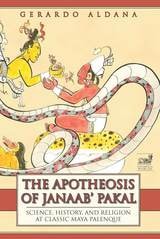
The Apotheosis of Janaab' Pakal
Science, History, and Religion at Classic Maya PalenqueGerardo Aldana
University Press of Colorado, 2007
Aldana follows three lines of investigation: a reading of the hieroglyphic inscriptions of the Classic period (a.d. 250-900), mathematical analysis to recover Classic Maya astronomical practice, and a historiography of Maya astronomy. Quoted hieroglyphs appear throughout the text for cross-examination. Aldana reveals the social and political context of Maya astronomy by explicating the science and calendrical calculations found in the tablets of the Temple of Inscriptions and the Cross Group from the city of Palenque. He offers a compelling interpretation of an 819-day count, demonstrating its utility as an astronumerological tool that Maya scribes used to simplify complex calculations.
During troubled times in Palenque, Aldana contends, Kan Balam II devised a means to preserve the legitimacy of his ruling dynasty. He celebrated a re-creation of the city as a contemporary analogue of a mythical Creation on three levels: monumental construction for a public audience, artistic patronage for an elite audience, and a secret mathematical astronomical language only for rulers-elect. Discussing all of these efforts, Aldana focuses on the recovery of the secret language and its historical context.

The Archeology of New Hampshire
Exploring 10,000 Years in the Granite StateDavid Starbuck
University of New Hampshire Press, 2006
Several states already boast volumes showcasing their archeological history, but not New Hampshire—until now. David R. Starbuck's volume fills that void. Going beyond standard state guides that focus primarily on prehistoric sites, Starbuck also devotes equal time to historic, industrial, and nautical sites. This approach reflects the thinking of most contemporary archeologists who conduct research at a diverse range of sites.
A veteran of thirty years of field research throughout the Granite State, Starbuck revisits some of his own sites, including excavations at the New England Glassworks in Temple, two prehistoric sites on the Merrimack River, the Joseph Hazeltine pottery workshop outside Concord, the Governor Wentworth Estate in Wolfeboro, and his own long-term survey and excavation project at Canterbury Shaker Village. At the same time, though, Starbuck includes the work of other contemporary New Hampshire archeologists, representative sites of “old-timers” whose digs preceded his arrival, and the investigations of avocational diggers.
Starbuck's introduction offers an anecdotal history of archeological research in New Hampshire through the people who shaped it. Part I discusses discoveries that predate white settlement: the Paleo-Indian Period; the Archaic Period; and the Woodland Period. Part II moves from the seventeenth century to the present. Chapters include historical archeology (forts, farms, potters, Shakers); industrial archeology (mills, factories, railroads, dams, and bridges); and nautical archeology (discoveries in the state's lakes and on the seacoast).
In addition to summarizing some of the more interesting finds, Starbuck includes stories about archeologists and the techniques they have used to glean information from the past. Overall, he provides a lively account of what it is like to practice archeology in a small but dynamic New England state.
The Architecture of Matter
Stephen Toulmin and June Goodfield
University of Chicago Press, 1982
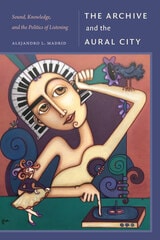
The Archive and the Aural City
Sound, Knowledge, and the Politics of ListeningAlejandro L. Madrid
Duke University Press, 2025
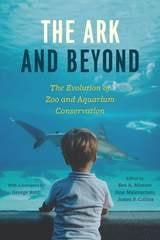
The Ark and Beyond
The Evolution of Zoo and Aquarium ConservationEdited by Ben A. Minteer, Jane Maienschein, and James P. Collins
University of Chicago Press, 2018
While early menageries were anything but the centers of conservation that many zoos are today, a concern with wildlife preservation has been an integral component of the modern, professionally run zoo since the nineteenth century. From captive breeding initiatives to rewilding programs, zoos and aquariums have long been at the cutting edge of research and conservation science, sites of impressive new genetic and reproductive techniques. Today, their efforts reach even further beyond recreation, with educational programs, community-based conservation initiatives, and international, collaborative programs designed to combat species extinction and protect habitats at a range of scales. Addressing related topics as diverse as zoo animal welfare, species reintroductions, amphibian extinctions, and whether zoos can truly be “wild,” this book explores the whole range of research and conservation practices that spring from zoos and aquariums while emphasizing the historical, scientific, and ethical traditions that shape these efforts. Also featuring an inspiring foreword by the late George Rabb, president emeritus of the Chicago Zoological Society / Brookfield Zoo, The Ark and Beyond illuminates these institutions’ growing significance to the preservation of global biodiversity in this century.
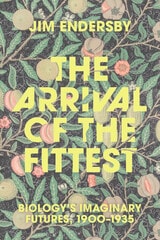
The Arrival of the Fittest
Biology's Imaginary Futures, 1900–1935Jim Endersby
University of Chicago Press, 2025
In the early twentieth century communities made creative use of the new theories of heredity in circulation at the time, including the now largely forgotten mutation theory of Hugo de Vries. Science fiction writers, socialists, feminists, and utopians are among those who seized on the amazing possibilities of rapid and potentially controllable evolution. De Vries’s highly respected scientific theory only briefly captured the attention of the scientific community, but its many fans appropriated it for their own wildly imaginative ends. Writers from H.G. Wells and Edith Wharton to Charlotte Perkins Gilman, J.B.S. Haldane, and Aldous Huxley created a new kind of imaginary future, which Jim Endersby calls the biotopia. It took the ambiguous possibilities of biology—utopian and dystopian—and reimagined them in ways that still influence the public’s understanding of the life sciences. The Arrival of the Fittest recovers the fascinating, long-forgotten origins of ideas that have informed works of fiction from Brave New World to the X-Men movies, all while reflecting on the lessons—positive and negative—that this period might offer us.

The Art and Science of Screenwriting
Second EditionPhilip Parker
Intellect Books, 2006
This second edition contains:
• the different layouts for film, television, documentary and corporate screenplays
• a detailed analysis of what is required from a premise, an outline, a step outline, a treatment and a first draft
• a simple stage by stage guide to the inevitable re-write
• tips on finding an agent.
This new approach to writing for film and television covers everything from finding an idea to writing a finished screenplay. The author's framework, 'A Creative Matrix', brings together all the elements of screenplay writing - from story, character, theme, and dramatic structure to plot, genre, tone and style in an understandable way that is easy to follow. His analysis includes illustrating what comprises a good thriller, identifying the different types of sit-com, and showing the qualities of a screen romance that both works and convinces.
The author uses examples from across European, American and World Cinema, as well as television, and this revised edition now contains a comprehensive index.
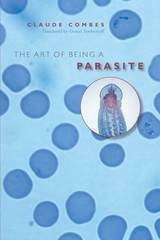
The Art of Being a Parasite
Claude Combes
University of Chicago Press, 2005
The Art of Being a Parasite is an extensive collection of these and other wonderful and weird stories that illuminate the ecology and evolution of interactions between species. Claude Combes illustrates what it means to be a parasite by considering every stage of its interactions, from invading to reproducing and leaving the host. An accessible and engaging follow-up to Combes's Parasitism, this book will be of interest to both scholars and nonspecialists in the fields of biodiversity, natural history, ecology, public health, and evolution.
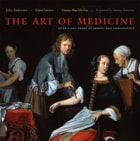
The Art of Medicine
Over 2,000 Years of Images and ImaginationJulie Anderson, Emm Barnes, and Emma Shackleton
University of Chicago Press, 2011
Since ancient times people have depended on medical practitioners to enhance life, to treat illness and injuries, and to help reduce pain and suffering. The scientifically based discipline that we know today stands beside diverse traditions, belief systems, and bodies of medical knowledge that have evolved in fascinating ways across cultures and continents. Throughout this history, successive generations have created artistic representations of these varied aspects of medicine, illustrating instruction manuals, documenting treatments, and creating works of art that enable individuals to express their feelings and ideas about medicine, health, and illness. From ancient wall paintings and tomb carvings to sculpture, installations, and digitally created artworks, the results are extraordinary and pay tribute to how medicine has affected our lives and the lives of our ancestors.
Drawing on the remarkable holdings of the Wellcome Collection in London, The Art of Medicine offers a unique gallery of rarely seen paintings, artifacts, drawings, prints, and extracts from manuscripts and manuals to provide a fascinating visual insight into our knowledge of the human body and mind, and how both have been treated with medicine. Julie Anderson, Emm Barnes, and Emma Shackleton take readers on a fascinating visual journey through the history of medical practice, exploring contemporary biomedical images, popular art, and caricature alongside venerable Chinese scrolls, prehistoric Mesoamerican drawings, paintings of the European Renaissance, medieval Persian manuscripts, and more. The result is a rare and remarkable visual account of what it was and is to be human in sickness and health.
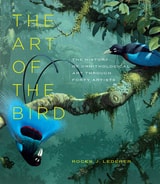
The Art of the Bird
The History of Ornithological Art through Forty ArtistsRoger J. Lederer
University of Chicago Press, 2019
The Art, Science, and Magic of the Data Curation Network
A Retrospective on Cross-Institutional CollaborationJake Carlson
Michigan Publishing Services, 2023
The Art, Science, and Magic of the Data Curation Network: A Retrospective on Cross Institutional Collaboration captures the results of a project retrospective meeting and describes the necessary components of the DCN’s sustained collaboration in the hopes that the insights will be of use to other collaborative efforts. In particular, the authors describe the successes of the community and challenges of launching a cross-institutional network. Additionally, this publication details the administrative, tool-based, and trust-based structures necessary for establishing this community, the “radical collaboration” that is the cornerstone of the DCN, and potential future collaborations to address shared challenges in libraries and research data management. This in-depth case study provides an overview of the critical work of launching a collaborative network and transitioning to sustainability. This publication will be of special interest to research librarians, data curators, and anyone interested in academic community building.
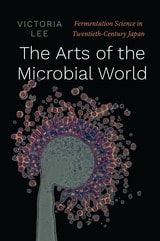
The Arts of the Microbial World
Fermentation Science in Twentieth-Century JapanVictoria Lee
University of Chicago Press, 2021
The Arts of the Microbial World explores the significance of fermentation phenomena, both as life processes and as technologies, in Japanese scientific culture. Victoria Lee’s careful study documents how Japanese scientists and skilled workers sought to use the microbe’s natural processes to create new products, from soy-sauce mold starters to MSG, vitamins to statins. In traditional brewing houses as well as in the food, fine chemical, and pharmaceutical industries across Japan, they showcased their ability to deal with the enormous sensitivity and variety of the microbial world.
Charting developments in fermentation science from the turn of the twentieth century, when Japan was an industrializing country on the periphery of the world economy, to 1980 when it had emerged as a global technological and economic power, Lee highlights the role of indigenous techniques in modern science as it took shape in Japan. In doing so, she reveals how knowledge of microbes lay at the heart of some of Japan’s most prominent technological breakthroughs in the global economy.
At a moment when twenty-first-century developments in the fields of antibiotic resistance, the microbiome, and green chemistry suggest that the traditional eradication-based approach to the microbial world is unsustainable, twentieth-century Japanese microbiology provides a new, broader vantage for understanding and managing microbial interactions with society.
The Ascent of Affect
Genealogy and CritiqueRuth Leys
University of Chicago Press, 2017
Ruth Leys’s brilliant, much anticipated history, therefore, is a story of controversy and disagreement. The Ascent of Affect focuses on the post–World War II period, when interest in emotions as an object of study began to revive. Leys analyzes the ongoing debate over how to understand emotions, paying particular attention to the continual conflict between camps that argue for the intentionality or meaning of emotions but have trouble explaining their presence in non-human animals and those that argue for the universality of emotions but struggle when the question turns to meaning. Addressing the work of key figures from across the spectrum, considering the potentially misleading appeal of neuroscience for those working in the humanities, and bringing her story fully up to date by taking in the latest debates, Leys presents here the most thorough analysis available of how we have tried to think about how we feel.
The Assemblage Brain
Sense Making in NeurocultureTony D. Sampson
University of Minnesota Press, 2016
Once upon a time, neuroscience was born. A dazzling array of neurotechnologies emerged that, according to popular belief, have finally begun to unlock the secrets of the brain. But as the brain sciences now extend into all corners of cultural, social, political, and economic life, a yet newer world has taken shape: “neuroculture,” which goes further than ever before to tackle the profound ethical implications we face in consequence.
The Assemblage Brain unveils a major new concept of sense making, one that challenges conventional scientific and philosophical understandings of the brain. Drawing on Deleuze and Guattari, Tony D. Sampson calls for a radical critical theory that operates in the interferences between philosophy, science, art, and politics. From this novel perspective the book is structured around two questions: “What can be done to a brain?” and “What can a brain do?” Sampson examines the rise of neuroeconomics in informing significant developments in computer work, marketing, and the neuropharmaceutical control of inattentiveness in the classroom. Moving beyond the neurocapitalist framework, he then reestablishes a place for proto-subjectivity in which biological and cultural distinctions are reintegrated in an understanding of the brain as an assemblage.
The Assemblage Brain unravels the conventional image of thought that underpins many scientific and philosophical accounts of how sense is produced, providing a new view of our current time in which capitalism and the neurosciences endeavor to colonize the brain.
The Atlas of Boston History
Edited by Nancy S. Seasholes
University of Chicago Press, 2019
Edited by historian Nancy S. Seasholes, this landmark volume captures all aspects of Boston’s past in a series of fifty-seven stunning full-color spreads. Each section features newly created thematic maps that focus on moments and topics in that history. These maps are accompanied by hundreds of historical and contemporary illustrations and explanatory text from historians and other expert contributors. They illuminate a wide range of topics including Boston’s physical and economic development, changing demography, and social and cultural life. In lavishly produced detail, The Atlas of Boston History offers a vivid, refreshing perspective on the development of this iconic American city.
Contributors
Robert J. Allison, Robert Charles Anderson, John Avault, Joseph Bagley, Charles Bahne, Laurie Baise, J. L. Bell, Rebekah Bryer, Aubrey Butts, Benjamin L. Carp, Amy D. Finstein, Gerald Gamm, Richard Garver, Katherine Grandjean, Michelle Granshaw, James Green, Dean Grodzins, Karl Haglund, Ruth-Ann M. Harris, Arthur Krim, Stephanie Kruel, Kerima M. Lewis, Noam Maggor, Dane A. Morrison, James C. O’Connell, Mark Peterson, Marshall Pontrelli, Gayle Sawtelle, Nancy S. Seasholes, Reed Ueda, Lawrence J. Vale, Jim Vrabel, Sam Bass Warner, Jay Wickersham, and Susan Wilson
The Atlas of Coasts and Oceans
Ecosystems, Threatened Resources, Marine ConservationDon Hinrichsen
University of Chicago Press, 2011
Oceans drive the world’s climate, nurture marine ecosystems full of aquatic life, and provide shipping lanes that have defined the global economy for centuries. And few realize that half of the world’s population lives in a coastal region within easy reach of one. Yet human activities such as commercial fishing, coastal real estate development, and industrial pollution have taken their toll on the seas. The first book of its kind, The Atlas of Coasts and Oceans documents the fraught relationship between humans and the earth’s largest bodies of water—and outlines the conservation steps needed to protect the marine environment for generations to come.
The Atlas offers a fascinating and often sobering account of how urbanization, climate change, offshore oil drilling, shipping routes, global tourism, and maritime conflict have had a profound impact on the world’s oceans and coasts. Combining text and images in visually engaging, thematically organized map spreads, this volume addresses the ecological, environmental, and economic importance of marine phenomena such as coral reefs, eroding shorelines, hurricanes, and fish populations—and how development threatens to destroy the ultimate source of all life on the “blue planet.” Lavishly illustrated with global and regional maps, from the Arabian Gulf to the Great Barrier Reef, from the Black Sea to the Mediterranean, and all the other major global waterways, The Atlas of Coasts and Oceans will be the definitive companion to any study of its subject for years to come.
The Atlas of World Hunger
Thomas J. Bassett and Alex Winter-Nelson
University of Chicago Press, 2010
Earlier this year, President Obama declared one of his top priorities to be “making sure that people are able to get enough to eat.” The United States spends about five billion dollars on food aid and related programs each year, but still, both domestically and internationally, millions of people are hungry. In 2006, the Food and Agricultural Organization of the United Nations counted 850 million hungry people worldwide, but as food prices soared, an additional 100 million or more who were vulnerable succumbed to food insecurity.
If hunger were simply a matter of food production, no one would go without. There is more than enough food produced annually to provide every living person with a healthy diet, yet so many suffer from food shortages, unsafe water, and malnutrition every year. That’s because hunger is a complex political, economic, and ecological phenomenon. The interplay of these forces produces a geography of hunger that Thomas J. Bassett and Alex Winter-Nelson illuminate in this empowering book. The Atlas of World Hunger uses a conceptual framework informed by geography and agricultural economics to present a hunger index that combines food availability, household access, and nutritional outcomes into a single tool—one that delivers a fuller understanding of the scope of global hunger, its underlying mechanisms, and the ways in which the goals for ending hunger can be achieved. The first depiction of the geography of hunger worldwide, the Atlas will be an important resource for teachers, students, and anyone else interested in understanding the geography and causes of hunger. This knowledge, the authors argue, is a critical first step toward eliminating unnecessary suffering in a world of plenty.
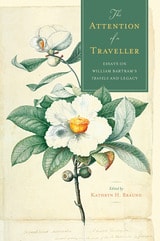
The Attention of a Traveller
Essays on William Bartram's "Travels" and LegacyEdited by Kathryn H. Braund
University of Alabama Press, 2022
An interdisciplinary reevaluation of William Bartram’s Travels, illuminating the natural, cultural, and intellectual landscapes of the eighteenth‑century Southeast through diverse scholarly lenses.
William Bartram, author of Travels through North and South Carolina, Georgia, East and West Florida, the Cherokee Country, the Extensive Territories of the Muscogulees, or Creek Confederacy, and the Country of the Chactaws, was colonial America’s first native born naturalist and artist, and the first author in the modern genre of writers who portrayed nature through personal experience as well as scientific observation. His book, first published in 1791, was based on his journeys through southern Indian nations and Britain’s southern colonies in the years just prior to the American Revolution and provides descriptions of the natural and cultural environments of what would soon become the American South. Scholars and general readers alike have long appreciated Bartram’s lush, vivid prose, his clarity of observation and evident wonder at the landscapes he traversed, and his engagement with the native nations whose lands he traveled through.
The Attention of a Traveller: Essays on William Bartram’s “Travels” and Legacy offers an interdisciplinary assessment of Bartram’s influence and evolving legacy, opening new avenues of research concerning the flora, fauna, and people connected to Bartram and his writings. Featuring 13 essays divided into five sections, contributors to the volume weave together scholarly perspectives from geology, art history, literary criticism, geography, and philosophy, alongside the more traditional Bartram-affiliated disciplines of biology and history. The collection concludes with a comprehensive treatment of the book as a material historical artifact.
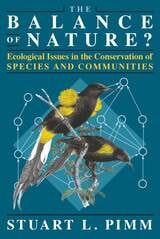
The Balance of Nature?
Ecological Issues in the Conservation of Species and CommunitiesStuart L. Pimm
University of Chicago Press, 1991
Ecologists describing phenomena on larger scales often use terms like "stability," "balance of nature," and "fragility," and Pimm begins by considering the various specific meanings of these terms. He addresses five kinds of ecological stability—stability in the strict sense, resilience, variability, persistence, and resistance—and shows how they provide ways of comparing natural populations and communities as well as theories about them. Each type of stability depends on characteristics of the species studied and also on the structure of the food web in which the species is embedded and the physical features of the environment.
The Balance of Nature? provides theoretical ecology with a rich array of questions—questions that also underpin pressing problems in practical conservation biology. Pimm calls for nothing less than new approaches to ecology and a new alliance between theoretical and empirical studies.
The Beaches Are Moving
The Drowning of America's ShorelineWallace Kaufman and Orrin H. Pilkey Jr.
Duke University Press, 1983
Our beaches are eroding, sinking, washing out right under our houses, hotels, bridges; vacation dreamlands become nightmare scenes of futile revetments, fills, groins, what have you—all thrown up in a frantic defense against the natural system. The romantic desire to live on the seashore is in doomed conflict with an age-old pattern of beach migration. Yet it need not be so. Conservationist Wallace Kaufman teams up with marine geologist Orrin H. Pilkey Jr., in an evaluation of America's beaches from coast to coast, giving sound advice on how to judge a safe beach development from a dangerous one and how to live at the shore sensibly and safely.
The Beautiful Cure
The Revolution in Immunology and What It Means for Your HealthDaniel M. Davis
University of Chicago Press, 2018
The immune system holds the key to human health. In The Beautiful Cure, leading immunologist Daniel M. Davis describes how the scientific quest to understand how the immune system works—and how it is affected by stress, sleep, age, and our state of mind—is now unlocking a revolutionary new approach to medicine and well-being.
The body’s ability to fight disease and heal itself is one of the great mysteries and marvels of nature. But in recent years, painstaking research has resulted in major advances in our grasp of this breathtakingly beautiful inner world: a vast and intricate network of specialist cells, regulatory proteins, and dedicated genes that are continually protecting our bodies. Far more powerful than any medicine ever invented, the immune system plays a crucial role in our daily lives. We have found ways to harness these natural defenses to create breakthrough drugs and so-called immunotherapies that help us fight cancer, diabetes, arthritis, and many age-related diseases, and we are starting to understand whether activities such as mindfulness might play a role in enhancing our physical resilience.
Written by a researcher at the forefront of this adventure, The Beautiful Cure tells a dramatic story of scientific detective work and discovery, of puzzles solved and mysteries that linger, of lives sacrificed and saved. With expertise and eloquence, Davis introduces us to this revelatory new understanding of the human body and what it takes to be healthy.
The Beginnings of Western Science
The European Scientific Tradition in Philosophical, Religious, and Institutional Context, 600 B.C. to A.D. 1450David C. Lindberg
University of Chicago Press, 1992
Lindberg surveys all the most important themes in the history of ancient and medieval science, including developments in cosmology, astronomy, mechanics, optics, alchemy, natural history, and medicine. He synthesizes a wealth of information in superbly organized, clearly written chapters designed to serve students, scholars, and nonspecialists alike. In addition, Lindberg offers an illuminating account of the transmission of Greek science to medieval Islam and subsequently to medieval Europe. And throughout the book he pays close attention to the cultural and institutional contexts within which scientific knowledge was created and disseminated and to the ways in which the content and practice of science were influenced by interaction with philosophy and religion. Carefully selected maps, drawings, and photographs complement the text.
Lindberg's story rests on a large body of important scholarship produced by historians of science, philosophy, and religion over the past few decades. However, Lindberg does not hesitate to offer new interpretations and to hazard fresh judgments aimed at resolving long-standing historical disputes. Addressed to the general educated reader as well as to students, his book will also appeal to any scholar whose interests touch on the history of the scientific enterprise.
The Beginnings of Western Science
The European Scientific Tradition in Philosophical, Religious, and Institutional Context, Prehistory to A.D. 1450, Second EditionDavid C. Lindberg
University of Chicago Press, 2008
The Beginnings of Western Science is a landmark, the best book to ever to present a unified account of both ancient and medieval science in a single volume. Chronicling the development of scientific ideas, practices, and institutions from pre-Socratic Greek philosophy to late-Medieval scholasticism, David C. Lindberg surveys all the most important themes in the history of science, including developments in cosmology, astronomy, mechanics, optics, alchemy, natural history, and medicine. In addition, he offers an illuminating account of the transmission of Greek science to medieval Islam and subsequently to medieval Europe.
The Best Science Stories and How They Work
A Collection with CommentaryEdited by Siri Carpenter
University of Chicago Press, 2026
An invitation to engage with some of today’s most respected science journalists as they take readers beneath the surface to reveal the making of eleven of the best science stories.
With eleven deeply reported, artfully crafted stories and annotations by some of the most thoughtful and respected science journalists working today, The Best Science Stories and How They Work is more than the sum of its impressive parts. Experience the pleasure of reading a “Best of” anthology, attending a science writing masterclass, and meeting journalists who become more than their familiar bylines. Each piece benefits from an introduction, annotations, and a conversation between the piece’s author and annotator.
Siri Carpenter—editor of this book and cofounder of The Open Notebook, a leading source of training and educational materials for journalists who cover science—has long considered what’s behind the best writing. The pieces in this guide are drawn from a range of publications such as Scientific American, Nature, The Atlantic, and The New York Times Magazine and offer a unique perspective on how great science journalism happens: the careful structuring of a narrative, the delicate balance of skepticism and wonder, the ethical challenges of working with sources, the artistry of prose that sings. Readers will not only encounter outstanding examples of stellar storytelling, but they will also understand how these successful stories were reported and written, revealing the choices fundamental to good science journalism. Following each annotation, a Q&A with the original author provides an intimate look at the decisions and challenges that shaped their work.
Taken together, these pieces and annotations reveal the detailed, technical narrative work required to tell science stories. The book will delight, inspire, and equip readers with new tools to appreciate the stories that matter most.
Contributors: Jordana Cepelewicz, Shraddha Chakradhar, Nadia Drake, Ben Goldfarb, Sabrina Imbler, Ferris Jabr, Emily Laber-Warren, Stephanie M. Lee, Dana Mackenzie, Amy Maxmen, Emiliano Rodríguez Mega, Kendra Pierre-Louis, Debbie Ponchner, Sandeep Ravindran, Mary Roach, Paola Rosa-Aquino, Ashley Smart, Jessica Seigel, Ramin Skibba, Kamala Thiagarajan, Bijal Trivedi, and Ed Yong
The Best of All Possible Worlds
Mathematics and DestinyIvar Ekeland
University of Chicago Press, 2006
Optimists believe this is the best of all possible worlds. And pessimists fear that might really be the case. But what is the best of all possible worlds? How do we define it? Is it the world that operates the most efficiently? Or the one in which most people are comfortable and content? Questions such as these have preoccupied philosophers and theologians for ages, but there was a time, during the seventeenth and eighteenth centuries, when scientists and mathematicians felt they could provide the answer.
This book is their story. Ivar Ekeland here takes the reader on a journey through scientific attempts to envision the best of all possible worlds. He begins with the French physicist Maupertuis, whose least action principle asserted that everything in nature occurs in the way that requires the least possible action. This idea, Ekeland shows, was a pivotal breakthrough in mathematics, because it was the first expression of the concept of optimization, or the creation of systems that are the most efficient or functional. Although the least action principle was later elaborated on and overshadowed by the theories of Leonhard Euler and Gottfried Leibniz, the concept of optimization that emerged from it is an important one that touches virtually every scientific discipline today.
Tracing the profound impact of optimization and the unexpected ways in which it has influenced the study of mathematics, biology, economics, and even politics, Ekeland reveals throughout how the idea of optimization has driven some of our greatest intellectual breakthroughs. The result is a dazzling display of erudition—one that will be essential reading for popular-science buffs and historians of science alike.
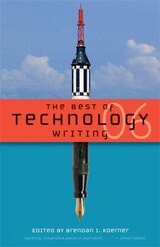
The Best of Technology Writing 2006
Brendan I. Koerner, Editor
University of Michigan Press, 2006
—James Fallows, National Correspondent for Atlantic Monthly
“The human experience is being shaped by our symbiotic relationship to technology. What makes this collection wonderful is that it’s not about the technology, per se, but it’s about this changing human experience. I will look forward to it every year.”
—Po Bronson, author of What Should I Do With My Life?
The Best of Technology Writing 2006 brings together some of the most important, timely, and just plain readable writing in the fast-paced, high-stakes field of technology. The first annual collection to target this vibrant and versatile area, The Best of Technology Writing 2006 features innovative work from an unusually diverse array of writers: best-selling authors, noted academics, and indie journalists and bloggers. The culmination of an open, on-line nominating process, this collection covers topics ranging from jetpacks, to the ethics of genetically cloned pets, to the meaning of life in the information age. By turns epic and intimate, serious and playful, The Best of Technology Writing 2006 captures the vitality, importance, and complexity of technology today. Koerner
Featuring contributions from:
digitalculturebooks is an imprint of the University of Michigan Press and the Scholarly Publishing Office of the University of Michigan Library dedicated to publishing innovative and accessible work exploring new media and their impact on society, culture, and scholarly communication. Visit the website at www.digitalculture.org.
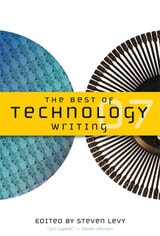
The Best of Technology Writing 2007
Steven Levy, Editor
University of Michigan Press, 2007
The year’s best writing on tech: a collection as imaginative and compelling as its dynamic subject
“This book is not just an illuminating and instructive guide to our high-tech frontier. It’s also a great testimony to the power of that most ancient of technologies, the written word.”
—Steven Johnson, author of Everything Bad is Good for You
Together the essays in The Best of Technology Writing 2007 capture the versatility and verve of technology writing today. Solicited through an open online nominating process, these pieces explore a wide range of intriguing topics—from “crowdsourcing” to the online habits of urban moms to the digital future of movie production. The Best of Technology Writing 2007 will appeal to anyone who enjoys stellar writing.
Steven Levy is a Senior Editor at Newsweek, where he writes the biweekly column “The Technologist.” One of the most acclaimed and versatile technology writers in the country, Levy has written six books, including The Perfect Thing (about Apple’s iPod) and Hackers, which PC Magazine’s readers voted the best sci-tech book written in the last twenty years. He has written for many publications, including the New Yorker, the New York Times Magazine, Rolling Stone, and Wired.
Featuring contributions from
Kevin Berger
Paul Boutin
Kiera Butler
Joshua Davis
Julian Dibbell
Matt Gaffney
Lori Gottlieb
John Gruber
Jeff Howe
Kevin Kelly
Jaron Lanier
Preston Lerner
Farhad Manjoo
Justin McElroy
Ben McGrath
Katharine Mieszkowski
Emily Nussbaum
Jeffrey M. O’Brien
Larry O’Brien
The Onion
Adam L. Penenberg
John Seabrook
Philip Smith
Aaron Swartz
Clive Thompson
Jeffrey R. Young
digitalculturebooks is an imprint of the University of Michigan Press and the Scholarly Publishing Office of the University of Michigan Library dedicated to publishing innovative and accessible work exploring new media and their impact on society, culture, and scholarly communication. Visit the website at www.digitalculture.org.
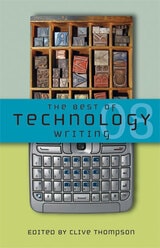
The Best of Technology Writing 2008
Clive Thompson, Editor
University of Michigan Press, 2008
"No one covers technology with more insight or panache than Clive Thompson. I can't imagine anyone better qualified to curate this fascinating series."
---Chris Anderson, editor in chief of Wired magazine and author of The Long Tail
"Editor Clive Thompson suggests we are in a ‘golden age of technology journalism.' Reading this collection, one suspects he is right---it sparkles with beautifully written narratives not only about what technology can do for us but what it does to us as people, to our ways of thinking about ourselves, our relationships, and how we envisage our world."
---Sherry Turkle, Director, MIT Initiative on Technology and Self, Massachusetts Institute of Technology
The Best of Technology Writing 2008 proves that technology writing is a bona fide literary genre with some of the most stylish, compelling, and just plain readable work in journalism today.
The third volume in this annual series, The Best of Technology Writing 2008 covers a fascinating mix of topics---from a molecular gastronomist's recipe for the perfect gin and tonic; to "the Mechanism," an ancient Greek artifact that might be the world's first laptop computer; to social media, privacy, and what is possibly the biggest generation gap since rock 'n' roll.
Featuring contributions from
- Ted Allen
- Michael Behar
- Caleb Crain
- Julian Dibbell
- Cory Doctorow
- David Glenn
- Thomas Goetz
- Charles Graeber
- Alex Hutchinson
- Walter Kirn
- Robin Mejia
- Emily Nussbaum
- Ben Paynter
- Jeffrey Rosen
- John Seabrook
- Cass R. Sunstein
digitalculturebooks is an imprint of the University of Michigan Press and the Scholarly Publishing Office of the University of Michigan Library dedicated to publishing innovative and accessible work exploring new media and their impact on society, culture, and scholarly communication. Visit the website at www.digitalculture.org.

The Better to Eat You With
Fear in the Animal WorldJoel Berger
University of Chicago Press, 2008
Berger’s fieldwork that frigid day raised important questions that would require years of travel and research to answer: Can naive animals avoid extinction when they encounter reintroduced carnivores? To what extent is fear culturally transmitted? And how can a better understanding of current predator-prey behavior help demystify past extinctions and inform future conservation?
The Better to Eat You With is the chronicle of Berger’s search for answers. From Yellowstone’s elk and wolves to rhinos living with African lions and moose coexisting with tigers and bears in Asia, Berger tracks cultures of fear in animals across continents and climates, engaging readers with a stimulating combination of natural history, personal experience, and conservation. Whether battling bureaucracy in the statehouse or fighting subzero wind chills in the field, Berger puts himself in the middle of the action. The Better to Eat You With invites readers to join him there. The thrilling tales he tells reveal a great deal not only about survival in the animal kingdom but also the process of doing science in foreboding conditions and hostile environments.
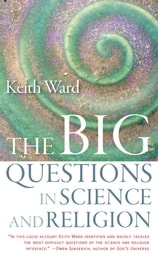
The Big Questions in Science and Religion
Keith Ward
Templeton Press, 2008
In The Big Questions in Science and Religion, Keith Ward, an Anglican priest who was once an atheist, offers compelling insights into the often contentious relationship between diverse religious views and new scientific knowledge. He identifies ten basic questions about the nature of the universe and human life. Among these are:
•Does the universe have a goal or purpose?•Do the laws of nature exclude miracles?
•Can science provide a wholly naturalistic explanation for moral and religious beliefs?
•Has science made belief in God obsolete? Are there any good science-based arguments for God?
With his expertise in the study of world religions, Ward considers concepts from Buddhism, Confucianism, Taoism, Islam, Hinduism, Judaism, and Christianity, while featuring the speculations of cosmologists, physicians, mathematicians, and philosophers. In addition, Ward examines the implications of ancient laws and modern theories and evaluates the role of religious experience as evidence of a nonphysical reality.
Writing with enthusiasm, passion, and clarity, Keith Ward conveys the depth, difficulty, intellectual excitement, and importance of the greatest intellectual and existential questions of the modern scientific age.
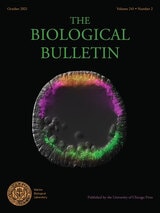
The Biological Bulletin, volume 241 number 2 (October 2021)
The University of Chicago Press
University of Chicago Press Journals, 2021
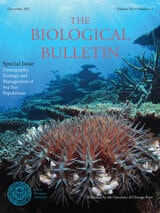
The Biological Bulletin, volume 241 number 3 (December 2021)
The University of Chicago Press
University of Chicago Press Journals, 2021
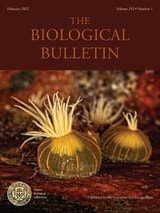
The Biological Bulletin, volume 242 number 1 (February 2022)
The University of Chicago Press
University of Chicago Press Journals, 2022

The Biological Bulletin, volume 242 number 2 (April 2022)
The University of Chicago Press
University of Chicago Press Journals, 2022
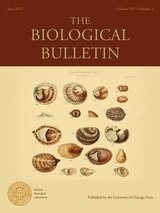
The Biological Bulletin, volume 242 number 3 (June 2022)
The University of Chicago Press
University of Chicago Press Journals, 2022
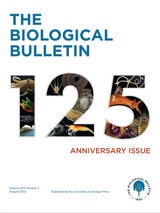
The Biological Bulletin, volume 243 number 1 (August 2022)
The University of Chicago Press
University of Chicago Press Journals, 2022
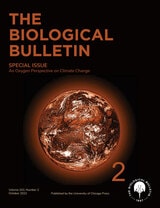
The Biological Bulletin, volume 243 number 2 (October 2022)
The University of Chicago Press
University of Chicago Press Journals, 2022
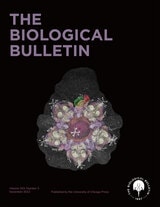
The Biological Bulletin, volume 243 number 3 (December 2022)
The University of Chicago Press
University of Chicago Press Journals, 2022
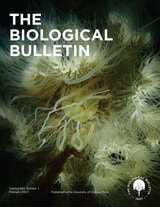
The Biological Bulletin, volume 244 number 1 (February 2023)
The University of Chicago Press
University of Chicago Press Journals, 2023
The Biological Bulletin, volume 244 number 2 (April 2023)
The University of Chicago Press
University of Chicago Press Journals, 2023