Results by title
4038 books match the query 'Social aspects' and 711 start with t

The Beginning of History
Value Struggles and Global CapitalMassimo De Angelis
Pluto Press, 2007
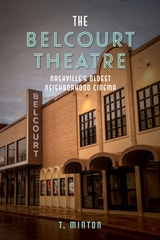
The Belcourt Theatre
Nashville's Oldest Neighborhood CinemaT. Minton
Vanderbilt University Press, 2026
Since opening in 1925 as the Hillsboro Theatre, the Belcourt has stood at the center of Nashville’s changing cultural life. Over the course of a century, it has been a neighborhood movie house, a stage for live performance, a home for community theater, an art-house cinema, a music venue, and a nonprofit film center. Its story is also the story of a city shaped by shifting technologies, urban change, grassroots activism, and evolving ideas about what cultural institutions are for.
The Belcourt Theatre offers the first full history of this enduring landmark, tracing how one cultural center adapted again and again to serve new audiences while remaining a vital place for public gathering, artistic exchange, and shared experience.
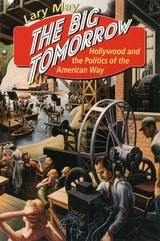
The Big Tomorrow
Hollywood and the Politics of the American WayLary May
University of Chicago Press, 2000
"The most exhilarating work of revisionist film history since Pauline Kael's Citizen Kane. . . . May's take on what movies once were (energizing, as opposed to enervating), and hence can become again, is enough to get you believing in them again as one of the regenerative forces America so sorely needs."—Jay Carr, Boston Globe
"A startling, revisionist history of Hollywood's impact on politics and American culture. . . . A convincing and important addition to American cultural criticism."—Publishers Weekly
"A controversial overview of 30 years of American film history; must reading for any serious student of the subject."—Choice
"A provocative social history of Hollywood's influence in American life from the 1930s to the 1950s. May argues persuasively that movies in the period offered a good deal of tough criticism of economic and social conditions in U.S. society. . . . May challenges us to engage in some serious rethinking about Hollywood's impact on American society in the middle of the twentieth century."—Robert Brent Toplin, American Historical Review
The Biological Consequences of Socioeconomic Inequalities
Barbara Wolfe
Russell Sage Foundation, 2013
The Black Body in Ecstasy
Reading Race, Reading PornographyJennifer C. Nash
Duke University Press, 2014
The Black Heavens
Abraham Lincoln and DeathBrian R. Dirck
Southern Illinois University Press, 2019
From multiple personal tragedies to the terrible carnage of the Civil War, death might be alongside emancipation of the slaves and restoration of the Union as one of the great central truths of Abraham Lincoln’s life. Yet what little has been written specifically about Lincoln and death is insufficient, sentimentalized, or devoid of the rich historical literature about death and mourning during the nineteenth century. The Black Heavens: Abraham Lincoln and Death is the first in-depth account of how the sixteenth president responded to the riddles of mortality, undertook personal mourning, and coped with the extraordinary burden of sending hundreds of thousands of soldiers to be killed on battlefields.
Going beyond the characterization of Lincoln as a melancholy, tragic figure, Brian R. Dirck investigates Lincoln’s frequent encounters with bereavement and sets his response to death and mourning within the social, cultural, and political context of his times. At a young age Lincoln saw the grim reality of lives cut short when he lost his mother and sister. Later, he was deeply affected by the deaths of two of his sons, three-year-old Eddy in 1850 and eleven-year-old Willie in 1862, as well as the combat deaths of close friends early in the war. Despite his own losses, Lincoln learned how to approach death in an emotionally detached manner, a survival skill he needed to cope with the reality of his presidency.
Dirck shows how Lincoln gradually turned to his particular understanding of God’s will in his attempts to articulate the meaning of the atrocities of war to the American public, as showcased in his allusions to religious ideas in the Gettysburg Address and the Second Inaugural. Lincoln formed a unique approach to death: both intellectual and emotional, typical and yet atypical of his times. In showing how Lincoln understood and responded to death, both privately and publicly, Dirck paints a compelling portrait of a commander in chief who buried two sons and gave the orders that sent an unprecedented number of Americans to their deaths.
The Black Musician and the White City
Race and Music in Chicago, 1900-1967Amy Absher
University of Michigan Press, 2014
Absher’s work diverges from existing studies in three ways: First, she takes the history beyond the study of jazz and blues by examining the significant role that classically trained black musicians played in building the Chicago South Side community. By acknowledging the presence and importance of classical musicians, Absher argues that black migrants in Chicago had diverse education and economic backgrounds but found common cause in the city’s music community. Second, Absher brings numerous maps to the history, illustrating the relationship between Chicago’s physical lines of segregation and the geography of black music in the city over the years. Third, Absher’s use of archival sources is both extensive and original, drawing on manuscript and oral history collections at the Center for Black Music Research in Chicago, Columbia University, Rutgers’s Institute of Jazz Studies, and Tulane’s Hogan Jazz Archive. By approaching the Chicago black musical community from these previously untapped angles, Absher offers a history that goes beyond the retelling of the achievements of the famous musicians by discussing musicians as a group. In The Black Musician and the White City, black musicians are the leading actors, thinkers, organizers, and critics of their own story.
The Blacker the Ink
Constructions of Black Identity in Comics and Sequential ArtGateward, Frances
Rutgers University Press, 2015
Winner of the 2016 Ray and Pat Browne Award for Best Edited Collection in Popular Culture and American Culture by the Popular Culture Association/American Culture Association
Winner of the 2016 PEN Oakland-Josephine Miles Award for Excellence in Literature
When many think of comic books the first thing that comes to mind are caped crusaders and spandex-wearing super-heroes. Perhaps, inevitably, these images are of white men (and more rarely, women). It was not until the 1970s that African American superheroes such as Luke Cage, Blade, and others emerged. But as this exciting new collection reveals, these superhero comics are only one small component in a wealth of representations of black characters within comic strips, comic books, and graphic novels over the past century.
The Blacker the Ink is the first book to explore not only the diverse range of black characters in comics, but also the multitude of ways that black artists, writers, and publishers have made a mark on the industry. Organized thematically into “panels” in tribute to sequential art published in the funny pages of newspapers, the fifteen original essays take us on a journey that reaches from the African American newspaper comics of the 1930s to the Francophone graphic novels of the 2000s. Even as it demonstrates the wide spectrum of images of African Americans in comics and sequential art, the collection also identifies common character types and themes running through everything from the strip The Boondocks to the graphic novel Nat Turner.
Though it does not shy away from examining the legacy of racial stereotypes in comics and racial biases in the industry, The Blacker the Ink also offers inspiring stories of trailblazing African American artists and writers. Whether you are a diehard comic book fan or a casual reader of the funny pages, these essays will give you a new appreciation for how black characters and creators have brought a vibrant splash of color to the world of comics.
The Body Aesthetic
From Fine Art to Body ModificationTobin Siebers, Editor
University of Michigan Press, 2000
Generously and variously illustrated, this volume gathers together the work of literary critics and artists, classicists, art historians, and specialists on the history of the body, who survey the strangeness and variety with which the body has given human beings form. Richard Leppert traces how the representation of little girls responds directly to the cultural anxieties of modernity. René Girard plots how starvation becomes an art form, while Eric Gans surveys the contemporary phenomenon of body modification. Sander Gilman explores aesthetic surgery as a response to human unhappiness. Simon Goldhill discovers in the Roman empire the initial stirrings of institutions that focus on the spectacle of the body, and Cynthia S. Greig provides a glimpse of what the history of photography would look like if male nudes replaced female ones. Marion Jackson details how the different physical existence of the Inuit guides the way they make art. Joseph Grigely transforms aesthetics as usual by focusing on the disabled body, while Tobin Siebers describes the traumatic appeal in both fine art and the media of wounded flesh, whether human or animal.
The Body Aesthetic is a broad exercise in cultural studies and will address a variety of readers, from those interested in detailed, theoretical accounts of the body, to those interested in belles lettres, to those interested in fine art.
Tobin Siebers is Professor of English, University of Michigan.
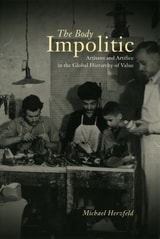
The Body Impolitic
Artisans and Artifice in the Global Hierarchy of ValueMichael Herzfeld
University of Chicago Press, 2003
Michael Herzfeld takes us inside a rich variety of small-town Cretan artisans' workshops to show how apprentices are systematically thwarted into learning by stealth and guile. This harsh training reinforces a stereotype of artisans as rude and uncultured. Moreover, the same stereotypes that marginalize artisans locally also operate to marginalize Cretans within the Greek nation and Greece itself within the international community. What Herzfeld identifies as "the global hierarchy of value" thus frames the nation's ancient monuments and traditional handicrafts as evidence of incurable "backwardness."
Herzfeld's sensitive observations offer an intimately grounded way of understanding the effects of globalization and of one of its most visible offshoots, the heritage industry, on the lives of ordinary people in many parts of the world today.
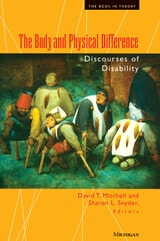
The Body and Physical Difference
Discourses of DisabilityDavid T. Mitchell and Sharon L. Snyder, Editors
University of Michigan Press, 1997
The book provides a provocative range of topics and perspectives: the absence of physical "otherness" in Ancient Greece, the depiction of the female invalid in Victorian literature, the production of tragic innocence in British and American telethons, the reconstruction of Civil War amputees, and disability as the aesthetic basis for definitions of expendable life within the modern eugenics movement. With this new, secure anchoring in the humanities, disability studies now emerges as a significant strain in contemporary theories of identity and social marginality.
Moving beyond the oversimplication that disabled people are marginalized and made invisible by able-ist assumptions and practices, the contributors demonstrate that representation is founded upon the perpetual exhibition of human anomalies. In this sense, all art can be said to migrate toward the "freakish" and the "grotesque." Such a project paradoxically makes disability the exception and the rule of the desire to represent that which has been traditionally out-of-bounds in polite discourse.
The Body and Physical Difference has relevance across a wide range of academic specialties such as cultural studies, the sociology of medicine, history, literature and medicine, the allied health professions, rehabilitation, aesthetics, philosophical discourses of the body, literary and film studies, and narrative theory.
David T. Mitchell is Assistant Professor of English, Northern Michigan University. Sharon L. Snyder teaches film and literature at Northern Michigan University.
The Body in Crisis
New Pathways and Short Circuits in RepresentationChristine Greiner
University of Michigan Press, 2021
The Body in Late-Capitalist USA
Donald M. Lowe
Duke University Press, 1995
Moving beyond studies of representations and images of the body, Lowe focuses on the intersection of body practices, language, and the Social to describe concretely the reality of a lived body. His strongly synthetic work brings together Marxist critique, semiotics, Foucaultian discourse analysis, and systems and communications theory to examine those practices that construct the body under late capitalism: habits of work and consumption, the ways we give birth and raise children, socialization, mental and physical healing, reconstructions and contestations of sexuality and gender. Lowe draws upon a wide range of sources, including government and labor studies and statistics, diagnostic and statistical manuals on mental illness, computer manuals, self-help books, and guides to work-related stress disorders, to illustrate the transformation of the body into a nexus of exchange value in postmodern society.
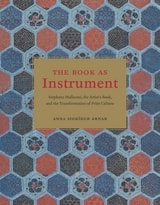
The Book as Instrument
Stéphane Mallarmé, the Artist's Book, and the Transformation of Print CultureAnna Sigrídur Arnar
University of Chicago Press, 2011
Stéphane Mallarmé (1842–98) was a French Symbolist poet, theorist, and teacher whose ideas and legendary salons set the stage for twentieth-century experimentation in poetry, music, theater and art. A canonical figure in the legacy of modernism, Mallarmé was also a lifelong champion of the book as both a literary endeavor and a carefully crafted material object.
In The Book as Instrument, Anna Sigrídur Arnar explores how this object functioned for Mallarmé and his artistic circle, arguing that the book became a strategic site for encouraging a modern public to actively partake in the creative act, an idea that informed later twentieth-century developments such as conceptual and performance art. Arnar demonstrates that Mallarmé was invested in creating radically empowering reading experiences, and the diverse modalities he proposed for both reading and looking anticipate interactive media prevalent in today’s culture. In describing the world of books, visual culture, and mass media of the late nineteenth century, Arnar touches upon an array of themes that continues to preoccupy us in our own moment, including speculations on the future of the book. Enhanced by gorgeous illustrations, The Book as Instrument is sure to fascinate anyone interested in the ever-vibrant experiment between word and image that makes the page and the multi-sensory pleasures of reading.
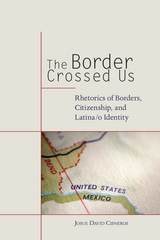
The Border Crossed Us
Rhetorics of Borders, Citizenship, and Latina/o IdentityJosue David Cisneros
University of Alabama Press, 2013
Explores efforts to restrict and expand notions of US citizenship as they relate specifically to the US-Mexico border and Latina/o identity.
Borders and citizenship go hand in hand. Borders define a nation as a territorial entity and create the parameters for national belonging. But the relationship between borders and citizenship breeds perpetual anxiety over the purported sanctity of the border, the security of a nation, and the integrity of civic identity.
In The Border Crossed Us, Josue David Cisneros addresses these themes as they relate to the US-Mexico border, arguing that issues ranging from the Mexican-American War of 1846–1848 to contemporary debates about Latina/o immigration and border security are negotiated rhetorically through public discourse. He explores these rhetorical battles through case studies of specific Latina/o struggles for civil rights and citizenship, including debates about Mexican American citizenship in the 1849 California Constitutional Convention, 1960s Chicana/o civil rights movements, and modern-day immigrant activism.
Cisneros posits that borders—both geographic and civic—have crossed and recrossed Latina/o communities throughout history (the book’s title derives from the popular activist chant, “We didn’t cross the border; the border crossed us!”) and that Latina/os in the United States have long contributed to, struggled with, and sought to cross or challenge the borders of belonging, including race, culture, language, and gender.
The Border Crossed Us illuminates the enduring significance and evolution of US borders and citizenship, and provides programmatic and theoretical suggestions for the continued study of these critical issues.
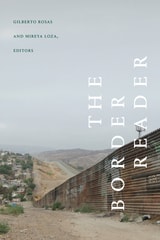
The Border Reader
Gilberto Rosas and Mireya Loza, editors
Duke University Press, 2023
Contributors. Leisy J. Abrego, Gloria E. Anzaldúa, Martha Balaguera, Lionel Cantú, Leo R. Chavez, Raúl Fernández, Rosa-Linda Fregoso, Roberto G. Gonzales, Gilbert G. González, Ramón Gutiérrez, Kelly Lytle Hernández, José E. Limón, Mireya Loza, Alejandro Lugo, Eithne Luibhéid, Martha Menchaca, Cecilia Menjívar, Natalia Molina, Fiamma Montezemolo, Américo Paredes, Néstor Rodríguez, Renato Rosaldo, Gilberto Rosas, María Josefina Saldaña-Portillo, Sonia Saldívar-Hull, Alicia Schmidt Camacho, Sayak Valencia Triana, Carlos G. Vélez-Ibáñez, Patricia Zavella
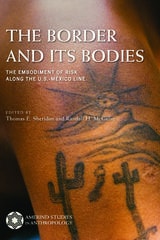
The Border and Its Bodies
The Embodiment of Risk Along the U.S.-México LineEdited by Thomas E. Sheridan and Randall H. McGuire
University of Arizona Press, 2019
The increasingly militarized U.S.-México border is an intensely physical place, affecting the bodies of all who encounter it. The essays in this volume explore how crossing becomes embodied in individuals, how that embodiment transcends the crossing of the line, and how it varies depending on subject positions and identity categories, especially race, class, and citizenship.
Timely and wide-ranging, this book brings into focus the traumatic and real impact the border can have on those who attempt to cross it, and it offers new perspectives on the effects for rural communities and ranchers. An intimate and profoundly human look at migration, The Border and Its Bodies reminds us of the elemental fact that the border touches us all.
Contributors
Bruce E. Anderson
Jared Beatrice
Rebecca Crocker
Jason De León
Linda Green
Randall H. McGuire
Shaylih Muehlmann
Robin Reineke
Olivia T. Ruiz Marrujo
David Seibert
Thomas E. Sheridan
Angela Soler
Ruth M. Van Dyke
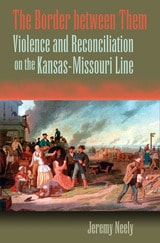
The Border between Them
Violence and Reconciliation on the Kansas-Missouri LineJeremy Neely
University of Missouri Press, 2007
The most bitter guerrilla conflict in American history raged along the Kansas-Missouri border from 1856 to 1865, making that frontier the first battleground in the struggle over slavery. That fiercely contested boundary represented the most explosive political fault line in the United States, and its bitter divisions foreshadowed an entire nation torn asunder. Jeremy Neely now examines the significance of the border war on both sides of the Kansas-Missouri line and offers a comparative, cross-border analysis of its origins, meanings, and consequences.
A narrative history of the border war and its impact on citizens of both states, The Border between Them recounts the exploits of John Brown, William Quantrill, and other notorious guerrillas, but it also uncovers the stories of everyday people who lived through that conflict. Examining the frontier period to the close of the nineteenth century, Neely frames the guerrilla conflict within the larger story of the developing West and squares that violent period with the more peaceful—though never tranquil—periods that preceded and followed it.
Focusing on the countryside south of the big bend in the Missouri River, an area where there was no natural boundary separating the states, Neely examines three border counties in each state that together illustrate both sectional division and national reunion. He draws on the letters and diaries of ordinary citizens—as well as newspaper accounts, election results, and census data—to illuminate the complex strands that helped bind Kansas and Missouri together in post–Civil War America. He shows how people on both sides of the line were already linked by common racial attitudes, farming practices, and ambivalence toward railroad expansion; he then tells how emancipation, industrialization, and immigration eventually eroded wartime divisions and facilitated the reconciliation of old foes from each state.
Today the “border war” survives in the form of interstate rivalries between collegiate Tigers and Jayhawks, allowing Neely to consider the limits of that reconciliation and the enduring power of identities forged in wartime. The Border between Them is a compelling account of the terrible first act of the American Civil War and its enduring legacy for the conflict’s veterans, victims, and survivors, as well as subsequent generations.
The Boundaries of Blackness
AIDS and the Breakdown of Black PoliticsCathy Cohen
University of Chicago Press, 1999
The Boundaries of Blackness is the first full-scale exploration of the social, political, and cultural impact of AIDS on the African-American community. Informed by interviews with activists, ministers, public officials, and people with AIDS, Cathy Cohen unflinchingly brings to light how the epidemic fractured, rather than united, the black community. She traces how the disease separated blacks along different fault lines and analyzes the ensuing struggles and debates.
More broadly, Cohen analyzes how other cross-cutting issues—of class, gender, and sexuality—challenge accepted ideas of who belongs in the community. Such issues, she predicts, will increasingly occupy the political agendas of black organizations and institutions and can lead to either greater inclusiveness or further divisiveness.
The Boundaries of Blackness, by examining the response of a changing community to an issue laced with stigma, has much to teach us about oppression, resistance, and marginalization. It also offers valuable insight into how the politics of the African-American community—and other marginal groups—will evolve in the twenty-first century.
The Brain's Body
Neuroscience and Corporeal PoliticsVictoria Pitts-Taylor
Duke University Press, 2016
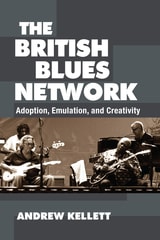
The British Blues Network
Adoption, Emulation, and CreativityAndrew Kellett
University of Michigan Press, 2017
The Burden of Choice
Recommendations, Subversion, and Algorithmic CultureJonathan Cohn
Rutgers University Press, 2019

The Business of Professional Sports
Edited by Paul D. Staudohar and James A. Mangan
University of Illinois Press, 1991
Beyond the highly publicized heroics and foibles of players and teams, when the grandstands are empty and the scoreboards dark, there is a world of sport about which little is known by even the most ardent fan. It is the business world of sport; it is characterized by a thirst for power and money, and its players are just as active as those on the professional teams they oversee. In this collection, some of the best scholars in the field use examples from baseball, football, basketball, and hockey to illuminate the significant economic, legal, social, and historic aspects of the business of professional sports.
Contributors: Dennis A. Ahlburg, Rob B. Beamish, Joan M. Chandler, James B. Dworkin, Lawrence M. Kahn, Charles P. Korr, John J. MacAloon, David Mills, Roger G. Noll, Steven A. Reiss, Gary R. Roberts, Stephen F. Ross, Peter D. Sherer, Leigh Steinberg, and David G. Voigt,
The Business of Racism
Labor and Environment in Brazil's Racial CapitalismIan Carrillo
Duke University Press, 2026
The Calling of Education
"The Academic Ethic" and Other Essays on Higher EducationEdward Shils
University of Chicago Press, 1997
Edward Shils understood the university as a great symphonic conductor comprehends the value of each instrument and section, both separately and in cooperation. The Calling of Education offers Shils's insightful perspective on problems that are no less pressing than when he first confronted them.
Edward Shils (1910-1995) was distinguished service professor in the Committee on Social Thought and the department of sociology at the University of Chicago. Among his many books published by the University of Chicago Press are Portraits: A Gallery of Intellectuals and the three-volume Selected Papers of Edward Shils.
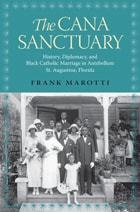
The Cana Sanctuary
History, Diplomacy, and Black Catholic Marriage in Antebellum St. Augustine, FloridaFrank Marotti, Jr.
University of Alabama Press, 2012
In the late seventeenth century a group of about a dozen escaped African slaves from the English colony of Carolina reached the Spanish settlement of St. Augustine. In a diplomatic bid for sanctuary, to avoid extradition and punishment, they requested the sacrament of Catholic baptism from the Spanish Catholic Church. Their negotiations brought about their baptism and with it their liberation. The Cana Sanctuary focuses on what author Frank Marotti terms “folk diplomacy”—political actions conducted by marginalized, non-state sectors of society—in this instance by formerly enslaved African Americans in antebellum East Florida. The book explores the unexpected transformations that occurred in seventeenth- and eighteenth-century St. Augustine as more and more ex-slaves arrived to find their previously disregarded civil rights upheld under sacred codes by an international, nongovernmental, authoritative organization.
With the Catholic Church acting as an equalizing, empowering force for escaped African slaves, the Spanish religious sanctuary policy became part of popular historical consciousness in East Florida. As such, it allowed for continual confrontations between the law of the Church and the law of the South. Tensions like these survived, ultimately lending themselves to an “Afro-Catholicism” sentiment that offered support for antislavery arguments.
The Carceral Surround
R. Joshua Scannell
University of Minnesota Press, 2026
How digital technologies entrench state power—and a new vision for resistance
As law enforcement agencies deploy increasingly advanced technologies to suppress dissent, hunt migrants, and target marginalized communities, The Carceral Surround offers a powerful new theory of police and prison power in the digital age. Making sense of the rapid expansion of digital carceral infrastructure in a nation that claims to value freedom and individual rights, R. Joshua Scannell moves beyond familiar debates over privacy to show that understanding digital policing requires confronting the political and racial logics that sustain police power.
Drawing on digital media theory, science and technology studies, critical race and ethnic studies, and carceral theory, The Carceral Surround reveals how twenty-first-century policing is less about managing crime than about governing possibility. Carceral power now operates across every register of daily life through predictive analytics, risk modeling, and algorithmic systems that track, sort, and preempt. From social media archives and facial recognition software to satellite mapping and radiation sensors, Scannell charts how seemingly disparate media converge into an environment of control that links technocratic governance to the maintenance of racial hierarchy and capitalist order.
Tracing today’s technoauthoritarian regime from the NYPD’s assault on Black Lives Matter protesters in 2020 to the Stop LAPD Spying Coalition’s campaign to end predictive policing contracts, The Carceral Surround is a rare hybrid of critique and refusal, illuminating the digital logic of US authoritarianism while imagining pathways for collective resistance beyond its grasp.
Retail e-book files for this title are screen-reader friendly.
The Cheer Reader
Inside an American InstitutionNatalie G. Adams
University of Texas Press, 2026
Wide-ranging essays on cheerleading, from the pep rally to the NFL sidelines to All-Star competitions, and why it matters.
Cheer is deeply associated with a wholesome, simple Americana. Yet this often clichéd image belies its complex history and current status as a global industry made up of diverse participants and forms. Indeed, cheerleading—its culture, controversies, and evolution—has always offered a revealing lens on race, class, gender, and sexuality in American society..
Cheerleading was born in 1869 as a diversion for Ivy League men. The Cheer Reader collects fourteen wide-ranging essays on what happened next and why it matters: how cheer became feminized, sexualized, professionalized, even radicalized. Contributors examine the role of cheer in the Civil Rights Movement, a landmark student free-speech case, and the emergence of competitive-only and queer cheer teams. Other essays consider cheer’s quest for sport legitimacy, social media “cheerlebrities” and eating disorders, and the working conditions of NFL and NBA cheerleaders. Amid these tensions between empowerment and objectification, cheer is only getting more popular, with some seven million participants worldwide. The Cheer Reader is a nuanced account of the activity they share and what it means today.
The Chican@ Hip Hop Nation
Politics of a New Millennial MestizajePancho McFarland
Michigan State University Press, 2013
The Chicken and the Quetzal
Incommensurate Ontologies and Portable Values in Guatemala's Cloud ForestPaul Kockelman
Duke University Press, 2016
The Children in Child Health
Negotiating Young Lives and Health in New ZealandJulie Spray
Rutgers University Press, 2020
In the unique context of indigenous Māori and migrant Pacific children in postcolonial New Zealand, Julie Spray explores the intertwining issues of epidemic disease, malnutrition, stress, violence, self-harm, and death to address the problem of how scholars and policy-makers alike can recognize and respond to children as social actors in their health. The Children in Child Health innovatively combines perspectives from childhood studies, medical anthropology, and public health and policy together with evocative ethnography to show how a deep understanding of children’s worlds can change our approach to their care.
The Cinematic ImagiNation
Indian Popular Films as Social HistoryVirdi, Jyotika
Rutgers University Press, 2003
--Gina Marchetti, author of Romance and the "Yellow Peril": Race, Sex, and Discursive Strategies in Hollywood Fiction
India produces more films than any other country in the world, and these works are avidly consumed by non-Western cultures in Africa, Eastern Europe, the Middle East, and by the Indian communities in Australia, Britain, the Caribbean Islands, and North America. Jyotika Virdi focuses on how this dominant medium configures the "nation" in post-Independence Hindi cinema. She scrutinizes approximately thirty films that have appeared since 1950 and demonstrates how concepts of the nation form the center of this cinema's moral universe. As a kind of storytelling, Indian cinema provides a fascinating account of social history and cultural politics, with the family deployed as a symbol of the nation. Virdi demonstrates how the portrayal of the nation as a mythical community in Hindi films collapses under the weight of its own contradictions--irreconcilable differences that encompass gender, sexuality, family, class, and religious communities. Through these film narratives, the author traces transactions among the various constituencies that struggle, accommodate, coexist uneasily, or reconstitute each other over time, and, in the process, reveal the topography of postcolonial culture.
The Cinematic Life of the Gene
Jackie Stacey
Duke University Press, 2010
Stacey examines the body-horror movies Alien: Resurrection and Species in light of Jean Baudrillard’s apocalyptic proclamations about cloning and “the hell of the same,” and she considers the art-house thrillers Gattaca and Code 46 in relation to ideas about imitation, including feminist theories of masquerade, postcolonial conceptualizations of mimicry, and queer notions of impersonation. Turning to Teknolust and Genetic Admiration, independent films by feminist directors, she extends Walter Benjamin’s theory of aura to draw an analogy between the replication of biological information and the reproducibility of the art object. Stacey suggests new ways to think about those who are not what they appear to be, the problem of determining identity in a world of artificiality, and the loss of singularity amid unchecked replication.
The City Creative
The Rise of Urban Placemaking in Contemporary AmericaMichael H. Carriere and David Schalliol
University of Chicago Press, 2021
Spanning the 1950s to the post-recession 2010s, The City Creative highlights the roles of such prominent individuals and organizations as Jane Jacobs, Christopher Alexander, Richard Sennett, Project for Public Spaces, and the National Endowment for the Arts in the development of urban placemaking, both in the abstract and on the ground. But that’s only half the story. Bringing the narrative to the present, Michael H. Carriere and David Schalliol also detail placemaking interventions at more than 200 sites in more than 40 cities, combining archival research, interviews, participant observation, and Schalliol’s powerful documentary photography. Carriere and Schalliol find that while these formal and informal placemaking interventions can bridge local community development and regional economic plans, more often than not, they push the boundaries of mainstream placemaking. Rather than simply stressing sociability or market-driven economic development, these initiatives offer an alternative model of community-led progress with the potential to redistribute valuable resources while producing tangible and intangible benefits for their communities. The City Creative provides a kaleidoscopic overview of how these initiatives grow, and sometimes collapse, illustrating the centrality of placemaking in the evolution of the American city and how it can be reoriented to meet demands for a more equitable future.
The City after Property
Abandonment and Repair in Postindustrial DetroitSara Safransky
Duke University Press, 2023
The City of Our Dreaming
The Alchemy LectureLaleh Khalili, V. Mitch McEwen, Gabriela Leandro Pereira, and Leanne Betasamosake Simpson
Duke University Press, 2026
The Clays of Alabama
A Planter-Lawyer-Politician FamilyRuth Ketring Nuermberger
University of Alabama Press, 1958
Of unique interest to the student of nineteenth century America is this account of the Alabama Clays, who in their private life were typical of the slaveholding aristocracy of the old South, but as lawyer-politicians played significant roles in state and national politics, in the development of the Democratic party, and in the affairs of the Confederacy.
In the period from 1811 to 1915, the Clays were involved in many of the great problems confronting the South. This study of the Clay family includes accounts of the wartime legislation of the Confederate Congress and the activities of the Confederate Commission in Canada. Equally interesting to many readers will be the intimate view of social life in ante-bellum Washington and the story of the domestic struggles of a plantation family during and after the war, as revealed through the letters of Clement Claiborne Clay and his wife Virginia.
The Clerk's Tale
Young Men and Moral Life in Nineteenth-Century AmericaThomas Augst
University of Chicago Press, 2003
Thomas Augst follows clerks as they made their way through the boarding houses, parlors, and offices of the big city. Tracing the course of their everyday lives, Augst shows how these young men used acts of reading and writing to navigate the anonymous world of market culture and claim identities for themselves within it. Clerks, he reveals, calculated their prospects in diaries, composed detailed letters to friends and family, attended lectures by key thinkers of the day, joined libraries where they consumed fiction, all while wrestling with the boredom of their work. What results, then, is a poignant look at the literary practices of ordinary people and an affecting meditation on the moral lives of men in antebellum America.

The Climate Trial
Law and Justice on a Melting PlanetNoah Walker-Crawford
Duke University Press, 2026

The Climate of History in a Planetary Age
Dipesh Chakrabarty
University of Chicago Press, 2021
Chakrabarty argues that we must see ourselves from two perspectives at once: the planetary and the global. This distinction is central to Chakrabarty’s work—the globe is a human-centric construction, while a planetary perspective intentionally decenters the human. Featuring wide-ranging excursions into historical and philosophical literatures, The Climate of History in a Planetary Age boldly considers how to frame the human condition in troubled times. As we open ourselves to the implications of the Anthropocene, few writers are as likely as Chakrabarty to shape our understanding of the best way forward.
The Colonizing Self
Or, Home and Homelessness in Israel/PalestineHagar Kotef
Duke University Press, 2020
The Color of Mind
Why the Origins of the Achievement Gap Matter for JusticeDerrick Darby and John L. Rury
University of Chicago Press, 2018
Telling the story of what they call the Color of Mind—the idea that there are racial differences in intelligence, character, and behavior—they show how philosophers, such as David Hume and Immanuel Kant, and American statesman Thomas Jefferson, contributed to the construction of this pernicious idea, how it influenced the nature of schooling and student achievement, and how voices of dissent such as Frederick Douglass, Frances Ellen Watkins Harper, and W. E. B. Du Bois debunked the Color of Mind and worked to undo its adverse impacts.
Rejecting the view that racial differences in educational achievement are a product of innate or cultural differences, Darby and Rury uncover the historical interplay between ideas about race and American schooling, to show clearly that the racial achievement gap has been socially and institutionally constructed. School leaders striving to bring justice and dignity to American schools today must work to root out the systemic manifestations of these ideas within schools, while still doing what they can to mitigate the negative effects of poverty, segregation, inequality, and other external factors that adversely affect student achievement. While we cannot expect schools alone to solve these vexing social problems, we must demand that they address the dignitary injustices associated with how we track, discipline, and deal with special education that reinforce long-standing racist ideas. That is the only way to expel the Color of Mind from schools, close the racial achievement gap, and afford all children the dignity they deserve.
The Color of Night
Race, Railroaders, and Murder in the Wartime WestMax Geier
Oregon State University Press, 2015
In this deeply researched and detailed account, Geier explores how race, gender, and class affected the attitudes of local town-folk, law officers, and courtroom jurors toward Black trainmen on the West Coast, at a time when militarization skewed perceptions of virtue, status, and authority. He delves into the working conditions and experiences of unionized Black trainmen in their “home and away” lives in Los Angeles and Portland, while illuminating the different ways that they, and other residents of Oregon and southern California, responded to news of “Oregon’s murdered war bride.” Reporters, civil rights activists, and curiosity seekers transformed the trial and appeals process into a public melodrama.
The investigation, trial, and conviction of Robert Folkes galvanized civil rights activists, labor organizers, and community leaders into challenging the flawed judicial process and ultimately the death penalty in Oregon, serving as a catalyst for civil rights activism that bridged rural and urban divides. The Color of Night will appeal to “true crime” aficionados, and to anyone interested in the history of race and labor relations, working conditions, community priorities, and attitudes toward the death penalty in the first half of the 20th century.
The Color of Paper
Representing Race in the Comics MediumChris Gavaler
The Ohio State University Press, 2026

The Columbia River Treaty Revisited
Transboundary River Governance in the Face of UncertaintyEdited by Barbara Cosens
Oregon State University Press, 2012
The Columbia River Treaty Revisited, with contributions from historians, geographers, environmental scientists, and other experts, is intended to facilitate conversation about the impending expiration. It allows the reader, through the close inspection of the Columbia River Basin, to better grasp the uncertainty of water governance. It aids efforts, already underway, to understand changes in the basin since the treaty was passed, to predict future changes, and to determine whether alteration of the treaty is ultimately advisable.
The Columbia River Treaty Revisited will appeal to those interested in water basin management–scholars, stakeholders, and residents of the Columbia River basin alike.
A Project of the Universities Consoritum on Columbia River Governance
The Universities Consortium on Columbia River Governance, with representatives from universities in the U.S. and Canada, formed to offer a nonpartisan platform to facilitate an informed, inclusive, international dialogue among key decision-makers and other interested people and organizations; to connect university research to problems faced within the basin; and to expose students to a complex water resources problem. The Consortium organized the symposium on which this volume is based.
The Comedy Studies Reader
Edited by Nick Marx and Matt Sienkiewicz
University of Texas Press, 2018
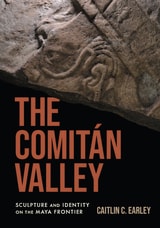
The Comitán Valley
Sculpture and Identity on the Maya FrontierCaitlin C. Earley
University of Texas Press, 2023
A thousand years ago, the Comitán Valley, in the Mexican state of Chiapas, was the western edge of the Maya world. Far from the famous power centers of the Classic period, the valley has been neglected even by specialists. Here, Caitlin C. Earley offers the first comprehensive study of sculpture excavated from the area, showcasing the sophistication and cultural vigor of a region that has largely been ignored.
Supported by the rulers of the valley’s cities, local artists created inventive works that served to construct civic identities. In their depictions of warrior kings, ballgames, rituals, and ancestors, the artists of Comitán made choices that reflected political and religious goals and distinguished the artistic production of the Comitán Valley from that of other Maya locales. After the Maya abandoned their powerful lowland centers, those in Comitán were maintained, a distinction from which Earley draws new insights concerning the Maya collapse. Richly illustrated with never-before-published photographs of sculptures unearthed from key archaeological sites, The Comitán Valley is an illuminating work of art historical recovery and interpretation.

The Community of Nuchi Du Takara ("Life Is the Ultimate Treasure") in Postwar Okinawa
Local Subjectivity within and against EmpireMasamichi (Marro) Inoue
University of Michigan Press, 2025
The Company We Keep
Occupational Community in the High-Tech Network SocietyDaniel Marschall
Temple University Press, 2014
At the birth of the Internet Age, computer technologists in small, aggressive software development companies became part of a unique networked occupational community. They were creative, team-oriented, and enthusiastic workers who built "boundaryless careers," hopping from one employer to another.
In his absorbing ethnography The Company We Keep, sociologist Daniel Marschall immerses himself in IntenSivity, one such technological workplace. Chronicling the employees' experiences, Marschall examines how these workers characterize their occupational culture, share values and work practices, and help one another within their community. He sheds light on the nature of this industry marked by highly skilled jobs and rapid technological change.
The experiences at IntenSivity are now mirrored by employees at Facebook and thousands of other cutting-edge, high-tech start-up firms. The Company We Keep helps us understand the emergence of virtual work communities and the character of the contemporary labor market at the level of a small enterprise.
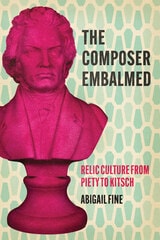
The Composer Embalmed
Relic Culture from Piety to KitschAbigail Fine
University of Chicago Press, 2025
During the nineteenth century, music institutions promoted artworks they deemed timeless and made composers into figureheads of a lasting Western canon. Alongside this institutional face of the canon was a more intimate impulse to preserve, touch, and embrace the residues of the dead. In Germany and Austria between 1870 and 1930, music lovers venerated the bodies, houses, and belongings of composers as relics, shrines, and talismans. In The Composer Embalmed, Abigail Fine documents the vernacular and eccentric ways that composers have been remembered.
Fine navigates a wealth of unknown archival material to recover the stories of devotees: from pilgrims who felt time stop in historic houses to music-loving doctors who made skulls into sacred specimens, dilettantes who displayed Beethoven’s mask as a relic of the “beautiful death,” and interwar critics of those dilettantes who disparaged piety as a false religion, a kitsch replica. In isolation, these practices may look like simple acts of affection. But in the aggregate, Fine asserts, acts of devotion constituted what we might broadly understand as relic culture—a culture that sought to possess the body of the departed genius, and that superimposed habits of anthropological collecting onto artifacts of Austro-German heritage. By excavating objects, ephemera, amateur lyric, visitors’ books, letters, and travelogues, The Composer Embalmed reveals the underbelly of the canon, where guilty pleasures blur the boundary between sanctity and desecration.