Results by title
461 books match the query 'Teaching' and 111 start with t
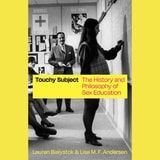
Touchy Subject
The History and Philosophy of Sex EducationLauren Bialystok and Lisa M. F. Andersen
University of Chicago Press, 2022
A case for sex education that puts it in historical and philosophical context.
In the United States, sex education is more than just an uncomfortable rite of passage: it's a political hobby horse that is increasingly out of touch with young people’s needs. In Touchy Subject, philosopher Lauren Bialystok and historian Lisa M. F. Andersen unpack debates over sex education, explaining why it’s worth fighting for, what points of consensus we can build upon, and what sort of sex education schools should pursue in the future.
Andersen surveys the history of school-based sex education in the United States, describing the key question driving reform in each era. In turn, Bialystok analyzes the controversies over sex education to make sense of the arguments and offer advice about how to make educational choices today. Together, Bialystok and Andersen argue for a novel framework, Democratic Humanistic Sexuality Education, which exceeds the current conception of “comprehensive sex education” while making room for contextual variation. More than giving an honest run-down of the birds and the bees, sex education should respond to the features of young people’s evolving worlds, especially the digital world, and the inequities that put some students at much higher risk of sexual harm than others. Throughout the book, the authors show how sex education has progressed and how the very concept of “progress” remains contestable.
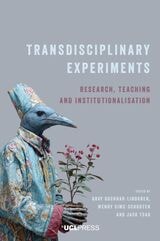
Transdisciplinary Experiments
Research, Teaching and InstitutionalisationEdited by Gray Kochhar-Lindgren, Wendy Sims-Schouten, and Jack Tsao
University College London, 2026
This volume pairs practical and theoretical insights on experimentation while advancing new models of transdisciplinary research, teaching, and institutional transformation.
Transdisciplinary Experiments explores how experimental approaches can reshape research, education, and institutions in higher education to respond to today’s complex and interconnected challenges. Grounded in the idea that experimentation can open up new possibilities, the volume examines how transdisciplinary teaching and learning can inspire change across disciplines, sectors, and cultures.
Transforming History
A Guide to Effective, Inclusive, and Evidence-Based TeachingMary Jo Festle
University of Wisconsin Press, 2020
Instructors will improve their own conceptual understandings of teaching and learning issues, as well as receive guidance on designing courses and implementing pedagogies consistent with what research tells us about how students learn. The book offers practical illustrations of assignments, goals, questions, grading rubrics, unit plans, and formats for peer observation that are adaptable for courses on any subject and of any size. Transforming History is a critical guide for higher and secondary education faculty—neophytes and longtime professionals alike—working to improve student learning.
Transforming the Authority of the Archive
Undergraduate Pedagogy and Critical Digital ArchivesAndi Gustavson and Charlotte Nunes, Editors
Lever Press, 2023
Contributions to this volume represent a range of institutions including small liberal arts colleges, HBCUs, Ivy Leagues, large research institutions, and community-based collections. The assignments, projects, and initiatives described across this volume are fundamentally concerned with the challenge to model digital archival collections so as to center individual and community voices that are historically under-engaged in the archives. To address this challenge, contributors describe various approaches to substantively, often radically, redistribute archival resources and authority. The chapters within Transforming the Authority of the Archive offer thoughtful and creative pedagogical approaches to counter the presumed neutrality of the archive and advocate a shared understanding of the contingency of archival collections. This book is a must-read for liberal arts faculty, graduate students, archivists (both community- and institutionally-affiliated), information-studies professionals, librarians, and other professionals working and teaching in archives, museums, libraries, and other cultural heritage institutions.

Translanguaging
What Every Teacher Needs to KnowJacob Huckle
University of Michigan Press, 2027
Multilingual learners bring a wealth of resources to the classroom in the form of their various languages. How can teachers tap into these resources as part of the learning process? How can we intentionally embrace linguistic diversity in our classrooms through the way we design learning? Despite the proliferation of research and writing about pedagogical translanguaging, many teachers do not feel equipped to effectively implement translanguaging approaches in their teaching.
Translanguaging provides a comprehensive introduction to the what, why, and how of translanguaging. The book synthesizes the research literature for a non-specialist audience, and builds on these insights by providing practical guidance for how students can be empowered to use all their linguistic resources—not just English or the language of instruction—to learn and thrive in school or college. Whether teachers of ESL or other subjects, all teachers will benefit from the practical guidance about translanguaging in this book and will be equipped to begin rethinking and redesigning their teaching to make more space for students’ multilingualism.
Transnational Writing Program Administration
David S. Martins
Utah State University Press, 2014
While local conditions remain at the forefront of writing program administration, transnational activities are slowly and thoroughly shifting the questions we ask about writing curricula, the space and place in which writing happens, and the cultural and linguistic issues at the heart of the relationships forged in literacy work. Transnational Writing Program Administration challenges taken-for-granted assumptions regarding program identity, curriculum and pedagogical effectiveness, logistics and quality assurance, faculty and student demographics, innovative partnerships and research, and the infrastructure needed to support writing instruction in higher education.
Well-known scholars and new voices in the field extend the theoretical underpinnings of writing program administration to consider programs, activities, and institutions involving students and faculty from two or more countries working together and highlight the situated practices of such efforts. The collection brings translingual graduate students at the forefront of writing studies together with established administrators, teachers, and researchers and intends to enrich the efforts of WPAs by examining the practices and theories that impact our ability to conceive of writing program administration as transnational.
This collection will enable writing program administrators to take the emerging locations of writing instruction seriously, to address the role of language difference in writing, and to engage critically with the key notions and approaches to writing program administration that reveal its transnationality.
Treatment of Error in Second Language Student Writing, Second Edition
Dana R. Ferris
University of Michigan Press, 2011
Treatment of Error offers a realistic, well-reasoned account of what teachers of multilingual writers need to know about error and how to put what they know to use. As in the first edition, Ferris again persuasively addresses the fundamental error treatment questions that plague novice and expert writing specialists alike: What types of errors should teachers respond to? When should we respond to them? What are the most efficacious ways of responding to them? And ultimately, what role should error treatment play in the teaching of the process of writing?
The second edition improves upon the first by exploring changes in the field since 2002, such as the growing diversity in what is called “L2 writers,” the blurring boundaries between “native” and “non-native” speakers of English, the influence of genre studies and corpus linguistics on the teaching of writing, and the need the move beyond “error” to “second language development” in terms of approaching students and their texts. It also explores what teacher preparation programs need to do to train teachers to treat student error.
The second edition features
* an updating of the literature in all chapters
* a new chapter on academic language development
* a postscript on how to integrate error treatment/language development suggestions in Chapters 4-6 into a writing class syllabus
* the addition of discussion/analysis questions at the end of each chapter, plus suggested readings, to make the book more useful in pedagogy or teacher development workshops
Trigger Warnings
Teaching Through TraumaEdited by Ian Barnard, Ryan Ashley Caldwell, Jada Patchigondla, Aneil Rallin, Morgan Read-Davidson, Ethan Trejo, and Kristi Wilson
Lever Press, 2026
Trigger Warnings: Teaching Through Trauma brings theory and praxis to examine the ideological underpinnings and pedagogy around trigger warnings and trauma, offering multiple heuristics for classroom implementation. The ongoing interest in trigger warnings is partly a result of trigger warnings and trauma becoming more inextricably interwoven in the past few years in the wake of COVID-19, mental health crises, right-wing attacks on educational institutions, climate change, and attempts at political redress and educational equity. Critiques of trigger warnings come from all sides of the political and pedagogical spectra, and even scholars and practitioners who offer a trauma-informed approach to the topic are not unified in their view of the benefits or drawbacks of trigger warnings.
Trigger Warnings: Teaching Through Trauma provides insights through a range of forms: research articles, personal essays, long and short teaching narratives, student perspectives, memoirs, vignettes, autoethnographies, reflections, case studies, manifesto, theory, and history. Not only does this collection create a more varied engagement experience for readers, but, in line with recent scholarship in “counterstory,” it also allows for a wider variety of voices to be heard and for the articulation of experiences that might not be well accommodated by traditional scholarly essays.

Turning the Soul
Teaching through Conversation in the High SchoolSophie Haroutunian-Gordon
University of Chicago Press, 1991
One class, located in a private, racially integrated urban school, has had many conversations about the meaning of books. The second group, less advantaged students in a largely black urban school, has not. The reader watches as students in each group begin to draw upon experiences in their personal lives to speculate about events in the play. The students assist one another with the interpretation of complex passages, pose queries that help sustain the conversation, and struggle to "get Shakespeare right." Though the teachers suffer moments of intense frustration, they are rewarded by seeing their students learn to engage in meaningful exchange.
Because Turning the Soul draws on actual classroom conversations, it presents the range of difficulties that one encounters in interpretive discussion. The book describes the assumptions about learning that the use of such discussion in the classroom presupposes, and it offers a theoretical perspective from which to view the changes in both students and teachers.
Tutoring Matters
Everything You Always Wanted To Know About How To TutorJerome Rabow
Temple University Press, 1999
Tutoring Matters is the authoritative manual for both the aspiring and seasoned tutor. Using firsthand experiences of over one hundred new and experienced tutors, this long-awaited guide offers chapters on attitudes and anxieties, teaching techniques, and building relationships. It educates the tutor on how to handle and appreciate social and language differences; how to use other adults -- teachers, administrators, parents, employers -- to a student's advantage; and, when your student or circumstances determine that it's time, how to put a positive and supportive end to the tutor-tutee relationship.
Written by experienced tutors and tutoring educators, Tutoring Matters celebrates -- and provides just the right tools for -- an individualized and successful tutoring relationship and shows just how much you can learn -- about the world and yourself -- through teaching others.
Tutoring Matters
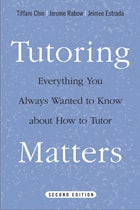
Everything You Always Wanted to Know about How to TutorAuthored by Tiffani Chin, Jerome Rabow and Jeimee Estrada
Temple University Press, 2011
Tutoring Matters is the authoritative guide for both the aspiring and seasoned tutor. Using firsthand experiences of over one hundred new and experienced college student tutors, the authors offer techniques for handling tutoring anxieties, teaching strategies, and tips for building relationships.
This new edition has been fully updated to help tutors to engage the interest of their students. In addition, it features practical “tip boxes” that provide quick-reference guidelines on a range of tutoring challenges—from making a connection in your first tutoring session to becoming familiar with your pupil's life and tutoring needs. This new edition also provides practical experience-based tips "from the trenches" about how to tutor math and reading and how to help students develop other academic skills and interests.