Results by title
923 books match the query 'Urban' and 157 start with t
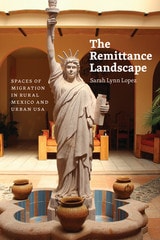
The Remittance Landscape
Spaces of Migration in Rural Mexico and Urban USASarah Lynn Lopez
University of Chicago Press, 2014
Lopez not only identifies a clear correspondence between the flow of remittances and the recent building boom in rural Mexico but also proposes that this construction boom itself motivates migration and changes social and cultural life for migrants and their families. At the same time, migrants are changing the landscapes of cities in the United States: for example, Chicago and Los Angeles are home to buildings explicitly created as headquarters for Mexican workers from several Mexican states such as Jalisco, Michoacán, and Zacatecas. Through careful ethnographic and architectural analysis, and fieldwork on both sides of the border, Lopez brings migrant hometowns to life and positions them within the larger debates about immigration.
The Return of the Neighborhood as an Urban Strategy
Edited by Michael A. Pagano
University of Illinois Press, 2015
The topics focus on sustainable capital and societal investments in people and firms at the neighborhood level. Proposed solutions cover a range of possibilities for enhancing the quality of life for individuals, households, and neighborhoods. These include everything from microenterprises to factories; from social spaces for collective and social action to private facilities; from affordable housing and safety to gated communities; and from neighborhood public education to cooperative, charter, and private schools.
Contributors: Andy Clarno, Teresa Córdova, Nilda Flores-González, Pedro A. Noguera, Alice O'Connor, Mary Pattillo, Janet Smith, Nik Theodore, Elizabeth S. Todd-Breland, Stephanie Truchan, and Rachel Weber.
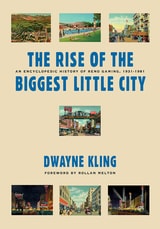
The Rise Of The Biggest Little City
An Encyclopedic History Of Reno Gaming, 1931-1981Dwayne Kling
University of Nevada Press, 2010
The history of Reno during the first half century is to a great degree the history of Reno’s gaming industry. Between 1931 and 1981, the economy, skyline, and lifestyle of “the Biggest Little City in the World” were strongly influenced by the city’s casinos and the people who created and operated them. In The Rise of the Biggest Little City, longtime Reno gaming executive Dwayne Kling records the fruits of his fourteen years of research into the history of Reno’s casinos, from the backroom (and often illegal) dives of the industry’s beginnings to the elegant casino-hotels of today. Arranged in encyclopedic form with historic photographs (many never before published), the book offers the stories of such famous establishments as Harolds Club, the Cal-Neva, the Sands, and Harrah’s, as well as defunct clubs like the Cedars, the Silver Spur, and the Bank Club. We also find the stories of the men and women who created Reno’s gaming industry—such as James McKay and Bill Graham, who came from the rough-and-tumble saloons of boom-town Tonopah and developed a chain of illegal gambling clubs and brothels into Reno’s first major casino, the Bank Club; the Smith family—Raymond I. “Pappy,” Harold Sr., Raymond A., and Harold Jr.—whose Harolds Club was a prime downtown attraction for over fifty years and brought Reno national fame as a destination for fun and gambling; Bill Bailey, an African-American whose Harlem Club—one of the first integrated casinos in Reno—attracted such show-business luminaries as Louis Armstrong and Pearl Bailey (his cousin) for late-night jam sessions; William Harrah, who parleyed a string of small bingo parlors into a major gaming empire; and Jack Douglass, a slot-route operator in the early days of legal gaming who became a major figure in Reno’s modern casino industry. There are more. Kling records the stories of hundreds of gaming establishments, most of them long forgotten, stretching geographically from the Mount Rose Highway to the north end of town, from Verdi to Sparks; and of dozens of men and women who shaped the industry, for better and for worse. We learn from that Reno was the true pioneer of the gambling industry. It was here that big-name entertainment was first offered in a casino setting; that elegant hotel rooms and fine dining were first offered as amenities of the casino experience; that a casino corporation first traded its stock on the New York Stock Exchange; that ethnic minorities first owned and operated casinos, and first integrated them. The Rise of the Biggest Little City will engage readers with its authoritative account of the rise of modern Reno and of the colorful history that lies beneath today’s neon and glitz.
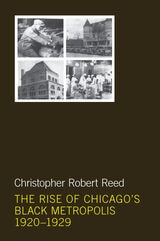
The Rise of Chicago's Black Metropolis, 1920-1929
Christopher Robert Reed
University of Illinois Press, 2014
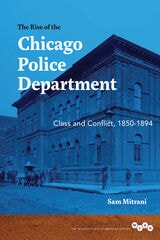
The Rise of the Chicago Police Department
Class and Conflict, 1850-1894Sam Mitrani
University of Illinois Press, 2013
In this book, Sam Mitrani cogently examines the making of the police department in Chicago, which by the late 1800s had grown into the most violent, turbulent city in America. Chicago was roiling with political and economic conflict, much of it rooted in class tensions, and the city's lawmakers and business elite fostered the growth of a professional municipal police force to protect capitalism, its assets, and their own positions in society. Together with city policymakers, the business elite united behind an ideology of order that would simultaneously justify the police force's existence and dictate its functions.
Tracing the Chicago police department's growth through events such as the 1855 Lager Beer riot, the Civil War, the May Day strikes, the 1877 railroad workers strike and riot, and the Haymarket violence in 1886, Mitrani demonstrates that this ideology of order both succeeded and failed in its aims. Recasting late nineteenth-century Chicago in terms of the struggle over order, this insightful history uncovers the modern police department's role in reconciling democracy with industrial capitalism.
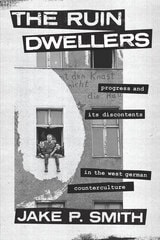
The Ruin Dwellers
Progress and Its Discontents in the West German CountercultureJake P. Smith
University of Chicago Press, 2025
The Ruin Dwellers takes readers into the urban spaces of youth revolts during the 1970s and ’80s in West Germany and elsewhere in western and central Europe. Whereas earlier generations of leftist activists were primarily oriented toward the utopian future, participants in the youth movements of the 1970s and ’80s developed a more complex set of temporal practices that sought to scramble the borders between the past, present, and future.
Examining a rich corpus of radical texts and practices, historian Jake P. Smith shows that squatters and their leftist allies in this period engaged in social, cultural, and aesthetic experiments with modes of autonomous living. Smith brings to life the real and imagined landscapes conjured in squatted houses and street protests; in art, dress, music, graffiti, and film; and in philosophical, poetic, and political texts. In so doing, he offers an eye-opening look at anarchic world-making practices that found new ways of imagining an emancipated future through inhabiting the fractured past.
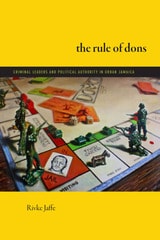
The Rule of Dons
Criminal Leaders and Political Authority in Urban JamaicaRivke Jaffe
Duke University Press, 2024
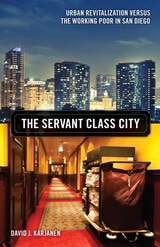
The Servant Class City
Urban Revitalization versus the Working Poor in San DiegoDavid J. Karjanen
University of Minnesota Press, 2016
San Diego, California, is frequently viewed as a model for American urban revitalization. It looks like a success story, with blight and poverty replaced by high-rises and jobs. But David J. Karjanen shows that the much-touted job opportunities for poor people have been concentrated in low-paying service work as the cost of living in San Diego has soared. The Servant Class City documents how, over a period of three decades, San Diego’s urban transformation actually eroded the economic standing of the city’s working poor.
Karjanen demonstrates that urban policy in San Diego, which has been devoted to increasing tourism, has fostered the creation of jobs that do not actually provide either livable wages or paths to upward mobility. Marshaling a wealth of heretofore uncollected data, he challenges the presumption that decades-long stagnation of job mobility in the united states is a result of insufficient worker training or a “skills mismatch,” or is attributable to various personal qualities of the urban poor.
Karjanen interweaves profiles of people with a compelling presentation of data. Each chapter addresses a significant topic: hospitality industry jobs, retail work, informal employment, “fringe banking,” and economic barriers to mobility. In revealing the true story of the “poverty traps” that are associated with low-wage jobs in the service economy, The Servant Class City complicates the rosy picture of life in an American tourist boomtown.
The Sexual Organization of the City
Edited by Edward O. Laumann, Stephen Ellingson, Jenna Mahay, Anthony Paik, and Y
University of Chicago Press, 2004
But in The Sexual Organization of the City, Edward Laumann and company argue that this idea is a myth. Drawing on extensive surveys and interviews with Chicago adults, they show that the city is—to the contrary—a place where sexual choices and options are constrained. From Wicker Park and Boys Town to the South Side and Pilsen, they observe that sexual behavior and partnering are significantly limited by such factors as which neighborhood you live in, your ethnicity, what your sexual preference might be, or the circle of friends to which you belong. In other words, the social and institutional networks that city dwellers occupy potentially limit their sexual options by making different types of sexual activities, relationships, or meeting places less accessible.
To explain this idea of sex in the city, the editors of this work develop a theory of sexual marketplaces—the places where people look for sexual partners. They then use this theory to consider a variety of questions about sexuality: Why do sexual partnerships rarely cross racial and ethnic lines, even in neighborhoods where relatively few same-ethnicity partners are available? Why do gay men and lesbians have few public meeting spots in some neighborhoods, but a wide variety in others? Why are African Americans less likely to marry than whites? Does having a lot of friends make you less likely to get a sexually transmitted disease? And why do public health campaigns promoting safe sex seem to change the behaviors of some, but not others?
Considering vital questions such as these, and shedding new light on the city of Chicago, this work will profoundly recast our ideas about human sexual behavior.
The Social Production of Urban Space
By M. Gottdiener
University of Texas Press, 1994
From reviews of the first edition:
"This is perhaps the best theoretically oriented book by a United States urban sociologist since the work of Firey, Hawley, and Sjoberg in the 1940s and 1950s.... Gottdiener is on the cutting edge of urban theoretical work today." —Joe R. Feagin, Contemporary Sociology
Since its first publication in 1985, The Social Production of Urban Space has become a landmark work in urban studies. In this second edition, M. Gottdiener assesses important new theoretical models of urban space—and their shortcomings—including the global perspective, the flexible accumulation school, postmodernism, the new international division of labor, and the "growth machine" perspective.
Going beyond the limitations of these and older theories, Gottdiener proposes a model of urban growth that accounts for the deconcentration away from the central city that began in the United States in the 1920s and continues today. Sociologists, political scientists, economists, geographers, and urban planners will find his interdisciplinary approach to urban science invaluable, as it is currently the most comprehensive treatment of European and American work in these related fields.
The Sociology of Housing
How Homes Shape Our Social LivesEdited by Brian J. McCabe and Eva Rosen
University of Chicago Press, 2023
In 1947, the president of the American Sociological Association, Louis Wirth, argued for the importance of housing as a field of sociological research. Now, seventy-five years later, the sociology of housing has still not developed as a distinct subfield, leaving efforts to understand housing’s place in society to other disciplines, such as economics and urban planning. With this volume, the editors and contributors solidify the importance of housing studies within the discipline of sociology by tackling topics like racial segregation, housing instability, the supply of affordable housing, and the process of eviction. In doing so, they showcase the very best traditions of sociology: they draw on diverse methodologies, present unique field sites and data sources, and foreground a range of theoretical approaches to elucidate the relationships between contemporary housing, public policy, and key social outcomes.
The Sociology of Housing is a landmark volume that will be used by researchers and students alike to define this growing subfield, map continued directions for research, and center sociologists in interdisciplinary conversations about housing.
The Sound of Thinking
A Listener's Companion to Conceptual MusicCraig Dworkin
University of Chicago Press, 2026
An artist draws two octaves of pitches randomly from a hat, just enough to set each syllable of the dictionary definition of imprimer (to score, to print). Trawling the internet for cute videos of cats “playing” piano, an artist splices together a complete, note-perfect performance of Arnold Schoenberg’s Opus 11. Half a century after the release of Miles Davis’s album Kind of Blue, a jazz quintet spends months of focused practice to reproduce the original exactly. These performances share a common denominator: absolute fidelity to the outcome of a system. From Marcel Duchamp to Yoko Ono, Steve Reich to Sun Ra, The Sound of Thinking brings together a diverse array of musical or sonic works that are algorithmic, automatic, permutational, procedural, or otherwise structured in contrast to the creative expressivity typically associated with artistic production.
In twenty-six short essays, each keyed to a term that begins with a different letter of the alphabet, Dworkin discusses work composed or performed according to a predetermined rule, transforming artistic creation into a system running its course. The pieces detailed here, drawn from more than a century of musical experimentation, offer a fresh perspective on the history of innovative music by decoupling music from expression and by shunting creativity from the level of organizing sounds to the level of devising a system that can do the organizing. Not only does this book spotlight the critical role of music in twentieth-century conceptual art, but it also identifies previously overlooked links among diverse artists and movements.
The Spectacular City, Mexico, and Colonial Hispanic Literary Culture
By Stephanie Merrim
University of Texas Press, 2010
Winner, Katherine Singer Kovacs Prize, Modern Language Association, 2010
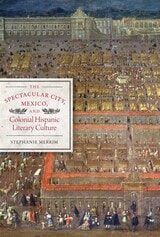
The Spectacular City, Mexico, and Colonial Hispanic Literary Culture tracks the three spectacular forces of New World literary culture—cities, festivals, and wonder—from the sixteenth to the seventeenth century, from the Old World to the New, and from Mexico to Colombia, Peru, and Bolivia. It treats a multitude of imperialist and anti-imperialist texts in depth, including poetry, drama, protofiction, historiography, and journalism. While several of the landmark authors studied, including Hernán Cortés and Sor Juana Inés de la Cruz, are familiar, others have received remarkably little critical attention. Similarly, in spotlighting creole writers, Merrim reveals an intertextual tradition in Mexico that spans two centuries. Because the spectacular city reaches its peak in the seventeenth century, Merrim's book also theorizes and details the spirited work of the New World Baroque. The result is the rich examination of a trajectory that leads from the Renaissance ordered city to the energetic revolts of the spectacular city and the New World Baroque.
The Spectacular City
Violence and Performance in Urban BoliviaDaniel M. Goldstein
Duke University Press, 2004
During the period of Goldstein’s fieldwork in Villa Pagador in the mid-1990s, residents attempted to lynch several thieves and attacked the police who tried to intervene. Since that time, there have been hundreds of lynchings in the poor barrios surrounding Cochabamba. Goldstein presents the lynchings of thieves as a form of horrific performance, with elements of critique and political action that echo those of local festivals. He explores the consequences and implications of extralegal violence for human rights and the rule of law in the contemporary Andes. In rich detail, he provides an in-depth look at the development of Villa Pagador and of the larger metropolitan area of Cochabamba, illuminating a contemporary Andean city from both microethnographic and macrohistorical perspectives. Focusing on indigenous peoples’ experiences of urban life and their attempts to manage their sociopolitical status within the broader context of neoliberal capitalism and political decentralization, The Spectacular City highlights the deep connections between performance, law, violence, and the state.
The Spires Still Point to Heaven
Cincinnati's Religious Landscape, 1788–1873Matthew Smith
Temple University Press, 2023
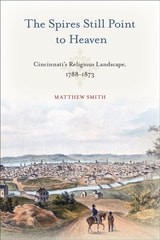
A case study about the formation of American pluralism and religious liberty, The Spires Still Point to Heaven explores why—and more importantly how—the early growth of Cincinnati influenced the changing face of the United States. Matthew Smith deftly chronicles the urban history of this thriving metropolis in the mid-nineteenth century. As Protestants and Catholics competed, building rival domestic missionary enterprises, increased religious reform and expression shaped the city. In addition, the different ethnic and religious beliefs informed debates on race, slavery, and immigration, as well as disease, temperance reform, and education.
Specifically, Smith explores the Ohio Valley’s religious landscape from 1788 through the nineteenth century, examining its appeal to evangelical preachers, abolitionists, social critics, and rabbis. He traces how Cincinnati became a battleground for newly energized social reforms following a cholera epidemic, and how grassroots political organizing was often tied to religious issues. He also illustrates the anti-immigrant sentiments and anti-Catholic nativism pervasive in this era.
The first monograph on Cincinnati’s religious landscape before the Civil War, The Spires Still Point to Heaven highlights Cincinnati’s unique circumstances and how they are key to understanding the cultural and religious development of the nation.

The Spirit of Youth and City Streets
Jane Addams
University of Illinois Press, 1972
When this book was first published in 1909, Addams was the most famous woman in America. A celebrity and a spiritual leader, she was widely regarded as practical, realistic, and endowed with a special insight into the problems of urban America. The Spirit of Youth and the City Streets--her favorite of her own books--establishes Addams as an accomplished writer as well as a reformer. In this compact volume she examines the causes for the discontent of youth in the city, chiding educators for their "persistent blindness to youth's most obvious needs."
Addams argues for the importance of providing direction and focus--for example, through public recreation, practical education, and experiences in the arts--for the pent-up energies of young men and women. She takes a realistic view of their basic social and sexual drives and their disaffection and alienation in an industrial world. At the same time, she rejects the hereditary explanations for delinquency that prevailed in her day. Allen F. Davis's introduction provides a biographical profile of Addams and a commentary on her importance as a writer and a social activist.
The Street
A Photographic Field Guide to American InequalityNaa Oyo A. Kwate
Rutgers University Press, 2021
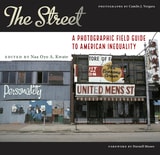
Using MacArthur fellow Camilo José Vergara’s intimate street photographs of Camden, New Jersey as reference points, the essays in this collection analyze these images within the context of troubled histories and misguided policies that have exacerbated racial and economic inequalities. Rather than blaming Camden’s residents for the blighted urban landscape, the multidisciplinary array of scholars contributing to this guide reveal the oppressive structures and institutional failures that have led the city to this condition. Tackling topics such as race and law enforcement, gentrification, food deserts, urban aesthetics, credit markets, health care, childcare, and schooling, the contributors challenge conventional thinking about what we should observe when looking at neighborhoods.
The Suburban Racial Dilemma
Housing and NeighborhoodsW. Dennis Keating
Temple University Press, 1994
The Surrounds
Urban Life within and beyond CaptureAbdouMaliq Simone
Duke University Press, 2022
The Taxi-Dance Hall
A Sociological Study in Commercialized Recreation and City LifePaul Goalby Cressey
University of Chicago Press, 1932
Taxi-dance halls, as the introduction notes, were social centers where men could come and pay to dance with “a bevy of pretty, vivacious, and often mercenary” women. Ten cents per dance was the usual fee, with half the proceeds going to the dancer and the other half to the owner of the taxi-hall. Cressey’s study includes detailed maps of the taxi-dance districts, illuminating interviews with dancers, patrons, and owners, and vivid analyses of local attempts to reform the taxi-dance hall and its attendees.
Cressey’s study reveals these halls to be the distinctive urban consequence of tensions between a young, diverse, and economically independent population at odds with the restrictive regulations of Prohibition America. Thick with sexual vice, ethnic clashes, and powerful undercurrents of class, The Taxi-Dance Hall is a landmark example of Chicago sociology, perfect for scholars and history buffs alike.
The Third City
Chicago and American UrbanismLarry Bennett
University of Chicago Press, 2010
Our traditional image of Chicago—as a gritty metropolis carved into ethnically defined enclaves where the game of machine politics overshadows its ends—is such a powerful shaper of the city’s identity that many of its closest observers fail to notice that a new Chicago has emerged over the past two decades. Larry Bennett here tackles some of our more commonly held ideas about the Windy City—inherited from such icons as Theodore Dreiser, Carl Sandburg, Daniel Burnham, Robert Park, Sara Paretsky, and Mike Royko—with the goal of better understanding Chicago as it is now: the third city.
Bennett calls contemporary Chicago the third city to distinguish it from its two predecessors: the first city, a sprawling industrial center whose historical arc ran from the Civil War to the Great Depression; and the second city, the Rustbelt exemplar of the period from around 1950 to 1990. The third city features a dramatically revitalized urban core, a shifting population mix that includes new immigrant streams, and a growing number of middle-class professionals working in new economy sectors. It is also a city utterly transformed by the top-to-bottom reconstruction of public housing developments and the ambitious provision of public works like Millennium Park. It is, according to Bennett, a work in progress spearheaded by Richard M. Daley, a self-consciously innovative mayor whose strategy of neighborhood revitalization and urban renewal is a prototype of city governance for the twenty-first century. The Third City ultimately contends that to understand Chicago under Daley’s charge is to understand what metropolitan life across North America may well look like in the coming decades.
The Torture Letters
Reckoning with Police ViolenceLaurence Ralph
University of Chicago Press, 2019
In The Torture Letters, Laurence Ralph chronicles the history of torture in Chicago, the burgeoning activist movement against police violence, and the American public’s complicity in perpetuating torture at home and abroad. Engaging with a long tradition of epistolary meditations on racism in the United States, from James Baldwin’s The Fire Next Time to Ta-Nehisi Coates’s Between the World and Me, Ralph offers in this book a collection of open letters written to protesters, victims, students, and others. Through these moving, questing, enraged letters, Ralph bears witness to police violence that began in Burge’s Area Two and follows the city’s networks of torture to the global War on Terror. From Vietnam to Geneva to Guantanamo Bay—Ralph’s story extends as far as the legacy of American imperialism. Combining insights from fourteen years of research on torture with testimonies of victims of police violence, retired officers, lawyers, and protesters, this is a powerful indictment of police violence and a fierce challenge to all Americans to demand an end to the systems that support it.
With compassion and careful skill, Ralph uncovers the tangled connections among law enforcement, the political machine, and the courts in Chicago, amplifying the voices of torture victims who are still with us—and lending a voice to those long deceased.

The Torture Letters
Reckoning with Police ViolenceLaurence Ralph
University of Chicago Press, 2020
In The Torture Letters, Laurence Ralph chronicles the history of torture in Chicago, the burgeoning activist movement against police violence, and the American public’s complicity in perpetuating torture at home and abroad. Engaging with a long tradition of epistolary meditations on racism in the United States, from James Baldwin’s The Fire Next Time to Ta-Nehisi Coates’s Between the World and Me, Ralph offers in this book a collection of open letters written to protesters, victims, students, and others. Through these moving, questing, enraged letters, Ralph bears witness to police violence that began in Burge’s Area Two and follows the city’s networks of torture to the global War on Terror. From Vietnam to Geneva to Guantanamo Bay—Ralph’s story extends as far as the legacy of American imperialism. Combining insights from fourteen years of research on torture with testimonies of victims of police violence, retired officers, lawyers, and protesters, this is a powerful indictment of police violence and a fierce challenge to all Americans to demand an end to the systems that support it.
With compassion and careful skill, Ralph uncovers the tangled connections among law enforcement, the political machine, and the courts in Chicago, amplifying the voices of torture victims who are still with us—and lending a voice to those long deceased.
The Tour Guide
Walking and Talking New YorkJonathan R. Wynn
University of Chicago Press, 2011
Everyone wants to visit New York at least once. The Big Apple is a global tourist destination with a dizzying array of attractions throughout the five boroughs. The only problem is figuring out where to start—and that’s where the city’s tour guides come in.
These guides are a vital part of New York’s raucous sidewalk culture, and, as The Tour Guide reveals, the tours they offer are as fascinatingly diverse—and eccentric—as the city itself. Visitors can take tours that cover Manhattan before the arrival of European settlers, the nineteenth-century Irish gangs of Five Points, the culinary traditions of Queens, the culture of Harlem, or even the surveillance cameras of Chelsea—in short, there are tours to satisfy anyone’s curiosity about the city’s past or present. And the guides are as intriguing as the subjects, we learn, as Jonathan R. Wynn explores the lives of the people behind the tours, introducing us to office workers looking for a diversion from their desk jobs, unemployed actors honing their vocal skills, and struggling retirees searching for a second calling. Matching years of research with his own experiences as a guide, Wynn also lays bare the grueling process of acquiring an official license and offers a how-to guide to designing and leading a tour.
Touching on the long history of tour-giving across the globe as well as the ups and downs of New York’s tour guide industry in the wake of 9/11, The Tour Guide is as informative and insightful as the chatty, charming, and colorful characters at its heart.
The Truly Disadvantaged
The Inner City, the Underclass, and Public Policy, Second EditionWilliam Julius Wilson
University of Chicago Press, 2012
Renowned American sociologist William Julius Wilson takes a look at the social transformation of inner city ghettos, offering a sharp evaluation of the convergence of race and poverty. Rejecting both conservative and liberal interpretations of life in the inner city, Wilson offers essential information and a number of solutions to policymakers. The Truly Disadvantaged is a wide-ranging examination, looking at the relationship between race, employment, and education from the 1950s onwards, with surprising and provocative findings. This second edition also includes a new afterword from Wilson himself that brings the book up to date and offers fresh insight into its findings.
“The Truly Disadvantaged should spur critical thinking in many quarters about the causes and possible remedies for inner city poverty. As policymakers grapple with the problems of an enlarged underclass they—as well as community leaders and all concerned Americans of all races—would be advised to examine Mr. Wilson's incisive analysis.”—Robert Greenstein, New York Times Book Review
The Two New Yorks
State-City Relations in the Changing Federal SystemGerald Benjamin
Russell Sage Foundation, 1988
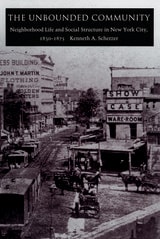
The Unbounded Community
Neighborhood Life and Social Structure in New York City, 1830–1875Kenneth A. Scherzer
Duke University Press, 1992
After a critical examination of recent historical renderings of neighborhood life, Scherzer focuses on the ecological, symbolic, and social aspects of nineteenth-century community life in New York City. Employing a wide array of sources, from census reports and church records to police blotters and brothel guides, he documents the complex composition of neighborhoods that defy simple categorization by class or ethnicity. From his account, the New York City neighborhood emerges as a community in flux, born out of the chaos of May Day, the traditional moving day. The fluid geography and heterogeneity of these neighborhoods kept most city residents from developing strong local attachments. Scherzer shows how such weak spatial consciousness, along with the fast pace of residential change, diminished the community function of the neighborhood. New Yorkers, he suggests, relied instead upon the "unbounded community," a collection of friends and social relations that extended throughout the city.
With pointed argument and weighty evidence, The Unbounded Community replaces the neighborhood of nostalgia with a broader, multifaceted conception of community life. Depicting the neighborhood in its full scope and diversity, the book will enhance future forays into urban history.
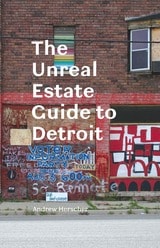
The Unreal Estate Guide to Detroit
Andrew Herscher
University of Michigan Press, 2012
Intense attention has been paid to Detroit as a site of urban crisis. This crisis, however, has not only yielded the massive devaluation of real estate that has so often been noted; it has also yielded an explosive production of seemingly valueless urban property that has facilitated the imagination and practice of alternative urbanisms. The first sustained study of Detroit’s alternative urban cultures, The Unreal Estate Guide to Detroit initiates a new focus on Detroit as a site not only of urban crisis but also of urban possibility.
The Guide documents art and curatorial practices, community and guerilla gardens, urban farming and forestry, cultural platforms, living archives, evangelical missions, temporary public spaces, intentional communities, furtive monuments, outsider architecture, and other work made possible by the ready availability of urban space in Detroit. The Guide poses these spaces as “unreal estate”: urban territory that has slipped through the free- market economy and entered other regimes of value, other contexts of meaning, and other systems of use. The appropriation of this territory in Detroit, the Guide suggests, offers new perspectives on what a city is and can be, especially in a time of urban crisis.
The Urban Apparatus
Mediapolitics and the CityReinhold Martin
University of Minnesota Press, 2017
Urbanization is a system of power and knowledge, and today’s city functions through the expansive material infrastructures of the urban order. In The Urban Apparatus, Reinhold Martin analyzes urbanization and the contemporary city in aesthetic, socioeconomic, and mediapolitical terms. He argues that understanding the city as infrastructure reveals urbanization to be a way of imparting functional, aesthetic, and cognitive order to a contradictory, doubly bound neoliberal regime.
Blending critical philosophy, political theory, and media theory, The Urban Apparatus explores how the aesthetics of cities and their political economies overlap. In a series of ten essays, with a detailed theoretical introduction, Martin explores questions related to urban life, drawn from a wide range of global topics—from the fiscal crisis in Detroit to speculative development in Mumbai to the landscape of Mars, from discussions of race and the environment to housing and economic inequality. Each essay proposes a particular “mediator” (or a material complex) that is shaped by imaginative practices, each answering the question “What is a city, today?”
The Urban Apparatus serves as an “urban” bookend to the architectural questions explored by Martin in his earlier book Utopia’s Ghost, and ultimately offers readers a way to think politically about urbanization.
The Urban Crisis
Linking Research to ActionBurton Weisbrod and James C. Worthy
Northwestern University Press, 1997
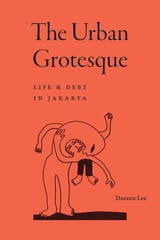
The Urban Grotesque
Life and Debt in JakartaDoreen Lee
Duke University Press, 2025
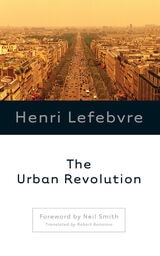
The Urban Revolution
Henri Lefebvre
University of Minnesota Press, 2003
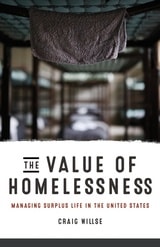
The Value of Homelessness
Managing Surplus Life in the United StatesCraig Willse
University of Minnesota Press, 2015
It is all too easy to assume that social service programs respond to homelessness, seeking to prevent and understand it. The Value of Homelessness, however, argues that homelessness today is an effect of social services and sciences, which shape not only what counts as such but what will?or ultimately won’t?be done about it.
Through a history of U.S. housing insecurity from the 1930s to the present, Craig Willse traces the emergence and consolidation of a homeless services industry. How to most efficiently allocate resources to control ongoing insecurity has become the goal, he shows, rather than how to eradicate the social, economic, and political bases of housing needs. Drawing on his own years of work in homeless advocacy and activist settings, as well as interviews conducted with program managers, counselors, and staff at homeless services organizations in New York, Los Angeles, San Francisco, and Seattle, Willse provides the first analysis of how housing insecurity becomes organized as a governable social problem.
An unprecedented and powerful historical account of the development of contemporary ideas about homelessness and how to manage homelessness, The Value of Homelessness offers new ways for students and scholars of social work, urban inequality, racial capitalism, and political theory to comprehend the central role of homelessness in governance and economy today.
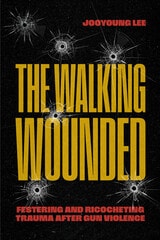
The Walking Wounded
Festering and Ricocheting Trauma After Gun ViolenceJooyoung Lee
University of Chicago Press, 2026
Gun violence is a plague in the United States; even survivors experience suffering that wreaks havoc on their lives and our communities. Although excellent emergency trauma care means that 80 percent of shooting victims do not die from their injuries, surviving is only the first step. Most survivors then find themselves trapped in health care and judicial systems that only amplify their pain, trauma, and uncertainty.
In The Walking Wounded, Jooyoung Lee invites readers into the hospitals, courtrooms, and homes where gunshot victims struggle to rebuild their lives. Drawing from years of fieldwork in Philadelphia, Lee shows how victims’ injuries fester into new problems over time in the absence of meaningful follow-up care. Attempting routine tasks with a wounded body reminds survivors that they are no longer who they used to be—both physically and socially. Lee shows how trauma ricochets through victims’ worlds as their injuries also affect their family and friends. To make matters worse, Lee argues, existing government safety nets place victims into ever more precarious circumstances that compound their suffering.
In the face of health care and judicial systems that fail wounded people, Lee urges a sensible and sensitive rehabilitative process aimed at equipping the walking wounded with ongoing care that aspires for more than mere survival: the regaining of independent lives.
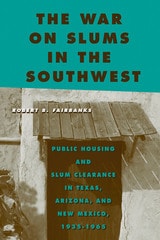
The War on Slums in the Southwest
Public Housing and Slum Clearance in Texas, Arizona, and New Mexico, 1935-1965Robert B Fairbanks
Temple University Press, 2016
In The War on Slums in the Southwest, Robert Fairbanks provides compelling and probing case studies of economic problems and public housing plights in Albuquerque, Dallas, Houston, Phoenix and San Antonio. He provides brief histories of each city--all of which expanded dynamically between 1935 and 1965--and how they responded to slums under the Housing Acts of 1937, 1949, and 1954.
Despite being a region where conservative politics has ruled, these Southwestern cities often handled population growth, urban planning, and economic development in ways that closely followed the national account of efforts to eliminate slums and provide public housing for the needy. The War on Slums in the Southwest therefore corrects some misconceptions about the role of slum clearance and public housing in this region as Fairbanks integrates urban policy into the larger understanding of federal and state-based housing policies.
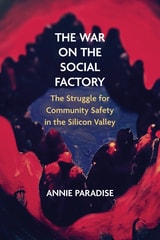
The War on the Social Factory
The Struggle for Community Safety in the Silicon ValleyAnnie Paradise
Northwestern University Press, 2024
A collective ethnography of grassroots mobilizations for community safety across the Silicon Valley
This is a narrative of struggle and solidarity and a collective toolkit for grassroots opposition to militarization, policing, and ongoing conditions of war in the current conjuncture of racial patriarchal capitalism. Grassroots researcher Annie Paradise presents here a collective ethnography of the mothers and community matriarchs whose children have been murdered by police across the San Francisco Bay Area as they develop and practice autonomous, creative forms of resistance.
The War on the Social Factory: The Struggle for Community Safety in the Silicon Valley maps local families’ struggles to reclaim their households and their communities—to create a social infrastructure of care, justice, and safety outside state- and market-determined modes of “security.” Practices such as sustained vigil, testimony, and the production and circulation of insurgent knowledges are shown here to be part of interconnected justice efforts to demilitarize and decarcerate communities in the face of the multiple forms of violence enacted under late racial patriarchal capitalism. Paradise examines the expanding carceral processes of enclosure, criminalization, dispossession, expropriation, and disposability that mark the neoliberal "security” regime across the Silicon Valley and offers counter-counterinsurgent strategies and practices of co-generative, dynamic resistance.
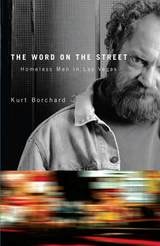
The Word On The Street
Homeless Men In Las VegasKurt Borchard
University of Nevada Press, 2007
Borchard’s account offers a graphic, disturbing, and profoundly moving picture of life on Las Vegas’s streets, depicting the strategies that homeless men employ in order to survive, from the search for a safe place to sleep at night to the challenges of finding food, maintaining personal hygiene, and finding an acceptable place to rest during a long day on the street.
That such misery and desperation exist in the midst of Las Vegas’s hedonistic tourist economy and booming urban development is a cruel irony, according to the author, and it threatens the city’s future as a prime tourist destination. The book will be of interest to social workers, sociologists, anthropologists, politicians, and all those concerned about changing the misery on the street.
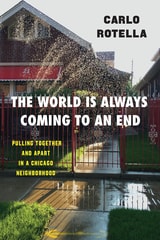
The World Is Always Coming to an End
Pulling Together and Apart in a Chicago NeighborhoodCarlo Rotella
University of Chicago Press, 2019
In the late 1960s and 1970s Carlo Rotella grew up in Chicago’s South Shore neighborhood—a place of neat bungalow blocks and desolate commercial strips, and sharp, sometimes painful social contrasts. In the decades since, the hollowing out of the middle class has left residents confronting—or avoiding—each other across an expanding gap that makes it ever harder for them to recognize each other as neighbors. Rotella tells the stories that reveal how that happened—stories of deindustrialization and street life; stories of gorgeous apartments with vistas onto Lake Michigan and of Section 8 housing vouchers held by the poor. At every turn, South Shore is a study in contrasts, shaped and reshaped over the past half-century by individual stories and larger waves of change that make it an exemplar of many American urban neighborhoods. Talking with current and former residents and looking carefully at the interactions of race and class, persistence and change, Rotella explores the tension between residents’ deep investment of feeling and resources in the physical landscape of South Shore and their hesitation to make a similar commitment to the community of neighbors living there.
Blending journalism, memoir, and archival research, The World Is Always Coming to an End uses the story of one American neighborhood to challenge our assumptions about what neighborhoods are, and to think anew about what they might be if we can bridge gaps and commit anew to the people who share them with us. Tomorrow is another ending.
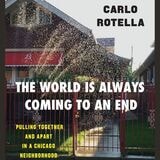
The World Is Always Coming to an End
Pulling Together and Apart in a Chicago NeighborhoodCarlo Rotella
University of Chicago Press, 2019
In the late 1960s and 1970s Carlo Rotella grew up in Chicago’s South Shore neighborhood—a place of neat bungalow blocks and desolate commercial strips, and sharp, sometimes painful social contrasts. In the decades since, the hollowing out of the middle class has left residents confronting—or avoiding—each other across an expanding gap that makes it ever harder for them to recognize each other as neighbors. Rotella tells the stories that reveal how that happened—stories of deindustrialization and street life; stories of gorgeous apartments with vistas onto Lake Michigan and of Section 8 housing vouchers held by the poor. At every turn, South Shore is a study in contrasts, shaped and reshaped over the past half-century by individual stories and larger waves of change that make it an exemplar of many American urban neighborhoods. Talking with current and former residents and looking carefully at the interactions of race and class, persistence and change, Rotella explores the tension between residents’ deep investment of feeling and resources in the physical landscape of South Shore and their hesitation to make a similar commitment to the community of neighbors living there.
Blending journalism, memoir, and archival research, The World Is Always Coming to an End uses the story of one American neighborhood to challenge our assumptions about what neighborhoods are, and to think anew about what they might be if we can bridge gaps and commit anew to the people who share them with us. Tomorrow is another ending.
Theorizing the City
The New Urban Anthropology ReaderLow, Setha M.
Rutgers University Press, 1999
Anthropological perspectives are not often represented in urban studies, even though many anthropologists have been contributing actively to theory and research on urban poverty, racism, globalization, and architecture. The New Urban Anthropology Reader corrects this omission by presenting 12 cross-cultural case studies focusing on the analysis of space and place.
There Goes the Hood
Views of Gentrification from the Ground UpLance Freeman
Temple University Press, 2006
There Has to Be a Better Way
Lessons from Former Urban TeachersMawhinney, Lynnette
Rutgers University Press, 2019
Teacher attrition has long been a significant challenge within the field of education. It is a commonly-cited statistic that almost fifty percent of beginning teachers leave the field within their first five years, to the detriment of schools, students, and their own career development. There Has to be a Better Way offers an essential voice in understanding the dynamics of teacher attrition from the perspective of the teachers themselves. Drawing upon in-depth qualitative research with former teachers from urban schools in multiple regions of the United States, Lynnette Mawhinney and Carol R. Rinke identify several themes that uncover the rarely-spoken reasons why teachers so often willingly leave the classroom. The authors go further to provide concrete recommendations for how school administrators can better support their practicing teachers, as well as how teacher educators might enhance preparation for the next generation of educators. Complete with suggested readings and discussion questions, this book serves as an indispensable resource in understanding and building an effective and productive educational workforce for our nation’s students.
These Kids
Identity, Agency, and Social Justice at a Last Chance High SchoolKysa Nygreen
University of Chicago Press, 2013
Thinking Like a Climate
Governing a City in Times of Environmental ChangeHannah Knox
Duke University Press, 2020
Tijuana Dreaming
Life and Art at the Global BorderJosh Kun and Fiamma Montezemolo, eds.
Duke University Press, 2012
Contributors. Tito Alegría, Humberto Félix Berumen, Roberto Castillo Udiarte, Iain Chambers, Luis Humberto Crosthwaite, Teddy Cruz, Ejival, Tarek Elhaik, Guillermo Fadanelli, Néstor García Canclini, Ingrid Hernández, Jennifer Insley-Pruitt, Kathryn Kopinak, Josh Kun, Jesse Lerner, Fiamma Montezemolo, Rene Peralta, Rafa Saavedra, Lucía Sanromán, Santiago Vaquera-Vásquez, Heriberto Yépez
Time and the Town
A Provincetown ChronicleAdele Heller
Rutgers University Press, 1991
Time and the Town was the last of Mary Heaton Vorse's books. It is about many things —a town and its people, the author, a certain kind of idyllic life. As much as anything else, it is the biography of the house Vorse bought in 1907 and lived in, off and on, for the next thirty-six years. The moods of the house mirrored her own. "Our houses," she wrote, "are our biographies, the stories of our defeats and victories."
Tinged with nostalgia and disenchantment, the book describes a Provincetown that has changed, a place on the verge of modernity. It is no longer a major fishing port. It has become a place whose business is tourism. Contrasting the old and the new, Vorse celebrates the enduring character of the town itself. She tells stories that are engaging and charming, droll and fabulous. The wrinkled Mrs. Mary Mooncusser who, though drunk and stark naked, conducts herself with great decorum when Vorse pays her a call, might have stepped out of the pages of Sherwood Anderson or Eudora Welty. In another anecdote, the townspeople scour the beaches for cases of booze dumped into the sea by rumrunners and are briefly inflated with the spirit of ancestral smugglers and buccaneers.
Vorse herself remained something of an outsider in Provincetown, despite her evident affection for the place and its inhabitants. They surely regarded her as simply another of those artist-intellectuals--many of whom appear in the pages of this book. The "off-Cape" outsiders put the town in the national limelight but took no interest in local matters. Vorse here ponders local matters exclusively, almost, one suspects, as a way of forgetting the more complex matters that occupied her--her agonies of parental guilt, her resentment of domestic obligations, her third marriage, her depressions and breakdowns. The town is in that sense beyond time.
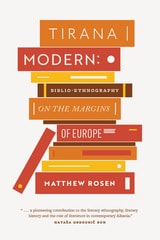
Tirana Modern
Biblio-Ethnography on the Margins of EuropeMatthew Rosen
Vanderbilt University Press, 2022
Drawing on material collected through fieldwork with a community of readers, writers, and translators attached to the independent Albanian publisher Pika pa sipërfaqe (Point without Surface), Tirana Modern provides a tightly focused ethnography of literary culture in Albania that brings into relief the more general dialectic between social imagination and social reality as mediated by reading and literature.
To Dwell among Friends
Personal Networks in Town and CityClaude S. Fischer
University of Chicago Press, 1982
Tourism and the Metropolis
Exploring Conceptual and Geographical FrontiersEdited by Maria Gravari-Barbas, Sébastien Jacquot, Maja Jovic, and Johannes Novy
University of Westminster Press, 2026
What forms does tourism take in today’s metropolises and metropolitan regions? How do these forms differ from tourism in other urban contexts? Are these differences significant enough to warrant the classification of ‘metropolitan tourism’ as a distinct type of urban tourism? What are their implications for policy and planning processes? How do policy and planning processes in different metropolises and metropolitan regions differ from each other, and what can they learn from each other? And finally, how could tourism in metropolises and metropolitan regions be made more sustainable, resilient, and inclusive?
Given the importance widely attributed to major metropolises and metropolitan regions as contemporary engines of economic development, innovation, and change, the widespread portrayal of tourism as a leading economic and social force of the 21st century, and the fact that the world's large metropolitan areas are key recipients of tourism flows, it is surprising how little systematic attention is paid to tourism in metropolitan contexts. This book aims to fill these gaps.
Tourist Attractions
Performing Race and Masculinity in Brazil's Sexual EconomyGregory Mitchell
University of Chicago Press, 2015
Mitchell takes us into the bath houses of Rio de Janeiro, where rent boys cruise for clients, and to the beaches of Salvador da Bahia, where African American gay men seek out hustlers while exploring cultural heritage tourist sites. His ethnography stretches into the Amazon, where indigenous fantasies are tinged with the erotic at eco-resorts, and into the homes of “kept men,” who forge long-term, long-distance, transnational relationships that blur the boundaries of what counts as commercial sex. Mitchell asks how tourists perceive sex workers’ performances of Brazilianness, race, and masculinity, and, in turn, how these two groups of men make sense of differing models of racial and sexual identity across cultural boundaries. He proposes that in order to better understand how people experience difference sexually, we reframe prostitution—which Marxist feminists have long conceptualized as sexual labor—as also being a form of performative labor. Tourist Attractions is an exceptional ethnography poised to make an indelible impact in the fields of anthropology, gender, and sexuality, and research on prostitution and tourism.