Results by title
1441 books match the query 'World' and 310 start with t
The Idea of Haiti
Rethinking Crisis and DevelopmentMillery Polyné
University of Minnesota Press, 2013
After Haiti was struck by a devastating earthquake on January 12, 2010, aid workers and offers of support poured in from around the world. Tellingly, though, news reports on the catastrophe and relief efforts frequently included a pejorative description of the country that outsiders were determined to rebuild: the troubled island nation, a nation plagued by political violence. There was much talk of inventing a “new” Haiti, which would presumably mimic Western modes of development and thus mitigate political instability and crisis.
As contributors to this wide-ranging book reveal, Haiti has long been marginalized as an embodiment of alterity, as the other, and the idea of a new Haiti is actually nothing new. An investigation of the notion of newness through the lenses of history and literature, urban planning, religion, and governance, The Idea of Haiti illuminates the politics and the narratives of Haiti’s past and present. The essays, which grow from original research and in-depth interviews, examine how race, class, and national development inform the policies that envision re-creating the country.
Together the contributors address important questions: How will the present narratives of deviance affect international relief and rebuilding efforts? What do Haitians themselves think about Haiti, old and new? What are the potential complications and weakness of aid strategies during these trying times? And what do we mean by crisis in Haiti?
Contributors: Yveline Alexis, Rutgers U; Wein Weibert Arthus, State U of Haiti; Greg Beckett, Bowdoin College; Alex Dupuy, Wesleyan U; Harley F. Etienne, U of Michigan; Robert Fatton Jr., U of Virginia; Sibylle Fischer, New York U; Elizabeth McAlister, Wesleyan U; Nick Nesbitt, Princeton U; Karen Richman, U of Notre Dame; Mark Schuller, York College (CUNY); Patrick Sylvain, Brown U; Évelyne Trouillot, State U of Haiti; Tatiana Wah, Columbia U.
The Idea of World
Public Intellect and Use of LifePaolo Virno
Seagull Books, 2022
A short vade mecum for unrepentant materialism, The Idea of World collects three essays by Italian philosopher Paulo Virno that are intricately wrapped around one another. The first essay, “Mundanity,” tries to clarify what the term “world,” as referred to as the perceptual and historical context of our existence, means—both with and against Kant and Wittgenstein. How should we understand expressions such as “worldly people,” “the course of the world,” or “getting by in this world”? The second, “Virtuosity and Revolution,” is a minor political treatise. Virno puts forward a set of concepts capable of confronting the magnetic storm that has knocked out the compasses that every reflection on the public sphere has relied on since the seventeenth century. The third, “The Use of Life”, is the shorthand delineation of a research program on the notion of use. What exactly are we doing when we use a hammer, a time span, or an ironic sentence? And, above all, what does the use of the self—of one’s own life, which lies at the basis of all uses—amount to in human existence?
Presenting his ideas in three distinct vignettes, Virno examines how the philosophy of language, anthropology, and political theory are inextricably linked.
The Idea of the ANC
Anthony Butler
Ohio University Press, 2013
The African National Congress (ANC) is Africa’s most famous liberation movement. It has recently celebrated its centenary, a milestone that has prompted partisans to detail a century of unparalleled achievement in the struggle against colonialism and racial discrimination. Critics paint a less flattering portrait of the historical ANC as a communist puppet, a moribund dinosaur, or an elitist political parasite. For such skeptics, the ANC—now in government for two decades—has betrayed South Africans rather than liberating them.
South Africans endure deep inequality and unemployment, violent community protests, murders of foreign residents, major policy blunders, an AIDS crisis, and deepening corruption. Inside the ANC there are episodes of open rebellion against the leadership, conflicts over the character of a postliberation movement, and debilitating battles for succession to the movement’s presidency. The ANC is nevertheless likely to remain the party of government for the foreseeable future.
This remarkable book explores how ANC intellectuals and leaders interpret the historical project of their movement. It investigates three interlocking ideas: a conception of power, a responsibility for promoting unity, and a commitment to human liberation. Anthony Butler explores how these notions have shaped South African politics in the past and how they will inform ANC leaders’ responses to the challenges of the future.
The Image Debate
Figural Representation in Islam and Across the WorldEdited by Christiane Gruber
Gingko, 2019
The Image Debate is a collection of thirteen essays which examine the controversy surrounding the use of images in Islamic and other religious cultures and seek to redress some of the misunderstandings that have arisen. Written by leading academics from the United States, Australia, Turkey, Israel and the United Kingdom, the book has a foreword by Stefano Carboni, Director of the Art Gallery of Western Australia, followed by an introduction by the editor Christiane Gruber, who sets the subject in context with a detailed examination of the debates over idols and the production of figural images in Islamic traditions.
Twelve further articles are divided into three sections: the first deals with pre-modern Islam: Mika Natif looks at tensions between the Hadith prohibition on images and the praxis of image-making under the Umayyad dynasty and argues that the Umayyad rulers used imagery to establish their political and religious authority; Finbarr Barry Flood examines the practice of epigraphic erasure, i.e., the removal of names of rulers and patrons from historical inscriptions from the medieval Islamic world; and Oya Pancaroğlu focuses on the figural conventions of an illustrated manuscript of Varqa and Gulshah, a medieval Persian romance composed in the masnavi (rhyming couplet) form by the 11th-century poet ‘Ayyuqi.
The second section addresses the situation outside Islam: Alicia Walker surveys attitudes toward the production and veneration of religious images in Byzantium from the earliest years of the Christian Roman Empire (early 4th century) to the aftermath of the Iconoclast controversy (late 9th century); Steven Fine explores the history of Jewish engagement with ‘art’ from Roman antiquity through the high middle ages through a detailed exploration of the 3rd-century Dura Europos synagogue and its wall paintings; Michael Shenkar examines evidence for the employment of figural images in the cultic practices of some of the major ancient Iranian cultural and political entities, offering a broad perspective on perceptions of images in ancient Iranian worship; and Robert DeCaroli delves into the question of why no image of the Buddha was made during the first five hundred years of Buddhism.
The third section brings the reader back to Islamic lands with five articles examining aspects of the issue in the modern and contemporary periods: Yousuf Saaed investigates South Asian mass-produced images, especially posters that include illustrations of local Sufi shrines, portraits of saints and Shi‘i iconography; James Bennett explores the visual depiction of Javanese shadow puppets (wayang kulit), including the sage Begawan Abiyasa, whose narratives convey key elements of Sufi mystical philosophy; Allen and Mary Roberts consider images of Cheikh Amadu Bamba, the founding Sufi saint of the Senegalese Mouride order; Rose Issa addresses how the term ‘Islamic’ relates to contemporary art, how artists manage to create work in countries in constant turmoil and to what extent such works reflect their conceptual, aesthetic, and socio-political concerns; and finally Shiva Balaghi traces the use of the figure, along its symbolic shadows and silhouettes, in works by notable Iranian artists living in Iran and in diaspora.

The Impact of Populism on the Party System
The Experience of European Democracies (2000–2020)Edited by Jirí Kocián, Michal Kubát, and Martin Mejstrík
Karolinum Press, 2026
Analyzes the influence of populism on the development and transformation of parties and party systems in seven European countries between 2000 and 2020.
The Impact of Populism on the Party System: The Experience of European Democracies (2000–2020) analyzes the influence of populism on the development and transformation of parties and party systems in Hungary, Poland, Greece, Germany, Spain, Czechia, and France in the first two decades of the twenty-first century. In individual case studies, the international team of authors asks to what extent the rise of populist parties witnessed during the period in question caused increased polarization and ideological distance between parties in a given country, and whether this polarization led to a transformation in party system. Moderate party systems can be transformed into polarized party systems under the influence of populism, with a high degree of polarization affecting the functioning of the entire democratic regime. In extreme cases, the very democratic essence of European political regimes may be threatened.
The Impasse of the Latin American Left
Franck Gaudichaud, Massimo Modonesi, and Jeffery R. Webber
Duke University Press, 2022

The Infrastructures of Security
Technologies of Risk Management in JohannesburgMartin J. Murray
University of Michigan Press, 2022
In The Infrastructures of Security, author Martin J. Murray concentrates on not only the turn toward technological solutions to managing the risk of crime through digital (and software-based) surveillance and automated information systems, but also the introduction of somewhat bizarre and fly-by-night experimental “answers” to perceived risk and danger. Digitalized surveillance is significant for two reasons: first, it enables monitoring to take place across wide "geographical distances with little time delay"; and second, it allows for the active sorting, identification, and "tracking of bodies, behaviors, and characteristics of subject populations on a continuous, real-time basis." These new software-based surveillance technologies represent monitoring, tracking, and information gathering without walls, towers, or guards.
The Intelligibility of Nature
How Science Makes Sense of the WorldPeter Dear
University of Chicago Press, 2006
In The Intelligibility of Nature, Peter Dear considers how science as such has evolved and how it has marshaled itself to make sense of the world. His intellectual journey begins with a crucial observation: that the enterprise of science is, and has been, directed toward two distinct but frequently conflated ends—doing and knowing. The ancient Greeks developed this distinction of value between craft on the one hand and understanding on the other, and according to Dear, that distinction has survived to shape attitudes toward science ever since.
Teasing out this tension between doing and knowing during key episodes in the history of science—mechanical philosophy and Newtonian gravitation, elective affinities and the chemical revolution, enlightened natural history and taxonomy, evolutionary biology, the dynamical theory of electromagnetism, and quantum theory—Dear reveals how the two principles became formalized into a single enterprise, science, that would be carried out by a new kind of person, the scientist.
Finely nuanced and elegantly conceived, The Intelligibility of Nature will be essential reading for aficionados and historians of science alike.
The Intimacies of Four Continents
Lisa Lowe
Duke University Press, 2015

The Islamic Utopia
The Illusion of Reform in Saudi ArabiaAndrew Hammond
Pluto Press, 2012
Will Saudi Arabia join the democratic wave in the Middle East? The uprisings and revolutions of 2011 do not, yet, seem to have affected the stability of the House of Saud, which remains secretive, highly repressive and propped up by the West.
The Islamic Utopia uses a range of sources including first-hand reporting and recently released WikiLeaks documents to examine Saudi Arabia in the decade after the 9/11 attacks, when King Abdullah’s 'reform' agenda took centre stage in public debate. It considers Saudi claims of 'exemption' from the democratic demands of the Arab Spring.
Andrew Hammond argues that for too long Western media and governments have accepted Saudi leaders' claims to be a buttress against jihadist Islam and that a new policy is needed towards the House of Saud.
The Islamic World
Edited by William H. McNeill and Marilyn Robinson Waldman
University of Chicago Press, 1984
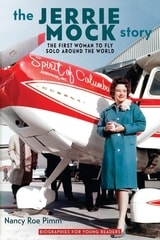
The Jerrie Mock Story
The First Woman to Fly Solo around the WorldNancy Roe Pimm
Ohio University Press, 2016
A Junior Library Guild selection
Society of Children’s Book Writers and Illustrators Official 2016 Summer Reading List
In this biography for middle-grade readers, Nancy Roe Pimm tells the story of Geraldine “Jerrie” Mock, the first woman to fly solo around the world. In her trusty Cessna, The Spirit of Columbus—also known as Charlie—she traveled from Columbus, Ohio, on an eastward route that totaled nearly twenty-three thousand miles and took almost a month. Overcoming wind, ice, mechanical problems, and maybe even sabotage, Mock persevered.
Mock caught the aviation bug at seven years old, when she rode in a Ford Trimotor plane with her parents. In high school, she displayed a talent for math and science, and she was the only woman in her aeronautical engineering classes at Ohio State University. Although she then settled into domestic life, she never lost her interest in flying. What began as a joking suggestion from her husband to fly around the world prompted her to pursue her childhood dream. But the dream became a race, as another woman, Joan Merriam Smith, also sought to be the first to circle the globe.
Even though Mock beat Smith and accomplished what her heroine Amelia Earhart had died trying to do, her feat was overshadowed by the Vietnam War and other world events. Now, Pimm introduces Mock to a new generation of adventurers.
The Killing Age
How Violence Made the Modern WorldClifton Crais
University of Chicago Press, 2025
We are used to speaking of the Anthropocene and the outsized impact humans have had on the planet. But we sometimes lose sight of a fundamental truth at the heart of modern world history: the legacy of human predation, slavery, and imperialism that has devastated the natural world and led us to our present moment. As historian Clifton Crais shows in this magisterial work, the period that we most associate with human progress—which gave us the Enlightenment, the rise of democracies, the Industrial Revolution, and more—was at the same time catastrophically destructive.
In this bracing, landmark book, Crais urges us to view the growth of global capitalism between 1750 and the early 1900s not as the Anthropocene, but as the Mortecene: the Killing Age. Killing brought the world together and tore it apart, as profiteering warlords committed mass-scale slaughter of humans and animals across Africa, Asia, and the Americas. The newfound ease and profitability of killing created a disturbing network of global connections and economies, eliminating tens of millions of people and sparking an environmental crisis that remains the most urgent catastrophe facing the world today.
Drawing on years of scholarship and marshaling myriad sources across world history, The Killing Age turns our vision of past and present on its head, illuminating the Mortecene in all its horror—how it shaped who we are, what we value and fear, and the precarious present we inhabit today.
The Killing Age
How Violence Made the Modern WorldClifton Crais
University of Chicago Press, 2025
A bracing account of how our current planetary crisis emerged from the worst cataclysmic destruction in human history, which Clifton Crais terms the Mortecene—the killing age.
We are used to speaking of the Anthropocene and the outsized impact humans have had on the planet. But we sometimes lose sight of a fundamental truth at the heart of modern world history: the legacy of human predation, slavery, and imperialism that has devastated the natural world and led us to our present moment. As historian Clifton Crais shows in this magisterial work, the period that we most associate with human progress—which gave us the Enlightenment, the rise of democracies, the Industrial Revolution, and more—was at the same time catastrophically destructive.
In this bracing, landmark book, Crais urges us to view the growth of global capitalism between 1750 and the early 1900s not as the Anthropocene, but as the Mortecene: the Killing Age. Killing brought the world together and tore it apart, as profiteering warlords committed mass-scale slaughter of humans and animals across Africa, Asia, and the Americas. The newfound ease and profitability of killing created a disturbing network of global connections and economies, eliminating tens of millions of people and sparking an environmental crisis that remains the most urgent catastrophe facing the world today.
Drawing on years of scholarship and marshaling myriad sources across world history, The Killing Age turns our vision of past and present on its head, illuminating the Mortecene in all its horror—how it shaped who we are, what we value and fear, and the precarious present we inhabit today.
The Kingdom to Come
Thoughts on the Union before and after the Scottish Independence ReferendumPeter Hennessy
Haus Publishing, 2015
Peter Hennessy discusses the run-up to the Scottish Independence Referendum and its immediate aftermath, as well as the constitutional issues the referendum opened for the entire United Kingdom. This book includes Hennessy’s personal impressions of recent questioning of the Acts of Union that created Great Britain and describes when he, as the top expert on Britain’s unwritten constitution, became an important voice in what might happen next. The Kingdom to Come also offers a valuable examination of the possible agenda for remaking the constitution in both the medium and long term.
The Komedie Stamboel
Popular Theater in Colonial Indonesia, 1891–1903Matthew Isaac Cohen
Ohio University Press, 2006
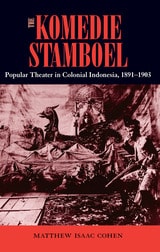
Originating in 1891 in the port city of Surabaya, the Komedie Stamboel, or Istanbul-style theater, toured colonial Indonesia, Singapore, and Malaysia by rail and steamship. The company performed musical versions of the Arabian Nights, European fairy tales and operas such as Sleeping Beauty and Aida, as well as Indian and Persian romances, Southeast Asian chronicles, true crime stories, and political allegories. The actors were primarily Eurasians, the original backers were Chinese, and audiences were made up of all races and classes. The Komedie Stamboel explores how this new hybrid theater pointed toward possibilities for the transformation of self in a colonial society and sparked debates on moral behavior and mixed-race politics.
While audiences marveled at spectacles involving white-skinned actors, there were also racial frictions between actors and financiers, sexual scandals, fights among actors and patrons, bankruptcies, imprisonments, and a murder.
Matthew Isaac Cohen's evocative social history situates the Komedie Stamboel in the culture of empire and in late nineteenth-century itinerant entertainment. He shows how the theater was used as a symbol of cross-ethnic integration in postcolonial Indonesia and as an emblem of Eurasian cultural accomplishment by Indische Nederlanders. A pioneering study of nineteenth-century Southeast Asian popular culture, The Komedie Stamboel gives a new picture of the region's arts and culture and explores the interplay of currents in global culture, theatrical innovation, and movement in colonial Indonesia.ABOUT THE AUTHOR---Matthew Isaac Cohen is senior lecturer in Drama and Theatre Studies at Royal Holloway University of London. His articles on Southeast Asian performance have appeared in New Theatre Quarterly, Asian Theatre Journal, Journal of the Royal Asiatic Society, and Archipel. As a practicing shadow puppeteer, he has performed in the United States, Europe, and Asia.
The Language(s) of Politics
Multilingual Policy-Making in the European UnionNils Ringe
University of Michigan Press, 2022
Multilingualism is an ever-present feature in political contexts around the world, including multilingual states and international organizations. Increasingly, consequential political decisions are negotiated between politicians who do not share a common native language. Nils Ringe uses the European Union to investigate how politicians’ reliance on shared foreign languages and translation services affects politics and policy-making. Ringe's research illustrates how multilingualism is an inherent and consequential feature of EU politics—that it depoliticizes policy-making by reducing its political nature and potential for conflict. An atmosphere with both foreign language use and a reliance on translation leads to communication that is simple, utilitarian, neutralized, and involves commonly shared phrases and expressions. Policymakers tend to disregard politically charged language and they are constrained in their ability to use vague or ambiguous language to gloss over disagreements by the need for consistency across languages.
The Latin American Voter
Pursuing Representation and Accountability in Challenging ContextsRyan E. Carlin, Matthew M. Singer, and Elizabeth J. Zechmeister
University of Michigan Press, 2015
The Legacy of Division
East and West after 1989Ferenc Laczó
Central European University Press, 2020
This volume examines the legacy of the East–West divide since the implosion of the communist regimes in Europe. The ideals of 1989 have largely been frustrated by the crises and turmoil of the past decade. The liberal consensus was first challenged as early as the mid-2000s. In Eastern Europe, grievances were directed against the prevailing narratives of transition and ever sharper ethnic-racial antipathies surfaced in opposition to a supposedly postnational and multicultural West. In Western Europe, voices regretting the European Union's supposedly careless and premature expansion eastward began to appear on both sides of the left–right and liberal–conservative divides. The possibility of convergence between Europe's two halves has been reconceived as a threat to the European project.
In a series of original essays and conversations, thirty-three contributors from the fields of European and global history, politics and culture address questions fundamental to our understanding of Europe today: How have perceptions and misperceptions between the two halves of the continent changed over the last three decades? Can one speak of a new East–West split? If so, what characterizes it and why has it reemerged? The contributions demonstrate a great variety of approaches, perspectives, emphases, and arguments in addressing the daunting dilemma of Europe's assumed East–West divide.
The Legacy of the Great War
Ninety Years OnEdited by Jay Winter
University of Missouri Press, 2009
In late 2007 and early 2008, world-renowned historians gathered in Kansas City for a series of public forums on World War I. Each of the five events focused on a particular topic and featured spirited dialogue between its prominent participants.
The Libertine Colony
Creolization in the Early French CaribbeanDoris Garraway
Duke University Press, 2005
Among the texts Garraway analyzes are missionary histories by Jean-Baptiste Du Tertre, Raymond Breton, and Jean-Baptiste Labat; narratives of adventure and transgression written by pirates and others outside the official civil and religious power structures; travel accounts; treatises on slavery and colonial administration in Saint-Domingue; the first colonial novel written in French; and the earliest linguistic description of the native Carib language. Garraway also analyzes legislation—including the Code noir—that codified slavery and other racialized power relations. The Libertine Colony is both a rich cultural history of creolization as revealed in Francophone colonial literature and an important contribution to theoretical arguments about how literary critics and historians should approach colonial discourse and cultural representations of slave societies.
The Longest Voyage
Circumnavigators in the Age of DiscoveryRobert Silverberg
Ohio University Press, 1997
From the intense and brooding Magellan and the glamorous and dashing Sir Francis Drake; to Thomas Cavendish, who set off to plunder Spain’s American gold and the Dutch circumnavigators, whose numbers included pirates as well as explorers and merchants, Robert Silverberg captures the adventures and seafaring exploits of a bygone era.
Over the course of a century, European circumnavigators in small ships charted the coast of the New World and explored the Pacific Ocean. Characterized by fierce nationalism, competitiveness, and bloodshed, The Longest Voyage: Circumnavigators in the Age of Discovery captures the drama, danger, and personalities in the colorful story of the first voyages around the world. These accounts begin with Magellan’s unprecedented 1519–22 circumnavigation, providing an immediate, exciting, and intimate glimpse into that historic venture. The story includes frequent threats of mutiny; the nearly unendurable extremes of heat, cold, hunger, thirst, and fatigue; the fear, tedium, and moments of despair; the discoveries of exotic new peoples and strange new lands; and, finally, Magellan’s own dramatic death during a fanatical attempt to convert native Philippine islanders to Christianity.
Capturing the total context of political climate and historical change that made the Age of Discovery one of excitement and drama, Silverberg brings a motley crew of early ocean explorers vividly to life.
The Making of the Mexican Border
The State, Capitalism, and Society in Nuevo León, 1848-1910By Juan Mora-Torres
University of Texas Press, 2001
The issues that dominate U.S.-Mexico border relations today—integration of economies, policing of boundaries, and the flow of workers from south to north and of capital from north to south—are not recent developments. In this insightful history of the state of Nuevo León, Juan Mora-Torres explores how these processes transformed northern Mexico into a region with distinct economic, political, social, and cultural features that set it apart from the interior of Mexico.
Mora-Torres argues that the years between the establishment of the U.S.-Mexico boundary in 1848 and the outbreak of the Mexican Revolution in 1910 constitute a critical period in Mexican history. The processes of state-building, emergent capitalism, and growing linkages to the United States transformed localities and identities and shaped class formations and struggles in Nuevo León. Monterrey emerged as the leading industrial center and home of the most powerful business elite, while the countryside deteriorated economically, politically, and demographically. By 1910, Mora-Torres concludes, the border states had already assumed much of their modern character: an advanced capitalist economy, some of Mexico's most powerful business groups, and a labor market dependent on massive migrations from central Mexico.
The Making of the Middle Class
Toward a Transnational HistoryA. Ricardo López and Barbara Weinstein, eds.
Duke University Press, 2012
Contributors. Susanne Eineigel, Michael A.Ervin, Iñigo García-Bryce, Enrique Garguin, Simon Gunn, Carol E. Harrison, Franca Iacovetta, Sanjay Joshi, Prashant Kidambi, A. Ricardo López, Gisela Mettele, Marina Moskowitz, Robyn Muncy, Brian Owensby, David S. Parker, Mrinalini Sinha, Mary Kay Vaughan, Daniel J. Walkowitz, Keith David Watenpaugh, Barbara Weinstein, Michael O. West
The Man Who Wrote Pancho Villa
Martin Luis Guzman and the Politics of Life WritingNicholas Cifuentes-Goodbody
Vanderbilt University Press, 2016
The Man Who Wrote Pancho Villa places Guzman's work in a biographical context, shedding light on the immediate motivations behind his writing in a given moment and the subsequent ways in which he rewrote or repackaged the material. Despite his efforts to establish a definitive reading of his life and literature, Guzman was unable to control that interpretation as audiences became less tolerant of the glaring omissions in his self-portrait.
The Many Faces of Strategic Voting
Tactical Behavior in Electoral Systems Around the WorldLaura B. Stephenson, John H. Aldrich, and André Blais, Editors
University of Michigan Press, 2018
Voters do not always choose their preferred candidate on election day. Often they cast their ballots to prevent a particular outcome, as when their own preferred candidate has no hope of winning and they want to prevent another, undesirable candidate’s victory; or, they vote to promote a single-party majority in parliamentary systems, when their own candidate is from a party that has no hope of winning. In their thought-provoking book The Many Faces of Strategic Voting, Laura B. Stephenson, John H. Aldrich, and André Blais first provide a conceptual framework for understanding why people vote strategically, and what the differences are between sincere and strategic voting behaviors. Expert contributors then explore the many facets of strategic voting through case studies in Great Britain, Spain, Canada, Japan, Belgium, Germany, Switzerland, and the European Union.
The Meaning of Liberalism - East and West
Zdenek Suda
Central European University Press, 1999
The Meaning of Liberalism provides a new perspective on the continuing debate about how liberalism should be defined and what it means in countries with an established parliamentary system, particularly in the new democracies of Central and Eastern Europe.
The key question this book addresses is: will the specific experience of communism and its aftermath give birth to a new distinct current of liberal thought, or will it simply enlarge the scope of the Western liberal debate? The authors argue that liberalism cannot be reduced merely to private property and market prices, but needs a very complex set of institutions and corresponding law.
Contributors come from both sides of the former Iron Curtain and they highlight the richness and diversity of liberalism and discuss different perceptions of liberal thinking in the East and West in the post-modern world.
The Measure of the World
A NovelDenis Guedj
University of Chicago Press, 2001
The Measure of the World by Denis Guedj tells the story of this strange and wonderful effort. Not a traditional history of science, the book is a novelistic account of the measurement project that relies heavily on archival sources. A more "traditional" history could not possibly describe how a sober scientific enterprise could turn into a journey filled with adventures and experiences so bizarre as to be hardly credible. In the tumultuous days of revolutionary and postrevolutionary France, Méchain and Delambre were objects of suspicion as they traveled through the provinces, climbing steeples and deploying strange instrumentsthey were detained as spies, taken for charlatans or fleeing royalists, and arrested for debt. Their perilous labors lasted until 1799, when the meter was formally established.
Arthur Goldhammer's crisp translation of this wonderful novel retains the flavor of the original, and an appendix explaining Guedj's use of historical materials is included. A vivid re-creation of a fascinating and troubling period in history juxtaposed with the achievement of a complicated scientific undertaking, The Measure of the World is a marvelous book-not science fiction, but fiction about science.
Denis Guedj is the author of La évolution des savants and L'Empire des nombres, among other books. La Mesure du monde was awarded the Prix d'Institut in 1989. Arthur Goldhammer is an award-winning translator who has translated works by Emmanuel Le Roy Ladurie, Jacques Le Goff, and Jean Starobinski.
The Medieval Constitution of Liberty
Political Foundations of Liberalism in the WestAlexander William Salter and Andrew T. Young
University of Michigan Press, 2023
Why did enduring traditions of economic and political liberty emerge in Western Europe and not elsewhere? Representative democracy, constitutionalism, and the rule of law are crucial for establishing a just and prosperous society, which we usually treat as the fruits of the Renaissance and Enlightenment, as Western European societies put the Dark Ages behind them.
In The Medieval Constitution of Liberty, Salter and Young point instead to the constitutional order that characterized the High Middle Ages. They provide a historical account of how this constitutional order evolved following the fall of the Western Roman Empire. This account runs from the settlements of militarized Germanic elites within the imperial frontiers, to the host of successor kingdoms in the sixth and seventh centuries, and through the short-lived Carolingian empire of the late eighth and ninth centuries and the so-called “feudal anarchy” that followed its demise. Given this unique historical backdrop, Salter and Young consider the resulting structures of political property rights. They argue that the historical reality approximated a constitutional ideal type, which they term polycentric sovereignty. Salter and Young provide a theoretical analysis of polycentric sovereignty, arguing that bargains between political property rights holders within that sort of constitutional order will lead to improvements in governance.
The Memory of the World
Deep Time, Animality, and EschatologyTed Toadvine
University of Minnesota Press, 2024
Advancing a phenomenological approach to deep time
Our imagination today is dominated by the end of the world, from sci-fi and climate fiction to actual predictions of biodiversity collapse, climate disruption, and the emergence of the Anthropocene. This obsession with the world’s precarity, The Memory of the World contends, relies on a flawed understanding of time that neglects the past and present with the goal of managing the future. Not only does this mislead sustainability efforts, it diminishes our encounters with the world and with human and nonhuman others.
Here, Ted Toadvine takes a phenomenological approach to deep time to show how our apocalyptic imagination forgets the sublime and uncanny dimensions of the geological past and far future. Guided by original readings of Maurice Merleau-Ponty, Emmanuel Levinas, Jacques Derrida, Jean-Luc Nancy, and others, he suggests that reconciling our embodied lives with the memory of the earth transforms our relationship with materiality, other forms of life, and the unprecedented future.
Integrating insights from phenomenology, deconstruction, critical animal studies, and new materialism, The Memory of the World argues for a new philosophy of time that takes seriously the multiple, pleated, and entangled temporal events spanning cosmic, geological, evolutionary, and human durations.
The Migrant's Paradox
Street Livelihoods and Marginal Citizenship in BritainSuzanne M. Hall
University of Minnesota Press, 2021
Connects global migration with urban marginalization, exploring how “race” maps onto place across the globe, state, and street
In this richly observed account of migrant shopkeepers in five cities in the United Kingdom, Suzanne Hall examines the brutal contradictions of sovereignty and capitalism in the formation of street livelihoods in the urban margins. Hall locates The Migrant’s Paradox on streets in the far-flung parts of de-industrialized peripheries, where jobs are hard to come by and the impacts of historic state underinvestment are deeply felt.
Drawing on hundreds of in-person interviews on streets in Birmingham, Bristol, Leicester, London, and Manchester, Hall brings together histories of colonization with current forms of coloniality. Her six-year project spans the combined impacts of the 2008 financial crisis, austerity governance, punitive immigration laws and the Brexit Referendum, and processes of state-sanctioned regeneration. She incorporates the spaces of shops, conference halls, and planning offices to capture how official border talk overlaps with everyday formations of work and belonging on the street.
Original and ambitious, Hall’s work complicates understandings of migrants, demonstrating how migrant journeys and claims to space illuminate the relations between global displacement and urban emplacement. In articulating “a citizenship of the edge” as an adaptive and audacious mode of belonging, she shows how sovereignty and inequality are maintained and refuted.
The Mismeasure of Progress
Economic Growth and Its CriticsStephen J. Macekura
University of Chicago Press, 2020
Beginning with the rise of the growth paradigm in the 1940s and 1950s and continuing through the present day, The Mismeasure of Progress is the first book on the myriad thinkers who argued against growth and the conventional way progress had been measured and defined. For growth critics, questioning the meaning and measurement of growth was a necessary first step to creating a more just, equal, and sustainable world. These critics argued that focusing on growth alone would not resolve social, political, and environmental problems, and they put forth alternate methods for defining and measuring human progress.
In today’s global political scene—marked by vast inequalities of power and wealth and made even more fraught by a global climate emergency—the ideas presented by these earlier critics of growth resonate more loudly than ever. Economic growth appealed to many political leaders because it allowed them to avoid addressing political trade-offs and class conflict. It sustained the fiction that humans are somehow separate from nonhuman “nature,” ignoring the intimate and dense connections between the two. In order to create a truly just and equitable society, Macekura argues, we need a clear understanding of our collective needs beyond growth and more holistic definitions of progress that transcend economic metrics like GDP.
The Modern Girl Around the World
Consumption, Modernity, and GlobalizationThe Modern Girl Around the World Research Group
Duke University Press, 2008
Scholars of history, women’s studies, literature, and cultural studies follow the Modern Girl around the world, analyzing her manifestations in Germany, Australia, China, Japan, France, India, the United States, Russia, South Africa, and Zimbabwe. Along the way, they demonstrate how the economic structures and cultural flows that shaped a particular form of modern femininity crossed national and imperial boundaries. In so doing, they highlight the gendered dynamics of interwar processes of racial formation, showing how images and ideas of the Modern Girl were used to shore up or critique nationalist and imperial agendas. A mix of collaborative and individually authored chapters, the volume concludes with commentaries by Kathy Peiss, Miriam Silverberg, and Timothy Burke.
Contributors: Davarian L. Baldwin, Tani E. Barlow, Timothy Burke, Liz Conor, Madeleine Yue Dong, Anne E. Gorsuch, Ruri Ito, Kathy Peiss, Uta G. Poiger, Priti Ramamurthy, Mary Louise Roberts, Barbara Sato, Miriam Silverberg, Lynn M. Thomas, Alys Eve Weinbaum

The Most Beautiful Girl in the World
Judy Doenges
University of Michigan Press, 2006
Trapped in a house scarily alive with a rogues gallery of hapless and often hilarious crooks, misfits, and hangers-on, Robin must look elsewhere for stability, befriending the son of the neighborhood's only African American family-a boy whose unimpeachable manners and flawless grades mask his own sexuality-while falling in love with the high school beauty.
Wry, edgy, and smart, The Most Beautiful Girl in the World offers a new kind of young heroine, one who stands fearlessly at the precipice of her family and her town's self-destruction, defiantly fighting to save herself.
The Most Powerful Idea in the World
A Story of Steam, Industry, and InventionWilliam Rosen
University of Chicago Press, 2012
This bracing history uses the earth-shaking development of the steam engine to show how the very idea of intellectual property was essential to the entire Industrial Revolution.
Hardly a week passes without some high-profile court case that features intellectual property at its center. But how did the belief that one could own an idea come about? And how did that belief change the way humankind lives and works?
William Rosen, author of Justinian's Flea, seeks to answer these questions and more with The Most Powerful Idea in the World. A lively and passionate study of the engineering and scientific breakthroughs that led to the steam engine, this book argues that the very notion of intellectual property drove not only the invention of the steam engine but also the entire Industrial Revolution: history’s first sustained era of economic improvement. To do so, Rosen conjures up an eccentric cast of characters, including the legal philosophers who enabled most the inventive society in millennia, and the scientists and inventors—Thomas Newcomen, Robert Boyle, and James Watt—who helped to create and perfect the steam engine over the centuries. With wit and wide-ranging curiosity, Rosen explores the power of creativity, capital, and collaboration in the brilliant engineering of the steam engine and how this power source, which fueled factories, ships, and railroads, changed human history.
Deeply informative and never dull, Rosen's account of one of the most important inventions made by humans is a rollicking ride through history, with careful scholarship and fast-paced prose in equal measure.
The Museum on the Roof of the World
Art, Politics, and the Representation of TibetClare E. Harris
University of Chicago Press, 2012
The Nature of Politics
State Building and the Conservation Estate in Postcolonial BotswanaAnnette A. LaRocco
Ohio University Press, 2024
The New Politics of Beijing–Hong Kong Relations
Ideological Conflicts and FactionalismSonny Shiu-Hing Lo
Hong Kong University Press, 2024
The New Politics of Beijing–Hong Kong Relations particularly examines the paternalistic authoritarianism that can be seen in Beijing's policy toward Hong Kong since the promulgation of the national security law in late June 2020. Lo analyzes the ideological shift from liberal nationalism to conservative nationalism on the mainland Chinese side since late 2012. The increasingly radical localism on the Hong Kong side after 2014 altered Beijing-Hong Kong relations and introduced factional struggles. While the imposition of the national security law in Hong Kong in late June 2020 has stabilized the city politically, Beijing's policy toward Hong Kong is now guided by the principles of protecting its national security and maintaining economic pragmatism, with implications for Beijing's relations with Taipei in the coming years.
The New South Faces the World
Foreign Affairs and the Southern Sense of Self,1877-1950Tennant S. McWilliams
University of Alabama Press, 2007
The Normality of Civil War
Armed Groups and Everyday Life in AngolaTeresa Koloma Beck
Campus Verlag, 2012
The Obsolescence of Human Rights
The Alt-Right, the Pandemic and Science as an Emerging Political CleavageFilip Balunovic
Central European University Press, 2026
The Ocean Reader
History, Culture, PoliticsEric Paul Roorda, editor
Duke University Press, 2020
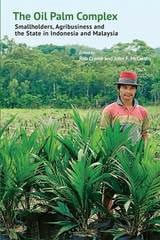
The Oil Palm Complex
Smallholders, Agribusiness and the State in Indonesia and MalaysiaEdited by Robert Cramb and John F. McCarthy
National University of Singapore Press, 2016
Based on detailed studies of specific communities and plantations and an analysis of the regional political economy of oil palm, this book unpicks the dominant policy narratives, business strategies, models of land acquisition, and labour-processes. It presents the oil palm industry in Malaysia and Indonesia as a complex system in which land, labour and capital are closely interconnected. Understanding this complex is a prerequisite to developing better strategies to harness the oil palm boom for a more equitable and sustainable pattern of rural development.
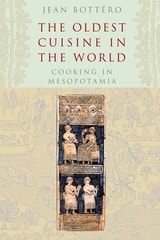
The Oldest Cuisine in the World
Cooking in MesopotamiaJean Bottéro
University of Chicago Press, 2004
In this intriguing blend of the commonplace and the ancient, Jean Bottéro presents the first extensive look at the delectable secrets of Mesopotamia. Bottéro’s broad perspective takes us inside the religious rites, everyday rituals, attitudes and taboos, and even the detailed preparation techniques involving food and drink in Mesopotamian high culture during the second and third millennia BCE, as the Mesopotamians recorded them.
Offering everything from translated recipes for pigeon and gazelle stews, the contents of medicinal teas and broths, and the origins of ingredients native to the region, this book reveals the cuisine of one of history’s most fascinating societies. Links to the modern world, along with incredible recreations of a rich, ancient culture through its cuisine, make Bottéro’s guide an entertaining and mesmerizing read.
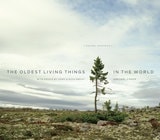
The Oldest Living Things in the World
Rachel Sussman
University of Chicago Press, 2014
Her work is both timeless and timely, and spans disciplines, continents, and millennia. It is underscored by an innate environmentalism and driven by Sussman’s relentless curiosity. She begins at “year zero,” and looks back from there, photographing the past in the present. These ancient individuals live on every continent and range from Greenlandic lichens that grow only one centimeter a century, to unique desert shrubs in Africa and South America, a predatory fungus in Oregon, Caribbean brain coral, to an 80,000-year-old colony of aspen in Utah. Sussman journeyed to Antarctica to photograph 5,500-year-old moss; Australia for stromatolites, primeval organisms tied to the oxygenation of the planet and the beginnings of life on Earth; and to Tasmania to capture a 43,600-year-old self-propagating shrub that’s the last individual of its kind. Her portraits reveal the living history of our planet—and what we stand to lose in the future. These ancient survivors have weathered millennia in some of the world’s most extreme environments, yet climate change and human encroachment have put many of them in danger. Two of her subjects have already met with untimely deaths by human hands.
Alongside the photographs, Sussman relays fascinating – and sometimes harrowing – tales of her global adventures tracking down her subjects and shares insights from the scientists who research them. The oldest living things in the world are a record and celebration of the past, a call to action in the present, and a barometer of our future.
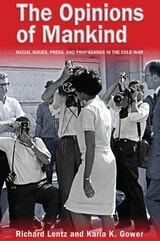
The Opinions of Mankind
Racial Issues, Press, and Propaganda in the Cold WarRichard Lentz and Karla K. Gower
University of Missouri Press, 2011
Throughout this period, the American press provided the foreign media with information about racially charged events in the United States. Such news coverage sometimes put Washington at a disadvantage, making it difficult for government officials to assuage foreign reactions to the injustices occurring on U.S. soil. Yet in other instances, the domestic press helped to promote favorable opinions abroad by articulating themes of racial progress. While still acknowledging racial abuses, these press spokesmen asserted that the situation in America was improving. Such paradoxical messages, both aiding and thwarting the efforts of the U.S. government, are the subject of The Opinions of Mankind: Racial Issues, Press, and Propaganda in the Cold War.
The study, by scholars Richard Lentz and Karla K. Gower, describes and analyzes the news discourse regarding U.S. racial issues from 1946 to 1965. The Opinions of Mankindnot only delves into the dissemination of race-related news to foreign outlets but also explores the impact foreign perceptions of domestic racism had on the U.S. government and its handling of foreign relations during the period. What emerges is an original, insightful contribution to Cold War studies. While other books examine race and foreign affairs during this period of American history, The Opinions of Mankind is the first to approach the subject from the standpoint of press coverage and its impact on world public opinion.
This exhaustively researched and compellingly written volume will appeal to media scholars, political historians, and general readers alike. By taking a unique approach to the study of this period, The Opinions of Mankind presents the workings behind the battles for public opinion that took place between 1946 and 1965.
The Other Garment Industry
Politics, Marketplaces the Informal Production of Fashion in Latin AmericaEdited by Matías Dewey
University College London, 2026
The first comprehensive study of Latin America's overlooked garment economy, drawing on cutting-edge fieldwork in sweatshops, informal marketplaces, and cross-border trade routes.
The Other Garment Industry presents an economic, social, and political phenomenon in Latin America, overlooked in social sciences literature, by introducing a new perspective in the discussion about garment production and distribution. It focuses on three pillars of this economy: downstream entrepreneurs, informal garment-oriented marketplaces, and extended routes of national and regional trade.

The Other Justice
State Impunity and Maya Re-existence after the Acteal MassacreClaudia Chávez Argüelles
University of Texas Press, 2027
How the Mexican state secured impunity after the 1997 Acteal Massacre in Chiapas, and how Maya survivors reimagine justice through embodied, collective practices of memory, healing, and political autonomy.
In December 1997, forty-five Tsotsil Maya, most of them women and children, were killed in a state-backed paramilitary attack in Acteal, Chiapas––one of the starkest cases of state violence in contemporary Mexico. Yet, as Claudia Chávez Argüelles shows, the counterinsurgent violence unleashed at Acteal did not end with the massacre, but continued in its aftermath as state impunity became a form of governance. Drawing on legal archives and long-term collaborative ethnographic research with survivors and their organization, Las Abejas, Chávez maps the social life of their testimonies across judicial rulings, media narratives, and academic interventions. Her analysis reveals how the state forged a racializing legal truth that discredits Indigenous survivors’ ways of knowing, masks the slaughter’s feminicidal dimensions, and shields state officials from accountability. Against this logic of erasure, the book traces how Las Abejas has cultivated “the Other Justice,” a horizon of re-existence rooted in embodied, collective practices of memory, healing, and autonomy. Exposing the human toll of impunity and the decolonizing force of Las Abejas’ struggle, The Other Justice redefines what justice can mean beyond the confines of law.
The Palestine-Israel Conflict
A Basic Introduction - Fourth EditionGregory Harms and Todd M. Ferry
Pluto Press, 2017
Perfect for both general readers and students, it offers a comprehensive yet lucid rendering of the conflict, setting it in historical context. This fourth edition brings us up to date with a new introduction, conclusion, and material covering recent events: Israel’s Operation Protective Edge, the Palestinian unity deal between Fatah and Hamas, and ongoing Palestinian resistance, America’s Middle East policy, and the election of Trump.
Cutting through layers of confused and inconsistent information, this new edition of The Palestine-Israel Conflict will clarify the ongoing struggle for all readers.
The Phantom World of Digul
Policing as Politics in Colonial Indonesia, 1926–1941Takashi Shiraishi
National University of Singapore Press, 2020
How did the government deploy political policing to achieve its policy objectives? What were the consequences and challenges for Indonesian activists? How was the government able to fashion its policing apparatus as the most potent instrument to achieve peace and order when the Great Depression hit the Indies, nationalist and communist forces were gaining strength in other places of the world, and war was coming both in Europe and Asia? This book answers those questions and more, breaking new ground for our understanding of the history of the Dutch Indies state in the early part of the twentieth century.