Results by title
18284 books match the query 'United States' and 3764 start with t
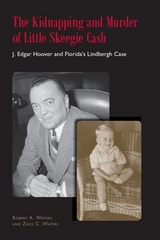
The Kidnapping and Murder of Little Skeegie Cash
J. Edgar Hoover and Florida's Lindbergh CaseRobert Alvin Waters
University of Alabama Press, 2014
In his long and storied career, J. Edgar Hoover investigated only one case personally, the 1938 kidnapping and murder of five-year-old Floridian James “Skeegie” Cash. What prompted the director himself to fly from Washington, DC, to a rain-drenched hamlet on the edge of the Everglades? Congress had slashed FBI funding, forcing Hoover to lay off half his agents. The combative Hoover believed if he could bring Skeegie’s killer to justice, the halo of positive publicity would revive the fortunes of the embattled FBI.
In The Kidnapping and Murder of Little Skeegie Cash, Robert A. Waters and Zack C. Waters bring to life the drama of the abduction, the payment of a $10,000 ransom, the heartbreaking manhunt for Skeegie and his kidnapper, the arrest and confession of Franklin Pierce McCall, and the killer’s trial and execution. Hordes of reporters swarmed into the little village south of Miami, and for thirteen days until McCall confessed, the case dominated national headlines. The authors capture the drama and the detail as well as the desperate and sometimes extralegal lengths to which Hoover went to crack the case.
Using the Freedom of Information Act, the authors obtained more than four thousand pages of FBI files and court documents to reconstruct this important but forgotten case. The tragedy that played out in the swamps of Dade County constituted the backdrop for a political struggle that would involve J. Edgar Hoover, the United States Congress, and even president Franklin Delano Roosevelt. Hoover and the president prevailed, and within two years the FBI grew from 680 employees to more than 14,000. No books and few articles have been published about this historic case.

The Kikuchi Diary
Chronicle from an American Concentration CampCharles Kikuchi
University of Illinois Press, 1973
The Killdeer
And Other Stories From the Farming LifeMichael Cotter
Parkhurst Brothers, Inc., 2014
--Rex Ellis, Director of Museum programs, Smithsonian Institution, Washington, D.C.
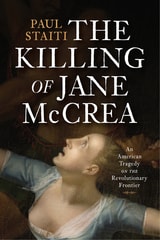
The Killing of Jane McCrea
An American Tragedy on the Revolutionary FrontierPaul Staiti
Westholme Publishing, 2027
FINALIST FOR THE 2026 GEORGE WASHINGTON PRIZE
Winner of the 2026 Book of the Year Award, George Washington American Revolution Round Table, Washington, DC
The killing of Jane McCrea on July 26, 1777, on the outskirts of a village in the northern Hudson Valley, would unexpectedly rupture the British advance from Canada that was meant to crush the American Revolution in one knockout blow. On that day, twenty-five-year-old McCrea, an unremarkable person preparing for an impending marriage, was assaulted, scalped, and killed by a group of Native Americans in the employ of British general John Burgoyne. Though the murder was but one of many civilian deaths in a fierce war zone, McCrea’s killing had far-reaching consequences for each of the three major parties involved in the Northern Campaign of 1777. In America, she became the great cause célèbre of the Revolution, the sympathetic female victim of the war symbolizing the righteousness of The Cause. In Britain, she was a human-rights tragedy that tarnished the polished surface of British honor and galvanized Whig politicians who shouted out her name in Parliament as an example of how low the nation had fallen. For Native peoples, recruited by both the British and the Americans, and caught in the middle of a war staged on ancestral grounds, McCrea’s killing was the opening salvo in a vicious chain of bloody retribution that led to the disintegration of the venerable Iroquois Confederacy and the obliteration of Native homelands. After the war, the nightmarish image of a young Jane McCrea slaughtered on the New York frontier would obsess white Americans who came to fear Native peoples as irredeemable savages. Her murder would help justify the expulsion of Indigenous tribes and open the doors for an expansionary United States that was fully intent on transforming the American continent into its own image.
The Killing of Jane McCrea: An American Tragedy on the Revolutionary Frontier by distinguished historian Paul Staiti undertakes for the first time a comprehensive investigation into McCrea’s life, death, and especially her long and strange afterlife. Using both visual arts and written records, the author reassembles the scattered fragments to illuminate a historical terrain long since shrouded in misinformation, mired in controversy, and relegated to mythology. Coming into view is a major portrait of the persons, cultures, actions, and motives that fatally converged on that hot July morning in 1777.
The Kimberlins Go to War
A Union Family in Copperhead CountryMichael B. Murphy
Indiana Historical Society Press, 2016
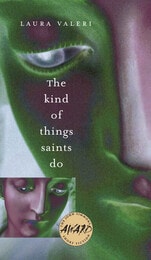
The Kind of Things Saints Do
Laura Valeri
University of Iowa Press, 2002
These stories grow through subtle shifts—the bad becomes not so bad, the worst livable. It is the saintly moments of unexpected understanding that shape the collection: one gigolo's lover picks up another at a bus stop and they agree on his worthlessness, the love-worn man reminds the newly divorced woman of her physical power, the estranged son shelters his father from an unexpected storm.
Valeri navigates the reader through the bones and scars of those who ache with wanting something else and become a little older and a little wiser for it. The Kind of Things Saints Do is a collection of human imperfections and missed connections that grows into a kaleidoscope of aspiration and hope.
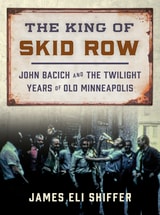
The King of Skid Row
John Bacich and the Twilight Years of Old MinneapolisJames Eli Shiffer
University of Minnesota Press, 2023
The story of a much different Minneapolis, through the words and photographs of one of its most colorful characters—now in paperback
City blue laws drove the liquor trade and its customers—hard-drinking lumberjacks, pensioners, farmhands, and railroad workers—into the oldest quarter of Minneapolis. In the fifty-cent-a-night flophouses of the city’s Gateway District, they slept in cubicles with ceilings of chicken wire. In rescue missions, preachers and nuns tried to save their souls. Sociology researchers posing as vagrants studied them. And in their midst John Bacich, aka Johnny Rex, who owned a bar, a liquor store, and a cage hotel, documented the gritty neighborhood’s last days through photographs and film of his clientele.
The King of Skid Row follows Johnny Rex into this vanished world that once thrived in the heart of Minneapolis. Drawing on hours of interviews conducted in the three years before Bacich’s death in 2012, James Eli Shiffer brings to life the eccentric characters and strange events of an American skid row. Supplemented with archival and newspaper research and his own photographs, Bacich’s stories recreate the violent, alcohol-soaked history of a city best known for its clean, progressive self-image. His life captures the seamy, richly colorful side of the city swept away by a massive urban renewal project in the early 1960s and gives us, in a glimpse of those bygone days, one of Minneapolis’s most intriguing figures—spinning some of its most enduring and enthralling tales.
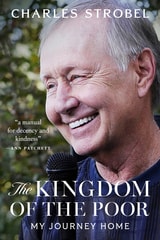
The Kingdom of the Poor
My Journey HomeEdited by Katie Seigenthaler and Amy Frogge
Vanderbilt University Press, 2024
The “why” of Charlie Strobel’s life, which was devoted to helping those without support systems and homes to call their own, was a simple belief that we are all poor and we are all worthy of love.
The Kingdom of the Poor is the story of the people and experiences that led him to this understanding and inspired him to live his life accordingly.
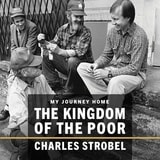
The Kingdom of the Poor
My Journey HomeEdited by Katie Seigenthaler and Amy Frogge
Vanderbilt University Press, 2024
The “why” of Charlie Strobel’s life, which was devoted to helping those without support systems and homes to call their own, was a simple belief that we are all poor and we are all worthy of love.
The Kingdom of the Poor is the story of the people and experiences that led him to this understanding and inspired him to live his life accordingly.
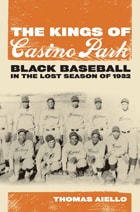
The Kings of Casino Park
Black Baseball in the Lost Season of 1932Thomas Aiello
University of Alabama Press, 2011
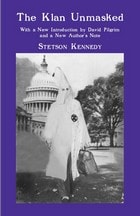
The Klan Unmasked
With a New Introduction by David Pilgrim and a New Author's NoteStetson Kennedy
University of Alabama Press, 2011
The Klan Unmasked is a riveting exposé of one of the most daring undercover operations in American history. In the 1920s, journalist Stetson Kennedy infiltrated the Ku Klux Klan at the height of its power, risking his life to expose the group’s secrets, rituals, and violent agenda. With the precision of a spy and the pen of a poet, Kennedy documented the Klan’s inner workings and fed intelligence to law enforcement and even popular radio shows—turning public opinion against the hooded order.
This book reads like a noir thriller, but its stakes are real and its impact profound. Kennedy’s fearless reporting helped dismantle one of the most dangerous hate groups in the country, making The Klan Unmasked not just a gripping narrative, but a landmark in anti-racist literature. It’s a testament to the power of truth, the necessity of resistance, and the enduring fight for justice.
Whether you're drawn to undercover intrigue or passionate about civil rights, this classic delivers both. It’s not just history—it’s a call to action, wrapped in suspense and driven by moral clarity. Few books are this brave. Fewer still are this urgent.
The Klan Unmasked is part of a three-book set that includes Southern Exposure and Jim Crow Guide to the U.S.A., all available from the University of Alabama Press.
The Know-Nothing Campaign Against Higher Learning
James Chandler
Prickly Paradigm Press, 2026
Irony and satire in the contemporary American moment.
The second Trump administration has committed itself to upending the knowledge systems and deliberative institutions that have been essential to modern democracy, with the American university—site of scientific research and liberal education—a primary target. In The Know-Nothing Campaign Against Higher Learning, literary and film critic James Chandler spotlights an American tradition of such hostility to intellectual life, especially the nativist movement of the 1850s that persecuted Catholic immigrants from Ireland and Germany. Ironically, Steve Bannon, the self-proclaimed “Know-Nothing vulgarian” who long ago recruited candidate Trump to his anti-intellectual crusade, is himself the great-grandson of an Irish immigrant who would have faced Know-Nothing backlash in that era.
Such dark ironies define our moment, Chandler argues, and they call out not only for intellectual critique but also for satire. Yet in the midst of the MAGA campaign’s calamitous effects on American public discourse, even satire must confront the “kayfabe” practices imported by Trump from professional wrestling, which mix illusion and reality to turn political life into a “spectacle without thought.” Drawing widely on cultural critics from Jonathan Swift and Alexis de Tocqueville to Roland Barthes, Chandler’s pamphlet offers an elegant and bracing account of the MAGA campaign against higher learning and its transformative effects on criticism and democracy itself.
The Korean-American Dream
Portraits of a Successful Immigrant CommunityJames Flanigan
University of Nevada Press, 2018
In The Korean-American Dream, respected and distinguished business journalist James Flanigan uncovers the struggles and contributions of the people who have made Los Angeles the largest Korean city outside of Seoul.
This intimate account illustrates how Korean immigrants have preserved their culture and history as well as adapted to the American culture of E Pluribus Unum, the radical promise of “out of many, one.” Flanigan shows how Los Angeles emerged as a capital of the Asia Pacific region.
At less than 2 million, Korean Americans are a relatively small group compared to new Americans from China, the Philippines, and India. But with energy and drive, they are building landmarks in New York as well as L.A., lobbying for causes in Washington, founding businesses, heading universities and hospitals, and holding public office in all parts of the U.S.
Flanigan’s compelling narrative told largely through personal interviews provides a front-row seat to the economic, business, and cultural developments of the Korean American Community. At a time of spirited debate about immigration, their energy and ambition serve as a ringing reminder of the promise of the American mosaic.

The Kovacs Guide to Electronic Library Collection Development
Essential Core Subject Collections, Selection Criteria, and GuidelinesAmerican Library Association, 2009

The Krebiozen Hoax
How a Mysterious Cancer Drug Shook Organized MedicineMatthew C. Ehrlich
University of Illinois Press, 2024
The brainchild of an obscure Yugoslav physician, Krebiozen emerged in 1951 as an alleged cancer treatment. Andrew Ivy, a University of Illinois vice president and a famed physiologist dubbed “the conscience of U.S. science,” wholeheartedly embraced Krebiozen. Ivy’s impeccable credentials and reputation made the treatment seem like another midcentury medical miracle. But after years of controversy, the improbable saga ended with Krebiozen proved a sham, its inventor fleeing the country, and Ivy’s reputation and legacy in ruins.
Matthew C. Ehrlich’s history of Krebiozen tells a quintessential story of quackery. Though most experts dismissed the treatment, it found passionate public support not only among cancer patients but also people in good health. The treatment’s rise and fall took place against the backdrop of America’s never-ending suspicion of educational, scientific, and medical expertise. In addition, Ehrlich examines why people readily believe misinformation and struggle to maintain hope in the face of grave threats to well-being.
A dramatic account of fraud and misplaced trust, The Krebiozen Hoax shines a light on a forgotten medical scandal and its all-too-familiar relevance in the twenty-first century.
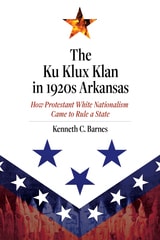
The Ku Klux Klan in 1920s Arkansas
How Protestant White Nationalism Came to Rule a StateKenneth C. Barnes
University of Arkansas Press, 2021
Winner, 2022 J.G. Ragsdale Book Award, Arkansas Historical Association
The Ku Klux Klan established a significant foothold in Arkansas in the 1920s, boasting more than 150 state chapters and tens of thousands of members at its zenith. Propelled by the prominence of state leaders such as Grand Dragon James Comer and head of Women of the KKK Robbie Gill Comer, the Klan established Little Rock as a seat of power second only to Atlanta. In The Ku Klux Klan in 1920s Arkansas, Kenneth C. Barnes traces this explosion of white nationalism and its impact on the state’s development.
Barnes shows that the Klan seemed to wield power everywhere in 1920s Arkansas. Klansmen led businesses and held elected offices and prominent roles in legal, medical, and religious institutions, while the women of the Klan supported rallies and charitable activities and planned social gatherings where cross burnings were regular occurrences. Inside their organization, Klan members bonded during picnic barbeques and parades and over shared religious traditions. Outside of it, they united to direct armed threats, merciless physical brutality, and torrents of hateful rhetoric against individuals who did not conform to their exclusionary vision.
By the mid-1920s, internal divisions, scandals, and an overzealous attempt to dominate local and state elections caused Arkansas’s Klan to fall apart nearly as quickly as it had risen. Yet as the organization dissolved and the formal trappings of its flamboyant presence receded, the attitudes the Klan embraced never fully disappeared. In documenting this history, Barnes shows how the Klan’s early success still casts a long shadow on the state to this day.
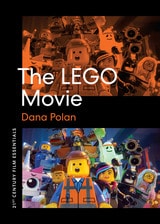
The LEGO Movie
By Dana Polan
University of Texas Press, 2020
What happens when we set out to understand LEGO not just as a physical object but as an idea, an icon of modernity, an image—maybe even a moving image? To what extent can the LEGO brick fit into the multimedia landscape of popular culture, especially film culture, today? Launching from these questions, Dana Polan traces LEGO from thing to film and asserts that The LEGO Movie is an exemplar of key directions in mainstream cinema, combining the visceral impact of effects and spectacle with ironic self-awareness and savvy critique of mass culture as it reaches for new heights of creativity.
Incorporating insights from conversations with producer Dan Lin and writer-directors Phil Lord and Chris Miller, Polan examines the production and reception of The LEGO Movie and closely analyzes the film within popular culture at large and in relation to LEGO as a toy and commodity. He identifies the film’s particular stylistic and narrative qualities, its grasp of and response to the culture industry, and what makes it a distinctive work of animation within the seeming omnipresence of animation in Hollywood, and reveals why the blockbuster film, in all its silliness and seriousness, stands apart as a divergent cultural work.
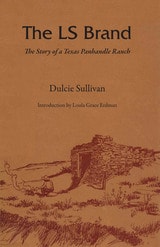
The LS Brand
The Story of a Texas Panhandle RanchBy Dulcie Sullivan; Introduction by Loula Grace Erdman.
University of Texas Press, 1968
In the spring of 1881, W. M. D. Lee and Lucien B. Scott, wealthy businessmen of Leavenworth, Kansas, purchased land in the upper Texas Panhandle to establish the Lee-Scott Cattle Company. Their range sprawled across four Texas counties and extended into eastern New Mexico. About six months later, fifty thousand head of mixed cattle, branded LS, grazed those thousands of acres of free grass.
This book is the story of Lee and Scott’s LS Ranch from the tempestuous years of the open range to the era of “bob wire.” It is also the story of the pioneer men and women whose efforts developed the LS into a cattle empire: W. M. D. and Lena Lee, Lucien and Julia Scott, “Mister Mac” and “Miss Annie” McAllister, and Charles and Pauline Whitman.
Here are accounts of chuck wagons and wagon bosses; prairie fires, blizzards, and bog holes; ranch management problems and cowboys on strike; lobo wolves and romance; wild sprees in Tascosa and its “Hogtown” sector; LS cowboys fighting against a gang of organized rustlers in a feud that ended in tragedy; and those same cowboys on the long trails to Dodge City and Montana.
Drawing upon stories told to her by men and women who were with the LS during the 1880’s and later years, Dulcie Sullivan presents her narrative in a clear, straightforward, but sympathetic manner that gives the reader a vivid sense of how life was really lived there in those times. Especially telling is her occasional use of an almost poetic incident: the steers bedding down around a campfire to listen to the chuck-wagon cook play his fiddle, or the suit of Spanish armor found in a spring, or the hail-battered trees attempting to renew themselves, despite their grotesque shapes.
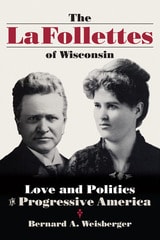
The La Follettes of Wisconsin
Love and Politics in Progressive AmericaBernard A. Weisberger
University of Wisconsin Press, 2013
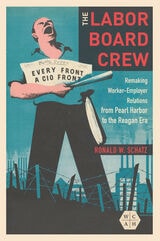
The Labor Board Crew
Remaking Worker-Employer Relations from Pearl Harbor to the Reagan EraRonald W. Schatz
University of Illinois Press, 2021
Schatz argues that the Labor Board vets, who saw themselves as disinterested technocrats, were in truth utopian reformers aiming to transform the world. Beginning in the 1970s stagflation era, they faced unforeseen opposition, and the cooperative relationships they had fostered withered. Yet their protégé George Shultz used mediation techniques learned from his mentors to assist in the integration of Southern public schools, institute affirmative action in industry, and conduct Cold War negotiations with Mikhail Gorbachev.
The Labor Day Ghost
A Murder, Its Cover-Up, and the Long Road to JusticeCarol Dawson
University of Texas Press, 0
In Corsicana, Texas, Shelley Watkins, the charismatic young wife of Jerry Mack Watkins, disappeared on Labor Day, 1993; her body, tied and taped in plastic and chained to concrete blocks, was found in the Trinity River eight days later. Although a wealth of circumstantial evidence pointed toward Jerry Mack, corruption and its legacy have kept the investigation and legal proceedings in limbo for decades. Now, as DNA evidence offers hope for a long-overdue resolution, author Carol Dawson chronicles both one woman’s tragic story and the history of violence in small-town Texas.
Beginning with Shelley’s life before she arrived in Corsicana, Dawson reveals how her death perpetuates a Gothic history of crime within the town—including a devastating number of murdered women. She also delves into the closed culture of financial control and how the Watkins family became one of the town’s wealthiest, and pulls new details from the witnesses, cops, and prosecutors connected with a case that has haunted her for thirty years. Rooted in the complex history of author Carol Dawson’s hometown, and framed by her family connections to the case, The Labor Day Ghost delivers an arresting narrative that traces the way this tragedy has continued to split Corsicana’s citizenry during the long deferral of justice.
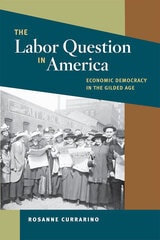
The Labor Question in America
Economic Democracy in the Gilded AgeRoseanne Currarino
University of Illinois Press, 2011

The Ladies' Etiquette Handbook
The Importance of Being Refined in the 1880sDavid E. Schoonover
University of Iowa Press, 2001
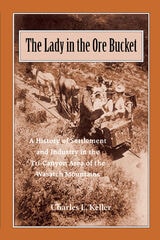
The Lady In The Ore Bucket
A History of Settlement and Industry in the Tri-Canyon Area of the Wasatch MountainsCharles L Keller
University of Utah Press, 2001
These place names, as well as the physcial traces and artifacts that persist in three Wasatch canyons—Mill Creek, Big Cottonwood, and Little Cottonwood—tantalize with what they suggest, but do not tell, about the history of settlement and development in the canyons. Charles Keller has extracted a wealth of information to create The Lady in the Ore Bucket, a faxcinating history of the lumber, mining, and hydropower industries built from the rich natural resources of the canyons. With more than six dozen photographs and maps, the book is alive with details concerning the personalities, politics, pacts, and peregrinations of local leaders from white settlement in 1847 through the early 1900s. It will delight any reader with an interest in the magnificent canyones that open onto the modern Wasatch Front.
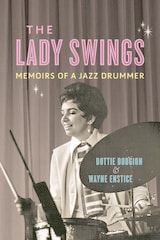
The Lady Swings
Memoirs of a Jazz DrummerDottie Dodgion and Wayne Enstice
University of Illinois Press, 2021
Vivid and always entertaining, The Lady Swings tells Dottie Dodgion's story with the same verve and straight-ahead honesty that powered her playing.
A Variety Best Music Book of 2021
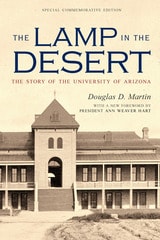
The Lamp in the Desert
The Story of the University of ArizonaDouglas D. Martin, With a New Foreword by President Ann Weaver Hart
University of Arizona Press, 1960
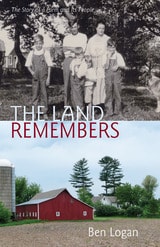
The Land Remembers
The Story of a Farm and Its PeopleBen Logan, with an introduction by Curt Meine
University of Wisconsin Press, 2017
The Land Still Lives
Jerry Apps
Wisconsin Historical Society Press, 2019
Originally published in 1970, The Land Still Lives is the first book by Wisconsin’s greatest rural philosopher, Jerry Apps. Written when he was still a young agriculture professor at the University of Wisconsin, The Land Still Lives was readers’ first introduction to Jerry’s farm in central Wisconsin, called Roshara, and the surrounding community of Skunk’s Hollow. This special 50th-anniversary edition features a new epilogue, in which Jerry revisits his philosophy of caring for the land so it in turn will care for us. This is vintage Apps, essential reading for Jerry’s legions of fans—and for all who, like Jerry, wish “to develop a relationship with nature and all its mystery and wonder.”
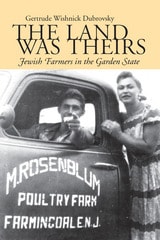
The Land Was Theirs
Jewish Farmers in the Garden StateGertrude W. Dubrovsky
University of Alabama Press, 1992
A historical account of Jewish agricultural colonies in New Jersey that examines how immigrants built farming communities in early America.
The Land Was Theirs is about Farmingdale, New Jersey, a community of Jewish farming communities in the United States established with the help of the Jewish Agricultural Society. The 50 year history of Farmingdale provides a perspective on the pressures, problems, and satisfactions of rural Jewish life as experienced in one community.
Beginning in 1919, the community grew around the small town of Farmingdale, when two Jewish families pooled their resources to establish a farm. The community evolved gradually as unrelated individuals with no previous farm experience settled and then created the institutions and organizations they needed to sustain their Jewish life. By 1945 Farmingdale was one of the leading egg-producing communities in the United States, and contributed in large measure to New Jersey’s reputation as the “egg basket of America.”
The Land Was Theirs draws from life-history interviews with 120 farmers, from the author’s personal experiences, and from a variety of private and community papers and documents. They are the pieces from which a full picture of a single Jewish farm community emerges.
The Land between the Rivers
Thomas Nuttall's Ascent of the Arkansas, 1819Russell M. Lawson
University of Michigan Press, 2004
During the early nineteenth century, Nuttall explored the waters, valleys, plains, and mountains of the Great Lakes, Ohio River, Mississippi River, as well as the Missouri, Arkansas, Red, and Canadian river valleys of the former Louisiana Territory.
In this fascinating account of Nuttall's travels through the wilderness of the middle west, author Russell Lawson-using Nuttall's own journal-captures the sense of excitement of the early wanderer. As much a delight for the mind as the senses, The Land between the Rivers details the unremitting weather and rugged geography of uncharted lands within the Louisiana Territory. A sense of discovery pervades the narrative as Nuttall's odyssey builds to its climax in the prairie wilderness of what is now Oklahoma. Sickened by "ague"-in his case, malaria-Nuttall at times was barely able to go on; yet he continued to search for and catalog plants and animals.
The Land between the Rivers expands our knowledge of the work of one of the country's earliest botanists. We also learn a great deal about the early explorers, the inhabitants of the unsettled land, and about the land and culture of the times.
The Land of Milk and Uncle Honey
Memories from the Farm of My YouthAlan Guebert with Mary Grace Foxwell
University of Illinois Press, 2015
Here are Guebert's tireless parents, measuring the year not in months but in seasons for sewing, haying, and doing the books; Jackie the farmhand, needing ninety minutes to do sixty minutes' work and cussing the entire time; Hoard the dairyman, sore fingers wrapped in electrician's tape, sharing wine and the prettiest Christmas tree ever; and the unflappable Uncle Honey, spreading mayhem via mistreated machinery, flipped wagons, and the careless union of diesel fuel and fire.
Guebert's heartfelt and humorous reminiscences depict the hard labor and simple pleasures to be found in ennobling work, and show that in life, as in farming, Uncle Honey had it right with his succinct philosophy for overcoming adversity: "the secret's not to stop."
https://www.youtube.com/watch?v=DooGQqUlXI4&index=1&list=FLPxtuez-lmHxi5zpooYEnBg
The Landscape of Hollywood Westerns
Ecocriticism in an American Film GenreCarmichael, Deborah A
University of Utah Press, 2006
The essays in this volume scrutinize the special place of nature and landscape in films—including silent, documentary, and feature length film—that are specifically American and Western. The films discussed here go beyond the stereotypical sagebrush setting. Although many of the films closely fit the standard conventions of the Western, others demonstrate the fluidity of the genre. The wildness of the western environment as a central fact of the American mythos encompasses far more than a brief period of national history or a specific geographical location.
The Landscape of Rural Service Learning, and What It Teaches Us All
Randy Stoecker
Michigan State University Press, 2016
The Language of Judges
Lawrence M. Solan
University of Chicago Press, 1993
Solan uses a wealth of examples to illustrate the way linguistics enters the process of judicial decision making: a death penalty case that the Supreme Court decided by analyzing the use of adjectives in a jury instruction; criminal cases whose outcomes depend on the Supreme Court's analysis of the relationship between adverbs and prepositional phrases; and cases focused on the meaning of certain words in the Constitution. Solan finds that judges often describe our use of language poorly because there is no clear relationship between the principles of linguistics and the jurisprudential goals that the judge wishes to promote.
A major contribution to the growing interdisciplinary scholarship on law and its social and cultural context, Solan's lucid, engaging book is equally accessible to linguists, lawyers, philosophers, anthropologists, literary theorists, and political scientists.
The Language of Planning
Essays on the Origins and Ends of American Planning ThoughtAlbert Z. Guttenberg
University of Illinois Press, 1993
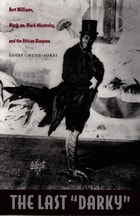
The Last "Darky"
Bert Williams, Black-on-Black Minstrelsy, and the African DiasporaLouis Chude-Sokei
Duke University Press, 2006
Chude-Sokei makes the crucial argument that Williams’s minstrelsy negotiated the place of black immigrants in the cultural hotbed of New York City and was replicated throughout the African diaspora, from the Caribbean to Africa itself. Williams was born in the Bahamas. When performing the “darky,” he was actually masquerading as an African American. This black-on-black minstrelsy thus challenged emergent racial constructions equating “black” with African American and marginalizing the many diasporic blacks in New York. It also dramatized the practice of passing for African American common among non-American blacks in an African American–dominated Harlem. Exploring the thought of figures such as Booker T. Washington, W. E. B. Du Bois, Marcus Garvey, and Claude McKay, Chude-Sokei situates black-on-black minstrelsy at the center of burgeoning modernist discourses of assimilation, separatism, race militancy, carnival, and internationalism. While these discourses were engaged with the question of representing the “Negro” in the context of white racism, through black-on-black minstrelsy they were also deployed against the growing international influence of African American culture and politics in the twentieth century.
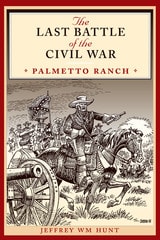
The Last Battle of the Civil War
Palmetto RanchBy Jeffrey Wm Hunt
University of Texas Press, 2002
More than two months after Robert E. Lee surrendered the Army of Northern Virginia on April 9, 1865, the New York Times reported a most surprising piece of news. On May 12-13, the last battle of the Civil War had been fought at the southernmost tip of Texas—resulting in a Confederate victory. Although Palmetto Ranch did nothing to change the war's outcome, it added the final irony to a conflict replete with ironies, unexpected successes, and lost opportunities. For these reasons, it has become both one of the most forgotten and most mythologized battles of the Civil War.
In this book, Jeffrey Hunt draws on previously unstudied letters and court martial records to offer a full and accurate account of the battle of Palmetto Ranch. As he recreates the events of the fighting that pitted the United States' 62nd Colored Troops and the 34th Indiana Veteran Volunteer Infantry against Texas cavalry and artillery battalions commanded by Colonel John S. "Rip" Ford, Hunt lays to rest many misconceptions about the battle. In particular, he reveals that the Texans were fully aware of events in the East—and still willing to fight for Southern independence. He also demonstrates that, far from fleeing the battle in a panic as some have asserted, the African American troops played a vital role in preventing the Union defeat from becoming a rout.
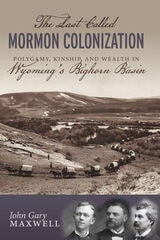
The Last Called Mormon Colonization
Polygamy, Kinship, and Wealth in Wyoming's Bighorn BasinJohn Gary Maxwell
University of Utah Press, 2021
The LDS Church officially abandoned polygamy in 1890, but evidence that the practice was still tolerated (if not officially sanctioned) by the church circulated widely, resulting in intense investigations by the U.S. Senate. In 1896 Abraham Owen Woodruff, a rising star in LDS leadership and an ardent believer in polygamy, was appointed to head the LDS Colonization Company. Maxwell explores whether under Woodruff’s leadership the Bighorn Basin colony was intended as a means to insure the secret survival of polygamy and if his untimely death in 1904, together with the excommunication of two equally dedicated proponents of polygamy—Apostles John Whitaker Taylor and Matthias Foss Cowley—led to its collapse.
Maxwell also details how Mormon settlers in Wyoming struggled with finance, irrigation, and farming and how they brought the same violence to indigenous peoples over land and other rights as did non-Mormons.
The 1900 Bighorn Basin colonization provides an early twentieth-century example of a Mormon syndicate operating at the intersection of religious conformity, polygamy, nepotism, kinship, corporate business ventures, wealth, and high priesthood status. Maxwell offers evidence that although in many ways the Bighorn Basin colonization failed, Owen Woodruff’s prophecy remains unbroken: “No year will ever pass, from now until the coming of the Savior, when children will not be born in plural marriage.”
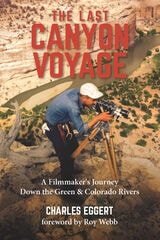
The Last Canyon Voyage
A Filmmaker's Journey Down the Green and Colorado RiversCharles Eggert Foreword by Roy Webb
University of Utah Press, 2020
This book finally brings Eggert’s writings out of the archives and into the public eye. With his keen photographer’s vision and colloquial voice, Eggert describes canyons and towns now deep under water as he tells the story of friendships forged upon the rapids and currents of the rivers. Roy Webb’s foreword provides historical context; river historian Alfred E. Holland Jr. introduces Eggert, the man who transformed into an environmentalist after visiting the West; and Sarah Holcombe’s afterword looks at what transpired in the lives of all eight crew members after the journey. Color and black-and-white illustrations further enliven the text. An engaging read, this is an important piece of river history that also shines light on Eggert’s tremendous influence as a conservation cinematographer.
The Last Colonial Massacre
Latin America in the Cold WarGreg Grandin
University of Chicago Press, 2004
Using Guatemala as a case study, Greg Grandin argues that the Cold War in Latin America was a struggle not between American liberalism and Soviet Communism but between two visions of democracy. The main effect of United States intervention in Latin America, Grandin shows, was not the containment of Communism but the elimination of home-grown concepts of social democracy.
Through unprecedented archival research and gripping personal testimonies, Grandin uncovers the hidden history of the Latin American Cold War: of hidebound reactionaries intent on holding on to their own power and privilege; of Mayan Marxists, blending indigenous notions of justice with universal ideas of freedom and equality; and of a United States supporting new styles of state terror throughout the continent. Drawing from declassified U.S. documents, Grandin exposes Washington's involvement in the 1966 secret execution of more than thirty Guatemalan leftists, which, he argues, prefigured the later wave of disappearances in Chile and Argentina.
Impassioned but judicious, The Last Colonial Massacre is history of the highest order—a work that will dramatically recast our understanding of Latin American politics and the triumphal role of the United States in the Cold War and beyond.
The Last Colonial Massacre
Latin America in the Cold War, Updated EditionGreg Grandin
University of Chicago Press, 2011
After decades of bloodshed and political terror, many lament the rise of the left in Latin America. Since the triumph of Castro, politicians and historians have accused the left there of rejecting democracy, embracing communist totalitarianism, and prompting both revolutionary violence and a right-wing backlash. Through unprecedented archival research and gripping personal testimonies, Greg Grandin powerfully challenges these views in this classic work. In doing so, he uncovers the hidden history of the Latin American Cold War: of hidebound reactionaries holding on to their power and privilege; of Mayan Marxists blending indigenous notions of justice with universal ideas of equality; and of a United States supporting new styles of state terror throughout the region.
With Guatemala as his case study, Grandin argues that the Latin American Cold War was a struggle not between political liberalism and Soviet communism but two visions of democracy—one vibrant and egalitarian, the other tepid and unequal—and that the conflict’s main effect was to eliminate homegrown notions of social democracy. Updated with a new preface by the author and an interview with Naomi Klein, The Last Colonial Massacre is history of the highest order—a work that will dramatically recast our understanding of Latin American politics and the role of the United States in the Cold War and beyond.
“This work admirably explains the process in which hopes of democracy were brutally repressed in Guatemala and its people experienced a civil war lasting for half a century.”—International History Review
“A richly detailed, humane, and passionately subversive portrait of inspiring reformers tragically redefined by the Cold War as enemies of the state.”—Journal of American History
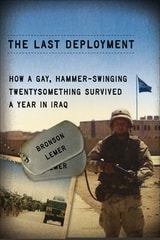
The Last Deployment
How a Gay, Hammer-Swinging Twentysomething Survived a Year in IraqBronson Lemer
University of Wisconsin Press, 2011
In 2003, after serving five and a half years as a carpenter in a North Dakota National Guard engineer unit, Bronson Lemer was ready to leave the military behind. But six months short of completing his commitment to the army, Lemer was deployed on a yearlong tour of duty to Iraq. Leaving college life behind in the Midwest, he yearns for a lost love and quietly dreams of a future as an openly gay man outside the military. He discovers that his father’s lifelong example of silent strength has taught him much about being a man, and these lessons help him survive in a war zone and to conceal his sexuality, as he is required to do by the U.S. military.
Finalist, Minnesota Book Awards
Finalist, Over the Rainbow Selection, American Library Association
Amazon Top Ten 10 Gay & Lesbian Books of 2011

The Last Dinosaur Book
The Life and Times of a Cultural IconW. J. T. Mitchell
University of Chicago Press, 1998
Mitchell aims to trace the cultural family tree of the dinosaur, and what he discovers is a creature of striking flexibility, linked to dragons and mammoths, skyscrapers and steam engines, cowboys and Indians. In the vast territory between the cunning predators of Jurassic Park and the mawkishly sweet Barney, from political leviathans to corporate icons, from paleontology to Barnum and Bailey, Mitchell finds a cultural symbol whose plurality of meaning and often contradictory nature is emblematic of modern society itself. As a scientific entity, the dinosaur endured a near-eclipse for over a century, but as an image it is enjoying its widest circulation. And it endures, according to Mitchell, because it is uniquely malleable, a figure of both innovation and obsolescence, massive power and pathetic failure—the totem animal of modernity.
Drawing unforeseen and unusual connections at every turn between dinosaurs real and imagined, The Last Dinosaur Book is the first to delve so deeply, so insightfully, and so enjoyably into our modern dino-obsession.
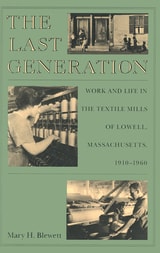
The Last Generation
Work and Life in the Textile Mills of Lowell, Massachusetts, 1910-1960Mary H. Blewett
University of Massachusetts Press, 1990
Oral histories of many of the last generation of Lowell, MA, textile mill workers preceded by two introductory sections. The first presents the historic setting of economic development and subsequent decline of the textile industry in Lowell. The second is a brief explanation of the production process wherein the last generation of mill workers expended so many of their skills and so much of their energy.
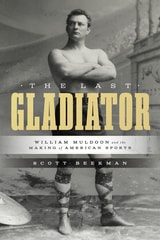
The Last Gladiator
William Muldoon and the Making of American SportsScott Beekman
University of Texas Press, 2025
2026 Honorable Mention in Monographs, North American Society for Sport History (NASSH)
The incredible career of the forgotten but foundational pro wrestler who shaped American sports culture.
William Muldoon was an infamous athlete whose prowess, savvy, and chicanery across his six-decade career led him to wealth, cultural importance, and political power. Muldoon, the child of poor Irish immigrants, began wrestling in the 1870s and quickly became one of the most famous athletes of the post–Civil War era. He started acting and modeling as his popularity grew, making him one of the first sports stars to achieve crossover success. After a triumphant stint rehabilitating fallen boxing heavyweight champion John L. Sullivan in 1889, he retired from the ring and began a new career as a fitness impresario, founding an elite gymnasium and remaking himself as a health authority in the press. He became trainer to the rich, famous, and politically powerful, which led to his appointment as chair of the New York State Athletic Commission in the 1920s. From this position, Muldoon exerted his influence over the rules of boxing and wrestling and weaponized his power to maintain segregation in sport.
The Last Gladiator is a deep, insightful dive into Muldoon’s life and impact, demonstrating the significance of this often-controversial figure in the development of American sports, professional wrestling, and physical and popular culture.
The Last Good Neighbor
Mexico in the Global SixtiesEric Zolov
Duke University Press, 2020
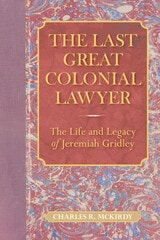
The Last Great Colonial Lawyer
The Life and Legacy of Jeremiah GridleyCharles R. McKirdy
University of Massachusetts Press, 2018
Jeremiah Gridley (1702–1767) is considered “the greatest New England lawyer of his generation,” yet we know little about him. Most of his renown is a product of the fame of his students, most notably John Adams. Gridley deserves more. He was an active participant in the Writs of Assistance trial and the Stamp Act controversy, and as a leader of the Boston bar, an editor, speculator, legislator, and politician, his life touched and was touched by much that was integral to eighteenth-century Massachusetts.
The Last Great Colonial Lawyer presents a portrait of Gridley against the background of his times. Religious controversies enter into this narrative, as do colonial wars and the increasing strains with Great Britain, but Charles R. McKirdy also rescues from the footnotes of time subjects such as the smallpox epidemic of 1721 and the currency crisis of the 1740s. Because Gridley was above all a lawyer, the primary focus is on his cases, which illuminate in a unique and very human way attitudes regarding race, status, commerce, property, and power.
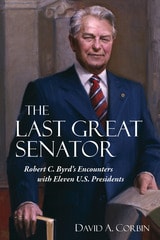
The Last Great Senator
Robert C. Byrd's Encounters with Eleven U.S. PresidentsDavid Corbin
West Virginia University Press, 2015
No person involved in so much history received so little attention as the late Robert C. Byrd, the longest-serving U.S. senator. In The Last Great Senator, David A. Corbin examines Byrd’s complex and fascinating relationships with eleven presidents of the United States, from Eisenhower to Obama. Furthermore, Byrd had an impact on nearly every significant event of the last half century, including the Cold War, the civil rights movement, the Vietnam War, Kennedy’s New Frontier, the Watergate scandal, the Reagan Revolution, the impeachment of President Clinton, and the Iraq War. Holding several Senate records, Byrd also cast more votes than any other U.S. senator.
In his sweeping portrait of this eloquent and persuasive man’s epic life and career, Corbin describes Senator Byrd’s humble background in the coalfields of southern West Virginia (including his brief membership in the Ku Klux Klan). He covers Byrd’s encounters and personal relationship with each president and his effect on events during their administrations. Additionally, the book discusses Byrd’s interactions with other notable senators, including Lyndon B. Johnson, Richard Russell, Mike Mansfield, and especially Robert and Edward Kennedy. Going beyond the boundaries of West Virginia and Capitol Hill, The Last Great Senator presents Byrd in a larger historical context, where he rose to the height of power in America.
The Last Half-Century
Societal Change and Politics in AmericaMorris Janowitz
University of Chicago Press, 1978
For Janowitz, social control denotes a society's capacity to regulate itself within a moral framework that transcends simple self-interest. He poses urgent questions: Why has social control been so drastically weakened in our advanced industrial society? And what strategies can we use to strengthen it again?
The expanation rests in part on the changes in social structure which make it more and more complicated for citizens to calculate their political self-interest. At the same time, complex economic and defense problems also strain an already overburdened legislative system, making effective, responsive political rule increasingly difficult.
Janowitz concludes by assessing the response of the social sciences to the pressing problem of social control and asserts that new forms of citizen participation in the government must be found.
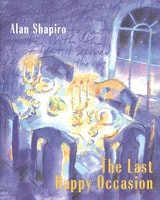
The Last Happy Occasion
Alan Shapiro
University of Chicago Press, 1996
A refreshingly honest, lovingly crafted work, The Last Happy Occasion is a treasure map for anyone interested in exploring the intersections of life and art.
"The Last Happy Occasion is touching and intelligent, emotionally satisfying and eloquent testimony to the power of poetry to instruct, heal and inspire."—Emily Barton, New York Times Book Review
"Shapiro, not unlike Auden, doses his wordplay with a certain sly irony. . . . We come away from Shapiro's book with an intimate appreciation of the little subversions that poetry can work in one's life."—Jonathan Kirsch, Los Angeles Times
"He is an acute observer of moments, people, art and language. And he packs even seemingly simple stories with many layers of meaning. . . . He shows us the power and importance of transformative art in life."—Publishers Weekly, starred review
"The literary criticism is sharp, but what enthralls the reader more is Shapiro's humorous but honest perspective on his younger self, a perspective that is critical without being condescending."—Heller McAlpin, Newsday