Results by title
28250 books match the query 'history' and 6388 start with t
The Dred Scott Case
Historical and Contemporary Perspectives on Race and LawDavid Thomas Konig
Ohio University Press, 2010
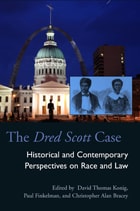
In 1846 two slaves, Dred and Harriet Scott, filed petitions for their freedom in the Old Courthouse in St. Louis, Missouri. As the first true civil rights case decided by the U.S. Supreme Court, Dred Scott v. Sandford raised issues that have not been fully resolved despite three amendments to the Constitution and more than a century and a half of litigation.
The Dred Scott Case: Historical and Contemporary Perspectives on Race and Law presents original research and the reflections of the nation’s leading scholars who gathered in St. Louis to mark the 150th anniversary of what was arguably the most infamous decision of the U.S. Supreme Court. The decision, which held that African Americans “had no rights” under the Constitution and that Congress had no authority to alter that, galvanized Americans and thrust the issue of race and law to the center of American politics. This collection of essays revisits the history of the case and its aftermath in American life and law. In a final section, the present-day justices of the Missouri Supreme Court offer their reflections on the process of judging and provide perspective on the misdeeds of their nineteenth-century predecessors who denied the Scotts their freedom.
Contributors: Austin Allen, Adam Arenson, John Baugh, Hon. Duane Benton, Christopher Alan Bracey, Alfred L. Brophy, Paul Finkelman, Louis Gerteis, Mark Graber, Daniel W. Hamilton, Cecil J. Hunt II, David Thomas Konig, Leland Ware, Hon. Michael A. Wolff
The Dressing Room
Backstage Lives and American FilmDesirée J. Garcia
Rutgers University Press, 2025
A recurrent and popular setting in American cinema, the dressing room has captured the imaginations of filmmakers and audiences for over a century. In The Dressing Room: Backstage Lives and American Film, the only book-length study of the space, author Desirée J. Garcia explores how dressing rooms are dynamic realms in which a diverse cast of performers are made and exposed. Garcia analyzes the backstage film, which spans film history, modes, and genre, to show how dressing rooms have been a useful space for filmmakers to examine the performativity of American life. From the Black maid to the wife and mother to the leading man, dressing rooms navigate, shape, and challenge society’s norms. The stakes are high in dressing rooms, Garcia argues, because they rehearse larger questions about identity and its performance, negotiating who can succeed and who cannot and on what terms.

The Drums of the 47th
Robert J. Burdette
University of Illinois Press, 2000
From Peoria to Corinth, from Corinth to Vicksburg, up the Red River country, down to Mobile and Fort Blakely, and back to Tupelo and Selma, the 47th marched three thousand miles during Burdette's tour, from March 1862 to December 1864.
In a literate voice rare in war memoirs, Burdette speaks of comradeship built and tested, the noise and confusion of the battlefield, the conflicting feelings of witnessing a military execution. Both nostalgic and piercingly immediate, his remembrances evoke the sights, sounds, smells, and above all the inner feelings stirred up by war, from exuberance to terror and from patriotic fervor to compassion for a fallen enemy.
Originally published--on the eve of another great conflict--in 1914, The Drums of the 47th is a moving depiction of the inner life of the common soldier. Like Stephen Crane's The Red Badge of Courage, Burdette's book puts a human face on the war and his words speak to all who have served or imagined serving under fire. The introduction by John E. Hallwas provides a biographical sketch of Burdette and a commentary on his engaging Civil War memoir.

The Duchy of Courland's Colonial Networks
Seventeenth Century Encounters from the Baltic to the AtlanticJohn Freeman
Central European University Press, 2027
The Duke's Man
A NovelDavid R. Slavitt
Northwestern University Press, 2011
Focusing on one aspect of Dumas’ novel—the doomed love story of Bussy d’Amboise and Diana de Monsoreau—Slavitt excerpts key passages, which are extended and undercut by the narrator’s comments. The result is a radically abridged book with its own life and verve. The first of the quoted scenes, in which the names of Bussy’s assailants are replaced with those of French cheeses, sets the irreverent tone for all that follows. The book pokes fun at Dumas’ exclamatory style and flamboyant archaisms (“morbleu!” “pardieu!”), the implausibility of the swordfights, the unnecessary contortions of the political plot, the conventional passivity of the heroine, and the coyness of his love scenes. Residing somewhere between Nabokov’s Pale Fire and Quirk Books’ mash-ups (Pride and Prejudice and Zombies, etc.), The Duke’s Man’s blend of quotation, commentary, and fiction raises searching questions about realism and truth.

The Dukes of Durham, 1865-1929
Robert F. Durden
Duke University Press, 1987
In the years after the Civil War, Washington Duke proved to be an unusually able industrialist and a conscientious, Methodist philanthropist. He was, in fact, a major Southern pioneer in both industry and philanthropy. His two sons by a second marriage were remarkably devoted to each other as well as to their father. Both sons also reflected traits of thier father. While Benjamin N. Duke and James B. Duke had life-long involvement with the business world—first in tobacco, then textiles, and finally electric power—as well as with philanthropy, they actually developed complementary specializations. Benjamin N. Duke, the older of the two, served as the family's primary agent for philanthropy from his early manhood in the late 1800's until he gradually became semi-invalid after 1915. James B. Duke, on the other hand, early displayed a marked talent, even a genius, for business. Toward the end of his life, with the establishment of The Duke Endowment late in 1924, he emerged as one of the nation's major philanthropists, ranking alongside Andrew Carnegie and John D. Rockefeller. A central theme of this book is, however, that the Endowment, despite its magnitude and far-reaching scope, was essentially the institutionalization and culmination of a pattern of family philanthropy that emerged in the 1890's and for which the older brother, Benjamin N. Duke, had always been the primary agent. Thus, the story of James B. Duke, who was and has remained much the more well-known of the two brothers, cannot properly be told out of the family context from which he emerged and in which occurred most of the important phases of his life.
Washington Duke, as a small, land-owning yeoman farmer, was typical of the great majority class not only in antebellum North Carolina but in the South as a whole. Only after the war, when he and his sons emerged as large-scale industrialists and philanthropists, did the Dukes become atypical. Their story is, then, both agricultural and industrial, both Southern and national. Born North Carolinians, they moved onto a national, even global, stage. Yet all the while they kept deep roots, as well as vast investments of capital, in the Old North State, and they poured many millions into philanthropy, largely in the two Carolinas. Based largely on manuscript sources, many of them hitherto unused, this is the first study of the Duke family. The "New South," as recent historians have told us, may not have been so new—but it was certainly different in important ways, and the Dukes loomed large among those who helped to make it so.
The Dune's Twisted Edge
Journeys in the LevantGabriel Levin
University of Chicago Press, 2012
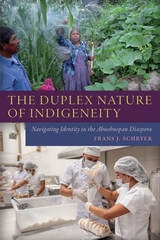
The Duplex Nature of Indigeneity
Navigating Identity in the Ahuehuepan DiasporaFrans J. Schryer
University Press of Colorado, 2025
Using a variety of sources, perspectives, and methods, Schryer takes a duplexity approach, which allows understanding the complexity of social reality and its complementary nature—it identifies fields, clusters, and layers as interconnected components of social life. The innovative methods consist of the combination of ethnographic description and an ethnohistorical census that provides information on every person going back to approximately 1850. That census is further examined with the use of inferential and non-inferential statistical techniques, archival research in locations not normally accessible to scholars, Facebook, phone interviews conducted over several years, and help from Nahuatl-speaking people whose perspectives on the findings generate additional information and insights.
Unique in this presentation, which dips into the lives of generations of people to draw insight on those who lay claim to transnational Indigeneity, Schryer’s work contributes to research and theoretical discussion in the field of migration and globalization studies through a close examination of one Indigenous community over the course of many years, utilizing a mix of qualitative and quantitative research methods in anthropology.

The Dutch Atlantic
Slavery, Abolition and EmancipationKwame Nimako and Glenn Willemsen
Pluto Press, 2011
The Dutch Atlantic interrogates the Dutch involvement in Atlantic slavery and assesses the historical consequences of this for contemporary European society.
Kwame Nimako and Glenn Willemsen show how the slave trade and slavery intertwined economic, social and cultural elements, including nation-state formation in the Netherlands and across Europe. They explore the mobilisation of European populations in the implementation of policies that facilitated Atlantic slavery and examine how European countries created and expanded laws that perpetuated colonisation.
Addressing key themes such as the incorporation of the formerly enslaved into post-slavery states and contemporary collective efforts to forget and/or remember slavery and its legacy in the Netherlands, this is an essential text for students of European history and postcolonial studies.
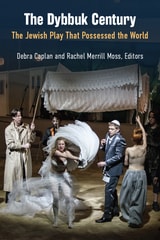
The Dybbuk Century
The Jewish Play That Possessed the WorldDebra Caplan and Rachel Merrill Moss, Editors
University of Michigan Press, 2023
A little over 100 years ago, the first production of An-sky’s The Dybbuk, a play about the possession of a young woman by a dislocated spirit, opened in Warsaw. In the century that followed, The Dybbuk became a theatrical conduit for a wide range of discourses about Jews, belonging, and modernity. This timeless Yiddish play about spiritual possession beyond the grave would go on to exert a remarkable and unforgettable impact on modern theater, film, literature, music, and culture.
The Dybbuk Century collects essays from an interdisciplinary group of scholars who explore the play’s original Yiddish and Hebrew productions and offer critical reflections on the play’s enduring influence. The collection will appeal to scholars, students, and theater practitioners, as well as general readers.

The Dynamics of Business-Government Relations
Industry and Exports, 1893-1921William H. Becker
University of Chicago Press, 1982
The Dynamics of Enduring Rivalries
Edited by Paul F. Diehl
University of Illinois Press, 1998

The Dynamics of European Integration
Causes and Consequences of Institutional ChoicesThomas König
University of Michigan Press, 2024
The Dynastic Imagination
Family and Modernity in Nineteenth-Century GermanyAdrian Daub
University of Chicago Press, 2021
Daub builds this conception of dynasty in a syncretic study of literature, sciences, and the history of ideas, engaging with remnants of dynastic ideology in the work of Richard Wagner, Émile Zola, and Stefan George, and in the work of early feminists and pioneering psychoanalysts. At every stage of cultural progression, Daub reveals how the relation of dynastic to nuclear families inflected modern intellectual history.
The ENGLISH COMMON READER
A Social History of the Mass Reading Public, 1800–1900, Second EditionRichard D. Altick
The Ohio State University Press, 1998
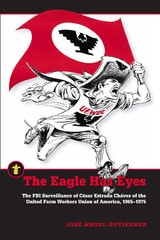
The Eagle Has Eyes
The FBI Surveillance of César Estrada Chávez of the United Farm Workers Union of America, 1965–1975José Angel Gutiérrez
Michigan State University Press, 2019
The Eagle Returns
The Legal History of the Grand Traverse Band of Ottawa and Chippewa IndiansMatthew L.M. Fletcher
Michigan State University Press, 2012
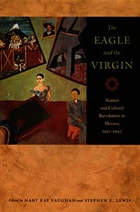
The Eagle and the Virgin
Nation and Cultural Revolution in Mexico, 1920–1940Mary Kay Vaughan and Stephen E. Lewis, eds.
Duke University Press, 2006
Contributors explore the nation-building efforts of the government, artists, entrepreneurs, and social movements; their contradictory, often conflicting intersection; and their inevitably transnational nature. Scholars of political and social history, communications, and art history describe the creation of national symbols, myths, histories, and heroes to inspire patriotism and transform workers and peasants into efficient, productive, gendered subjects. They analyze the aesthetics of nation building made visible in murals, music, and architecture; investigate state projects to promote health, anticlericalism, and education; and consider the role of mass communications, such as cinema and radio, and the impact of road building. They discuss how national identity was forged among social groups, specifically political Catholics, industrial workers, middle-class women, and indigenous communities. Most important, the volume weighs in on debates about the tension between the eagle (the modernizing secular state) and the Virgin of Guadalupe (the Catholic defense of faith and morality). It argues that despite bitter, violent conflict, the symbolic repertoire created to promote national identity and memory making eventually proved capacious enough to allow the eagle and the virgin to coexist peacefully.
Contributors. Adrian Bantjes, Katherine Bliss, María Teresa Fernández, Joy Elizabeth Hayes, Joanne Hershfield, Stephen E. Lewis, Claudio Lomnitz, Rick A. López, Sarah M. Lowe, Jean Meyer, James Oles, Patrice Olsen, Desmond Rochfort, Michael Snodgrass, Mary Kay Vaughan, Marco Velázquez, Wendy Waters, Adriana Zavala
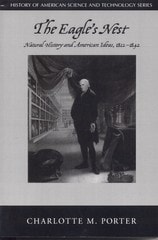
The Eagle's Nest
Natural History and American Ideas, 1812-1842Charlotte M. Porter
University of Alabama Press, 1986
The Eagles Encyclopedia
Ray Didinger
Temple University Press, 2005

The Eagles Encyclopedia
Champions EditionRay Didinger
Temple University Press, 2018
Ray Didinger, like every die-hard Eagles fan, has been waiting since the 1960 NFL Title for the Birds to win the Super Bowl. In this “Champions Edition” of The Eagles Encyclopedia, beloved Eagles commentator Didinger celebrates his team and their remarkable, against-all-odds season that ended at Super Bowl LII, where they claimed victory over the Patriots in Minnesota.
Didinger updates his best-selling book The Eagles Encyclopedia with the departure of Coach Chip Kelly and the dawn of the Doug Pederson era. He provides a new chapter on the 2017–18 season and postseason. And he includes dozens of new player, coach, and front-office profiles as well as Hall of Fame updates on 2018 inductees Brian Dawkins and Terrell Owens.
But wait, there’s more!
- An all-new 16-page color insert highlights key moments on the road to the Super Bowl
- Iconic photos old and new, from Concrete Charlie Bednarik’s tackle of Frank Gifford to Nick Foles and the Philly Special
- More than 100 new photos from the recent season as well as from earlier periods in the Eagles’ storied history
TheEagles Encyclopedia: Champions Edition is more than a keepsake of a championship season. It is a book about a city and a team and the emotion that binds them.

The Eagles Encyclopedia
Champions IIRay Didinger with Robert S. Lyons
Temple University Press, 2025
Quarterback Jalen Hurts described the city’s love for the Eagles as “a Philly thing,” and no one understands that better than Didinger, who has followed the team since the 1950s. In Champions II, he brings that history up to date by writing about the Tush Push, Saquon Barkley’s reverse hurdle, and other milestones of the 2024 season.
This new edition includes:
- More than 60 new photographs plus a 16-page color insert.
- Dozens of new player, coach and front-office profiles.
- Tributes to the team's newest Hall of Fame inductees: Eric Allen, Dick Vermeil and Harold Carmichael.
- An expanded chapter on the Eagles–Cowboys rivalry.
- An updated statistics and records section.
The Eagles Encyclopedia: Champions II is a must have for any E-A-G-L-E-S fan who wants to relive the Big Game and all the drama that led up to it.
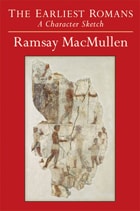
The Earliest Romans
A Character SketchRamsay MacMullen
University of Michigan Press, 2013
"A vibrant account that puts flesh on the bare bones of early Roman history."
---Celia Schultz, University of Michigan
The ancient Romans' story down to 264 B.C. can be made credible by stripping away their later myths and inventions to show how their national character shaped their destiny.
After many generations of scholarly study, consensus is clear: the account in writers like Livy is not to be trusted because their aims were different from ours in history-writing. They wanted their work to be both improving and diverting. It should grow out of the real past, yes, but if that reality couldn't be recovered, or was uncertain, their art did not forbid invention. It more than tolerated dramatic incidents, passions, heroes, heroines, and villains. If, however, all this resulting ancient fiction and adornment are pruned away, a national character can be seen in the remaining bits and pieces of credible information, to explain the familiar story at least in its outlines.
To doubt the written sources has long been acceptable, but this or that detail or narrative section must always be left for salvage by special pleading. To press home the logic of doubt is new. To reach beyond the written sources for a better support in excavated evidence is no novelty; but it is a novelty, to find in archeology the principal substance of the narrative---which is the choice in this book. To use this in turn for the discovery of an ethnic personality, a Roman national character, is key and also novel.
What is repeatedly illustrated and emphasized here is the distance traveled by the art or craft of understanding the past---"history" in that sense---over the course of the last couple of centuries. The art cannot be learned, because it cannot be found, through studying Livy and Company. Readers who care about either of the two disciplines contrasted, Classics and History, may find this argument of interest.
"Like Thucydides of the hyperactive Athenians and de Tocqueville of the nation-building Americans, MacMullen here draws a character sketch of the early Romans---the men who built Rome, conquered Italy, and created an empire. Based on profound familiarity with history, evidence, and their better-known descendants, attention to what they did and failed to do, remarkable insight, empathy, constructive imagination, and not without humor, he reconstructs the homo Romanus and thus helps us imagine what he was like, and understand why he achieved what he did. This little book is informative, full of important ideas, and delightful to read."
---Kurt Raaflaub, Brown University
Jacket image: Marcus Fabius and Quintus Tannius. Fresco. Musei Capitolini, Rome, Italy. Courtesy of Scala / Art Resource, NY..
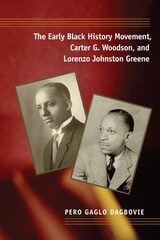
The Early Black History Movement, Carter G. Woodson, and Lorenzo Johnston Greene
Pero Gaglo Dagbovie
University of Illinois Press, 2007

The Early History of Radio
From Faraday to MarconiG.R.M. Garratt
The Institution of Engineering and Technology, 1994
The Early History of the Ancient Near East, 9000-2000 B.C.
Hans J. Nissen
University of Chicago Press, 1988
With a unique combination of material culture analysis written data, Nissan traces the emergence of the earliest isolated settlements, the growth of a network of towns, the emergence of city states, and finally the appearance of territorial states. From his synthesis of the prehistoric and literate periods comes a unified picture of the development of Mesopotamian economy, society, and culture. Lavishly illustrated, The Early History of the Ancient Near East, 9000-2000 B.C. is an authoritative work by one of the most insightful observers of the evolution and character of Mesopotamian civilization.
The Early Medieval Balkans
A Critical Survey from the Sixth to the Late Twelfth CenturyJohn V. A. Fine
University of Michigan Press, 1991
This book discusses the development of ethnic nationalism among Bulgars, Croatians, Serbians, and Macedonians.
The Early Middle Ages
Franca Ela Consolino
SBL Press, 2020
Examine the creative, profound dialogue between medieval women and biblical traditions
The latest volume in the Bible and Women series examines the relationship between women and the Bible’s reception during the early Middle Ages (500–1100 CE) in both the Greek East and the Latin West. Essays focus on interactions between women and the Bible through biblical precepts on women and for women, biblical women as the subjects of action or objects of discussion, and writings by women that refer to the Bible as a moral authority. The women discussed in the volume range from the well-known—including the nuns Kassia in Byzantium and Hrosvita in the West; the aristocrat Dhuoda, author of a moral guide for her son; Gisela, the sister of Charlemagne and abbess of Chelles; and her niece Rotrude—to those who remain anonymous. Contributions also explore how the Old and New Testaments exercised influence on emerging Islam.
Features:
- Analysis of images of the Virgin Mary as a means of tracing the spread of her cult and feast days from East to West
- Exploration of the significance of classical culture for medieval women who composed poems for a Christian audience
- Evaluation of art as a means of establishing devotional relationships not necessarily mediated by the voices of preachers or the reading of texts .
The Early Mubarak Years 1982–1988
The Non-Fiction Writing of Naguib Mahfouz, Volume IIINaguib Mahfouz
Gingko, 2020
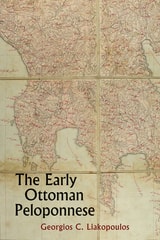
The Early Ottoman Peloponnese
A Study in the Light of an Annotated Editio Princeps of the TT10-1/14662 Ottoman Taxation Cadastre (ca. 1460–1463)Georgios C. Liakopoulos
Gingko, 2019
The book is divided into two parts, with part one covering a range of materials through an introduction and three chapters and part two consisting of a diplomatic edition of the transcribed Ottoman text. The introduction offers an orientation to the scope of the book, surveys previous scholarship conducted on the subject, and provides a historical examination of the late Byzantine Peloponnese and its conquest by the Ottomans. Accompanied by topographic and linguistic notes, Liakopoulos presents the historical geography of the Peloponnese, listing all the place-names mentioned in the sequence they appear in the TT10-1/14662 register. This is followed by a set of thirty-eight digital maps of the early Ottoman Peloponnese using GIS (Geographical Information Systems). This is followed by a discussion of the demography of the Peloponnese, including the settlement patterns, the density of population and its categorisation—urban and rural, sedentary and nomadic—concentrating on the influx and settlement of the second largest ethnic group in the peninsula: the Albanians. Liakopoulos explores the administrative and economic structures of the Peloponnese, and provides a detailed presentation their of agricultural production, fully illustrated with tables and charts.
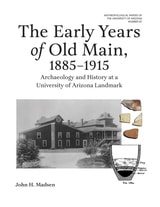
The Early Years of Old Main, 1885–1915
Archaeology and History at a University of Arizona LandmarkJohn H. Madsen
University of Arizona Press, 2026
The Early Years of Old Main, 1885–1915 details the archaeological discoveries revealed during the 2012–14 renovation of Old Main, which, due to its age and historic records, is on the National Register of Historic Places.
Thanks to detailed excavation work by a team of archaeologists, this work documents eight historic features of the building, ranging from equipment pads to drainage systems. Drawing on archaeological monitoring, artifact analysis, archival records, architectural drawings, and historic photographs, the narrative reconstructs how Old Main functioned during the university’s first decades and how its physical spaces supported early scientific instruction in mining, metallurgy, and agriculture.
More than a technical report, this volume offers a tangible glimpse into the material foundations of higher education in territorial and early statehood Arizona. Madsen’s careful documentation preserves knowledge of features that could not be saved during renovation and places them in the broader context of Old Main’s architectural evolution and its central role on campus. The result is an important resource for historians, archaeologists, preservationists, and anyone who values the University of Arizona’s heritage—demonstrating that even the most familiar buildings can still hold untold stories beneath their floors and landscapes.

The Earps Invade Southern California
Bootlegging Los Angeles, Santa Monica, and the Old Soldiers' HomeDon Chaput
University of North Texas Press, 2020
The Earth Is Our Book
Geographical Knowledge in the Latin West ca. 400-1000Natalia Lozovsky
University of Michigan Press, 2000
Tackling an impressive array of primary and secondary sources--including a variety of late antique and early medieval texts--Lozovsky examines early medieval geography as it existed in other fields of learning: theology, history, and natural science. She expounds on the use of published resources by examining the nature of geographical knowledge in the Middle Ages. She draws on unpublished sources--such as school commentaries--for the rich information they provide about geographical education during that period. For many scholars of medieval studies, early medieval geographical texts have more philological than geographical value. Lozovsky's work provides an insightful, alternative interpretation.
Those interested in history, medieval studies, ethnography, science, education, religion, Latin studies, and, of course, geography, will find this book a most fascinating read.
Natalia Lozovsky is an instructor in the Department of History, University of Colorado, Boulder.
The Earth That Modernism Built
Empire and the Rise of Planetary DesignKenny Cupers
University of Texas Press, 2024
An intellectual history of architectural modernism for an age of rising global inequality and environmental crisis.
The Earth That Modernism Built traces the rise of planetary design to an imperialist discourse about the influence of the earthly environment on humanity. Kenny Cupers argues that to understand how the earth became an object of design, we need to radically shift the terms of analysis. Rather than describing how new design ideas and practices traveled and transformed people and places across the globe, this book interrogates the politics of life and earth underpinning this process. It demonstrates how approaches to modern housing, landscape design, and infrastructure planning are indebted to an understanding of planetary and human ecology fueled by settler colonialism and imperial ambition.
Cupers draws from both canonical and unknown sources and archives in Germany, Namibia, and Poland to situate Wilhelmine and Weimar design projects in an expansive discourse about the relationship between soil, settlement, and race. This reframing reveals connections between colonial officials planning agricultural hinterlands, garden designers proselytizing geopolitical theory, soil researchers turning to folklore, and Bauhaus architects designing modern communities according to functionalist principles. Ultimately, The Earth That Modernism Built shows how the conviction that we can design our way out of environmental crisis is bound to exploitative and divisive ways of inhabiting the earth.
The Earth Will Appear as the Garden of Eden
Essays on Mormon Environmental HistoryJedediah S. Rogers and Matthew C. Godfrey
University of Utah Press, 2018
Since Joseph Smith’s revelations, Mormons have interacted with nature in significant ways—whether perceiving it as a place to find God, uncorrupted spaces in which to build communities to usher in the Second Coming, wildness needing domestication and control, or a world brimming with natural resources to ensure economic well-being. The essays in this volume—written by leading scholars in both environmental history and Mormon history—explore how nature has influenced Mormon beliefs and how these beliefs inform Mormons’ encounters with nature. Introducing overarching environmental ideas, contributors examine specific aspects of nature and Mormon theology to glean new insights into the Mormon experience.
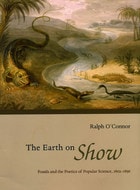
The Earth on Show
Fossils and the Poetics of Popular Science, 1802-1856Ralph O'Connor
University of Chicago Press, 2007
Shrewd science-writers, O’Connor shows, marketed spectacular visions of past worlds, piquing the public imagination with glimpses of man-eating mammoths, talking dinosaurs, and sea-dragons spawned by Satan himself. These authors—including men of science, women, clergymen, biblical literalists, hack writers, blackmailers, and prophets—borrowed freely from the Bible, modern poetry, and the urban entertainment industry, creating new forms of literature in order to transport their readers into a vanished and alien past.
In exploring the use of poetry and spectacle in the promotion of popular science, O’Connor proves that geology’s success owed much to the literary techniques of its authors. An innovative blend of the history of science, literary criticism, book history, and visual culture, The Earth on Show rethinks the relationship between science and literature in the nineteenth century.
The Earthquake Observers
Disaster Science from Lisbon to RichterDeborah R. Coen
University of Chicago Press, 2012
In The Earthquake Observers, Deborah R. Coen acquaints readers not only with the century’s most eloquent seismic commentators, including Alexander von Humboldt, Charles Darwin, Mark Twain, Charles Dickens, Karl Kraus, Ernst Mach, John Muir, and William James, but also with countless other citizen-observers, many of whom were women. Coen explains how observing networks transformed an instant of panic and confusion into a field for scientific research, turning earthquakes into natural experiments at the nexus of the physical and human sciences. Seismology abandoned this project of citizen science with the introduction of the Richter Scale in the 1930s, only to revive it in the twenty-first century in the face of new hazards and uncertainties. The Earthquake Observers tells the history of this interrupted dialogue between scientists and citizens about living with environmental risk.
The East Florida Expeditions of Clarence Bloomfield Moore
Clarence Bloomfield Moore, edited by Jeffrey M. Mitchem
University of Alabama Press, 1999
A Dan Josselyn Memorial Publication
A foundational archaeological record of the Indigenous cultures and ancient landscapes of Florida's eastern coast.
The East Florida Expeditions of Clarence Bloomfield Moore, edited and introduced by Jeffrey M. Mitchem, is an essential collection of pioneering archaeological research documenting the prehistoric cultures of Florida's eastern coast. Bringing together seventeen of Moore's landmark publications originally issued between 1892 and 1903, this volume preserves the results of extensive explorations conducted along the Atlantic coast of Florida, from the Georgia border southward to Lake Okeechobee, with particular emphasis on the St. Johns River and its tributaries.
Through detailed descriptions, illustrations, and field observations, Moore records the excavation of burial mounds, shell heaps, sand mounds, and Indigenous habitation sites that yielded a wealth of artifacts, including pottery, tools, ornaments, and human remains. His investigations provided some of the earliest systematic archaeological documentation in Florida and helped establish the foundations for understanding regional cultural chronologies and settlement patterns. Many of the sites he examined have since been altered or destroyed, making these reports an irreplaceable record of Florida's archaeological heritage.
Enhanced by Mitchem's scholarly introduction and analysis of subsequent research, this volume connects Moore's groundbreaking work to modern archaeological scholarship. It remains a foundational resource for archaeologists, anthropologists, historians, and anyone interested in the Indigenous history and prehistoric cultures of East Florida.
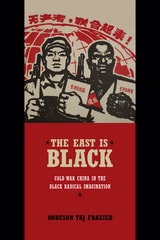
The East Is Black
Cold War China in the Black Radical ImaginationRobeson Taj Frazier
Duke University Press, 2015
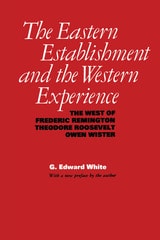
The Eastern Establishment and the Western Experience
The West of Frederic Remington, Theodore Roosevelt, and Owen WisterBy G. Edward White
University of Texas Press, 1989
First published in 1968, The Eastern Establishment and the Western Experience has become a classic in the field of American studies.
G. Edward White traces the origins of “the West of the imagination” to the adolescent experiences of Frederic Remington, Theodore Roosevelt, and Owen Wister—three Easterners from upper-class backgrounds who went West in the 1880s in search of an alternative way of life.
Each of the three men came to identify with a somewhat idealized “Wild West” that embodied the virtues of individualism, self-reliance, and rugged masculinity. When they returned East, they popularized this image of the West through art, literature, politics, and even their public personae. Moreover, these Western virtues soon became and have remained American virtues—a patriotic ideal that links Easterners with Westerners.
With a multidisciplinary blend of history, biography, sociology, psychology, and literary criticism, The Eastern Establishment and the Western Experience will appeal to a wide audience. The author has written a new preface, offering additional perspectives on the mythology of the West and its effect on the American character.
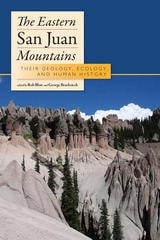
The Eastern San Juan Mountains
Their Ecology, Geology, and Human HistoryRob Blair
University Press of Colorado, 2011
A natural division between the eastern and western slopes of the San Juans is the north-south line that runs approximately through Lake City, south of the crossing of the Piedra River by US Highway 160. In this super guidebook, twenty-seven contributors--all experts in their fields--artfully bring the geology, hydrology, animal and plant life, human histories, and travel routes of these eastern slopes to life. Designed to inform researchers, educators, and students about the region's complex systems, The Eastern San Juan Mountains also serves as an informative guidebook to accompany visitors along their travels on the Silver Thread National Scenic Byway, which stretches between South Fork and Lake City.
The Eastern San Juan Mountains deserves a place next to The Western San Juan Mountains on the bookshelf of every naturalist, researcher, resident, educator, student, and tourist seeking a greater understanding of this marvelous place and its history.
The Ebb of the Pink Tide
The Decline of the Left in Latin AmericaMike Gonzalez
Pluto Press, 2018
In this book, renowned Latin Americanist Mike Gonzalez explores the rocky course of the left in Latin American politics. Although the left-wing developments of the past twenty years have been widely celebrated by activists, Gonzalez cautions us to consider the problems and conflicts that have arisen during their tenure as well. Through critical examination of the failings of Argentina, Bolivia, Brazil, Chile, Ecuador, and Venezuela, Gonzalez is able to identify both weaknesses and strengths, and to suggest possible future pathways for the renewal of the left in nations across Latin America.
Providing a critical but sympathetic analysis of the records of the left governments across the continent, Gonzalez offers a refreshing reflection on the prospects and future of Latin American politics.
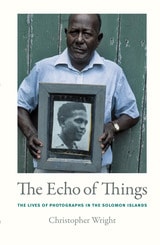
The Echo of Things
The Lives of Photographs in the Solomon IslandsChristopher Wright
Duke University Press, 2013
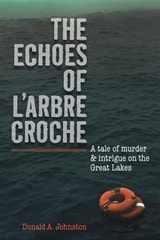
The Echoes of L'Arbre Croche
Donald A. Johnston
University of Michigan Press, 2009
The year is 1915, and Benjamin Corvet, founder of the ship-owning firm Corvet, Sherrill and Spearman, suddenly disappears, sparking events and questions that baffle even those who are close to him.
Constance Sherrill, an attractive, sheltered young woman, feels strangely responsible for what may have happened to him---her father's best friend and coworker. Alan Conrad arrives in Chicago searching for his identity and an unknown benefactor and is swept into a maelstrom of mystery and intrigue that tests his intelligence and athleticism to the fullest. Henry Spearman, the firm's junior partner, is the most eligible bachelor along Chicago's Lake Shore Drive as a result of his catapult from ships' ranks to successful owner.
When a ship sinks off the coast of Beaver Island in Michigan, the intertwining lives of these characters unlock the mystery of the disappearance of another ship twenty years earlier, in a riveting whodunit set on the stormy waters of the Great Lakes.
Donald A. Johnston was born and raised in Detroit, served in World War II as a U.S. Navy Reserve officer, and was decorated for service in the Philippines and in the invasions of Iwo Jima and Okinawa. His career includes forty years in the insurance business. An ardent sailing enthusiast, he has cruised the Great Lakes extensively and has sailed winners in class boats and in offshore competition.
Jacket photograph © Yuriz / iStockphoto.com

The Echoes of Trauma
An Oral Historical Study on the Impact of the World War II Mass Incarceration on the Health of Japanese AmericansGwenn M. Jensen
University Press of Colorado, 2026
In Echoes of Trauma, medical anthropologist Gwenn Jensen traces the longitudinal ramifications of racism, the chronic stress of imprisonment in concentration camps, and widespread healthcare inadequacies on the well-being of Japanese American Nisei during WWII and beyond.
Based on ninety oral history interviews conducted between 1995 and 2005, Jensen’s work uncovers long-term health impacts on former incarcerees, relating personal stories of Japanese Americans with archival corroboration of their traumatic experiences of having been made prisoners in their own land. These memories illuminate the betrayal and lifelong consequences of imprisonment not only on physical and psychological health but also including intergenerational trauma passed on to subsequent generations. Echoes of Trauma details these short- and long-term health effects and records the stories of these Americans for posterity.
In the wake of the current political climate, with echoes of this past reverberating, the reexamination of Japanese American incarceration undertaken here underscores the importance of comprehending the fallout from incomprehensible injustice visited upon innocent and law-abiding citizens.
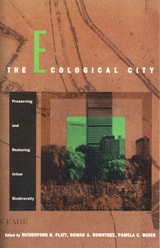
The Ecological City
Preserving and Restoring Urban BiodiversityRutherford H. Platt
University of Massachusetts Press, 1994
Interdisciplinary in content as well as approach, this collection of original essays takes a fresh look at the ecology of urban communities. Written by experts from a variety of professions—academic researchers, private and public program managers, and citizen activists—the book explores issues of geography, ecology, landscape architecture, urban forestry, law, and environmental education. Contributions include broad overviews of common problems a well as detailed case studies of specific programs.
Although several contributors are natural scientists, the book focuses on matters of public policy and public-private collaboration. The aim is not only to assess the impact of increasing urbanization on biodiversity, but also to propose new ways of preserving and restoring the balance between the natural and the built environment through planning and design.
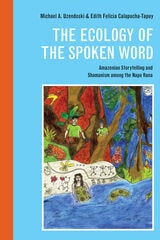
The Ecology of the Spoken Word
Amazonian Storytelling and the Shamanism among the Napo RunaMichael A. Uzendoski and Edith Felicia Calapucha-Tapuy
University of Illinois Press, 2012
This volume offers the first theoretical and experiential translation of Napo Runa mythology in English. Michael A. Uzendoski and Edith Felicia Calapucha-Tapuy present and analyze lowland Quichua speakers in the Napo province of Ecuador through narratives, songs, curing chants, and other oral performances, so readers may come to understand and appreciate Quichua aesthetic expression. Guiding readers into Quichua ways of thinking and being--in which language itself is only a part of a communicative world that includes plants, animals, and the landscape--Uzendoski and Calapucha-Tapuy weave exacting translations into an interpretive argument with theoretical implications for understanding oral traditions, literacy, new technologies, and language. A companion websiteoffers photos, audio files, and videos of original performances illustrates the beauty and complexity of Amazonian Quichua poetic expressions.
The Economic Development of Manchuria
The Rise of a Frontier EconomyKang Chao
University of Michigan Press, 1983
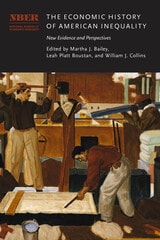
The Economic History of American Inequality
New Evidence and PerspectivesEdited by Martha J. Bailey, Leah Platt Boustan, and William J. Collins
University of Chicago Press, 2025
A meticulous examination of the history and roots of economic inequality within the United States.
This volume refines and extends the economic history literature on economic inequality in the United States. Economic inequality manifests itself on various dimensions, including access to resources and economic security, as well as access to education and opportunities for migration, marriage, and other important life decisions. Measuring inequality and studying its variation over time and in response to economic shocks such as recessions and wars deepen our understanding of how the economy operates and can inform the design of public policies. The studies in this compendium present comprehensive evidence on income distribution during the nineteenth and early twentieth centuries, drawing on new data on wages and prices. They also consider disparities in economic well-being that are reflected in outcomes other than wage and salary income, such as homeownership and marriage. The volume also presents new evidence on the effects of income inequality on social outcomes. It concludes with an intellectual history of “human capital,” a core concept in the economic analysis of the underpinnings of labor market inequality.
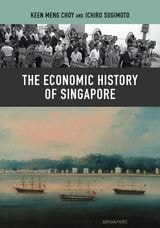
The Economic History of Singapore
Keen Meng Choy and Ichiro Sugimoto
National University of Singapore Press, 2026
What explains Singapore’s economic success? What are the factors behind the many changes it has negotiated over the centuries, first as a regional trading port in the fourteenth century, then as an entrepôt and staple port in the British empire, and finally moving to independence, export-led industrialization, and global-city status as one of the world's most prosperous economies? This comprehensive economic history of Singapore is the first to integrate a long-term view, taking a narrative but analytical approach. At the same time, the book does not lose sight of individuals, firms, and families, and the way economic changes have affected the well-being of Singapore’s people. The Economic History of Singapore also considers recent challenges faced by the country, such as balancing the needs of the nation-state and the global city and managing worsening income distribution.