Results by title
8113 books match the query 'Literary Criticism' and 1818 start with t
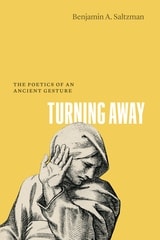
Turning Away
The Poetics of an Ancient GestureBenjamin A. Saltzman
University of Chicago Press, 2026
A sweeping account of how we are at our most human when we turn away from the pains of the world.
Why do we look away from the suffering of others? Why do we cover our faces in shame? Why do we lower our heads in grief? Few gestures are as universal as the averted gaze. Fewer still are as ambivalent and inscrutable. In this incisive study, Benjamin A. Saltzman reveals how the kaleidoscopic appearance of these gestures in art, poetry, and philosophy has turned them into an essential language for our uncomfortable engagements with the world, challenging us to reflect on the ways we fundamentally relate to others.
Into the horizon of contemporary discourse, Turning Away sets out from five influential scenes in which figures avert their gaze: Timanthes’s Sacrifice of Iphigenia, Plato’s Republic, Augustine’s Confessions, Christ’s Crucifixion, and the Fall and Expulsion of Adam and Eve. The gestures of aversion in these scenes refract across visual media, through philosophy and politics, into modernity and the present day, having been reimagined along the way by thinkers like Hannah Arendt, artists like Marc Chagall and Salvador Dalí, poets like Langston Hughes, and many others. Saltzman offers a timely critique of the privilege of turning away and of the too-easy condemnation of our tendencies to do so.
Twain at Sea
The Maritime Writings of Samuel Langhorne ClemensMark Twain
University Press of New England, 2018
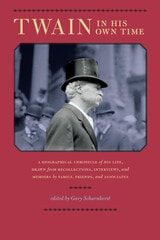
Twain in His Own Time
A Biographical Chronicle of His Life, Drawn from Recollections, Interviews, and Memoirs by Family, Friends, and AssociatesGary Scharnhorst
University of Iowa Press, 2010
Never one to suffer fools gladly, especially if they wore crinolines, Mark Twain lost as many friends as he made, and he targeted them all indiscriminately. The first major American writer born west of the Mississippi River, he enjoys a reputation unrivaled in American literary history, and from the beginning of his career he tried to control that reputation by fiercely protecting his public persona. Not a debunking account of Twain’s life but refreshingly immune from his relentless image making, Gary Scharnhorst’s Twain in His Own Time offers an anecdotal version of Twain’s life over which the master spin-doctor had virtually no control.
The ninety-four recollections gathered in Twain in His Own Time form an unsanitized, collaborative biography designed to provide a multitude of perspectives on the iconic author. Opening with an interview with his mother that has never been reprinted, it includes memoirs by his daughters and by men who knew him when he was roughing it in Nevada and California, an interview with the pilot who taught him to navigate the Mississippi River, reminiscences from his illustrators E. M. Kemble and Dan Beard and two of his so-called adolescent angelfish, contributions from politicians and from such literary figures as Dan De Quille and George Bernard Shaw, and one of the most damning assessments of his character—by the author Frank Harris—ever published.
Each entry is introduced by a brief explanation of its historical and cultural context; explanatory notes provide further information about people and places; and Scharnhorst’s introduction and chronology of Twain’s eventful life are comprehensive and detailed. Dozens of lively primary sources published incrementally over more than eighty years, most recorded after his death, illustrate the complexities of this flamboyant, outspoken personality in a way that no single biographer could.
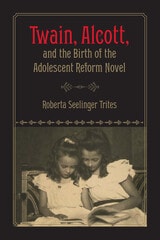
Twain, Alcott, and the Birth of the Adolescent Reform Novel
Roberta S. Trites
University of Iowa Press, 2007

Twelve Englishmen of Mystery
Edited by Earl F. Bargainnier
University of Wisconsin Press, 1984
This volume is designed to correct that fault in a dozen of those unjustifiably neglected British authors: Wilkie Collins, A.E.W. Mason, G.K. Chesterton, H.C. Bailey, Anthony Berkeley Cox, Nicholas Blake, Michael Gilbert, Julian Symons, Dick Francis, Edmund Crispin, H.R.F. Keating, and Simon Brett.
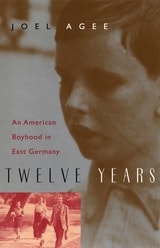
Twelve Years
An American Boyhood in East GermanyJoel Agee
University of Chicago Press, 2000
"A wonderfully evocative memoir. . . . Agee evoked for me the atmosphere of postwar Berlin more vividly than the actual experience of it—and I was there." —Christopher Lehmann-Haupt, New York Times
"One of those rare personal memoirs that brings to life a whole country and an epoch." —Christopher Isherwood
"Twelve Years consists of a series of finely honed anecdotes written in a precise, supple prose rich with sensual detail." —David Ghitelman, Newsday
"By turns poetic and picturesque, Agee energetically catalogues his expatriate passage to manhood with a pinpoint eye and a healthy American distaste for pretension. . . . Huckleberry Finn would have . . . welcomed [him] as a soulmate on the raft." —J. D. Reed, Time
"A triumph. . . . Unfettered by petty analysis or quick explanations, a story that is timeless and ageless and vital." —Robert Michael Green, Baltimore Sun

Twelve-Cent Archie
Beaty, Bart
Rutgers University Press, 2015
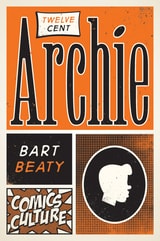
Twelve-Cent Archie
New edition with full color illustrationsBeaty, Bart
Rutgers University Press, 2017
Twelve-Cent Archie is not only the first scholarly study of the Archie comic, it is an innovative creative work in its own right. Inspired by Archie’s own concise storytelling format, renowned comics scholar Bart Beaty divides the book into a hundred short chapters, each devoted to a different aspect of the Archie comics. Fans of the comics will be thrilled to read in-depth examinations of their favorite characters and motifs, including individual chapters devoted to Jughead’s hat and Archie’s sweater-vest. But the book also has plenty to interest newcomers to Riverdale, as it recounts the behind-the-scenes history of the comics and analyzes how Archie helped shape our images of the American teenager.
As he employs a wide range of theoretical and methodological approaches, Beaty reveals that the Archie comics themselves were far more eclectic, creative, and self-aware than most critics recognize. Equally comfortable considering everything from the representation of racial diversity to the semiotics of Veronica’s haircut, Twelve-Cent Archie gives a fresh appreciation for America’s most endearing group of teenagers.

Twentieth-Century American Literary Naturalism
An InterpretationDonald Pizer
Southern Illinois University Press, 1982
Scorned by critics since birth, decreed dead by many, naturalism, according to Donald Pizer, is “one of the most persistent and vital strains in American fiction, perhaps the only modern literary form in America that has been both popular and significant.”
To define naturalism and explain its tenacious hold throughout the twentieth century on the American creative imagination, Pizer explores six novels: James T. Farrell’s Studs Lonigan, John Dos Passos’s U.S.A., John Steinbeck’s The Grapes of Wrath, Norman Mailer’s The Naked and the Dead, William Styron’s Lie Down in Darkness, and Saul Bellow’s The Adventures of Augie March.
Pizer’s approach to these novels is empirical; he does not wrench each novel awkwardly until it fits his framework of generalizations and principles; rather, he approaches the novels as fiction and arrives at his definition through his close reading of the works.
Establishing the background of naturalism, Pizer explains that it comes under attack because it is “sordid and sensational in subject matter,” it challenges “man’s faith in his innate moral sense and thus his responsibility for his actions,” and it is so full of “social documentation” that it is often dismissed as little more than a photographic record of a life or an era; thus the “aesthetic validity of the naturalistic novel has often been questioned.”
Pizer posits the 1890s, the 1930s,and the late 1940s as the decades when naturalism flourished in America. He concentrates on literary criticism, not on the philosophy ofnaturalism, to show that literary criticism can make a contribution to a particularly muddled area of literary history—a naturalism that is alive and changing, thus resisting the neat definitions reserved for the dead.
Twentieth-Century Russian Poetry
John Glad
University of Iowa Press, 1992
This celebrated anthology, first published in 1978 as Russian Poetry: The Modern Period, provides a much-needed panoramic overview of Russian poetry since the Bolshevik Revolution of 1917.
Major features of this collection include a new and expanded introduction, a substantial new section of glasnost-era poetry, a generous sampling of postrevolutionary poetry in Russia, full representation of poets of the first and second post-World War II generations, and poetry of the successive emigrations, flights, or expulsions from Russia.
Twentieth-Century Russian Poetry makes an important contribution to our continuing understanding of a changing world order. This anthology should be read by all those who wish to know more about the poetry of Russia, those interested in international cultural and literary history, and all Slavicists.
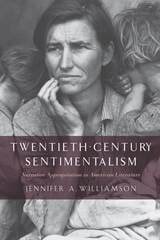
Twentieth-Century Sentimentalism
Narrative Appropriation in American LiteratureWilliamson, Jennifer A.
Rutgers University Press, 2013
Today’s critical establishment assumes that sentimentalism is an eighteenth- and nineteenth-century literary mode that all but disappeared by the twentieth century. In this book, Jennifer Williamson argues that sentimentalism is alive and well in the modern era. By examining working-class literature that adopts the rhetoric of “feeling right” in order to promote a proletarian or humanist ideology as well as neo-slave narratives that wrestle with the legacy of slavery and cultural definitions of African American families, she explores the ways contemporary authors engage with familiar sentimental clichés and ideals.
Williamson covers new ground by examining authors who are not generally read for their sentimental narrative practices, considering the proletarian novels of Grace Lumpkin, Josephine Johnson, and John Steinbeck alongside neo-slave narratives written by Margaret Walker, Octavia Butler, and Toni Morrison. Through careful close readings, Williamson argues that the appropriation of sentimental modes enables both sympathetic thought and systemic action in the proletarian and neo-slave novels under discussion. She contrasts appropriations that facilitate such cultural work with those that do not, including Kathryn Stockett’s novel and film The Help. The book outlines how sentimentalism remains a viable and important means of promoting social justice while simultaneously recognizing and exploring how sentimentality can further white privilege.
Sentimentalism is not only alive in the twentieth century. It is a flourishing rhetorical practice among a range of twentieth-century authors who use sentimental tactics in order to appeal to their readers about a range of social justice issues. This book demonstrates that at stake in their appeals is who is inside and outside of the American family and nation.
Twentieth-Century Spanish American Fiction
By Naomi Lindstrom
University of Texas Press, 1994
Spanish American fiction became a world phenomenon in the twentieth century through multilanguage translations of such novels as Gabriel Garcia Marquez's One Hundred Years of Solitude, Manuel Puig's Kiss of the Spider Woman, Octavio Paz's Labyrinth of Solitude, and Isabel Allende's House of the Spirits. Yet these "blockbusters" are only a tiny fraction of the total, rich outpouring of Spanish-language literature from Latin America.
In this book, Naomi Lindstrom offers English-language readers a comprehensive survey of the century's literary production in Latin America (excluding Brazil). Discussing movements and trends, she places the famous masterworks in historical perspective and highlights authors and works that deserve a wider readership. Her study begins with Rodó's famous essay Ariel and ends with Rigoberta Menchú's 1992 achievement of the Nobel Prize. Her selection of works is designed to draw attention, whenever possible, to works that are available in good English translations.
A special feature of the book is its treatment of the "postboom" period. In this important concluding section, Lindstrom discusses documentary narratives, the new interrelations between popular culture and literary writing, and underrepresented groups such as youth cultures, slum dwellers, gays and lesbians, and ethnic enclaves. Written in accessible, nonspecialized language, Twentieth-Century Spanish American Fiction will be equally useful for general readers as a broad overview of this vibrant literature and for scholars as a reliable reference work.
Twisted Words
Torture and Liberalism in Imperial BritainKatherine Judith Anderson
The Ohio State University Press, 2022
Two Minds of a Western Poet
David Mason
University of Michigan Press, 2011
Praise for David Mason
“. . . richly evocative and rare . . .”
—Publishers Weekly
“David Mason has succeeded in restoring to poetry some of the territory lost over recent centuries to prose fiction.”
—Paul Lake, First Things
In this new collection of essays, award-winning poet David Mason further broadens his exploration of Western and frontier themes. Beginning with the subject of poetry in and about the American West, he then widens his canvas to examine poets as diverse as James Wright, Anthony Hecht, and B. H. Fairchild, as well as taking up the idea of “the West” in global terms.
The title essay builds on a product of Mason’s upbringing in the American West—his “two minds” about the life of poetry, one aware that he needs and loves the art, and one equally aware that he understands a world outside cultural definitions. These two minds coexist throughout each lively, evocative essay, while Mason delves into family history and his efforts to connect himself to place, narrative poets of the American West, and farther-flung topics such as literary movements, post-colonial studies, and favorite Greek writers. In each of these meditations, Mason pursues a personal voice, connecting what he reads to a life outside books and making poetry accessible to the common reader.
Two Stories of Prague
King Bohush The SiblingsRainer Maria Rilke
Brandeis University Press, 1996
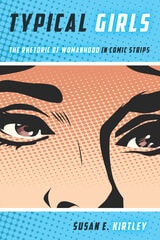
Typical Girls
The Rhetoric of Womanhood in Comic StripsSusan E. Kirtley
The Ohio State University Press, 2021
In the years following 1975, a group of female-created comic strips came to national attention in a traditionally male-dominated medium. Typical Girls: The Rhetoric of Womanhood in Comic Strips uncovers the understudied and developing history of these strips, defining and exploring the ramifications of this expression of women’s roles at a time of great change in history and in comic art. This impressive, engaging, and timely study illustrates how these comics express the complexities of women’s experiences, especially as such experiences were shaped by shifting and often competing notions of womanhood and feminism. Including the comics of Lynn Johnston (For Better or For Worse), Cathy Guisewite (Cathy), Nicole Hollander (Sylvia), Lynda Barry (Ernie Pook’s Comeek), Barbara Brandon-Croft (Where I’m Coming From), Alison Bechdel (Dykes to Watch Out For), and Jan Eliot (Stone Soup), Typical Girls is an important history of the representation of womanhood and women’s rights in popular comic strips.
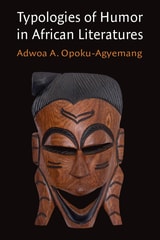
Typologies of Humor in African Literatures
Adwoa A. Opoku-Agyemang
University of Michigan Press, 2024
The book analyzes four comedic archetypes: the Trickster, who is unapologetically amoral and entertaining; the Mimic, whose everyday dealings exude ambiguity; the Interpreter, who demonstrates the comic potential of language differences while showing how a single message can mean contrasting things; and the Deviant, who throws norms into question all the while reinforcing them. These character types and the humor they produce present a constant pursuit of balance between contrasting worldviews and frames of reference within the imbrication of different languages, classes, political factions, genders, and (un)officialdoms. The product of these rowdy relations are people who take the weirdness and run with it to generate diegetic and intradiegetic laughs. By analyzing Francophone and Anglophone African writing and how it overlays local languages, Opoku-Agyemang contributes a uniquely African voice to the primarily Western-dominated field of humor studies.
Tyrants Writing Poetry
Albrecht Koschorke
Central European University Press, 2018