Results by title
3576 books match the query 'American' and 770 start with t
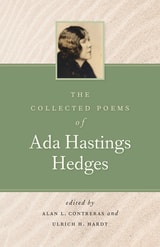
The Collected Poems of Ada Hastings Hedges
Ada Hastings Hedges
Oregon State University Press, 2020
Except for a twelve-year sojourn in southeastern Oregon and two years in Los Angeles, Hedges lived in Portland from 1910 until her death in 1980. She was assistant editor at Binfords & Mort Publishers and a supervising editor in the Works Progress Administration. She taught briefly at Warner Pacific College in the 1960s.
Hedges wrote in a style notable for precision, clarity, and smoothness of line. More than half of her poems in this collection are sonnets. A poet of the city as well as the desert, her work offers a compelling perspective on mid-century Portland life. In 1933 she published her only book, Desert Poems. That collection is reprinted here in its entirety, along with scores of additional poems published in a wide variety of venues, making this the first comprehensive collection of Hedges’s work.
A detailed introduction by the editors and annotations to the text provide information about revisions, publication dates, and notable features. Also included is an essay by Hedges asking “Can Poetry Be Taught?” In her afterword, Oregon poet Ingrid Wendt writes of her admiration for Hedges’s “fierceness of spirit, lack of sentimentality, and complex vision.”
For readers interested in women’s literature, Pacific Northwest poetry, and the literature of Eastern Oregon, this volume reintroduces a compelling regional voice.

The Collected Poems of John Ciardi
John Ciardi
University of Arkansas Press, 1997
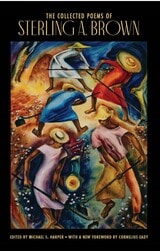
The Collected Poems of Sterling A. Brown
Sterling A. Brown
Northwestern University Press, 1996
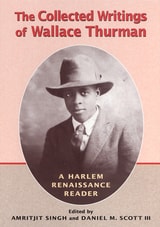
The Collected Writings of Wallace Thurman
A Harlem Renaissance ReaderSingh, Amritjit
Rutgers University Press, 2003
This book is the definitive collection of the writings of Wallace Thurman (1902-1934), providing a comprehensive anthology of both the published and unpublished works of this bohemian, bisexual writer. Widely regarded as the enfant terrible of the Harlem Renaissance scene, Thurman was a leader among a group of young artists and intellectuals that included, among others, Langston Hughes, Zora Neale Hurston, Richard Bruce Nugent, Gwendolyn Bennett, and Aaron Douglas. Through the publication of magazines such as FIRE!! and Harlem: A Forum of Negro Life, Thurman tried to organize the opposition of the younger generation against the programmatic and promotional ideologies of the older generation of black leaders and intellectuals such as W.E.B. Du Bois and Benjamin Brawley. Thurman also left a permanent mark on the period through his prolific work as a novelist, playwright, short story writer, and literary critic, as well as by claiming for himself a voice as a public intellectual.
The Collected Writings of Wallace Thurman is divided into eight sections to highlight the variety of genres and styles Thurman practiced as he courageously pursued controversial subjects throughout his short and brilliant career. It includes Essays on Harlem, Social Essays and Journalism, Correspondence, Literary Essays and Reviews, Poetry and Short Fiction, Plays, and Excerpts from Novel.
Filling an important gap in Harlem Renaissance literature, this collection brings together all of Thurman’s essays, nearly all of his letters to major black and white figures of the 1920s, and three previously unpublished major works. These books are Aunt Hagar’s Children, which is a collection of essays and two full-length plays, Harlem, and Jeremiah the Magnificent. The introduction to the volume, along with the carefully researched introductory notes to each of the eight sections, provides a challenging new reevaluation of Thurman and the Harlem Renaissance for both the general reader and scholar.
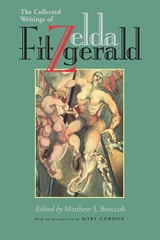
The Collected Writings of Zelda Fitzgerald
Zelda Fitzgerald
University of Alabama Press, 1997
The voice behind the legend—Zelda Fitzgerald in her own words.
Zelda Sayre Fitzgerald has long been perceived as the tragic "other half" of the Scott and Zelda legend. Born in Montgomery, Alabama, the high-spirited tomboy turned flapper was talented in dance, painting, and writing but lived in the shadow of her husband's success. Her writing can be experienced on its own terms in Matthew Bruccoli's meticulously edited The Collected Writings of Zelda Fitzgerald.
The collection includes Zelda's only published novel, Save Me the Waltz, an autobiographical account of the Fitzgeralds' adventures in Paris and on the Riviera; her celebrated farce, Scandalabra; eleven short stories; twelve articles; and a selection of letters to her husband, written over the span of their marriage, that reveals the couple's loving and turbulent relationship.
Zelda Sayre Fitzgerald has long been an American cultural icon. The Collected Writings affirms her place as a writer and as a symbol not only of the Lost Generation but of all generations as she struggled to define herself through her art.
The Color of Dusk
Robin Caton
Omnidawn, 2001
The Color of Sex
Whiteness, Heterosexuality, and the Fictions of White SupremacyMason Stokes
Duke University Press, 2001
The Color of Sex reveals what happens when race and sexuality meet, when white desire encounters its own ambivalence. As Stokes argues, whiteness and heterosexuality exist in anxious relation to one another. Mutually invested in “the normal,” they support each other in their desperate insistence on the cultural logic of exclusion. At the same time, however, they threaten one another in their attempt to create and sustain a white future, since reproducing whiteness necessarily involves the risk of contamination
Charting the curious movements of this “white heterosexuality,” The Color of Sex inaugurates a new moment in our ongoing attempt to understand the frenzied interplay of race and sexuality in America. As such, it will appeal to scholars interested in race theory, sexuality studies, and American history, culture, and literature.
The Colossal P. T. Barnum Reader
Nothing Else Like It in the UniversePhineas T. Barnum. Edited by James W. Cook
University of Illinois Press, 2005
James W. Cook's The Colossal P. T. Barnum Reader is the largest collection of Barnum's works ever produced. Included are excerpts from his pseudo-autobiographical novel The Adventures of an Adventurer (1841), his European letters from 1844-46 informing readers of the New York Atlas of his regal reception overseas, and a large selection from his Ancient and Modern Humbugs of the World, Barnum's 1864-65 insider's look into the frauds of nineteenth-century American culture. It offers a glimpse of Tom Thumb's minstrel and singing performances in front of Queen Victoria, Barnum's many fraudulent representations of the supposedly ancient Joice Heth, and a more immediate, less filtered sense of Barnum as cultural and social critic in his serialized writings and travelogues. This volume also features reproductions of difficult to find posters from Barnum's two-decade collaboration with the prominent New York lithographers, Currier and Ives, and vintage photographs.
Finally, the reader also helps us to understand Barnum's role in building the modern culture industry. We follow his career from itinerant hawker, hardly distinguishable from his pre-industrial forebears, to manager of the world's first show business empire, with a staff of thousands and brand recognition across four continents. The Colossal P. T. Barnum Reader tracks the shifting personas of the great showman, his representational choices, and his publics across the nineteenth century.

The Common
Gail Mazur
University of Chicago Press, 1995
Desire, ambition, devotion, and devastating loss are all subjects for Mazur's clear-eyed poems, which resonate with the contradictions between the body's yearning and the mind's acknowledgment of the consequences of our choices. In a poetry driven by unrelenting questioning, Mazur tries, in Rilke's worlds, "to love the questions themselves."
The Common Lot and Other Stories
The Published Short Fiction, 1908–1921Emma Bell Miles
Ohio University Press, 2016
The seventeen narratives of The Common Lot and Other Stories, published in popular magazines across the United States between 1908 and 1921 and collected here for the first time, are driven by Emma Bell Miles’s singular vision of the mountain people of her home in southeastern Tennessee. That vision is shaped by her strong sense of social justice, her naturalist’s sensibility, and her insider’s perspective.
Women are at the center of these stories, and Miles deftly works a feminist sensibility beneath the plot of the title tale about a girl caught between present drudgery in her father’s house and prospective drudgery as a young wife in her own. Wry, fiery, and suffused with details of both natural and social worlds, the pieces collected here provide a particularly acute portrayal of Appalachia in the early twentieth century.
Miles’s fiction brings us a world a century in the past, but one that will easily engage twenty-first-century readers. The introduction by editor and noted Miles expert Grace Toney Edwards places Miles in the literary context of her time. Edwards highlights Miles’s quest for women’s liberation from patriarchal domination and oppressive poverty, forces against which Miles herself struggled in making a name for herself as a writer and artist. Illustrations by the author and Miles family photographs complement the stories.
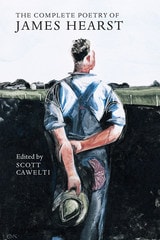
The Complete Poetry of James Hearst
James Hearst
University of Iowa Press, 2001
The Conjure Woman
Charles W. Chesnutt
University of Michigan Press, 1969
The Conjure-Man Dies
A Mystery Tale of Dark HarlemRudolph Fisher
University of Michigan Press, 1992
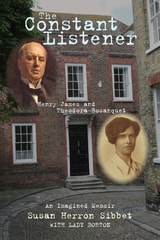
The Constant Listener
Henry James and Theodora Bosanquet—An Imagined MemoirSusan Herron Sibbet
Ohio University Press, 2017
In 1907, in a quiet English village, Theodora Bosanquet answered Henry James’s call for someone to transcribe his edits and additions to his formidable body of work. The aging James had agreed to revise his novels and tales into the twenty-four-volume New York Edition. Enter Bosanquet, a budding writer who would record the dictated revisions and the prefaces that would become a lynchpin of his legacy.
Embracing the role of amanuensis and creative counterpoint cautiously at first, Bosanquet kept a daily diary over the nine years that she worked with James, as their extraordinary partnership evolved. Bosanquet became the first audience for James’s compositions and his closest literary associate—and their relationship ultimately resulted in James’s famed “deathbed dictations.” At the same time, the homosexuality of each was an unspoken but important influence on their mutual support and companionship.
Susan Herron Sibbet’s posthumous novel gifts us with the voice of a young woman writer drawn into the intimate circle of an aging master, and is a moving addition to previous literary treatments of James and Bosanquet, even as it hews closer to fact than other works do. The Constant Listener is itself the work of an accomplished poet, and will speak to fans of James, historical fiction, and themes of art, love, sexuality, and identity.
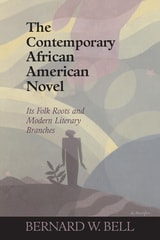
The Contemporary African American Novel
Its Folk Roots and Modern Literary BranchesBernard W. Bell
University of Massachusetts Press, 2004
The Courtesy
Alan Shapiro
University of Chicago Press, 1983
"The Courtesy is really an admirable book: it shows up the unreality of a lot of the other poetry one reads, dealing honestly and with that perversity which is a sign of thoughfulness, with the slight but heavy matter of our everyday defeats."—Michael Hoffman, Poetry Nation Review

The Cultural Politics of the New American Studies
John Carlos Rowe
Michigan Publishing Services, 2012
Second, if neoliberalism has successfully employed various cultural media, then what are the best means of criticizing its main claims and fundamental purposes? Is it possible under these circumstances to imagine a “counter-culture” which might effectively challenge neoliberalism or is such an alternative already controlled and contained by such labels as “political correctness,” “the far left,” “radicalism,” “extremism,” even “terrorism,” which in the popular imagination refer to political and social minorities, doomed thereby to marginalization?
Rowe argues that the tradition of “cultural criticism” advocated by influential public intellectuals like Edward Said can be adapted to the new circumstances demanded by the hegemony of neoliberalism and its successful command of new media. Yet rather than simply honoring important predecessors such as Said, we need to reconceive the role of the public intellectual as more than just an “interdisciplinary scholar” but also as a social critic able to negotiate the different media.
The Culture and Commerce of Texts
Scribal Publication in Seventeenth-Century EnglandHarold Love
University of Massachusetts Press, 1998
Long after the establishment of printing in England, many writers and composers still preferred to publish their work through handwritten copies. Texts so transmitted included some of the most distinguished poetry and music of the seventeenth century, along with a rich variety of political, scientific, antiquarian, and philosophical writings. While censorship was one reason for this persistence of the older practice, scribal publication remained the norm for texts that were required only in small numbers, or whose authors wished to avoid the “stigma” of print.
This is the first book to consider the trade in manuscripts as an important supplement to that in printed books, and to describe the agencies that met the need for rapid duplication of key texts.
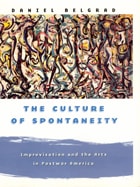
The Culture of Spontaneity
Improvisation and the Arts in Postwar AmericaDaniel Belgrad
University of Chicago Press, 1998
"A compelling narrative, putting living flesh on shorthand intuitions that connect North Beach to Black Mountain College, Fenollosa to Pollock, Jackson Lears's No Place of Grace to Todd Gitlin's The Sixties."—Joel Smith, Boston Review
"An invaluable introduction to postwar modernism across the arts."—Thomas Augst, Boston Book Review
"Belgrad's extensive probing of the artists and movements with their profound sociological roots is timely as well as comprehensive....A major contribution for serious scholars."—Choice
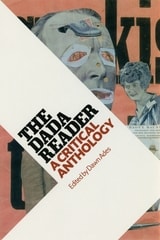
The DADA Reader
A Critical AnthologyEdited by Dawn Ades
University of Chicago Press, 2006
Bringing together key Dada texts, many of them translated into English for the first time, this volume immerses readers in some of the most famous (and infamous) periodicals of the time, from Hugo Ball’s Cabaret Voltaire and Francis Picabia’s 391 to Marcel Duchamp’s The Blind Man and Kurt Schwitters’s Merz. Published in Europe and the United States between 1916 and 1932, these journals constituted the movement’s lifeblood, communicating the desires and aspirations of the artists involved. In addition to providing the first representative selection of these texts, The Dada Reader also includes excerpts from many lesser-known American and Eastern European journals.
Compiled with both students and general readers in mind, this volume is necessary reading for anyone interested in one of the most dynamic and influential movements of the twentieth century.
The Daily Henry James
A Year of Quotes from the Work of the MasterHenry James
University of Chicago Press, 2016
From the deepest longings of Isabel Archer to James’s insights in The Art of Fiction, longer seasonal quotes introduce each month, while concise bits of wisdom and whimsy mark each day. To take but one example: Isabel, in a quote from The Portrait of a Lady for September 30, muses, “She gave an envious thought to the happier lot of men, who are always free to plunge into the healing waters of action.” Featuring a new foreword by James biographer Michael Gorra as well as the original introductions by James and his good friend William Dean Howells, this long-forgotten perennial calendar will be an essential bibelot for James’s most ardent devotees and newest converts alike, a treasure to be cherished daily, across all seasons, for years, for ages to come.
The Dance of the Intellect
Studies in the Poetry of the Pound TraditionMarjorie Perloff
Northwestern University Press, 1996
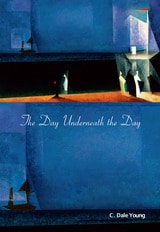
The Day Underneath the Day
C. Dale Young
Northwestern University Press, 2001
Gifted with a vivid and exact skill, C. Dale Young's writing resembles an intricate anatomy lesson. His powers of observation probe the small energies of the natural world. Again and again the ordinary details of life transform themselves under the delicate pressure of his words--the movement of birds' wings, the color and texture of tropical flowers, the study of the ocean waves, the "scalpel of light" cutting through the beginning of the day. The language of Young's poems evokes an ultimate sense of place through a gorgeous marriage of tone and diction that echoes James Merrill and Amy Clampitt. As he meticulously maps out human passions and emotions, he explores both the surfaces and depths of everything that he surveys. His confident and polished verse unfolds intricate layers of landscape, seeking the order that lies beneath the unruly patterns of our lives.
The Day's Hard Edge
PoemsJose A. Rodriguez
Northwestern University Press, 2024
In his fourth poetry collection, José Antonio Rodríguez investigates how one constructs a relationship to the self, to community, and to poetry itself. The Day's Hard Edge is composed of three sections, the first of which situates the reader in the speaker’s world, one marked by multiple forms of trauma. Here are the contours of the Texas/Mexico borderlands where the speaker’s initial sense of self and community emerges. The second section broadens in scope and considers the potential and limitations of poetry as a site for meaning-making. The third section brings the speaker to a new understanding of the poem as it relates to the transformative and destabilizing experience of trauma. Ultimately this book lays bare an individual and, in doing so, shows how poetry acts as a place of succor and vulnerability for one’s very identity. Together these poems explore what it means to be queer, immigrant, and Chicano.
The Daybreak Boys
Essays on the Literature of the Beat GenerationGregory Stephenson
Southern Illinois University Press, 1990
In these critical essays Gregory Stephenson takes the reader on a journey through the literature of the Beat Generation: a journey encompassing that common ethos of Beat literature—the passage from darkness to light, from fragmented being toward wholeness, from Beat to Beatific. He travels through Jack Kerouac’s Duluoz Legend,following Kerouac’s quests for identity, community, and spiritual knowledge. He examines Allen Ginsberg’s use of transcendence in “Howl,” discovers the Gnostic vision in William S. Burroughs’s fiction, and studies the mythic, visionary power of Lawrence Ferlinghetti’s poetry. Stephenson also provides detailed examinations of the writing of lesser-known Beat authors: John Clellon Holmes, Gregory Corso, Richard Fariña, and Michael McClure. He explores the myth and the mystery of the literary legend of Neal Cassady. The book concludes with a look at the common traits of the Beat writers—their use of primitivism, shamanism, myth and magic, spontaneity, and improvisation, all of which led them to a new idiom of consciousness and to the expansion of the parameters of American literature.
The Dead Alive and Busy
Alan Shapiro
University of Chicago Press, 2000
Praise for Alan Shapiro: "Shapiro is a shrewd and sympathetic moralist. He never trivializes his subjects with high-minded flourishes or stylistic gimmicks."—J. D. McClatchy, New York Times Book Review
The Death of Things
Ephemera and the American NovelSarah Wasserman
University of Minnesota Press, 2020
A comprehensive study of ephemera in twentieth-century literature—and its relevance to the twenty-first century
“Nothing ever really disappears from the internet” has become a common warning of the digital age. But the twentieth century was filled with ephemera—items that were designed to disappear forever—and these objects played crucial roles in some of that century’s greatest works of literature. In The Death of Things, author Sarah Wasserman delivers the first comprehensive study addressing the role ephemera played in twentieth-century fiction and its relevance to contemporary digital culture.
Representing the experience of perpetual change and loss, ephemera was central to great works by major novelists like Don DeLillo, Ralph Ellison, and Marilynne Robinson. Following the lives and deaths of objects, Wasserman imagines new uses of urban space, new forms of visibility for marginalized groups, and new conceptions of the marginal itself. She also inquires into present-day conundrums: our fascination with the durable, our concerns with the digital, and our curiosity about what new fictional narratives have to say about deletion and preservation.
The Death of Things offers readers fascinating, original angles on how objects shape our world. Creating an alternate literary history of the twentieth century, Wasserman delivers an insightful and idiosyncratic journey through objects that were once vital but are now forgotten.

The Declarable Future
Jennifer Boyden
University of Wisconsin Press, 2013
Finalist, Stafford/Hall Award for Poetry, Oregon Book Awards
The Decline and Fall of the Roman Empire
Matthew Tuckner
Four Way Books, 2025
The Decline and Fall of the Roman Empire is a book-length sequence of 53 poems with identical eponymous titles. Heartbreaking and searingly lucid, this debut collection from poet Matthew Tuckner chronicles his best friend's illness and subsequent death from cancer. Its brilliance is not only in recognizing the vastness and particularity of grief — how the loss of a beloved is so personally all encompassing that it splits time irrevocably, separating our personal history into distinct eras of before and after as the governing principles of our lives crumble — but also in joining the discrete experience of one person's sickness to a carcinogenic imperial core, the late-capitalist global order that ensnares all people in toxic landscapes that make us sick.
Describing a trip to Japan, Tuckner evokes the brute force of appetite alongside the delicacy of life as he recalls "memories of its greedy koi fish, a ceramic bowl / of goji berries perfectly balanced on a tree branch." Beholden to a ticking clock, we catalogue, becoming evidentiary and encyclopedic in our impulses. "We fatten the time until it bursts into artifacts: / sixteen photographs of a single puddle // taking shape in the red glow of your darkroom." In borrowing the title of Edward Gibbon's seminal 6-volume history, Tuckner anchors the associative detours of his sprawling intellect and executes a stunning metacommentary on his own lyrics: time collapses every era into a spattering of sentences, tyrannical as it forcibly converts the present to the past, and yet the barbarous recursion of human feeling resists oblivion, evoking the eternity of emotional significance. Tuckner's shrewd balance of irony and tenderness make this cerebral inversion possible: this friendship is the poet's canon event, the Rome at which every road in his mind arrives, and yet it is also the singular dialect that will not cede to death's subsuming lingua franca.
Damien Hirst's taxidermy art, The John Keats House, superfund sites in Rome, NY, the 2023 Ohio Train Derailment, a children's book titled Oil Spill! — these poems travel widely in their topics to understand the specific ravages of disease on the human body, and in turn, the ravages of human beings on the planet. Its trenchant criticism isn't pessimistic, though — its redemption is the restorative, unending love that made these elegies possible. Equally gutted and mesmerized by our infinite, arbitrary ability to discern meaning in mess, these poems ask us to bear witness to what we can develop if we will sit in the darkness. To read the photo essay of a storm's aftermath. It tells an ancient story that becomes brand new, the one about "a puddle you glimpsed the moon in & stopped for. // A puddle that was just plain rain until it fell."
The Democratic Surround
Multimedia and American Liberalism from World War II to the Psychedelic SixtiesFred Turner
University of Chicago Press, 2013
In this prequel to his celebrated book From Counterculture to Cyberculture, Turner rewrites the history of postwar America, showing how in the 1940s and ’50s American liberalism offered a far more radical social vision than we now remember. Turner tracks the influential mid-century entwining of Bauhaus aesthetics with American social science and psychology. From the Museum of Modern Art in New York to the New Bauhaus in Chicago and Black Mountain College in North Carolina, Turner shows how some of the most well-known artists and intellectuals of the forties developed new models of media, new theories of interpersonal and international collaboration, and new visions of an open, tolerant, and democratic self in direct contrast to the repression and conformity associated with the fascist and communist movements. He then shows how their work shaped some of the most significant media events of the Cold War, including Edward Steichen’s Family of Man exhibition, the multimedia performances of John Cage, and, ultimately, the psychedelic Be-Ins of the sixties. Turner demonstrates that by the end of the 1950s this vision of the democratic self and the media built to promote it would actually become part of the mainstream, even shaping American propaganda efforts in Europe.
Overturning common misconceptions of these transformational years, The Democratic Surround shows just how much the artistic and social radicalism of the sixties owed to the liberal ideals of Cold War America, a democratic vision that still underlies our hopes for digital media today.
The Desert Remembers My Name
On Family and WritingKathleen Alcalá
University of Arizona Press, 2007
Thus begins a lyrical and entirely absorbing collection of personal essays by esteemed Chicana writer and gifted storyteller Kathleen Alcalá. Loosely linked by an exploration of the many meanings of “family,” these essays move in a broad arc from the stories and experiences of those close to her to those whom she wonders about, like Andrea Yates, a mother who drowned her children. In the process of digging and sifting, she is frequently surprised by what she unearths. Her family, she discovers, were Jewish refugees from the Spanish Inquisition who took on the trappings of Catholicism in order to survive.
Although the essays are in many ways personal, they are also universal. When she examines her family history, she is encouraging us to inspect our own families, too. When she investigates a family secret, she is supporting our own search for meaning. And when she writes that being separated from our indigenous culture is “a form of illiteracy,” we know exactly what she means.
After reading these essays, we find that we have discovered not only why Kathleen Alcalá is a writer but also why we appreciate her so much. She helps us to find ourselves.
The Devil's Workshop
PoemsDemetria Martínez
University of Arizona Press, 2002
Don't believe it for a minute. In this collection of fifty-three poems, the author of the award-winning novel Mother Tongue explores the themes that have long characterized her writing: the creative and destructive powers of romantic love, the failure of political systems, the spiritual life, and the need to forgive oneself in order to move on with the work of transformation, both social and personal. Through poems that confront mortality even as they demand social justice, Martínez writes of surviving in a culture where traditional values often get lost in the complexities of everyday life. Of nurturing relationships with nieces, nephews, and parents while pondering questions of life and death, love and loss. Of caring for one's own body when "each cough is an underground nuclear explosion, / Unraveling your body’s hard-won peace accord." Martínez cauterizes old wounds inflicted by various agents: death, political repression, betrayal, and of course failed romance: "Don’t bother, I did it / First. Broke my own / Damn heart." Here are "kernels of loneliness too stubborn to grind / Down to blue meal," and the struggle for a renewed sense of self as middle age approaches:
At this age you touch what little sanctity you can muster.
The yearning burns to do more, to do more by hand.
To thread your very life through a needle's eye.
Martínez serves up a heady blend of political and sensual imagery. Her keen observations and compassionate voice lead the reader on a journey of self-exploration, of coping with life's mundanities as well as its heartaches: "I could use a loving word, / A loaf of bread, a rose, / Help with the laundry." Through her unquenchable passion for life, Demetria Martínez leaves the devil’s workshop and brings us closer to an understanding of what is real.
The Dialectics of Our America
Genealogy, Cultural Critique, and Literary HistoryJosé David Saldívar
Duke University Press, 1991
Saldívar pursues this goal through an array of oppositional critical and creative practices. He analyzes a range of North American writers of color (Rolando Hinojosa, Gloria Anzaldúa, Arturo Islas, Ntozake Shange, and others) and Latin American authors (José Martí, Roberto Fernández Retamar, Gabriel García Márquez, and others), whose work forms a radical critique of the dominant culture, its politics, and its restrictive modes of expression. By doing so, Saldívar opens the traditional American canon to a dialog with other voices, not just the voices of national minorities, but those of regional cultures different from the prevalent anglocentric model.
The Dialectics of Our America, in its project to expand the “canon” and define a pan-American literary tradition, will make a critical difference in ongoing attempts to reconceptualize American literary history.
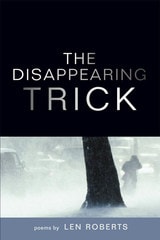
The Disappearing Trick
Len Roberts
University of Illinois Press, 2006
The Disordered Alphabet
Cintia Santana
Four Way Books, 0
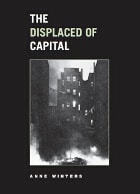
The Displaced of Capital
Anne Winters
University of Chicago Press, 2004
The long-awaited follow-up to The Key to the City—a finalist for the National Book Critics Circle Award in 1986—Anne Winters's The Displaced of Capital emanates a quiet and authoritative passion for social justice, embodying the voice of a subtle, sophisticated conscience.
The "displaced" in the book's title refers to the poor, the homeless, and the disenfranchised who populate New York, the city that serves at once as gritty backdrop, city of dreams, and urban nightmare. Winters also addresses the culturally, ethnically, and emotionally excluded and, in these politically sensitive poems, writes without sentimentality of a cityscape of tenements and immigrants, offering her poetry as a testament to the lives of have-nots. In the central poem, Winters witnesses the relationship between two women of disparate social classes whose friendship represents the poet's political convictions. With poems both powerful and musical, The Displaced of Capital marks Anne Winters's triumphant return and assures her standing as an essential New York poet.
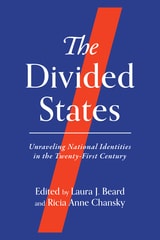
The Divided States
Unraveling National Identities in the Twenty-First CenturyEdited by Laura J. Beard and Ricia Anne Chansky
University of Wisconsin Press, 2023
Working across auto/biography studies, American studies, and human geography—all of which deal with the current interest in competing narratives, “alternative facts,” and accountability—the essays engage in and contribute to critical conversations in classrooms, scholarship, and the public sphere. The authors draw from a variety of fields, including anthropology; class analysis; critical race theory; diasporic, refugee, and immigration studies; disability studies; gender studies; graphic and comix studies; Indigenous studies; linguistics; literary studies; sociology; and visual culture. And the genres under scrutiny include diary, epistolary communication, digital narratives, graphic narratives, literary narratives, medical narratives, memoir, oral history, and testimony.
This fresh and theoretically engaged volume will be relevant to anyone interested in the multiplicity of voices that make up the US national narrative.
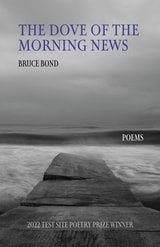
The Dove of the Morning News
PoemsBruce Bond
University of Nevada Press, 2024
In poems both personal and historical, The Dove of the Morning News explores conceptions of collectivity, inflected by each psyche, as a force of both connection and division. In its look at tribalism and systemic cruelty as rooted in shame, dread, and insecurity, the book seeks a better understanding of how power needs, spurred by communities of hatred, weaponize the brain’s tendencies to think in animated figures, caricatures, erasures, or, as in the book’s mediation on vellum, texts written across the bodies of others.
As a lens into contemporary life, the title sequence interrogates the vision of Pierre Teilhard de Chardin, whose sense of our increasingly interwoven cultural conversation figures now as a premonition of the internet. If his hope for the noosphere as a fulfillment of divine promise feels problematic, it nonetheless sees our globe as an organism whose long-term survival depends on the capacity of each to forge friendship across difference, to take the health and integration of the individual as emblematic of the whole.
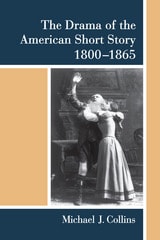
The Drama of the American Short Story, 1800-1865
Michael J. Collins
University of Michigan Press, 2016
The book shows how perspectives from theater studies, anthropology, and performance studies can enrich readings of the short-story form. Moving beyond arbitrary distinctions between performance and text, it suggests that this literature had a social life and was engaged with questions of circumatlantic and transnational culture. It suggests that the short story itself was never conceived as a nationalist literary form, but worked by mobilizing cosmopolitan connections and meanings. In so doing, the book resurrects a neglected history of American Federalism and its connections to British literary forms.
The Dreamhouse
Tom Sleigh
University of Chicago Press, 1999
Praise for Tom Sleigh:
"Through sheer artistry, Tom Sleigh manages to write . . . in a transcendent way, and without appeal to the metaphysical assumptions transcendence usually requires. The Chain . . . floods darkness with brilliant craft."—Gray Jacobik, Boston Globe
"Tom Sleigh's second book of poems, Waking, is so fine one can hardly do justice to it in a review. . . . Sleigh is nearly as prodigal with his gifts as Yeats."—Liz Rosenberg, New York Times Book Review
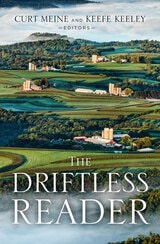
The Driftless Reader
Edited by Curt Meine and Keefe Keeley
University of Wisconsin Press, 2017
The Driftless Reader gathers writings that highlight the unique natural and cultural history, landscape, and literature of this region that encompasses southwestern Wisconsin and adjacent Minnesota, Iowa, and Illinois. The more than eighty selected texts include writings by Black Hawk, Mark Twain, Laura Ingalls Wilder, Frank Lloyd Wright, Aldo Leopold, David Rhodes, and many other Native people, explorers, scientists, historians, farmers, songwriters, journalists, and poets. Paintings, photographs, maps, and other images complement the texts, providing a deeper appreciation of this region's layered natural and human history.
Highlights include excerpts and art from:
Carol Ryrie Brink
William Cronon
John T. Curtis
August Derleth
Richard Eberhart
Fabu
Hamlin Garland
Pedro Guerrero
Hoowaneka (Little Elk)
Juliet Kinzie
Patty Loew
Ben Logan
Truman Lowe
Jacques Marquette
Ken McCullough
Edna Meudt
Mountain Wolf Woman
Zebulon Pike
Henry Schoolcraft
Clifford D. Simak
Wallace Stegner
Pearl Swiggum
Frank Utpatel
Mark Wunderlich

The Edible and the Endangered
Animals, Empire, ExtinctionJohn Levi Barnard
Duke University Press, 2027
The Ella E. Hall Recipe Book
Ella E. Hall Foreword by Jessica Kenyatta Walker
University of Michigan Press, 2026
Ella E. Hall, a Black cook and landlord in Ann Arbor, Michigan, collected her favorite recipes in a journal between 1920 and 1939. Published for the first time, Hall’s recipe book contains not only recipes from family and friends, but also articles, clippings, and advertisements, which provide a glimpse into the food culture and daily life of the time. The book includes over 50 recipes that will interest and delight food historians, like sour milk griddle cakes, Lady Baltimore cake, pepper hash, green tomatoes pickles, campfire pineapple ham, and beverages such as root beer, ginger ale, and even home-brewed beer. This recipe book has been held in the Janice Bluestein Longone Culinary Archive within the Special Collections Research Center at the University of Michigan Library, and this first published edition makes Hall’s charming collection accessible to more readers. Introductory essays by Jessica Kenyatta Walker, scholar of African American history and foodways, and Susan Wineberg, who found and donated the recipe collection to the Special Collections Research Center, flesh out Ella Hall’s story and help position this book in the context of Ann Arbor in the first half of the twentieth century.
The Emerson Effect
Individualism and Submission in AmericaChristopher Newfield
University of Chicago Press, 1995
Christopher Newfield analyzes the interplay of liberal and authoritarian impulses in Emerson's work in various domains: domestic life, the changing New England economy, theories of poetic language, homoerotic friendship, and racial hierarchy. Focusing on neglected later writings, Newfield shows how Emerson explored the tensions between autonomy and community—and consistently resolved these tensions by "abandoning crucial elements of both" and redefining autonomy as a kind of liberating subjection. He argues that in Emersonian individualism, self-determination is accompanied by submission to authority, and examines the influence of this submissive individualism on the history of American liberalism. In a provocative reading of Emerson's early and neglected later works, Newfield analyzes Emerson's emphasis on collective, or "corporate", world-building, rather than private possession. Tracing the development of this corporate individualism, he illuminates contradictions in Emerson's political outlook, and the conjunctions of liberal and authoritarian ideology they produced.
The Emily Dickinson Handbook
Gudrun Grabher
University of Massachusetts Press, 1998
For ease of use, individual essays have been structured as follows:
Each essay provides a historical overview of the relevant issues under scrutiny.
The essays offer detailed discussions of important aspects pertaining of the fields in question.
Unlike encyclopedic entries, each of the several essays reflects the authors own perspective, presenting a distinct point of view, at times a controversial one.
The Empty Loom
PoemsRobert Gibb
University of Arkansas Press, 2012
The End of Books--or Books Without End?
Reading Interactive NarrativesJ. Yellowlees Douglas
University of Michigan Press, 2001
The book examines criticism on interactive fiction from both proponents and skeptics and examines similarities and differences between print and hypertext fiction. It looks closely at critically acclaimed interactive works, including Stuart Moulthrop's Victory Garden and Michael Joyce's Afternoon: A Story that illuminate how these hypertext narratives "work." While she sees this as a still-evolving technology and medium, the author identifies possible developments for the future of storytelling from outstanding examples of Web-based fiction and CD-ROM narratives, possibilities that will enable narratives to both portray the world with greater realism an to transcend the boundaries of novels and films, character and plot alike.
Written to be accessible to a wide range of readers, this lively and accessibly-written volume will appeal to those interested in technology and cyberculture, as well as to readers familiar with literary criticism and modern fiction.
J. Yellowlees Douglas is the Director of the William and Grace Dial Center for Written and Oral Communication, University of Florida. She is the author of numerous articles and essays on the subject of hypertext and interactive literature.
The End of Everything and Everything That Comes after That
Nick Lantz
University of Wisconsin Press, 2024
Mixing sincerity with irony, lyric with vernacular, Lantz’s collisions of style and subject are at their most vibrant in the long sequence at the center of the collection, a series of poems that brilliantly capture the disruption and disorder of our lives during the COVID-19 pandemic in breathless, unpunctuated verse. Depicting the uncanny dissonance of living during and beyond events that feel world ending, this volume reminds us of the ways in which we carry our own traumas and the traumas of history with us in our daily lives.
Life is all gilded frescoes
and Arnold Palmers
at the clubhouse until Titus and his men
pass through with torches,
until Cortés and his men
pass through with torches, until Sherman
and his men and so on,
until men forget
what their hands looked like without torches.
—Excerpt from “Ruin”
The Enemy
Rafael Campo
Duke University Press, 2007
The Errant Art of Moby-Dick
The Canon, the Cold War, and the Struggle for American StudiesWilliam V. Spanos
Duke University Press, 1995
Combining Heideggerian ontology with a sociopolitical perspective derived primarily from Foucault, the reading of Moby-Dick that forms the center of this book demonstrates that the traditional identification of Melville’s novel as a "romance" renders it complicitous in the discourse of the Cold War. At the same time, Spanos shows how New Americanist criticism overlooks the degree to which Moby-Dick anticipates not only America’s self-representation as the savior of the world against communism, but also the emergent postmodern and anti-imperial discourse deployed against such an image. Spanos’s critique reveals the extraordinary relevance of Melville’s novel as a post-Cold War text, foreshadowing not only the self-destructive end of the historical formation of the American cultural identity in the genocidal assault on Vietnam, but also the reactionary labeling of the current era as "the end of history."
This provocative and challenging study presents not only a new view of the development of literary history in the United States, but a devastating critique of the genealogy of ideology in the American cultural establishment.