Results by title
917 books match the query 'Economics' and 233 start with t

The Medical Malpractice Myth
Tom Baker
University of Chicago Press, 2005
This, according to Tom Baker, is the myth of medical malpractice, and as a reality check he offers The Medical Malpractice Myth, a stunning dismantling of this familiar, but inaccurate, picture of the health care industry. Are there too many medical malpractice suits? No, according to Baker; there is actually a great deal more medical malpractice, with only a fraction of the cases ever seeing the inside of a courtroom. Is too much litigation to blame for the malpractice insurance crisis? No, for that we can look to financial trends and competitive behavior in the insurance industry. Are these lawsuits frivolous? Very rarely. Point by point, Baker—a leading authority on insurance and law—pulls together the research that demolishes the myths that have taken hold about medical malpractice and suggests a series of legal reforms that would help doctors manage malpractice insurance while also improving patient safety and medical accountability.
President Bush has made medical malpractice reform a priority in his last term in office, but if history is any indication, legislative reform would only worsen the situation and perpetuate the gross misunderstanding of it. The debate surely will be transformed by The Medical Malpractice Myth, a book aimed squarely at general readers but with radical conclusions that speak to the highest level of domestic policymaking.
The Missing Links
Formation and Decay of Economic NetworksJames E. Rauch
Russell Sage Foundation, 2007
The Monetarists
The Making of the Chicago Monetary Tradition, 1927–1960George S. Tavlas
University of Chicago Press, 2023
The Chicago School of economic thought has been subject to endless generalizations—and mischaracterizations—in contemporary debate. What is often portrayed as a monolithic obsession with markets is, in fact, a nuanced set of economic theories born from decades of research and debate. The Monetarists is a deeply researched history of the monetary policies—and personalities—that codified the Chicago School of monetary thought from the 1930s through the 1960s. These policies can be characterized broadly as monetarism: the belief that prices and interest rates can be kept stable by controlling the amount of money in circulation.
As economist George S. Tavlas makes clear, these ideas were more than just the legacy of Milton Friedman; they were a tradition in theory brought forth by a crucible of minds and debates throughout campus. Through unprecedented mining of archival material, The Monetarists offers the first complete history of one of the twentieth century’s most formative intellectual periods and places. It promises to elevate our understanding of this doctrine and its origins for generations to come.
The Money Illusion
Market Monetarism, the Great Recession, and the Future of Monetary PolicyScott Sumner
University of Chicago Press, 2021
Is it possible that the consensus around what caused the 2008 Great Recession is almost entirely wrong? It’s happened before. Just as Milton Friedman and Anna Schwartz led the economics community in the 1960s to reevaluate its view of what caused the Great Depression, the same may be happening now to our understanding of the first economic crisis of the 21st century.
Forgoing the usual relitigating of problems such as housing markets and banking crises, renowned monetary economist Scott Sumner argues that the Great Recession came down to one thing: nominal GDP, the sum of all nominal spending in the economy, which the Federal Reserve erred in allowing to plummet. The Money Illusion is an end-to-end case for this school of thought, known as market monetarism, written by its leading voice in economics. Based almost entirely on standard macroeconomic concepts, this highly accessible text lays the groundwork for a simple yet fundamentally radical understanding of how monetary policy can work best: providing a stable environment for a market economy to flourish.
The Money Problem
Rethinking Financial RegulationMorgan Ricks
University of Chicago Press, 2016
In The Money Problem, Morgan Ricks addresses all of these questions and more, offering a practical yet elegant blueprint for a modernized system of money and banking—one that, crucially, can be accomplished through incremental changes to the United States’ current system. He brings a critical, missing dimension to the ongoing debates over financial stability policy, arguing that the issue is primarily one of monetary system design. The Money Problem offers a way to mitigate the risk of catastrophic panic in the future, and it will expand the financial reform conversation in the United States and abroad.
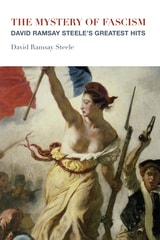
The Mystery of Fascism
David Ramsay Steele's Greatest HitsDavid Ramsay Steele
St. Augustine's Press, 2019
David Ramsay Steele, PhD, is a libertarian writer with a powerful underground reputation for producing caustic, entertaining, knowledgeable, and surprising arguments, often violently at odds with conventional thinking. For the first time, some of Dr. Steele’s “greatest hits” have been brought together in an anthology of provocative essays on a wide range of topics. The essays are divided into two parts, “More Popular than Scholarly” and “More Scholarly than Popular.”
“Scott Adams and the Pinocchio Fallacy,” Steele’s 2018 refutation of the popular claim that we might be living in a “simulated reality,” has been hailed as a totally irresistible debunking of that fallacy as promoted by The Matrix movie and by Scott Adams (among many pundits).
“What Follows from the Non-Existence of Mental Illness?” (2017) preserves the crucial insights of “psychiatric abolitionist” Thomas Szasz, while exposing Szasz’s major misconceptions.
In “The Bigotry of the New Atheism” (2014), Steele, himself an atheist, brings out the intolerant quality of the “New Atheists.” Steele powerfully argues that while “enthusiastic belief systems” may give rise to enormous atrocities, the historical evidence goes against the theory (promoted by Harris, Dawkins, and Hitchens) that these appalling outcomes are more likely when those belief systems include belief in God.
“Taking the JFK Assassination Conspiracy Seriously” (2003) has been reprinted many times, continues to be viewed online many thousands of times, and like many of Steele’s writings, keeps making converts. It is acknowledged to be the most persuasive brief popular statement of the Lone Nut theory.
“The Mystery of Fascism” (2001), which gives this collection its title, is still continually viewed and cited, for its demonstration that fascism arose directly out of far-left revolutionary Marxism and revolutionary syndicalism. Conventional ideologues of both right and left have been provoked by this highly readable piece to start thinking outside the box.
The earliest piece in this collection, “Alice in Wonderland” (1987) is a devastating critique of the Ayn Rand belief system and the Ayn Rand cult.
“Gambling Is Productive and Rational” (1997), mercilessly strips away the loose thinking which favors intolerance and prohibition of gambling. Steele argues that gambling adds to human well-being and ought to be completely legalized everywhere.
Other topics include the recovered memory witch hunt of the 1990s, the benefits of replacing democratic voting with selection of political positions by lottery, the unexpected results of research into the causes of human happiness, the reasons why Dexter (a TV show sympathetic to a psychotic serial killer) was politically “safe,” why economic growth can go on for ever, why the most popular moral argument against eating meat just doesn’t work, how Hillary Clinton could have won the presidency in 2016, why Friedrich Hayek is wrong about social evolution, the inevitable disappearance of market socialism, Robert Nozick’s muddled thinking about economics, and the proper way to view anti-consensus theories such as the Atkins Diet.
The Myth of Achievement Tests
The GED and the Role of Character in American LifeEdited by James J. Heckman, John Eric Humphries, and Tim Kautz
University of Chicago Press, 2013
The Myth of Achievement Tests shows that achievement tests like the GED fail to measure important life skills. James J. Heckman, John Eric Humphries, Tim Kautz, and a group of scholars offer an in-depth exploration of how the GED came to be used throughout the United States and why our reliance on it is dangerous. Drawing on decades of research, the authors show that, while GED recipients score as well on achievement tests as high school graduates who do not enroll in college, high school graduates vastly outperform GED recipients in terms of their earnings, employment opportunities, educational attainment, and health. The authors show that the differences in success between GED recipients and high school graduates are driven by character skills. Achievement tests like the GED do not adequately capture character skills like conscientiousness, perseverance, sociability, and curiosity. These skills are important in predicting a variety of life outcomes. They can be measured, and they can be taught.
Using the GED as a case study, the authors explore what achievement tests miss and show the dangers of an educational system based on them. They call for a return to an emphasis on character in our schools, our systems of accountability, and our national dialogue.
Contributors
Eric Grodsky, University of Wisconsin–Madison
Andrew Halpern-Manners, Indiana University Bloomington
Paul A. LaFontaine, Federal Communications Commission
Janice H. Laurence, Temple University
Lois M. Quinn, University of Wisconsin–Milwaukee
Pedro L. Rodríguez, Institute of Advanced Studies in Administration
John Robert Warren, University of Minnesota, Twin Cities
The Mythology of Work
How Capitalism Persists Despite ItselfPeter Fleming
Pluto Press, 2015
In The Mythology of Work, Peter Fleming examines how neoliberal society uses the ritual of work—and the threat of its denial—to maintain the late capitalist class order. Work becomes a universal reference point, devoid of any moral or political worth, transforming our society into a factory that never sleeps. Blending critical theory with recent accounts of job-related suicides, office-induced paranoia, fear of relaxation, managerial sadism, and cynical corporate social responsibility campaigns, Fleming paints a bleak picture of a society in which economic and emotional disasters greatly outweigh any professed benefits.
The National Balance Sheet of the United States, 1953-1980
Raymond W. Goldsmith
University of Chicago Press, 1982
The most comprehensive and extensive study of national wealth ever attempted, The National Balance Sheet will be a rich resource for researchers and users of national accounts.

The Natural Origins of Economics
Margaret Schabas
University of Chicago Press, 2005
In The Natural Origins of Economics, Margaret Schabas traces the emergence and transformation of economics in the eighteenth and nineteenth centuries from a natural to a social science. Focusing on the works of several prominent economists—David Hume, Adam Smith, Thomas Malthus, David Ricardo, and John Stuart Mill—Schabas examines their conceptual debt to natural science and thus locates the evolution of economic ideas within the history of science. An ambitious study, The Natural Origins of Economics will be of interest to economists, historians, and philosophers alike.
The New Dollars and Dreams
American Incomes in the Late 1990sFrank Levy
Russell Sage Foundation, 1998
The New Economic Sociology
Developments in an Emerging FieldMaruo F. Guillen
Russell Sage Foundation, 2002
The New Institutionalism in Sociology
Mary C. Brinton
Russell Sage Foundation, 1998
The Nonprofit Sector in the Mixed Economy
Edited by Avner Ben-Ner and Benedetto Gui
University of Michigan Press, 1994
The Nonprofit Sector in the Mixed Economy
Avner Ben-Ner and Benedetto Gui, Editors
University of Michigan Press, 1993
The Organization of Industry
George J. Stigler
University of Chicago Press, 1983
In part one, Stigler examines the nature of competition and monopoly. In part two he discusses the forces that determine the size structure of industry, including barriers to entry, economics of scale, and mergers. Part three contains articles on a wide range of topics, such as profitability, delivered price systems, block booking, the economics of information, and the kinky oligopoly demand curve and rigid price. Part four offers a discussion of antitrust policy and includes Stigler's recommendations for future policy as well as an examination of the effects of past policies.
"Stigler's writings might well be subtitled 'The Joys of Doing Economics.' He, more than any other contemporary American economist, dispels the gloom surrounding economic theory. It is impossible to confront the subject treated with such humor and verve and come away still believing that economics is the dismal science."—Shirley B. Johnson, American Scholar

The Pawnshop in China
Yang Chao-yu; Translated by T. S. Whelan
University of Michigan Press, 1979
The Political Economy of American Trade Policy
Edited by Anne O. Krueger
University of Chicago Press, 1995
Eight analytical histories of the automobile, steel, semiconductor, lumber, wheat, and textile and apparel industries demonstrate that trade barriers rarely have unequivocal benefits and may be counterproductive. They show that criteria for awarding protection do not take into account the interests of consumers or other industries and that political influence and an organized lobby are major sources of protection.
Based on these findings, a final essay suggests that current policy fails to consider adequately economic efficiency, the public good, and indirect negative effects. This volume will interest scholars in economics, business, and public policy who deal with trade issues.
The Political Economy of Artificial Intelligence
Edited by Ajay Agrawal, Joshua Gans, Avi Goldfarb, and Catherine E. Tucker
University of Chicago Press, 2026
An authoritative look at how artificial intelligence both shapes and is shaped by the political and economic forces of the modern world.
As the effects of artificial intelligence are felt across economies and societies, many of its ramifications are still emerging. This volume brings together economists and political scientists to examine how AI intersects with regulation, military power, and political identity—offering analytical frameworks and identifying key open questions for future research.
The contributions address topics such as the allocation of property rights for AI inputs, trade-offs among alternative regulatory regimes, and the role of interest groups in shaping the technology’s trajectory. They explore how AI-related capabilities influence military effectiveness, resource allocation, and bargaining power among nations, and consider AI’s effects on political preferences, from the influence of AI-curated information on polarization to the implications of targeted political advertising and personalized education for national identity formation. The volume highlights key trade-offs that arise in AI’s political economy, and points toward empirical strategies and theoretical models that can advance understanding in this emerging field.
Drawing on diverse disciplinary perspectives, the collection provides a foundation for rigorous inquiry into how AI both shapes and is shaped by political and economic forces.
The Political Economy of Distributism
Property, Liberty, and the Common GoodAlexander William Salter
Catholic University of America Press, 2023
The Political Economy of Pipelines
A Century of Comparative Institutional DevelopmentJeff D. Makholm
University of Chicago Press, 2012
The Political Economy of Protest and Patience
East European and Latin American Trasformations ComparedBéla Greskovits
Central European University Press, 1998
Despite gloomy prophecies, democracy and the market economy seem to be taking root throughout Central and Eastern Europe, although set against a background of a recession deeper and longer than that of the Great Depression. How is this possible? Why did Eastern Europeans protest less about the brutal social consequences of systemic change than the people of Latin America a decade earlier? Why has the region-wide authoritarian or populist turnabout not occurred? Why has democracy in these countries proved to be crisis-proof? In what ways has economic crisis impacted on the politics of the region?
In addressing these questions, Béla Greskovits uses a comparative analysis of the structures, institutions, cultures, and actors shaping both the Eastern European and the Latin American transformations. He argues that structural, institutional, and cultural factors have put a brake on destabilizing collective actions and have paved the way for the emergence of the enduring, low-level equilibrium between incomplete democracy and imperfect market economy which seems set to characterize the Central and Eastern European experience for the foreseeable future.
The Political Economy of Trade Protection
Edited by Anne O. Krueger
University of Chicago Press, 1995
In case studies of trade barriers imposed during the 1980s to help the steel, semiconductor, automobile, lumber, wheat, and textile and apparel industries, the contributors trace the evolution of efforts to obtain protection, protectionist measures, and their results. A chapter assessing the common themes that emerge from the studies concludes that the focus of current trade law is exclusively on the individual protection-seeking industries, with little regard for indirect effects on using industries or for consumers. Reform could usefully take these effects into account.
This volume will interest policymakers, business executives, and anyone interested in trade policy formulation and practice.
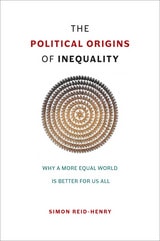
The Political Origins of Inequality
Why a More Equal World Is Better for Us AllSimon Reid-Henry
University of Chicago Press, 2015
The problem of inequality, Reid-Henry argues, is a problem that manifests between places as well as over time. This is one reason why it cannot be resolved by the usual arguments of left versus right, bound as they are to the national scale alone. Most of all, however, it is why the level of inequality that confronts us today is indicative of a more general crisis in political thought. Modern political discourse has no place for public reason or the common good. Equality is yesterday’s dream. Yet the fact that we now accept such a world—a world that values security over freedom, special treatment over universal opportunity, and efficiency over fairness—is ultimately because we have stopped even trying in recent decades to build the political architecture the world actually requires.
Our politics has fallen out of step with the world, then, and at the every moment it is needed more than ever. Yet it is within our power to address this. Doing so involves identifying and then meeting our political responsibilities to others, not just offering them the selective charity of the rich. It means looking beyond issues of economics and outside our national borders. But above all it demands of us that we reinvent the language of equality for a modern, global world: and then institute this. The world is not falling apart. Different worlds, we all can see, are colliding together. It is our capacity to act in concert that is falling apart. It is this that needs restoring most of all.
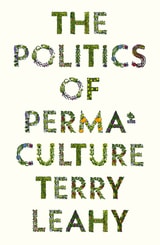
The Politics of Permaculture
Terry Leahy
Pluto Press, 2021
Permaculture is an environmental movement that makes us revaluate what it means to be sustainable. Through innovative agriculture and settlement design, the movement creates new communities that are harmonious with nature. It has grown from humble origins on a farm in 1970s Australia and flourished into a worldwide movement that confronts industrial capitalism.
The Politics of Permaculture is one of the first books to unpack the theory and practice of this social movement that looks to challenge the status quo. Drawing upon the rich seam of publications and online communities from the movement as well as extensive interviews with permaculture practitioners and organizations from around the world, Leahy explains the ways permaculture is understood and practiced in different contexts.
In the face of extreme environmental degradation and catastrophic climate change, we urgently need a new way of living.
The Politics of Purity
Harvey Washington Wiley and the Origins of Federal Food PolicyClayton A. Coppin and Jack High
University of Michigan Press, 1999
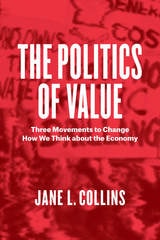
The Politics of Value
Three Movements to Change How We Think about the EconomyJane L. Collins
University of Chicago Press, 2017
Each case shows how the concrete actions of a group of citizens can prompt us to reflect on what is needed for a just and sustainable economic system. In one case, activists raised questions about the responsibilities of business, in the second about the significance of local economies, and in the third about the contributions of the public sector. Through these movements, Jane L. Collins maps a set of cultural conversations about the types of investments and activities that contribute to the health of the economy. Compelling and persuasive, The Politics of Value offers a new framework for viewing economic value, one grounded in thoughtful assessment of the social division of labor and the relationship of the state and the market to civil society.

The Post-1945 Internationalization of Economics, Volume 28
A. W. Coats
Duke University Press, 0
Contributors. S. Ambirajan, William Ascher, William J. Barber, Young Back Choi, A. W. Coats, Barend de Vries, Margaret Garrison de Vries, Peter Groenewegen, Arnold Harberger, Aiko Ikeo, Maria Rita Loureiro, Ivo Maes, Veronica Montecinos, Jacques J. Polak, Pier Luigi Porta, Bo Sandelin, Ann Veiderpass, John Williamson
The Power at the End of the Economy
Brian Massumi
Duke University Press, 2015
The Power of Productivity
Wealth, Poverty, and the Threat to Global StabilityWilliam W. Lewis
University of Chicago Press, 2004
The Power of Productivity provides powerful and controversial answers to these questions. William W. Lewis, the director emeritus of the McKinsey Global Institute, here draws on extensive microeconomic studies of thirteen nations over twelve years—conducted by the Institute itself—to counter virtually all prevailing wisdom about how best to ameliorate economic disparity. Lewis's research, which included studying everything from state-of-the-art auto makers to black-market street vendors and mom-and-pop stores, conclusively demonstrates that, contrary to popular belief, providing more capital to poor nations is not the best way to help them. Nor is improving levels of education, exchange-rate flexibility, or government solvency enough. Rather, the key to improving economic conditions in poor countries, argues Lewis, is increasing productivity through intense, fair competition and protecting consumer rights.
As The Power of Productivity explains, this sweeping solution affects the economies of poor nations at all levels—from the viability of major industries to how the average consumer thinks about his or her purchases. Policies must be enacted in developing nations that reflect a consumer rather than a producer mindset and an attendant sense of consumer rights. Only one force, Lewis claims, can stand up to producer special privileges—consumer interests.
The Institute's unprecedented research method and Lewis's years of experience with economic policy combine to make The Power of Productivity the most authoritative and compelling view of the global economy today, one that will inform political and economic debate throughout the world for years to come.
The Power to Destroy
How Bad Economics Drove America’s DeclineJames K. Galbraith
University of Chicago Press, 2026
Acclaimed economist James K. Galbraith sounds an urgent alarm: how conventional economic ideas and policies are unequipped to account for the most daunting challenges of our geopolitical moment.
Amid a mounting sense of American decline, Americans live with a new kind of dissonance: economists announcing that everything is fundamentally fine. Where growth is steady, unemployment is low, prices are (somewhat) stable, and stocks are high—what’s there to worry about?
The Power to Destroy shows that this dissonance reflects a failure to evolve. James K. Galbraith’s incisive history of economic policy in this century is grounded in the fundamental problem that today’s experts are still deploying tools from all yesterday’s wars: obsolete economic ideas, measures, and doctrines focused on market functioning and crude economic indicators like output and prices. These methods, many of them honed a century ago against a vastly different social landscape, offer little hope in the face of today’s more existential threats.
Such conventional policies, Galbraith argues, are increasingly ill-equipped to counter the daunting challenges of our moment—from inflation to trade sanctions, industrial cold wars, and climate change—and, left unacknowledged, are accelerating the end of the US economy as we know it. Shortcomings include the weak responses to the inflation of 2021-2022; the sanctions war against Russia; the rise of China; the weak and ineffective attempt at industrial revival; and the impending demographic crisis. All have roots in a flawed body of outdated economic thought that has been sustained for ideological rather than practical reasons. They now promise to hinder the United States in the emerging multipolar world.
As Galbraith makes plain, for all the virtues of the market system, governments and their policies make markets possible. The ideas behind the policies—for better or worse—will determine the fate of the US economy—and new and better ideas are urgently needed. The alternative—sticking with economic ideas and policies we know and currently use—brings the power to destroy us all.
The Price of Independence
The Economics of Early AdulthoodSheldon Danziger
Russell Sage Foundation, 2007
The Price of Our Values
The Economic Limits of Moral LifeAugustin Landier and David Thesmar
University of Chicago Press, 2025
The economic case for self-interest at the outer limits of being morally good.
Modern life is an exercise in discomfort. In the face of endless injustice, how much selfishness is permissible? How do we square suffering elsewhere with our hope to thrive at home? How does one strive for the greater good while guarding one's personal interests? The Price of Our Values argues that the answers to these questions are economic: by weighing our sense of the personal costs associated with the outer limits of our moral beliefs.
These tradeoffs—the want to be good, the personal costs of being good, and the points at which people abandon goodness due to its costs—are somewhat unsettling. But as economists Augustin Landier and David Thesmar show, they are highly predictable, even justified. Our values guide us, but we are also forced to consider economic costs to settle decisions.
The Price of Our Values is an economic reckoning with the universal unease of contemporary moral life. Wielding insights from the philosophical founders of the field, Landier and Thesmar provide frameworks for thinking about the place of values—justice, freedom, beauty— in the decisions of modern life. They do so in terms that seek to be consistent with both our good intentions and their limits.
The Price of Prestige
Conspicuous Consumption in International RelationsLilach Gilady
University of Chicago Press, 2018
In The Price of Prestige, Gilady shows how many seemingly wasteful government expenditures that appear to contradict the laws of demand actually follow the pattern for what are known as Veblen goods, or positional goods for which demand increases alongside price, even when cheaper substitutes are readily available. From flashy space programs to costly weapons systems a country does not need and cannot maintain to foreign aid programs that offer little benefit to recipients, these conspicuous and strategically timed expenditures are intended to instill awe in the observer through their wasteful might. And underestimating the important social role of excess has serious policy implications. Increasing the cost of war, for example, may not always be an effective tool for preventing it, Gilady argues, nor does decreasing the cost of weapons and other technologies of war necessarily increase the potential for conflict, as shown by the case of a cheap fighter plane whose price tag drove consumers away. In today’s changing world, where there are high levels of uncertainty about the distribution of power, Gilady also offers a valuable way to predict which countries are most likely to be concerned about their position and therefore adopt costly, excessive policies.
The Profit Doctrine
Economists of the Neoliberal EraRobert Chernomas and Ian Hudson
Pluto Press, 2016
By critically examining the work of the most famous economists of the neoliberal period including Alan Greenspan, Milton Friedman, and Robert Lucas, Robert Chernomas and Ian Hudson demonstrate that many of those who rose to prominence did so primarily because of their defense of, and contribution to, rising corporate profits, rather thantheir ability to predict or explain economic events.
An important and controversial book, The Profit Doctrine exposes the uses and abuses of mainstream economic canons, identifies those responsible, and reaffirms the primacy of political economy.
The Pure Theory of Capital
F. A. Hayek
University of Chicago Press, 2007
The Pure Theory of Capital, F. A. Hayek’s long-overlooked, little-understood volume, was his most detailed work in economic theory. Originally published in 1941 when fashionable economic thought had shifted to John Maynard Keynes, Hayek’s manifesto of capital theory is now available again for today’s students and economists to discover.
With a new introduction by Hayek expert Lawrence H. White, who firmly situates the book not only in historical and theoretical context but within Hayek’s own life and his struggle to complete the manuscript, this edition commemorates the celebrated scholar’s last major work in economics. Offering a detailed account of the equilibrium relationships between inputs and outputs in an economy, Hayek’s stated objective was to make capital theory—which had previously been devoted almost entirely to the explanation of interest rates—“useful for the analysis of the monetary phenomena of the real world.” His ambitious goal was nothing less than to develop a capital theory that could be fully integrated into the business cycle theory.
The Real Economy
Essays in Ethnographic TheoryEdited by Federico Neiburg and Jane I. Guyer
HAU, 2020
An ambitious anthropology of economy, this volume questions how assemblages of vernacular and scientific realizations and enactments of the economy are linked to ideas of truth and moral value; how these multiple and shifting realities become present and entangle with historically and socially situated lives; and how the formal realizations of the concept of the “real” in the governance of economies engage with the experiential lives of ordinary people. Featuring essays from some of the world’s most prominent economic anthropologists, The Real Economy is a milestone collection in economic anthropology that crosses disciplinary boundaries and adds new life to social studies of the economy.
The Rebel's Dilemma
Mark Irving Lichbach
University of Michigan Press, 1998
". . . a significant contribution to the understanding of collective behavior, protest, and rebellion." --Choice
"The book is interesting and thought-provoking, and its insights extend beyond the narrow subject of rebellion to help illuminate many issues related to organizing groups to undertake collective action." --Public Choice
"[Lichbach's] book is monumental and pivotal. . . . [It] consolidates over three decades of research on collective action problems and sets the agenda for future studies of collective dissent and rebellion. . . . [This] book is a major step forward. It will have an enormous impact in the field of conflict studies and belongs on the shelf of anyone even casually interested in dissent, rebellion, and revolution. . . . [This] book is a major step forward. It will have an enormous impact in the field of conflict studies and belongs on the shelf of anyone even casually interested in dissent, rebellion, and revolution." --American Political Science Review
"For scholars interested in game-theoretic analyses of politics . . . essential reading." --Manus I. Midlarsky, Journal of Politics
"Lichbach has to be praised for providing valuable insight on the logic of collective dissent. . . ." --Political Studies
Mark Irving Lichbach is Professor of Political Science, University of Colorado.
The Return to Increasing Returns
James M. Buchanan and Yong J. Yoon, Editors
University of Michigan Press, 1994
The neoclassical theory of distribution, developed in the last decades of the nineteenth century, relies on the postulate that in equilibrium there exist constant returns to scale, not only in particular firms and industries, but in the economy as a whole. As general equilibrium theory developed, emphasis was sifted to the properties of equilibrium, to the proofs of its existence, and to the attributes of welfare. The possibility of increasing returns represented an analytical “monkey wrench” thrown in the whole neoclassical structure. Thus, the neglect of increasing returns may have been methodologically understandable – if scientifically scandalous. Only in recent years has the increasing returns postulate returned to the mainstream through analyses of endogenous growth, international trade, unemployment, and the economics of ethics.
The Rhetoric of Economics
Deirdre N. McCloskey
University of Wisconsin Press, 1998
A classic in its field, this pathbreaking book humanized the scientific rhetoric of economics to reveal its literary soul. Economics needs to admit that it, like other sciences, works with metaphors and stories. Its most mathematical and statistical moments are properly dominated by comparison and narration, that is to say, human persuasion. The book was McCloskey's opening move in the development of a "humanomics," and unification of the sciences and the humanities on the field of ordinary business life.
The Risk of Economic Crisis
Edited by Martin Feldstein
University of Chicago Press, 1991
In this accessible and thought-provoking volume, Benjamin M. Friedman investigates the origins of financial crisis in domestic capital markets, Paul Krugman examines the international origins and transmission of financial and economic crises, and Lawrence H. Summers explores the transition from financial crisis to economic collapse. In the introductory essay, Martin Feldstein reviews the major financial problems of the 1980s and discusses lessons to be learned from this experience. The book also contains provocative observations by senior academics and others who have played leading roles in business and government.
The Road to Serfdom
Text and Documents--The Definitive EditionF. A. Hayek
University of Chicago Press, 2007
First published by the University of Chicago Press on September 18, 1944, The Road to Serfdom garnered immediate, widespread attention. The first printing of 2,000 copies was exhausted instantly, and within six months more than 30,000 books were sold. In April 1945, Reader’s Digest published a condensed version of the book, and soon thereafter the Book-of-the-Month Club distributed this edition to more than 600,000 readers. A perennial best seller, the book has sold 400,000 copies in the United States alone and has been translated into more than twenty languages, along the way becoming one of the most important and influential books of the century.
With this new edition, The Road to Serfdom takes its place in the series The Collected Works of F. A. Hayek. The volume includes a foreword by series editor and leading Hayek scholar Bruce Caldwell explaining the book's origins and publishing history and assessing common misinterpretations of Hayek's thought. Caldwell has also standardized and corrected Hayek's references and added helpful new explanatory notes. Supplemented with an appendix of related materials ranging from prepublication reports on the initial manuscript to forewords to earlier editions by John Chamberlain, Milton Friedman, and Hayek himself, this new edition of The Road to Serfdom will be the definitive version of Hayek's enduring masterwork.
The Roaring Nineties
Can Full Employment Be Sustained?Alan B. Krueger
Russell Sage Foundation, 2001

The Sacred Exchange
Creating a Jewish Money EthicRabbi Mary L. Zamore
Central Conference of American Rabbis, 2019
Part of the CCAR Press Challenge and Change series, this anthology creates a rich and varied discussion about the ethics of money. Our use of and relationship with money must reflect our religious values--this book aims to start a comprehensive conversation about how Judaism can guide us in this multi-faceted relationship.
The Science of Passionate Interests
An Introduction to Gabriel Tarde's Economic AnthropologyBruno Latour and Vincent Antonin Lépinay
Prickly Paradigm Press, 2009
How can economics become genuinely quantitative? This is the question that French sociologist Gabriel Tarde tackled at the end of his career, and in this pamphlet, Bruno Latour and Vincent Antonin Lépinay offer a lively introduction to the work of the forgotten genius of nineteenth-century social thought. Tarde’s solution was in total contradiction to the dominant views of his time: to quantify the connections between people and goods, you need to grasp “passionate interests.” In Tarde’s view, capitalism is not a system of cold calculations—rather it is a constant amplification in the intensity and reach of passions. In a stunning anticipation of contemporary economic anthropology, Tarde’s work defines an alternative path beyond the two illusions responsible for so much modern misery: the adepts of the Invisible Hand and the devotees of the Visible Hand will learn how to escape the sterility of their fight and recognize the originality of a thinker for whom everything is intersubjective, hence quantifiable.
At a time when the regulation of financial markets is the subject of heated debate, Latour and Lépinay provide a valuable historical perspective on the fundamental nature of capitalism.

The Sensory Order and Other Writings on the Foundations of Theoretical Psychology
F. A. Hayek
University of Chicago Press, 2017
The latest addition to the University of Chicago Press’s Collected Works of F. A. Hayek series, The Sensory Order and Other Writings on the Foundations of Theoretical Psychology pairs the book, originally published in 1952, with additional essays related to The Sensory Order’s key themes, including a student paper from 1920 in which Hayek outlined the basic ideas he fully developed in the 1952 book. Rounding out the volume is an insightful introduction by editor Viktor Vanberg that sketches out the central problems Hayek was grappling with when he wrote The Sensory Order and the influential role this early thinking on theoretical psychology would play over the next six decades of his career. The book also features ample footnotes and citations for further reading, making this an essential contribution to the series.
The Social Benefits of Education
Jere R. Behrman and Nevzer Stacey, Editors
University of Michigan Press, 1997
The Sociology of the Economy
Frank Dobbin
Russell Sage Foundation, 2004
The Solidarity Economy
Jean-Louis Laville
University of Minnesota Press, 2023
Questioning the boundaries between politics and economics
Jean-Louis Laville’s large body of work has focused on an intellectual history of the concept of solidarity since the Industrial Revolution. In The Solidarity Economy, his most famous distillation of this work, Laville establishes how the formations of economic solidarities (unions, activism, and other forms of associationalism) reveal that the boundaries between politics and economics are porous and structured such that politics, ideally a pure expression of ethics and values, is instead integrated with economic concerns.
Exploring the possibilities and long histories of association, The Solidarity Economy identifies the power of contemporary social and solidarity movements and examines the history of postcapitalist practices in which democratic demands invade the heart of the economy. The Solidarity Economy ranges in focus from workers associations in France dating back to the nineteenth century, to associations of African Americans and feminists in the United States in the late nineteenth and early twentieth centuries, to a Brazilian landless-worker coalition in the twentieth century.
Studying solidarity associations over time allows us to examine how we can recombine the economic and political spheres to address dependencies and inequalities. Ultimately, The Solidarity Economy has global scope and inspiring examples of associations that deepen democracy.