Results by title

42 books match the query 'N.T'
cover of A Greek-English Lexicon of the New Testament and Other Early Christian Literature

A Greek-English Lexicon of the New Testament and Other Early Christian Literature

Walter Bauer

University of Chicago Press, 2000

Described as an "invaluable reference work" (Classical Philology) and "a tool indispensable for the study of early Christian literature" (Religious Studies Review) in its previous edition, this new updated American edition of Walter Bauer's Wörterbuch zu den Schriften des Neuen Testaments builds on its predecessor's staggering deposit of extraordinary erudition relating to Greek literature from all periods. Including entries for many more words, the new edition also lists more than 25,000 additional references to classical, intertestamental, Early Christian, and modern literature.

In this edition, Frederick W. Danker's broad knowledge of Greco-Roman literature, as well as papyri and epigraphs, provides a more panoramic view of the world of Jesus and the New Testament. Danker has also introduced a more consistent mode of reference citation, and has provided a composite list of abbreviations to facilitate easy access to this wealth of information.

Perhaps the single most important lexical innovation of Danker's edition is its inclusion of extended definitions for Greek terms. For instance, a key meaning of "episkopos" was defined in the second American edition as overseer; Danker defines it as "one who has the responsibility of safeguarding or seeing to it that something is done in the correct way, guardian." Such extended definitions give a fuller sense of the word in question, which will help avoid both anachronisms and confusion among users of the lexicon who may not be native speakers of English.

Danker's edition of Bauer's Wörterbuch will be an indispensable guide for Biblical and classical scholars, ministers, seminarians, and translators.
[more]
cover of Black Fire:  African American Quakers on Spirituality and Human Rights

Black Fire

African American Quakers on Spirituality and Human Rights

Harold D. Weaver, Jr.

QuakerPress, 2011
[more]
cover of Called by Stories: Biblical Sagas and Their Challenge for Law

Called by Stories

Biblical Sagas and Their Challenge for Law

Milner S. Ball

Duke University Press, 2000

Distinguished legal scholar and Presbyterian minister Milner S. Ball examines great sagas and tales from the Bible for the light they shed on the practice of law and on the meaning of a life lived in the legal profession. Scholars and laypersons alike typically think of the law as a discipline dominated by reason and empirical methods. Ball shows that many of the dilemmas and decisions that legal professionals confront are more usefully approached through an experience of narrative in which we come to know ourselves and our actions through stories.
He begins with the story of Moses, who is obliged both to speak for God to the Hebrews and to advocate for the Hebrews before God. What, asks Ball, does Moses’s predicament say to lawyers professionally bound to zealous representation of only one client? In the story of Rachel, Ball finds insights that comprehend the role of tears and emotion in the judicial process. He relates these insights to specific contemporary situations, such as a plant closing and the subsequent movement of jobs to Mexico and legal disputes over the sovereignty of native Hawaiians. In a discussion of “The Gospel According to John,” Ball points out that the writer of this gospel is free simultaneously to be critical of law and to rely extensively on it. Ball uses this narrative to explore the boundaries of free will and independence in lawyering. By venturing into the world of powerful events and biblical characters, Ball enables readers to contest their own expectations and fundamental assumptions.
Employing legal theory, theology, and literary criticism, Called by Stories distills a wisdom in biblical texts that speaks specifically to the working life of legal professionals. As such, it will enrich lovers of narrative and poetry, ethicists, literary and biblical scholars, theologians, lawyers, law students, judges, and others who seek to discern deeper meanings in the texts that have shaped their lives.
[more]
cover of Commentary on Galatians

Commentary on Galatians

Catholic University of America Press, 2011
Jerome's Commentary on Galatians is presented here in English translation in its entirety.
[more]
cover of Commentary on Matthew

Commentary on Matthew

D.H. St. Hilary of Poiters

Catholic University of America Press, 2012
St. Jerome (347-420) has been considered the pre-eminent scriptural commentator among the Latin Church Fathers. His Commentary on Matthew, written in 398 and profoundly influential in the West, appears here for the first time in English translation.
[more]
cover of Commentary on Matthew

Commentary on Matthew

Saint Jerome

Catholic University of America Press, 2008
His Commentary on Matthew, written in 398 and profoundly influential in the West, appears here for the first time in English translation. Jerome covers the entire text of Matthew's gospel by means of brief explanatory comments that clarify the text literally and historically.
[more]
cover of Commentary on the Apocalypse

Commentary on the Apocalypse

Catholic University of America Press, 2012
Striking a balance between the symbolic language of the book and its literal, prophetic fulfillment, Andrew?s interpretation is a remarkably intelligent, spiritual, and thoughtful commentary that encourages the pursuit of virtue and confidence in the love of God for humanity
[more]
cover of Commentary on the Apocalypse

Commentary on the Apocalypse

John N. Oecumenius

Catholic University of America Press, 2006
No description available
[more]
cover of Commentary on the Epistle to the Romans

Commentary on the Epistle to the Romans

Peter Abelard

Catholic University of America Press, 2011
Despite its importance and the frequent references made to it by modern scholars, this commentary has never before been translated into English in its entirety. This volume, which includes an extensive introduction, fills this gap, thus providing a needed contribution to medieval scholarship.
[more]
cover of Commentary on the Epistle to the Romans, Books 1-5

Commentary on the Epistle to the Romans, Books 1-5

Catholic University of America Press, 2001
No description available
[more]
cover of Commentary on the Epistle to the Romans, Books 6-10

Commentary on the Epistle to the Romans, Books 6-10

Catholic University of America Press, 2002
No description available
[more]
cover of Commentary on the Gospel According to John, Books 13-32

Commentary on the Gospel According to John, Books 13-32

Catholic University of America Press, 1989
No description available
[more]
cover of Commentary on the Gospel of John, Books 1-10

Commentary on the Gospel of John, Books 1-10

Catholic University of America Press, 1989
No description available
[more]
cover of Commentary on the Gospel of John, Chapters 6-12

Commentary on the Gospel of John, Chapters 6-12

Thomas Aquinas

Catholic University of America Press, 2010
No description available
[more]
cover of Commentary on the Gospel of John: Chapters 1-5

Commentary on the Gospel of John

Chapters 1-5

Thomas Aquinas

Catholic University of America Press, 2010
No description available
[more]
cover of Commentary on the Gospel of John: Chapters 13-21

Commentary on the Gospel of John

Chapters 13-21

Thomas Aquinas

Catholic University of America Press, 2010
No description available
[more]
cover of Constructing Antichrist: Paul, Biblical Commentary, and the Development of Doctrine in the Early Middle Ages

Constructing Antichrist

Paul, Biblical Commentary, and the Development of Doctrine in the Early Middle Ages

Kevin L. Hughes

Catholic University of America Press, 2005
Constructing Antichrist engages readers with the question: what does Paul have to do with the Antichrist? Integrating new scholarship in apocalypticism and the history of exegesis, this book is the first longitudinal study of the role of Paul in apocalyptic thought
[more]
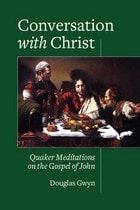
cover of Conversation with Christ

Conversation with Christ

Douglas Gwyn

QuakerPress, 2011
[more]
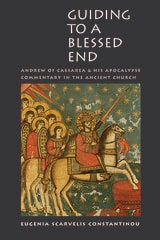
cover of Guiding to a Blessed End: Andrew of Caesarea and His Apocalypse Commentary in the Ancient Church

Guiding to a Blessed End

Andrew of Caesarea and His Apocalypse Commentary in the Ancient Church

Eugenia Scarvelis Constantinou

Catholic University of America Press, 2013
In this interesting and insightful work, Eugenia Scarvelis Constantinou, the leading expert on Andrew of Caesarea and the first to translate his Apocalypse commentary into any modern language, identifies an exact date for the commentary and a probable recipient. Her groundbreaking book, the first ever written about Andrew, analyzes his historical milieu, education, style, methodology, theology, eschatology, and pervasive and lasting influence. She explains the direct correlation between Andrew of Caesarea and fluctuating status of the Book of Revelation in Eastern Christianity through the centuries.
[more]
cover of Homilies on Luke

Homilies on Luke

Catholic University of America Press, 1996
No description available
[more]
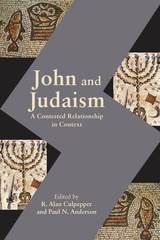
cover of John and Judaism: A Contested Relationship in Context

John and Judaism

A Contested Relationship in Context

R. Alan Culpepper

SBL Press, 2017

A window into early Judaism and Christianity

The Gospel of John was written during the period of the emergence of Christianity and its separation from Judaism and bears witness to their contested relationship. This volume contains eighteen cutting-edge essays written by an international group of scholars who interpret for students and general readers what the book tells us about first-century Judaism, the separation of the church from Judaism, and how John's anti-Jewish references are being interpreted today.

Features:

  • A debate over the process that led to the separation of the church from Judaism, and John's place in that process
  • A review of recent interpretations of John's anti-Jewish references
  • An assessment of the current status of Jewish Christian relations
[more]
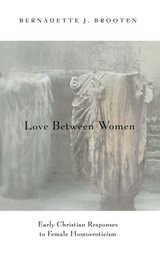
cover of Love Between Women: Early Christian Responses to Female Homoeroticism

Love Between Women

Early Christian Responses to Female Homoeroticism

Bernadette J. Brooten

University of Chicago Press, 1996

Love Between Women examines female homoeroticism and the role of women in the ancient Roman world. Employing an unparalleled range of cultural sources, Brooten finds evidence of marriages between women and establishes that condemnations of female homoerotic practices were based on widespread awareness of love between women.

"An extraordinary accomplishment. . . . A definitive source for all future discussion of homoeroticism and the Bible."—Mary Rose D'Angelo, Harvard Gay & Lesbian Review

"[Brooten's] convincing analysis . . . not only profoundly reshapes our understanding of the past, but it should also shape the way in which that past, particularly the early Christian texts with their immense normative weight, will be used for the future."—Anne L. Clark, Journal of Lesbian Studies

"Love Between Women gives contemporary debates on sexuality a carefully delineated past. It boldly insists upon a different future, one informed by history but not tyrannized by it."—Susan Ackerman, Lambda Book Report

"Fascinating, provocative and lucid. . . . Brooten has made a fundamental contribution to women's and gender studies, gay and lesbian studies, and classics."—Elizabeth A. Castelli, Women's Review of Books

Winner of the Lambda Literary Award for Best Lesbian Studies Book, 1997
[more]
cover of Matthew's Christian-Jewish Community

Matthew's Christian-Jewish Community

Anthony J. Saldarini

University of Chicago Press, 1994

The most Jewish of gospels in its contents and yet the most anti-Jewish in its polemics, the Gospel of Matthew has been said to mark the emergence of Christianity from Judaism. Anthony J. Saldarini overturns this interpretation by showing us how Matthew, far from proclaiming the replacement of Israel by the Christian church, wrote from within Jewish tradition to a distinctly Jewish audience.

Recent research reveals that among both Jews and Christians of the first century many groups believed in Jesus while remaining close to Judaism. Saldarini argues that the author of the Gospel of Matthew belonged to such a group, supporting his claim with an informed reading of Matthew's text and historical context. Matthew emerges as a Jewish teacher competing for the commitment of his people after the catastrophic loss of the Temple in 70 C.E., his polemics aimed not at all Jews but at those who oppose him. Saldarini shows that Matthew's teaching about Jesus fits into first-century Jewish thought, with its tradition of God-sent leaders and heavenly mediators.

In Saldarini's account, Matthew's Christian-Jewish community is a Jewish group, albeit one that deviated from the larger Jewish community. Contributing to both New Testament and Judaic studies, this book advances our understanding of how religious groups are formed.
[more]
cover of Miracle Discourse in the New Testament

Miracle Discourse in the New Testament

Duane F. Watson

SBL Press, 2012
This volume explores the rhetorical role that miracle discourse plays in the argumentation of the New Testament and early Christianity. The investigation includes both the rhetoric within miracle discourse and the rhetorical role of miracle discourse as it was incorporated into the larger works in which it is now a part. The volume also examines the social, cultural, religious, political, and ideological associations that miracle discourse had in the first-century Mediterranean world, bringing these insights to bear on the broader questions of early Christian origins. The contributors are L. Gregory Bloomquist, Wendy Cotter, David A. deSilva, Davina C. Lopez, Gail O'Day, Todd Penner, Vernon K. Robbins, and Duane F. Watson.
[more]
cover of Paul and Scripture: Extending the Conversation

Paul and Scripture

Extending the Conversation

Christopher D. Stanley

SBL Press, 2012

This book, which grew out of the Society of Biblical Literature’s Paul and Scripture Seminar, explores some of the methodological problems that have arisen during the last few decades of scholarly research on the apostle Paul’s engagement with his ancestral Scriptures. Essays explore the historical backgrounds of Paul’s interpretive practices, the question of Paul’s “faithfulness” to the context of his biblical references, the presence of Scripture in letters other than the Hauptbriefe, and the role of Scripture in Paul’s theology. All of the essays look at old questions through new lenses in an effort to break through scholarly impasses and advance the debate in new directions. The contributors are Matthew W. Bates, Linda L. Belleville, Roy E. Ciampa, Bruce N. Fisk, Stephen E. Fowl, Leonard Greenspoon, E. Elizabeth Johnson, Mitchell M. Kim, Steve Moyise, Jeremy Punt, Christopher D. Stanley, and Jerry L. Sumney.
[more]
cover of Reading John with St. Thomas Aquinas: Theological Exegesis and Speculative Theology

Reading John with St. Thomas Aquinas

Theological Exegesis and Speculative Theology

Michael Dauphinais

Catholic University of America Press, 2005
This volume fits within the contemporary reappropriation of St. Thomas Aquinas, which emphasizes his use of Scripture and the teachings of the church fathers without neglecting his philosophical insight.
[more]
cover of Reading Paul's Letter to the Romans

Reading Paul's Letter to the Romans

Jerry L. Sumney

SBL Press, 2012
In this volume, leading scholars in the study of Romans invite students and nonspecialists to engage this text and thus come to a more complete understanding of both the letter and Paul’s theology. The contributors include interpreters with different understandings of Romans so that readers see a range of interpretations of central issues in the study of the text. Each essay includes a short review of different positions on a topic and an argument for the author’s position, set out in clear, nontechnical terms, making the volume an ideal classroom tool. The contributors are A. Andrew Das, James D. G. Dunn, Victor Paul Furnish, Joel B. Green, A. Katherine Grieb, Caroline Johnson Hodge, L. Ann Jervis, E. Elizabeth Johnson, Sylvia C. Keesmaat, Rodrigo J. Morales, Mark D. Nanos, Jerry L. Sumney, and Francis Watson.
[more]
cover of Reading Romans with St. Thomas Aquinas

Reading Romans with St. Thomas Aquinas

Matthew Levering

Catholic University of America Press, 2012
This volume fits within the contemporary reappropriation of St. Thomas Aquinas, which emphasizes his use of Scripture and the teachings of the church fathers without neglecting his philosophical insight.
[more]
cover of Receiving the Bible in faith: historical and theological exegesis

Receiving the Bible in faith

historical and theological exegesis

David M. Williams

Catholic University of America Press, 2004
The book should prove helpful to students as an overview of some of the issues involved, while more advanced readers will appreciate its analysis of recent scholars as well the attempt to integrate and adapt their insights.
[more]
cover of Shorter Lexicon of the Greek New Testament

Shorter Lexicon of the Greek New Testament

Edited by F. Wilbur Gingrich and Frederick William Danker

University of Chicago Press, 1983

This one-volume digest provides easy access to reliable and brief definitions, interpretations of most variants, and many of the conjugational and declensional forms that frustrate readers of the New Testament. Danker's revision demonstrates his concern for the needs of students as well as those of ministers and scholars.

"[The Shorter Lexicon] is by far superior to other New Testament 'dictionaries' of comparable size."—Robert Hoerber, Classical World
[more]
cover of The Concise Greek-English Lexicon of the New Testament

The Concise Greek-English Lexicon of the New Testament

Frederick William Danker

University of Chicago Press, 2009

Frederick William Danker, a world-renowned scholar of New Testament Greek, is widely acclaimed for his 2000 revision of Walter Bauer’s A Greek-English Lexicon of the New Testament and Other Early Christian Literature. With more than a quarter of a million copies in print, it is considered the finest dictionary of its kind.

Danker’s Concise Greek-English Lexicon of the New Testament will prove to be similarly invaluable to ministers, seminarians, translators, and students of biblical Greek. Unlike other lexica of the Greek New Testament, which give only brief glosses for headwords, The Concise Greek-English Lexicon offers extended definitions or explanations in idiomatic English for all Greek terms.

Each entry includes basic etymological information, short renderings, information on usage, and plentiful biblical references. Greek terms that could have different English definitions, depending on context, are thoughtfully keyed to the appropriate passages. An overarching aim of The Concise Greek-English Lexicon is to assist the reader in recognizing the broad linguistic and cultural context for New Testament usage of words.

The Concise Greek-English Lexicon retains all the acclaimed features of A Greek-English Lexicon in a succinct and affordable handbook, perfect for specialists and nonspecialists alike.
[more]
cover of The Craft of History and the Study of the New Testament

The Craft of History and the Study of the New Testament

Beth M. Sheppard

SBL Press, 2012
Do professional historians and New Testament scholars use the same methods to explore the past? This interdisciplinary textbook introduces students of the New Testament to the vocabulary and methods employed by historians. It discusses various approaches to historiography and demonstrates their applicability for interpreting the New Testament text and exploring its background. Overviews of the philosophy of history, common historical fallacies, and the basics of historiography are followed by three exegetical studies that illustrate the applicability of various historical methods for New Testament interpretation.
[more]
cover of The Politics of Revelation in the English Renaissance

The Politics of Revelation in the English Renaissance

Ester Gilman Richey

University of Missouri Press, 1998

Recognizing that the seventeenth century's volatile debate over apocalyptic interpretation has since become a one-sided discussion, Esther Gilman Richey develops a context that recovers the dynamism so inherent in the writings of the period and provides illuminating details that enhance the prophetic continuum. The Politics of Revelation in the English Renaissance does not ignore the familiar prophetic verse of Spenser and Milton, but it significantly expands the scope of study by examining the interpretations of both men and women who represent a range of ecclesiastical and political perspectives.

Richey rejects Barbara Lewalski's claim that the radical, prophetic writers and metaphysical poets of the seventeenth century drew inspiration from distinct biblical models, the former from the Apocalypse and the latter from the Psalms. Instead she contends that even writers such as Donne and Herbert, whom we have long considered "literary," were in reality using their poetry to participate in the hottest debates of the time.

While the radical writers, such as Spenser and Milton, were immediately responsive to ecclesiastical and political controversies, the conservative, metaphysical poets—Donne, Herbert, and Vaughan—were posing equally politically charged questions: Is the pope Antichrist? Is the Bride of Christ pure? Is the Temple a model of ecclesiastical reform? The writers of the period did not move in divided and distinguished worlds, but in fact constantly responded to one another through poetic and politically charged dialogue.

By drawing from the writings of various individuals, both radical and conformist, male and female, Richey traces the shifting representations of the apocalyptic Bride and Temple over time. Organized chronologically, the chapters of The Politics of Revelation in the English Renaissance reveal the escalating debate among the pacifists, conformists, militants, and feminists. Not only does Richey uncover the prophetic dimension of conformist writers usually described as apolitical and devotional, but she also explores the writings of lesser-known women prophets: Aemilia Lanyer, Mary Cary, Anna Trapnel, and Margaret Fell. In such biblical passages as the apocalyptic "woman clothed with the sun," these early feminists find the authority for their own prophetic speech.

This provocative analysis—at once far-reaching and tightly focused—reveals the complexity of the apocalyptic discourse that transpired among Renaissance writers and poets.
[more]
cover of The Use of the Old Testament in the New and other essays: studies in honor of William Franklin Stinespring

The Use of the Old Testament in the New and other essays

studies in honor of William Franklin Stinespring

James M. Efird

Duke University Press, 1972
[more]
cover of Tractates on the Gospel of John 112–24; Tractates on the First Epistle of John

Tractates on the Gospel of John 112–24; Tractates on the First Epistle of John

Saint Augustine

Catholic University of America Press, 1988
In this volume, which concludes John W. Rettig's translation of St. Augustine's Tractates on the Gospel of John, Augustine applies his keen insight and powers of rhetoric to the sacred text, drawing the audience into an intimate contemplation of Jesus through the course of his Passion, Death, and Resurrection.
[more]
cover of Tractates on the Gospel of John 11–27

Tractates on the Gospel of John 11–27

Saint Augustine

Catholic University of America Press, 1988
No description available
[more]
cover of Tractates on the Gospel of John 1–10

Tractates on the Gospel of John 1–10

Saint Augustine

Catholic University of America Press, 1988
No description available
[more]
cover of Tractates on the Gospel of John 28–54

Tractates on the Gospel of John 28–54

Saint Augustine

Catholic University of America Press, 1988
No description available
[more]
cover of Tractates on the Gospel of John 55–111

Tractates on the Gospel of John 55–111

Saint Augustine

Catholic University of America Press, 1988
No description available
[more]
cover of Two Shipwrecked Gospels: The Logoi of Jesus and Papias's Exposition of Logia about the Lord

Two Shipwrecked Gospels

The Logoi of Jesus and Papias's Exposition of Logia about the Lord

Dennis R. MacDonald

SBL Press, 2012

With characteristic boldness and careful reassessment of the evidence, MacDonald offers an alternative reconstruction of Q and an alternative solution to the Synoptic Problem: the Q+/Papias Hypothesis. To do so, he reconstructs and interprets two lost books about Jesus: the earliest Gospel, which was used as a source by the authors of Mark, Matthew, and Luke; and the earliest commentary on the Gospels, by Papias of Hierapolis, who apparently knew Mark, Matthew, and the lost Gospel, which he considered to be an alternative Greek translation of a Semitic Matthew. MacDonald also explores how these two texts, well known into the fourth century, shipwrecked with the canonization of the New Testament and the embarrassment at outmoded eschatologies in both the lost Gospel and Papias’s Exposition.
[more]
cover of Unity and Diversity in the Gospels and Paul: Essays in Honor of Frank J. Matera

Unity and Diversity in the Gospels and Paul

Essays in Honor of Frank J. Matera

Christopher W. Skinner

SBL Press, 2012

This volume addresses the perennial issue of unity and diversity in the New Testament canon. Celebrating the academic legacy of Fr. Frank J. Matera, colleagues and friends interact with elements of his many important works. Scholars and students alike will find fresh and stimulating discussions that navigate the turbulent waters between the Gospels and Paul, ranging from questions of Matthew's so-called anti-Pauline polemic to cruciform teaching in the New Testament. The volume includes contributions from leading scholars in the field, offering a rich array of insights on issues such as Christology, social ethics, soteriology, and more. The contributors are Paul J. Achtemeier, Sherri Brown, Raymond F. Collins, A. Andrew Das, John R. Donahue, S.J., Francis T. Gignac, S.J., Michael J. Gorman, Kelly R. Iverson, Luke Timothy Johnson, Jack Dean Kingsbury, William S. Kurz, S.J., John P. Meier, Francis J. Moloney, S.D.B., Christopher W. Skinner, and Matt Whitlock.
[more]
cover of Witness and Existence: Essays in Honor of Schubert M. Ogden

Witness and Existence

Essays in Honor of Schubert M. Ogden

Edited by Philip E. Devenish and George L. Goodwin

University of Chicago Press, 1989

For over thirty years Schubert Ogden has championed and exemplified a particular understanding of the task and content of Christian theology. The task of theology is to examine the meaning and truth of Christian faith in terms of human experience. All theological claims, therefore, are assessable by two criteria: their appropriateness to the normative Christian witness and their credibility in terms of human existence. The content of Christian theology may be accurately and succinctly stated in two words: radical monotheism. The point of all theological doctrines, from christology to ethics, is to reflect on the gift and demand of God's love. It may be said, then, that Ogden's entire theological project consists in the attempt to show that radical monotheism, which is the essential point of the Christian witness, is also the inclusive end of human existence.

Witness and Existence pays tribute to Ogden by bringing together essays by eminent scholars in New Testament studies and philosophical theology, two fields which directly reflect his methodological concerns and his substantive contributions. The book honors Ogden precisely by engaging the fundamental issues which Ogden himself has taken so seriously.

The first group of essays presents careful analyses of issues basic to the early Christian witness; the second group examines the credibility of the Christian claim about God in terms of human experience. The editors' introductory essay provides the first comprehensive analysis yet to appear of Ogden's theology. A complete bibliography of his published writings is included as an appendix.
[more]