Results by title
1726 books match the query 'Film' and 294 start with t
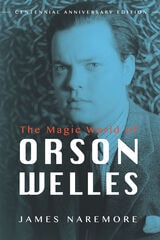
The Magic World of Orson Welles
James Naremore
University of Illinois Press, 2015
The Maltese Falcon
John Huston, directorLuhr, William
Rutgers University Press, 1995
The Maltese Touch of Evil
Film Noir and Potential CriticismShannon Scott Clute and Richard L. Edwards
Dartmouth College Press, 2011
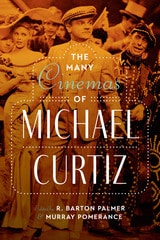
The Many Cinemas of Michael Curtiz
Edited by R. Barton Palmer and Murray Pomerance
University of Texas Press, 2018
Director Michael Curtiz was the mastermind behind some of the most iconic films of classical Hollywood—Casablanca, Yankee Doodle Dandy, The Sea Hawk, White Christmas, and Mildred Pierce, to name only a few. The most prolific and consistently successful Hollywood generalist with an all-embracing interest in different forms of narrative and spectacle, Curtiz made around a hundred films in an astonishing range of genres: action, biopics, melodramas/film noir, musicals, and westerns. But his important contributions to the history of American film have been overlooked because his broadly varied oeuvre does not present the unified vision of filmmaking that canonical criticism demands for the category of “auteur.”
Exploring his films and artistic practice from a variety of angles, including politics, gender, and genre, The Many Cinemas of Michael Curtiz sheds new light on this underappreciated cinematic genius. Leading film studies scholars offer fresh appraisals of many of Curtiz’s most popular films, while also paying attention to neglected releases of substantial historical interest, such as Noah’s Ark , Night and Day, Virginia City, Black Fury, Mystery of the Wax Museum, and Female. Because Curtiz worked for so long and in so many genres, this analysis of his work becomes more than an author study of a notable director. Instead, The Many Cinemas of Michael Curtiz effectively adds a major chapter to the history of Hollywood’s studio era, including its internationalism and the significant contributions of European émigrés.
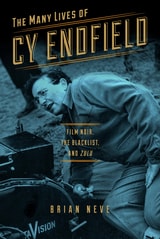
The Many Lives of Cy Endfield
Film Noir, the Blacklist, and <i>Zulu</i>Brian Neve
University of Wisconsin Press, 2015
The Many Lives of Cy Endfield is the first book on this fascinating figure. The fruit of years of archival research and personal interviews by Brian Neve, it documents Endfield’s many identities: among them second-generation immigrant, Jew, Communist, and exile. Neve paints detailed scenes not only of the political and personal dramas of the blacklist era, but also of the attempts by Hollywood directors in the postwar 1940s and early 1950s to address social and political controversies of the day. Out of these efforts came two crime melodramas (what would become known as film noir) on inequalities of class and race: The Underworld Story and The Sound of Fury (also known as Try and Get Me!). Neve reveals the complex production and reception histories of Endfield’s films, which the critic Jonathan Rosenbaum saw as reflective of “an uncommon intelligence so radically critical of the world we live in that it’s dangerous.”
The Many Lives of Cy Endfield is at once a revealing biography of an independent, protean figure, an insight into film industry struggles, and a sensitive and informed study of an underappreciated body of work.
Best Five Books of the Year list, Iranian 24 Monthly, London UK
“Make[s] a case for [Endfield’s] distinctive voice while tracing the way struggle, opposition, and thwarted ambition both defined his life and became the powerful themes of his best work.”—Cineaste
The Marriage of Maria Braun
Rainer Werner Fassbinder, DirectorRheuban, Joyce
Rutgers University Press, 1986
The Martial Arts Cinema of the Chinese Diaspora
Ang Lee, John Woo, and Jackie Chan in HollywoodKin-Yan Szeto
Southern Illinois University Press, 2011
Beginning with a historical retrospective on Chinese martial arts films as a diasporic film genre and the transnational styles and ideologies of the filmmakers themselves, Szeto uses case studies to explore in depth how the forces of colonialism, Chinese nationalism, and Western imperialism shaped the identities and work of Lee, Woo, and Chan. Addressed in the volume is the groundbreaking martial arts swordplay film that achieves global success-Ang Lee's Crouching Tiger, Hidden Dragon- and its revelations about Hollywood representations of Asians, as well as concepts of male and female masculinity in the swordplay film tradition. Also investigated is the invigoration of contemporary gangster, thriller, and war films by John Woo, whose combination of artistic and historical contexts has contributed to his global success.
Szeto then dissects Chan's mimetic representation of masculinity in his films, and the influences of his Chinese theater and martial arts training on his work. Szeto outlines the similarities and differences between the three artists' films, especially their treatments of gender, sexuality, and power. She concludes by analyzing their films as metaphors for their working conditions in the Chinese diaspora and Hollywood, and demonstrating how through their works, Lee, Woo, and Chan communicate not only with the rest of the world but also with each other.
Far from a book simply about three filmmakers, The Martial Arts Cinema of the Chinese Diaspora investigates the transnational nature of films, the geopolitics of culture and race, and the depths of masculinity and power in movies. Szeto's interdisciplinary approach calls for nothing less than a paradigm shift in the study of Chinese diasporic filmmakers and the embodiment of cosmopolitical perspectives in the martial arts genre.
The Migration of Musical Film
From Ethnic Margins to American MainstreamGarcia, Desirée J
Rutgers University Press, 2014
The Migration of Musical Film shows how the folk musical was rooted in the challenges faced by immigrants and migrants who had to adapt to new environments, balancing American individualism with family values and cultural traditions. Uncovering fresh material from film industry archives, Garcia considers how folk musicals were initially marginal productions, designed to appeal to specific minority audiences, and yet introduced themes that were gradually assimilated into the Hollywood mainstream.
No other book offers a comparative historical study of the folk musical, from the first sound films in the 1920s to the genre’s resurgence in the 1970s and 1980s. Using an illustrative rather than comprehensive approach, Garcia focuses on significant moments in the sub-genre and rarely studied films such as Allá en el Rancho Grande along with familiar favorites that drew inspiration from earlier folk musicals—everything from The Wizard of Oz to Zoot Suit. If you think of movie musicals simply as escapist mainstream entertainment, The Migration of Musical Film is sure to leave you singing a different tune.

The Mobile Nation
España Cambia de Piel (1954-1964)Tatjana Pavlovic
Intellect Books, 2011
The last five years have witnessed a surge in publications on Spanish cinema and Spanish cultural studies, but the subject of consumer culture in Spain has been neglected until now. The Mobile Nation: España cambia de piel (1954–1964) presents the first systematic treatment of this crucial period during Spain’s transition to modernity and highlights the forces that converged during this dramatic decade to change the face of Spain. Drawing from the methodologies of literature, film studies, cultural studies, feminist theory, and history, España cambia de piel explores consumer culture in Spanish media, mass tourism, and the national automobile manufacturing industry from 1954 to 1964 and offers valuable insight to postmodern Spain’s transformation and trends.
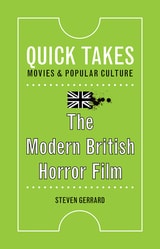
The Modern British Horror Film
Gerrard, Steven
Rutgers University Press, 2017
Tracking the revitalization of the British horror film industry over the past two decades, media expert Steven Gerrard also investigates why audiences have flocked to these movies. To answer that question, he focuses on three major trends: “hoodie horror” movies responding to fears about Britain’s urban youth culture; “great outdoors” films where Britain’s forests, caves, and coasts comprise a terrifying psychogeography; and psychological horror movies in which the monster already lurks within us.
Offering in-depth analysis of numerous films, including The Descent, Outpost, and The Woman in Black, this book takes readers on a lively tour of the genre’s highlights, while provocatively exploring how these films reflect viewers’ gravest fears about the state of the nation. Whether you are a horror buff, an Anglophile, or an Anglophobe, The Modern British Horror Film is sure to be a thrilling read.
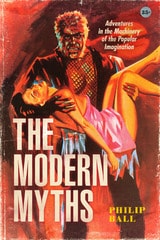
The Modern Myths
Adventures in the Machinery of the Popular ImaginationPhilip Ball
University of Chicago Press, 2021
Myths are usually seen as stories from the depths of time—fun and fantastical, but no longer believed by anyone. Yet, as Philip Ball shows, we are still writing them—and still living them—today. From Robinson Crusoe and Frankenstein to Batman, many stories written in the past few centuries are commonly, perhaps glibly, called “modern myths.” But Ball argues that we should take that idea seriously. Our stories of Dracula, Dr. Jekyll and Mr. Hyde, and Sherlock Holmes are doing the kind of cultural work that the ancient myths once did. Through the medium of narratives that all of us know in their basic outline and which have no clear moral or resolution, these modern myths explore some of our deepest fears, dreams, and anxieties. We keep returning to these tales, reinventing them endlessly for new uses. But what are they really about, and why do we need them? What myths are still taking shape today? And what makes a story become a modern myth?
In The Modern Myths, Ball takes us on a wide-ranging tour of our collective imagination, asking what some of its most popular stories reveal about the nature of being human in the modern age.
The Moses Complex
Freud, Schoenberg, Straub/HuilletUte Holl
Diaphanes, 2016
In The Moses Complex, Ute Holl analyzes these major works in detail and deep historical context, synthesizing the complex models of resistance to explore the relationships among media, migration, and politics. Since Moses descended from Sinai with the tablets inscribed with the Ten Commandments, new media and new laws have often emerged simultaneously. Liberation, in particular, has been negotiated through many different cultural media, with psychoanalysis, music, and cinema all describing exodus and exile as a process of force. Offering a dynamic and comprehensive political and cultural theory of migration and violence, The Moses Complex speaks equally well to psychoanalytic, musical, and cinematic thinking as it does to our tendency toward violence in the treatment of migrants today.
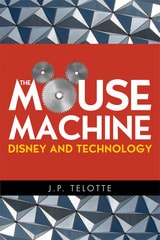
The Mouse Machine
Disney and TechnologyJ. P. Telotte
University of Illinois Press, 2007
The Movie Musical
Desirée J. Garcia
Rutgers University Press, 2021
The Movies as a World Force
American Silent Cinema and the Utopian ImaginationFriedman, Ryan J
Rutgers University Press, 2019
The Movies of Racial Childhoods
Screening Self-Sovereignty in Asian/AmericaCeline Parreñas Shimizu
Duke University Press, 2024
The Musical Comedy Films of Grigorii Aleksandrov
Laughing MattersRimgaila Salys
Intellect Books, 2009
Grigorii Aleksandrov’s musical comedy films, created with composer Isaak Dunaevskii, were the most popular Russian cinema of the 1930s and ’40s. Drawing on studio documents, press materials, and interviews with surviving film crew members, The Musical Comedy Films of Grigorii Aleksandrov presents the untold production history of the films. Salys explores how Aleksandrov’s cinema preserved the paradigms of the American musical, including its comedic tradition, using both to inscribe the foundation myths of the Stalin era in the national consciousness. As the first major study to situate these films in the cultural context of the era, this book will be essential to courses on Russian cinema and Soviet culture.
The Naked Truth
Why Hollywood Doesn't Make X-rated MoviesSandler, Kevin S
Rutgers University Press, 2007
The Ned Kelly Films
A Cultural History of Kelly HistoryStephen Gaunson
Intellect Books, 2013
The Needle and the Lens
Pop Goes to the Movies from Rock 'n' Roll to SynthwaveNate Patrin
University of Minnesota Press, 2023
How the creative use of pop music in film—think Saturday Night Fever or Apocalypse Now—has shaped and shifted music history since the 1960s
Quick: What movie do you think of when you hear “The Sounds of Silence”? Better yet, what song comes to mind when you think of The Graduate? The link between film and song endures as more than a memory, Nate Patrin suggests with this wide-ranging and energetic book. It is, in fact, a sort of cultural symbiosis that has mutually influenced movies and pop music, a phenomenon Patrin tracks through the past fifty years, revealing the power of music in movies to move the needle in popular culture.
Rock ’n’ roll, reggae, R&B, jazz, techno, and hip-hop: each had its moment—or many—as music deployed in movies emerged as a form of interpretive commentary, making way for the legitimization of pop and rock music as art forms worthy of serious consideration. These commentaries run the gamut from comedic irony to cheap-thrills excitement to deeply felt drama, all of which Patrin examines in pairings such as American Graffiti and “Do You Want to Dance?”; Saturday Night Fever and “Disco Inferno”; Apocalypse Now and “The End”; Wayne’s World and “Bohemian Rhapsody”; and Jackie Brown and “Didn't I Blow Your Mind This Time?”.
What gives power to these individual moments, and how have they shaped and shifted music history, recasting source material or even stirring wider interest in previously niche pop genres? As Patrin surveys the scene—musical and cinematic—across the decades, expanding into the deeper origins, wider connections, and echoed histories that come into play, The Needle and the Lens offers a new way of seeing, and hearing, these iconic soundtrack moments.
The Neoliberal Self in Bollywood
Cinema, Popular Culture, and IdentityNamrata Rele Sathe
Intellect Books, 2025
The neoliberal self, far from being a stable marker of urban, liberal, millennial Indian identity, is replete with contradictions and oppositions. This study of the unstable neoliberal identity lays bare the sense of precarity and inherent inequality that neoliberal regimes confer upon their subjects.
This analysis draws upon theories of feminist media studies, popular culture analyses, and film studies to critique mainstream Hindi cinema texts produced in the last two decades. Rele Sathe also examines a variety of peripheral subjects and texts, including the film star, the urban space, web series, YouTube videos, and social media content.

The New American Cinema
Jon Lewis, ed.
Duke University Press, 1998
The essays are divided into three sections: "Movies and Money," "Cinema and Culture," and "Independents and Independence." The first section focuses on the economics of the industry and analyzes the connection between the film business and the finished product. Topics include a look at the economic conditions that made the seventies’ auteur renaissance possible, the distribution of studio and independent films, and the recent spate of mergers and acquisitions that have come to characterize the new Hollywood. The second part of The New American Cinema deals with the political and cultural significance of war and Vietnam films (Platoon, Apocalypse Now, Born on the Fourth of July); "male rampage" films (Rambo, Lethal Weapon, Die Hard); women’s psychothrillers (The Silence of the Lambs); special effects pictures (2001: A Space Odyssey, Star Wars); and historical re-presentations (Oliver Stone’s JFK). The final section casts a keen eye on films produced and exhibited outside the commercial mainstream, examining the financial realities of "indie" films; the influence of independent filmmaker John Cassavetes on Coppola, Altman, and Scorsese; the stereotyping of African Americans in mainstream cinema; and the films of independent women filmmakers.
The New American War Film
Robert Burgoyne
University of Minnesota Press, 2023
A look at how post-9/11 cinema captures the new face of war in the twenty-first century
While the war film has carved out a prominent space within the history of cinema, the twenty-first century has seen a significant shift in the characteristics that define it. Serving as a roadmap to the genre’s contemporary modes of expression, The New American War Film explores how, in the wake of 9/11, both the nature of military conflict and the symbolic frameworks that surround it have been dramatically reshaped.
Featuring in-depth analyses of contemporary films like The Hurt Locker, Zero Dark Thirty, Eye in the Sky, American Sniper, and others, The New American War Film details the genre’s turn away from previously foundational themes of heroic sacrifice and national glory, instead emphasizing the procedural violence of advanced military technologies and the haptic damage inflicted on individual bodies. Unfolding amid an atmosphere of profound anxiety and disillusionment, the new American war film demonstrates a breakdown of the prevailing cultural narratives that had come to characterize conflict in the previous century.
With each chapter highlighting a different facet of war’s cinematic representation, The New American War Film charts society’s shifting attitudes toward violent conflict and what is broadly considered to be its acceptable repercussions. Drawing attention to changes in gender dynamics and the focus on war’s lasting psychological effects within these recent films, Robert Burgoyne analyzes how cinema both reflects and reveals the makeup of the national imaginary.

The New Censors
Movies and the Culture WarsCharles Lyons
Temple University Press, 1997
The New Censors, the first study of the complex ways movies have been shaped in the years since the demise of the Code, covers a wide range of movies, protests, and government actions. From feminists against "Dressed to Kill," to religious campaigns against "The Last Temptation of Christ," to homosexuals ire over "Basic Instinct," Lyons links a study of public outrage against movies to the broader culture wars over "family values," pornography, and various lifestyle issues.
This book provides a contemporary history of controversial movies and a timely discussion of how cultural politics continues to affect the movie industry.
The New Jew in Film
Exploring Jewishness and Judaism in Contemporary CinemaAbrams, Nathan
Rutgers University Press, 2012
The New Jew in Film is grounded in the study of over three hundred films from Hollywood and beyond. Nathan Abrams explores these new and changing depictions of Jews, Jewishness, and Judaism, providing a wider, more representative picture of this transformation. In this compelling, surprising, and provocative book, chapters explore masculinity, femininity, passivity, agency, and religion in addition to a departure into new territory—including bathrooms and food. Abrams’s concern is to reveal how the representation of the Jew is used to convey confidence or anxieties about Jewish identity and history as well as questions of racial, sexual, and gender politics. In doing so, he provides a welcome overview of important Jewish films produced globally over the past twenty years.
The New Latin American Cinema
A Continental ProjectBy Zusana Pick
University of Texas Press, 1993
During the 1967 festival of Latin American Cinema in Viña del Mar, Chile, a group of filmmakers who wanted to use film as an instrument of social awareness and change formed the New Latin American Cinema. Nearly three decades later, the New Cinema has produced an impressive body of films, critical essays, and manifestos that uses social theory to inform filmmaking practices.
This book explores the institutional and aesthetic foundations of the New Latin American Cinema. Zuzana Pick maps out six areas of inquiry—history, authorship, gender, popular cinema, ethnicity, and exile—and explores them through detailed discussions of nearly twenty films and their makers, including Camila (María Luisa Bemberg), The Guns (Ruy Guerra), and Frida (Paul Leduc). These investigations document how the New Latin American Cinema has used film as a tool to change society, to transform national expressions, to support international differences, and to assert regional autonomy.
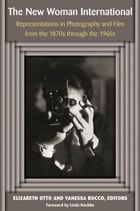
The New Woman International
Representations in Photography and Film from the 1870s through the 1960sElizabeth Otto and Vanessa Rocco, editors
University of Michigan Press, 2012
"In The New Woman International, editors Elizabeth Otto and Vanessa Rocco have gathered a group of intellectually stimulating and provocative essays that present the emergence, both tentative and triumphant, of this new global icon and her increasingly multicultural image. Written largely by historians of art and film, these essays emphasize visual analysis of the photographic and film media that carried the new woman's influential message."
---Norma Broude, American University
"The New Woman International focuses on the New Woman not simply as an image to be analyzed but also as a producer of images and text. This groundbreaking anthology represents a theoretically sophisticated set of essays that thoroughly examine the phenomenon of the New Woman in previously unexplored ways."
---Sarah E. Chinn, Hunter College, CUNY
Images of flappers, garçonnes, Modern Girls, neue Frauen, and trampky---all embodiments of the dashing New Woman---symbolized an expanded public role for women from the suffragist era through the dawn of 1960s feminism. Chronicling nearly a century of global challenges to gender norms, The New Woman International: Representations in Photography and Film from the 1870s through the 1960s is the first book to examine modern femininity's ongoing relationship with the nineteenth and twentieth centuries' most influential new media: photography and film. This volume examines the ways in which novel ideas about women's roles in society and politics were disseminated through these technological media, and it probes the significance of radical changes in female fashion, appearance, and sexual identity. Additionally, these original essays explore the manner in which New Women artists used photography and film to respond creatively to gendered stereotypes and to reconceive of ways of being a woman in a rapidly modernizing world.
The New Woman International brings together different generations of scholars and curators who are experts in gender, photography, literature, mass media, and film to analyze the New Woman from her inception in the later nineteenth century through her full development in the interwar period, and the expansion of her forms in subsequent decades. Arranged both chronologically and thematically, these essays show how controversial female ideals figured in discourses including those on gender norms, race, technology, sexuality, female agency, science, media representation, modernism, commercial culture, internationalism, colonialism, and transnational modernity. In exploring these topics through images that range from montages to newspapers' halftone prints to film stills, this book investigates the terms of gendered representation as a process in which women were as much agents as allegories. Inaugurating a new chapter in the scholarship of representation and New Womanhood and spanning North America, Western and Eastern Europe, Asia, and the colonial contexts of Africa and the Pacific, this volume reveals the ways in which a feminine ideal circled the globe to be translated into numerous visual languages.
With a foreword from the eminent feminist art historian Linda Nochlin, this collection includes contributions by Jan Bardsley, Matthew Biro, Gianna Carotenuto, Melody Davis, Kristine Harris, Karla Huebner, Kristen Lubben, Maria Makela, Elizabeth Otto, Martha H. Patterson, Vanessa Rocco, Clare I. Rogan, Despina Stratigakos, Brett M. Van Hoesen, Kathleen M. Vernon, and Lisa Jaye Young.
DIGITALCULTUREBOOKS: a collaborative imprint of the University of Michigan Press and the University of Michigan Library
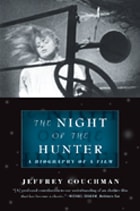
The Night of the Hunter
A Biography of a FilmJeffrey Couchman
Northwestern University Press, 2009
Reaching simultaneously into the realms of film and literature, this detailed exploration of The Night of the Hunter examines the genesis and the eclectic form of each work and the process of transformation by which the novel became a motion picture. It provides the first major study of the long-lost first-draft screenplay by James Agee and confronts a fifty-year controversy about the authorship of the film. This is a story of artistic convergence on many levels--of novelist and director, director and actor, and cinematic form and tastes. The novel, a 1953 debut from Davis Grubb, was a popular and critical success, remaining on the New York Times best-seller list for four months. Hollywood responded to its atmospheric lyricism, and in the hands of first time director Charles Laughton, the book became a film that is equal parts thriller, allegory, and fever dream, filled with slow, inexorable suspense. On the set, Laughton functioned both as an auteur and a collaborator to create his vision of the book, mixing cinematic flourishes both realistic and abstract in sometimes tense situations. The talents that clashed or came together along the road from book to movie make the final film a product of rich stylistic contradiction and rewarding complexity. Through biography, production history, and critical analysis of the novel and film, author Jeffrey Couchman makes the case that this initially overlooked cinematic gem is a prismatic work that continually reveals new aspects of itself.
The Nutshell Technique
Crack the Secret of Successful ScreenwritingBy Jill Chamberlain, Foreword by Patrick Wright
University of Texas Press, 2016
Veteran script consultant Jill Chamberlain discovered in her work that an astounding 99 percent of first-time screenwriters don’t know how to tell a story. These writers may know how to format a script, write snappy dialogue, and set a scene. They may have interesting characters and perhaps some clever plot devices. But, invariably, while they may have the kernel of a good idea for a screenplay, they fail to tell a story. What the 99 percent do instead is present a situation. In order to explain the difference, Chamberlain created the Nutshell Technique, a method whereby writers identify eight dynamic, interconnected elements that are required to successfully tell a story.
Now, for the first time, Chamberlain presents her unique method in book form with The Nutshell Technique: Crack the Secret of Successful Screenwriting. Using easy-to-follow diagrams (“nutshells”), she thoroughly explains how the Nutshell Technique can make or break a film script. Chamberlain takes readers step-by-step through thirty classic and contemporary movies, showing how such dissimilar screenplays as Casablanca, Chinatown, Pulp Fiction, The Usual Suspects, Little Miss Sunshine, Juno, Silver Linings Playbook, and Argo all have the same system working behind the scenes, and she teaches readers exactly how to apply these principles to their own screenwriting. Learn the Nutshell Technique, and you’ll discover how to turn a mere situation into a truly compelling screenplay story.
The Oriental Obscene
Violence and Racial Fantasies in the Vietnam EraSylvia Shin Huey Chong
Duke University Press, 2011
The Palestinian Idea
Film, Media, and the Radical ImaginationGreg Burris
Temple University Press, 2019
Is there a link between the colonization of Palestinian lands and the enclosing of Palestinian minds? The Palestinian Idea argues that it is precisely through film and media that hope can occasionally emerge amidst hopelessness, emancipation amidst oppression, freedom amidst apartheid. Greg Burris employs the work of Edward W. Said, Jacques Rancière, and Cedric J. Robinson in order to locate Palestinian utopia in the heart of the Zionist present.
He analyzes the films of prominent directors Annemarie Jacir (Salt of This Sea, When I Saw You) and Hany Abu-Assad (Paradise Now) to investigate the emergence and formation of Palestinian identity. Looking at Mais Darwazah’s documentary My Love Awaits Me By the Sea, Burris considers the counterhistories that make up the Palestinian experience—stories and memories that have otherwise been obscured or denied. He also examines Palestinian (in)visibility in the global media landscape, and how issues of Black-Palestinian transnational solidarity are illustrated through social media, staged news spectacles, and hip hop music.
The Passion of Ingmar Bergman
Frank Gado
Duke University Press, 1986
Gado concludes that whatever the outward appearance of Bergman's works, they contain an elementary psychic fantasy that links them all, revealing an artist who hoped to be a dramatist, "the new Strindberg," and who saw the camera as an extension of his pen.
The Phantom Holocaust
Soviet Cinema and Jewish CatastropheGershenson, Olga
Rutgers University Press, 2013
Focusing on work by both celebrated and unknown Soviet directors and screenwriters, Olga Gershenson has written the first book about all Soviet narrative films dealing with the Holocaust from 1938 to 1991. In addition to studying the completed films, Gershenson analyzes the projects that were banned at various stages of production.
The book draws on archival research and in-depth interviews to tell the sometimes tragic and sometimes triumphant stories of filmmakers who found authentic ways to represent the Holocaust in the face of official silencing. By uncovering little known works, Gershenson makes a significant contribution to the international Holocaust filmography.
The Philosophical Hitchcock
“Vertigo” and the Anxieties of UnknowingnessRobert B. Pippin
University of Chicago Press, 2017
A bold, brilliant exploration of one of the most admired works of cinema, The Philosophical Hitchcock will lead philosophers and cinephiles alike to a new appreciation of Vertigo and its meanings.
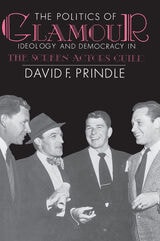
The Politics of Glamour
Ideology and Democracy in the Screen Actors GuildDavid F. Prindle
University of Wisconsin Press, 1988
Rarely are the off-screen lives of actors examined for evidence of deep thinking or good citizenship. Still more rarely do the internal workings of labor unions attract public scrutiny. Nevertheless, as David Prindle shows in his examination of democracy in the Screen Actors Guild, this actors’ union has for over 50 years been an arena for idealistic, yet intense and hardboiled political maneuvering.
In The Politics of Glamour, readers become aware of the seriousness and political commitment displayed by people whom the general public has generally admired more for their artistic skills. After reading this account of politics among America’s screen royalty, no one could wonder about where Ronald Reagan, a former SAG president, received his political training.
Besides analyzing the politics of SAG, however, the author follows a good story wherever it leads. The reader can expect to learn something about the political economy of Hollywood and the American labor movement, the value of celebrity within the acting community, the impact of technological change, and even a bit of gossip.
The Politics of Reproduction
Adoption, Abortion, and Surrogacy in the Age of NeoliberalismEdited by Modhumita Roy and Mary Thompson
The Ohio State University Press, 2019
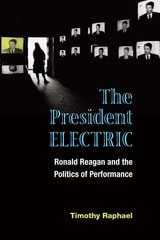
The President Electric
Ronald Reagan and the Politics of PerformanceTimothy Raphael
University of Michigan Press, 2011
"In this illuminating, multi-pronged cultural and performance history of such phenomena as Chautauqua and radio, movies, and electrical technology, Timothy Raphael puts together a compelling and sometimes revelatory narrative of how commandingly Reagan mastered the matrix of performance, technology, media, celebrity, and the 'republic of consumption' he came of age in."
---Dana Nelson, Vanderbilt University
"Garry Wills and others have written well on the phenomenon of Ronald Reagan, the actor-president, but this is the first book by a real authority---trained in performance and fully reflective about it from the inside . . . unquestionably an important contribution to the disciplinary fields of American studies and performance studies, and an important contribution to public affairs."
---Joseph Roach, Yale University
When Ronald Reagan first entered politics in 1965, his public profile as a performer in radio, film, television, and advertising and his experience in public relations proved invaluable political assets. By the time he left office in 1989, the media in which he trained had become the primary source for generating and wielding political power. The President Electric: Ronald Reagan and the Politics of Performance reveals how the systematic employment of the techniques and technologies of mass-media performance contributed to Reagan’s rise to power and defined his style of governance.
The President Electric stands out among books on Reagan as the first to bring the rich insights of the field of performance studies to an understanding of the Reagan phenomenon, connecting Reagan's training in electronic media to the nineteenth-century notion of the "fiat of electricity"---the emerging sociopolitical power of three entities (mechanical science, corporate capitalism, and mass culture) that electric technology made possible. The book describes how this new regime of cultural and political representation shaped the development of the electronic mass media that transformed American culture and politics and educated Ronald Reagan for his future role as president.
Timothy Raphael is Assistant Professor of Visual and Performing Arts and Director of the Center for Immigration at Rutgers University, Newark.
Photo: © David H. Wells/Corbis
The Presidents We Imagine
Two Centuries of White House Fictions on the Page, on the Stage, Onscreen, and OnlineJeff Smith
University of Wisconsin Press, 2009
In The Presidents We Imagine, Jeff Smith examines the presidency’s ever-changing place in the American imagination. Ranging across different media and analyzing works of many kinds, some familiar and some never before studied, he explores the evolution of presidential fictions, their central themes, the impact on them of new and emerging media, and their largely unexamined role in the nation’s real politics.
Smith traces fictions of the presidency from the plays and polemics of the eighteenth century—when the new office was born in what Alexander Hamilton called “the regions of fiction”—to the digital products of the twenty-first century, with their seemingly limitless user-defined ways of imagining the world’s most important political figure. Students of American culture and politics, as well as readers interested in political fiction and film, will find here a colorful, indispensable guide to the many surprising ways Americans have been “representing” presidents even as those presidents have represented them.
“Especially timely in an era when media image-mongering increasingly shapes presidential politics.”—Paul S. Boyer, series editor
“Smith's understanding of the sociopolitical realities of US history is impressive; likewise his interpretations of works of literature and popular culture. . . .In addition to presenting thoughtful analysis, the book is also fun. Readers will enjoy encounters with, for example, The Beggar's Opera, Duck Soup, Edward Bellamy's Looking Backward, Philip Roth's Plot against America, the comedic campaigns of W. C. Fields for President and Pogo for President, and presidential fictions that continue up to the last President Bush. . . . His writing is fluid and conversational, but every page reveals deep understanding and focus. Summing Up: Highly recommended. All readers.”—CHOICE
The Prettiest Woman
Nostalgia for Late Industrial CapitalismGrant Farred
University of Minnesota Press, 2025
Uncovering Hollywood’s perpetual longing for a lost industrial America
“We don’t make things in America anymore”: like clockwork, this refrain resurfaces in political discourse, a reflection of yearning for a bygone era of industrial productivity. In his latest work, Grant Farred uses the 1990 film Pretty Woman to expose and critique this lingering nostalgia for late-industrial capitalism.
Situating Pretty Woman alongside Reagan-era films including Wall Street, Farred examines the congealment of such a pervasive romanticized view of the United States as a fading industrial powerhouse. Drawing on an eclectic range of thinkers—from Raymond Williams and Slavoj Žižek to Mick Jagger—The Prettiest Woman offers a unique analysis of the ways Hollywood perpetuates the myth of a lost “productive America,” highlighting the seductive power of this fantasy despite its disconnect from economic and political realities.
The Problem Body
Projecting Disability on FilmEdited by Sally Chivers and Nicole Markotic
The Ohio State University Press, 2010
To call into question why certain bodies invite the label “problem” more frequently than other bodies, the contributors draw on scholarship from feminist, race, queer, cultural studies, disability, and film studies arenas. In Chivers and Markotic’s introduction, they draw on disability theory and a range of cinematic examples to explain the term “problem body” in relation to its projection. In explorations of film noir, illness narratives, classical Hollywood film, and French film, the essays reveal the “problem body” as a multiplication of lived circumstances constructed both physically and socially.
The Process Genre
Cinema and the Aesthetic of LaborSalomé Aguilera Skvirsky
Duke University Press, 2020
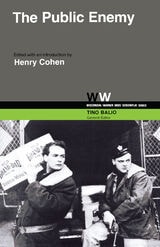
The Public Enemy
Edited by Henry Cohen; Tino T. Balio, Series Editor
University of Wisconsin Press, 1981
The Public Enemy, a 1931 Warner Brothers gangster classic, is easily remembered as the movie in which James Cagney used Mae Clarke's nose as a grapefruit grinder. As Cagney recalls, it was just about the first time that "a woman had been treated like a broad on the screen, instead of like a delicate flower."
The ambivalence toward women is just one of the many stylistic contradictions that make The Public Enemy worth studying, not only for its intrinsic merits but also as a creative expression bending under the constraints of censorship.
The Queer Art of Failure
Jack Halberstam
Duke University Press, 2011
The Reader as Peeping Tom
Nonreciprocal Gazing in Narrative Fiction and FilmJeremy Hawthorn
The Ohio State University Press, 2014
Hawthorn suggests that while some literary and film narratives use the reader’s or viewer’s sense of all-seeing invulnerability to underwrite the various systems of control and surveillance that are depicted in the work, others associate such forms of nonreciprocal observation with impotence and impoverishment and thus critique political systems that legitimize surveillance. Hawthorn concludes that critics have underestimated the extent to which reader’s or viewer’s sense of disempowerment adds meaning to the experience of fiction and film and may encourage acceptance or criticism of spying and surveillance in the real world. The book questions benign views of the reader’s or spectator’s role as passive observer, and offers original and exciting readings of some key narrative texts.
The Real Nick and Nora
David L. Goodrich
Southern Illinois University Press, 2004
Frances Goodrich and Albert Hackett wrote the screenplays for some of America’s most treasured movies, including It’s a Wonderful Life, The Thin Man, Easter Parade, Father of the Bride, Naughty Marietta, and Seven Brides for Seven Brothers. Legendary films, indeed, but writing both the play and screenplay for The Diary of Anne Frank was their crowning achievement.
Controlled chaos best describes their writing method. They discussed a scene at length, sometimes acting it out. Afterwards, they each wrote a draft, which they exchanged. “Then,” Frances said, “began ‘free criticism’—which sometimes erupted into screaming matches.” Noisy and contentious, the method worked splendidly.
Enormously successful and remarkably prolific, Goodrich and Hackett began their thirty-four-year collaboration in 1928. Married after the first of their five plays became a hit, they were in many ways an unlikely pair. Frances, the privileged daughter of well-to-do parents, graduated from Vassar, then played minor parts on Broadway. Albert’s mother put him on stage at age five, when his father died, to help pay the bills, and he became a highly paid comedian.
The Hacketts were known for their wit and high spirits and the pleasure of their Bel Air dinner parties. They waged memorable battles with their powerful bosses and were key activists in the stressful creation of the Screen Writers Guild. Once they had created Nick and Nora Charles, The Thin Man’s bright, charming, sophisticated lead couple, played memorably by William Powell and Myrna Loy, many people saw a strong resemblance, and the Hacketts acknowledged that they “put themselves into” Nick and Nora.
The Real Nick and Nora is a dazzling assemblage of anecdotes featuring some of the most talented writers and the brightest lights of American stage and screen. The work was arduous, the parties luminous. On any given night the guests singing and acting out scripts at a party might include F. Scott Fitzgerald and Sheilah Graham, S. J. Perelman, Oscar Levant, Ogden Nash, Judy Garland, Abe Burrows, Hoagy Carmichael, Johnny Mercer, Ira Gershwin, George Burns and Gracie Allen, Pat O’Brien, Dick Powell and June Allyson, Dashiell Hammett, Lillian Hellman, James Cagney, and Dorothy Parker.
The Reality of Illusion
An Ecological Approach to Cognitive Film TheoryJoseph D. Anderson
Southern Illinois University Press, 1998
Anderson investigates how viewers, with their mental capacities designed for survival, respond to particular aspects of filmic structure—continuity, diegesis, character development, and narrative—and examines the ways in which rules of visual and aural processing are recognized and exploited by filmmakers. He uses Orson Welles’s Citizen Kane to disassemble and redefine the contemporary concept of character identification; he addresses continuity in a shot-by-shot analysis of images from Casablanca; and he uses a wide range of research studies, such as Harry F. Harlow’s work with infant rhesus monkeys, to describe how motion pictures become a substitute or surrogate reality for an audience. By examining the human capacity for play and the inherent potential for illusion, Anderson considers the reasons viewers find movies so enthralling, so emotionally powerful, and so remarkably real.
The Red and the Black
American Film Noir in the 1950sRobert Miklitsch
University of Illinois Press, 2017
Mixing scholarship with a fan's devotion to the crooked roads of critique, Miklitsch autopsies marquee films like D.O.A., Niagara, and Kiss Me Deadly plus a number of lesser-known classics. Throughout, he addresses the social and technological factors that dealt deuce after deuce to the genre--its celebrated style threatened by new media and technologies such as TV and 3-D, color and widescreen, its born losers replaced like zombies by All-American heroes, the nation rocked by the red menace and nightmares of nuclear annihilation. But against all odds, the author argues, inventive filmmakers continued to make formally daring and socially compelling pictures that remain surprisingly, startlingly alive.
Cutting-edge and entertaining, The Red and the Black reconsiders a lost period in the history of American movies.
The Reflective Age
Nostalgia at the End of HistoryZachary Griffith
Rutgers University Press, 2026
The Remasculinization of Korean Cinema
Kyung Hyun Kim
Duke University Press, 2004
Kim offers in-depth examinations of more than a dozen of the most representative films produced in Korea since 1980. In the process, he draws on the theories of Jacques Lacan, Slavoj Zizek, Gilles Deleuze, Rey Chow, and Kaja Silverman to follow the historical trajectory of screen representations of Korean men from self-loathing beings who desire to be controlled to subjects who are not only self-sufficient but also capable of destroying others. He discusses a range of movies from art-house films including To the Starry Island (1993) and The Day a Pig Fell into the Well (1996) to higher-grossing, popular films like Whale Hunting (1984) and Shiri (1999). He considers the work of several Korean auteurs—Park Kwang-su, Jang Sun-woo, and Hong Sang-su. Kim argues that Korean cinema must begin to imagine gender relations that defy the contradictions of sexual repression in order to move beyond such binary struggles as those between the traditional and the modern, or the traumatic and the post-traumatic.
The Resurrection of the Body
Pier Paolo Pasolini from Saint Paul to SadeArmando Maggi
University of Chicago Press, 2009