748 books match the query 'Influence' and 172 start with t
cover of Thomas Aquinas and His Predecessors: The Philosophers and the Church Fathers

Thomas Aquinas and His Predecessors

The Philosophers and the Church Fathers

Leo J. Elders

Catholic University of America Press, 2018
Thomas Aquinas and His Predecessors takes us on a voyage through the history of philosophical thought as present in the works of Thomas Aquinas. It is a synthetic presentation of the works and thought of the great predecessors of Aquinas, as he kne
[more]
cover of Thomas Holcroft’s Revolutionary Drama: Reception and Afterlives

Thomas Holcroft’s Revolutionary Drama

Reception and Afterlives

Amy Garnai

Bucknell University Press, 2023
A key figure in British literary circles following the French Revolution, novelist and playwright Thomas Holcroft promoted ideas of reform and equality informed by the philosophy of his close friend William Godwin. Arrested for treason in 1794 and released without trial, Holcroft was notorious in his own time, but today appears mainly as a supporting character in studies of 1790s literary activism. Thomas Holcroft’s Revolutionary Drama authoritatively reintroduces and reestablishes this central figure of the revolutionary decade by examining his life, plays, memoirs, and personal correspondence. In engaging with theatrical censorship, apostacy, and the response of audiences and critics to radical drama, this thoughtful study also demonstrates how theater functions in times of political repression. Despite his struggles, Holcroft also had major successes: this book examines his surprisingly robust afterlife, as his plays, especially The Road to Ruin, were repeatedly revived worldwide in the nineteenth century.
[more]
cover of Thomas Shields and the Renewal of Catholic Education

Thomas Shields and the Renewal of Catholic Education

Leonardo Franchi

Catholic University of America Press, 2023
This book explores the contribution of the Rev Dr Thomas Shields (1862-1921) to Catholic education in the United States of America in the late 19th and early 20th century. Fr Shields was a pioneer in combining a career as an academic in Catholic University of America with the publication of many resources for schools. Given his pioneering role in aligning Catholic educational thought with emerging insights in the sciences, and his multi-layered commitment to Catholic education as scholar, author of textbooks and founder of initiatives in the field of Teacher Education, it seems fitting that his considerable body of work should be the subject of fresh scholarly investigation. The book is in five parts. Part 1, “Catholicism as an Educational Movement”, sets out the contours of the intellectual climate in which Shields operated and presents Catholicism as a dynamic educational movement. Part 2, “Responding to Progressive Thought”, explores the relationship between Progressivism and Catholic Education, showing how the Catholic Church responded to the challenges presented by Progressive thought. Part 3, “Shields and the Reform of Pedagogy”, examines both Shields’ general pedagogical principles and how they relate to Catholic education. Part 4, “Forming Teachers in Heart and Mind”, considers Shields’ ideas on Catholic Teacher Formation, exploring issues such as culture, vocation, method and curriculum. Part 5, “The Catholic Education Series”, explores selected examples from Shields’ Catholic Education Series to identify how his material for schools reflected, to a greater or lesser extent, his wider educational ideas. As the present age is also witness to considerable and deep-rooted challenges to Catholic education and, indeed to the Catholic understanding of the human person, Shields’ work will inspire contemporary reform-minded Catholic educators to reassess and develop the mission of Catholic education in light of the traditions of the Church.
[more]
cover of Thoreaus Sense of Place: Essays in American Environmental Writing

Thoreaus Sense of Place

Essays in American Environmental Writing

Richard J. Schneider

University of Iowa Press, 2000

 Recent Thoreau studies have shifted to an emphasis on the green" Thoreau, on Thoreau the environmentalist, rooted firmly in particular places and interacting with particular objects. In the wake of Buell's Environmental Imagination, the nineteen essayists in this challenging volume address the central questions in Thoreau studies today: how “green,” how immersed in a sense of place, was Thoreau really, and how has this sense of place affected the tradition of nature writing in America?

The contributors to this stimulating collection address the ways in which Thoreau and his successors attempt to cope with the basic epistemological split between perceiver and place inherent in writing about nature; related discussions involve the kinds of discourse most effective for writing about place. They focus on the impact on Thoreau and his successors of culturally constructed assumptions deriving from science, politics, race, gender, history, and literary conventions. Finally, they explore the implications surrounding a writer's appropriation or even exploitation of places and objects.
[more]
cover of Thornton Wilder and the Puritan Narrative Tradition

Thornton Wilder and the Puritan Narrative Tradition

Lincoln Konkle

University of Missouri Press, 2005

Thornton Wilder and the Puritan Narrative Tradition is the first reading of Wilder’s life, fiction, drama, and criticism as a product of American culture. Early American studies by Sacvan Bercovitch, Mason Lowance Jr., Emory Elliott, and others have identified aspects of the American literary tradition stemming from New England Puritan writers of the seventeenth and eighteenth centuries. Lincoln Konkle extends the argument for continuity into both the twentieth century and the profane space of the theater.
            Konkle shows that Thornton Wilder, as a literary descendant of Edward Taylor, inherited the best of the Puritans’ worldview and drew upon those attributes of the Puritan tradition within American literature that would strike a fundamental chord with his American audience. By providing close readings of Wilder’s texts against seventeenth- and eighteenth-century Puritan culture and literature, Konkle demonstrates that Wilder’s aesthetic was not just generically allegorical but also typically American and his religious sensibility was not just generally Christian, but specifically Calvinist. He alsoemphasizes aspects of Puritan theology, ideology, and aesthetics that have been suppressed or repressed into our cultural unconscious but are manifested in Wilder’s texts in response to various historical or personal stimuli.
             Konkle makes an original contribution to Wilder scholarship by providing the first in-depth readings of the full-length play The Trumpet Shall Sound and of the film Shadow of a Doubt (as a major work of Wilder). Also included are readings of little-known and seldom-discussed dramatic pieces, including Proserpina and the Devil, And the Sea Shall Give Up Its Dead, and Our Century. With its emphasis on the continuities of thought and form found in American literature from the seventeenth century to the twentieth, this analysis of Wilder’s drama and fiction will reclaim him as an intrinsically American writer, deserving to be read within the context of American literary and cultural traditions.  
[more]
cover of Three Sons: Franz Kafka and the Fiction of J. M. Coetzee, Philip Roth, and W. G. Sebald

Three Sons

Franz Kafka and the Fiction of J. M. Coetzee, Philip Roth, and W. G. Sebald

Daniel L. Medin

Northwestern University Press, 2010
Franz Kafka was a self-conscious writer whose texts were highly if mysteriously autobiographical. Three giants of contemporary fiction—J. M. Coetzee, Philip Roth, and W. G. Sebald—have all acknowledged their debt to the work of Kafka, both in interviews and in their own academic essays and articles for a general readership about him. In this striking feat of literary scholarship, Daniel Medin finds that the use of Kafka by Coetzee, Roth, and Sebald is similarly self-reflexive and autobiographical. That writers from such divergent national and ethnic traditions can have such unique critical readings of Kafka, and that Kafka could exert such a powerful influence over their oeuvres, Medin contends, attests to the central place of Kafka in the contemporary literary imagination.
[more]
cover of Three Years Our Mayor: George Moscone and the Making of Modern San Francisco

Three Years Our Mayor

George Moscone and the Making of Modern San Francisco

Lincoln A. Mitchell

University of Nevada Press, 2025

Those who recognize Mayor George Moscone’s name may think of him as the career politician who was assassinated along with Harvey Milk, but there was much more to this influential and fascinating man’s story. He was a trailblazing progressive and powerful state legislator who was instrumental in passing legislation on issues ranging from LGBT rights to funding for school lunches. Moscone’s 1975 campaign for mayor was historically significant because it was the first time a major race was won by a candidate who campaigned aggressively for expanding civil rights for both African Americans and LGBT people. He won his campaign for mayor chiefly because of huge support from those two constituencies. 

Moscone was also a very colorful character who, in addition to being a successful politician, was a charming and charismatic bon vivant who was deeply embedded in the fabric and culture of San Francisco. He grew up the only son of a single mother in Cow Hollow when it was a working class, largely Italian American neighborhood, and he became the kind of politician who knew bartenders, playground attendants, small business owners, and neighborhood activists in every corner of the city. Moscone’s life and the history of San Francisco during the middle half of the twentieth century are deeply intertwined.

Through illustrating the life of Moscone, author Lincoln A. Mitchell explores how today’s San Francisco came into being. Moscone—through his work in the State Senate, victory in the very divisive 1975 mayor’s race, and brief tenure as mayor—was a key figure in the city’s evolution. The politics surrounding Moscone’s election as mayor, governance of the city, and tragic death are still relevant issues. Moscone was a groundbreaking politician whose life was cut short, but his influence on San Francisco can still be felt today.
 
[more]
cover of Tilting Cervantes: Baroque Reflections on Postmodern Culture

Tilting Cervantes

Baroque Reflections on Postmodern Culture

Bruce R. Burningham

Vanderbilt University Press, 2008
Tilting Cervantes examines several contemporary texts -- Fight Club, Brazil, The Matrix, and The Moor's Last Sigh, among others -- by reflecting them against a cluster of early modern Spanish and Latin American literary works, principally Don Quixote. Through a deliberate juxtaposition of these cross-cultural and cross-epochal texts, this book explores the notion that each of these varied cultural products can be read -in a very Borgesian manner- as precursors to each other, especially for contemporary readers who may not come to them in their "proper" chronological order. At the same time, and within this larger juxtaposition, this book examines the interrelated baroque and postmodern preoccupation with mirrors and self-reflexivity, and thus argues that many postmodern writers and performers do not so much break new ground as simply rediscover terrain already explored by such baroque literary figures as Cervantes, Lope de Vega, Francisco de Quevedo, and Sor Juana Ines de la Cruz.
[more]
cover of Time in the Ditch: American Philosophy and the McCarthy Era

Time in the Ditch

American Philosophy and the McCarthy Era

John McCumber

Northwestern University Press, 2023
In Time in the Ditch, John McCumber explores the effects of McCarthyism on American philosophy in the 1940s and 1950 and the possibility that the political pressures of the McCarthy era skewed the development of the discipline. Why was silence maintained for so long? And what happens, McCumber asks, when political events and pressures go beyond interfering with individual careers to influence the nature of a discipline itself? 
[more]
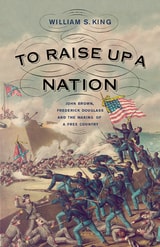
cover of To Raise Up a Nation: John Brown, Frederick Douglass, and the Making of a Free Country

To Raise Up a Nation

John Brown, Frederick Douglass, and the Making of a Free Country

William S. King

Westholme Publishing, 2013

A Choice Academic Book of the Year: The Sweeping Story of the Men and Women Who Fought to End Slavery in America
Drawing on decades of research, and demonstrating remarkable command of a great range of primary sources, William S. King has written an important history of African Americans’ own contributions and points of crossracial cooperation to end slavery in America. Beginning with the civil war along the border of Kansas and Missouri, the author traces the life of John Brown and the personal support for his ideas from elite New England businessmen, intellectuals such as Emerson and Thoreau, and African Americans, including his confidant, Frederick Douglass, and Harriet Tubman. Throughout, King links events that contributed to the growing antipathy in the North toward slavery and the South’s concerns for its future, including Nat Turner’s insurrection, the Amistad affair, the Fugitive Slave law, the Kansas-Nebraska Act, and the Dred Scott decision. The author also effectively describes the debate within the African American community as to whether the U.S. Constitution was colorblind or if emigration was the right course for the future of blacks in America.
Following Brown’s execution after the failed raid on Harper’s Ferry in 1859, King shows how Brown’s vision that only a clash of arms would eradicate slavery was set into motion after the election of Abraham Lincoln. Once the Civil War erupted on the heels of Brown’s raid, the author relates how black leaders, white legislators, and military officers vigorously discussed the use of black manpower for the Union effort as well as plans for the liberation of the “veritable Africa” within the southern United States. Following the Emancipation Proclamation of January 1863, recruitment of black soldiers increased and by war’s end they made up nearly ten percent of the Union army, and contributed to many important victories.
To Raise Up a Nation: John Brown, Frederick Douglass, and the Making of a Free Country is a sweeping history that explains how the destruction of American slavery was not directed primarily from the counsels of local and national government and military men, but rather through the grassroots efforts of extraordinary men and women. As King notes, the Lincoln administration ultimately armed black Americans, as John Brown had attempted to do, and their role was a vital part in the defeat of slavery.
[more]
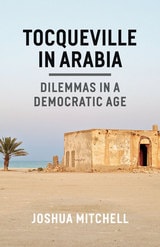
cover of Tocqueville in Arabia: Dilemmas in a Democratic Age

Tocqueville in Arabia

Dilemmas in a Democratic Age

Joshua Mitchell

University of Chicago Press, 2013

We live in the democratic age. So wrote Alexis de Tocqueville, in 1835, in his magisterial work, Democracy in America. This did not mean, as so many have believed after the fall of the Berlin Wall in 1989, that the political apparatus of democracy would sweep the world. Rather, Tocqueville meant that as each nation left behind the vestiges of its aristocracy, life for its citizens or subjects would be increasingly isolated and lonely.

In America, more than a half century of scholarship has explored and chronicled our growing isolation and loneliness.  What of the Middle East? Does Tocqueville prediction—confirmed already by the American experience—hold true there as well? Americans look to the Middle East and see a rich network of familial and tribal linkages that seem to suggest that Tocqueville’s analysis does not apply. A closer look reveals that this is not true. In the Middle East today, citizens and subjects live amidst a profound tension: familial and tribal linkages hold them fast, and at the same time rapid modernization has left them as isolated and lonely as so many Americans are today. The looming question, anticipated so long ago by Tocqueville, is how they will respond to this isolation and loneliness.

Joshua Mitchell has spent years teaching Tocqueville’s classic account, Democracy in America, in America and the Arab Gulf and, with Tocqueville in Arabia, he offers a profound account of how the crisis of isolation and loneliness is playing out in similar and in different ways, in America and in the Middle East. While American students tend to value individualism and commercial self-interest, Middle Eastern students have grave doubts about individualism and a deep suspicion about capitalism, which they believe risks the destruction of long-held loyalties and obligations. Where American students, in their more reflective moments, long for more durable links than they currently have, the bonds that constrain the freedoms Middle Eastern students imagine the modern world offers at once frighten them and enkindle their imagination. When pondering suffering, American students tend to believe its causes can be engineered away, through better education and the advances of science. Middle Eastern students tend still to offer religious accounts, but are also enticed by the answers Americans give―and wonder if the two accounts can coexist at all. Moving back and forth between self-understandings in America and in the Middle East, Mitchell offers a framework for understanding the common challenges in both regions, and highlights the great temptation both will have to overcome—rejecting the seeming incoherence of the democratic age, and opting for one or another scheme to re-enchant the world. Whether these schemes take the form of various purported Islamic movements in the Middle East, or the form of enchanted nationalism in American and in Europe, the remedy sought will not cure the ailment of the democratic age. About this, Mitchell comes to the defense Tocqueville long ago offered: the dilemmas of the democratic age can be courageously endured, but they cannot resolved.

We live in a time rife with mutual misunderstandings between America and the Middle East.  Tocqueville in Arabia offers a guide to the present, troubled times, leavened by the author’s hopes about the future.
 
[more]
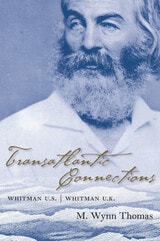
cover of Transatlantic Connections: Whitman U.S., Whitman U.K.

Transatlantic Connections

Whitman U.S., Whitman U.K.

Thomas, M. Wynn

University of Iowa Press, 2005

In this series of textual readings and cultural comparisons, M. Wynn Thomas explores Whitman’s amazing ability to appeal across distances and centuries.

The book’s contrasting sections reflect the two locations studied: the first shows Whitman in his time and place, while the second repositions him within the cultures of England and Wales from the late 19th to the late 20th century. In the opening chapter he is placed against the vivid, outrageous background of the New York of his time; the second finds evidence in his poetry of a critique of the new urban politics of the emerging city boss; the third radically redefines Whitman's relationship to his famous contemporary Longfellow. Other chapters deal with the Civil War poet, exploring the ways in which his poetic responses were in part shaped by his relationship to his soldier brother George, and his use of the meteorological discoveries of his day to fashion metaphors for imaging the different phases of the conflict.

The second section ponders the paradox that this Whitman, who was so much the product of his specific time and limited “local” culture, should come to be accepted as an international visionary. The United Kingdom is taken as offering striking instances of this phenomenon, and his transatlantic admirers are shown to have been engaged in an unconscious process of “translating” Whitman into the terms of their own culturally specific social, political, and sexual preoccupations. Some of the connections explored are those between Whitman and Edward Carpenter, the so-called English Whitman; between Whitman and perhaps his greatest English critic, D. H. Lawrence; and between Whitman and the Welsh poets Ernest Rhys, Amanwy (David Rees Griffiths), Niclas y Glais (T. E. Nicholas), Waldo Williams, Glyn Jones, Dylan Thomas, and R. S. Thomas.

This bold and original study, offering new points of entry into understanding Whitman as the product of his time and place as well as understanding the reception of Whitman in the U.K. as a process of cultural translation, should fascinate scholars of Whitman and students of comparative literature.
[more]
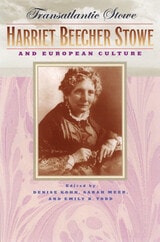
cover of Transatlantic Stowe: Harriet Beecher Stowe and European Culture

Transatlantic Stowe

Harriet Beecher Stowe and European Culture

Denise Kohn

University of Iowa Press, 2006
Uncle Tom’s Cabin broke publishing records and made Harriet Beecher Stowe in her time one of the world’s most famous authors. The book was a bestseller in Britain and was translated into some forty languages. Yet today Stowe tends to be seen wholly in the context of American literary history. Transatlantic Stowe: Harriet Beecher Stowe and European Culture is the first book to consider multiple aspects of Stowe’s career in an international context. The groundbreaking essays of Transatlantic Stowe examine the author’s literary and literal forays in Europe and the ways in which intellectual and cultural exchanges between the Old and New Worlds shaped her work. It was a crucial moment in the transatlantic discourse, a turning of the tide, and Stowe was among the first American novelists to be lionized in Europe---and pirated by publishers---in the same way that European writers had been treated in America.Blending historical and cultural criticism and drawing on fresh primary material from London and Paris, Transatlantic Stowe includes essays exploring Stowe’s relationship with European writers and the influence of her European travels on her work, especially the controversial travel narrative Sunny Memories of Foreign Lands and her “Italian novel” Agnes of Sorrento.Interdisciplinary and itself transatlantic, the collection discusses visual art and material culture as well as literature and politics and includes contributions from Britain, Ireland, and the United States. Together these essays offer new interpretations of Stowe’s most popular novel as well as new readings of her many other works, illuminate the myriad connections between Stowe and European writers, and thus rewrite literary history by returning Stowe to the larger political, historical, and literary contexts of nineteenth-century Europe.
[more]
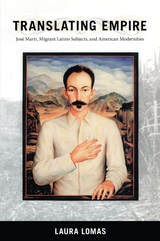
cover of Translating Empire: Jose Marti, Migrant Latino Subjects, and American Modernities

Translating Empire

Jose Marti, Migrant Latino Subjects, and American Modernities

Laura Lomas

Duke University Press, 2008

In Translating Empire, Laura Lomas uncovers how late nineteenth-century Latino migrant writers developed a prescient critique of U.S. imperialism, one that prefigures many of the concerns about empire, race, and postcolonial subjectivity animating American studies today. During the 1880s and early 1890s, the Cuban journalist, poet, and revolutionary José Martí and other Latino migrants living in New York City translated North American literary and cultural texts into Spanish. Lomas reads the canonical literature and popular culture of the United States in the Gilded Age through the eyes of Martí and his fellow editors, activists, orators, and poets. In doing so, she reveals how, in the process of translating Anglo-American culture into a Latino-American idiom, the Latino migrant writers invented a modernist aesthetics to criticize U.S. expansionism and expose Anglo stereotypes of Latin Americans.

Lomas challenges longstanding conceptions about Martí through readings of neglected texts and reinterpretations of his major essays. Against the customary view that emphasizes his strong identification with Ralph Waldo Emerson and Walt Whitman, the author demonstrates that over several years, Martí actually distanced himself from Emerson’s ideas and conveyed alarm at Whitman’s expansionist politics. She questions the association of Martí with pan-Americanism, pointing out that in the 1880s, the Cuban journalist warned against foreign geopolitical influence imposed through ostensibly friendly meetings and the promotion of hemispheric peace and “free” trade. Lomas finds Martí undermining racialized and sexualized representations of America in his interpretations of Buffalo Bill and other rituals of westward expansion, in his self-published translation of Helen Hunt Jackson’s popular romance novel Ramona, and in his comments on writing that stereotyped Latino/a Americans as inherently unfit for self-government. With Translating Empire, Lomas recasts the contemporary practice of American studies in light of Martí’s late-nineteenth-century radical decolonizing project.
[more]
cover of Translating Human Rights in Education: The Influence of Article 24 UN CRPD in Nigeria and Germany

Translating Human Rights in Education

The Influence of Article 24 UN CRPD in Nigeria and Germany

Julia Biermann

University of Michigan Press, 2022

The 2006 United Nations Convention on the Rights of Persons with Disabilities (UN CRPD) is the first human rights treaty to explicitly acknowledge the right to education for persons with disabilities. In order to realize this right, the convention’s Article 24 mandates state parties to ensure inclusive education systems that overcome outright exclusion as well as segregation in special education settings. Despite this major global policy change to tackle the discriminations persons with disabilities face in education, this has yet to take effect in most school systems worldwide.

Focusing on the factors undermining the realization of disability rights in education, Julia Biermann probes current meanings of inclusive education in two contrasting yet equally challenged state parties to the UN CRPD: Nigeria, whose school system overtly excludes disabled children, and Germany, where this group primarily learns in special schools. In both countries, policy actors aim to realize the right to inclusive education by segregating students with disabilities into special education settings. In Nigeria, this demand arises from the glaring lack of such a system. In Germany, conversely, from its extraordinary long-term institutionalization. This act of diverting from the principles embodied in Article 24 is based on the steadfast and shared belief that school systems, which place students into special education, have an innate advantage in realizing the right to education for persons with disabilities. Accordingly, inclusion emerges to be an evolutionary and linear process of educational expansion that depends on institutionalized special education, not a right of persons with disabilities to be realized in local schools on an equal basis with others. This book proposes a refined human rights model of disability in education that shifts the analytical focus toward the global politics of formal mass schooling as a space where discrimination is sustained.
[more]
cover of Translating Modernism: Fitzgerald and Hemingway

Translating Modernism

Fitzgerald and Hemingway

Ronald Berman

University of Alabama Press, 2009
In Translating Modernism Ronald Berman continues his career-long study of the ways that intellectual and philosophical ideas informed and transformed the work of America’s major modernist writers.
Here Berman shows how Fitzgerald and Hemingway wrestled with very specific intellectual, artistic, and psychological influences, influences particular to each writer, particular to the time in which they wrote, and which left distinctive marks on their entire oeuvres. Specifically, Berman addresses the idea of "translating" or "translation"—for Fitzgerald the translation of ideas from Freud, Dewey, and James, among others; and for Hemingway the translation of visual modernism and composition, via Cézanne.
Though each writer had distinct interests and different intellectual problems to wrestle with, as Berman demonstrates, both had to wrestle with transmuting some outside influence and making it their own.
[more]
cover of Transnational Modernity and the Italian Reinvention of Walt Whitman, 1870-1945

Transnational Modernity and the Italian Reinvention of Walt Whitman, 1870-1945

Caterina Bernardini

University of Iowa Press, 2021

Caterina Bernardini gauges the effects that Walt Whitman’s poetry had in Italy from 1870 to 1945: the reactions it provoked, the aesthetic and political agendas it came to sponsor, and the creative responses it facilitated. Particular attention is given to women writers and noncanonical writers often excluded from previous discussions in this area of study. Bernardini also investigates the contexts and causes of Whitman’s success abroad through the lives, backgrounds, beliefs, and imaginations of the people who encountered his work.

Studying Whitman’s reception from a transnational perspective shows how many countries were simultaneously carving out a new modernity in literature and culture. In this sense, Bernardini not only shows the interconnectedness of various international agents in understanding and contributing to the spread of Whitman’s work, but, more largely, illustrates a constellation of similar pre-modernist and modernist sensibilities. This stands in contrast to the notion of sudden innovation: modernity was not easy to achieve, and it did not imply a complete refusal of tradition. Instead, a continuous and fruitful negotiation between tradition and innovation, not a sudden break with the literary past, is at the very heart of the Italian and transnational reception of Whitman. The book is grounded in archival studies and the examination of primary documents of noteworthy discovery.
[more]
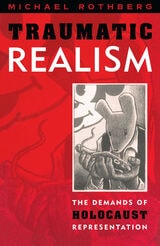
cover of Traumatic Realism: The Demands of Holocaust Representation

Traumatic Realism

The Demands of Holocaust Representation

Michael Rothberg

University of Minnesota Press, 2000
How to approach the Holocaust and its relationship to late twentieth-century society? While some stress the impossibility of comprehending this event, others attempt representations in forms as different as the nonfiction novel (and Hollywood blockbuster) Schindler’s List, the documentary Shoah, and the comic book Maus. This problem is at the center of Michael Rothberg’s book, a focused account of the psychic, intellectual, and cultural aftermath of the Holocaust. Drawing on a wide range of texts, Michael Rothberg puts forth an overarching framework for understanding representations of the Holocaust. Through close readings of such writers and thinkers as Theodor Adorno, Maurice Blanchot, Ruth Klüger, Charlotte Delbo, Art Spiegelman, and Philip Roth and an examination of films by Steven Spielberg and Claude Lanzmann, Rothberg demonstrates how the Holocaust as a traumatic event makes three fundamental demands on representation: a demand for documentation, a demand for reflection on the limits of representation, and a demand for engagement with the public sphere and commodity culture. As it establishes new grounding for Holocaust studies, his book provides a new understanding of realism, modernism, and postmodernism as responses to the demands of history. 
[more]
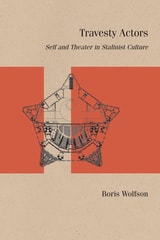
cover of Travesty Actors: Self and Theater in Stalinist Culture

Travesty Actors

Self and Theater in Stalinist Culture

Boris Wolfson, edited by Simon Morrison

Northwestern University Press, 2026

Examining theatrical performance under Stalinist cultural mandates
 
Talk of Joseph Stalin’s “show trials,” the public prosecutions in Moscow’s Hall of Columns in the late 1930s, is so familiar as to obscure the relationship between actual shows—in the Soviet Union’s major theaters—and politics. Travesty Actors: Self and Theater in Stalinist Culture examines theatrical performance within the context of the Soviet cultural establishment’s fashioning of a “genuine Soviet person.” Boris Wolfson focuses on prominent and controversial plays by artists including Aleksandr Afinogenov, Mikhail Bulgakov, Yuri Olesha, and Natalia Sats and the efforts of theater companies, like the Moscow Arts Theater, the Meyerhold Theater, and the Central Children’s Theater, to adhere to this cultural mandate while grappling with repression, censorship, and conflicting interpretations of its aims. Drawing on archival materials, diaries and memoirs and eyewitness accounts, Wolfson greatly illuminates the achievements of Soviet theater during this harsh period and the cultural significance of artistic theories and practices for articulating and enacting ideological programs.
[more]
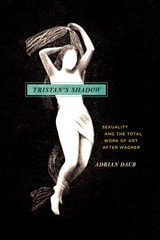
cover of Tristan's Shadow: Sexuality and the Total Work of Art after Wagner

Tristan's Shadow

Sexuality and the Total Work of Art after Wagner

Adrian Daub

University of Chicago Press, 2013

Das Rheingold, Die Walküre, and Siegfried. Parsifal. Tristan und Isolde. Both revered and reviled, Richard Wagner conceived some of the nineteenth century’s most influential operas—and created some of the most indelible characters ever to grace the stage. But over the course of his polarizing career, Wagner also composed volumes of essays and pamphlets, some on topics seemingly quite distant from the opera house. His influential concept of Gesamtkunstwerk—the “total work of art”—famously and controversially offered a way to unify the different media of an opera into a coherent whole. Less well known, however, are Wagner’s strange theories on sexuality—like his ideas about erotic acoustics and the metaphysics of sexual difference.

     Drawing on the discourses of psychoanalysis, evolutionary biology, and other emerging fields of study that informed Wagner’s thinking, Adrian Daub traces the dual influence of Gesamtkunstwerk and eroticism from their classic expressions in Tristan und Isolde into the work of the generation of composers that followed, including Zemlinsky, d’Albert, Schreker, and Strauss. For decades after Wagner’s death, Daub writes, these composers continued to grapple with his ideas and with his overwhelming legacy, trying in vain to write their way out from Tristan’s shadow.
[more]
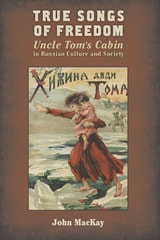
cover of True Songs of Freedom: Uncle Tom’s Cabin in Russian Culture and Society

True Songs of Freedom

Uncle Tom’s Cabin in Russian Culture and Society

John MacKay

University of Wisconsin Press, 2013
Harriet Beecher Stowe's 1852 antislavery novel Uncle Tom's Cabin was the nineteenth century's best-selling novel worldwide; only the Bible outsold it. It was known not only as a book but through stage productions, films, music, and commercial advertising as well. But how was Stowe's novel—one of the watershed works of world literature—actually received outside of the American context?
            True Songs of Freedom explores one vital sphere of Stowe's influence: Russia and the Soviet Union, from the 1850s to the present day. Due to Russia's own tradition of rural slavery, the vexed entwining of authoritarianism and political radicalism throughout its history, and (especially after 1945) its prominence as the superpower rival of the United States, Russia developed a special relationship to Stowe's novel during this period of rapid societal change. Uncle Tom's Cabin prompted widespread reflections on the relationship of Russian serfdom to American slavery, on the issue of race in the United States and at home, on the kinds of writing appropriate for children and peasants learning to read, on the political function of writing, and on the values of Russian educated elites who promoted, discussed, and fought over the book for more than a century. By the time of the Soviet Union's collapse in 1991, Stowe's novel was probably better known by Russians than by readers in any other country.
            John MacKay examines many translations and rewritings of Stowe's novel; plays, illustrations, and films based upon it; and a wide range of reactions to it by figures famous (Leo Tolstoy, Ivan Turgenev, Marina Tsvetaeva) and unknown. In tracking the reception of Uncle Tom's Cabin across 150 years, he engages with debates over serf emancipation and peasant education, early Soviet efforts to adapt Stowe's deeply religious work of protest to an atheistic revolutionary value system, the novel's exploitation during the years of Stalinist despotism, Cold War anti-Americanism and antiracism, and the postsocialist consumerist ethos.
[more]
cover of Twain, Alcott, and the Birth of the Adolescent Reform Novel

Twain, Alcott, and the Birth of the Adolescent Reform Novel

Roberta S. Trites

University of Iowa Press, 2007

Trites argues that Twain and Alcott wrote on similar topics because they were so deeply affected by the Civil War, by cataclysmic emotional and financial losses in their families, by their cultural immersion in the tenets of Protestant philosophy, and by sexual tensions that may have stimulated their interest in writing for adolescents, Trites demonstrates how the authors participated in a cultural dynamic that marked the changing nature of adolescence in America, provoking a literary sentiment that continues to inform young adult literature. Both intuited that the transitory nature of adolescence makes it ripe for expression about human potential for change and reform.
[more]