Results by title
2817 books match the query 'Nature' and 595 start with t
The Elemental Prairie
Sixty Tallgrass PlantsOlson, George
University of Iowa Press, 2005
The Elephant's Secret Sense
The Hidden Life of the Wild Herds of AfricaCaitlin O'Connell
University of Chicago Press, 2008
This compelling odyssey of scientific discovery is also a frank account of fieldwork in a poverty-stricken, war-ravaged country. In her attempts to study an elephant community, O’Connell encounters corrupt government bureaucrats, deadly lions and rhinos, poachers, farmers fighting for arable land, and profoundly ineffective approaches to wildlife conservation. The Elephant’s Secret Sense is ultimately a story of intellectual courage in the face of seemingly insurmountable obstacles.
“I was transported by the author’s superbly sensuous descriptions of her years spent studying the animals. . . . Conjures a high-class nature documentary film in prose.”—Steven Poole, Guardian
“A ride as rough and astonishing as the roads of the African floodplain.”—Joan Keener, Entertainment Weekly
“A successful combination of science and soulfulness, explaining her groundbreaking theory of how elephants use seismic communication. . . . O’Connell’s account is studded with sympathetic insights and well-turned phrases.”—Publishers Weekly
“This fascinating book reads like a fast-paced detective story of a scientific discovery and adventure set in contemporary Africa. . . . By the end, O’Connell takes her rightful place among the leading biographers of the African elephant.”—Iain Douglas-Hamilton, author of Among the Elephants
The Ellesmere Wolves
Behavior and Ecology in the High ArcticL. David Mech, Morgan Anderson, and H. Dean Cluff
University of Chicago Press, 2025
For parts of twenty-four summers, wolf biologist L. David Mech lived with a group of wolves on Ellesmere Island, some six hundred miles from the North Pole. Elsewhere, most wolves flee from even the scent of humans, but these animals, evolving relatively free from human persecution, are unafraid. Having already spent twenty-eight years studying other populations of wolves more remotely by aircraft, snow-tracking, live-trapping, and radio-tracking, Mech was primed to join their activities up close and record their interactions with each other. This book tells the remarkable story of what Mech—and the researchers who followed him—have learned while living among the wolves.
The Ellesmere wolves were so unconcerned with Mech’s presence that they allowed him to camp near their den and to sit on his all-terrain vehicle as he observed them, watching packs as large as seven adults and six pups go about their normal activities. In these extraordinarily close quarters, a pup untying his bootlace or an adult sniffing his gloved hand was just part of daily life. Mech accompanied the wolves on their travels and watched as they hunted muskoxen and arctic hares. By achieving the same kind of intimacy with his wild hosts’ every action that we might experience living with domesticated dogs, Mech gained new insights into common but rarely studied behaviors like pup feeding, food caching, howling, and scent-marking. After Mech’s time at Ellesmere ended, his coauthors and fellow wolf researchers Morgan Anderson and H. Dean Cluff spent parts of four summers studying the wolves via radio collars, further illuminating the creatures’ movements and ecology. This book synthesizes their findings, offering both a compelling scientific overview of the animals’ behavior—from hunting to living in packs to rearing pups—and a tale of adventure and survival in the Arctic.
The Embers and the Stars
Erazim Kohák
University of Chicago Press, 1987
"Those who share Kohák's concern to understand nature as other than a mere resource or matter in motion will find his temporally oriented interpretation of nature instructive. It is here in particular that Kohák turns moments of experience to account philosophically, turning what we habitually overlook or avoid into an opportunity and basis for self-knowledge. This is an impassioned attempt to see the vital order of nature and the moral order of our humanity as one."—Ethics
The Emerald Horizon
The History of Nature in IowaCornelia F. Mutel
University of Iowa Press, 2008
In The Emerald Horizon, Cornelia Mutel combines lyrical writing with meticulous scientific research to portray the environmental past, present, and future of Iowa. In doing so, she ties all of Iowa's natural features into one comprehensive whole.
Since so much of the tallgrass state has been transformed into an agricultural landscape, Mutel focuses on understanding today's natural environment by understanding yesterday's changes. After summarizing the geological, archaeological, and ecological features that shaped Iowa's modern landscape, she recreates the once-wild native communities that existed prior to Euroamerican settlement. Next she examines the dramatic changes that overtook native plant and animal communities as Iowa's prairies, woodlands, and wetlands were transformed. Finally she presents realistic techniques for restoring native species and ecological processes as well as a broad variety of ways in which Iowans can reconnect with the natural world. Throughout, in addition to the many illustrations commissioned for this book, she offers careful scientific exposition, a strong sense of respect for the land, and encouragement to protect the future by learning from the past.
The "emerald prairie" that "gleamed and shone to the horizon's edge," as botanist Thomas Macbride described it in 1895, has vanished. Cornelia Mutel's passionate dedication to restoring this damaged landscape—and by extension the transformed landscape of the entire Corn Belt—invigorates her blend of natural history and human history. Believing that citizens who are knowledgeable about native species, communities, and ecological processes will better care for them, she gives us hope—and sound suggestions—for the future.
The Ends of Research
Indigenous and Settler Science after the War in the WoodsTom Özden-Schilling
Duke University Press, 2023
The Energy of Nature
E. C. Pielou
University of Chicago Press, 2001
In The Energy of Nature, E. C. Pielou explores energy's role in nature—how and where it originates, what it does, and what becomes of it. Drawing on a wide range of scientific disciplines, from physics, chemistry, and biology to all the earth sciences, as well as on her own lifelong experience as a naturalist, Pielou opens our eyes to the myriad ways energy and its transfer affect the earth and its inhabitants. Along the way we learn how energy is delivered to the earth from the sun; how it causes weather, winds, and tides; how it shapes the earth through mountain building and erosion; how it is captured and used by living things; how it is stored in chemical bonds; how nuclear energy is released; how it heats the unseen depths of the planet and is explosively revealed in the turmoil of earthquakes and volcanoes; how energy manifests itself in magnetism and electromagnetic waves; how we harness it to fuel human societies; and much more.
Filled with fascinating information and and helpful illustrations (hand drawn by the author), The Energy of Nature is fun, readable, and instructive. Science buffs of all ages will be delighted.

The English Physician
Nicholas Culpeper
University of Alabama Press, 2007
A foundational text in Western herbal medicine bridging botany, astrology, and early modern healing practices.
The English Physician is a humble vest-pocket-sized 94-page medical guide for the common person, by the prolific herbalist and author Nicholas Culpeper. It was a staple in 17th-century England, as it was short, written in accessible prose, and inexpensive; and perhaps as attractive, it took a decidedly skeptical view of "official" medicine, relying instead on popular remedies. Culpeper’s philosophy was to teach the common folk to minister to themselves by providing them with the tools and knowledge for self-help.
Published in Boston in 1708 by Nicholas Boone, the American version of The English Physician was widely cited and used at the time. Today only five copies are known to exist. The rarity of this vade mecum of colonial America is wrapped in mystery: Who really wrote this book and when, where, and how did it originate?
The editor illuminates these mysteries while adding an informative historical introduction on the state of medical knowledge and practice at the time, exploring Culpeper’s position among competing medical writers, and glossing the medical and botanical terms, providing contemporary equivalents. Modern readers will discover the meaning behind the strangely named brews and concoctions of the 17th century and will learn how this Boston printing literally transformed the American landscape with herbs brought from the British colonists’ homeland.

The Environmental Beat
Inside the Struggle to Legitimize the Environment as NewsSuzannah Evans Comfort
University of Missouri Press, 2026
Environmental degradation has been part of American life for centuries, and yet environmental journalism as a specialized reporting beat has only existed since the 1960s. In the ensuing decades, the environment has fallen in and out of favor as a priority for news organizations. Moreover, journalists who pursue environmental stories have long been dogged by a reputation that they are activists, a charge that delegitimizes their labor and further undermines the potential for news organizations to commit to reporting on environmental issues.
In The Environmental Beat: Inside the Struggle to Legitimize the Environment as News, Suzannah Evans Comfort examines the circumstances under which news organizations chose to invest in environmental journalism since the early 20th century, demonstrating that a combination of external social factors and internal newsroom dynamics must occur for the environment to appear as a newsworthy topic. Comfort also examines actors on the margins of journalistic legitimacy, such as newspaper outdoor columnists who wrote on the sports pages, and environmental advocacy presses that provided a far more consistent source of environmental news making than their peers in the newsroom. These low-status actors in the journalistic field embraced advocacy and rejected both-siderism in their reporting on issues of the environment. Their consistency and longevity, even as more traditionally produced news attention waxed and waned, may provide an explanation for the perception of environmental news making as fundamentally activist.
The Environmental Beat will be of interest to working journalists as well as scholars of journalism.

The Environmental Endgame
Mainstream Economics, Ecological Disaster, and Human SurvivalNadeau, Robert L
Rutgers University Press, 2006
In this groundbreaking book, Robert L. Nadeau warns that we have moved menacingly close to a global environmental catastrophe and that to evade this fate we must stop drawing a distinction between issues that are "environmental" or "scientific" and those that reside in the sphere of "real life." Although scientists have attempted to bring ecological concerns to the forefront of global issues, problems are rarely communicated in ways that can be readily understood by those outside the scientific community.
Bringing together perspectives from a variety of disciplines, including economics, politics, biology, and the history of science, The Environmental Endgame articulates the concerns of scientists in a way that they become the real-life, tangible concerns of people around the world. Nadeau asserts that we have entered a new phase of human history that cannot be one of separation and division but must be one of cooperation and mutual goals.
Nadeau demonstrates that our current governmental and financial institutions, based on neoclassical economics, lack the mechanisms for implementing viable solutions to large-scale crises. Such steps cannot be taken without moving beyond the power politics of the nation-state system. The book concludes with a call to view the natural world as part of humanity, not separate from it. This unifying worldview would be a catalyst for implementing the international government organizations necessary to resolving the crisis.
The Environmental Endgame is an ambitious and timely book that will change the way we think about our economy, our government, and the environment. It should be read by everyone who cares about the pervasive neglect and abuse of planet Earth and wants to know what can be done about it.

The Environmental Justice Reader
Politics, Poetics, and PedagogyEdited by Joni Adamson, Mei Mei Evans, and Rachel Stein
University of Arizona Press, 2002
This book examines environmental justice in its social, economic, political, and cultural dimensions in both local and global contexts, with special attention paid to intersections of race, gender, and class inequality. The first book to link political studies, literary analysis, and teaching strategies, it offers a multivocal approach that combines perspectives from organizations such as the Southwest Network for Environmental and Economic Justice and the International Indigenous Treaty Council with the insights of such notable scholars as Devon Peña, Giovanna Di Chiro, and Valerie Kuletz, and also includes a range of newer voices in the field.
This collection approaches environmental justice concerns from diverse geographical, ethnic, and disciplinary perspectives, always viewing environmental issues as integral to problems of social inequality and oppression. It offers new case studies of native Alaskans' protests over radiation poisoning; Hispanos' struggles to protect their land and water rights; Pacific Islanders' resistance to nuclear weapons testing and nuclear waste storage; and the efforts of women employees of maquiladoras to obtain safer living and working environments along the U.S.-Mexican border.
The selections also include cultural analyses of environmental justice arts, such as community art and greening projects in inner-city Baltimore, and literary analyses of writers such as Jimmy Santiago Baca, Linda Hogan, Barbara Neely, Nez Perce orators, Ken Saro-Wiwa, and Karen Yamashita—artists who address issues such as toxicity and cancer, lead poisoning of urban African American communities, and Native American struggles to remove dams and save salmon. The book closes with a section of essays that offer models to teachers hoping to incorporate these issues and texts into their classrooms. By combining this array of perspectives, this book makes the field of environmental justice more accessible to scholars, students, and concerned readers.
The Epochs of Nature
Georges-Louis Leclerc, le comte de Buffon
University of Chicago Press, 2018
In seven epochs, Buffon reveals the main features of an evolving Earth, from its hard rock substrate to the sedimentary layers on top, from the minerals and fossils found within these layers to volcanoes, earthquakes, and rises and falls in sea level—and he even touches on age-old mysteries like why the sun shines. In one of many moments of striking scientific prescience, Buffon details evidence for species extinction a generation before Cuvier’s more famous assertion of the phenomenon. His seventh and final epoch does nothing less than offer the first geological glimpse of the idea that humans are altering the very foundations of the Earth—an idea of remarkable resonance as we debate the designation of another epoch: the Anthropocene. Also featuring Buffon’s extensive “Notes Justificatives,” in which he offers further evidence to support his assertions (and discusses vanished monstrous North American beasts—what we know as mastodons—as well as the potential existence of human giants), plus an enlightening introduction by editor and translator Jan Zalasiewicz and historians of science Sverker Sörlin, Libby Robin, and Jacques Grinevald, this extraordinary new translation revives Buffon’s quite literally groundbreaking work for a new age.

The Essential Aldo Leopold
Quotations and CommentariesEdited by Curt D. Meine and Richard L. Knight
University of Wisconsin Press, 1999
For the first time, the most important quotations of the great conservationist Aldo Leopold, author of A Sand County Almanac, are gathered in one volume. From conservation education to wildlife ecology, from wilderness protection to soil and water conservation, the writings of Aldo Leopold continue to have profound influence on those seeking to understand the earth and its care. Leopold biographer Curt Meine and noted conservation biologist Richard Knight have assembled this comprehensive collection of quotations from Leopold’s extensive and diverse writings, selected and organized to capture the richness and depth of the North American conservation movement.
Prominent biologists, conservationists, historians, and philosophers provide introductory commentaries describing Leopold’s contributions in varied fields and reflecting upon the significance of his work today.
Contributors:
J. Baird Callicott
David Ehrenfeld
Susan L. Flader
Eric T. Freyfogle
Wes Jackson
Paul W. Johnson
Joni L. Kinsey
Richard L. Knight
Gary K. Meffe
Curt Meine
Gary Paul Nabhan
Richard Nelson
Bryan G. Norton
David W. Orr
Edwin P. Pister
Donald Snow
Stanley A. Temple
Jack Ward Thomas
Charles Wilkinson
Terry Tempest Williams
Donald Worster
Joy B. Zedler
The Essential Guide to Rocky Mountain Mushrooms by Habitat
Cathy Cripps, Vera Evenson, and Michael Kuo
University of Illinois Press, 2016
The Essential Naturalist
Timeless Readings in Natural HistoryEdited by Michael H. Graham, Joan Parker, and Paul K. Dayton
University of Chicago Press, 2011
Like nearly every area of scholarly inquiry today, the biological sciences are broken into increasingly narrow fields and subfields, its practitioners divided into ecologists, evolutionary biologists, taxonomists, paleontologists, and much more. But all these splintered pieces have their origins in the larger field of natural history—and in this era where climate change and relentless population growth are irrevocably altering the world around us, perhaps it’s time to step back and take a new, fresh look at the larger picture.
The Essential Naturalist offers exactly that: a wide-ranging, eclectic collection of writings from more than eight centuries of observations of the natural world, from Leeuwenhoek to E. O. Wilson, from von Humboldt to Rachel Carson. Featuring commentaries by practicing scientists that offer personal accounts of the importance of the long tradition of natural history writing to their current research, the volume serves simultaneously as an overview of the field’s long history and as an inspirational starting point for new explorations, for trained scientists and amateur enthusiasts alike.

The Ethical Case against Animal Experiments
Andrew Linzey, Clair Linzey
University of Illinois Press, 2018
The Ethical Case against Animal Experiments begins with the Oxford Centre for Animal Ethics's groundbreaking and comprehensive ethical critique of the practice of animal experiments. A second section offers original writings that engage with, and elaborate on, aspects of the Oxford Centre report. The essayists explore historical, philosophical, and personal perspectives that range from animal experiments in classical times to the place of necessity in animal research to one researcher's painful journey from researcher to opponent.
A devastating look at a contemporary moral crisis, The Ethical Case against Animal Experiments melds logic and compassion to mount a powerful challenge to human cruelty.
The Ethnobotany of Eden
Rethinking the Jungle Medicine NarrativeRobert A. Voeks
University of Chicago Press, 2018
By exploring the interconnected worlds of anthropology, botany, and geography, Voeks shows that well-intentioned scientists and environmentalists originally crafted the jungle narrative with the primary goal of saving the world’s tropical rainforests from destruction. It was a strategy deployed to address a pressing environmental problem, one that appeared at a propitious point in history just as the Western world was taking a more globalized view of environmental issues. And yet, although supported by science and its practitioners, the story was also underpinned by a persuasive mix of myth, sentimentality, and nostalgia for a long-lost tropical Eden. Resurrecting the fascinating history of plant prospecting in the tropics, from the colonial era to the present day, The Ethnobotany of Eden rewrites with modern science the degradation narrative we’ve built up around tropical forests, revealing the entangled origins of our fables of forest cures.
The Everest Effect
Nature, Culture, IdeologyElizabeth Mazzolini
University of Alabama Press, 2015
The Everest Effect is an accessibly written cultural history of how nature, technology, and culture have worked together to turn Mount Everest into a powerful and ubiquitous physical measure of Western values.
In The Everest Effect Elizabeth Mazzolini traces a series of ideological shifts in the status of Mount Everest in Western culture over the past century to the present day and links these shifts to technologies used in climbs. By highlighting the intersections of technology and cultural ideologies at this site of environmental extremity, she shows both how nature is shaped—physically and symbolically—by cultural values and how extreme natural phenomena shape culture.
Nostalgia, myth, and legend are intrinsic features of the conversations that surround discussions of historic and contemporary climbs of Everest, and those conversations themselves reflect changing relations between nature, technology, and ideology. Each of the book’s chapters links a particular value with a particular technology to show how technology is implicated in Mount Everest’s cultural standing and commodification: authenticity is linked with supplemental oxygen; utility with portable foodstuffs; individuality with communication technology; extremity with visual technology; and ability with money. These technologies, Mazzolini argues, are persuasive—and increasingly so as they work more quickly and with more intimacy on our bodies and in our daily lives.
As Mazzolini argues, the ideologies that situate Mount Everest in Western culture today are not debased and descended from a more noble time; rather, the material of the mountain and its surroundings and the technologies deployed to encounter it all work more immediately with the bodies and minds of actual and “armchair” mountaineers than ever before. By moving the analysis of a natural site and phenomenon away from the traditional labor of production and toward the symbolic labor of affective attachment, The Everest Effect shows that the body and nature have helped constitute the capitalization that is usually characterized as taking over Everest.
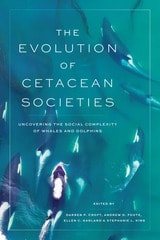
The Evolution of Cetacean Societies
Uncovering the Social Complexity of Whales and DolphinsEdited by Darren P. Croft, Andrew D. Foote, Ellen C. Garland, and Stephanie L. King
University of Chicago Press, 2026
Cetaceans—whales, dolphins, and porpoises—represent an evolutionary peak with respect to their advanced cognitive capacities; flexible communication systems; and structured, multilevel societies. Indeed, the social lives of whales and dolphins have long fascinated scientists and the public alike. The Evolution of Cetacean Societies provides a comprehensive overview of the significant advancements made in studying cetacean behavior and ecology over the last twenty-five years, focusing on our growing understanding of these animals’ complex social lives.
Bringing together scientists from multiple disciplines, the volume summarizes key innovations and progress related to studying cetacean societies’ cultural and genetic basis, their complex social structures, their use of cooperation and patterns of social conflict, and their significant interactions with humans. Each chapter provides an in-depth account of the social lives of whales and dolphins, incorporating the latest cutting-edge research from genomics, communication, network analysis, and animal culture to explain how these animals form societies, maintain relationships, and share information. The final chapters focus on the existential threats facing these diverse and charismatic species, how human-cetacean interactions have shaped our perceptions, and what scientists can learn from their diverse social lives by championing researcher diversity in marine mammal science. The result is an essential and forward-looking book that both contextualizes the lessons of the past two decades and questions the challenges these enigmatic species might face in the future.
Published in 2000 by Chicago, Cetacean Societies: Field Studies of Dolphins and Whales, edited by Janet Mann, Richard C. Connor, Peter Tyack, and Hal Whitehead, inspired a generation of marine biologists. In this new volume, Darren P. Croft, Andrew D. Foote, Ellen C. Garland, and Stephanie L. King—all respected cetacean researchers—offer a worthy successor.

The Expendable Future
US Politics and the Protection of Biological DiversityRichard Tobin
Duke University Press, 1990
Drawing on congressional hearing and debates, previously unpublished public opinion surveys, interviews with state officials and employees of the Department of the Interior, and internal documents from this and other government agencies, Tobin provides an in-depth analysis of the policies on endangered species and the policy relationships among the different units of government involved in implementation. He examines the resources that are available for the protection of endangered species and the way in which those resources are matched to the priorities. Tobin also discusses the processes by which species are classified as endangered, how these species’ critical habitats are determined and protected, and the successes, and mostly failures, of current recovery programs.
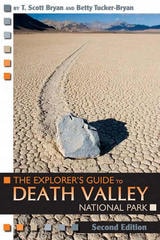
The Explorer's Guide to Death Valley National Park, Second Edition
T. Scott Bryan
University Press of Colorado, 2009
The Extractive Zone
Social Ecologies and Decolonial PerspectivesMacarena Gómez-Barris
Duke University Press, 2017
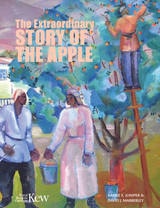
The Extraordinary Story of the Apple
David Mabberley and Barry Juniper
Royal Botanic Gardens, Kew, 2018
Using DNA evidence, Juniper and Mabberley trace the fruit’s geographical journey through time and across countries. They show how the apple has long been one of the most important fruits in the temperate regions of the world, and that it has been beloved since the times of the Persians, Greeks, and Romans. Its reach grew thanks to its reputation as a highly nutritional food source as well as one that is remarkably convenient, as the apple can be stored throughout a harsh winter or easily transported over long distances. The authors also examine the apple’s global influence on human culture. After all, it’s the fruit that played a key role in the fall of Adam and Eve, the inspiration for Newton’s Law of Gravity, and the rise of a tech behemoth.
With a nod to this book’s roots with the Royal Botanic Gardens, Kew, chapters also cover types of apple and apple crops, grafting techniques over time, archaeological discoveries, use as a food and in cider making, as well as the latest research in apple biology. This fascinating book is illustrated throughout with color illustrations, paintings, photographs, and line drawings, and will make the ideal read for gardeners, growers, botanists, historians, archaeologists and zoologists alike. The next time you pluck an apple from a supermarket bushel, you’ll understand the millennia of human—and Ursidae—influences on that humble fruit.
The Fate of the Forest
Developers, Destroyers, and Defenders of the Amazon, Updated EditionSusanna B. Hecht and Alexander Cockburn
University of Chicago Press, 2010
The Amazon rain forest covers more than five million square kilometers, amid the territories of nine different nations. It represents over half of the planet’s remaining rain forest. Is it truly in peril? What steps are necessary to save it? To understand the future of Amazonia, one must know how its history was forged: in the eras of large pre-Columbian populations, in the gold rush of conquistadors, in centuries of slavery, in the schemes of Brazil’s military dictators in the 1960s and 1970s, and in new globalized economies where Brazilian soy and beef now dominate, while the market in carbon credits raises the value of standing forest.
Susanna Hecht and Alexander Cockburn show in compelling detail the panorama of destruction as it unfolded, and also reveal the extraordinary turnaround that is now taking place, thanks to both the social movements, and the emergence of new environmental markets. Exploring the role of human hands in destroying—and saving—this vast forested region, The Fate of the Forest pivots on the murder of Chico Mendes, the legendary labor and environmental organizer assassinated after successful confrontations with big ranchers. A multifaceted portrait of Eden under siege, complete with a new preface and afterword by the authors, this book demonstrates that those who would hold a mirror up to nature must first learn the lessons offered by some of their own people.
The Fate of the Mammoth
Fossils, Myth, and HistoryClaudine Cohen
University of Chicago Press, 2002
Cohen uses the mammoth and the theories that naturalists constructed around it to illuminate wider issues in the history of science, showing how changing views about a single object reveal the development of scientific methods, practices, and ideas. How are fossils discovered, reconstructed, displayed, and interpreted? What stories are told about them, by whom, and how do these stories reflect the cultures and societies in which they are told?
To find out, Cohen takes us on a grand tour of the study of mammoth remains, from England, Germany, and France to Russia and America, and from the depths of Africa to the frozen frontiers of Alaska and Siberia, where intact mammoth corpses have been discovered in the permafrost. Along the way, she shows how paleontologists draw on myth and history, as well as on scientific evidence, to explore the deep history of the earth and of life. Cohen takes her history from the sixteenth century right up to the present, when researchers are using molecular biology to retrieve mammoth DNA, calling up dreams of cloning the mammoth and one day seeing herds of woolly mammoths roaming the frozen steppes.
The Feminization of Famine
Expressions of the Inexpressible?Margaret Kelleher
Duke University Press, 1997
Kelleher begins with a critical reading of the novels and short stories written about the Irish famine over the last 150 years, from the novels of William Carleton and Anthony Trollope to the writings of Liam O’Flaherty and John Banville. She then moves on to unveil a lesser-known body of literature—works written by women. This literature is read in the context of a rich variety of other sources, including eye-witness accounts, memoirs, journalistic accounts, and famine historiography. Concluding with a reading of the twentieth-century accounts of the famine in Bengal, this book reveals how gendered representations have played a crucial role in defining notions of famine.

The Ferns and Fern Allies of Minnesota
Carl Otto Rosendahl and Frederic K. Butters
University of Minnesota Press, 1954
The Ferns and Fern Allies of Minnesota was first published in 1954. Minnesota Archive Editions uses digital technology to make long-unavailable books once again accessible, and are published unaltered from the original University of Minnesota Press editions.
Ferns are the most abundant plants in many areas of Minnesota, and the beauty and variety of their leaf patterns make them a rewarding form of plant life for study. This handbook identifies and describes the 92 different kinds of ferns and fern allies that are native to the state. In addition, ten other ferns that grow in adjacent states and may be expected to be found in Minnesota are described. An introductory section tells how to collect and preserve specimens. Advice is given on how to transplant ferns to a garden and which species are best for different kinds of plantings or locations. An illustrated glossary consisting of four plates graphically defines the technical terms used in this book. Distribution maps and figures are placed closed to the text to which they pertain. Many of the plates are full sized so that a specimen may be placed on the page for identification.

The Fight to Save the Redwoods
A History of the Environmental Reform, 1917–1978Susan R. Schrepfer
University of Wisconsin Press, 1983
"This is not a simple or ordinary history of a conservation crusade. Schrepfer very ably traces the changes in scientific wisdom from nineteenth-century romanticism and teleological evolutionism to more current ecological dynamism—and the influence of those intellectual developments on political history. . . . The subject is important—much broader than the title suggests—and so is the book."—American Historical Review

The Fire Ant Wars
Nature, Science, and Public Policy in Twentieth-Century AmericaJoshua Blu Buhs
University of Chicago Press, 2004
With political intrigue, environmental tragedy, and such figures as Rachel Carson and E. O. Wilson, The Fire Ant Wars is a grippingly perceptive tale of changing social attitudes and scientific practices. Tracing the political and scientific eradication campaigns, Joshua Buhs's bracing study uses the saga as a means to consider twentieth-century American concepts of nature and environmental stewardship. In telling the story, Buhs explores how human concepts of nature evolve and how these ideas affect the natural and social worlds.
Spotlighting a particular issue to discuss larger questions of science, public perceptions, and public policy—from pre-environmental awareness to the activist years of the early environmental movement—The Fire Ant Wars will appeal to historians of science, environmentalists, and biologists alike.

The Flight Across The Ice
The Escape of the East Prussian HorsesPatricia Clough
Haus Publishing, 2010
The Flowering Plants
Flowering Rush to RushesRobert H. Mohlenbrock
Southern Illinois University Press, 2006
The second edition of Flowering Plants: Flowering Rush to Rushes offers new material, including a preface, seventeen new illustrations of the additional species now known from Illinois, a revised list of illustrations, and an appendix of the additions and changes since 1970 in the identification, classification, and location of the plants included in the first edition. This new edition of the first volume in the multi-volume series of The Illustrated Flora of Illinois—which provides a working reference for the identification and classification of these plant forms in the state—includes flowering rushes, arrowheads, pondweeds, naiads, duckweeds, cattails, bur reeds, spiderworts, and rushes.
In his introduction, Robert H. Mohlenbrock defines terms and procedures used in the identification and classification of this group of flowering plants referred to as monocotyledons—plants that produce upon germination a single cotyledon or seed-leaf and are often identified by their tall, slender, grass-like leaves. He outlines the life histories and morphologies of the representative monocots and illustrates the plants’ habits and frequencies in Illinois.
Geared to the amateur as well as the professional botanist, the volume includes a glossary of definitions and identification keys to classify the plants according to order, family, genus, and species. The identifying characteristics of each descending class are also given in detail. The morphology of each species is outlined along with data on frequency of occurrence, related soil and climate conditions, and history of past collections. Among the 125 illustrations are detailed sketches of the important features of each species and maps indicating the geographical locations of each species in Illinois.

The Forests of Michigan
Donald I. Dickmann and Larry A. Leefers
University of Michigan Press, 2003
No book currently on bookstore shelves explores, as The Forests of Michigan does, the natural history, ecology, management, economic importance, and use of the rich and varied forests that cover about half of the state's 36.3 million acres. The authors look at the forests, where they are, how they got to be, and their present-day usage, using the story of Michigan forests as a backdrop for the state's history, including its archaeology.
The Forests of Michigan explores how the forests came back after the great Wisconsin glacier began to recede over 12,000 years ago, and how they recovered from the onslaught of unrestrained logging and wildfire that, beginning in the mid-1800s, virtually wiped them out. The emphasis of the book is on sustaining for the long term the forests of the state, with a view of sustainability that builds not only upon the lessons learned from native peoples' attitude and use of trees but also on the latest scientific principles of forest ecology and management.
Generously illustrated and written in an engaging style, The Forests of Michigan sees the forest and the trees, offering both education and delight. "As forest scientists," the authors note, "we opted for a hearty serving of meat and potatoes; anyone who reads this book with the intention of learning something will not be disappointed. Nonetheless, we do include some anecdotal desserts, too."
Donald I. Dickmann is Professor of Forestry at Michigan State University and holds a doctorate from the University of Wisconsin. He is the author of The Culture of Poplars. Larry A. Leefers is Associate Professor in the Department of Forestry at Michigan State University. He holds a doctorate from Michigan State University.

The Forests of Michigan, Revised Ed.
Donald I. Dickmann and Larry A. Leefers
University of Michigan Press, 2016
The Foundations of Glen Canyon Dam
Infrastructures of Dispossession on the Colorado PlateauErika Marie Bsumek
University of Texas Press, 2023
2024 Best Indigenous Studies Award, The Mormon History Association
2024 Southwest Book of the Year, Pima County Public Library
A history of how the construction of the Glen Canyon Dam was built and sustained by social inequalities
The second highest concrete-arch dam in the United States, Glen Canyon Dam was built to control the flow of the Colorado River throughout the Western United States. Completed in 1966, the dam continues to serve as a water storage facility for residents, industries, and agricultural use across the American West. The dam also generates hydroelectric power for residents in Colorado, Wyoming, New Mexico, Utah, Nevada, Arizona, and Nebraska. More than a massive piece of physical infrastructure and an engineering feat, the dam exposes the cultural structures and complex regional power relations that relied on Indigenous knowledge and labor while simultaneously dispossessing the Indigenous communities of their land and resources across the Colorado Plateau.
Erika Marie Bsumek reorients the story of the dam to reveal a pattern of Indigenous erasure by weaving together the stories of religious settlers and Indigenous peoples, engineers and biologists, and politicians and spiritual leaders. Infrastructures of dispossession teach us that we cannot tell the stories of religious colonization, scientific exploration, regional engineering, environmental transformation, or political deal-making as disconnected from Indigenous history. This book is a provocative and essential piece of modern history, particularly as water in the West becomes increasingly scarce and fights over access to it continue to unfold.
The Freshwater Mussels of Ohio
G. Thomas Watters, Michael A. Hoggarth, and David H. Stansbery
The Ohio State University Press, 2009
The Future of Conservation in America
A Chart for Rough WaterGary E. Machlis and Jonathan B. Jarvis
University of Chicago Press, 2018
Written by the first scientist appointed as science advisor to the director of the National Park Service and the eighteenth director of the National Park Service, this is a candid, passionate, and ultimately hopeful book. The authors describe a unified vision of conservation that binds nature protection, historical preservation, sustainability, public health, civil rights and social justice, and science into common cause—and offer real-world strategies for progress. To be read, pondered, debated, and often revisited, The Future of Conservation in America is destined to be a touchstone for the conservation movement in the decades ahead.

The Game of Conservation
International Treaties to Protect the World’s Migratory AnimalsMark Cioc
Ohio University Press, 2009
The Game of Conservation is a brilliantly crafted and highly readable examination of nature protection around the world.
Twentieth-century nature conservation treaties often originated as attempts to regulate the pace of killing rather than as attempts to protect animal habitat. Some were prompted by major breakthroughs in firearm techniques, such as the invention of the elephant gun and grenade harpoons, but agricultural development was at least as important as hunting regulations in determining the fate of migratory species. The treaties had many defects, yet they also served the goal of conservation to good effect, often saving key species from complete extermination and sometimes keeping the population numbers at viable levels. It is because of these treaties that Africa is dotted with large national parks, that North America has an extensive network of bird refuges, and that there are any whales left in the oceans. All of these treaties are still in effect today, and all continue to influence nature-protection efforts around the globe.
Drawing on a wide variety of primary and secondary sources, Mark Cioc shows that a handful of treaties—all designed to protect the world’s most commercially important migratory species—have largely shaped the contours of global nature conservation over the past century. The scope of the book ranges from the African savannahs and the skies of North America to the frigid waters of the Antarctic.
The Garden at the End of Time
Getting By in the Age of Climate ChangeJohn Hanson Mitchell
University of Massachusetts Press, 2025
John Hanson Mitchell has long written about his garden outside of Boston, and about the plants and animals with whom he shares this land. In 2022, the United Nations and others started reporting the true severity of the climate crisis as the Earth passed a point of no return. All across the globe it was the worst year on record for climate-related disasters, including extinctions, deadly floods, massive fires, and dramatic droughts, all of which have worsened since that year. Mitchell, like so many, felt overwhelmed. He looked to the story of Voltaire’s Candide, and settled on the famous aphorism from that book: “We must cultivate our garden.”
The Garden at the End of Time features Mitchell’s trademark blend of science, literature, and anecdote as he processes both the information he is reading from various sources and what it prompts him to do in his own small corner of the world. The story that unfolds is one of Mitchell diversifying his plantings; fighting what he sees as unnecessary local development; walking through and observing changes in the wild lands nearby; continuing to read the news from around the world; and meditating on other moments, real and imagined, when people sought refuge even as they did their part to improve a personally and collectively stressful situation.
Readers discover the impossibility of separating gardening from global warming, while also seeing the solace that exposure to plants can offer, in addition to their contribution to carbon consumption. With gravitas, kindness, and wit, Mitchell offers a model for maintaining a connection to nature even as it reels from manmade threats.

The Gardener's Guide to Prairie Plants
Neil Diboll and Hilary Cox
University of Chicago Press, 2023
The Gardener’s Guide to Prairie Plants is the one-stop compendium for all gardeners aspiring to use native prairie plants in their gardens. Neil Diboll and Hilary Cox—two renowned prairie gardeners—compile more than four decades’ worth of research to offer a wide-ranging and definitive reference for starting and maintaining prairie and meadow gardens and restorations. Alongside detailed synopses of plant life cycles, meticulous range maps, and sweeping overviews of natural history, Diboll and Cox also include photographs of 148 prairie plants in every stage of development, from seedling to seedhead. North America’s grasslands once stretched from the Blue Ridge to the Rocky Mountains, and from Texas to Manitoba, blanketing the mid-continent with ecologically important, garden-worthy, native species. This book provides all the inspiration and information necessary for eager native planters from across the country to welcome these plants back to their landscapes. The Gardener’s Guide to Prairie Plants is a must-have reference for gardeners, restorationists, and every flora fan with a passion for native plants, prairies and meadows.
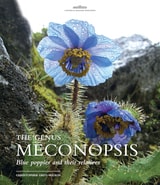
The Genus Meconopsis
Blue poppies and their relativesChristopher Grey-Wilson
Royal Botanic Gardens, Kew, 2015
The Genus Meconopsis is the first major revision of the genus since 1934 and the only monograph on the genus in existence. This fully revised text incorporates the discovery of nearly thirty new species with decades of new scholarship. The book is extensively illustrated with striking color photographs and botanical paintings. Species descriptions that include habitat and variation within the genus, as well as detailed distribution maps, make this ideal for botanists, horticulturalists, and gardeners alike.
The Genus Tulipa
Tulips of the WorldDiana Everett
Royal Botanic Gardens, Kew, 2013
The George Reserve Deer Herd
Population Ecology of a K-Selected SpeciesDale R. McCullough
University of Michigan Press, 1979

The Ghost of Meter
Culture and Prosody in American Free VerseAnnie Finch
University of Michigan Press, 1993
Population and environment are topics of intense current discussion and international action. Population growth rates have given rise to the metaphor of an exploding bomb, and accounts of oil spills, droughts, and rainforest destruction appear daily in the news. Despite the crowded agenda, observes Gayl Ness, the relationships between population and the environment still defy clear and comprehensive understanding. While they are closely intertwined in real life, they are separate in much of our thought and action. The contributors to this volume explore the basis of this separation and offer ways to integrate these closely interconnected areas, providing a forum for dialogue between those who support the interests of each. Topics covered include population-environment dynamics in historical perspective; constraints on sustainable growth in agricultural production; population as concept and parameter in the modeling of deforestation; powers and limits of the state and technology; resource control, fertility, and migration; and an ecosystem approach to the study of coastal areas.

The Giant Pandas of Wolong
George B. Schaller, Hu Jinchu, Pan Wenshi, and Zhu Jing
University of Chicago Press, 1985
Although giant pandas have few natural enemies, the periodic die-off of bamboo, their main food, threatens their survival. In order to understand the panda's vital link to bamboo, the research team has explored many aspects of the animal's life, collecting information on both wild and captive pandas. Though a herbivore, the panda retains the simple digestive tract of a carnivore. Unable to digest cellulose in plants, it receives relatively little nutrition from the bamboo it eats. As a result, it must eat many kilograms of bamboo each day, foraging for fourteen hours or more throughout a day and night.
Known to the Chinese for several thousand years as daxiongmao, "large bear-cat," the giant panda has defied easy classification. The authors review anatomical, biochemical, behavioral, and paleontological evidence, concluding that the animal is neither bear nor raccoon but belongs in a separate family, perhaps with the small red panda.
The giant panda has captured the imagination of the public more than any other animal. By presenting their groundbreaking and crucial research to the public, the authors of The Giant Pandas of Wolong hope to spur further research and action that will help this precious animal survive.

The Glacier Park Reader
David Stanley
University of Utah Press, 2017
Soon after the park was established in 1910, visitors began to arrive, often with pen in hand. They included such well-known authors as mystery writer Mary Roberts Rinehart, historian Agnes C. Laut, fiction writer Dorothy Johnson, humorist Irvin S. Cobb, poet Vachel Lindsay, and artist Maynard Dixon—all featured in the book. Readers will encounter colorful characters who lived in and around the park in its early days, including railroad magnate and conservationist Louis Hill, renegade ranger and poacher Joe Cosley, bootlegger Josephine Doody, and old-time cowboy guide Jim Whilt. Blackfeet and Kalispel myths, politically charged descriptions by early explorers such as John Muir and George Bird Grinnell, and full-color reproductions of the illustrated letters of cowboy artist and Glacier resident Charles M. Russell are also included.
Copublished with the Glacier National Park Conservancy.
The Glacier National Park Conservancy preserves the Park for generations to come. Learn more about our work at www.glacier.org
Part of the National Park Reader series, edited by Lance Newman and David Stanley
The Glen Canyon Reader
Mathew Barrett Gross
University of Arizona Press, 2003

The Global Guide to Animal Protection
Edited by Andrew Linzey
University of Illinois Press, 2013
The Global Pigeon
Colin Jerolmack
University of Chicago Press, 2013
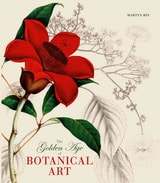
The Golden Age of Botanical Art
Martyn Rix
University of Chicago Press, 2012
The Gospel of Sustainability
Media, Market and LOHASMonica M. Emerich
University of Illinois Press, 2014