Results by title
1325 books match the query 'Psychology' and 295 start with t

The Mmpi-2 Content Component Scales
Development, Psychometric Characteristics, and Clinical ApplicationYossef S. Ben-Porath
University of Minnesota Press, 1993
The Morality of Laughter
F. H. Buckley
University of Michigan Press, 2005
superior piece of work.”
—P. J. O’Rourke
“F. H. Buckley’s The Morality of Laughter is at once
a humorous look at serious matters and a serious
book about humor.”
—Crisis Magazine
“Buckley has written a . ne and funny book that will
be read with pleasure and instruction.”
—First Things
“. . . written elegantly and often wittily. . . .”
—National Post
“. . . a fascinating philosophical exposition of
laughter. . . .”
—National Review
“. . . at once a wise and highly amusing book.”
—Wall Street Journal Online
“. . . a useful reminder that a cheery society is a
healthy one.”
—Weekly Standard
The Myth of Analysis
Three Essays in Archetypal PsychologyJames Hillman
Northwestern University Press, 1998
Originally published by Northwestern University Press in 1972, this work had a profound impact on a nation emerging self-aware from the 1960s, as well as on the era's burgeoning feminist movement. It remains a profound critique of therapy and the psychological viewpoint, and it is one of Hillman's most important and enduring works.
The Myth of Manliness in Irish National Culture, 1880-1922
Joseph Valente
University of Illinois Press, 2011

The Myth of the Litigious Society
Why We Don't SueDavid M. Engel
University of Chicago Press, 2016
With this book, David M. Engel demolishes the myth that America is a litigious society. The sobering reality is that the vast majority of injury victims—more than nine out of ten—rely on their own resources, family and friends, and government programs to cover their losses. When real people experience serious injuries, they don’t respond as rational actors. Trauma and pain disrupt their thoughts, and potential claims are discouraged by negative stereotypes that pervade American television and popular culture. (Think Saul Goodman in Breaking Bad, who keeps a box of neck braces in his office to help clients exaggerate their injuries.) Cultural norms make preventable injuries appear inevitable—or the victim’s fault. We’re taught to accept setbacks stoically and not blame someone else. But this tendency to “lump it” doesn’t just hurt the victims; it hurts us all. As politicians continue to push reforms that miss the real problem, we risk losing these claims as a way to quickly identify unsafe products and practices. Because injuries disproportionately fall on people with fewer resources, the existing framework creates a social underclass whose needs must be met by government programs all citizens shoulder while shielding those who cause the harm.
It’s time for America to have a more responsible, blame-free discussion about injuries and the law. With The Myth of the Litigious Society, Engel takes readers clearly and powerfully through what we really know about injury victims and concludes with recommendations for how we might improve the situation.
The Natural History of the Traditional Quilt
By John Forrest and Deborah Blincoe
University of Texas Press, 1995
Traditional quilts serve many purposes over the course of a useful life. Beginning as a beautiful bed covering, a quilt may later function as a ground cover at picnics until years of wear relegate it to someone's ragbag for scrap uses.
Observing this life cycle led authors John Forrest and Deborah Blincoe to the idea that quilts, like living things, have a natural history that can be studied scientifically. They explore that natural history through an examination of the taxonomy, morphology, behavior, and ecology of quilts in their native environment—the homes of humans who make, use, keep, and bestow them.
The taxonomy proposed by Forrest and Blincoe is rooted in the mechanics of replicating quilts so that it can be used to understand evolutionary and genetic relationships between quilt types. The morphology section anatomizes normal and abnormal physical features of quilts, while the section on conception and birth in the life cycle discusses how the underlying processes of replication intersect with environmental factors to produce tangible objects.
This methodology is applicable to many kinds of crafts and will be of wide interest to students of folklore, anthropology, and art history. Case studies of traditional quilts and their makers in the Catskills and Appalachia add a warm, human dimension to the book.
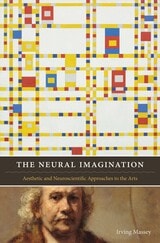
The Neural Imagination
Aesthetic and Neuroscientific Approaches to the ArtsBy Irving Massey
University of Texas Press, 2009
Art and technology have been converging rapidly in the past few years; an important example of this convergence is the alliance of neuroscience with aesthetics, which has produced the new field of neuroaesthetics.
Irving Massey examines this alliance, in large part to allay the fears of artists and audiences alike that brain science may "explain away" the arts. The first part of the book shows how neuroscience can enhance our understanding of certain features of art. The second part of the book illustrates a humanistic approach to the arts; it is written entirely without recourse to neuroscience, in order to show the differences in methodology between the two approaches. The humanistic style is marked particularly by immersion in the individual work and by evaluation, rather than by detachment in the search for generalizations. In the final section Massey argues that, despite these differences, once the reality of imagination is accepted neuroscience can be seen as the collaborator, not the inquisitor, of the arts.
The Neural Mind
How Brains ThinkGeorge Lakoff and Srini Narayanan
University of Chicago Press, 2025
What is an idea, and where does it come from? We experience thought as if it were abstract, but every thought is actually a physical thing, carried out by the neural systems of our brains. Thought does not occur neuron-by-neuron; it happens when neurons come together to form circuits and when simple circuits combine to form complex ones. Thoughts, then, derive their structures from the circuitry we also use for vision, touch, and hearing. This circuitry is what allows simple thoughts to come together into complex concepts, making meaning, creating metaphors, and framing our social and political ideas.
With The Neural Mind, George Lakoff, a pioneering cognitive linguist, and computer scientist Srini Narayanan deftly combine insights from cognitive science, computational modeling, and linguistics to show how thoughts arise from the neural circuitry that runs throughout our bodies. They answer key questions about the ways we make meaning: How does neural circuitry create the conceptual “frames” through which we understand our social lives? What kind of neural circuitry characterizes metaphorical thought, in which ideas are understood in terms of other ideas with similar structures? Lively and accessible, the book shows convincingly that the “metaphors we live by”—to use Lakoff’s famous phrase—aren’t abstractions but deeply embodied neural constructs.
The Neural Mind is the first book of its kind, bringing together the ideas of multiple disciplines to offer a unified, accessible theory of thought. A field-defining work, Lakoff and Narayanan’s book will be of interest not just to linguists and cognitive scientists but also to psychologists, philosophers, anthropologists, journalists, sociologists, and political scientists—and anyone who wants to understand how we really think.

The Neurotransmitter Revolution
Serotonin, Social Behavior, and the LawRoger D. Masters
Southern Illinois University Press, 1993
Extraordinary advances in neurochemistry are both transforming our understanding of human nature and creating an urgent problem. Much is now known about the ways that neurotransmitters influence normal social behavior, mental illness, and deviance. What are these discoveries about the workings of the human brain? How can they best be integrated into our legal system?
These explosive issues are best understood by focusing on a single neurotransmitter like serotonin, which is associated with such diverse behaviors as dominance and leadership, seasonal depression, suicide, alcoholism, impulsive homicide, and arson. This book brings together revised papers from a conference on this theme organized by the Gruter Institute for Law and Behavioral Research, supplemented with articles by leading scholars who did not attend. Contributors include psychiatrists, neurologists, social scientists, and legal scholars.
The Neurotransmitter Revolution presents a unique survey of the scientific and legal implications of research on the way serotonin combines with other factors to shape human behavior. The findings are quite different from what might have been expected even a decade ago.
The neurochemistry of behavior is not the same thing as genetic determinism. On the contrary, the activity of serotonin varies from one individual to another for many reasons, including the individual’s life experience, social status, personality, and diet. And there are a number of major neurotransmitter systems, each of which interacts with the other. Behavior, culture, and the social environment can influence neurochemistry along with inheritance. Nature and nurture interact—and these interactions can be understood from a vigorously scientific point of view.
The fact that our actions are heavily influenced by neurotransmitters like serotonin is bound to be disquieting. A sophisticated understanding of law and human social behavior will be needed if our society is to respond adequately to these rapid advances in our knowledge. This book is an essential step in that direction, providing the first comprehensive survey of the biochemical, social, and legal considerations arising from research on the behavioral effects of serotonin and related neurotransmitters.
The Night is Young
Sexuality in Mexico in the Time of AIDSHéctor Carrillo
University of Chicago Press, 2002
Carrillo finds that young Mexicans today grapple in a variety of ways with two competing tendencies. On the one hand, many seek to challenge traditional ideas and values they find limiting. But they also want to maintain a sense of Mexico's cultural distinctiveness, especially in relation to the United States. For example, while Mexicans are well aware of the dangers of unprotected sex, they may also prize the surrender to sexual passion, even in casual sexual encounters—an attitude which stems from the strong values placed on collective life, spontaneity, and an openness toward intimacy. Because these expectations contrast sharply with messages about individuality, planning, and overt negotiation commonly promoted in global public health efforts, Carrillo argues that they demand a new approach to AIDS prevention education in Mexico.
A Mexican native, Carrillo has written an exceptionally insightful and accessible study of the relations among sexuality, social change, and AIDS prevention in Mexico. Anyone concerned with the changing place of sexuality in a modern and increasingly globalized world will profit greatly from The Night Is Young.

The Novel of the Future
Anaïs Nin
Ohio University Press, 2014
In The Novel of the Future, Anaïs Nin explores the act of creation—in film, art, and dance as well as literature—to chart a new direction for the young artist struggling against what she perceived as the sterility, formlessness, and spiritual bankruptcy afflicting much of mid-twentieth-century fiction. Nin offers, instead, an argument for and synthesis of the poetic novel and discusses her own efforts in this genre as well as its influence on the development of such writers as D. H. Lawrence, Henry Miller, Lawrence Durrell, Marguerite Young, and Djuna Barnes. In chapters devoted to the pursuit of the hidden self, the genesis of fiction, and the relationship between the diary and fiction, she addresses the materials, techniques, and nourishment of the arts, and the functions of art itself.
Originally published in 1968, The Novel of the Future remains a classic among both creative writers and literary scholars. This new Swallow Press edition includes an introduction by Nin biographer Deirdre Bair.

The Objective Eye
Color, Form, and Reality in the Theory of ArtJohn Hyman
University of Chicago Press, 2006
This, in a nutshell, is the central problem in the theory of art. It has fascinated philosophers from Plato to Wittgenstein. And it fascinates artists and art historians, who have always drawn extensively on philosophical ideas about language and representation, and on ideas about vision and the visible world that have deep philosophical roots.
John Hyman’s The Objective Eye is a radical treatment of this problem, deeply informed by the history of philosophy and science, but entirely fresh. The questions tackled here are fundamental ones: Is our experience of color an illusion? How does the metaphysical status of colors differ from that of shapes? What is the difference between a picture and a written text? Why are some pictures said to be more realistic than others? Is it because they are especially truthful or, on the contrary, because they deceive the eye?
The Objective Eye explores the fundamental concepts we use constantly in our most innocent thoughts and conversations about art, as well as in the most sophisticated art theory. The book progresses from pure philosophy to applied philosophy and ranges from the metaphysics of color to Renaissance perspective, from anatomy in ancient Greece to impressionism in nineteenth-century France. Philosophers, art historians, and students of the arts will find The Objective Eye challenging and absorbing.
The Open Mind
Cold War Politics and the Sciences of Human NatureJamie Cohen-Cole
University of Chicago Press, 2013

The Origins of Self
An Anthropological PerspectiveMartin P. J. Edwardes
University College London, 2019

The Other Side of the Digital
The Sacrificial Economy of New MediaAndrea Righi
University of Minnesota Press, 2021
A necessary, rich new examination of how the wired world affects our humanity
Our tech-fueled economy is often touted as a boon for the development of our fullest human potential. But as our interactions are increasingly turned into mountains of data sifted by algorithms, what impact does this infinite accumulation and circulation of information really have on us? What are the hidden mechanisms that drive our continuous engagement with the digital?
In The Other Side of the Digital, Andrea Righi argues that the Other of the digital acts as a new secular God, exerting its power through endless accountability that forces us to sacrifice ourselves for the digital. Righi deconstructs the contradictions inherent in our digital world, examining how ideas of knowledge, desire, writing, temporality, and the woman are being reconfigured by our sacrificial economy. His analyses include how both our self-image and our perception of reality are skewed by technologies like fitness bands, matchmaking apps, and search engines, among others.
The Other Side of the Digital provides a necessary, in-depth cultural analysis of how the political theology of the new media functions under neoliberalism. Drawing on the work of well-known thinkers like Jacques Derrida, Jacques Lacan, and Ludwig Wittgenstein, as well as Carla Lonzi, Luisa Muraro, and Luciano Parinetto, Righi creates novel appraisals of popular digital tools that we now use routinely to process life experiences. Asking why we must sign up for this sort of regime, The Other Side of the Digital is an important wake-up call to a world deeply entangled with the digital.

The Outcomes of Counseling and Psychotherapy
Theory and ResearchTheodore Volsky, Jr.
University of Minnesota Press, 1965
The Outcomes of Counseling and Psychotherapy was first published in 1965. Minnesota Archive Editions uses digital technology to make long-unavailable books once again accessible, and are published unaltered from the original University of Minnesota Press editions.
How is the future behavior of a client or patient affected by counseling, casework, or psychotherapy? What fundamental personality changes, if any, can be attributed to such treatment? What does the counselor do that determines the outcome of his efforts? This volume deals with questions like these, questions which concern not only psychologists, psychiatrists, social workers, and other counselors, but also the communities, institutions, and agencies which support their work.
The report presented here is based on the findings of a ten-year project conducted at the University of Minnesota Student Counseling Bureau to assess the results of its counseling program. Since the early days of counseling at Minnesota, many studies, in a research program extending over a period of thirty years, have attempted to determine the effectiveness of counseling. In continuing these studies, the present authors have applied current statistical methods to contemporary counseling theory and practices. This account of the search for specific variables that define the goals of counseling, and for instruments to measure those variables objectively, is an important contribution to future research in the field. Ralph F. Berdie, director of the University of Minnesota Student Counseling Bureau, writes a foreword.
The Phantom Respondents
Opinion Surveys and Political RepresentationJohn Brehm
University of Michigan Press, 1993
The Phenomenology of Pain
Saulius Geniusas
Ohio University Press, 2020
The Phenomenology of Pain is the first book-length investigation of its topic to appear in English. Groundbreaking, systematic, and illuminating, it opens a dialogue between phenomenology and such disciplines as cognitive science and cultural anthropology to argue that science alone cannot clarify the nature of pain experience without incorporating a phenomenological approach. Building on this premise, Saulius Geniusas develops a novel conception of pain grounded in phenomenological principles: pain is an aversive bodily feeling with a distinct experiential quality, which can only be given in original first-hand experience, either as a feeling-sensation or as an emotion.
Geniusas crystallizes the fundamental methodological principles that underlie phenomenological research. On the basis of those principles, he offers a phenomenological clarification of the fundamental structures of pain experience and contests the common conflation of phenomenology with introspectionism. Geniusas analyzes numerous pain dissociation syndromes, brings into focus the de-personalizing and re-personalizing nature of chronic pain experience, and demonstrates what role somatization and psychologization play in pain experience. In the process, he advances Husserlian phenomenology in a direction that is not explicitly worked out in Husserl’s own writings.
The Play of Mirrors
The Representation of Self Mirrored in the OtherBy Sylvia Caiuby Novaes
University of Texas Press, 1997
Focusing on the Bororo people of west-central Brazil, this book addresses the construction of self-identity through interethnic interaction. By presenting the images the Bororo have of themselves as well as the images of others who have interacted with them, Brazilian anthropologist Sylvia Caiuby Novaes argues convincingly that Bororo self-images are constructed with the aid of a peculiar looking-glass—it is in the images of others that they see themselves.
Incorporating contributions from psychology, psychoanalysis, linguistics, and semiotics, Play of Mirrors focuses on symbols, images, discourse, and meanings rather than solely on the problem of acculturation. It thus reflects the thinking of a new generation of Brazilian anthropologists who have shifted their focus from native communities as isolated entities to an examination of their embeddedness within broader national and international arenas.

The Pleasures of Exile
George Lamming
Pluto Press, 2005
The Politics of Manhood
Profeminist Men Respond to the Mythopoetic Men's Movement (And the Mythopoetic Leaders Answer)edited by Michael S. Kimmel
Temple University Press, 1995

The Power of Forgiving
Everett L. Worthington Jr.
Templeton Press, 2005
Forgiveness is a virtue that author Everett L.Worthington Jr. has advocated throughout his career as a counselor and psychologist. In this book, he explains the paradoxical power of forgiveness through his personal and professional experiences andthrough the wisdom of others. The paradox is that in forgiving for the well-being of others, we actually receive tremendous benefits for ourselves in terms of physical and mental health.
This book treats forgiveness as a quest to find the treasure of restored relationships, personal peace, and even health, which has often become buried in relational harms, betrayals, and injustices. Worthington shows how one begins the quest, prepares the self for the rigors of the search, and makes the journey.
In the process, he describes the resources and supports needed. He also discusses how enemies can continue to betray and how unruly angry emotions can arise but can be tamed by forgiving. Worthington shows readers the map to forgiveness using methods such as his time-tested and research-supported method of REACH, a five-step process of forgiving.
The Power of Forgiving will inspire people to use forgiveness. It will show how forgiving is a transforming process that will enrich relationships and empower people to improve their own lives.
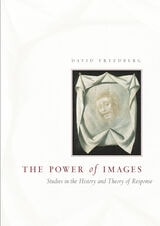
The Power of Images
Studies in the History and Theory of ResponseDavid Freedberg
University of Chicago Press, 1989
"This is an engaged and passionate work by a writer with powerful convictions about art, images, aesthetics, the art establishment, and especially the discipline of art history. It is animated by an extraordinary erudition."—Arthur C. Danto, The Art Bulletin
"Freedberg's ethnographic and historical range is simply stunning. . . . The Power of Images is an extraordinary critical achievement, exhilarating in its polemic against aesthetic orthodoxy, endlessly fascinating in its details. . . . This is a powerful, disturbing book."—T. J. Jackson Lears, Wilson Quarterly
"Freedberg helps us to see that one cannot do justice to the images of art unless one recognizes in them the entire range of human responses, from the lowly impulses prevailing in popular imagery to their refinement in the great visions of the ages."—Rudolf Arnheim, Times Literary Supplement
The Pragmatic Mind
Explorations in the Psychology of BeliefMark Bauerlein
Duke University Press, 1997
Bauerlein extracts from Emerson, James, and Peirce an intellectual focus that can be used to advance the broad social and academic reforms that the new pragmatists hail. He claims that, in an effort to repudiate the phony universalism of much contemporary theory, the new generation of theorists has ignored the fact that its visions of pragmatic action are grounded in this "old" school, not just in a way of doing things but also in a way of thinking about things. In other words, despite its inclination to regard psychological questions as irrelevant, Bauerlein shows that the pragmatic method demands a pragmatic mind—that is, a concept of cognition, judgment, habit, and belief. He shows that, in fact, such a concept of mind does exist, in the work of the "old" pragmatists.
The Professions
Roles and RulesWilbert Ellis Moore
Russell Sage Foundation, 1970
The Protean Self
Human Resilience in an Age of FragmentationRobert Jay Lifton
University of Chicago Press, 1999
The Psychic Hold of Slavery
Legacies in American Expressive CultureSoyica Diggs Colbert, Robert J. Patterson, and Aida Levy-Hussen
Rutgers University Press, 2016

The Psychological Assessment of Political Leaders
With Profiles of Saddam Hussein and Bill ClintonJerrold M. Post, Editor
University of Michigan Press, 2005
In an age when world affairs are powerfully driven by personality, politics require an understanding of what motivates political leaders such as Hussein, Bush, Blair, and bin Laden. Through exacting case studies and the careful sifting of evidence, Jerrold Post and his team of contributors lay out an effective system of at-a-distance evaluation. Observations from political psychology, psycholinguistics and a range of other disciplines join forces to produce comprehensive political and psychological profiles, and a deeper understanding of the volatile influences of personality on global affairs.
Even in this age of free-flowing global information, capital, and people, sovereign states and boundaries remain the hallmark of the international order -- a fact which is especially clear from the events of September 11th and the War on Terrorism.
Jerrold M. Post, M.D., is Professor of Psychiatry, Political Psychology, and International Affairs, and Director of the Political Psychology Program at George Washington University. He is the founder of the CIA's Center for the Analysis of Personality and Political Behavior.

The Psychological Mystique
Stewart Justman
Northwestern University Press, 1998

The Psychology of Character
Rudolf Allers
Catholic University of America Press, 2022

The Psychology of Team Sports
Keith Page Henschen
FiT Publishing, 2003
Every fan knows that individual talent is vital to a team. But sport psychologists understand that the key to success is to incorporate talent into a supportive team unit. The editors of Psychology of Team Sports have assembled a variety of articles to address the psychological issues related to team sport activities, on and off the court or field.
Chapter 1 introduces a three-phase model to cut through the complexities associated with team sports, and chapters 2 through 12 offer theoretical and practical advice. The Psychology of Team Sports explores the discusses the major theoretical concepts related to team sport activities, as well as experiences of sport psychologists who have worked with professionals and national teams.
The Psychology of World Religions and Spiritualities
An Indigenous PerspectiveTimothy A. Sisemore
Templeton Press, 2020
With this goal in mind, editors Timothy Sisemore and Joshua Knabb have made one of the world’s major religions the subject of a separate chapter. In addition, they have arranged for each chapter to be written by a psychologist who practices—or is culturally connected with—that religion. This marks the book’s unique contribution to the field: it is the product of people who have lived the world’s religions, not merely studied them. By taking such a respectful approach, the book promotes an appreciation for the ways that religious belief animates, inspires, and instructs its adherents. Moreover, the indigenous point-of-view of these essays will help scholars identify their own biases when researching religious groups, allowing them to produce more accurate and holistic analyses.
Psychologists understand that religion and spirituality provide meaning and purpose to billions of people around the globe. But the actual experience of these beliefs eludes the grasp of the reductionistic methods of science. With this resource at their side, psychologists in academic and clinical settings will be equipped to understand religious experience from the bottom-up, and honor the beliefs and practices of the people they are trying to help.

The Quality of American Life
Perceptions, Evaluations, and SatisfactionsAngus Campbell
Russell Sage Foundation, 1976
The Queerness of Home
Gender, Sexuality, and the Politics of Domesticity after World War IIStephen Vider
University of Chicago Press, 2021
From the Stonewall riots to the protests of ACT UP, histories of queer and trans politics have almost exclusively centered on public activism. In The Queerness of Home, Stephen Vider turns the focus inward, showing that the intimacy of domestic space has been equally crucial to the history of postwar LGBTQ life.
Beginning in the 1940s, LGBTQ activists looked increasingly to the home as a site of connection, care, and cultural inclusion. They struggled against the conventions of marriage, challenged the gendered codes of everyday labor, reimagined domestic architecture, and contested the racial and class boundaries of kinship and belonging. Retelling LGBTQ history from the inside out, Vider reveals the surprising ways that the home became, and remains, a charged space in battles for social and economic justice, making it clear that LGBTQ people not only realized new forms of community and culture for themselves—they remade the possibilities of home life for everyone.
The Quest for Sexual Health
How an Elusive Ideal Has Transformed Science, Politics, and Everyday LifeSteven Epstein
University of Chicago Press, 2022
Since the 1970s, health professionals, researchers, governments, advocacy groups, and commercial interests have invested in the pursuit of something called "sexual health." Under this expansive banner, a wide array of programs have been launched, organizations founded, initiatives funded, products sold—and yet, no book before this one asks: What does it mean to be sexually healthy? When did people conceive of a form of health called sexual health? And how did it become the gateway to addressing a host of social harms and the reimagining of private desires and public dreams?
Conjoining "sexual" with "health" changes both terms: it alters how we conceive of sexuality and transforms what it means to be healthy, prompting new expectations of what medicine can provide. Yet the ideal of achieving sexual health remains elusive and open-ended, and the benefits and costs of promoting it are unevenly distributed across genders, races, and sexual identities. Rather than a thing apart, sexual health is intertwined with nearly every conceivable topical debate—from sexual dysfunction to sexual violence, from reproductive freedom to the practicalities of sexual contact in a pandemic. In this book Steven Epstein analyzes the rise, proliferation, uptake, and sprawling consequences of sexual health activities, offering critical tools to assess those consequences, expand capacities for collective decision making, and identify pathways that promote social justice.
The Reality of Illusion
An Ecological Approach to Cognitive Film TheoryJoseph D. Anderson
Southern Illinois University Press, 1998
Anderson investigates how viewers, with their mental capacities designed for survival, respond to particular aspects of filmic structure—continuity, diegesis, character development, and narrative—and examines the ways in which rules of visual and aural processing are recognized and exploited by filmmakers. He uses Orson Welles’s Citizen Kane to disassemble and redefine the contemporary concept of character identification; he addresses continuity in a shot-by-shot analysis of images from Casablanca; and he uses a wide range of research studies, such as Harry F. Harlow’s work with infant rhesus monkeys, to describe how motion pictures become a substitute or surrogate reality for an audience. By examining the human capacity for play and the inherent potential for illusion, Anderson considers the reasons viewers find movies so enthralling, so emotionally powerful, and so remarkably real.
The Reason of Following
Christology and the Ecstatic IRobert P. Scharlemann
University of Chicago Press, 1991
Scharlemann presents a christological phenomenology of the self, tracing the connections between the "I am" of the God who spoke to Moses, the "I am" of Christ, and the "I am" of autonomous self-identification. How, he asks, can the self that spontaneously responds to Jesus' "Follow me!" be compared with the everyday, autonomous self? What is the nature of "following" on the part of those who answer the summons of one whose name is "I am"? Pursuing these questions, Scharlemann develops a christological phenomenology of the self—an account in which following means not the expression of the self in action or reflection but rather self-discovery in another person.
With a deep sense of both culture and philosophy, Scharlemann distinguishes the forms of reason involved in "following" from those in ethics, aesthetics, and other modes of religious philosophic thought. His penetrating readings of nineteenth- and twentieth-century German theological and philosophical traditions provide an introduction to lesser-known thinkers such as Hermann and Picht as well as a profound critique of major figures such as Descartes, Heidegger, Fichte, and Kant.
Finally Scharlemann outlines a program for a more systematic and rounded presentation of what Christian doctrine might mean in the contemporary world. His work will be of interest to students of theology and philosophy alike.

The Recovery of Unconscious Memories
Hypermnesia and ReminiscenceMatthew Hugh Erdelyi
University of Chicago Press, 1996
Sketching out the scientific foundations for a unified theory of repression that integrates the findings of the laboratory and the clinic, this comprehensive and authoritative synthesis of a century of memory research will be crucial reading for psychologists and clinicians, as well as forensic and legal professionals interested in the recovery of "inaccessible" memories.
"By debunking hypnosis, [Erdelyi] has allowed the debate on memory to move forward. . . . Erdelyi's work on hypermnesia is very important to our understanding of the mechanisms of memory and the brain."—Janet D. Feigenbaum, Times Literary Supplement

The Repression of Psychoanalysis
Otto Fenichel and the Political FreudiansRussell Jacoby
University of Chicago Press, 1986
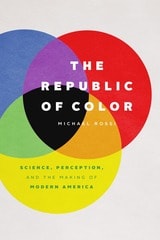
The Republic of Color
Science, Perception, and the Making of Modern AmericaMichael Rossi
University of Chicago Press, 2019
For a nation in the grip of profound economic, cultural, and demographic crises, the standardization of color became a means of social reform—a way of sculpting the American population into one more amenable to the needs of the emerging industrial order. Delineating color was also a way to characterize the vagaries of human nature, and to create ideal structures through which those humans would act in a newly modern American republic. Michael Rossi’s compelling history goes far beyond the culture of the visual to show readers how the control and regulation of color shaped the social contours of modern America—and redefined the way we see the world.
The Resilient Self
Gender, Immigration, and Taiwanese AmericansGu, Chien-Juh
Rutgers University Press, 2017
Most of the women immigrated as dependents when their U.S.-educated husbands found professional jobs upon graduation. Constrained by their dependent visas, these women could not work outside of the home during the initial phase of their settlement. The significant contrast of their lives before and after immigration—changing from successful professionals to foreign housewives—generated feelings of boredom, loneliness, and depression. Mourning their lost careers and lacking fulfillment in homemaking, these highly educated immigrant women were forced to redefine the meaning of work and housework, which in time shaped their perceptions of themselves and others in the family, at work, and in the larger community.
The Restoration of the Self
Heinz Kohut
University of Chicago Press, 2009
In his foundational work The Restoration of the Self, noted psychoanalyst Heinz Kohut boldly challenges what he called “the limits of classical analytic theory” and the Freudian orthodoxy. Here Kohut proposes a “psychology of the self” as a theory in its own right—one that can stand beside the teachings of Freud and Jung.
Using clinical data, Kohut explores issues such as the role of narcissism in personality, when a patient can be considered cured, and the oversimplifications and social biases that unduly influenced Freudian thought. This volume puts forth some of Kohut’s most influential ideas on achieving emotional health through a balanced, creative, and joyful sense of self.
"Kohut speaks clearly from his identity as a psychoanalyst-healer, showing that he is more of a psychoanalyst than most, and yet calling for major theoretical revisions including a redefinition of the essence of psychoanalysis.”—American Journal of Psychotherapy
The Returns of Fetishism
Charles de Brosses and the Afterlives of an IdeaCharles de Brosses, Rosalind C. Morris, and Daniel H. Leonard
University of Chicago Press, 2017
The product of de Brosses’s autodidactic curiosity and idiosyncratic theories of language, On the Worship of Fetish Gods is an enigmatic text that is often difficult for contemporary audiences to assess. In a thorough introduction to the text, Leonard situates de Brosses’s work within the cultural and intellectual milieu of its time. Then, Morris traces the concept of fetishism through its extraordinary permutations as it was picked up and transformed by the fields of philosophy, comparative religion, political economy, psychoanalysis, and anthropology. Ultimately, she breaks new ground, moving into and beyond recent studies by thinkers such as William Pietz, Hartmut Böhme, and Alfonso Iacono through illuminating new discussions on topics ranging from translation issues to Africanity and the new materialisms.
The Sad Citizen
How Politics Is Depressing and Why It MattersChristopher Ojeda
University of Chicago Press, 2025
For many citizens, politics is depressing. How has this come to be the norm? And, how is it influencing democracy?
From rising polarization to climate change, today’s politics are leaving many Western democracies in the throes of malaise. While anger, anxiety, and fear are loud emotions that powerfully activate voters, depression is quiet, demobilizing, and less visible as a result. Yet its pervasiveness is cause for concern: after all, democracy should empower citizens.
In The Sad Citizen, Christopher Ojeda draws on wide-ranging data from the United States and beyond to explain how politics is depressing, why this matters, and what we can do about it. Integrating insights from political science, sociology, psychology, and other fields, The Sad Citizen exposes the unhappy underbelly of contemporary politics and offers fresh ideas to strengthen democracy and help citizens cope with the stress of politics.
The Sanctity of Social Life
Physician's Treatment of Critically Ill PatientsDiana Crane
Russell Sage Foundation, 1975
The Scar of Visibility
Medical Performances and Contemporary ArtPetra Kuppers
University of Minnesota Press, 2007

The Science and Politics of Racial Research
William H. Tucker
University of Illinois Press, 1994

The Science of Character
Human Objecthood and the Ends of Victorian RealismS. Pearl Brilmyer
University of Chicago Press, 2022
In 1843, the Victorian philosopher John Stuart Mill called for the establishment of a new science, “the science of the formation of character.” Although Mill’s proposal failed as scientific practice, S. Pearl Brilmyer maintains that it found its true home in realist fiction of the period, which employed the literary figure of character to investigate the nature of embodied experience. Bringing to life Mill’s unrealized dream of a science of character, novelists such as George Eliot, Thomas Hardy, and Olive Schreiner turned to narrative to explore how traits and behaviors in organisms emerge and develop, and how aesthetic features—shapes, colors, and gestures—come to take on cultural meaning through certain categories, such as race and sex. Engaged with materialist science and philosophy, these authors transformed character from the liberal notion of the inner truth of an individual into a materially determined figuration produced through shifts in the boundaries between the body’s inside and outside. In their hands, Brilmyer argues, literature became a science, not in the sense that its claims were falsifiable or even systematically articulated, but in its commitment to uncovering, through a fictional staging of realistic events, the laws governing physical and affective life. The Science of Character redraws late Victorian literary history to show how women and feminist novelists pushed realism to its aesthetic and philosophical limits in the crucial span between 1870 and 1920.
The Science of Deception
Psychology and Commerce in AmericaMichael Pettit
University of Chicago Press, 2012
The Science of Play
How to Build Playgrounds That Enhance Children's DevelopmentSusan G. Solomon
University Press of New England, 2014