Results by title
1017 books match the query 'Reference' and 221 start with t

The New Century
Bergsonism, Phenomenology, and Responses to Modern ScienceEdited by Keith Ansell-Pearson and Alan D. Schrift
University of Chicago Press, 2010
From Kant to Kierkegaard, from Hegel to Heidegger, continental philosophers have indelibly shaped the trajectory of Western thought since the eighteenth century. Although much has been written about these monumental thinkers, students and scholars lack a definitive guide to the entire scope of the continental tradition. The most comprehensive reference work to date, this eight-volume History of Continental Philosophy will both encapsulate the subject and reorient our understanding of it. Beginning with an overview of Kant’s philosophy and its initial reception, the History traces the evolution of continental philosophy through major figures as well as movements such as existentialism, phenomenology, hermeneutics, and poststructuralism. The final volume outlines the current state of the field, bringing the work of both historical and modern thinkers to bear on such contemporary topics as feminism, globalization, and the environment. Throughout, the volumes examine important philosophical figures and developments in their historical, political, and cultural contexts.
The first reference of its kind, A History of Continental Philosophy has been written and edited by internationally recognized experts with a commitment to explaining complex thinkers, texts, and movements in rigorous yet jargon-free essays suitable for both undergraduates and seasoned specialists. These volumes also elucidate ongoing debates about the nature of continental and analytic philosophy, surveying the distinctive, sometimes overlapping characteristics and approaches of each tradition. Featuring helpful overviews of major topics and plotting road maps to their underlying contexts, A History of Continental Philosophy is destined to be the resource of first and last resort for students and scholars alike.
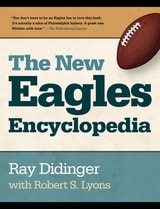
The New Eagles Encyclopedia
Ray Didinger
Temple University Press, 2014
Didinger presents a year-by-year history of the franchise from its inception in 1933 through the 2013 season. There are profiles of more than 100 players, past and present, as well as every head coach and owner along with dozens of new photographs and stats, stats, and more stats.
The New Eagles Encyclopedia includes:
* More player profiles including new entries on Nick Foles, LeSean McCoy and Michael Vick.
* The end of the Andy Reid era and the arrival of Chip Kelly.
* Expanded chapters on Eagles in the Hall of Fame and other milestone moments.
* Summaries of every post-season game.
* A new chapter on the Eagles-Cowboys rivalry.
An essential addition to every fan's bookshelf, The New Eagles Encyclopedia is the definitive information source on the Philadelphia Eagles.
This book is not sanctioned by the NFL or its teams.
The Nietzsche Canon
A Publication History and BibliographyWilliam H. Schaberg
University of Chicago Press, 1996
Included for the first time in any language is an extensive account of Nietzsche's finances and his relationships with his publishers. Schaberg reveals a man who was obsessed with money, fought bitterly with his publishers, complained about his readers, and all the while continued to produce more and more books that went unread. He also reveals the influential role of Nietzsche's sister Elizabeth, who provoked disputes between Nietzsche and his publisher during her brother's lifetime and deliberately falsified information after his death.

The Organs of J.S. Bach
A HandbookChristoph Wolff and Markus Zepf
University of Illinois Press, 2012

The Outsiders
The Western Experience in India and ChinaRhoads Murphey
University of Michigan Press, 1977
This book examines how Western traders, missionaries, officials, and imperial powers encountered, interpreted, and attempted to influence India and China, highlighting the cultural misunderstandings and unequal power dynamics that shaped East-West relations.
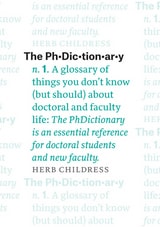
The PhDictionary
A Glossary of Things You Don't Know (but Should) about Doctoral and Faculty LifeHerb Childress
University of Chicago Press, 2016
With more than two decades as a doctoral student, college teacher, and administrator, Herb Childress has tripped over almost every possible misunderstood term, run up against every arcane practice, and developed strategies to deal with them all. He combines current data and personal stories into memorable definitions of 150 key phrases and concepts graduate students will need to know (or pretend to know) as they navigate their academic careers. From ABD to white paper—and with buyout, FERPA, gray literature, and soft money in between—each entry contains a helpful definition and plenty of relevant advice. Wry and knowledgeable, Childress is the perfect guide for anyone hoping to scale the ivory tower.
The Phenomenological Study of Religion
Key Texts and SourcesChristina M. Gschwandtner
Northwestern University Press, 2026
Presenting a wide-ranging selection of works and commentary in religious phenomenology
Phenomenology is a central method employed to study religious phenomena within religious studies, philosophy of religion, and philosophical theology. This expertly edited collection brings together historical sources and newly commissioned essays from various ways of investigating religion phenomenologically both to diversify the field and to make available important works that have not been previously translated into English. The Phenomenological Study of Religion includes not only representative texts from well-known phenomenological philosophers and scholars of religion but also selections from significant thinkers that have not been studied as widely, along with contributions from leading contemporary voices. This volume offers scholars and students at all levels of expertise broad exposure to the various configurations of the phenomenological study of religion.

The Poetics of Derek Walcott
Intertextual Perspectives, Volume 96Gregson Davis
Duke University Press, 0
Other contributions by literary scholars in North America and the Caribbean focus on fundamental dimensions of Walcott’s craft and on such thematic preoccupations as the intersection of pictorial and verbal modes of representation, the deployment of nuanced intertextual strategies (especially in relation to the Greco-Roman canon), the invention of a viable artistic identity in a postcolonial intercultural milieu, and the psychosocial modeling of the process of literary apprenticeship.
Contributors. Edward Baugh, Peter Burian, Gregson Davis, Carol Dougherty, Joseph Farrell, Judith Harris, Timothy Hofmeister, Derek Walcott
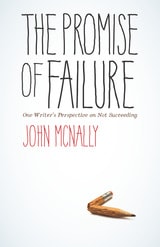
The Promise of Failure
One Writer's Perspective on Not SucceedingJohn McNally
University of Iowa Press, 2018
The Promise of Failure is part memoir of the writing life, part advice book, and part craft book; sometimes funny, sometimes wrenching, but always honest. McNally uses his own life as a blueprint for the writer’s daily struggles as well as the existential ones, tackling subjects such as when to quit and when to keep going, how to deal with depression, what risking something of yourself means, and ways to reenergize your writing through reinvention.
What McNally illuminates is how rejection, in its best light, is another element of craft, a necessary stage to move the writer from one project to the next, and that it’s best to see rejection and failure on a life-long continuum so that you can see the interconnectedness between failure and success, rather than focusing on failure as a measure of self-worth. As brutally candid as McNally can sometimes be, The Promise of Failure is ultimately an inspiring book—never in a Pollyannaish self-help way. McNally approaches the reader as a sympathetic companion with cautionary tales to tell. Written by an author who has as many unpublished books under his belt as published ones, The Promise of Failure is as much for the newcomer as it is for the established writer.
The Psychology of World Religions and Spiritualities
An Indigenous PerspectiveTimothy A. Sisemore
Templeton Press, 2020
With this goal in mind, editors Timothy Sisemore and Joshua Knabb have made one of the world’s major religions the subject of a separate chapter. In addition, they have arranged for each chapter to be written by a psychologist who practices—or is culturally connected with—that religion. This marks the book’s unique contribution to the field: it is the product of people who have lived the world’s religions, not merely studied them. By taking such a respectful approach, the book promotes an appreciation for the ways that religious belief animates, inspires, and instructs its adherents. Moreover, the indigenous point-of-view of these essays will help scholars identify their own biases when researching religious groups, allowing them to produce more accurate and holistic analyses.
Psychologists understand that religion and spirituality provide meaning and purpose to billions of people around the globe. But the actual experience of these beliefs eludes the grasp of the reductionistic methods of science. With this resource at their side, psychologists in academic and clinical settings will be equipped to understand religious experience from the bottom-up, and honor the beliefs and practices of the people they are trying to help.
The Public Librarian's Guide to Answering Health Questions
Bobbi L. Newman and Carolyn Martin
American Library Association, 2026
It often starts with a patron’s simple question. Librarians play a central role in helping people navigate information, evaluate sources, and find answers they can trust. That includes health information, something many people come to the library looking for every day. Maybe they need more information about a diagnosis, a medication, or something they came across online. Perhaps they’re helping a family member with a medical issue or trying to better understand their own health. These are everyday interactions in libraries. And this book is about helping you approach them with confidence, clarity, and a strong sense of your role. You do not need a medical background to provide excellent health information service — just the right frameworks, tools, and reassurance to apply your core skills in a health context. No matter your comfort level or prior experience, you will
- understand why health information work is both practical and people-centered, requiring an approach that combines information skills with communication and care;
- gain an overview of health information and the role libraries play in supporting health literacy;
- learn about evaluating health information and identifying trustworthy, evidence-based sources;
- receive guidance on building and maintaining a relevant, reliable collection;
- walk through health reference interview scenarios, bolstered with strategies for effective and respectful interactions;
- discover reflection prompts to help you consider your own approach, your library’s practices, and the ways you can continue to build confidence over time;
- grasp the ethical and legal considerations related to health information work, such as privacy, boundaries, and professional responsibilities;
- find practical wisdom for sustaining yourself in this work and building practices that support your own long-term well-being; and
- get access to a companion website that provides checklists, tools, and additional resources you can use in your day-to-day work.
The Quest for Authority and Honor in the American Professions, 1750-1900
Samuel Haber
University of Chicago Press, 1991
Contrary to those who regard the professions as exemplary and up-to-date specimens of social modernization or economic monopoly, Haber argues that they bring both preindustrial and predemocratic ideals and standards into our modern world. He proposes that the values embedded in the professions—authority and honor, fused with duty and responsibility—have their origins in the class position and occupational prescriptions of eighteenth-century English gentlemen. Such an argument has implications for the understanding of American society; it underscores the cumulative and variegated nature of our culture and suggests the drawbacks of trying to describe society as a system. It also accords with Haber's endeavor to write a history that rescues for description and analysis mixed motives, composite conditions, and persons and parties acting upon contradictory explanatory schemes.
Haber traces the cultural evolution of the professions through three stages—establishment (1750-1830), disestablishment (1830-1880), and reestablishment (1880-1900). He shows that when the gentlemanly class declined in the United States, the professions maintained status even in somewhat hostile settings. The professions thus came to be seen as a middle way between the pursuits of laborers and those of capitalists. Massive in scale and ambition, this book will have a formidable impact among scholars newly attuned to the history of American middle-class culture.
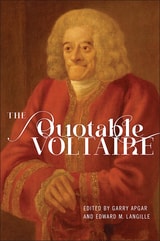
The Quotable Voltaire
Garry Apgar
Bucknell University Press, 2021
Drawing from a wide range of his publications, private letters, and remarks recorded by his contemporaries, The Quotable Voltaire includes material never before gathered in a single volume. English translations appear alongside the original French, and each quote is thoroughly indexed and referenced, with page numbers for both the first known publication edition of each entry and the most recent edition of Voltaire’s works. The book also features over 400 quotes about Voltaire, including commentary by eighteenth-century luminaries like Samuel Johnson, Catherine the Great, Casanova, and John Adams, as well as an eclectic assortment of modern-day personages ranging from Winston Churchill and Jorge Luis Borges to Mae West and Mike Tyson.
Lavishly illustrated with nearly three dozen images of Voltaire-related art, this collection opens with a scholarly essay that recounts the great man’s life and reflects on his outsized influence on Western culture. Whether you are a Voltaire scholar or a neophyte, The Quotable Voltaire is the perfect introduction to a brilliant mind.
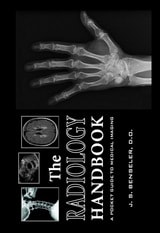
The Radiology Handbook
A Pocket Guide to Medical ImagingJ. S. Benseler
Ohio University Press, 2006
Designed for busy medical students, The Radiology Handbook is a quick and easy reference for any practitioner who needs information on ordering or interpreting images.
The book is divided into three parts:
- Part I presents a table, organized from head to toe, with recommended imaging tests for common clinical conditions.
- Part II is organized in a question and answer format that covers the following topics: how each major imaging modality works to create an image; what the basic precepts of image interpretation in each body system are; and where to find information and resources for continued learning.
- Part III is an imaging quiz beginning at the head and ending at the foot. Sixty images are provided to self-test knowledge about normal imaging anatomy and common imaging pathology.
Published in collaboration with the Ohio University College of Osteopathic Medicine, The Radiology Handbook is a convenient pocket-sized resource designed for medical students and non radiologists.
The Reckoning
The Murder of Christopher MarloweCharles Nicholl
University of Chicago Press, 1995
Here, in a tour de force of scholarship and ingenuity, Charles Nicholl penetrates four centuries of obscurity to reveal not only a complex and unsettling story of entrapment and betrayal, chimerical plot and sordid felonies, but also a fascinating vision of the underside of the Elizabethan world.
"Provides the sheer enjoyment of fiction, and might just be true."—Michael Kenney, Boston Globe
"Mr. Nicholl's glittering reconstruction of Marlowe's murder is only one of the many fascinating aspects of this book. Indeed, The Reckoning is equally compelling for its masterly evocation of a vanished world, a world of Elizabethan scholars, poets, con men, alchemists and spies, a world of Machiavellian malice, intrigue and dissent."—Michiko Kakutani, New York Times
"The rich substance of the book is his detail, the thick texture of betrayal and evasion which was Marlowe's life."—Thomas Flanagan, Washington Post Book World
Winner of the Crime Writer's Gold Dagger Award for Nonfiction Thriller
The Redskins Encyclopedia
Michael Richman
Temple University Press, 2007
"Hail to the Redskins" and Redskin-mania have consumed the nation's capital since 1937, the Redskins' fist year in Washington. And the fervor remains as strong, if not stronger, today.
Amply illustrated with 200 photos of players, coaches, and fans, The Redskins Encyclopedia recounts the franchise's first 75 seasons, reliving the great -- and not so great -- moments in the team's storied history, and the men who helped make Sundays memorable.
Fans will read about:
--Coaches like George Allen, the eccentric, passionate man who left a legacy as an NFL pioneer, and Joe Gibbs, who formed a D-Y-N-A-S-T-Y
--Players like star running back and all-time Redskins ground-gainer John Riggins, who once told Supreme Court Justice Sandra Day O'Connor to "loosen up, Sandy baby," and Doug Williams, the first black quarterback to win a Super Bowl and Super Bowl MVP honors
--The franchise's golden run of four Super Bowl appearances -- and three wins -- in the 1980s and early 1990s
--The legendary Redskins-Cowboys rivalry
--A year-by-year history of the team from 1932 to the present, with stats from each season
--Individual profiles of more than 100 Redskins players -- from Sammy Baugh to Darrell Green to Art Monk to Sonny Jurgensen to Charley Taylor to Joe Theismann
With an unparalleled collection of anecdotes, quotes, trivia, and hard-to-find information, The Redskins Encyclopedia is a must-have book for any fan who has ever bled burgundy and gold.
The Regional Vocabulary of Texas
By E. Bagby Atwood
University of Texas Press, 1962
The vocabulary of Texas, and of the Southwest, has a character that sets it apart from all others. It is to some extent an amalgamation of words brought from other sections. A more important ingredient, however, has been a large group of words that initially grew into usage in Texas itself.
Utilizing a thorough knowledge of language and a remarkable insight into linguistics, E. Bagby Atwood has compiled a reference book for scholars, writers, and laypeople whose interests involve the use of this vocabulary. It is a well-balanced book, designed to present to the reader not only the actual vocabulary in use but also the area involved, topical surveys of words used, their backgrounds, and geographical aspects of their usage. Easterners and Westerners alike will relish the unique flavor of the Southwestern vocabulary.
The Reptiles and Amphibians of Alabama
Robert H. Mount
University of Alabama Press, 1980
Generously illustrated, it contains photographs and range maps for each species, showing the specific locality from which each specimen on record was collected. The text includes keys, detailed descriptions, accounts of habitats and life histories, remarks about variations and ecological disturbances, as well as general information on such topics as collecting and care in captivity. The volume is an essential guide for herpetologists of all ages.
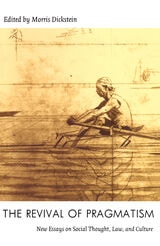
The Revival of Pragmatism
New Essays on Social Thought, Law, and CultureMorris Dickstein, ed.
Duke University Press, 1998
As the twenty-five intellectuals who take part in this discussion show, pragmatism has become a complex terrain on which a rich variety of contemporary debates have been played out. Contributors such as Richard Rorty, Stanley Cavell, Nancy Fraser, Robert Westbrook, Hilary Putnam, and Morris Dickstein trace pragmatism’s cultural and intellectual evolution, consider its connection to democracy, and discuss its complex relationship to the work of Emerson, Nietzsche, and Wittgenstein. They show the influence of pragmatism on black intellectuals such as W. E. B. Du Bois, explore its view of poetic language, and debate its effects on social science, history, and jurisprudence. Also including essays by critics of the revival such as Alan Wolfe and John Patrick Diggins, the volume concludes with a response to the whole collection from Stanley Fish.
Including an extensive bibliography, this interdisciplinary work provides an in-depth and broadly gauged introduction to pragmatism, one that will be crucial for understanding the shape of the transformations taking place in the American social and philosophical scene at the end of the twentieth century.
Contributors. Richard Bernstein, David Bromwich, Ray Carney, Stanley Cavell, Morris Dickstein, John Patrick Diggins, Stanley Fish, Nancy Fraser, Thomas C. Grey, Giles Gunn, Hans Joas, James T. Kloppenberg, David Luban, Louis Menand, Sidney Morgenbesser, Richard Poirier, Richard A. Posner, Ross Posnock, Hilary Putnam, Ruth Anna Putnam, Richard Rorty, Michel Rosenfeld, Richard H. Weisberg, Robert B. Westbrook, Alan Wolfe
The Rhetoric of Law
Austin Sarat and Thomas R. Kearns, Editors
University of Michigan Press, 1996
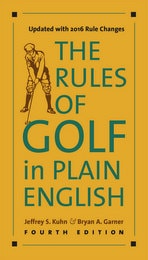
The Rules of Golf in Plain English, Fourth Edition
Jeffrey S. Kuhn and Bryan A. Garner
University of Chicago Press, 2016
Two hundred years of revisions have rendered these Rules opaque and stylistically inconsistent. Those intricacies can be intimidating for anyone hoping to pick up the game and frustrating for longtime players who just want to settle a dispute. Both lawyers and avid golfers, Jeffrey S. Kuhn and Bryan A. Garner recognized the difficulties that the language of the Rules of Golf has created, especially in a sport that expects players to call penalties on themselves. By reworking the Rules line by line, word by word, they have produced an accessible resource that no golfer—from the duffer to the pro—should be without.
This new edition of The Rules of Golf in Plain English is fully aligned with the latest United States Golf Association updates and continues to be published with their permission and encouragement. Clear and concise, this reference will allow players to spend more time playing through and less time scratching their heads.
The SBL Handbook of Style
SBL Press, 2014
The definitive source for how to write and publish in the field of biblical studies
The long-awaited second edition of the essential style manual for writing and publishing in biblical studies and related fields includes key style changes, updated and expanded abbreviation and spelling-sample lists, a list of archaeological site names, material on qur’anic sources, detailed information on citing electronic sources, and expanded guidelines for the transliteration and transcription of seventeen ancient languages.
Features:
- Expanded lists of abbreviations for use in ancient Near Eastern, biblical, and early Christian studies
- Information for transliterating seventeen ancient languages
- Exhaustive examples for citing print and electronic sources
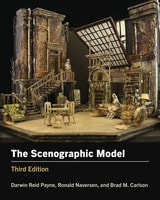
The Scenographic Model
Third EditionDarwin Reid Payne, Ronald Naversen, and Brad M. Carlson
Southern Illinois University Press, 2025
An authoritative guide to modelmaking for theater
This third edition of noted scenographer Darwin Reid Payne’s landmark text builds upon Payne’s theories and exercises to provide a modern exploration of the practice of theatrical modelmaking. With chapters on traditional and contemporary materials, tools, and techniques, the book serves as a foundational guide to understanding the historical, theoretical, and practical aspects of scenographic modelmaking, making it essential for the beginner, generalist, and professional design practitioner.
The volume begins with a brief history of the scenographic model and explores how modelmaking has adapted to changes in materials, technology, and commercial influences over time. It details setting up a safe, productive model-building studio before introducing the types and purposes of various scenographic models. It then instructs the reader in constructing common model elements and accessories. Later chapters explore how the models reveal stage space and create mood and atmosphere through tonal shading and lighting; discuss the use of found objects, collage techniques, and projection models in scenic design; and delve into 3D printing and computer routering. The final chapter provides information on various aspects of photography and image sharing related to design and production communication.
This comprehensive text provides information not just from theater but also from other modeling disciplines and sources, including architecture, film, dioramas, dollhouse modeling, and model railroading. A useful resource for high school, community college, university, and community theater enthusiasts, it is an excellent reference book for theater designers throughout the country.
The Silent Film Companion
A Recovered and Expanded HistoryLiz Clarke
Rutgers University Press, 2027
Silent film is more than just a cinema of firsts, greats, or classics. It is a cinema of experimentation, ambition, and connection. To watch a silent film is to be transported into another world. The Silent Film Companion seeks to broaden the silent film canon by focusing on compelling non-canonical films from around the globe, providing a fresh perspective and new view of silent cinema. With over fifty films discussed, this volume captures just a sliver of the many delights silent cinema has to offer. It encourages discovery, and rediscovery, of the world of silent cinema: one where the movies were still young, full of possibility, and eager to entice others to take part in a wonderful adventure.
Films covered are from fourteen countries, including Brazil, Mexico, China, Cuba, India, Italy, and Russia, and represent a diversity of subjects. Each chapter provides historical and cultural context to the film, the filmmakers, and a concise analysis of each film. The Silent Film Companion is a must-read for students and fans of silent cinema interested in seeing a side of silent cinema that is rarely explored.
The Spheres of Music
A Gathering of EssaysLeonard B. Meyer
University of Chicago Press, 2000
With the same sensitive insight and searching intelligence he has exhibited throughout his career, Meyer transcends the boundaries that so often separate fields of inquiry. The Spheres of Music joins music theory to history, history to culture, culture to aesthetics, aesthetics to psychology, and psychology back to theory. In so doing, the book highlights the complex interrelationships at the heart of the creation, comprehension, and history of music. Diverse and adventurous, The Spheres of Music presents an intriguing and impressive collection of Meyer's work.
"Ever since the publication of his Emotion and Meaning in Music . . . I have considered Leonard B. Meyer one of the keenest thinkers about music among us."—Winthrop Sargeant, The New Yorker
The Steelers Encyclopedia
Chuck Finder
Temple University Press, 2012
The pitiful Pittsburgh Pirates, established in 1933 by the inimitable “Chief,” Art Rooney Sr defied both belief and the odds by becoming the six-time Super Bowl champions that the Pittsburgh Steelers are today. They began as lovable losers, the Pirates, degenerating into the Same Old Steelers, the Steagles, and the Car-Pitts, but wound up one of professional sports’ most iconic franchises.
In The Steelers Encyclopedia, veteran sportswriter Chuck Finder nimbly chronicles this remarkable team from conception to Immaculate Reception to today. From turnovers to the Terrible Towel, Finder interviews nearly 100 ex-Steelers, coaches, front-office personnel, and fans, and includes more than 150 photographs—many of them never published before.
In The Steelers Encyclopedia, fans will—
Read about wild behind-the-scenes tales such as:
• Jack Lambert, the gap-toothed linebacker considered the game’s scariest player, screaming down a hallway clad in his undies, boots, and cowboy hat because he was afraid of a teammate’s prank snake
• One Super Bowl team making an unscheduled pit stop because they, um, imbibed too many celebratory refreshments after leaving the stadium
• Driving with the club’s legendary founding father, Art Rooney Sr., to his day job—the horse track
Get a look at the stars, the games, and the franchise:
• New details about the Rooneys, the sale of their team, the difficult times and decisions they faced in surviving, then thriving
• Characters ranging from bonus-baby Byron “Whizzer” White, a future U.S. Supreme Court Justice, to league MVPs Bill Dudley, Terry Bradshaw, and Johnny Unitas
• The parade of Hall of Fame ex-Steelers that continues in 2012 with Dermontti Dawson and Jack Butler . . . and includes one Canton honoree who was almost moved to a different position and another whose career took off upon ditching his glasses for contacts
• The nasal voice that provided the team’s historic soundtrack and belonged to the inventor of the Terrible Towel, Myron Cope
Learn the Steelers by the numbers:
• A year-by-year history of the team from 1933 to the present, with stats from each season and each Super Bowl
• Chapters about each Super Bowl and the scouting staff responsible for building champions
• Individual profiles of every Steelers head coach and more than100 Steelers players—from Jerome Bettis to Rod Woodson
• Revealing the man who wrote the Steelers polka, the kid who named the Steel Curtain, and the first weightlifting coach of the Super Steelers
• The cheerleaders—both female and male
For everyone who lives in Steeler Nation, this is the most comprehensive history of football’s most beloved franchise, the Black and Gold.
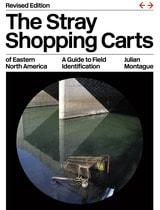
The Stray Shopping Carts of Eastern North America
A Guide to Field IdentificationJulian Montague
University of Chicago Press, 2023
Abandoned shopping carts are everywhere, and yet we know so little about them. Where do they come from? Why are they there? Their complexity and history baffle even the most careful urban explorer.
Thankfully, artist Julian Montague has created a comprehensive and well-documented taxonomy with The Stray Shopping Carts of Eastern North America. Spanning thirty-three categories from damaged, fragment, and plow crush to plaza drift and bus stop discard, it is a tonic for times defined increasingly by rhetoric and media and less by the plain objects and facts of the real world. Montague’s incomparable documentation of this common feature of the urban landscape helps us see the natural and man-made worlds—and perhaps even ourselves—anew.
First published in 2006 to great perplexity and acclaim alike, Montague’s book now appears in refreshed and expanded form. Told in an exceedingly dry voice, with full-color illustrations and photographs throughout, it is both rigorous and absurd, offering a strangely compelling vision of how we approach, classify, and understand the environments around us. A new afterword sheds light on the origins of the project.
The Subversive Copy Editor, Second Edition
Advice from Chicago (or, How to Negotiate Good Relationships with Your Writers, Your Colleagues, and Yourself)Carol Fisher Saller
University of Chicago Press, 2016
In this second edition, Saller adds new chapters, on the dangers of allegiance to outdated grammar and style rules and on ways to stay current in language and technology. She expands her advice for writers on formatting manuscripts for publication, on self-editing, and on how not to be “difficult.” Saller’s own gaffes provide firsthand (and sometimes humorous) examples of exactly what not to do. The revised content reflects today’s publishing practices while retaining the self-deprecating tone and sharp humor that helped make the first edition so popular. Saller maintains that through carefulness, transparency, and flexibility, editors can build trust and cooperation with writers.
The Subversive Copy Editor brings a refreshingly levelheaded approach to the classic battle between writers and editors. This sage advice will prove useful and entertaining to anyone charged with the sometimes perilous task of improving the writing of others.
The Subversive Copy Editor
Advice from Chicago (or, How to Negotiate Good Relationships with Your Writers, Your Colleagues, and Yourself)Carol Fisher Saller
University of Chicago Press, 2009
Each year writers and editors submit over three thousand grammar and style questions to the Q&A page at The Chicago Manual of Style Online. Some are arcane, some simply hilarious—and one editor, Carol Fisher Saller, reads every single one of them. All too often she notes a classic author-editor standoff, wherein both parties refuse to compromise on the "rights" and "wrongs" of prose styling: "This author is giving me a fit." "I wish that I could just DEMAND the use of the serial comma at all times." "My author wants his preface to come at the end of the book. This just seems ridiculous to me. I mean, it’s not a post-face."
In The Subversive Copy Editor, Saller casts aside this adversarial view and suggests new strategies for keeping the peace. Emphasizing habits of carefulness, transparency, and flexibility, she shows copy editors how to build an environment of trust and cooperation. One chapter takes on the difficult author; another speaks to writers themselves. Throughout, the focus is on serving the reader, even if it means breaking "rules" along the way. Saller’s own foibles and misadventures provide ample material: "I mess up all the time," she confesses. "It’s how I know things."
Writers, Saller acknowledges, are only half the challenge, as copy editors can also make trouble for themselves. (Does any other book have an index entry that says "terrorists. See copy editors"?) The book includes helpful sections on e-mail etiquette, work-flow management, prioritizing, and organizing computer files. One chapter even addresses the special concerns of freelance editors.
Saller’s emphasis on negotiation and flexibility will surprise many copy editors who have absorbed, along with the dos and don’ts of their stylebooks, an attitude that their way is the right way. In encouraging copy editors to banish their ignorance and disorganization, insecurities and compulsions, the Chicago Q&A presents itself as a kind of alter ego to the comparatively staid Manual of Style. In The Subversive Copy Editor, Saller continues her mission with audacity and good humor.
The Supreme Court Review, 1970
Edited by Philip B. Kurland
University of Chicago Press Journals, 1970
The Supreme Court Review, 1999
Edited by Dennis J. Hutchinson, David A. Strauss, and Geoffrey R. Stone
University of Chicago Press Journals, 2000
Since it first appeared in 1960, The Supreme Court Review has won acclaim for providing a sustained and authoritative survey of the implications of the Court's most significant decisions. Consisting of diverse essays by distinguished lawyers, historians, and social scientists, each volume presents informed analyses of past and present opinions and discusses important public law issues that have come under Court consideration.
The Supreme Court Review, 2000
Edited by Dennis J. Hutchinson, David A. Strauss, and Geoffrey R. Stone
University of Chicago Press Journals, 2001
The Supreme Court Review keeps you at the forefront of the Court's most significant decisions by surveying its origins, reforms, and interpretations of American law and compelling you to consider the impacts of legal institutions and judicial opinion. Diverse essays of informed analyses of past and present opinions document the complexities of the Court and relevant public law issues. Legal scholars, lawyers, judges, historians, political scientists, economists, and journalists have won acclaim for their contributions to each volume.
The Teaching Guide for English for Dispute Resolution
Mastering Negotiation, Mediation, and Alternative Dispute ResolutionBarrie J. Roberts
University of Michigan Press, 2025
Each chapter of the textbook provides a ready-made lesson plan with a sample dispute, warm-up questions, background readings, follow-up questions, activities, and reflections, and The Teaching Guide supplements each chapter with:
- Support in the form of teaching tips, lesson plans, additional activities or role-plays, assessment suggestions, and resources for further exploration.
- Separate guidance for ESL and Legal English/Business English instructors that helps them select the material and activities best suited to their students’ interests and needs.
- Resources such as sample syllabi and activities with step-by-step instructions that make it easy to start teaching the textbook.
- An online companion site where instructors can download and send activities and role-plays directly to their students.
The Thinking Student's Guide to College
75 Tips for Getting a Better EducationAndrew Roberts
University of Chicago Press, 2010
Each fall, thousands of eager freshmen descend on college and university campuses expecting the best education imaginable: inspiring classes taught by top-ranked professors, academic advisors who will guide them to a prestigious job or graduate school, and an environment where learning flourishes outside the classroom as much as it does in lecture halls. Unfortunately, most of these freshmen soon learn that academic life is not what they imagined. Classes are taught by overworked graduate students and adjuncts rather than seasoned faculty members, undergrads receive minimal attention from advisors or administrators, and potentially valuable campus resources remain outside their grasp.
Andrew Roberts’ Thinking Student’s Guide to College helps students take charge of their university experience by providing a blueprint they can follow to achieve their educational goals—whether at public or private schools, large research universities or small liberal arts colleges. An inside look penned by a professor at Northwestern University, this book offers concrete tips on choosing a college, selecting classes, deciding on a major, interacting with faculty, and applying to graduate school. Here, Roberts exposes the secrets of the ivory tower to reveal what motivates professors, where to find loopholes in university bureaucracy, and most importantly, how to get a personalized education. Based on interviews with faculty and cutting-edge educational research, The Thinking Student’s Guide to College is a necessary handbook for students striving to excel academically, creatively, and personally during their undergraduate years.
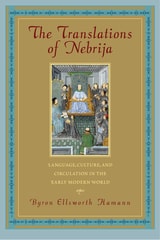
The Translations of Nebrija
Language, Culture, and Circulation in the Early Modern WorldByron Ellsworth Hamann
University of Massachusetts Press, 2015
Tracing the global influence of Nebrija's dictionary, Byron Ellsworth Hamann, in this interdisciplinary, deeply researched book, connects pagan Rome, Muslim Spain, Aztec Tenochtitlan, Elizabethan England, the Spanish Philippines, and beyond, revealing new connections in world history. The Translations of Nebrija re-creates the travels of people, books, and ideas throughout the early modern world and reveals the adaptability of Nebrija's text, tracing the ways heirs and pirate printers altered the dictionary in the decades after its first publication. It reveals how entries in various editions were expanded to accommodate new concepts, such as for indigenous languages in the Americas—a process with profound implications for understanding pre-Hispanic art, architecture, and writing. It shows how words written in the margins of surviving dictionaries from the Americas shed light on the writing and researching of dictionaries across the early modern world.
Exploring words and the dictionaries that made sense of them, this book charts new global connections and challenges many assumptions about the early modern world.
The University of Chicago Spanish Dictionary, Fifth Edition, Spanish-English, English-Spanish
Universidad de Chicago Diccionario Español-Inglés, Inglés-EspañolEdited by David A. Pharies
University of Chicago Press, 2002
With thousands of added entries, the Dictionary builds on the features that have made it the leader in its field for more than fifty years: authority, scope, clarity, and conciseness. And with this edition, the Dictionary brilliantly captures the current core vocabularies of two rapidly changing—and increasingly connected—languages and cultures.
Entirely bilingual, the fifth edition focuses on two contemporary international languages—American English and a basic, worldwide Spanish that draws from both Latin American and Iberian sources.
Designed for a wide range of users, including travelers, businesspeople, students, teachers, and professionals, the new Dictionary is the essential first resource for speakers of both languages—from beginners to those at all other stages. Up to date, just comprehensive enough, and extraordinarily clear and easy to use, the new edition of The University of Chicago Spanish Dictionary stands alone. No other dictionary offers so many users so much help—or so much value.
The University of Chicago Spanish-English Dictionary, Sixth Edition
Diccionario Universidad de Chicago Inglés-Español, Sexta EdiciónDavid A. Pharies, Editor in Chief
University of Chicago Press, 2012
A concise, authoritative, up-to-date guide to Spanish and English
The University of Chicago Spanish–English Dictionary has long set the standard for concise bilingual dictionaries. Portable yet remarkably thorough, the dictionary enables users to find the precise equivalents of the words and phrases they seek.

The Use of Books and Libraries
Harold Russell
University of Minnesota Press, 1933
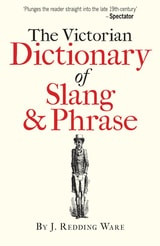
The Victorian Dictionary of Slang & Phrase
J. Redding Ware
Bodleian Library Publishing, 2015
First published in 1909 and reproduced here with a new introduction by Oxford English Dictionary former editor John Simpson, The Victorian Dictionary of Slang and Phrase 1909 reflects the rich history of unofficial English. Many of the expressions are obsolete; one is not likely to have the misfortune of encountering a “parlour jumper.” Order a “shant of bivvy” at the pub and you’ll be met with a blank stare. But some of the entries reveal the origins of expressions still in use today, such as calling someone a “bad egg” to indicate that they are dishonest or of ill-repute. While showing the significant influence of American English on Victorian slang, the Dictionary also demonstrates how impressively innovative its speakers were. A treasure trove of everyday language of the nineteenth century, this book has much to offer in terms of insight into the intriguing history of English and will be of interest to anyone with a passion for words.
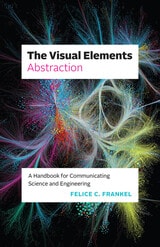
The Visual Elements—Abstraction
A Handbook for Communicating Science and EngineeringFelice C. Frankel
University of Chicago Press, 2026
For anyone interested in visual communication, a training guide for evaluating and developing visual representations for the big ideas in science and technology, essential skills for journal submissions, grant applications, and public understanding.
As a scientist, engineer, or other researcher, you may have written an abstract. In a paragraph, you explain the purpose of your research, your approach, the questions you have asked and answered, and your work’s impact. The abstract is a summary and an invitation—to read the paper, attend your talk, and join you in your thinking. You may even have been asked to create a visual abstract—a single image—to achieve the same goals. As a designer or public information officer, you may have had a similar brief—to explain a compelling subject with a visual for a journal cover or press release. And yet, this important skill—devising visual metaphors—isn’t typically taught. With her decades of experience creating compelling images and instructing MIT researchers, award-winning photographer and science communicator Felice C. Frankel helps readers evaluate and create their own visual abstractions.
Like in her other books in the Visual Elements series, on photography and design, Frankel asks readers to evaluate different choices—for example, in conveying the uncertainty of a hurricane’s path or the organization of the Standard Model for elementary particles. But in Abstraction, she offers more. With examples from science, engineering, and beyond, the book helps readers consider and evaluate the visuals around them and determine how they work and when they fail: Is this representation the best for communication? Will these abstractions encourage others to engage with my work? Will they mislead? Will they help my ideas evolve? Frankel invites researchers to think about the many meanings behind their images—and, in turn, to think more deeply about their research.
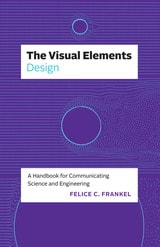
The Visual Elements—Design
A Handbook for Communicating Science and EngineeringFelice C. Frankel
University of Chicago Press, 2024
In this short handbook, award-winning science communicator Felice C. Frankel offers a quick guide for scientists and engineers who want to share—and better understand—their research by designing compelling graphics for journal submissions, grant applications, presentations, and posters. Like all the books in the Visual Elements series, this handbook is also a training tool for researchers. Distilling her celebrated books and courses to the essentials, Frankel shows scientists and engineers, from students to primary investigators, the importance of thinking visually. This crucial volume in the Visual Elements series offers a wealth of engaging design examples. Case studies and advice from designers at prestigious publications and researchers’ own before-and-after examples show how even the smallest changes—to color, type, composition, and layering—can greatly improve communication. Ideal for researchers who want a foothold for presenting and preparing their work for everything from conferences to publications, the book explains the steps for creating a concise and communicative graphic to highlight the most important aspects of research—and to clarify researchers’ own thinking. The resulting book is an essential element of any scientist’s, engineer’s, or designer’s library.
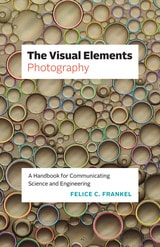
The Visual Elements—Photography
A Handbook for Communicating Science and EngineeringFelice C. Frankel
University of Chicago Press, 2023
Award-winning photographer Felice C. Frankel, whose work has graced the covers of Science, Nature, and Scientific American, among other publications, offers a quick guide for scientists and engineers who want to communicate—and better understand—their research by creating compelling photographs. Like all the books in the Visual Elements series, this short guide uses engaging examples to train researchers to learn visual communication. Distilling her celebrated books and courses to the essentials, Frankel shows scientists and engineers the importance of thinking visually. When she creates stunning images of scientific phenomena, she is not only interested in helping researchers to convey understanding to others in their research community or to gain media attention, but also in making these experts themselves “look longer” to understand more fully. Ideal for researchers who want a foothold for presenting and preparing their work for conferences, journal publications, and funding agencies, the book explains four tools that all readers can use—a phone, a camera, a scanner, and a microscope—and then offers important advice on composition and image manipulation ethics. The Visual Elements—Photography is an essential element in any scientist’s, engineer’s, or photographer’s library.
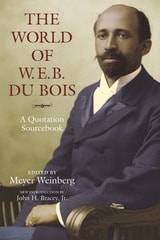
The World of W.E.B. Du Bois
A Quotation SourcebookMeyer Weinberg
University of Massachusetts Press, 2012
Meyer Weinberg created The World of W.E.B. Du Bois to provide a short journey through Du Bois's views on virtually all aspects of twentieth-century life. More than one thousand quotations from his published writings and correspondence are included, arranged into twenty topical chapters. Each quotation begins with a heading designed to summarize its main theme. A subject index provides additional access to the ideas of this complex figure.
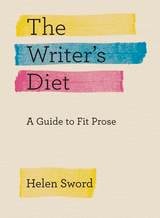
The Writer's Diet
A Guide to Fit ProseHelen Sword
University of Chicago Press, 2016
Helen Sword dispenses with excessive explanations and overwrought analysis. Instead, she offers an easy-to-follow set of writing principles: use active verbs whenever possible; favor concrete language over vague abstractions; avoid long strings of prepositional phrases; employ adjectives and adverbs only when they contribute something new to the meaning of a sentence; and reduce your dependence on four pernicious “waste words”: it, this, that, and there.
Sword then shows the rules in action through examples from William Shakespeare, Emily Dickinson, Martin Luther King Jr., John McPhee, A. S. Byatt, Richard Dawkins, Alison Gopnik, and many more. A writing fitness test encourages you to assess your own writing and get immediate advice on addressing problem areas. While The Writer’s Diet is as sleek and concise as the writing ideals contained within, this slim volume packs a powerful punch.
With Sword’s coaching writers of all levels can strengthen and tone their sentences with the stroke of a pen or the click of a mouse. As with any fitness routine, adhering to the rules requires energy and vigilance. The results, however, will speak for themselves.
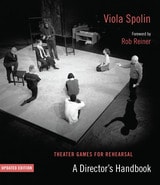
Theater Games for Rehearsal
A Director's Handbook, Updated EditionViola Spolin with a foreword by Rob Reiner
Northwestern University Press, 2010
An updated edition of a key reference text by “the high priestess of improvisational theater”
A major force in the development of American theater, Viola Spolin devised pedagogical techniques that have influenced and inspired legions of actors, improvisers, and directors. Theater Games for Rehearsal: A Director's Handbook, first published in 1985, is a practical application of Spolin's famous method that guides directors and their companies step-by-step through all phases of the rehearsal period.
In Theater Games for Rehearsal, Spolin shows in easy-to-follow detail how her techniques can be used for a variety of theater needs, from selecting performance material, casting, and building a harmonious company to warming up actors, creating stage space, and overcoming opening-night jitters. This new edition, edited by Carol Bleackley Sills, incorporates Spolin's wished-for updates: four important exercises have been added, and instructions presenting her improvisational approach have been clarified throughout. Sidecoaching instructions and game evaluations are boxed and highlighted for on-the-spot reading by the director during rehearsal.
With these additions and improvements, Theater Games for Rehearsal: A Director's Handbook brings Spolin's ideas to a new generation with greater accessibility and excitement. Featuring a new foreword by renowned film director Rob Reiner, the updated edition is mandatory for any theater bookshelf.
Theater Games for the Classroom
A Teacher's HandbookViola Spolin
Northwestern University Press, 1986
The most comprehensive theater instruction guide for all types of students
This best-selling book by Viola Spolin offers the most comprehensive theater instruction for all types of students, from small children to young adults. It includes over 130 theater games, plus exercises and instructional strategies. First developed by Spolin, the originator of modern improvisational theater techniques, these games have been tried and tested for over fifty years.
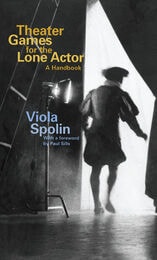
Theater Games for the Lone Actor
A HandbookViola Spolin
Northwestern University Press, 2001
Spolin's improvisational techniques changed the nature and practice of modern theater. Her work has inspired actors, directors, teachers, and writers in theater, television, and film. Her techniques have also influenced the fields of education, mental health, social work, and psychology.
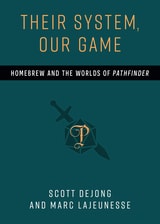
Their System, Our Game
Homebrew and the Worlds of PathfinderScott DeJong and Marc Lajeunesse
University of Michigan Press, 2026
Our favorite tabletop role-playing games (TTRPGs) provide a chance to act out a fantasy. It might be the desire to wipe out foes with a single strike, the ability to charm even the most curmudgeonly townsfolk, or maybe even just the aspiration to adventure as a potted plant. Since game systems don’t always let players craft the kinds of games they want to experience, this is when they turn to the “homebrew” process to create personal rules and worlds. While Pathfinder has a history of being an underdog to the longtime industry leader Dungeons & Dragons, it has an ethos of open game design that inspires players, indie makers, and third-party content creators to brew up new rules, characters, classes, and game settings.
Their System, Our Game looks at the history of Pathfinder and how it encourages aspiring makers to break into the game design space. Through interviews with player-creators and third party makers, the authors use a range of perspectives to define homebrew for TTRPGs. Taking a closer look at homebrew design, they create two homebrew campaigns (available as free downloads) collaboratively with two different groups of players. Player accounts of gameplay and designer reflections of how their homebrew actually played out at the game table outline some of the challenges and perks of designing on the fly, creating customized settings, and bending or breaking rules. The book concludes by going through the research, interviews, design, and play analysis to show what homebrew and Pathfinder mean together. Ultimately Their System, Our Game is a celebration of how players use homebrew to explore creation and expression in their own TTRPGs.
Theory of Public Choice
Political Applications of EconomicsJames M. Buchanan and Robert D. Tollison, Editors
University of Michigan Press, 1981

Theses Completed 2016
Historical research for higher degrees in the United Kingdom and the Republic of Ireland list no. 78 part 1Compiled by Lauren De'Ath and Emily Morrell
University of London Press, 2017