Results by title
3027 books match the query 'Sociology' and 538 start with t

The Dividends of Dissent
How Conflict and Culture Work in Lesbian and Gay Marches on WashingtonAmin Ghaziani
University of Chicago Press, 2008
Amin Ghaziani ably puts these demonstrations into their cultural context, chronicling gay and lesbian life at the time and the political currents that prompted the protests. He then turns to each march in detail, focusing on the role that internal dissent played in its organization. Ultimately, Ghaziani concludes that infighting can contribute positively to the development of social movements, and that the debates over the marches helped define what it means to be gay in the United States.

The Divine Institution
White Evangelicalism's Politics of the FamilySophie Bjork-James
Rutgers University Press, 2021
Winner of the Anne Bolin & Gil Herdt Book Prize from the Human Sexuality and Anthropology Interest Group (HSAIG)
The Divine Institution provides an account of how a theology of the family came to dominate a white evangelical tradition in the post-civil rights movement United States, providing a theological corollary to Religious Right politics.
This tradition inherently enforces racial inequality in that it draws moral, religious, and political attention away from problems of racial and economic structural oppression, explaining all social problems as a failure of the individual to achieve the strong gender and sexual identities that ground the nuclear family. The consequences of this theology are both personal suffering for individuals who cannot measure up to prescribed gender and sexual roles, and political support for conservative government policies. Exposure to experiences that undermine the idea that an emphasis on the family is the solution to all social problems is causing a younger generation of white evangelicals to shift away from this narrow theological emphasis and toward a more social justice-oriented theology. The material and political effects of this shift remain to be seen.
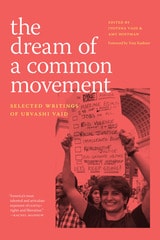
The Dream of a Common Movement
Selected Writings of Urvashi VaidUrvashi Vaid. Edited by Jyotsna Vaid and Amy Hoffman
Duke University Press, 2025

The Du Boisian Challenge
Rethinking Sociological MethodologyJosé Itzigsohn, Ricarda Hammer, and Michael Rodríguez-Muñiz, editors
Duke University Press, 2027
The Du Boisian Challenge
Rethinking Sociological MethodologyJosé Itzigsohn, Ricarda Hammer, and Michael Rodríguez-Muñiz, editors
Duke University Press, 2027
The Du Boisian Challenge
Rethinking Sociological MethodologyJosé Itzigsohn, Ricarda Hammer, and Michael Rodríguez-Muñiz, editors
Duke University Press, 2027
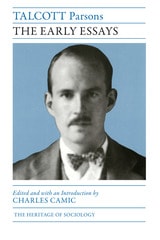
The Early Essays
Talcott Parsons
University of Chicago Press, 1991
In his superb introductory essay, Camic situates Parsons's early writings in their sociointellectual and biographical context. Drawing upon extensive historical research, he identifies three overlapping but relatively distinct thematic phases in the early development of Paron's ideas: that on capitalist society and its origins, that one the historical development of the theory of action, and that on the foundations of analytical sociology. Camic correlates the emergence of these phases to Parsons's experiences at Amherst College in the early 1920s, in London and Heidelberg during the mid-1920s, and at Harvard University in the important period from the late 1920s to the mid-1930s. Reproducing in full each of twenty-one selections, this volume charts the changes and continues in the early development of some of Parsons's most fundamental ideas.
The Earthly Community
Achille Mbembe. Translated by Steven Corcoran.
Duke University Press, 2027
The Earthly Community
Achille Mbembe. Translated by Steven Corcoran.
Duke University Press, 2027
The Ecological City
Preserving and Restoring Urban BiodiversityRutherford H. Platt
University of Massachusetts Press, 1994
Interdisciplinary in content as well as approach, this collection of original essays takes a fresh look at the ecology of urban communities. Written by experts from a variety of professions—academic researchers, private and public program managers, and citizen activists—the book explores issues of geography, ecology, landscape architecture, urban forestry, law, and environmental education. Contributions include broad overviews of common problems a well as detailed case studies of specific programs.
Although several contributors are natural scientists, the book focuses on matters of public policy and public-private collaboration. The aim is not only to assess the impact of increasing urbanization on biodiversity, but also to propose new ways of preserving and restoring the balance between the natural and the built environment through planning and design.
The Economic Sociology of Immigration
Essays on Networks, Ethnicity, and EntrepreneurshipAlejandro Portes
Russell Sage Foundation, 1995

The Edge of Surrealism
A Roger Caillois ReaderRoger Caillois, Edited by Claudine Frank
Duke University Press, 2003
These thirty-two essays with commentaries strike a balance between Caillois’s political and theoretical writings and between his better known works, such as the popular essays on the praying mantis, myth, and mimicry, and his lesser-known pieces. Presenting several new pieces and drawing on interviews and unpublished correspondence, this book reveals Caillois’s consistent effort to reconcile intellectual rigor and imaginative adventure. Perhaps most importantly, The Edge of Surrealism provides an overdue look at how Caillois’s intellectual project intersected with the work of Georges Bataille and others including Breton, Bachelard, Benjamin, Lacan, and Lévi-Strauss.
The Edge of the Law
Street Vendors and the Erosion of Citizenship in São PauloJacinto Cuvi
University of Chicago Press, 2025
With a little initiative and very little startup money, an outgoing individual might sell you a number of delights and conveniences familiar to city dwellers—from cold water bottles while you’re sitting in traffic to a popsicle from a cart on a summer afternoon in the park. Such vendors form a significant share of the workforce in São Paulo, Brazil, but their ubiquity belies perpetual struggle. Some have the right to practice their trade; others do not. All of them strive to make it—or stay afloat.
In The Edge of the Law, sociologist Jacinto Cuvi introduces us to the world of street vendors and teases out the relationship between the construction of legality and the experience of citizenship. As São Paulo’s city government undertakes a large-scale plan to cancel street vending licenses and evict street vendors, Cuvi reveals how the rights of informal workers can be revoked or withheld and how the lines can be redrawn between work that is “legal” and work that takes place under constant fear of law enforcement. Alongside the mechanics of disenfranchisement, Cuvi captures the lived experience of criminalization, dissecting the distribution of (shallow) rights among vendors who continually reinvent strategies to eke out a living while dealing with the constraints and pressures of informal citizenship at the edge of the law.
The Emotions of Protest
James M. Jasper
University of Chicago Press, 2018
There is an extensive body of research on protest, but the focus has mostly been on the calculating brain—a byproduct of structuralism and cognitive studies—and less on the feeling brain. James M. Jasper’s work changes that, as he pushes the boundaries of our present understanding of the social world. In The Emotions of Protest, Jasper lays out his argument, showing that it is impossible to separate cognition and emotion. At a minimum, he says, we cannot understand the Tea Party or Occupy Wall Street or pro- and anti-Trump rallies without first studying the fears and anger, moral outrage, and patterns of hate and love that their members feel.
This is a book centered on protest, but Jasper also points toward broader paths of inquiry that have the power to transform the way social scientists picture social life and action. Through emotions, he says, we are embedded in a variety of environmental, bodily, social, moral, and temporal contexts, as we feel our way both consciously and unconsciously toward some things and away from others. Politics and collective action have always been a kind of laboratory for working out models of human action more generally, and emotions are no exception. Both hearts and minds rely on the same feelings racing through our central nervous systems. Protestors have emotions, like everyone else, but theirs are thinking hearts, not bleeding hearts. Brains can feel, and hearts can think.

The End of International Adoption?
An Unraveling Reproductive Market and the Politics of Healthy BabiesEstye Fenton
Rutgers University Press, 2019
The End of Nomadism?
Society, State, and the Environment in Inner AsiaCaroline Humphrey and David Sneath
Duke University Press, 1999
Using extensive and detailed case studies comparing pastoralism in Siberian Russia, Mongolia, and Northwest China, Humphrey and Sneath explore the different paths taken by nomads in these countries in reaction to a changing world. In examining how each culture is facing not only different prospects for sustainability but also different environmental problems, the authors come to the surprising conclusion that mobility can, in fact, be compatible with a modern and urbanized world. While placing emphasis on the social and cultural traditions of Inner Asia and their fate in the post-Socialist economies of the present, The End of Nomadism? investigates the changing nature of pastoralism by focusing on key areas under environmental threat and relating the ongoing problems to distinctive socioeconomic policies and practices in Russia and China. It also provides lively contemporary commentary on current economic dilemmas by revealing in telling detail, for instance, the struggle of one extended family to make a living.
This book will interest Central Asian, Russian, and Chinese specialists, as well as those studying the environment, anthropology, sociology, peasant studies, and ecology.

The End of Organized Capitalism
Scott Lash
University of Wisconsin Press, 1987
The End of Organized Capitalism argues that—despite Marx’s and Weber’s insistence that capitalist societies become increasingly more ordered—we now live in an era of “disorganized capitalism.” The book is devoted to a systematic examination of the shift to disorganized capitalism in five Western nations (Britain, the United States, France, West Germany, and Sweden). Through the analysis of space, class, and culture, Lash and Urry portray the restructuring of capitalist social relations that has resulted from this disorganization. They adduce evidence for the claims that in each of the nations there is a movement toward a deconcentration of capital within nation-states; toward the increased separation of banks, industry and the state; and toward the redistribution of productive relations and class-relevant residential patterns.
The authors also show that national disparities in contemporary, disorganized capitalism can be understood through close examination of the extent to which, and mode in which, capitalism became historically organized in each of the five countries under consideration.
The lucid arguments and judicious comparisons in this book will be of great interest to political scientists, sociologists, geographers, economists, and historians.
The End of the Cognitive Empire
The Coming of Age of Epistemologies of the SouthBoaventura de Sousa Santos
Duke University Press, 2018
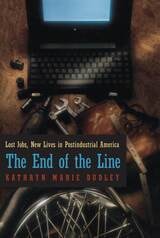
The End of the Line
Lost Jobs, New Lives in Postindustrial AmericaKathryn Marie Dudley
University of Chicago Press, 1994
"An excellent study not only of the cultural disruptions caused by the shutdown of Chrysler's operations in Kenosha, Wisconsin, but also of the ideology of progress that abetted the shutdown."—Stephen Amberg, Industrial and Labor Relations Review
"With the eye of an anthropologist, [Dudley] examines the tensions between the 'culture of hands' and the 'culture of mind.' Her account is especially instructive because, by many measures, Kenosha has successfully recovered, yet for many the pain still remains."—Booklist
"Exceptional. . . . Should be widely read."—Douglas Harper, Contemporary Sociology
"Make[s] clear what a tenuous concept economic security is, especially when the rules for achieving security are in flux."—Barbara Presley Noble, New York Times
The Enigma of Diversity
The Language of Race and the Limits of Racial JusticeEllen Berrey
University of Chicago Press, 2015
Ellen Berrey digs deep into those questions in The Enigma of Diversity. Drawing on six years of fieldwork and historical sources dating back to the 1950s and making extensive use of three case studies from widely varying arenas—housing redevelopment in Chicago’s Rogers Park neighborhood, affirmative action in the University of Michigan’s admissions program, and the workings of the human resources department at a Fortune 500 company—Berrey explores the complicated, contradictory, and even troubling meanings and uses of diversity as it is invoked by different groups for different, often symbolic ends. In each case, diversity affirms inclusiveness, especially in the most coveted jobs and colleges, yet it resists fundamental change in the practices and cultures that are the foundation of social inequality. Berrey shows how this has led racial progress itself to be reimagined, transformed from a legal fight for fundamental rights to a celebration of the competitive advantages afforded by cultural differences.
Powerfully argued and surprising in its conclusions, The Enigma of Diversity reveals the true cost of the public embrace of diversity: the taming of demands for racial justice.
The Enigmatic Academy
Class, Bureaucracy, and Religion in American EducationChristian J. Churchill
Temple University Press, 2012
The Enigmatic Academy is a provocative look at the purpose and practice of education in America. Authors Christian Churchill and Gerald Levy use three case studies—a liberal arts college, a boarding school, and a Job Corps center—to illustrate how class, bureaucratic, and secular-religious dimensions of education prepare youth for participation in American foreign and domestic policy at all levels.
The authors describe how schools contribute to the formation of a bureaucratic character; how middle and upper class students are trained for leadership positions in corporations, government, and the military; and how the education of lower class students often serves more powerful classes and institutions.
Exploring how youth and their educators encounter the complexities of ideology and bureaucracy in school, The Enigmatic Academy deepens our understanding of the flawed redemptive relationship between education and society in the United States. Paradoxically, these three studied schools all prepare students to participate in a society whose values they oppose.

The Essential Lectures of Charlotte Perkins Gilman, 1890–1894
Charlotte Perkins Gilman Edited and with an introduction by Andrew J. Ball
University of Alabama Press, 2024
A foundational archive of Gilman’s early feminist, sociological, and philosophical thought, revealing the origins of a major American intellectual tradition.
The last decades have seen a resurgence of interest in Charlotte Perkins Gilman, now considered among the most important thinkers in US history. She is best known for fiction—such as the classic short story “The Yellow Wall-Paper” (1892)—and nonfiction, including her manifesto Women and Economics (1898), a work of intersectional sociology avant la lettre. Nevertheless, as a young writer, Gilman made her living delivering lectures. One cannot know Gilman without some knowledge of this body of lectures; this book fills that critical gap in Gilman scholarship.
Since the recovery of Charlotte Perkins Gilman began in the late 1960s and continued with the republication of “The Yellow Wall-Paper” in the 1970s, her image in cultural memory has been increasingly celebrated. Andrew J. Ball presents here fifty previously unpublished texts. They trace the development of Gilman’s thoughts on diverse subjects like gender, education, labor, science, theology, and politics—forming an intellectual diary of her growth.
These lectures are not just a testament to Gilman’s personal evolution, but also a crucial contribution to the foundations of American sociology and philosophy. The Essential Lectures of Charlotte Perkins Gilman, 1890–1894 marks a historic moment, unveiling the hidden genius of Gilman's oratory legacy.
The Ethics of Space
Homelessness and Squatting in Urban EnglandSteph Grohmann
HAU, 2020
Set against the backdrop of economic crisis, austerity, and a disintegrating British state, Steph Grohmann tells the story of a flourishing squatter community in the city of Bristol and how it was eventually outlawed by the state. The first ethnography of homelessness done by a researcher who was formally homeless throughout fieldwork, this volume explores the intersection between spatial existence, subjectivity, and ethics. The result is a book that rethinks how ethical views are shaped and constructed through our own spatial existences.

The Ethnographer's Way
A Handbook for Multidimensional Research DesignKristin Peterson and Valerie Olson
Duke University Press, 2024
The Existential Self in Society
Edited by Joseph A. Kotarba and Andrea Fontana
University of Chicago Press, 1984
The Failure of Our Fathers
Family, Gender, and Power in Confederate AlabamaVictoria E. Ott
University of Alabama Press, 2023
An in-depth study of non-elite white families in Alabama—from the state’s creation through the end of the Civil War
The Failure of Our Fathers: Family, Gender, and Power in Confederate Alabama examines the evolving position of non-elite white families in Alabama during one of the most pivotal epochs in the state’s history. Drawing on a wide range of personal and public documents reflecting the state’s varied regions and economies, Victoria E. Ott uses gender and family as a lens to examine the yeomanry and poor whites, a constituency that she collectively defines as “common whites,” who identified with the Confederate cause.
Ott provides a nuanced examination of how these Alabamians fit within the antebellum era’s paternalistic social order, eventually identifying with and supporting the Confederate mission to leave the Union and create an independent, slaveholding state. But as the reality of the war slowly set in and the Confederacy began to fray, the increasing dangers families faced led Alabama’s common white men and women to find new avenues to power as a distinct socioeconomic class.
Ott argues that family provided the conceptual framework necessary to understand why common whites supported a war to protect slavery despite having little or no investment in the institution. Going to war meant protecting their families from outsiders who threatened to turn their worlds upside down. Despite class differences, common whites envisioned the Confederacy as a larger family and the state as paternal figures who promised to protect its loyal dependents throughout the conflict. Yet, as the war ravaged many Alabama communities, devotion to the Confederacy seemed less a priority as families faced continued separations, threats of death, and the potential for starvation. The construct of a familial structure that once created a sense of loyalty to the Confederacy now gave them cause to question its leadership. Ott shows how these domestic values rooted in highly gendered concepts ultimately redefined Alabama’s social structure and increased class distinctions after the war.
The Family and Inheritance
Marvin Sussman
Russell Sage Foundation, 1970

The Fantasy of Feminist History
Joan Wallach Scott
Duke University Press, 2012

The Fear of Child Sexuality
Young People, Sex, and AgencySteven Angelides
University of Chicago Press, 2019

The Feeling Intellect
Selected WritingsPhilip Rieff
University of Chicago Press, 1989
The Fine Line
Eviatar Zerubavel
University of Chicago Press, 1993
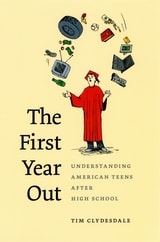
The First Year Out
Understanding American Teens after High SchoolTim Clydesdale
University of Chicago Press, 2007
Wild parties, late nights, and lots of sex, drugs, and alcohol. Many assume these are the things that define an American teenager’s first year after high school. But the reality is really quite different. As Tim Clydesdale reports in The First Year Out, teenagers generally manage the increased responsibilities of everyday life immediately after graduation effectively. But, like many good things, this comes at a cost.
Tracking the daily lives of fifty young people making the transition to life after high school, Clydesdale reveals how teens settle into manageable patterns of substance use and sexual activity; how they meet the requirements of postsecondary education; and how they cope with new financial expectations. Most of them, we learn, handle the changes well because they make a priority of everyday life. But Clydesdale finds that teens also stow away their identities—religious, racial, political, or otherwise—during this period in exchange for acceptance into mainstream culture. This results in the absence of a long-range purpose for their lives and imposes limits on their desire to understand national politics and global issues, sometimes even affecting the ability to reconstruct their lives when tragedies occur.
The First Year Out is an invaluable resource for anyone caught up in the storm and stress of working with these young adults.
The Flight from Ambiguity
Essays in Social and Cultural TheoryDonald N. Levine
University of Chicago Press, 1985
The Forest and the Trees
Sociology as Life, Practice, and PromiseAllan Johnson
Temple University Press, 2008
If sociology could teach everyone just one thing, what would it be? The Forest and the Trees is one sociologist's response to the hypothetical—the core insight with the greatest potential to change how people see the world and themselves in relation to it.
This revised and updated edition features:
• A new chapter that brings together the various aspects of the sociological model described in previous chapters with a detailed application to the origins of racism in the United States
•A discussion of how individuals can participate in social change by stepping off paths of least resistance
•The addition of graphics to illustrate the sociological model of systems and individuals
The Forest and the Trees
Sociology as Life, Practice, and PromiseAllan Johnson
Temple University Press, 2014
If sociology could teach everyone just one thing, what would it be? The Forest and the Trees is one sociologist's response to the hypothetical-the core insight with the greatest potential to change how people see the world and themselves in relation to it.
This Third Edition features:
• Updated key references, data, resources, and examples, from global warming, Obama's election, and gay marriage to transgender/cisgender and the Occupy Movement
• A glossary of terms
• The short essays in Chapter 6, framed around the power of sociology, dig beneath easy and popular understandings to reveal what lies beneath
• An additional analysis of how men's violence is made invisible even though most violence is perpetrated by men
• Chapter 7's focus on sociology as a worldview with an analysis of the origins of white privilege

The French Writers' War, 1940-1953
Gisèle Sapiro
Duke University Press, 2014
The Future of Futurity
Affective Capitalism and Potentiality in a Global CityPurnima Mankekar and Akhil Gupta
Duke University Press, 2025
The Future of National Urban Policy
Marshall Kaplan, ed.
Duke University Press, 1989
The Future of the Family
Daniel Patrick Moynihan
Russell Sage Foundation, 2004

The Gang
A Study of 1,313 Gangs in ChicagoFrederic Milton Thrasher
University of Chicago Press, 1963
While gangs and gang culture have been around for countless centuries, The Gang is one of the first academic studies of the phenomenon. Originally published in 1927, Frederic Milton Thrasher’s magnum opus offers a profound and careful analysis of hundreds of gangs in Chicago in the early part of the twentieth century. With rich prose and an eye for detail, Thrasher looked specifically at the way in which urban geography shaped gangs, and posited the thesis that neighborhoods in flux were more likely to produce gangs. Moreover, he traced gang culture back to feudal and medieval power systems and linked tribal ethos in other societies to codes of honor and glory found in American gangs. Thrasher approaches his subject with empathy and insightfulness, and creates a multifaceted and textured portrait that still has much to offer to readers today. With handsome images that evoke the era, this unabridged edition of The Gang not only explores an important moment in the history of Chicago, but also is itself a landmark in the history of sociology and subcultural theory.
The Gender Knot
Unraveling Our Patriarchal LegacyAllan Johnson
Temple University Press, 2014
The Gender Knot, Allan Johnson's response to the pain and confusion that men and women experience by living with gender inequality, explains what patriarchy is and isn't, how it works, and what gets in the way of understanding and doing something about it. Johnson's simple yet powerful approach avoids the paralyzing trap of guilt, blame, anger, and defensive denial that often results from conversations about gender.
This edition features:
• Updated references, data, resources, and examples, especially in relation to issues of sexual orientation and gender identity (e.g., gay marriage, transgender/cisgender)
• A glossary of terms
• A new chapter, "What Changes and What Does Not: Manhood and Violence," that provides an extended analysis of the causes of men's violence as a patriarchal phenomenon
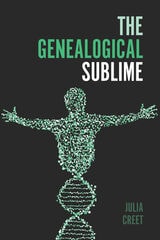
The Genealogical Sublime
Julia Creet
University of Massachusetts Press, 2020
In The Genealogical Sublime, Julia Creet traces the histories of the largest, longest-running, most lucrative, and most rapidly growing genealogical databases to delineate a broader history of the industry. As each unique case study reveals, new database and DNA technologies enable an obsessive completeness—the desire to gather all of the world's genealogical records in the interests of life beyond death. Archival research and firsthand interviews with Church of Jesus Christ of Latter-day Saints officials, key industry players (including Ancestry.com founders and Family Search executives), and professional and amateur family historians round out this timely and essential study.
The Gift Paradigm
A Short Introduction to the Anti-Utilitarian Movement in the Social SciencesAlain Caillé
Prickly Paradigm Press, 2020
The Global Pigeon
Colin Jerolmack
University of Chicago Press, 2013

The Globalization of Supermax Prisons
Ross, Jeffrey Ian
Rutgers University Press, 2013
2013 Choice Outstanding Academic Title
“Supermax” prisons, conceived by the United States in the early 1980s, are typically reserved for convicted political criminals such as terrorists and spies and for other inmates who are considered to pose a serious ongoing threat to the wider community, to the security of correctional institutions, or to the safety of other inmates. Prisoners are usually restricted to their cells for up to twenty-three hours a day and typically have minimal contact with other inmates and correctional staff. Not only does the Federal Bureau of Prisons operate one of these facilities, but almost every state has either a supermax wing or stand-alone supermax prison.
The Globalization of Supermax Prisons examines why nine advanced industrialized countries have adopted the supermax prototype, paying particular attention to the economic, social, and political processes that have affected each state. Featuring essays that look at the U.S.-run prisons of Abu Ghraib and Guantanemo, this collection seeks to determine if the American model is the basis for the establishment of these facilities and considers such issues as the support or opposition to the building of a supermax and why opposition efforts failed; the allegation of human rights abuses within these prisons; and the extent to which the decision to build a supermax was influenced by developments in the United States. Additionally, contributors address such domestic matters as the role of crime rates, media sensationalism, and terrorism in each country’s decision to build a supermax prison.
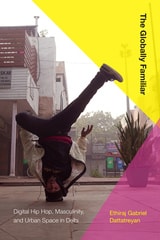
The Globally Familiar
Digital Hip Hop, Masculinity, and Urban Space in DelhiEthiraj Gabriel Dattatreyan
Duke University Press, 2020
The Gold Coast and the Slum
A Sociological Study of Chicago's Near North SideHarvey Warren Zorbaugh
University of Chicago Press, 1983
The Gold Standard
The Challenge Of Evidence-Based MedicineStefan Timmermans and Marc Berg
Temple University Press, 2003
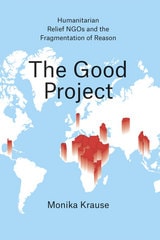
The Good Project
Humanitarian Relief NGOs and the Fragmentation of ReasonMonika Krause
University of Chicago Press, 2014
In The Good Project, Monika Krause dives into the intricacies of the decision-making process at NGOs and uncovers a basic truth: It may be the case that relief agencies try to help people but, in practical terms, the main focus of their work is to produce projects. Agencies sell projects to key institutional donors, and in the process the project and its beneficiaries become commodities. In an effort to guarantee a successful project, organizations are incentivized to help those who are easy to help, while those who are hardest to help often receive no assistance at all. The poorest of the world are made to compete against each other to become projects—and in exchange they offer legitimacy to aid agencies and donor governments. Sure to be controversial, The Good Project offers a provocative new perspective on how NGOs succeed and fail on a local and global level.
The Gospel of Family Planning
An Intimate Global HistoryNicole C. Bourbonnais
University of Chicago Press, 2025
In the twentieth century, the idea that people should consciously plan (and limit) the size of their families became a global cause. Historical accounts of the global family planning movement have largely focused on the most prominent activists and those at the helm of international organizations, philanthropic foundations, and government programs. In The Gospel of Family Planning, however, historian Nicole C. Bourbonnais shifts our attention to frontline workers—doctors, social workers, nurses, fieldworkers, consultants, church groups, and volunteers—who, she compellingly shows, played a central (if complicated) role in preaching contraception around the world.
Through a mix of collective biography and microhistory, Bourbonnais visits clinics, doorsteps, and bedrooms, revealing the everyday, ground-level workings of grassroots family planning campaigns, state population control programs, and the movements for reproductive rights and justice that arose to contest them. Throughout the book, Bourbonnais invites readers to consider how the intertwined histories of missionary work, humanitarianism, feminism, decolonization, and international development shaped intimate interventions into people’s reproductive lives around the world.