Results by title
18284 books match the query 'United States' and 3764 start with t
The Mine Next Door
Turning Points in Corporate Social Responsibility Communicative PracticeAmy O'Connor
University of Michigan Press, 2026
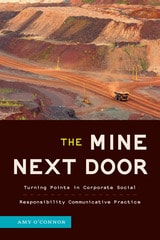
The Mine Next Door peels back the veneer of corporate public relations to expose the jagged edges that define the boundaries of corporate social responsibility (CSR) in Minnesota’s Iron Range. With five years of ethnographic and archival research, Amy O’Connor was able to interview over seventy people, including miners, retired miners, community members, elected officials, and representatives from Cleveland-Cliffs Inc. In addition to illuminating the everyday lives of Minnesota’s taconite miners and community members, she compares the corporate narratives of CSR with these lived experiences to reveal how CSR boundaries are co-constructed, contested, and consequential.
In this rare ethnographic account of iron ore mining in the United States, O’Connor shows how turning points—whether macrolevel (e.g., capitalism, governmental policy, and regulation) or microlevel (e.g., miner experiences, local culture, company proclivities)—create CSR communicative practice boundaries that are influenced by culture, history, and geography. The permanence and precariousness of the mining industry offers a unique opportunity to show how corporations, workers, and communities both collaborate and clash. The Mine Next Door argues that to understand CSR communicative practices, we must move beyond the staid, homogeneous CSR reports and glossy public relations documents to reveal the messy and contradictory moments of decision wherein corporations and communities determine where a company has power and responsibility.

The Minor Intimacies of Race
Asian Publics in North AmericaChristine Kim
University of Illinois Press, 2016

The Mirror Makers
A History of American Advertising and Its CreatorsStephen Fox
University of Illinois Press, 1997
The Missouri Home Guard
Protecting the Home Front during the Great WarPetra DeWitt
University of Missouri Press, 2022
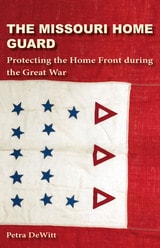
The Home Guard also functioned to preserve patriotism and reduce opposition to the war. Service in the Guard was a way to show loyalty to one’s country, particularly for German Americans, who were frequently under suspicion as untrustworthy. Many German Americans in Missouri enthusiastically signed up to dispel any whispers of treason, while others found themselves torn between the motherland and their new homeland. Men too old or exempt from the draft for other reasons found meaning in helping with the war effort through the Home Guard while also garnering respect from the community. For similar reasons, women attempted to join the organization as did African Americans, some of whom formed units of a “Negro Home Guard.” Informed by the dynamics of race, gender, and ethnicity, DeWitt’s consideration of this understudied but important organization examines the fluctuating definition of patriotism and the very real question of who did and who did not have the privilege of citizenship and acceptance in society.
The Missouri Mormon Experience
Edited by Thomas M. Spencer
University of Missouri Press, 2010

The Missouri State Penitentiary
170 Years inside "The Walls"Jamie Pamela Rasmussen
University of Missouri Press, 2012
In TheMissouri State Penitentiary, Jamie Pamela Rasmussen recounts the long and fascinating history of the place, focusing on the stories of inmates and the struggles by prison officials to provide opportunities for reform while keeping costs down. Tales of prominent prisoners, including Pretty Boy Floyd, Sonny Liston, and James Earl Ray, provide intrigue and insight into the institution’s infamous reputation.
The founding of the penitentiary helped solidify Jefferson City’s position as the state capital. A highlight in the chapter on the Civil War years is the story of George Thompson, who was imprisoned for attempting to help a number of slaves to freedom. The narrative enters the twentieth century with the controversy surrounding the various systems of inmate labor; the effort to make the prison self-supporting eventually caused punishment to be driven by factory needs. The example of Firebug Johnson demonstrates how inmates reacted to the prison labor system while Kate Richards O’Hare’s struggles and efforts to improve conditions in the penitentiary illuminate the role of women in the system at the time. A full chapter is devoted to the riot of 1954, and another concentrates on the reforms made in the wake of that catastrophe. Rasmussen also considers the effect inmate lawsuits during the 1980s and 1990s had on prison life before telling the story of the decision to close the prison.
The Missouri State Penitentiary provides a fitting account of an institution that was part of Missouri’s history for well over a century. Numerous illustrations and a list of recommended reading contribute to the readers’ understanding of the history of the institution.
The Mistakes of Yesterday, the Hopes of Tomorrow
The Story of the PrisonairesJohn Dougan
University of Massachusetts Press, 2012
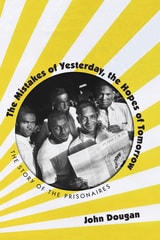
Early in the morning on June 1, 1953, five African American men boarded a van to make the 200-mile trip from Nashville to Memphis for a daylong recording session at the legendary Sun Studios, to be overseen by Sun founder Sam Phillips. One of the two tracks cut that day, “Just Walkin' in the Rain,” would go on to become a regional R&B hit, Sun Records' biggest record of the pre-Elvis era. It would, however, be the group's only hit. They were the Prisonaires, a vocal quintet who had honed their skills while inmates at the Tennessee State Penitentiary in Nashville.
In this book, John Dougan tells the story of the Prisonaires, their hit single, and the afterlife of this one remarkable song. The group and the song itself represent a compelling concept: imprisoned men using music as a means of cultural and personal survival. The song was re-recorded by white singer Johnnie Ray, who made it a huge hit in 1956. Over the years, other singers and groups would move the song further away from its origins, recasting the deep emotions that came from creating music in a hostile, controlled environment.
The story of the Prisonaires, for all of its triumphs, reflects the disappointment of men caught in a paradoxical search for personal independence while fully cognizant of a future consigned to prison. Their brief career and the unusual circumstances under which it flourished sheds light on the harsh realities of race relations in the pre–Civil Rights South. The book also provides a portrait of Nashville just as it was gaining traction as a nationally recognized music center.
The Misunderstood History of Gentrification
People, Planning, Preservation, and Urban Renewal, 1915-2020Dennis E. Gale
Temple University Press, 2021
The origins of gentrification date back to World War I—only it was sometimes known as “remodeling” then. Dennis Gale’s insightful book, TheMisunderstood History of Gentrification, provides a recontextualization of American gentrification, planning, and policymaking. He argues that gentrification must be understood as an urban phenomenon with historical roots in the very early twentieth century.
Gale uses solid empirical evidence to trace the embryonic revitalization of Georgetown, Greenwich Village, Beacon Hill, and elsewhere back to 1915. He shows how reinvestment and restoration reversed urban decline and revitalized neighborhoods. The Misunderstood History of Gentrification also explains how federal policies such as the Urban Redevelopment Program (later named Urban Renewal), which first emerged in 1949, razed urban slums and created an “urban crisis” that persisted in the 1960s and ‘70s. This situation soon prompted city gentrifiers and historic preservationists to reuse and rehabilitate existing structures.
Within a more expansive historical framework, Gale offers a fresh perspective on and debunks misperceptions about gentrification in America.
The Misunderstood Mission of Jean Nicolet
Uncovering the Story of the 1634 JourneyPatrick J. Jung
Wisconsin Historical Society Press, 2018
In more recent decades, historians have pieced together a story that is not only more likely but more complicated and interesting. Patrick Jung synthesizes the research about Nicolet and his superior Samuel de Champlain, whose diplomatic goals in the region are crucial to understanding this much misunderstood journey across the Great Lakes. Additionally, historical details about Franco-Indian relations and the search for the Northwest Passage provide a framework for understanding Nicolet’s famed mission.
The Moccasin Bluff Site and the Woodland Cultures of Southwestern Michigan
Robert Louis Bettarel and Hale Gilliam Smith
University of Michigan Press, 1973
The Modern Age
Turn-of-the-Century American Culture and the Invention of AdolescenceKent Baxter
University of Alabama Press, 2008
The Modern Age examines the discourses that have come to characterize adolescence and argues that commonplace views of adolescents as impulsive, conflicted, and rebellious are constructions inspired by broader cultural anxieties that characterized American society in early-twentieth-century America.
The idea of adolescence, argues Kent Baxter, came into being because it fulfilled specific historical and cultural needs: to define a quickly expanding segment of the population, and to express concerns associated with the movement into a new era. Adolescence—a term that had little currency before 1900 and made a sudden and pronounced appearance in a wide variety of discourses thereafter—is a “modern age” not only because it sprung from changes in American society that are synonymous with modernity, but also because it came to represent all that was threatening about “modern life.”
Baxter provides a preliminary history of adolescence, focusing specifically on changes in the American educational system and the creation of the juvenile justice system that carved out a developmental space between the child and the adult. He looks at the psychological works of G. Stanley Hall and the anthropological works of Margaret Mead and explores what might have inspired their markedly negative descriptions of this new demographic. He examines the rise of the Woodcraft Indian youth movement and its promotion of “red skin” values while also studying the proliferation of off-reservation boarding schools for Native American youth, where educators attempted to eradicate the very “red skin” values promoted by the Woodcraft movement.
Finally Baxter studies reading at the turn of the century, focusing specifically on Horatio Alger (the Ragged Dick series) and Edward Stratemeyer (the Tom Swift, Nancy Drew, and Hardy Boys series) and what those works reveal about the “problem” of adolescence and its solutions in terms of value, both economic and moral.
The Modern Legislative Veto
Macropolitical Conflict and the Legacy of ChadhaMichael J. Berry
University of Michigan Press, 2016
Berry argues that, since the U.S. Supreme Court declared the legislative veto unconstitutional in Immigration and Naturalization Service (INS) v. Chadha (1983), Congress has strategically modified its use of the veto to give more power to appropriations committees. Using an original dataset of legislative veto enactments, Berry finds that Congress has actually increased its use of this oversight mechanism since Chadha, especially over defense and foreign policy issues. Democratic and Republican presidents alike have fought back by vetoing legislation containing legislative vetoes and by using signing statements with greater frequency to challenge the legislative veto’s constitutionality. A complementary analysis of state-level use of the legislative veto finds variation in oversight powers granted to state legislatures, but similar struggles between the legislature and the executive.
This ongoing battle over the legislative veto points to broader efforts by legislative and executive actors to control policy, efforts that continually negotiate how the democratic republic established by the Constitution actually operates in practice.
The Modernist Impulse in American Protestantism
William R. Hutchison
Duke University Press, 1992
The Modernist Nation
Generation, Renaissance, and Twentieth-Century American LiteratureMichael Soto
University of Alabama Press, 2007
The Modernist Nation examines why America's modern literary movements have come to be characterized as "generations" and "renaissances," such as the Lost Generation and the Beat Generation or the Harlem, Southern, and San Francisco Renaissances. The metaphor of rebirth, Michael Soto argues, offered and continues to offer American writers a kind of shorthand for imagining American cultural history, especially as a departure from Old World (English) trappings.
Soto highlights the interracial dynamics of American literary movements, touching on authors as varied as James Weldon Johnson, Malcolm Cowley, W. E. B. DuBois, Gertrude Stein, Ernest Hemingway, Zora Neale Hurston, and Jack Kerouac. After assessing the origins of the Lost Generation and the Harlem Renaissance, Soto traces the rise of the "bohemian artist" narrative, and demonstrates how a polyethnic cast of writers and critics constructed American literary production in terms of symbolic rebirth.
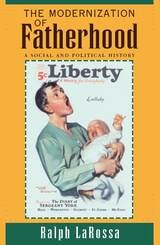
The Modernization of Fatherhood
A Social and Political HistoryRalph LaRossa
University of Chicago Press, 1997
LaRossa explains that during the interwar period the image of the father as economic provider, pal, and male role model, all in one, became institutionalized. Using personal letters and popular magazine and newspaper sources, he explores how the social and economic conditions of the Roaring Twenties and the Great Depression—a period of technical innovation as well as economic hardship—fused these expectations into a cultural ideal. With chapters on the U.S. Children's Bureau, the fathercraft movement, the magazine industry and the development of Parent's Magazine, and the creation of Father's Day, this book is a major addition to the growing literature on masculinity and fatherhood.
The Moiseyev Dance Company Tours America
"Wholesome" Comfort during a Cold WarVictoria Hallinan
University of Massachusetts Press, 2023
During the Cold War, dancers and musicians from the United States and the USSR were drawn into the battle for hearts and minds, crossing the Iron Curtain to prove their artistic and ideological prowess. After the passage of the Lacy-Zarubin Agreement, direct cultural exchange between the two superpowers opened up, and the Moiseyev Dance Company arrived in the United States in 1958. The first Soviet cultural representatives to tour America, this folk-dance troupe’s repertoire included dances from territories controlled or influenced by the USSR, including Uzbekistan, Crimea, and Poland.
Drawing on contemporary personal and published accounts, Victoria Hallinan explores why the dancers garnered overwhelming acclaim during their multicity tour and Ed Sullivan Show appearance. The “boy-meets-girl” love stories of the dances, and their idealized view of multiple Soviet cultures living together in harmony, presented a comforting image of post–World War II gender norms and race relations for audiences. Americans saw the dancers—their supposed enemies—as humans rather than agents of communist contagion.
The Mojave Desert
Ecosystem Processes and SustainabilityRobert Webb
University of Nevada Press, 2009
In The Mojave Desert, thirty-eight scientists who are all specialists in desert ecology address the threats to the Mojave, as well as the potential for natural recovery and active restoration. The contributing authors discuss the desert from several perspectives: regional threats such as expanding human populations, climate change, atmospheric nitrogen deposition, and invasive plants; the impact of roads in a desert ecosystem; soils and plant communities; shrinking aquifers; and the monitoring and sustainability of this fragile ecosystem. Finally, they discuss the importance of long-term data and the ways scientists and resource managers can interact to enhance understanding of the processes of change in the Mojave Desert and to advance the preservation and restoration of its precious resources.The Mojave Desert offers the fruits of extensive research in a number of disciplines and a sound assessment of the current state and possible future of one of the world's major deserts. As human intrusion and climate change increasingly threaten the Mojave's ecosystem, studies like this are essential in helping scientists, land managers, and the general public understand what is at risk and what can be done to preserve this austere and hauntingly beautiful region.
The Monetarists
The Making of the Chicago Monetary Tradition, 1927–1960George S. Tavlas
University of Chicago Press, 2023
The Chicago School of economic thought has been subject to endless generalizations—and mischaracterizations—in contemporary debate. What is often portrayed as a monolithic obsession with markets is, in fact, a nuanced set of economic theories born from decades of research and debate. The Monetarists is a deeply researched history of the monetary policies—and personalities—that codified the Chicago School of monetary thought from the 1930s through the 1960s. These policies can be characterized broadly as monetarism: the belief that prices and interest rates can be kept stable by controlling the amount of money in circulation.
As economist George S. Tavlas makes clear, these ideas were more than just the legacy of Milton Friedman; they were a tradition in theory brought forth by a crucible of minds and debates throughout campus. Through unprecedented mining of archival material, The Monetarists offers the first complete history of one of the twentieth century’s most formative intellectual periods and places. It promises to elevate our understanding of this doctrine and its origins for generations to come.
The Money Illusion
Market Monetarism, the Great Recession, and the Future of Monetary PolicyScott Sumner
University of Chicago Press, 2021
Is it possible that the consensus around what caused the 2008 Great Recession is almost entirely wrong? It’s happened before. Just as Milton Friedman and Anna Schwartz led the economics community in the 1960s to reevaluate its view of what caused the Great Depression, the same may be happening now to our understanding of the first economic crisis of the 21st century.
Forgoing the usual relitigating of problems such as housing markets and banking crises, renowned monetary economist Scott Sumner argues that the Great Recession came down to one thing: nominal GDP, the sum of all nominal spending in the economy, which the Federal Reserve erred in allowing to plummet. The Money Illusion is an end-to-end case for this school of thought, known as market monetarism, written by its leading voice in economics. Based almost entirely on standard macroeconomic concepts, this highly accessible text lays the groundwork for a simple yet fundamentally radical understanding of how monetary policy can work best: providing a stable environment for a market economy to flourish.
The Money Myth
School Resources, Outcomes, and EquityW. Norton Grubb
Russell Sage Foundation, 2009
The Money Pitch
Baseball Free Agency and Salary ArbitrationRoger I. Abrams
Temple University Press, 2000
Why are baseball players paid so much money? In this insightful book, legal scholar and salary arbitrator Roger Abrams tells the story of how a few thousand very talented young men obtain their extraordinary riches. Juggling personal experience and business economics, game theory and baseball history, he explains how agents negotiate compensation, how salary arbitration works, and how the free agency "auction" operates. In addition, he looks at the context in which these systems operate: the players' collective bargaining agreement, the distribution of quality players among the clubs, even the costs of other forms of entertainment with which baseball competes.
Throughout, Dean Abrams illustrates his explanations with stories and quotations -- even an occasional statistic, though following the dictum of star pitcher, club owner, and sporting goods tycoon Albert Spalding, he has kept the book as free of these as possible. He explains supply and demand by the cost of a bar of soap for Christy Mathewson's shower. He illustrates salary negotiation with an imaginary case based on Roy Hobbs, star of The National. He leads the reader through the breath-taking successes of agent Scott Boras to explain the intricacies of free agent negotiating.
Although studies have shown that increases in admissions prices precede rather than follow the rise in player salaries, fans are understandably bemused by skyrocketing salaries. Dean Abrams does not shy away from the question of whether it is "fair" for an athlete to earn more than $10,000,000 a year. He looks at issues of player (and team) loyalty and player attitudes, both today and historically, and at what increased salaries have meant for the national pastime, financially and in the eyes of its fans. The Money Pitch concludes that "the money pitch is a story of good fortune, good timing, and great leadership, all resulting from playing a child's game -- a story that is uniquely American."
The Money Problem
Rethinking Financial RegulationMorgan Ricks
University of Chicago Press, 2016
In The Money Problem, Morgan Ricks addresses all of these questions and more, offering a practical yet elegant blueprint for a modernized system of money and banking—one that, crucially, can be accomplished through incremental changes to the United States’ current system. He brings a critical, missing dimension to the ongoing debates over financial stability policy, arguing that the issue is primarily one of monetary system design. The Money Problem offers a way to mitigate the risk of catastrophic panic in the future, and it will expand the financial reform conversation in the United States and abroad.
The Money Shot
Trash, Class, and the Making of TV Talk ShowsLaura Grindstaff
University of Chicago Press, 2002
From "classy" shows like Oprah to "trashy" shows like Jerry Springer, the key to a talk show's success is what Laura Grindstaff calls the money shot—moments when guests lose control and express joy, sorrow, rage, or remorse on camera. In this new work, Grindstaff takes us behind the scenes of daytime television talk shows, a genre focused on "real" stories told by "ordinary" people. Drawing on extensive interviews with producers and guests, her own attendance of dozens of live tapings around the country, and more than a year's experience working on two nationally televised shows, Grindstaff shows us how producers elicit dramatic performances from guests, why guests agree to participate, and the supporting roles played by studio audiences and experts.
Grindstaff traces the career of the money shot, examining how producers make stars and experts out of ordinary people, in the process reproducing old forms of cultural hierarchy and class inequality even while seeming to challenge them. She argues that the daytime talk show does give voice to people normally excluded from the media spotlight, but it lets them speak only in certain ways and under certain rules and conditions. Working to understand the genre from the inside rather than pass judgment on it from the outside, Grindstaff asks not just what talk shows can tell us about mass media, but also what they reveal about American culture more generally.
The Money Signal
How Fundraising Matters in American PoliticsDanielle M. Thomsen
University of Chicago Press, 2025
A data-rich, eye-opening look at how, when, and why political fundraising is consequential.
Over the last two decades, the number of competitive congressional races has declined precipitously. Yet candidates and officeholders dial for more and more dollars each election, and they do so earlier and earlier in the campaign cycle.
In The Money Signal, Danielle M. Thomsen offers a new perspective on the role of money in politics. She shows that fundraising matters because it is widely used as an indicator of a candidate’s viability and strength, which shapes subsequent donations, dropout decisions, media attention, and rewards in office. Put simply, money is a focal point that candidates, donors, journalists, and party leaders rally around. For candidates, fundraising is a highly public form of self-presentation that pays dividends long before the election and well after the votes are cast.
Thomsen draws on comprehensive fundraising data that spans more than four decades, in addition to interviews, surveys of candidates and donors, newspaper coverage, committee assignments, and analysis of legislative success. The Money Signal highlights the numerous ways that dollars influence the perceptions and behavior of key actors and observers throughout the election cycle.

The Moon in Your Sky
An Immigrant's Journey HomeKate Saller
University of Missouri Press, 2014
The Moral Conflict of Law and Neuroscience
Peter A. Alces
University of Chicago Press, 2018
Peter A. Alces considers where and how the law currently fails to appreciate the neuroscientific revelation that humans may in key ways lack normative free will—and therefore moral responsibility. The most accessible setting in which to consider the potential impact of neuroscience is criminal law, as certain aspects of criminal law already reveal the naiveté of most normative reasoning, such as the inconsistent treatment of people with equally disadvantageous cognitive deficits, whether congenital or acquired. But tort and contract law also assume a flawed conception of human agency and responsibility. Alces reveals the internal contradictions of extant legal doctrine and concludes by considering what would be involved in constructing novel legal regimes based on emerging neuroscientific insights.
The Moral Property of Women
A History of Birth Control Politics in AmericaLinda Gordon
University of Illinois Press, 2002

The Moral Tradition of American Constitutionalism
A Theological InterpretationH. Jefferson Powell
Duke University Press, 1993
Powell locates the origins of constitutional law in the Enlightenment attempt to control the violence of the state by subjecting power to reason. He then traces constitutionalism's rapid evolution into a tradition of rational inquiry centered in the practice of adjudication and embodied in a community of lawyers and judges. Finally, Powell shows how the tradition's nineteenth-century presuppositions about the autonomy and rationality of constitutional argument have been undermined in the twentieth century, within the constitutional community itself, by the acceptance of a positivist and "democratic" understanding of law. Powell shows how the continued willingness of the courts to resolve moral questions by invoking "the Constitution" has thrown the constitutional tradition into an epistemological crisis. He critiques the work of many major theorists—John Hart Ely, Bruce Ackerman, Frank Michaelman, Rogers Smith, Michael Perry, Mark Tushnet, Robert Bork, Sanford Levinson—who, he claims, persist in attempting to resolve the crisis by redefining constitutionalism as American social morality.
With reference to Alasdair MacIntyre's concepts of moral tradition and social practice and John Howard Yoder's theological account of the state, Powell places his analysis of current constitutionalism within a contemporary Christian theological critique of Western liberalism. With certain exceptions, Powell concludes, there are theological grounds in the United States to prefer decision making by elected officials to decision by constitutional courts. Despite the controversial implications for judicial practice and legal argument, Powell ultimately argues that the liberal tradition of rational inquiry--American constitutionalism--be renounced by the Christian community in favor of the majoritarian political process.
The Mormon Hierarchy
Extensions of PowerD. Michael Quinn
Signature Books, 1997
But by interviewing former church aides, examining hundreds of diaries, and drawing from his own past experience as an insider within the Latter-day Saint historical department, D. Michael Quinn presents a fuller view. His extensive research documents how the governing apostles, seventies, and presiding bishops are likely to be at loggerheads, as much as united. These strong-willed, independent men–like directors of a large corporation or supreme court justices–lobby among their colleagues, forge alliances, out-maneuver opponents, and broker compromises.
There is more: clandestine political activities, investigative and punitive actions by church security forces, personal “loans” from church coffers (later written off as bad debts), and other privileged power-vested activities. Quinn considers the changing role and attitude of the leadership toward visionary experiences, the momentous events which have shaped quorum protocol and doctrine, and day-to-day bureaucratic intrigue from the time of Brigham Young to the dawn of the twenty-first century.
The hierarchy seems at root well-intentioned and even at times aggressive in fulfilling its stated responsibility, which is to expedite the Second Coming. Where they have become convinced that God has spoken, they have set aside personal differences, offered unqualified support, and spoken with a unified voice. This potential for change, when coupled with the tempering effect of competing viewpoints, is something Quinn finds encouraging about Mormonism. But one should not assume that these men are infallible or work in anything approaching uninterrupted unanimity.
The Mormon Hierarchy
Origins of PowerD. Michael Quinn
Signature Books, 1994
Not until seven years later did Mormons first learn that authority had been restored by angels or of the need for a hierarchy mirroring the Pauline model. That same year (1835) a Quorum of Twelve Apostles was organized, but their jurisdiction was limited to areas outside established stakes (dioceses). Stakes were led by a president, who oversaw spiritual development, and by a bishop, who supervised temporal needs.
At Smith’s martyrdom in 1844, the church had five leading quorums of authority. The most obvious successor to Smith, Illinois stake president William Marks, opposed the secret rites of polygamy, anointing, endowments, and the clandestine political activity that had characterized the church in Illinois. The secret Council of Fifty had recently ordained Smith as King on Earth and sent ambassadors abroad to form alliances against the United States.
The majority of church members knew nothing of these developments, but they followed Brigham Young, head of the Quorum of the Twelve, who spoke forcefully and moved decisively to eliminate contenders for the presidency. He continued to build on Smith’s political and doctrinal innovations and social stratification. Young’s twentieth-century legacy is a well-defined structure without the charismatic spontaneity or egalitarian chaos of the early church.
Historian D. Michael Quinn examines the contradictions and confusion of the first two tumultuous decades of LDS history. He demonstrates how events and doctrines were silently, retroactively inserted into the published form of scriptures and records to smooth out the stormy, haphazard development. The bureaucratization of Mormonism was inevitable, but the manner in which it occurred was unpredictable and will be, for readers, fascinating.
The Mormon War
Zion and the Missouri Extermination Order of 1838Brandon G. Kinney
Westholme Publishing, 2011
How the Violent Expulsion of the Mormons from Missouri Changed the History of America and the West
In 1831, Joseph Smith, Jr., the founder of the Church of Christ—later to be renamed the Church of Jesus Christ of Latter Day Saints—revealed that Zion, or “New Jerusalem,” was to be established in Jackson County, Missouri. Smith sent some of his followers to begin the settlement, but they were soon expelled by locals who were suspicious of their religion and their abolitionist sympathies. Smith led an expedition to regain the settlement, but was unsuccessful. Seven years later, in January 1838, Smith fled to Missouri from Ohio to avoid a warrant for his arrest, and joined the Mormon community in the town of Far West, which became the new Zion. The same prejudices recurred and the Mormons found themselves subject to attacks from non-Mormons, including attempts to prevent them from voting. Despite his abhorrence of violence, Smith decided that it was necessary for Mormons to defend themselves, which resulted in a short and sharp conflict known as the Mormon War. A covert Mormon paramilitary unit, the Danites, was formed to pillage non- Mormon towns, while angry rhetoric rose from both sides. After the Missouri state militia was attacked at the Battle of Crooked River, Missouri governor Liburn William Boggs issued Executive Order 44, which called for Mormons to be “exterminated or driven from the State.” Non-Mormons responded by attacking a Mormon settlement at Haun’s Mill, killing men and boys and firing on the women. Following this massacre, the state militia surrounded Far West and arrested Smith and other Mormon leaders. Smith was tried for treason and narrowly avoided execution, but was allowed to go and join the rest of his followers who were forced from Missouri to Illinois, where they founded their next major town, Nauvoo. There, Smith would be murdered and the church would split into several factions, with Brigham Young leading the movement’s largest group to Utah.
In The Mormon War: Zion and the Missouri Extermination Order of 1838, Brandon G. Kinney unravels the complex series of events that led to a religious and ideological war of both blood and words. The Mormon War not only challenged the protection afforded by the First Amendment, it foreshadowed the partisan violence over slavery and states’ rights that would erupt across Missouri and Kansas. The war also fractured Smith’s Church and led ultimately to the unexpected settlement of a vast area of the West as a Mormon homeland. By tracing the life of Joseph Smith, Jr. and his quest for Zion, the author reveals that the religion he founded was destined for conflict—both internal and external—as long as he remained its leader.

The Morning After
A History of Emergency Contraception in the United StatesPrescott, Heather Munro
Rutgers University Press, 2011
Since 2006, when the “morning-after pill” Plan B was first sold over the counter, sales of emergency contraceptives have soared, becoming an $80-million industry in the United States and throughout the Western world. But emergency contraception is nothing new. It has a long and often contentious history as the subject of clashes not only between medical researchers and religious groups, but also between different factions of feminist health advocates.
The Morning After tells the story of emergency contraception in America from the 1960s to the present day and, more importantly, it tells the story of the women who have used it. Side-stepping simplistic readings of these women as either radical feminist trailblazers or guinea pigs for the pharmaceutical industry, medical historian Heather Munro Prescott offers a portrait of how ordinary women participated in the development and popularization of emergency contraception, bringing a groundbreaking technology into the mainstream with the potential to alter radically reproductive health practices.
The Mosquito Crusades
A History of the American Anti-Mosquito Movement from the Reed Commission to the First Earth DayPatterson, Gordon
Rutgers University Press, 2009
Providing readers with a fascinating exploration of the relationship between science, technology, and public policy, Gordon Patterson's narrative begins in New Jersey with John B. Smith's effort to develop a comprehensive plan and solution for mosquito control, one that would serve as a national model. From the Reed Commission's 1900 yellow fever experiment to the first Earth Day seventy years later, Patterson provides an eye-opening account of the crusade to curtail the deadly mosquito population.
The Most Activist Supreme Court in History
The Road to Modern Judicial ConservatismThomas M. Keck
University of Chicago Press, 2004
Ranging from 1937 to the present, The Most Activist Supreme Court in History traces the legal and political forces that have shaped the modern Court. Thomas M. Keck argues that the tensions within modern conservatism have produced a court that exercises its own power quite actively, on behalf of both liberal and conservative ends. Despite the long-standing conservative commitment to restraint, the justices of the Rehnquist Court have stepped in to settle divisive political conflicts over abortion, affirmative action, gay rights, presidential elections, and much more. Keck focuses in particular on the role of Justices O'Connor and Kennedy, whose deciding votes have shaped this uncharacteristically activist Court.
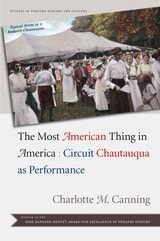
The Most American Thing in America
Circuit Chautauqua as PerformanceCanning, Charlotte M.
University of Iowa Press, 2005
Between 1904 and the Great Depression, Circuit Chautauquas toured the rural United States, reflecting and reinforcing its citizens’ ideas, attitudes, and politics every summer through music (the Jubilee Singers, an African American group, were not always welcome in a time when millions of Americans belonged to the KKK), lectures (“Civic Revivalist” Charles Zueblin speaking on “Militancy and Morals”), elocutionary readers (Lucille Adams reading from Little Lord Fauntleroy), dramas (the Ben Greet Players’ cleaned-up version of She Stoops to Conquer), orations (William Jennings Bryan speaking about the dangers of greed), and special programs for children (parades and mock weddings).
Theatre historians have largely ignored Circuit Chautauquas since they did not meet the conventional conditions of theatrical performance: they were not urban; they produced no innovative performance techniques, stage material, design effects, or dramatic literature. In this beautifully written and illustrated book, Charlotte Canning establishes an analytical framework to reveal the Circuit Chautauquas as unique performances that both created and unified small-town America.
One of the last strongholds of the American traditions of rhetoric and oratory, the Circuits created complex intersections of community, American democracy, and performance. Canning does not celebrate the Circuit Chautauquas wholeheartedly, nor does she describe them with the same cynicism offered by Sinclair Lewis. She acknowledges their goals of community support, informed public thinking, and popular education but also focuses on the reactionary and regressive ideals they sometimes embraced. In the true interdisciplinary spirit of Circuit Chautauquas, she reveals the Circuit platforms as places where Americans performed what it meant to be American.

The Most Beautiful Place on Earth
Wallace Stegner in CaliforniaMatthew D. Stewart
University of Utah Press, 2021
This book tells the story of Stegner and his family as they made a home just outside of Palo Alto, California, during its transition from the Valley of Heart’s Delight (known for its rolling hills and orchards) to Silicon Valley. In this thoughtful study of the novels Stegner wrote in California—including his Pulitzer Prize–winning Angle of Repose—readers are invited to consider with Stegner what the practice of place requires in the American West. Specialists in the literature and history of the American West will find new analyses of Stegner and his influential work. Other readers will be guided through Stegner’s work in concrete and accessible prose, and anyone who has longed for home and a sense of place will encounter a powerful, beautiful, and at times tragic attempt to build and preserve it.

The Mother Knot
Jane Lazarre
Duke University Press, 1997
The Motherless State
Women's Political Leadership and American DemocracyEileen McDonagh
University of Chicago Press, 2009
American women attain more professional success than most of their counterparts around the world, but they lag surprisingly far behind in the national political arena. Women held only 15 percent of U.S. congressional seats in 2006, a proportion that ranks America behind eighty-two other countries in terms of females elected to legislative office. A compelling exploration of this deficiency, TheMotherless State reveals why the United States differs from comparable democracies that routinely elect far more women to their national governing bodies and chief executive positions.
Explaining that equal rights alone do not ensure equal access to political office, Eileen McDonagh shows that electoral gender parity also requires public policies that represent maternal traits. Most other democracies, she demonstrates, view women as more suited to govern because their governments have taken on maternal roles through social welfare provisions, gender quotas, or the continuance of symbolic hereditary monarchies. The United States has not adopted such policies, and until it does, McDonagh insightfully warns, American women run for office with a troubling disadvantage.

The Motherlode
Why Most US Mothers Will Find Themselves Financially Supporting Their ChildrenJennifer L. Glass
Russell Sage Foundation, 2026
Despite cultural scripts that continue to view fathers as the primary breadwinners in their families, there has been a striking escalation of mothers’ assumption of that role. Over the last twenty years, the rate at which mothers become the primary breadwinner has increased by almost 50 percent and an astonishing 70 percent of American mothers can expect to become the primary earner for their household for at least a year before their first child turns eighteen. In The Motherlode, sociologist Jennifer L. Glass traces the rise of mothers as the primary financial providers for their children, investigates the causes of this increase, and evaluates the consequences of this shift for mothers and families.
Glass finds the swift increase of fiscal responsibility for children by their mothers is occurring in households of all racial backgrounds and across the educational spectrum. This increase is not due to more divorces or relationship breakups. In fact, the most rapid growth in mothers’ financial responsibility for the household has come from married mothers, not single mothers, and about half of contemporary mom-breadwinners have spouses or romantic partners living in the home. Nor is it due to a narrowing of the gender pay gap or mothers’ ability to out-earn their partners—the bulk of breadwinning mothers see large financial losses or are better off financially but still living in poverty when they become the primary earner. Instead, this rise is due to broader, long-term changes in the economy, which have led to less job security and wage stagnation for all workers.
The increase of mothers’ financial obligations to their children has occurred at the same time that nonfinancial responsibilities for children has increased—more time is dedicated to identifying, evaluating, and obtaining goods and services for children, including healthcare and schooling. There has not been a corresponding increase in support for mothers by their employers, the government, or fathers. This leaves mothers with greater burdens of both financial support and nonmonetary care for their children, which increases the number of children that are vulnerable to dependency on their mothers’ earnings and intermittent poverty. While this rise in maternal breadwinning is unlikely to decline anytime soon, Glass suggests policies that could provide mothers with more support, such as enacting labor protections for care occupations dominated by women and federal paid family and medical leave and providing federally funded, wraparound, non-means-tested systems of childcare.
The Motherlode is an illuminating and in-depth examination of the surprisingly pervasive phenomenon of maternal breadwinning in American society.
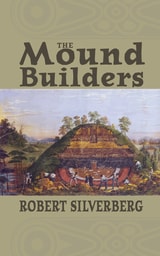
The Mound Builders
Robert Silverberg
Ohio University Press, 1986
In Illinois, the one-hundred-foot Cahokia Mound spreads impressively across sixteen acres, and as many as ten thousand more mounds dot the Ohio River Valley alone. The Mound Builders traces the speculation surrounding these monuments and the scientific excavations which uncovered the history and culture of the ancient Americans who built them.
The mounds were constructed for religious and secular purposes some time between 1000 B.C. and 1000 A.D., and they have prompted curiosity and speculation from very early times. European settlers found them evidence of some ancient and glorious people. Even as eminent an American as Thomas Jefferson joined the controversy, though his conclusions—that the mounds were actually cemeteries of ancient Indians—remained unpopular for nearly a century.
Only in the late 19th century, as Smithsonian Institution investigators developed careful methodologies and reliable records, did the period of scientific investigation of the mounds and their builders begin. Silverberg follows these excavations and then recounts the story they revealed of the origins, development, and demise of the mound builder culture.
The Mound-Builders
Henry Clyde Shetrone; with a new introduction by Bradley T. Lepper
University of Alabama Press, 2004
A Dan Josselyn Memorial Publication
A classic resource on early knowledge of prehistoric mounds and the peoples who constructed them in the eastern United States
With this accessible volume, Henry Clyde Shetrone made available to general readers the archaeological research data and conclusions concerning the ancient mounds and earthworks that dot the landscape of eastern North America. Dismissing popularly held theories of mysterious giants who built these structures, he explained that their purposes were defensive and ceremonial, that they had been used for habitation, burial, and worship. Their builders were antecedents of the native peoples of present-day America and had been skilled artisans and engineers with successful agricultural practices and structured leadership.
Twenty chapters discuss aspects of mound-builder cultures: quarrying of flint and obsidian for knapping into points; mining of copper and iron and its fashioning into tools and ceremonial objects; spinning and weaving materials and methods; smoking customs; carving of calumets and their use in ceremony; freshwater pearls and other items for body ornamentation; and the use of stone burial vaults, cremation basins, and concepts of an afterlife. Data is presented from excavations ranging broadly from Massachusetts to Florida and from Texas to North Dakota.
As Bradley Lepper points out in his new introduction, "The Mound-Builders is a testament to Shetrone's success at working towards 'correlation and systematization' of data, as well as public education. . . . Shetrone was no armchair popularizer. His work was based on years of excavation and first-hand familiarity with much of the data. His popularizations [still] echo with the ring of the shovel and trowel in gravelly soil."
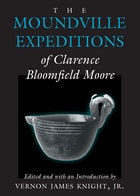
The Moundville Expeditions of Clarence Bloomfield Moore
Clarence Bloomfield MooreClarence Bloomfield Moore, edited and introduced by Vernon James Knight, Jr.
University of Alabama Press, 1996
The two works reprinted in this volume represent the pinnacle of the career of one of the most remarkable American archaeologists of the early 20th century, Clarence Bloomfield Moore.
Moore's Certain Aboriginal Remains of the Black Warrior River (1905) and Moundville Revisited (1907) brought the Moundville site in Alabama to the attention of the scholarly world in dramatic fashion by offering a splendid photographic display and expert commentary on its artifactual richness. Moore was the leading southeastern specialist of his day and the most prolific excavator of southern sites during the early part of the 20th century. Today Moore gives the impression of having been everywhere, having excavated everything, and having published on all of it. Moundville Expeditions contains facsimile reprints of these two classic works, along with a new scholarly introduction by one of the leading authorities on the Moundville archaeological site. Once again these rare materials on Moundville are available both for scholars and for a general audience.
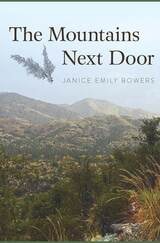
The Mountains Next Door
Janice Emily Bowers
University of Arizona Press, 1991
"I watched the seasons march through the canyons," writes Bowers, "followed the wildflower parade from February through November, and throughout it all realized that I could travel in the Rincon Mountains forever and never learn all they contained." It is also a book of meditations, as Bowers reflects upon the meaning of nature, the similarities between the scientific and creative processes, the value of wilderness in the face of urban encroachment, and other ideas. Participating in the long tradition of reflective natural history writing, she has produced a memorable book that depicts the delights and dilemmas of field botany as it explores the perennial struggle between science and mysticism that tugs at every naturalist's heart.
The Mourning After
Loss and Longing among Midcentury American MenJohn Ibson
University of Chicago Press, 2018
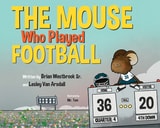
The Mouse Who Played Football
Written by Brian Westbrook Sr. and Lesley Van Arsdall
Temple University Press, 2022
Some folks think Brian the mouse is too small. He may be a tough little fella, but they are not sure Brian has what it takes. The Mouse Who Played Football, by former Philadelphia Eagles running back Brian Westbrook Sr. and sports reporter Lesley Van Arsdall, shows how Brian the mouse proves everyone wrong with unyielding confidence that his small size can be his strength.
This charming children’s book, featuring appealing and dynamic illustrations by Mr. Tom, demonstrates how Brian the mouse overcomes what others see as a “big problem.” His determination—as well as speed and toughness on the gridiron—helps him become a star player in high school, college, and eventually, the MFL, the Mouse Football League.
The Mouse Who Played Football, based on Westbrook’s own experiences,is an inspiring story that encourages young readers to believe in themselves and make their unique differences their strengths.
The Movie Musical
Desirée J. Garcia
Rutgers University Press, 2021
The Movies as a World Force
American Silent Cinema and the Utopian ImaginationFriedman, Ryan J
Rutgers University Press, 2019

The Movies of Racial Childhoods
Screening Self-Sovereignty in Asian/AmericaCeline Parreñas Shimizu
Duke University Press, 2024
The Moynihan Myth
Race and a National IconJohn Hoberman
University of Illinois Press, 2026
John Hoberman cuts through decades of media adulation and high-profile reverence to illuminate Moynihan’s shortcomings and the Report’s disastrous legacy. As a model of the eloquent scholar-politician, Moynihan answered the demand for a white authority figure to explain Black dysfunction. But his undoubted intellect and gift for language eclipsed a singular lack of qualifications and endowed the Report with an authority it did not deserve. Hoberman delves into the factors that raised Moynihan to the role of race expert while revealing the depths of his naïveté about white racial animosity and how policymakers would use his Report against Black Americans.
Incisive and in-depth, The Moynihan Myth is a long-overdue exposé of a deeply flawed race expert.
The Muckrakers
Edited by Arthur Weinberg and Lila Weinberg
University of Illinois Press, 1964
From 1902, when it latched onto such mass circulation magazines as Collier's and McClure's, until it merged into the Progressive movement in 1912, muckraking relentlessly pricked the nation's social conscience by exposing the abuses of industry and politics. Ranging in tone from the scholarly to the sensational, muckraking articles attacked food adulteration, unscrupulous insurance practices, fraudulent claims for patent medicines, and links between government and vice. When muckrakers raised their voices against child labor, graft, monopoly, unsafe mill conditions, and the white slave trade of poor immigrant girls, they found a receptive audience. "I aimed at the public's heart," wrote Upton Sinclair about The Jungle, "and by accident I hit it in the stomach."
Gathering the most significant pieces published during the heyday of the muckraking movement, The Muckrakers brings vividly to life this unique era of exposure and self-examination. For each article, Arthur and Lila Weinberg provide concise commentary on the background of its subject and the specific and long-range repercussions of its publication. The volume features the work of both journalists and fiction writers, including Ida Tarbell, Lincoln Steffens, Upton Sinclair, Ray Stannard Baker, Samuel Hopkins Adams, Thomas W. Lawson, Charles Edward Russell, and Mark Sullivan.
Eloquent and uncompromising, the muckrakers shocked America from a state of lethargy into Progressive reform. This generous volume vividly captures the urgency of their quest.