Results by title
28167 books match the query 'History' and 6372 start with t

The Future of the South China Sea
Disputes and NegotiationsJiye Kim
University of Michigan Press, 2026
By incorporating negotiation records, such as the 1958 Declaration on China’s Territorial Sea, the 1992 ASEAN Declaration, and the 2005 Tripartite Agreement, Jiye Kim traces how China reshapes its interests into negotiation agendas, providing critical insights into the nation’s diplomacy and making a significant contribution to an existing literature on the South China Sea that has been largely dominated by analyses of great power rivalry. This book sheds light on China’s underlying interests as living and adaptable entities, providing scholars with a detailed, evidence-based understanding of the complexities that define one of the world’s most contested maritime regions.
The Future without a Past
The Humanities in a Technological SocietyJohn Paul Russo
University of Missouri Press, 2005
The Futures of American Studies
Donald E. Pease and Robyn Wiegman, eds.
Duke University Press, 2002
Contributors. Lindon Barrett, Nancy Bentley, Gillian Brown, Russ Castronovo, Eric Cheyfitz, Michael Denning, Winfried Fluck, Carl Gutierrez-Jones, Dana Heller, Amy Kaplan, Paul Lauter, Günter H. Lenz, George Lipsitz, Lisa Lowe, Walter Benn Michaels, José Estaban Muñoz, Dana D. Nelson, Ricardo L. Ortiz, Janice Radway, John Carlos Rowe, William V. Spanos
The Futurist Moment
Avant-Garde, Avant Guerre, and the Language of Rupture, with a New PrefaceMarjorie Perloff
University of Chicago Press, 2004

The GEC Research Laboratories 1919-1984
Robert Clayton
The Institution of Engineering and Technology, 1989
The GREAT DEBATE ON BANKING REFORM
Nelson Aldrich and the Origins of the FedElmus Wicker
The Ohio State University Press, 2005

The Gaither Committee, Eisenhower, and the Cold War
EISENHOWER & COLD WARDavid L. Snead
The Ohio State University Press, 1998
The Galilean Economy in the Time of Jesus
David A. Fiensy
SBL Press, 2013
The Galveston Era
The Texas Crescent on the Eve of SecessionBy Earl Wesley Fornell
University of Texas Press, 1961
The "Queen City" of Texas they called her—or the "Octopus of the Gulf." Galveston from 1845 to 1860 was the center of culture in Texas—or the monster with an economic strangle hold on all Texas trade. It was a gracious city with wide paved streets, impressive buildings, and neat gardens; yet it was also a pestilence-ridden place where no sanitary code was ever enforced and where one in every two children died before reaching maturity. Its citizens, avid for culture and knowledge, attended concerts and plays in great numbers and exhibited an eager interest in science and history; yet they could not be brought to support the school system. Galveston was a city where no person in need was ever left uncared for, where the sick and needy—strangers or friends—were succoured; yet no free Negro was safe from legalized abduction and forced enslavement, and the city served as a center for the revived African slave trade.
Earl Fornell makes the charming, colorful, cosmopolitan, contradictory city of Galveston the focal point of his study of the Texas Gulf Coast on the eve of the Civil War. The years 1845-1860 were crucial for this area; during that period the economy became more and more dependent upon slave labor, and thus the stage was set for secession.
Dr. Fornell describes with clarity the interrelated events, the decisions, and the conflicts that went into the development of Galveston and the Texas Gulf Coast during these years. He portrays the people and their way of life. He introduces us to some of the notables who helped to shape the destiny of Texas: Sam Houston, the old general; Lorenzo Sherwood, the golden-tongued propounder of radical economic doctrines; Willard Richardson, Hamilton Stuart, Ferdinand Flake, and Edward Cushing, the newspapermen whose writing both reflected and guided the thought of their fellow citizens; Arthur Lynn, the British consul whose observing and compassionate nature brought him onto the stage of Galveston history with striking frequency and whose voluminous letters provide a rich source for historical details; and William Ballinger, a minor player on the stage but one whose conscience and interests mirrored those of many other thoughtful Galvestonians.
Always present, affecting and affected by virtually every aspect of life on the Coast, the slave-labor problem grew ever more acute as the expanding railroad system laid more and more of the land open for development. Dr. Fornell shows with keen insight how it eventually forced Texans into a position where conflict with the federal government was unavoidable and the decision to secede from the Union inevitable.
The late Earl W. Fornell, a native of Wisconsin, held B.A. and M.A. degrees in political science from the New School for Social Research, the M.A. degree in political history from Columbia University, and the Ph.D. degree in political history from Rice University. He taught at Columbia, Amarillo College, Rice, and Lamar State College of Technology.
The Gambler King of Clark Street
Michael C. McDonald and the Rise of Chicago's Democratic MachineRichard C. Lindberg with a Foreword by John Miya.
Southern Illinois University Press, 2009
The Gambler King of Clark Street tells the story of a larger-than-life figure who fused Chicago’s criminal underworld with the city’s political and commercial spheres to create an urban machine built on graft, bribery, and intimidation. Lindberg vividly paints the life of the Democratic kingmaker against the wider backdrop of nineteenth-century Chicago crime and politics.
McDonald has long been cited in the published work of city historians, members of academia, and the press as the principal architect of a unified criminal enterprise that reached into the corridors of power in Chicago, Cook County, the state of Illinois, and ultimately the Oval Office. The Gambler King of Clark Street is both a major addition to Chicago’s historical literature and a revealing biography of a powerful and troubled man.
Illinois State Historical Society Scholarly Award, Certificate of Excellence, 2009
Society of Midland Authors Biography Award, 2009

The Game of Conservation
International Treaties to Protect the World’s Migratory AnimalsMark Cioc
Ohio University Press, 2009
The Game of Conservation is a brilliantly crafted and highly readable examination of nature protection around the world.
Twentieth-century nature conservation treaties often originated as attempts to regulate the pace of killing rather than as attempts to protect animal habitat. Some were prompted by major breakthroughs in firearm techniques, such as the invention of the elephant gun and grenade harpoons, but agricultural development was at least as important as hunting regulations in determining the fate of migratory species. The treaties had many defects, yet they also served the goal of conservation to good effect, often saving key species from complete extermination and sometimes keeping the population numbers at viable levels. It is because of these treaties that Africa is dotted with large national parks, that North America has an extensive network of bird refuges, and that there are any whales left in the oceans. All of these treaties are still in effect today, and all continue to influence nature-protection efforts around the globe.
Drawing on a wide variety of primary and secondary sources, Mark Cioc shows that a handful of treaties—all designed to protect the world’s most commercially important migratory species—have largely shaped the contours of global nature conservation over the past century. The scope of the book ranges from the African savannahs and the skies of North America to the frigid waters of the Antarctic.
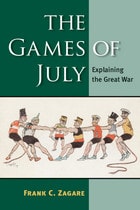
The Games of July
Explaining the Great WarFrank C. Zagare
University of Michigan Press, 2011
"Frank C. Zagare combines a deep command of historical scholarship and the sophisticated skills of an applied game theorist to develop and test a theory of why deterrence failed, catastrophically, in July 1914. . . . Zagare concludes with sage advice on how to avoid even more cataclysmic breakdowns in a nuclear world."
---Steven J. Brams, New York University
"Zagare's deft study of the origins of the First World War using his perfect deterrence theory uncovers new insights into that signal event and shows the value of formal theory applied to historical events. A must-read for those interested in security studies."
---James D. Morrow, University of Michigan
"Through an exemplary combination of formal theory, careful qualitative analysis, and lucid prose, The Games of July delivers important and interesting answers to key questions concerning the international political causes of World War I. Its well-formed narratives and its sustained engagement with leading works in IR and diplomatic history . . . make it a rewarding read for security scholars in general and a useful teaching tool for international security courses."
---Timothy W. Crawford, Boston College
Taking advantage of recent advances in game theory and the latest historiography, Frank C. Zagare offers a new, provocative interpretation of the events that led to the outbreak of World War I. He analyzes key events from Bismarck's surprising decision in 1879 to enter into a strategic alliance with Austria-Hungary to the escalation that culminated in a full-scale global war. Zagare concludes that, while the war was most certainly unintended, it was in no sense accidental or inevitable.
The Games of July serves not only as an analytical narrative but also as a work of theoretical assessment. Standard realist and liberal explanations of the Great War are evaluated along with a collection of game-theoretic models known as perfect deterrence theory.
Frank C. Zagare is UB Distinguished Professor of Political Science at the State University of New York at Buffalo.
Cover illustration: Satirical Italian postcard from World War I. Used with permission from The University of North Carolina at Chapel Hill Libraries.

The Gang
A Study of 1,313 Gangs in ChicagoFrederic Milton Thrasher
University of Chicago Press, 1963
While gangs and gang culture have been around for countless centuries, The Gang is one of the first academic studies of the phenomenon. Originally published in 1927, Frederic Milton Thrasher’s magnum opus offers a profound and careful analysis of hundreds of gangs in Chicago in the early part of the twentieth century. With rich prose and an eye for detail, Thrasher looked specifically at the way in which urban geography shaped gangs, and posited the thesis that neighborhoods in flux were more likely to produce gangs. Moreover, he traced gang culture back to feudal and medieval power systems and linked tribal ethos in other societies to codes of honor and glory found in American gangs. Thrasher approaches his subject with empathy and insightfulness, and creates a multifaceted and textured portrait that still has much to offer to readers today. With handsome images that evoke the era, this unabridged edition of The Gang not only explores an important moment in the history of Chicago, but also is itself a landmark in the history of sociology and subcultural theory.
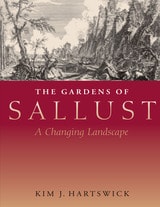
The Gardens of Sallust
A Changing LandscapeBy Kim J. Hartswick
University of Texas Press, 2003
Pleasure gardens, or horti, offered elite citizens of ancient Rome a retreat from the noise and grime of the city, where they could take their leisure and even conduct business amid lovely landscaping, architecture, and sculpture. One of the most important and beautiful of these gardens was the horti Sallustiani, originally developed by the Roman historian Sallust at the end of the first century B.C. and later possessed and perfected by a series of Roman emperors. Though now irrevocably altered by two millennia of human history, the Gardens of Sallust endure as a memory of beauty and as a significant archaeological site, where fragments of sculpture and ruins of architecture are still being discovered.
In this ambitious work, Kim Hartswick undertakes the first comprehensive history of the Gardens of Sallust from Roman times to the present, as well as its influence on generations of scholars, intellectuals, and archaeologists. He draws from an astonishing array of sources to reconstruct the original dimensions and appearance of the gardens and the changes they have undergone at specific points in history. Hartswick thoroughly discusses the architectural features of the garden and analyzes their remains. He also studies the sculptures excavated from the gardens and discusses the subjects and uses of many outstanding examples.
The Garnsey Spring Campsite
Late Prehistoric Occupation in Southeastern New MexicoWilliam J. Parry and John D. Speth
University of Michigan Press, 1984

The Gateway to the Middle Ages
France and BritainEleanor Shipley Duckett
University of Michigan Press, 1988
The Gateway to the Middle Ages
ItalyEleanor Shipley Duckett
University of Michigan Press, 1988
The Gateway to the Middle Ages
MonasticismEleanor Shipley Duckett
University of Michigan Press, 1988
"Professor Duckett writes a history of this period that is as full of intellectual excitement as those centuries were of military excitement." -- Christian Century
"New light on the troubled origins of the medieval spirit." --New Republic
Eleanor Shipley Duckett was Professor Emerita of Latin Languages and Literature, Smith College.
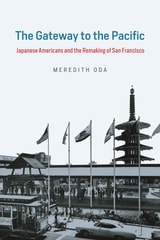
The Gateway to the Pacific
Japanese Americans and the Remaking of San FranciscoMeredith Oda
University of Chicago Press, 2018
Focusing on the development of the Center, Meredith Oda shows how this multilayered story was embedded within a larger story of the changing institutions and ideas that were shaping the city. During these formative decades, Oda argues, San Francisco’s relations with and ideas about Japan were being forged within the intimate, local sites of civic and community life. This shift took many forms, including changes in city leadership, new municipal institutions, and especially transformations in the built environment. Newly friendly relations between Japan and the United States also meant that Japanese Americans found fresh, if highly constrained, job and community prospects just as the city’s African Americans struggled against rising barriers. San Francisco’s story is an inherently local one, but it also a broader story of a city collectively, if not cooperatively, reimagining its place in a global economy.

The Geckos of Bellapais
Memories of CyprusJoachim Sartorius
Haus Publishing, 2013
In The Geckos of Bellapais, Joachim Sartorius shares the cultures and legends, colors and lights of the Levant. He explores the island’s history—including its division after the Turkish invasion of 1974 and the difficulties that followed. A revealing exploration of Cyprus after the Turkish partition and an evocative account of one poet’s life on one of the most beautiful islands in the Mediterranean, this book belongs among the world’s best travel writing.
The Gee Years, 1990-1997
HISTORY OF THE OHIO STATE UNIVERSITYMalcolm S. Baroway
The Ohio State University Press, 2003
When Gee lost his beloved wife, Elizabeth, to cancer in 1991 and became a single parent, he not only carried on, he carried the university through some of its most exhilarating but contentious times. By 1996, he was so popular, private polls said he could run for Ohio governor—and win—on either ticket. When he, and his new bride Constance Bumgarner Gee, left instead for Brown University in January 1998, they left behind a stronger Ohio State and a string of stories about power brokers, politicians, and just plain Buckeyes. Populated by such figures as Les Wexner and George Voinovich, Andy Geiger and John Cooper, Bernadine Healy and John Glenn, The Gee Years is “inside baseball,” written by a member of Gee’s inner circle, his communications director. From the board room to the press box, from fundraisers to sit-ins, this is the story of a singular academic leader and more than seven years in the history of the complex university he headed.

The Gee Years, 2007–2013
Herbert B. Asher
The Ohio State University Press, 2022

The Gender of Memory
Cultures of Remembrance in Nineteenth- and Twentieth-Century EuropeEdited by Sylvia Paletschek and Sylvia Schraut
Campus Verlag, 2008
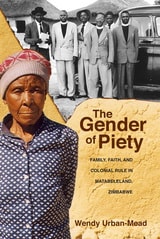
The Gender of Piety
Family, Faith, and Colonial Rule in Matabeleland, ZimbabweWendy Urban-Mead
Ohio University Press, 2015
The Gender of Piety is an intimate history of the Brethren in Christ Church in Zimbabwe, or BICC, as related through six individual life histories that extend from the early colonial years through the first decade after independence. Taken together, these six lives show how men and women of the BICC experienced and sequenced their piety in different ways. Women usually remained tied to the church throughout their lives, while men often had a more strained relationship with it. Church doctrine was not always flexible enough to accommodate expected masculine gender roles, particularly male membership in political and economic institutions or participation in important male communal practices.
The study is based on more than fifteen years of extensive oral history research supported by archival work in Zimbabwe, the United Kingdom, and the United States. The oral accounts make it clear, official versions to the contrary, that the church was led by spiritually powerful women and that maleness and mission-church notions of piety were often incompatible.
The life-history approach illustrates how the tension of gender roles both within and without the church manifested itself in sometimes unexpected ways: for example, how a single family could produce both a legendary woman pastor credited with mediating multiple miracles and a man—her son—who joined the armed wing of the Zimbabwe African People’s Union nationalist political party and fought in Zimbabwe’s liberation war in the 1970s. Investigating the lives of men and women in equal measure, The Gender of Piety uses a gendered interpretive lens to analyze the complex relationship between the church and broader social change in this region of southern Africa.
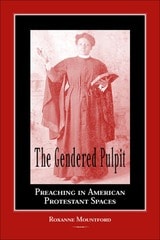
The Gendered Pulpit
Preaching in American Protestant SpacesRoxanne Mountford
Southern Illinois University Press, 2005
In this feminist investigation into the art of preaching—one of the oldest and least studied rhetorical traditions—Roxanne Mountford explores the relationship between bodies, space, race, and gender in rhetorical performance and American Protestant culture. Refiguring delivery and physicality as significant components of the rhetorical situation, The Gendered Pulpit: Preaching in American Protestant Spaces examines the strategies of three contemporary women preachers who have transgressed traditions, rearranged rhetorical space, and conquered gender bias to establish greater intimacy with their congregations.
Mountford’s examinations of the rhetoric inherent in preaching manuals from 1850 to the present provide insight into how “manliness” has remained a central concept in American preaching since the mid-nineteenth century. The manuals illustrate that the character, style, method of delivery, and theological purpose of preachers focused on white men and their cultural standing, leaving contemporary women preachers searching for ways to accommodate themselves to the physicality of preaching.
Three case studies of women preachers who have succeeded or failed in rearranging rhetorical space provide the foundation for the volume. These contemporary examples have important implications for feminist theology and also reveal the importance of gender, space, and bodies to studies of rhetoric in general. Mountford explores the geographies of St. John’s Lutheran Church and the preaching of Rev. Patricia O’Connor who reformed rhetorical space through the delivery of her sermons. At Eastside United Church of Christ, Mountford shows, Rev. Barbara Hill employed narrative style and prophetic utterance in the tradition of black preaching to address gender bias and institute change in her congregation. The final case study details the experiences of Pastor Janet Moore and her struggles at Victory Hills United Methodist Church, where the fractured congregation could not be united even with Pastor Moore’s focus on theological purpose and invention strategies.
The Gendered Worlds of Latin American Women Workers
From Household and Factory to the Union Hall and Ballot BoxJohn D. French and Daniel James, eds.
Duke University Press, 1997
Widely seen as a hostile sexualized space, the modern factory was considered a threat, not only to the virtue of working women, but also to the survival of the family, and thus, the future of the nation. Yet working-class women continued to labor outside the home and remained highly visible in the expanding world of modern industry. In nine essays dealing with Argentina, Brazil, Chile, Colombia, and Guatemala, the contributors make extensive use of oral histories to describe the contradictory experiences of women whose work defied gender prescriptions but was deemed necessary by working-class families in a world of need and scarcity. The volume includes discussion of previously neglected topics such as single motherhood, women’s struggle against domestic violence, and the role of women as both desiring and desired subjects.
Contributors. Ann Farnsworth-Alvear, Mary Lynn Pedersen Cluff, John D. French, Daniel James, Thomas Miller Klubock, Deborah Levenson-Estrada, Mirta Zaida Lobato, Heidi Tinsman, Theresa R. Veccia, Barbara Weinstein
The Gendering of Men, 1600–1750
The English PhallusThomas A. King
University of Wisconsin Press, 2004
Taking on nothing less than the formation of modern genders and sexualities, Thomas A. King develops a history of the political and performative struggles that produced both normative and queer masculinities in the seventeenth and eighteenth centuries. The result is a major contribution to gender studies, gay studies, and theater and performance history.
The Gendering of Men, 1600–1750 traces the transition from a society based on alliance, which had subordinated all men, women, and boys to higher ranked males, to one founded in sexuality, through which men have embodied their claims to personal and political privacy. King proposes that the male body is a performative production marking men’s resistance to their subjection within patriarchy and sovereignty. Emphasizing that categories of gender must come under historical analysis, The Gendering of Men explores men’s particpation in an ongoing struggle for access to a universal manliness transcending other biological and social differentials.
This is volume one of two projected volumes.

The Gendering of Men, 1600–1750
Volume 2, Queer ArticulationsThomas A. King
University of Wisconsin Press, 2008

The Gene
From Genetics to PostgenomicsHans-Jörg Rheinberger and Staffan Müller-Wille
University of Chicago Press, 2018
The time could not be better, therefore, for Hans-Jörg Rheinberger and Staffan Müller-Wille's magisterial history of the concept of the gene. Though the gene has long been the central organizing theme of biology, both conceptually and as an object of study, Rheinberger and Müller-Wille conclude that we have never even had a universally accepted, stable definition of it. Rather, the concept has been in continual flux—a state that, they contend, is typical of historically important and productive scientific concepts. It is that very openness to change and manipulation, the authors argue, that made it so useful: its very mutability enabled it to be useful while the technologies and approaches used to study and theorize about it changed dramatically.
The Genealogical Science
The Search for Jewish Origins and the Politics of EpistemologyNadia Abu El-Haj
University of Chicago Press, 2012
The Genealogical Sublime
Julia Creet
University of Massachusetts Press, 2020
In The Genealogical Sublime, Julia Creet traces the histories of the largest, longest-running, most lucrative, and most rapidly growing genealogical databases to delineate a broader history of the industry. As each unique case study reveals, new database and DNA technologies enable an obsessive completeness—the desire to gather all of the world's genealogical records in the interests of life beyond death. Archival research and firsthand interviews with Church of Jesus Christ of Latter-day Saints officials, key industry players (including Ancestry.com founders and Family Search executives), and professional and amateur family historians round out this timely and essential study.
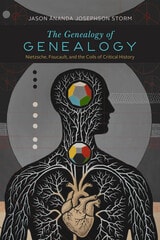
The Genealogy of Genealogy
Nietzsche, Foucault, and the Coils of Critical HistoryJason Ananda Josephson Storm
University of Chicago Press, 2026
The genealogical method—a mode of historical analysis that shows that what looks timeless is in fact contingent, bound to shifting relations of meaning, knowledge, and power—has become the dominant paradigm of humanistic inquiry. In The Genealogy of Genealogy, Jason Ānanda Josephson Storm turns this influential practice back on itself, tracing its unlikely rise through Nietzsche and Foucault and uncovering its suppressed ties to eugenics and racism. He rethinks the very stakes of critical history and proposes new tools for thinking about historical continuity, change, and difference.
Provocative and timely, The Genealogy of Genealogy offers both a diagnosis and a vision, challenging scholars across the humanities and social sciences to rethink how we write history and whether our most trusted methods are fit for the futures we seek to build.
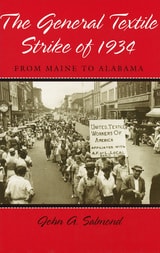
The General Textile Strike of 1934
From Maine to AlabamaJohn A. Salmond
University of Missouri Press, 2002
The Genesis Quest
The Geniuses and Eccentrics on a Journey to Uncover the Origin of Life on EarthMichael Marshall
University of Chicago Press, 2020
How did life begin? Why are we here? These are some of the most profound questions we can ask.
For almost a century, a small band of eccentric scientists has struggled to answer these questions and explain one of the greatest mysteries of all: how and why life began on Earth. There are many different proposals, and each idea has attracted passionate believers who promote it with an almost religious fervor, as well as detractors who reject it with equal passion.
But the quest to unravel life’s genesis is not just a story of big ideas. It is also a compelling human story, rich in personalities, conflicts, and surprising twists and turns. Along the way, the journey takes in some of the greatest discoveries in modern biology, from evolution and cells to DNA and life’s family tree. It is also a search whose end may finally be in sight.
In The Genesis Quest, Michael Marshall shows how the quest to understand life’s beginning is also a journey to discover the true nature of life, and by extension our place in the universe.
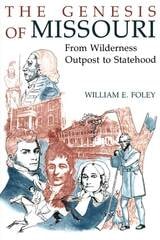
The Genesis of Missouri
From Wilderness Outpost to StatehoodWilliam E. Foley
University of Missouri Press, 1989
The story of the blending of diverse cultures in a land rich in resources and beauty is an extraordinary one. In this account, the pioneer hunters, trappers, and traders who roamed the Ozark hills and the boatmen who traded on the Missouri and Mississippi Rivers take their place beside the small coterie of St. Louisans whose wealth and influence enabled them to dominate the region politically and economically. Especially appealing for many readers will be the attention Foley gives to common Missourians, to the status of women and blacks, and to Indian-white relations.
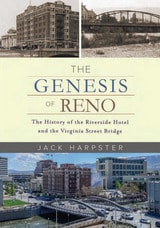
The Genesis of Reno
The History of the Riverside Hotel and the Virginia Street BridgeJack Harpster
University of Nevada Press, 2016
The Genius of American Politics
Daniel J. Boorstin
University of Chicago Press, 1958
". . . a fresh and, on the whole, valid interpretation of American political life."—Reinhold Niebuhr, New Leader

The Genius of Place
The Geographic Imagination in the Early RepublicChristopher C. Apap
University of New Hampshire Press, 2019
The Genius of Place examines how, after the War of 1812, concerns about the scale of the nation resulted in a fundamental reorientation of American identity away from the Atlantic or global ties that held sway in the early republic and toward more localized forms of identification. Instead of addressing the sweep of the nation, American authors, artists, geographers, and politicians shifted from the larger reach of the globe to the more manageable scope of the local and sectional. Paradoxically, that local representation became the primary mode through which early Americans construed their emerging national identity. This newfound cultural obsession with locality impacted the literary consolidation and representation of key American imagined places—New England, the plantation, the West—in the decades between 1816 and 1836.
Apap's examination of the intersections between local and national representations and exploration of the myths of space and place that shaped U.S. identity through the nineteenth century will appeal to a broad, interdisciplinary readership.

The Gentle Art of Murder
The Detective Fiction of Agatha ChristieEarl F. Bargainnier
University of Wisconsin Press, 1980
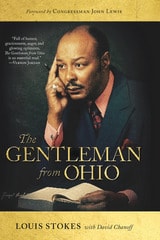
The Gentleman from Ohio
Louis Stokes with David Chanoff with a foreword by Congressman John Lewis
The Ohio State University Press, 2016
Prior to Louis Stokes’s tenure in Congress he served for many years as a criminal defense lawyer and chairman of the Cleveland NAACP Legal Redress Committee. Among the Supreme Court Cases he argued, the Terry “Stop and Frisk” case is regarded as one of the twenty-five most significant cases in the court’s history. The Gentleman from Ohio chronicles this and other momentous events in the life and legacy of Ohio’s first black representative—a man who, whether in law or politics, continually fought for the principles he believed in and helped lead the way for African Americans in the world of mainstream American politics.
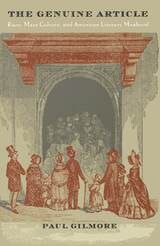
The Genuine Article
Race, Mass Culture, and American Literary ManhoodPaul Gilmore
Duke University Press, 2001
From characters in Indian melodramas and minstrel shows to exhibits in popular museums and daguerrotype galleries, primitive racialized figures circulated as “the genuine article” of manliness in the antebellum United States. Gilmore argues that these figures were manipulated, translated, and adopted not only by canonical authors such as Hawthorne, Thoreau, Cooper, and Melville but also by African American and Native American writers like William Wells Brown and Okah Tubbee. By examining how these cultural notions of race played out in literary texts and helped to construct authorship as a masculine profession, Gilmore makes a unique contribution to theories of class formation in nineteenth-century America.
The Genuine Article will enrich students and scholars of American studies, gender studies, literature, history, sociology, anthropology, popular culture, and race.
The Geoarchaeology of a Terraced Landscape
From Aztec Matlatzinco to Modern CalixtlahuacaAleksander Borejsza, Isabel Rodríguez López, Charles D. Frederick, and Michael E. Smith
University of Utah Press, 2021
Working at a settlement in the Toluca Valley of central Mexico, the authors used fieldwalking, excavation, soil and artifact analyses, maps, aerial photos, land deeds, and litigation records to reconstruct the changing landscape through time. Exploiting the methodologies and techniques of several disciplines, they bring context to eight centuries of the region’s agrarian history, exploring the effects of the Aztec and Spanish Empires, reform, and revolution on the physical shape of the Mexican countryside and the livelihoods of its people. Accessible to specialists and nonspecialists alike, this well-illustrated and well-organized volume provides a step-by-step guide that can be applied to the study of terraced landscapes anywhere in the world.
The four authors share an interest in terraced landscapes and have worked together and on their own on a variety of archaeological projects in Mesoamerica, the Mediterranean, Poland, and the United Kingdom.
The Geographical Encyclopedia of the Holocaust in Hungary
Randolph L. Braham, Foreword by Elie Wiesel
Northwestern University Press, 2013
Winner of the 2013 National Jewish Book Award
The illustrated three-volume Geographical Encyclopedia of the Holocaust in Hungary is a definitive, authoritative, and magisterial resource, thorough and exhaustive. It documents and chronicles the wartime fate of the Jewish communities in that country where virulent antisemitism is anything but dead, even today. With scores of detailed maps and hundreds of photographs, this reference work is organized alphabetically by county, each prefaced with a map and a contextual history describing its Jewish population up to and into 1944.
Entries track the demographic, cultural, and religious changes in even the smallest communities where Jews lived before their marginalization, dispossession, ghettoization, and, finally, deportation to labor and death camps. The encyclopedia endows scholars and lay researchers with both panoramic and microscopic views of the virtually last-minute destruction of most of the Jews of Hungary, until then the last sizable surviving Jewish community in occupied Europe.
The Geographical Imagination in America, 1880-1950
Susan Schulten
University of Chicago Press, 2001
The Geographies of Social Movements
Afro-Colombian Mobilization and the Aquatic SpaceUlrich Oslender
Duke University Press, 2016

The Geography of Hate
The Great Migration through Small-Town AmericaJennifer Sdunzik
University of Illinois Press, 2023
During the Great Migration, Black Americans sought new lives in midwestern small towns only to confront the pervasive efforts of white residents determined to maintain their area’s preferred cultural and racial identity. Jennifer Sdunzik explores this widespread phenomenon by examining how it played out in one midwestern community. Sdunzik merges state and communal histories, interviews and analyses of population data, and spatial and ethnographic materials to create a rich public history that reclaims Black contributions and history. She also explores the conscious and unconscious white actions that all but erased Black Americans--and the terror and exclusion used against them--from the history of many midwestern communities.
An innovative challenge to myth and perceived wisdom, The Geography of Hate reveals the socioeconomic, political, and cultural forces that prevailed in midwestern towns and helps explain the systemic racism and endemic nativism that remain entrenched in American life.
The Geography of Manitoba
Its Land and its PeopleJohn Welsted
University of Manitoba Press, 1996
The Geography of Wisconsin
John A. Cross and Kazimierz J. Zaniewski
University of Wisconsin Press, 2022
- physical features: bedrock geology, glaciation, landforms, soils, climate, and vegetation
- cultural landscapes: population density, ethnic populations, demographics, and political affiliations
- economic activity: agriculture, forestry, mining, manufacturing, transportation, recreation, and tourism

The George Washington Bridge
Poetry in SteelMichael Aaron Rockland
Rutgers University Press, 2008
Intimate and engaging, Michael Rockland's rich narrative presents perspectives on the GWB, as it is often called, that span history, architecture, engineering, transportation, design, the arts, politics, and even post-9/11 mentality. Stunning archival photos, from the late 1920s when the bridge was built through the present, are a powerful complement to the bridge's history. Rockland covers the competition between the GWB and the Brooklyn Bridge that parallels the rivalry between New Jersey and New York City. Readers will learn about the Swiss immigrant Othmar Ammann, an unsung hero who designed and built the GWB, and how a lack of funding during the Depression dictated the iconic, uncovered steel beams of its towers, which we admire today. There are chapters discussing accidents on the bridge, such as an airplane crash landing in the westbound lanes and the sad story of suicides off its span; the appearance of the bridge in media and the arts; and Rockland's personal adventures on the bridge, including scaling its massive towers on a cable.
Movies, television shows, songs, novels, countless images, and even PlayStation 2 games have aided the GWB in becoming a part of the global popular culture. This tribute will captivate residents living in the shadow of the GWB, the millions who walk, jog, bike, skate, or drive across it, as well as tourists and those who will visit it some day.
- First major book on the George Washington Bridge
- Full of amazing facts about the GWB that will surprise even bridge historians
- Includes over 30 spectacular illustrations, ranging from archival photographs of the building of the bridge to those that show it draped in an enormous flag after 9/11
- Includes personal accounts of the author's adventures on the bridge
The George Washington Bridge
Poetry in SteelMichael Aaron Rockland
Rutgers University Press, 2020
Since opening in 1931, the George Washington Bridge, linking New York and New Jersey, has become the busiest bridge in the world, with 103 million vehicles crossing it in 2016. Many people also consider it the most beautiful bridge in the world, yet remarkably little has been written about this majestic structure.
Intimate and engaging, this revised and expanded edition of Michael Rockland's rich narrative presents perspectives on the GWB, as it is often called, that span history, architecture, engineering, transportation, design, the arts, politics, and even post-9/11 mentalities. This new edition brings new insight since its initial publication in 2008, including a new chapter on the infamous “Bridgegate” Chris Christie-era scandal of 2013, when members of the governor's administration shut down access to the bridge, causing a major traffic jam and scandal and subsequently helping undermine Christie’s candidacy for the US presidency.
Stunning photos, from when the bridge was built in the late 1920s through the present, are a powerful complement to the bridge's history. Rockland covers the competition between the GWB and the Brooklyn Bridge that parallels the rivalry between New Jersey and New York City. Readers will learn about the Swiss immigrant Othmar Ammann, an unsung hero who designed and built the GWB, and how a lack of funding during the Depression dictated the iconic, uncovered steel beams of its towers, which we admire today. There are chapters discussing accidents on the bridge, such as an airplane crash landing in the westbound lanes and the sad story of suicides off its span; the appearance of the bridge in media and the arts; and Rockland's personal adventures on the bridge, including scaling its massive towers on a cable.
Movies, television shows, songs, novels, countless images, and even PlayStation 2 games have aided the GWB in becoming a part of the global popular culture. This tribute will captivate residents living in the shadow of the GWB, the millions who walk, jog, bike, skate, or drive across it, as well as tourists and those who will visit it someday.
.