Results by title
28167 books match the query 'History' and 6372 start with t

The Georgia Florida Contest
Martha C. Searcy
University of Alabama Press, 1985
Almost from the time of Georgia’s settlement by Oglethorpe in 1733, both Georgians and Carolinians had made periodic unsuccessful attempts to conquer the Spanish Castillo San Marcos in St. Augustine; and during the American Revolution (in 1776, 1777, and 1778) the rebels tried without success to take the fortification, which was then a British stronghold. Each of the three expeditions was less successful than the preceding one, and between the formal campaigns vicious partisan warfare between loyalists and rebels devastated much of the area between the Altamaha and St. Johns rivers.
This book presents a detailed history of the three Georgia-Florida campaigns. Indecisive and lacking the glamour of either the contemporary campaigns in the North, or the later campaigns in the South, they appeared isolated from the mainstream of the revolutionary struggle. The rebels were handicapped by divided command, personal quarrels, difficult terrain, and miserable weather. While Searcy emphasizes the military aspects of the period, she also treats the conflict between civil and military authorities, the effects of war on the civilian populace, and the interaction of economic matters with military affairs. Her work clarifies the importance of these military activities in the subsequent British strategy in the occupation of Georgia and the Carolinas.
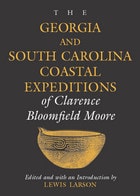
The Georgia and South Carolina Coastal Expeditions of Clarence Bloomfield Moore
Clarence Bloomfield Moore, edited by Lewis Larson
University of Alabama Press, 1998
A Dan Josselyn Memorial Publication
This facsimile edition of Moore's Georgia and South Carolina expeditions includes an extensive new introduction from Georgia's senior archaeologist.
This compilation of Clarence Bloomfield Moore's investigations along the rich coastal and river drainages of Georgia and South Carolina makes
available in a single volume valuable works published a century ago. By modern standards Moore's excavation techniques were crude, but his results were nothing less than spectacular. He recorded data with care, and much information can be learned from his works. In some cases his publications are the only documentation extant for sites that have since been destroyed. In one case, relic collectors had destroyed six mounds at Mason's Plantation—the largest Mississippian center in the Savannah River valley—by the time Moore visited the site in 1897.
Moore also documented prehistoric urn burials, a ritual widely practiced in eastern North America but more frequently on the Gulf Coastal Plain
of Alabama and coastal sites in Georgia and South Carolina. In the introduction, Lewis Larson discusses Moore's investigations within the framework of the current understanding of Georgia and South Carolina coastal archaeological chronology.
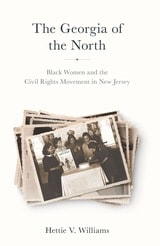
The Georgia of the North
Black Women and the Civil Rights Movement in New JerseyHettie V. Williams
Rutgers University Press, 2024

The German Officer’s Boy
Harlan Greene
University of Wisconsin Press, 2005
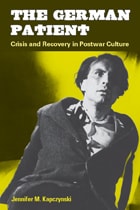
The German Patient
Crisis and Recovery in Postwar CultureJennifer M. Kapczynski
University of Michigan Press, 2010
The German Patient takes an original look at fascist constructions of health and illness, arguing that the idea of a healthy "national body"---propagated by the Nazis as justification for the brutal elimination of various unwanted populations---continued to shape post-1945 discussions about the state of national culture. Through an examination of literature, film, and popular media of the era, Jennifer M. Kapczynski demonstrates the ways in which postwar German thinkers inverted the illness metaphor, portraying fascism as a national malady and the nation as a body struggling to recover. Yet, in working to heal the German wounds of war and restore national vigor through the excising of "sick" elements, artists and writers often betrayed a troubling affinity for the very biopolitical rhetoric they were struggling against. Through its exploration of the discourse of collective illness, The German Patient tells a larger story about ideological continuities in pre- and post-1945 German culture.
Jennifer M. Kapczynski is Assistant Professor of Germanic Languages and Literatures at Washington University in St. Louis. She is the coeditor of the anthology A New History of German Cinema.
Cover art: From The Murderers Are Among Us (1946). Reprinted courtesy of the Deutsche Kinemathek.
"A highly evocative work of meticulous scholarship, Kapczynski's deftly argued German Patient advances the current revaluation of Germany's postwar reconstruction in wholly original and even exciting ways: its insights into discussions of collective sickness and health resonate well beyond postwar Germany."
---Jaimey Fischer, University of California, Davis
"The German Patient provides an important historical backdrop and a richly specific cultural context for thinking about German guilt and responsibility after Hitler. An eminently readable and engaging text."
---Johannes von Moltke, University of Michigan
"This is a polished, eloquently written, and highly informative study speaking to the most pressing debates in contemporary Germany. The German Patient will be essential reading for anyone interested in mass death, genocide, and memory."
---Paul Lerner, University of Southern California

The German Problem Transformed
Institutions, Politics, and Foreign Policy, 1945-1995Thomas Banchoff
University of Michigan Press, 1999

The German Texas Frontier
Ferdinand Lindheimer’s Newspaper Accounts of the Environment, Gold, and IndiansDaniel J. Gelo
University of North Texas Press, 2024
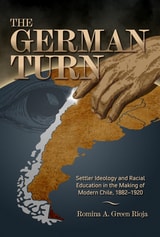
The German Turn
Settler Ideology and Racial Education in the Making of Modern Chile, 1882–1920Romina A. Green Rioja
University of Alabama Press, 2026
How a nation took shape through two classrooms, educating European immigrants in one while assimilating Indigenous peoples in the other, hardwiring race, class, and identity into modern Chile
The German Turn is the history of Chile’s settler ideological project of the 1880s exemplified in education. Romina A. Green Rioja’s big-picture interdisciplinary analysis boasts four historiographies in conversation within the Chilean context. She examines the histories of education, settler colonialism and immigration, Native mission schools, and Mapuche studies at the state and local levels. Chile’s state-building goal was to position the country in the global capitalist economy. Education was seen as a civilizing force for the Mapuche, and the overall goals were to unite the country; teach Chilean students to adhere to class, race, and gender structures; and prepare them for occupations according to these configurations.
Green Rioja finds that Chilean society and state policies demarcated the lines of ethnic, national, and racial preference and exclusion, offering inclusion for those of European ancestry and distance for those of Indigenous descent. Education’s dual role as a tool for inclusion and exclusion ultimately shaped former pupils’ class trajectories and racial belonging. The degrees of belonging depended on community connections, family wealth, and government scholarships that facilitated integration, assimilation, separatism, or the compartmentalization of group identity with the Chilean national identity. The book further considers global-transnational studies on immigration, settler colonialism, and education, showing Chilean policies that appear insular actually align with global patterns and shared policies by other forming nations. This work is a must-read for historians and Latin Americanists to understand Chile’s modernization and its impacts on social structures.

The German-Jewish Cookbook
Recipes and History of a CuisineGabrielle Rossmer Gropman and Sonya Gropman
Brandeis University Press, 2017

The Germanic Languages
Origins and Early Dialectal InterrelationsHans Frede Nielsen
University of Alabama Press, 1989
The book is especially concerned with the grouping of the Germanic languages: with the research history of this much-debated question and with a discussion of the methods applied to past attempts and indeed applicable to future research in the field.
The Gestation of German Biology
Philosophy and Physiology from Stahl to SchellingJohn H. Zammito
University of Chicago Press, 2017
In The Gestation of German Biology, historian of ideas John Zammito presents a different version of the emergence of the field, one that takes on both Foucault and Mayr and emphasizes the scientific progress throughout the eighteenth century that led to the recognition of the need for a special science. The embrace of the term biology around 1800, Zammito shows, was the culmination of a convergence between natural history and human physiology that led to the development of comparative physiology and morphology—the foundations of biology. Magisterial in scope, Zammito’s book offers nothing less than a revisionist history of the field, with which anyone interested in the origins of biology will have to contend.
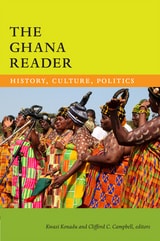
The Ghana Reader
History, Culture, PoliticsKwasi Konadu and Clifford C. Campbell, editors
Duke University Press, 2016
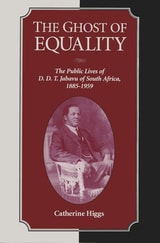
The Ghost of Equality
The Public Lives of D. D. T. Jabavu of South Africa, 1885–1959Catherine Higgs
Ohio University Press, 1996
Davidson Don Tengo Jabavu was born in the Cape Colony in British southern Africa on October 20, 1885, when a few African men could vote and the prospects for black equality with the ruling whites seemed promising. He died on August 3, 1959, in the Cape Province of the Union of South Africa, eleven years after the apartheid state had begun stripping blacks of their rights and exorcising the ‘ghost of equality’ with a completeness unparalleled in the country’s history. The ‘ghost of equality was the last vestige of the Cape liberal tradition — itself best summed up by the dictum ’equal rights for all civilized men‘ — finally erased in 1959 with the passage of legislation that would, the following year, remove from parliament the last elected white representatives of Africans.…
If D.D.T. Jabavu’s life reveals anything about South Africa’s political history, it is that this history was not monolithic. It was not simply a lengthly confrontation between a black elite represented by the African National Congress and the white segregationist state. Rather, there was a range of black political opinion and activity, of which Jabavu, an active participant in virtually every government-sponsored and every major extraparliamentary conference between 1920 and the late 1940s, represented one prominent historical strain.
This book, however, is about more than D.D.T. Javavu’s politics; it is about his public life, or perhaps more accurately, his public lives. The book is arranged thematically, divided according to the parts Jabavu played: student, teacher, Methodist, and politician.
— from the introduction by the author
The Ghost of Monsieur Scarron
Janet Lewis
Ohio University Press, 2013
This historical novel is the third and final book in American poet and fiction writer Janet Lewis’s Cases of Circumstantial Evidence series, based on legal case studies compiled in the nineteenth century. In The Ghost of Monsieur Scarron, Lewis returns to her beloved France, the setting of The Wife of Martin Guerre, her best-known novel and the first in the series. As Swallow Press executive editor Kevin Haworth relates in a new introduction, Monsieur Scarron shifts the reader into the center of Paris in 1694, during the turbulent reign of the Sun King, Louis XIV. The junction of this time and place gives Monsieur Scarron an intriguing political element not apparent in either The Wife of Martin Guerre or The Trial of Sören Qvist.
The Ghost of Monsieur Scarron begins in a small bookbinder’s shop on a modest Paris street, but inexorably expands to encompass a tumultuous affair, growing social unrest, and the conflicts between a legal system based on oppressive order and a society about to undergo harsh changes. With its domestic drama set against a larger political and historical backdrop, Monsieur Scarron is considered by some critics and readers to be the most intricately layered and fully realized book of Lewis’s long career. Originally published in 1959, Monsieur Scarron has remained in print almost continuously ever since.
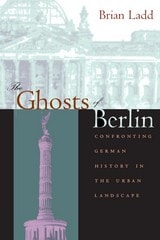
The Ghosts of Berlin
Confronting German History in the Urban LandscapeBrian Ladd
University of Chicago Press, 1997
"Written in a clear and elegant style, The Ghosts of Berlin is not just another colorless architectural history of the German capital. . . . Mr. Ladd's book is a superb guide to this process of urban self-definition, both past and present."—Katharina Thote, Wall Street Journal
"If a book can have the power to change a public debate, then The Ghosts of Berlin is such a book. Among the many new books about Berlin that I have read, Brian Ladd's is certainly the most impressive. . . . Ladd's approach also owes its success to the fact that he is a good storyteller. His history of Berlin's architectural successes and failures reads entertainingly like a detective novel."—Peter Schneider, New Republic
"[Ladd's] well-written and well-illustrated book amounts to a brief history of the city as well as a guide to its landscape."—Anthony Grafton, New York Review of Books

The Ghosts of Berlin
Confronting German History in the Urban LandscapeBrian Ladd
University of Chicago Press, 2018
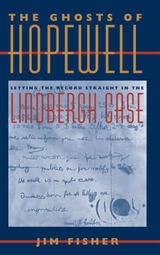
The Ghosts of Hopewell
Setting the Record Straight in the Lindberg CaseJim Fisher
Southern Illinois University Press, 2006
In this illustrated examination of the Lindbergh kidnapping case, Jim Fisher seeks to set the record straight regarding Bruno Hauptmann's guilt in "the crime of the century."
In February 1935, following a sensational, six-week trial, a jury in Flemington, New Jersey, found German carpenter Hauptmann guilty of kidnapping and murdering the twenty-month-old son of Charles and Anne Lindbergh. Although circumstantial, the evidence against Hauptmann—the handwriting on the ransom notes, the homemade kidnapping ladder, Colonel Lindbergh's money found in his garage, his matching the description of the man who accepted the ransom payoff in the Bronx cemetery, his inability to prove an alibi, and his incredible explanation of his possession of the ransom money—was overwhelming, leaving few to doubt his guilt. After a series of appeals and stays, Hauptmann died fourteen months later in the electric chair. A confession would have spared him the death sentence, but Hauptmann chose to die maintaining his innocence.
It was not until the mid-1970s that revisionists began to challenge the conventional wisdom in the case: that Hauptmann was the lone killer. Revisionist books and articles appeared, as did plays, TV shows, and a movie, all portraying Hauptmann as the victim of a massive police and prosecution frame-up.
At this point, the focus shifted from the evidence to the conduct of the police. By the 1980s, most people familiar with the case were convinced of Hauptmann's complete innocence. Many denied the murder, believing that the Lindbergh baby remained alive. Several men claimed to be the firstborn son of Charles and Anne Lindbergh, one of whom sued to claim his share of the Lindbergh estate after Charles Lindbergh's death in 1974.
Another group held that the kidnapping was an elaborate hoax to cover up the murder of the baby by his parents. Anna Hauptmann¹s series of federal lawsuits against New Jersey and others in the mid-1980s fueled further interest in the case. Although Hauptmann's widow lost all of her lawsuits, she had won the hearts and minds of the American people before her death at the age of ninety-four.
Former FBI agent Fisher discusses the hard evidence, such as the ransom notes and the wood of the kidnapping ladder. He analyzes and debunks the various revisionist theories and presents new evidence that, coupled with the undisputed facts, prove beyond a reasonable doubt that Hauptmann was guilty as charged: he kidnapped and murdered the infant son of Charles and Anne Lindbergh.

The Ghosts of NASCAR
The Harlan Boys and the First Daytona 500John Havick
University of Iowa Press, 2013
The Gift in Sixteenth-Century France
Natalie Zemon Davis
University of Wisconsin Press, 2000
Must a gift be given freely? How can we tell a gift from a bribe? Are gifts always a part of human relations—or do they lose their power and importance once the market takes hold and puts a price on every exchange? These questions are central to our sense of social relations past and present, and they are at the heart of this book by one of our most interesting and renowned historians.
In a wide-ranging look at gift giving in early modern France, Natalie Zemon Davis reveals the ways that gift exchange is crucial to understanding alliance and conflict in family life, economic relations, politics, and religion. Moving from the king’s bounty to the beggar’s alms, her book explores the modes and meanings of gift giving in every corner of sixteenth-century French society. In doing so, it arrives at a new way of considering gifts—what Davis calls "the gift register"—as a permanent feature of social relations over time. Gift giving, with its own justifications and forms in different periods, can create amity or lead to quarrels and trouble. It mixes the voluntary and the obligatory, with interested bribery at one extreme and inspired gratuitousness at the other.
Examining gifts both ethnographically (through archives, letters, and other texts) and culturally (through literary, ethical, and religious sources), Davis shows how coercive features in family life and politics, rather than competition from the market, disrupted the gift system. This intriguing book suggests that examining the significance of gifts can not only help us to understand social relations in the past, but teach us to deal graciously with each other in the present.
The Gift of Correspondence in Classical Rome
Friendship in Cicero's Ad Familiares and Seneca's Moral EpistlesAmanda Wilcox
University of Wisconsin Press, 2012
Amanda Wilcox offers an innovative approach to two major collections of Roman letters—Cicero’s Ad Familiares and Seneca’s Moral Epistles—informed by modern cross-cultural theories of gift-giving.
By viewing letters and the practice of correspondence as a species of gift exchange, Wilcox provides a nuanced analysis of neglected and misunderstood aspects of Roman epistolary rhetoric and the social dynamics of friendship in Cicero’s correspondence. Turning to Seneca, she shows that he both inherited and reacted against Cicero’s euphemistic rhetoric and social practices, and she analyzes how Seneca transformed the rhetoric of his own letters from an instrument of social negotiation into an idiom for ethical philosophy and self-reflection. Though Cicero and Seneca are often viewed as a study in contrasts, Wilcox extensively compares their letters, underscoring Cicero’s significant influence on Seneca as a prose stylist, philosopher, and public figure.
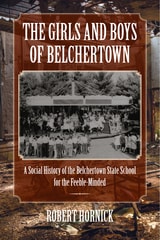
The Girls and Boys of Belchertown
A Social History of the Belchertown State School for the Feeble-MindedRobert Hornick
University of Massachusetts Press, 2012
During much of the twentieth century, people labeled “feeble-minded,” “mentally deficient,” and “mentally retarded” were often confined in large, publicly funded, residential institutions located on the edges of small towns and villages some distance from major population centers. At the peak of their development in the late 1960s, these institutions—frequently called “schools” or “homes”—housed 190,000 men, women, and children in the United States.
The Girls and Boys of Belchertown offers the first detailed history of an American public institution for intellectually disabled persons. Robert Hornick recounts the story of the Belchertown State School in Belchertown, Massachusetts, from its beginnings in the 1920s to its closure in the 1990s following a scandalous exposé and unprecedented court case that put the institution under direct supervision of a federal judge. He draws on personal interviews, private letters, and other unpublished sources as well as local newspapers, long out-of-print materials, and government reports to re-create what it was like to live and work at the school. More broadly, he gauges the impact of changing social attitudes toward intellectual disability and examines the relationship that developed over time between the school and the town where it was located.
What emerges is a candid and complex portrait of the Belchertown State School that neither vilifies those in charge nor excuses the injustices perpetrated on its residents, but makes clear that despite the court-ordered reforms of its final decades, the institution needed to be closed.
The Girls' History and Culture Reader
The Nineteenth CenturyEdited by Miriam Forman-Brunell and Leslie Paris
University of Illinois Press, 2011
The Girls' History and Culture Reader
The Twentieth CenturyEdited by Miriam Forman-Brunell and Leslie Paris
University of Illinois Press, 2011

The Glacier Park Reader
David Stanley
University of Utah Press, 2017
Soon after the park was established in 1910, visitors began to arrive, often with pen in hand. They included such well-known authors as mystery writer Mary Roberts Rinehart, historian Agnes C. Laut, fiction writer Dorothy Johnson, humorist Irvin S. Cobb, poet Vachel Lindsay, and artist Maynard Dixon—all featured in the book. Readers will encounter colorful characters who lived in and around the park in its early days, including railroad magnate and conservationist Louis Hill, renegade ranger and poacher Joe Cosley, bootlegger Josephine Doody, and old-time cowboy guide Jim Whilt. Blackfeet and Kalispel myths, politically charged descriptions by early explorers such as John Muir and George Bird Grinnell, and full-color reproductions of the illustrated letters of cowboy artist and Glacier resident Charles M. Russell are also included.
Copublished with the Glacier National Park Conservancy.
The Glacier National Park Conservancy preserves the Park for generations to come. Learn more about our work at www.glacier.org
Part of the National Park Reader series, edited by Lance Newman and David Stanley
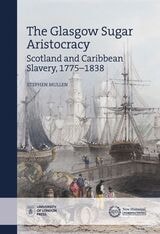
The Glasgow Sugar Aristocracy
Scotland and Caribbean Slavery, 1775–1838Stephen Mullen
University of London Press, 2020
This important book assesses the size and nature of Caribbean slavery’s economic impact on British society. The Glasgow Sugar Aristocracy, a grouping of West India merchants and planters, became active before the emancipation of chattel slavery in the British West Indies in 1834. Many acquired nationally significant fortunes, and their investments percolated into the Scottish economy and wider society. At its core, the book traces the development of merchant capital and poses several interrelated questions during an era of rapid transformation, namely, what impact the private investments of West India merchants and colonial adventurers had on metropolitan society and the economy, as well as the wider effects of such commerce on industrial and agricultural development.
The book also examines the fortunes of temporary Scottish economic migrants who traveled to some of the wealthiest of the Caribbean islands, presenting the first large-scale survey of repatriated slavery fortunes via case studies of Scots in Jamaica, Grenada, and Trinidad before emancipation in 1834. It, therefore, takes a new approach to illuminate the world of individuals who acquired West Indian fortunes and ultimately explores, in an Atlantic frame, the interconnections between the colonies and metropole in the late eighteenth and early nineteenth centuries.
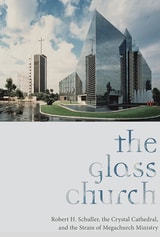
The Glass Church
Robert H. Schuller, the Crystal Cathedral, and the Strain of Megachurch MinistryMark T. Mulder
Rutgers University Press, 2020
Robert H. Schuller’s ministry—including the architectural wonder of the Crystal Cathedral and the polished television broadcast of Hour of Power—cast a broad shadow over American Christianity. Pastors flocked to Southern California to learn Schuller’s techniques. The President of United States invited him sit prominently next to the First Lady at the State of the Union Address. Muhammad Ali asked for the pastor’s autograph. It seemed as if Schuller may have started a second Reformation. And then it all went away. As Schuller’s ministry wrestled with internal turmoil and bankruptcy, his emulators—including Rick Warren, Bill Hybels, and Joel Osteen— nurtured megachurches that seemed to sweep away the Crystal Cathedral as a relic of the twentieth century. How did it come to this?
Certainly, all churches depend on a mix of constituents, charisma, and capital, yet the size and ambition of large churches like Schuller’s Crystal Cathedral exert enormous organizational pressures to continue the flow of people committed to the congregation, to reinforce the spark of charismatic excitement generated by high-profile pastors, and to develop fresh flows of capital funding for maintenance of old projects and launching new initiatives. The constant attention to expand constituencies, boost charisma, and stimulate capital among megachurches produces an especially burdensome strain on their leaders. By orienting an approach to the collapse of the Crystal Cathedral on these three core elements—constituency, charisma, and capital—The Glass Church demonstrates how congregational fragility is greatly accentuated in larger churches, a notion we label megachurch strain, such that the threat of implosion is significantly accentuated by any failures to properly calibrate the inter-relationship among these elements.
The Glass City
Toledo and The Industry That Built ItBarbara L. Floyd
University of Michigan Press, 2014
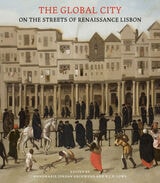
The Global City
On the Streets of Renaissance LisbonEdited by Annemarie Jordan Gschwend and K.J.P. Lowe
Paul Holberton Publishing, 2021
Winner, 2016 Admiral Teixeira da Mota Prize from the Academia de Marinha (Naval Academy), Lisbon
Recently identified by the editors as the Rua Nova dos Mercadores, the principal commercial and financial street in Renaissance Lisbon, two sixteenth-century paintings, acquired by Dante Gabriel Rossetti in 1866, form the starting point for this portrait of a global city in the early modern period. Focusing on unpublished objects, and incorporating newly discovered documents and inventories that allow novel interpretations of the Rua Nova and the goods for sale on it, these essays offer a compelling and original study of a metropolis whose reach once spanned four continents. The Rua Nova views painted by an anonymous Flemish artist portray an everyday scene on a recognizable street, with a diverse global population. This thoroughfare was the meeting point of all kinds of people, from rich to poor, slave to knight, indigenous Portuguese to Jews and diasporic black Africans.
The volume highlights the unique status of Lisbon as an entrepôt for curiosities, luxury goods and wild animals. As the Portuguese trading empire of the fifteenth and sixteenth century expanded sea-routes and networks from West Africa to India and the Far East, non-European cargoes were brought back to Renaissance Lisbon. Many rarities were earmarked for the Portuguese court, but simultaneously exclusive items were readily available for sale on the Rua Nova, the Lisbon equivalent of Bond Street or Fifth Avenue. Specialized shops offered West African and Ceylonese ivories, raffia and Asian textiles, rock crystals, Ming porcelain, Chinese and Ryukyuan lacquerware, jewelry, precious stones, naturalia and exotic animal byproducts. Lisbon was also a hub of distribution for overseas goods to other courts and cities in Europe. The cross-cultural and artistic influences between Lisbon and Portuguese Africa and Asia at this date are reassessed. Lisbon was imagined as the head of empire or caput mundi, while the River Tagus became the aquatic gateway to a globally connected world. Lisbon evolved into a dynamic Atlantic port city, excelling in shipbuilding, cartography and the manufacture of naval instruments. The historian Damião de Góis bragged of the "Tagus reigning over the world." Lisbon's fame depended on its river, an aquatic avenue that competed with the Rua Nova, providing a means of interaction, trade and communication along Lisbon’s coastline. Even for the cosmopolitan Góis, who traveled extensively for the Portuguese crown, Lisbon’s chaotic docks were worth describing. Of all the European cities he experienced, only Lisbon and her rival Seville could be "rightfully called Ladies and Queens of the Sea." Góis contended that they had opened up the early modern world through circumnavigation. Lisbon was destroyed in a devastating earthquake and tsunami in November 1755. These paintings are the only large-scale vistas of Rua Nova dos Mercadores to have survived, and together with the new objects and archival sources offer a fresh and original insight into Renaissance Lisbon and its material culture.
The Global History of Black Girlhood
Edited by Corinne T. Field and LaKisha Michelle Simmons
University of Illinois Press, 2022
Thought-provoking and original, The Global History of Black Girlhood opens up new possibilities for understanding Black girls in the past while offering useful tools for present-day Black girls eager to explore the histories of those who came before them.
Contributors: Janaé E. Bonsu, Ruth Nicole Brown, Tara Bynum, Casidy Campbell, Katherine Capshaw, Bev Palesa Ditsie, Sarah Duff, Cynthia Greenlee, Claudrena Harold, Anasa Hicks, Lindsey Jones, Phindile Kunene, Denise Oliver-Velez, Jennifer Palmer, Vanessa Plumly, Shani Roper, SA Smythe, Nastassja Swift, Dara Walker, Najya Williams, and Nazera Wright

The Global Police State
William I Robinson
Pluto Press, 2020
"Karl Marx aspired to a world in which our animal needs would be satisfied and our human needs could be addressed. It is a realistic possibility now, as William Robinson outlines—or the alternative that is taking shape before our eyes: a 'global police state' controlled by narrowly concentrated capital with 'surplus humanity' left to survive somehow on its own. The choice is in our hands."
—Noam Chomsky, author of Who Rules the World?
As the world becomes ever more unequal, people become ever more “disposable.” Today, governments systematically exclude sections of their populations from society through heavy-handed policing. But it doesn't always go to plan.
William I. Robinson exposes the nature and dynamics of this out-of-control system, arguing for the urgency of creating a movement capable of overthrowing it. The global police state uses a variety of ingenious methods of control, including mass incarceration, police violence, US-led wars, the persecution of immigrants and refugees, and the repression of environmental activists.
He writes in his Introduction, “I offer a ‘big picture” of the emerging global police state in a short book that is eminently readable. The pages to follow may startle many readers and make them angry. I trust the work will serve as a warning of the dystopic future that is upon us. More importantly, by exposing the nature and dynamic of this out-of-control system, I hope it will contribute to the struggles to bring about an alternative future based on human freedom and liberation.”
Movements have emerged to combat the increasing militarization, surveillance and social cleansing; however, many of them appeal to a moral sense of social justice rather than addressing its root: global capitalism.
Using shocking data which reveals how far capitalism has become a system of repression, Robinson argues that the emerging megacities of the world are becoming the battlegrounds where the excluded and the oppressed face off against the global police state.
The Global Republic
America's Inadvertent Rise to World PowerFrank Ninkovich
University of Chicago Press, 2014
One of the preeminent intellectual historians of our time, Ninkovich delivers here his most ambitious and sweeping book to date. He argues that historically the United States has been driven not by a belief in its destiny or its special character but rather by a need to survive the forces of globalization. He builds the powerful case that American foreign policy has long been based on and entangled in questions of global engagement, while also showing that globalization itself has always been distinct from—and sometimes in direct conflict with—what we call international society.
In the second half of the twentieth century, the United States unexpectedly stumbled into the role of global policeman and was forced to find ways to resolve international conflicts that did not entail nuclear warfare. The United States's decisions were based less in notions of exceptionalism and more in a need to preserve and expand a flourishing global society that had become essential to the American way of life.
Sure to be controversial, The Global Republic compellingly and provocatively counters some of the deepest and most common misconceptions about America’s history and its place in the world.

The Global South
Histories, Politics, MapsPamela Gupta, Christopher Lee, Marissa Moorman, and Sandhya Shukla, special issue editors
Duke University Press, 2018
Contributors: Afro-Asian Networks Research Collective, Phineas Bbaala, Emily Callaci, Aharon de Grassi, Pamila Gupta, Mingwei Huang, Sean Jacobs, Maurice Jr. M. LaBelle, Christopher J. Lee, Roseann Liu, Marissa J. Moorman, Michelle Moyd, Ronald C. Po, Savannah Shange, Sandhya Shukla, Pahole Sookkasikon, Quito Swan, Sarah Van Beurden, Sarah E. Vaughn, Jelmer Vos, Keith B. Wagner
The Global Spanish Empire
Five Hundred Years of Place Making and PluralismEdited by Christine D. Beaule and John G. Douglass
University of Arizona Press, 2020
The Spanish Empire was a complex web of places and peoples. Through an expansive range of essays that look at Africa, the Americas, Asia, the Caribbean, and the Pacific, this volume brings a broad range of regions into conversation. The contributors focus on nuanced, comparative exploration of the processes and practices of creating, maintaining, and transforming cultural place making within pluralistic Spanish colonial communities.
The Global Spanish Empire argues that patterned variability is necessary in reconstructing Indigenous cultural persistence in colonial settings. The volume’s eleven case studies include regions often neglected in the archaeology of Spanish colonialism. The time span under investigation is extensive as well, transcending the entirety of the Spanish Empire, from early impacts in West Africa to Texas during the 1800s. The contributors examine the making of a social place within a social or physical landscape. They discuss the appearance of hybrid material culture, the incorporation of foreign goods into local material traditions, the continuation of local traditions, and archaeological evidence of opportunistic social climbing. In some cases, these changes in material culture are ways to maintain aspects of traditional culture rather than signifiers of new cultural practices.
The Global Spanish Empire tackles broad questions about Indigenous cultural persistence, pluralism, and place making using a global comparative perspective grounded in the shared experience of Spanish colonialism.
Contributors
Stephen Acabado
Grace Barretto-Tesoro
James M. Bayman
Christine D. Beaule
Christopher R. DeCorse
Boyd M. Dixon
John G. Douglass
William R. Fowler
Martin Gibbs
Corinne L. Hofman
Hannah G. Hoover
Stacie M. King
Kevin Lane
Laura Matthew
Sandra Montón-Subías
Natalia Moragas Segura
Michelle M. Pigott
Christopher B. Rodning
David Roe
Roberto Valcárcel Rojas
Steve A. Tomka
Jorge Ulloa Hung
Juliet Wiersema
The Global Work of Art
World's Fairs, Biennials, and the Aesthetics of ExperienceCaroline A. Jones
University of Chicago Press, 2017
As world’s fairs brought millions of attendees into contact with foreign cultures, products, and processes, artworks became juxtaposed in a “theater of nations,” which challenged artists and critics to think outside their local academies. From Gustave Courbet’s rebel pavilion near the official art exhibit at the 1855 French World’s Fair to curator Beryl Madra’s choice of London-based Cypriot Hussein Chalayan for the off-site Turkish pavilion at the 2006 Venice Biennale, artists have used these exhibitions to reflect on contemporary art, speak to their own governments back home, and challenge the wider geopolitical realm—changing art and art history along the way. Ultimately, Caroline A. Jones argues, the modern appetite for experience and event structures, which were cultivated around the art at these earlier expositions, have now come to constitute contemporary art itself, producing encounters that transform the public and force us to reflect critically on the global condition.
The Glorious Revolution and the Continuity of Law
Richard S. Kay
Catholic University of America Press, 2014

The Glory Road
A Gospel Gypsy LifeAnita Faye Garner
University of Alabama Press, 2021
“This is a story central to the origins of country music: the marriage of Saturday night and Sunday morning, and the literal marriage of two musicians, sometimes at odds with each other creatively and personally.” —Rosanne Cash
An essential memoir of music, memory, and the American South.
Anita Faye Garner grew up in the South—just about every corner of it. She and her musical family lived in Texarkana, Bossier City, Hot Springs, Jackson, Vicksburg, Hattiesburg, Pascagoula, Bogalusa, Biloxi, Gulfport, New Orleans, and points between, picking up sticks every time her father, a Pentecostal preacher known as “Brother Ray,” took over a new congregation.
In between jump-starting churches, Brother Ray took his wife and kids out on the gospel revival circuit as the Jones Family Singers. Ray could sing and play, and “Sister Fern” (Mama) was a celebrated singer and songwriter, possessed of both talent and beauty. Rounding out the band were the young Garner (known as Nita Faye then) and her big brother Leslie Ray. At all-day singings and tent revivals across the South, the Joneses made a joyful noise for the faithful and loaded into the car for the next stage of their tour.
But growing up gospel wasn’t always joyous. The kids practically raised and fended for themselves, bonding over a shared dislike of their rootless life and strict religious upbringing. Sister Fern dreamed of crossing over from gospel to popular music and recording a hit record. An unlikely combination of preacher’s wife and glamorous performer, she had the talent and presence to make a splash, and her remarkable voice brought Saturday night rock and roll to Sunday morning music. Always singing, performing, and recording at the margins of commercial success, Sister Fern shared a backing band with Elvis Presley and wrote songs recorded by Johnny Cash and many other artists.
In her touching memoir The Glory Road, Anita Faye Garner re-creates her remarkable upbringing. The story begins with Ray’s attempts to settle down and the family’s inevitable return to the gospel circuit and concludes with Sister Fern’s brushes with stardom and the family’s journey west to California where they finally landed—with some unexpected detours along the way. The Glory Road carries readers back to the 1950s South and the intersections of faith and family at the very roots of American popular music.
For more information about the book and Anita Garner, visit www.thegloryroad.com or www.anitagarner.com
The God behind the Marble
The Fate of Art in the German Aesthetic StateAlice Goff
University of Chicago Press, 2024
For German philosophers at the turn of the nineteenth century, beautiful works of art acted as beacons of freedom, instruments of progress that could model and stimulate the moral autonomy of their beholders. Amid the Revolutionary and Napoleonic wars, Germans struggled to uphold these ideals as they contended with the destruction of art collections, looting, and questions about cultural property. As artworks fell prey to the violence they were supposed to transcend, some began to wonder how art could deliver liberation if it could also quickly become a spoil of war. Alice Goff considers a variety of works—including forty porphyry columns from the tomb of Charlemagne, the Quadriga from the Brandenburg Gate in Berlin, the Laocoön group from Rome, a medieval bronze reliquary from Goslar, a Last Judgment from Danzig, and the mummified body of an official from the Rhenish hamlet of Sinzig—following the conflicts over the ownership, interpretation, conservation, and exhibition of German collections during the Napoleonic period and its aftermath.
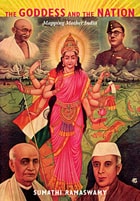
The Goddess and the Nation
Mapping Mother IndiaSumathi Ramaswamy
Duke University Press, 2010
By exploring the mutual entanglement of the scientifically mapped image of India and a (Hindu) mother/goddess, Sumathi Ramaswamy reveals Mother India as a figure who relies on the British colonial mapped image of her dominion to distinguish her from the other goddesses of India, and to guarantee her novel status as embodiment, sign, and symbol of national territory. Providing an exemplary critique of ideologies of gender and the science of cartography, Ramaswamy demonstrates that images do not merely reflect history; they actively make it. In The Goddess and the Nation, she teaches us about pictorial ways of learning the form of the nation, of how to live with it—and ultimately to die for it.
The Gods of Revolution
Christopher Dawson
Catholic University of America Press, 2015
The Gods of the Greeks
Erika Simon, Translated by Jakob Zeyl, Edited by Alan Shapiro
University of Wisconsin Press, 2021
This careful and fluid translation finally makes Simon’s landmark edition accessible to English-language readers. With an abundance of beautiful illustrations, the book examines portrayals of the thirteen major gods in art over the course of two millennia. Scholars who study the lives and practices of those living in ancient Greece will value this newest contribution.
The Gold Coast and the Slum
A Sociological Study of Chicago's Near North SideHarvey Warren Zorbaugh
University of Chicago Press, 1983
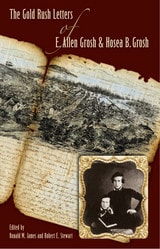
The Gold Rush Letters of E. Allen Grosh and Hosea B. Grosh
Ronald M. James
University of Nevada Press, 2016
The Groshes’ letters are rich in color and important historical details. Generously annotated and with an introduction that provides a context for the brothers’ career and the setting in which they tried to make their fortune, these documents powerfully depict the often harsh realities of Gold Rush life and society.
The Gold in the Rings
The People and Events That Transformed the Olympic GamesStephen R. Wenn and Robert K. Barney
University of Illinois Press, 2019
Entertaining and expert, The Gold in the Rings maps the Olympics' course from paragon of purity to billion-dollar profits.

The Golden Age of Boston Television
Terry Ann Knopf
University Press of New England, 2017
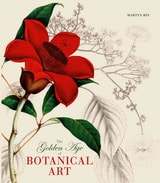
The Golden Age of Botanical Art
Martyn Rix
University of Chicago Press, 2012
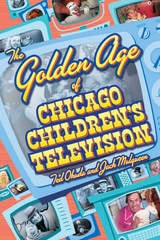
The Golden Age of Chicago Children's Television
Ted Okuda and Jack Mulqueen
Southern Illinois University Press, 2004
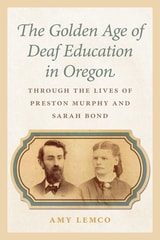
The Golden Age of Deaf Education in Oregon
Through the Lives of Preston Murphy and Sarah BondAmy Lemco
Oregon State University Press, 2027
Preston Murphy and Sarah Bond traveled west to Oregon on separate wagon trains in the 1850s. Both were children of Protestant minister fathers who followed the Oregon Trail to claim land and establish towns and institutions. Preston and Sarah married in 1874 and went on to build their lives in Oregon’s Willamette Valley, running a boot shop and raising six children. They were also both deaf.
The Golden Age of Deaf Education in Oregon is one of the first books to explore Deaf history in the Pacific Northwest. Drawing from primary sources, Amy Lemco explores the history of Deaf culture in early Oregon through the lives of Preston Murphy and Sarah Bond. Their stories offer a glimpse into the growth of Deaf education in the developing American West and provide a unique lens to explore the intertwining of global, national, and regional histories and their effect on Deaf culture at the turn of the century.
While Preston became deaf after a childhood illness in Illinois, Sarah, along with two of her brothers, was born deaf in Iowa. In Oregon their varied deaf experiences would pave the way for the Oregon School for the Deaf but also illuminate how deaf Oregonians navigated daily life and remained closely connected to their hearing communities. It is the hidden experiences of Preston and Sarah’s ordinary lives that make their stories extraordinary.
The Golden Age of Phenomenology at the New School for Social Research, 1954–1973
Lester Embree
Ohio University Press, 2017
This collection focuses on the introduction of phenomenology to the United States by the community of scholars who taught and studied at the New School for Social Research from 1954 through 1973. During those years, Dorion Cairns, Alfred Schutz, and Aron Gurwitsch—all former students of Edmund Husserl—came together in the department of philosophy to establish the first locus of phenomenology scholarship in the country. This founding trio was soon joined by three other prominent scholars in the field: Werner Marx, Thomas M. Seebohm, and J. N. Mohanty. The Husserlian phenomenology that they brought to the New School has subsequently spread through the Anglophone world as the tradition of Continental philosophy.
The first part of this volume includes original works by each of these six influential teachers of phenomenology, introduced either by one of their students or, in the case of Seebohm and Mohanty, by the thinkers themselves. The second part comprises contributions from twelve leading scholars of phenomenology who trained at the New School during this period. The result is a powerful document tracing the lineage and development of phenomenology in the North American context, written by members of the first two generations of scholars who shaped the field.
Contributors: Michael Barber, Lester Embree, Jorge García-Gómez, Fred Kersten, Thomas M. T. Luckmann, William McKenna, J. N. Mohanty, Giuseppina C. Moneta, Thomas Nenon, George Psathas, Osborne P. Wiggins, Matthew M. Seebohm, and Richard M. Zaner.
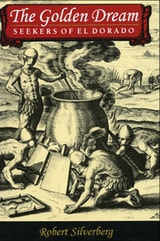
The Golden Dream
Seekers Of El DoradoRobert Silverberg
Ohio University Press, 1996
One of the most persistent legends in the annals of New World exploration is that of the Land of Gold. This mythical site was located over vast areas of South America (and later, North America); the search for it drove some men mad with greed and, as often as not, to their untimely deaths.
In this history of quest and adventure, Robert Silverberg traces the fate of Old World explorers lured westward by the myth of El Dorado. From the German conquistadores licensed by the Spanish king to operate out of Venezuela, to the journeys of Gonzalo Pizarro in the Amazon basin, and to the nearly miraculous voyage of Francisco Orellana to the mouth of the Amazon River, encountering the warlike women who gave the river its name, violence and bloodshed accompanied the determined adventurers. Sir Walter Raleigh and a host of other explorers spent small fortunes and many lives trying to locate Manoa, a city that was rumored to be El Dorado—City of Gold. Celebrated science fiction author Robert Silverberg recreates these legendary quests in The Golden Dream: Seekers of El Dorado.
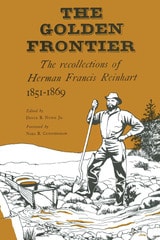
The Golden Frontier
The Recollections of Herman Francis Reinhart, 1851-1869By Herman Francis Reinhart
University of Texas Press, 1962
The gold rush was Herman Francis Reinhart's life for almost twenty years. From the summer of 1851 when, as a boy in his late teens, he traveled the Oregon trail to California, until a January day in 1869 when he climbed aboard an eastbound train at Evanston, Wyoming, he was a part of every gold discovery that stirred the West.
Reinhart dipped his pan in the streams of northern California and western Oregon—in Humbug Creek, Indian Creek, Rogue River, and Sucker Creek. He made the arduous and dangerous overland journey through Indian-occupied western Washington and British Columbia to find the Fraser River gold even more elusive than that farther south. With his teams and wagons he traversed all of the inland mine areas from Walla Walla to Fort Benton, from Boise Basin to South Pass City.
Reinhart's German common sense soon turned him from actual mining to other sources of income, but whatever his labor was, the mines were always the focal point of his activities. When he operated a bakery and saloon it was a business whose customers were miners, whose transactions were more likely to involve gold dust than legal tender, and whose gambling tables saw the exchange of mining fortunes. When he operated a whipsaw mill the timbers cut there were used by miners for sluices and cradles. For a while Reinhart farmed, but planting and harvesting suffered from interruption by frequent expeditions to the mines. And when he prospered as a teamster it was to and from the mining towns that he hauled passengers, supplies, and equipment.
The men who, like Herman Francis Reinhart, hopefully followed the golden frontier were not an articulate group, and the written records of their lives are few and fragmentary. But Reinhart, in his later years, recorded his experiences in five long, narrow, hardback ledgers. Many years after he died his daughter gave the ledgers to a friend in Chanute, Kansas—Nora Cunningham—who read the narrative, became fascinated by it, and typed it for publication.
Reinhart's account, written in a grammar and language all his own, is not a record of the historian's West, but of the West of the individual miner. The pages are filled with the details of day-to-day life of the miners—the subjects that interested them, the problems that plagued them, their fun and feuding, their frustrations and hopes. Edited by an authority of the history of the West, it is a book that will offer exciting reading to casual readers and scholars alike.