Results by title
22279 books match the query 'Social Science' and 4007 start with t
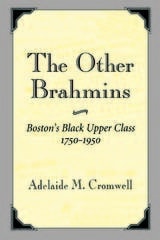
The Other Brahmins
Boston's Black Upper Class 1750-1950Adelaide Cromwell
University of Arkansas Press, 1995
Adelaide Cromwell’s pioneering work explores race and the social caste system in an atypical northern environment over a period of two centuries. Based on scholarly sources, interviews, and questionnaires, the study identifies those blacks in Boston who exercised political, economic, and social leadership from the end of the eighteenth century to the middle of the twentieth. The central focus is a comparison of black and white upper-class women in the 1940s.
This rare look at a black social microcosm not located in the South is seminal and timely. Because it concludes at a critical period in American history, The Other Brahmins paints a colorful backdrop for evaluating subsequent changes in urban sociology and stratification. In a groundbreaking study, Cromwell effectively challenges the simplistic notions of hierarchy as they pertain to race.
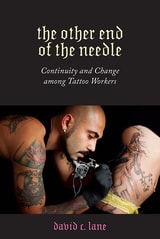
The Other End of the Needle
Continuity and Change among Tattoo WorkersDavid C. Lane
Rutgers University Press, 2021
Yet, Lane notes, prior research has focused almost exclusively on the tattoos—the outcome of an intricate social process—and have ignored the significance of tattoo workers themselves. "Tattooists," as Lane dubs them, make decisions, but they work within a social world that constrains and shapes the outcome of their labor—the tattoo. The goal of this book is to help readers understand the world of tattoo work as an intricate and nuanced form of work. Lane ultimately asks new questions about the social processes occurring prior to the tattoo’s existence.

The Other Fifties
Interrogating Midcentury American IconsJoel Foreman
University of Illinois Press, 1997
conventional norms and values. Brushing away the haze of an era, The Other Fifties will help readers understand the decade not as placid or repressed, but as a time when emancipatory desires struggled to articulate themselves.
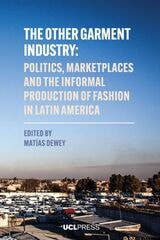
The Other Garment Industry
Politics, Marketplaces the Informal Production of Fashion in Latin AmericaEdited by Matías Dewey
University College London, 2026
The first comprehensive study of Latin America's overlooked garment economy, drawing on cutting-edge fieldwork in sweatshops, informal marketplaces, and cross-border trade routes.
The Other Garment Industry presents an economic, social, and political phenomenon in Latin America, overlooked in social sciences literature, by introducing a new perspective in the discussion about garment production and distribution. It focuses on three pillars of this economy: downstream entrepreneurs, informal garment-oriented marketplaces, and extended routes of national and regional trade.
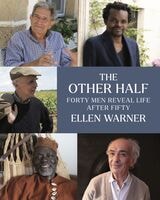
The Other Half
Forty Men Reveal Life After FiftyEllen Warner
Brandeis University Press, 2026
An insightful and intimate look at aging and masculinity that includes interviews and portraits of men from around the world.
What do men really think? From a taxi driver to a prince, a fishmonger to a professional boxer, The Other Half reveals the inner thoughts of men over fifty from different nationalities and different walks of life in their own words, illuminated by their portraits. Author and photojournalist Ellen Warner traveled the world to find out what men really think about love, work, and aging, speaking with well-known figures like film director James Ivory and journalist Bill Keller, as well as a philosopher, a chess grandmaster, a hair stylist, a financier, and more. Interviewing men from Colombia, Greece, Saudi Arabia, Sierra Leone, Sweden, and everywhere in between, Warner assembles a moving portrait of their reflections, insights, challenges, and hard-won triumphs.
A companion to The Second Half: Forty Women Reveal Life After Fifty, Warner’s latest book shares the diverse, vibrant experiences of men over fifty.
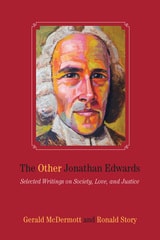
The Other Jonathan Edwards
Selected Writings on Society, Love, and JusticeGerald McDermott
University of Massachusetts Press, 2015
Widely regarded as perhaps America's greatest theologian, Jonathan Edwards still suffers the stereotype of hellfire preacher obsessed with God's wrath. In this anthology, Gerald McDermott and Ronald Story seek to correct that common view by showing that Edwards was also a compassionate, socially conscious minister of the first order.
Through a selection of sermons and primary writings, McDermott and Story reveal an Edwards who preached love toward all humanity regardless of belief or appearance; who demanded private and public charity to the poor; who criticized hard-hearted business dealings as impious and socially destructive; and who condemned envy and status-seeking as anti-Christian and anti-community. This “other” Jonathan Edwards preached about grace and the love of God but also about responsive constitutional government, the iniquities of hypocrisy and corruption, and the nature of wise leadership. He acknowledged the need for national defense but left room for popular revolt from tyranny. He anticipated a millennial age of peace and prosperity and believed that people should live in the world as they would live through grace in heaven.
Jonathan Edwards was, in sum, a worldly as well as spiritual reformer who resisted the materialistic, acquisitive, and individualistic currents of American culture. For these reasons, McDermott and Story think he may have lessons to teach us today.

The Other Justice
State Impunity and Maya Re-existence after the Acteal MassacreClaudia Chávez Argüelles
University of Texas Press, 2027
How the Mexican state secured impunity after the 1997 Acteal Massacre in Chiapas, and how Maya survivors reimagine justice through embodied, collective practices of memory, healing, and political autonomy.
In December 1997, forty-five Tsotsil Maya, most of them women and children, were killed in a state-backed paramilitary attack in Acteal, Chiapas––one of the starkest cases of state violence in contemporary Mexico. Yet, as Claudia Chávez Argüelles shows, the counterinsurgent violence unleashed at Acteal did not end with the massacre, but continued in its aftermath as state impunity became a form of governance. Drawing on legal archives and long-term collaborative ethnographic research with survivors and their organization, Las Abejas, Chávez maps the social life of their testimonies across judicial rulings, media narratives, and academic interventions. Her analysis reveals how the state forged a racializing legal truth that discredits Indigenous survivors’ ways of knowing, masks the slaughter’s feminicidal dimensions, and shields state officials from accountability. Against this logic of erasure, the book traces how Las Abejas has cultivated “the Other Justice,” a horizon of re-existence rooted in embodied, collective practices of memory, healing, and autonomy. Exposing the human toll of impunity and the decolonizing force of Las Abejas’ struggle, The Other Justice redefines what justice can mean beyond the confines of law.
The Other Side of Empathy
Jade E. Davis
Duke University Press, 2023
The Other Side of Silence
Sign Language and the Deaf Community in AmericaArden Neisser
Gallaudet University Press, 1983
Arden Neisser’s classic book on American Sign Language (ASL) and the Deaf community is again available, with a new prologue. The Other Side of Silence explores the Deaf community through telling interviews and research from across the country.
In widely varying encounters, Neisser heard Deaf individuals recall how their teachers suppressed ASL, how linguists foster conflicting theories, and how various institutions of the deaf dilute ASL to suit hearing patrons. This seminal book reveals the warmth, creativity, and resilience of Deaf people, and offers an update of the community today.

The Other Side of the Digital
The Sacrificial Economy of New MediaAndrea Righi
University of Minnesota Press, 2021
A necessary, rich new examination of how the wired world affects our humanity
Our tech-fueled economy is often touted as a boon for the development of our fullest human potential. But as our interactions are increasingly turned into mountains of data sifted by algorithms, what impact does this infinite accumulation and circulation of information really have on us? What are the hidden mechanisms that drive our continuous engagement with the digital?
In The Other Side of the Digital, Andrea Righi argues that the Other of the digital acts as a new secular God, exerting its power through endless accountability that forces us to sacrifice ourselves for the digital. Righi deconstructs the contradictions inherent in our digital world, examining how ideas of knowledge, desire, writing, temporality, and the woman are being reconfigured by our sacrificial economy. His analyses include how both our self-image and our perception of reality are skewed by technologies like fitness bands, matchmaking apps, and search engines, among others.
The Other Side of the Digital provides a necessary, in-depth cultural analysis of how the political theology of the new media functions under neoliberalism. Drawing on the work of well-known thinkers like Jacques Derrida, Jacques Lacan, and Ludwig Wittgenstein, as well as Carla Lonzi, Luisa Muraro, and Luciano Parinetto, Righi creates novel appraisals of popular digital tools that we now use routinely to process life experiences. Asking why we must sign up for this sort of regime, The Other Side of the Digital is an important wake-up call to a world deeply entangled with the digital.
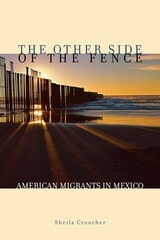
The Other Side of the Fence
American Migrants in MexicoBy Sheila Croucher
University of Texas Press, 2009
A growing number of Americans, many of them retirees, are migrating to Mexico's beach resorts, border towns, and picturesque heartland. While considerable attention has been paid to Mexicans who immigrate to the U.S., the reverse scenario receives little scrutiny. Shifting the traditional lens of North American migration, The Other Side of the Fence takes a fascinating look at a demographic trend that presents significant implications for the United States and Mexico.
The first in-depth account of this trend, Sheila Croucher's study describes the cultural, economic, and political lives of these migrants of privilege. Focusing primarily on two towns, San Miguel de Allende in the mountains and Ajijic along the shores of Lake Chapala, Croucher depicts the surprising similarities between immigrant populations on both sides of the border. Few Americans living in Mexico are fluent in the language of their new land, and most continue to practice the culture and celebrate the national holidays of their homeland, maintaining close political, economic, and social ties to the United States while making political demands on Mexico, where they reside.
Accessible, timely, and brimming with eye-opening, often ironic, findings, The Other Side of the Fence brings an important perspective to borderlands debates.
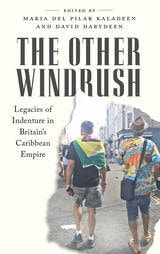
The Other Windrush
Legacies of Indenture in Britain's Caribbean EmpireMaria del Pilar Kaladeen
Pluto Press, 2021

The Other Windrush
Legacies of Indenture in Britain's Caribbean EmpireMaria del Pilar Kaladeen
Pluto Press, 2021
Between the arrival of the HMT Empire Windrush in 1948 and the passing of the 1971 Immigration Act, half a million people came to the UK from the Caribbean. In the aftermath of the 2018 Windrush Scandal, the story of the Windrush Generation is more widely known than ever. But is it the whole story?
Through a series of biographical essays, poems and articles, The Other Windrush shines a light on the hidden history of a 'minority within a minority': Caribbean migrants of Indian and Chinese descent - often the descendants of indentured labourers - who were the 'invisible passengers' of the Windrush generation.
Both highlighting the diversity of their lives and cultural backgrounds, and delving into the largely forgotten history of the system of indenture in the British Caribbean, The Other Windrush makes a unique addition to the literature on migration and the British Empire.
The Other Zulus
The Spread of Zulu Ethnicity in Colonial South AfricaMichael R. Mahoney
Duke University Press, 2012
The Otherness of Self
A Genealogy of Self in Contemporary ChinaXin Liu
University of Michigan Press, 2002
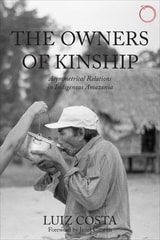
The Owners of Kinship
Asymmetrical Relations in Indigenous AmazoniaLuiz Costa
HAU, 2017
Building on anthropological studies of the acquisition, distribution, and consumption of food and its role in establishing relations of asymmetrical mutuality and kinship, this book breaks theoretical ground for studies in Amazonia and beyond. By investigating how the feeding relation traverses Kanamari society—from the relation between women and the pets they raise, shaman and familiar spirit, mother and child, chiefs and followers, to those between the Brazilian state and the Kanamari—The Owners of Kinship reveals how the mutuality of kinship is determined by the asymmetry of ownership.

The Ozarks
An American Survival of Primitive SocietyVance Randolph
University of Arkansas Press, 2017

The Ozarks
Land and LifeMilton D. Rafferty
University of Arkansas Press, 2001

The Packhorseman
Charles Hudson
University of Alabama Press, 2009
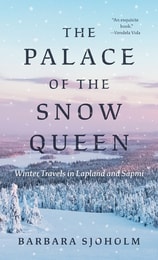
The Palace of the Snow Queen
Winter Travels in Lapland and SápmiBarbara Sjoholm
University of Minnesota Press, 2023
An exploration of the winter wonders and entangled histories of Scandinavia’s northernmost landscapes—now back in print with a new afterword by the author
After many years of travel in the Nordic countries—usually preferring to visit during the warmer months—Barbara Sjoholm found herself drawn to Lapland and Sápmi one winter just as mørketid, the dark time, set in. What ensued was a wide-ranging journey that eventually spanned three winters, captivatingly recounted in The Palace of the Snow Queen.
From observing the annual construction of the Icehotel in Jukkasjärvi, Sweden, to crossing the storied Finnmark Plateau in Norway, to attending a Sámi film festival in Finland, Sjoholm dives deep into the rich traditions and vibrant creative communities of the North. She writes of past travelers to Lapland and contemporary tourists in Sápmi, as well as of her encounters with Indigenous reindeer herders, activists, and change-makers. Her new afterword bears witness to the perseverance of the Sámi in the face of tourism, development, and climate change.
Written with keen insight and humor, The Palace of the Snow Queen is a vivid account of Sjoholm’s adventures and a timely investigation of how ice and snow shape our imaginations and create a vision that continues to draw visitors to the North.
The Paleo-Indian Occupation of the Holcombe Beach
James E. Fitting, Jerry DeVisscher and Edward J. Wahla
University of Michigan Press, 1966
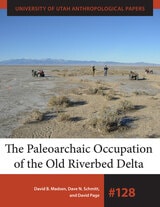
The Paleoarchaic Occupation of the Old River Bed Delta
David B. Madsen, Dave N. Schmitt, and David Page
University of Utah Press, 2015
University of Utah Anthropological Paper No. 128
About 12,000 years ago, a major river ran from the Sevier Basin to the Great Salt Lake, feeding a wetland delta system and creating riparian habitat along its length. But after three thousand years the river dried up and the surrounding lands became more like what we see today. Because the Old River Bed Delta experienced less environmental and human disturbance than other areas, many of the Paleoarchaic sites found there have remained relatively intact—a rare find in the Great Basin. This book presents a comprehensive synthesis of a decade of investigations conducted by research teams working in different parts of the delta and explores questions about how the old riverbed was formed, how its distributary system changed through time, and how these changes affected early foragers. It concludes with an integrated summary and interpretation. Additional material from this study will be available online at UofUpress.com.
Supplementary Material for The Paleoarchaic Occupation of the Old River Bed Delta
Chapter 3 - SDM Trench and Locality Descriptions November
Chapter 3 SDM Individual Channel Images November
Chapter 5 - SDM Additional Lithic Artifact Images
Chapter 6 - SDM Results of XRF and PXRF Analysis
Chapter 6 - SDM Source Assignment Tables
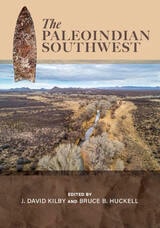
The Paleoindian Southwest
Edited by J. David Kilby and Bruce B. Huckell
University of Utah Press, 2025
The North American Southwest looms large in American archaeology, well known for the agricultural societies that dominated its austere landscape in later times. However, the traces of its earliest occupants, Native American ancestors who shared the ancient landscape with mammoth and giant bison toward the end of the last Ice Age, remain more obscure.
The Paleoindian Southwest provides the first comprehensive overview focused on the earliest human occupants of the Southwest, exploring past investigations, the current state of research, and directions for future discovery. Experts in the field examine individual archaeological sites—some classic and some newly discovered—as well as broader patterns of human behavior across varied regions of both the United States and Mexico. Chapter authors present new and unexpected discoveries, ranging from a gomphothere kill to fossil footprints, pushing the boundaries of the Paleoindian period and investigating nontraditional archaeological data. This collection is a critical resource and landmark volume for those interested in Southwest prehistory, Paleoindian archaeology, and Ice Age human ecology.
The Paleolithic of Siberia
New Discoveries and InterpretationsEdited and Compiled by Anatoli P. Derev'anko: Demitri B. Shimkin and W. Roger Powers (American Editors). Translated by Inna P. Laricheva
University of Illinois Press, 1998
It traces the routes of human migration throughout Eurasia, shows Siberian lithic industries as they evolved from the Early through the Middle and Late Paleolithic, and correlates them with reports from Mongolia, China, Japan, and America.

The Palestine-Israel Conflict
A Basic Introduction - Fourth EditionGregory Harms and Todd M. Ferry
Pluto Press, 2017
Perfect for both general readers and students, it offers a comprehensive yet lucid rendering of the conflict, setting it in historical context. This fourth edition brings us up to date with a new introduction, conclusion, and material covering recent events: Israel’s Operation Protective Edge, the Palestinian unity deal between Fatah and Hamas, and ongoing Palestinian resistance, America’s Middle East policy, and the election of Trump.
Cutting through layers of confused and inconsistent information, this new edition of The Palestine-Israel Conflict will clarify the ongoing struggle for all readers.
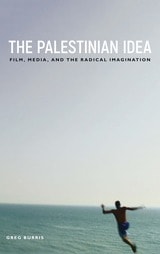
The Palestinian Idea
Film, Media, and the Radical ImaginationGreg Burris
Temple University Press, 2019
Is there a link between the colonization of Palestinian lands and the enclosing of Palestinian minds? The Palestinian Idea argues that it is precisely through film and media that hope can occasionally emerge amidst hopelessness, emancipation amidst oppression, freedom amidst apartheid. Greg Burris employs the work of Edward W. Said, Jacques Rancière, and Cedric J. Robinson in order to locate Palestinian utopia in the heart of the Zionist present.
He analyzes the films of prominent directors Annemarie Jacir (Salt of This Sea, When I Saw You) and Hany Abu-Assad (Paradise Now) to investigate the emergence and formation of Palestinian identity. Looking at Mais Darwazah’s documentary My Love Awaits Me By the Sea, Burris considers the counterhistories that make up the Palestinian experience—stories and memories that have otherwise been obscured or denied. He also examines Palestinian (in)visibility in the global media landscape, and how issues of Black-Palestinian transnational solidarity are illustrated through social media, staged news spectacles, and hip hop music.
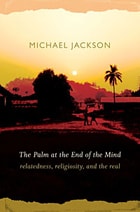
The Palm at the End of the Mind
Relatedness, Religiosity, and the RealMichael Jackson
Duke University Press, 2009
Through sixty-one beautifully crafted essays based on sojourns in Europe, West Africa, the United States, Australia, and New Zealand, and taking his cue from Wallace Stevens’s late poem, “Of Mere Being,” Jackson explores a range of experiences where “the palm at the end of the mind” stands “beyond thought,” on “the edge of space,” “a foreign song.” Moments of crisis as well as everyday experiences in cafés, airports, and offices disclose the subtle ways in which a single life shades into others, the boundaries between cultures become blurred, fate unfolds through genealogical time, elective affinities make their appearance, and different values contend.
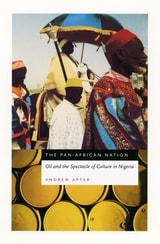
The Pan-African Nation
Oil and the Spectacle of Culture in NigeriaAndrew Apter
University of Chicago Press, 2005
According to Apter, FESTAC expanded the horizons of blackness in Nigeria to mirror the global circuits of its economy. By showcasing masks, dances, images, and souvenirs from its many diverse ethnic groups, Nigeria forged a new national culture. In the grandeur of this oil-fed confidence, the nation subsumed all black and African cultures within its empire of cultural signs and erased its colonial legacies from collective memory. As the oil economy collapsed, however, cultural signs became unstable, contributing to rampant violence and dissimulation.
The Pan-African Nation unpacks FESTAC as a historically situated mirror of production in Nigeria. More broadly, it points towards a critique of the political economy of the sign in postcolonial Africa.
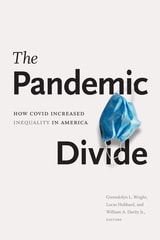
The Pandemic Divide
How COVID Increased Inequality in AmericaGwendolyn L. Wright, Lucas Hubbard, and William A. Darrity, editors
Duke University Press, 2022
Contributors. Fenaba Addo, Steve Amendum, Leslie Babinski, Sandra Barnes, Mary T. Bassett, Keisha Bentley-Edwards, Kisha Daniels, William A. Darity Jr., Melania DiPietro, Jane Dokko, Fiona Greig, Adam Hollowell, Lucas Hubbard, Damon Jones, Steve Knotek, Arvind Krishnamurthy, Henry Clay McKoy Jr., N. Joyce Payne, Erica Phillips, Eugene Richardson, Paul Robbins, Jung Sakong, Marta Sánchez, Melissa Scott, Kristen Stephens, Joe Trotter, Chris Wheat, Gwendolyn L. Wright
The Pandemic Workplace
How We Learned to Be Citizens in the OfficeIlana Gershon
University of Chicago Press, 2024
In The Pandemic Workplace, anthropologist Ilana Gershon turns her attention to the US workplace and how it changed—and changed us—during the pandemic. She argues that the unprecedented organizational challenges of the pandemic forced us to radically reexamine our attitudes about work and to think more deeply about how values clash in the workplace. These changes also led us as workers to engage more with the contracts that bind us as we rethought when and how we allow others to tell us what to do.
Based on over two hundred interviews, Gershon’s book reveals how negotiating these tensions during the pandemic made the workplace into a laboratory for democratic living—the key place where Americans are learning how to develop effective political strategies and think about the common good. Exploring the explicit and unspoken ways we are governed (and govern others) at work, this accessible book shows how the workplace teaches us to be democratic citizens.
The Pandemic Workplace
How We Learned to Be Citizens in the OfficeIlana Gershon
University of Chicago Press, 2024
A provocative book arguing that the workplace is where we learn to live democratically.
In The Pandemic Workplace, anthropologist Ilana Gershon turns her attention to the US workplace and how it changed—and changed us—during the pandemic. She argues that the unprecedented organizational challenges of the pandemic forced us to radically reexamine our attitudes about work and to think more deeply about how values clash in the workplace. These changes also led us as workers to engage more with the contracts that bind us as we rethought when and how we allow others to tell us what to do.
Based on over two hundred interviews, Gershon’s book reveals how negotiating these tensions during the pandemic made the workplace into a laboratory for democratic living—the key place where Americans are learning how to develop effective political strategies and think about the common good. Exploring the explicit and unspoken ways we are governed (and govern others) at work, this accessible book shows how the workplace teaches us to be democratic citizens.
The Pandemic and the Working Class
How US Labor Navigated COVID-19Edited by Nick Juravich and Steve Striffler
University of Illinois Press, 2025
Nick Juravich and Steve Striffler edit a collection that examines the effects of the pandemic on workers. Sections of the book focus on specific impacts and government efforts to restructure the economy; the dramatic effect of the pandemic on the hospitality industry; educators’ response on behalf of themselves and their students; frontline healthcare workers; and the innovative forms of labor organizing that emerged during and after COVID.
Contributors: Carlos Aramayo, Kathleen Brown, Sandrine Etienne, Ismael García-Colón, Puya Gerami, Maura Hagan, Connor Harney, Devan Hawkins, Leigh Howard, Marian Moser Jones, Doris Joy, Nick Juravich, Eric Larson, Kathryn M. Meyer, Samir Sonti, Steve Striffler, Lia Warner, Andrew B. Wolf, and Jennifer Zelnick
The Paradox of Agrarian Change
Food Security and the Politics of Social Protection in IndonesiaEdited by John McCarthy, Andrew McWilliam, and Gerben Nooteboom
National University of Singapore Press, 2023
Economic growth in the middle-income countries of Southeast Asia over the past few decades has been widely praised for reducing poverty in both absolute and relative terms. Indonesia is a prime example. But while poverty has declined in Indonesia, patterns of food poverty persist across Indonesia. What explains this troubling paradox? How does it relate to Indonesia’s enthusiastic embrace of the “entitlements revolution,” the use of direct cash transfers as a tool for reducing poverty and building social inclusion?
This book analyzes the nature and social consequences of economic development and agrarian change processes in rural Indonesia in relation to the scope and effectiveness of Indonesia’s social protection programs. The findings are based on a series of extensive ground-up case studies in Indonesian communities in a variety of eco-agrarian settings that seek to understand the drivers of food insecurity and vulnerability at a household level. The results show that while high-value farming, diversification, and migration may offer a means of economic progress for poor households, opportunities for accumulation are limited. This, the authors show, is due to the way class, gender, and power work in remote local contexts, and the fact that much surplus income is used for enhanced consumption and changing lifestyles. There are few signs of the classical structural transformation of the countryside which has historically been considered the most decisive pathway out of rural poverty. The authors conclude that social assistance is unlikely to counter the persistence of rural poverty, food insecurity, and precarity in the absence of other redistributive strategies that shift the structural drivers of inequality.
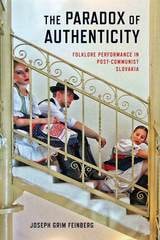
The Paradox of Authenticity
Folklore Performance in Post-Communist SlovakiaJoseph Grim Feinberg
University of Wisconsin Press, 2018
In Slovakia and elsewhere in Eastern Europe after World War II, Communist governments promoted folklore revivals and staged performances of song and dance as representations of "the people." When the Communists fell from power in Slovakia in 1989, folklore was also discredited in the eyes of many. By the early twenty-first century, however, a new generation launched a movement to revive folklore's reputation and reintroduce it to a broad public.
Weaving together personal narrative, ethnographic analysis, and philosophical reflection, Feinberg examines the aspirations and difficulties of young folk dance devotees as they recognize that authenticity is more easily prized than achieved. He sheds new light on the problems of specialized performance and broad participation, the uneasy relationship between folklore and the public sphere, and the paradoxical pursuit of authenticity in the modern world.
The Paradox of Connection
How Digital Media Is Transforming Journalistic LaborDiana Bossio, Valérie Bélair-Gagnon, Avery Holton, and Logan Molyneux
University of Illinois Press, 2024
Using a framework of online connection and disconnection, The Paradox of Connection examines how journalists’ practices are formed, negotiated, and maintained in dynamic social media environments. The interactions of journalists with the technological, social, and cultural features of online and social media environments have shaped new values and competencies--and the combination of these factors influence online work practices. Merging case studies with analysis, the authors show how the tactics of online connection and disconnection interact with the complex realities of working in today’s media environments. The result is an insightful portrait of fast-changing journalistic practices and their implications for both audiences and professional identities and norms.
The Paradox of Democracy
Free Speech, Open Media, and Perilous PersuasionZac Gershberg and Sean Illing
University of Chicago Press, 2022
At the heart of democracy lies a contradiction that cannot be resolved, one that has affected free societies since their advent: Though freedom of speech and media has always been a necessary condition of democracy, that very freedom is also its greatest threat. When new forms of communication arrive, they often bolster the practices of democratic politics. But the more accessible the media of a society, the more susceptible that society is to demagoguery, distraction, and spectacle. Tracing the history of media disruption and the various responses to it over time, Zac Gershberg and Sean Illing reveal how these changes have challenged democracy—often with unsettling effects.
The Paradox of Democracy captures the deep connection between communication and political culture, from the ancient art of rhetoric and the revolutionary role of newspapers to liberal broadcast media and the toxic misinformation of the digital public sphere. With clear-eyed analysis, Gershberg and Illing show that our contemporary debates over media, populism, and cancel culture are not too different from the democratic cultural experiences of the past. As we grapple with a fast-changing, hyper-digital world, they prove democracy is always perched precipitously on a razor’s edge, now as ever before.

The Paradox of Gender Equality
How American Women's Groups Gained and Lost Their Public VoiceKristin A. Goss
University of Michigan Press, 2013
Drawing on original research, Kristin A. Goss examines how women's civic place has changed over the span of more than 120 years, how public policy has driven these changes, and why these changes matter for women and American democracy. Suffrage, which granted women the right to vote and invited their democratic participation, provided a dual platform for the expansion of women's policy agendas. As measured by women's groups' appearances before the U.S. Congress, women's collective political engagement continued to grow between 1920 and 1960—when many conventional accounts claim it declined—and declined after 1980, when it might have been expected to grow. This waxing and waning was accompanied by major shifts in issue agendas, from broad public interests to narrow feminist interests.
Goss suggests that ascriptive differences are not necessarily barriers to disadvantaged groups' capacity to be heard; that enhanced political inclusion does not necessarily lead to greater collective engagement; and that rights movements do not necessarily constitute the best way to understand the political participation of marginalized groups. She asks what women have gained — and perhaps lost — through expanded incorporation as well as whether single-sex organizations continue to matter in 21st-century America.
The Paradox of Gender Equality
How American Women's Groups Gained and Lost Their Public VoiceKristin A. Goss
University of Michigan Press, 2020
Goss asks what women have gained, and perhaps lost, through expanded incorporation, as well as whether single-sex organizations continue to matter in 21st-century America.
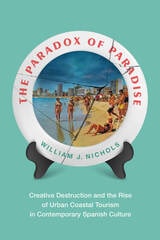
The Paradox of Paradise
Creative Destruction and the Rise of Urban Coastal Tourism in Contemporary Spanish CultureWilliam J. Nichols
Vanderbilt University Press, 2023
In addition to inserting the coasts into the scope of Iberian urban studies (typically dominated by studies of Madrid and Barcelona), this project breaks new ground by bringing to the fore unexplored cultural artifacts vital to the narrative of development along the coasts in Spain—in particular the ubiquitous tourist postcard, which advances not only the post-Franco economic miracle, but does so by highlighting the transformation of the actual Spanish landscape along its coasts.
The Paradox of Paradise features more than twenty-five striking images of coastal Spain in the throes of its own coming of age. Author William J. Nichols has unlocked a strange, self-conscious archive that tells us as much about our own age of advertising as it does about the hotels and resorts and people on display.
The Paradoxes of Integration
Race, Neighborhood, and Civic Life in Multiethnic AmericaJ. Eric Oliver
University of Chicago Press, 2010
The United States is rapidly changing from a country monochromatically divided between black and white into a multiethnic society. The Paradoxes of Integration helps us to understand America’s racial future by revealing the complex relationships among integration, racial attitudes, and neighborhood life.
J. Eric Oliver demonstrates that the effects of integration differ tremendously, depending on which geographical level one is examining. Living among people of other races in a larger metropolitan area corresponds with greater racial intolerance, particularly for America’s white majority. But when whites, blacks, Latinos, and Asian Americans actually live in integrated neighborhoods, they feel less racial resentment. Paradoxically, this racial tolerance is usually also accompanied by feeling less connected to their community; it is no longer "theirs." Basing its findings on our most advanced means of gauging the impact of social environments on racial attitudes, The Paradoxes of Integration sensitively explores the benefits and at times, heavily borne, costs of integration.
The Paradoxes of Unintended Consequences
István Rév
Central European University Press, 2000
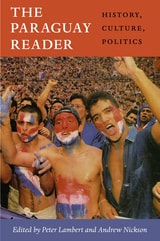
The Paraguay Reader
History, Culture, PoliticsPeter Lambert and Andrew Nickson, eds.
Duke University Press, 2013
Most of the Reader is arranged chronologically. Weighted toward the twentieth century and early twenty-first, it nevertheless gives due attention to major events in Paraguay's history, such as the Triple Alliance War (1864–70) and the Chaco War (1932–35). The Reader's final section, focused on national identity and culture, addresses matters including ethnicity, language, and gender. Most of the selections are by Paraguayans, and many of the pieces appear in English for the first time. Helpful introductions by the editors precede each of the book's sections and all of the selected texts.
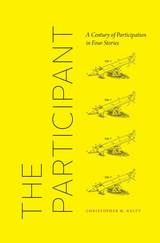
The Participant
A Century of Participation in Four StoriesChristopher M. Kelty
University of Chicago Press, 2019
In this book, Christopher M. Kelty traces four stories of participation across the twentieth century, showing how they are part of a much longer-term problem in relation to the individual and collective experience of representative democracy. Kelty argues that in the last century or so, the power of participation has dwindled; over time, it has been formatted in ways that cramp and dwarf it, even as the drive to participate has spread to nearly every kind of human endeavor, all around the world. The Participant is a historical ethnography of the concept of participation, investigating how the concept has evolved into the form it takes today. It is a book that asks, “Why do we participate?” And sometimes, “Why do we refuse?”
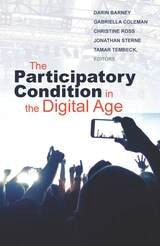
The Participatory Condition in the Digital Age
Darin Barney
University of Minnesota Press, 2016
Just what is the “participatory condition”? It is the situation in which taking part in something with others has become both environmental and normative. The fact that we have always participated does not mean we have always lived under the participatory condition. What is distinctive about the present is the extent to which the everyday social, economic, cultural, and political activities that comprise simply being in the world have been thematized and organized around the priority of participation.
Structured along four axes investigating the relations between participation and politics, surveillance, openness, and aesthetics, The Participatory Condition in the Digital Age comprises fifteen essays that explore the promises, possibilities, and failures of contemporary participatory media practices as related to power, Occupy Wall Street, the Arab Spring uprisings, worker-owned cooperatives for the post-Internet age; paradoxes of participation, media activism, open source projects; participatory civic life; commercial surveillance; contemporary art and design; and education.
This book represents the most comprehensive and transdisciplinary endeavor to date to examine the nature, place, and value of participation in the digital age. Just as in 1979, when Jean-François Lyotard proposed that “the postmodern condition” was characterized by the questioning of historical grand narratives, The Participatory Condition in the Digital Age investigates how participation has become a central preoccupation of our time.
Contributors: Mark Andrejevic, Pomona College; Bart Cammaerts, London School of Economics and Political Science (LSE); Nico Carpentier, Vrije Universiteit Brussel (VUB – Free University of Brussels) and Charles University in Prague; Julie E. Cohen, Georgetown University; Kate Crawford, MIT; Alessandro Delfanti, University of Toronto; Christina Dunbar-Hester, University of Southern California; Rudolf Frieling, California College of Arts and the San Francisco Art Institute; Salvatore Iaconesi, La Sapienza University of Rome and ISIA Design Florence; Jason Edward Lewis, Concordia University; Rafael Lozano-Hemmer; Graham Pullin, University of Dundee; Trebor Scholz, The New School in New York City; Cayley Sorochan, McGill University; Bernard Stiegler, Institute for Research and Innovation in Paris; Krzysztof Wodiczko, Harvard Graduate School of Design; Jillian C. York.

The Passion of Tiger Woods
An Anthropologist Reports on Golf, Race, and Celebrity ScandalOrin Starn
Duke University Press, 2012
The Past as Present in the Drama of August Wilson
Harry J. Elam, Jr.
University of Michigan Press, 2004
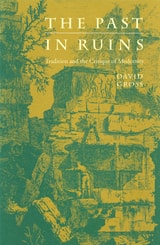
The Past in Ruins
Tradition and the Critique of ModernityDavid Gross
University of Massachusetts Press, 1992
What is the fate of tradition in the modern world? Once a viral source of social cohesion and continuity, many traditions in the West today seem to have been undermined or to have disappeared altogether. Some observers regard this erosion of past values and practices as a disaster, the root cause of contemporary spiritual and social decay. Others see the same phenomenon as emancipatory, making possible new ways of living and new modes of cultural expression.
The Past in Ruins engages and extends this debate beyond these two perspectives. Neither a nostalgic lament for a “world we have lost” nor a celebration of the decline of tradition, the book offers a description of what has disappeared and why, an appraisal of what has survived and how, and a discussion of what to do with tradition now that it no longer serves the integrative function it once did.
In David Gross’s view, the collapse of tradition, though real, can easily be exaggerated. Many traditions have survived at the margins of social life; others have been reconstituted in new forms, or have persisted as “fragments” or “residues.” Yet, though vestiges of tradition remain, they have come to represent something strange or “other.” According to Gross, it is precisely this quality of otherness that makes tradition especially valuable, for today tradition can do what it has rarely done before. It can disturb and unsettle, it can force us to rethink the “givens” of modern life, and it can reconnect us with many of the past’s “lost” or undeveloped possibilities.
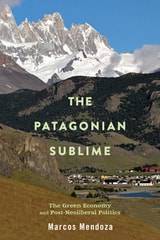
The Patagonian Sublime
The Green Economy and Post-Neoliberal PoliticsMendoza, Marcos
Rutgers University Press, 2019
Mendoza explores the fraught intersection of the green economy with the New Left politics of the Néstor Kirchner and Cristina Fernández de Kirchner governments. Mendoza documents the strategies of capitalist development, national representation, and political rule embedded in the “green productivist” agenda pursued by Kirchner and Fernández. Mendoza shows how Andean Patagonian communities have responded to the challenges of community-based conservation, the fashioning of wilderness zones, and the drive to create place-based monopolies that allow ecotourism destinations to compete in the global consumer economy.
The Patchwork City
Class, Space, and Politics in Metro ManilaMarco Z. Garrido
University of Chicago Press, 2019
The Patchwork City illuminates how segregation, class relations, and democracy are all intensely connected. It makes clear, ultimately, that class as a social structure is as indispensable to the study of Manila—and of many other cities of the Global South—as race is to the study of American cities.
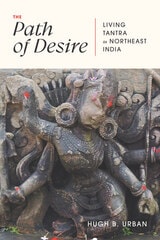
The Path of Desire
Living Tantra in Northeast IndiaHugh B. Urban
University of Chicago Press, 2024
Tantra, one of the most important religious currents in South Asia, is often misrepresented as little more than ritualized sex. Through a mixture of ethnography and history, Hugh B. Urban reveals a dynamic living tradition behind the sensationalist stories. Urban shows that Tantric desire goes beyond the erotic, encompassing such quotidian experiences as childbearing and healing. He traces these holistic desires through a series of unique practices: institutional Tantra centered on gurus and esoteric rituals; public Tantra marked by performance and festival; folk Tantra focused on magic and personal well-being; and popular Tantra imagined in fiction, film, and digital media. The result is a provocative new description of Hindu Tantra that challenges us to approach religion as something always entwined with politics and culture, thoroughly entangled with ordinary needs and desires.