Results by title
1116 books match the query 'Africa' and 222 start with t

Time Out of Joint
The Queer and the Customary in AfricaKirk Fiereck, Neville Hoad, and Danai Mupotsa, special issue editors
Duke University Press, 0
Contributors. Cal (Crystal) Biruk, Laura Edmondson, Kirk Fiereck, Neville Hoad, Phoebe Kisubi, Keguro Macharia, Danai Mupotsa, Edgar Nabutanyi, Eddie Ombagi, Ruth Ramsden-Karelse
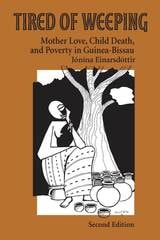
Tired of Weeping
Mother Love, Child Death, and Poverty in Guinea-BissauJonina Einarsdottir
University of Wisconsin Press, 2004
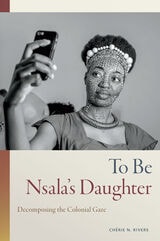
To Be Nsala's Daughter
Decomposing the Colonial GazeChérie N. Rivers
Duke University Press, 2023
To Be a Man Is Not a One-Day Job
Masculinity, Money, and Intimacy in NigeriaDaniel Jordan Smith
University of Chicago Press, 2017
Drawing on twenty-five years of experience in southeastern Nigeria, Daniel Jordan Smith takes readers through the principal phases and arenas of men’s lives: the transition to adulthood; searching for work and making a living; courtship, marriage, and fatherhood; fraternal and political relationships; and finally, the attainment of elder status and death. He relates men’s struggles both to fulfill their own aspirations and to meet society’s expectations. He also considers men who behave badly, mistreat their wives and children, or resort to crime and violence. All of these men face similar challenges as they navigate the complex geometry of money and intimacy. Unraveling these connections, Smith argues, provides us with a deeper understanding of both masculinity and society in Nigeria.
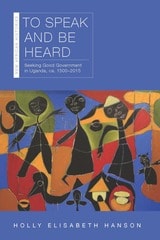
To Speak and Be Heard
Seeking Good Government in Uganda, ca. 1500–2015Holly Elisabeth Hanson
Ohio University Press, 2021
A history of a political practice through which East Africans have sought to create calm, harmonious polities for five hundred years.
“To speak and be heard” is a uniquely Ugandan approach to government that aligns power with groups of people that actively demonstrate their assent both through their physical presence and through essential gifts of goods and labor. In contrast to a parliamentary democracy, the Ugandan system requires a level of active engagement much higher than simply casting a vote in periodic elections.
These political strategies—assembly, assent, and powerful gifts—can be traced from before the emergence of kingship in East Africa (ca. 1500) through enslavement, colonial intervention, and anticolonial protest. They appear in the violence of the Idi Amin years and are present, sometimes in dysfunctional ways, in postcolonial politics. Ugandans insisted on the necessity of multiple voices contributing to and affirming authority, and citizens continued to believe in those principles even when colonial interference made good governance through building relationships almost impossible.
Through meticulous research, Holly Hanson tells a history of the region that differs from commonly accepted views. In contrast to the well-established perception that colonial manipulation of Uganda’s tribes made state failure inevitable, Hanson argues that postcolonial Ugandans had the capacity to launch a united, functional nation-state and could have done so if leaders in Buganda, Britain, and Uganda’s first governments had made different choices.
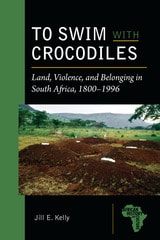
To Swim with Crocodiles
Land, Violence, and Belonging in South Africa, 1800-1996Jill E Kelly
Michigan State University Press, 2018
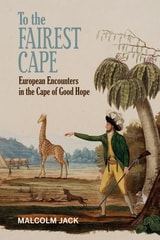
To the Fairest Cape
European Encounters in the Cape of Good HopeJack, Malcolm
Bucknell University Press, 2019
Published by Bucknell University Press. Distributed worldwide by Rutgers University Press.
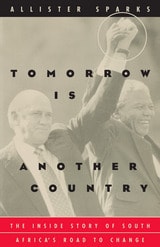
Tomorrow Is Another Country
The Inside Story of South Africa's Road to ChangeAllister Sparks
University of Chicago Press, 1996
"A gripping, fast-paced, authoritative account of the long and mostly secret negotiations that brought South Africa's bitter conflict to its near-miraculous end. Sparks's description of these talks sometimes brings a lump to one's throat. He shows how the participants' deep mutual suspicion was gradually replaced by excitement at the prospect of making a momentous agreement—and also by the dawning realization that the people on the other side were human beings, perhaps even decent human beings."—Adam Hochschild, New York Times Book Review
"A splendid and original history. . . . Sparks's skillful weaving of myriad strands—Mandela's secret sessions with the committee, the clandestine talks in England between the African National Congress and the government, the back-channel communications between Mandela and the A.N.C. in exile, the trepidation of Botha and the apparent transformation of his successor, De Klerk—possesses the drama and intrigue of a diplomatic whodunit."—Richard Stengel, Time
"Sparks offers many reasons for hope, but the most profound of them is the story this book tells."—Jacob Weisberg, Washington Post
"The most riveting of the many [accounts] that have been published about the end of apartheid."—The Economist
Tondi Songway Kiini
Reference Grammar and TSK-English-French DictionaryJeffrey Heath
CSLI, 2005
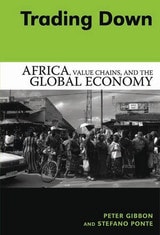
Trading Down
Africa, Value Chains, And The Global EconomyPeter Gibbon and Stefano Ponte
Temple University Press, 2005
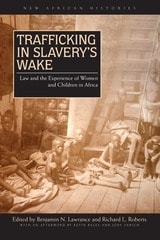
Trafficking in Slavery’s Wake
Law and the Experience of Women and Children in AfricaBenjamin N. Lawrance
Ohio University Press, 2012
Women and children have been bartered, pawned, bought, and sold within and beyond Africa for longer than records have existed. This important collection examines the ways trafficking in women and children has changed from the aftermath of the “end of slavery” in Africa from the late nineteenth century to the present.
The formal abolition of the slave trade and slavery did not end the demand for servile women and children. Contemporary forms of human trafficking are deeply interwoven with their historical precursors, and scholars and activists need to be informed about the long history of trafficking in order to better assess and confront its contemporary forms. This book brings together the perspectives of leading scholars, activists, and other experts, creating a conversation that is essential for understanding the complexity of human trafficking in Africa.
Human trafficking is rapidly emerging as a core human rights issue for the twenty-first century. Trafficking in Slavery’s Wake is excellent reading for the researching, combating, and prosecuting of trafficking in women and children.
Contributors: Margaret Akullo, Jean Allain, Kevin Bales, Liza Stuart Buchbinder, Bernard K. Freamon, Susan Kreston, Benjamin N. Lawrance, Elisabeth McMahon, Carina Ray, Richard L. Roberts, Marie Rodet, Jody Sarich, and Jelmer Vos.
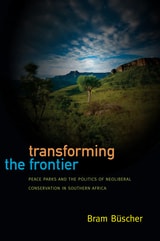
Transforming the Frontier
Peace Parks and the Politics of Neoliberal Conservation in Southern AfricaBram Büscher
Duke University Press, 2013
Based on extensive research in southern Africa with the Maloti-Drakensberg Transfrontier Conservation and Development Project, Büscher explains how the successful promotion of transfrontier conservation as a "win-win" solution happens not only in spite of troubling contradictions and problems, but indeed because of them. This is what he refers to as the "politics of neoliberal conservation," which receives its strength from effectively combining strategies of consensus, antipolitics, and marketing. Drawing on long-term, multilevel ethnographic research, Büscher argues that transfrontier conservation projects are not as concerned with on-the-ground development as they are purported to be. Instead, they are reframing environmental protection and sustainable development to fit an increasingly contradictory world order.

Transition & Development in Algeria
Economic, Social and Cultural ChallengesMohammed Saad
Intellect Books, 2013
The contributors represent a range of expertise in economics, business management, sociology, linguistics, political science and cultural studies. Their diverse backgrounds and perspectives permit this publication to explore new avenues of debate, which represent a significant contribution to the understanding of the present problems and solutions.
Travels in the Interior Districts of Africa
Mungo Park
Duke University Press, 2000
Unlike the large expeditions that followed him, Park traveled only with native guides or alone. Without much of an idea of where he was going, he relied entirely on local people for food, shelter, and directions throughout his eventful eighteen month journey. While his warm reaction to the people he met made him famous as a sentimental traveler, his chronicle also provides a rare written record of the lives of ordinary people in West Africa before European intervention. His accounts of war, politics, and the spread of Islam, as well as his constant confrontations with slavery as practiced in eighteenth-century West Africa, are as valuable today as they were in 1799. In preparing this new edition, editor Kate Ferguson Marsters presents the complete text and includes reproductions of all the original maps and illustrations.
Park’s narrative serves as a crucial text in relation to scholarship on the history of slavery, colonial enterprise, and nineteenth-century imperialism. The availability of this full edition will give a new generation of readers access to a travel narrative that has inspired other readers and writers over two centuries and will enliven scholarly discussion in many fields.
Triumph of the Expert
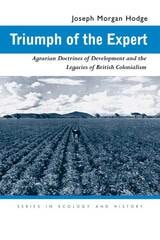
Agrarian Doctrines of Development and the Legacies of British ColonialismJoseph Morgan Hodge
Ohio University Press, 2007
The most striking feature of British colonialism in the twentieth century was the confidence it expressed in the use of science and expertise, especially when joined with the new bureaucratic capacities of the state, to develop natural and human resources of the empire.
Triumph of the Expert is a history of British colonial doctrine and its contribution to the emergence of rural development and environmental policies in the late colonial and postcolonial period. Joseph Morgan Hodge examines the way that development as a framework of ideas and institutional practices emerged out of the strategic engagement between science and the state at the climax of the British Empire. Hodge looks intently at the structural constraints, bureaucratic fissures, and contradictory imperatives that beset and ultimately overwhelmed the late colonial development mission in sub-Saharan Africa, south and southeast Asia, and the Caribbean.
Triumph of the Expert seeks to understand the quandaries that led up to the important transformation in British imperial thought and practice and the intellectual and administrative legacies it left behind.
Trustee for the Human Community
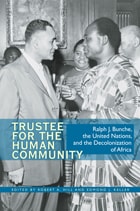
Ralph J. Bunche, the United Nations, and the Decolonization of AfricaRobert A. Hill
Ohio University Press, 2010
Ralph J. Bunche (1904–1971), winner of the Nobel Peace Prize in 1950, was a key U.S. diplomat in the planning and creation of the United Nations in 1945. In 1947 he was invited to join the permanent UN Secretariat as director of the new Trusteeship Department. In this position, Bunche played a key role in setting up the trusteeship system that provided important impetus for postwar decolonization ending European control of Africa as well as an international framework for the oversight of the decolonization process after the Second World War.
Trustee for the Human Community is the first volume to examine the totality of Bunche’s unrivalled role in the struggle for African independence both as a key intellectual and an international diplomat and to illuminate it from the broader African American perspective.
These commissioned essays examine the full range of Ralph Bunche’s involvement in Africa. The scholars explore sensitive political issues, such as Bunche’s role in the Congo and his views on the struggle in South Africa. Trustee for the Human Community stands as a monument to the profoundly important role of one of the greatest Americans in one of the greatest political movements in the history of the twentieth century.
Contributors: David Anthony, Ralph A. Austen, Abena P. A. Busia, Neta C. Crawford, Robert R. Edgar, Charles P. Henry, Robert A. Hill, Edmond J. Keller, Martin Kilson, Georges Nzongola-Ntalaja, Jon Olver, Pearl T. Robinson, Elliott P. Skinner, Crawford Young
Tsodilo Hills
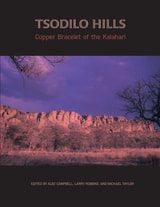
Copper Bracelet of the KalahariAlec Campbell
Michigan State University Press, 2010
For 100,000 years, inhabitants of Botswana's Tsodilo Hills region left behind a record of their gathering wild foods, hunting, fishing, mining, rock painting, cattle herding, and metalworking, as well as of their participation in a coast-to-coast trade network. During the past 30 years, archaeologists, paleontologists, historians, and anthropologists have worked at Tsodilo.
Here is the Tsodilo story, the Hills' revelations brought together in one volume, beautifully illuminated by more than 150 color plates and maps. For scientists, this work brings together decades of research at a site in the Kalahari that was virtually unknown until the late 1970s. Tsodilo Hills also offers a fascinating glimpse into the history of the Kalahari Desert to the general reader, as well as an unsurpassedguide to an extraordinary world to the desert's many tourists.
Tuhami
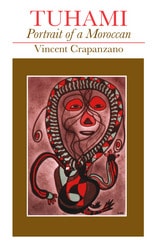
Portrait of a MoroccanVincent Crapanzano
University of Chicago Press, 1980
In a sensitive and bold experiment in interpretive ethnography, Crapanzano presents Tuhami's bizarre account of himself and his world. In so doing, Crapanzano draws on phenomenology, psychoanalysis, and symbolism to reflect upon the nature of reality and truth and to probe the limits of anthropology itself. Tuhami has become one of the most important and widely cited representatives of a new understanding of the whole discipline of anthropology.

Twilight of Torment
II. HeritageLéonora Miano
Seagull Books, 2023
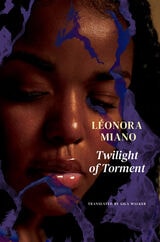
After beating his girlfriend and leaving her for dead on the street, Amok retraces his steps. Frightened by his act, which reproduces the violence of his father, he hopes to save the woman. But it is too late when he arrives at the scene; two women are already carrying the injured woman. Overwhelmed and not daring to reveal himself, he decides to find his father in order to learn how to rid himself of the dark force that he believes runs through the men of his lineage. He embarks on a journey that will be, more than anything, an inner one, forcing him to understand his story and choose a healthier way of being in the world. This second volume of Twilight of Torment is both intimate and political. Through the story of a man and his family, we discover an African bourgeoisie and its many social wanderings in a contemporary Africa whose future seems nebulous.
Twilight of Torment
MelancholyLéonora Miano
Seagull Books, 2022
Four women speak. They speak to the same man, who is not there. He is the son of the first, the great-yet-impossible love of the second, the platonic companion of the third, the older brother of the last. Speaking to him in his absence, it is to themselves that these women turn, examining their own stories to make sense of their journey, from twilight to twilight, through a mysterious stormy night in the middle of the dry season.
Together, the voices in Twilight of Torment: Melancholy, the first volume of a two-volume novel, perform a powerful and sometimes discordant jazz-inspired chorus about issues such as femininity, sexuality, self-love, and the intrusion of history into the intimate lives of people of African descent. Blackness confronts African-ness, love is sometimes discovered in the arms of another woman, the African renaissance tries to establish itself on the rubble of self-esteem damaged by history. Each of these women, with her own language and rhythm, ultimately represents a specific aspect of the tormented history of Africans in today’s world, and at the end of the night, they will each arrive at a dawn of hope.
Two Arabs, a Berber, and a Jew
Entangled Lives in MoroccoLawrence Rosen
University of Chicago Press, 2015
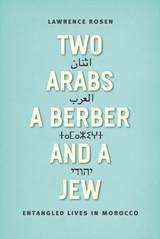
Through the intellectual lives of these four men, this book explores a number of interpretative and theoretical issues that have made Arab culture distinct, especially in relationship to the West: how nothing is ever hard and fast, how everything is relational and always a product of negotiation. It showcases the vitality of the local in a global era, and it contrasts Arab notions of time, equality, and self with those in the West. Likewise, Rosen unveils his own entanglement in their world and the drive to keep the analysis of culture first and foremost, even as his own life enmeshes itself in those of his study. An exploration of faith, politics, history, and memory, this book highlights the world of everyday life in Arab society in ways that challenge common notions and stereotypes.
Typologies of Humor in African Literatures
Adwoa A. Opoku-Agyemang
University of Michigan Press, 2024
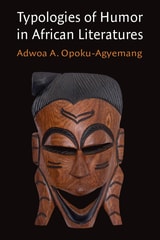
The book analyzes four comedic archetypes: the Trickster, who is unapologetically amoral and entertaining; the Mimic, whose everyday dealings exude ambiguity; the Interpreter, who demonstrates the comic potential of language differences while showing how a single message can mean contrasting things; and the Deviant, who throws norms into question all the while reinforcing them. These character types and the humor they produce present a constant pursuit of balance between contrasting worldviews and frames of reference within the imbrication of different languages, classes, political factions, genders, and (un)officialdoms. The product of these rowdy relations are people who take the weirdness and run with it to generate diegetic and intradiegetic laughs. By analyzing Francophone and Anglophone African writing and how it overlays local languages, Opoku-Agyemang contributes a uniquely African voice to the primarily Western-dominated field of humor studies.