Results by title
1048 books match the query 'African American & Black' and 219 start with t

To Be Named Something Else
Shaina Phenix
University of Arkansas Press, 2023
Named one of New York Public Library's Best Books, 2023
Winner, 2023 Miller Williams Poetry Prize
To Be Named Something Else is a high-spirited celebration of Black matriarchy and lineage—both familial and literary. Centering the coming-of-age of Black femmes in Harlem, Shaina Phenix’s debut collection, in the words of series judge Patricia Smith: “enlivens the everyday—the everyday miraculous, the everyday hallelujah, the numbing everyday love, the everyday risk of just being Black and living. There is absolutely nowhere these poems aren’t—we’re dancing and sweating through our clothes, terminating a pregnancy in a chilled room of white and silver, finally gettin’ those brows threaded and nails did, practicing gettin’ the Holy Ghost, sending folks to their rest, having babies, listening carefully to the lessons of elders, and sometimes even talking back. . . . To Be Named Something Else is a book of reason and reckoning, substance and shadow. It’s tender and wide-aloud and just about everything we need right now, when both reason and reckoning are in such woefully short supply.” Phenix’s full-throated poetry, with its “superlative combination of formalism and funk,” is assuredly something else.
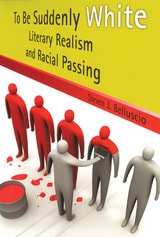
To Be Suddenly White
Literary Realism and Racial PassingSteven J. Belluscio
University of Missouri Press, 2006
To Be Suddenly White offers new readings of traditional passing narratives from the African American literary tradition, such as James Weldon Johnson’s The Autobiography of an Ex-Coloured Man, Nella Larsen’s Passing, and George Schuyler’s Black No More. It is also the first full-length work to consider a number of Jewish American and Italian American prose texts, such as Mary Antin’s The Promised Land, Anzia Yezierska’s Bread Givers, and Guido d’Agostino’s Olives on the Apple Tree, as racial passing narratives in their own right. Belluscio also demonstrates the contradictions that result from the passing narrative’s exploration of racial subjectivity, racial difference, and race itself.
When they are seen in comparison, ideological differences begin to emerge between African American passing narratives and “white ethnic” (Jewish American and Italian American) passing narratives. According to Belluscio, the former are more likely to engage in a direct critique of ideas of race, while the latter have a tendency to become more simplistic acculturation narratives in which a character moves from a position of ethnic difference to one of full American identity.
The desire “to be suddenly white” serves as a continual point of reference for Belluscio, enabling him to analyze how writers, even when overtly aware of the problematic nature of race (especially African American writers), are also aware of the conditions it creates, the transformations it provokes, and the consequences of both. Byexamining the content and context of these works, Belluscio elucidates their engagement with discourses of racial and ethnic differences, assimilation, passing, and identity, an approach that has profound implications for the understanding of American literary history.
To Do Justice
The Civil Rights Ministry of Reverend Robert E. HughesRandall C. Jimerson
University of Alabama Press, 2022
A minister’s call to justice in the struggle for civil rights.
A native Alabamian, Reverend Robert E. Hughes worked full-time in the civil rights movement as executive director of the Alabama Council of Human Relations, where he developed a close relationship with Dr. Martin Luther King Jr. After facing backlash from the Ku Klux Klan, spending four days in jail for refusing to disclose ACHR membership lists, and ultimately being forced to leave the state of Alabama, he served as a Methodist missionary in Southern Rhodesia (now part of Zimbabwe). After two years of organizing Black liberation groups, he was banned as a “prohibited immigrant” by the Ian Smith government. His lifelong commitment to social justice, racial equality, and peaceful resolution of conflicts marks a fascinating career richly documented in this comprehensive biography.
To Do Justice: The Civil Rights Ministry of Reverend Robert E. Hughes traces the life and career of an admirable and lesser-known civil rights figure who fought injustice on two continents. This account presents valuable new evidence about the civil rights movement in the United States as well as human rights and liberation issues in colonial Southern Rhodesia in the years leading up to independence and self-rule. It provides an intimate portrait of a courageous individual who worked outside of the public spotlight but provided essential support and informational resources to public activists and news reporters
Randall C. Jimerson explores the interwoven threads of race relations and religious beliefs on two continents, focusing on the dual themes of the American civil rights movement and the African struggles for decolonization and majority rule. The life and career of Robert Hughes provide insight into the international dimensions of racial prejudice and discrimination that can be viewed in comparative context to similar oppressions in other colonial lands.
To Heal the Scourge of Prejudice
The Life and Writings of Hosea EastonHosea Easton
University of Massachusetts Press, 1999
How did racial prejudice originate and why has it been so deeply rooted in American culture? What have been the long-term effects of prejudice on the intellectual, communal, and psychological resources of African Americans? How might the nightmare of racial domination be truly brought to an end? Still pertinent today, these were among the key questions addressed more than a century and a half ago by Hosea Easton (1799–1837), an important yet long neglected activist and intellectual.
A black minister from New England, Easton rose to prominence during the 1820s and 1830s by joining in the struggle of free African Americans to resist southern slavery and secure racial equality. From this experience he developed a deep understanding of the problem of "race" in the United States and became a trenchant critic of white supremacy and its devastating consequences. This volume brings back into print the only extended writings of Easton that have survived into our time: his insightful, almost prescient A Treatise on the Intellectual Character, and the Civil and Political Condition of the Colored People of the U. States, first published in 1837; and his passionate 1828 Thanksgiving Day “Address.” The book also provides a biographical portrait of Easton and his family, drawn from primary documents as well as secondary sources in the areas of biography, genealogy, and social history.
To Make Negro Literature
Writing, Literary Practice, and African American AuthorshipElizabeth McHenry
Duke University Press, 2021
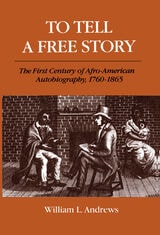
To Tell a Free Story
The First Century of Afro-American Autobiography, 1760-1865William L. Andrews
University of Illinois Press, 1986
Toni Morrison and the Geopoetics of Place, Race, and Be/longing
Marilyn Sanders Mobley
Temple University Press, 2024
Mobley’s approach is as interdisciplinary, intersectional, nuanced, and complex as Morrison’s. She combines textual analysis with a study of Morrison’s cultural politics and narrative poetics and describes how Morrison engages with both history and the present political moment.
Informed by research in geocriticism, spatial literary studies, African American literary studies, and Black feminist studies at the intersection of poetics and cultural politics, Mobley identifies four narrative strategies that illuminate how Morrison creates such spaces in her fiction; what these spaces say about her understanding of place, race, and belonging; and how they constitute a way to read and re-read her work.
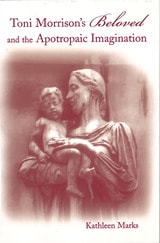
Toni Morrison's Beloved and the Apotropaic Imagination
Kathleen Marks
University of Missouri Press, 2002
Apotropaic, from the Greek, meaning “to turn away from,” refers to rituals that were performed in ancient times to ward off evil deities. Modern scholars use the term to denote an action that, in attempting to prevent an evil, causes that very evil. Freud employed the apotropaic to explain his thought concerning Medusa and the castration complex, and Derrida found the apotropaic’s logic of self-sabotage consonant with his own thought.
Marks draws on this critical history and argues that Morrison’s heroine’s effort to keep the past at bay is apotropaic: a series of gestures aimed at resisting a danger, a threat, an imperative. These gestures anticipate, mirror, and put into effect that which they seek to avoid—one does what one finds horrible so as to mitigate its horror. In Beloved, Sethe’s killing of her baby reveals this dynamic: she kills the baby in order to save it. As do all great heroes, Sethe transgresses boundaries, and such transgressions bring with them terrific dangers: for example, the figure Beloved. Yet Sethe’s action has ritualistic undertones that link it to the type of primal crimes that can bring relief to a petrified community. It is through these apotropaic gestures that the heroine and the community resist what Morrison calls “cultural amnesia” and engage in a shared past, finally inaugurating a new order of love.
Toni Morrison’s Beloved and the Apotropaic Imagination is eclectic in its approach—calling upon Greek religion, Greek mythology and underworld images, and psychology. Marks looks at the losses and benefits of the kind of self-damage/self-agency the apotropaic affords. Such an approach helps to frame the questions of the role of suffering in human life, the relation between humans and the underworld, and the uses of memory and history.
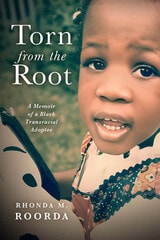
Torn from the Root
A Memoir of a Black Transracial AdopteeRhonda M. Roorda
Temple University Press, 2026
As a Black child adopted out of the New York foster care system as a toddler and raised by white evangelical parents, Rhonda Roorda had to learn how to walk in two different worlds. She often questioned “whether my skin was too dark” and if she “acted too white.” She recalls being haunted by feelings of shame and not being enough. Torn from the Root is her illuminating story of identity, belonging, and purpose and lays bare the deep pain she felt navigating life as a vulnerable Black girl and how she healed herself.
Roorda suffered trauma and abuse in her youth, but she also developed resilience. Eventually, she resolves to find her birth family and takes readers on her exciting and agonizing journey.
Torn from the Root thinks critically about the child welfare system and the long-term impacts of transracial adoption. Roorda helps readers understand her experience, posing necessary questions about the challenges of transracial adoption. Her emotional story, full of wisdom and reflection, recounts how she accepted the truth of her adoption and found balance, not discomfort, in her own skin.
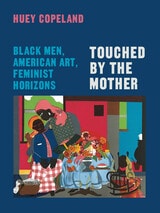
Touched by the Mother
Black Men, American Art, Feminist HorizonsHuey Copeland
University of Chicago Press, 2026
Collecting twenty years of incisive essays, articles, and interviews—including four published here for the first time—by art historian Huey Copeland, this book affirms the extraordinary depth of black men’s cultural production and the diversity of artistic practices that explore visual black masculinity in the United States. Part history, part memoir, part critical manifesto, Touched by the Mother offers a multi-faceted look at American art and discourse of the past fifty years, a personal meditation on navigating the world as a black gay man, and a feminist perspective on the ways transatlantic slavery continues to mark African and African diasporic men. Focusing on how the black maternal shapes black masculinity, Copeland confronts the dynamics that position African-American men—after their mothers—as sites of violence, creativity, and contestation in the cultural imagination.
Richly illustrated throughout, Touched by the Mother considers an exciting range of assemblage, painting, performance, photography, sculpture, and video works by more than twenty renowned practitioners, along with interviews featuring Hilton Als, Thelma Golden, Frank B. Wilderson, III, and other influential figures in contemporary art, culture, and criticism. Works by artists including Mark Bradford, Theaster Gates, David Hammons, Barkley L. Hendricks, Arthur Jafa, Glenn Ligon, Kerry James Marshall, Howardena Pindell, Sun Ra, and Lorna Simpson represent modes of making and thinking that are uniquely “touched by the mother,” Copeland argues, moving us toward the promise of black feminist futures.
Tracing Southern Storytelling in Black and White
Sarah Gilbreath Ford
University of Alabama Press, 2014
Exploring the shared storytelling traditions that shaped Southern literature across racial lines.
Tracing Southern Storytelling in Black and White is a study of the historical use of oral storytelling by southern writers in written works. In each chapter, Sarah Gilbreath Ford pairs a white and an African American writer to highlight points of confluence in black and white southern oral traditions. She argues that the connections between white and African American southern writers run deeper than critics have yet explored, and she uses textual comparisons to examine the racial mixing of oral culture.
On porches, in kitchens, and on the pages of their work, black and white southerners exchanged not just stories but strategies for telling stories. As a boy, Joel Chandler Harris listened to the stories of African American slaves, and he devised a framework to turn the oral stories into written ones. Harris’s use of the frame structure influenced how Charles Chesnutt recorded oral stories, but it led Alice Walker to complain that her heritage had been stolen. Mark Twain listened to African American storytellers as a child. His use of oral dialects then impacts how Ralph Ellison and William Faulkner employ oral storytelling and how Toni Morrison later writes in response to Faulkner. The interactions are not linear, not a chain of influence, but a network of interactions, borrowings, and revisions.
Ford’s pairings lead to new readings that reveal how the writers employ similar strategies in their narratives, due in part to shared historical context. While Zora Neale Hurston and William Faulkner, for example, use oral storytelling in the 1930s to examine the fear of racial mixing, Ellen Douglas and Ernest Gaines use it in the 1970s to build bridges between the races. Exploring the cultural crossing that occurs in the use of oral storytelling, Ford offers a different view of this common strategy in southern narrative and a new perspective on how culture is shared.
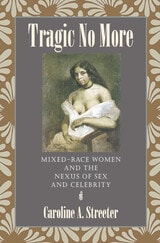
Tragic No More
Mixed-Race Women and the Nexus of Sex and CelebrityCaroline A. Streeter
University of Massachusetts Press, 2012
Streeter's subjects include concert pianist Philippa Schuyler, Dorothy West's novel The Wedding (in print and on screen), Danzy Senna's novels Caucasia and Symptomatic, and celebrity performing artists Mariah Carey, Alicia Keys, and Halle Berry. She opens with a chapter that examines the layered media response to Essie Mae Washington-Williams, Senator Strom Thurmond's biracial daughter. Throughout the book, Streeter engages the work of feminist critics and others who have written on interracial sexuality and marriage, biracial identity, the multiracial movement, and mixed race in cultural studies.

Travel & See
Black Diaspora Art Practices since the 1980sKobena Mercer
Duke University Press, 2016
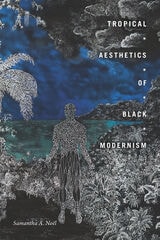
Tropical Aesthetics of Black Modernism
Samantha A. Noël
Duke University Press, 2021
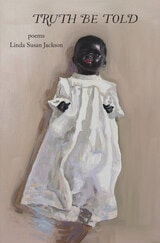
Truth Be Told
Linda Susan Jackson
Four Way Books, 2024
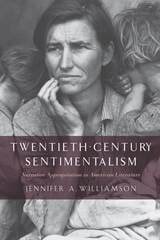
Twentieth-Century Sentimentalism
Narrative Appropriation in American LiteratureWilliamson, Jennifer A.
Rutgers University Press, 2013
Today’s critical establishment assumes that sentimentalism is an eighteenth- and nineteenth-century literary mode that all but disappeared by the twentieth century. In this book, Jennifer Williamson argues that sentimentalism is alive and well in the modern era. By examining working-class literature that adopts the rhetoric of “feeling right” in order to promote a proletarian or humanist ideology as well as neo-slave narratives that wrestle with the legacy of slavery and cultural definitions of African American families, she explores the ways contemporary authors engage with familiar sentimental clichés and ideals.
Williamson covers new ground by examining authors who are not generally read for their sentimental narrative practices, considering the proletarian novels of Grace Lumpkin, Josephine Johnson, and John Steinbeck alongside neo-slave narratives written by Margaret Walker, Octavia Butler, and Toni Morrison. Through careful close readings, Williamson argues that the appropriation of sentimental modes enables both sympathetic thought and systemic action in the proletarian and neo-slave novels under discussion. She contrasts appropriations that facilitate such cultural work with those that do not, including Kathryn Stockett’s novel and film The Help. The book outlines how sentimentalism remains a viable and important means of promoting social justice while simultaneously recognizing and exploring how sentimentality can further white privilege.
Sentimentalism is not only alive in the twentieth century. It is a flourishing rhetorical practice among a range of twentieth-century authors who use sentimental tactics in order to appeal to their readers about a range of social justice issues. This book demonstrates that at stake in their appeals is who is inside and outside of the American family and nation.

Twenty-Five Years in the Black Belt
William J. Edwards
University of Alabama Press, 1993
A pioneering educator's firsthand account of building opportunity and hope in Alabama's Black Belt.
Twenty-Five Years in the Black Belt is one of the most important firsthand accounts of African American educational leadership and community development in the post-Reconstruction South. Originally published in 1918, this memoir by educator and institution-builder William J. Edwards documents his extraordinary efforts to create educational opportunities for Black citizens in Alabama's Black Belt during a period marked by segregation, economic hardship, and limited access to public resources.
Born in Snow Hill, Alabama, in 1869, Edwards rose from humble beginnings to attend the Tuskegee Institute under the leadership of Booker T. Washington. Inspired by Tuskegee's philosophy of education, self-reliance, and community advancement, he returned to rural Alabama determined to establish an institution that could provide both academic and practical instruction to African American students. His efforts led to the founding of the Snow Hill Institute in 1893, a school that became a vital center of learning and leadership for generations of Black Alabamians.
The memoir also offers valuable insight into the educational philosophies that shaped African American advancement in the late nineteenth and early twentieth centuries. Edwards reflects on the influence of Booker T. Washington, the role of industrial and vocational education, fundraising efforts in the North, the Jeanes Fund, public-school reform, and the broader movement for racial uplift through education. His account illuminates the networks of educators, supporters, and community leaders who worked to expand opportunities for African Americans throughout the South.
At once inspirational and historically significant, Twenty-Five Years in the Black Belt remains an essential source for understanding African American education, Southern race relations, and the determination of Black communities to create institutions that fostered dignity, opportunity, and progress. It stands as both a personal testament and a crucial historical document chronicling a transformative era in American history.
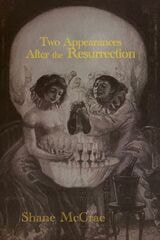
Two Appearances After the Resurrection
Shane McCrae
Omnidawn, 2025
This is a book about perceiving and being perceived. The various subjects of these poems are viewed by an artist, a devil, a soul floating out of a body it had inhabited, a god fed up with her husband’s infidelities, and a father whose young child has COVID-19. The poems of Two Appearances After the Resurrection are haunted by the question of what one ought to do with their perceivability.
After a decade of publishing poems almost exclusively utilizing no punctuation aside from the slash, Shane McCrae began including semi-regular punctuation in his 2023 book, The Many Hundreds of the Scent. He continues that project in Two Appearances After the Resurrection. Here, he further explores the consequences—especially the rhythmical consequences—of the change. Throughout these poems, McCrae perceives and implicitly considers his own shifting approaches to writing.
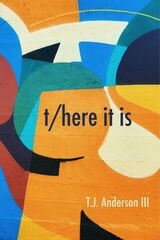
t/here it is
T.J. Anderson III
Omnidawn, 2022
The poems in t/here it is take multiple forms as each section reflects on variations of experience, engaging with the simultaneity of historic and present time while yearning for a future that is beyond what we can envision. In Section I, the poet grapples with ancestral legacy and connection to the natural world. Section II deals with the way one traverses the urban landscape and with various strategies of survival, and Section III recalls the observations and experiences of youth. Through nine linked poems, Section IV complicates the idea of witness under a capitalistic system bent on exploitation and devaluing the sacred human experience. Section V speaks to the lost opportunity of making profound human connections during the race to acquire more material goods. In Section VI, the poems take on the domestic and institutional places that govern our lives. A single poem forms Section VII, mapping the intersection between jazz and emotion. With Section VIII, Anderson pays homage to jazz greats and reflects on the ways that listening can carry one back to moments of growth and lamentation. The two poems that close out the book in Section IX bring the reader to a place of vulnerability, expressing the desire to be able to discern the multiple avenues of one’s journey with awareness.