Results by title
1272 books match the query 'Asia' and 289 start with t
The Ryukyu Islands
A New History from the Stone Age to the PresentGregory Smits
University of Chicago Press, 2025
The Ryukyu Islands between Japan and Taiwan consist of around 160 islands and are home to about 1.5 million inhabitants. Across the islands’ history, sea-lanes and trade patterns have connected them to the East China Sea region, giving them a unique vantage point on the region’s changes and making them a useful lens through which to view and understand those transformations. In this book, Gregory Smits marshals his expertise to canvass the environmental, political, and social history of this fascinating area, emphasizing the diversity of influences from China, Japan, and Korea that have shaped it. Smits begins by tracing the islands’ early history from the time of the oldest extant human remains, through massive inflows of settlers from Japan, until the emergence of a centralized state in the sixteenth century. He then traces the development of the Ryukyu Kingdom from the fifteenth to the nineteenth century, examining its major cultural formations and the interplay of local and external influences driving its evolution. Finally, Smits ushers readers to the modern era, from the end of the Ryukyu Kingdom in 1879 through World War II, the era of American military control, and on to the present. He concludes with their present-day status as a tourist destination affected by ongoing geopolitical, economic, and environmental challenges. Synthesizing decades of research, this book is an indispensable, comprehensive guide to the islands’ history for scholars and nonspecialists alike.

The Sacred Remains
Myth, History, and Polity in BelauRichard J. Parmentier
University of Chicago Press, 1987
Richard J. Parmentier employs semiotic methods to analyze both linguistic and nonlinguistic signs representing Belauan history, showing that these signs also organize social and political structures. He identifies four pervasive semiotic patterns that appear rhetorically in myths, chants, and historical narratives and graphically in the arrangement of certain classes of stones, including village boundary markers, burial platforms, exchange valuables, and monoliths found at abandoned sites in the islands.
While not neglecting historical evidence from Western sources, Parmentier contends that the history of Belau cannot be understood without taking into full account indigenous categories of space, time, and transformation and without recognizing the importance of Belauan social actions that construct, interpret, and transmit historical knowledge. Supporting his analysis of Belauan history with concrete ethnographic demonstration, Parmentier presents a work of central importance for Austronesianists, anthropologists, and historians.
The Scattered Court
Hindustani Music in Colonial BengalRichard David Williams
University of Chicago Press, 2023
How far did colonialism transform north Indian music? In the period between the Mughal empire and the British Raj, how did the political landscape bleed into aesthetics, music, dance, and poetry? Examining musical culture through a diverse and multilingual archive, primarily using sources in Urdu, Bengali, and Hindi that have not been translated or critically examined before, The Scattered Court challenges our assumptions about the period. Richard David Williams presents a long history of interactions between northern India and Bengal, with a core focus on the two courts of Wajid Ali Shah (1822–1887), the last ruler of the kingdom of Awadh. He charts the movement of musicians and dancers between the two courts in Lucknow and Matiyaburj, as well as the transregional circulation of intellectual traditions and musical genres, and demonstrates the importance of the exile period for the rise of Calcutta as a celebrated center of Hindustani classical music. Since Lucknow is associated with late Mughal or Nawabi society and Calcutta with colonial modernity, examining the relationship between the two cities sheds light on forms of continuity and transition over the nineteenth century, as artists and their patrons navigated political ruptures and social transformations. The Scattered Court challenges the existing historiography of Hindustani music and Indian culture under colonialism by arguing that our focus on Anglophone sources and modernizing impulses has directed us away from the aesthetic subtleties, historical continuities, and emotional dimensions of nineteenth-century music.
The Selden Map of China
A New Understanding of the Ming DynastyHongping Annie Nie
Bodleian Library Publishing, 2019
Exploring the commercial aims of the Ming Dynasty, the port city of Quanzhou and its connections with the voyages of the early traveler Zheng He, this book describes the historical background of the era in which the map was used. It also includes an analysis of the skills and techniques involved in Chinese map-making and the significance of the compass bearings, scale, and ratios found on the map, all of which combine to represent a breakthrough in cartographic techniques.
The enthralling story revealed by this extraordinary artifact sheds light on the long history of China’s relationship with the sea and with the wider world.
The Sexual Life of English
Languages of Caste and Desire in Colonial IndiaShefali Chandra
Duke University Press, 2012
The Silk Road Idea
Ancient Contact in the Modern Human SciencesTamara T. Chin
University of Chicago Press, 2026
Traces the rise and fall of a set of modern disciplinary fields devoted to premodern historical contact that drew on intellectual currents across and beyond China and Europe.
The Silk Road Idea examines how the transnational past became a modern object of inquiry. Tamara T. Chin argues that between 1870 and 1970—a century spanning imperialism, decolonization, and the Cold War—interest in deep global connections unexpectedly emerged across opposing camps: the colonialist and the anticolonial, the capitalist and the communist, the antiquarian and the activist. To study world history through cross-cultural contact rather than isolated civilizational origins, scholars around the globe turned to ancient Afro-Eurasian ties with China. This entangled modern intellectual debates in East Asia and Europe with those in South Asia and East Africa. During the ascent of academic specialization and national studies, disciplines developed distinct frameworks and units for analyzing contact: maps in geography, narratives in history, words in philology, and sounds in linguistics. The Silk Road Idea models a multiregional and multidisciplinary history of knowledge that reveals how the connecting up of the modern world both enabled and was enabled by a radical reimagination of antiquity.
The Slaves of Palamau and Other Writings
Mahasweta Devi
Seagull Books, 2026
A collection of Mahasweta Devi's activist essays, reportage, and editorials on rural development and dispossession.
What do India’s poorest communities reveal about power, land, and survival? In the late 1970s, writer Mahasweta Devi shifted her focus to the lives of Adivasi (Indigenous peoples of the Indian subcontinent) and Dalit communities in eastern India, especially Bihar and West Bengal. Traveling widely and staying with the communities she wrote about, she drew on these firsthand encounters in her writing. She also edited the Bengali quarterly Bortika, making the journal a space for peasants, laborers, workers, and other marginalized groups to speak for themselves.
The Slaves of Palamau and Other Writings brings together a representative selection from her activist prose of the 1980s and early 1990s, drawn from essays, reportage, and editorials. These pieces examine rural development; dispossession and land alienation; environmental damage; and the conditions of landless laborers, sharecroppers, bonded and contract workers, miners, and Indigenous communities, with the steady attention that also informs her fiction.

The Social World of Batavia
Europeans and Eurasians in Colonial IndonesiaJean Gelman Taylor
University of Wisconsin Press, 2009
Original in its focus on gender and use of varied sources—travelers’ accounts, newspapers, legal codes, genealogical data, photograph albums, paintings, and ceramics—The Social World of Batavia, first published in 1983, forged new paths in the study of colonial society. In this second edition, Gelman offers a new preface as well as an additional chapter tracing the development of these themes by a new generation of scholars.
The Socialist Way of Life in Siberia
Transformation in BuryatiaMelissa Chakars
Central European University Press, 2014
The Soul of Anime
Collaborative Creativity and Japan's Media Success StoryIan Condry
Duke University Press, 2013
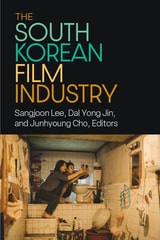
The South Korean Film Industry
Sangjoon Lee, Dal Yong Jin, And Junhyoung Cho, Editors
University of Michigan Press, 2024
The South Korean Film Industry is the first detailed scholarly overview of the South Korean film industry. The thirteen chapters discuss topics from short films to popular television series that have engaged global audiences. Contributors explore the major changes in South Korean film making, marketing, and in the international growth and popularity of South Korean films. By bringing together a wide range of academic specialists, The South Korean Film Industry situates the current scholarship on South Korean cinema within the ongoing theoretical debates in contemporary global film studies. This volume will be widely read in undergraduate and graduate classes related to Korean and East Asian studies, cinema and media studies, cultural studies, and communication studies. Moreover, many institutions offer dedicated modules on South Korean cinema, media, and popular culture, for which The South Korean Film Industry will be ideal.

The Sovereign Trickster
Death and Laughter in the Age of DuterteVicente L. Rafael
Duke University Press, 2022
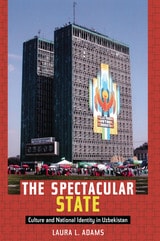
The Spectacular State
Culture and National Identity in UzbekistanLaura L. Adams
Duke University Press, 2010
Adams draws on her observations and interviews conducted with artists, intellectuals, and bureaucrats involved in the production of Uzbekistan’s national culture. These elites used globalized cultural forms such as Olympics-style spectacle to showcase local, national, and international aspects of official culture. While these state-sponsored extravaganzas were intended to be displays of Uzbekistan’s ethnic and civic national identity, Adams found that cultural renewal in the decade after Uzbekistan’s independence was not so much a rejection of Soviet power as it was a re-appropriation of Soviet methods of control and ideas about culture. The public sphere became more restricted than it had been in Soviet times, even as Soviet-era ideas about ethnic and national identity paved the way for Uzbekistan to join a more open global community.
The Specter of Global China
Politics, Labor, and Foreign Investment in AfricaChing Kwan Lee
University of Chicago Press, 2017
Offering the clearest look yet at China’s state-driven investment in Africa, this book is rooted in six years of extensive fieldwork in copper mines and construction sites in Zambia, Africa’s copper giant. Lee shadowed Chinese, Indian, and South African managers in underground mines, interviewed Zambian miners and construction workers, and worked with Zambian officials. Distinguishing carefully between Chinese state capital and global private capital in terms of their business objectives, labor practices, managerial ethos, and political engagement with the Zambian state and society, she concludes that Chinese state investment presents unique potential and perils for African development. The Specter of Global China will be a must-read for anyone interested in the future of China, Africa, and capitalism worldwide.
The Specter of Materialism
Queer Theory and Marxism in the Age of the Beijing ConsensusPetrus Liu
Duke University Press, 2023
The Spectral Wound
Sexual Violence, Public Memories, and the Bangladesh War of 1971Nayanika Mookherjee
Duke University Press, 2015
The Sri Lanka Reader
History, Culture, PoliticsJohn Clifford Holt, ed.
Duke University Press, 2011
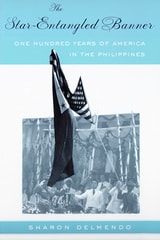
The Star-Entangled Banner
One Hundred Years of America in the PhilippinesDelmendo, Sharon
Rutgers University Press, 2004
During a ceremony held in 1996 to commemorate the fiftieth anniversary of formal Philippine independence, the U.S. flag was being lowered while the Philippine flag was being raised, and the two became entangled. In The Star-Entangled Banner, Sharon Delmendo demonstrates that this incident is indicative of the longstanding problematic relationship between the two countries. When faced with a national crisis or a compelling need to reestablish its autonomy, each nation paradoxically turns to its history with the other to define its place in the world.
Each chapter of the book deals with a separate issue in this linked history: the influence of Buffalo Bill’s show on the proto-nationalism of José Rizal, who is often described as the “First Filipino”; the portrayal of the Philippines in American children’s books; Back to Bataan, a World War II movie starring John Wayne; the post-independence fiction of F. Sionil José; and the refusal of the U..S military to return the Balangiga Bells, which were taken as war booty during the Philippine-American War. Ultimately, Delmendo demonstrates how the effects of U.S. imperialism in the Philippines continue to resonate in U.S. foreign policy in the post cold war era and the war on terrorism.

The State of Islam
Culture and Cold War Politics in PakistanSaadia Toor
Pluto Press, 2011
The State of Islam tells the story of Pakistan through the lens of the Cold War, and more recently the War on Terror, to shed light on the domestic and international processes behind the global rise of militant Islam.
Unlike existing scholarship on nationalism, Islam and the state in Pakistan, which tends to privilege events in a narrowly-defined ‘political’ realm, Saadia Toor highlights the significance of cultural politics in Pakistan from its origins to the contemporary period. This extra dimension allows Toor to explain how the struggle between Marxists and liberal nationalists was influenced and eventually engulfed by the agenda of the religious right.
Timely and unique, this book is a must for anyone who wants to understand the roots of modern Pakistan and the likely outcome of current power struggles in the country.
The Stone and the Wireless
Mediating China, 1861–1906Shaoling Ma
Duke University Press, 2021
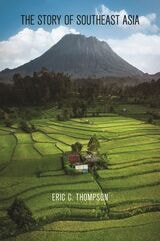
The Story of Southeast Asia
Edited by Eric Thompson
National University of Singapore Press, 2024
The oldest figurative cave paintings in the world are found on the island of Sulawesi in Indonesia. Hand stencils and animals painted some 45,000 years ago attest to a long history of human creativity. The Story of Southeast Asia tells how the peoples of the region have crafted their diverse societies and cultures over thousands of years. Southeast Asia has been a remarkable crossroads of global connections for millennia. Whereas other regions have been defined by centralizing forces, Southeast Asia’s story is one of complex networks of trade, ideas, and social relationships. Southeast Asians have created, localized, and remade their own cultural values by drawing on influences from around the world.
Marshalling the latest literature from anthropology, archaeology, history, and other disciplines, Eric C. Thompson highlights broad themes that cut across history: including the making—and evasion—of states, adoption of diverse religious practices, tolerance and flexibility regarding gender, processes of forging modern identities, struggles over sovereignty, and the making of modern nations in a postcolonial world. This readable, single-volume history reckons with the narrative pull of familiar colonial and national perspectives but maintains a regional and deep-historical focus. It will be a stimulating read for scholars as well as students and newcomers to Southeast Asian history.
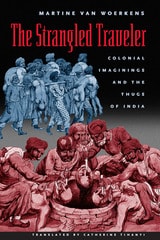
The Strangled Traveler
Colonial Imaginings and the Thugs of IndiaMartine van Woerkens
University of Chicago Press, 2002
Did the Thugs really exist, or did the British invent them as an excuse to seize tighter control of India? Drawing on historical and anthropological accounts, Indian tales and sacred texts, and detailed analyses of the secret Thug language, Martine van Woerkens reveals for the first time the real story of the Thugs. Many different groups of Thugs actually did exist over the centuries, but the monsters the British made of them had much more to do with colonial imaginings of India than with the real Thugs. Tracing these imaginings down to the present, van Woerkens reveals the ongoing roles of the Thugs in fiction and film from Frankenstein to Indiana Jones and the Temple of Doom.
The Structure of Complex Predicates in Urdu
Miriam Butt
CSLI, 1995
This book takes a detailed look at two differing complex predicates in the South Asian language Urdu. The Urdu permissive in particular brings into focus the problem of the syntax-semantics mismatch. An examination of the syntactic properties of this complex predicate shows that it is formed by the combination of two semantic heads, but that this combination is not mirrored in the syntax in terms of any kind of syntactic or lexical incorporation.
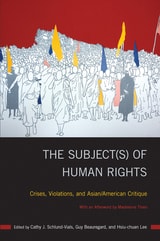
The Subject(s) of Human Rights
Crises, Violations, and Asian/American CritiqueCathy J. Schlund-Vials
Temple University Press, 2020
Human rights violations have always been part of Asian American studies. From Chinese immigration restrictions, the incarceration of Japanese Americans, yellow peril characterizations, and recent acts of deportation and Islamophobia, Asian Americans have consistently functioned as subordinated “subjects” of human rights violations. The Subject(s) of Human Rights brings together scholars from North America and Asia to recalibrate these human rights concerns from both sides of the Pacific.
The essays in this collection provide a sharper understanding of how Asian/Americans have been subjected to human rights violations, how they act as subjects of history and agents of change, and how they produce knowledge around such subjects. The editors of and contributors to The Subject(s) of Human Rights examine refugee narratives, human trafficking, and citizenship issues in twentieth- and twenty-first century literature. These themes further refract issues of American war-making, settler colonialism, military occupation, collateral damage, and displacement that relocate the imagined geographies of Asian America from the periphery to the center of human rights critique.
The Sublime Perversion of Capital
Marxist Theory and the Politics of History in Modern JapanGavin Walker
Duke University Press, 2016
The Sulu Zone
The Dynamics of External Trade, Slavery and Ethnicity in the Transformation of a Southeast Asian Maritime State, 1768-1898 (Second Edition)James F. Warren
National University of Singapore Press, 2007
His work analyzes the dynamics of the last autonomous Malayo-Muslim maritime state over a long historical period and describes its stunning response to the world capitalist economy and the rapid "forward movement" of colonialism and modernity. It also shows how the changing world of global cultural flows and economic interactions caused by cross-cultural trade and European dominance affected men and women who were forest dwellers, highlanders, and slaves, people who worked in everyday jobs as fishers, raiders, divers and traders. Often neglected by historians, the responses of these members of society are a crucial part of the history of Southeast Asia.
The Taiwan Voter
Christopher H. Achen and T. Y. Wang, Editors
University of Michigan Press, 2017
Taiwan’s electoral politics draws international scholarly interest because of the prominent role of ethnic and national identification. While in most countries the many tangled strands of competing identities are daunting for scholarly analysis, in Taiwan the cleavages are powerful and limited in number, so the logic of interrelationships among issues, partisanship, and identity are particularly clear. The Taiwan Voter unites experts to investigate the ways in which social identities, policy views, and partisan preferences intersect and influence each other. These novel findings have wide applicability to other countries, and will be of interest to a broad range of social scientists interested in identity politics.
The Tatars of Crimea
Return to the HomelandEdward A. Allworth, ed.
Duke University Press, 1998
Contributors to this volume—almost half of whom are Tatars—discuss the problematic results of the partial Tatar return to Crimea that began in the 1980s. This incomplete migration has left the group geographically split and has complicated their desire for stability as a people, whether in their own homeland or in the Central Asian diaspora. Those who have returned to the region on the Black Sea in Ukrayina (formerly Ukraine) have found themselves engulfed in a hostile political environment dominated by Russian residents attempting to stifle the resurgence of Crimean Tatar life. Specific essays address the current political situation in and around Crimea, recent elections, and promising developments in the culture, leadership, and movement toward unity among Crimean Tatars.
Beyond demonstrating the problems of one nationality caught in a fierce power struggle, The Tatars of Crimea offers an example of the challenges faced by all nationalities of the former Soviet Union who now contend with deteriorating economic and political conditions, flagrant discrimination against ethnic minorities, and the denial of civil and human rights common in many of the newly independent states.
Contributors. Ludmilla Alexeyeva, Edward A. Allworth, Mübeyyin Batu Altan, Nermin Eren, Alan W. Fisher, Riza Gülüm, Seyit Ahmet Kirimca, Edward Lazzerini, Peter Reddaway, Ayshe Seytmuratova, Andrew Wilson
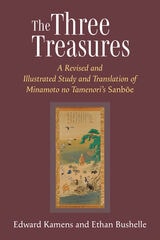
The Three Treasures
A Revised and Illustrated Study and Translation of Minamoto no Tamenori's SanboeEdward Kamens and Ethan Bushelle
University of Michigan Press, 2023
When the young Princess Sonshi became a Buddhist nun in the year 984, a scholar-official of the royal court was commissioned to create a guide to the Buddhist religion that would be accessible for her. He did so in the form of the illustrated works of fiction (monogatari) that appealed to women readers of her time and class. The text has survived in later manuscripts; the illustrations, if they ever existed, have not. This revised translation recreates Sonshi’s experience of receiving this multimedia presentation, with illustrations selected to help contemporary readers visualize its content and essays that provide context on the religious and cultural experience of the author. The Three Jewels is a unique document that opens a window onto the world of Buddhist religious experience—especially for women—in high classical Japan, the time of Sei Shōnagon’s Pillow Book and Murasaki Shikibu’s Tale of Genji.
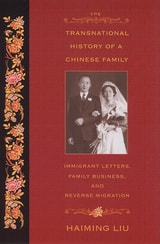
The Transnational History of a Chinese Family
Immigrant Letters, Family Business, and Reverse MigrationLiu, Haiming
Rutgers University Press, 2005
Family and home are one word—jia—in the Chinese language. Family can be separated and home may be relocated, but jia remains intact. It signifies a system of mutual obligation, lasting responsibility, and cultural values. This strong yet flexible sense of kinship has enabled many Chinese immigrant families to endure long physical separation and accommodate continuities and discontinuities in the process of social mobility.
Based on an analysis of over three thousand family letters and other primary sources, including recently released immigration files from the National Archives and Records Administration, Haiming Liu presents a remarkable transnational history of a Chinese family from the late nineteenth century to the 1970s. For three generations, the family lived between the two worlds. While the immigrant generation worked hard in an herbalist business and asparagus farming, the younger generation crossed back and forth between China and America, pursuing proper education, good careers, and a meaningful life during a difficult period of time for Chinese Americans. When social instability in China and hostile racial environment in America prevented the family from being rooted in either side of the Pacific, transnational family life became a focal point of their social existence.
This well-documented and illustrated family history makes it clear that, for many Chinese immigrant families, migration does not mean a break from the past but the beginning of a new life that incorporates and transcends dual national boundaries. It convincingly shows how transnationalism has become a way of life for Chinese American families.
The Transnational Politics of Asian Americans
edited by Christian Collet and Pei-te Lien, foreword by Don Nakanishi
Temple University Press, 2009
As America’s most ethnically diverse foreign-born population, Asian Americans can puzzle political observers. This volume’s multidisciplinary team of contributors employ a variety of methodologies— including quantitative, ethnographic, and historical—to illustrate how transnational ties between the U.S. and Asia have shaped, and are increasingly defining, Asian American politics in our multicultural society.
Original essays by U.S.- and Asian-based scholars discuss Cambodian, Chinese, Filipino, Indian, Japanese, Korean, and Vietnamese communities from Boston to Honolulu. The volume also shows how the grassroots activism of America's "newest minority" both reflects and is instrumental in broader processes of political change throughout the Pacific. Addressing the call for more global approaches to racial and ethnic politics, contributors describe how Asian immigrants strategically navigate the hurdles to domestic incorporation and equality by turning their political sights and energies toward Asia. These essays convincingly demonstrate that Asian American political participation in the U.S. does not consist simply of domestic actions with domestic ends.
Contributors include: Eiichiro Azuma, Augusto Espiritu, Hiroko Furuya, Peter Kiang, Ikumi Koakutsu, Michel Laguerre, Sangay Mishra, Hiromi Monobe, Shirley Tang, Tritia Toyota, Janelle Wong, and the editors.
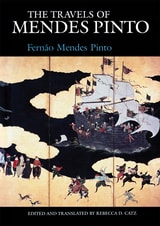
The Travels of Mendes Pinto
Fernão Mendes Pinto
University of Chicago Press, 1989
"[T]here is plenty here for the modern reader. . . . The vivid descriptions of swashbuckling military campaigns and exotic locations make this a great adventure story. . . . Mendes Pinto may have been a sensitive eyewitness, or a great liar, or a brilliant satirist, but he was certainly more than a simple storyteller."—Stuart Schwartz, The New York Times
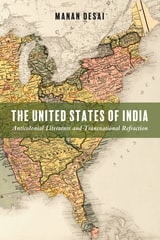
The United States of India
Anticolonial Literature and Transnational RefractionManan Desai
Temple University Press, 2020
The United States of India shows how Indian and American writers in the United States played a key role in the development of anticolonial thought in the years during and immediately following the First World War. For Indians Lajpat Rai and Dhan Gopal Mukerji, and Americans Agnes Smedley, W.E.B. Du Bois, and Katherine Mayo, the social and historical landscape of America and India acted as a reflective surface. Manan Desai considers how their interactions provided a “transnational refraction”—a political optic and discursive strategy that offered ways to imagine how American history could shed light on an anticolonial Indian future.
Desai traces how various expatriate and immigrant Indians formed political movements that rallied for American support for the cause of Indian independence. These intellectuals also developed new forms of writing about subjugation in the U.S. and India. Providing an examination of race, caste, nationhood, and empire, Desai astutely examines this network of Indian and American writers and the genres and social questions that fomented solidarity across borders.

The University of Michigan & China, 1845 – 2017
Neal McKenna
Michigan Publishing Services, 2017
Throughout the last two centuries U.S. administrations from President Lincoln to President Clinton have relied on U-M leaders and faculty to engage China and develop political and cultural relationships. The University of Michigan was one of the first universities in the U.S. to enroll Chinese students and has many prominent Chinese graduates, including a Nobel Laureate and the first female college president in China.
As U-M celebrates its own bicentennial, this book recounts the university's considerable history with Chinese governments, people and culture. The book also updates readers on the current and ongoing partnerships between different U-M departments and schools with Chinese institutions, and provides a list of several prominent Chinese graduates of the University of Michigan.
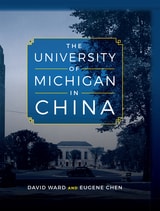
The University of Michigan in China
David Ward and Eugene Chen
Michigan Publishing Services, 2017
This book tells the story of twenty remarkable individuals, the country they transformed, and the University that helped them do it. There are many “firsts” in this book—first Chinese students at U-M, first female college president of China—and there are many “fathers” of disciplines: Wu Dayou, father of physics in China; Zheng Zuoxin, father of Chinese ornithology; Zeng Chengkui, father of marine botany.
While much has been written about these leaders and scholars in both English and Chinese, nowhere else is their collective story told or their shared bond with the University of Michigan celebrated.
The University of Michigan in China celebrates this nearly 200-year-old legacy.
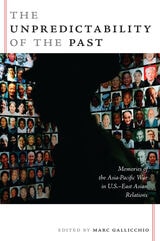
The Unpredictability of the Past
Memories of the Asia-Pacific War in U.S.-East Asian RelationsMarc Gallicchio, ed.
Duke University Press, 2007
The contributors interpret mass media sources, museum displays, monuments, film, and literature, as well as the archival sources traditionally used by historians. They explore how American ideas about Japanese history shaped U.S. occupation policy following Japan’s surrender in 1945, and how memories of the Asia-Pacific War influenced Washington and Tokyo policymakers’ reactions to the postwar rise of Soviet power. They investigate topics from the resurgence of Pearl Harbor images in the U.S. media in the decade before September 11, 2001, to the role of Chinese war museums both within China and in Chinese-Japanese relations, and from the controversy over the Smithsonian Institution’s Enola Gay exhibit to Japanese tourists’ reactions to the USS Arizona memorial at Pearl Harbor. One contributor traces how a narrative commemorating African Americans’ military service during World War II eclipsed the history of their significant early-twentieth-century appreciation of Japan as an ally in the fight against white supremacy. Another looks at the growing recognition and acknowledgment in both the United States and Japan of the Chinese dimension of World War II. By focusing on how memories of the Asia-Pacific War have been contested, imposed, resisted, distorted, and revised, The Unpredictability of the Past demonstrates the crucial role that interpretations of the past play in the present.
Contributors. Marc Gallicchio, Waldo Heinrichs, Haruo Iguchi, Xiaohua Ma, Frank Ninkovich, Emily S. Rosenberg, Takuya Sasaki, Yujin Yaguchi, Daqing Yang
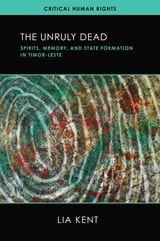
The Unruly Dead
Spirits, Memory, and State Formation in Timor-LesteLia Kent
University of Wisconsin Press, 2024
With generous, careful ethnography and incisive analysis, Kent challenges comfortable, linear narratives of transitional justice and argues that this memory work is reshaping the East Timorese social and political order—a process in which the dead are active, and sometimes disruptive, participants. Community ties and even the landscape itself are imbued with their presence and demands, and the horrific scale of mass death in recent times—at least a third of the population perished during the Indonesian occupation—means Timor-Leste’s dead have real, significant power in the country’s efforts to remember, recover, and reestablish itself.
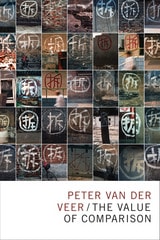
The Value of Comparison
Peter van der Veer
Duke University Press, 2016
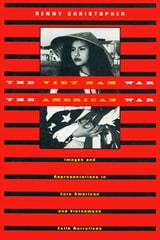
The Viet Nam War/The American War
Images and Representations in Euro-American and Vietnamese Exile NarrativesRenny Christopher
University of Massachusetts Press, 1995
This book seeks to reformulate the canon of writings on what is called “the Viet Nam War” in America and “the American War” in Viet Nam. Until recently, the accepted canon has consisted almost exclusively of American white male combat narratives, which often reflect and perpetuate Asian stereotypes. Renny Christopher introduces material that displays a bicultural perspective, including works by Vietnamese exile writers and by lesser-known Euro-Americans who attempt to bridge the cultural gap.
Christopher traces the history of American stereotyping of Asians and shows how Euro-American ethnocentricity has limited most American authors' ability to represent fairly the Vietnamese in their stories. By giving us access to Vietnamese representations of the war, she creates a context for understanding the way the war was experienced from the “other” side, and she offers perceptive, well-documented analyses of how and why Americans have so emphatically excised the Vietnamese from narratives about a war fought in their own country.
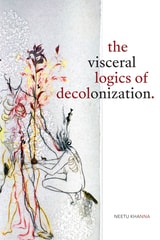
The Visceral Logics of Decolonization
Neetu Khanna
Duke University Press, 2020
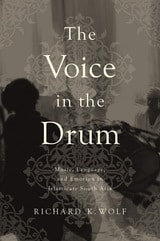
The Voice in the Drum
Music, Language, and Emotion in Islamicate South AsiaRichard K. Wolf
University of Illinois Press, 2014
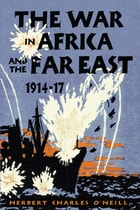
The War in Africa and the Far East, 1914-17
Herbert Charles O'Neill
Westholme Publishing, 2012
"This account will be welcome to a large circle of readers. . . . The arduous nature of these campaigns deserves to be far more widely known, and this is just the book for the purpose--short, clear, and easy to read."--Journal of the African Society
The largest battles of World War I were fought in Europe, and it is there where most critical studies focus. The fate of the far-flung colonies of Germany, however, are what gave the war its global scope, with campaigns reaching from China to New Guinea and East to West Africa. While there are detailed accounts of most of these campaigns, The War in Africa and the Far East, 1914-17 is unique in providing a concise history of the entire series of military events in Africa and Asia, giving the reader a better idea of the relationship and chronology of these wide-ranging events. While Germany was stripped of all its overseas colonies, the change in power had unintended consequences, most importantly the rise of Japan in the Pacific, where former German colonies now stood at the territorial boundary between Japan and the United States.
Waged by Allied troops from Britain, Kenya, Zambia, Portugal, Japan, India, Netherlands, and other countries and led by such personalities as General Jan Christian Smuts, the theater of operations crossed modern-day Tanzania, Rwanda, Burundi, Togo, Cameroon, Namibia, New Guinea, Qingdau, the Bismarck Archipelago, and other Pacific Island chains. Originally published in 1918 using official dispatches and other sources, and presented here for the first time in paperback, completely retypeset and with the original maps and additional photographs, The War in Africa and the Far East is a compact overview of an important aspect of the First World War.
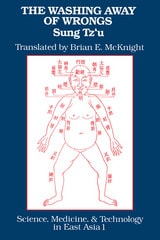
The Washing Away of Wrongs
Forensic Medicine in Thirteenth-Century ChinaSung Tz’u; Translated by Brian E. McKnight
University of Michigan Press, 1981
The Water Kingdom
A Secret History of ChinaPhilip Ball
University of Chicago Press, 2017
Water, Ball shows, is a key that unlocks much of Chinese culture. In The Water Kingdom, he takes us on a grand journey through China’s past and present, showing how the complexity and energy of the country and its history repeatedly come back to the challenges, opportunities, and inspiration provided by the waterways. Drawing on stories from travelers and explorers, poets and painters, bureaucrats and activists, all of whom have been influenced by an environment shaped and permeated by water, Ball explores how the ubiquitous relationship of the Chinese people to water has made it an enduring metaphor for philosophical thought and artistic expression. From the Han emperors to Mao, the ability to manage the waters ― to provide irrigation and defend against floods ― was a barometer of political legitimacy, often resulting in engineering works on a gigantic scale. It is a struggle that continues today, as the strain of economic growth on water resources may be the greatest threat to China’s future.
The Water Kingdom offers an unusual and fascinating history, uncovering just how much of China’s art, politics, and outlook have been defined by the links between humanity and nature.
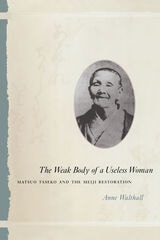
The Weak Body of a Useless Woman
Matsuo Taseko and the Meiji RestorationAnne Walthall
University of Chicago Press, 1998
In telling Taseko's story, Anne Walthall gives us not just the first full biography in English of a peasant woman of the Tokugawa period (1603-1868), but also fresh perspectives on the practices and intellectual concerns of rural entrepreneurs and their role in the Meiji Restoration. Writing about Taseko with a depth and complexity that has thus far been accorded only to men of that time, Walthall has uncovered a tale that will captivate anyone concerned with women's lives and with Japan's dramatic transition to modernity.
The Well-Being of the Elderly in Asia
A Four-Country Comparative StudyAlbert I. Hermalin, Editor
University of Michigan Press, 2010
The Well-Being of the Elderly in Asia
A Four-Country Comparative StudyAlbert I. Hermalin, Editor
University of Michigan Press, 2002
The Whites Are Enemies of Heaven
Climate Caucasianism and Asian Ecological ProtectionMark W. Driscoll
Duke University Press, 2020

The Will to Win
American Military Advisors in Korea, 1946–1953Bryan R. Gibby
University of Alabama Press, 2012
One of America’s early attempts at nation building - US military advisors' shaping of the Republic of Korea Army (ROKA) from 1946 until 1953.
Gibby describes ROKA’s structure, mission, challenges, and successes, thereby linking the South Korean army and their US advisors to the traditional narrative of this “forgotten war.” The work also demonstrates the difficulties inherent in national reconstruction, focusing on barriers in culture and society, and the effects of rapid decolonization combined with intense nationalism and the appeal of communism to East Asia following the destruction of the Japanese empire. Key conclusions include the importance of individual advisors, the significance of the prewar advisory effort, and the depth of the impact these men had on individual Korean units and in a few cases on the entire South Korean army.
The success or failure of South Korean government in the decade following the end of World War II hinged on the loyalty, strength, and fighting capability of its army, which in turn relied on its American advisors. Gibby argues that without a proficient ROKA, the 1953 armistice, still in effect today, would not have been possible. He reexamines the Korean conflict from its beginning in 1945—particularly Korean politics, military operations, and armed forces—and demonstrates the crucial role the American military advisory program and personnel played to develop a more competent and reliable Korean army.
The World in Guangzhou
Africans and Other Foreigners in South China’s Global MarketplaceGordon Mathews, Linessa Dan Lin, and Yang Yang
University of Chicago Press, 2017
Through detailed ethnographic portraits, Mathews reveals a world of globalization based on informality, reputation, and trust rather than on formal contracts. How, he asks, can such informal relationships emerge between two groups—Chinese and sub-Saharan Africans—that don't share a common language, culture, or religion? And what happens when Africans move beyond their status as temporary residents and begin to put down roots and establish families?
Full of unforgettable characters, The World in Guangzhou presents a compelling account of globalization at ground level and offers a look into the future of urban life as transnational connections continue to remake cities around the world.