Results by title
2728 books match the query 'Education' and 609 start with t
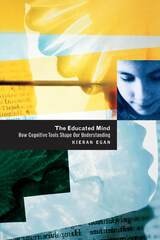
The Educated Mind
How Cognitive Tools Shape Our UnderstandingKieran Egan
University of Chicago Press, 1997
"A carefully argued and readable book. . . . Egan proposes a radical change of approach for the whole process of education. . . . There is much in this book to interest and excite those who discuss, research or deliver education."—Ann Fullick, New Scientist
"A compelling vision for today's uncertain educational system."—Library Journal
"Almost anyone involved at any level or in any part of the education system will find this a fascinating book to read."—Dr. Richard Fox, British Journal of Educational Psychology
"A fascinating and provocative study of cultural and linguistic history, and of how various kinds of understanding that can be distinguished in that history are recapitulated in the developing minds of children."—Jonty Driver, New York Times Book Review
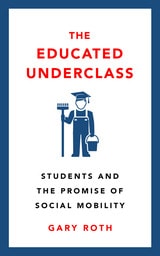
The Educated Underclass
Students and the False Promise of Social MobilityGary Roth
Pluto Press, 2019
The dream of social mobility is dying. Where previous generations routinely expected to surpass their parents' level of economic success, prospects for today's young people are increasingly bleak. What role does higher education play in the process? An essential and frightening one, according to author Gary Roth.
The Educated Underclass reveals the structural problems that are helping to create this problem. Gary Roth shows how universities—touted as the best way up the economic ladder for young people—actually reproduce traditional class hierarchies. And as more graduates emerge every year into economies that are no longer creating a steady stream of stable jobs, the odds of landing one decrease—and over-educated people end up scrapping for poorly compensated positions for which they're overqualified. Chapters include:
*Higher education and class
*The overproduction of intelligence
*Class in transition: historical background
*Underemployment through the decades
*Class status and economic instability
*And more!
Roth writes in his Introduction, “Education has become an intermediary institution between a social system that habitually sputters and declines while ever-greater amounts of consumer products are dangled in front of the system’s workforce. The result: a dynamic fraught with all sort of negative possibilities, both socially and psychotically.”
A broadside against the failures of our education system and our economy, Gary Roth’s The Educated Underclass aims to startle us out of our complacency and wake us up to action.
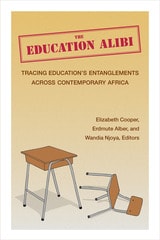
The Education Alibi
Tracing Education's Entanglements Across Contemporary AfricaElizabeth Cooper, Erdmute Alber, and Wandia Njoya, Editors
University of Michigan Press, 2025
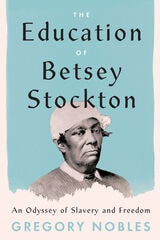
The Education of Betsey Stockton
An Odyssey of Slavery and FreedomGregory Nobles
University of Chicago Press, 2022
The life of Betsey Stockton (ca. 1798–1865) is a remarkable story of a Black woman’s journey from slavery to emancipation, from antebellum New Jersey to the Hawai‘ian Islands, and from her own self-education to a lifetime of teaching others—all told against the backdrop of the early United States’ pervasive racism. It’s a compelling chronicle of a critical time in American history and a testament to the courage and commitment of a woman whose persistence grew into a potent form of resistance.
When Betsey Stockton was a child, she was “given, as a slave” to the household of Rev. Ashbel Green, a prominent pastor and later the president of what is now Princeton University. Although she never went to school, she devoured the books in Green’s library. After being emancipated, she used that education to benefit other people of color, first in Hawai‘i as a missionary, then Philadelphia, and, for the last three decades of her life, Princeton—a college town with a genteel veneer that never fully hid its racial hostility. Betsey Stockton became a revered figure in Princeton’s sizeable Black population, a founder of religious and educational institutions, and a leader engaged in the day-to-day business of building communities.
In this first book-length telling of Betsey Stockton’s story, Gregory Nobles illuminates both a woman and her world, following her around the globe, and showing how a determined individual could challenge her society’s racial obstacles from the ground up. It’s at once a revealing lesson on the struggles of Stockton’s times and a fresh inspiration for our own.
The Education of Ernie Dumas
Chronicles of the Arkansas Political MindErnest Dumas
Butler Center for Arkansas Studies, 2019
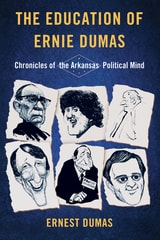
Beginning with the defeat of Governor Francis Cherry by the son of a hillbilly socialist at the end of the Joe McCarthy era, Dumas traces the development of a modernist political cast that eventually produced Arkansas’s first president of the United States. It follows the seed from 1978 that would germinate into the second impeachment of an American president.
Dumas has written for newspapers and about politics for sixty-three years, since 1954, the year that the stolid Cherry fell to Orval Eugene Faubus. The book is a political memoir that describes not only his education in the ways of politicians but the politicians’ own education and miseducation in how you win voters and then how you get things done.
It is mostly a collection of untold stories, often deeply personal, that reveal the inner struggles and sometimes the tribulations of the state’s leaders—Cherry, Faubus, Winthrop Rockefeller, Dale Bumpers, David Pryor, John McClellan, J. William Fulbright, Bill Clinton, Jim Guy Tucker, and others.
The Education of Historians for Twenty-first Century
Thomas Bender, Philip M. Katz, Colin Palmer, and the Committee on Graduate Education (AHA)
University of Illinois Press, 2004
An examination and analysis of history education in American colleges and universities
In 1958, the American Historical Association began a study to determine the status and condition of history education in U.S. colleges and universities. Published in 1962 and addressing such issues as the supply and demand for teachers, student recruitment, and training for advanced degrees, that report set a lasting benchmark against which to judge the study of history thereafter. Now, more than forty years later, the AHA has commissioned a new report. The Education of Historians for the Twenty-first Century documents this important new study's remarkable conclusions.
Both the American academy and the study of history have been dramatically transformed since the original study, but doctoral programs in history have barely changed. This report from the AHA explains why and offers concrete, practical recommendations for improving the state of graduate education. The Education of Historians for the
Twenty-first Century stands as the first investigation of graduate training for historians in more than four decades and the best available study of doctoral education in any major academic discipline.
Prepared for the AHA by the Committee on Graduate Education, the report represents the combined efforts of a cross-section of the entire historical profession. It draws upon a detailed review of the existing studies and data on graduate education and builds upon this foundation with an exhaustive survey of history doctoral programs. This included actual visits to history departments across the country and consultations with scores of individual historians, graduate students, deans, academic and non-academic employers of historians, as well as other stakeholders in graduate education.
As the ethnic and gender composition of both graduate students and faculty has changed, methodologies have been refined and the domains of historical inquiry expanded. By addressing these revolutionary intellectual and demographic changes in the historical profession, The Education of Historians for the Twenty-first Century breaks important new ground. Combining a detailed historical snapshot of the profession with a rigorous analysis of these intellectual changes, this volume is ideally positioned as the definitive guide to strategic planning for history departments. It includes practical recommendations for handling institutional challenges as well as advice for everyone involved in the advanced training of historians, from department chairs to their students, and from university administrators to the AHA itself.
Although focused on history, there are lessons here for any department. The Education of Historians for the Twenty-first Century is a model for in-depth analysis of doctoral education, with recommendations and analyses that have implications for the entire academy. This volume is required reading for historians, graduate students, university administrators, or anyone interested in the future of higher education.
The Education of Mrs. Henry Adams
Eugenia Kaledin
University of Massachusetts Press, 1994
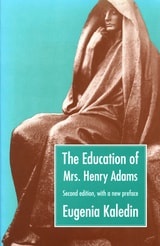
Marian Hooper Adams—Clover, as her friends called her—was an accomplished photographer and a witty, irreverent free spirit who moved easily within the cultural circles of nineteenth-century Boston. Why, then, in 1882, at the age of forty-two, did she swallow a lethal dose of potassium cyanide? And why did her husband of thirteen years fail even to mention her in his autobiography, The Education of Henry Adams?
These and other questions are explored in this first paperback edition of Eugenia Kaledin's pathbreaking biography. The book recreates the intense intellectual, cultural, and moral life of Boston and New England before, during, and after the Civil War and helps us to understand what could drive such a gifted, intelligent, and privileged woman to take her own life. Included is a portfolio of Adams's photographs of her husband and his famous circle.

The Education of Phillips Brooks
John F. Woolverton
University of Illinois Press, 1995
The Education of Phillips Brooks probes the formative years of one of the best-known figures of Victorian America's "Gilded Age". Rigorously researched, bringing as yet untapped archival material into play, John F. Woolverton's book is an extremely readable and fascinating look at a gifted, persuasive clergyman and public figure. The sermon Brooks delivered at his Holy Trinity Church in Philadelphia while Abraham Lincoln's body lay in state overnight in Independence Hall was published, making him nationally famous overnight. He also is known for penning the lyrics to "O Little Town of Bethlehem". Although Brooks was not a major theologian, he was nurtured in an atmosphere of serious religious thought. In the crisis era of pre-Civil War America, he sought a religious and cultural ideal in the "perfect manhood" of Jesus Christ and consequently "won a name" for himself, as his slightly envious cousin, Henry Adams, once remarked. Woolverton places Brooks in his cultural context and shows how this religious leader was shaped psychologically and by his times and how those factors helped him forge a spiritual ideal for a troubled nation.

The Education of Teachers
Edited by Gary A. Griffin
University of Chicago Press, 1999
The Education of Things
Mechanical Literacy in British Children's Literature, 1762–1860Elizabeth Massa Hoiem
University of Massachusetts Press, 2023
Finalist for the 2025 SHARP Book History Book Prize
Winner of the 2025 Justin G. Schiller Prize for Bibliographical Work on Children’s Books from The Bibliographical Society of America
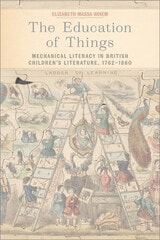
By the close of the eighteenth century, learning to read and write became closely associated with learning about the material world, and a vast array of games and books from the era taught children how to comprehend the physical world of “things.” Examining a diverse archive of popular science books, primers, grammars, toys, manufacturing books, automata, and literature from Maria Edgeworth, Jean-Jacques Rousseau, and Anna Letitia Barbauld, The Education of Things attests that material culture has long been central to children’s literature.
Elizabeth Massa Hoiem argues that the combination of reading and writing with manual tinkering and scientific observation promoted in late eighteenth- and early nineteenth-century Britain produced new forms of “mechanical literacy,” competencies that were essential in an industrial era. As work was repositioned as play, wealthy children were encouraged to do tasks in the classroom that poor children performed for wages, while working-class children honed skills that would be crucial to their social advancement as adults.
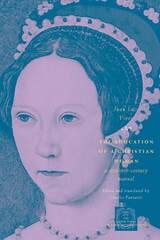
The Education of a Christian Woman
A Sixteenth-Century ManualJuan Luis Vives
University of Chicago Press, 2000
Praised by Erasmus and Thomas More, Vives advocated education for all women, regardless of social class and ability. From childhood through adolescence to marriage and widowhood, this manual offers practical advice as well as philosophical meditation and was recognized soon after publication in 1524 as the most authoritative pronouncement on the universal education of women. Arguing that women were intellectually equal if not superior to men, Vives stressed intellectual companionship in marriage over procreation, and moved beyond the private sphere to show how women's progress was essential for the good of society and state.
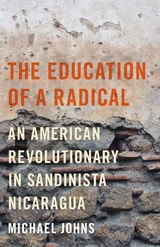
The Education of a Radical
An American Revolutionary in Sandinista NicaraguaBy Michael Johns
University of Texas Press, 2012
“I went to Nicaragua with nothing but a tourist visa, $1,500 in cash, the name of someone at the Agrarian Reform Ministry, and the idea of being a revolutionary intellectual. . . . The idea took hold in a simple character flaw: wanting to believe that I knew better than everyone else.” —From the preface
When Michael Johns joined a Sandinista militia in 1983, a fellow revolutionary dubbed him a rábano, a radish: red on the outside but white on the inside. Now, more than twenty-five years later, Johns appreciates the wisdom of that label as he revisits the questions of identity he tried to resolve by working with the Sandinistas at that point in his life. In The Education of a Radical, Johns recounts his immersion in Marxism and the Nicaraguan sojourn it led to, with a painful maturation process along the way.
His conversion began in college, where he joined a student group called the Latin American Solidarity Association and traveled to Chiapas, Mexico, for research on his senior thesis. Overwhelmed by the poverty he witnessed (and fascinated by a new friend named Maricela who was trying to turn peasants into revolutionaries and who carried a heavily highlighted copy of Late Capitalism), he experienced an ideological transformation. When a Marxist professor later encouraged him to travel to Nicaragua, the real internal battle began for him, a battle that was intensified by the U.S. invasion of Grenada and its effect on the Sandinistas, who believed they were the next target for an imminent American invasion. Before he knew it, Johns was digging trenches and learning how to use an AK-47. His intellectual ideals came face-to-face with revolutionary facts, and the results would perplex him for years to come.
Bringing to life a vivid portrait of the sometimes painful process of reconciling reality with romanticized principles, The Education of a Radical encapsulates a trove of truths about humanity, economics, and politics in one man’s memorable journey.
The Education of a WASP
Lois M. Stalvey
University of Wisconsin Press, 1989
Brimming with honestly and passion, The Education of a WASP chronicles one white woman's discovery of racism in 1960s America. First published in 1970 and highly acclaimed by reviewers, Lois Stalvey's account is as timely now as it was then. Nearly twenty years later, with ugly racial incidents occurring on college campuses, in neighborhoods, and in workplaces everywhere, her account of personal encounters with racism remains deeply disturbing. Educators and general readers interested in the subtleties of racism will find the story poignant, revealing, and profoundly moving.
“Delightful and horrible, a singular book.” —Choice
“An extraordinarily honest and revealing book that poses the issue: loyalty to one’s ethnic group or loyalty to conscience.” —Publishers Weekly
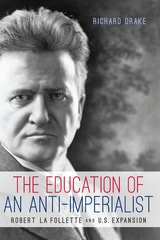
The Education of an Anti-Imperialist
Robert La Follette and U.S. ExpansionRichard Drake
University of Wisconsin Press, 2013
“An excellent book. . . . As Drake fully documents, La Follette's warnings about [World War I] profiteers and the lust for power were fully justified. Then as now, the American people were lied to by the government and media and manipulated into the stink and blood of war."—Mark Taylor, The Daily Call
“Scholars will . . . value the insights into La Follette's foreign policy education.”—The Historian
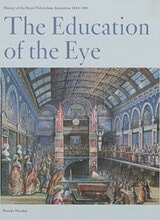
The Education of the Eye
History of the Royal Polytechnic Institution 1838-1881Brenda Weeden
University of Westminster Press, 2008
The Royal Polytechnic Institution's story is the first episode in the long, diverse history of the University of Westminster. Drawing on an extensive range of primary and secondary sources this book explores the Institution's reputation for visual spectacle and the popularisation of science. It is lavishly illustrated with contemporary images.
The Educational Leadership Challenge
Redefining Leadership for the 21st CenturyEdited by Joseph Murphy
University of Chicago Press, 2002
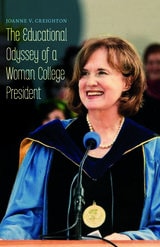
The Educational Odyssey of a Woman College President
Joanne V. Creighton
University of Massachusetts Press, 2018
In her autobiography, The Educational Odyssey of a Woman College President, Creighton situates her tenure at Mount Holyoke within a life and career that have traversed breathtaking changes in higher education and social life. Having held multiple roles in academia spanning undergraduate, professor, and president, Creighton served at small colleges and large public universities and experienced the dramatic changes facing women across the academy. From her girlhood in Wisconsin to the presidency of a storied women's college, she bears witness to the forces that have reshaped higher education for women and continues to advocate for the liberal arts and sciences.

The Effective General College Curriculum as Revealed by Examinations
Committee Committee on Educational Research
University of Minnesota Press, 1937
The Effectiveness of the High School Progam in Home Economics
A Report of a Five-Year Study of Twenty Minnesota SchoolsClara Arny
University of Minnesota Press, 1952
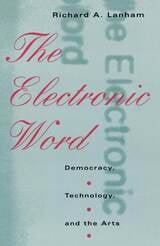
The Electronic Word
Democracy, Technology, and the ArtsRichard A. Lanham
University of Chicago Press, 1993
This highly acclaimed collection of Richard Lanham's witty, provocative, and engaging essays surveys the effects of electronic text on the arts and letters. Lanham explores how electronic text fulfills the expressive agenda of twentieth-century visual art and music, revolutionizes the curriculum, democratizes the instruments of art, and poses anew the cultural accountability of humanism itself.
Persuading us with uncommon grace and power that the move from book to screen gives cause for optimism, not despair, Lanham proclaims that "electronic expression has come not to destroy the Western arts but to fulfill them."
The Electronic Word is also available as a Chicago Expanded Book for your Macintosh®. This hypertext edition allows readers to move freely through the text, marking "pages," annotating passages, searching words and phrases, and immediately accessing annotations, which have been enhanced for this edition. In a special prefatory essay, Lanham introduces the features of this electronic edition and gives a vividly applied critique of this dynamic new edition.
The Elementary School Journal, volume 122 number 1 (September 2021)
The University of Chicago Press
University of Chicago Press Journals, 2021
The Elementary School Journal, volume 122 number 2 (December 2021)
The University of Chicago Press
University of Chicago Press Journals, 2021
The Elementary School Journal, volume 122 number 3 (March 2022)
The University of Chicago Press
University of Chicago Press Journals, 2022
The Elementary School Journal, volume 122 number 4 (June 2022)
The University of Chicago Press
University of Chicago Press Journals, 2022
The Elementary School Journal, volume 123 number 1 (September 2022)
The University of Chicago Press
University of Chicago Press Journals, 2022
The Elementary School Journal, volume 123 number 2 (December 2022)
The University of Chicago Press
University of Chicago Press Journals, 2022
The Elementary School Journal, volume 123 number 3 (March 2023)
The University of Chicago Press
University of Chicago Press Journals, 2023
The Elementary School Journal, volume 123 number 4 (June 2023)
The University of Chicago Press
University of Chicago Press Journals, 2023
The Elementary School Journal, volume 124 number 1 (September 2023)
The University of Chicago Press
University of Chicago Press Journals, 2023
The Elementary School Journal, volume 124 number 2 (December 2023)
The University of Chicago Press
University of Chicago Press Journals, 2023
The Elementary School Journal, volume 124 number 3 (March 2024)
The University of Chicago Press
University of Chicago Press Journals, 2024
The Elementary School Journal, volume 124 number 4 (June 2024)
The University of Chicago Press
University of Chicago Press Journals, 2024
The Elementary School Journal, volume 125 number 1 (September 2024)
The University of Chicago Press
University of Chicago Press Journals, 2024
The Elementary School Journal, volume 125 number 2 (December 2024)
The University of Chicago Press
University of Chicago Press Journals, 2024
The Elementary School Journal, volume 125 number 3 (March 2025)
The University of Chicago Press
University of Chicago Press Journals, 2025
The Elementary School Journal, volume 125 number 4 (June 2025)
The University of Chicago Press
University of Chicago Press Journals, 2025
The Elementary School Journal, volume 126 number 1 (September 2025)
The University of Chicago Press
University of Chicago Press Journals, 2025
The Elementary School Journal, volume 126 number 2 (December 2025)
The University of Chicago Press
University of Chicago Press Journals, 2025
The Elementary School Journal, volume 126 number 3 (March 2026)
The University of Chicago Press
University of Chicago Press Journals, 2026
The Elementary School Journal, volume 126 number 4 (June 2026)
The University of Chicago Press
University of Chicago Press Journals, 2026
The Elementary School Journal, volume 127 number 1 (September 2026)
The University of Chicago Press
University of Chicago Press Journals, 2026
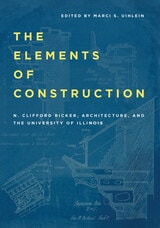
The Elements of Construction
N. Clifford Ricker, Architecture, and the University of IllinoisN. Clifford Ricker. Edited by Marci S. Uihlein
University of Illinois Press, 2025
In addition to providing the full text, Uihlein and the contributors trace Ricker’s career and delve into his practice of teaching. Subject experts explore specific topics. Thomas Leslie surveys contemporary construction practices in Chicago. Tom F. Peters considers Ricker’s writings in the context of the time while Rachel Will looks at masonry know-how and testing. Donald Friedman examines the teaching of iron and steel construction.
An illuminating look at a field and a legacy, The Elements of Construction rediscovers a figure that shaped the teaching of architecture and trained a generation that forever changed Chicago.
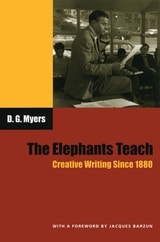
The Elephants Teach
Creative Writing Since 1880David Gershom Myers
University of Chicago Press, 2006
Myers explores more than a century of debate over how writing should be taught and whether it can or should be taught in a classroom at all. Along the way, he incorporates insights from a host of poets and teachers, including Henry Wadsworth Longfellow, Ralph Waldo Emerson, Robert Frost, John Berryman, John Dewey, Lionel Trilling, Robert Lowell, Ezra Pound, and Saul Bellow. And from his exhaustive research, Myers extracts relevant background information on nineteenth-century educational theory; shifts in technology, publishing, and marketing; the growth of critical theory in this country; and the politics of higher education. While he shows how creative writing has become a machine for creating more creative writing programs, Myers also suggests that its history supplies a precedent for something different—a way for creativity and criticism, poetry and scholarship, to join together to produce not just writing programs but good writers.
Updated with fresh commentary on what’s happened to creative writing in the academy since the first edition was published ten years ago, The Elephants Teach will be indispensable for students and teachers of writing, literature, and literary history.
The Elusive Ideal
Equal Educational Opportunity and the Federal Role in Boston's Public Schools, 1950-1985Adam R. Nelson
University of Chicago Press, 2005
An ambitious study that spans more than thirty years and covers all facets of educational policy, from legal battles to tax strategies, The Elusive Ideal provides a model from which future inquiries will proceed. A probing and provocative work of urban history with deep relevance for urban public schools today, Nelson's book reveals why equal educational opportunity remains such an elusive ideal.
The Emergence of the American University
Laurence R. Veysey
University of Chicago Press, 1965
What did the men living in this formative period want the American university to become? How did they differ in defining the ideal university? And why did the institution acquire a form that only partially corresponded with these definitions? These are the questions Mr. Veysey seeks to answer.
The End of Concern
Maoist China, Activism, and Asian StudiesFabio Lanza
Duke University Press, 2017
The Enduring Classroom
Teaching Then and NowLarry Cuban
University of Chicago Press, 2023
The quality and effectiveness of teaching are a constant subject of discussion within the profession and among the broader public. Most of that conversation focuses on the question of how teachers should teach. In The Enduring Classroom, veteran teacher and scholar of education Larry Cuban explores different questions, ones that just might be more important: How have teachers actually taught? How do they teach now? And what can we learn from both?
Examining both past and present is crucial, Cuban explains. If reformers want teachers to adopt new techniques, they need to understand what teachers are currently doing if they want to have any hope of having their innovations implemented. Cuban takes us into classrooms then and now, using observations from contemporary research as well as a rich historical archive of classroom accounts, along the way asking larger questions about teacher training and the individual motivations of people in the classroom. Do teachers freely choose how to teach, or are they driven by their beliefs and values about teaching and learning? What role do students play in determining how teachers teach? Do teachers teach as they were taught? By asking and answering these and other policy questions with the aid of concrete data about actual classroom practices, Cuban helps us make a crucial step toward creating reforms that could actually improve instruction.

The Enduring Effects of Prenatal Alcohol Exposure on Child Development
Birth Through Seven Years, a Partial Least Squares SolutionAnn P. Streissguth, Helen M. Barr, Fred L. Bookstein, and Paul D. Sampson
University of Michigan Press, 1993
Counseling on the dangers of consuming alcohol in pregnancy is now embedded in clinical practice. However, it took foundational research such as the 1974/75 Seattle Longitudinal Prospective Study on Alcohol and Pregnancy, analyzed in this book, to demonstrate the negative effects. This Seattle study interviewed 1,529 women in their fifth month of pregnancy regarding their alcohol consumption and many other pregnancy risk factors. A subsample of 500 of these women was selected, of whom half represented an oversampling of heavier drinkers and smokers from the 1,529, and their offspring were studied intensively as neonates and at ages 8 and 18 months and 4 and 7 years. This monograph is a summary of the effects of prenatal alcohol exposure upon a total of 474 outcome measures spanning those ages. The authors show that the effects of prenatal alcohol exposure manifest at all ages, from birth to seven years, that they appear on a variety of behavioral measures, and that they do not attenuate with time. They also show that binge drinking has more serious consequences than the same amount of heavy drinking, and drinking in early pregnancy has more serious consequences than the same reported pattern of drinking in mid-pregnancy. The book concludes that there is no statistical evidence for a “risk-free” or threshold level of prenatal drinking.
The Enduring Legacy
Structured Inequality in America's Public SchoolsMark Ryan
University of Michigan Press, 2020
The English Department
A Personal and Institutional HistoryW. Ross Winterowd
Southern Illinois University Press, 1998
Tounderstand the history of "English," Ross Winterowd insists, one must understand how literary studies, composition-rhetoric studies, and influential textbooks interrelate. Stressing the interrelationship among these three forces, Winterowd presents a history of English studies in the university since the Enlightenment.
Winterowd’s history is unique in three ways. First, it tells the whole story of English studies: it does not separate the history of literary studies from that of composition-rhetoric studies, nor can it if it is going to be an authentic history. Second, it traces the massive influence on English studies exerted by textbooks such as Adventures in Literature, Understanding Poetry, English in Action, and the Harbrace College Handbook. Finally, Winterowd himself is very much a part of the story, a partisan with more than forty years of service to the discipline, not simply a disinterested scholar searching for the truth.
After demonstrating that literary studies and literary scholars are products of Romantic epistemology and values, Winterowd further invites controversy by reinterpreting the Romantic legacy inherited by English departments. His reinterpretation of major literary figures and theory, too, invites discussion, possibly argument. And by directly contradicting current histories of composition-rhetoric that allow for no points of contact with literature, Winterowd intensifies the argument by explaining the development of composition-rhetoric from the standpoint of literature and literary theory.