Results by title
28164 books match the query 'History' and 6372 start with t
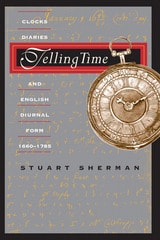
Telling Time
Clocks, Diaries, and English Diurnal Form, 1660-1785Stuart Sherman
University of Chicago Press, 1997
Through brilliant readings of Samuel Pepys's diary, Joseph Addison and Richard Steele's daily Spectator, the travel writings of Samuel Johnson and James Boswell, and the novels of Daniel Defoe and Frances Burney, Sherman traces the development of a new way of counting time in prose—the diurnal structure of consecutively dated installments—within the cultural context of the daily institutions which gave it form and motion. Telling Time is not only a major accomplishment for seventeenth- and eighteenth-century literary studies, but it also makes important contributions to current discourse in cultural studies.
Telling Twain
A book of short stories by Mark TwainSteve Daut
Parkhurst Brothers, Inc., 2019
Telling Wonders
Ethnographic and Political Discourse in the Work of HerodotusRosaria Munson
University of Michigan Press, 2001
As he explores the causes of the East-West conflict from its most remote antecedents, Herodotus includes conflicting traditions about different historical periods as well as apparently tangential descriptions of the customs of faraway peoples. What was his aim in combining such diverse material? Rosaria Vignolo Munson argues that Herodotus' aim was two-fold: to use historical narrative to illuminate the present and to describe barbarian customs so that the Greeks might understand themselves.
Herodotus assumes the role of advisor to his audience, acting as a master of metaphor and oracular speech and as an intellectual fully aware of new philosophical and political trends. By comparing, interpreting, and evaluating facts through time and space or simply by pointing them out as objects of "wonder," he teaches that correct political action is linked to an appropriate approach to foreigners and additional "others." Munson relies on traditional scholarship and modern studies in narratology and related critical fields to distinguish between narrative and metanarrative, providing a framework for analyzing the construction of Herodotus' discourse and his presentation of himself through it.
Munson's work will be useful to classicists and ancient historians and will also engage anthropologists interested in cultural interaction and notions of ethnicity and literary critics interested in narrative constructions.
Telling the Little Secrets
American Jewish Writing since the 1980sJanet Handler Burstein
University of Wisconsin Press, 2006
Janet Burstein argues that American Jewish writers since the 1980s have created a significant literature by wrestling with the troubled legacy of trauma, loss, and exile. Their ranks include Cynthia Ozick, Todd Gitlin, Art Spiegelman, Pearl Abraham, Aryeh Lev Stollman, Jonathan Rosen, and Gerda Lerner. Whether confronting the massive losses of the Holocaust, the sense of “home” in exile, or the continuing power of Jewish memory, these Jewish writers search for understanding within “the little secrets” of their dark, complicated, and richly furnished past.
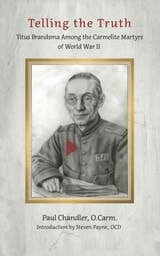
Telling the Truth
Titus Brandsma Among the Carmelite Martyrs of World War IIPaul Chandler
Catholic University of America Press, 2026
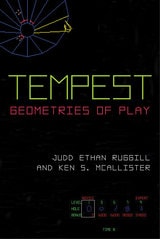
Tempest
Geometries of PlayJudd Ethan Ruggill and Ken S. McAllister
University of Michigan Press, 2015
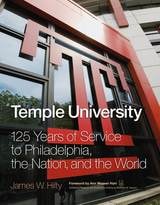
Temple University
125 Years of Service to Philadelphia, the Nation, and the WorldJames W. Hilty with Matthew M. Hanson, foreword by Ann Weaver Hart
Temple University Press, 2010
Temple University: 125 Years of Service to Philadelphia, the Nation, and the World, by noted historian and Temple professor James Hilty offers the first full history of Temple University. Lovingly written and beautifully designed, it presents a rich chronicle from founder Russell Conwell’s vision to democratize, diversify, and broaden the reach of higher education to Temple's present-day status as the twenty-eighth largest university and the fifth largest provider of professional education in the United States. With its state-of-the-art technological capabilities, improved amenities, and new multi-million- dollar facilities, Temple remains at the forefront of America’s modern urban universities.
The book captures Temple’s long record of service to its North Philadelphia neighbors, its global reach to Rome, Tokyo, and beyond, and its development from a rowhouse campus into a lively 11,000- resident urban village—all the while assuring “Access to Excellence.” Along the way, we learn how Temple reacted to and helped shape major developments in the history of American higher education.
Featuring 250 full-color photos, Temple University provides a wonderful keepsake for those who already know the university and will become a valued resource for anyone interested in the urban university.
Temple of Peace
International Cooperation and Stability since 1945Ingo Trauschweizer
Ohio University Press, 2021
This collection raises timely questions about peace and stability as it interrogates the past and present status of international relations.
The post–World War II liberal international order, upheld by organizations such as the United Nations, the North Atlantic Treaty Organization, and similar alliances, aspired to ensure decades of collective security, economic stability, and the rule of law. All of this was a negotiated process that required compromise—and yet it did not make for a peaceful world.
When Winston Churchill referred to the UN framework as “the temple of peace” in his famous 1946 Iron Curtain speech, he maintained that international alliances could help provide necessary stability so free people could prosper, both economically and politically. Though the pillars of international order remain in place today, in a world defined as much by populism as protest, leaders in the United States no longer seem inclined to serve as the indispensable power in an alliance framework that is built on shared values, human rights, and an admixture of hard and soft power.
In this book, nine scholars and practitioners of diplomacy explore both the successes and the flaws of international cooperation over the past seventy years. Collectively, the authors seek to address questions about how the liberal international order was built and what challenges it has faced, as well as to offer perspectives on what could be lost in a post-American world.
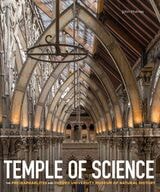
Temple of Science
The Pre-Raphaelites and Oxford University Museum of Natural HistoryJohn Holmes
Bodleian Library Publishing, 2020
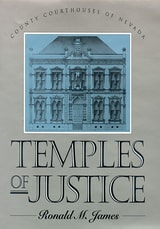
Temples Of Justice
County Courthouses Of NevadaRonald M. James
University of Nevada Press, 1994
From Storey County's High Victorian Italianate-styled courthouse to Lander County's former schoolhouse, now a Neo-classical courthouse, Temples of Justice provides an architectural history of the courthouses of Nevada. In Nevada's first published architectural history, Temples of Justice treats the state's buildings as a series of documents from the past. Presented collectively the courthouses illustrate the choices and influences that have affected Nevada's communities as the citizens have sought to project an image of themselves and their aspirations through public architecture. The courthouses are important local public facilities, and they provide an excellent opportunity to understand the history of attitudes and tastes in the state.
Temples for Cahokia Lords
Preston Holder's 1955–1956 Excavations of Kunnemann MoundTimothy R. Pauketat with contributions by John R. Bozell, Sandra L. Dunavan, and a foreword by John O'Shea
University of Michigan Press, 1993
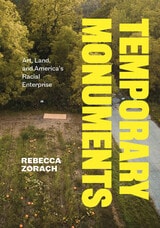
Temporary Monuments
Art, Land, and America's Racial EnterpriseRebecca Zorach
University of Chicago Press, 2024
Art has long played a key role in constructing how people understand and imagine America. Starting with contemporary controversies over public monuments in the United States, Rebecca Zorach carefully examines the place of art in the occupation of land and the upholding of White power in the US, arguing that it has been central to the design of America’s racial enterprise. Confronting closely held assumptions of art history, Zorach looks to the intersections of art, nature, race, and place, working through a series of symbolic spaces—the museum, the wild, islands, gardens, home, and walls and borders—to open and extend conversations on the political implications of art and design.
Against the backdrop of central moments in American art, from the founding of early museums to the ascendancy of abstract expressionism, Zorach shows how contemporary artists—including Dawoud Bey, Theaster Gates, Maria Gaspar, Kerry James Marshall, Alan Michelson, Dylan Miner, Postcommodity, Cauleen Smith, and Amanda Williams—have mined the relationship between environment and social justice, creating works that investigate and interrupt White supremacist, carceral, and environmentally toxic worlds. The book also draws on poetry, creative nonfiction, hip-hop videos, and Disney films to illuminate crucial topics in art history, from the racial politics of abstraction to the origins of museums and the formation of canons.
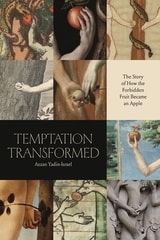
Temptation Transformed
The Story of How the Forbidden Fruit Became an AppleAzzan Yadin-Israel
University of Chicago Press, 2022
How did the apple, unmentioned by the Bible, become the dominant symbol of temptation, sin, and the Fall? Temptation Transformed pursues this mystery across art and religious history, uncovering where, when, and why the forbidden fruit became an apple.
Azzan Yadin-Israel reveals that Eden’s fruit, once thought to be a fig or a grape, first appears as an apple in twelfth-century French art. He then traces this image back to its source in medieval storytelling. Though scholars often blame theologians for the apple, accounts of the Fall written in commonly spoken languages—French, German, and English—influenced a broader audience than cloistered Latin commentators. Azzan Yadin-Israel shows that, over time, the words for “fruit” in these languages narrowed until an apple in the Garden became self-evident. A wide-ranging study of early Christian thought, Renaissance art, and medieval languages, Temptation Transformed offers an eye-opening revisionist history of a central religious icon.
Temptation in the Archives
Essays in Golden Age Dutch CultureLisa Jardine
University College London, 2015
Tempting All the Gods
Joseph P. Kennedy, Ambassador to Great Britain, 1938–1940Jane Karoline Vieth
Michigan State University Press, 2021
Ten Books That Shaped the British Empire
Creating an Imperial CommonsAntionette Burton and Isabel Hofmeyr, eds.
Duke University Press, 2014
Contributors. Tony Ballantyne, Elleke Boehmer, Catherine Hall, Isabel Hofmeyr, Aaron Kamugisha, Marilyn Lake, Charlotte Macdonald, Derek Peterson, Mrinalini Sinha, Tridip Suhrud, André du Toit
Ten Thousand Nights
Highlights from 50 Years of Theatre-GoingMarvin Carlson
University of Michigan Press, 2017

Ten Women of Mystery
Edited by Earl F. Bargainnier
University of Wisconsin Press, 1981
This volume, which examines the special contributions of a number of women mystery writers, sheds light on this significant example of common interests in recreational reading among women and men and the reasons behind the early and continuing uncharacteristic near-equality of both sexes in this field of endeavor.
Ten Years After
A History of Roma School Desegregation in Central and Eastern EuropeIulius Rostas
Central European University Press, 2012
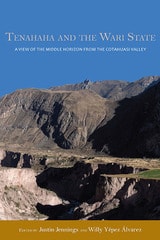
Tenahaha and the Wari State
A View of the Middle Horizon from the Cotahuasi ValleyEdited by Justin Jennings and Willy Yépez Álvarez
University of Alabama Press, 2015
Tenahaha and the Wari State contains a series of essays that challenge current beliefs about the Wari state and suggest a reassessment of this pivotal era in Andean history. In this collection, a picture emerges of Wari power projected across the region’s rugged and formidable topography less as a conquering empire than as a source of ideas, styles, and material culture voluntarily adopted by neighboring peoples.
Much of the previous fieldwork on Wari history took place in the Wari heartland and in Wari strongholds, not areas where Wari power and influence were equivocal. In Tenahaha and the Wari State, editors Justin Jennings and Willy Yépez Álvarez set out to test whether current theories of the Wari state as a cohesive empire were accurate or simply reflective of the bias inherent in studying Wari culture in its most concentrated centers. The essays in this collection examine instead life in the Cotahuasi Valley, an area into which Wari influence expanded during the Middle Horizon period.
Drawing on ten years of exhaustive field work both at the ceremonial site of Tenahaha and in the surrounding valley, Jennings and Yépez Álvarez posit that Cotahuasinos at Tenahaha had little contact with the Wari state. Their excavations and survey in the area tell the story of a region in flux rather than of a people conquered by Wari. In a time of uncertainty, they adopted Wari ideas and culture as ways to cope with change.
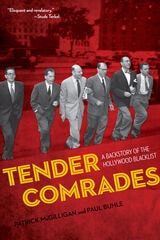
Tender Comrades
A Backstory of the Hollywood BlacklistPatrick McGilligan
University of Minnesota Press, 2012
More than sixty years ago, McCarthyism silenced Hollywood. In the pages of Tender Comrades, those who were suppressed, whose lives and careers were ruined, finally have their say. A unique collection of profiles in cinematic courage, this extraordinary oral history brings to light the voices of thirty-six blacklist survivors (including two members of the Hollywood Ten), seminal directors of film noir and other genres, starring actresses and memorable supporting players, top screenwriters, and many less known to the public, who are rescued from obscurity by the stories they offer here that, beyond politics, open a rich window into moviemaking during the Golden Age of Hollywood.
Tenderfoot in Colorado
Richard Baxter Townshend
University Press of Colorado, 1968
Tending The Talking Wire
A Buck Soldier's View of Indian Country, 1863-1866William E Unrau
University of Utah Press, 1979
Hervey Johnson's letters offer a fascinating first-person account of the critical Indian War years on the high plains of eastern Wyoming during which a confederation of Sioux, Cheyenne, and Arapaho Indians successfully defended their Powder River buffalo range.
Tending the Garden State
Preserving Agriculture in New JerseyHarrison, Charles
Rutgers University Press, 2006
Early in the nineteenth century, an army colonel stood before a crowd at the Salem County Courthouse and ate buckets of tomatoes to prove that they were not poisonous. Ever since, the red vegetable of summer has played a starring role in New Jersey’s history. Although today visitors to the state are more likely to see smoke-spewing factories than acres of farmland or grazing cattle, the state’s legacy of agriculture and farming continues, and extends far beyond the popular Jersey tomato.
In Tending the Garden State, Charles Harrison tells the story of the state’s rich agricultural history from the time when Leni-Lenape Indians scratched the earth with primitive tools up through today. He recalls New Jersey’s rural past, traces the evolution of farming over the course of the twentieth century, and explains innovative approaches to protecting the industry.
Drawing on interviews with farmers, as well as researchers, professional planners, designers, and architects, Harrison discovers that despite the discouraging spread of suburban sprawl, the Garden State’s farming legacy is not as endangered as it may seem. Many residents care deeply about preserving New Jersey’s agricultural industry and are making great strides to keep the tradition alive for future generations. Some of these protective measures include new laws that encourage the conservation of land and research devoted to helping farmers make the most of their limited acreage. Innovative techniques such as high-tunnel farming, together with the growth of some very profitable farm specializations, such as turf grass, aquaculture, horticulture, and wine making, will enable farmers to remain active and successful in the state’s oldest industry.
Anyone interested in New Jersey’s history or, more broadly, in the history of American agriculture, will be delighted by Harrison’s engaging and readable account of farming in the Garden State.
Tennesseans at War, 1812–1815
Andrew Jackson, the Creek War, and the Battle of New OrleansTom Kanon
University of Alabama Press, 2014
Although frequently discussed as separate military conflicts, the War of 1812 against Great Britain and the Creek War against Native Americans in the territory that would become Alabama were part of the same forceful projection of growing American power. Success in both wars won for America security against attack from abroad and vast tracks of new land in “the Old Southwest.” In Tennesseans at War, 1812–1815, Tom Kanon explains the role Tennesseans played in these changes and how they remade the south.
Because it was a landlocked frontier state, Tennessee’s economy and security depended heavily upon the river systems that traversed the region; some, like the Tennessee River, flowed south out of the state and into Native American lands. Tennesseans of the period perceived that gaining mastery of these waterways formed an urgent part of their economic survival and stability.
The culmination of fifteen years’ research, Kanon’s work draws on state archives, primary sources, and eyewitness accounts, bringing the information in these materials together for first time. Not only does he narrate the military campaigns at the heart of the young nation’s expansion, but he also deftly recalls the economic and social pressures and opportunities that encouraged large numbers of Tennesseans to leave home and fight. He expertly weaves these themes into a cohesive narrative that culminates in the vivid military victories of the War of 1812, the Creek War, and the legendary Battle of New Orleans—the victory that catapulted Tennessee’s citizen-soldier Andrew Jackson to the presidency.
Expounding on the social roles and conditions of women, slaves, minorities, and Native Americans in Tennessee, Kanon also brings into focus the key idea of the “home front” in the minds of Tennesseans doing battle in Alabama and beyond. Kanon shows how the goal of creating, strengthening, and maintaining an ordered society permeated the choices and actions of the American elites on the frontiers of the young nation.
Much more than a history of Tennesseans or the battles they fought in Alabama, Tennesseans at War, 1812–1815, is the gripping story of a pivotal turning point in the history of the young American republic.
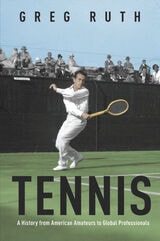
Tennis
A History from American Amateurs to Global ProfessionalsGreg Ruth
University of Illinois Press, 2021
The arrival of the Open era in 1968 was a watershed in the history of tennis--the year that marked its advent as a professionalized sport. Merging wide-angle history with individual stories of players and off-the-court figures, Greg Ruth charts tennis’s evolution into the game we watch today. His vivid account moves from the cloistered world of nineteenth-century lawn tennis through the longtime amateur-professional divide and the battles over commercialization that raged from the 1920s until 1968. From there, Ruth details the post-1968 expansion of the game as it was transformed by bankable superstars, a popular women’s tour, rival governing bodies, and sponsorship money. What emerges is a fascinating history of the economics and politics that made tennis a decisive, if unlikely, force in the creation of modern-day sports entertainment.
Comprehensive and engaging, Tennis tells the interlocking stories of the figures and factors that birthed the professional game.
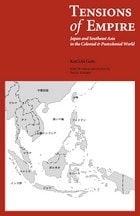
Tensions Of Empire
Japan and Southeast Asia in the Colonial and Postcolonial WorldKen’ichi Goto
Ohio University Press, 2003
Beginning with the closing decade of European colonial rule in Southeast Asia and covering the wartime Japanese empire and its postwar disintegration, Tensions of Empire focuses on the Japanese in Southeast Asia, Indonesians in Japan, and the legacy of the war in Southeast Asia. It also examines Japanese perceptions of Southeast Asia and the lingering ambivalence toward Japanese involvement in Asia and toward the war in particular.
Drawing on extensive multilingual archival research and interviews, Ken‘ichi Goto has produced a factually rich and balanced view of this region’s historical events of the last century.
Tensions of Empire features detailed discussions of Portuguese Timor in the 1930s and 1940s, the decolonization of Malaya, and twentieth-century Indonesia. This extended inquiry yields a unique view of the complicated network within and beyond the colonial and imperial relationships between a one-time nonwestern colonial power and an entire region.
Of great interest to students of Japan-Southeast Asia relations and to specialists in the modern history of both Southeast Asia and Japan, Professor Goto’s Tensions of Empire is a fascinating account of Japan’s recent past from the inside.
Tensions in the American Dream
Rhetoric, Reverie, or RealityRoderick Bush
Temple University Press, 2015
Tensions in the American Dream also addresses the relevancy of nation to empire in the context of the historical world capitalist system. The authors ask, is the American Dream a reality only questioned by those unwilling or unable to achieve it? What is the "good life" and how is it particularly "American"?

Tents, Tigers and the Ringling Brothers
Jerry Apps
Wisconsin Historical Society Press, 2007
Tepoztlán and the Transformation of the Mexican State
The Politics of Loose ConnectionsJoAnn Martin
University of Arizona Press, 2005
Tequila
A Natural and Cultural HistoryAna G. Valenzuela-Zapata and Gary Paul Nabhan
University of Arizona Press, 2004
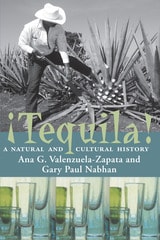
The drink is tequila—more properly, mescal de tequila, the first mescal to be codified and recognized by its geographic origin and the only one known internationally by that name. In ¡Tequila! A Natural and Cultural History, Ana G. Valenzuela-Zapata, the leading agronomist in Mexico's tequila industry, and Gary Paul Nabhan, one of America's most respected ethnobotanists, plumb the myth of tequila as they introduce the natural history, economics, and cultural significance of the plants cultivated for its production.
Valenzuela-Zapata and Nabhan take you into the agave fields of Mexico to convey their passion for the century plant and its popular by-product. In the labor-intensive business of producing quality mescal, the cultivation of tequila azul is maintained through traditional techniques passed down over generations. They tell how jimadores seek out the mature agaves, strip the leaves, and remove the heavy heads from the field; then they reveal how the roasting and fermentation process brings out the flavors that cosmopolitan palates crave.
Today in Oaxaca it's not unusual to find small-scale mescal-makers vending their wares in the market plaza, while in Jalisco the scale of distillation facilities found near the town of Tequila would be unrecognizable to old José Cuervo. Valenzuela-Zapata and Nabhan trace tequila's progress from its modest beginnings to one of the world's favored spirits, tell how innovations from cross-cultural exchanges made fortunes for Cuervo and other distillers, and explain how the meteoric rise in tequila prices is due to an epidemic—one they predicted would occur—linked to the industry's cultivation of just one type of agave.
The tequila industry today markets more than four hundred distinct products through a variety of strategies that heighten the liquor's mystique, and this book will educate readers about the grades of tequila, from blanco to añejo, and marks of distinction for connoisseurs who pay up to two thousand dollars for a bottle. ¡Tequila! A Natural and Cultural History will feed anyone's passion for the gift of the blue agave as it heightens their appreciation for its rich heritage.

Teresa de Avila, Lettered Woman
Barbara Mujica
Vanderbilt University Press, 2009
Teresa's epistolary writing reveals how she used her political acumen to dodge inquisitors and negotiate the thorny issues of the reform, facing off the authorities--albeit with considerable tact--and reprimanding priests and nuns who failed to follow her orders. Her letters bring to light the different strategies she used--code names, secret routing--in order to communicate with nuns and male allies. They show how she manipulated language, varying her tone and rhetoric according to the recipient or slipping into deliberate vagueness in order to avoid divulging secrets. What emerges from her correspondence is a portrait of extraordinary courage, ability, and shrewdness.
In the sixteenth century, the word letrado (lettered) referred to the learned men of the Church. Teresa treated letrados with great respect and always insisted on her own lack of learning. The irony is that although women could not be letradas, Teresa was, as her correspondence shows, "lettered" in more ways than one.
Terms of Exchange
Brazilian Intellectuals and the French Social SciencesIan Merkel
University of Chicago Press, 2022
Would the most recognizable ideas in the French social sciences have developed without the influence of Brazilian intellectuals? While any study of Brazilian social sciences acknowledges the influence of French scholars, Ian Merkel argues the reverse is also true: the “French” social sciences were profoundly marked by Brazilian intellectual thought, particularly through the University of São Paulo. Through the idea of the “cluster,” Merkel traces the intertwined networks of Claude Lévi-Strauss, Fernand Braudel, Roger Bastide, and Pierre Monbeig as they overlapped at USP and engaged with Brazilian scholars such as Mário de Andrade, Gilberto Freyre, and Caio Prado Jr..
Through this collective intellectual biography of Brazilian and French social sciences, Terms of Exchange reveals connections that shed new light on the Annales school, structuralism, and racial democracy, even as it prompts us to revisit established thinking on the process of knowledge formation through fieldwork and intellectual exchange. At a time when canons are being rewritten, this book reframes the history of modern social scientific thought.
Terra Incognita
Mapping the Antipodes before 1600Alfred Hiatt
University of Chicago Press, 2008
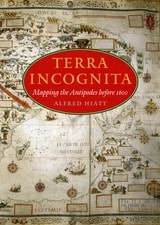
In Terra Incognita, Alfred Hiatt draws on sources both literary and visual to understand the appeal of the antipodes. Examining maps and diagrams, as well as evidence contained in geographical and historical works, poetry, travel narratives, and legal documents, he challenges long-standing characterizations of medieval spatiality as exclusively symbolic and religious. Instead, Hiatt finds, the idea of people on the other side of the Earth provided a potent and malleable symbol for political theorists, satirists, scholars, and poets—as well as for map makers. Terra Incognita is, in the end, the history of a non-place, of lands conjured by the scientific imagination, which nevertheless drove exploration, and which continued to shape the world map, even as they slowly vanished from it.

Terracene
A Crude AestheticsSalar Mameni
Duke University Press, 2023
Terrestrial Lessons
The Conquest of the World as GlobeSumathi Ramaswamy
University of Chicago Press, 2017
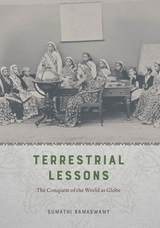
In Terrestrial Lessons, Ramaswamy provides the first in-depth analysis of the globe’s history in and impact on the Indian subcontinent during the colonial era and its aftermath. Drawing on a wide array of archival sources, she delineates its transformation from a thing of distinction possessed by elite men into that mass-produced commodity used in classrooms worldwide—the humble school globe. Traversing the length and breadth of British India, Terrestrial Lessons is an unconventional history of this master object of pedagogical modernity that will fascinate historians of cartography, science, and Asian studies.
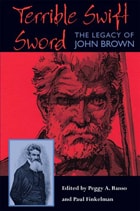
Terrible Swift Sword
The Legacy of John BrownPeggy A. Russo
Ohio University Press, 2005
More than two centuries after his birth and almost a century and a half after his death, the legendary life and legacy of John Brown go marching on. Variously deemed martyr, madman, monster, terrorist, and saint, he remains one of the most controversial figures in America’s history. Brown’s actions in Kansas and in Harpers Ferry, West Virginia, were major catalysts for the American Civil War, and continue today to evoke praise or condemnation.
Through the prisms of history, literature, psychology, criminal justice, oral history, African American studies, political science, film studies, and anthropology, Terrible Swift Sword offers insights not only into John Brown’s controversial character and motives but also into the nature of a troubled society before, during, and after the Civil War. The contributors discuss reasons why Brown’s contemporaries supported him, analyze Brown’s behavior and his depiction in literature, and examine the iconography and mythology surrounding him.
The interdisciplinary focus brought by editors Peggy A. Russo and Paul Finkelman makes this collection unique. Terrible Swift Sword: The Legacy of John Brown will appeal to a broad audience of readers interested in this turbulent moment in American history.
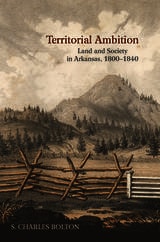
Territorial Ambition
Land and Society in Arkansas, 1800-1840S. Charles Bolton
University of Arkansas Press, 2020
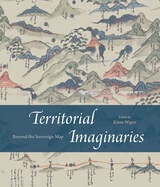
Territorial Imaginaries
Beyond the Sovereign MapEdited by Kären Wigen
University of Chicago Press, 2025
This strikingly colorful volume contends that modern mapping has never been sufficient to illustrate the complex reality of territory and political sovereignty, whether past or present. For Territorial Imaginaries, editor Kären Wigen has assembled an impressive slate of experts, spanning disciplines from political science to art history, to contribute perspectives and case studies covering three main themes: mapping before the nation-state, rethinking and critiquing mapping practices, and robust traditions of counter-cartography.
Each contributor proposes alternative ways to think about mapping, and the essays are supported with rich archival documentation. Among the far-reaching case studies are Barbara Mundy’s cartographic history of Indigenous dispossession in the Americas, Peter Bol’s examination of two Chinese maps created five hundred years apart, and Ali Yaycıoğlu’s exploration of tensions between top-down and bottom-up mapping of Habsburg and Ottoman border claims.
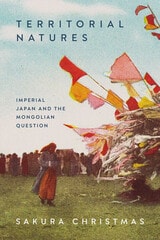
Territorial Natures
Imperial Japan and the Mongolian QuestionSakura Christmas
University of Chicago Press, 2026
A critical account of the Japanese occupation in Inner Mongolia.
Early in the twentieth century, the steppe borderlands between China and Mongolia erupted in violence. As imperial Japan expanded into the area, this crisis between nomadic and settler communities posed fundamental problems in governance. In response, Japanese and Mongol leaders together proposed a radical solution: demarcating an autonomous region in Manchukuo for minority peoples, a new kind of political space that would later define the territorial structure of Communist China.
In Territorial Natures, Sakura Christmas explores how the fraught partition of this autonomous region warped the ethnic and environmental boundaries of Manchukuo. She challenges its origin story as a socialist invention by the Chinese state, instead seeing it as also a fascist extension of the Japanese occupation. By reading Chinese and Mongolian sources against Japanese archives, Christmas reveals how this contested history seeded the volatile landscape of autonomous regions in the People’s Republic of China today.
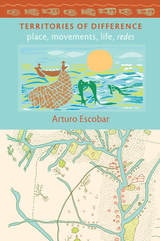
Territories of Difference
Place, Movements, Life, RedesArturo Escobar
Duke University Press, 2008
Escobar illuminates many interrelated dynamics, including the Colombian government’s policies of development and pluralism that created conditions for the emergence of black and indigenous social movements and those movements’ efforts to steer the region in particular directions. He examines attempts by capitalists to appropriate the rainforest and extract resources, by developers to set the region on the path of modernist progress, and by biologists and others to defend this incredibly rich biodiversity “hot-spot” from the most predatory activities of capitalists and developers. He also looks at the attempts of academics, activists, and intellectuals to understand all of these complicated processes. Territories of Difference is Escobar’s effort to think with Afro-Colombian intellectual-activists who aim to move beyond the limits of Eurocentric paradigms as they confront the ravages of neoliberal globalization and seek to defend their place-based cultures and territories.

Territories, Commodities and Knowledges
Latin American Environmental Histories in the Nineteenth and Twentieth CenturiesEdited by Christian Brannstrom
University of London Press, 2004
Contributors include Stephen Bell (UCLA, USA), Reinaldo Funes Monzote (Fundacion Antonio Nunez Jimenez de la Naturaleza y el Hombre, Cuba), Stefania Gallini (Universidad Nacional, Colombia), Nikolas Kozloff (CUNY Brooklyn College, USA), Karl Offen (University of Oklahoma, USA), John Soluri (Carnegie-Mellon University, USA), Alejandro Tortolero Villasenor (Universidad Autonoma Metropolitana-Iztapalapa, Mexico), and Robert W. Wilcox (Northern Kentucky University, USA).

Territory of Desire
Representing the Valley of KashmirAnanya Jahanara Kabir
University of Minnesota Press, 2009
Moves beyond traditional analysis to understand the conflict over Kashmir
A result of territorial disputes between India and Pakistan since 1947, exacerbated by armed freedom movements since 1989, the ongoing conflict over Kashmir is consistently in the news. Taking a unique multidisciplinary approach, Territory of Desire asks how, and why, Kashmir came to be so intensely desired within Indian, Pakistani, and Kashmiri nationalistic imaginations. Literary historian Ananya Jahanara Kabir finds an answer to this question in the Valley of Kashmir’s repeated portrayal as a “special” place and the missing piece of Pakistan and India.
Analyzing the conversion of natural beauty into collective desire—through photography, literature, cinema, art, and souvenir production—Kabir exposes the links between colonialism, modernity, and conflict within the postcolonial nation. Representations of Kashmir as a space of desire emerge in contemporary film, colonial “taming” of the valley through nineteenth-century colonialist travelogues, the fetishization of traditional Kashmiri handicrafts like papier maché, and Pandit and Muslim religious revivalisms in the region. Linking a violent modernity to the fantasies of nationhood, Kabir proposes nonmilitaristic ways in which such desire may be overcome. In doing so she offers an innovative approach to complex and protracted conflict and, ultimately, its resolution.
Terror And Its Discontents
Suspect Words In Revolutionary FranceCaroline Weber
University of Minnesota Press, 2003
A timely exploration of the political uses of language and rhetoric
Camille Desmoulins, a journalist writing under the Montagnard regime of 1793-94, remarked that France’s government had replaced “the language of democracy” with “the cold poison of fear, which paralyzed thought in the bottom of people’s souls, and prevented it from pouring forth at the tribunal, or in writing.” How this happened, how the Reign of Terror reached even into the realms of thought and language, is the subject of Caroline Weber’s book, a revealing look into the paradoxical embargo on free expression that underpinned the Robespierrists’s self-proclaimed “despotism of liberty” during the French Revolution.
Weber examines Jean-Jacques Rousseau’s and the Robespierrists’s articulation of a series of initiatives designed to curtail and control the dissemination of alternative political and philosophical messages in the republic. Here Weber underscores the internal contradictions and limitations of an enterprise that promised universal freedom while oppressing particularism, and that railed against the very language that it was compelled to adopt as a principal political tool. The book then focuses on two eloquent contemporary critics of this phenomenon, Desmoulins and the Marquis de Sade, the infamous libertine author. Weber demonstrates how Desmoulins reconfigured the Montagnard regime’s rhetoric to conjure up a political system based on tolerance, not terror, and how Sade deftly parodied the Robespierrists’s brutality and hypocrisy, proposing a republic based on the ruthless elimination of dissident voices and on the unabashed celebration of despotism and bloodshed.A balanced account of how the “discourse of totality” actually restricted particular freedoms in the wake of the French Revolution, this book provides a highly original—and timely—exposition of the political uses of rhetoric and of the links between language and power.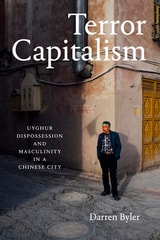
Terror Capitalism
Uyghur Dispossession and Masculinity in a Chinese CityDarren Byler
Duke University Press, 2021
Terror and History, Volume 2003
Van Gosse , ed.
Duke University Press, 0
Contributors. Joel Beinin, Lisa Brock, Horace Campbell, Duane J. Corpis, Belinda Davis, Allen Feldman, Ian Christopher Fletcher, Van Gosse, Joy James, J. Angus Johnston, Amy Kaplan, Thomas Miller Klubock, R. J. Lambrose, Jesse Lemisch, Deborah Levenson, Walter Benn Michaels, Donnacha Ó Beacháin, Deborah Poole, Vijay Prashad, David Prochaska, Gerardo Rénique, Cedric J. Robinson, Nikhil Pal Singh, Stephanie J. Smith, Akinyele O. Umoja, Verónica Valdivia Ortiz de Zárate, Jon Wiener, Marilyn B. Young, Joseba Zulaika
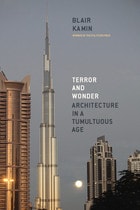
Terror and Wonder
Architecture in a Tumultuous AgeBlair Kamin
University of Chicago Press, 2010
For more than twenty years now, Blair Kamin of the Chicago Tribune has explored how architecture captures our imagination and engages our deepest emotions. A winner of the Pulitzer Prize for criticism, Kamin treats his subjects not only as works of art but also as symbols of the cultural and political forces that inspire them. Terror and Wonder gathers the best of Kamin’s writings from the past decade along with new reflections on an era framed by the destruction of the World Trade Center and the opening of the world’s tallest skyscraper.
Assessing ordinary commercial structures as well as head-turning designs by some of the world’s leading architects, Kamin paints a sweeping but finely textured portrait of a tumultuous age torn between the conflicting mandates of architectural spectacle and sustainability. For Kamin, the story of our built environment over the past ten years is, in tangible ways, the story of the decade itself. Terror and Wonder considers how architecture has been central to the main events and crosscurrents in American life since 2001: the devastating and debilitating consequences of 9/11 and Hurricane Katrina; the real estate boom and bust; the use of over-the-top cultural designs as engines of civic renewal; new challenges in saving old buildings; the unlikely rise of energy-saving, green architecture; and growing concern over our nation’s crumbling infrastructure.
A prominent cast of players—including Santiago Calatrava, Frank Gehry, Helmut Jahn, Daniel Libeskind, Barack Obama, Renzo Piano, and Donald Trump—fills the pages of this eye-opening look at the astounding and extraordinary ways that architecture mirrors our values—and shapes our everyday lives.
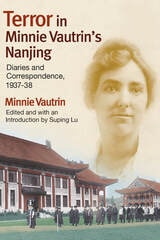
Terror in Minnie Vautrin's Nanjing
Diaries and Correspondence, 1937-38Minnie Vautrin. Edited and with an Introduction by Suping Lu
University of Illinois Press, 2007
In December of 1937, the Japanese Imperial Army marched into China's capital city of Nanjing and launched six weeks of carnage that would become known as the Rape of Nanjing. In addition to the deaths of Chinese POWs and civilians, tens of thousands of women were raped, tortured, and killed by Japanese soldiers. In this traumatic environment, both native and foreign-born inhabitants of Nanjing struggled to carry on with their lives.
This volume collects the diaries and correspondence of Minnie Vautrin, a farmgirl from Illinois who had dedicated herself to the education of Chinese women at Ginling College in Nanjing. Faced with the impending Japanese attack, she turned the school into a sanctuary for ten thousand women and girls. Vautrin's firsthand accounts of daily life in Nanjing and the intensifying threat of Japanese invasion reveal the courage of the occupants under siege--Chinese nationals as well as Western missionaries, teachers, surgeons and business people--and the personal costs of violence in wartime.
Thanks to Vautrin's painstaking effort in keeping a day-to-day account, present-day readers are able to examine this episode of history at close range through her eyes. With detailed maps, photographs, and carefully researched in-depth annotations, Terror in Minnie Vautrin's Nanjing: Diaries and Correspondence, 1937-38 presents a comprehensive and detailed daily account of the events and of life during the horror-stricken days within the city walls and in particular on the Ginling campus. Through chronologically arranged diaries, letters, reports, documents, and telegrams, Vautrin bears witness to those terrible events and to the magnitude of trauma that the Nanjing Massacre exacted on the populace.
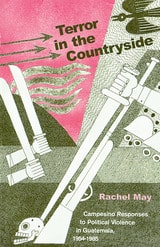
Terror in the Countryside
Campesino Responses to Political Violence in Guatemala, 1954–1985Rachel A. May
Ohio University Press, 2001
The key to democratization lies within the experience of the popular movements. Those who engaged in the popular struggle in Guatemala have a deep understanding of substantive democratic behavior, and the experience of Guatemala’s civil society should be the cornerstone for building a meaningful formal democracy.
In Terror in the Countryside Rachel May offers an in-depth examination of the relationship between political violence and civil society. Focusing on Guatemala, Professor May develops a theoretical scheme that calls into question the more conventional understandings of both violence and civil society.
By elaborating a cyclical model of violence, and suggesting a typology of rural (campesino) popular organizations, Terror in the Countryside provides both a history and an analysis of late-twentieth-century violence and of the role of campesino organizations during the worst years of conflict in Guatemala.
This history details the way ideologies, organizational structures, and mobilization strategies evolved in response to the climate of terror, emphasizing the courage and sacrifice of those who worked for justice and human rights.
This book argues that the peace accords can be considered only as a first step to eliminate a violence that has become deeply rooted in the political life of the country.
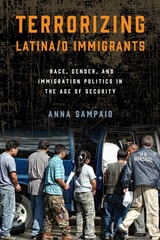
Terrorizing Latina/o Immigrants
Race, Gender, and Immigration Policy Post-9/11Anna Sampaio
Temple University Press, 2015
Immigration politics has been significantly altered by the advent of America’s war on terror and the proliferation of security measures. In her cogent study, Terrorizing Latina/o Immigrants, Anna Sampaio examines how these processes are racialized and gendered and how they impose inequitable burdens on Latina/o immigrants. She interrogates the rise of securitization, restrictive legislation, and the return of large-scale immigration raids and describes how these re-articulate and re-inscribe forms of racial and gender hierarchy.
Terrorizing Latina/o Immigrants demonstrates how the ascendance of America as a security state serves as a template to scrutinize, harass, and encumber immigrants while also reconfiguring citizenship. Sampaio uses intersectional analysis coupled with theoretical and empirical approaches to develop a critical framework for analyzing current immigration politics.
Sampaio provides a sustained and systematic examination of policy and enforcement shifts impacting Latinas/os. Her book concludes with an examination of immigration reform under the Obama administration, contrasting the promise of hope and change with the reality of increased detentions, deportations, and continued marginalization.