Results by title
1415 books match the query 'Medical' and 263 start with t

The Skull, Volume 3
Functional and Evolutionary MechanismsEdited by James Hanken and Brian K. Hall
University of Chicago Press, 1993

The Social Medicine Reader
Gail E. Henderson, Nancy M. P. King, Ronald P. Strauss, Sue E. Estroff, and Larry R. Churchill, eds.
Duke University Press, 1997
Based on more than a decade of teaching social medicine to first-year medical students at the pioneering Department of Social Medicine at the University of North Carolina, The Social Medicine Reader defines the meaning of the social medicine perspective and offers an approach for teaching it. Looking at medicine from a variety of perspectives, this anthology features fiction, medical reports, scholarly essays, poetry, case studies, and personal narratives by patients and doctors—all of which contribute to an understanding of how medicine and medical practice is profoundly influenced by social, cultural, political, and economic forces.
What happens when a person becomes a patient? How are illness and disability experienced? What causes disease? What can medicine do? What constitutes a doctor/patient relationship? What are the ethical obligations of a health care provider? These questions and many others are raised by The Social Medicine Reader, which is organized into sections that address how patients experience illness, cultural attitudes toward disease, social factors related to health problems, the socialization of physicians, the doctor/patient relationship, health care ethics and the provider’s role, medical care financing, rationing, and managed care.
The Social Medicine Reader, Second Edition
Volume 3: Health Policy, Markets, and MedicineJonathan Oberlander, Larry R. Churchill, Sue E. Estroff, Gail E. Henderson, Nancy M. P. King, and Ronald P. Strauss, eds.
Duke University Press, 2005
Praise for the 3-volume second edition of The Social Medicine Reader:
“A superb collection of essays that illuminate the role of medicine in modern society. Students and general readers are not likely to find anything better.”—Arnold S. Relman, Professor Emeritus of Medicine and Social Medicine, Harvard Medical School
Praise for the first edition:
“This reviewer strongly recommends The Social Medicine Reader to the attention of medical educators.”—Samuel W. Bloom, JAMA: The Journal of the American Medical Association
Volume 3:
Over the past four decades the American health care system has witnessed dramatic changes in private health insurance, campaigns to enact national health insurance, and the rise (and perhaps fall) of managed care. Bringing together seventeen pieces new to this second edition of The Social Medicine Reader and four pieces from the first edition, Health Policy, Markets, and Medicine draws on a broad range of disciplinary perspectives—including political science, economics, history, and bioethics—to consider changes in health care and the future of U.S. health policy. Contributors analyze the historical and moral foundation of today’s policy debates, examine why health care spending is so hard to control in the United States, and explain the political dynamics of Medicare and Medicaid. Selections address the rise of managed care, its impact on patients and physicians, and the ethical implications of applying a business ethos to medical care; they also compare the U.S. health care system to the systems in European countries, Canada, and Japan. Additional readings probe contemporary policy issues, including the emergence of consumer-driven health care, efforts to move quality of care to the top of the policy agenda, and the implications of the aging of America for public policy.
Contributors: Henry J. Aaron, Drew E. Altman, George J. Annas, Robert H. Binstock, Thomas Bodenheimer, Troyen A. Brennan, Robert H. Brook, Lawrence D. Brown, Daniel Callahan, Jafna L. Cox, Victor R. Fuchs, Kevin Grumbach, Rudolf Klein, Robert Kuttner, Larry Levitt, Donald L. Madison, Wendy K. Mariner, Elizabeth A. McGlynn, Jonathan Oberlander, Geov Parrish, Sharon Redmayne, Uwe E. Reinhardt, Michael S. Sparer, Deborah Stone
The Social Medicine Reader, Second Edition
Volume One: Patients, Doctors, and IllnessNancy M. P. King, Ronald P. Strauss, Larry R. Churchill, Sue E. Estroff, Gail E. Henderson, and Jonathan Oberlander, eds.
Duke University Press, 2005
Praise for the 3-volume second edition of The Social Medicine Reader:
“A superb collection of essays that illuminate the role of medicine in modern society. Students and general readers are not likely to find anything better.”—Arnold S. Relman, Professor Emeritus of Medicine and Social Medicine, Harvard Medical School
Praise for the first edition:
“This reviewer strongly recommends The Social Medicine Reader to the attention of medical educators.”—Samuel W. Bloom, JAMA: The Journal of the American Medical Association
Volume 1:
A woman with what is quite probably a terminal illness must choose between courses of treatment based on contradictory diagnoses. A medical student causes acute pain in his patients as he learns to insert a central line. One doctor wonders how to react when a patient asks him to pray with her; another struggles to come to terms with his mistakes. A physician writes in a prominent medical journal about facilitating a dying woman’s wish to end her life on her own terms; letters to the editor reflect passionate responses both in support of and in opposition to his actions. These experiences and many more are vividly rendered in Patients, Doctors, and Illness, which brings together nineteen pieces that appeared in the first edition of The Social Medicine Reader and eighteen pieces new to this edition. This volume examines the roles and training of health care professionals and their relationship with patients, ethics in health care, and end-of-life experiences and decisions. It includes fiction and nonfiction narratives and poetry; definitions and case-based discussions of moral precepts in health care, such as truth telling, informed consent, privacy, and autonomy; and readings that provide legal, ethical, and practical perspectives on many familiar but persistent ethical and social questions raised by illness and care.
Contributors: Yehuda Amichai, Marcia Angell, George J. Annas, Marc D. Basson, Doris Betts, Amy Bloom, Abenaa Brewster, Raymond Carver, Eric J. Cassell, Larry R. Churchill, James Dickey, Gerald Dworkin, James Dwyer, Miles J. Edwards, Charles R. Feldstein, Chris Feudtner, Leonard Fleck, Arthur Frank, Benjamin Freedman, Atul Gawande, Jerome Groopman, Lawrence D. Grouse, David Hilfiker, Nancy M. P. King, Perri Klass, Melvin Konner, Bobbie Ann Mason, Steven H. Miles, Sharon Olds, Katha Pollitt, Timothy E. Quill, David Schenck, Daniel Shapiro, Susan W. Tolle, Alice Stewart Trillin, William Carlos Williams
The Social Medicine Reader, Second Edition
Volume Two: Social and Cultural Contributions to Health, Difference, and InequalityGail E. Henderson, Sue E. Estroff, Larry R. Churchill, Nancy M. P. King, Jonathan Oberlander, and Ronald P. Strauss, eds.
Duke University Press, 2005
Praise for the 3-volume second edition of The Social Medicine Reader:
“A superb collection of essays that illuminate the role of medicine in modern society. Students and general readers are not likely to find anything better.”—Arnold S. Relman, Professor Emeritus of Medicine and Social Medicine, Harvard Medical School
Praise for the first edition:
“This reviewer strongly recommends The Social Medicine Reader to the attention of medical educators.”—Samuel W. Bloom, JAMA: The Journal of the American Medical Association
Volume 2:
Ranging from a historical look at eugenics to an ethnographic description of parents receiving the news that their child has Down syndrome, from analyses of inequalities in the delivery of health services to an examination of the meaning of race in genomics research, and from a meditation on the loneliness of the long-term caregiver to a reflection on what children owe their elderly parents, this volume explores health and illness. Social and Cultural Contributions to Health, Difference, and Inequality brings together seventeen pieces new to this edition of The Social Medicine Reader and five pieces that appeared in the first edition. It focuses on how difference and disability are defined and experienced in contemporary America, how the social categories commonly used to predict disease outcomes—such as gender, race and ethnicity, and social class—have become contested terrain, and why some groups have more limited access to health care services than others. Juxtaposing first-person narratives with empirical and conceptual studies, this compelling collection draws on several disciplines, including cultural and medical anthropology, sociology, and the history of medicine.
Contributors: Laurie K. Abraham, Raj Bhopal, Ami S. Brodoff, Daniel Callahan, David Diamond, Liam Donaldson, Alice Dreger, Sue E. Estroff, Paul Farmer, Anne Fausto-Sterling, Jerome Groopman, Gail E. Henderson, Linda M. Hunt, Barbara A. Koenig, Donald R. Lannin, Sandra Soo-Jin Lee, Carol Levine, Judith Lorber, Nancy Mairs, Holly F. Mathews, James P. Mitchell, Joanna Mountain, Alan R. Nelson, Martin S. Pernick, Rayna Rapp, Sally L. Satel, Robert S. Schwartz, Brian D. Smedley, Adrienne Y. Stith, Sharon Sytsma, Gordon Weaver, Bruce Wilson, Irving Kenneth Zola
The Social Medicine Reader, Volume I, Third Edition
Ethics and Cultures of BiomedicineJonathan Oberlander, Mara Buchbinder, Larry R. Churchill, Sue E. Estroff, Nancy M. King, Barry F. Saunders, Ronald P. Strauss, and Rebecca L. Walker, editors
Duke University Press, 2019
Volume 1, Ethics and Cultures of Biomedicine, contains essays, case studies, narratives, fiction, and poems that focus on the experiences of illness and of clinician-patient relationships. Among other topics the contributors examine the roles and training of professionals alongside the broader cultures of biomedicine; health care; experiences and decisions regarding death, dying, and struggling to live; and particular manifestations of injustice in the broader health system. The Reader is essential reading for all medical students, physicians, and health care providers.
The Social Medicine Reader, Volume II, Third Edition
Differences and Inequalities, Volume 2Jonathan Oberlander, Mara Buchbinder, Larry R. Churchill, Sue E. Estroff, Nancy M. King, Barry F. Saunders, Ronald P. Strauss, and Rebecca L. Walker, editors
Duke University Press, 2019
The Sounds of Furious Living
Everyday Unorthodoxies in an Era of AIDSMatthew Kelly
Rutgers University Press, 2024
Four decades have passed since reports of a mysterious “gay cancer” first appeared in US newspapers. In the ensuing years, the pandemic that would come to be called AIDS changed the world in innumerable ways. It also gave rise to one of the late twentieth century’s largest health-based empowerment movements. Scholars across diverse traditions have documented the rise of the AIDS activist movement, chronicling the impassioned echoes of protestors who took to the streets to demand “drugs into bodies.”
And yet not all activism creates echoes. Included among the ranks of 1980s and 1990s-era AIDS activists were individuals whose expressions of empowerment differed markedly from those demanding open access to mainstream pharmaceutical agents. Largely forgotten today, this activist tradition was comprised of individuals who embraced unorthodox approaches for conceptualizing and treating their condition. Rejecting biomedical expertise, they shared alternative clinical paradigms, created underground networks for distributing unorthodox nostrums, and endorsed etiological models that challenged the association between HIV and AIDS. The theatre of their protests was not the streets of New York City’s Greenwich Village but rather their bodies. And their language was not the riotous chants of public demonstration but the often-invisible embrace of contrarian systems for defining and treating their disease.
The Sounds of Furious Living seeks to understand the AIDS activist tradition, identifying the historical currents out of which it arose. Embracing a patient-centered, social historical lens, it traces historic shifts in popular understanding of health and perceptions of biomedicine through the nineteenth and twentieth centuries to explain the lasting appeal of unorthodox health activism into the modern era. In asking how unorthodox health activism flourished during the twentieth century’s last major pandemic, Kelly also seeks to inform our understanding of resistance to biomedical authority in the setting of the twenty-first century’s first major pandemic: COVID-19. As a deeply researched portrait of distrust and disenchantment, The Sounds of Furious Living helps explain the persistence of movements that challenge biomedicine’s authority well into a century marked by biomedical innovation, while simultaneously posing important questions regarding the meaning and metrics of patient empowerment in clinical practice.
The Staff and the Serpent
Pertinent and Impertinent Observatioins on the World of MedicineAllen B. Weisse, M.D.
Southern Illinois University Press, 1998
If laughter is good medicine, then the twenty-two essays offered here by Dr. Allen B. Weisse should prove a hearty antidote to a host of ills suffered by doctors, students and would-be students of medicine, amateur and professional medical historians, and, of course, patients, those of us who wonder what the medical profession is all about and how it affects us.
Often humorous and always informative, these essays cover a broad range of medical subjects. Weisse tackles medical ethics, offers advice to medical and premedical students and their families, delves into unusual episodes in medical history, confronts considerations of aging and self-image, and discusses the vagaries of rewards and recognition available from medical research. He also examines honesty in medical thinking, investigates ways of dealing with bureaucracies, and considers ways of learning to live with oneself. Finally, he evaluates the changing nature of medicine and medical research and looks into the roles of minorities and women in medicine.
Weisse knows whereof he speaks, enlivening each essay with personal anecdotes. When he explains past and current medical school admissions policies, for example, he approaches the subject with the combined knowledge of a former premedical student, a medical student, a faculty member, and an admissions chairperson over the past thirty years. As a medical researcher whose chief turned against him, he certainly knows what he is talking about in "Betrayal." He also writes with authority in his humorous account of how he, as a senior physician, struggles to keep on top of the overwhelming onslaught of medical advances ("Confessions of Creeping Obsolescence"). And in an essay to boost all of our spirits, he tells how an ivory tower physician (Weisse himself) gets drawn up in the service of the IRS bureaucracy and winds up tweaking its nose a bit ("In the Service of the IRS").
Perhaps nothing better illustrates the vigor, wit, and élan that characterize Weisse’s essays than his titles. "On Chinese Restaurants" deals with unusual syndromes and the way in which they have evolved and affected the way we look at ourselves. Other titles are "Pneumocystis and Me," "The Vanishing Male," "Say It Isn’t ‘No," "Bats in the Belfry or Bugs in the Belly?: Helicobacter and the Resurrection of Johannes Fibiger," and "PC: Politically Correct or Potentially Corrupting?"
Finally, two words in this book’s subtitle succinctly characterize Weisse’s essays: pertinent and impertinent—germane and irreverent information rakishly presented.

The Steamer Parish
The Rise and Fall of Missionary Medicine on an African FrontierCharles M. Good
University of Chicago Press, 2003
In The Steamer Parish, Charles M. Good Jr. traces the Mission's history and its lasting impact on public health care in south-central Africa-and shows how steam and medicine, together with theology, allowed the Mission to impose its will, indelibly, on hundreds of thousands of people. What's more, many of the issues he discusses-rural development, the ecological history of disease, and competition between western and traditional medicine-are as relevant today as they were 100 years ago.
The Stockholm Paradigm
Climate Change and Emerging DiseaseDaniel R. Brooks, Eric P. Hoberg, and Walter A. Boeger
University of Chicago Press, 2019
As this book reveals, a new understanding of the evolution of pathogen-host systems, called the Stockholm Paradigm, explains what is happening. The planet is a minefield of pathogens with preexisting capacities to infect susceptible but unexposed hosts, needing only the opportunity for contact. Climate change has always been the major catalyst for such new opportunities, because it disrupts local ecosystem structure and allows pathogens and hosts to move. Once pathogens expand to new hosts, novel variants may emerge, each with new infection capacities. Mathematical models and real-world examples uniformly support these ideas. Emerging disease is thus one of the greatest climate change–related threats confronting humanity.
Even without deadly global catastrophes on the scale of the 1918 Spanish Influenza pandemic, emerging diseases cost humanity more than a trillion dollars per year in treatment and lost productivity. But while time is short, the danger is great, and we are largely unprepared, the Stockholm Paradigm offers hope for managing the crisis. By using the DAMA (document, assess, monitor, act) protocol, we can “anticipate to mitigate” emerging disease, buying time and saving money while we search for more effective ways to cope with this challenge.

The Treatment
The Story of Those Who Died in the Cincinnati Radiation TestsMartha Stephens
Duke University Press, 2002
Martha Stephens’s report on these deaths led to the halting of the tests, but local papers did not print her charges, and for many years people in Cincinnati had no way of knowing that lethal experiments had taken place there. In 1994 other military tests were brought to light, and a yellowed copy of Stephens’s original report was delivered to a television newsroom. In Ohio, major publicity ensued—at long last—and reached around the world. Stephens uncovered the names of the victims, and a legal action was filed against thirteen researchers and their institutions. A federal judge compared the deeds of the doctors to the medical crimes of the Nazis during World War II and refused to dismiss the researchers from the suit. After many bitter disputes in court, they agreed to settle the case with the families of those they had afflicted. In 1999 a memorial plaque was raised in a yard of the hospital.
Who were these doctors and why had they done as they did? Who were the people whose lives they took? Who was the reporter who could not forget the story, the young attorney who first developed the case, the judge who issued the historic ruling against the doctors? This is Stephens’s moving account of all that transpired in these lives and her own during this epic battle between medicine and human rights.

The Triumph of Uncertainty
Science and Self in the Postmodern AgeAlfred I. Tauber
Central European University Press, 2022
Tauber, a leading figure in history and philosophy of science, offers a unique autobiographical overview of how science as a discipline of thought has been characterized by philosophers and historians over the past century. He frames his account through science’s – and his own personal – quest for explanatory certainty.
During the 20th century, that goal was displaced by the probabilistic epistemologies required to characterize complex systems, whether in physics, biology, economics, or the social sciences. This “triumph of uncertainty” is the inevitable outcome of irreducible chance and indeterminate causality. And beyond these epistemological limits, the interpretative faculties of the individual scientist (what Michael Polanyi called the “personal” and the “tacit”) invariably affects how data are understood. Whereas positivism had claimed radical objectivity, post-positivists have identified how a web of non-epistemic values and social forces profoundly influence the production of knowledge.
Tauber presents a case study of these claims by showing how immunology has incorporated extra-curricular social elements in its theoretical development and how these in turn have influenced interpretive problems swirling around biological identity, individuality, and cognition. The correspondence between contemporary immunology and cultural notions of selfhood are strong and striking. Just as uncertainty haunts science, so too does it hover over current constructions of personal identity, self knowledge, and moral agency. Across the chasm of uncertainty, science and selfhood speak.

The True Medicine
Oliva Sabuco de Nantes Barrera, Edited by Gianna Pomata, Translated by Gianna Pomata
Iter Press, 2010
This annotated translation allows the reader to locate the Dialogue on the True Medicine in the context of early modern medical and philosophical culture, identifying Sabuco’s ancient and modern sources. The editor’s introduction reviews the contested issue of authorship, offers new documentation for the history of the reception of Sabuco’s ideas in the seventeenth century, and relates Sabuco’s work to the Querelle des femmes, the protofeminist debate which had remarkable echoes in early modern medicine.
The Truth About Health Care
Why Reform is Not Working in AmericaMechanic, David
Rutgers University Press, 2006
In The Truth about Health Care, David Mechanic explains how health care in America has evolved in ways that favor a myriad of economic, professional, and political interests over those of patients. While money has always had a place in medical care, "big money" and the quest for profits has become dominant, making meaningful reforms difficult to achieve. Mechanic acknowledges that railing against these influences, which are here to stay, can achieve only so much. Instead, he asks whether it is possible to convert what is best about health care in America into a well functioning system that better serves the entire population.
Bringing decades of experience as an active health policy participant, researcher, teacher, and consultant to the public and private sectors, Mechanic examines the strengths and weaknesses of our system and how it has evolved. He pays special attention to areas often neglected in policy discussions, such as the loss of public trust in medicine, the tragic state of long-term care, and the relationship of mental health to health care.
For anyone who has been frustrated by uncoordinated health networks, insurance denials, and other obstacles to obtaining appropriate care, this book will provide a refreshing and frank look at the system's current and future dilemmas. Mechanic's thoughtful roadmap describes how health plans, healthcare professionals, policymakers, and consumer groups can work together to improve access, quality, fairness, and health outcomes in America.
The UM-CIRHT Framework for Integrating Comprehensive Contraception and Abortion Care Competencies into Health Professions Education
Solomon W. Beza
Michigan Publishing Services, 2018
The framework is intended to provide guidance on how the programmatic and operational strategies for family planning and comprehensive abortion care could be extended in countries or institutions that seek to replicate the UM-CIRHT model in their settings. It may be adapted to the local context of individual countries and institutions.
This framework document is produced by UM-CIRHT with funding from an anonymous donor.
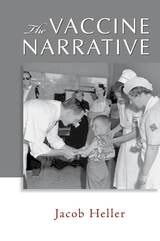
The Vaccine Narrative
Jacob Heller
Vanderbilt University Press, 2008
The author examines four cases that span the twentieth century--diphtheria, rubella, pertussis, and HIV/AIDS. Each case challenges the reader to examine how the values we attribute to vaccines influence their use. Diphtheria vaccination brought laboratory science into an existing narrative based on earlier vaccines. With rubella vaccine, researchers efficiently responded to an epidemic of birth defects while subtly changing the relationship between vaccination recipients and beneficiaries. Opposition to pertussis vaccine from average Americans created a narrative crisis, in which faith in vaccination as a whole seemed to be at risk. With more recent vaccines, including a hoped-for HIV/AIDS vaccine, the persistent cultural narrative continues to encourage vaccine development and use.

The Vulnerable Age Phenomenon
Michael Inbar
Russell Sage Foundation, 1976
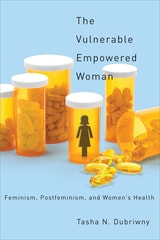
The Vulnerable Empowered Woman
Feminism, Postfeminism, and Women's HealthDubriwny, Tasha N
Rutgers University Press, 2012
Winner of the Organization for the Study of Communication, Language, and Gender 2013 Outstanding Book Award
Winner of the 2013 Bonnie Ritter Book Award from the Feminist and Women's Division of the National Communication Association
The feminist women’s health movement of the 1960s and 1970s is credited with creating significant changes in the healthcare industry and bringing women’s health issues to public attention. Decades later, women’s health issues are more visible than ever before, but that visibility is made possible by a process of depoliticization
The Vulnerable Empowered Woman assesses the state of women’s healthcare today by analyzing popular media representations—television, print newspapers, websites, advertisements, blogs, and memoirs—in order to understand the ways in which breast cancer, postpartum depression, and cervical cancer are discussed in American public life. From narratives about prophylactic mastectomies to young girls receiving a vaccine for sexually transmitted disease, the representations of women’s health today form a single restrictive identity: the vulnerable empowered woman. This identity defuses feminist notions of collective empowerment and social change by drawing from both postfeminist and neoliberal ideologies. The woman is vulnerable because of her very femininity and is empowered not to change the world, but to choose from among a limited set of medical treatments.
The media’s depiction of the vulnerable empowered woman’s relationship with biomedicine promotes traditional gender roles and affirms women’s unquestioning reliance on medical science for empowerment. The book concludes with a call to repoliticize women’s health through narratives that can help us imagine women—and their relationship to medicine—differently.

The Wages of Sin
Sex and Disease, Past and PresentPeter Lewis Allen
University of Chicago Press, 2000
Throughout history, Western society has often viewed sickness as a punishment for sin. It has failed to prevent and cure diseases—especially diseases tied to sex—that were seen as the retribution of a wrathful God. The Wages of Sin, the remarkable history of these diseases, shows how society's views of particular afflictions often heightened the suffering of the sick and substituted condemnation for care. Peter Allen moves from the medieval diseases of lovesickness and leprosy through syphilis and bubonic plague, described by one writer as "a broom in the hands of the Almighty, with which He sweepeth the most nasty and uncomely corners of the universe." More recently, medical and social responses to masturbation in the eighteenth and nineteenth centuries and AIDS in the twentieth round out Allen's timely and erudite study of the intersection of private morality and public health. The Wages of Sin tells the fascinating story of how ancient views on sex and sin have shaped, and continue to shape, religious life, medical practice, and private habits.

The Washing Away of Wrongs
Forensic Medicine in Thirteenth-Century ChinaSung Tz’u; Translated by Brian E. McKnight
University of Michigan Press, 1981

The Well-Being of the Elderly in Asia
A Four-Country Comparative StudyAlbert I. Hermalin, Editor
University of Michigan Press, 2010

The Well-Being of the Elderly in Asia
A Four-Country Comparative StudyAlbert I. Hermalin, Editor
University of Michigan Press, 2002
The Western Disease
Contesting Autism in the Somali DiasporaClaire Laurier Decoteau
University of Chicago Press, 2021
Because autism is an increasingly common diagnosis, North Americans are familiar with its symptoms and treatments. But what we know and think about autism is shaped by our social relationship to health, disease, and the medical system. In The Western Disease Claire Laurier Decoteau explores the ways that recent immigrants from Somalia to Canada and the US make sense of their children’s diagnosis of autism. Having never heard of autism before migrating to North America, they often determine that it must be a Western disease. Given its apparent absence in Somalia, they view it as Western in nature, caused by environmental and health conditions unique to life in North America.
Following Somali parents as they struggle to make sense of their children's illness and advocate for alternative care, Decoteau unfolds how complex interacting factors of immigration, race, and class affect Somalis’ relationship to the disease. Somalis’ engagement with autism challenges the prevailing presumption among Western doctors that their approach to healing is universal. Decoteau argues that centering an analysis on autism within the Somali diaspora exposes how autism has been defined and institutionalized as a white, middle-class disorder, leading to health disparities based on race, class, age, and ability. The Western Disease asks us to consider the social causes of disease and the role environmental changes and structural inequalities play in health vulnerability.
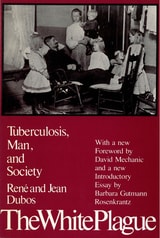
The White Plague
Tuberculosis, Man and SocietyDubos, Jean
Rutgers University Press, 1987
In The White Plague, René and Jean Dubos argue that the great increase of tuberculosis was intimately connected with the rise of an industrial, urbanized society and—a much more controversial idea when this book first appeared forty years ago—that the progress of medical science had very little to do with the marked decline in tuberculosis in the twentieth century.
The White Plague has long been regarded as a classic in the social and environmental history of disease. This reprint of the 1952 edition features new introductory writings by two distinguished practitioners of the sociology and history of medicine. David Mechanic's foreword describes the personal and intellectual experience that shaped René Dubos's view of tuberculosis. Barbara Gutmann Rosenkrantz's historical introduction reexamines The White Plague in light of recent work on the social history of tuberculosis. Her thought-provoking essay pays particular attention to the broader cultural and medical assumptions about sickness and sick people that inform a society’s approach to the conquest of disease.

The Woman Who Knew Too Much
Alice Stewart and the Secrets of RadiationGayle Greene
University of Michigan Press, 2001
This biography illuminates the life and achievements of the remarkable woman scientist who revolutionized the concept of radiation risk.
In the 1950s Alice Stewart began research that led to her discovery that fetal X rays double a child's risk of developing cancer. Two decades later---when she was in her seventies---she again astounded the scientific world with a study showing that the U.S. nuclear weapons industry is about twenty times more dangerous than safety regulations permit. This finding put her at the center of the international controversy over radiation risk. In 1990, the New York Times called Stewart "perhaps the Energy Department's most influential and feared scientific critic."
The Woman Who Knew Too Much traces Stewart's life and career from her early childhood in Sheffield to her medical education at Cambridge to her research positions at Oxford University and the University of Birmingham.
Gayle Greene is Professor of Women's Studies and Literature, Scripps College.

The Wombs of Women
Race, Capital, FeminismFrançoise Vergès
Duke University Press, 2020

The Wonderful Art of the Eye
A Critical Edition of the Middle English Translation of his De Probatissimo Arte OculorumL. M. Eldredge
Michigan State University Press, 1996
A thirteenth-century treatise on the theory and practice of ophthalmology, this unique work provides a window on what passed for medical knowledge of the eye during the late Middle Ages. Although little is known of the author, Benevenutus Grassus, he seems to have roamed Italy in the early thirteenth century as a medical practitioner specializing in diseases of the eye.
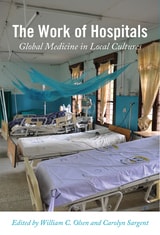
The Work of Hospitals
Global Medicine in Local CulturesWilliam C. Olsen
Rutgers University Press, 2022

The Wounded Storyteller
Body, Illness, and EthicsArthur W. Frank
University of Chicago Press, 1995
Ill people are more than victims of disease or patients of medicine; they are wounded storytellers. People tell stories to make sense of their suffering; when they turn their diseases into stories, they find healing.
Drawing on the work of authors such as Oliver Sacks, Anatole Broyard, Norman Cousins, and Audre Lorde, as well as from people he met during the years he spent among different illness groups, Frank recounts a stirring collection of illness stories, ranging from the well-known—Gilda Radner's battle with ovarian cancer—to the private testimonials of people with cancer, chronic fatigue syndrome, and disabilties. Their stories are more than accounts of personal suffering: they abound with moral choices and point to a social ethic.
Frank identifies three basic narratives of illness in restitution, chaos, and quest. Restitution narratives anticipate getting well again and give prominence to the technology of cure. In chaos narratives, illness seems to stretch on forever, with no respite or redeeming insights. Quest narratives are about finding that insight as illness is transformed into a means for the ill person to become someone new.
The Wounded Storyteller
Body, Illness, and Ethics, Second EditionArthur W. Frank
University of Chicago Press, 1997
Drawing on the work of authors such as Oliver Sacks, Anatole Broyard, Norman Cousins, and Audre Lorde, as well as from people he met during the years he spent among different illness groups, Frank recounts a stirring collection of illness stories, ranging from the well-known—Gilda Radner's battle with ovarian cancer—to the private testimonials of people with cancer, chronic fatigue syndrome, and disabilities. Their stories are more than accounts of personal suffering: they abound with moral choices and point to a social ethic.
In this new edition Frank adds a preface describing the personal and cultural times when the first edition was written. His new afterword extends the book’s argument significantly, writing about storytelling and experience, other modes of illness narration, and a version of hope that is both realistic and aspirational. Reflecting on both his own life during the creation of the first edition and the conclusions of the book itself, Frank reminds us of the power of storytelling as way to understanding our own suffering.

The Xavante in Transition
Health, Ecology, and Bioanthropology in Central BrazilCarlos E. A. Coimbra, Jr., Nancy M. Flowers, Francisco M. Salzano, and Ricardo V. Santos
University of Michigan Press, 2004
". . . an integrated and politically informed anthropology for the new millennium. They show how the local and the regional meet on the ground and under the skin."
--Alan H. Goodman, Professor of Biological Anthropology, Hampshire College
--Daniel Gross, Lead Anthropologist, The World Bank
--Laura R. Graham, Professor of Anthropology, University of Iowa

Theories of Vision from Al-kindi to Kepler
David C. Lindberg
University of Chicago Press, 1981
David C. Lindberg is professor and chairman of the department of the history of science at the University of Wisconsin, Madison.
Therapeutic Revolutions
Medicine, Psychiatry, and American Culture, 1945-1970Halliwell, Martin
Rutgers University Press, 2014
Beginning with a discussion of the profound impact of World War II and the Cold War on mental health, Halliwell moves from the influence of work, family, and growing up in the Eisenhower years to the critique of institutional practice and the search for alternative therapeutic communities during the 1960s. Blending a discussion of such influential postwar thinkers as Erich Fromm, William Menninger, Erving Goffman, Erik Erikson, and Herbert Marcuse with perceptive readings of a range of cultural text that illuminate mental health issues--among them Spellbound, Shock Corridor, Revolutionary Road, and I Never Promised You a Rose Garden--this compelling study argues that the postwar therapeutic revolutions closely interlink contrasting discourses of authority and liberation.
Therapeutic Revolutions
Pharmaceuticals and Social Change in the Twentieth CenturyEdited by Jeremy A. Greene, Flurin Condrau, and Elizabeth Siegel Watkins
University of Chicago Press, 2016
This collection challenges the historical accuracy of this revolutionary narrative and offers instead a more nuanced account of the process of therapeutic innovation and the relationships between the development of medicines and social change. These assembled histories and ethnographies span three continents and use the lived experiences of physicians and patients, consumers and providers, and marketers and regulators to reveal the tensions between universal claims of therapeutic knowledge and the actual ways these claims have been used and understood in specific sites, from postwar West Germany pharmacies to twenty-first century Nigerian street markets. By asking us to rethink a story we thought we knew, Therapeutic Revolutions offers invaluable insights to historians, anthropologists, and social scientists of medicine.
Therapy Tech
The Digital Transformation of Mental HealthcareEmma Bedor Hiland
University of Minnesota Press, 2021
A pointed look at the state of tech-based mental healthcare and what we must do to change it
Proponents of technology trumpet it as the solution to the massive increase in the mental distress that confronts our nation. They herald the arrival of algorithms, intelligent chatbots, smartphone applications, telemental healthcare services, and more—but are these technological fixes really as good as they seem? In Therapy Tech, Emma Bedor Hiland presents the first comprehensive study of how technology has transformed mental healthcare, showing that this revolution can’t deliver what it promises.
Far from providing a solution, technological mental healthcare perpetuates preexisting disparities while relying on the same failed focus on personal responsibility that has let us down before. Through vivid, in-depth case studies, Therapy Tech reveals these problems, covering issues including psychosurveillance on websites like Facebook and 7 Cups of Tea, shortcomings of popular AI “doctors on demand” like Woebot, Wysa, and Joy, and even how therapists are being conscripted into the gig economy.
Featuring a vital coda that brings Therapy Tech up to date for the COVID era, this book is the first to give readers a large-scale analysis of mental health technologies and the cultural changes they have enabled. Both a sobering dissection of the current state of mental health and a necessary warning of where things are headed, Therapy Tech makes an important assertion about how to help those in need of mental health services today.
Thinking About Dementia
Culture, Loss, and the Anthropology of SenilityLeibing, Annette
Rutgers University Press, 2006
Bringing together essays by nineteen respected scholars, this volume approaches dementia from a variety of angles, exploring its historical, psychological, and philosophical implications. The authors employ a cross-cultural perspective that is based on ethnographic fieldwork and focuses on questions of age, mind, voice, self, loss, temporality, memory, and affect.
Taken together, the essays make four important and interrelated contributions to our understanding of the mental status of the elderly. First, cross-cultural data show that the aging process, while biologically influenced, is also culturally constructed. Second, ethnographic reports raise questions about the diagnostic criteria used for defining the elderly as demented. Third, case studies show how a diagnosis affects a patient's treatment in both clinical and familial settings. Finally, the collection highlights the gap that separates current biological understandings of aging from its cultural meanings.
As Alzheimer's disease and other forms of dementia continue to command an ever-increasing amount of attention in medicine and psychology, this book will be essential reading for anthropologists, social scientists, and health care professionals.
Thirty Rules for Healthcare Leaders
Illustrated by Danny SuárezSanjay Saint
Michigan Publishing Services, 2019
Thirty Rules for Healthcare Leaders
Illustrated by Gina KimSanjay Saint
Michigan Publishing Services, 2019
Thirty Rules for Healthcare Leaders
Illustrated by Victoria BornsteinSanjay Saint
Michigan Publishing Services, 2019
Ties That Enable
Community Solidarity for People Living with Serious Mental Health ProblemsTeresa L. Scheid
Rutgers University Press, 2021

Till The Break of Day
A History of Mental Health Services in Singapore, 1841-1993Ng Beng Yeong
National University of Singapore Press, 2017

Tissue Economies
Blood, Organs, and Cell Lines in Late CapitalismCatherine Waldby and Robert Mitchell
Duke University Press, 2006
Waldby and Mitchell pull together a prodigious amount of research—involving policy reports and scientific papers, operating manuals, legal decisions, interviews, journalism, and Congressional testimony—to offer a series of case studies based on particular forms of tissue exchange. They examine the effect of threats of contamination—from HIV and other pathogens—on blood banks’ understandings of the gift/commodity relationship; the growth of autologous economies, in which individuals bank their tissues for their own use; the creation of the United Kingdom’s Stem Cell bank, which facilitates the donation of embryos for stem cell development; and the legal and financial repercussions of designating some tissues “hospital waste.” They also consider the impact of different models of biotechnology patents on tissue economies and the relationship between experimental therapies to regenerate damaged or degenerated tissues and calls for a legal, for-profit market in organs. Ultimately, Waldby and Mitchell conclude that scientific technologies, the globalization of tissue exchange, and recent anthropological, sociological, and legal thinking have blurred any strict line separating donations from the incursion of market values into tissue economies.
To Raise Up the Man Farthest Down
Tuskegee University’s Advancements in Human Health, 1881–1987Dana R. Chandler and Edith Powell
University of Alabama Press, 2018
An important historical account of Tuskegee University’s significant advances in health care, which affected millions of lives worldwide.
Alabama’s celebrated, historically black Tuskegee University is most commonly associated with its founding president, Booker T. Washington, the scientific innovator George Washington Carver, or the renowned Tuskegee Airmen. Although the university’s accomplishments and devotion to social issues are well known, its work in medical research and health care has received little acknowledgment. Tuskegee has been fulfilling Washington’s vision of “healthy minds and bodies” since its inception in 1881. In To Raise Up the Man Farthest Down, Dana R. Chandler and Edith Powell document Tuskegee University’s medical and public health history with rich archival data and never-before-published photographs. Chandler and Powell especially highlight the important but largely unsung role that Tuskegee University researchers played in the eradication of polio, and they add new dimension and context to the fascinating story of the HeLa cell line that has been brought to the public’s attention by popular media.
Tuskegee University was on the forefront in providing local farmers the benefits of agrarian research. The university helped create the massive Agricultural Extension System managed today by land grant universities throughout the United States. Tuskegee established the first baccalaureate nursing program in the state and was also home to Alabama’s first hospital for African Americans. Washington hired Alabama’s first female licensed physician as a resident physician at Tuskegee. Most notably, Tuskegee was the site of a remarkable development in American biochemistry history: its microbiology laboratory was the only one relied upon by the National Foundation for Infantile Paralysis (the organization known today as the March of Dimes) to produce the HeLa cell cultures employed in the national field trials for the Salk and Sabin polio vaccines. Chandler and Powell are also interested in correcting a long-held but false historical perception that Tuskegee University was the location for the shameful and infamous US Public Health Service study of untreated syphilis.
Meticulously researched, this book is filled with previously undocumented information taken directly from the vast Tuskegee University archives. Readers will gain a new appreciation for how Tuskegee’s people and institutions have influenced community health, food science, and national medical life throughout the twentieth century.

To Test or Not To Test
A Guide to Genetic Screening and RiskZallen, Dorris Teichler
Rutgers University Press, 2008
To Test or Not to Test arms readers with questions that should be considered before they pursue genetic screening.
- Am I at higher risk for a disorder?
- Can genetic testing give me useful information?
- Is the timing right for testing?
- Do the benefits of having the genetic information outweigh the problems that testing can bring?
Determining the answers to these questions is no easy task. In this highly readable book, Doris Teichler Zallen provides a template that can guide individuals and families through the decision-making process and offers additional resources where they can gain more information. She shares interviews with genetic specialists, doctors, and researchers, as well as the personal stories of nearly 100 people who have faced genetic-testing decisions. Her examples focus on genetic testing for four types of illnesses: breast/ovarian cancer (different disorders but closely connected), colon cancer, late-onset Alzheimer's disease, and hereditary hemochromatosis. From the more common diseases to the rare hereditary conditions, we learn what genetic screening is all about and what it can tell us about our risks.
Given that we are now bombarded with ads in magazines and on television hawking the importance of pursuing genetic-testing, it is critical that we approach this tough issue with an arsenal of good information. To Test or Not to Test is an essential consumer tool-kit for the genetic decision-making process.

Tools and the Organism
Technology and the Body in Ancient Greek and Roman MedicineColin Webster
University of Chicago Press, 2023
Medicine is itself a type of technology, involving therapeutic tools and substances, and so one can write the history of medicine as the application of different technologies to the human body. In Tools and the Organism, Colin Webster argues that, throughout antiquity, these tools were crucial to broader theoretical shifts. Notions changed about what type of object a body is, what substances constitute its essential nature, and how its parts interact. By following these changes and taking the question of technology into the heart of Greek and Roman medicine, Webster reveals how the body was first conceptualized as an “organism”—a functional object whose inner parts were tools, or organa, that each completed certain vital tasks. He also shows how different medical tools created different bodies.
Webster’s approach provides both an overarching survey of the ways that technologies impacted notions of corporeality and corporeal behaviors and, at the same time, stays attentive to the specific material details of ancient tools and how they informed assumptions about somatic structures, substances, and inner processes. For example, by turning to developments in water-delivery technologies and pneumatic tools, we see how these changing material realities altered theories of the vascular system and respiration across Classical antiquity. Tools and the Organism makes the compelling case for why telling the history of ancient Greco-Roman medical theories, from the Hippocratics to Galen, should pay close attention to the question of technology.

Toward a Healthier Garden State
Beyond Cancer Clusters and COVIDMichael R. Greenberg
Rutgers University Press, 2023
This book uses the past fifty years of New Jersey history as a case study to illustrate just how much public policy decisions and other upstream factors can affect the health of a state’s citizens. It reveals how economic and racial disparities in health care were exacerbated by bad policies regarding everything from zoning to education to environmental regulation. The study further chronicles how New Jersey struggled to deal with public health crises like the AIDS epidemic and the crack epidemic. Yet it also explores how the state has developed some of the nation’s most innovative responses to public health challenges, and then provides policy suggestions for how we might build an even healthier New Jersey.
Towards Better Reproductive Health in Eastern Europe
Concern, Commitment, and ChangeWHO Scientific Working Group WHO Scientific Working Group
Central European University Press, 1998
Documenting the latest statistical data on current problems related to reproductive health issues in Central and Eastern Europe, this text explores the reasons for these problems and recommends action based on the scientific evidence for improving reproductive health.
The main issues covered are: declining standards of reproductive health care; rising trends in the incidence of sexually transmitted diseases; low rates of use of modern contraceptives; high rates of induced abortion; high prevalence of infertility; and the needs of adolescents with regard to reproductive health.

Toxic Exposures
Mustard Gas and the Health Consequences of World War II in the United StatesSmith, Susan L.
Rutgers University Press, 2019

Toxic War
The Story of Agent OrangePeter Sills
Vanderbilt University Press, 2014
Originally introduced by Dow and other chemical companies as a herbicide in the United States and adopted by the military as a method of deforesting the war zone of Vietnam, in order to deny the enemy cover, Agent Orange also found its way into the systems of numerous active-duty soldiers. Sills argues that manufacturers understood the dangers of this compound and did nothing to protect American soldiers.
Toxic War takes the reader behind the scenes into the halls of political power and industry, where the debates about the use of Agent Orange and its potential side effects raged. In the end, the only way these veterans could seek justice was in the court of law and public opinion. Unprecedented in its access to legal, medical, and government documentation, as well as to the personal testimonies of veterans, Toxic War endeavors to explore all sides of this epic battle.