Results by title
1427 books match the query 'Politics' and 382 start with t
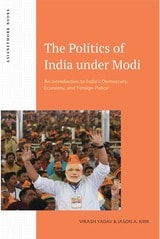
The Politics of India under Modi
An Introduction to India’s Democracy, Economy, and Foreign PolicyVikash Yadav and Jason A. Kirk
Lever Press, 2023
Since the right-wing, Hindu-nationalist government of Narendra Modi’s Bharatiya Janata Party (BJP) came to power at the national level in 2014, and with its consolidation of power in the 2019 general election, India has witnessed a significant realignment of its national politics and a shift toward the right of the political spectrum. The Politics of India under Modi provides a detailed overview of India’s political trends, economic prospects, and international relations in the twenty-first century.
This book is designed as a supplement and update for existing syllabi that trace India’s political economy from the birth of the republic to the quest for economic liberalization and great power status. Undergraduates and scholars interested in India’s foreign policy and political reform will find value in this timely book.
“The subject of this book is extremely compelling and important, as well as timely. BJP rule and the Modi regime, it is now clear, represent some critical turning points in Indian politics, which have yet to be analyzed in depth academically by experts. I see this book as a key first step in this process.”
-Rina Verma Williams, School of Public and International Affairs at the University of Cincinnati
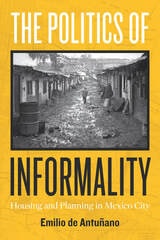
The Politics of Informality
Housing and Planning in Mexico CityEmilio de Antuñano
University of Texas Press, 2026
An examination of the central role and political power of informal neighborhoods in Mexico City.
At the beginning of the twentieth century, Mexico City was tightly bounded, with a population of about half a million people. By the end of that century, it was an unfathomable megalopolis of some 20 million. It had also become exhibit A in an “urban crisis” decried by demographers, NGOs, and the Mexican government. Mexico City’s greatest sin was its shantytowns—informal neighborhoods built in defiance of regulations and viewed as incurably disordered.
The Politics of Informality is an illuminating political and intellectual history, examining how these neighborhoods have figured in Mexican life and in the ideologies underlying urban planning. Prior to the Mexican Revolution of 1910, urban experts saw Mexico City as a tidy modern capital in-waiting. But during the interwar period, informal neighborhoods boomed, as working-class families asserted claims to housing under the revolution’s framework of citizenship and social justice. Then, amid Cold War realignments, a new cohort of urban experts pathologized Mexico City, turning it into a transnational laboratory for the study of poverty, migration, and overpopulation. Tracing a fascinating evolution, ThePolitics of Informality underscores the stubborn opposition between technocratic modernism and revolutionary, extralegal politics.
The Politics of Information
Problem Definition and the Course of Public Policy in AmericaFrank R. Baumgartner and Bryan D. Jones
University of Chicago Press, 2014
With The Politics of Attention, leading policy scholars Frank R. Baumgartner and Bryan D. Jones demonstrated the central role attention plays in how governments prioritize problems. Now, with The Politics of Information, they turn the focus to the problem-detection process itself, showing how the growth or contraction of government is closely related to how it searches for information and how, as an organization, it analyzes its findings. Better search processes that incorporate more diverse viewpoints lead to more intensive policymaking activity. Similarly, limiting search processes leads to declines in policy making. At the same time, the authors find little evidence that the factors usually thought to be responsible for government expansion—partisan control, changes in presidential leadership, and shifts in public opinion—can be systematically related to the patterns they observe.
Drawing on data tracing the course of American public policy since World War II, Baumgartner and Jones once again deepen our understanding of the dynamics of American policy making.

The Politics of International Marriage in Japan
Viktoriya Kim
Rutgers University Press, 2022

The Politics of Intimacy
Rethinking the End-of-Life ControversyAnna Durnová
University of Michigan Press, 2018
Debates on the end-of-life controversy are complex because they seem to highjack national and cultural traditions. Where previous books have focused on ideological grounds, The Politics of Intimacy explores dying as the site where policies are negotiated and implemented. Intimacy comprises the emotional experience of the end of life and how we acknowledge it—or not—through institutions. This process shows that end-of-life controversy relies on the conflict between the individual and these institutions, a relationship that is the cornerstone of Western liberal democracies.
Through interviews with mourners, stakeholders, and medical professionals, examination of media debates in France and the Czech Republic, Durnová shows that liberal institutions, in their attempts to accommodate the emotional experience at the end of life, ultimately fail. She describes this deadlock as the “politics of intimacy,” revealing that political institutions deploy power through collective acknowledgment of individual emotions but fail to maintain this recognition because of this same experience.
The Politics of Islamic Law
Local Elites, Colonial Authority, and the Making of the Muslim StateIza R. Hussin
University of Chicago Press, 2016
Drawing on extensive archival work in English, Arabic, and Malay—from court records to colonial and local papers to private letters and visual material—Hussin offers a view of politics in the colonial period as an iterative series of negotiations between local and colonial powers in multiple locations. She shows how this resulted in a paradox, centralizing Islamic law at the same time that it limited its reach to family and ritual matters, and produced a transformation in the Muslim state, providing the frame within which Islam is articulated today, setting the agenda for ongoing legislation and policy, and defining the limits of change. Combining a genealogy of law with a political analysis of its institutional dynamics, this book offers an up-close look at the ways in which global transformations are realized at the local level.

The Politics of Islamophobia
Race, Power and FantasyDavid Tyrer
Pluto Press, 2013
Despite its emblematic place within contemporary racism and its increasingly important position in defining relations between states and ethnicised minorities, Islamophobia remains a contested, frequently unrecognised and largely under-theorised form of racism.
The Politics of Islamophobia provides a definitive contribution to these debates, offering a theoretically sophisticated account which draws upon a series of substantive case studies to position Islamophobia as an expression of racialised governmentality.
By taking into account connections across different national contexts, and by moving beyond the limiting framing of the war on terror which has dominated recent debates, this book offers a new perspective on the study of Islamophobia.

The Politics of Kinship
Race, Family, GovernanceMark Rifkin
Duke University Press, 2024

The Politics of Knowledge
The Carnegie Corporation, Philanthropy, and Public PolicyEllen Condliffe Lagemann
University of Chicago Press, 1992
The Politics of Liberal Education
Darryl Gless and Barbara Herrnstein Smith, eds.
Duke University Press, 1992
Within this area of consensus, however, the contributors display a wide range of approaches, illuminating the issues from the perspectives of their particular disciplines—classics, education, English, history, and philosophy, among others—and their individual experiences as teachers. Among the topics they discuss are canon-formation in the ancient world, the idea of a “common culture,” and the educational implications of such social movements as feminism, technological changes including computers and television, and intellectual developments such as “theory.” Readers interested in the controversies over American education will find this volume an informed alternative to sensationalized treatments of these issues.
Contributors. Stanley Fish, Phyllis Franklin, Henry Louis Gates Jr., Henry A. Giroux, Darryl J. Gless, Gerald Graff, Barbara Herrnstein Smith, George A. Kennedy, Bruce Kuklick, Richard A. Lanham, Elizabeth Kamarck Minnich, Alexander Nehamas, Mary Louise Pratt, Richard Rorty, Eve Kosofsky Sedgwick
The Politics of Linguistics
Frederick J. Newmeyer
University of Chicago Press, 1986

The Politics of Lists
Bureaucracy and Genocide under the Khmer RougeJames A. Tyner
West Virginia University Press, 2018
2019 Julian Minghi Distinguished Book Award winner
Scholars from a number of disciplines have, especially since the advent of the war on terror, developed critical perspectives on a cluster of related topics in contemporary life: militarization, surveillance, policing, biopolitics (the relation between state power and physical bodies), and the like. James A. Tyner, a geographer who has contributed to this literature with several highly regarded books, here turns to the bureaucratic roots of genocide, building on insight from Hannah Arendt, Zygmunt Bauman, and others to better understand the Khmer Rouge and its implications for the broader study of life, death, and power.
The Politics of Lists analyzes thousands of newly available Cambodian documents both as sources of information and as objects worthy of study in and of themselves. How, Tyner asks, is recordkeeping implicated in the creation of political authority? What is the relationship between violence and bureaucracy? How can documents, as an anonymous technology capable of conveying great force, be understood in relation to newer technologies like drones? What does data create and what does it destroy? Through a theoretically informed, empirically grounded study of the Khmer Rouge security apparatus, Tyner shows that lists and telegrams have often proved as deadly as bullet and bombs.

The Politics of Love
Queer Heterosexuality in Nineteenth-Century French LiteratureMaxime Foerster
University of New Hampshire Press, 2018
Maxime Foerster examines the “heterosexual trouble” between men and women in nineteenth-century French Romantic and Decadent literature. Key works by authors ranging from George Sand to Charles Baudelaire persistently demonstrate that heterosexuality did not work: these authors, and many others, investigated the struggle that men and women alike waged against patriarchal norms. Whereas Romantic fiction dedicated itself to the reinvention of love, Decadence promoted sexual and gender deviance.
In expertly evaluating the discord afflicting fictional heterosexual couples, male and female dandies, and doctors and their female patients, Foerster shows the crucial role that literature played in the fashioning of alternative identities. A concluding look at Proust’s À la recherche du temps perdu traces the legacy of heterosexual trouble in the twentieth century.
Hardcover is un-jacketed.
The Politics of Manhood
Profeminist Men Respond to the Mythopoetic Men's Movement (And the Mythopoetic Leaders Answer)edited by Michael S. Kimmel
Temple University Press, 1995
The Politics of Massachusetts Exceptionalism
Reputation Meets RealityEdited by Jerold Duquette and Erin O'Brien
University of Massachusetts Press, 2022
Are claims of Massachusetts’s special and instructive place in American history and politics justified? Alternately described as a “city upon a hill” and “an organized system of hatreds,” Massachusetts politics has indisputably exerted an outsized pull on the national stage. The Commonwealth’s leaders often argue for the state’s distinct position within the union, citing its proud abolitionist history and its status as a policy leader on health care, gay marriage, and transgender rights, not to mention its fertile soil for budding national politicians. Detractors point to the state’s busing crisis, sky high levels of economic inequality, and mixed support for undocumented immigrants.
The Politics of Massachusetts Exceptionalism tackles these tensions, offering a collection of essays from public policy experts that address the state’s noteworthy contributions to the nation’s political history. This is a much-needed volume for Massachusetts policymakers, journalists, and community leaders, as well as those learning about political power at the state level, inside and outside of the classroom. Contributors include the editors as well as Maurice T. Cunningham, Lawrence Friedman, Shannon Jenkins, Luis F. Jiménez, and Peter Ubertaccio.

The Politics of Memory in Postwar Europe
Richard Ned Lebow, Wulf Kansteiner and Claudio Fogu, eds.
Duke University Press, 2006
An extensive introduction contains reflections on the significance of Europeans’ memories of World War II and a conclusion provides an analysis of the implications of the contributors’ findings for memory studies. These two pieces tease out some of the findings common to all seven countries: for instance, in each nation, the decade and a half between the late 1960s and the mid-1980s was the period of most profound change in the politics of memory. At the same time, the contributors demonstrate that Europeans understand World War II primarily through national frames of reference, which are surprisingly varied. Memories of the war have important ramifications for the democratization of Central and Eastern Europe and the consolidation of the European Union. This volume clarifies how those memories are formed and institutionalized.
Contributors. Claudio Fogu, Richard J. Golsan, Wulf Kansteiner, Richard Ned Lebow, Regula Ludi, Annamaria Orla-Bukowska, Heidemarie Uhl, Thomas C. Wolfe

The Politics of Memory
Native Historical Interpretation in the Colombian AndesJoanne Rappaport
Duke University Press, 1997
Reconsidering the predominantly mythic status of non-Western historical narrative, Rappaport identifies the political realities that influenced the form and content of Andean history, revealing the distinct historical vision of these stories. Because of her examination of the influences of literacy in the creation of history, Rappaport’s analysis makes a special contribution to Latin American and Andean studies, solidly grounding subaltern texts in their sociopolitical contexts.

The Politics of Method in the Human Sciences
Positivism and Its Epistemological OthersGeorge Steinmetz, ed.
Duke University Press, 2005
Contributors explore and contrast some of the major alternatives to positivist epistemologies, including Marxism, psychoanalysis, poststructuralism, narrative theory, and actor-network theory. Almost all the essays are written by well-known practitioners of the fields discussed. Some essayists approach positivism and anti-positivism via close readings of texts influential in their respective disciplines. Some engage in ethnographies of the present-day human sciences; others are more historical in method. All of them critique contemporary social scientific practice. Together, they trace a trajectory of thought and method running from the past through the present and pointing toward possible futures.
Contributors. Andrew Abbott, Daniel Breslau, Michael Burawoy, Andrew Collier , Michael Dutton, Geoff Eley, Anthony Elliott, Stephen Engelmann, Sandra Harding, Emily Hauptmann, Webb Keane, Tony Lawson, Sophia Mihic, Philip Mirowski, Timothy Mitchell, William H. Sewell Jr., Margaret R. Somers, George Steinmetz, Elizabeth Wingrove

The Politics of Migration and Mobility in the Art World
Transnational Baltic Artistic Practices across EuropeEmma Duester
Intellect Books, 2021
Offering a fresh perspective on art and the working lives of those who create it, this multidisciplinary work investigates patterns of migration and mobile working practices across Europe and discusses the implications of artists’ movements on conventional notions of home, mobility, and diaspora. Amid a global refugee crisis, a resurgence in negative portrayals of Eastern Europeans in mainstream media, and increasing anti-immigrant sentiment fueled by Brexit and the rise of protectionism, this is a vital work that shines important new light on diaspora, displacement, and what it means to belong.

The Politics of Military Force
Antimilitarism, Ideational Change, and Post-Cold War German Security DiscourseFrank A. Stengel
University of Michigan Press, 2020
The Politics of Millennials
Political Beliefs and Policy Preferences of America's Most Diverse GenerationStella M. Rouse and Ashley D. Ross
University of Michigan Press, 2018

The Politics of Mirth
Jonson, Herrick, Milton, Marvell, and the Defense of Old Holiday PastimesLeah S. Marcus
University of Chicago Press, 1989
The Politics of Money
Towards Sustainability and Economic DemocracyFrances Hutchinson, Mary Mellor, and Wendy Olsen
Pluto Press, 2002
The book opens with a review of the role of money in current society, an overview of the history of money creation and a critique of the main theoretical developments in economic thought. Alternative perspectives on money are then presented through a review of a number of radical perspectives but focusing mainly on the work of Marx, Veblen and the social credit perspective of Douglas and the guild socialists. In the final part of the book contemporary monetary theories and experiments are analysed within the theoretical and historical perspectives provided in the earlier chapters. The main argument of the book is that it is necessary to understand the crucial role of finance in driving the 'free market' economy if a democratic and sustainable economy is to be achieved.

The Politics of Morality
The Church, the State, and Reproductive Rights in Postsocialist PolandJoanna Mishtal
Ohio University Press, 2015
After the fall of the state socialist regime and the end of martial law in 1989, Polish society experienced both a sense of relief from the tyranny of Soviet control and an expectation that democracy would bring freedom. After this initial wave of enthusiasm, however, political forces that had lain concealed during the state socialist era began to emerge and establish a new religious-nationalist orthodoxy. While Solidarity garnered most of the credit for democratization in Poland, it had worked quietly with the Catholic Church, to which a large majority of Poles at least nominally adhered. As the church emerged as a political force in the Polish Sejm and Senate, it precipitated a rapid erosion of women’s reproductive rights, especially the right to abortion, which had been relatively well established under the former regime.
The Politics of Morality is an anthropological study of this expansion of power by the religious right and its effects on individual rights and social mores. It explores the contradictions of postsocialist democratization in Poland: an emerging democracy on one hand, and a declining tolerance for reproductive rights, women’s rights, and political and religious pluralism on the other. Yet, as this thoroughly researched study shows, women resist these strictures by pursuing abortion illegally, defying religious prohibitions on contraception, and organizing into advocacy groups. As struggles around reproductive rights continue in Poland, these resistances and unofficial practices reveal the sharp limits of religious form of governance.
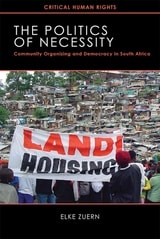
The Politics of Necessity
Community Organizing and Democracy in South AfricaElke Zuern
University of Wisconsin Press, 2011
The end of apartheid in South Africa broke down political barriers, extending to all races the formal rights of citizenship, including the right to participate in free elections and parliamentary democracy. But South Africa remains one of the most economically polarized nations in the world. In The Politics of Necessity Elke Zuern forcefully argues that working toward greater socio-economic equality—access to food, housing, land, jobs—is crucial to achieving a successful and sustainable democracy.
Drawing on interviews with local residents and activists in South Africa’s impoverished townships during more than a decade of dramatic political change, Zuern tracks the development of community organizing and reveals the shifting challenges faced by poor citizens. Under apartheid, township residents began organizing to press the government to address the basic material necessities of the poor and expanded their demands to include full civil and political rights. While the movement succeeded in gaining formal political rights, democratization led to a new government that instituted neo-liberal economic reforms and sought to minimize protest. In discouraging dissent and failing to reduce economic inequality, South Africa’s new democracy has continued to disempower the poor.
By comparing movements in South Africa to those in other African and Latin American states, this book identifies profound challenges to democratization. Zuern asserts the fundamental indivisibility of all human rights, showing how protest movements that call attention to socio-economic demands, though often labeled a threat to democracy, offer significant opportunities for modern democracies to evolve into systems of rule that empower all citizens.
The Politics of New Immigrant Destinations
Transatlantic PerspectivesStefanie Chambers
Temple University Press, 2017
Migration to new destinations in Europe and the United States has expanded dramatically over the past few decades. Within these destinations, there is a corresponding greater variety of ethnic, cultural, and/or religious diversity. This timely volume, The Politics of New Immigrant Destinations, considers the challenges posed by this proliferation of diversity for governments, majority populations, and immigrants.
The contributors assess the effectiveness of the policy and political responses that have been spawned by increasing diversity in four types of new immigrant destinations: “intermediate” destination countries—Ireland and Italy; culturally distinct regions experiencing new migration such as Catalonia in Spain or the American South; new destinations within traditional destination countries like the state of Utah and rural towns in England; and “early migration cycle” countries including Latvia and Poland.
The Politics of New Immigrant Destinations examines how these new destinations for immigrants compare to traditional destinations, with respect to their policy responses and success at integrating immigrants, offering perspectives from both immigrants and natives.
Contributors include: Dace Akule, Amado Alarcón, Rhys Andrews, Francesca Campomori, Tiziana Caponio, Scott Decker, Erica Dobbs, Melissa M. Goldsmith, Aleksandra Grzymała-Kazłowska, Claudio A. Holzner, Magdalena Lesińska, Paul Lewis, Helen B. Marrow, Laura Morales, Katia Pilati, Marie Provine, Monica Varsanyi, and the editors.
The Politics of Numbers
William Alonso
Russell Sage Foundation, 1987
The Politics of Operations
Excavating Contemporary CapitalismSandro Mezzadra and Brett Neilson
Duke University Press, 2019
The Politics of Pain Medicine
A Rhetorical-Ontological InquiryS. Scott Graham
University of Chicago Press, 2015
In The Politics of Pain Medicine: A Rhetorical-Ontological Inquiry, S. Scott Graham offers a rich and detailed exploration of the medical rhetoric surrounding pain medicine. Graham chronicles the work of interdisciplinary pain management specialists to found a new science of pain and a new approach to pain medicine grounded in a more comprehensive biospychosocial model. His insightful analysis demonstrates how these materials ultimately shape the healthcare community’s understanding of what pain medicine is, how the medicine should be practiced and regulated, and how practitioner-patient relationships are best managed. It is a fascinating, novel examination of one of the most vexing issues in contemporary medicine.

The Politics of Patronage
Lawyers, Philanthropy, and the Mexican American Legal Defense and Educational FundBy Benjamin Márquez
University of Texas Press, 2021
Co-winner, Latino Politics Best Book Award, American Political Science Association
The first book about the Mexican American Legal Defense and Educational Fund, the influential work it has done for the Latina/o community, and the issues stemming from its dependence on large philanthropic organizations.
Founded in 1968, the Mexican American Legal Defense and Educational Fund (MALDEF) is the Latino equivalent to the NAACP: a source of legal defense for the Latina/o community in cases centered on education, state immigration laws, redistricting, employment discrimination, and immigrant rights. Unlike the NAACP, however, MALDEF was founded by Mexican American activists in conjunction with the larger philanthropic structure of the Ford Foundation—a relationship that has opened it up to controversy and criticism.
In the first book to examine this little-known but highly influential organization, Benjamin Márquez explores MALDEF’s history and shows how it has thrived and served as a voice for the Latina/o community throughout its six decades of operation. But he also looks closely at large-scale investments of the Ford Foundation, Rockefeller Foundation, and others, considering how their ties to MALDEF have influenced Mexican American and Latinx politics. Its story crafted from copious research into MALDEF and its benefactors, this book brings to light the influence of outside funding on the articulation of minority identities and the problems that come with creating change through institutional means.
The Politics of Permaculture
Terry Leahy
Pluto Press, 2021
Permaculture is an environmental movement that makes us revaluate what it means to be sustainable. Through innovative agriculture and settlement design, the movement creates new communities that are harmonious with nature. It has grown from humble origins on a farm in 1970s Australia and flourished into a worldwide movement that confronts industrial capitalism.
The Politics of Permaculture is one of the first books to unpack the theory and practice of this social movement that looks to challenge the status quo. Drawing upon the rich seam of publications and online communities from the movement as well as extensive interviews with permaculture practitioners and organizations from around the world, Leahy explains the ways permaculture is understood and practiced in different contexts.
In the face of extreme environmental degradation and catastrophic climate change, we urgently need a new way of living.

The Politics of Pessimism in Ecclesiastes
A Social-Science PerspectiveMark R. Sneed
SBL Press, 2012
The Politics of Petulance
America in an Age of ImmaturityAlan Wolfe
University of Chicago Press, 2018
Alan Wolfe has an answer. In The Politics of Petulance he argues that the core of our problem isn’t Trump himself—it’s that we are mired in an age of political immaturity. That immaturity is not grounded in any one ideology, nor is it a function of age or education. It’s in an abdication of valuing the character of would-be leaders; it’s in a failure to acknowledge, even welcome the complexity of government and society; and it’s in a loss of the ability to be skeptical without being suspicious. In 2016, many Americans were offered tantalizingly simple answers to complicated problems, and, like children being offered a lunch of Pop Rocks and Coke, they reflexively—and mindlessly—accepted.
The good news, such as it is, is that we’ve been here before. Wolfe reminds us that we know how to grow up and face down Trump and other demagogues. Wolfe reinvigorates the tradition of public engagement exemplified by midcentury intellectuals such as Richard Hofstadter, Reinhold Niebuhr, and Lionel Trilling—and he draws lessons from their battles with McCarthyism and conspiratorial paranoia. Wolfe mounts a powerful case that we can learn from them to forge a new path for political intervention today.
Wolfe has been thinking and writing about American life and politics for decades. He sees this moment as one of real risk. But he’s not throwing up his hands; he’s bracing us. We’ve faced demagogues before. We can find the intellectual maturity to fight back. Yes we can.

The Politics of Piracy
Crime and Civil Disobedience in Colonial AmericaDouglas R. Burgess
University Press of New England, 2014
The Politics of Place
A History of Zoning in ChicagoJoseph P. Schwieterman and Dana M. Caspall
Southern Illinois University Press, 2006

The Politics of Planting
Israeli-Palestinian Competition for Control of Land in the Jerusalem PeripheryShaul Ephraim Cohen
University of Chicago Press, 1993
Shaul Ephraim Cohen has conducted an unprecedented study of planting in the region and the control of land it signifies. In The Politics of Planting, he provides historical background and examines both the politics behind Israel's afforestation policy its consequences. Focusing on the open land surrounding Jerusalem and four Palestinian villages outside the city, this study offers a new perspective on the conflict over land use in a region where planting has become a political tool.
For the valuable data it presents—collected from field work, previously unpublished documents, and interviews—and the insight it provides into this political struggle, this will be an important book for anyone studying the Israeli-Palestinian conflict.

The Politics of Play
Oulipo and the Legacy of French Literary LudicsAubrey Gabel
Northwestern University Press, 2026
Showing the political importance of play in postwar French literature
In postwar France, authors approached writing ludically, placing rules and conditions on language and on the context of composition itself. They eliminated “e’s” and feminized texts; they traveled according to strict rules and invented outright silly public personas. The Politics of Play: Oulipo and the Legacy of French Literary Ludics is a comprehensive examination of how and why French authors turned to these ludic methods to grapple with their political moment.
These writers were responding to a range of historical upheavals, from the rise and fall of French feminist and Third-Worldist groups to the aftermath of international socialism both at home, in the former Parisian Belt and in France more broadly, and abroad, in post-Yugoslavia Balkan states and elsewhere. Juxtaposing an array of case studies and drawing on cross-disciplinary methodologies, Aubrey Gabel reads three generations of the formalist literary group Oulipo, including Raymond Queneau, Georges Perec, and Jacques Jouet, alongside writers not traditionally deemed ludic—or sometimes not even conventionally known as novelists—such as the lesbian activist-writer Monique Wittig and the editor François Maspero. Gabel argues that literary ludics serve as both an authorial strategy and a political form: playful methods allow writers not only to represent history in code but also to intervene creatively—as political actors—in the fraught social fields of midcentury France and beyond.

The Politics of Population in Brazil
Elite Ambivalence and Public DemandBy Peter McDonough and Amaury DeSouza
University of Texas Press, 1981
The population of Brazil increased tenfold, from 10 to over 100 million, between 1880 and 1980, nearly half of this increase occurring since the end of World War II. The Politics of Population in Brazil examines the attitudes toward population planning of Brazilian government officials and other elites—bishops, politicians, labor leaders, and business owners—in comparison with mass public opinion. The authors' findings that elites seriously underestimate the desire for family planning services, while the public views birth control as a basic issue, represent an important contribution on a timely issue.
A major reason for this disparity is that the elites tend to define the issue as a matter of national power and collective growth, and the public sees it as a bread-and-butter question affecting the daily lives of families. McDonough and DeSouza document not only the real gulf between elite and mass opinion but also the propensity of the elites to exaggerate this gap through their stereotyping of public opinion as conservative and disinterested in family planning.
Despite these differences, the authors demonstrate that population planning is less conflict ridden than many other controversies in Brazilian politics and probably more amenable to piecemeal bargaining than some earlier studies suggest. In part, this is because attitudes on the issue are not closely identified with opinions regarding left-versus-right disputes. In addition, for the public in general, religious sentiment affects attitudes toward family planning only indirectly. This separation, which reflects the historical lack of penetration of Brazilian society on the part of the church, further attenuates the issue's potential for galvanizing deep-seated antagonisms. As the authors note, this situation stands in contrast to the fierce debates that moral issues have generated in Spain and Ireland.
The study is noteworthy not only for its original approach—the incorporation of mass and elite data and the departure from the standard concerns with fertility determinants in population—but also for its sophisticated methodology and lucid presentation.

The Politics of Possibility
Risk and Security Beyond ProbabilityLouise Amoore
Duke University Press, 2013
The Politics of Potential
Global Health and Gendered Futures in South AfricaMichelle Pentecost
Rutgers University Press, 2024
The Politics of Preference
Democratic Institutions and Affirmative Action in the United States and IndiaSunita Parikh
University of Michigan Press, 1997

The Politics of Privacy in Contemporary Native, Latinx, and Asian American Metafictions
Colleen G. Eils
The Ohio State University Press, 2020
Eils breaks strict disciplinary silos by putting visibility/surveillance studies, ethnic studies, and narrative studies in conversation with one another. Eils also puts texts in the Native, Latinx, and Asian American literary canon in conversation with each other. She focuses on texts by Viet Thanh Nguyen, David Treuer, Monique Truong, Rigoberto González, Nam Le, and Stephen Graham Jones that call into question our positions as readers and critics. In deliberately and self-consciously evading readers through the form of their fiction, these writers seize privacy as a political tool for claiming and wielding power in both representational and material registers.
The Politics of Public Health
Turshen, Meredeth
Rutgers University Press, 1989
The book is divided into four parts. Part 1 outlines current and alternative approaches to health, theories of disease causation, the policies and practices that follow from these theories, and issues of equity and access to health care. A chapter of women's health in three African countries illustrates these concepts. Part 2 describes limits to conventional public health, using case histories of plague control, dioxin decontamination, sanitary reform, and smallpox and malaria eradication. In Part 3, Turshen presents case histories of preventive medicine, nutrition and agribusiness, mental health, and AIDS in Africa to suggest new approaches based on an alternative model of social production. Part 4 looks to the future of public health. It examines basic issues in integrating public health research, training, and services, and concludes with an agenda for action.
The Politics of Public Health
Turshen, Meredeth
Rutgers University Press, 1989
The book is divided into four parts. Part 1 outlines current and alternative approaches to health, theories of disease causation, the policies and practices that follow from these theories, and issues of equity and access to health care. A chapter of women's health in three African countries illustrates these concepts. Part 2 describes limits to conventional public health, using case histories of plague control, dioxin decontamination, sanitary reform, and smallpox and malaria eradication. In Part 3, Turshen presents case histories of preventive medicine, nutrition and agribusiness, mental health, and AIDS in Africa to suggest new approaches based on an alternative model of social production. Part 4 looks to the future of public health. It examines basic issues in integrating public health research, training, and services, and concludes with an agenda for action.
The Politics of Puerto Rican University Students
By Arthur Liebman
University of Texas Press, 1970
In the 1960s, when students everywhere were coming alive politically, and when the Latin American student activist in particular became as archetypal of radicalism as the Latin American dictator was of repression, Puerto Rican students remained strangely silent. With the exception of FUPI, a radical student group with only a small following, student political behavior conformed to that of Puerto Rican society in general—center to conservative.
Historically, Puerto Rico has been economically and politically dominated first by Spain and then by the United States. But unlike other colonial dependencies in Latin America, Puerto Rico has never rebelled. Puerto Rican politics centers on the status issue—independence, statehood, or association for the island. But no legendary victories, no heroic defeats offer a battle cry for nationalists, leftists, and independistas. Overwhelming foreign influence in the Church, the schools, the economy, and eventually the mass media deprived the island of any strong indigenous institutions that might foster nationalism. Militancy lies outside the mainstream of Puerto Rican tradition.
Against this historical and cultural backdrop, Arthur Liebman closely examines the social background and political activity of students at the Rio Piedras campus of the University of Puerto Rico. Based on personal interviews with students, faculty, and administrators, as well as on a survey of the student body, his study reveals the strength of political inheritance among university students in Puerto Rico. The student left is small and weak largely because the left of the parents’ generation is small and weak. To date, Puerto Rican students have been the children of their parents and of their society.
Within a university that emphasizes practicality, the nonmilitant majority of the students study education, business, engineering, and medicine, being trained to participate in and to reap the rewards of the status quo. Student leftists, in the minority, generally study history, economics, sociology, and law—fields that open wider perspectives on their society and its problems and offer no immediate guarantee of its benefits. Brighter, less religious, and more dissatisfied with their role as a student, the student leftists stand apart from their cohort at the University of Puerto Rico. Like their adult counterparts, they are an anomaly in an acquisitive, relatively conservative society.

The Politics of Pure Science
Daniel S. Greenberg
University of Chicago Press, 1999
While the book's hard-hitting approach earned praise from a broad audience, it drew harsh fire from many scientists, who did not relish their turn under the microscope. The fact that this dispute is so reminiscent of today's acrimonious "Science Wars" demonstrates that although science has changed a great deal since The Politics of Pure Science first appeared, the politics of science has not—which is why this book retains its importance.
For this new edition, John Maddox (Nature editor emeritus) and Steven Shapin have provided introductory essays that situate the book in broad social and historical context, and Greenberg has written a new afterword taking account of recent developments in the politics of science.
"[A] book of consequence about science as one of the more consequential social institutions in the modern world. It is one that could be understood and should be read by the President, legislators, scientists and the rest of us ordinary folk. . . . Informative and perceptive."—Robert K. Merton, New York Times Book Review

The Politics of Purity
Harvey Washington Wiley and the Origins of Federal Food PolicyClayton A. Coppin and Jack High
University of Michigan Press, 1999

The Politics of Rape
Sexual Atrocity, Propaganda Wars, and the Restoration StageJennifer L. Airey
University of Delaware Press, 2013
Published by University of Delaware Press. Distributed worldwide by Rutgers University Press.
The Politics of Reception
Critical Constructions of Mikhail ZoshchenkoGreg Carleton
Northwestern University Press, 1998