Results by title
22279 books match the query 'Social Science' and 4007 start with t

The Prehistory of the Burnt Bluff Area
Edited by James E. Fitting
University of Michigan Press, 1968

The Prescription-to-Prison Pipeline
The Medicalization and Criminalization of PainMichelle Smirnova
Duke University Press, 2023
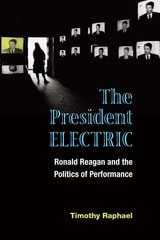
The President Electric
Ronald Reagan and the Politics of PerformanceTimothy Raphael
University of Michigan Press, 2011
"In this illuminating, multi-pronged cultural and performance history of such phenomena as Chautauqua and radio, movies, and electrical technology, Timothy Raphael puts together a compelling and sometimes revelatory narrative of how commandingly Reagan mastered the matrix of performance, technology, media, celebrity, and the 'republic of consumption' he came of age in."
---Dana Nelson, Vanderbilt University
"Garry Wills and others have written well on the phenomenon of Ronald Reagan, the actor-president, but this is the first book by a real authority---trained in performance and fully reflective about it from the inside . . . unquestionably an important contribution to the disciplinary fields of American studies and performance studies, and an important contribution to public affairs."
---Joseph Roach, Yale University
When Ronald Reagan first entered politics in 1965, his public profile as a performer in radio, film, television, and advertising and his experience in public relations proved invaluable political assets. By the time he left office in 1989, the media in which he trained had become the primary source for generating and wielding political power. The President Electric: Ronald Reagan and the Politics of Performance reveals how the systematic employment of the techniques and technologies of mass-media performance contributed to Reagan’s rise to power and defined his style of governance.
The President Electric stands out among books on Reagan as the first to bring the rich insights of the field of performance studies to an understanding of the Reagan phenomenon, connecting Reagan's training in electronic media to the nineteenth-century notion of the "fiat of electricity"---the emerging sociopolitical power of three entities (mechanical science, corporate capitalism, and mass culture) that electric technology made possible. The book describes how this new regime of cultural and political representation shaped the development of the electronic mass media that transformed American culture and politics and educated Ronald Reagan for his future role as president.
Timothy Raphael is Assistant Professor of Visual and Performing Arts and Director of the Center for Immigration at Rutgers University, Newark.
Photo: © David H. Wells/Corbis

The Prestes Column
An Interior History of Modern BrazilJacob Blanc
Duke University Press, 2024
The Prettiest Woman
Nostalgia for Late Industrial CapitalismGrant Farred
University of Minnesota Press, 2025
Uncovering Hollywood’s perpetual longing for a lost industrial America
“We don’t make things in America anymore”: like clockwork, this refrain resurfaces in political discourse, a reflection of yearning for a bygone era of industrial productivity. In his latest work, Grant Farred uses the 1990 film Pretty Woman to expose and critique this lingering nostalgia for late-industrial capitalism.
Situating Pretty Woman alongside Reagan-era films including Wall Street, Farred examines the congealment of such a pervasive romanticized view of the United States as a fading industrial powerhouse. Drawing on an eclectic range of thinkers—from Raymond Williams and Slavoj Žižek to Mick Jagger—The Prettiest Woman offers a unique analysis of the ways Hollywood perpetuates the myth of a lost “productive America,” highlighting the seductive power of this fantasy despite its disconnect from economic and political realities.

The Price of Independence
The Economics of Early AdulthoodSheldon Danziger
Russell Sage Foundation, 2007
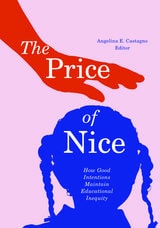
The Price of Nice
How Good Intentions Maintain Educational InequityAngelina E. Castagno
University of Minnesota Press, 2019
How being “nice” in school and university settings works to reinforce racialized, gendered, and (dis)ability-related inequities in education and society
Being nice is difficult to critique. Niceness is almost always portrayed and felt as a positive quality. In schools, nice teachers are popular among students, parents, and administrators. And yet Niceness, as a distinct set of practices and discourses, is not actually good for individuals, institutions, or communities because of the way it maintains and reinforces educational inequity.
In The Price of Nice, an interdisciplinary group of scholars explores Niceness in educational spaces from elementary schools through higher education to highlight how this seemingly benign quality reinforces structural inequalities. Grounded in data, personal narrative, and theory, the chapters show that Niceness, as a raced, gendered, and classed set of behaviors, functions both as a shield to save educators from having to do the hard work of dismantling inequity and as a disciplining agent for those who attempt or even consider disrupting structures and ideologies of dominance.
Contributors: Sarah Abuwandi, Arizona State U; Colin Ben, U of Utah; Nicholas Bustamante, Arizona State U; Aidan/Amanda J. Charles, Northern Arizona U; Jeremiah Chin, Arizona State U; Sally Campbell Galman, U of Massachusetts; Frederick Gooding Jr., Texas Christian U; Deirdre Judge, Tufts U; Katie A. Lazdowski; Román Liera, U of Southern California; Sylvia Mac, U of La Verne; Lindsey Malcolm-Piqueux, California Institute of Technology; Giselle Martinez Negrette, U of Wisconsin–Madison; Amber Poleviyuma, Arizona State U; Alexus Richmond, Arizona State U; Frances J. Riemer, Northern Arizona U; Jessica Sierk, St. Lawrence U; Bailey B. Smolarek, U of Wisconsin–Madison; Jessica Solyom, Arizona State U; Megan Tom, Arizona State U; Sabina Vaught, U of Oklahoma; Cynthia Diana Villarreal, U of Southern California; Kristine T. Weatherston, Temple U; Joseph C. Wegwert, Northern Arizona U; Marguerite Anne Fillion Wilson, Binghamton U; Jia-Hui Stefanie Wong, Trinity College; Denise Gray Yull, Binghamton U.

The Price of Nuclear Power
Uranium Communities and Environmental JusticeMalin, Stephanie A.
Rutgers University Press, 2015
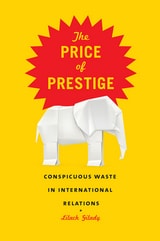
The Price of Prestige
Conspicuous Consumption in International RelationsLilach Gilady
University of Chicago Press, 2018
In The Price of Prestige, Gilady shows how many seemingly wasteful government expenditures that appear to contradict the laws of demand actually follow the pattern for what are known as Veblen goods, or positional goods for which demand increases alongside price, even when cheaper substitutes are readily available. From flashy space programs to costly weapons systems a country does not need and cannot maintain to foreign aid programs that offer little benefit to recipients, these conspicuous and strategically timed expenditures are intended to instill awe in the observer through their wasteful might. And underestimating the important social role of excess has serious policy implications. Increasing the cost of war, for example, may not always be an effective tool for preventing it, Gilady argues, nor does decreasing the cost of weapons and other technologies of war necessarily increase the potential for conflict, as shown by the case of a cheap fighter plane whose price tag drove consumers away. In today’s changing world, where there are high levels of uncertainty about the distribution of power, Gilady also offers a valuable way to predict which countries are most likely to be concerned about their position and therefore adopt costly, excessive policies.
The Price of Racial Reconciliation
Ronald W. Walters
University of Michigan Press, 2008
“In The Price of Racial Reconciliation, Ronald Walters offers an abundance of riches. This book provides an extraordinarily comprehensive and persuasive set of arguments for reparations, and will be the lens through which meaningful opportunities for reconciliation are viewed in the future. If this book does not lead to the success of the reparations movement, nothing will.”
—Charles J. Ogletree, Jesse Climenko Professor of Law, Harvard Law School
“The Price of Racial Reconciliation is a seminal study of comparative histories and race(ism) in the formation of state structures that prefigure(d) socioeconomic positions of Black peoples in South Africa and the United States. The scholarship is meticulous in brilliantly constructed analysis of the politics of memory, reparations as an immutable principle of justice, imperative for nonracial(ist) democracy, and a regime of racial reconciliation.”
—James Turner, Professor of African and African American Studies and Founder, Africana Studies and Research Center, Cornell University
“A fascinating and pathbreaking analysis of the attempt at racial reconciliation in South Africa which asks if that model is relevant to the contemporary American racial dilemma. An engaging multidisciplinary approach relevant to philosophy, sociology, history, and political science.”
—William Strickland, Associate Professor of Political Science, W.E.B. Du Bois Department of Afro-American Studies, University of Massachusetts Amherst
The issue of reparations in America provokes a lot of interest, but the public debate usually occurs at the level of historical accounting: “Who owes what for slavery?” This book attempts to get past that question to address racial restitution within the framework of larger societal interests. For example, the answer to the “why reparations?” question is more than the moral of payment for an injustice done in the past. Ronald Walters suggests that, insofar as the impact of slavery is still very much with us today and has been reinforced by forms of postslavery oppression, the objective of racial harmony will be disrupted unless it is recognized with the solemnity and amelioration it deserves. The author concludes that the grand narrative of black oppression in the United States—which contains the past and present summary of the black experience—prevents racial reconciliation as long as some substantial form of racial restitution is not seriously considered. This is “the price” of reconciliation.
The method for achieving this finding is grounded in comparative politics, where the analyses of institutions and political behaviors are standard approaches. The author presents the conceptual difficulties involved in the project of racial reconciliation by comparing South African Truth and Reconciliation and the demand for reparations in the United States.
Ronald Walters is Distinguished Leadership Scholar and Director, African American Leadership Program and Professor of Government and Politics, University of Maryland.

The Price of Safety
Hidden Costs and Unintended Consequences for Women in the Domestic Violence Service SystemSara Shoener
Vanderbilt University Press, 2017
Through detailed observations of services such as court procedures, public benefits processes, and community-based IPV programs as well as in-depth interviews with dozens of IPV survivors and practitioners, Shoener describes how our current institutional response to IPV is often not useful--and sometimes quite harmful--for IPV survivors with the least material, social, and cultural capital to spare. For these women, as the interviews vividly record, IPV has long-term economic and social consequences, disrupting career paths and creating social isolation.

The Princes of Naranja
An Essay in Anthrohistorical MethodBy Paul Friedrich
University of Texas Press, 1987
In this groundbreaking study, Paul Friedrich looks closely at the strong men of the Tarascan Indian village of Naranja: their leadership, friendship, kinship, and violent local politics (over a time depth of one generation), and ways to understand such phenomena. What emerges is an acutely observed portrait of the men who form the very basis of the grass-roots power structure in Mexico today.
Of interest to historians, sociologists, and political scientists, as well as Latin Americanists and anthropologists, The Princes of Naranja is a sequel to Friedrich's now classic Agrarian Revolt in a Mexican Village. It begins with biographical character studies of seven leaders—peasant gunmen, judges, politicos; here the book will grip the reader and provoke strong emotional response, from laughter to horror. A middle section places these "princes" in relation to each other, and to the contexts of village society and the larger entities of which it forms a part. Friedrich's synthesis of anthropology, local (mainly oral) history, macrohistory, microsociology, psychology, and literature gives new insight into the structure of Mexican politics from the local level up, and provides a model for other scholars doing analogous work in other parts of the world, especially in the developing world. The concluding section raises vital questions about the dynamic relations between the fieldworker, fieldwork, field notes, the villagers, the writing of a fieldwork-based book, and, implicitly, the audience for such books.

The Printed Reader
Gender, Quixotism, and Textual Bodies in Eighteenth-Century BritainAmelia Dale
Bucknell University Press, 2019
The Printed Reader explores the transformative power of reading in the eighteenth century, and how this was expressed in the fascination with Don Quixote and in a proliferation of narratives about quixotic readers, readers who attempt to reproduce and embody their readings. Through intersecting readings of quixotic narratives, including work by Charlotte Lennox, Laurence Sterne, George Colman, Richard Graves, and Elizabeth Hamilton, Amelia Dale argues that literature was envisaged as imprinting—most crucially, in gendered terms—the reader’s mind, character, and body. The Printed Reader brings together key debates concerning quixotic narratives, print culture, sensibility, empiricism, book history, and the material text, connecting developments in print technology to gendered conceptualizations of quixotism. Tracing the meanings of quixotic readers’ bodies, The Printed Reader claims the social and political text that is the quixotic reader is structured by the experiential, affective, and sexual resonances of imprinting and impressions.
Published by Bucknell University Press. Distributed worldwide by Rutgers University Press.

The Prism of Human Rights
Seeking Justice amid Gender Violence in Rural EcuadorKarin Friederic
Rutgers University Press, 2023

The Prism of Race
The Politics and Ideology of Affirmative Action in BrazilDavid Lehmann
University of Michigan Press, 2018
Brazil has developed a distinctive response to the injustices inflicted by the country’s race relations regime. Despite the mixed racial background of most Brazilians, the state recognizes people’s racial classification according to a simple official scheme in which those self-assigned as black, together with “brown” and “indigenous” (preto-pardo-indigena), can qualify for specially allocated resources, most controversially quota places at public universities. Although this quota system has been somewhat successful, many other issues that disproportionately affect the country’s black population remain unresolved, and systemic policies to reduce structural inequality remain off the agenda.
In The Prism of Race, David Lehmann explores, theoretically and practically, issues of race, the state, social movements, and civil society, and then goes beyond these themes to ask whether Brazilian politics will forever circumvent the severe problems facing the society by co-optation and by tinkering with unjust structures. Lehmann disrupts the paradigm of current scholarly thought on Brazil, placing affirmative action disputes in their political and class context, bringing back the concept of state corporatism, and questioning the strength and independence of Brazilian civil society.
The Prison House of the Circuit
Politics of Control from Analog to DigitalJeremy Packer
University of Minnesota Press, 2023
Has society ceded its self-governance to technogovernance?
The Prison House of the Circuit presents a history of digital media using circuits and circuitry to understand how power operates in the contemporary era. Through the conceptual vocabulary of the circuit, it offers a provocative model for thinking about governance and media.
The authors, writing as a collective, provide a model for collective research and a genealogical framework that interrogates the rise of digital society through the lens of Foucault’s ideas of governance, circulation, and power. The book includes five in-depth case studies investigating the transition from analog media to electronic and digital forms: military telegraphy and human–machine incorporation, the establishment of national electronic biopolitical governance in World War I, media as the means of extending spatial and temporal policing, automobility as the mechanism uniting mobility and media, and visual augmentation from Middle Ages spectacles to digital heads-up displays. The Prison House of the Circuit ultimately demonstrates how contemporary media came to create frictionless circulation to maximize control, efficacy, and state power.

The Prison
Policy and PracticeGordon J. Hawkins
University of Chicago Press, 1977
"Hawkins devotes a large portion of this relatively short book to a discussion of some of the really crucial policy activities that tend to stifle meaningful reform and then goes on to tell how at least some of these policies can be altered. . . . The book concludes with a chapter devoted to a discussion of impediments to change that should be required reading for all serious students of penology."—Choice
"Hawkins has added a much needed down-to-earch analysis of prison. . . . This is not a pessimistic book. It is a realistic book. It avoids the pitfall of utopian and single-factor solutions to an extremely complex problem."—Graeme R. Newman, Annals of the American Academy of Political and Social Science

The Privatisation of Israeli Security
Shir Hever
Pluto Press, 2017

The Privilege of Being Banal
Art, Secularism, and Catholicism in ParisElayne Oliphant
University of Chicago Press, 2021
Exploring the violent histories and alternate trajectories effaced through this banal backgrounding of a crucial aspect of French history and culture, this richly textured ethnography lays bare the profound nostalgia that undergirds Catholicism’s circulation in nonreligious sites such as museums, corporate spaces, and political debates. Oliphant’s aim is to unravel the contradictions of religion and secularism and, in the process, show how aesthetics and politics come together in contemporary France to foster the kind of banality that Hannah Arendt warned against: the incapacity to take on another person’s experience of the world. A creative meditation on the power of the taken-for-granted, The Privilege of Being Banal is a landmark study of religion, aesthetics, and public space.

The Privilege of Crisis
Narratives of Masculinities in Colonial and Postcolonial Literature, Photography, and FilmElahe Haschemi Yekani
Campus Verlag, 2011
Despite the understanding of scholars that masculinity, far from being a natural or stable concept, is in reality a social construction, the culture at large continues to privilege an idealized, coherent male point of view. The Privilege of Crisis draws on the work of authors such as H. Rider Haggard, Rudyard Kipling, and Joseph Conrad—as well as contemporary postcolonial writers such as J. M. Coetzee, Hanif Kureishi and Zadie Smith—to show how recurrent references to a "crisis" of masculinity or the decline of masculinity serve largely to demonstrate and support positions of male privilege.

The Problem of Evil
Slavery, Freedom and the Ambiguities of American ReformSteven Mintz
University of Massachusetts Press, 2007
Divided into four parts, with introductions to each section by editors Steven Mintz and John Stauffer, the essays provide succinct guides to the evolution of American slavery, the origins of antislavery thought, the challenges of emancipation, and the post-emancipation legacy of slavery. They also offer fresh perspectives on key individuals, from Benjamin Franklin and Frederick Douglass to Harriet Jacobs and John Brown, and shed new light on the differences between female and male critiques of slavery, the defense of slavery by the South's intellectual elite, and Catholic attitudes toward slavery and abolition.
Above all, The Problem of Evil helps us understand the circumstances that allow social evils to happen, how intelligent and ostensibly moral people can participate in the most horrendous crimes, and how, at certain historical moments, some individuals are able to rise above their circumstances, address evil in fundamental ways, and expand our moral consciousness.
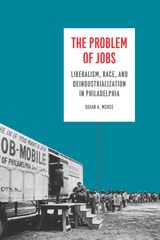
The Problem of Jobs
Liberalism, Race, and Deindustrialization in PhiladelphiaGuian A. McKee
University of Chicago Press, 2008
With a focus on Philadelphia, this volume illuminates the central role of these local political and policy struggles in shaping the fortunes of city and citizen alike. In the process, it tells the remarkable story of how Philadelphia’s policymakers and community activists energetically worked to challenge deindustrialization through an innovative series of job retention initiatives, training programs, inner-city business development projects, and early affirmative action programs. Without ignoring the failure of Philadelphians to combat institutionalized racism, Guian McKee's account of their surprising success draws a portrait of American liberalism that evinces a potency not usually associated with the postwar era. Ultimately interpreting economic decline as an arena for intervention rather than a historical inevitability, The Problem of Jobs serves as a timely reminder of policy’s potential to combat injustice.
The Problem of Passing
Sandra Harvey
Duke University Press, 2026

The Problem of the Color[blind]
Racial Transgression and the Politics of Black PerformanceBrandi Wilkins Catanese
University of Michigan Press, 2011

The Problem of the Fetish
William Pietz
University of Chicago Press, 2022
In recent decades, William Pietz’s innovative history of the idea of the fetish has become a cult classic. Gathered here, for the first time, is his complete series of essays on fetishism, supplemented by three texts on Marx, blood sacrifice, and the money value of human life. Tracing the idea of the fetish from its origins in the Portuguese colonization of West Africa to its place in Enlightenment thought and beyond, Pietz reveals the violent emergence of a foundational concept for modern theories of value, belief, desire, and difference. This book cements Pietz’s legacy of engaging questions about material culture, object agency, merchant capitalism, and spiritual power, and introduces a powerful theorist to a new generation of thinkers.

The Problem of the Future World
W. E. B. Du Bois and the Race Concept at MidcenturyEric Porter
Duke University Press, 2010

The Problem of the Negro as a Problem for Gender
Marquis Bey
University of Minnesota Press, 2020
A complex articulation of the ways blackness and nonnormative gender intersect—and a deeper understanding of how subjectivities are formed
A deep meditation on and expansion of the figure of the Negro and insurrectionary effects of the “X” as theorized by Nahum Chandler, The Problem of the Negro as a Problem for Gender thinks through the problematizing effects of blackness as, too, a problematizing of gender. Through the paraontological, the between, and the figure of the “X” (with its explicit contemporary link to nonbinary and trans genders) Marquis Bey presents a meditation on black feminism and gender nonnormativity. Chandler’s text serves as both an argumentative tool for rendering the “radical alternative” in and as blackness as well as demonstrating the necessarily trans/gendered valences of that radical alternative.
Forerunners is a thought-in-process series of breakthrough digital works. Written between fresh ideas and finished books, Forerunners draws on scholarly work initiated in notable blogs, social media, conference plenaries, journal articles, and the synergy of academic exchange. This is gray literature publishing: where intense thinking, change, and speculation take place in scholarship.
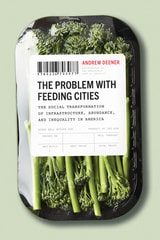
The Problem with Feeding Cities
The Social Transformation of Infrastructure, Abundance, and Inequality in AmericaAndrew Deener
University of Chicago Press, 2020
The Problem with Feeding Cities is a sociological and historical examination of how this remarkable network of abundance and convenience came into being over the last century. It looks at how the US food system transformed from feeding communities to feeding the entire nation, and it reveals how a process that was once about fulfilling basic needs became focused on satisfying profit margins. It is also a story of how this system fails to feed people, especially in the creation of food deserts. Andrew Deener shows that problems with food access are the result of infrastructural failings stemming from how markets and cities were developed, how distribution systems were built, and how organizations coordinate the quality and movement of food. He profiles hundreds of people connected through the food chain, from farmers, wholesalers, and supermarket executives, to global shippers, logistics experts, and cold-storage operators, to food bank employees and public health advocates. It is a book that will change the way we see our grocery store trips and will encourage us all to rethink the way we eat in this country.
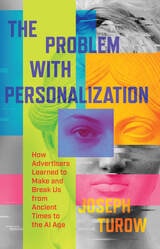
The Problem with Personalization
How Advertisers Learned to Make and Break Us from Ancient Times to the AI AgeJoseph Turow
University of Chicago Press, 2026
A respected voice on technology shows how seemingly simple ads help dismantle democracy and public discourse.
Whether you’re intentionally shopping or casually browsing social media, something is following you: ads. Their creators seem to know your income bracket, politics, age, location, medical conditions, and tastes in clothing, food, and romantic partners. As advertising firms use predictive AI to discover your hot buttons and generative AI to push them, your online world becomes an increasingly bespoke—and isolated—place. The fervid competition around personalization in digital marketing has given rise to an ecosystem of advertisers, media outlets, tech companies, and retailers who monetize your data while threatening the health of our media, discourse, and sense of community. In this urgent book, award-winning author Joseph Turow shows how we got here, and how to change direction.
The Problem with Personalization shatters common beliefs about advertising history by showing that individualized ads are not new. Today’s AI-enabled advertisers draw on past aspirations and assumptions about personalization while weaponizing data in unprecedented ways that drive social fragmentation and the disappearance of shared social reality. Informed by interviews with marketing insiders and covering the latest technology advances, Turow accessibly explains how artificial intelligence sifts through our data to tag and target us wherever we go with personalized videos, pictorial billboards, audio messages, and more. A logical next step for advertiser support is tailored entertainment and news, a shift that further destroys the common ground necessary for a functioning democracy.
A must-read for all who care about the future of public discourse, The Problem with Personalization reveals how targeted advertising has altered how we’re seen and what we see in return.
The Problem with Personalization
How Advertisers Learned to Make and Break Us from Ancient Times to the AI AgeJoseph Turow
University of Chicago Press, 2026
A respected voice on technology shows how seemingly simple ads help dismantle democracy and public discourse.
Whether you’re intentionally shopping or casually browsing social media, something is following you: ads. Their creators seem to know your income bracket, your tastes in clothing, food, location, politics, age, medical conditions, and romantic partners. As predictive AI tells firms what your hot buttons are and generative AI produces messages tailored to those buttons, your online world becomes an increasingly comfortable—and isolated—place. The fervid competition around personalization in digital marketing, now ubiquitous, has given rise to an ecosystem of advertisers, media outlets, tech companies, and retailers who monetize your data, while threatening the health of our media, our discourse, and our sense of community. In this urgent book, award-winning author Joseph Turow shows how we got here, and how to change direction.
The Problem with Personalization shatters common beliefs about advertising history by showing that individualizing ads is not new. Today’s high-velocity AI versions draw on past aspirations and assumptions about personalization while weaponizing it in unprecedented ways that drive social fragmentation and the disappearance of shared social reality. Informed by interviews with marketing insiders and covering the latest technology advances, Turow accessibly explains how artificial intelligence sifts our data to tag and target us wherever we go with personalized videos, pictorial billboards, audio messages, and more. A logical next step for advertiser support is tailored entertainment and news, a shift that further destroys the common ground necessary for a functioning democracy.
A must-read for all who care about the future of public discourse, The Problem with Personalization reveals how targeted advertising has altered how we’re seen and what we see in return.
The Problem with Work
Feminism, Marxism, Antiwork Politics, and Postwork ImaginariesKathi Weeks
Duke University Press, 2011
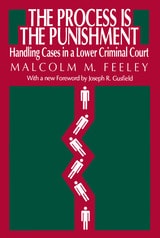
The Process is the Punishment
Handling Cases in a Lower Criminal CourtMalcolm M. Feeley
Russell Sage Foundation, 1992

The Product of Medicine
How Efficiency Made American Health CareCaitjan Gainty
Duke University Press, 2025
The Professional Convict's Tale
The Survival of John O'Neill In and Out of PrisonElmer H. Johnson
Southern Illinois University Press, 2007
Challenging the ideology of treatment in the prison world
The Professional Convict’s Tale: The Survival of John O’Neill In and Out of Prison offers a unique, inside view of life behind bars in the 1960s. Elmer H. Johnson, a criminologist who has specialized in prison life for half a century, gave Menard Penitentiary parolee John O’Neill a tape recorder and a set of questions designed to draw out his opinions and observations about the prison world.
This study frames O’Neill’s responses with Johnson’s analysis. O’Neill’s narrative guides readers through the world beyond the prison gate as he shares his strategies for survival and proposes alternatives to rebellion or submission. He discusses the fractionalization between the keepers and the kept and the effects that subterranean communication, threats of inmate predators, and prison riots can have on the psyche of both inmates and staff.
O’Neill’s frustrations and the inadequate responses from the community to which he was paroled illustrate the social costs and impact of parole for the community and for the parolee. Although O’Neill recorded his comments more than forty years ago, they are still relevant today when thousands of convicts are being released from prison each year.

The Professional Guinea Pig
Big Pharma and the Risky World of Human SubjectsRoberto Abadie
Duke University Press, 2010

The Professional Thief
Chic Conwell and Edwin Hardin Sutherland
University of Chicago Press, 1988
The Professions
Roles and RulesWilbert Ellis Moore
Russell Sage Foundation, 1970

The Progressive City
Planning and Participation, 1969-1984Clavel, Pierre
Rutgers University Press, 1986

The Prohibition Hangover
Alcohol in America from Demon Rum to Cult CabernetPeck, Garrett
Rutgers University Press, 2009
In The Prohibition Hangover, Garrett Peck explores the often-contradictory social history of alcohol in America, from the end of Prohibition in 1933 to the twenty-first century. For Peck, Repeal left American society wondering whether alcohol was a consumer product or a controlled substance, an accepted staple of social culture or a danger to society. Today the legal drinking age, binge drinking, the neo-prohibitionist movement led by Mothers Against Drunk Driving, the 2005 Supreme Court decision in Granholm v. Heald that rejected discriminatory curbs on wine sales, the health benefits of red wine, advertising, and other issues remain highly contested.
Based on primary research, including hundreds of interviews with those on all sides, clergy, bar and restaurant owners, public health advocates, citizen crusaders, industry representatives, and more, as well as secondary sources, The Prohibition Hangover provides a panoramic assessment of alcohol in American culture. Traveling through the California wine country, the beer barrel backroads of New England and Pennsylvania, and the blue hills of Kentucky's bourbon trail, Peck places the concerns surrounding alcohol use within the broader context of American history, religious traditions, and governance.
Society is constantly evolving, and so are our drinking habits. Cutting through the froth and discarding the maraschino cherries, The Prohibition Hangover examines the modern American temperament toward drink amid the $189-billion-dollar-a-year industry that defines itself by the production, distribution, marketing, and consumption of alcoholic beverages.

The Projects
Gang and Non-Gang Families in East Los AngelesBy James Diego Vigil
University of Texas Press, 2007
2008 — ALLA Prize for Best Book on Latina/o Anthropology
The Pico Gardens housing development in East Los Angeles has a high percentage of resident families with a history of persistent poverty, gang involvement, and crime. In some families, members of three generations have belonged to gangs. Many other Pico Gardens families, however, have managed to avoid the cycle of gang involvement.
In this work, Vigil adds to the tradition of poverty research and elaborates on the association of family dynamics and gang membership. The main objective of his research was to discover what factors make some families more vulnerable to gang membership, and why gang resistance was evidenced in similarly situated non-gang-involved families. Providing rich, in-depth interviews and observations, Vigil examines the wide variations in income and social capital that exist among the ostensibly poor, mostly Mexican American residents. Vigil documents how families connect and interact with social agencies in greater East Los Angeles to help chart the routines and rhythms of the lives of public housing residents. He presents family life histories to augment and provide texture to the quantitative information.
By studying life in Pico Gardens, Vigil feels we can better understand how human agency interacts with structural factors to produce the reality that families living in all public housing developments must contend with daily.

The Proletarian Gamble
Korean Workers in Interwar JapanKen C. Kawashima
Duke University Press, 2009
Kawashima draws on previously unseen archival materials from interwar Japan as he describes how Korean migrants struggled against various recruitment practices, unfair and discriminatory wages, sudden firings, racist housing practices, and excessive bureaucratic red tape. Demonstrating that there was no single Korean “minority,” he reveals how Koreans exploited fellow Koreans and how the stratification of their communities worked to the advantage of state and capital. However, Kawashima also describes how, when migrant workers did organize—as when they became involved in Rōsō (the largest Korean communist labor union in Japan) and in Zenkyō (the Japanese communist labor union)—their diverse struggles were united toward a common goal. In The Proletarian Gamble, his analysis of the Korean migrant workers' experiences opens into a much broader rethinking of the fundamental nature of capitalist commodity economies and the analytical categories of the proletariat, surplus populations, commodification, and state power.

The Promise of Beauty
Mimi Thi Nguyen
Duke University Press, 2024

The Promise of Green Politics
Environmentalism and the Public SphereDouglas Torgerson
Duke University Press, 1999
Arguing that the environmental movement has the potential to contribute to contemporary developments in political theory and social action by changing discursive practices both at the grassroots level and along the corridors of power, Torgerson draws on the theories of Hannah Arendt and others to advocate a performative type of political debate that values multiple opinions and is not always oriented toward reaching a single conclusion. Torgerson argues that in a world stuck in administrative and scientific gridlock, the theatrical, comic aspects of green politics are as important as other, more goal-oriented, aspects. Gestures of the carnivalesque—such as protestors sleeping in hammocks slung from trees targeted for destruction or funeral processions held for dying rivers—could be the key to the creation of what Torgerson refers to as a “green public sphere,” one that promises a reconfiguration of the relationship between human creativity and the natural world. While offering a number of concrete policy suggestions, his focus remains on the complexity and heterogeneity of green thinking and on the transformative promise implicit in green politics. In creating new ways to speak about the environment, Torgerson argues, the green movement offers a creative way to reconsider many larger issues of political theory and action.
The Promise of Green Politics will serve as a gateway to new thinking about green politics and the emerging possibilities of a diverse and vital green public sphere. As such, it will be valued by those interested in environmental and public policy, political theory, social activism, and the future of political action.
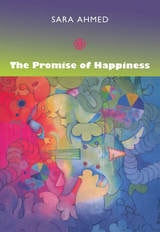
The Promise of Happiness
Sara Ahmed
Duke University Press, 2010
Ahmed draws on the intellectual history of happiness, from classical accounts of ethics as the good life, through seventeenth-century writings on affect and the passions, eighteenth-century debates on virtue and education, and nineteenth-century utilitarianism. She engages with feminist, antiracist, and queer critics who have shown how happiness is used to justify social oppression, and how challenging oppression causes unhappiness. Reading novels and films including Mrs. Dalloway, The Well of Loneliness, Bend It Like Beckham, and Children of Men, Ahmed considers the plight of the figures who challenge and are challenged by the attribution of happiness to particular objects or social ideals: the feminist killjoy, the unhappy queer, the angry black woman, and the melancholic migrant. Through her readings she raises critical questions about the moral order imposed by the injunction to be happy.
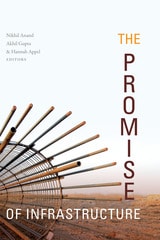
The Promise of Infrastructure
Nikhal Anand, Akhil Gupta, and Hannah Appel, editors
Duke University Press, 2018
A School for Advanced Research Advanced Seminar
Contributors. Nikhil Anand, Hannah Appel, Geoffrey C. Bowker, Dominic Boyer, Akhil Gupta, Penny Harvey, Brian Larkin, Christina Schwenkel, Antina von Schnitzler

The Promise of Multispecies Justice
Sophie Chao, Karin Bolender, and Eben Kirksey, editors
Duke University Press, 2022
Contributors. Karin Bolender, Sophie Chao, M. L. Clark, Radhika Govindrajan, Zsuzsanna Dominika Ihar, Noriko Ishiyama, Eben Kirksey, Elizabeth Lara, Jia Hui Lee, Kristina Lyons, Michael Marder, Alyssa Paredes, Craig Santos Perez, Kim TallBear
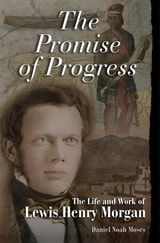
The Promise of Progress
The Life and Work of Lewis Henry MorganDaniel Noah Moses
University of Missouri Press, 2009
The Promise of Salvation
A Theory of ReligionMartin Riesebrodt
University of Chicago Press, 2010
Why has religion persisted across the course of human history? Secularists have predicted the end of faith for a long time, but religions continue to attract followers. Meanwhile, scholars of religion have expanded their field to such an extent that we lack a basic framework for making sense of the chaos of religious phenomena. To remedy this state of affairs, Martin Riesebrodt here undertakes a task that is at once simple and monumental: to define, understand, and explain religion as a universal concept.
Instead of propounding abstract theories, Riesebrodt concentrates on the concrete realities of worship, examining religious holidays, conversion stories, prophetic visions, and life-cycle events. In analyzing these practices, his scope is appropriately broad, taking into consideration traditions in Judaism, Christianity, Islam, Buddhism, Daoism, and Shinto. Ultimately, Riesebrodt argues, all religions promise to avert misfortune, help their followers manage crises, and bring both temporary blessings and eternal salvation. And, as The Promise of Salvation makes clear through abundant empirical evidence, religion will not disappear as long as these promises continue to help people cope with life.
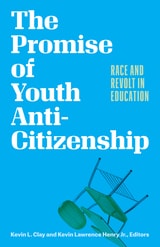
The Promise of Youth Anti-Citizenship
Race and Revolt in EducationKevin L. Clay
University of Minnesota Press, 2024
When inclusion into the fold of citizenship is conditioned by a social group’s conceit to ritual violence, humiliation, and exploitation, what can anti-citizenship offer us?
The Promise of Youth Anti-citizenship argues that Black youth and youth of color have been cast as anti-citizens, disenfranchised from the social, political, and economic mainstream of American life. Instead of asking youth to conform to a larger societal structure undergirded by racial capitalism and antiblackness, the volume’s contributors propose that the collective practice of anti-citizenship opens up a liberatory space for youth to challenge the social order.
The chapters cover an array of topics, including Black youth in the charter school experiment in post-Katrina New Orleans; racial capitalism, the queering of ethnicity, and the 1980s Salvadoran migration to South Central Los Angeles; the notion of decolonizing classrooms through Palestinian liberation narratives; and more. Through a range of methodological approaches and conceptual interventions, this collection illuminates how youth negotiate and exercise anti-citizenship as forms of either resistance or refusal in response to coercive patriotism, cultural imperialism, and predatory capitalism.
Contributors: Karlyn Adams-Wiggins, Portland State U; Ariana Brazier; Julio Cammarota, U of Arizona; Michael Davis, U of Wisconsin–Madison; Damaris C. Dunn, U of Georgia; Diana Gamez, U of California, Irvine; Rachel F. Gómez, Virginia Commonwealth U; Luma Hasan; Gabriel Rodriguez, Iowa State U; Christopher R. Rogers, U of Pennsylvania; Damien M. Sojoyner, U of California, Irvine.

The Prophetic Law
Essays in Judaism, Girardianism, Literary Studies, and the EthicalSandor Goodhart
Michigan State University Press, 2014