Results by title
28167 books match the query 'History' and 6372 start with t
The La Follettes of Wisconsin
Love and Politics in Progressive AmericaBernard A. Weisberger
University of Wisconsin Press, 2013
The Labor Board Crew
Remaking Worker-Employer Relations from Pearl Harbor to the Reagan EraRonald W. Schatz
University of Illinois Press, 2021
Schatz argues that the Labor Board vets, who saw themselves as disinterested technocrats, were in truth utopian reformers aiming to transform the world. Beginning in the 1970s stagflation era, they faced unforeseen opposition, and the cooperative relationships they had fostered withered. Yet their protégé George Shultz used mediation techniques learned from his mentors to assist in the integration of Southern public schools, institute affirmative action in industry, and conduct Cold War negotiations with Mikhail Gorbachev.
The Labor Day Ghost
A Murder, Its Cover-Up, and the Long Road to JusticeCarol Dawson
University of Texas Press, 0
In Corsicana, Texas, Shelley Watkins, the charismatic young wife of Jerry Mack Watkins, disappeared on Labor Day, 1993; her body, tied and taped in plastic and chained to concrete blocks, was found in the Trinity River eight days later. Although a wealth of circumstantial evidence pointed toward Jerry Mack, corruption and its legacy have kept the investigation and legal proceedings in limbo for decades. Now, as DNA evidence offers hope for a long-overdue resolution, author Carol Dawson chronicles both one woman’s tragic story and the history of violence in small-town Texas.
Beginning with Shelley’s life before she arrived in Corsicana, Dawson reveals how her death perpetuates a Gothic history of crime within the town—including a devastating number of murdered women. She also delves into the closed culture of financial control and how the Watkins family became one of the town’s wealthiest, and pulls new details from the witnesses, cops, and prosecutors connected with a case that has haunted her for thirty years. Rooted in the complex history of author Carol Dawson’s hometown, and framed by her family connections to the case, The Labor Day Ghost delivers an arresting narrative that traces the way this tragedy has continued to split Corsicana’s citizenry during the long deferral of justice.
The Labor Movement in Wisconsin
A HistoryRobert W. Ozanne
Wisconsin Historical Society Press, 1984
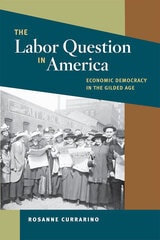
The Labor Question in America
Economic Democracy in the Gilded AgeRoseanne Currarino
University of Illinois Press, 2011
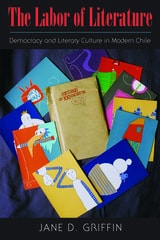
The Labor of Literature
Democracy and Literary Culture in Modern ChileJane D. Griffin
University of Massachusetts Press, 2016
By examining alternative literary publications, Griffin recasts the seventeen-year Pinochet dictatorship as a time of editorial experimentation despite widespread cultural oppression and shows how grassroots cultural activism has challenged government-approved corporate publishing models throughout the postdictatorship period. Griffin's work also points to the growing importance of autogestión, or do-it-yourself cultural production, where individuals combine artisanal forms with new technologies to make and share creative work on a global scale.
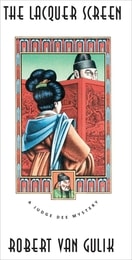
The Lacquer Screen
A Chinese Detective StoryRobert van Gulik
University of Chicago Press, 1962
Early in his career, Judge Dee visits a senior magistrate who shows him a beautiful lacquer screen on which a scene of lovers has been mysteriously altered to show the man stabbing his lover. The magistrate fears he is losing his mind and will murder his own wife. Meanwhile, a banker has inexplicably killed himself, and a lovely lady has allowed Dee's lieutenant, Chiao Tai, to believe she is a courtesan. Dee and Chiao Tai go incognito among a gang of robbers to solve this mystery, and find the leader of the robbers is more honorable than the magistrate.
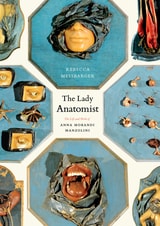
The Lady Anatomist
The Life and Work of Anna Morandi ManzoliniRebecca Messbarger
University of Chicago Press, 2010
Anna Morandi Manzolini (1714-74), a woman artist and scientist, surmounted meager origins and limited formal education to become one of the most acclaimed anatomical sculptors of the Enlightenment. The Lady Anatomist tells the story of her arresting life and times, in light of the intertwined histories of science, gender, and art that complicated her rise to fame in the eighteenth century.
Examining the details of Morandi’s remarkable life, Rebecca Messbarger traces her intellectual trajectory from provincial artist to internationally renowned anatomical wax modeler for the University of Bologna’s famous medical school. Placing Morandi’s work within its cultural and historical context, as well as in line with the Italian tradition of anatomical studies and design, Messbarger uncovers the messages contained within Morandi’s wax inscriptions, part complex theories of the body and part poetry. Widely appealing to those with an interest in the tangled histories of art and the body, and including lavish, full-color reproductions of Morandi’s work, The Lady Anatomist is a sophisticated biography of a true visionary.
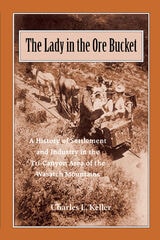
The Lady In The Ore Bucket
A History of Settlement and Industry in the Tri-Canyon Area of the Wasatch MountainsCharles L Keller
University of Utah Press, 2001
These place names, as well as the physcial traces and artifacts that persist in three Wasatch canyons—Mill Creek, Big Cottonwood, and Little Cottonwood—tantalize with what they suggest, but do not tell, about the history of settlement and development in the canyons. Charles Keller has extracted a wealth of information to create The Lady in the Ore Bucket, a faxcinating history of the lumber, mining, and hydropower industries built from the rich natural resources of the canyons. With more than six dozen photographs and maps, the book is alive with details concerning the personalities, politics, pacts, and peregrinations of local leaders from white settlement in 1847 through the early 1900s. It will delight any reader with an interest in the magnificent canyones that open onto the modern Wasatch Front.
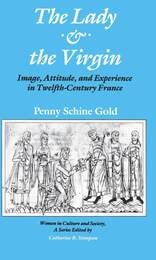
The Lady and the Virgin
Image, Attitude, and Experience in Twelfth-Century FrancePenny Schine Gold
University of Chicago Press, 1985
Vividly recreating the rich texture of medieval life, Gold effectively and eloquently goes beyond a simple equation of social context and representation. In the process. she challenges equally simple judgments of historical periods as being either "good" or "bad" for women.
"[The Lady and the Virgin] presents its findings in a form that should attract students as well as their instructors. The careful and controlled use of so many different kinds of sources . . . offers us a valuable medieval case study in the inner-relationship between the segments of society and its ethos or value system."—Joel T. Rosenthal, The History Teacher
"Something of a tour de force in an interdisciplinary approach to history."—Jo Ann McNamara, Speculum
"[A] well-written, extremely well-researched book. . . . The Lady and the Virgin is useful, readable, and well informed."—R. Howard Bloch, Modern Philology
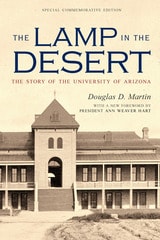
The Lamp in the Desert
The Story of the University of ArizonaDouglas D. Martin, With a New Foreword by President Ann Weaver Hart
University of Arizona Press, 1960

The Land Lies Open
Theodore Blegen
University of Minnesota Press, 1949
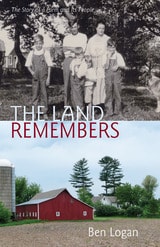
The Land Remembers
The Story of a Farm and Its PeopleBen Logan, with an introduction by Curt Meine
University of Wisconsin Press, 2017
The Land Still Lives
Jerry Apps
Wisconsin Historical Society Press, 2019
Originally published in 1970, The Land Still Lives is the first book by Wisconsin’s greatest rural philosopher, Jerry Apps. Written when he was still a young agriculture professor at the University of Wisconsin, The Land Still Lives was readers’ first introduction to Jerry’s farm in central Wisconsin, called Roshara, and the surrounding community of Skunk’s Hollow. This special 50th-anniversary edition features a new epilogue, in which Jerry revisits his philosophy of caring for the land so it in turn will care for us. This is vintage Apps, essential reading for Jerry’s legions of fans—and for all who, like Jerry, wish “to develop a relationship with nature and all its mystery and wonder.”
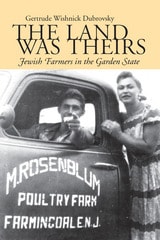
The Land Was Theirs
Jewish Farmers in the Garden StateGertrude W. Dubrovsky
University of Alabama Press, 1992
A historical account of Jewish agricultural colonies in New Jersey that examines how immigrants built farming communities in early America.
The Land Was Theirs is about Farmingdale, New Jersey, a community of Jewish farming communities in the United States established with the help of the Jewish Agricultural Society. The 50 year history of Farmingdale provides a perspective on the pressures, problems, and satisfactions of rural Jewish life as experienced in one community.
Beginning in 1919, the community grew around the small town of Farmingdale, when two Jewish families pooled their resources to establish a farm. The community evolved gradually as unrelated individuals with no previous farm experience settled and then created the institutions and organizations they needed to sustain their Jewish life. By 1945 Farmingdale was one of the leading egg-producing communities in the United States, and contributed in large measure to New Jersey’s reputation as the “egg basket of America.”
The Land Was Theirs draws from life-history interviews with 120 farmers, from the author’s personal experiences, and from a variety of private and community papers and documents. They are the pieces from which a full picture of a single Jewish farm community emerges.
The Land and the Loom
Peasants and Profit in Northern France, 1680–1800Liana Vardi
Duke University Press, 1993
Drawing on evidence culled from parish registers, notarial records, and judicial archives, Liana Vardi outlines the development of the linen weaving trade in Montigny and details the local peasants' participation. The peasants that emerge from her study are not the figures of tradition, driven solely by symbolic attachment to the land and unreasonably devoted to village solidarities. Instead they reveal remarkable flexibility and diversity, not only improving farming methods and raising yields during the eighteenth century, but also using land to finance investments in industry and to develop local business, far-flung commercial networks and complex credit mechanisms. The eighteenth-century French countryside appears as a region and time of capitalist experimentation, cut short by pre-Revolutionary and Revolutionary crises.
Meticulously documented, broadly interpretive, and beautifully written, this fascinating book will permenantly alter conventional perceptions of peasant life and rural industry and, ultimately, the way ordinary people are seen in seemingly distant times and places.
The Land between the Rivers
Thomas Nuttall's Ascent of the Arkansas, 1819Russell M. Lawson
University of Michigan Press, 2004
During the early nineteenth century, Nuttall explored the waters, valleys, plains, and mountains of the Great Lakes, Ohio River, Mississippi River, as well as the Missouri, Arkansas, Red, and Canadian river valleys of the former Louisiana Territory.
In this fascinating account of Nuttall's travels through the wilderness of the middle west, author Russell Lawson-using Nuttall's own journal-captures the sense of excitement of the early wanderer. As much a delight for the mind as the senses, The Land between the Rivers details the unremitting weather and rugged geography of uncharted lands within the Louisiana Territory. A sense of discovery pervades the narrative as Nuttall's odyssey builds to its climax in the prairie wilderness of what is now Oklahoma. Sickened by "ague"-in his case, malaria-Nuttall at times was barely able to go on; yet he continued to search for and catalog plants and animals.
The Land between the Rivers expands our knowledge of the work of one of the country's earliest botanists. We also learn a great deal about the early explorers, the inhabitants of the unsettled land, and about the land and culture of the times.
The Land beyond the Mists
Essays on Identity and Authority in Precolonial Congo and RwandaDavid Newbury
Ohio University Press, 2009
The horrific tragedies of Central Africa in the 1990s riveted the attention of the world. But these crises did not occur in a historical vacuum. By peering through the mists of the past, the case studies presented in The Land Beyond the Mists illustrate the significant advances to have taken place since decolonization in our understanding of the pre-colonial histories of Rwanda, Burundi, and eastern Congo.
Based on both oral and written sources, these essays are important both for their methods—viewing history from the perspective of local actors—and for their conclusions, which seriously challenge colonial myths about the area.

The Land of Green Plums
Herta Muller
Northwestern University Press, 1998
The Land of Journeys' Ending
Mary Austin
University of Illinois Press, 2003
When The Land of Journeys' Ending was first published in 1924, The Literary Reviewwarned, "This book is treacherous, waiting to overwhelm you with its abundant poetry." In it, successful New York author Mary Austin describes the epic journey she undertook in 1923, when left her East Coast home at the age of fifty-five to travel through the southwestern United States, the area where she lived as a child and where she would later retire.
The journey the book describes is a double one. Austin describes her transition from the cosmopolitan North East to the arid and largely unfamiliar land between the Colorado River and the Rio Grande. In telling her own story, Austin also tells the story of those who journeyed there before her-–Native American tribes, Spanish conquistadores, miners, adventurers, and California-bound migrants. The result is both an homage to the magnificence of the desert, mountains, rivers, canyons, plants, and animals of the Southwest and a history of the waves of people who inhabited the region.
Part memoir, part travel narrative, part historical investigation, and part ecological study, The Land of Journeys' Ending is a moving account of a woman coming full circle, finding solace in the broad landscape of her youth.
The Land of Milk and Uncle Honey
Memories from the Farm of My YouthAlan Guebert with Mary Grace Foxwell
University of Illinois Press, 2015
Here are Guebert's tireless parents, measuring the year not in months but in seasons for sewing, haying, and doing the books; Jackie the farmhand, needing ninety minutes to do sixty minutes' work and cussing the entire time; Hoard the dairyman, sore fingers wrapped in electrician's tape, sharing wine and the prettiest Christmas tree ever; and the unflappable Uncle Honey, spreading mayhem via mistreated machinery, flipped wagons, and the careless union of diesel fuel and fire.
Guebert's heartfelt and humorous reminiscences depict the hard labor and simple pleasures to be found in ennobling work, and show that in life, as in farming, Uncle Honey had it right with his succinct philosophy for overcoming adversity: "the secret's not to stop."
https://www.youtube.com/watch?v=DooGQqUlXI4&index=1&list=FLPxtuez-lmHxi5zpooYEnBg
The Land of My Fathers
A Son's Return to the Basque CountryRobert Laxalt
University of Nevada Press, 2024
In 1960, renowned Nevada writer Robert Laxalt moved himself and his family to a small Basque village in the French Pyrenees. The son of Basque emigrants, Laxalt wanted to learn as much as he could about the ancient and mysterious people from which he was descended and about the country from which his parents came. Thanks to his Basque surname and a wide network of family connections, Laxalt was able to penetrate the traditional reserve of the Basques in a way that outsiders rarely can. In the process, he gained rare insight into the nature of the Basques and the isolated, beautiful mountain world where they have lived for uncounted centuries. Based on Laxalt’s personal journals of this and a later sojourn in 1965, The Land of My Fathers is a moving record of a people and their homeland. Through Laxalt’s perceptive eyes and his wife Joyce’s photographs, we observe the Basques’ market days and festivals, join their dove hunts and harvests, share their humor and history, their deep sense of nationalism, their abiding pride in their culture and their homes, and discover the profound sources of the Basques’ strength and their endurance as a people. Photography by Joyce Laxalt.

The Language of Planning
Essays on the Origins and Ends of American Planning ThoughtAlbert Z. Guttenberg
University of Illinois Press, 1993
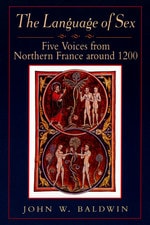
The Language of Sex
Five Voices from Northern France around 1200John W. Baldwin
University of Chicago Press, 1994
John Baldwin introduces five representative voices from the turn of the twelfth century in northern France: Pierre the Chanter speaks for the theological doctrine of Augustine; the Prose Salernitan Questions, for the medical theories of Galen; Andre the Chaplain, for the Ovidian literature of the schools; Jean Renart, for the contemporary romances; and Jean Bodel, for the emerging voices of the fabliaux. Baldwin juxtaposes their views on a range of essential subjects, including social position, the sexual body, desire and act, and procreation. The result is a fascinating dialogue of how they agreed or disagreed with, ignored, imitated, or responded to each other at a critical moment in the development of European ideas about sexual desire, fulfillment, morality, and gender.
These spokesmen allow us into the discussion of sexuality inside the church and schools of the clergy, in high and popular culture of the leity. This heterogeneous discussion also offers a startling glimpse into the construction of gender specific to this moment, when men and women enjoyed equal status in sexual matters, if nowhere else.
Taken together, these voices extend their reach, encompass their subject, and point to a center where social reality lies. By articulating reality at its varied depths, this study takes its place alongside groundbreaking works by James Brundage, John Boswell, and Leah Otis in extending our understanding of sexuality and sexual behavior in the Middle Ages.
"Superb work. . . . These five kinds of discourse are not often treated together in scholarly writing, let alone compared and contrasted so well."—Edward Collins Vacek, Theological Studies
"[Baldwin] has made the five voices speak to us in a language that is at one and the same time familiar and alien in its resonance and accents. This is a truly exceptional book, interdisciplinary in the real sense of the word, which is surely destined to become a landmark in medieval studies."—Keith Busby, Bryn Mawr Reviews
"[Baldwin's] attempt to 'listen' to these distant voices and translate their language of sex into our own raises challenging methodological questions that will be of great interest to historians and literary scholars alike."—John P. Dalton, Comitatus
The Language of the Inka since the European Invasion
By Bruce Mannheim
University of Texas Press, 1991
The Inka empire, Tawantinsuyu, fell to Spanish invaders within a year's time (1532-1533), but Quechua, the language of the Inka, is still the primary or only language of millions of Inka descendants throughout the southern Andes. In this innovative study, Bruce Mannheim synthesizes all that is currently known about the history of Southern Peruvian Quechua since the Spanish invasion, providing new insights into the nature of language change in general, into the social and historical contexts of language change, and into the cultural conditioning of linguistic change.
Mannheim first discusses changes in the social setting of language use in the Andes from the time of the first European contact in the sixteenth century until today. He reveals that the modern linguistic homogeneity of Spanish and Quechua is a product of the Spanish conquest, since multilingualism was the rule in the Inka empire. He identifies the social and political forces that have influenced the kinds of changes the language has undergone. And he provides the first synthetic history of Southern Peruvian Quechua, making it possible at last to place any literary document or written text in a chronological and social context.
Mannheim also studies changes in the formal structure of Quechua. He finds that changes in the sound system were motivated primarily by phonological factors and also that the changes were constrained by a set of morphological and syntactic conditions. This last conclusion is surprising, since most historical linguists assume that sound change is completely independent of other aspects of language. Thus, The Language of the Inka since the European Invasion makes an empirical contribution to a general theory of linguistic change.
Written in an engaging style that is accessible to the nonlinguist, this book will have a special appeal to readers interested in the history and anthropology of native South America.
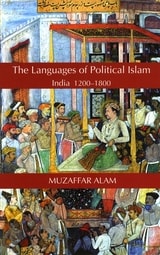
The Languages of Political Islam
India 1200-1800Muzaffar Alam
University of Chicago Press, 2004
Muzaffar Alam shows that the adoption of Arabo-Persian Islam in India changed the manner in which Islamic rule and governance were conducted. Islamic regulation and statecraft in a predominately Hindu country required strategic shifts from the original Islamic injunctions. Islamic principles could not regulate beliefs in a vast country without accepting cultural limitations and limits on the exercise of power. As a result of cultural adaptation, Islam was in the end forced to reinvent its principles for religious rule. Acculturation also forced key Islamic terms to change so fundamentally that Indian Islam could be said to have acquired a character substantially different from the Islam practiced outside of India.
The Languages of Scandinavia
Seven Sisters of the NorthRuth H. Sanders
University of Chicago Press, 2017
While the two linguistic families that comprise Scandinavia’s languages ultimately have differing origins, the Seven Sisters have coexisted side by side for millennia. As Sanders reveals, a crisscrossing of names, territories, and even to some extent language genetics—intimate language contact—has created a body of shared culture, experience, and linguistic influences that is illuminated when the story of these seven languages is told as one. Exploring everything from the famed whalebone Lewis Chessmen of Norse origin to the interactions between the Black Death and the Norwegian language, The Languages of Scandinavia offers profound insight into languages with a cultural impact deep-rooted and far-reaching, from the Icelandic sagas to Swedish writer Stieg Larsson’s internationally popular Millennium trilogy. Sanders’s book is both an accessible work of linguistic scholarship and a fascinating intellectual history of language.
The Last "Darky"
Bert Williams, Black-on-Black Minstrelsy, and the African DiasporaLouis Chude-Sokei
Duke University Press, 2006
Chude-Sokei makes the crucial argument that Williams’s minstrelsy negotiated the place of black immigrants in the cultural hotbed of New York City and was replicated throughout the African diaspora, from the Caribbean to Africa itself. Williams was born in the Bahamas. When performing the “darky,” he was actually masquerading as an African American. This black-on-black minstrelsy thus challenged emergent racial constructions equating “black” with African American and marginalizing the many diasporic blacks in New York. It also dramatized the practice of passing for African American common among non-American blacks in an African American–dominated Harlem. Exploring the thought of figures such as Booker T. Washington, W. E. B. Du Bois, Marcus Garvey, and Claude McKay, Chude-Sokei situates black-on-black minstrelsy at the center of burgeoning modernist discourses of assimilation, separatism, race militancy, carnival, and internationalism. While these discourses were engaged with the question of representing the “Negro” in the context of white racism, through black-on-black minstrelsy they were also deployed against the growing international influence of African American culture and politics in the twentieth century.
The Last Asylum
A Memoir of Madness in Our TimesBarbara Taylor
University of Chicago Press, 2015
The Last Asylum is Taylor’s breathtakingly blunt and brave account of those years. In it, Taylor draws not only on her experience as a historian, but also, more importantly, on her own lived history at Friern— once known as the Colney Hatch Lunatic Asylum and today the site of a luxury apartment complex. Taylor was admitted to Friern in July 1988, not long before England’s asylum system began to undergo dramatic change: in a development that was mirrored in America, the 1990s saw the old asylums shuttered, their patients left to plot courses through a perpetually overcrowded and underfunded system of community care. But Taylor contends that the emptying of the asylums also marked a bigger loss, a loss of community. She credits her own recovery to the help of a steadfast psychoanalyst and a loyal circle of friends— from Magda, Taylor’s manic-depressive roommate, to Fiona, who shares tips for navigating the system and stories of her boyfriend, the “Spaceman,” and his regular journeys to Saturn. The forging of that network of support and trust was crucial to Taylor’s recovery, offering a respite from the “stranded, homeless feelings” she and others found in the outside world.
A vivid picture of mental health treatment at a moment of epochal change, The Last Asylum is also a moving meditation on Taylor’s own experience, as well as that of millions of others who struggle with mental illness.
The Last Battle of the Civil War
Palmetto RanchBy Jeffrey Wm Hunt
University of Texas Press, 2002
More than two months after Robert E. Lee surrendered the Army of Northern Virginia on April 9, 1865, the New York Times reported a most surprising piece of news. On May 12-13, the last battle of the Civil War had been fought at the southernmost tip of Texas—resulting in a Confederate victory. Although Palmetto Ranch did nothing to change the war's outcome, it added the final irony to a conflict replete with ironies, unexpected successes, and lost opportunities. For these reasons, it has become both one of the most forgotten and most mythologized battles of the Civil War.
In this book, Jeffrey Hunt draws on previously unstudied letters and court martial records to offer a full and accurate account of the battle of Palmetto Ranch. As he recreates the events of the fighting that pitted the United States' 62nd Colored Troops and the 34th Indiana Veteran Volunteer Infantry against Texas cavalry and artillery battalions commanded by Colonel John S. "Rip" Ford, Hunt lays to rest many misconceptions about the battle. In particular, he reveals that the Texans were fully aware of events in the East—and still willing to fight for Southern independence. He also demonstrates that, far from fleeing the battle in a panic as some have asserted, the African American troops played a vital role in preventing the Union defeat from becoming a rout.
The Last Called Mormon Colonization
Polygamy, Kinship, and Wealth in Wyoming's Bighorn BasinJohn Gary Maxwell
University of Utah Press, 2021
The LDS Church officially abandoned polygamy in 1890, but evidence that the practice was still tolerated (if not officially sanctioned) by the church circulated widely, resulting in intense investigations by the U.S. Senate. In 1896 Abraham Owen Woodruff, a rising star in LDS leadership and an ardent believer in polygamy, was appointed to head the LDS Colonization Company. Maxwell explores whether under Woodruff’s leadership the Bighorn Basin colony was intended as a means to insure the secret survival of polygamy and if his untimely death in 1904, together with the excommunication of two equally dedicated proponents of polygamy—Apostles John Whitaker Taylor and Matthias Foss Cowley—led to its collapse.
Maxwell also details how Mormon settlers in Wyoming struggled with finance, irrigation, and farming and how they brought the same violence to indigenous peoples over land and other rights as did non-Mormons.
The 1900 Bighorn Basin colonization provides an early twentieth-century example of a Mormon syndicate operating at the intersection of religious conformity, polygamy, nepotism, kinship, corporate business ventures, wealth, and high priesthood status. Maxwell offers evidence that although in many ways the Bighorn Basin colonization failed, Owen Woodruff’s prophecy remains unbroken: “No year will ever pass, from now until the coming of the Savior, when children will not be born in plural marriage.”
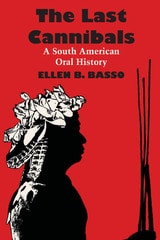
The Last Cannibals
A South American Oral HistoryBy Ellen B. Basso
University of Texas Press, 1995
An especially comprehensive study of Brazilian Amazonian Indian history, The Last Cannibals is the first attempt to understand, through indigenous discourse, the emergence of Upper Xingú society. Drawing on oral documents recorded directly from the native language, Ellen Basso transcribes and analyzes nine traditional Kalapalo stories to offer important insights into Kalapalo historical knowledge and the performance of historical narratives within their nonliterate society.
This engaging book challenges the familiar view of biography as a strictly Western literary form. Of special interest are biographies of powerful warriors whose actions led to the emergence of a more recent social order based on restrained behaviors from an earlier time when people were said to be fierce and violent.
From these stories, Basso explores how the Kalapalo remember and understand their past and what specific linguistic, psychological, and ideological materials they employ to construct their historical consciousness. Her book will be important reading in anthropology, folklore, linguistics, and South American studies.
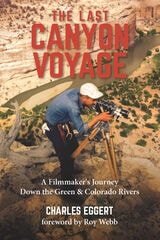
The Last Canyon Voyage
A Filmmaker's Journey Down the Green and Colorado RiversCharles Eggert Foreword by Roy Webb
University of Utah Press, 2020
This book finally brings Eggert’s writings out of the archives and into the public eye. With his keen photographer’s vision and colloquial voice, Eggert describes canyons and towns now deep under water as he tells the story of friendships forged upon the rapids and currents of the rivers. Roy Webb’s foreword provides historical context; river historian Alfred E. Holland Jr. introduces Eggert, the man who transformed into an environmentalist after visiting the West; and Sarah Holcombe’s afterword looks at what transpired in the lives of all eight crew members after the journey. Color and black-and-white illustrations further enliven the text. An engaging read, this is an important piece of river history that also shines light on Eggert’s tremendous influence as a conservation cinematographer.
The Last Century in the History of Judah
The Seventh Century BCE in Archaeological, Historical, and Biblical PerspectivesFilip Čapek
SBL Press, 2019
An incomparable interdisciplinary study of the history of Judah
Experts from a variety of disciplines examine the history of Judah during the seventh century BCE, the last century of the kingdom’s existence. This important era is well defined historically and archaeologically beginning with the destruction layers left behind by Sennacherib’s Assyrian campaign (701 BCE) and ending with levels of destruction resulting from Nebuchadnezzar’s Babylonian campaign (588-586 BCE). Eleven essays develop the current ongoing discussion about Judah during this period and extend the debate to include further important insights in the fields of archaeology, history, cult, and the interpretation of Old Testament texts.
Features
- A new chronological frame for the Iron Age IIB-IIC
- Close examinations of archaeology, texts, and traditions related to the reigns of Hezekiah, Manasseh, and Josiah
- An evaluation of the religious, cultic, and political landscape < /UL>
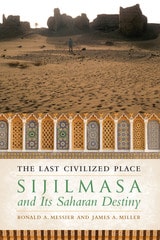
The Last Civilized Place
Sijilmasa and Its Saharan DestinyBy Ronald A. Messier and James A. Miller
University of Texas Press, 2015
Set along the Sahara’s edge, Sijilmasa was an African El Dorado, a legendary city of gold. But unlike El Dorado, Sijilmasa was a real city, the pivot in the gold trade between ancient Ghana and the Mediterranean world. Following its emergence as an independent city-state controlling a monopoly on gold during its first 250 years, Sijilmasa was incorporated into empire—Almoravid, Almohad, and onward—leading to the “last civilized place” becoming the cradle of today’s Moroccan dynasty, the Alaouites. Sijilmasa’s millennium of greatness ebbed with periods of war, renewal, and abandonment. Today, its ruins lie adjacent to and under the modern town of Rissani, bypassed by time.
The Moroccan-American Project at Sijilmasa draws on archaeology, historical texts, field reconnaissance, oral tradition, and legend to weave the story of how this fabled city mastered its fate. The authors’ deep local knowledge and interpretation of the written and ecological record allow them to describe how people and place molded four distinct periods in the city’s history. Messier and Miller compare models of Islamic cities to what they found on the ground to understand how Sijilmasa functioned as a city. Continuities and discontinuities between Sijilmasa and the contemporary landscape sharpen questions regarding the nature of human life on the rim of the desert. What, they ask, allows places like Sijilmasa to rise to greatness? What causes them to fall away and disappear into the desert sands?
The Last Colonial Massacre
Latin America in the Cold WarGreg Grandin
University of Chicago Press, 2004
Using Guatemala as a case study, Greg Grandin argues that the Cold War in Latin America was a struggle not between American liberalism and Soviet Communism but between two visions of democracy. The main effect of United States intervention in Latin America, Grandin shows, was not the containment of Communism but the elimination of home-grown concepts of social democracy.
Through unprecedented archival research and gripping personal testimonies, Grandin uncovers the hidden history of the Latin American Cold War: of hidebound reactionaries intent on holding on to their own power and privilege; of Mayan Marxists, blending indigenous notions of justice with universal ideas of freedom and equality; and of a United States supporting new styles of state terror throughout the continent. Drawing from declassified U.S. documents, Grandin exposes Washington's involvement in the 1966 secret execution of more than thirty Guatemalan leftists, which, he argues, prefigured the later wave of disappearances in Chile and Argentina.
Impassioned but judicious, The Last Colonial Massacre is history of the highest order—a work that will dramatically recast our understanding of Latin American politics and the triumphal role of the United States in the Cold War and beyond.
The Last Colonial Massacre
Latin America in the Cold War, Updated EditionGreg Grandin
University of Chicago Press, 2011
After decades of bloodshed and political terror, many lament the rise of the left in Latin America. Since the triumph of Castro, politicians and historians have accused the left there of rejecting democracy, embracing communist totalitarianism, and prompting both revolutionary violence and a right-wing backlash. Through unprecedented archival research and gripping personal testimonies, Greg Grandin powerfully challenges these views in this classic work. In doing so, he uncovers the hidden history of the Latin American Cold War: of hidebound reactionaries holding on to their power and privilege; of Mayan Marxists blending indigenous notions of justice with universal ideas of equality; and of a United States supporting new styles of state terror throughout the region.
With Guatemala as his case study, Grandin argues that the Latin American Cold War was a struggle not between political liberalism and Soviet communism but two visions of democracy—one vibrant and egalitarian, the other tepid and unequal—and that the conflict’s main effect was to eliminate homegrown notions of social democracy. Updated with a new preface by the author and an interview with Naomi Klein, The Last Colonial Massacre is history of the highest order—a work that will dramatically recast our understanding of Latin American politics and the role of the United States in the Cold War and beyond.
“This work admirably explains the process in which hopes of democracy were brutally repressed in Guatemala and its people experienced a civil war lasting for half a century.”—International History Review
“A richly detailed, humane, and passionately subversive portrait of inspiring reformers tragically redefined by the Cold War as enemies of the state.”—Journal of American History
The Last Consolation Vanished
The Testimony of a Sonderkommando in AuschwitzZalmen Gradowski
University of Chicago Press, 2022
On October 7, 1944, a group of Jewish prisoners in Auschwitz obtained explosives and rebelled against their Nazi murderers. It was a desperate uprising that was defeated by the end of the day. More than four hundred prisoners were killed. Filling a gap in history, The Last Consolation Vanished is the first complete English translation and critical edition of one prisoner’s powerful account of life and death in Auschwitz, written in Yiddish and buried in the ashes near Crematorium III.
Zalmen Gradowski was in the Sonderkommando (special squad) at Auschwitz, a Jewish prisoner given the unthinkable task of ushering Jewish deportees into the gas chambers, removing their bodies, salvaging any valuables, transporting their corpses to the crematoria, and destroying all evidence of their murders. Sonderkommandos were forcibly recruited by SS soldiers; when they discovered the horror of their assignment, some of them committed suicide or tried to induce the SS to kill them. Despite their impossible situation, many Sonderkommandos chose to resist in two interlaced ways: planning an uprising and testifying. Gradowski did both, by helping to lead a rebellion and by documenting his experiences. Within 120 scrawled notebook pages, his accounts describe the process of the Holocaust, the relentless brutality of the Nazi regime, the assassination of Czech Jews, the relationships among the community of men forced to assist in this nightmare, and the unbearable separation and death of entire families, including his own. Amid daily unimaginable atrocities, he somehow wrote pages that were literary, sometimes even lyrical—hidden where and when one would least expect to find them.
The October 7th rebellion was completely crushed and Gradowski was killed in the process, but his testimony lives on. His extraordinary and moving account, accompanied by a foreword and afterword by Philippe Mesnard and Arnold I. Davidson, is a voice speaking to us from the past on behalf of millions who were silenced. Their story must be shared.
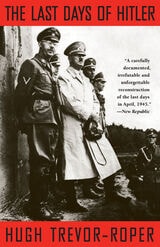
The Last Days of Hitler
Hugh Trevor-Roper
University of Chicago Press, 1992
"From exhaustive research [Trevor-Roper] has put together a carefully documented, irrefutable, and unforgettable reconstruction of the last days in April, 1945."—New Republic
"A book sound in its scholarship, brilliant in its presentation, a delight for historians and laymen alike."—A. J. P. Taylor, New Statesman
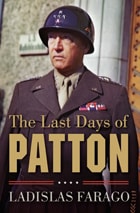
The Last Days of Patton
Ladislas Farago
Westholme Publishing, 2011
A Classic Account of America’s Greatest Field General at the End of World War II—and the Mystery Surrounding His Death
“It would be as hard to give up all thought [of being a soldier] as it would be to stop breathing,” wrote George S. Patton in October 1945; “The great tragedy of my life was that I survived the last battle.” But Patton would not see the year out: in December he would die as a result of injuries sustained in an automobile accident in Germany. His unexpected death sent shock waves through the American and Russian commands. It seemed plausible that America’s greatest general may have been a victim of foul play. In the seven months following the German surrender, Patton had openly and provocatively criticized the Soviet Union and appeared to have transformed from a staunch anti-Nazi to a Nazi sympathizer. The Last Days of Patton by Ladislas Farago, a follow-up to his bestselling Patton: Ordeal and Triumph, attempts to reconstruct the last months of Patton’s life in order to determine if the general did indeed try to provoke a war with the Soviet Union and whether he failed to sufficiently de-Nazify the area of Germany under his jurisdiction. Farago also investigates the possibility of a conspiracy to murder Patton and reveals the role other prominent men, including Eisenhower, Montgomery, Marshall, and MacArthur, had in censuring and ultimately removing Patton from active service. The Last Days of Patton, originally published in 1981, is the story of the general’s final battle—a professional soldier caught up in the changing politics of the emerging Cold War and new reality of the atomic age.
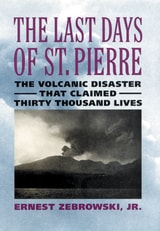
The Last Days of St. Pierre
The Volcanic Disaster That Claimed 30,000 LivesErnest Zebrowski, Jr.
Rutgers University Press, 2002
On May 8, 1902, Mont Pelée on the island of Martinique exploded. A deadly cloud of steam and ash churned through plantations and villages, flattened the grand city of St. Pierre, then thundered into the bay where it sank eighteen ships and hundreds of smaller craft. Within a minute or two, nearly 30,000 humans died. The splintered rubble of their homes and belongings burned for three days, and the world began to understand the awesome power of nuées ardentes, glowing avalanches of hot gas and debris that sweep down the slopes of volcanoes, instantly steaming to death anything in its path. The enormous death toll was particularly tragic because it was avoidable. Had it not been for an unfortunate combination of scientific misjudgment and political hubris, most of the victims would have escaped.
In The Last Days of St. Pierre, Ernest Zebrowski Jr. counts down the days leading up to the catastrophe, and unfolds a tale intertwining human foolishness and heroism with the remarkable forces of nature. Illustrations contrast life in Martinique before and after the eruption, and eyewitness accounts bring the story to life.
Although it seems a long time since the destruction of St. Pierre, it is a mere blink of an eye in our planet’s geological history. Mont Pelée will erupt again, as will Vesuvius, Krakatau, St. Helens, Thera, and most other infamously fatal volcanoes, and human lives will again be threatened. The St. Pierre disaster has taught us much about the awesome power of volcanic forces and the devastation they can bring.
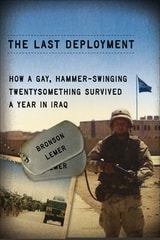
The Last Deployment
How a Gay, Hammer-Swinging Twentysomething Survived a Year in IraqBronson Lemer
University of Wisconsin Press, 2011
In 2003, after serving five and a half years as a carpenter in a North Dakota National Guard engineer unit, Bronson Lemer was ready to leave the military behind. But six months short of completing his commitment to the army, Lemer was deployed on a yearlong tour of duty to Iraq. Leaving college life behind in the Midwest, he yearns for a lost love and quietly dreams of a future as an openly gay man outside the military. He discovers that his father’s lifelong example of silent strength has taught him much about being a man, and these lessons help him survive in a war zone and to conceal his sexuality, as he is required to do by the U.S. military.
Finalist, Minnesota Book Awards
Finalist, Over the Rainbow Selection, American Library Association
Amazon Top Ten 10 Gay & Lesbian Books of 2011

The Last Dinosaur Book
The Life and Times of a Cultural IconW. J. T. Mitchell
University of Chicago Press, 1998
Mitchell aims to trace the cultural family tree of the dinosaur, and what he discovers is a creature of striking flexibility, linked to dragons and mammoths, skyscrapers and steam engines, cowboys and Indians. In the vast territory between the cunning predators of Jurassic Park and the mawkishly sweet Barney, from political leviathans to corporate icons, from paleontology to Barnum and Bailey, Mitchell finds a cultural symbol whose plurality of meaning and often contradictory nature is emblematic of modern society itself. As a scientific entity, the dinosaur endured a near-eclipse for over a century, but as an image it is enjoying its widest circulation. And it endures, according to Mitchell, because it is uniquely malleable, a figure of both innovation and obsolescence, massive power and pathetic failure—the totem animal of modernity.
Drawing unforeseen and unusual connections at every turn between dinosaurs real and imagined, The Last Dinosaur Book is the first to delve so deeply, so insightfully, and so enjoyably into our modern dino-obsession.
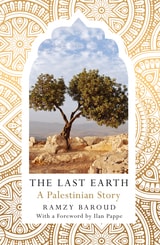
The Last Earth
A Palestinian StoryRamzy Baroud
Pluto Press, 2018
Ordinary Palestinians have rarely narrated their own history. In this groundbreaking book, acclaimed author Ramzy Baroud draws on dozens of interviews to produce vivid, intimate and beautifully written accounts of Palestinian lives - in villages, refugee camps, prisons and cities, in the lands of their ancestors and in exile. Baroud's empathetic and lyrical approach reveals new human dimensions of the Palestinian saga, telling it as it has never before been told.
Against dominant narratives, the last earth reclaims Palestine's past - and present - for all its people.

The Last Empire
Thirty Years of Portuguese DecolonizationAntónio Costa Pinto
Intellect Books, 2003
This book is the result of a conference organised by the Contemporary Portuguese Political History Research Centre (CPHRC) and the University of Dundee that took place during September 2000. The purpose of this conference, and the resulting book, was to bring together various experts in the field to analyse and debate the process of Portuguese decolonisation, which was then 25 years old, and the effects of this on the Portuguese themselves. For over one century, the Portuguese state had defined its foreign policy on the basis of its vast empire &endash; this was the root of its 'Atlanticist' vision. The outbreak of war of liberation in its African territories, which were prompted by the new international support for self determination in colonised territories, was a serious threat that undermined the very foundations of the Portuguese state. This book examines the nature of this threat, how the Portuguese state initially attempted to overcome it by force, and how new pressures within Portuguese society were given space to emerge as a consequence of the colonial wars.
This is the first book that takes a multidisciplinary look at both the causes and the consequences of Portuguese decolonisation &endash; and is the only one that places the loss of Portugal's Eastern Empire in the context of the loss of its African Empire. Furthermore, it is the only English language book that relates the process of Portuguese decolonisation with the search for a new Portuguese vision of its place in the world.
This book is intended for anyone who is interested in regime change, decolonisation, political revolutions and the growth and development of the European Union. It will also be useful for those who are interested in contemporary developments in civil society and state ideologies. Given that a large part of the book is dedicated to the process of change in the various countries of the former Portuguese Empire, it will also be of interest to students of Africa. It will be useful to those who study decolonisation processes within the other former European Empires, as it provides comparative detail. The book will be most useful to academic researchers and students of comparative politics and area studies.
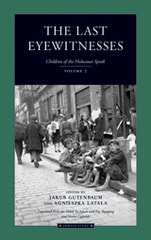
The Last Eyewitnesses, Volume 2
The Children of the Holocaust SpeakJakub Gutenbaum and Agnieszka Latala
Northwestern University Press, 2005
This book serves as a memorial to loved ones who do not even have a grave, as well as a tribute to those who risked their lives and families to save a Jewish child. A wide variety of experiences during the Nazi occupation of Poland are related with wrenching simplicity and candor, experiences that illustrate horrors and deprivation, but also present examples of courage and compassion.
These recollections-whether of hiding in forests or camouflaged bunkers, fighting with groups of partisans, enduring the horrors of concentration camps, or living in fear under disguised identities-serve as eloquent testimony to the depth, diversity, and richness of humanity under siege and offer a powerful lesson for future generations. Written by people who remained in Poland after the war, these accounts convey a great immediacy; the authors are not removed from the environment in which these experiences took place. The psychological impact on these child survivors and the difficulties they encountered even after the war are very poignant. The passing years have brought urgency to the publication of these stories, as those who wrote them are the last surviving eyewitnesses of these tumultuous events.
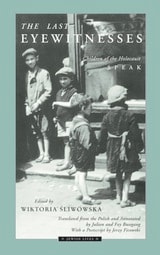
The Last Eyewitnesses
Children of the Holocaust SpeakWiktoria Sliwowska
Northwestern University Press, 1998
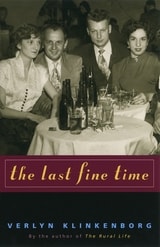
The Last Fine Time
Verlyn Klinkenborg
University of Chicago Press, 2004
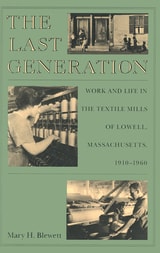
The Last Generation
Work and Life in the Textile Mills of Lowell, Massachusetts, 1910-1960Mary H. Blewett
University of Massachusetts Press, 1990
Oral histories of many of the last generation of Lowell, MA, textile mill workers preceded by two introductory sections. The first presents the historic setting of economic development and subsequent decline of the textile industry in Lowell. The second is a brief explanation of the production process wherein the last generation of mill workers expended so many of their skills and so much of their energy.
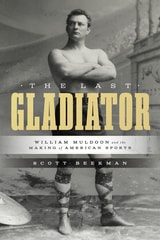
The Last Gladiator
William Muldoon and the Making of American SportsScott Beekman
University of Texas Press, 2025
2026 Honorable Mention in Monographs, North American Society for Sport History (NASSH)
The incredible career of the forgotten but foundational pro wrestler who shaped American sports culture.
William Muldoon was an infamous athlete whose prowess, savvy, and chicanery across his six-decade career led him to wealth, cultural importance, and political power. Muldoon, the child of poor Irish immigrants, began wrestling in the 1870s and quickly became one of the most famous athletes of the post–Civil War era. He started acting and modeling as his popularity grew, making him one of the first sports stars to achieve crossover success. After a triumphant stint rehabilitating fallen boxing heavyweight champion John L. Sullivan in 1889, he retired from the ring and began a new career as a fitness impresario, founding an elite gymnasium and remaking himself as a health authority in the press. He became trainer to the rich, famous, and politically powerful, which led to his appointment as chair of the New York State Athletic Commission in the 1920s. From this position, Muldoon exerted his influence over the rules of boxing and wrestling and weaponized his power to maintain segregation in sport.
The Last Gladiator is a deep, insightful dive into Muldoon’s life and impact, demonstrating the significance of this often-controversial figure in the development of American sports, professional wrestling, and physical and popular culture.