Results by title
22279 books match the query 'Social Science' and 4007 start with t

The Slumbering Volcano
American Slave Ship Revolts and the Production of Rebellious MasculinityMaggie Montesinos Sale
Duke University Press, 1997
This comparison of narrative response with written public reaction to the actual revolts allows Sale to investigate the precise manner in which public opinion regarding definitions of liberty evolved over this crucial period of time between the Revolutionary and Civil Wars. Mapping the ways in which unequally empowered groups claimed and transformed statements associated with the discourse of national identity, Sale succeeds in recovering a historically informed sense of the discursive and activist options available to people of another era.
In its demonstration of how the United States has been uniquely shaped by its dual status as both an imperial and a postcolonial power, this study on the discourse of natural rights and national identity in the pre-Civil War United States will interest students and scholars of American studies, African American studies, gender studies, and American history and literature.

The Small Book of Hip Checks
On Queer Gender, Race, and WritingErica Rand
Duke University Press, 2021

The Small City and Town
A Conference on Community RelationsRoland Vaile
University of Minnesota Press, 1930

The Small Matter of Suing Chevron
Suzana Sawyer
Duke University Press, 2022
The Small-Town Midwest
Resilience and Hope in the Twenty-First CenturyJulianne Couch
University of Iowa Press, 2016
The people featured live—by choice or circumstances—in one of nine small communities in five states in the Midwest and Great Plains: Iowa, Kansas, Missouri, Nebraska, and Wyoming. Daily they witness people moving out, heading to more urban areas, small businesses closing down, connected infrastructure drying up, entrepreneurs becoming discouraged, and more people thinking about leaving. This is the story we hear in the news, the story told by abandoned farms, consolidated schools, and boarded-up Main Streets.
But it’s not the whole story. As Couch found in her travels throughout the Midwest, many people long to return to these towns, places where they may have deep family roots or where they can enjoy short commutes, familiar neighbors, and proximity to rural and wild places. And many of the residents of small midwestern towns are not just accepting the trend toward urbanization with a sigh. They are betting that the tide of rural population loss can’t go out forever, and they’re backing those bets with creatively repurposed schools, entrepreneurial innovation, and community commitment. From Bellevue, Iowa, to Centennial, Wyoming, the region’s small-town residents remain both hopeful and resilient.

The Smell of Humans
A Memoir of the Holocaust in HungaryErno Szép
Central European University Press, 1994

The Snodgrass Site of the Powers Phase of Southeast Missouri
James E. Price and James B. Griffin
University of Michigan Press, 1979
The Snyders Mounds and Five Other Mound Groups in Calhoun County, Illinois
David P. Braun, James B. Griffin and Paul F. Titterington
University of Michigan Press, 1982
The Social Citizen
Peer Networks and Political BehaviorBetsy Sinclair
University of Chicago Press, 2012

The Social Education of Bulgarian Youth
Peter Georgeoff
University of Minnesota Press, 1968
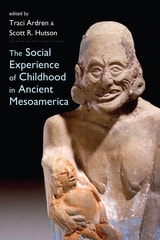
The Social Experience of Childhood in Ancient Mesoamerica
Traci Ardren
University Press of Colorado, 2015
Contributors examine material evidence, historical records, and iconography, productively criticizing the claim that children are invisible in the archaeological record and elucidating an ancient childhood comprising multiple and complex identities. They explore the methodological and theoretical difficulties created when investigating childhood - a category defined by each culture - in the archaeological record.
Sure to appeal widely to New World and Old World archaeologists and anthropologists, The Social Experience of Childhood in Ancient Mesoamerica opens up new avenues of research into the lives of this previously overlooked yet remarkably large population.
Contributors include Traci Ardren, Ximena Chávez Balderas, Billie Follensbee, Byron Hamann, Scott R. Hutson, Rosemary A. Joyce, Stacie M. King, Jeanne Lopiparo, Patricia McAnany, Geoffrey G. McCafferty, Sharisse D. McCafferty, Juan Alberto Román Berrelleza, Rebecca Storey, Rissa M. Trachman, Fred Valdez Jr.

The Social Life of Biometrics
George C Grinnell
Rutgers University Press, 2020

The Social Life of Financial Derivatives
Markets, Risk, and TimeEdward LiPuma
Duke University Press, 2017
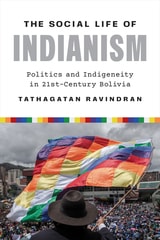
The Social Life of Indianism
Politics and Indigeneity in Twenty-First-Century BoliviaTathagatan Ravindran
University of Texas Press, 2025
A sophisticated analysis of an influential Indigenous political ideology.
When the political ideology known as “Indianism” developed in Bolivia in the 1960s, it was premised on a rejection of Bolivian nationalism. Over the ensuing decades, however, it underwent several mutations as it moved out of a close circle of intellectuals to grip the urban masses that brought Evo Morales—the first Indigenous president—to power in 2006.
The Social Life of Indianism offers a fresh perspective by examining Bolivian Indigenous politics through the lens of political ideology. Through an ethnographic study of Indianism in the city of El Alto, Tathagatan Ravindran shows how canonical Indianism—the original ideology that rejects Bolivia as enslaver of the Indian nation—provided philosophical ballast for exponents of a more popular folk Indianism that accommodates the Bolivian state and pursues Indigenous empowerment within it. Synthesizing approaches from several disciplines, Ravindran demonstrates how canonical Indianism was not refuted or supplanted; it refracted, in the broader public, into a new common sense. A sophisticated analysis of a complex political landscape, The Social Life of Indianism brings much-needed nuance to one of the most prominent forms of Indigenous ideology and offers a unique framework for analyzing political ideologies across the contemporary world.

The Social Life of Pots
Glaze Wares and Cultural Dynamics in the Southwest, AD 1250-1680Edited by Judith A. Habicht-Mauche, Suzanne L. Eckert, and Deborah L. Huntley
University of Arizona Press, 2006
Through the study of glaze-painted pottery, archaeologists are beginning to understand that pots had “social lives” in this changing world and that careful reconstruction of the social lives of pots can help us understand the social lives of Puebloan peoples. In this book, fifteen contributors apply a wide range of technological and stylistic analysis techniques to pottery of the Rio Grande and Western Pueblo areas to show what it reveals about inter- and intra-community dynamics, work groups, migration, trade, and ideology in the precontact and early postcontact Puebloan world.
The contributors report on research conducted throughout the glaze producing areas of the Southwest and cover the full historical range of glaze ware production. Utilizing a variety of techniques—continued typological analyses, optical petrography, instrumental neutron activation analysis, X-ray microprobe analysis, and inductively coupled plasma mass spectroscopy—they develop broader frameworks for examining the changing role of these ceramics in social dynamics. By tracing the circulation and exchange of specialized knowledge, raw materials, and the pots themselves via social networks of varying size, they show how glaze ware technology, production, exchange, and reflected a variety of dynamic historical and social processes.
Through this material evidence, the contributors reveal that technological and aesthetic innovations were deliberately manipulated and disseminated to actively construct “communities of practice” that cut across language and settlement groups. The Social Life of Pots offers a wealth of new data from this crucial period of prehistory and is an important baseline for future work in this area.
Contributors
Patricia Capone
Linda S. Cordell
Suzanne L. Eckert
Thomas R. Fenn
Judith A. Habicht-Mauche
Cynthia L Herhahn
Maren Hopkins
Deborah L. Huntley
Toni S. Laumbach
Kathryn Leonard
Barbara J. Mills
Kit Nelson
Gregson Schachner
Miriam T. Stark
Scott Van Keuren

The Social Life of Reading
Race, Book Clubs, and Post-Digital Readership in AmericaTamara Bhalla
University of Massachusetts Press, 2027
Showing how what we read, and with whom, reveals how power works in America
In an interview about his novel The Emperor of Gladness being selected for Oprah’s Book Club, Ocean Vuong recalled the women in his mother’s nail salon—working-class immigrants, mostly single mothers—who would buy whatever book Oprah had chosen. What she gave them, Vuong reflected, was “access… a ticket into the discourse.” Books, he said, “can change the posture of somebody’s mother.” It’s a small observation, but it points to something Tamara Bhalla takes seriously in The Social Life of Reading: that how we read, what we read, and with whom we read is rarely just a matter of personal taste.
Bhalla reveals how social reading practices, from celebrity book selections to Goodreads reviews, are crucial arenas where power circulates, gets contested, and gets remade in contemporary American culture. Drawing on sociology of literature, ethnic studies, and feminist cultural analysis, she shows that reading, often framed as apolitical and personal, is fundamentally a political practice. Using the term “post-digital” to capture how 21st-century reading blends digital platforms with in-person gatherings and print, Bhalla traces two distinct reading cultures: mainstream communities, including celebrity book clubs, Goodreads, and Moms for Liberty, that center white, heteronormative values through affective, particularly maternal, responses to literature; and reading communities informed by digital Black feminism and traditions of self-definition, conscious consumption, and political engagement to imagine alternative literary futures.
The result is a striking portrait of contemporary reading culture as simultaneously structured by whiteness and shaped by the emergence of racially conscious alternatives. Bhalla demonstrates that what we read, with whom we read, and what we value in literature is not a matter of individual taste—it is a powerful cultural force shaping who gets represented, whose voices matter, and what stories get told.

The Social Life of Scriptures
Cross-Cultural Perspectives on BiblicismEdited and with an introduction by James S. Bielo
Rutgers University Press, 2009
Contributors offer a collection of closely analyzed and carefully conducted ethnographic and historical case studies, covering a range of geographic, theological, and cultural territory, including: American evangelicals and charismatics; Jamaican Rastafarians; evangelical and Catholic Mayans; Northern Irish charismatics; Nigerian Anglicans; and Chinese evangelicals in the United States.
The Social Life of Scriptures is the first book to present an eclectic, cross-cultural, and comparative investigation of Bible use. Moreover, it models an important movement to outline a framework for how scriptures are implicated in organizing social structures and meanings, with specific foci on gender, ethnicity, agency, and power.

The Social Life of Spirits
Edited by Ruy Blanes and Diana Espírito Santo
University of Chicago Press, 2013
The contributors tour the spiritual globe—the globe of nonthings—in essays on topics ranging from the Holy Ghost in southern Africa to spirits of the “people of the streets” in Rio de Janeiro to dragons and magic in Britain. Avoiding a reliance on religion and belief systems to explain the significance of spirits, they reimagine spirits in a rich network of social trajectories, ultimately arguing for a new ontological ground upon which to examine the intangible world and its interactions with the tangible one.

The Social Lives of Forests
Past, Present, and Future of Woodland ResurgenceEdited by Susanna B. Hecht, Kathleen D. Morrison, and Christine Padoch
University of Chicago Press, 2014
Focusing on the history and current use of woodlands from India to the Amazon, The Social Lives of Forests attempts to build a coherent view of forests sited at the nexus of nature, culture, and development. With chapters covering the effects of human activities on succession patterns in now-protected Costa Rican forests; the intersection of gender and knowledge in African shea nut tree markets; and even the unexpectedly rich urban woodlands of Chicago, this book explores forests as places of significant human action, with complex institutions, ecologies, and economies that have transformed these landscapes in the past and continue to shape them today. From rain forests to timber farms, the face of forests—how we define, understand, and maintain them—is changing.

The Social Order of the Slum
Ethnicity and Territory in the Inner CityGerald D. Suttles
University of Chicago Press, 1970
The Social Organization of Schooling
Larry V. Hedges
Russell Sage Foundation, 2005

The Social Organization of Sexuality
Sexual Practices in the United StatesEdward O. Laumann, John H. Gagnon, Robert T. Michael, and Stuart Michaels
University of Chicago Press, 1994
"The most comprehensive U.S. sex survey ever." —USA Today
"The findings from this survey, the first in decades to provide detailed insights about the sexual behavior of a representative sample of Americans, will have a profound impact on how policy makers tackle a number of pressing health problems." —Alison Bass, The Boston Globe
"A fat, sophisticated, and sperm-freezingly serious volume. . . . This book is not in the business of giving us a good time. It is in the business of asking three thousand four hundred and thirty-two other people whether they had a good time, and exactly what they did to make it so good." —Anthony Lane, The New Yorker
New York Times Book Review Notable Book of the Year
The Social Organization of the Western Apache
Grenville Goodwin; Preface by Keith H. Basso
University of Arizona Press, 1969
The Social Organization of the Western Apache is still one of the most comprehensive descriptions of the social life of an American Indian tribe. Grenville Goodwin knew the Western Apache better than any other ethnographer who ever lived. And he wrote about them from the conviction that his knowledge was important—not only for specialists interested in the tribes of the Southwest, but for all anthropologists concerned with the structure and operation of primitive social systems.

The Social Origins of Human Rights
Protesting Political Violence in Colombia’s Oil Capital, 1919–2010Luis van Isschot
University of Wisconsin Press, 2015
Built by Standard Oil in 1919, and home to the largest petroleum refinery in the country, Barrancabermeja has long been a critical battleground in Colombia’s armed conflict. One of the most militarized urban areas on earth, the city has been a regional base for the Colombian armed forces as well as for leftist guerrillas and a national paramilitary movement. In the midst of a dirty war in which the majority of victims were civilians, urban and rural social movements from Barrancabermeja and the surrounding area came together to establish a human rights movement. These frontline activists called upon the Colombian state to protect basic human rights and denounced the deeper socioeconomic inequalities they saw as sources of conflict. Through close study of the complex dynamics at work in Barrancabermeja, van Isschot shows how the efforts we describe as “human rights” activism derive in large part from these lived experiences of authoritarianism, war, poverty, and social exclusion. Through its social and historical approach, his analysis both complements and challenges the work of scholars who look at rights issues primarily through a legal lens.

The Social Philosophy of Jane Addams
Maurice Hamington
University of Illinois Press, 2009
Although there has been a resurgence of scholarly interest in Jane Addams, much of the recent literature has dwelt more on her extraordinary and pioneering life than on the philosophical contribution of her twelve books and hundreds of published articles. This study is the first book-length work to focus entirely on Addams as a philosopher, a moral and political theorist who was steeped in the classic American Pragmatist tradition but who transcended that tradition to emphasize the significance of gender, race, and class.
Exploring Addams's contribution to epistemology, ethics, and feminist theory, Maurice Hamington sets the intellectual framework for Addams's social philosophy by discussing her influences, her particular brand of feminism, and finally her unique analytical perspective, which she described as "sympathetic knowledge." The book also investigates how Addams applied her social philosophy to issues of politics, women's rights, prostitution, business ethics, education, and religion.
Addams's philosophical work remains relevant to current feminist ethical discourse, and The Social Philosophy of Jane Addams leads to an understanding of a cosmopolitan theorist who eschewed ideological stances in favor of intermediary steps toward social progress.

The Social Politics of Medieval Diplomacy
Anglo-German Relations (1066-1307)Joseph P. Huffman
University of Michigan Press, 2000

The Social Production of Urban Space
By M. Gottdiener
University of Texas Press, 1994
From reviews of the first edition:
"This is perhaps the best theoretically oriented book by a United States urban sociologist since the work of Firey, Hawley, and Sjoberg in the 1940s and 1950s.... Gottdiener is on the cutting edge of urban theoretical work today." —Joe R. Feagin, Contemporary Sociology
Since its first publication in 1985, The Social Production of Urban Space has become a landmark work in urban studies. In this second edition, M. Gottdiener assesses important new theoretical models of urban space—and their shortcomings—including the global perspective, the flexible accumulation school, postmodernism, the new international division of labor, and the "growth machine" perspective.
Going beyond the limitations of these and older theories, Gottdiener proposes a model of urban growth that accounts for the deconcentration away from the central city that began in the United States in the 1920s and continues today. Sociologists, political scientists, economists, geographers, and urban planners will find his interdisciplinary approach to urban science invaluable, as it is currently the most comprehensive treatment of European and American work in these related fields.

The Social Roots Of Basque Nationalism
Alfonso Pérez-Agote
University of Nevada Press, 2006
Translated by Cameron Watson and William A. Douglass. Foreword by William A. Douglass. The Basque people have preserved their ethnic identity and sense of themselves as a separate community despite centuries of repression, diaspora, and economic and social upheaval—one of the most remarkable achievements in the history of the phenomenon we call nationalism. In The Social Roots of Basque Nationalism, sociologist Alfonso Pérez-Agote addresses the social mechanisms that Basques employed to sustain their ethnic identity under the Franco Regime and demonstrates how persecution actually encouraged the extension of Basque nationalist consciousness. He also reveals how state political pressure radicalized one element of the Basque-nationalist movement, resulting in the formation of ETA, an armed terrorist wing that itself became a mechanism for extending nationalist consciousness. Finally, he examines the subsequent changes in Basque nationalism following Franco’s death and the extension of democracy in Spain, which resulted in the institutionalization of the movement into an autonomous political power. This work is based in part on interviews and polls with informants in the Basque Country and abroad, eliciting such data as the role that family, education, social contacts, and religious environment play in the evolution of political attitudes; the place of violence in the Basque world view and contemporary political culture; regional variations in Basque nationalism; and the factors that contributed to the resilience of Basque nationalism in adapting to new historical conditions. The result is a sophisticated discussion of the various ways in which Basque social reality is constituted and how this reality helps to create political culture. Because Pérez-Agote situates his discussion within the broader frameworks of ethnic identity, group dynamics, and the nature of nationalism, the book makes a significant contribution not only to our understanding of the Basques but to the broader study of the evolution of nationalism and the nation-state, political violence, and the complicated transition of any society from dictatorship to democracy.

The Social Sciences in the Looking Glass
Studies in the Production of KnowledgeDidier Fassin and George Steinmetz, editors
Duke University Press, 2023
Contributors. Chitralekha, Jean-Louis Fabiani, Didier Fassin, Johan Heilbron, Miriam Kingsberg Kadia, Kristoffer Kropp, Nicolas Langlitz, John Lardas Modern, Álvaro Morcillo Laiz, Amín Pérez, Carel Smith, George Steinmetz, Peter D. Thomas, Bregje van Eekelen, Agata Zysiak

The Social Theory of Practices
Tradition, Tacit Knowledge, and PresuppositionsStephen Turner
University of Chicago Press, 1994
Understood broadly as a tacit understanding "shared" by a group, the concept of a practice has a fatal difficulty, Turner argues: there is no plausible mechanism by which a "practice" is transmitted or reproduced. The historical uses of the concept, from Durkheim to Kripke's version of Wittgenstein, provide examples of the contortions that thinkers have been forced into by this problem, and show the ultimate implausibility of the idea.
Turner's conclusion sketches a picture of what happens when we do without the notion of a shared practice, and how this bears on social theory and philosophy. It explains why social theory cannot get beyond the stage of constructing fuzzy analogies, and why the standard constructions of the contemporary philosophical problem of relativism depend upon this defective notion. This first book-length critique of practice theory is sure to stir discussion and controversy in a wide range of fields, from philosophy and science studies to sociology, anthropology, literary studies, and political and legal theory.

The Social Use of Media
Cultural and Social Scientific Perspectives on Audience ResearchEdited by Helena Bilandzic, Geoffroy Patriarche, and Paul J. Traudt
Intellect Books, 2012

The Social World of Batavia
Europeans and Eurasians in Colonial IndonesiaJean Gelman Taylor
University of Wisconsin Press, 2009
Original in its focus on gender and use of varied sources—travelers’ accounts, newspapers, legal codes, genealogical data, photograph albums, paintings, and ceramics—The Social World of Batavia, first published in 1983, forged new paths in the study of colonial society. In this second edition, Gelman offers a new preface as well as an additional chapter tracing the development of these themes by a new generation of scholars.

The Socialist Way of Life in Siberia
Transformation in BuryatiaMelissa Chakars
Central European University Press, 2014

The Society of the Selfie
Social Media and the Crisis of Liberal DemocracyJeremiah Morelock and Felipe Ziotti Narita
University of Westminster Press, 2021

The Sociology of Culture
Raymond Williams
University of Chicago Press, 1995
"A historical analysis of the social organization of culture in terms of its institutions and formations. Insisting that the term sociology of culture implies a convergence of interests and methods, Williams draws from a broad range of examples: Greek drama, Celtic bards, the Pre-Raphaelites, Bloomsbury and modern copyright laws, among others."—Library Journal
Raymond Williams (1921-87) was professor of drama at Cambridge University. His many books include Marxism and Literature, Keywords, Country and the City, and Culture and Society.
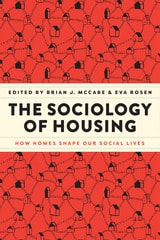
The Sociology of Housing
How Homes Shape Our Social LivesEdited by Brian J. McCabe and Eva Rosen
University of Chicago Press, 2023
In 1947, the president of the American Sociological Association, Louis Wirth, argued for the importance of housing as a field of sociological research. Now, seventy-five years later, the sociology of housing has still not developed as a distinct subfield, leaving efforts to understand housing’s place in society to other disciplines, such as economics and urban planning. With this volume, the editors and contributors solidify the importance of housing studies within the discipline of sociology by tackling topics like racial segregation, housing instability, the supply of affordable housing, and the process of eviction. In doing so, they showcase the very best traditions of sociology: they draw on diverse methodologies, present unique field sites and data sources, and foreground a range of theoretical approaches to elucidate the relationships between contemporary housing, public policy, and key social outcomes.
The Sociology of Housing is a landmark volume that will be used by researchers and students alike to define this growing subfield, map continued directions for research, and center sociologists in interdisciplinary conversations about housing.

The Sociology of Howard S. Becker
Theory with a Wide HorizonAlain Pessin
University of Chicago Press, 2017
French fame has brought French analysis, including The Sociology of Howard S. Becker, written by Alain Pessin and translated into English by Steven Rendall. The book is an exploration of Becker’s major works as expressions of the freedom of possibility within a world of collaborators. Pessin reads Becker’s work as descriptions and ideas that show how society can embody the possibilities of change, of doing things differently, of taking advantage of opportunities for free action. The book is itself a kind of collaboration—Pessin and Becker in dialogue. The Sociology of Howard S. Becker is a meeting of two cultures via two great sociological minds in conversation.

The Sociology of Science
Theoretical and Empirical InvestigationsRobert K. Merton
University of Chicago Press, 1979
"The novelty of the approach, the erudition and elegance, and the unusual breadth of vision make this volume one of the most important contributions to sociology in general and to the sociology of science in particular. . . . Merton's Sociology of Science is a magisterial summary of the field."—Yehuda Elkana, American Journal of Sociology
"Merton's work provides a rich feast for any scientist concerned for a genuine understanding of his own professional self. And Merton's industry, integrity, and humility are permanent witnesses to that ethos which he has done so much to define and support."—J. R. Ravetz, American Scientist
"The essays not only exhibit a diverse and penetrating analysis and a deal of historical and contemporary examples, with concrete numerical data, but also make genuinely good reading because of the wit, the liveliness and the rich learning with which Merton writes."—Philip Morrison, Scientific American
"Merton's impact on sociology as a whole has been large, and his impact on the sociology of science has been so momentous that the title of the book is apt, because Merton's writings represent modern sociology of science more than any other single writer."—Richard McClintock, Contemporary Sociology
The Sociology of Work
Theodore Caplow
University of Minnesota Press, 1954
The Sociology of Work was first published in 1954. Minnesota Archive Editions uses digital technology to make long-unavailable books once again accessible, and are published unaltered from the original University of Minnesota Press editions.
What are the effects of working conditions, rewards, and habits upon the institution of the family? What are the typical forms of occupational segregation, and what are the effects of such segregation upon the general society? How are the social roles appropriate to each occupation created and sustained? What social processes determine the evolution of occupational groupings and the distribution of population among them?
This work, a basic study in occupational sociology, throws light on such questions as these. Professor Caplow describes the occupational system with reference to specialization, occupational status, the formation of professions, mobility, the patterning of individual careers, the occupations of women, and the prospects for continued improvement of working conditions. He draws upon hundreds of empirical studies for his discussions.
The book has been warmly received by reviewers and readers. Robert Dublin commented in the American Journal of Sociology: "This volume will long stand as a sourcebook of hypotheses and thesis topics for students of industrial sociology." Writing in the American Sociological Review, George Caspar Homans called it "a wide-ranging and hard-headed study of American jobs, their place and nature." Robert C. Stone said in Social Forces: "The work is a major contribution to the study of social structure."
The many specialist workers who are concerned with occupational problems—industrial and applied psychologists, personnel and guidance workers, wage economists, labor relations experts, and others—will find this a valuable reference work. It is, of course, pertinent to the interests of general sociologists and anthropologists, and is used as a text in a number of courses in occupational sociology.
The Sociology of the Economy
Frank Dobbin
Russell Sage Foundation, 2004

The Sociology of the State
Bertrand Badie and Pierre Birnbaum
University of Chicago Press, 1983
The book opens with a review of the principal evolutionary theories concerning the origin of the institution proposed by such thinkers as Marx, Durkheim, and Weber. Rejecting these views, the authors set forward and defend their thesis that the state was an "invention" rather than a necessary consequence of any other process. Once invented, the state was disseminated outside its Western European birthplace either through imposition or imitation. The study concludes with concrete analyses of the differences in actual state institutions in France, Prussia, Great Britain, the United States, and Switzerland.
The Soiling of Old Glory
The Story of a Photograph That Shocked AmericaLouis P. Masur
Brandeis University Press, 2024
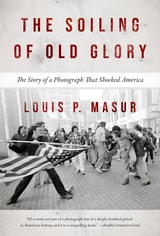
In 1976, Boston was bitterly divided over a court order to desegregate its public schools. Plans to bus students between predominantly white and Black neighborhoods stoked backlash and heated protests. Photojournalist Stanley Forman was covering one such demonstration at City Hall when he captured an indelible image: a white protester attacking a Black attorney with the American flag. A second white man grabs at the victim, appearing to assist the assailant.
The photo appeared in newspapers across the nation and went on to win the Pulitzer Prize. In The Soiling of Old Glory, esteemed historian Louis P. Masur reveals what happened the day of the assault and the ways these events reverberated long afterward. He interviews the men involved: Forman, who took the photo; Ted Landsmark, a Black, Yale-educated attorney and an activist; Joseph Rakes, the white protester lunging with the flag, a disaffected student; and Jim Kelly, a local politician who opposed busing, but who helped Landsmark to his feet after protesters knocked him to the ground. The photo, Masur discovers, holds more complexities than initially meet the eye. The flag never made contact with the victim, for example, and Kelly was attempting to protect Landsmark, not hurt him.
Masur delves into the history behind Boston’s efforts to desegregate the schools and the anti-busing protests that shook the city. He examines photography’s power to move, inform, and persuade us, as well as the assumptions we each bring to an image as viewers. And he delves into the flag, to explore how other artists and photographers have shaped, bolstered, or challenged its patriotic significance.
Gripping and deeply researched, The Soiling of Old Glory shows how a disturbing event, frozen on a film, impacted Boston and the nation. In an age of renewed calls for visual literacy and disagreements about the flag’s meaning, Masur’s history, now updated with a new foreword by Ted Landsmark and a new preface by the author, is as relevant as ever.
The Sola Valley and the Monte Albán State
A Study of Zapotec Imperial ExpansionAndew K. Balkansky
University of Michigan Press, 2002

The Soldiers Fell Like Autumn Leaves
The Battle of the Wabash, the United States' Greatest Defeat in the Wars Against Indigenous PeoplesRick M. Schoenfield
Westholme Publishing, 2026
The Soldiers Fell Like Autumn Leaves: The Battle of the Wabash, the United States’ Greatest Defeat in the Wars Against Indigenous Peoples by Rick M. Schoenfield places this important war into its cultural, racial, economic, and political context. For the first time, the ecological impact is explored, for at stake in the clash between Woodland Native Americans and white, agrarian settlement, was the fate of a vast forest eco-system. The issue echoes today in the debate over climate change, deforestation, and indigenous control of forest habitats. Based on primary sources, some of which are consulted here for the first time, including a newly discovered muster roll and the recent archaeological study of the battlefield, the author provides the most accurate description of the battle while capturing the drama of what occurred. He also critically examines the information gathering,planning, and tacticsof both the Maumee Confederation and the United States, from the conception of the campaign through the battlefield decisions. By skillfully weaving together the disparate but related parts of the larger history of this battle,The Soldiers Fell Like Autumn Leaves allows the reader to better understand the motivations and long-term consequences of the war against Native peoples in the Americas.

The Solemn Sentence of Death
Capital Punishment in ConnecticutLawrence B. Goodheart
University of Massachusetts Press, 2011

The Solidarity Economy
Jean-Louis Laville
University of Minnesota Press, 2023
Questioning the boundaries between politics and economics
Jean-Louis Laville’s large body of work has focused on an intellectual history of the concept of solidarity since the Industrial Revolution. In The Solidarity Economy, his most famous distillation of this work, Laville establishes how the formations of economic solidarities (unions, activism, and other forms of associationalism) reveal that the boundaries between politics and economics are porous and structured such that politics, ideally a pure expression of ethics and values, is instead integrated with economic concerns.
Exploring the possibilities and long histories of association, The Solidarity Economy identifies the power of contemporary social and solidarity movements and examines the history of postcapitalist practices in which democratic demands invade the heart of the economy. The Solidarity Economy ranges in focus from workers associations in France dating back to the nineteenth century, to associations of African Americans and feminists in the United States in the late nineteenth and early twentieth centuries, to a Brazilian landless-worker coalition in the twentieth century.
Studying solidarity associations over time allows us to examine how we can recombine the economic and political spheres to address dependencies and inequalities. Ultimately, The Solidarity Economy has global scope and inspiring examples of associations that deepen democracy.

The Song of the Hawk
The Life and Recordings of Coleman HawkinsJohn Chilton
University of Michigan Press, 1993

The Songs of Blind Folk
African American Musicians and the Cultures of BlindnessTerry Rowden
University of Michigan Press, 2009
"Rowden has wedded ethnomusicology and disability studies to offer a fresh approach to the study of African American popular music. The Songs of Blind Folk undermines many of the defining mythologies and tropes of blind musicians, including the perception that they are successful because they compensate for the loss of vision."
---Mark Anthony Neal, Duke University
"Illuminates how the enduring phenomenon of blind African American musicians emerged from brutal conditions, how these musicians were deployed in the burgeoning American iconography of race and 'freakdom,' and how they negotiated this hazardous cultural terrain . . . the book is timely, well-historicized, and rich in insight."
---Kari Winter, University at Buffalo
The Songs of Blind Folk explores the ways that the lives and careers of blind and visually impaired African American musicians and singers have mirrored the changes in America's image of African Americans and the social positioning and possibilities of the entire black community. The book offers a historically grounded consideration of African American performers and their audiences, and the ways that blindness, like blackness, has affected the way the music has been produced and received. Author Terry Rowden considers the controversial nineteenth-century prodigy Blind Tom Bethune; blues singers and songwriters such as Blind Lemon Jefferson, who achieved an unprecedented degree of visibility and acceptance in the 1920s and '30s; spiritual and gospel musicians such as the Blind Boys of Alabama; celebrated jazz and rhythm and blues artists Art Tatum, Rahsaan Roland Kirk, and Ray Charles; and finally, perhaps the best known of all blind performers, Stevie Wonder.
Terry Rowden is Assistant Professor of English at the City University of New York, Staten Island. He is coeditor of Transnational Cinema: The Film Reader.

The Sonic Episteme
Acoustic Resonance, Neoliberalism, and BiopoliticsRobin James
Duke University Press, 2019

The Sonoran Desert
Its Geography, Economy, and PeopleRoger Dunbier
University of Arizona Press, 1968
Although the significance of geographic regionalism is implicit throughout this study, no attempt is made to show any overriding unity at work, geographical or otherwise, welding together a "desert region." Instead the desert acts as a stage for social drama in which drought and extreme heat provide the essential backcloth. The scarcity of water and man's inability to grow crops without irrigation have not, indeed, changed with time, and only constant reference to this immutable factor can give meaning to the evolution of human activities within the desert.