Results by title
1566 books match the query 'Christianity' and 410 start with t
The Politics of Revelation in the English Renaissance
Ester Gilman Richey
University of Missouri Press, 1998
Recognizing that the seventeenth century's volatile debate over apocalyptic interpretation has since become a one-sided discussion, Esther Gilman Richey develops a context that recovers the dynamism so inherent in the writings of the period and provides illuminating details that enhance the prophetic continuum. The Politics of Revelation in the English Renaissance does not ignore the familiar prophetic verse of Spenser and Milton, but it significantly expands the scope of study by examining the interpretations of both men and women who represent a range of ecclesiastical and political perspectives.
Richey rejects Barbara Lewalski's claim that the radical, prophetic writers and metaphysical poets of the seventeenth century drew inspiration from distinct biblical models, the former from the Apocalypse and the latter from the Psalms. Instead she contends that even writers such as Donne and Herbert, whom we have long considered "literary," were in reality using their poetry to participate in the hottest debates of the time.
While the radical writers, such as Spenser and Milton, were immediately responsive to ecclesiastical and political controversies, the conservative, metaphysical poets—Donne, Herbert, and Vaughan—were posing equally politically charged questions: Is the pope Antichrist? Is the Bride of Christ pure? Is the Temple a model of ecclesiastical reform? The writers of the period did not move in divided and distinguished worlds, but in fact constantly responded to one another through poetic and politically charged dialogue.
By drawing from the writings of various individuals, both radical and conformist, male and female, Richey traces the shifting representations of the apocalyptic Bride and Temple over time. Organized chronologically, the chapters of The Politics of Revelation in the English Renaissance reveal the escalating debate among the pacifists, conformists, militants, and feminists. Not only does Richey uncover the prophetic dimension of conformist writers usually described as apolitical and devotional, but she also explores the writings of lesser-known women prophets: Aemilia Lanyer, Mary Cary, Anna Trapnel, and Margaret Fell. In such biblical passages as the apocalyptic "woman clothed with the sun," these early feminists find the authority for their own prophetic speech.
This provocative analysis—at once far-reaching and tightly focused—reveals the complexity of the apocalyptic discourse that transpired among Renaissance writers and poets.
The Pope's Body
Agostino Paravicini-Bagliani
University of Chicago Press, 2000
Masterfully translated from the Italian, this engaging history of the pope's body provides a new perspective for readers to understand the papacy, both historically and in our own time.
The Pope
His Mission and His TaskGerhard Cardinal Muller
Catholic University of America Press, 2021
The Port Royal New Testament
Jansenists and Vernacular Scripture in Seventeenth-Century FranceElizaveta Al-Faradzh
Catholic University of America Press, 2026
The Power of Patristic Preaching
The Word in Our FleshAndrew Hofer, OP
Catholic University of America Press, 2023
The Power of Sacrifice
Roman and Christian Discourses in ConflictGeorge Heyman
Catholic University of America Press, 2007

The Prayers of Kierkegaard
Edited by Perry D. LeFevre
University of Chicago Press, 1956
The second part of the volume is a reinterpretation of the life and thought of Kierkegaard. Long regarded as primarily a poet or a philosopher, Kierkegaard is revealed as a fundamentally religious thinker whose central problem was that of becoming a Christian, of realizing personal existence. Perry D. LeFevre's penetrating analysis takes the reader to the religious center of Kierkegaard's world.
The Predestination of Humans
Augustinus, <i>Tome III, Book IX</i>Cornelius Jansen
Catholic University of America Press, 2022

The Presence of God and Union with God
Creation, Divine Indwelling Through Grace, Incarnation and the Blessed Vision According to Saint Thomas AquinasGilles Emery, OP
Catholic University of America Press, 2027
The Priesthood, Mystery of Faith
Priestly Ministry in the Magisterium of John Paul IINilson Leal de Sa, CB
Catholic University of America Press, 2022
The Privilege of Being Banal
Art, Secularism, and Catholicism in ParisElayne Oliphant
University of Chicago Press, 2021
Exploring the violent histories and alternate trajectories effaced through this banal backgrounding of a crucial aspect of French history and culture, this richly textured ethnography lays bare the profound nostalgia that undergirds Catholicism’s circulation in nonreligious sites such as museums, corporate spaces, and political debates. Oliphant’s aim is to unravel the contradictions of religion and secularism and, in the process, show how aesthetics and politics come together in contemporary France to foster the kind of banality that Hannah Arendt warned against: the incapacity to take on another person’s experience of the world. A creative meditation on the power of the taken-for-granted, The Privilege of Being Banal is a landmark study of religion, aesthetics, and public space.

The Promise Keepers
Servants, Soldiers, and Godly MenBartkowski, John P
Rutgers University Press, 2004
“Remember the Promise Keepers?” queries a recent media story on the evangelical men’s movement that captured America’s imagination and generated intense controversy during much of the 1990s. This group of Christian men, who promoted adherence to a strict code of conduct that masculinized conservative religious and social values, now evokes little more than a hazy memory of football stadiums teeming with men whose tear-stained faces and clasped arms signaled spiritual transformation. What happened? What factors contributed to their demise? What broader insights can be gleaned from the rapid rise and fall of the movement?
John P. Bartkowski has written the first account scrutinizing the turbulent forces that contributed to the group’s wild popularity, declining fortunes, and current efforts to reinvent itself. He provides a broad and balanced portrait of the movement while evaluating its impact on the landscape of American religion. Bartkowski argues that there are many insights to be gained about the changing contours of American religion, culture, and social life through a study of the Promise Keepers. By carefully examining their character and contagious appeal, Bartkowski provides new insights about evangelicalism, gender, family, therapeutic culture, sport, and multiculturalism.
The Proper of Time
Advent, Christmas, Lent, and Easter, Volume 1Andrew Wadsworth
Catholic University of America Press, 2024
The Prophecy of Enoch as Restoration Blueprint
Terryl Givens
Utah State University Press, 2013
Volume 18, The Leonard J. Arrington Lecture Series
The Special Collections and Archives of Utah State University's Merrill-Cazier Library houses the personal and historical collection of Leonard J. Arrington, renowned scholar of the American West.
The Leonard J. Arrington Mormon History Lecture annually hosts the presentation of current research by a leading scholar. Among the lecturers have been such notable historians as Thomas G. Alexander, Richard L. Bushman, Sarah Barringer Gordon, Howard Lamar, Jan Shipps, Donald Worster, and Pulitzer Prize-winner Laurel Thatcher Ulrich.
The Protestant Temperament
Patterns of Child-Rearing, Religious Experience, and the Self in Early AmericaPhilip Greven
University of Chicago Press, 1988
The Psychology of Character
Rudolf Allers
Catholic University of America Press, 2022
The Puritan Experiment
New England Society from Bradford to EdwardsFrancis J. Bremer
Brandeis University Press, 2026
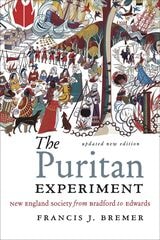
A revised and updated edition of a classic text on the early puritans.
The Puritan Experiment is an accessible, authoritative account of early New England, one with an enduring appeal for students and general readers. This revised and updated edition explains puritanism while incorporating fresh insights from current scholarship.
Tracing the puritans’ journey from the Old World to America, Francis J. Bremer examines the causes and contexts of the puritan movement and analyzes the cultural, political, and economic revolutions wrought by the movement in both Old and New England. A pioneering text in its field, The Puritan Experiment is sweeping in scope. Bremer’s examination begins with the English Act of Supremacy of 1534 which placed King Henry VIII at the head of the Church of England, and it ends with the death of the puritan theologian Jonathan Edwards in 1758. From meeting house architecture to the Salem witch trials, from relations with Native Americans to the founding of the nation’s first colleges, Bremer details with style and grace how “a living system of faith” profoundly influenced the course of history in the New World.
This illustrated edition includes new information about lay empowerment, the role of women, Native society, and the enslavement of Native Americans and Africans.
The Quaker Community on Barbados
Challenging the Culture of the Planter ClassLarry Gragg
University of Missouri Press, 2009
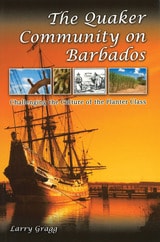
Gragg has conducted meticulous research on two continents to re-create the Barbados Quaker community. Drawing on wills, censuses, and levy books along with surviving letters, sermons, and journals, he tells how the Quakers sought to implement their beliefs in peace, simplicity, and equality in a place ruled by a planter class that had built its wealth on the backs of slaves. He reveals that Barbados Quakers were a critical part of a transatlantic network of Friends and explains how they established a “counterculture” on the island—one that challenged the practices of the planter class and the class’s dominance in island government, church, and economy.
In this compelling study, Gragg focuses primarily on the seventeenth century when the Quakers were most numerous and active on Barbados. He tells how Friends sought to convert slaves and improve their working and living conditions. He describes how Quakers refused to fund the Anglican Church, take oaths, participate in the militia, or pay taxes to maintain forts—and how they condemned Anglican clergymen, disrupted their services, and wrote papers critical of the established church. By the 1680s, Quakers were maintaining five meetinghouses and several cemeteries, paying for their own poor relief, and keeping their own records of births, deaths, and marriages. Gragg also tells of the severe challenges and penalties they faced for confronting and rejecting the dominant culture.
With their civil disobedience and stand on slavery, Quakers on Barbados played an important role in the early British Empire but have been largely neglected by scholars. Gragg’s work makes their contribution clear as it opens a new window on the seventeenth- and eighteenth-century Atlantic world.
The Quotable Saint Jerome
Jerome Saint Jerome
Catholic University of America Press, 2020
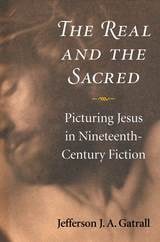
The Real and the Sacred
Picturing Jesus in Nineteenth-Century FictionJefferson J. A. Gatrall
University of Michigan Press, 2014
The Reason of Following
Christology and the Ecstatic IRobert P. Scharlemann
University of Chicago Press, 1991
Scharlemann presents a christological phenomenology of the self, tracing the connections between the "I am" of the God who spoke to Moses, the "I am" of Christ, and the "I am" of autonomous self-identification. How, he asks, can the self that spontaneously responds to Jesus' "Follow me!" be compared with the everyday, autonomous self? What is the nature of "following" on the part of those who answer the summons of one whose name is "I am"? Pursuing these questions, Scharlemann develops a christological phenomenology of the self—an account in which following means not the expression of the self in action or reflection but rather self-discovery in another person.
With a deep sense of both culture and philosophy, Scharlemann distinguishes the forms of reason involved in "following" from those in ethics, aesthetics, and other modes of religious philosophic thought. His penetrating readings of nineteenth- and twentieth-century German theological and philosophical traditions provide an introduction to lesser-known thinkers such as Hermann and Picht as well as a profound critique of major figures such as Descartes, Heidegger, Fichte, and Kant.
Finally Scharlemann outlines a program for a more systematic and rounded presentation of what Christian doctrine might mean in the contemporary world. His work will be of interest to students of theology and philosophy alike.
The Rediscovery of Jewish Christianity
From Toland to BaurF. Stanley Jones
SBL Press, 2012
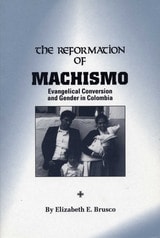
The Reformation of Machismo
Evangelical Conversion and Gender in ColombiaBy Elizabeth E. Brusco
University of Texas Press, 1995
Protestant evangelicalism has spread rapidly in Latin America at the same time that foreign corporations have taken hold of economies there. These concurrent developments have led some observers to view this religious movement as a means of melding converts into a disciplined work force for foreign capitalists rather than as a reflection of conscious individual choices made for a variety of personal, as well as economic, reasons.
In this pioneering study, Elizabeth Brusco challenges such assumptions and explores the intra-household motivations for evangelical conversion in Colombia. She shows how the asceticism required of evangelicals (no drinking, smoking, or extramarital sexual relations are allowed) redirects male income back into the household, thereby raising the living standard of women and children. This benefit helps explain the appeal of evangelicalism for women and questions the traditional assumption that organized religion always disadvantages women.
Brusco also demonstrates how evangelicalism appeals to men by offering an alternative to the more dysfunctional aspects of machismo. Case studies add a fascinating human dimension to her findings.
With the challenges this book poses to conventional wisdom about economic, gender, and religious behavior, it will be important reading for a wide audience in anthropology, women’s studies, economics, and religion. For all students of Latin America, it offers thoughtful new perspectives on a major, grass-roots agent of social change.
The Regensburg Lecture
James V. Schall, S.J.
St. Augustine's Press, 2007
The Relic
Jose Maria Eca de Queiros
Catholic University of America Press, 2023

The Religion of Science Fiction
Frederick A. Kreuziger
University of Wisconsin Press, 1986
The Religious Question in Modern China
Vincent Goossaert and David A. Palmer
University of Chicago Press, 2011
Recent events—from strife in Tibet and the rapid growth of Christianity in China to the spectacular expansion of Chinese Buddhist organizations around the globe—vividly demonstrate that one cannot understand the modern Chinese world without attending closely to the question of religion. The Religious Question in Modern China highlights parallels and contrasts between historical events, political regimes, and cultural movements to explore how religion has challenged and responded to secular Chinese modernity, from 1898 to the present.
Vincent Goossaert and David A. Palmer piece together the puzzle of religion in China not by looking separately at different religions in different contexts, but by writing a unified story of how religion has shaped, and in turn been shaped by, modern Chinese society. From Chinese medicine and the martial arts to communal temple cults and revivalist redemptive societies, the authors demonstrate that from the nineteenth century onward, as the Chinese state shifted, the religious landscape consistently resurfaced in a bewildering variety of old and new forms. The Religious Question in Modern China integrates historical, anthropological, and sociological perspectives in a comprehensive overview of China’s religious history that is certain to become an indispensible reference for specialists and students alike.
The Reprobation of Humans and Angels
Augustinus, Tome III, Book XCornelius Jansen
Catholic University of America Press, 2026

The Revelation of Imagination
From Homer and the Bible through Virgil and Augustine to DanteWilliam Franke
Northwestern University Press, 2015
In The Revelation of Imagination, William Franke attempts to focus on what is enduring and perennial rather than on what is accommodated to the agenda of the moment. Franke’s book offers re-actualized readings of representative texts from the Bible, Homer, and Virgil to Augustine and Dante. The selections are linked together in such a way as to propose a general interpretation of knowledge. They emphasize, moreover, a way of articulating the connection of humanities knowledge with what may, in various senses, be called divine revelation. This includes the sort of inspiration to which poets since Homer have typically laid claim, as well as that proper to the biblical tradition of revealed religion. The Revelation of Imagination invigorates the ongoing discussion about the value of humanities as a source of enduring knowledge.
The Revelation of Your Words
The New Evangelization and the Role of the Seminary Professor of Sacred ScriptureKevin Zilverberg
Saint Paul Seminary Press, 2021
The Rhetoric of Faith
Irenaeus and the Structure of the Adversus HaeresesScott D. Moringiello
Catholic University of America Press, 2019
The argument focuses on the Adversus Haereses, although it does begin with some discussion to put Irenaeus in the context of second century Christian literature. Moringiello concludes with a discussion of Irenaeus’s Demonstration of the Apostolic Preaching.Other scholars have provided introductions to Irenaeus’s work, and other scholars have argued for the structural unity of the Adversus Haereses. No other scholar, though, has argued that the faith of the Church is the basis of Irenaeus’s argument. This argument, then, presents an important contribution to the field of Irenaeus studies.
The Rise of Newport’s Catholics
From Colonial Outcasts to Gilded Age LeadersJohn F. Quinn
University of Massachusetts Press, 2024
Honorable Mention, 2025 Catholic Media Association Book Awards
Nineteenth-century New England was a hostile place for Catholics. In Massachusetts a mob torched a convent; in Maine a priest was tarred and feathered; and Rhode Island elected an anti-Catholic Know Nothing governor. “No Irish Need Apply” signs were common.
Newport was different. It was a religiously diverse and tolerant city that welcomed Catholic French troops during the American Revolution. Later, as it became the favored summer retreat for America’s Protestant social elite, Irish Catholics arrived to work in construction jobs, the tourist economy, and the grand Gilded Age cottages. By the end of the century, Newport’s Catholic community was flourishing. Moneyed Catholics acquired their own mansions, an Irish Catholic was mayor, and prominent Protestants were helping Catholic neighbors establish new schools and churches. In this deeply researched study, John F. Quinn delves into this rich Catholic history to discover why nineteenth-century Newport was particularly religiously tolerant and accepting.
The Rise to Respectability
Race, Religion, and the Church of God in ChristCalvin White
University of Arkansas Press, 2015
The Road to Renewal
Victor Joseph Reed and Oklahoma Catholicism, 1905–1971Jeremy BONNER
Catholic University of America Press, 2008
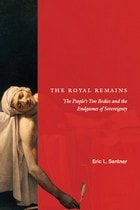
The Royal Remains
The People's Two Bodies and the Endgames of SovereigntyEric L. Santner
University of Chicago Press, 2011
"The king is dead. Long live the king!" In early modern Europe, the king's body was literally sovereign—and the right to rule was immediately transferrable to the next monarch in line upon the king's death. In The Royal Remains, Eric L. Santner argues that the "carnal" dimension of the structures and dynamics of sovereignty hasn't disappeared from politics. Instead, it migrated to a new location—the life of the people—where something royal continues to linger in the way we obsessively track and measure the vicissitudes of our flesh.
Santner demonstrates the ways in which democratic societies have continued many of the rituals and practices associated with kingship in displaced, distorted, and usually, unrecognizable forms. He proposes that those strange mental activities Freud first lumped under the category of the unconscious—which often manifest themselves in peculiar physical ways—are really the uncanny second life of these "royal remains," now animated in the body politic of modern neurotic subjects. Pairing Freud with Kafka, Carl Schmitt with Hugo von Hofmannsthal,and Ernst Kantorowicz with Rainer Maria Rilke, Santner generates brilliant readings of multiple texts and traditions of thought en route to reconsidering the sovereign imaginary. Ultimately, The Royal Remains locates much of modernity—from biopolitical controversies to modernist literary experiments—in this transition from subjecthood to secular citizenship.
This major new work will make a bold and original contribution to discussions of politics, psychoanalysis, and modern art and literature.
The Ruin of Souls
A Religious History of Italian Catholic Immigrants in the United States (1853-1921)Massimo Di Gioacchino
Bridwell Press, 2025
Strengthened by largely unknown archival documentation and an original historiographic methodology, the work reveals a new political dimension in the religious history of Italian immigrants in the United States and their relationship with the Catholic religious canon. By integrating the analysis of the ecclesial practices of the Italian communities into a far-reaching epistemological reflection, the work also contributes to the continuing discussion of how we study and examine the religious practices of Catholic communities in the modern era.
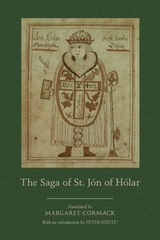
The Saga of St. Jón of Hólar
Translated by Margaret Cormack, With an Introduction byPeter Foote
Arizona Center for Medieval and Renaissance Studies, 2020
This volume contains a translation of the version of the Saga of St. Jón of Hólar that is probably closest to the first Latin vita. It is only the second saga of an Icelandic episcopal saint to appear in a modern translation in the present century. The volume consists of two parts, the first comprising a general introduction and a translation by Margaret Cormack. The second part provides a detailed scholarly analysis of the manuscripts, contents, style, and literary connections of the saga by the late Peter Foote, one of the foremost scholars of Old Norse and Icelandic literature.
The Jóns saga was written in the early thirteenth century, nearly a century after the death of its protagonist, the first bishop of the diocese of Hólar in Northern Iceland. The author of the saga combined Latin learning with native folklore to produce a readable narrative that is contemporary with the earliest family and contemporary sagas. This text provides valuable insight into the religious life of ordinary Icelanders in the thirteenth century, and the introduction corrects common misconceptions about ecclesiastical history and the cult of saints in Iceland. It will be of value to scholars of medieval Icelandic literature, hagiography, and history.
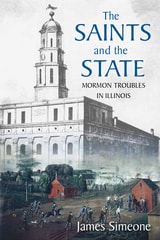
The Saints and the State
The Mormon Troubles in IllinoisJames Simeone
Ohio University Press, 2021
A compelling history of the 1846 Mormon expulsion from Illinois that exemplifies the limits of American democracy and religious tolerance.
When members of the Church of Jesus Christ of Latter-day Saints (known as Mormons) settled in Illinois in 1839, they had been persecuted for their beliefs from Ohio to Missouri. Illinoisans viewed themselves as religiously tolerant egalitarians and initially welcomed the Mormons to their state. However, non-Mormon locals who valued competitive individualism perceived the saints‘ western Illinois settlement, Nauvoo, as a theocracy with too much political power. Amid escalating tensions in 1844, anti-Mormon vigilantes assassinated church founder Joseph Smith and his brother Hyrum. Two years later, the state expelled the saints. Illinois rejected the Mormons not for their religion, but rather for their effort to create a self-governing state in Nauvoo.
Mormons put the essential aspirations of American liberal democracy to the test in Illinois. The saints’ inward group focus and their decision to live together in Nauvoo highlight the challenges strong group consciousness and attachment pose to democratic governance. The Saints and the State narrates this tragic story as an epic failure of governance and shows how the conflicting demands of fairness to the Mormons and accountability to Illinois’s majority became incompatible.
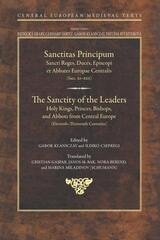
The Sanctity of the Leaders
Holy Kings, Princes, Bishops and Abbots from Central Europe (11th to 13th Centuries)Gábor Klaniczay
Central European University Press, 2023
The latest title in the Central European Medieval Texts series contains the lives of saints who were canonized in the eleventh through thirteenth centuries in the newly Christianized countries of Central and Eastern Europe (Bohemia, Poland, Hungary, and Dalmatia). A rejoinder to the earlier volume in the series, the Saints of the Christianization Age of Central Europe (CEMT, Vol. 6), containing hermits, missionaries, and martyrs, this second volume of hagiography is dominated by political or ecclesiastical leaders who became saintly patrons of their region and were highly venerated throughout the Middle Ages.
The legends in the volume present the two Hungarian holy kings Stephen and Ladislas, the holy duke Emeric, the Czech holy abbot Prokop of Sázava, three bishops, the Venetian-Hungarian Gellért of Csanád, the Polish Stanislas of Cracow (both martyrs), and the Dalmatian holy bishop Saint John of Trogir. Each “vita” is published in Latin original with an English translation and with prefaces discussing the textual tradition.
Saints’ lives have been recognized as an invaluable source of information on social and economic history, the history of mentalities and everyday life, cultural history, and, above all, as a special genre with crucial importance and prevalence in medieval literature.
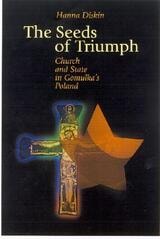
The Seeds of Triumph
Church and State in Gomulka's PolandHannah Diskin
Central European University Press, 2001
The Roman Catholic Church has played a unique role in the history of Poland in the twentieth century: the people and the Church drew closer and closer together during Nazi rule, the Stalinist period and the somewhat milder, though strongly anti-religious and repressive Gomulka regime (1956-1970). The power struggle between the Church and the communist government did in fact play a role in shaping world politics, the Polish Church having been the force behind the opposition movement in Poland. Against this background, a Polish pope appeared and made a major contribution to the collapse of communism.
The Seeds of Triumph, the most comprehensive recent book on the opposition of Church and State in post-war Poland, compares the characteristics and consequences of this relationship during three different periods: the first and second periods of Gomulka's rule, and the Stalinist era between the two Gomulka periods. It examines the balance of power, studying to what degree the Church and other factors in the political environment influenced governmental policy-making. The author disproves the common stereotype, held at the time, that domestic conditions played only a marginal role. In examining the regime's policies, she covers the legal background, the general policy characteristics, the specific policies implemented during the period, and the role of the individual actors, most notably the pivotal role of the two main protagonists, Cardinal Wyszynski and Wladislaw Gomulka.
In her landmark study, Diskin makes a significant contribution to the study of authoritarian systems and greatly enhances our understanding of the centrality of the Church in recent Polish history.

The Selected Letters of Juanita Brooks
Edited by Craig S. Smith
University of Utah Press, 2019
The letters in this volume, written from 1941 to 1978, trace Brooks’s development from fledgling historian to recognized authority. Serving almost as an autobiography of her interactions with her contemporaries, this selection provides a new perspective on Brooks’s personality and growth as a scholar. Richly detailed, chatty, and covering a wide array of subjects, the letters afford an important glimpse into Brooks’s struggles, concerns, and interests.
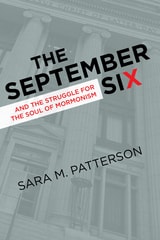
The September Six and the Struggle for the Soul of Mormonism
Patterson, Sara M.
Signature Books, 2023
The September Six and the Struggle for the Soul of Mormonism
Patterson, Sara M.
Signature Books, 2024
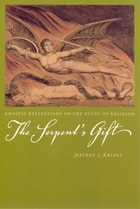
The Serpent's Gift
Gnostic Reflections on the Study of ReligionJeffrey J. Kripal
University of Chicago Press, 2006
“Because thou hast done this, thou art cursed above all cattle, and above every beast of the field.” With those words in Genesis, God condemns the serpent for tempting Adam and Eve, and the serpent has shouldered the blame ever since. But how would the study of religion change if we looked at the Fall from the snake’s point of view? Would he appear as a bringer of wisdom, more generous than the God who wishes to keep his creation ignorant?
Inspired by the early Gnostics who took that startling view, Jeffrey J. Kripal uses the serpent as a starting point for a groundbreaking reconsideration of religious studies and its methods. In a series of related essays, he moves beyond both rational and faith-based approaches to religion, exploring the erotics of the gospels and the sexualities of Jesus, John, and Mary Magdalene. He considers Feuerbach’s Gnosticism, the untapped mystical potential of comparative religion, and even the modern mythology of the X-Men.
Ultimately, The Serpent’s Gift is a provocative call for a complete reorientation of religious studies, aimed at a larger understanding of the world, the self, and the divine.
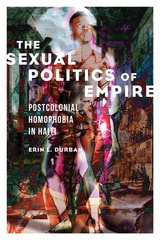
The Sexual Politics of Empire
Postcolonial Homophobia in HaitiErin L. Durban
University of Illinois Press, 2023
Evangelical Christians and members of the global LGBTQI human rights movement have vied for influence in Haiti since the 2010 earthquake. Each side accuses the other of serving foreign interests. Yet each proposes future foreign interventions on behalf of their respective causes despite the country’s traumatic past with European colonialism and American imperialism. As Erin L. Durban shows, two discourses dominate discussions of intervention. One maintains imperialist notions of a backward Haiti so riddled with cultural deficiencies that foreign supervision is necessary to overcome Haitians’ resistance to progress. The other sees Haiti as a modern but failed state that exists only through its capacity for violence, including homophobia. In the context of these competing claims, Durban explores the creative ways that same-sex desiring and gender creative Haitians contend with anti-LGBTQI violence and ongoing foreign intervention.
Compelling and thought-provoking, The Sexual Politics of Empire examines LGBTQI life in contemporary Haiti against the backdrop of American imperialism and intervention.
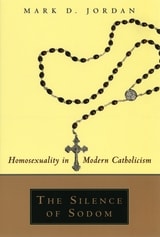
The Silence of Sodom
Homosexuality in Modern CatholicismMark D. Jordan
University of Chicago Press, 2000
"[Jordan] has offered glimpses, anecdotal stories, and scholarly observations that are a whole greater than the sum of its parts. . . . If homosexuality is the guest that refuses to leave the table, Jordan has at least shed light on why that is and in the process made the whole issue, including a conflicted Catholic Church, a little more understandable."—Larry B. Stammer, Los Angeles Times
"[Jordan] knows how to present a case, and with apparently effortless clarity he demonstrates the church's double bind and how it affects Vatican rhetoric, the training of priests, and ecclesiastical protectiveness toward an army of closet cases. . . . [T]his book will interest readers of every faith."—Daniel Blue,
Lambda Book Report
A 2000 Lambda Literary Award Finalist
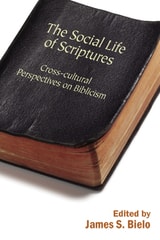
The Social Life of Scriptures
Cross-Cultural Perspectives on BiblicismEdited and with an introduction by James S. Bielo
Rutgers University Press, 2009
Contributors offer a collection of closely analyzed and carefully conducted ethnographic and historical case studies, covering a range of geographic, theological, and cultural territory, including: American evangelicals and charismatics; Jamaican Rastafarians; evangelical and Catholic Mayans; Northern Irish charismatics; Nigerian Anglicans; and Chinese evangelicals in the United States.
The Social Life of Scriptures is the first book to present an eclectic, cross-cultural, and comparative investigation of Bible use. Moreover, it models an important movement to outline a framework for how scriptures are implicated in organizing social structures and meanings, with specific foci on gender, ethnicity, agency, and power.
The Soul of the Person
A Contemporary Philosophical PsychologyAdrian J. Reimers
Catholic University of America Press, 2006
The Sound of Dove
Singing in Appalachian Primitive Baptist ChurchesBeverly Bush Patterson
University of Illinois Press, 1995
The Sound of Mormonism
A Media History of Latter-day SaintsJared Farmer
Utah State University Press, 2024
The Arrington Lecture series, established in honor of one of the twentieth-century American West’s most distinguished historians, Leonard Arrington, has become a leading forum for prominent scholars to address topics related to Latter-day Saint history. Utah State University hosts the Leonard J. Arrington Mormon History Lecture Series through the Merrill-Cazier Library’s Special Collections and Archives.