Results by title
1832 books match the query 'Essays' and 450 start with t
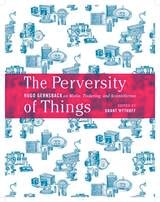
The Perversity of Things
Hugo Gernsback on Media, Tinkering, and ScientifictionHugo Gernsback
University of Minnesota Press, 2016
In 1905, a young Jewish immigrant from Luxembourg founded an electrical supply shop in New York. This inventor, writer, and publisher Hugo Gernsback would later become famous for launching the first science fiction magazine, Amazing Stories, in 1926. But while science fiction’s annual Hugo Awards were named in his honor, there has been surprisingly little understanding of how the genre began among a community of tinkerers all drawn to Gernsback’s vision of comprehending the future of media through making. In The Perversity of Things, Grant Wythoff makes available texts by Hugo Gernsback that were foundational both for science fiction and the emergence of media studies.
Wythoff argues that Gernsback developed a means of describing and assessing the cultural impact of emerging media long before media studies became an academic discipline. From editorials and blueprints to media histories, critical essays, and short fiction, Wythoff has collected a wide range of Gernsback’s writings that have been out of print since their magazine debut in the early 1900s. These articles cover such topics as television; the regulation of wireless/radio; war and technology; speculative futures; media-archaeological curiosities like the dynamophone and hypnobioscope; and more. All together, this collection shows how Gernsback’s publications evolved from an electrical parts catalog to a full-fledged literary genre.
The Perversity of Things aims to reverse the widespread misunderstanding of Gernsback within the history of science fiction criticism. Through painstaking research and extensive annotations and commentary, Wythoff reintroduces us to Gernsback and the origins of science fiction.

The Place of the Symbolic
Essays on Art and PoliticsReiner Schürmann
Diaphanes, 2021
The Place of the Symbolic gathers Reiner Schürmann’s essays on the nexus of art and politics. In keeping with his translation of the destruction of metaphysics into an an-archic philosophy of practice, Schürmann develops a radical theory of the place of symbols, irreducible either to idealist theories of symbols or structuralist accounts of the symbolic. Symbols, Schürmann argues, may provide a bridge between ontological difference and politics. They resist being grasped metaphysically, in terms of representation. Instead, their understanding requires a specific way of existence: attending to the coming-to-presence of phenomena. As such, the understanding of symbols discloses a form of praxis that abandons ultimate grounds and opens onto the manifold.
Alongside Schürmann’s theory of symbols, the collection includes essays on the relation between metaphysics, tragedy, and technology; on the “there is” in poetry; as well as on judgment. Throughout these characteristically lucid interventions, Schürmann’s most urgent concern remains a consideration of singular and finite practices that enact a release from universal principles. Art and politics appear here as the unworking of ultimate grounds; that is, as practices attuned to a truly groundless form of life.
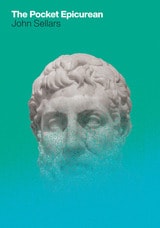
The Pocket Epicurean
John Sellars
University of Chicago Press, 2021
As long as there has been human life, we’ve searched for what it means to be happy. More than two thousand years ago, the Greek philosopher Epicurus came to his own conclusion: all we really want in life is pleasure. Though today we tend to associate the word “Epicurean” with indulgence in the form of food and wine, the philosophy of Epicurus was about a life well lived even in the hardest of times. As John Sellars shows in this concise, approachable guide, the ideal life envisioned by Epicurus and his followers was a life much more concerned with mental pleasures and the avoidance of pain. Their goal, in short, was a life of tranquility or contentment.
In The Pocket Epicurean Sellars walks us through the history of Epicureanism, starting with the private garden on the edge of ancient Athens where Epicurus and his students lived in the fourth century BC, and where women were as welcome as men. Sellars then moves on to ancient Rome, where Epicurean influence flourished thanks to the poet Lucretius and his cohort. Throughout the book, Sellars draws on the ideas of Epicurus to offer a constructive way of thinking about the pleasures of friendship and our place in the world.
The Poetics of Indeterminacy
Rimbaud to CageMarjorie Perloff
Northwestern University Press, 1999
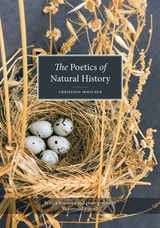
The Poetics of Natural History
Christoph Irmscher
Rutgers University Press, 2019
Early American naturalists assembled dazzling collections of native flora and fauna, from John Bartram’s botanical garden in Philadelphia and the artful display of animals in Charles Willson Peale’s museum to P. T. Barnum’s American Museum, infamously characterized by Henry James as “halls of humbug.” Yet physical collections were only one of the myriad ways that these naturalists captured, catalogued, and commemorated America’s rich biodiversity. They also turned to writing and art, from John Edward Holbrook’s forays into the fascinating world of herpetology to John James Audubon’s masterful portraits of American birds.
In this groundbreaking, now classic book, Christoph Irmscher argues that early American natural historians developed a distinctly poetic sensibility that allowed them to imagine themselves as part of, and not apart from, their environment. He also demonstrates what happens to such inclusiveness in the hands of Harvard scientist-turned Amazonian explorer Louis Agassiz, whose racist pseudoscience appalled his student William James.
This expanded, full-color edition of The Poetics of Natural History features a preface and art from award-winning artist Rosamond Purcell and invites the reader to be fully immersed in an era when the boundaries between literature, art, and science became fluid.
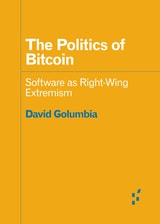
The Politics of Bitcoin
Software as Right-Wing ExtremismDavid Golumbia
University of Minnesota Press, 2016
Since its introduction in 2009, Bitcoin has been widely promoted as a digital currency that will revolutionize everything from online commerce to the nation-state. Yet supporters of Bitcoin and its blockchain technology subscribe to a form of cyberlibertarianism that depends to a surprising extent on far-right political thought. The Politics of Bitcoin exposes how much of the economic and political thought on which this cryptocurrency is based emerges from ideas that travel the gamut, from Milton Friedman, F.A. Hayek, and Ludwig von Mises to Federal Reserve conspiracy theorists.
Forerunners: Ideas First is a thought-in-process series of breakthrough digital publications. Written between fresh ideas and finished books, Forerunners draws on scholarly work initiated in notable blogs, social media, conference plenaries, journal articles, and the synergy of academic exchange. This is gray literature publishing: where intense thinking, change, and speculation take place in scholarship.
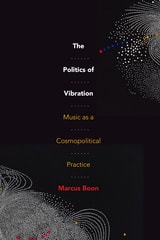
The Politics of Vibration
Music as a Cosmopolitical PracticeMarcus Boon
Duke University Press, 2022
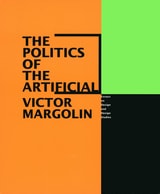
The Politics of the Artificial
Essays on Design and Design StudiesVictor Margolin
University of Chicago Press, 2002
One of the pioneers of design studies and still one of its most distinguished practitioners, Victor Margolin here offers a timely meditation on design and its study at the turn of the millennium and charts new directions for the future development of both fields. Divided into sections on the practice and study of design, the essays in The Politics of the Artificial cover such topics as design history, design research, design as a political tool, sustainable design, and the problems of design's relation to advanced technologies. Margolin also examines the work of key practitioners such as the matrix designer Ken Isaacs. Throughout the book Margolin demonstrates the underlying connections between the many ways of reflecting on and practicing design. He argues for the creation of an international, interdisciplinary field of design research and proposes a new ethical agenda for designers and researchers that encompasses the responsibility to users, the problems of sustainability, and the complicated questions of how to set boundaries for applying advanced technology to solve the problems of human life.
Opinionated and erudite, Victor Margolin's The Politics of the Artificial breaks fresh ground in its call for a new approach to design research and practice. Designers, engineers, architects, anthropologists, sociologists, and historians will all benefit from its insights.
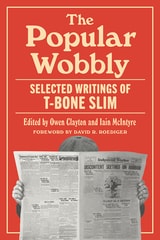
The Popular Wobbly
Selected Writings of T-Bone SlimT-Bone Slim
University of Minnesota Press, 2025
The first critical edition of the writings of the prolific radical workers’ newspaper columnist and musician who rode the rails during the Great Depression
The Popular Wobbly brings together a wide selection of writings by T-Bone Slim, the most popular and talented writer belonging to the Industrial Workers of the World (IWW). Slim wrote humorous, polemical pieces, engaging with topics like labor and class injustice, which were mostly published in IWW publications from 1920 until his death in 1942. Although relatively little is known about Slim, editors Owen Clayton and Iain McIntyre coalesce the latest research on this enigmatic character to create a vivid portrait that adds valuable context for the array of writings assembled here.
Known as “the laureate of the logging camps,” Slim also composed numerous songs that have been performed and recorded by Pete Seeger, Utah Phillips, and Candie Carawan, who in 1960 updated Slim’s song “The Popular Wobbly” with Civil Rights–era lyrics. Slim’s witticisms, sayings, and exhortations (“Wherever you find injustice, the proper form of politeness is attack”; “Only the poor break laws—the rich evade them”) were widely discussed among fellow hobos across the “jungle” campfires that dotted the railways, and some even transcribed his commentary on boxcars that traveled the country. Yet despite Slim’s importance and fame during his lifetime, his work disappeared from public view almost immediately after his death.
The Popular Wobbly is the first critical edition of Slim’s work and also a significant contribution to literature about working-class writers, the radical labor movement, and the history and culture of nomadism and precarity. With this publication, Slim’s rediscovered writings can once again inspire artists and activists to march and agitate for a more just and equitable world.

The Population Ahead
Roy G. Francis, Editor
University of Minnesota Press, 1958
The Population Ahead was first published in 1958. Minnesota Archive Editions uses digital technology to make long-unavailable books once again accessible, and are published unaltered from the original University of Minnesota Press editions.
This volume brings together the thinking and viewpoints of specialists from various pertinent fields for a discussion of factors bearing on the quality of future populations of the world. The discussions center around three fundamental questions: Is the human population growing at a rate which threatens the standards of living to which most of tits individuals aspire? Is the genetic composition of the population tending in directions which are harmful to the common good? What can and should be done, if the answer to either of the foregoing questions is yes?
The chapters, by nine different contributors, are based on the papers given at a conference on population problems held at the University of Minnesota in 1957. In addition, discussion and comments by six other participants in the conference are included.
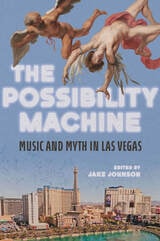
The Possibility Machine
Music and Myth in Las VegasEdited by Jake Johnson
University of Illinois Press, 2023
At once a Technicolor wonderland and the embodiment of American mythology, Las Vegas exists at the Ground Zero of a reverence for risk-taking and the transformative power of a winning hand. Jake Johnson edits a collection of short essays and flash ideas that probes how music-making and soundscapes shape the City of Second Chances. Treating topics ranging from Cher to Cirque de Soleil, the contributors delve into how music and musicians factored in the early development of Vegas’s image; the role of local communities of musicians and Strip mainstays in sustaining tensions between belief and disbelief; the ways aging showroom stars provide a sense of timelessness that inoculates visitors against the outside world; the link connecting fantasies of sexual prowess and democracy with the musical values of Liberace and others; considerations of how musicians and establishments gambled with identity and opened the door for audience members to explore Sin City–only versions of themselves; and the echoes and energy generated by the idea of Las Vegas as it travels across the country.
Contributors: Celine Ayala, Kirstin Bews, Laura Dallman, Joanna Dee Das, James Deaville, Robert Fink, Pheaross Graham, Jessica A. Holmes, Maddie House-Tuck, Jake Johnson, Kelly Kessler, Michael Kinney, Carlo Lanfossi, Jason Leddington, Janis McKay, Sam Murray, Louis Niebur, Lynda Paul, Arianne Johnson Quinn, Michael M. Reinhard, Laura Risk, Cassaundra Rodriguez, Arreanna Rostosky, and Brian F. Wright
The Power of Civil Servants
David Normington and Peter Hennessy
Haus Publishing, 2018
Throughout Britain, Civil Servants are exposed to public scrutiny today in unprecedented ways. What does it mean that the political neutrality of the Civil Service has only been enshrined in law since 2010, nearly 150 years after it was first proposed? Why is it so important for politicians to trust Civil Servants (and what difficulties arise when they do not)?
Coauthored by former First Civil Service Commissioner David Normington and historian Peter Hennessy, The Power of Whitehall provides answers through rich observations about the nature of the British Civil Service, its values and effectiveness, and how it should continue to adapt to a changing world.
The Power of Journalists
Nick Robinson, Gary Gibbon, Barbara Speed, and Charlie Beckett
Haus Publishing, 2018
The Power of Judges
David Neuberger and Peter Riddell
Haus Publishing, 2018
In this lucid account of the judiciary, David Neuberger and Peter Riddell lead us through an array of topics both philosophical and logistical, including the relationships between morality and law and between Parliament and the judiciary. They explain the effects of cuts in legal aid and shed light on complex and controversial subjects like assisted dying and the complexities of combating mass terrorism while protecting personal liberty. Given that many of these issues span national borders, the book also compares the United Kingdom’s legal system with its counterparts in the United States and Germany.
Full of insights, The Power of Judges is an informative and accessible account of the United Kingdom’s judicial system, its contribution to running the country, and the challenges it faces—including the many threats to its effectiveness.
The Power of Politicians
Tessa Jowell and Frances D’Souza
Haus Publishing, 2018
With former Lord Speaker Frances D’Souza serving as Jowell’s interlocutor, this book provides a passionate and inspiring interpretation on moral duty. Ultimately, The Power of Politicians offers not just a case study of the life and everyday work of a politician, but also attends to deeper questions about what is demanded from the political class. The overall result is a nothing less than a master class in how to be a good politician.

The Proper Edge of the Sky
High Plateau Country of UtahEdward A Geary
University of Utah Press, 1992
Edward Geary’s collection of writings on the High Plateau country of central and southern Utah, a combination guidebook, travel narrative, personal essays, and natural, social, and literary history, encompasses each of those forms with a sweep as broad as the landscape it describes.
It traces the progress of travelers to the region, including the historic Dominguez-Escalante party in 1776, and trappers and explorers such as Jedediah Smith, John C. Freemont, and Kit Carson. Scandinavian and English descendants of the early Mormon pioneers, sent to settle Manti and surrounding areas by Brigham Young in 1849, populate many of the pages and dominate the agrarian villages described by the author. The book also describes the multiethnic society of French Basque, Greeks, Slavs, Italians, Chinese, Welsh, and Finnish laborers and coal miners that developed in the region.
Geary writes of all these people with affection and a deep sense of place, of belonging to a distinctive landscape and its history. It is a book that will bring a rush of understanding to those who have lived in the High Plateaus and greater depth of appreciation to visitors.
The Prophetic Law
Essays in Judaism, Girardianism, Literary Studies, and the EthicalSandor Goodhart
Michigan State University Press, 2014
The Punitive Imagination
Law, Justice, and ResponsibilityAustin Sarat
University of Alabama Press, 2014
From the Gospel of Matthew to numerous US Supreme Court justices, many literary and legal sources have observed that how a society metes out punishment reveals core truths about its character. The Punitive Imagination is a collection of essays that engages and contributes to debates about the purposes and meanings of punishment in the United States.
The Punitive Imagination examines some of the critical assumptions that frame America's approach to punishment. It explores questions such as:
· What is the place of concern for human dignity in our prevailing ideologies of punishment?
· Can we justly punish the socially disadvantaged?
· What assumptions about persons, social institutions, and the ordering of social space provide the basis for American punitiveness?
· Who, if anyone, can be held responsible for excessively punitive criminal sentences?
· How does punishment depend on prevailing views of free will, responsibility, desert, blameworthiness?
· Where/how are those views subject to challenge in our punitive practices?
As Sarat posits in his introduction, the way a society punishes demonstrates its commitment to standards of judgment and justice, its distinctive views of blame and responsibility, its understandings of mercy and forgiveness, and its particular ways of responding to evil. He goes on to discuss the history of punishment in the United States and what it reveals about assumptions made about persons that “undergird” the American system of punishment.
The five additional contributors to The Punitive Imagination seek to illuminate what American practices of punishment tell us about who we are as a nation. Synthesizing cultural, sociological, philosophical, and legal perspectives, they offer a distinctive take on the meaning of punishment in America.
The Queen of America Goes to Washington City
Essays on Sex and CitizenshipLauren Berlant
Duke University Press, 1997
As Berlant traces the guiding images of U.S. citizenship through the process of privatization, she discusses the ideas of intimacy that have come to define national culture. From the fantasy of the American dream to the lessons of Forrest Gump, Lisa Simpson to Queer Nation, the reactionary culture of imperilled privilege to the testimony of Anita Hill, Berlant charts the landscape of American politics and culture. She examines the consequences of a shrinking and privatized concept of citizenship on increasing class, racial, sexual, and gender animosity and explores the contradictions of a conservative politics that maintains the sacredness of privacy, the virtue of the free market, and the immorality of state overregulation—except when it comes to issues of intimacy.
Drawing on literature, the law, and popular media, The Queen of America Goes to Washington City is a stunning and major statement about the nation and its citizens in an age of mass mediation. As it opens a critical space for new theory of agency, its narratives and gallery of images will challenge readers to rethink what it means to be American and to seek salvation in its promise.
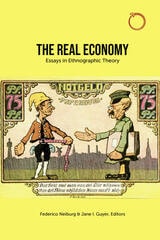
The Real Economy
Essays in Ethnographic TheoryEdited by Federico Neiburg and Jane I. Guyer
HAU, 2020
An ambitious anthropology of economy, this volume questions how assemblages of vernacular and scientific realizations and enactments of the economy are linked to ideas of truth and moral value; how these multiple and shifting realities become present and entangle with historically and socially situated lives; and how the formal realizations of the concept of the “real” in the governance of economies engage with the experiential lives of ordinary people. Featuring essays from some of the world’s most prominent economic anthropologists, The Real Economy is a milestone collection in economic anthropology that crosses disciplinary boundaries and adds new life to social studies of the economy.
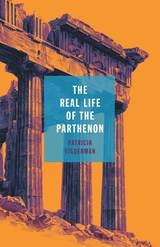
The Real Life of the Parthenon
Patricia Vigderman
The Ohio State University Press, 2018
Ownership battles over the marbles removed from the Parthenon by Lord Elgin have been rumbling into invective, pleading, and counterclaims for two centuries. The emotional temperature around them is high, and steering across the vast past to safe anchor in a brilliant heritage is tricky. The stories around antiquities become distorted by the pull of ownership, and it is these stories that urge Patricia Vigderman into her own exploration of their inspiring legacy in her compelling extended essay, The Real Life of the Parthenon.
Vigderman’s own journey began at the Parthenon, but curiosity edged her further onto the sea between antiquity and the present. She set out to seek the broken temples and amphorae, the mysterious smiles of archaic sculpture, and the finely hammered gold of a funeral wreath among the jumbled streets of modern Athens, the fertile fields of Sicily, the mozzarella buffalo of Paestum. Guided along the way toward the enduring landscapes and fractured history by archeologists, classicists, historians, and artists—and by the desire they inspire—she was caught by ongoing, contemporary local life among the ruins. Gathering present meaning and resonance for the once and future remains of vanished glory, The Real Life of the Parthenon illuminates an important but shadowy element of our common cultural life: the living dynamic between loss and delight.
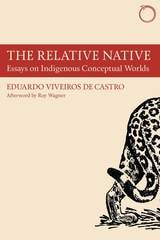
The Relative Native
Essays on Indigenous Conceptual WorldsEduardo Viveiros de Castro
HAU, 2015
This volume is the first to collect the most influential essays and lectures of Eduardo Viveiros de Castro. Published in a wide variety of venues, and often difficult to find, the pieces are brought together here for the first time in a one major volume, which includes his momentous 1998 Cambridge University Lectures, “Cosmological Perspectivism in Amazonia and Elsewhere.”
Rounded out with new English translations of a number of previously unpublished works, the resulting book is a wide-ranging portrait of one of the towering figures of contemporary thought—philosopher, anthropologist, ethnographer, ethnologist, and more. With a new afterword by Roy Wagner elucidating Viveiros de Castro’s work, influence, and legacy, The Relative Native will be required reading, further cementing Viveiros de Castro’s position at the center of contemporary anthropological inquiry.
The Rescue of Romanticism
Walter Pater and John RuskinKenneth Daley
Ohio University Press, 2001
Valuable and timely in its long historical and critical perspective on the legacy of romanticism to Victorian art and thought, The Rescue of Romanticism is the first book-length study of the close intellectual relationship between Walter Pater and John Ruskin, the two most important Victorian critics of art. Kenneth Daley explores the work and thought of both writers in context with other Victorian writers, and enlarges the issues at stake between them, connecting these issues to ongoing artistic, cultural, and political concerns of the modern world.
Professor Daley gives a more finely honed picture than ever before of romanticism’s emergence as a literary concept in Victorian England, detailing the political differences that characterize the opposition between John Ruskin and his younger contemporary, Walter Pater, over the nature of romanticism. Individual chapters reassess the Victorian reception of such romantic figures as Wordsworth, Dante Gabriel Rossetti, Leonardo, and Michelangelo.
Daley demonstrates how Pater’s “modern” reading of romanticism emerged from Ruskin’s distrust of romanticism and from Ruskin’s arguments and examples defining pathetic fallacy. His discussion of Ruskin’s Oxford lectures and their timing in Pater’s developing career refresh the intersections of the two bodies of work and the portrait of the Victorian period in general.
The Responsibilities of Democracy
John Major and Nick Clegg
Haus Publishing, 2019
Amid pressing questions about the nature and limits of democracy, both in Britain and beyond, The Responsibilities of Democracy provides a clear-eyed perspective shared by two former politicians. Two central figures of the British political establishment, John Major and Nick Clegg, share their thoughts on where democracy is heading and how it can survive in the twenty-first century. Offering his perspective as a former prime minister, Major writes of the qualities on which a healthy democracy depends and expresses his deep concerns about the declining decorum of political exchange. Clegg brings a counter-perspective in discussing the ways in which political language has always involved trading insults and argues that echo chambers, although now more sophisticated, are nothing new. Compromise, Clegg insists, is not betrayal, but is instead the very substance of our politics and our democracy. The Responsibilities of Democracy explores the overall health of UK democracy, giving a balanced analysis of its values and flaws. It is also a clarion call to the electorate and politicians to nurture and protect the precious values on which democracy depends.
The Restless Dead
Necrowriting and DisappropriationCristina Rivera Garza
Vanderbilt University Press, 2020
Disappropriating is a political operation at the core of projects acknowledging, both at ethical and aesthetic levels, that writers always work with materials that are not their own. Writers borrow from the practitioners of a language, entering in a debt relationship that can only be covered by ushering the text back to the communities from which it grew. In a world rife with violence, where the experiences of many are erased by pillage and extraction, writing among and for the dead is a form of necrowriting that may well become a life-affirming act of decolonization and resistance.
The River of the Mother of God
and other Essays by Aldo LeopoldAldo Leopold; Edited by J. Baird Callicott and Susan L. Flader
University of Wisconsin Press, 1992
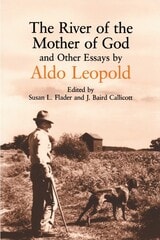
His name is inextricably linked with a single work, A Sand County Almanac, a classic of natural history literature and the conservationist's bible. This book brings together the best of Leopold's essays.
The Road Washes Out in Spring
A Poet’s Memoir of Living Off the GridBaron Wormser
Brandeis University Press, 2023
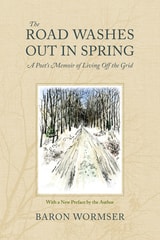
For nearly twenty-five years, poet Baron Wormser and his family lived in a house in Maine with no electricity or running water. They grew much of their own food, carried water by hand, and read by the light of kerosene lamps. They considered themselves part of the “back to the land” movement, but their choice to live off the grid was neither a statement nor a protest: they simply had built their house too far from the road and could not afford to bring in power lines. Over the years, they settled into a life that centered on what Thoreau would have called “the essential facts.” In this graceful meditation, Wormser similarly spurns ideology in favor of observation, exploration, and reflection. “When we look for one thread of motive,” he writes, “we are, in all likelihood, deceiving ourselves.” His refusal to be satisfied with the obvious explanation, the single thread of motive, makes him a keen and sympathetic observer of his neighbors and community, a perceptive reader of poetry and literature, and an honest and unselfconscious analyst of his own responses to the natural world. The result is a series of candid personal essays on community and isolation, nature, civilization, and poetry. Lovely and rich, The Road Washes Out in Spring is an immersive read. A new preface by the author rounds out this new edition.
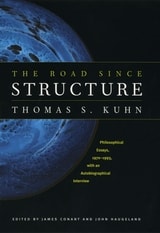
The Road since Structure
Philosophical Essays, 1970-1993, with an Autobiographical InterviewThomas S. Kuhn
University of Chicago Press, 2000
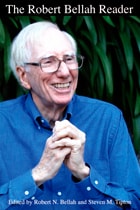
The Robert Bellah Reader
Robert N. Bellah
Duke University Press, 2006
The Reader is organized around four central concerns. It seeks to place modernity in theoretical and historical perspective, drawing from major figures in social science, historical and contemporary, from Aristotle and Rousseau through Durkheim and Weber to Habermas and Mary Douglas. It takes the United States to be in some respects the type-case of modernity and in others the most atypical of modern societies, analyzing its common faith in individual freedom and democratic self-government, and its persistent paradoxes of inequality, exclusion, and empire. The Reader is also concerned to test the axiomatic modern assumption that rational cognition and moral evaluation, fact and value, are absolutely divided, arguing instead that they overlap and interact much more than conventional wisdom in the university today usually admits. Finally, it criticizes modernity’s affirmation that faith and knowledge stand even more utterly at odds, arguing instead that their overlap and interaction, obvious in every premodern society, animate the modern world as well.
Through such critical and constructive inquiry this Reader probes many of our deepest social and cultural quandaries, quandaries that put modernity itself, with all its immense achievements, at mortal risk. Through the practical self-understanding such inquiry spurs, Bellah shows how we may share responsibility for the world we have made and seek to heal it.
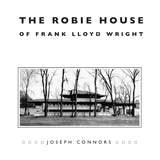
The Robie House of Frank Lloyd Wright
Joseph Connors
University of Chicago Press, 1984

The Romanov Empire and Nationalism
Essays in the Methodology of Historical ResearchAlexei Miller
Central European University Press, 2008
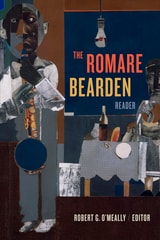
The Romare Bearden Reader
Robert G. O'Meally, editor
Duke University Press, 2019
Contributors. Elizabeth Alexander, Romare Bearden, Mary Lee Corlett, Rachel DeLue, David C. Driskell, Brent Hayes Edwards, Ralph Ellison, Henri Ghent, Farah Jasmine Griffin, Harry Henderson, Kobena Mercer, Toni Morrison, Albert Murray, Robert G. O’Meally, Richard Powell, Richard Price, Sally Price, Myron Schwartzman, Robert Burns Stepto, Calvin Tomkins, John Edgar Wideman, August Wilson

The Roots of Things
EssaysMaxine Kumin
Northwestern University Press, 2010
Throughout her career, Pulitzer Prize–winning poet Maxine Kumin has been at the vanguard of discussions about feminism and sexism, the state of poetry, and our place in the natural world. The Roots of Things gathers into one volume her best essays on the issues that have been closest to her throughout her storied career.
Divided into sections on "Taking Root," "Poets and Poetry," and "Country Living," these pieces reveal Kumin honing her views within a variety of forms, including speeches, critical essays, and introductions of other writers’ work. Whether she is recollecting scenes from her childhood, ruminating on the ups and downs of what she calls "pobiz" (for "poetry business"), describing the battles she’s fought on behalf of women, or illuminating the lives of animals, Kumin offers insight that can only be born of long and closely observed experience.
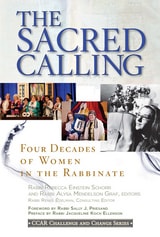
The Sacred Calling
Four Decades of Women in the RabbinateRabbi Rebecca Einstein Schorr and Rabbi Alysa Mendelson Graf
Central Conference of American Rabbis, 2016
Winner of the 2016 National Jewish Book Award in Women's Studies, this pioneering anthology paints an illuminating and necessary picture of the past while laying the groundwork for important work yet to be done.
Women have been rabbis for over forty years. No longer are women rabbis a unique phenomenon, rather they are part of the fabric of Jewish life. In this anthology, rabbis and scholars from across the Jewish world reflect back on the historic significance of women in the rabbinate and explore issues related to both the professional and personal lives of female rabbis. This collection examines the ways in which the reality of women in the rabbinate has impacted all aspects of Jewish life, including congregational culture, liturgical development, life cycle ritual, the Jewish healing movement, spirituality, theology, and more.
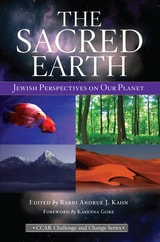
The Sacred Earth
Jewish Perspectives on Our PlanetRabbi Andrue J. Kahn
Central Conference of American Rabbis, 2023
The Torah begins by setting forth the heavens and the Earth as God’s creation, impelling humanity to steward our planet for its own sake and for its ability to nurture our lives. Yet the human-Divine-environment relationship seems to be in perpetual crisis. The Sacred Earth is a contemporary Jewish response to the looming threat of climate change, the widespread desire for experiential spirituality rooted in nature, and the continually changing relationship between humanity, nature, technology, and the Divine. The leading thinkers in this collection reflect on human vulnerability in the face of forces of nature, examine conceptions of our place in cosmology, and grapple with environmental destruction. Ultimately, with hope, they creatively explore ways to redeem this sacred Earth.
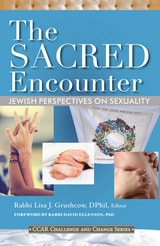
The Sacred Encounter
Jewish Perspectives on SexualityRabbi Lisa Grushcow, Dphil
Central Conference of American Rabbis, 2014
This wide-ranging anthology takes a close look at the breadth of human sexuality from a Jewish perspective. The essays begin with a look at biblical and rabbinic views on sexuality and then proceed to explorations of sexuality at different moments in the life cycle, sexuality and the marital model, diverse expressions of sexuality, examples of sexuality education, the nexus of sexuality and theology, and the challenges of contemporary sexual ethics. The Sacred Encounter is a thought-provoking and important Jewish resource. Perfect for personal study or for high school or adult classes.
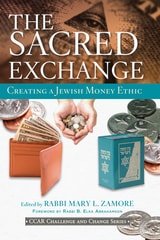
The Sacred Exchange
Creating a Jewish Money EthicRabbi Mary L. Zamore
Central Conference of American Rabbis, 2019
Part of the CCAR Press Challenge and Change series, this anthology creates a rich and varied discussion about the ethics of money. Our use of and relationship with money must reflect our religious values--this book aims to start a comprehensive conversation about how Judaism can guide us in this multi-faceted relationship.
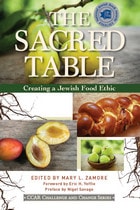
The Sacred Table
Creating a Jewish Food EthicRabbi Mary L. Zamore
Central Conference of American Rabbis, 2011
The Sacred Table: Creating a Jewish Food Ethic is an anthology of diverse essays on Jewish dietary practices. This volume presents the challenge of navigating through choices about eating, while seeking to create a rich dialogue about the intersection of Judaism and food. The definition of Kashrut, the historic Jewish approach to eating, is explored, broadened and, in some cases, argued with, in these essays. Kashrut is viewed not only as a ritual practice, but also as a multifaceted Jewish relationship with food and its production, integrating values such as ethics, community, and spirituality into our dietary practice.
The questions considered in The Sacred Table are broad reaching. Does Kashrut represent a facade of religiosity, hiding immorality and abuse, or is it, in its purest form, a summons to raise the ethical standards of food production? How does Kashrut enrich spiritual practice by teaching intentionality and gratitude? Can paying attention to our own eating practices raise our awareness of the hungry? Can Kashrut inspire us to eat healthfully? Can these laws draw us around the same table, thus creating community? In exploring the complexities of these questions, this book includes topics such as agricultural workers' rights, animal rights, food production, the environment, personal health, the spirituality of eating and fasting, and the challenges of eating together.
The Sacred Table celebrates the ideology of educated choice. The essays present a diverse range of voices, opinions, and options, highlighting the Jewish values that shape our food ethics. Whether for the individual, family, or community, this book supplies the basic how-tos of creating a meaningful Jewish food ethic and incorporating these choices into our personal and communal religious practices. These resources will be helpful if we are new to these ideas or if we are teaching or counseling others. Picture a beautiful buffet of choices from which you can shape your personal Kashrut. Read, educate yourself, build on those practices that you already follow, and eat well.
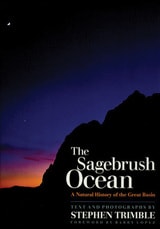
The Sagebrush Ocean, Tenth Anniversary Edition
A Natural History Of The Great BasinStephen Trimble
University of Nevada Press, 1999
This is the best general introduction to the ecology and spirit of the Great Basin, a place where "the desert almost seems to mirror the sky in size," where mountains hold "ravens, bristlecone pines, winter stillness—and unseen, but satisfying, the possibility of bighorn sheep." Trimble's photographs come from the backcountry of this rugged land, from months of exploring and hiking the Great Basin wilderness in all seasons; and his well-chosen words come from a rare intimacy with the West.
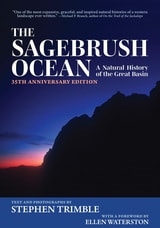
The Sagebrush Ocean
35th Anniversary EditionStephen Trimble
University of Nevada Press, 2026
The Sagebrush Ocean, the essential introduction to the ecology and spirit of the Great Basin Desert, returns in this richly updated 35th anniversary edition. Winner of the Ansel Adams Award for Photography and Conservation, Stephen Trimble’s authoritative voice and evocative photographs illuminate this landscape of sun-struck playas, surprising wetlands, remote canyons, and wind-swept tundra.
Today, the once-vast “sagebrush ocean” is an endangered sea, as environmental changes and human development have diminished it by half. This heartbreaking decline drives Trimble’s updated text, but he blends loss with reverence for what remains—and urgent insight into what’s at stake. Striking color photographs, many newly added, illuminate some of the continent’s most spectacular but little known scenery. For anyone curious about the Great Basin or concerned for its future, this timely edition is indispensable.
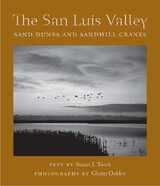
The San Luis Valley
Sand Dunes and Sandhill CranesText by Susan J. Tweit; Photographs by Glenn Oakley
University of Arizona Press, 2005
The Science of Near-Death Experiences
Edited by John C. Hagan III
University of Missouri Press, 2017
The Scores Project
Essays on Experimental Notation in Music, Art, Poetry, and Dance, 1950–1975Michael Gallope
J. Paul Getty Trust, The, 2025
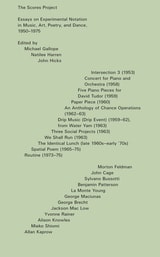
Individuals working in and across the fields of visual art, music, poetry, theater, and dance in the mid–twentieth century began to use experimental scores in ways that revolutionized artistic practice and opened up new forms of interdisciplinary collaboration. Their experimental methods—associated with the neo-avant-garde, neo-Dadaism, intermedia, Fluxus, and postmodernism—exploded in notoriety during the 1960s in locales from New York to Europe, East Asia, and Latin America, becoming foundational to global trends in contemporary art and performance.
The Scores Project provides an in-depth view of this historical moment. Through expert commentaries from an interdisciplinary team of scholars with accompanying illustrations, this publication examines a series of experimental scores by John Cage, George Brecht, Sylvano Bussotti, Morton Feldman, Allan Kaprow, Alison Knowles, Jackson Mac Low, Benjamin Patterson, Yvonne Rainer, Mieko Shiomi, David Tudor, and La Monte Young. Ambitious, provocative, and playful, The Scores Project is an illuminating resource to scholars and students who seek to understand this innovative and historically complex moment in the history of art.
An expanded edition of this open-access publication is available for free online at www.getty.edu/publications/scores/. It includes more than 2,800 images, audio/video files, and interactive features. Also available are free PDF and EPUB downloads of the book.
The Sculpture of Robyn Horn
Robyn Horn
University of Arkansas Press, 2018
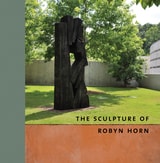
The essays and images in The Sculpture of Robyn Horn sketch the industrious career of this Little Rock, Arkansas-based sculptor, illuminating her attention to geometry, physics, and the philosophy of design, and exploring the context and origin of the various series—Geodes, Millstones, Standing Stones, and Slipping Stones, among others—that characterize her body of work.
The Serpent and the Stylus
Essays on G. B. PiranesiEdited by Mario Bevilacqua, Heather Hyde Minor, and Fabio Barry
University of Michigan Press, 2006
Piranesi was an architect, engraver, antiquities restorer and dealer, draftsman, archaeologist, furniture and fireplace designer, author, and bookseller. His creations in paper and in stone garnered considerable renown in his own lifetime, allowing him to transform himself from a penniless son of a stonemason to a wealthy entrepreneur. However, despite attempts to catalogue and analyze his work, little is known about Piranesi. Since Henri Focillon published his monograph on the artist in 1918, scholars have sought to expand his interpretive strategies used to examine Piranesi and his work. This volume is a representative sampling of the contemporary scholarship on Piranesi, with each essay scrutinizing a particular aspect of his oeuvre. By engaging with material found in eighteenth-century manuscripts and printed materials, as well as the texts and images Piranesi produced, the nine essays by esteemed contributors add to the rapidly growing and diversifying field of eighteenth-century studies. The outcome is a volume that will add to the expanding, glittering mosaic of Piranesi’s life and his work.
Front Flap
Heather Hyde Minor is Assistant Professor at the University of Illinois, Urbana-Champaign.
Fabio Barry is Assistant Professor at the American University of Rome, Italy.
The Sespe Wild
Southern California'S Last Free RiverBradley John Monsma
University of Nevada Press, 2007
The Seven Deadly Virtues
18 Conservative Writers on Why the Virtuous Life is Funny as HellJonathan V. Last
Templeton Press, 2014
The book’s contributors include Sonny Bunch, Christopher Buckley, David “Iowahawk” Burge, Christopher Caldwell, Andrew Ferguson, Jonah Goldberg, Michael Graham, Mollie Hemingway, Rita Koganzon, Matt Labash, James Lileks, Rob Long, Larry Miller, P. J. O’Rourke, Joe Queenan, Christine Rosen, and Andrew Stiles. Jonathan V. Last, senior writer at the Weekly Standard, editor of the collection, is also a contributor. All eighteen essays in this book are appearing for the first time anywhere.
In the book’s opening essay, P. J. O’Rourke observes: “Virtue has by no means disappeared. It’s as much in public view as ever. But it’s been strung up by the heels. Virtue is upside down. Virtue is uncomfortable. Virtue looks ridiculous. All the change and the house keys are falling out of Virtue’s pants pockets.”
Here are the virtues everyone (including the book’s contributors) was taught in Sunday school but have totally forgotten about until this very moment. In this sanctimony-free zone:
• Joe Queenan observes: “In essence, thrift is a virtue that resembles being very good at Mahjong. You’ve heard about people who can do it, but you’ve never actually met any of them.”
• P. J. O’Rourke notes: “Fortitude is quaint. We praise the greatest generation for having it, but they had aluminum siding, church on Sunday, and jobs that required them to wear neckties or nylons (but never at the same time). We don’t want those either.”
• Christine Rosen writes: “A fellowship grounded in sociality means enjoying the company of those with whom you actually share physical space rather than those with whom you regularly and enthusiastically exchange cat videos.”
• Rob Long offers his version of modern day justice: if you sleep late on the weekend, you are forced to wait thirty minutes in line at Costco.
• Jonah Goldberg offers: “There was a time when this desire-to-do-good-in-all-things was considered the only kind of integrity: ‘Angels are better than mortals. They’re always certain about what is right because, by definition, they’re doing God’s will.’ Gabriel knew when it was okay to remove a mattress tag and Sandalphon always tipped the correct amount.”
• Sonny Bunch dissects forbearance, observing that the fictional Two Minutes Hate of George Orwell’s 1984 is now actually a reality directed at living, breathing people. Thanks, in part, to the Internet, “Its targets are designated by a spontaneously created mob—one that, due to its hive-mind nature—is virtually impossible to call off.”
By the time readers have completed The Seven Deadly Virtues, they won’t even realize that they’ve just been catechized into an entirely different—and better—moral universe.

The Shadow Family
George Estreich
University of Iowa Press, 2027
The Shapes of Memory Loss
Stories, Poems and Essays from the University of Michigan Medical School and Health SystemMichigan Publishing Services, 2013

The Sheep Book
A Handbook for the Modern Shepherd, Revised and UpdatedRon Parker
Ohio University Press, 2001