1441 books match the query 'Great Britain' and 342 start with t
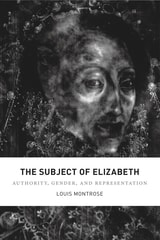
cover of The Subject of Elizabeth: Authority, Gender, and Representation

The Subject of Elizabeth

Authority, Gender, and Representation

Louis Montrose

University of Chicago Press, 2006

As a woman wielding public authority, Elizabeth I embodied a paradox at the very center of sixteenth-century patriarchal English society. Louis Montrose’s long-awaited book, The Subject of Elizabeth, illuminates the ways in which the Queen and her subjects variously exploited or obfuscated this contradiction.

Montrose offers a masterful account of the texts, pictures, and performances in which the Queen was represented to her people, to her court, to foreign powers, and to Elizabeth herself. Retrieving this “Elizabethan imaginary” in all its richness and fascination, Montrose presents a sweeping new account of Elizabethan political culture.  Along the way, he explores the representation of Elizabeth within the traditions of Tudor dynastic portraiture; explains the symbolic manipulation of Elizabeth’s body by both supporters and enemies of her regime; and considers how Elizabeth’s advancing age provided new occasions for misogynistic subversions of her royal charisma.  

This book, the remarkable product of two decades of study by one of our most respected Renaissance scholars, will be welcomed by all historians, literary scholars, and art historians of the period.
[more]
cover of The Subject of Modernism: Narrative Alterations in the Fiction of Eliot, Conrad, Woolf, and Joyce

The Subject of Modernism

Narrative Alterations in the Fiction of Eliot, Conrad, Woolf, and Joyce

Tony E. Jackson

University of Michigan Press, 1994
Like other poststructuralist theories, Lacanian theory has long been accused of being ahistorical. In The Subject of Modernism, Tony E. Jackson combines a uniquely graspable explanation of the Lacanian theory of the self with a series of detailed psychoanalytic interpretations of actual texts to offer a new kind of literary history.After exposing the seldom-discussed history of the self found in the work of Lacan, Jackson shows that the basic plot structure of realistic novels reveals an unconscious desire to preserve a certain kind of historically institutionalized self, but that the desire of realism to write the most real representation of reality steadily makes the self-preservation more difficult to sustain. Thus in following through on its own desire to prove the certainty of its being, realism eventually discovers its own impossibility. Jackson charts the resistances to and misrecognitions of this discovery as they are revealed in the changes of narrative form from Eliot's last, most ambitious novel, Daniel Deronda, through Conrad’s most modernist novels, Lord Jim and Heart of Darkness, to Woolf's Mrs. Dalloway and The Waves. He ends with an appended consideration of the ‘‘Cyclops’’ and ‘‘Nausicaa’’ chapters from Joyces’s Ulysses.While other critics have argued that realism structures a certain self and modernism undoes that self, they have not attempted a historical explanation of why this change should have occurred. Jackson reads the emergence of modernism as a kind of generic self-analysis of realism, analogous to the self-analysis performed by Freud: when realism discovers the significance of its own desire to write the most real representation of reality, it has, in that moment, become modernism. It has grasped its own nature and so fully becomes itself, for the first time, as modernism.
[more]
cover of The Sugar Act and the American Revolution

The Sugar Act and the American Revolution

Ken Shumate

Westholme Publishing, 2022

The first act of Parliament to levy direct taxation on the colonies, the Sugar Act of 1764 defined a new colonial policy and prompted a decade of protests that ended in open rebellion against Great Britain. The initial Sugar Act of 1733—also known as the Molasses Act—was designed to secure and encourage the trade of British colonies in the West Indies by placing prohibitive duties on the products of competing foreign colonies. The dramatic revision to that act in 1764 imposed duties for both revenue and trade regulation, in addition strengthening the laws of trade so as to tighten the connection between Great Britain and the colonies. In 1766, a revision to the act of 1764 responded to American grievances, but also transformed the Sugar Act into an explicit law for taxation. Americans, having long seen the act as within Parliament’s authority to regulate their trade, did not at first see the duties as taxes—and paid them without complaint. The resulting revenue was greater than that exacted by any other parliamentary tax on America. 
The Sugar Act and the American Revolution by Ken Shumate is the only book-length treatment of this first great challenge of the revolutionary era. For each of the three incarnations of the act, the author provides a clause-by-clause description, including the British reasoning behind the duties and trade restrictions, and a summary of the resulting American grievance. Following the explanation of each act are chapters describing the protests of American merchants and popular leaders, and the British response to those protests. As a consequence of further parliamentary acts of taxation, the story ends with the demand in 1774 by the First Continental Congress for Parliament to repeal the Sugar Act as being “essentially necessary in order to restore harmony between Great Britain and the American colonies.”
 
[more]
cover of The Sun Still Shone: Professors Talk Retirement

The Sun Still Shone

Professors Talk Retirement

Lorraine T. Dorfman

University of Iowa Press, 1997

[more]
cover of The Suspect: Counterterrorism, Islam, and the Security State

The Suspect

Counterterrorism, Islam, and the Security State

Rizwaan Sabir

Pluto Press, 2021

'An instant classic. Sabir is an inspiration' Arun Kundnani, author of The Muslims are Coming!

What impact has two decades' worth of policing and counterterrorism had on the state of mind of Muslims in Britain? The Suspect draws on the author's lived experiences of being suspected of terrorism to take the reader on a journey through British counterterrorism practices and the policing of Muslims.

Rizwaan Sabir describes what led to his arrest for suspected terrorism, his time in detention, and the surveillance he was subjected to on release from custody, including stop and frisk on the roadside, detentions at the border, and monitoring by police and government departments throughout his research.

Writing publicly for the first time about the traumatizing mental health effects of these experiences, he argues that these harmful outcomes are not the result of errors in government planning, but the consequences of using a counterinsurgency warfare approach to surveillance. If we are to break this injustice, we need to resist counterterrorism policy and practice.
[more]
cover of The System of Professions: An Essay on the Division of Expert Labor

The System of Professions

An Essay on the Division of Expert Labor

Andrew Abbott

University of Chicago Press, 1988

In The System of Professions Andrew Abbott explores central questions about the role of professions in modern life: Why should there be occupational groups controlling expert knowledge? Where and why did groups such as law and medicine achieve their power? Will professionalism spread throughout the occupational world? While most inquiries in this field study one profession at a time, Abbott here considers the system of professions as a whole. Through comparative and historical study of the professions in nineteenth- and twentieth-century England, France, and America, Abbott builds a general theory of how and why professionals evolve.
[more]
cover of The TESTED WOMAN PLOT: Women’s Choices, Men’s Judgments, and the Shaping of Stories

The TESTED WOMAN PLOT

Women’s Choices, Men’s Judgments, and the Shaping of Stories

Lois E. Bueler

The Ohio State University Press, 2001

[more]
cover of The Taxation of Income from Capital: A Comparative Study of the United States, the United Kingdom, Sweden and West Germany

The Taxation of Income from Capital

A Comparative Study of the United States, the United Kingdom, Sweden and West Germany

Mervyn A. King and Don Fullerton

University of Chicago Press, 1984

Taxation—both corporate and personal—has been held responsible for the low investment and productivity growth rates experienced in the West during the last decade. This book, a comparative study of the taxation of income from capital in the United States, the United Kingdom, Sweden, and West Germany, establishes for the first time a common framework for analysis that permits accurate comparison of tax systems.
[more]
cover of The Terrible Fitzball: The Melodramatist of the Macabre

The Terrible Fitzball

The Melodramatist of the Macabre

Larry Stephen Clifton

University of Wisconsin Press, 1993

The greatest portrayer of blue-fire deviltry, Edward Fitzball was a melodramatist on the nineteenth-century British stage. His Theatre of the Macabre was very much a forebearer of the sensationalized media of today. This book discusses Fitzball’s life, and his dramatic oeuvre.
[more]
cover of The Theological-Political Origins of the Modern State: The Controversy between James I of England and Cardinal Bellarmine

The Theological-Political Origins of the Modern State

The Controversy between James I of England and Cardinal Bellarmine

Bernard Bourdin

Catholic University of America Press, 2010
In this work, Bernard Bourdin clearly sets forth the political thought and theology of James I as an early intellectual foundation for the modern state
[more]
cover of The Tizard Mission: The Top-Secret Operation That Changed the Course of World War II

The Tizard Mission

The Top-Secret Operation That Changed the Course of World War II

Stephen Phelps

Westholme Publishing, 2010

Alone Against Germany, Britain Gave America Its Most Astonishing Secrets
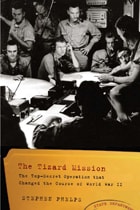
In August 1940, a German invasion of Britain looked inevitable. Luftwaffe bombers were pounding British cities, France had surrendered, and the Low Countries were under German control. Although sympathetic to Britain’s plight, the United States remained staunchly neutral. Unknown to the rest of the world, Britain’s brightest scientific and military minds had been working on futuristic technology for a decade, including radar and jet propulsion. While the great value of radar to locate and identify objects at long distance and at night or in bad weather was appreciated, at the time it was thought that practical radar required a room-sized device for generating an effective signal. Now, suddenly, British scientists had something extraordinary—the cavity magnetron, a generator hundreds of times more powerful than any other in use and small enough to be held in the hand. With the British economy and industry reeling from the war, Winston Churchill gambled on an unorthodox plan: a team of scientists and engineers would travel under cover to the United States and give the still-neutral Americans the best of Britain’s military secrets. It was hoped that in exchange the United States would provide financial and manufacturing support—which might even lead to their official entry into the war.

     The Tizard Mission, named for its leader Sir Henry Tizard, steamed across the Atlantic carrying a suitcase-sized metal deed box. Designed to sink in the event the ship was torpedoed by a U-boat, the box contained details of the Whittle jet engine, research for an atomic bomb, and a precious cavity magnetron. The Americans proved to be astonished, receptive, and efficient: Bell Telephone produced the first thirty magnetrons in October 1940, and over a million by the end of the war. With this device, both warships and aircraft could carry war-winning radar. But Britain did not only give America military secrets, these same technologies would produce a fortune for postwar commercial industries, with the magnetron being the key component to the microwave oven. In The Tizard Mission: The Top-Secret Operation That Changed the Course of World War II, Stephen Phelps reveals how the Tizard Mission was the turning point in the technological war, giving Britain the weapons it desperately needed and laying the groundwork for both the Special Relationship and much of the United States’s postwar economic boom, an effect that still resonates today.
[more]
cover of The Tradescants' Orchard: The Mystery of a Seventeenth-Century Painted Fruit Book

The Tradescants' Orchard

The Mystery of a Seventeenth-Century Painted Fruit Book

Barrie Juniper and Hanneke Grootenboer

Bodleian Library Publishing, 2013

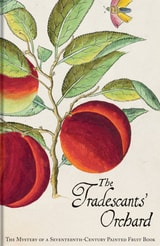
In the early seventeenth century, England’s leisured classes took an eager interest in fruits from the Mediterranean and beyond, introducing species from abroad into the kitchen gardens and orchards of grand homes. A charming collection of sixty-six early watercolors showing fecund trees with fruits hanging heavily from their branches, The Tradescants’ Orchard is a testament to these broadening horticultural horizons.

The Tradescants’ Orchard reproduces for the first time the entire manuscript, traditionally associated with the renowned father-and-son nurserymen the John Tradescants. The paintings pose many questions: Who painted them and why? What is the significance of the wildlife—birds, butterflies, frogs, and snails—that appear throughout? Why is there only one depiction of an apple tree despite its popularity? Were there others that have since gone missing?

A visual feast that will appeal to botany and gardening enthusiasts, the book also includes an introduction that maps out the mystery of how and why these enigmatic watercolors were made.
[more]
cover of The Transatlantic Materials of American Literature: Publishing US Writing in Britain, 1830–1860

The Transatlantic Materials of American Literature

Publishing US Writing in Britain, 1830–1860

Katie McGettigan

University of Massachusetts Press, 2023

Winner, Transatlantic Studies Association and Cambridge University Press Book Prize, 2023

During the antebellum period, British publishers increasingly brought out their own authorized and unauthorized editions of American literary works as the popularity of print exploded and literacy rates grew. Playing a formative role in the shaping of American literature, the industry championed the work of US-based writers, highlighted the cultural value of American literary works, and intervened in debates about the future of American literature, authorship, and print culture.

The Transatlantic Materials of American Literature examines the British editions of American fiction, poetry, essays, and autobiographies from writers like Edgar Allan Poe, Harriet Beecher Stowe, Frederick Douglass, and Hannah Flagg Gould. Putting these publications into historical context, Katie McGettigan considers key issues of the day, including developments in copyright law, changing print technologies, and the financial considerations at play for authors and publishers. This innovative study also uncovers how the transatlantic circulation of these works exposed the racial violence and cultural nationalism at the heart of the American experiment, producing overlapping and competing visions of American nationhood in the process.
[more]
cover of The Transfiguring Sword: The Just War of the Women's Social and Political Union

The Transfiguring Sword

The Just War of the Women's Social and Political Union

Cheryl R. Jorgensen-Earp

University of Alabama Press, 1997

Provides a new understanding of the recurrent rhetorical need to employ conservative rhetoric in support of a radical cause

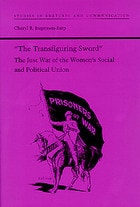
The Women’s Social and Political Union, the militant branch of the English women’s suffrage movement, turned to arson, bombing, and widespread property destruction as a strategy to achieve suffrage for women. Because of its comparative rarity, terrorist violence by reform (as opposed to revolutionary) movements is underexplored, as is the discursive rhetoric that accompanies this violence. Largely because of the moral stance that drives such movements, the need to justify violence is greater for the reformist than for the revolutionary terrorist. The burden of rhetorical justification falls even more heavily on women utilizing violence, an option generally perceived as open only to men.

The militant suffragettes justified their turn to limited terrorism by arguing that their violence was part of a “just war.” Appropriating the rhetoric of a just war in defense of reformist violence allowed the suffragettes to exercise a traditional rhetorical vision for the sake of radical action. The concept of a just war allowed a spinning out of a fantasy of heroes, of a gallant band fighting against the odds. It challenged the imagination of the public to extend to women a heroic vision usually reserved for men and to accept the new expectations inherent in that vision. By incorporating the concept of a just war into their rhetoric, the WSPU leaders took the most conventional justification that Western tradition provides for the use of violence and adapted it to meet their unique circumstance as women using violence for political reform.

This study challenges the common view that the suffragettes’ use of military metaphors, their vilification of the government, and their violent attacks on property were signs of hysteria and self-destruction. Instead, what emerges is a picture of a deliberate, if controversial, strategy of violence supported by a rhetorical defense of unusual power and consistency.

 
[more]
cover of The Trial of Charles I: A Documentary History

The Trial of Charles I

A Documentary History

Edited by David Lagomarsino and Charles T. Wood

Dartmouth College Press, 1989
On January 6, 1649, the House of Commons passed an act for “the Trying and Judging of Charles Stuart, King of England.” By month’s end, the King’s judges had found him “guilty of High Treason and of the murders, rapines, burnings, spoils, desolations, damage, and mischief to this nation” committed during the recently concluded Civil War. The sentence, ordering his execution “by severing of his head from his body,” was carried out in full public view on January 30. How and why a King--God’s annointed--could be executed for treason are questions that underscore the profound changes that politics and political thought were undergoing at this time. To provide a window into this pivotal period, accounts of the trial and execution taken from contemporary newspapers, pamphlets, and official records, are collected here and edited for modern readers. This compilation of eyewitness accounts has been arranged to sketch a dramatic day-by-day narrative of that fateful month, introducing the important issues in a way that brings readers close to the making of these great events. The speeches at the trial make especially vivid the clash between two contrasting theories of government--that of a divine monarchy in which a king is deemed essential to the true liberty of his people, and that of a commonwealth in which sovereignty rests with the people and is exercised by its representatives.
[more]
cover of The Triumph of Human Empire: Verne, Morris, and Stevenson at the End of the World

The Triumph of Human Empire

Verne, Morris, and Stevenson at the End of the World

Rosalind Williams

University of Chicago Press, 2013
In the early 1600s, in a haunting tale titled New Atlantis, Sir Francis Bacon imagined the discovery of an uncharted island. This island was home to the descendants of the lost realm of Atlantis, who had organized themselves to seek “the knowledge of Causes, and secret motions of things; and the enlarging of the bounds of Human Empire, to the effecting of all things possible.” Bacon’s make-believe island was not an empire in the usual sense, marked by territorial control; instead, it was the center of a vast general expansion of human knowledge and power.  
           
Rosalind Williams uses Bacon’s island as a jumping-off point to explore the overarching historical event of our time: the rise and triumph of human empire, the apotheosis of the modern ambition to increase knowledge and power in order to achieve world domination. Confronting an intensely humanized world was a singular event of consciousness, which Williams explores through the lives and works of three writers of the late nineteenth century: Jules Verne, William Morris, and Robert Louis Stevenson. As the century drew to a close, these writers were unhappy with the direction in which their world seemed to be headed and worried that organized humanity would use knowledge and power for unworthy ends. In response, Williams shows, each engaged in a lifelong quest to make a home in the midst of human empire, to transcend it, and most of all to understand it. They accomplished this first by taking to the water: in life and in art, the transition from land to water offered them release from the condition of human domination. At the same time, each writer transformed his world by exploring the literary boundary between realism and romance. Williams shows how Verne, Morris, and Stevenson experimented with romance and fantasy and how these traditions allowed them to express their growing awareness of the need for a new relationship between humans and Earth.
           
The Triumph of Human Empire shows that for these writers and their readers romance was an exceptionally powerful way of grappling with the political, technical, and environmental situations of modernity. As environmental consciousness rises in our time, along with evidence that our seeming control over nature is pathological and unpredictable, Williams’s history is one that speaks very much to the present.
[more]
cover of The Truth About Modern Slavery

The Truth About Modern Slavery

Emily Kenway

Pluto Press, 2021

'A powerful treatise' - Amelia Gentleman, Guardian

In 2019, over 10,000 possible victims of slavery were found in the UK. From men working in Sports Direct warehouses for barely any pay, to teenaged Vietnamese girls trafficked into small town nail bars, we’re told that modern slavery is all around us, operating in plain sight.

But is this really slavery, and is it even a new phenomenon? Why has the British Conservative Party called it 'one of the great human rights issues of our time', when they usually ignore the exploitation of those at the bottom of the economic pile? The Truth About Modern Slavery reveals how modern slavery has been created as a political tool by those in power. It shows how anti-slavery action acts as a moral cloak, hiding the harms of the ‘hostile environment’ towards migrants, legitimising big brands’ exploitation of the poorest workers and oppressing sex workers.

Blaming the media's complicity, rich philanthropists' opportunism and our collective failure to realise the lies we’re being told, The Truth About Modern Slavery provides a vital challenge to conventional narratives on modern slavery.
[more]
cover of The University of Oxford: A Brief History

The University of Oxford

A Brief History

Laurence Brockliss

Bodleian Library Publishing, 2018

The University of Oxford is the third-oldest university in Europe and remains one of the greatest universities in the world. Institutions have waxed and waned over the centuries, but Oxford has always succeeded in reinventing itself to meet the demands of a new age.

This book offers a succinct illustrated account of the university’s colorful and controversial eight-hundred-year history, from medieval times through the Reformation and on to the nineteenth century, in which the foundations of the modern tutorial system were laid. It describes the extraordinary and influential people who shaped the development of the institution and helped to create today’s world-class research university.

Richly illustrated with archival material, prints, and portraits, this book explores how a university in a small provincial town rose to become one of the top universities in the world at the beginning of the twenty-first century.

[more]
cover of The Victoria County History of Herefordshire: Bosbury

The Victoria County History of Herefordshire

Bosbury

Janet Cooper

University of London Press, 2016

Bosbury is the second parish history to be produced by the Trust for the Victoria County History of Herefordshire, following the history of Eastnor published in 2013. Like Eastnor, Bosbury is an agricultural parish, near the market town of Ledbury. It covers a relatively large area below the western slopes of the Malvern Hills. In the Middle Ages Bosbury was the site of one of the favourite residences of the bishops of Hereford; in the western part of the parish, called Upleadon, was an estate belonging first to the Knights Templar and then to the Hospitallers. From the 16th century onwards both estates passed into the hands of tenants, leaving the parish without a major resident landowner until John Stedman and Edward Higgins successively developed the Bosbury House estate in the late 18th and the 19th century. Much of that estate was given after the First World War to create the Bosbury Farm Settlement for former soldiers. The economy of the parish has always been agricultural, mixed farming being practised. Orchards have been important, particularly on the higher ground in the northern part of the parish, and hops have been grown since the 17th century. By the late 19th century the lack of industry, and indeed of any major roads, made the parish appear an oasis of rural peace. The many timber-framed buildings, particularly those along the village street, and the parish church with its detached bell tower, attracted visitors and some new residents, but the parish avoided any large-scale 20th-century development.
[more]
cover of The Victoria History of Essex: Harwich, Dovercourt and Parkeston in the 19th Century

The Victoria History of Essex

Harwich, Dovercourt and Parkeston in the 19th Century

Andrew Senter Andrew Morrell

University of London Press, 2019

Exploring the changing character of Harwich, Dovercourt and Parkeston through the course of the 19th century, included in this book is the economic, social and political history of the borough. The book provides an overview of the development of areas such as education, religion, public health with a strong focus on Harwich’s maritime history. The borough of Harwich, including the parish of Dovercourt, lies in the far north east corner of Essex. Its coastal location as a natural harbour at the mouth of the Orwell river dictated that Harwich had a prominent role as a port and naval base from the 14th century onwards. In the 19th century Harwich retained its military function, particularly during the Napoleonic and Crimean wars. The port declined economically as a result of losing the continental packet service in the 1830s, but it was rejuvenated by the opening of the railway in 1854. Dovercourt grew as a residential area and seaside resort in the second half of the 19th century, although the rest of the parish retained much of its traditional agricultural character. The opening of the port at nearby Parkeston in 1883 led to a rapid growth in both passenger traffic and trade to and from the continent.
[more]
cover of The Victoria History of Essex: Newport

The Victoria History of Essex

Newport

Edited by Anthony Tuck

University of London Press, 2015

The parish of Newport lies in the valley of the river Cam in north-west Essex about three and a half miles south-west of the market town of Saffron Walden, and a short distance from the Hertfordshire and Cambridgeshire borders. It probably originated in the early 10th century as a royal foundation, and it soon developed some urban features such as a market. Its position on an important through route between London and East Anglia gave it a more varied character than some of its neighbouring villages, and the coming of the railway in the 19th century led to the establishment of a gas works and maltings. Even so, it remained a largely agricultural community until the mid 20th century, but thereafter its position as a thoroughfare village helped to establish Newport as a community with most of its adult population finding work elsewhere, some in London.

This book explores the varying character of Newport over eleven centuries. It examines the changing patterns of landownership, social structure and economy of the village and its institutions, not least its 16th-century grammar school. It also discusses the part played, especially in the 18th, 19th and 20th centuries, by the owners of Shortgrove Hall, within the parish, and Quendon Hall, a few miles to the south.
[more]
cover of The Victoria History of Essex: Southend: Victorian Town and Resort

The Victoria History of Essex

Southend: Victorian Town and Resort

Ken Crowe

University of London Press, 2025

The story of Southend’s growth as a town and resort in the Victorian and Edwardian periods is told here in this new history of Southend.

As the nearest seaside resort to London, the town’s development has been determined in large part by the impact of its seasonal visitors. Yet it was the year-round movement of people from other parts of Essex, England and from the European continent in the late-nineteenth and early-twentieth-centuries that was to have a lasting effect on the character of the town.

Richly illustrated and drawing from original sources, this volume offers new perspectives on the developments that laid the foundations of Southend as we know it today. Its thematic chapters chart the physical expansion of housing in the period and the development of the resort’s infrastructure and economy, among other topics. Although concentrating on Southend and its resort, chapters on agricultural depression and land speculation, education, clubs and societies and unemployment expand the book’s regional focus to neighbouring areas, making this valuable reading for anyone interested in the history of Essex and the UK’s seaside towns.

[more]
cover of The Victoria History of Gloucestershire: Cheltenham Before the Spa

The Victoria History of Gloucestershire

Cheltenham Before the Spa

Edited by Alex Craven and with Beth Hartland

University of London Press, 2018

The familiar image of Cheltenham, a large and prosperous former spa town, world-famous on account of its Georgian and Regency architecture, its festivals and educational establishments, masks an earlier history. While numerous descriptions of the town have been published over the years, most say little about the many centuries of its existence before the 1740s, when it began to develop as a fashionable resort. This is the fullest account ever attempted to chronicle those centuries, from the late Saxon period until the 18th century. In this period, Cheltenham developed into a successful small town, ranged along a single main street, with the market and trades serving not only its own needs but also those of the surrounding countryside. It draws on a range of documentary sources preserved in local and national archives, many of them never examined in detail before. It therefore helps to explain the foundations upon which present-day Cheltenham was constructed.
[more]
cover of The Victoria History of Gloucestershire: Yate

The Victoria History of Gloucestershire

Yate

Rose Wallis

University of London Press, 2015

Yate is a town in South Gloucestershire, north-east of Bristol. Its ancient parish extended across a largely flat vale, which until the 13th century lay within Horwood forest, and was then cleared, inclosed and farmed as rich pasture by the tenants of the influential owners of its three manors. A limestone ridge fringing the vale provided good building stone, and across the parish seams of coal and a rare mineral - celestine - have been exploited until recent times. Yate lay on an important early route between Bristol and Oxford, and its mineral wealth attracted early railway links, so that it was well placed for industrial development. Bristol-based industries moved there during the decades after 1900, including wartime aviation production, so that Yate's population and housing began to increase.

During the 1950s a 'new town' plan was devised which carefully controlled Yate's expansion, and included pioneering housing estate design, diverse industrial development and a large and progressive shopping mall. Yate's boundaries were redrawn in 1988, and the population of this vibrant, modern town now exceeds 20,000.
[more]
cover of The Victoria History of Hampshire: Cliddesden, Hatch and Farleigh Wallop

The Victoria History of Hampshire

Cliddesden, Hatch and Farleigh Wallop

Alison Deveson and Sue Lane

University of London Press, 2018

Tracing the history of two small, closely-linked parishes which lie to the south of Basingstoke on the edge of the chalk downlands, and a third parish, Hatch (abandoned towards the end of the 14th century and has formed part of both of the others), Cliddesden, Hatch and Farleigh Wallop is the latest publication from the Victoria County History of Hampshire project. Each settlement has a common manorial descent from the 15th century onwards and they were managed as components of a single estate under the lordship of the Wallop family from their seat at Farleigh House. This volume discusses the manorial owners and the development of the estate, and also includes much more about the lives and activities of ordinary people living and working in the settlements.   Religious and social history of the area is covered and the survival of an unusually full set of records has enabled the history of the school to be told in detail. This, coupled with lively tales of social activities, provides a fascinating picture of rural life as it was and as it has become in the 21st century – largely a home for commuters, with Hatch absorbed into an ever-growing Basingstoke and farming undertaken from one centre across nearly all the land.   Published by the Institute of Historical Research at the University of London, this is the fourth volume from the Victoria County History of Hampshire following Mapledurwell, Steventon and Basingstoke: a Medieval Town c.1000–c.1600. Each title provides a scholarly account of individual villages and towns of interest to their inhabitants, those in the wider area and to those beyond Hampshire itself.
[more]
cover of The Victoria History of Hampshire: Mapledurwell

The Victoria History of Hampshire

Mapledurwell

John Hare, Jean Morrin, and Stan Waight

University of London Press, 2015

Eastnor is the first parish history to be produced by the Trust for the Victoria County History of Herefordshire, and complements some of the work on Ledbury undertaken for the Heritage Lottery-funded England’s Past for Everyone project between 2005 and 2009. In its expanded treatment of the parish history, emphasising the economy and society of the parish as well as landownership and religious life, Eastnor is modelled on the first individual VCH parish history to be published, that of Mapledurwell, Hampshire, in 2012. Eastnor lies at the southern end of the Malvern Hills and has always been an agricultural parish. In the 19th and 20th centuries it was dominated by the Castle, built between 1812 and 1820, and by its owners, the Somers Cocks family, Barons and later Earls Somers, and their descendants. The Somers Cocks owned most of the land in the parish and employed many of its inhabitants, and this ownership saved the parish and its many timber-framed houses from modern development. In earlier centuries the pattern of land ownership was very different; at the time of Domesday Book the bishop of Hereford’s manor covered the whole parish. From the later Middle Ages the owners of small freeholds extended their holdings, so that in the 16th and 17th centuries several gentry families owned small estates in the parish. In the course of the 18th century these were bought up by the Somers Cocks family. This book explores, using the extensive archival records, how these changes in land ownership affected the inhabitants of the parish and the way in which the land was farmed.
[more]
cover of The Victoria History of Hampshire: Medieval Basingstoke

The Victoria History of Hampshire

Medieval Basingstoke

John Hare

University of London Press, 2017

Basingstoke is frequently seen as a very modern town, the product of the last decades of the 20th century. In reality it has a long, rich and prosperous history. From its beginnings c.1000 it became a significant market centre for the area around, and a place on the route to London from the west. By 1500 it was among the top 60 towns in England by wealth and taxpayers, and the centre of a major industrial area, whose manufactured cloths formed part of international patterns of trade. Moreover, it is well documented particularly for the 15th and 16th century, when it was at its peak, and should provide a useful addition to the limited number of studies of small medieval towns. Much of the old town has been swept away by the shopping centre, but something of the medieval footprint survives in its street beyond this, in a few surviving buildings and above all in its magnificent church. This book examines these features as well as the families, whether outsiders or locals, who made the most of the new thriving economic conditions, and whose dynamism helped create the town’s expansion.
[more]
cover of The Victoria History of Hampshire: Steventon

The Victoria History of Hampshire

Steventon

Jean Morrin

University of London Press, 2016

Steventon, a chalkland village near Basingstoke, is best known because Jane Austen, the famous novelist and daughter of the local rector, spent the first 25 years of her life here. Unlike Chawton and Bath, no house or museum commemorates the author’s memory in Steventon but this new history explains how family life and observation of north Hampshire society shaped her early literary career. She wrote early versions of Pride and Prejudice, Sense and Sensibility and Northanger Abbey in Steventon from 1796 to 1798, drawing on local society for inspiration for characters, manners and sentiments.

But the village had a rich history before and after its famous novelist and there are many other reasons to enjoy this book. Steventon is a typical southern chalkland settlement whose history provides examples of downland agriculture, of agricultural improvements, a scandalous landlord who was driven out of the village by his son and excommunicated by the archbishop of Canterbury, a new Victorian manor house, of landlord–tenant relations and much else. It discusses the social, economic and religious lives of the ordinary people of the village together with the lords of the manor.

This is the second parish history to be published by the new Victoria History of Hampshire group, providing scholarly studies of individual places. It should be of interest to those living in and beyond the county. The first new parish history by the group, Mapledurwell, was published in 2012.
[more]
cover of The Victoria History of Herefordshire: Colwall

The Victoria History of Herefordshire

Colwall

James Bowen

University of London Press, 2020

This book provides a detailed history of the English village of Colwall, including its geography, economy, infrastructure, industry, and population. Colwall lies on the western slopes of the Malvern Hills, near the market town of Ledbury. The large village comprises Colwall Stone, Upper Colwall, and Colwall Green.

Discussing well-known landmarks, such as the Iron Age British Camp and the nearby mineral springs, this local history provides a narrative of the village’s development through the age of the landed gentry between the fifteenth and seventeenth centuries, the agricultural era of the eighteenth century, and the development of a spa economy in the mid-nineteenth century. Industrialization changed the town, with new railway infrastructure, tunnels, and the 1892 opening of the Schweppes bottling plant at Colwall Stone. Today, Colwall’s rural location and beautiful scenery continue to attract both visitors and new residents to the town, making this text a valuable resource for tourists and locals alike.
[more]
cover of The Victoria History of Herefordshire: Cradley

The Victoria History of Herefordshire

Cradley

Anastasia Stylianou and Fergus Eskola-Oakes

University of London Press, 2025

Scenic and rural, the parish of Cradley stretches down westwards from the Malvern Hills, bordered by Worcestershire to the north and east. It is one of the largest parishes in Herefordshire, and from the medieval period to the nineteenth century was populous and prosperous. Cradley manor was a valuable holding of the medieval bishops of Hereford. The ecclesiastical benefice, Anglo-Saxon in origin, was equally lucrative, frequently passing nepotistically to well-connected young priests; however, such connections did not prevent one thirteenth-century rector being outlawed for murder! The expanding number of manors in the parish, from the thirteenth century onwards, resulted in a fragmented model of land ownership and the development of a powerful body of wealthy yeomanry, shaping the distinctive character of the parish and its governance in the early modern period.

Drawing extensively on local archival sources, this volume analyses, among other topics, the centrality of agriculture to the parish's story, charting Cradley's socio-economic growth from the sixteenth to nineteenth centuries, before its subsequent decline. As such, this book constitutes an important contribution to English local history, exploring the prosperity that could be enjoyed by parishes in fertile Eastern Herefordshire, and the impact of changes in the national economy upon rural, agrarian communities.

[more]
cover of The Victoria History of Herefordshire: Eastnor

The Victoria History of Herefordshire

Eastnor

Janet Cooper

University of London Press, 2013

Eastnor is the first parish history to be produced by the Trust for the Victoria County History of Herefordshire, and complements some of the work on Ledbury undertaken for the Heritage Lottery-funded England’s Past for Everyone project between 2005 and 2009. In its expanded treatment of the parish history, emphasising the economy and society of the parish as well as landownership and religious life, Eastnor is modelled on the first individual VCH parish history to be published, that of Mapledurwell, Hampshire, in 2012. Eastnor lies at the southern end of the Malvern Hills and has always been an agricultural parish. In the 19th and 20th centuries it was dominated by the Castle, built between 1812 and 1820, and by its owners, the Somers Cocks family, Barons and later Earls Somers, and their descendants. The Somers Cocks owned most of the land in the parish and employed many of its inhabitants, and this ownership saved the parish and its many timber-framed houses from modern development. In earlier centuries the pattern of land ownership was very different; at the time of Domesday Book the bishop of Hereford’s manor covered the whole parish. From the later Middle Ages the owners of small freeholds extended their holdings, so that in the 16th and 17th centuries several gentry families owned small estates in the parish. In the course of the 18th century these were bought up by the Somers Cocks family. This book explores, using the extensive archival records, how these changes in land ownership affected the inhabitants of the parish and the way in which the land was farmed.
[more]
cover of The Victoria History of Leicestershire: Buckminster and Sewstern

The Victoria History of Leicestershire

Buckminster and Sewstern

Pamela J. Fisher

University of London Press, 2017

Buckminster and Sewstern, in north-east Leicestershire, are two small villages within a single parish, and although both were established before 1086, they have developed different characters. Buckminster was purely an agricultural village until the 1790s, when Sir William Manners enlarged a small park, built a mansion and began to create an estate village. Many of the houses are of red brick, and were built for estate employees by the 9th earl of Dysart between 1878 and 1935, as part of a programme of village improvements. All the land, residential and commercial properties in Buckminster were held in 2017 by the Tollemache family, descendants of Sir William and Lord Dysart. In contrast, Sewstern’s houses are individual in character, and mostly built from local limestone. Before the 20th century, many had large paddocks to the rear. The village is near the presumed ancient route known as Sewstern Lane, and a wide range of trades were followed between the 14th and 19th centuries, until the age of the railways ended the passing trade. Land in both villages was quarried for ironstone in the 20th century, then reinstated for farmland, resulting in fields that are several feet below the level of the roads and property curtilages. This book explores the similarities and differences between the two villages over more than a thousand years of recorded history.  
[more]
cover of The Victoria History of Leicestershire: Castle Donington

The Victoria History of Leicestershire

Castle Donington

Pamela J. Fisher and J.M. Lee

University of London Press, 2016
The parish of Castle Donington  in north-west Leicestershire lies on the south bank of the river Trent, 20 miles north-west of Leicester and 8 miles south-east of Derby. A nucleated village developed on the present site more than 1,000 years ago. A castle was built in the 1150s, and several features of a town soon developed, including a market, fair and hospital. Secondary settlements grew up alongside the Trent, by the King’s Mills and at Cavendish Bridge, the site of an important medieval ferry. Donington Park, which originated in the early 13th century as a hunting park, became a separate estate of the earls of Huntingdon in the late 16th century. Later history has been shaped by strong religious nonconformity and the growth and then decline of traditional industries in the 18th and 19th centuries. Since then, modern transport links, including East Midlands Airport in the south of the parish, have delivered new employment opportunities. Castle Donington in the early 21st century is thriving. Many people travel in daily to work, and thousands more visit the motor-racing circuit at Donington Park and other leisure attractions each year, yet few know of the parish’s rich history. This book, the first in the Leicestershire VCH series since 1964, examines the changing patterns of landscape, landownership, working lives, social structure and religious worship in Castle Donington across many centuries, and includes the settlements at King’s Mills and Cavendish Bridge. It will be of interest to local residents, visitors, family and local historians.
[more]
cover of The Victoria History of Leicestershire: Lutterworth

The Victoria History of Leicestershire

Lutterworth

Pamela J. Fisher

University of London Press, 2022

This volume in the Victoria County History series centers on the town of Lutterworth.
 
From before the Norman Conquest to the development of the jet engine, this volume tells the history of Lutterworth, a small market town in the southwest of Leicestershire. A combination of factors ensured the town’s success, including its position linking the rich agricultural land of south Leicestershire with the Warwickshire Arden and its natural resources of wood and coal. Lutterworth also played a role on the national stage, first in 1428, when the bones of the town rector, the theologian John Wyclif, were disinterred and desecrated on the instructions of the Pope. Lutterworth also made headlines between 1937 and 1942, when Frank Whittle developed the jet engine in a disused foundry in the town.

This book focuses on the people of Lutterworth and the roles they played in shaping the economy, schools, hospitals, churches, and the social life of the community. The evolution and development of the town are described in these pages, from its humble beginnings to the challenges it faces today.
[more]
cover of The Victoria History of Middlesex: Knightsbridge and Hyde

The Victoria History of Middlesex

Knightsbridge and Hyde

Pamela Taylor

University of London Press, 2017

entirely wrongly) Kensington?
[more]
cover of The Victoria History of Middlesex: St Clement Danes, 1660-1900

The Victoria History of Middlesex

St Clement Danes, 1660-1900

Edited by Francis Boorman

University of London Press, 2018

. This period was one of rapid urban transformation in the parish, as the large aristocratic riverside houses of the 17th century gave way to a bustling centre of commerce and culture in the 18th. The slums that developed in the 19th century were then swept away by the grand constructions of the Royal Courts of Justice and the Victoria Embankment, followed by the new thoroughfares of Aldwych and Kingsway, which are still the major landmarks in the area. Characterised by its contrasts, St Clement Danes was home to a mix of rich and poor residents, including lawyers, artisans, servants and prostitutes. The history of this fascinating area introduces a cast of characters ranging from the Twinings tea-trading family, to the rowdy theatre-going butchers of Clare Market and from the famous Samuel Johnson, to the infamous pornographers of Holywell Street. This book also unpicks the complicated structure of local government in the parish, and provides detailed accounts of the parish schools and charities.
[more]
cover of The Victoria History of Middlesex: St George Hanover Square

The Victoria History of Middlesex

St George Hanover Square

Francis Calvert Boorman

University of London Press, 2024

A compact history of the parish of St George Hanover Square in London.

The parish of St George Hanover Square encompasses the wealthy London neighborhoods of Mayfair, Belgravia, and Pimlico, as well as part of Hyde Park. This book relates the history of the parish, from its inception in 1725 to its abolition with the establishment of the London County Council in 1900. The area was transformed through rapid urbanization from largely undeveloped fields on the western fringe of London into one of the most affluent parts of the metropolis, with developments centered on a series of grand squares, including Hanover, Grosvenor, and Belgrave Squares. Through detailed thematic treatments, the book explores the local government of the vestry, as well as institutions such as schools and charities and St George’s Hospital, which is now based in South London. The wider political culture and the economy of the parish are also given their due, from the aristocrats and servants of Mayfair to the industries on the bank of the Thames, including factories and a distillery. Finally, it covers the religious life of the parish, the erection of new churches and chapels, and its division into ecclesiastical parishes and subdistricts as its population boomed in the nineteenth century.
[more]
cover of The Victoria History of Shropshire: Wem

The Victoria History of Shropshire

Wem

Judith Ann Everard and James Bowen

University of London Press, 2020

The township of Wem lies on the North Shropshire Plain, about nine miles north of Shrewsbury. The centre of a much larger medieval manor and parish, the township consists of the small medieval market town and its immediate rural hinterland. Anglo-Saxon settlements existed in the area but the town developed from a Norman foundation, with a castle, parish church, market and water mill. The urban area of the township, ‘within the bars’, was distinguished from the rural, ‘without the bars’. Burgages were laid out, with a customary borough-hold tenure, but the borough never attained corporate status. Isolated from the main regional transport routes, Wem developed as a local centre of government and trade in agricultural produce, especially cheese. It was thrust onto the national stage in 1642 when Parliamentarians defeated a Royalist attack and held the town for the duration of the Civil War. The ‘great fire’ of 1677 then destroyed most of the medieval buildings in the town centre, leading to its predominantly Georgian and Victorian appearance today. The decline in agricultural employment and the withdrawal of services and industries from small market towns like Wem in recent decades is a challenge, met by the advantage of the railway station to residents who work elsewhere but choose the town as a place to live.
[more]
cover of The Victorian Eye: A Political History of Light and Vision in Britain, 1800-1910

The Victorian Eye

A Political History of Light and Vision in Britain, 1800-1910

Chris Otter

University of Chicago Press, 2008

During the nineteenth century, Britain became the first gaslit society, with electric lighting arriving in 1878. At the same time, the British government significantly expanded its power to observe and monitor its subjects. How did such enormous changes in the way people saw and were seen affect Victorian culture?
 
To answer that question, Chris Otter mounts an ambitious history of illumination and vision in Britain, drawing on extensive research into everything from the science of perception and lighting technologies to urban design and government administration. He explores how light facilitated such practices as safe transportation and private reading, as well as institutional efforts to collect knowledge. And he contends that, contrary to presumptions that illumination helped create a society controlled by intrusive surveillance, the new radiance often led to greater personal freedom and was integral to the development of modern liberal society.

The Victorian Eye’s innovative interdisciplinary approach—and generous illustrations­—will captivate a range of readers interested in the history of modern Britain, visual culture, technology, and urbanization.

[more]
cover of The Victorian Marionette Theatre

The Victorian Marionette Theatre

John Mccormick

University of Iowa Press, 2004
In this fascinating and colorful book, researcher and performer John McCormick focuses on the marionette world of Victorian Britain between its heyday after 1860 and its waning years from 1895 to 1914. Situating the rich and diverse puppet theatre in the context of entertainment culture, he explores both the aesthetics of these dancing dolls and their sociocultural significance in their life and time.
The history of marionette performances is interwoven with live-actor performances and with the entire gamut of annual fairs, portable and permanent theatres, music halls, magic lantern shows, waxworks, panoramas, and sideshows. McCormick has drawn upon advertisements in the Era, an entertainment paper, between the 1860s and World War I, and articles in the World’s Fair, a paper for showpeople, in the first fifty years of the twentieth century, as well as interviews with descendants of the marionette showpeople and close examinations of many of the surviving puppets.
McCormick begins his study with an exploration of the Victorian marionette theatre in the context of other theatrical events of the day, with proprietors and puppeteers, and with the venues where they performed. He further examines the marionette’s position as an actor not quite human but imitating humans closely enough to be considered empathetic; the ways that physical attributes were created with wood, paint, and cloth; and the dramas and melodramas that the dolls performed. A discussion of the trick figures and specialized acts that each company possessed, as well as an exploration of the theatre’s staging, lighting, and costuming, follows in later chapters. McCormick concludes with a description of the last days of marionette theatre in the wake of changing audience expectations and the increasing popularity of moving pictures.
This highly enjoyable and readable study, often illuminated by intriguing anecdotes such as that of the Armenian photographer who fell in love with and abducted the Holden company’s Cinderella marionette in 1881, will appeal to everyone fascinated by the magic of nineteenth-century theatre, many of whom will discover how much the marionette could contribute to that magic.
[more]
cover of The Victorian World Picture

The Victorian World Picture

Newsome, David

Rutgers University Press, 1997

When did the Victorians come to regard themselves as "Victorians" and to use that term to describe the period in which they were living? David Newsome's monumental history takes a good, long look at the Victorian age and what distinguishes it so prominently in the history of both England and the world. The Victorian World Picture presents a vivid canvas of the Victorians as they saw themselves and as the rest of the world saw them.

The Victorian era was a time of unprecedented population growth and massive industrialization. Darwinian theory shook people's religious beliefs and foreign competition threatened industry and agriculture. The transformation of this nineteenth-century world was overhwelming, pervading the social, cultural, intellectual, economic, and political spheres. By the time of the Great Exhibition in 1851, the British were calling themselves Victorians and Prince Albert was able to proclaim, "We are living at a period of most wonderful transition." David Newsome weaves all these strands of Victorian life into a compelling evocation of the spirit of a fascinating time that laid the foundation for the modern age.
[more]
cover of The Victorians in the Rearview Mirror

The Victorians in the Rearview Mirror

Simon Joyce

Ohio University Press, 2007

When Margaret Thatcher called in 1979 for a return to Victorian values such as hard work, self-reliance, thrift, and national pride, Labour Party leader Neil Kinnock responded that “Victorian values” also included “cruelty, misery, drudgery, squalor, and ignorance.”

The Victorians in the Rearview Mirror is an in-depth look at the ways that the twentieth century reacted to and reimagined its predecessor. It considers how the Victorian inheritance has been represented in literature, politics, film, and visual culture; the ways in which modernists and progressives have sought to differentiate themselves from an image of the Victorian; and how conservatives (and some liberals) have sought to revive elements of nineteenth-century life. Nostalgic and critical impulses combine to fix an understanding of the Victorians in the popular imagination.

Simon Joyce examines heritage culture, contemporary politics, and the “neo-Dickensian” novel to offer a more affirmative assessment of the Victorian legacy, one that lets us imagine a model of social interconnection and interdependence that has come under threat in today’s politics and culture.

Although more than one hundred years have passed since the death of Queen Victoria, the impact of her time is still fresh. The Victorians in the Rearview Mirror speaks to diverse audiences in literary and cultural studies, in addition to those interested in visual culture and contemporary politics, and situates detailed close readings of literary and cinematic texts in the context of a larger argument about the legacies of an era not as distant as we might like to think.
[more]
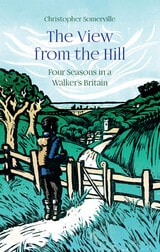
cover of The View from the Hill: Four Seasons in a Walker’s Britain

The View from the Hill

Four Seasons in a Walker’s Britain

Christopher Somerville

Haus Publishing, 2023

Collected notes from avid walker Christopher Somerville’s treks through the British countryside.

In Christopher Somerville’s workroom is a case of shelves that holds four hundred and fifty notebooks. Their pages are creased and stained with mud, blood, flattened insects, beer glass rings, smears of plant juice, and gallons of sweat. Everything Somerville has written about walking the British countryside has had its origin in these little black and red books.
 
During the lockdowns and enforced isolation of the COVID-19 pandemic, Somerville began to revisit this treasury of notes, spanning forty years of exploring on foot. The View from the Hill pulls together the best of his written collections, following the cycle of the seasons from a freezing January on the Severn Estuary to the sight of sunrise on Christmas morning from inside a prehistoric burial mound. In between are hundreds of walks to discover toads in a Cumbrian spring, trout in a Hampshire chalk stream, a lordly red stag at the autumn rut on the Isle of Mull, and three thousand geese at full gabble in the wintry Norfolk sky. Somerville’s writing enables readers to enjoy these magnificent walks without stirring from the comfort of home.
 
[more]
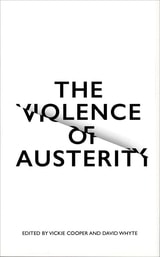
cover of The Violence of Austerity

The Violence of Austerity

Edited by David Whyte and Vickie Cooper

Pluto Press, 2017

In the aftermath of the global financial crisis in 2008, Britain’s government put into effect a hotly contested series of major cuts in public expenditure with the stated aim of restoring economic security. Since then, this reign of austerity continues to devastate contemporary Britain through a disconnected and unaffected political elite.
 
In The Violence of Austerity, David Whyte and Vickie Cooper bring together the passionate voices of campaigners and academics to show that rather than stimulating economic growth, austerity policies have led to a dismantling of the social systems that operated as a buffer against economic hardship. Chapters from major contributors—including Danny Dorling, Mary O’Hara and Rizwaan Sabir—show how austerity is a form of institutional violence more socially harmful and far-reaching than other more politicized and publicized forms of violence, such as terrorism or gun violence. Contributors expose highly significant cases of this institutional violence driven by public sector cuts: police attacks on the homeless, violent evictions of the rented sector, risks faced by people on workfare, and more. The Violence of Austerity is a devastating, authoritative study of the myriad ways austerity policies harm people in Britain that will resonate with anyone concerned with the increasing power of the political elite and the future of social welfare.
[more]
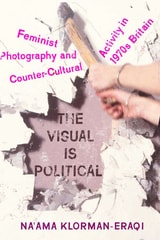
cover of The Visual Is Political: Feminist Photography and Countercultural Activity in 1970s Britain

The Visual Is Political

Feminist Photography and Countercultural Activity in 1970s Britain

Na'ama Klorman-Eraqi

Rutgers University Press, 2019
The Visual is Political examines the growth of feminist photography as it unfolded in Britain during the 1970s and 1980s. This period in Britain was marked by instability following the collapse of the welfare state, massive unemployment, race riots, and workers’ strikes. However, this was also a time in which various forms of social activism emerged or solidified, including the Women’s Movement, whose members increasingly turned to photography as a tool for their political activism. Rather than focusing on the aesthetic quality of the images produced, Klorman-Eraqi looks at the application of feminist theory, photojournalism, advertising, photo montage, punk subculture and aesthetics, and politicized street activity to emphasize the statement and challenge that the photographic language of these works posed. She shows both the utilitarian uses of photography in activism, but also how these same photographers went on to be accepted (or co-opted) into the mainstream art spaces little by little, sometimes with great controversy. The Visual is Political highlights the relevance and impact of an earlier contentious, creative, and politicized moment of feminism and photography as art and activism.
[more]
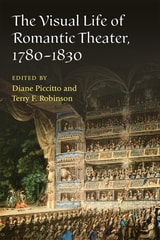
cover of The Visual Life of Romantic Theater, 1780-1830

The Visual Life of Romantic Theater, 1780-1830

Edited by Diane Piccitto and Terry F. Robinson

University of Michigan Press, 2023

The Visual Life of Romantic Theater examines the dynamism and vibrancy of stage spectacle and its impact in an era of momentous social upheaval and aesthetic change. Situating theatrical production as key to understanding visuality ca. 1780-1830, this book places the stage front and center in Romantic scholarship—a field in a period long defined by its focus on poetry—by reenvisioning traditional approaches to artistic and social production. How, it asks, did dramaturgy and stagecraft influence aesthetic and sociopolitical concerns? How does a focus on visuality expand our understanding of the historical experience of theatergoing? In what ways did stage performance converge with visual culture beyond the theater? How did extra-theatrical genres engage with theatrical sight and spectacle? Finally, how does a focus on dramatic vision change the way we conceive of Romanticism itself? The volume’s essays by emerging and established scholars provide exciting and suggestive answers to these questions, along with a more capacious conception of Romantic theater as a locus of visual culture that reached well beyond playhouse walls.

[more]
cover of The Voice of Toil: Nineteenth-Century British Writings about Work

The Voice of Toil

Nineteenth-Century British Writings about Work

David J. Bradshaw

Ohio University Press, 1999

One of the most recurrent and controversial subjects of nineteenth–century discourse was work. Many thinkers associated work with honest pursuit of doing good, not the curse accompanying exile from Eden but rather “a great gift of God.” Sincerely undertaken work comprised a mission entailing a commitment to serve others and promote a better future for all.

Satisfaction with what work could do for individuals had its counterbalance in the anger and dismay expressed at the conditions of those whom Robert Owen, in 1817, first called the “working class.” What working–class people confronted both at the labor site and at their lodgings was construed as oppressive, and the misery of their lives became the subject of sentimental poetry, government report, popular fiction, and journalistic expose. Perhaps as heated as the discussion about conditions of lower–class workers was the conversation about separate spheres of work for men and women. This conversation, too, found its way into the literature and public discourse of the day.

In The Voice of Toil, the editors have collected the central writings from a pivotal place and time, including poems, stories, essays, and a play that reflect four prominent ways in which the subject of work was addressed: Work as Mission, Work as Opportunity, Work as Oppression, and (Separate) Spheres of Work. The resulting anthology offers a provocative text for students of nineteenth-century British literature and history and a valuable resource for scholars.

The text includes readings from John Wesley, William Blake, Elizabeth Gaskell, William Wordsworth, Charles Dickens, Florence Nightingale, William Morris, Joanna Baillie, Friedrich Engels, Matthew Arnold, Angela Burdett–Coutts, John Stuart Mill, Elizabeth Barrett Browning, Bernard Shaw and many others.
[more]
cover of The Voluntary City: Choice, Community, and Civil Society

The Voluntary City

Choice, Community, and Civil Society

David T. Beito, Peter Gordon, and Alexander Tabarrok, Editors

University of Michigan Press, 2002
The rise and decline of American civic life has provoked wide-ranging responses from all quarters of society. Unfortunately, many proposals for improving our communities rely on renewed governmental efforts without a similar recognition that the inflexibility and poor accountability of governments have often worsened society's ills. The Voluntary City investigates the history of large-scale, private provision of social services, the for-profit provision of urban infrastructure and community governance, and the growing privatization of residential life in the United States to argue that most decentralized, competitive markets can contribute greatly to community renewal.
Among the fascinating topics covered are: how mutual-aid societies in America, Great Britain, and Australia provided their members with medical care, unemployment insurance, sickness insurance, and other social services before the welfare state; how private law, known historically as the law merchant, is returning in the form of arbitration; and why the rise of neighborhood associations represents the most comprehensive privatization occurring in the United States today.
The volume concludes with an epilogue that places the discoveries of The Voluntary City within the theory of market and government failure and discusses the implications of these discoveries for theories about the private provision of public goods. A refreshing challenge to the position that insists government alone can improve community life, The Voluntary City will be of special interest to students of history, law, urban life, economics, and government.
David T. Beito is Associate Professor of History, University of Alabama. Peter Gordon is Professor in the School of Policy, Planning, and Development and Department of Economics, University of Southern California. Alexander Tabarrok is Vice President and Research Director, the Independent Institute.
[more]
cover of The Wake of Wellington: Englishness in 1852

The Wake of Wellington

Englishness in 1852

Peter W. Sinnema

Ohio University Press, 2006

Soldier, hero, and politician, the Duke of Wellington is one of the best-known figures of nineteenth-century England. From his victory at Waterloo over Napoleon in 1815, he rose to become prime minister of his country. But Peter Sinnema finds equal fascination in Victorian England’s response to the duke’s death.

The Wake of Wellington considers Wellington’s spectacular funeral pageant in the fall of 1852—an unprecedented event that attracted one and a half million spectators to London—as a threshold event against which the life of the soldier-hero and High Tory statesman could be re-viewed and represented.

Canvassing a profuse and dramatically proliferating Wellingtoniana, Sinnema examines the various assumptions behind, and implications of, the Times’s celebrated claim that the Irish-born Wellington “was the very type and model of an Englishman.” The dead duke, as Sinnema demonstrates, was repeatedly caught up in interpretive practices that stressed the quasi-symbolic relations between hero and nation.

The Wake of Wellington provides a unique view of how in death Wellington and his career were promoted as the consummation of a national destiny intimately bound up with Englishness itself, and with what it meant to be English at midcentury.

[more]