145 books match the query 'Refugees' and 9 start with a

cover of A French Aristocrat in the American West: The Shattered Dreams of De Lassus De Luzières

A French Aristocrat in the American West

The Shattered Dreams of De Lassus De Luzières

Carl J. Ekberg & Foreword by Marie-Sol de La Tour d'Auvergne

University of Missouri Press, 2010
In 1790, Pierre-Charles de Lassus de Luzières gathered his wife and children and fled Revolutionary France. His trek to America was prompted by his “purchase” of two thousand acres situated on the bank of the Ohio River from the Scioto Land Company—the institution that infamously swindled French buyers and sold them worthless titles to property. When de Luzières arrived and realized he had been defrauded, he chose, in a momentous decision, not to return home to France. Instead, he committed to a life in North America and began planning a move to the Mississippi River valley.
De Luzières dreamed of creating a vast commercial empire that would stretch across the frontier, extending the entire length of the Ohio River and also down the Mississippi from Ste. Genevieve to New Orleans. Though his grandiose goal was never realized, de Luzières energetically pursued other important initiatives. He founded the city of New Bourbon in what is now Missouri and recruited American settlers to move westward across the Mississippi River. The highlight of his career was being appointed Spanish commandant of the New Bourbon District, and his 1797 census of that community is an invaluable historical document. De Luzières was a significant political player during the final years of the Spanish regime in Louisiana, but likely his greatest contributions to American history are his extensive commentaries on the Mississippi frontier at the close of the colonial era.
A French Aristocrat in the American West: The Shattered Dreams of De Lassus de Luzières is both a narrative of this remarkable man’s life and a compilation of his extensive writings. In Part I of the book, author Carl Ekberg offers a thorough account of de Luzières, from his life in Pre-Revolutionary France to his death in 1806 in his house in New Bourbon. Part II is a compilation, in translation, of de Luzières’s most compelling correspondence. Until now very little of his writing has been published, despite the fact that his letters constitute one of the largest bodies of writing ever produced by a French émigré in North America.
Though de Luzières’s presence in early American history has been largely overlooked by scholars, the work left behind by this unlikely frontiersman merits closer inspection. A French Aristocrat in the American West brings the words and deeds of this fascinating man to the public for the first time.
[more]
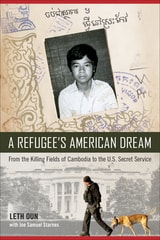
cover of A Refugee's American Dream: From the Killing Fields of Cambodia to the U.S. Secret Service

A Refugee's American Dream

From the Killing Fields of Cambodia to the U.S. Secret Service

Leth Oun with Joe Samuel Starnes

Temple University Press, 2023

“I saw many killed. I almost starved. But I escaped to refugee camps in Thailand and eventually made it to the U.S.” Thus begins Leth Oun’s poignant and vivid memoir. A survivor of the Cambodian Killing Fields—having spent a torturous three years, eight months, and ten days imprisoned by the Khmer Rouge—Oun thrived in America, learning English, becoming a citizen, and working as an officer in the United States Secret Service Uniformed Division. 
In A Refugee’s American Dream, Oun shares hard memories of Cambodia, where his father was executed, and his family enslaved in labor camps. 

Following the fall of the Khmer Rouge, Oun survived a year of homelessness then nearly four years in refugee camps. Arriving in America, 17 and penniless, Oun struggled, washing dishes at a Chinese restaurant for $3.15 an hour. Still, he persevered, graduating from Widener University and completing thousands of hours of training to pursue a career in the Secret Service.

While on President Obama’s protection team, he returns to Cambodia after 32 years, reunites with family, and bonds with Reik, the Secret Service dog he handles. Through his most difficult moments, Oun displays truly inspiring resilience that ultimately leads to great achievements.

The authors’ proceeds will go to help Cambodians in need
[more]
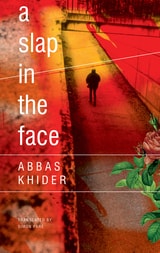
cover of A Slap in the Face

A Slap in the Face

Abbas Khider

Seagull Books, 2018

Now in paperback, the touching, timely story of an Iraqi refugee in Germany.

In our era of mass migration, much of it driven by war and its aftermath, A Slap in the Face could not be more timely. It tells the story of Karim, an Iraqi refugee living in Germany whose right to asylum has been revoked in the wake of Saddam Hussein’s defeat. But Hussein wasn’t the only reason Karim left, and as Abbas Khider unfolds his story, we learn both the secret struggles he faced in his homeland and the battles with prejudice, distrust, poverty, and bureaucracy he has to endure in his attempts to make a new life in Germany. As he erupts in frustration at his caseworker and finally forces her to listen to his story, we get an account of a contemporary life upended by politics and violence, told with warmth and humor that, while surprising us, does nothing to lessen the outrages Karim describes.
 
[more]
cover of Adopting the Stranger as Kindred in Deuteronomy

Adopting the Stranger as Kindred in Deuteronomy

Mark R. Glanville

SBL Press, 2018

Investigate how Deuteronomy incorporates vulnerable, displaced people

Deuteronomy addresses social contexts of widespread displacement, an issue affecting 65 million people today. In this book Mark R. Glanville investigates how Deuteronomy fosters the integration of the stranger as kindred into the community of Yahweh. According to Deuteronomy, displaced people are to be enfolded within the household, within the clan, and within the nation. Glanville argues that Deuteronomy demonstrates the immense creativity that communities may invest in enfolding displaced and vulnerable people. Inclusivism is nourished through social law, the law of judicial procedure, communal feasting, and covenant renewal. Deuteronomy’s call to include the stranger as kindred presents contemporary nation-states with an opportunity and a responsibility to reimagine themselves and their disposition toward displaced strangers today.

Features:

  • Exploration of the relationship of ancient Israel’s social history to biblical texts
  • An integrative methodology that brings together literary-historical, legal, sociological, comparative, literary, and theological approaches
  • A thorough study of Israelite identity and ethnicity
[more]
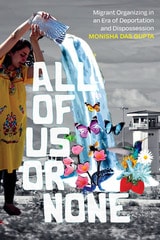
cover of All of Us or None: Migrant Organizing in an Era of Deportation and Dispossession

All of Us or None

Migrant Organizing in an Era of Deportation and Dispossession

Monisha Das Gupta

Duke University Press, 2024
In All of Us or None, Monisha Das Gupta tells the story of contemporary antideportation organizing in the United States by migrants and refugees labeled as criminal aliens. These activists, who live daily with criminalization, work against forms of deportation that Das Gupta calls settler carcerality—the United States’ use of deportation to exert territorial control in the face of Indigenous self-determination. Drawing on fieldwork with antideportation organizing groups in New York, Los Angeles, Long Beach, and Honolulu, Das Gupta documents the inventive methods of struggle against settler carcerality. Das Gupta shows how the organizers’ actions and visions depart from the settler colonial nature of the mainstream demands for a pathway to citizenship and civil rights. Through direct action, storytelling, political education, and youth and queer leadership, these organizations and collectives conceptualize an abolitionist vision of migration justice that rejects the settler state and encompasses all those who are disavowed. By highlighting this work, Das Gupta demonstrates the transformative promise offered by a dissident migrant-led politics working toward dismantling settler structures and logics.
[more]
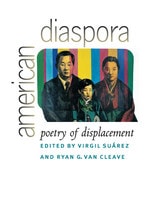
cover of American Diaspora: Poetry of Displacement

American Diaspora

Poetry of Displacement

Virgil Suarez

University of Iowa Press, 2001

Diaspora constitutes a powerful descriptor for the modern condition of the contemporary poet, the spokesperson for the psyche of America. The poems in American Diaspora: Poetry of Displacement focus on the struggles and pleasures of creating a home-physical and mental-out of displacement, exile, migration, and alienation.

To fully explore the concept of diaspora, the editors have broadened the scope of their definition to include not only the physical act of moving and immigration but also the spiritual and emotional dislocations that can occur-as for Emily Dickinson and other poets-even in a life spent entirely in one location.

v
[more]
cover of American Theater in the Culture of the Cold War: Producing and Contesting Containment, 1947-1962

American Theater in the Culture of the Cold War

Producing and Contesting Containment, 1947-1962

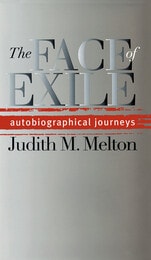
Judith M. Melton

University of Iowa Press, 1998
In this groundbreaking study, Bruce McConachie uses the primary metaphor of containment—what happens when we categorize a play, a television show, or anything we view as having an inside, an outside, and a boundary between the two—as the dominant metaphor of cold war theatergoing. Drawing on the cognitive psychology and linguistics of George Lakoff and Mark Johnson, he provides unusual access to the ways in which spectators in the cold war years projected themselves into stage figures that gave them pleasure.
 
McConachie reconstructs these cognitive processes by relying on scripts, set designs, reviews, memoirs, and other evidence. After establishing his theoretical framework, he focuses on three archtypal figures of containment significant in Cold War culture, Empty Boys, Family Circles, and Fragmented Heroes. McConachie uses a range of plays, musicals, and modern dances from the dominant culture of the Cold War to discuss these figures, including The Seven Year Itch, Cat on a Hot Tin Roof, The King and I, A Raisin in the Sun, Night Journey, and The Crucible. In an epilogue, he discusses the legacy of Cold War theater from 1962 to 1992.
 
Original and provocative, American Theater in the Culture of the Cold War illuminates the mind of the spectator in the context of Cold War culture; it uses cognitive studies and media theory to move away from semiotics and psychoanalysis, forging a new way of interpreting theater history.
 
[more]
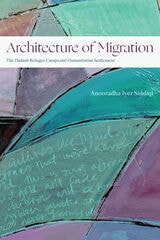
cover of Architecture of Migration: The Dadaab Refugee Camps and Humanitarian Settlement

Architecture of Migration

The Dadaab Refugee Camps and Humanitarian Settlement

Anooradha Iyer Siddiqi

Duke University Press, 2024
Environments associated with migration are often seen as provisional, lacking both history and architecture. As Anooradha Iyer Siddiqi demonstrates in Architecture of Migration, a refugee camp’s aesthetic and material landscapes—even if born out of emergency—reveal histories, futures, politics, and rhetorics. She identifies forces of colonial and humanitarian settlement, tracing spatial and racial politics in the Dadaab refugee camps established in 1991 on the Kenya-Somalia border—at once a dense setting that manifests decades of architectural, planning, and design initiatives and a much older constructed environment that reflects its own ways of knowing. She moves beyond ahistorical representations of camps and their inhabitants by constructing a material and visual archive of Dadaab, finding long migratory traditions in the architecture, spatial practices, landscapes, and iconography of refugees and humanitarians. Countering conceptualizations of refugee camps as sites of border transgression, criminality, and placelessness, Siddiqi instead theorizes them as complex settlements, ecologies, and material archives created through histories of partition, sedentarization, domesticity, and migration.
[more]
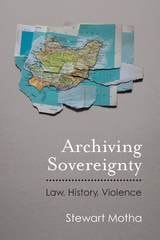
cover of Archiving Sovereignty: Law, History, Violence

Archiving Sovereignty

Law, History, Violence

Stewart Motha

University of Michigan Press, 2018

Archiving Sovereignty shows how courts use fiction in their treatment of sovereign violence. Law's complicity with imperial and neocolonial practices occurs when courts inscribe and repeat the fabulous tales that provide an alibi for archaic sovereign acts that persist in the present. The United Kingdom's depopulation of islands in the Indian Ocean to serve the United States' neoimperial interests, Australia's exile and abandonment of refugees on remote islands, the failure to acknowledge genocidal acts or colonial dispossession, and the memorial work of the South African Constitution after apartheid are all sustained by historical fictions. This history-work of law constitutes an archive where sovereign violence is mediated, dissimulated, and sustained. Stewart Motha extends the concept of the "archive," as site of origin and source of authority, to signifying what law does in preserving and disavowing the past at the same time.

Sovereignty is often cast as a limit-concept, constituent force, determining the boundary of law. Archiving Sovereignty reverses this to explain how judicial pronouncements inscribe and sustain extravagant claims to exceptionality and sovereign solitude. This wide-ranging, critical work distinguishes between myths that sustain neocolonial orders and fictions that generate new forms of political and ethical life.
[more]