1415 books match the query 'Medical' and 263 start with t

cover of Traditional Healers and Childhood in Zimbabwe

Traditional Healers and Childhood in Zimbabwe

Pamela Reynolds

Ohio University Press, 1995

Based on the author’s fieldwork among the people of Zezuru, this study focuses on children as clients and as healers in training. In Reynolds’s ethnographic investigation of possession and healing, she pays particular attention to the way healers are identified and authenticated in communities, and how they are socialized in the use of medicinal plants, dreams, and ritual healing practices. Reynolds examines spiritual interpretation and remediation of children’s problems, including women’s roles in these activities, and the Zezuru concepts of trauma, evil, illness, and death. Because this study was undertaken just after the War of Liberation in Zimbabwe, it also documents the devastating effects of the war.
[more]
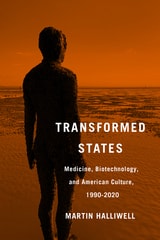
cover of Transformed States: Medicine, Biotechnology, and American Culture, 1990–2020

Transformed States

Medicine, Biotechnology, and American Culture, 1990–2020

Martin Halliwell

Rutgers University Press, 2025

Honourable Mention, British Association of American Studies Book Award 

Transformed States offers a timely history of the politics, ethics, medical applications, and cultural representations of the biotechnological revolution, from the Human Genome Project to the COVID-19 pandemic. In exploring the entanglements of mental and physical health in an age of biotechnology, it views the post–Cold War 1990s as the horizon for understanding the intersection of technoscience and culture in the early twenty-first century.
 
The book draws on original research spanning the presidencies of George H. W. Bush and Joe Biden to show how the politics of science and technology shape the medical uses of biotechnology. Some of these technologies reveal fierce ideological conflicts in the arenas of cloning, reproduction, artificial intelligence, longevity, gender affirmation, vaccination and environmental health. Interweaving politics and culture, the book illustrates how these health issues are reflected in and challenged by literary and cinematic texts, from Oryx and Crake to Annihilation, and from Gattaca to Avatar.
 
By assessing the complex relationship between federal politics and the biomedical industry, Transformed States develops an ecological approach to public health that moves beyond tensions between state governance and private enterprise. To that end, Martin Halliwell analyzes thirty years that radically transformed American science, medicine, and policy, positioning biotechnology in dialogue with fears and fantasies about an emerging future in which health is ever more contested.
 
Along with the two earlier books, Therapeutic Revolutions (2013) and Voices of Mental Health (2017), Transformed States is the final volume of a landmark cultural and intellectual history of mental health in the United States, journeying from the combat zones of World War II to the global emergency of COVID-19.
 
[more]
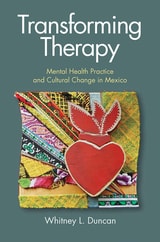
cover of Transforming Therapy: Mental Health Practice and Cultural Change in Mexico

Transforming Therapy

Mental Health Practice and Cultural Change in Mexico

Whitney L. Duncan

Vanderbilt University Press, 2018

Oaxaca is known for many things--its indigenous groups, archaeological sites, crafts, and textiles--but not for mental health care. When one talks with Oaxacans about mental health, most say it's a taboo topic and that people there think you "have to be crazy to go to a psychologist." Yet throughout Oaxaca are signs advertising the services of psicólogos; there are prominent conferences of mental health professionals; and self-help groups like Neurotics Anonymous thrive, where participants rise to say, "Hola, mi nombre es Raquel, y soy neurótica."

How does one explain the recent growth of Euroamerican-style therapies in the region? Author Whitney L. Duncan analyzes this phenomenon of "psy-globalization" and develops a rich ethnography of its effects on Oaxacans' understandings of themselves and their emotions, ultimately showing how globalizing forms of care are transformative for and transformed by the local context. She also delves into the mental health impacts of migration from Mexico to the United States, both for migrants who return and for the family members they leave behind.

This book is a recipient of the Norman L. and Roselea J. Goldberg Prize from Vanderbilt University Press for the best book in the area of medicine.
[more]
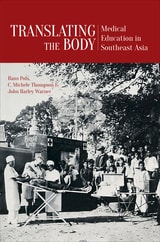
cover of Translating the Body: Medical Education in Southeast Asia

Translating the Body

Medical Education in Southeast Asia

Edited by Hans Pols, C. Michele Thompson, and John Harley Warner

National University of Singapore Press, 2017
Until recently, receiving a European or North American-style medical education in Southeast Asia was a profoundly transformative experience, as western conceptions of the body differed significantly from indigenous knowledge and explanations. Further, conceptions of the human body had to be translated into local languages and related to vernacular views of health, disease, and healing. Translating the Body is the first book to present the history of biomedical education across Southeast Asia. The contributors chart and analyze the organization of western medical education in Southeast Asia, public health education campaigns in the region, and the ways in which practitioners of what came to be conceived of as “traditional medicine” in many Southeast Asian countries organized themselves in response.
[more]
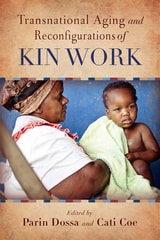
cover of Transnational Aging and Reconfigurations of Kin Work

Transnational Aging and Reconfigurations of Kin Work

Dossa, Parin

Rutgers University Press, 2017
Transnational Aging and Reconfigurations of Kin Work documents the social and material contributions of older persons to their families in settings shaped by migration, their everyday lives in domestic and community spaces, and in the context of intergenerational relationships and diasporas. Much of this work is oriented toward supporting, connecting, and maintaining kin members and kin relationships—the work that enables a family to reproduce and regenerate itself across generations and across the globe.
 
[more]
cover of Transplanting Care: Shifting Commitments in Health and Care in the United States

Transplanting Care

Shifting Commitments in Health and Care in the United States

Heinemann, Laura L.

Rutgers University Press, 2016
The sudden call, the race to the hospital, the high-stakes operation—the drama of transplant surgery is well known. But what happens before and after the surgery? In Transplanting Care, Laura L. Heinemann examines the daily lives of midwestern organ transplant patients and those who care for them, from pretransplant preparations through to the long posttransplant recovery.
 
Heinemann points out that as efforts to control healthcare costs gain urgency—and as new surgical techniques, drug therapies, and home medical equipment advance—most of the transplant process now takes place at home, among kin. Indeed, the transplant system effectively depends on unpaid care labor, typically provided by spouses, parents, siblings, and others. Drawing on scores of interviews with patients, relatives, and healthcare professionals, Heinemann follows a variety of patients and loved ones as they undertake this uncertain and strenuous “transplant journey.” She also shows how these home-based caregiving efforts take place within the larger economic and political context of a paucity of resources for patients and caregivers, who ultimately must surmount numerous obstacles. The author concludes that the many snags encountered by transplant patients and loved ones make a clear case for more comprehensive health and social policy that treats care as a necessarily shared public responsibility.  
 
An illuminating look at the long transplant journey, Transplanting Care also offers broader insight into how we handle infirmity in America—and how we might do a better job of doing so. 
 
[more]
cover of Trauma and Recovery on War's Border: A Guide for Global Health Workers

Trauma and Recovery on War's Border

A Guide for Global Health Workers

Edited by Kathleen Allden and Nancy Murakami

Dartmouth College Press, 2015
An increasing number of students and professionals are choosing to travel the globe to engage with the realities of trauma and human suffering through mental health aid. But in the field of global mental health, good intentions are not enough to ensure good training, development, and care. The risk of harm is real when outsiders deliver mental health aid in culturally inappropriate and otherwise naïve ways. This book, based on the experiences of the co-editors and their colleagues at Burma Border Projects (BBP), a nonprofit organization dedicated to the mental health and psychosocial well-being of the displaced people of Burma, sets out global mental health theory allied with local perspectives, experiences, real-life challenges, strengths, and best practices. Topics include assessment and intervention protocols, vulnerable groups and the special challenges they present, and supervision and evaluation programs. An introduction by the editors establishes the political and health contexts for the volume. Written in a style appropriate for academic audiences and lay readers, this book will serve as a fundamental text for clinicians, interns, volunteers, and researchers who work in regions of the world that have suffered the violence of war, forced displacement, human rights violations, poverty, and oppression.
[more]
cover of Treating AIDS: Politics of Difference, Paradox of Prevention

Treating AIDS

Politics of Difference, Paradox of Prevention

Sangaramoorthy, Thurka

Rutgers University Press, 2014

 There is an inherently powerful and complex paradox underlying HIV/AIDS prevention—between the focus on collective advocacy mobilized to combat global HIV/AIDS and the staggeringly disproportionate rates of HIV/AIDS in many places. In Treating AIDS, Thurka Sangaramoorthy examines the everyday practices of HIV/AIDS prevention in the United States from the perspective of AIDS experts and Haitian immigrants in South Florida. Although there is worldwide emphasis on the universality of HIV/AIDS as a social, political, economic, and biomedical problem, developments in HIV/AIDS prevention are rooted in and focused exclusively on disparities in HIV/AIDS morbidity and mortality framed through the rubric of race, ethnicity, and nationality. Everyone is at equal risk for contracting HIV/AIDS, Sangaramoorthy notes, but the ways in which people experience and manage that risk—and the disease itself—is highly dependent on race, ethnic identity, sexuality, gender, immigration status, and other notions of “difference.”

Sangaramoorthy documents in detail the work of AIDS prevention programs and their effect on the health and well-being of Haitians, a transnational community long plagued by the stigma of being stereotyped in public discourse as disease carriers. By tracing the ways in which public knowledge of AIDS prevention science circulates from sites of surveillance and regulation, to various clinics and hospitals, to the social worlds embraced by this immigrant community, she ultimately demonstrates the ways in which AIDS prevention programs help to reinforce categories of individual and collective difference, and how they continue to sustain the persistent and pernicious idea of race and ethnicity as risk factors for the disease.
[more]
cover of Troubled Bodies: Critical Perspectives on Postmodernism, Medical Ethics, and the Body

Troubled Bodies

Critical Perspectives on Postmodernism, Medical Ethics, and the Body

Paul A. Komesaroff

Duke University Press, 1995

Setting out the implications of the postmodern condition for medical ethics, Troubled Bodies challenges the contemporary paradigms of medical ethics and reconceptualizes the nature of the field. Drawing on recent developments in philosophy, philosophy of science, and feminist theory, this volume seeks to expand familiar ethical reflections on medicine to incorporate new ways of thinking about the body and the dilemmas raised by recent developments in medical techniques.
These essays examine the ways in which the consideration of ethical questions is shaped by the structures of knowledge and communication at work in clinical practice, by current assumptions regarding the concept of the body, and by the social and political implications of both. Representing various perspectives including medicine, nursing, philosophy, and sociology, these essays look anew at issues of abortion, reproductive technologies, the doctor-patient relationship, the social construction of illness, the cultural assumptions and consequences of medicine, and the theoretical presuppositions underlying modern psychiatry. Diverging from the tenets of mainstream bioethics, Troubled Bodies suggests that, rather than searching for the correct "coherent perspective" from which to draw ethical principles, we must apprehend the complexity and diversity of the discursive systems within which we dwell.
[more]
cover of Troubled Minds: Shaping Modern Mental Care in Central and Eastern Europe, 1780–1930

Troubled Minds

Shaping Modern Mental Care in Central and Eastern Europe, 1780–1930

Eva Hajdinová

Central European University Press, 2027

This volume offers a supra-regional view of how psychiatry developed in Central and Eastern Europe during the long nineteenth century. Case studies from the German lands, the Habsburg monarchy, and the Russian Empire show that the field did not follow a single linear story of medical progress. Instead, it grew through circulation of ideas, local adaptation, and often ongoing negotiation among institutions and actors. The chapters trace psychiatry’s Enlightenment roots in debates on the soul and passions, then follow its legal and institutional consolidation under absolutist and later constitutional regimes. They also examine changing diagnostic and therapeutic practices and the everyday encounters they produced among doctors, patients, clergy, and administrators. Rejecting a core–periphery model, the book presents these regions as sites of conceptual innovation and institutional experimentation. By pairing local specificities with transnational connections, it helps rethink psychiatry’s history as culturally, politically, and socially deeply embedded in nineteenth-century Europe.
[more]
cover of True Valor: Barney Clark and the Utah Artificial Heart

True Valor

Barney Clark and the Utah Artificial Heart

Don B. Olsen

University of Utah Press, 2015

On December 2, 1982, the fully mechanical Jarvik-7 heart was placed inside Barney Clark, culminating years of painstaking research and making medical history by successfully pumping Clark’s blood for 112 days. True Valor takes an in-depth look at this significant event by telling the story of the doctors and researchers involved, of Barney Clark, and of the evolution of the artificial heart before and after Clark’s transplant. Author Don Olsen is well positioned to tell this story, having worked on the artificial heart project under Dr. Willem Kolff, the man behind the Jarvik-7. His narrative conveys the concerns and emotions of those who were part of Clark’s story while offering the insights of one who knows that research does not happen overnight but takes time, resources, and the efforts of many people. Olsen’s account shares the human sides of this story along with the embedded politics and technical details of medical research in clear, readable language. 
[more]
cover of Tuberculosis Control and Institutional Change in Shanghai, 1911–2011

Tuberculosis Control and Institutional Change in Shanghai, 1911–2011

Rachel S. Core

Hong Kong University Press, 2023

An analysis of the lessons learned from tuberculosis control in Shanghai.

Tuberculosis Control and Institutional Change in Shanghai, 1911–2011 is the first book on the most widespread and deadly infectious disease in China, both historically and today. Weaving together interviews with data from periodicals and local archives in Shanghai, Rachel Core examines the rise and fall of tuberculosis control in China from the 1950s to the 1990s. Under the socialist work unit system, the vast majority of people had guaranteed employment, a host of benefits tied to their workplace, and there was little mobility—factors that made the delivery of medical and public health services possible in both urban and rural areas. The dismantling of work units amid wider market reforms in the 1980s and 1990s led to the rise of temporary and casual employment and a huge migrant worker population, with little access to health care, creating new challenges in TB control. This study of Shanghai will provide valuable lessons for historians, social scientists, public health specialists, and many others working on public health infrastructure on both the national and global levels.
 
[more]
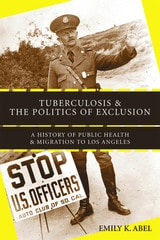
cover of Tuberculosis and the Politics of Exclusion: A History of Public Health and Migration to Los Angeles

Tuberculosis and the Politics of Exclusion

A History of Public Health and Migration to Los Angeles

Abel, Emily K.

Rutgers University Press, 2007

Winner of the 2008 Arthur J. Viseltear Prize from the American Public Health Association and Nominated for the 2008 William H. Welch Medal, AAHM

Though notorious for its polluted air today, the city of Los Angeles once touted itself as a health resort. After the arrival of the transcontinental railroad in 1876, publicists launched a campaign to portray the city as the promised land, circulating countless stories of miraculous cures for the sick and debilitated. As more and more migrants poured in, however, a gap emerged between the city’s glittering image and its dark reality.

            Emily K. Abel shows how the association of the disease with “tramps” during the 1880s and 1890s and Dust Bowl refugees during the 1930s provoked exclusionary measures against both groups. In addition, public health officials sought not only to restrict the entry of Mexicans (the majority of immigrants) during the 1920s but also to expel them during the 1930s. 

            Abel’s revealing account provides a critical lens through which to view both the contemporary debate about immigration and the U.S. response to the emergent global tuberculosis epidemic.

[more]