Results by title
3785 books match the query 'Poetry' and 833 start with t
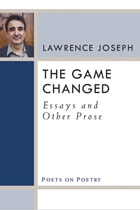
The Game Changed
Essays and Other ProseLawrence Joseph
University of Michigan Press, 2011
Praise for Lawrence Joseph:
"Poetry of great dignity, grace, and unrelenting persuasiveness… Joseph gives us new hope for the resourcefulness of humanity, and of poetry."
---John Ashbery
"Like Henry Adams, Joseph seems to be writing ahead of actual events, and that makes him one of the scariest writers I know."
---David Kirby, The New York Times Book Review
"The most important lawyer-poet of our era."
---David Skeel, Legal Affairs
A volume in the Poets on Poetry series, which collects critical works by contemporary poets, gathering together the articles, interviews, and book reviews by which they have articulated the poetics of a new generation.
Essays on poetry by the most important poet-lawyer of our era
The Game Changed: Essays and Other Prose presents works by prominent poet and lawyer Lawrence Joseph that focus on poetry and poetics, and on what it is to be a poet. Joseph takes the reader through the aesthetics of modernism and postmodernism, a lineage that includes Wallace Stevens, William Carlos Williams, and Gertrude Stein, switching critical tracks to major European poets like Eugenio Montale and Hans Magnus Enzensberger, and back to American masters like James Schuyler and Adrienne Rich.
Always discerning, especially on issues of identity, form, and the pressures of history and politics, Joseph places his own poetry within its critical contexts, presenting narratives of his life in Detroit, where he grew up, and in Manhattan, where he has lived for 30 years. These pieces also portray Joseph’s Lebanese, Syrian, and Catholic heritages, and his life as a lawyer, distinguished law professor, and legal scholar.
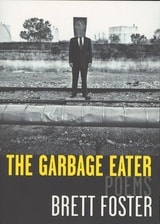
The Garbage Eater
PoemsBrett Foster
Northwestern University Press, 2011
In Foster’s vivid imagination, however, they point to the surprises hidden in the quotidian: a trip to the DMV, a visit to a chain restaurant, and the saintly reflections of the Kansas City Royals’ best closer. A lesser, more faddish writer would then tend toward ironic distance, but Foster fearlessly raises such unfashionable subjects as joy, doubt, gratitude, and grief without losing a sly sense of humor, even (as the sample poem shows) about poetry itself. Given its ambition, The Garbage Eater hardly seems a debut work. Foster’s universal subject matter and approachable style will win fans among both the most experienced poetry readers and those easily intimidated by contemporary verse.
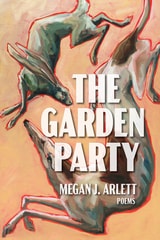
The Garden Party
PoemsMegan J. Arlett
Northwestern University Press, 2027
A stroll through deceptively tranquil spaces and the restlessness of social convention
Depicting the uneasy performance of class and femininity in the stilted, suffocating spaces of a social life suffused with English propriety, Megan J. Arlett’s The Garden Party is a poetic meditation on desire and agency. From the imagined space of the titular garden party to the interior of an art gallery, from the rolling hills of Sussex to Trinidad under British colonial rule, Arlett paints the conventions of polite society as both strange and arbitrary, allowing the restlessness of the poems’ speakers to rise to the surface. Through free verse, received forms, and ekphrasis, these poems stage a conversation with other artists, eras, and art media, moving through natural and constructed locations that are sometimes historical and often imagined. This collection considers what it means to love a place despite its histories and flaws and offers ways of navigating this tension through art. The Garden Party is a striking yet quiet rebellion against order and expectation.
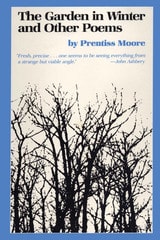
The Garden in Winter and Other Poems
By Prentiss Moore
University of Texas Press, 1981
The Gate of Horn
PoemsL.S. Asekoff
Northwestern University Press, 2010
Recepient of 2013 Guggenheim Fellowship
Apart from two volumes published in the 1990s, the work of L. S. Asekoff has been winning admirers only among those lucky enough to encounter it in poetry journals and magazines over the last three decades. Now comes a new collection from this startlingly original poet. Astonishing in its variety of forms and subject matter, The Gate of Horn includes a series of monologues in which Asekoff conjures voices as disparate as the Marquis de Sade, an ancient Aztec warrior, an immigrant
Korean woman, a Vietnam vet, and a Holocaust historian. Above all, however, it is Asekoff’s own unmistakable voice that is on display— surreally sensual, intensely lyrical, darkly tragicomic. Through the gates of death and dreams, these wide-ranging, loosely associative poems speak with wit and erudition to the deepest mysteries of language and of life.
The Gathering
Sherah Bloor
Omnidawn, 2026
Poetry that serves as a broad collection of historical incidents and considers how we weigh and value events.
Named for a sura of the Quran, The Gathering is an epic in cantos that indiscriminately records deeds and events that have taken place on this earth. Its speaker—a nearly omniscient archivist—is propelled by a force more elemental than causation to visit moments and subjects, moving swiftly through thoughts, physiologies, and environments. Under an imperative to record everything encountered—however small, cruel, or sad—the archivist must grant radically equal weight to each thing. Yet as these entries accumulate, a strange significance accrues, and the negligible seems necessary. Each mundane fragment of life finds consolation. What was, was; what happened, got to happen.
The Gazer Within
Larry Levis
University of Michigan Press, 2001
David St. John's foreword speaks eloquently of Levis's enduring legacy: "Of the poets of his generation, Larry Levis spoke most powerfully of what it means to be a poet at this historical moment. With the same majesty he brought to his poetry, Larry Levis engaged his readers with the most subtle and disturbing questions of the self to be found in the prose--essays, reviews or interviews--of any contemporary American poet. Broadly international in his scope and deeply personal in his reflections, Levis addressed poetic concerns that are both immediate and timeless. For many of us who struggle with these issues, Larry Levis's prose on poetry stands as some of the most capacious to be found since Randell Jarrell's."
The late Larry Levis was the author of six volumes of poetry. He was Director of the Creative Writing Program, University of Utah; Professor of English, Virginia Commonwealth University; and also taught at the Iowa Writers Workshop.

The Gazer's Spirit
Poems Speaking to Silent Works of ArtJohn Hollander
University of Chicago Press, 1995
The Gazer's Spirit focuses on leading examples of ecphrastic poetry, or poems that directly confront particular works of art. Hollander, who is one of the most distinguished contemporary practitioners of the ecphrastic tradition, has crafted a survey of enormous range, taste, and depth, from the Renaissance to the twentieth century. The heart of the book is its gallery of poems and images set side by side.
There are poems whose presence in this book is all but inevitable, such as Auden's "Musee des Beaux Arts" paired with Breugel the Elder's Landscape with the Fall of Icarus, and delightful surprises, such as Edith Wharton's sonnet that casts fresh light on Leonardo's Mona Lisa. Here are Robert Browning and Michelangelo; Walt Whitman and George Inness; and Randall Jarrell and Albrecht Dürer writing and drawing about The Knight, Death and the Devil.
Among the poets are many visually sophisticated writers such as James Merrill, Richard Howard, Marianne Moore, and Richard Wilbur; the visual objects in the book are both celebrated and obscure, as various as a Greek sculplture, a medieval tapestry, a famous Renoir, or a fountain by an anonymous architect. In some cases, obvious affinities, such as a poem by Vicki Hearne on a white horse by Gauguin, produce unexpected poetic results.
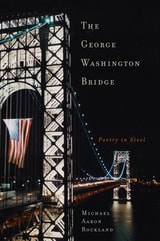
The George Washington Bridge
Poetry in SteelMichael Aaron Rockland
Rutgers University Press, 2008
Intimate and engaging, Michael Rockland's rich narrative presents perspectives on the GWB, as it is often called, that span history, architecture, engineering, transportation, design, the arts, politics, and even post-9/11 mentality. Stunning archival photos, from the late 1920s when the bridge was built through the present, are a powerful complement to the bridge's history. Rockland covers the competition between the GWB and the Brooklyn Bridge that parallels the rivalry between New Jersey and New York City. Readers will learn about the Swiss immigrant Othmar Ammann, an unsung hero who designed and built the GWB, and how a lack of funding during the Depression dictated the iconic, uncovered steel beams of its towers, which we admire today. There are chapters discussing accidents on the bridge, such as an airplane crash landing in the westbound lanes and the sad story of suicides off its span; the appearance of the bridge in media and the arts; and Rockland's personal adventures on the bridge, including scaling its massive towers on a cable.
Movies, television shows, songs, novels, countless images, and even PlayStation 2 games have aided the GWB in becoming a part of the global popular culture. This tribute will captivate residents living in the shadow of the GWB, the millions who walk, jog, bike, skate, or drive across it, as well as tourists and those who will visit it some day.
- First major book on the George Washington Bridge
- Full of amazing facts about the GWB that will surprise even bridge historians
- Includes over 30 spectacular illustrations, ranging from archival photographs of the building of the bridge to those that show it draped in an enormous flag after 9/11
- Includes personal accounts of the author's adventures on the bridge
The George Washington Bridge
Poetry in SteelMichael Aaron Rockland
Rutgers University Press, 2020
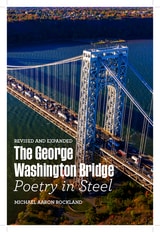
Since opening in 1931, the George Washington Bridge, linking New York and New Jersey, has become the busiest bridge in the world, with 103 million vehicles crossing it in 2016. Many people also consider it the most beautiful bridge in the world, yet remarkably little has been written about this majestic structure.
Intimate and engaging, this revised and expanded edition of Michael Rockland's rich narrative presents perspectives on the GWB, as it is often called, that span history, architecture, engineering, transportation, design, the arts, politics, and even post-9/11 mentalities. This new edition brings new insight since its initial publication in 2008, including a new chapter on the infamous “Bridgegate” Chris Christie-era scandal of 2013, when members of the governor's administration shut down access to the bridge, causing a major traffic jam and scandal and subsequently helping undermine Christie’s candidacy for the US presidency.
Stunning photos, from when the bridge was built in the late 1920s through the present, are a powerful complement to the bridge's history. Rockland covers the competition between the GWB and the Brooklyn Bridge that parallels the rivalry between New Jersey and New York City. Readers will learn about the Swiss immigrant Othmar Ammann, an unsung hero who designed and built the GWB, and how a lack of funding during the Depression dictated the iconic, uncovered steel beams of its towers, which we admire today. There are chapters discussing accidents on the bridge, such as an airplane crash landing in the westbound lanes and the sad story of suicides off its span; the appearance of the bridge in media and the arts; and Rockland's personal adventures on the bridge, including scaling its massive towers on a cable.
Movies, television shows, songs, novels, countless images, and even PlayStation 2 games have aided the GWB in becoming a part of the global popular culture. This tribute will captivate residents living in the shadow of the GWB, the millions who walk, jog, bike, skate, or drive across it, as well as tourists and those who will visit it someday.
.
The Ghost of Meter
Culture and Prosody in American Free VerseAnnie Finch
University of Michigan Press, 1993
Population and environment are topics of intense current discussion and international action. Population growth rates have given rise to the metaphor of an exploding bomb, and accounts of oil spills, droughts, and rainforest destruction appear daily in the news. Despite the crowded agenda, observes Gayl Ness, the relationships between population and the environment still defy clear and comprehensive understanding. While they are closely intertwined in real life, they are separate in much of our thought and action. The contributors to this volume explore the basis of this separation and offer ways to integrate these closely interconnected areas, providing a forum for dialogue between those who support the interests of each. Topics covered include population-environment dynamics in historical perspective; constraints on sustainable growth in agricultural production; population as concept and parameter in the modeling of deforestation; powers and limits of the state and technology; resource control, fertility, and migration; and an ecosystem approach to the study of coastal areas.
The Glass Anvil
Andrew Hudgins
University of Michigan Press, 1997
Finally coming to rest on an examination of his own autobiography, The Glass Hammer, Hudgins reveals some of the ways he lied in that book--and some of the reasons for doing so. In a lighthearted manner, he manages to throw both light--and shadow--on the autobiography as a literary form. Amid charming anecdotes of his Southern upbringing, The Glass Anvil vividly records the depth of Hudgins's fascination with language, particularly as it mingles with the important issues of his life--religion, racism, Southern literature, and narrative poetry. This fascination is further documented in a free-wheeling interview which closes the book.
Engaging and amusing reading, The Glass Anvil will appeal to readers interested in contemporary poetry and Southern literature.
Andrew Hudgins's books include The Never Ending, After the Lost War: A Narrative, Saints and Strangers, and most recently The Glass Hammer. He is Professor of English, University of Cincinnati.
The Glass House
The Life of Theodore RoethkeAllan Seager
University of Michigan Press, 1991
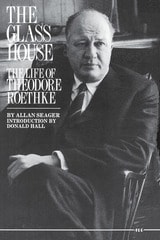
Biographer Allan Seager interviewed a number of Roethke’s friends and fellow writers, and he had access to the voluminous notes the poet left behind. Seager reveals the Theodore Roethke who existed behind the public persona – a complex, self-contradictory, gentle, often disturbed mysterious, and ruthlessly honest man. One of the book’s most moving passages is the defense of the poet’s role within the university, written by a colleague when Roethke was faced with the threat of dismissal. A committed teacher himself, Seager succeeds in doing justice to an often neglected aspect of Roethke’s achievement, his remarkable power as a teacher, and his unusual and committed teaching style.
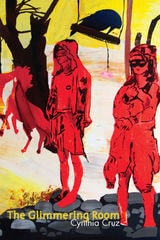
The Glimmering Room
Cynthia Cruz
Four Way Books, 2012
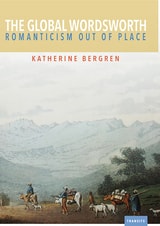
The Global Wordsworth
Romanticism Out of PlaceBergren, Katherine
Bucknell University Press, 2019
Published by Bucknell University Press. Distributed worldwide by Rutgers University Press.
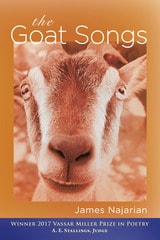
The Goat Songs
James Najarian
University of North Texas Press, 2018

The God of Indeterminacy
POEMSSandra McPherson
University of Illinois Press, 1993
"I count Sandra McPherson as one of the dozen or so truly outstanding
American poets who write brilliantly in the Romantic tradition. . . .
The God of Indeterminacy brings together a group of exciting poems
showing the vital influence of her interest in the blues tradition and
in African-American quiltmaking. They are brilliant testimonials to this
fruitful wedding of the musical, the visual, and the literary."
-- Clarance Major
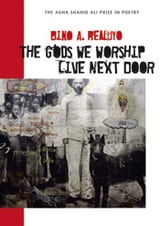
The Gods We Worship Live Next Door
Realuyo, Bino A
University of Utah Press, 2006
The Gods We Worship Live Next Door is the 2005 prizewinning volume selected by this year's judge, Grace Schulman, distinguished professor of English at Baruch College, City University of New York.
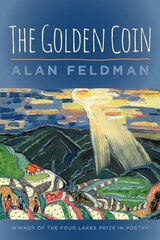
The Golden Coin
Alan Feldman
University of Wisconsin Press, 2018
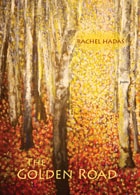
The Golden Road
PoemsRachel Hadas
Northwestern University Press, 2012
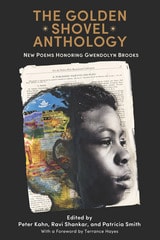
The Golden Shovel Anthology
New Poems Honoring Gwendolyn BrooksPeter Kahn
University of Arkansas Press, 2017
“Throughout this anthology, more than 60 other well-known Brooks poems can be read the same way, with lines from ‘The Mother’ and ‘The Bean Eaters’ tripping down the right-hand side of the page. The anthology ends with ‘Non-Brooks Golden Shovels’ and ‘Variations and Expansions on the Form.’ The cross-section of poets with varying poetics and styles gathered here is only one of the many admirable achievements of this volume.”
—Claudia Rankine, The New York Times, August 2017
“The editors, including tireless poetry advocate Kahn, of this unique, new addition to the Gwendolyn Brooks legacy put together a richly diverse set of poets working with the most unusual and fertile new poetic form created in recent years. National Book Award winner Terrance Hayes invented the Golden Shovel, which he illuminates in his stirring foreword, writing, “Because where do poems come from if not other poems?” In a Golden Shovel poem, the last words in each line are taken from a Brooks poem. A veritable who’s who of contemporary poets tried their hands at this encoded homage, including Billy Collins, Mark Doty, Rita Dove, Nikki Giovanni, Joy Harjo, Billy Lombardo, Sharon Olds, Alberto Ríos, Tracy K. Smith, and Timothy Yu. Beautifully introduced by Patricia Smith, this is a beguiling and mind-expanding anthology shaped by formal expertise and deep appreciation for the complexity and resonance of Brooks’ work and profoundly nurturing influence. In all, a substantial and dynamic contribution to American literature.”
—Booklist, May 2017
"Gwendolyn Brooks was the first black writer to receive the Pulitzer Prize for poetry back in 1950. A new book honors her work in using a form called the golden shovel, developed by poet Terrance Hayes. In The Golden Shovel Anthology, poets select a line from a poem of Brooks’s and use it as the closing line or lines in a poem of their own. The result is an expansive and extraordinary assemblage edited by poets Peter Kahn, Ravi Shankar, and Patricia Smith.”
—Nina MacLaughlin, Boston Globe, March 2017
The Golden Shovel Anthology celebrates the life and work of poet and civil rights icon Gwendolyn Brooks through a dynamic new poetic form, the Golden Shovel, created by National Book Award–winner Terrance Hayes.
The last words of each line in a Golden Shovel poem are, in order, words from a line or lines taken from a Brooks poem. The poems are, in a way, secretly encoded to enable both a horizontal reading of the new poem and vertical reading down the right-hand margin of Brooks’s original. An array of writers—including Pulitzer Prize winners, T. S. Eliot Prize winners, National Book Award winners, and National Poet Laureates—have written poems for this exciting new anthology: Rita Dove, Billy Collins, Nikki Giovani, Sharon Olds, Tracy K. Smith, Mark Doty, Sharon Draper, and Julia Glass are just a few of the contributing poets.
The poems found here will inspire a diversity of readers, teachers, and writers of poetry while at the same time providing remarkable access for newcomers, making it ideal for classrooms. The Golden Shovel Anthology will also honor Brooks with publication in 2017, the centenary of her birth.
The Golden Shovel Anthology
New Poems Honoring Gwendolyn BrooksPeter Kahn
University of Arkansas Press, 2019
—Claudia Rankine in the New York Times
The Golden Shovel Anthology celebrates the life and work of poet and civil rights icon Gwendolyn Brooks through a dynamic new poetic form, the Golden Shovel, created by National Book Award–winner Terrance Hayes.
An array of writers—including winners of the Pulitzer Prize, the T. S. Eliot Prize, and the National Book Award, as well as a couple of National Poets Laureate—have written poems for this exciting new anthology: Rita Dove, Billy Collins, Danez Smith, Nikki Giovanni, Sharon Olds, Tracy K. Smith, Mark Doty, Sharon Draper, Richard Powers, and Julia Glass are just a few of the contributing poets.
This second edition includes Golden Shovel poems by two winners and six runners-up from an international student poetry competition judged by Nora Brooks Blakely, Gwendolyn Brooks’s daughter. The poems by these eight talented high school students add to Ms. Brooks’s legacy and contribute to the depth and breadth of this anthology.
The Goner School
Jessica Laser
University of Iowa Press, 2024

The Good Dark
Annie Guthrie
Tupelo Press, 2015
The Gospel according to Wild Indigo
Cyrus Cassells
Southern Illinois University Press, 2018
Finalist for the Helen C. Smith Award for the Best Book of Poetry from the Texas Institute of Letters, 2019
Nominated for the NAACP Image Award for Outstanding Literature in Poetry, 2019
Consisting of two dynamic song cycles, Cyrus Cassells’s sixth poetry volume, The Gospel according to Wild Indigo, keeps the reader on edge with a timeless and beguiling feast of language that fuses together history, memory, and family.
The first cycle, rooted in the culture of the Gullah people of Charleston and the Sea Islands, celebrates the resilience of the rice- and indigo-working slaves and their descendants who have forged a unique Africa-inspired language and culture. Set against a Mediterranean backdrop, the second cycle explores themes of pilgrimage, love, and loss, concluding with a pair of elegies to the poet’s mother and the many men lost in the juggernaut of the AIDS crisis. Throughout, Cassells invites the reader to consider the duality of grief and love, as well as the shifting connections between past and present.
Cassells’s language is always striking, unpredictable, and beautiful, conjuring a world not only of “placid seagulls perched / in priest-gentle pines / like festive Christmas ornaments” but also one where “Death prevailed, / tireless as a forest partisan.” His poems transport the reader across time, space, and language, searching constantly not just for empathy but also for the human spirit in its triumph, for “our human joy, / laced with an ageless grieving.”
The Granite Pail
The Selected Poems of Lorine NiedeckerLorine Niedecker
Ohio University Press, 1996
This edition was published in 1996 by Gnomon Press.
The Granite Pail is a masterful collection that showcases the poetic brilliance of one of America’s most underappreciated modernist poets. Known for its minimalist style and deep connection to the natural world, Niedecker’s work combines precision with emotional depth in poems that resonate long after they are read.
This volume brings together some of Niedecker’s finest poetry, illustrating her gift for capturing profound truths in the simplest of forms. With themes ranging from the intimate and domestic to the universal and ecological, her poems reflect a life deeply rooted in the landscapes of rural Wisconsin. From meditations on the passage of time to lyrical explorations of nature, The Granite Pail reveals the interplay between solitude, creativity, and the human condition.
Edited and introduced by Cid Corman, a champion of Niedecker’s work, the collection highlights her unique voice within the Objectivist tradition and her ability to create moments of beauty and insight with remarkable economy. This edition also provides context for her life and influences, shedding light on her artistic evolution and the lasting significance of her poetry.
For both longtime admirers and those new to Niedecker’s work, The Granite Pail offers an essential glimpse into the mind of a poet whose quiet brilliance continues to inspire readers and writers alike.
The Graphomaniac
A Literary-Historical Discussion of Dmitry KhvostovIlya Vinitsky and James H. McGavran III
Northwestern University Press, 2025
The only Russian Count of Sardinia, Dmitry Ivanovich Khvostov (1757–1835) didn’t achieve fame in his lifetime—he achieved infamy. Pathologically prolific and delusionally dedicated to a craft for which he had no talent, the count was renowned for his compulsive output, driven by a passion for poetry that was as strong as his abilities were weak. Only the country that gave the world Pushkin, however, could produce Khvostov, in whom we find a distorted yet illuminating reflection of his poetic epoch, with all its numerous cultural manifestations and hidden impulses, its desires and prejudices.
As he leads us on a playful journey across Russia’s Golden Age and beyond, from neoclassical salon to faculty lounge, Ilya Vinitsky reflects on the challenges and necessities of literary critique and on the unexpected rewards of bad art as a subject of study, not just ridicule. Mischievous but erudite, sensitive but never self-serious, The Graphomaniac is an intellectual biography of the anti-hero, a cultural figure whose paradoxes yield new insights into his era.
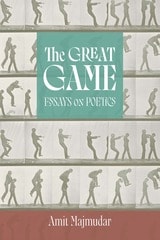
The Great Game
Essays on PoeticsAmit Majmudar
Acre Books, 2024
In The Great Game, poet, critic, translator, and literary omnivore Amit Majmudar ranges widely, writing with characteristic verve on canonical authors such as Milton, Byron, and Emily Dickinson, contemporaries like Kay Ryan, and other traditions of world literature. He examines verse drama and philosophy and even touches on writers of popular prose like Robert Ludlum and Ray Bradbury. A radiologist as well as a writer, Majmudar brings together the diagnostician’s precision with the poet’s imagination and an encyclopedic base of knowledge. He practices literary criticism as a global art, one with the intensity of verse, the depth of philosophy, and the scope of history—and does so with the infectious curiosity of a passionate reader.
Some of the most powerful essays here are synoptic meditations on science and poetry in which Majmudar shows that anyone trying to make fresh sense of the world, be it Milton or Kepler or Dickinson or Darwin, is practicing something like poetic meaning-making. The collection’s diverse inquiries are held together by Majmudar’s sustained, thoughtful, delightfully inventive attention to poetic form as an idea, to specific forms like the ghazal and the epic, and by his nimble, empathetic readings of individual writers. The Great Game is an intellectually thrilling tour of poetry across centuries, geographic divides, and even the disciplinary boundaries that separate science from philosophy from poetry.
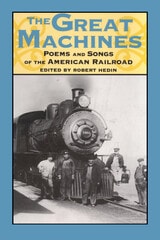
The Great Machines
Poems and Songs from the Age of the American RailroadRobert Hedin
University of Iowa Press, 1996
Here, for the first time, is a feast for anyone who has ever been beguiled by the trains that formerly thrummed through the landscapes of our lives. This entertaining and evocative anthology presents the amazing variety of poems and songs written about the American railroad in the last century and a half. Comprised of selections from both oral and written traditions, the volume celebrates the historical and cultural significance of this marvel of engineering skills. Hedin's anthology allows all readers, from the most avid railroad buff to anyone who has fond memories of train travel, to enjoy the romance of trains.
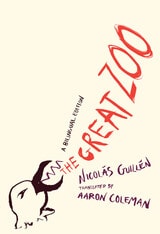
The Great Zoo
A Bilingual EditionNicolás Guillén
University of Chicago Press, 2024
Born in Cuba to parents of African and European ancestry, Nicolás Guillén worked in printing presses and studied law before moving into Havana’s literary scene. A virtuosic maker and breaker of forms, Guillén rose to fame by transforming a popular form of Cuban music into poetry that called attention to the experience of Afro-Cuban people, and he continued to interweave his artistic and political commitments as he traveled the world.
Originally published in Spanish in 1967, The Great Zoo is a humorous and biting collection of poems that presents a fantastical bestiary of ideas, social concerns, landscapes, phenomena, and more. The “animals” on view in this menagerie include the Mississippi and Amazon Rivers, clouds from different countries, a singing guitar, a temperamental atomic bomb, blue-pelted police, a hurricane, the KKK, and the North Star, among many others. Translated by Aaron Coleman with a keen understanding of the contexts of colonial racialization, oppression, and exoticism, this bilingual edition stands as a testament to Guillén’s carnivalesque vision.
The Groove of the Poem
Reading Philippe BeckJacques Rancière
University of Minnesota Press, 2016
“Music is the brute that shows.
It is the avowal of materials,
And stutters between its clanging of things.”
How should one think this musical groove of the poem whose back and forth motion shuffles the material of ordinary language and revives the frozen speech of old chants? This question by renowned French thinker Jacques Rancière is the entry point for his earnest and careful reading of one of France’s most singular and important contemporary poets. For Rancière, Philippe Beck sets himself the task of a poetry after poetry whereby Beck re-writes and transforms the poems of the past, reanimating faded genres, poetizing the prose of popular tales and even commentaries regarding poems. To read and follow this groove traced as such cannot simply be done by way of taking the poems as objects of study. It supposes a dialogue regarding what these poems attempt to do as well as an idea of a poetry which serves as their foundation. This book on Philippe Beck is thus also a book made with him.
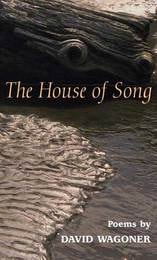
The HOUSE OF SONG
POEMSDavid Wagoner
University of Illinois Press, 2002
In The House of Song, he offers a hundred new poems in six parts. At turns elegiac, comic, and nostalgic, these poems venture to the seemingly infinitesimal points where people, legends, and culture collide with nature, memory, and action.
With characteristic wit and brevity, Wagoner chronicles the material invasions of the natural world, reconsidering Thoreau amid ruminations on voyeurs and destroyers, slug watchers and moth collectors.
The House of Song asserts Wagoner's place among the finest of American poets, past and present.
The Halo
C. Dale Young
Four Way Books, 2016
The Haunting
Cate Peebles
Tupelo Press, 2025
The Haunting is a book of feminist-horror visitations, incantations, and possessions embodied in unruly forms that subvert genre and generic definitions of poetry and prose. This is a collection that is concerned with how the living and the dead coexist, how to survive trauma, and the power of persistence. Drawing from a variety of texts including Mary Shelley’s Frankenstein, Emily Bronte’s Wuthering Heights, twentieth-century horror films, the Velvet Underground, and Ovid, The Haunting explores the anxieties of ancestral and artistic inheritance, rage, transformation, motherhood, maternal ambivalence, and the drive to create.
The Heart as a Drum
Continuance and Resistance in American Indian PoetryRobin Riley Fast
University of Michigan Press, 2000
The Heart of Achilles
Characterization and Personal Ethics in the IliadGraham Zanker
University of Michigan Press, 1996
"[Zanker] investigates altruistic behavior in the epic with professional sophistication but in a way that makes his investigation available to a wide audience from undergraduates to advanced scholars. . . . [A] very useful interpretative study." --Choice
Graham Zanker is Senior Lecturer in Classics, University of Canterbury, New Zealand.
The Hemophiliac's Motorcycle
Tom Andrews
University of Iowa Press, 1994
The Hidden Model
David Yezzi
Northwestern University Press, 2003
The History Of Breathing
Alison Grimaldi Donahue
Diaphanes, 2025
The Etruscan language knew no blank spaces, no breaks between words. Its texture resembled an uninterrupted flow of speech—more singing than speaking, more form than content. Only in the dictum of the pause and the meaningful fragmentation of the breath does language become comprehensible rhythmic expression. In a world full of slogans and catchphrases, Allison Grimaldi Donahue defends the poetological demand of sound over content. The History of Breathing weaves linguistics and poetry, verse and song, meaning and sound into a dense narrative about breathing, rhythm, and the gaps in language that allow words to take on meaning in the first place.
In the tradition of such poets as Charles Olsen, Alice Notley, and Sappho, Grimaldi Donahue’s poetry connects the history of breath and language with narratives about the discovery and loss of our own voice.
The History of Intimacy
PoemsGabeba Baderoon
Northwestern University Press, 2021
Born on the coastal shores of Port Elizabeth, Baderoon is one of South Africa’s most acclaimed literary voices. In The History of Intimacy—originally published by Kwela Books—she crafts resonant poems about a writer’s beginnings, love across boundaries, and “how not to be alone.”
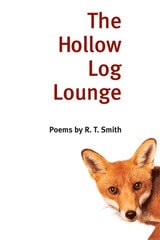
The Hollow Log Lounge
POEMSR. T. Smith
University of Illinois Press, 2003
The men and women who live and work near Opelika, Alabama, gather at the Hollow Log Lounge. There, under the watchful eye of the stuffed fox behind the bar, they unload their gripes and worries, tell their stories, argue, joke, commune, complain, and confess.
In this collection of poems, R. T. Smith paints a vividly imagined portrait of the community in this small-town bar, capturing the chorus of the patrons' voices echoing off the knotted wood-paneled walls. Smith's stand-in, Sam Buckhannon, scribbles stories heard and overheard as tongues loosened by liquor spin out monologues in which southern idiom and vernacular seem perfectly at home within the constraints of measured verse.
The Holy Surprise of Right Now
Selected and New PoemsSamuel Hazo
University of Arkansas Press, 1996
The House On Breakaheart Road
PoemsGailmarie Pahmeier
University of Nevada Press, 1998
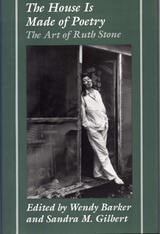
The House is Made of Poetry
The Art of Ruth StoneEdited by Wendy Barker and Sandra M. Gilbert
Southern Illinois University Press, 1996
Ruth Stone has always eschewed self-promotion and, in the words of Leslie Fiedler, "has never been a member of any school or clique or gaggle of mutual admirers." But her poems speak so vibrantly for her that she cannot be ignored.
In her preface to this volume, Sandra M. Gilbert declares that Stone’s "intense attention to the ordinary transforms it into (or reveals it as) the extraordinary. Her passionate verses evoke impassioned responses." At the same time, Gilbert continues, the essays collected here "consistently testify to Stone’s radical unworldliness, in particular her insouciant contempt for the ‘floor walkers and straw bosses’ who sometimes seem to control the poetry ‘factory’ both inside and outside the university."
Wendy Barker and Sandra Gilbert have organized the book into three sections: "Knowing Ruth Stone," "A Life of Art," and "Reading Ruth Stone." In "Knowing Ruth Stone," writers of different generations who have known the poet over the years provide memoirs. Noting Stone’s singularity, Fiedler points out that "she resists all labels" and is "one of the few contemporaries whom it is possible to think of simply as a ‘poet.’" Sharon Olds defines her vitality ("A Ruth Stone poem feels alive in the hands"), and Jan Freeman praises her aesthetic intensity ("Everything in the life of Ruth Stone is integrated with poetry").
"A Life of Art" sketches the outlines of Stone’s career and traces her evolution as a poet. Barker and Norman Friedman, for example, trace her development from the "high spirits and elegant craft" of her first volume—Inan Iridescent Time— through the "deepening shadows," "poignant wit," and "bittersweet meditations" of her later work. In interviews separated by decades (one in the 1970s and one in the 1990s), Sandra Gilbert and Robert Bradley discuss with Stone her own sense of her aesthetic origins and literary growth.
"Reading Ruth Stone" is an examination of Stone’s key themes and modes. Diane Wakoski and Diana O’Hehir focus on the tragicomic vision that colors much of her work; Kevin Clark and Elyse Blankley explore the political aspects of her poetry; Roger Gilbert analyzes her "often uncannily astute insights into the ‘otherness’ of other lives"; Janet Lowery and Kandace Brill Lombart draw on the biographical background of Stone’s "grief work"; and Sandra Gilbert studies her caritas, her empathic love that redeems pain.
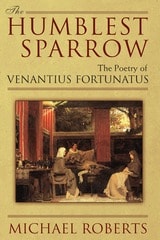
The Humblest Sparrow
The Poetry of Venantius FortunatusMichael Roberts
University of Michigan Press, 2010
In The Humblest Sparrow, Michael Roberts illuminates the poetry of the sixth-century bishop and poet Venantius Fortunatus. Often regarded as an important transitional figure, Fortunatus wrote poetry that is seen to bridge the late classical and earlier medieval periods. Written in Latin, his poems combined the influences of classical Latin poets with a medieval tone, giving him a special place in literary history. Yet while interest has been growing in the early Merovingian period, and while the writing of Fortunatus' patron Gregory of Tours has been well studied, Fortunatus himself has often been neglected. This neglect is remedied by this in-depth study, which will appeal to scholars of late antique, early Christian, and medieval Latin poetry. Roberts divides Fortunatus' poetry into three main groups: poetry of praise, hagiographical poetry, and personal poetry. In addition to providing a general survey, Roberts discusses in detail many individual poems and proposes a number of theses on the nature, function, relation to social and linguistic context, and survival of Fortunatus' poetry, as well as the image of the poet created by his work.
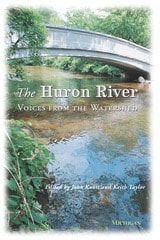
The Huron River
Voices from the WatershedJohn Knott and Keith Taylor, Editors
University of Michigan Press, 2000
"The Huron River . . . was called 'Cos-scut-e-nong Sebee'. . . . [It] is a beautiful, transparent stream, passing alternatively through rich bottoms, openings, plains, and sloping woodlands, covered with heavy timber."
---History of Washtenaw County, Michigan, 1881
The Huron River---stretching 130 miles through three counties---has inspired numerous writers throughout the nineteenth and twentieth centuries. Contained here is a collection of new poems, essays, and stories, accompanied by maps, photographs, and illustrations that celebrate the Huron River. Over twenty locally and nationally known literary figures, including Alice Fulton and Charles Baxter, have contributed to this volume. In addition, the work of biologists, naturalists, and even an arche-ologist have been included to give a richer sense of the physical and cultural environment.
Each of these writers reminds us that our lives are more intertwined with the river and its watershed than we might think. The Huron River opens with these words: "Watersheds are the oldest and most durable markers of place. . . . These boundaries affect our lives by defining our natural environment, not only its topography but its soils, its plant and animal life, and to some extent its weather. The water that sustains most of us is the water that flows through our local watershed."
And the river's strength is wondrous unto itself. "The water will always be there, and it will always find its way down," writer Gary Snyder tells us. The river is sometimes visible, sometimes not; yet it "is alive and well under the city streets, running in giant culverts."
John Knott is Professor of English, University of Michigan. After working as a bookseller for twenty years, Keith Taylor now teaches writing part-time for the University of Michigan and works as a freelance writer.
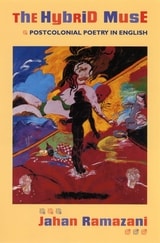
The Hybrid Muse
Postcolonial Poetry in EnglishJahan Ramazani
University of Chicago Press, 2001
In The Hybrid Muse, Jahan Ramazani argues that postcolonial poets have also dramatically expanded the atlas of literature in English, infusing modern and contemporary poetry with indigenous metaphors and creoles. A rich and vibrant poetry, he contends, has issued from the hybridization of the English muse with the long resident muses of Africa, India, and the Caribbean. Starting with the complex case of Ireland, Ramazani closely analyzes the work of leading postcolonial poets and explores key questions about the relationship between poetry and postcolonialism. As inheritors of both imperial and native cultures, poets such as W. B. Yeats, Derek Walcott, Louise Bennett, A. K. Ramanujan, and Okot p'Bitek invent compelling new forms to articulate the tensions and ambiguities of their cultural in-betweeness. They forge hybrid figures, vocabularies, and genres that embody the postcolonial condition.
Engaging an array of critical topics, from the aesthetics of irony and metaphor to the politics of nationalism and anthropology, Ramazani reconceptualizes issues central to our understanding of both postcolonial literatures and twentieth-century poetry. The first book of its kind, The Hybrid Muse will help internationalize the study of poetry, and in turn, strengthen the place of poetry in postcolonial studies.
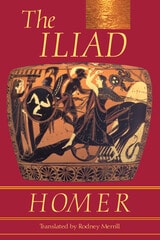
The Iliad
Homer
University of Michigan Press, 2007
nuances of English."
---Stephen G. Daitz, Professor Emeritus of Classics, City University of New York
Rodney Merrill's translation of Homer's Iliad offers a form of English poetry particularly relevant to the epic, producing a strong musical setting that brings many elements of the narrative truly to life. Most notable are the many battle scenes, in which Homer's strong dactylic hexameters make credible the "war-lust" in the deeds of the combatants.
The Iliad of Homer
Translated by Richmond Lattimore
University of Chicago Press, 1951
"Certainly the best modern verse translation."—Gilbert Highet
"This magnificent translation of Homer's epic poem . . . will appeal to admirers of Homer and the classics, and the multitude who always wanted to read the great Iliad but never got around to doing so."—The American Book Collector
"Perhaps closer to Homer in every way than any other version made in English."—Peter Green, The New Republic
"The feat is decisive that it is reasonable to foresee a century or so in which nobody will try again to put the Iliad in English verse."—Robert Fitzgerald
"Each new generation is bound to produce new translations. [Lattimore] has done better with nobility, as well as with accuracy, than any other modern verse translator. In our age we do not often find a fine scholar who is also a genuine poet and who takes the greatest pains over the work of translation."—Hugh Lloyd-Jones, New York Review of Books
"Over the long haul Lattimore's translation is more powerful because its effects are more subtle."—Booklist
"Richmond Lattimore is a fine translator of poetry because he has a poetic voice of his own, authentic and unmistakable and yet capable of remarkable range of modulation. His translations make the English reader aware of the poetry."—Moses Hadas, The New York Times
The Iliad of Homer
Homer
University of Chicago Press, 2011
The epic story of the Trojan War in the most faithful and compelling translation available
"Sing, goddess, the anger of Peleus’ son Achilleus / and its devastation." For sixty years, that's how Homer has begun the Iliad in English, in Richmond Lattimore's faithful translation—the gold standard for generations of students and general readers.
This long-awaited new edition of Lattimore's Iliad is designed to bring the book into the twenty-first century—while leaving the poem as firmly rooted in ancient Greece as ever. Lattimore's elegant, fluent verses—with their memorably phrased heroic epithets and remarkable fidelity to the Greek—remain unchanged, but classicist Richard Martin has added a wealth of supplementary materials designed to aid new generations of readers. A new introduction sets the poem in the wider context of Greek life, warfare, society, and poetry, while line-by-line notes at the back of the volume offer explanations of unfamiliar terms, information about the Greek gods and heroes, and literary appreciation. A glossary and maps round out the book.
The result is a volume that actively invites readers into Homer's poem, helping them to understand fully the worlds in which he and his heroes lived—and thus enabling them to marvel, as so many have for centuries, at Hektor and Ajax, Paris and Helen, and the devastating rage of Achilleus.