Results by title
1325 books match the query 'Psychology' and 295 start with t

Theoretical Issues in Sign Language Research, Volume 2
PsychologyEdited by Patricia Siple and Susan D. Fischer
University of Chicago Press, 1991
This collection, edited by Patricia Siple and Susan D. Fischer, brings together theoretically important contributions from both basic research and applied settings. The studies include native sign language acquisition; acquisition and processing of sign language through a single mode under widely varying conditions; acquisition and processing of bimodal (speech and sign) input; and the use of sign language with atypical, autistic, and mentally retarded groups.
All the chapters in this collection of state-of-the-art research address one or more issues related to universality of language processes, language plasticity, and the relative contributions of biology and input to language acquisition and use.
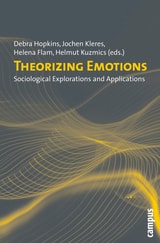
Theorizing Emotions
Sociological Explorations and ApplicationsEdited by Debra Hopkins, Jochen Kleres, Helena Flam, and Helmut Kuzmics
Campus Verlag, 2009
Theorizing Emotions reflects the recent turn to emotions in academia—not just in sociology but also in psychology, evolutionary biology, and neuroscience. Drawing on the classic studies of Max Weber, Erving Goffman, and Norbert Elias, several leading European scholars present their findings on the role of emotions in various facets of society, from the laboratory to the office to the media. Among the topics discussed are the tensions between feelings and feeling rules, the conscious and unconscious emotions of scientists, emotions and social disorder, the effect of the emotional turn as an element of advancing modernity, romantic love in U.S. and Israeli codes of conduct, and the role of mass media in generating massive public emotions.

Theorizing Self in Samoa
Emotions, Genders, and SexualitiesJeannette Marie Mageo
University of Michigan Press, 1998
Theory of Psychological Scaling
Clyde H. Coombs
University of Michigan Press, 1952
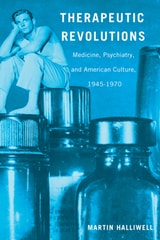
Therapeutic Revolutions
Medicine, Psychiatry, and American Culture, 1945-1970Halliwell, Martin
Rutgers University Press, 2014
Beginning with a discussion of the profound impact of World War II and the Cold War on mental health, Halliwell moves from the influence of work, family, and growing up in the Eisenhower years to the critique of institutional practice and the search for alternative therapeutic communities during the 1960s. Blending a discussion of such influential postwar thinkers as Erich Fromm, William Menninger, Erving Goffman, Erik Erikson, and Herbert Marcuse with perceptive readings of a range of cultural text that illuminate mental health issues--among them Spellbound, Shock Corridor, Revolutionary Road, and I Never Promised You a Rose Garden--this compelling study argues that the postwar therapeutic revolutions closely interlink contrasting discourses of authority and liberation.
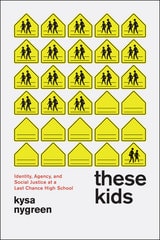
These Kids
Identity, Agency, and Social Justice at a Last Chance High SchoolKysa Nygreen
University of Chicago Press, 2013
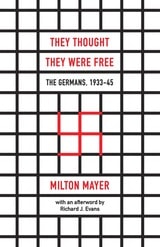
They Thought They Were Free
The Germans, 1933–45Milton Mayer
University of Chicago Press, 2017
“When this book was first published it received some attention from the critics but none at all from the public. Nazism was finished in the bunker in Berlin and its death warrant signed on the bench at Nuremberg.”
That’s Milton Mayer, writing in a foreword to the 1966 edition of They Thought They Were Free. He’s right about the critics: the book was a finalist for the National Book Award in 1956. General readers may have been slower to take notice, but over time they did—what we’ve seen over decades is that any time people, across the political spectrum, start to feel that freedom is threatened, the book experiences a ripple of word-of-mouth interest.
They Thought They Were Free is an eloquent and provocative examination of the development of fascism in Germany. Mayer’s book is a study of ten Germans and their lives from 1933-45, based on interviews he conducted after the war when he lived in Germany. Mayer had a position as a research professor at the University of Frankfurt and lived in a nearby small Hessian town which he disguised with the name “Kronenberg.” “These ten men were not men of distinction,” Mayer noted, but they had been members of the Nazi Party; Mayer wanted to discover what had made them Nazis. His discussions with them of Nazism, the rise of the Reich, and mass complicity with evil became the backbone of this book, an indictment of the ordinary German that is all the more powerful for its refusal to let the rest of us pretend that our moment, our society, our country are fundamentally immune.
A new foreword to this edition by eminent historian of the Reich Richard J. Evans puts the book in historical and contemporary context. We live in an age of fervid politics and hyperbolic rhetoric. They Thought They Were Free cuts through that, revealing instead the slow, quiet accretions of change, complicity, and abdication of moral authority that quietly mark the rise of evil.
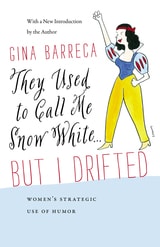
They Used to Call Me Snow White . . . But I Drifted
Women’s Strategic Use of HumorGina Barreca
University Press of New England, 2013

They Went to College
A Study of 951 Former University StudentsC. Robert Pace
University of Minnesota Press, 1941
They Went to College was first published in 1941. Minnesota Archive Editions uses digital technology to make long-unavailable books once again accessible, and are published unaltered from the original University of Minnesota Press editions.
Things We Carry
Strategies for Recognizing and Negotiating Emotional Labor in Writing Program AdministrationCourtney Adams Wooten
Utah State University Press, 2020
The book is broken into three sections: one emphasizing the WPA’s own work identity, one on fostering community in writing programs, and one on balancing the professional and personal. Chapters written by a diverse range of authors in different institutional and WPA contexts examine the roles of WPAs in traumatic events, such as mass shootings and natural disasters, as well as the emotional labor WPAs perform on a daily basis, such as working with students who have been sexually assaulted or endured racist, sexist, homophobic, and otherwise disenfranchising interactions on campus. The central thread in this collection focuses on “preserving” by acknowledging that emotions are neither good nor bad and that they must be continually reflected upon as WPAs consider what to do with emotional labor and how to respond. Ultimately, this book argues for more visibility of the emotional labor WPAs perform and for WPAs to care for themselves even as they care for others.
The Things We Carry extends conversations about WPA emotional labor and offers concrete and useful strategies for administrators working in both a large range of traumatic events as well as daily situations that require tactical work to preserve their sense of self and balance. It will be invaluable to writing program administrators specifically and of interest to other types of administrators as well as scholars in rhetoric and composition who are interested in emotion more broadly.
Thinking in Cases
Fiction, Law, and the Case HistoryPeter Brooks
University of Chicago Press, 2027
How the form of the case history became an important way of studying the individual as an exemplary case in medicine, psychoanalysis, law, and the novel.
What does it mean when we address ourselves to a specific problem and treat it as a “case” that needs resolution, a resolution that may in turn offer us more general lessons? The “case history” has become a central form of thought and analysis in our culture, but rarely has it been studied on its own. In Thinking in Cases, the distinguished critic Peter Brooks zeroes in on a kind of thinking that we all know—and often use—without understanding its dimensions and its history.
This book ponders what we do and mean when we think in cases—when we take up specific instances with a view to making them exemplary. Brooks brings to this study decades of reflection on the psychoanalytic case history, on the rhetoric of the legal case, and on novels that unfold as cases seeking solutions. Brooks focuses on the case-history’s emergence in the late nineteenth century: first, he examines how Henry James’s uses of narrative parallel case-study methods in law, medicine, and psychoanalysis. Elsewhere, he traces the case history from Hippocratic medicine through Sir Arthur Conan Doyle’s detective fiction to a startling legal case from Victorian England involving shipwreck and cannibalism. Other chapters discuss a tale of madness by Balzac and Freud’s most speculative works, especially Moses and Monotheism. A final chapter examines recent novels—Duras’s The Ravishing of Lol Stein, Coetzee’s Disgrace, Modiano’s Dora Bruder, and Erpenbeck’s Kairos—as case studies.

Thinking in Henry James
Sharon Cameron
University of Chicago Press, 1989
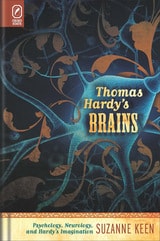
Thomas Hardy's Brains
Psychology, Neurology, and Hardy's ImaginationSuzanne Keen
The Ohio State University Press, 2014
This study reveals how Hardy made sense of diverse sources of an affective human psychology, a discipline that expanded significantly during Hardy’s working life. From the 1870s to the turn of the twentieth century, the tools and techniques for studying the structures and function of the nervous system developed rapidly. Simultaneously, Hardy moved steadily toward realizing a more physiologically accurate rendering of brains and nerves.
Those Who Count
Expert Practicies of Roma ClassificationMihai Surdu
Central European University Press, 2016
Ties That Enable
Community Solidarity for People Living with Serious Mental Health ProblemsTeresa L. Scheid
Rutgers University Press, 2021

Time Driven
Metapsychology and the Splitting of the DriveAdrian Johnston
Northwestern University Press, 2005
Johnston draws on Jacques Lacan's oeuvre in conjunction with certain philosophical resources-elements from transcendental philosophy, structuralism, and phenomenology-to rectify the inconsistencies within the Freudian metapsychological model of drive. In doing so, he helps to answer a question haunting Freud at the end of his career: Why is humanity plagued by a perpetual margin of discontent, despite technological and cultural progress?
In Time Driven, Johnston is able to make sense of Freud's metapsychology both as a whole and in its historical development of Lacan's reinterpretation of Freud, and of the place of both Freud and Lacan in modern philosophy.
Time and Decision
Economic and Psychological Perspectives of Intertemporal ChoiceGeorge Loewenstein
Russell Sage Foundation, 2003

Tired of Weeping
Mother Love, Child Death, and Poverty in Guinea-BissauJonina Einarsdottir
University of Wisconsin Press, 2004
Tissue Economies
Blood, Organs, and Cell Lines in Late CapitalismCatherine Waldby and Robert Mitchell
Duke University Press, 2006
Waldby and Mitchell pull together a prodigious amount of research—involving policy reports and scientific papers, operating manuals, legal decisions, interviews, journalism, and Congressional testimony—to offer a series of case studies based on particular forms of tissue exchange. They examine the effect of threats of contamination—from HIV and other pathogens—on blood banks’ understandings of the gift/commodity relationship; the growth of autologous economies, in which individuals bank their tissues for their own use; the creation of the United Kingdom’s Stem Cell bank, which facilitates the donation of embryos for stem cell development; and the legal and financial repercussions of designating some tissues “hospital waste.” They also consider the impact of different models of biotechnology patents on tissue economies and the relationship between experimental therapies to regenerate damaged or degenerated tissues and calls for a legal, for-profit market in organs. Ultimately, Waldby and Mitchell conclude that scientific technologies, the globalization of tissue exchange, and recent anthropological, sociological, and legal thinking have blurred any strict line separating donations from the incursion of market values into tissue economies.
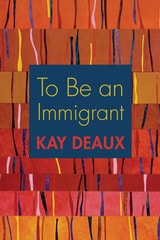
To Be an Immigrant
Kay Deaux
Russell Sage Foundation, 2006

To Sit on the Earth
A MemoirTobie Nathan
Seagull Books, 2024
In To Sit on the Earth, pioneering ethno-psychiatrist Tobie Nathan charts his intellectual and emotional journey, from his youthful infatuation with Freud and Wilhelm Reich to his mature adoption of anthropologist Georges Devereux’s ethnographic approach to psychoanalysis.
Expelled from Egypt as a Jew in 1956 when he was just a boy, Nathan spent his formative years on the outskirts of Paris. Caught up in situationist and Marxist politics, he enthusiastically participated in the revolutionary Events of May 1968. He then settled into a distinguished career as a writer, professor, and founding director of a free ethno-psychiatry clinic serving migrant populations in the French capital. Along the way, Nathan’s field research and practice took him to Benin, Burundi, and Brazil, where he sought out sorcerers, shamans, and other indigenous healers. As he did so, he encountered telling echoes of his ancestors’ age-old practices in Judeo-Arab Cairo.
Combining case histories and theoretical reflections with personal and familial anecdotes, while engaging with contemporary thinkers—including Sartre, Lacan, Bourdieu, and Foucault—this multi-layered, genre-defying memoir invites us to reconsider the beliefs that connect us to others and ourselves. To Sit on the Earth lays out a subtle, compelling case for the theological and cultural diversity essential to a thriving modernity.
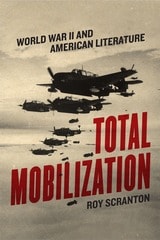
Total Mobilization
World War II and American LiteratureRoy Scranton
University of Chicago Press, 2019
Since World War II, the story of the trauma hero—the noble white man psychologically wounded by his encounter with violence—has become omnipresent in America’s narratives of war, an imaginary solution to the contradictions of American political hegemony. In Total Mobilization, Roy Scranton cuts through the fog of trauma that obscures World War II, uncovering a lost history and reframing the way we talk about war today.
Considering often overlooked works by James Jones, Wallace Stevens, Martha Gellhorn, and others, alongside cartoons and films, Scranton investigates the role of the hero in industrial wartime, showing how such writers struggled to make sense of problems that continue to plague us today: the limits of American power, the dangers of political polarization, and the conflicts between nationalism and liberalism. By turning our attention to the ways we make war meaningful—and by excavating the politics implicit within the myth of the traumatized hero—Total Mobilization revises the way we understand not only World War II, but all of postwar American culture.
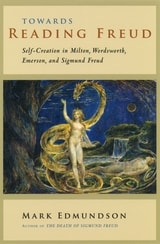
Towards Reading Freud
Self-Creation in Milton, Wordsworth, Emerson, and Sigmund FreudMark Edmundson
University of Chicago Press, 2007
“Marvelous. . . . Edmundson’s book offers an extraordinary challenge both to practicing analysts and to a scholarly community which all too uncomplainingly inhabits and reinforces the Freudian paradigm of interpretation. Edmundson reinvents an adventurous and dissident Freud as an antidote to . . . weary psychoanalytic commonplaces.”—Malcolm Bowie, Raritan
“This book takes a distinguished place in the ongoing effort to recontextualize Freud by stressing the literary, rather than the scientific roots and character of his theory.”—Virginia Quarterly Review
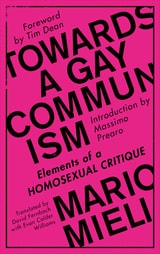
Towards a Gay Communism
Elements of a Homosexual CritiqueMario Mieli
Pluto Press, 2018
First published in Italian in 1977, Mario Mieli's groundbreaking book is an early landmark of revolutionary queer theory - now available for the first time in a complete and unabridged English translation.
Among the most important works ever to address the relationship between homosexuality, homophobia and capitalism, Mieli's essay continues to pose a radical challenge to today's dominant queer theory and politics.
With extraordinary prescience, Mieli exposes the efficiency with which capitalism co-opts 'perversions' which are then 'sold both wholesale and retail'. In his view the liberation of homosexual desire requires the emancipation of sexuality from both patriarchal sex roles and capital.
Drawing heavily upon Marx and psychoanalysis to arrive at a dazzlingly original vision, Towards a Gay Communism is a hitherto neglected classic that will be essential reading for all who seek to understand the true meaning of sexual liberation under capitalism today.

Toxic Ivory Towers
The Consequences of Work Stress on Underrepresented Minority FacultyRuth Enid Zambrana
Rutgers University Press, 2018

Trafficked Children and Youth in the United States
Reimagining SurvivorsElzbieta M. Gozdziak
Rutgers University Press, 2016
Breaking new ground, Trafficked Children in the United States offers a fresh take on what matters most to these young people as they rebuild their lives in America.
Tragedy Plus Time
National Trauma and Television ComedyBy Philip Scepanski
University of Texas Press, 2021
Following the most solemn moments in recent American history, comedians have tested the limits of how soon is “too soon” to joke about tragedy. Comics confront the horrifying events and shocking moments that capture national attention and probe the acceptable, or “sayable,” boundaries of expression that shape our cultural memory. In Tragedy Plus Time, Philip Scepanski examines the role of humor, particularly televised comedy, in constructing and policing group identity and memory in the wake of large-scale events.
Tragedy Plus Time is the first comprehensive work to investigate tragedy-driven comedy in the aftermaths of such traumas as the JFK assassination and 9/11, as well as during the administration of Donald Trump. Focusing on the mass publicization of television comedy, Scepanski considers issues of censorship and memory construction in the ways comedians negotiate emotions, politics, war, race, and Islamophobia. Amid the media frenzy and conflicting expressions of grief following a public tragedy, comedians provoke or risk controversy to grapple publicly with national traumas that all Americans are trying to understand for themselves.
Tragedy
Contradiction and RepressionRichard Kuhns
University of Chicago Press, 1991
From Aeschylus' classic drama The Persians to the hidden tragic themes in The Merchant of Venice, from the aesthetic writings of Kant to Kleist's narrative Michael Kohlhaas, Kuhns traces the writing and rewriting of the themes of ancient tragedy through modern texts. A culture's concept of fate, Kuhns argues, evolves along with its concepts and forms of tragedy. Examining the deep philosophical concerns of tragedy, he shows how the genre has changed from loss and mourning to contradiction and repression. He sees the fact that tragedy went underground during the optimism of the Enlightenment as a repression that continues into the American consciousness. Turning to Melville's The Confidence Man as an example of Old World despair giving way to New World nihilism, Kuhns indicates how psychoanalytic understanding of tragedy provides a method of interpretation that illuminates the continuous tradition from the ancient to the modern world. The study concludes with reflections on the poetry of Walt Whitman and Emily Dickinson. Each poet's celebration of the body, and the contribution of the senses to reason, perception, and poetic intuition, is seen as an embodiment of the modern tragic sensibility.
Trance-Migrations
Stories of India, Tales of HypnosisLee Siegel
University of Chicago Press, 2014
Even if you can’t read this with a partner—and I stress that you certainly ought to—you will still be in rich company. There is Shambaraswami, an itinerant magician, hypnotist, and storyteller to whom villagers turn for spells that will bring them wealth or love; José-Custodio de Faria, a Goan priest hypnotizing young and beautiful women in nineteenth-century Parisian salons; James Esdaile, a Scottish physician for the East India Company in Calcutta, experimenting on abject Bengalis with mesmerism as a surgical anesthetic; and Lee Siegel, a writer traveling in India to learn all that he can about hypnosis, yoga, past life regressions, colonialism, orientalism, magic spells, and, above all, the power of story. And then there is you: descending through these histories—these tales within tales, trances within trances, dreams within dreams—toward a place where the distinctions between reverie and reality dissolve.
Here the world within the book and that in which the book is read come startlingly together. It’s one of the most creative works we have ever published, a dazzling combination of literary prowess, scholarly erudition, and psychological exploration—all tempered by warm humor and a sharp wit. It is informing, entertaining, and, above all, mesmerizing.
Trans Studies
The Challenge to Hetero/Homo NormativitiesMartínez-San Miguel, Yolanda
Rutgers University Press, 2016
From Caitlyn Jenner to Laverne Cox, transgender people have rapidly gained public visibility, contesting many basic assumptions about what gender and embodiment mean. The vibrant discipline of Trans Studies explores such challenges in depth, building on the insights of queer and feminist theory to raise provocative questions about the relationships among gender, sexuality, and accepted social norms.

Trans Studies
The Challenge to Hetero/Homo NormativitiesMartínez-San Miguel, Yolanda
Rutgers University Press, 2016
From Caitlyn Jenner to Laverne Cox, transgender people have rapidly gained public visibility, contesting many basic assumptions about what gender and embodiment mean. The vibrant discipline of Trans Studies explores such challenges in depth, building on the insights of queer and feminist theory to raise provocative questions about the relationships among gender, sexuality, and accepted social norms.
Trans/Portraits
Voices from Transgender CommunitiesJackson Wright Shultz
Dartmouth College Press, 2015
Transfer, Memory, and Creativity
After-Learning as Perceptual ProcessGeorge Haslerud
University of Minnesota Press, 1972
Transforming Contagion
Risky Contacts among Bodies, Disciplines, and NationsFahs, Breanne
Rutgers University Press, 2018
Moving from viruses, vaccines, and copycat murder to gay panics, xenophobia, and psychopaths, Transforming Contagion energetically fuses critical humanities and social science perspectives into a boundary-smashing interdisciplinary collection on contagion. The contributors provocatively suggest contagion to be as full of possibilities for revolution and resistance as it is for the descent into madness, malice, and extensive state control. The infectious practices rooted in politics, film, psychological exchanges, social movements, the classroom, and the circulation of a literary text or meme on social media compellingly reveal patterns that emerge in those attempts to re-route, quarantine, define, or even exacerbate various contagions.

Transnational Desires
Brazilian Erotic Dancers in New YorkSuzana Maia
Vanderbilt University Press, 2012
Their motivation to migrate and to work as erotic dancers can also be understood in the context of a representational system, inaugurated in colonial times, that emphasizes the exoticism of Brazilian womentheir bodies, their skin tone, their sexuality. These stereotypes are the props that Brazilian women use to construct their performances in Manhattan and Queens gentlemen's bars and the language through which they negotiate their relationships to society at large.
Transnational Desires focuses on the lives of nine Brazilian dancers with whom the author, herself a middleclass Brazilian, developed close relationships over the years. Maia examines their social relations both in the bar scene and with family, friends, and lovers outside. She shows that for these women erotic dancing is part of a life trajectory that involves negotiating their social position and life prospects in a fundamentally transnational social universe.
Trauma
A GenealogyRuth Leys
University of Chicago Press, 2000
In a book that is bound to ignite controversy, Ruth Leys investigates the history of the concept of trauma. She explores the emergence of multiple personality disorder, Freud's approaches to trauma, medical responses to shellshock and combat fatigue, Sándor Ferenczi's revisions of psychoanalysis, and the mutually reinforcing, often problematic work of certain contemporary neurobiological and postmodernist theorists. Leys argues that the concept of trauma has always been fundamentally unstable, oscillating uncontrollably between two competing models, each of which tends at its limit to collapse into the other.
A powerfully argued work of intellectual history, Trauma will rewrite the terms of future discussion of its subject.
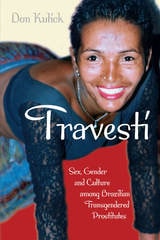
Travesti
Sex, Gender, and Culture among Brazilian Transgendered ProstitutesDon Kulick
University of Chicago Press, 1998
Kulick analyzes the various ways travestis modify their bodies, explores the motivations that lead them to choose this particular gendered identity, and examines the complex relationships that they maintain with one another, their boyfriends, and their families. Kulick also looks at how travestis earn their living through prostitution and discusses the reasons prostitution, for most travestis, is a positive and affirmative experience.
Arguing that transgenderism never occurs in a "natural" or arbitrary form, Kulick shows how it is created in specific social contexts and assumes specific social forms. Furthermore, Kulick suggests that travestis—far from deviating from normative gendered expectations—may in fact distill and perfect the messages that give meaning to gender throughout Brazilian society and possibly throughout much of Latin America.
Through Kulick's engaging voice and sharp analysis, this elegantly rendered account is not only a landmark study in its discipline but also a fascinating read for anyone interested in sexuality and gender.

Treatise On Laughter
Laurent Joubert, Translated by Gregory David de Rocher
University of Alabama Press, 1980
Laurent Joubert (b. 1529) was an important figure in the medical world of the French Renaissance. His monumental Treatise on Laughter provides categories and examples of the laughable. The work describes laughter, its causes and effects, its types and differences. His subdivisions and categories, along with their examples, furnish today's critic and reader with a Renaissance vision of comic commonplaces. It is this vision that may prove to be of great value in analyzing comic literature of the Renaissance.
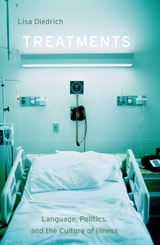
Treatments
Language, Politics, and the Culture of IllnessLisa Diedrich
University of Minnesota Press, 2007
Creative expression inspired by disease has been criticized as a celebration of victimhood, unmediated personal experience, or just simply bad art. Despite debate, however, memoirs written about illness—particularly AIDS or cancer—have proliferated since the late twentieth century and occupy a highly influential place on the cultural landscape today.
In Treatments, Lisa Diedrich considers illness narratives, demonstrating that these texts not only recount and interpret symptoms but also describe illness as an event that reflects wider cultural contexts, including race, gender, class, and sexuality. Diedrich begins this theoretically rigorous analysis by offering examples of midcentury memoirs of tuberculosis. She then looks at Susan Sontag’s Illness As Metaphor, Audre Lorde’s The Cancer Journals, and Eve Kosofsky Sedgwick’s “White Glasses,” showing how these breast cancer survivors draw on feminist health practices of the 1970s and also anticipate the figure that would appear in the wake of the AIDS crisis in the 1980s—the “politicized patient.” She further reveals how narratives written by doctors Abraham Verghese and Rafael Campo about treating people with AIDS can disrupt the doctor–patient hierarchy, and she explores practices of witnessing that emerge in writing by Paul Monette and John Bayley.
Through these records of intensely personal yet universal experience, Diedrich demonstrates how language both captures and fails to capture these “scenes of loss” and how illness narratives affect the literary, medical, and cultural contexts from which they arise. Finally, by examining the ways in which the sick speak and are spoken for, she argues for an ethics of failure—the revaluation of loss as creating new possibilities for how we live and die.
Lisa Diedrich is assistant professor of women’s studies at Stony Brook University.

Troubled Minds
Shaping Modern Mental Care in Central and Eastern Europe, 1780–1930Eva Hajdinová
Central European University Press, 2027
Trust and Distrust In Organizations
Dilemmas and ApproachesRoderick M. Kramer
Russell Sage Foundation, 2004

Trust and Reciprocity
Interdisciplinary Lessons for Experimental ResearchElinor Ostrom
Russell Sage Foundation, 2003
Trust in Society
Karen Cook
Russell Sage Foundation, 2001

Trust in the Law
Encouraging Public Cooperation with the Police and CourtsTom R. Tyler
Russell Sage Foundation, 2002

Twins Talk
What Twins Tell Us about Person, Self, and SocietyDona Lee Davis
Ohio University Press, 2015
Twins Talk is an ethnographic study of identical twins in the United States, a study unique in that it considers what twins have to say about themselves, instead of what researchers have written about them. It presents, in the first person, the grounded and practical experiences of twins as they engage, both individually and together, the “who am I” and “who are we” questions of life. Here, the twins themselves are the stars.
Dona Lee Davis conducted conversational interviews with twenty-two sets of identical twins attending the Twins Days Festival in Twinsburg, Ohio, the largest such gathering in the world. Lively and often opinionated, each twin comes through as a whole person who at the same time maintains a special bond that the vast majority of people will never experience.
The study provides a distinctive and enlightening insider’s challenge to the nature/nurture debates that dominate contemporary research on twins. The author, herself an identical twin, draws on aspects of her own life to inform her analysis of the data throughout the text. Each chapter addresses a different theme from multiple viewpoints, including those of popular science writers, scientific researchers, and singletons, as well as those of the twins themselves.