Results by title
22279 books match the query 'Social Science' and 4007 start with t
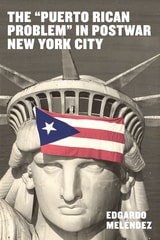
The "Puerto Rican Problem" in Postwar New York City
Edgardo Meléndez
Rutgers University Press, 2023
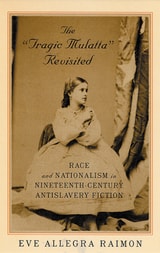
The 'Tragic Mulatta' Revisited
Race and Nationalism in Nineteenth-Century Antislavery FictionEve Allegra Raimon
Rutgers University Press, 2004
Since its inception, the United States has been intensely preoccupied with interracialism. The concept is embedded everywhere in our social and political fabric, including our sense of national identity. And yet, in both its quantitative and symbolic forms, interracialism remains an extremely elusive phenomenon, causing policy makers and census boards to wrangle over how to delineate it and, on an emblematic level, stirring intense emotions from fear to fascination.
In The “Tragic Mulatta” Revisited, Eve Allegra Raimon focuses on the mixed-race female slave in literature, arguing that this figure became a symbolic vehicle for explorations of race and nation—both of which were in crisis in the mid-nineteenth century. At this time, judicial, statutory, social, and scientific debates about the meaning of racial difference (and intermixture) coincided with disputes over frontier expansion, which were never merely about land acquisition but also literally about the “complexion” of that frontier. Embodying both northern and southern ideologies, the “amalgamated” mulatta, the author argues, can be viewed as quintessentially American, a precursor to contemporary motifs of “hybrid” and “mestizo” identities.
Where others have focused on the gendered and racially abject position of the “tragic mulatta,” Raimonreconsiders texts by such central antislavery writers as Lydia Maria Child, William Wells Brown, Harriet Beecher Stowe, and Harriet Wilson to suggest that the figure is more usefully examined as a way of understanding the volatile and shifting interface of race and national identity in the antebellum period.
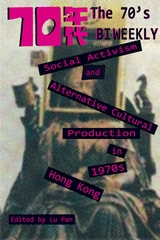
The 70's Biweekly
Social Activism and Alternative Cultural Production in 1970s Hong KongEdited by Lu Pan
Hong Kong University Press, 2023
Taking The 70’s Biweekly—an independent youth publication in 1970s Hong Kong—as the main thread, this edited collection investigates an unexplored trajectory of Hong Kong’s cultural and artistic production in the 1970s. The 70’s Biweekly stands out from many other independent magazines with its unique blending of radical political theories, social activism, avant-garde art, and local literature. By taking the magazine as a node of social and cultural activism from and around which actions, debates, community, and artistic practices are formed, this book fills gaps in the study of how young Hong Kong cultural producers carved out an alternative space to speak out against established authorities.
Split into three parts, The 70’s Biweekly provides readers with a panoramic view of the political and cultural activism in Hong Kong during the 1970s, featuring writings on art and film, and interviews with former founders and contributors that reflect on how their participation led them to engage ideologically with their activism and community.
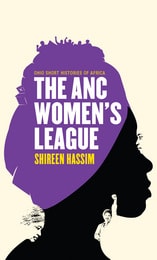
The ANC Women’s League
Sex, Gender and PoliticsShireen Hassim
Ohio University Press, 2015
First formed in the early twentieth century, the ANC Women’s League has grown into a leading organization in the women’s movement in South Africa. The league has been at the forefront of the nation’s century-long transition from an authoritarian state to a democracy that espouses gender equality as a core constitutional value. It has, indeed, always regarded itself as the women’s movement, frequently asserting its primacy as a vanguard organization and as the only legitimate voice of the women of South Africa. But, as this deeply insightful book shows, the history of the league is a more complicated affair—it was neither the only women’s organization in the political field nor an easy ally for South African feminism.

The Aborigines of Puerto Rico and Neighboring Islands
Jesse Walter Fewkes
University of Alabama Press, 2009
Originally published as the Twenty-Fifth Annual Report of the Bureau of American Ethnology to the Secretary of the Smithsonian Institution in 1907, this book was praised in an article in American Anthropologist as doing “more than any other to give a comprehensive idea of the archaeology of the West Indies.”
Until that time, for mainly political reasons, little scientific research had been conducted by Americans on any of the Caribbean islands. Dr. Fewkes' unique skills of observation and experience served him well in the quest to understand Caribbean prehistory and culture. This volume, the result of his careful fieldwork in Puerto Rico in 1902-04, is magnificently illustrated by 93 plates and 43 line drawings of specimens from both public and private collections of the islands.
A 1907 article in the Journal of the Royal Anthropological Institute of Great Britain and Ireland described the volume as “a most valuable contribution to ethnographical science.”

The Absent Man
The Narrative Craft of Charles W. ChesnuttCharles Duncan
Ohio University Press, 1998
As the first African-American fiction writer to achieve a national reputation, Ohio native Charles W. Chesnutt (1858–1932) in many ways established the terms of the black literary tradition now exemplified by such writers as Toni Morrison, Alice Walker, and Charles Johnson.
Following the highly autobiographical nonfiction produced by Frederick Douglass, Harriet Jacobs, and other slave narrative writers, Chesnutt’s complex, multi-layered short fiction transformed the relationship between African-American writers and their readers. But despite generous praise from W. D. Howells and other important critics of his day, and from such prominent readers as William L. Andrews, Henry Louis Gates, Jr., and Eric Sundquist in ours, Chesnutt occupies a curiously ambiguous place in American literary history.
In The Absent Man, Charles Duncan demonstrates that Chesnutt’s uneasy position in the American literary tradition can be traced to his remarkable narrative subtlety. Profoundly aware of the delicacy of his situation as a black intellectual at the turn of the century, Chesnutt infused his work with an intricate, enigmatic artistic vision that defies monolithic or unambiguously political interpretation, especially with regard to issues of race and identity that preoccupied him throughout his career.
In this first book-length study of the innovative short fiction, Duncan devotes particular attention to elucidating these sophisticated narrative strategies as the grounding for Chesnutt’s inauguration of a tradition of African-American fiction.
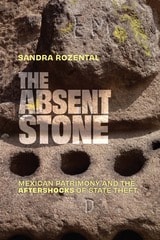
The Absent Stone
Mexican Patrimony and the Aftershocks of State TheftSandra Rozental
Duke University Press, 2026
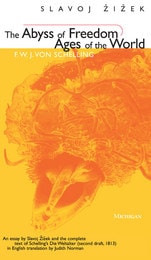
The Abyss of Freedom/Ages of the World
Slavoj Zizek and F.W.J. von Schelling
University of Michigan Press, 1997
Zizek argues that Schelling's most profound thoughts are found in the series of three consecutive attempts he made to formulate the "ages of the world/Weltalter," the stages of the self-development of the Absolute. Of the three versions, claims Zizek, it is the second that is the most eloquent and definitive encompassing of Schelling's lyrical thought. It centers on the problem of how the Absolute (God) himself, in order to become actual, to exist effectively, has to accomplish a radically contingent move of acquiring material, bodily existence. Never before available in English, this version finally renders accessible one of the key texts of modern philosophy, a text that is widely debated in philosophical circles today.
The Abyss of Freedom is Zizek's own reading of Schelling based upon Lacanian psychoanalytic theory. It focuses on the notion that Lacan's theory--which claims that the symbolic universe emerged from presymbolic drives--is prefigured in Schelling's idea of logos as given birth to from the vortex of primordial drives, or from what "in God is not yet God." For Zizek, this connection is monumental, showing that Schelling's ideas forcefully presage the post-modern "deconstruction" of logocentrism.
Slavoj Zizek is not a philosopher who stoops to conquer objects but a radical voice who believes that philosophy is nothing if it is not embodied, nothing if it is only abstract. For him, true philosophy always speaks of something rather than nothing. Those interested in the genesis of contemporary thought and the fate of reason in our "age of anxiety" will find this coupling of texts not only philosophically relevant, but vitally important.
Slavoj Zizek is the author of The Sublime Object of Ideology, Tarrying with the Negative: Kant, Hegel and the Critique of Ideology, and most recently, The Indivisible Remainder: An Essay on Schelling and Related Matters. Currently he is a Senior Researcher at the Institute for Social Sciences, University of Ljubljana. Judith Norman is Assistant Professor of Philosophy at Trinity University in San Antonio, Texas.
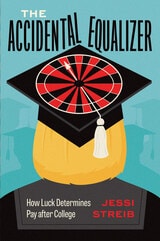
The Accidental Equalizer
How Luck Determines Pay after CollegeJessi Streib
University of Chicago Press, 2023
As a gateway to economic opportunity, a college degree is viewed by many as America’s great equalizer. And it’s true: wealthier, more connected, and seemingly better-qualified students earn exactly the same pay as their less privileged peers. Yet, the reasons why may have little to do with bootstraps or self-improvement—it might just be dumb luck. That’s what sociologist Jessi Streib proposes in The Accidental Equalizer, a conclusion she reaches after interviewing dozens of hiring agents and job-seeking graduates.
Streib finds that luck shapes the hiring process from start to finish in a way that limits class privilege in the job market. Employers hide information about how to get ahead and force students to guess which jobs pay the most and how best to obtain them. Without clear routes to success, graduates from all class backgrounds face the same odds at high pay. The Accidental Equalizer is a frank appraisal of how this “luckocracy” works and its implications for the future of higher education and the middle class. Although this system is far from eliminating American inequality, Streib shows that it may just be the best opportunity structure we have—for better and for worse.
The Accidental Equalizer
How Luck Determines Pay after CollegeJessi Streib
University of Chicago Press, 2023
A startling discovery—that job market success after college is largely random—forces a reappraisal of education, opportunity, and the American dream.
As a gateway to economic opportunity, a college degree is viewed by many as America’s great equalizer. And it’s true: wealthier, more connected, and seemingly better-qualified students earn exactly the same pay as their less privileged peers. Yet, the reasons why may have little to do with bootstraps or self-improvement—it might just be dumb luck. That’s what sociologist Jessi Streib proposes in The Accidental Equalizer, a conclusion she reaches after interviewing dozens of hiring agents and job-seeking graduates.
Streib finds that luck shapes the hiring process from start to finish in a way that limits class privilege in the job market. Employers hide information about how to get ahead and force students to guess which jobs pay the most and how best to obtain them. Without clear routes to success, graduates from all class backgrounds face the same odds at high pay. The Accidental Equalizer is a frank appraisal of how this “luckocracy” works and its implications for the future of higher education and the middle class. Although this system is far from eliminating American inequality, Streib shows that it may just be the best opportunity structure we have—for better and for worse.
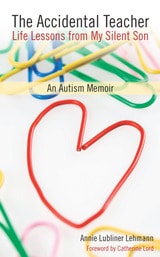
The Accidental Teacher
Life Lessons from My Silent SonAnnie Lubliner Lehmann
University of Michigan Press, 2009
"Jonah Lehmann is an accidental teacher of others, including his family and friends. This personal and touching account of Jonah's life is enlightening, especially to those coming to terms with similar challenges with autism and other cognitive disabilities. It was written with love to support research on autism, and I recommend it to anyone and everyone touched by those of us who are different."
---Patricia E. Kefalas Dudek, Legal Advocate for People with Disabilities
"I have never read a book about a disabled person that caught me from page one. I could not put this one down. Lehmann offers a profound perspective on living with the reality of a severely disabled child. This book will be required reading for students who take my class in Special Education Administration."
---Frances LaPlante-Sosnowsky, Associate Professor of Education at Wayne State University
"A story of the astonishing power of human love and family triumph over hardship. Lehmann's story, engaging and at times both heartbreaking and joyful, offers an intimate view of one mother's journey as she works with professionals and a blur of caregivers to assist the ever-changing needs of her son. I highly recommend it to seasoned professionals in the field of autism and students preparing for careers in special education."
---Janet E. Graetz, Assistant Professor of Human Development and Child Studies at Oakland University
A child teaches without intending to . . .
Having severe autism does not stop Annie Lehmann's son Jonah from teaching her some of life's most valuable lessons. The Accidental Teacher, a heartfelt memoir about self-discovery rather than illness, uses insight and humor to weave a tale rich with kitchen-table wisdom. It explains the realities of life with a largely nonverbal son and explores the frustrations and triumphs of the Lehmann family as Jonah grew into a young adult. This book is a must-read for anyone who has been personally touched by a major life challenge.
Annie Lubliner Lehmann, a freelance writer for more than twenty-five years, has published articles in many newspapers and magazines, including the New York Times and Detroit Free Press. She resides in Michigan with her husband and two of her three children. Her eldest son, who inspired this memoir, is now a young adult with autism who lives in a supervised home.
The Accokeek Creek Site
A Middle Atlantic Seaboard Culture SequenceRobert L. Stephenson, Alice L. L. Ferguson and Henry G. Ferguson
University of Michigan Press, 1963
The Accompaniment
Assembling the ContemporaryPaul Rabinow
University of Chicago Press, 2011
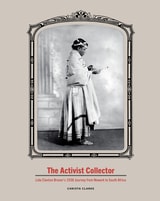
The Activist Collector
Lida Clanton Broner’s 1938 Journey from Newark to South AfricaChrista Clarke
Rutgers University Press, 2023
Published by the Newark Museum. Distributed worldwide by Rutgers University Press.
“After twenty-eight years of desire and determination, I have visited Africa, the land of my forefathers.” So wrote Lida Clanton Broner (1895–1982), an African American housekeeper and hairstylist from Newark, New Jersey, upon her return from an extraordinary nine-month journey to South Africa in 1938. This epic trip was motivated not only by Broner’s sense of ancestral heritage, but also a grassroots resolve to connect the socio-political concerns of African Americans with those of black South Africans under the segregationist policies of the time. During her travels, this woman of modest means circulated among South Africa’s Black intellectual elite, including many leaders of South Africa’s freedom struggle. Her lectures at Black schools on “race consciousness and race pride” had a decidedly political bent, even as she was presented as an “American beauty specialist.”
How did Broner—a working class mother—come to be a globally connected activist? What were her experiences as an African American woman in segregated South Africa and how did she further her work after her return? Broner’s remarkable story is the subject of this book, which draws upon a deep visual and documentary record now held in the collection of the Newark Museum of Art. This extraordinary archive includes more than one hundred and fifty objects, ranging from beadwork and pottery to mission school crafts, acquired by Broner in South Africa, along with her diary, correspondence, scrapbooks, and hundreds of photographs with handwritten notations.
The Actual True Story of Ahmed and Zarga
Mohamedou Ould Slahi
Ohio University Press, 2021
The Addison Gayle Jr. Reader
Edited by Nathaniel Norment Jr.
University of Illinois Press, 2008
The Administration of Rural Production in an Early Mesopotamian Town
Henry T. Wright
University of Michigan Press, 1969
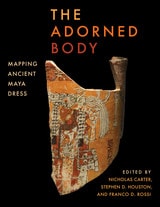
The Adorned Body
Mapping Ancient Maya DressEdited by Nicholas Carter, Stephen D. Houston, and Franco D. Rossi
University of Texas Press, 2020
How we dress our bodies—through clothing, footwear, headgear, jewelry, haircuts, and more—is key to the expression of status and identity. This idea was as true for ancient Maya civilization as it is today, yet few studies have centered on what ancient Maya peoples wore and why. In The Adorned Body, Nicholas Carter, Stephen Houston, and Franco Rossi bring together contributions from a wide range of scholars, leading to the first in-depth study of Maya dress in pre-Columbian times.
Incorporating artistic, hieroglyphic, and archaeological sources, this book explores the clothing and ornaments of ancient Maya peoples, systematically examining who wore what, deducing the varied purposes and meanings of dress items and larger ensembles, and determining the methods and materials with which such items were created. Each essay investigates a category of dress—including headgear, pendants and necklaces, body painting, footwear, and facial ornaments—and considers the variations within each of these categories, as well as popular styles and trends through time. The final chapters reveal broader views and comparisons about costume ensembles and their social roles. Shedding new light on the art and archaeology of the ancient Americas, The Adorned Body offers a thorough map of Maya dress that will be of interest to scholars and fashion enthusiasts alike.
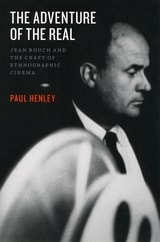
The Adventure of the Real
Jean Rouch and the Craft of Ethnographic CinemaPaul Henley
University of Chicago Press, 2009
Though relatively unsung in the English-speaking world, Jean Rouch (1917–2004) was a towering figure of ethnographic cinema. Over the course of a fifty-year career, he completed over one hundred films, both documentary and fiction, and exerted an influence far beyond academia. Exhaustively researched yet elegantly written, The Adventure of the Real is the first comprehensive analysis of his practical filmmaking methods.
Rouch developed these methods while conducting anthropological research in West Africa in the 1940s–1950s. His innovative use of unscripted improvisation by his subjects had a profound impact on the French New Wave, Paul Henley reveals, while his documentary work launched the genre of cinema-vérité. In addition to tracking Rouch’s pioneering career, Henley examines the technical strategies, aesthetic considerations, and ethical positions that contribute to Rouch’s cinematographic legacy. Featuring over one hundred and fifty images, The Adventure of the Real is an essential introduction to Rouch’s work.
The Aesthetic Character of Blackness
Sounds Like UsJemma DeCristo
Duke University Press, 2025
The Aesthetics of Equity
Notes on Race, Space, Architecture, and MusicCraig L. Wilkins
University of Minnesota Press, 2007
Architecture is often thought to be a diary of a society, filled with symbolic representations of specific cultural moments. However, as Craig L. Wilkins observes, that diary includes far too few narratives of the diverse cultures in U.S. society. Wilkins states that the discipline of architecture has a resistance to African Americans at every level, from the startlingly small number of architecture students to the paltry number of registered architects in the United States today.
Working to understand how ideologies are formed, transmitted, and embedded in the built environment, Wilkins deconstructs how the marginalization of African Americans is authorized within the field of architecture. He then outlines how activist forms of expression shape and sustain communities, fashioning an architectural theory around the site of environmental conflict constructed by hip-hop culture.
Wilkins places his concerns in a historical context, and also offers practical solutions to address them. In doing so, he reveals new possibilities for an architecture that acknowledges its current shortcomings and replies to the needs of multicultural constituencies.
Craig L. Wilkins, a registered architect, teaches architecture and urban planning at the University of Michigan.
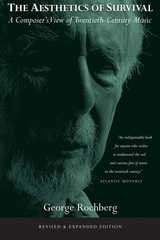
The Aesthetics of Survival
A Composer's View of Twentieth-Century MusicGeorge Rochberg
University of Michigan Press, 2005
"Rochberg presents the rare spectacle of a composer who has made his peace with tradition while maintaining a strikingly individual profile. . . . [H]e succeeds in transforming the sublime concepts of traditional music into contemporary language."
---Washington Post
"An indispensable book for anyone who wishes to understand the sad and curious fate of music in the twentieth century."
---Atlantic Monthly
"The writings of George Rochberg stand as a pinnacle from which our past and future can be viewed."
---Kansas City Star
As a composer, George Rochberg has played a leading role in bringing about a transformation of contemporary music through a reassessment of its relation to tonality, melody, and harmony. In The Aesthetics of Survival, the author addresses the legacy of modernism in music and its related effect on the cultural milieu, particularly its overemphasis on the abstract, rationalist thinking embraced by contemporary science, technology, and philosophy. Rochberg argues for the renewal of holistic values in order to ensure the survival of music as a humanly expressive art.
A renowned composer, thinker, and teacher, George Rochberg has been honored with innumerable awards, including, most recently, an Alfred I. du Pont Award for Outstanding Conductors and Composers, and an André and Clara Mertens Contemporary Composer Award. He lives in Pennsylvania.
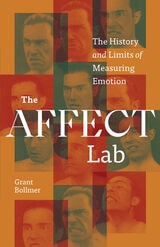
The Affect Lab
The History and Limits of Measuring EmotionGrant Bollmer
University of Minnesota Press, 2023
Examines how our understanding of emotion is shaped by the devices we use to measure it
Since the late nineteenth century, psychologists have used technological forms of media to measure and analyze emotion. In The Affect Lab, Grant Bollmer examines the use of measurement tools such as electrical shocks, photography, video, and the electroencephalograph to argue that research on emotions has confused the physiology of emotion with the tools that define its inscription.
Bollmer shows that the psychological definitions of emotion have long been directly shaped by the physical qualities of the devices used in laboratory research. To investigate these devices, The Affect Lab examines four technologies related to the history of psychology in North America: spiritualist toys at Harvard University, serial photography in early American psychological laboratories, experiments on “psychopaths” performed with an instrument called an Offner Dynograph, and the development of the “electropsychometer,” or “E-Meter,” by Volney Mathison and L. Ron Hubbard.
Challenging the large body of humanities research surrounding affect theory, The Affect Lab identifies an understudied problem in formulations of affect: how affect is a construction inseparable from the techniques and devices used to identify and measure it. Ultimately, Bollmer offers a new critique of affect and affect theory, demonstrating how deferrals to psychology and neuroscience in contemporary theory and philosophy neglect the material of experimental, scientific research.
Retail e-book files for this title are screen-reader friendly with images accompanied by short alt text and/or extended descriptions.
The Affect Theory Reader
Melissa Gregg and Gregory J. Seigworth, eds.
Duke University Press, 2010
Contributors. Sara Ahmed, Ben Anderson, Lauren Berlant, Lone Bertelsen, Steven D. Brown, Patricia Ticineto Clough, Anna Gibbs,Melissa Gregg, Lawrence Grossberg, Ben Highmore, Brian Massumi, Andrew Murphie, Elspeth Probyn, Gregory J. Seigworth, Kathleen Stewart, Nigel Thrift, Ian Tucker, Megan Watkins

The Affect Theory Reader 2
Worldings, Tensions, FuturesGregory J. Seigworth and Carolyn Pedwell, editors
Duke University Press, 2023
Contributors. Lauren Berlant, Lisa Blackman, Rizvana Bradley, Ann Cvetkovich, Ezekiel J. Dixon-Román, Adam J. Frank, M. Gail Hamner, Omar Kasmani, Cecilia Macón, Hil Malatino, Erin Manning, Derek P. McCormack, Patrick Nickleson, Susanna Paasonen, Tyrone S. Palmer, Carolyn Pedwell, Jasbir K. Puar, Jason Read, Michael Richardson, Dylan Robinson, Tony D. Sampson, Kyla Schuller, Gregory J. Seigworth, Nathan Snaza, Kathleen Stewart, Elizabeth A. Wilson
The Affective Turn
Theorizing the SocialPatricia Ticineto Clough, ed.
Duke University Press, 2007
In the mid-1990s, scholars turned their attention toward the ways that ongoing political, economic, and cultural transformations were changing the realm of the social, specifically that aspect of it described by the notion of affect: pre-individual bodily forces, linked to autonomic responses, which augment or diminish a body’s capacity to act or engage with others. This “affective turn” and the new configurations of bodies, technology, and matter that it reveals, is the subject of this collection of essays. Scholars based in sociology, cultural studies, science studies, and women’s studies illuminate the movement in thought from a psychoanalytically informed criticism of subject identity, representation, and trauma to an engagement with information and affect; from a privileging of the organic body to an exploration of nonorganic life; and from the presumption of equilibrium-seeking closed systems to an engagement with the complexity of open systems under far-from-equilibrium conditions. Taken together, these essays suggest that attending to the affective turn is necessary to theorizing the social.
Contributors. Jamie “Skye” Bianco, Grace M. Cho, Patricia Ticineto Clough, Melissa Ditmore, Ariel Ducey, Deborah Gambs, Karen Wendy Gilbert, Greg Goldberg, Jean Halley, Hosu Kim, David Staples, Craig Willse , Elizabeth Wissinger , Jonathan R. Wynn
The Affinity of the Eye
Writing Nikkei in PeruIgnacio López-Calvo
University of Arizona Press, 2013
In The Affinity of the Eye: Writing Nikkei in Peru, Ignacio López-Calvo rises above the political emergence of the Fujimori phenomenon and uses politics and literature to provide one of the first comprehensive looks at how the Japanese assimilated and inserted themselves into Peruvian culture. Through contemporary writers’ testimonies, essays, fiction, and poetry, López-Calvo constructs an account of the cultural formation of Japanese migrant communities. With deftly sensitive interviews and comments, he portrays the difficulties of being a Japanese Peruvian. Despite a few notable examples, Asian Peruvians have been excluded from a sense of belonging or national identity in Peru, which provides López-Calvo with the opportunity to record what the community says about their own cultural production. In so doing, López-Calvo challenges fixed notions of Japanese Peruvian identity.
The Affinity of the Eye scrutinizes authors such as José Watanabe, Fernando Iwasaki, Augusto Higa, Doris Moromisato, and Carlos Yushimito, discussing their literature and their connections to the past, present, and future. Whether these authors push against or accept what it means to be Japanese Peruvians, they enrich the images and feelings of that experience. Through a close reading of literary and cultural productions, López-Calvo’s analysis challenges and reframes the parameters of being Nikkei in Peru.
Covering both Japanese issues in Peru and Peruvian issues in Japan, the book is more than a compendium of stories, characters, and titles. It proves the fluid, enriching, and ongoing relationship that exists between Peru and Japan.
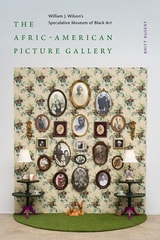
The Afric-American Picture Gallery
William J. Wilson's Speculative Museum of Black ArtBritt Rusert
Duke University Press, 2026

The African AIDS Epidemic
A HistoryJohn Iliffe
Ohio University Press, 2006
A Choice Significant University Press Titles for Undergraduates, 2005–2006
This history of the African AIDS epidemic is a much-needed, accessibly written historical account of the most serious epidemiological catastrophe of modern times. The African AIDS Epidemic: A History answers President Thabo Mbeki’s provocative question as to why Africa has suffered this terrible epidemic.
While Mbeki attributed the causes to poverty and exploitation, others have looked to distinctive sexual systems practiced in African cultures and communities. John Iliffe stresses historical sequence. He argues that Africa has had the worst epidemic because the disease was established in the general population before anyone knew the disease existed. HIV evolved with extraordinary speed and complexity, and because that evolution took place under the eyes of modern medical research scientists, Iliffe has been able to write a history of the virus itself that is probably unique among accounts of human epidemic diseases. In giving the African experience a historical shape, Iliffe has written one of the most important books of our time.
The African experience of AIDS has taught the world much of what it knows about HIV/AIDS, and this fascinating book brings into focus many aspects of the epidemic in the longer context of massive demographic growth, urbanization, and social change in Africa during the latter half of the twentieth century. The African AIDS Epidemic: A History is a brilliant introduction to the many aspects of the epidemic and the distinctive character of the virus.

The African American Experience in Cyberspace
A Resource Guide to the Best Web Sites on Black Culture and HistoryAbdul Alkalimat
Pluto Press, 2003
Alkalimat provides an easy to use directory to the very best websites that deal with the African American Experience. The first section covers every aspect of African American history, while a second section deals with a diverse set of topics covering society and culture. Each chapter has a brief essay, extensively annotation on the five best sites for each topic, and then a group of good sites and a short bibliography. This book is designed for a course at the high school or college level. This book should be kept near every home computer that people use to surf the web for Black content.
Most people have found out that the major corporations and governments have been the dominant uploaders of information into cyberspace. This volume is different because it is a serious introduction to the full democratic use of the web. These websites will introduce people to the people who are serious about ending the digital divide because they are busy uploading information about the most excluded and marginalized people, the African American community. Many of these sites are being established by Black Studies academic programmes, as well as community based organizations and institutions.
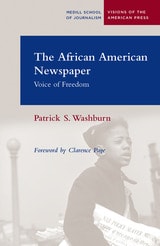
The African American Newspaper
Voice of FreedomPatrick S. Washburn
Northwestern University Press, 2006
In March of 1827 the nation's first black newspaper appeared in New York City—to counter attacks on blacks by the city's other papers. From this signal event, The African American Newspaper traces the evolution of the black newspaper—and its ultimate decline--for more than 160 years until the end of the twentieth century.
The book chronicles the growth of the black press into a powerful and effective national voice for African Americans during the period from 1910 to 1950--a period that proved critical to the formation and gathering strength of the civil rights movement that emerged so forcefully in the following decades. In particular, author Patrick S. Washburn explores how the Pittsburgh Courier and the Chicago Defender led the way as the two most influential black newspapers in U.S. history, effectively setting the stage for the civil rights movement's successes. Washburn also examines the numerous reasons for the enormous decline of black newspapers in influence and circulation in the decades immediately following World War II. His book documents as never before how the press's singular accomplishments provide a unique record of all areas of black history and a significant and shaping affect on the black experience in America.

The African Exchange
Toward a Biological History of Black PeopleKenneth F. Kiple
Duke University Press, 1988
The essays in this volume form the cutting edge of biohistorical research that promises to rewrite the story of humankind's past in significant ways.
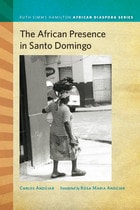
The African Presence in Santo Domingo
Carlos Andujar
Michigan State University Press, 2012
Throughout its long and often tumultuous history, “La Hispanola” has taken on various cultural identities to meet the expectations—and especially the demands—of those who governed it. The island shared by the Dominican Republic and Haiti saw its first great shift with the arrival of Spanish colonists, who eliminated the indigenous population and established a pattern of indifference or hostility to diversity there. This enlightening book explores the Dominican Republic through the lens of its African descendants, beginning with the rise of the black slave trade in fifteenth- and sixteenth-century West Africa, and continuing on to slavery as it existed on the island. An engaging history that vividly details black life in the Dominican Republic, the book investigates the slave rebellions and evaluates the numerous contributions of black slaves to Dominican culture.
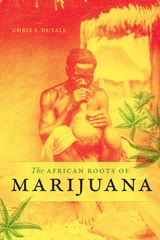
The African Roots of Marijuana
Chris S. Duvall
Duke University Press, 2019
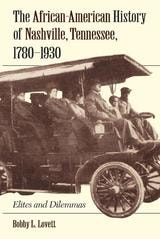
The African-American History of Nashville, Tennessee, 1780-1930
Elites and DilemmasBobby L. Lovett
University of Arkansas Press, 1999
Since its founding, Nashville has been a center of black urban culture in the Upper South. Blacks—slave and free—made up 20 percent of Fort Nashborough’s settlers in 1779. From these early years through the Civil War, a growing black community in Nashville, led by a small group of black elites, quietly built the foundations of a future society, developing schools, churches, and businesses. The Civil War brought new freedoms and challenges as the black population of Nashville increased and as black elites found themselves able—even obliged—to act more openly. To establish a more stable and prosperous African-American community, the elites found that they had to work within a system bound to the interests of whites. But the aims of this elite did not always coincide with those of the black community at large. By 1930, younger blacks, in particular, were moving towards protest and confrontation. As democratization and higher education spread, the lines distinguishing Nashville’s black elite became blurred.
Bobby L. Lovett presents a complex analysis of black experience in Nashville during the years between 1780 and 1930, exploring the impact of civil rights, education, politics, religion, business, and neighborhood development on a particular African-American community. This study of black Nashville examines lives lived within a web of shifting alliances and interests—the choices made, the difficulties overcome.
Fifteen years in the making, illustrated with maps and photographs, this work is the first detailed study of any of Tennessee’s major urban black communities. Lovett here collects, organizes, and interprets a large, rich body of data, making this material newly accessible to all interested in the black urban experience.

The Afro-Bolivian Spanish Determiner Phrase
A Microparametric AccountSandro Sessarego
The Ohio State University Press, 2014
This dialect presents phenomena that offer a real challenge to current linguistic theory. The Afro-Bolivian Spanish Determiner Phrase elaborates on the importance of enhancing a stronger dialogue between formal generative theory and sociolinguistic methodology, in line with recent work in the field of minimalist syntax. Sessarego’s study combines sociolinguistic techniques of data collection with generative models of data analysis to obtain more fine-grained, empirically testable generalizations.
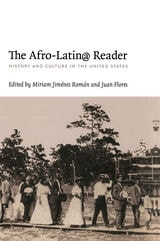
The Afro-Latin@ Reader
History and Culture in the United StatesMiriam Jiménez Román and Juan Flores, eds.
Duke University Press, 2010
While the selections cover centuries of Afro-Latin@ history, since the arrival of Spanish-speaking Africans in North America in the mid-sixteenth-century, most of them focus on the past fifty years. The central question of how Afro-Latin@s relate to and experience U.S. and Latin American racial ideologies is engaged throughout, in first-person accounts of growing up Afro-Latin@, a classic essay by a leader of the Young Lords, and analyses of U.S. census data on race and ethnicity, as well as in pieces on gender and sexuality, major-league baseball, and religion. The contributions that Afro-Latin@s have made to U.S. culture are highlighted in essays on the illustrious Afro-Puerto Rican bibliophile Arturo Alfonso Schomburg and music and dance genres from salsa to mambo, and from boogaloo to hip hop. Taken together, these and many more selections help to bring Afro-Latin@s in the United States into critical view.
Contributors: Afro–Puerto Rican Testimonies Project, Josefina Baéz, Ejima Baker, Luis Barrios, Eduardo Bonilla-Silva, Adrian Burgos Jr., Ginetta E. B. Candelario, Adrián Castro, Jesús Colón, Marta I. Cruz-Janzen, William A. Darity Jr., Milca Esdaille, Sandra María Esteves, María Teresa Fernández (Mariposa), Carlos Flores, Juan Flores, Jack D. Forbes, David F. Garcia, Ruth Glasser, Virginia Meecham Gould, Susan D. Greenbaum, Evelio Grillo, Pablo “Yoruba” Guzmán, Gabriel Haslip-Viera, Tanya K. Hernández, Victor Hernández Cruz, Jesse Hoffnung-Garskof, Lisa Hoppenjans, Vielka Cecilia Hoy, Alan J. Hughes, María Rosario Jackson, James Jennings, Miriam Jiménez Román, Angela Jorge, David Lamb, Aida Lambert, Ana M. Lara, Evelyne Laurent-Perrault, Tato Laviera, John Logan, Antonio López, Felipe Luciano, Louis Pancho McFarland, Ryan Mann-Hamilton, Wayne Marshall, Marianela Medrano, Nancy Raquel Mirabal, Yvette Modestin, Ed Morales, Jairo Moreno, Marta Moreno Vega, Willie Perdomo, Graciela Pérez Gutiérrez, Sofia Quintero, Ted Richardson, Louis Reyes Rivera, Pedro R. Rivera , Raquel Z. Rivera, Yeidy Rivero, Mark Q. Sawyer, Piri Thomas, Silvio Torres-Saillant, Nilaja Sun, Sherezada “Chiqui” Vicioso, Peter H. Wood
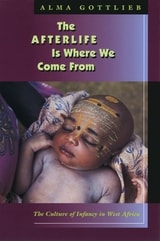
The Afterlife Is Where We Come From
Alma Gottlieb
University of Chicago Press, 2003
In this unique and engaging ethnography of babies, Alma Gottlieb explores how religious ideology affects every aspect of Beng childrearing practices—from bathing infants to protecting them from disease to teaching them how to crawl and walk—and how widespread poverty limits these practices. A mother of two, Gottlieb includes moving discussions of how her experiences among the Beng changed the way she saw her own parenting. Throughout the book she also draws telling comparisons between Beng and Euro-American parenting, bringing home just how deeply culture matters to the way we all rear our children.
All parents and anyone interested in the place of culture in the lives of infants, and vice versa, will enjoy The Afterlife Is Where We Come From.
"This wonderfully reflective text should provide the impetus for formulating research possibilities about infancy and toddlerhood for this century." — Caren J. Frost, Medical Anthropology Quarterly

The Afterlife of Aldus
Posthumous Fame, Collectors and the Book TradeEdited by Jill Kraye and Paolo Sachet
University of London Press, 2018
The Afterlife of Data
What Happens to Your Information When You Die and Why You Should CareCarl Öhman
University of Chicago Press, 2024
A short, thought-provoking book about what happens to our online identities after we die.
These days, so much of our lives takes place online—but what about our afterlives? Thanks to the digital trails that we leave behind, our identities can now be reconstructed after our death. In fact, AI technology is already enabling us to “interact” with the departed. Sooner than we think, the dead will outnumber the living on Facebook. In this thought-provoking book, Carl Öhman explores the increasingly urgent question of what we should do with all this data and whether our digital afterlives are really our own—and if not, who should have the right to decide what happens to our data.
The stakes could hardly be higher. In the next thirty years alone, about two billion people will die. Those of us who remain will inherit the digital remains of an entire generation of humanity—the first digital citizens. Whoever ends up controlling these archives will also effectively control future access to our collective digital past, and this power will have vast political consequences. The fate of our digital remains should be of concern to everyone—past, present, and future. Rising to these challenges, Öhman explains, will require a collective reshaping of our economic and technical systems to reflect more than just the monetary value of digital remains.
As we stand before a period of deep civilizational change, The Afterlife of Data will be an essential guide to understanding why and how we as a human race must gain control of our collective digital past—before it is too late.
The Afterlife of Reproductive Slavery
Biocapitalism and Black Feminism’s Philosophy of HistoryAlys Eve Weinbaum
Duke University Press, 2019
The Agatha Christie Companion
Russell H. Fitzgibbon
University of Wisconsin Press, 1980
The Age of Experiences
Harnessing Happiness to Build a New EconomyBenjamin Kline Hunnicutt
Temple University Press, 2020
In The Age of Experiences, Benjamin Kline Hunnicutt examines how the advance of happiness science is impacting the economy, making possible new experience-products that really make people happy and help forward-looking businesses expand and develop new technologies. In today’s marketplace there is less interest in goods and services and more interest in buying and selling personal improvements and experiences. Hunnicutt traces how this historical shift in consumption to the “softer” technologies of happiness represents not only a change in the modern understanding of progress, but also a practical, economic transformation, profoundly shaping our work and the ordering of our life goals.
Based on incisive historical research, Hunnicutt demonstrates that we have begun to turn from material wealth to focus on the enrichment of our personal and social lives. The Age of Experiences shows how industry, technology, and the general public are just beginning to realize the potential of the new economy. Exploring the broader implications of this historical shift, Hunnicutt concludes that the new demand for experiences will result in the reduction of work time, the growth of jobs, and the regeneration of virtue—altogether an increasingly healthy public life.
The Age of Noise in Britain
Hearing ModernityJames G Mansell
University of Illinois Press, 2017
The Age of Sex
Custom, Law, and Ritual in Twentieth-Century East AfricaCorrie Decker
University of Wisconsin Press, 2025
In The Age of Sex, Decker demonstrates how maturation became defined as the hypothetical moment when a girl becomes a woman capable of engaging in heterosexual activity and a boy becomes a man imbued with the right and responsibility to have heterosexual intercourse. Colonial ethnographic studies reduced complex precolonial rites of passage to “puberty rites” fixated on these sexual transformations. The resulting stereotypes influenced, in turn, how colonial and postcolonial court officials decided age-of-consent and other sex crime cases. Court rituals thus legally transformed girls into women by ruling on their sexual maturity and boys into men by sentencing them to corporal punishment, marking their acceptance of heterosexual responsibilities.
The Ageless Self
Sources of Meaning in Late LifeSharon R. Kaufman
University of Wisconsin Press, 1994
Among the many studies of aging and the aged, there is comparatively little material in which the aged speak for themselves. In this compelling study, Sharon Kaufman encourages just such expression, recording and presenting the voices of a number of old Americans. Her informants tell their life stories and relate their most personal feelings about becoming old. Each story is unique, and yet, presented together, they inevitable weave a clear pattern, one that clashes sharply with much current gerontological thought. With this book, Sharon Kaufman allows us to understand the experience of the aging by listening to the aged themselves.
Kaufman, while maintaining objectivity, is able to draw an intimate portrait of her subjects. We come to know these people as individuals and we become involved with their lives. Through their words, we find that the aging process is not merely a period of sensory, functional, economic, and social decline. Old people continue to participate in society, and—more important—continue to interpret their participation in the social world. Through themes constructed from these stories, we can see how the old not only cope with losses, but how they create new meaning as they reformulate and build viable selves. Creating identity, Kaufman stresses, is a lifelong process.
Sharon Kaufman's book will be of interest and value not only to students of gerontology and life span development, and to professionals in the field of aging, but to everyone who is concerned with the aging process itself. As Sharon Kaufman says, "If we can find the sources of meaning held by the elderly and see how individuals put it all together, we will go a long way toward appreciating the complexity of human aging and the ultimate reality of coming to terms with one's whole life."
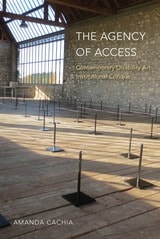
The Agency of Access
Contemporary Disability Art & Institutional CritiqueAmanda Cachia
Temple University Press, 2025
Showcasing artwork by contemporary disabled artists Corban Walker, Christine Sun Kim, and Carmen Papalia, among others, The Agency of Access inscribes contemporary disability art in the broad canon of contemporary art, where the artistic past is regarded differently.
Cachia is an outspoken advocate for artists living with sensory disabilities. She understands disabled artists’ experiences in both the world and the gallery. The artists she has curated make bold, astonishing, and compelling statements about interdependency, care, and the ways in which our environment affects disabled, ill, and immunocompromised bodies.
The Agrarian Dispute
The Expropriation of American-Owned Rural Land in Postrevolutionary MexicoJohn J. Dwyer
Duke University Press, 2008
Dwyer weaves together elite and subaltern history and highlights the intricate relationship between domestic and international affairs. Through detailed studies of land redistribution in Baja California and Sonora, he demonstrates that peasant agency influenced the local application of Cárdenas’s agrarian reform program, his regional state-building projects, and his relations with the United States. Dwyer draws on a broad array of official, popular, and corporate sources to illuminate the motives of those who contributed to the agrarian dispute, including landless fieldworkers, indigenous groups, small landowners, multinational corporations, labor leaders, state-level officials, federal policymakers, and diplomats. Taking all of them into account, Dwyer explores the circumstances that spurred agrarista mobilization, the rationale behind Cárdenas’s rural policies, the Roosevelt administration’s reaction to the loss of American-owned land, and the diplomatic tactics employed by Mexican officials to resolve the international conflict.
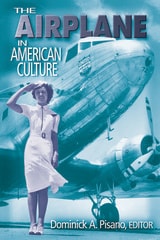
The Airplane in American Culture
Dominick A. Pisano, Editor
University of Michigan Press, 2003
Although countless books for aviation buffs have appeared since World War II, none has attempted to place the airplane in its full social, cultural, and interdisciplinary context until now. The first book of its kind, The Airplane in American Culture presents essays by distinguished contributors including historians, literary scholars, scholars of American studies, art historians, and museum professionals that explore a range of topics, including the connections between flying and race and gender; aviation's role in forming perceptions of the landscape; the airplane's significance to the culture of war; and the influence of flight on literature and art.
A must-read collection for anyone fascinated by the airplane, The Airplane in American Culture represents a dramatic new approach to writing the history of aviation, and makes an important contribution to American social and cultural history.
Dominick A. Pisano is Curator of the Aeronautics Department at the National Air and Space Museum, Smithsonian Institution.
The Ait Ayash of the High Moulouya Plain
Rural Social Organization in MoroccoJohn Chiapuris
University of Michigan Press, 1979